
 Elvis and the Rabbi
An unusual but touching friendship between a rabbi and a child who would be king was also a spark that created America's postwar Messiah.

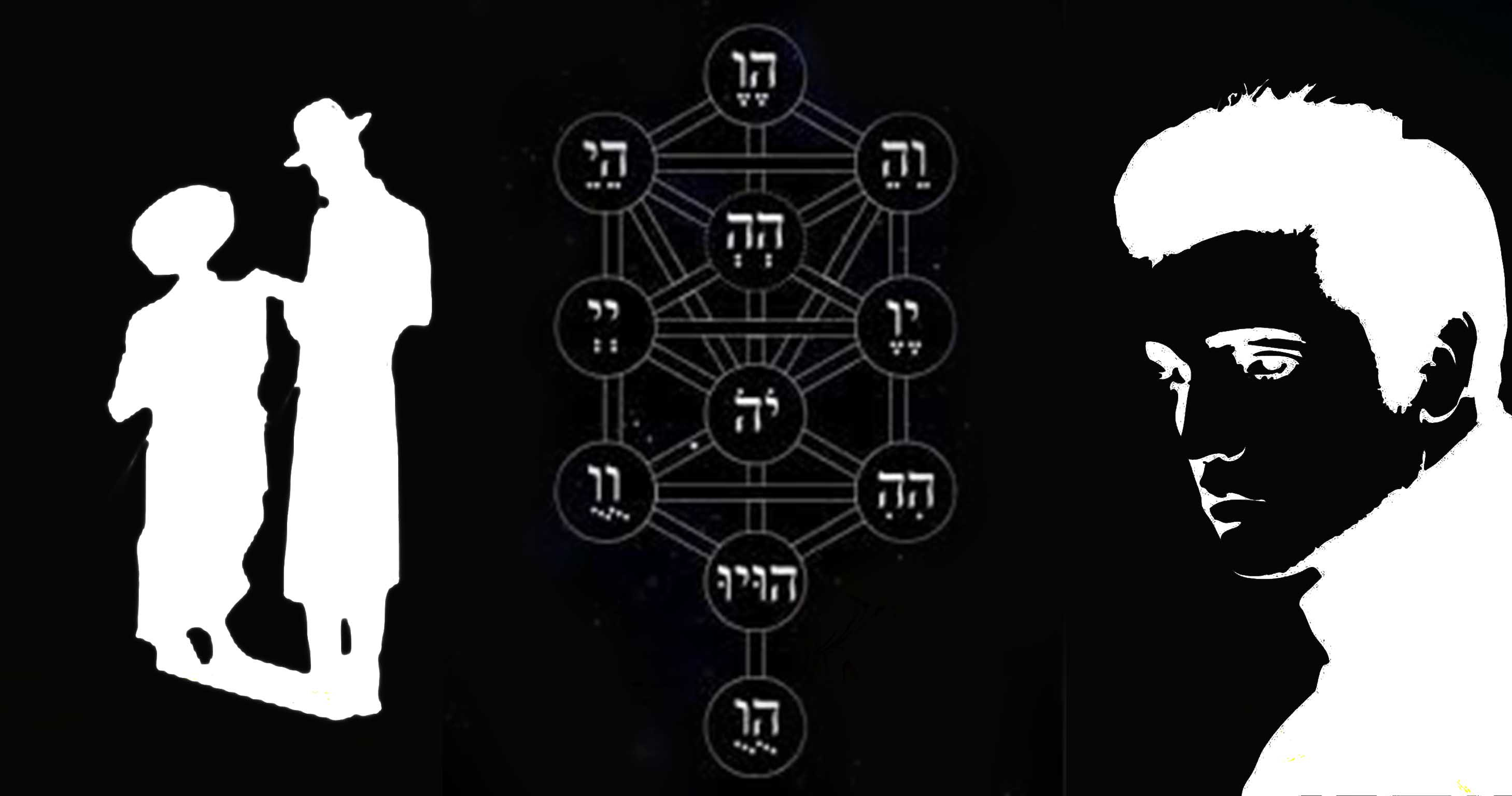
He began to appear to Rabbi Alfred Fruchter every day after work, the elfin blond boy with striking blue eyes. The youth belonged to the couple that had recently moved downstairs from him in the humble Memphis projects. He was very courteous but sometimes looked at his beard and hat with some confusion.
The rabbi patted his head and asked the boy what his name was.
“Elvis,” he answered.
“You’re a handsome youngster,” Alfred said, “and very much the gentleman from the way you open the door for me.”
The rabbi looked for the angelic Elvis daily, for they began to have religious discussions, sometimes on the stairs and sometimes on the sidewalk. Despite being happy to be off from running the orthodox Memphis Hebrew Academy (which he had founded), Alfred found himself full of energy when speaking theology to the youth.
“You don’t believe in Jesus, do you?” Elvis asked him one time.
“I believe he was a great man,” answered Alfred, “one of the greatest of the Jewish prophets.”
Elvis narrowed his eyes. “So why don’t you accept him? If he was a rabbi, and you’re a rabbi, shouldn’t you stick together?”
Alfred laughed. “I’d say it was like being in the same church but a different pew. We believe in the same God and the same prophets. The same songs of Solomon and the psalms of David.”
The boy’s eyes brightened. “So you know about David, too. He’s my favorite. I like to read how he killed the giant Goliath with his slingshot and wrote all those poems we used to read in church.”
“Yes, and in our church, too, Elvis.” He put his arm around his little friend. “You have good thoughts. Always keep good thoughts. It doesn’t matter what church you belong to, as long as you are kind and love your neighbor like yourself.”
When the boy told his parents about his friendship with the rabbi, Vernon frowned, but Gladys said firmly, “We all pray to the same God, Elvis. And it all works as long as it brings you to God. Never turn from anyone because they find a different path to the Lord.”
In time, the Presley and Fruchter families became friendly, often leaning on each other. The Great Depression and World War 2 may have ended a few years back, but times were still challenging in the South. The rabbi helped the Presleys financially when money was short, and Elvis became “the goyin boy” for the Frucheters—turning on stoves and lights during the Sabbath. Elvis jokingly called Alfred “Sir Rabbi” but never accepted money for his work, no matter how much the family tried. When the Fruchters had a baby boy, Elvis waited on the porch and carried the newborn up the stairs. The Presleys devotedly attended church every Sunday, but they also began joining the Fruchters’ religious observances, such as sitting with them during a holy meal. When Elvis graduated high school, the Fruchters gifted him a pair of black onyx cufflinks. They knew the teenager admired the set at a jewelry shop window but that his parents couldn’t afford it.
Years later, in 1955, the family tearfully separated when the rabbi found work as the head of a temple in Oakland, California.
But would this be the last time Elvis and the Rabbi saw each other?
First, an understanding of Elvis’s spiritual evolution and how it affected his views of Judaism.
Hunka Hunka Burning Zohar
Like David in the Bible, Elvis would go on to be a king of a nation, a wild musician who rose and fell in an Icarian drama, who ecstatically shook his body when gripped by storm spirits and syncretized wilderness shamanistic traditions to suit his quest to become the living fire of the gods.
Elvis met his spiritual teachers in the sixties, Larry Geller and Daya Mata (Yogananda’s successor). His Abrahamic beliefs evolved into the mystical, the perennial, and even the forbidden. He dove into a varied group of occultists, from Manly P. Hall to Madam Blavatsky, stretching his spiritual interests to the East to embrace Taoism, Hinduism, and Buddhism. Disliking his former churches for their corruption and portrayal of God as a damning deity, he embraced the cosmic Christ and self-actualized Jesus of esoteric traditions. Elvis once said:
Man, I always knew there was real spiritual life, not the way the church dishes it out, you know, with hellfire and damnation and using fear.
He read the Gospel of Thomas, the Dead Sea Scrolls, and the Book of Enoch—or any apocryphal text that could reveal the “Christ in you, the hope of glory,” as the apostle Paul stated.
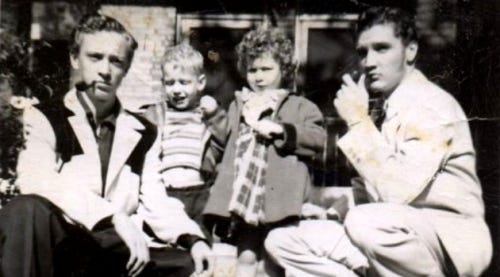
With Judaism, Elvis’s attitude was just as unorthodox. He heeded the words of the Jewish mystic text The Zohar: “The Universe was created by three forms of expression—Numbers, Letters, and Words.” Through the lens of gematria, numerology, and Pythagoreanism, Elvis saw a salvific code in the Old Testament. His studies led him to explore the Kabbalah and even speculate if Ezekiel’s famous “throne of God” wheel-vision could have been about extraterrestrial craft. Soon after delving into Jewish mysticism, Elvis started wearing a Chai pendant, a Judaic symbol representing life, alongside his usual cross—and, secretly, the Egyptian ankh. Sometimes, the singer wore a Star of David necklace. When a reporter questioned why he wore a Jewish symbol alongside a Christian one, the King of Rock’n’roll replied, “I don’t want to be kept out of heaven on a technicality.”
Elvis kept his occult studies mostly under the press’s radar, but he kept a deeper secret even from those close to him. And he only divulged it until the year he passed, 1977.
Pelvis on the Roof
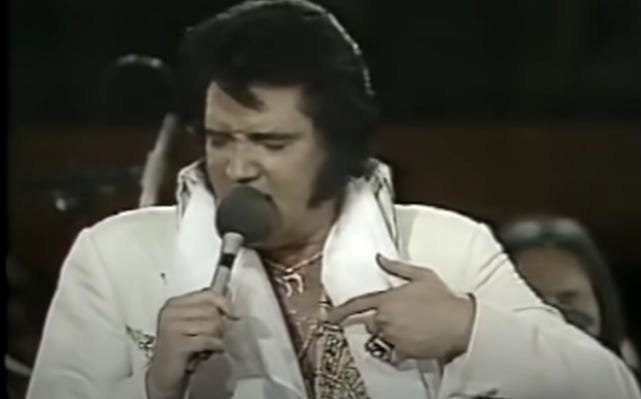
His secret was revealed one day when Elvis and Geller visited his mother’s gravesite to meditate. Geller found it strange that his friend and pupil wanted to place a Star of David on her memorial stone. When Elvis shared this idea with Vernon, his father was displeased and questioned why a Christian memorial would need a “Jewish sign.”
Elvis confided in Geller that he had Jewish heritage, which led Geller to wonder if this aspect of his background had influenced their meeting since he was Jewish (although, in those days, a New Ager extraordinaire for all practical purposes). Gladys’s maternal great-grandmother was a Jew (according to Jewish law, which confers lineage via the mother, Elvis could be technically a Jew). This fact was kept secret from Vernon and the rest of the world by both Gladys and Elvis. For reasons not openly discussed, Elvis was hesitant to reveal this ancestry to his father despite being the King and having Vernon on his payroll. The same applied to his manager, Colonel Parker, and entourage, even though three of Elvis’s inner circle members were Jewish: George Klein, Marty Lacker, and Alan Fortas. Elvis and Klein served as best men at each other’s wedding. However, many around Elvis still held outdated beliefs, including the stereotype that “Jews had horns.” Although Elvis ran a tight ship in his empire when it came to discrimination, Geller himself had been the brunt of Memphis Mafia jokes, being called epithets like Lawrence of Israel or the Wandering Jew.
The Star of David was placed on Glady’s tombstone, and Elvis continued to wear his Chai necklace.
But Back to the Rabbi
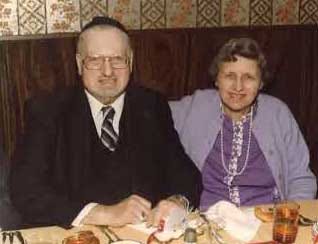
A few years after moving from Memphis to Oakland, Alfred opened the newspaper and read about a famous singer coming to the city. Out of nowhere, this young man had conquered the entertainment world with a new music genre called rock. “Is it possible that could be that wonderful boy living downstairs from us in Memphis?” he wondered out loud.
He directly called Elvis at his Oakland hotel. The manager answered the call, and the rabbi introduced himself and shared his desire to see his former neighbor. There was a brief pause during which the manager spoke to his famous client. Then, with a hearty voice, the manager said, “Come over at once. Elvis is looking forward to seeing you.”
Alfred’s wife, Jeanette, couldn’t attend because she had just given birth to a son, but the rabbi went and received a warm welcome. A radiant Elvis embraced and enthusiastically introduced him to an ongoing press conference following a successful concert. It was a joyful reunion— the Jewish rabbi and the music idol who had learned to rock ‘n’ roll in a Christian church. (Oddly, Alfred and Jeanette had never thought Elvis was that talented, even if he had a nice voice, but those alien wheels of Ezekiel work in mysterious ways)
Did the rabbi ever have any inkling of Elvis having Jewish blood?
Not according to Alfred’s daughter, Judy, or even that Elvis might be considered a Jew. “Because if he was Jewish,” she said, “my father was making him desecrate Shabbat. He’s probably turning in his grave.”
More likely, Elvis and the rabbi still have friendly theological debates in some higher sphere of the Sephiroth or Tree of Life, between the King having to visit humanity to remind the world that the American Messiah still rules over his kingdom.
Resources:
Elvis and his Jewish Neighbours
Elvis: 7 Jewish Things You Didn’t Know about The King
Elvis’ Search for God, by Jess Stearn and Larry Geller
And, of course, The Occult Elvis by Miguel Conner