Bookmarks
- Differential Dx - Neck Veins Exam - Physical Diagnosis Skills - University of Washington School of Medicine
- Idios kosmos - Wikipedia
- Coronary Artery Disease - Cardiovascular Medicine - MKSAP 17
- 9.3 Bedside Rules for Acid-Base Disorders
- The Gunslinger’s Creed – Jody Aberdeen, Author and Ghostwriter
- "The Gunslinger’s Creed I do not aim with my hand; He who aims with his hand has forgotten the face of his father. I aim with my eye. I do not shoot with my hand; He who shoots with his hand has forgotten the face of his father. I shoot with my mind. I do not kill with my gun; He who kills with his gun has forgotten the face of his father. I kill with my heart."
- Chaitanya Mahaprabhu - Wikipedia
- The Sanskrit word, Chaitanya, means 'consciousness' or 'spirit' or 'intelligence' or 'sensation'. It is the pure Consciousness or the cosmic intelligence, the consciousness that knows itself and also knows others.[1] It also means energy or enthusiasm.[2] In the Rig Veda (R.V.IV.XL.5) Nrishad is the dweller amongst men; Nrishad is explained as Chaitanya or 'Consciousness' or Prana or 'vitality' because both dwell in men
- Sahaja - Wikipedia
- Melqart - Wikipedia
- Ellen G. White - Wikipedia
- Blacksmith and Phosphenism
- "LACKSMITHS, ALCHEMISTS… AND THE PHOSPHENES A few years ago, an anthropological essay was written by Mircea Eliade, under the title of Blacksmiths and Alchemists. A blacksmith is a person who transforms iron or steel, or any other metals into tools and weapons, using fire and metalwork. So, the smith is an alchemist, a transformer, that uses primary materials provided by the earth, works on them, manipulates them, imprints them with his energy. With help of the fire, of the anvil and the hammer, blacksmiths materialize their ideas in the shape of tools, weapons or any other type of objects. This capacity to transform the materials that the earth provides into tools for humanity is an alchemy. That is one of the causes why blacksmiths have always been considered as alchemists and mystics, according to Eliade’s book. When I was 18 years old and I just finished my studies in college, my father, who was dedicated to breeding horses, proposed me an idea: now that I had finished my studies and that I had to work, I should prepare myself to be a horseshoer, because it seem to have good prospects. And so I did. I studied in several schools and as the apprentice of several blacksmiths until I got a good formation. But to be good in that line of work, I needed the knowledge the knowledge of forge. So I studied the forge to complete my education. I had several forge teachers and I learned not only to make horseshoes of many types, but tools, ornaments and artwork, and I was lucky to have a forge teacher that was an alchemist. His name was Turley, he lived in the desert in New Mexico, USA, in a trailer next to his workshop. He was an American Indian and he practiced Tai Chi. Besides teaching me to forge, he used to tell me stories of the early blacksmiths of many cultures. And always compared the act to forge iron with the act to forge one’s own soul. Although I was too young to understand many things, the experience impressed me deeply and I will never forget my days at Frank Turley’s workshop, who began his morning routine of forge with American Indianás singings and who practiced breathing exercises of Tai Chi while hitting the hot iron on the anvil, with a brutal energy. Back at my house, I had my own workshop during many years , my forge and my anvil, to practice the profession of blacksmith and horseshoer which I quit years after for back problems. Although I still have my workshop. More than 15 years after that I discovered Phosphenism, and its entire paradigm, concepts, ideas and results. This is when I understood Mircea Eliade’s book about the mystic abilities of the blacksmiths. So, let’;s enter a forge workshop. They are always dark, without much light, because is very important to be able to see the color of the iron when it is heated. It goes from an almost white, pale red to a dark cherry. The different tints are very important for the blacksmith. And in a corner, protected from the light, there is the forge. Its center, used for heating the charcoal forms a kind of volcano, a crater that directs all the heat produced by the fire… an intense white light indicates that the forge is really hot. Normally the anvil is situated in front of the forge, in such a way that when the smith extracts the hot iron of the forge, turns his back to the fire and checks the color of the hot iron. Thanks to the color, he knows the temperature. And so, we are beginning to see certain common factors between Phosphenism and the forge: after watching an intense and almost white light, the fire of the forge, the smith collects the iron and turns around towards the dark area where the anvil is, to hammer it. Thus producing a phosphene. Forging, hitting the metal on the anvil, can be done by up to three persons. But it always has to be done in a very specific way: with rhythm. When there is a single person working, the rhythm is more or less one beat per second (a physiological rhythm). But one other thing is important: when hitting the iron, the smith observes the piece to give it the appropriate form. This process is similar to Phosphenism: mixing rhythmic thinking and focusing on a source of light. After a while, the metal cools down and it is necessary to heat it again. This produces an alternation, another of the basic elements of Phosphenism. The sways are produced in an instinctive way. If hitting is always done with arm only, it is very tiring. So in an instinctive way, little by little, one learns to hit using one’s center of gravity, the Hara. So anterioposterior sways occur in a spontaneous way when hitting with the hammer. You can easily observe this if you have the chance to see a master forging. What about the mantras? Obviously, they can be found in the sound of the hits. In the end, the sounds of hitting with the hammer repeat themselves in a rhythmic and constant way. Nevertheless, it is also very probable that most smiths recite or chant songs or prayers while they work, as my master used to do. In Japan, the sword smiths are extremely spiritual, because they engrave their own character into their work. The majority of them wish that their swords would be used not to give death but to protect life. They used to dress in white, as a symbol of purity, and they carry out rituals of purification before and during the forge. So, without knowing it, they practice Phosphenism while working. There is a legend that relates the story of two Japanese sword smiths who used to make the best swords in Japan. One with the intention of defending the life and one with the intention to kill. One day, to distinguish their swords, a samurai placed them in a river with the blade in the water. The floating leaves would be cut in two by the blade. The best steel. The best blade. He did the same thing with the second sword but when the leaves were about to touch the blade, they were slightly deviated. The leaves did not avoid the sword, it is the sword that avoided the leaves, because it was created for protecting life. The best intention. Is it be possible to imprint one’s spirit into the matter, not only by forging and wishing that the sword protects life, but by amplify and purify one’s thoughts with a conscious or unconscious practice of Phosphenism? It is interesting to observe that blacksmiths can perfectly be mystic, initiates, or alchemists. Not simply because of their capacity to transform nature, the minerals, into tools for human use, but also because of their constant and unconscious practice of Phosphenism, the basis of all religions. Today, we have lost much of this traditional work. The industrial revolution, that mechanized many of these activities, has been an evolution and a social and economic revolution, but it also has been an involution and a delay for the spiritual development of humanity. Daniel Fernandez Ruano"
- PHOSPHENISM - phosphenism
- "PHOSPHENISM is a group of techniques which has the goal of increasing cerebral capacities through the use of a method based on physiological reactions: the PHOSPHENES, multicoloured patches which persist in the dark for three minutes and that can be obtained by focusing on a source of light during a short period of time."
- Phosphenism | Human Development | The Encyclopedia of World Problems
- "Phosphenism DESCRIPTION: Phosphenism refers to a body of experiential knowledge derived from image retention by the human retina. Closing the eyes after a sharp and sustained stimulation of white light produces the appearance of a "phosphene", an acute image of the original light source. The phosphene progressively dissipates but it is asserted that its intensity, shape and travel across the retina can be controlled by the involved self. Dr Lefebure asserts that phosphenism (largely his own creation) permits direct contact with the subconscious mind and that it induces a transactional rapport beneficial to total well being. Phosphenism may be deemed to belong to the vibrational group of healing techniques. Phosphenic mixing aims to develop memory and intelligence. The technique involves alternately gazing at a bright light and then its after image or phosphene. Once the phosphene is present, one forms a mental image of an object, for example of someone one holds dear, bringing to memory their appearance and gestures, preferably miniaturized in the phosphene. Here there is an intensified feeling towards the person imagined and a better understanding of them. Mixing using a written foreign word as object brings improved memory both of that word and of others learned at the same time; using a geometric problem brings understanding of a solution. It can also be used to promote and intensify spiritual experiences. In general, memory, intelligence, ideational activity are all stimulated, then interest, intellectual curiosity, spirit of initiative, sociability and intuition"
- Quote by Confucius: “If one should desire to know whether a kingdom ...”
- Omphalos - Wikipedia
- "An omphalos is a religious stone artifact, or baetylus. In Greek, the word ὀμφαλός omphalos means "navel". In Greek lore, Zeus sent two eagles across the world to meet at its center, the "navel" of the world.[1] Omphalos stones marking the centre were erected in several places about the Mediterranean Sea; the most famous of those was at Delphi. Omphalos is also the name of the stone given to Cronus. In the ancient world of the Mediterranean, it was a powerful religious symbol.[2] Omphalos Syndrome refers to the belief that a place of geopolitical power and currency is the most important place in the world."
- Where can I find an Arabic etymological dictionary?
- Hannibal - Wikipedia
- Audiobookbay URL? : torrents
- Saturn return - Wikipedia
- Arminius - Wikipedia
- "Arminius (German: Hermann; 18/17 BC – AD 21) was a chieftain of the Germanic Cherusci tribe who famously led an allied coalition of Germanic tribes to a decisive victory against three Roman legions in the Battle of the Teutoburg Forest in 9 AD. An auxiliary lieutenant to the Roman general Publius Quinctilius Varus, Arminius used his knowledge of Roman tactics to ambush and destroy the legions. The defeat at Teutoburg would precipitate the Roman Empire's permanent strategic withdrawal from Magna Germania, and the Romans made no more concerted attempts to conquer and hold Germania beyond the Rhine river.[1] Modern historians have regarded Arminius' victory as "Rome's greatest defeat"[2] and one of the most decisive battles in history.[3][4][5][6][7] During the Unification of Germany in the 19th century, Arminius was hailed by nationalists as a symbol of German unity and freedom,[8] and was celebrated as a national hero in his German name Hermann.[9] Following World War II, however, schools often shunned the topic since it had become associated with the militaristic nationalism of the Third Reich, and many modern Germans have not heard about Arminius.[8] The 2000th anniversary of the battle was not commemorated by the German government."
- Time According to the Brethren of Purity.pdf
- Freshdesk Plans & Pricing | Freshdesk help desk software trial
- How to install Windows in Vultr VPS (Windows Custom ISO) - YouTube
- "Published on Jan 16, 2017 How to install Windows in Vultr VPS: - Register an account at Vultr with this link will get $20 to use the Vultr platform: http://www.vultr.com/?ref=7151985 - Create a VPS (deploy an instance / virtual machine) - Add ISO file to virtual DVD (upload your own or free share on internet). Please go to https://my.vultr.com/iso - Boot the VPS then setup / install Windows OS on the VPS normally (any Windows Version) Done ! FILE ISO: ►Windows 7 Ultimate http://ouo.io/1npLBO, http://ouo.io/NYqGgn ►Windows 8 Enterprise http://ouo.io/r4rIH1g, http://ouo.io/wVhEcr ►Windows 10 Enterprise http://ouo.io/AlzJfh ►Windows 2008 http://ouo.io/yA3gL ►Windows 2012 http://ouo.io/erRzjD, http://bit.ly/2s8Y37B http://ouo.io/y1mnvm ►Windows 2016: http://ouo.io/J37PBE, http://ouo.io/AjKsTL"
- How To Make People Like You With The Benjamin Franklin Effect
- Learn Anything In Four Steps With The Feynman Technique
- "all four steps: 1. Pick a topic you want to understand and start studying it. Write down everything you know about the topic on a notebook page, and add to that page every time you learn something new about it. 2. Pretend to teach your topic to a classroom. Make sure you're able to explain the topic in simple terms. 3. Go back to the books when you get stuck. The gaps in your knowledge should be obvious. Revisit problem areas until you can explain the topic fully. 4. Simplify and use analogies. Repeat the process while simplifying your language and connecting facts with analogies to help strengthen your understanding."
- Online Etymology Dictionary
- late 14c., "the highest faculty of the mind, capacity for comprehending general truths;" c. 1400, "faculty of understanding, comprehension," from Old French intelligence (12c.) and directly from Latin intelligentia, intellegentia "understanding, knowledge, power of discerning; art, skill, taste," from intelligentem (nominative intelligens) "discerning, appreciative," present participle of intelligere "to understand, comprehend, come to know," from assimilated form of inter "between" (see inter-) + legere "choose, pick out, read," from PIE root *leg- (1) "to collect, gather," with derivatives meaning "to speak (to 'pick out words')." "the sum of the cognitive facilities (except sense or sense and imagination), the capacity for reasoning truth," late 14c. (but little used before 16c.), from Old French intellect "intellectual capacity" (13c.), and directly from Latin intellectus "discernment, a perception, understanding," noun use of past participle of intelligere "to understand, discern" (see intelligence). The Latin word was used to translate Greek nous "mind, thought, intellect" in Aristotle.
- Privacy Policy | Practice Fusion
- Practice Fusion Privacy Policy Effective: July 14, 2016 Introduction Our mission is to drive better and more affordable healthcare through innovative software and information solutions for providers throughout the care continuum, their patients, and health researchers. Our solutions include our electronic health record, practice management and patient health record software, our care coordination and clinical data transmission services, and our health outcomes research solutions. This Privacy Policy (this “Policy”) applies to the software and information services we offer through our website located at www.practicefusion.com, our cloud-based electronic health record and practice management solutions, and web-enabled emails sent as part of, in connection with, or relating to such software and information services (collectively, our “Services”). This Policy does not apply to any other services. Maintaining your trust is important to us, and we strongly encourage you to read this Policy in full. The purpose of this Policy is to describe how we and our partners collect, use, and share information about you. This Policy may incidentally describe how our Services gather and use information about other individuals or information about you that may be submitted by another user. This Privacy Policy, however, only applies to how we and our partners collect, use, and share information about you with respect to the Services covered by our Practice Fusion Terms of Use or our Healthcare Provider User Agreement (“User Agreement”), and not to any other service we may offer to any other individual or customer. Some of our users – such as healthcare providers – are subject to laws and regulations governing the use and disclosure of health information they create or receive, including the Health Insurance Portability and Accountability Act of 1996, as amended from time to time, together with the regulations adopted thereunder (“HIPAA”). When we store, process or transmit “individually identifiable health information” (as defined by HIPAA) on behalf of a healthcare provider who has entered into a Healthcare Provider User Agreement, we do so as its “business associate” (as also defined by HIPAA). Under this agreement, we cannot use or disclose individually identifiable health information in a way that the provider itself may not. We are also required to, among other things, apply reasonable and appropriate measures to safeguard the confidentiality, integrity, and availability of the individually identifiable health information we store and process on behalf of such providers. For the purpose of this Policy, the term “healthcare provider” means any user who is a “health care provider” (as defined by HIPAA) or any user who is a member of such health care provider’s “workforce” (as also defined by HIPAA). For additional information regarding our business associate obligations, please see Sections 4.1.8 and 9 of our Healthcare Provider User Agreement. Information Collected by Our Services Information You Submit or We Collect on Your Behalf: We collect information from you when you: Enter information on our Services, such as when you register for our Services, use our Services to send a message to someone else, or complete a form; Upload a document, image, or other data file on our Services; Contact us; or Make a customer service request or attend one of our individual or group training sessions. We also collect information on your behalf when you authorize us to retrieve and import information from another user or other third party within our Service or as set forth in the User Agreement. Information we collect about you may include your name, address, telephone number, email address, or the information you enter on or upload to our Services. Automatically Collected Information: We and our partners automatically gather information whenever you visit, log in, or otherwise interact with our Services, including when you receive emails delivered via our Services. We and our partners use the technologies described below and similar technologies that may not be expressly described (which we collectively call “Engagement Tools”) to gather this information to enhance and operate our Services in a number of ways, such as to: Save user preferences and information; Preserve session settings and activity; Authenticate users; Enable support and security features; Tailor the delivery of informational messages, media, advertising and other content; and Analyze the performance and use of our Services and its various features and content. Even if you do not register with us or submit any information on our Services, our Engagement Tools will automatically receive information about, and the software running on, the computer, mobile phone, or tablet (each, a “Device”) you use to interact with our Services. Device Information: When you interact with our Services, we collect information about your Device such as the URL of services your Device is requesting and the referring web pages, your IP address, Device type, operating system, browser type, application identifier, and, under certain circumstances, the location information your Device sends to us. Cookies & Similar Technologies: We and our partners collect information about you and your Devices through cookies, web beacons, and similar technologies. A "cookie" is a small data file sent from a website and stored on your Device to identify your Device in the future and allow for an enhanced personalized user experience based on your previous activity on the website. A "session cookie" disappears after you close your web browser, or may expire after a fixed period of time. A "persistent cookie" remains after you close your web browser and may be accessed every time you use our Services. We and our partners may use both session and persistent cookies on our Services. You should consult your web browser to modify your cookie settings. Please note that if you delete or choose not to accept cookies from us, you may not be able to use certain features of our Services. Some of our partners deploy these technologies directly on our Services. These third parties may collect information over time about your use of our Services, as well as your online activities across other websites or online services. Some third parties may allow you to opt-out of targeted advertising based on this information. You can find more information about these opt-outs from the Network Advertising Initiative (NAI) and the Digital Advertising Alliance (DAA). Information from Other Sources: We may receive or proactively gather information about you from other sources and add it to information we otherwise have about you for any purpose described in this Policy. This may include situations where a third party seeks to communicate with you through the Services or establish an “Integration” (as more fully describe below under the heading, Third Party Integrations). How We Use Information We may use the information we collect for the following purposes: Operating our Services and developing new functionality and features; Responding to questions and communications, or obtaining your feedback about our Services; Administering and logging your participation in educational and informational programs, including webinars and other classes, and any product or support matters that may arise from such programs; Preparing and delivering announcements about features, functionality, terms of use, or other aspects of our Services or your interests and informing you about offers for services or products we believe may be of interest to you, including from third party sponsors; Providing you with more relevant content, including clinical support tools, assessments or medical-related information or services, patient support programs, advertising, or other programs appearing on our Services or third-party services; Analyzing usage trends and patterns and measuring the effectiveness of content, programs, advertising or the features or functionality of the Services, including emails that may be sent by us to you; Preparing reports for any of the purposes described in this Policy, including for current or future sponsors, advertisers or other partners to show utilization or trends about the use of our Services. Such reports may include demographic or other general user information, but will not include personally identifiable information unless the recipient has agreed to confidentiality obligations; Safeguarding and protecting our Services, the information we collect, and the rights of us, our users or third parties, and in response to legal process; Any other purpose described in this Policy or your User Agreement; or When we otherwise have your permission. How our Services Allow Users to Share Information: One-on-One Communications: Our Services can be used to facilitate one-on-one communications between users and other persons. Examples include: Sending an appointment confirmation or other notification to another user; Making a referral to another healthcare provider; Sending a prescription to a pharmacy; Sending a test requisition to a clinical laboratory; or Sending a message to a patient. In any one-on-one communication, users are sending information to one another or to an individual or entity who may not be a user of the Services. Depending on the message, this could include the sharing of contact and other personally identifiable information. Directories: If you are a healthcare provider who has entered into a Healthcare Provider User Agreement, you will have the ability to have your contact and directory information listed in one or more of our professional directories of healthcare providers on our Services that users and/or the general public may be able to view. These directories include profile information (e.g., contact, specialty and other information) and other features that allow users and/or the general public to locate and contact those listed in the directory. If you visit our Services seeking to contact or schedule an appointment with a provider listed in one of our directories, you may need to submit personally identifiable and other information. Public Forums: Our Services include public forums that allow users to communicate with groups of users or the general public. Information a user posts in one of our communities may be available to a wide range of individuals, and should be presumed public. We strongly advise users to exercise care in selecting what information they share with our communities or public forums, and strongly recommend against sharing any personally identifiable, health, or other sensitive information that could directly or indirectly be traced to any individual, including themselves. Surveys, Feedback, Informational Programs: From time to time you may receive survey requests through emails or displays within our Services that request feedback on a variety of topics. These programs may be sponsored or funded by third parties, and may include branded or unbranded content about medical conditions, treatments and products, or safety and regulatory information resources. If you choose to engage with or use one of these requests, you may be asked to provide information that may be used to supplement information that you submitted to our Services. This information may be shared with the sponsor of the program. Records: Our Services allow users to store personally identifiable and health information (“Records”), including Records that identify other individuals, including other users. Certain of our Services permit users to share all or portions of these Records at their discretion. You should be aware that this Policy covers only the information you submit through our Services. If you contact or exchange information with another user in person or through a means other than our Services, such activity is not covered by this Policy. Because our Services enable users to share information you share with them, you should take care in selecting with whom you share your Records and other information. Although our Services process such transmissions, we are not responsible for the actions of persons with whom you share your Records and other information. Emails and Other Communications: Our Services allow users to communicate with others through our in-product instant messaging services, Service-branded emails, and other electronic communication channels. Communications that are sent by or on behalf of a user are indicated as being “From” that user, such as when our Services send an appointment notification from, and on behalf of, a healthcare provider to his or her patient. Additionally, we may communicate administrative or Service-related announcements through email or other communications within our Services. These communications may be “real time” communications or communications triggered automatically upon the occurrence of certain events or dates – such as a repeated sign-in failure or an appointment notification. Please note that you may not be able to opt out of receiving certain messages from us. Emails and other communications from individuals who are not users of our Services, or that we send in connection with business agreements or subject matter other than the User Agreements, are not covered by this Policy. If, for example, you contact us regarding a job opening, that communication to us is not covered by this Policy even though that job opening may have been posted on our Services. Third Party Integrations Our Services may allow you to connect your account on our Services with third parties, such as when a healthcare provider seeks to integrate our electronic prescribing module into our partner’s national electronic prescribing network, or when a healthcare provider approves us integrating or linking his or her account with a third parties’ billing software (any such integration, an “Integration”). Integrations can also be initiated by third parties seeking to establish Integrations with you, such as when a clinical laboratory desires to transmit lab results directly into a healthcare provider’s electronic health record account rather than transmitting the result by fax or other means. Your use of these Integrations is entirely optional. Should you choose to utilize these Integrations, you may be prompted to give us permission to perform certain actions in your account, such as creating, updating or deleting certain information. Please note that if you choose to utilize any Integration, any information you elect to provide to third parties will be subject to whatever agreement you have with them, including, if applicable, their terms of use or privacy policy, and not this Policy. To disable an Integration, you can contact us through one of the methods described at http://www.practicefusion.com/help/. Sharing of Information We may share information you submit to us with third parties under the following circumstances: When you choose to share such information through our Services, such as “one-on-one” communications between a provider and a patient or another healthcare provider; When your account has been issued by an account administrator with administrative rights over your account, your account administrator will have access to your account information; With third party service providers that have agreed to confidentiality obligations, which may include, as applicable, business associate contract obligations; If you are a healthcare provider who has entered into a Healthcare Provider User Agreement, we may share information with the third parties who are subject to confidentiality obligations that you have elected to establish Integrations with, or who seek to establish Integrations with you, and to facilitate, maintain and monitor the utilization of such Integrations; If you are a healthcare provider who has entered into a Healthcare Provider User Agreement, we may also share information with third parties who are subject to confidentiality obligations who are funding or administering certain branded or unbranded content about medical conditions, treatments and products, or safety and regulatory information resources, such as clinical decision support tools, patient savings offers, co-pay offset or discount programs, medication adherence programs, and other similar programs, and with sponsors of advertising appearing within our Services. The purposes of such sharing may include administration, recordkeeping or compliance obligations, and assessing the effectiveness or utilization of any such program. If you receive any honoraria or payment in connection with a survey or request for feedback, your information may be shared with the funding source or sponsor of such survey or program; To protect our Services, the information we collect, and the rights of us, our users, and any third parties, including to verify your identity; To detect, prevent, investigate, or address fraud, illegal activity, or violations of our terms and agreements; In response to legal process, such as a search warrant, court order, or subpoena, or when we have a good faith belief that the law requires us to do so; With our current and future subsidiaries or corporate affiliates or actual or potential investors; In connection with a potential or actual sale, merger, transfer, exchange, reorganization or other disposition (whether of assets, stock, or otherwise) of all or a portion of the business conducted by our Services. If such a transaction occurs, the acquiring company’s use of your information will remain subject to this Policy, as may be subsequently amended; Any other purposes described in this Policy or your User Agreement; or When we otherwise have your permission. Security To help prevent unauthorized access, maintain data accuracy, and protect against the inappropriate use of the information we collect, store, and transmit, we deploy a range of technical, physical and administrative safeguards. Under our Healthcare Provider User Agreement and applicable law, we are required to apply reasonable and appropriate measures to safeguard the confidentiality, integrity, and availability of individually identifiable health information residing on, and processed by, those elements of our Services that we operate as a business associate on behalf of healthcare providers. It is important to remember, however, that no system can guarantee 100% security at all times. Accordingly, we cannot guarantee the security of information stored on or transmitted to or from our Services. Third Party Services This Policy applies only to our Services. It does not apply to services offered by third parties, including websites and other online services that our Services may display links to or to advertisements appearing within the Services. When you click on such links or advertisements, you will be visiting websites or interactive services operated by third parties, who have their own information collection practices and may also collect information through the use of Engagement Tools. We do not have control over how any third party collects or uses information, so you should review their privacy policies to learn of their practices. Changes to this Policy We believe in continuous innovation, which, along with changes in our business, may require that we amend this Policy from time to time. We will post a revised Policy along with its effective date on this page. Because this Policy can change at any time, we encourage you to reread it periodically to see if there have been any changes, amendments, or updates. If you object to the changes or any terms within this Policy or the User Agreements, you should discontinue using our Services. Your continued use of our Services following the effective date means that you have consented to the Policy, as amended, changed, or updated. Viewing and Updating Your Information Our Services aim to provide you with access to the information you submit and the means to update it within our Services consistent with applicable law. This can be accomplished by logging into our Services and updating that information, or contacting a customer support representative, although please be advised of the important limitations described below. Under certain circumstances, we may ask you to verify your identity before your request is processed. Please note that, unless you have administrative rights over another user’s account pursuant to our Healthcare Provider User Agreement, you are not entitled to access, update, or delete the content of another user’s account. If you have used our Services to share information with another user or a third party, you will not be able to access, update, or delete that shared information. Further, if another user of our Services submits information that identifies you, you will not be able to access, update, or delete that information. Certain users – such as healthcare providers – may be required under applicable laws or regulations to retain information about you for extended periods of time or indefinitely. Additionally, we may have independent obligations under applicable laws or regulations to retain such information indefinitely. Finally, for disaster recovery and business continuity purposes we retain copies of data stored by our Services for indefinite periods of time. HIPAA grants patients certain rights to access and amend certain health information that their healthcare providers retain about them. Patients should submit requests to access or amend their health information directly to their healthcare providers. Contact Us If you have questions regarding this Policy, please contact us at: Practice Fusion, Inc. Legal Department 731 Market Street, Suite 400 San Francisco, CA 94103 Terms of Use These terms of use (these “Terms”) apply to visitors of Practice Fusion’s (“we” “us” or “our”) websites located at www.practicefusion.com and www.patientfusion.com (our “Sites”) as well as registered users of our Practice Fusion®- and Patient Fusion®-branded information and technology services accessible through the Sites and related mobile applications (our “Services”). Please review these Terms carefully. Please also review our Practice Fusion Privacy Policy and Patient Fusion Privacy Policy, respectively, which describe how we and our partners collect, use, and share certain information when you use our Services. By accessing our Services, you are agreeing to these Terms and the applicable privacy policy. 1. Accessing our Services 1.1 Public Services We make some Services available without registering or obtaining a password. We call these “Public Services.” You may make personal, non-commercial use of the Public Services so long as you comply with these Terms. This personal use includes linking to information appearing in the Public Services, provided you do not represent yourself as an employee, agent or representative of Practice Fusion, Inc. Personal use also includes temporary caching by your browser or a proxy server. If you operate a free, public search engine that has made a public commitment to adhering to the robots.txt protocol, together with our Sitemaps and Crawl-delay directive (collectively, the “Protocol”), you may crawl, index and publish hyperlinks (including so-called “deep links”) to the Public Services, so long as (i) you do so in compliance with the Protocol instructions published in applicable locations on our Services, (ii) you do not directly or indirectly receive remuneration in connection with the provision or display of said hyperlinks and cached pages, and (iii) if your user-agent is disallowed by us in our Protocol instructions or we otherwise notify you in writing, you shall cease all crawling of our Services. We call such a free, public search engine satisfying the requirements of clauses (i) through (iii), a “Public Search Engine,” and the Public Search Engine’s combined performance of clauses (i) through (iii), collectively, “Public Search Services.” We may revoke the foregoing authorizations at any time as indicated in our Protocol instructions. We reserve all rights not expressly granted to you. This means that if you wish to use the Public Services in a way that is not authorized above, you must receive our permission prior to such use. 1.2 Protected Services Some of our Services are protected by technical measures intended to safeguard the confidentiality, integrity and accessibility of sensitive information our users store and share using our Services. We call these “Protected Services.” One such safeguard is requiring each user to be authenticated by means of authorization (which we call, “Credentials”), such as unique identifiers, API keys, passwords, and the like. In order to obtain Credentials, you must provide certain information about yourself. If you are registering for a Protected Service, or accessing or using, or attempting to access or use, a Protected Service on behalf of, or for the benefit of, someone other than yourself – such as your employer, client or customer (each, a “Principal”) – you must also identify and provide information about each Principal. If you sign up for one of our Protected Services you may be asked to agree to a user agreement, such as our Healthcare Provider User Agreement or our Patient Portal User Agreement (each such user agreement, your “User Agreement”). In such cases, you will be asked to agree to the terms of your User Agreement, for example, by checking a box or clicking on a button with terms such as “I agree” or “Create my EHR” or the like. In the event of a conflict between the terms of your User Agreement and of these Terms, the terms of your User Agreement shall control. Your Credentials are unique to you. You should immediately notify us by clicking here if your Credentials have been stolen or compromised. You are responsible for all activities that occur under your Credentials until you have properly notified us that your Credentials have been stolen or compromised. Further, you represent, warrant and covenant that: the information you submit in obtaining your Credentials is complete and accurate and identifies you and the name of each of your Principals; you will not share your Credentials with anyone else; you will not circumvent, or attempt to circumvent, any technical measures that we have put in place to safeguard the Protected Services; you will not, without our prior written approval, access or use, or attempt to access or use, any portion of the Protected Services other than with (i) a commercial browser (such as Chrome, Internet Explorer or Mozilla Firefox), (ii) an application made for mobile or handheld device(s) that is developed and distributed by us, or (iii) our application programming interface (“API”) using Credentials issued to you directly by us, and only us; and You will not access or use, or attempt to access or use, a Protected Service without validly-issued active Credentials. We reserve the right to suspend or terminate your access to any Protected Service at any time, with or without cause or notice. We shall not be liable to you in any way if we suspend or terminate your access to a Protected Service or our Services. 1.3 Additional Safeguards To further protect the confidentiality, integrity and availability of the information housed and shared on our Services, as well as the stability of our Services, you agree to the following additional safeguards. Accordingly, you agree that you will not, nor will you attempt to: access, use or disseminate our Services, nor any information or files accessible via our Services, in a manner that violates any applicable law or regulation or the rights of any individual or entity; sell or transfer any information included in our Services or use such information to market any product or service – including by sending, or facilitating the sending of, unsolicited emails or so-called “spam;” probe, scan or test the vulnerability of our Services, or of the system or network supporting our Services, or circumvent any security or authentication measures; disable, bypass, defeat, avoid, remove, deactivate or otherwise circumvent any technical measures we have implemented to safeguard the stability of our Services, or the confidentiality, integrity or availability of any information, content or data hosted or housed on our Services; introduce to our Services any software, code or other device that in any way (i) permits unauthorized access to our systems or any software, hardware, files or data located thereon, (ii)disables or damages or otherwise interferes with or adversely affects the operation of our systems or any software, hardware, files or data located thereon, or (iii) overburdens or interferes with the proper functioning of our Services; disassemble, decompile or reverse engineer our Services; harvest, retrieve, index or publish any portion of our Services unless you are a Public Search Engine engaging in Public Search Services; disable or circumvent our API usage safeguards, including safeguards designed to regulate the nature or amount of data you are permitted to extract from our Services, or the frequency of which you may access such data; or make calls to our API other than those authorized in our API documentation; remove any copyright, trademark or other proprietary rights notices contained in or on our Services; or engage in any activity other than those expressly permitted in these Terms and your User Agreement(s). 1.4 Use of the Services by and on behalf of Minors You are not eligible to use our Services (including obtaining a Credential or entering into a User Agreement) unless you are at least 18 years old and otherwise have the legal capacity to enter into a binding contract in your jurisdiction. If you are the parent or guardian of an unemancipated minor, you may use the Services and enter into a User Agreement on behalf of such minor. By doing so, you represent and warrant that you have the legal capacity to act on behalf of such minor; and you acknowledge and agree, in such capacity, that all provisions of these Terms (and User Agreement, if applicable) that applicable to you are equally applicable to such minor. Under no circumstances may our Services be used by a child under 13 years old. 1.5 United States Only Access to our Services is administered in the United States (“US”) and is intended for users in the US. You may not use our Services in any jurisdiction where offering, accessing or using our Services would be illegal or unlawful. 2. Nature of the Content Appearing on our Services 2.1 Overview Our Services may include text, data, graphics, images, video or other content (collectively, “Content”) created by us or third parties, including other users, professionals, partners, advertisers, sponsors, consumers and governmental agencies. The Content is provided for general informational purposes, but should not be relied upon for personal, professional, medical or regulatory decisions. And we do not ensure the completeness, timeliness or accuracy of the Content. 2.2 Blog Posts; Ratings; Surveys; Comments; User-Submitted Content Our Services may allow you to access blogs, message boards, chat services, surveys and other forums where various users can share information, opinions, chats and other Content. We generally do not pre-screen or monitor user-submitted Content, and such Content may simply represent a user’s opinion or Content a user finds interesting. Our Services may also include survey results, ratings or testimonials (“Evaluations”) from patients, clients or other customers (“Patients”) of healthcare professionals (“Professionals”) that may endorse, recommend, critique, analyze, evaluate or otherwise describe the Professionals and the nature or quality of the services received by such patient, client or customer. Such Evaluations are anecdotal first-hand accounts of individual Patients, and are neither professional judgments nor the product of medical science. Such Evaluations do not in any way constitute or imply our endorsement or recommendation of any Professional. Further, Evaluations are subject to errors and biases that are common in anecdotal first-hand accounts, and should not to be presumed to be reliable or error-free. 2.3 Directories:Physicians, Consultants, and Other Professionals Our Services may include listings and directories (“Directories”) to help you Professionals. The Directories are provided for your convenience. The Directories are not comprehensive, but rather generally represent Professionals who use our Services and who have chosen to participate in the Directories. Further, we do not evaluate any Professional and the listing of a Professional does not in any way constitute a recommendation of such Professional. Before obtaining services or treatment from any Professional listed in a Directory, you should take the same care you would under any other circumstance, including by confirming licensure and specialty certifications. The Professionals are solely responsible for the appropriateness and quality of the services they provide. Additionally, the Directories rely on information submitted by Professionals themselves. Unless Professionals provide us with current information, the Directory information may not be timely or accurate. You should confirm such information before obtaining services or treatment from a Professional. As a convenience, the Services may permit you to request an appointment with a Professional. However, Professionals are responsible for maintaining their own schedules, and we cannot ensure that any given Professional will be available, nor that such Professional will not cancel his or her appointment. 2.4 Advertising Our Services may include advertisements or promotional messages sponsored by third parties (collectively, “Ads”). The manufacturers, services providers, distributors and resellers of the products and services identified in the Ads are solely responsible for the accuracy of their Ads and the suitability, efficacy, safety and quality of such products or services. An Ad does not in any way constitute or imply our recommendation or endorsement of such product or service. 2.5 Links to Other Sites Our Services may contain hyperlinks (including hyperlinked Ads) to websites operated by third parties, or to materials or information made available by third parties. Such links do not constitute or imply our endorsement of such third parties, or of the content of their sites, or the suitability, efficacy, safety or quality of their products or services, or the information privacy or security practices of their websites. 2.6 No Medical Advice Some Content may include health- or medical-related information. Such Content is provided for general informational purposes only. We do not directly or indirectly practice medicine, render medical advice, or dispense medical services via our Services or otherwise, and nothing contained in our Services should be intended to be a medical diagnosis or treatment. No medical professional/patient relationship is created by your use of our Services or the Content. Always seek the advice of your physician or other qualified health professional with any questions you may have regarding a medical condition, and never disregard professional medical advice or delay seeking treatment based on any Content or other information included in the Services. If you think you may have a medical emergency, call your healthcare professional or your local emergency number (usually 911) immediately. 2.7 Clinical Decision Support Information If you are a Professional, the Content may include information to assist you in clinical decision-making. This may include information and reminders concerning drug interactions, allergies, dosages, as well as general healthcare related information and resources, such as assessments. We may also provide forums for our users to exchange information. The information and materials available through our Services are for informational purposes only and are not intended to constitute professional advice, diagnosis or treatment, or to substitute for your professional judgment. 2.8 No Legal or Regulatory Advice Some Content may include regulatory related information pertaining to you or your business. Such Content is provided for informational purposes only. We are not providing legal or regulatory advice and no attorney/client relationship is created by your use of our Services or the Content. Accordingly, always seek the advice of your attorney or advisor with any questions you may have regarding a law, regulation, or dispute. 3. Your Interactions and Communications with Us and Our Services 3.1 Visiting Our Websites; Signing-Up for Our Services; Emailing Us When you sign-up for or log-in to one of our Protected Services, or when you submit information on a web form or email or instant message us, you are communicating with us electronically. When you visit our websites, we and certain third-party service providers collect information during your visit. In each case, the nature of the information we collect, the duration and manner of how we retain it, how we use it, and to whom we disclose it, is governed by our Practice Fusion Privacy Policy or Patient Fusion Privacy Policy, as the case may be. As part of providing our Services to you, we may need to provide you with certain communications, such as service announcements and administrative messages. Such communication may be by email, instant message, a posting on our Services or some other mechanism. You consent to receive such communications from us electronically. If you have submitted information to us through the Services or registered for one or more of the Protected Services, our responses to you or our Service announcements and administrative messages we provide you are considered part of the Services themselves, which you may not be able to opt-out from. You agree that all agreements, notices, authorizations, disclosures and other communications that we provide to you electronically, as well as any acceptances, agreements, consents or authorizations that you provide to us electronically, satisfy any and all legal requirement(s) that such communications be in writing. 3.2 Your Participation in Our Public Forums We may offer one or more forums for the exchange of information among our users. You acknowledge that any text, data, graphics, images, video or other content (“Content”) that you submit in any of our forums (including discussion groups, blogs, surveys, ratings, comment forms, or message boards, collectively, “Public Forums”) is available to the public. Notwithstanding the foregoing, we are under no obligation to display any of your Content that you submit, and we reserve the right to remove or edit your Content at any time, for any or no reason. It is important that you act responsibly when submitting Content to a Public Forum. You acknowledge that any Content that you submit in a Public Forum is available to the public. You are solely responsible for any Content that you post on the Public Forums or transmit to other users of our Services. You acknowledge that any information you post in a Public Forum may be available to the public, and may result in your receiving communications from others outside our Services. Your participation in our Public Forums is subject to our Practice Fusion Community Standards and Patient Fusion Community Standards and is contingent on your acknowledgment and agreement with the following: You will only disclose information about yourself on a Public Forum that you consider suitable for public disclosure. You will not disclose information that personally identifies you unless you intend for that information to be disclosed publicly. We strongly recommend that you refrain from disclosing any sensitive information about yourself on a Public Forum, including information about any medical condition. You will not violate the privacy rights of others, including disclosing information about anyone else’s medical or financial condition or any other sensitive subjects. You will ensure that any Content that you submit to Public Forums is accurate. If you are rating or reviewing a Professional, you agree to provide your honest appraisals of such Professional, without using inappropriate language or making gratuitous personal criticisms. You will not post any Content that you do not have the right to post; you will not violate any person’s or entity’s intellectual property or proprietary rights, including copyrights, trademarks or trade secret rights. We will not be liable to you for any Content you submit to any Public Forum. 3.3 Removal of Content You understand and agree that we may, but are not obligated to, monitor, edit or remove any Content for any or no reason at any time. We are not responsible, however, for any delay or failure in removing any Content. 3.4 Reporting Violations We may provide you with tools with which to report violations of the Community Standards or other provisions of these Terms. Notwithstanding the availability of such tools, you acknowledge and agree that we are under no obligation to take any action with respect to any such report. 3.5 Copyright Policy We will respond to notices of alleged copyright infringement that comply with applicable law and are properly provided to us. If you believe that your Content has been copied in a way that constitutes copyright infringement, please provide us with the following information: A physical or electronic signature of the copyright owner or a person authorized to act on behalf of the owner, if someone other than you, of an exclusive right that is allegedly infringed; Identification of the copyrighted work claimed to have been infringed; Identification of the material that is claimed to be infringing or to be the subject of infringing activity and that is to be removed or access to which is to be disabled, and information reasonably sufficient to permit us to locate the material; A statement by you that you have a good faith belief that use of the material in the manner complained of is not authorized by the copyright owner, its agent, or the law; A statement that the information in the notification is accurate, and, under penalty of perjury, that you are authorized to act on behalf of the copyright owner; and Your contact information, including your address, telephone number, and email address. We reserve the right to remove Content alleged to be infringing without prior notice, at our sole discretion, and without liability to you. In appropriate circumstances, Practice Fusion will also terminate a user’s account if the user is determined to be a repeat infringer. Our designated copyright agent for notice of alleged copyright infringement is: Practice Fusion, Inc. Attn: Copyright Agent 731 Market Street, Suite 400 San Francisco, CA 94103 4. Miscellaneous 4.1 Ownership You retain ownership of the intellectual property rights you hold in Content you submit on our Services. When you submit Content on our Services, you thereby grant us and those we work with a worldwide, perpetual, royalty-free right to store, host, reproduce, create derivative works of (such as translations, adaptations, reformatted versions and aggregated, anonymized or de-identified versions), publish, publicly perform, display, use and distribute such Content as further described in these Terms, your User Agreement and the Practice Fusion Privacy Policy and Patient Fusion Privacy Policy, as applicable. If you submit to us any ideas, suggestions or proposals (collectively, “Suggestions”) relating to our Services or other products or services by any means – such as through “Contact Us,” by email or other communication channels, one of our communities or user forums, or to our customer support or other personnel. With respect to such Suggestions (1) we are under no obligation of confidentiality, express or implied, with respect to such Suggestions; (2) we are entitled to use or disclose (or choose not to use or disclose) such Suggestions in any way and for any purpose; (3) such Suggestions automatically become our property without any obligation; and (4) you are not entitled to any accounting, compensation or reimbursement of any kind from us under any circumstances. Except for your Content, as between you and us, all right, title and interest in and to our Services, the Content, and the structure, organization and arrangement thereof, are and remain the exclusive property of us and our licensors. Except for the limited specific rights we expressly grant you above, you may not reproduce, modify or prepare derivative works based upon, distribute, sell, transfer, publicly display, publicly perform, exploit or otherwise use our Services or any Content. 4.2. Violations We reserve the right to monitor any and all use of our Services, and investigate any activity we suspect violates these Terms, a User Agreement, our rights or interest, or the rights or interests of any person or entity. We reserve the right, to the fullest extent permitted under law, to cooperate with any governmental authority or third party investigating conduct that may be illegal or harm any individual or entity or violates their respective rights. If, for example, a user threatens to physically harm another user or any other individual, we reserve the right to fully cooperate with law enforcement authorities and the threatened individual. You hereby consent to our cooperation in such investigation. 4.3 Indemnification You will indemnify, defend and hold harmless Practice Fusion and any of its affiliates, officers, directors, employees, agents, representatives, partners and licensors from and against any and all claims, actions, proceedings, suits, liabilities, damages, settlements, penalties, fines, losses, or expenses, including attorneys’ fees, costs and disbursements, arising out of or in any way connected with your use of our Services. 4.4 Disputes; Governing Law; Jurisdiction The interpretation of these Terms and the resolution of any disputes arising under these Terms shall be governed by the laws of the State of California, without regard to its conflict of laws provisions. These Terms shall not be governed by the United Nations Convention on Contract for the International Sale of Goods, the application of which is expressly disclaimed. If any action or other proceeding is brought on or in connection with these Terms, you agree to submit to the personal jurisdiction of the state and federal courts located in the City and County of San Francisco in the State of California, and agree not to bring any action relating to the use of our Services or to these of these Terms in any court in any jurisdiction other than the state or federal courts located in the county of San Francisco, State of California. We shall have the right to commence and prosecute any legal or equitable action or proceeding before any US or non-US court of competent jurisdiction to enforce these Terms or to protect our or any third party’s rights in our Services or any data, information or other content made available via our Services. You hereby waive any right to a jury trial. You also agree that we may bring suit in court to enjoin any violation of these Terms without the posting of a bond or security, in addition to whatever remedies we might have at law. In any dispute between you and us where we prevail, we shall be entitled to recover our reasonable attorney fees, court costs, disbursements, and other legal expenses. 4.5 Termination You agree and acknowledge that we may suspend or terminate your authorization to access any of our Services, with or without notice or cause, for any or no reason, and without any liability to you. Sections 4.1 through 4.14 shall survive any termination or expiration of these Terms. 4.6 Disclaimers and Limitations on Liability ACCESS TO OUR SERVICES AND THE INFORMATION AND CONTENT CONTAINED THEREON IS PROVIDED “AS IS” AND “AS AVAILABLE” AND WE HEREBY EXPRESSLY DISCLAIM ALL WARRANTIES OF ANY KIND, WHETHER EXPRESSED, IMPLIED, STATUTORY OR OTHERWISE, INCLUDING BUT NOT LIMITED TO, THE IMPLIED WARRANTIES OF MERCHANTABILITY, FITNESS FOR A PARTICULAR PURPOSE, NON-INFRINGEMENT AND TITLE. WE DO NOT WARRANT THAT THE SERVICES WILL BE UNINTERRUPTED, ERROR FREE OR WITHOUT BREACHES OF SECURITY AND YOU AGREE THAT YOU ARE SOLELY RESPONSIBLE FOR ANY AND ALL ACTS OR OMISSIONS TAKEN OR MADE IN RELIANCE ON OUR SERVICES OR THE INFORMATION IN OUR SERVICES, INCLUDING INACCURATE OR INCOMPLETE INFORMATION. WE EXPRESSLY DISCLAIM ANY LIABILITY WITH RESPECT TO ANY INJURY CAUSED BY ANY USER, OR ANY DAMAGE SUFFERED BY ANY USER, AS A RESULT OF THE ACTIONS OR INACTIONS OF ANY OTHER USER. IF YOU ARE DISSATISFIED WITH OUR SERVICES OR ANY CONTENT, YOUR SOLE AND EXCLUSIVE REMEDY IS TO DISCONTINUE USING AND ACCESSING OUR SERVICES. SOME JURISDICTIONS DO NOT ALLOW THE EXCLUSION OR LIMITATION OF IMPLIED WARRANTIES, SO IN THESE JURISDICTIONS THE ABOVE LIMITATIONS OR EXCLUSIONS MAY NOT APPLY TO THE USER. 4.7 Risks You Assume WITHOUT LIMITING ANY OF THE OTHER RISKS WE HAVE DISCLOSED TO YOU IN THESE TERMS, YOU ARE SOLELY RESPONSIBLE FOR YOUR USE OF OUR SERVICES, INCLUDING ANY CONTENT YOU SUBMIT TO US AND YOU EXPRESSLY ACKNOWLEDGE AND AGREE THAT YOUR USE AND ACCESS TO OUR SERVICES AND THE INFORMATION AND CONTENT CONTAINED THEREIN, AND ANY SITES LINKED THROUGH OUR SERVICES AND ANY DATA TRANSMITTED THROUGH OUR SERVICES IS AT YOUR SOLE RISK. ACCORDINGLY, WE DO NOT ASSUME ANY LIABILITY TO YOU FOR OR RELATING TO ANY OF YOUR ACTIONS, INCLUDING THE PUBLICATION OF ANY CONTENT YOU SUBMIT OR OUR EXERCISE OF THE RIGHTS YOU GRANT TO US WITH RESPECT THERETO. 4.8 Limitation of Liability IN NO EVENT SHALL WE OR ANY OF OUR SUBSIDIARIES OR AFFILIATES, OR OUR RESPECTIVE OFFICERS, DIRECTORS, EMPLOYEES, AGENTS, REPRESENTATIVES, PARTNERS AND LICENSORS (COLLECTIVELY, THE “PRACTICE FUSION ENTITIES”) BE LIABLE FOR ANY SPECIAL, INDIRECT, CONSEQUENTIAL, OR EXEMPLARY DAMAGES, INCLUDING, BUT NOT LIMITED TO, LOSS OF PROFITS OR REVENUES, LOSS OF USE, LOSS OF GOODWILL OR LOSS OF INFORMATION, HOWEVER CAUSED AND WHETHER BASED ON CONTRACT, WARRANTY, NEGLIGENCE, STRICT LIABILITY, OR ANY OTHER THEORY OF LIABILITY, EVEN IF WE HAVE BEEN APPRISED OF THE POSSIBILITY OR LIKELIHOOD OF SUCH DAMAGES. NOTWITHSTANDING ANYTHING IN THESE TERMS TO THE CONTRARY, OUR AGGREGATE LIABILITY IN RESPECT OF ANY CLAIM OR ACTION YOU MAY BRING AGAINST US OR ANY OF THE PRACTICE FUSION ENTITIES, REGARDLESS OF FORM OF ACTION OR THEORY OF LIABILITY, SHALL BE LIMITED TO THE GREATER OF (1) ONE HUNDRED UNITED STATES DOLLARS (US $100), AND (2) THE AGGREGATE FEES ACTUALLY PAID BY YOU TO US FOR THE SIX (6) MONTH PERIOD PRECEDING THE EVENT FIRST GIVING RISE TO SUCH CLAIM OR ACTION. YOU ACKNOWLEDGE THAT YOU MAY BE WAIVING RIGHTS WITH RESPECT TO CLAIMS THAT ARE UNKNOWN OR UNSUSPECTED.ACCORDINGLY, YOU AGREE TO WAIVE THE BENEFIT OF ANY LAW, INCLUDING, TO THE EXTENT APPLICABLE, CALIFORNIA CIVIL CODE § 1542 (OR SIMILAR PROVISIONS OF THE LAWS OF OTHER STATES), WHICH STATES, A GENERAL RELEASE DOES NOT EXTEND TO CLAIMS WHICH THE CREDITOR DOES NOT KNOW OR SUSPECT TO EXIST IN HIS OR HER FAVOR AT THE TIME OF EXECUTING THE RELEASE, WHICH IF KNOWN BY HIM OR HER MUST HAVE MATERIALLY AFFECTED HIS OR HER SETTLEMENT WITH THE DEBTOR. IN THE CASE OF A JURISDICTION THAT RESTRICTS LIMITATION CLAUSES, THIS LIMITATION SHALL BE APPLIED TO THE GREATEST EXTENT PERMITTED BY LAW. NOTHING IN THESE TERMS OF USE IS INTENDED TO LIMIT ANY RIGHTS YOU MAY HAVE THAT MAY NOT BE LAWFULLY TERMINATED. 4.9 Severability If any provision of these Terms is deemed invalid or unenforceable, then (a) that provision shall be construed to the extent necessary to make it valid and enforceable in such a manner as comes closest to preserving the intentions of such provision, and (b) the remaining provisions shall remain in full force and effect. 4.10 No Waiver Our failure at any time to require performance by you of any provision of these Terms shall in no way affect our right to enforce such provision, nor shall the waiver of any breach by you of any provision herein constitute a waiver of any succeeding breach or the provision itself. 4.11 Interpretation For the purpose of these Terms, “you” means the individual user of our Services. If your access or use of our Services is, directly or indirectly, on behalf of one or more third parties (such as, without limitation, your employer or client, or your employer’s client, if your employer has been engaged to access our Services (any such employer, client or other third party, a “Principal”)), then “you” also refers to such Principal. If you are using our Services on behalf of a Principal, (a) you represent and warrant that you have the authority to bind, and have bound, such Principal to these Terms; and (b) you agree to be jointly and severally liable for any breach of these Terms by Principal. “Practice Fusion,” “we,” “our,” and “us” means, collectively, Practice Fusion, Inc. and our current and future subsidiaries and affiliates. In addition, the words “include,” “includes” and “including” shall be deemed to be followed by the phrase “without limitation.” The word “will” shall be construed to have the same meaning and effect as the word “shall.” The word “or” shall be construed to have the same meaning and effect as “and/or.” The words “herein,” “hereof” and “hereunder,” and words of similar import, shall be construed to refer to these Terms. The headings used in these Terms are used for convenience only and are not to be considered in construing or interpreting these Terms. These Terms, together with your User Agreement(s), constitute the entire agreement between you and Practice Fusion regarding any services accessed via our Services, and supersede all previous communications, representations, or understandings, either oral or written, relating to the subject matter hereof; provided, however, (a) in the event of an express conflict between any specific provision included in these Terms and an express provision in a User Agreement, the provision set forth in User Agreement shall prevail, and (b) these Terms shall cover all rights, obligations, terms and conditions not expressly addressed in such User Agreement. 4.12 Electronic Contracting Your use of our Services includes the ability to enter into agreements and/or to make transactions electronically. YOU ACKNOWLEDGE THAT YOUR ELECTRONIC SUBMISSIONS CONSTITUTE YOUR AGREEMENT AND INTENT TO BE BOUND BY SUCH AGREEMENTS AND TRANSACTIONS. YOUR AGREEMENT AND INTENT TO BE BOUND BY ELECTRONIC SUBMISSIONS APPLIES TO ALL RECORDS RELATING TO ALL TRANSACTIONS YOU ENTER INTO ON THE SERVICES, INCLUDING NOTICES OF CANCELLATION, POLICIES, CONTRACTS, AND APPLICATIONS. 4.13 Assignment We may freely assign these Terms in connection with a merger, acquisition, or sale of assets, or by operation of law or otherwise. 4.14 Amendments We may update or change our Services or the provisions set forth in these Terms from time to time and recommend that you review these Terms on a regular basis. You understand and agree that your continued use of our Services after these Terms have been updated or changed constitutes your acceptance of the revised Terms. Without limiting the foregoing, if we make a change to these Terms that materially affects your use of the Services, we may post notice or notify you via email or our website(s) of any such change. The most current version of the Terms shall govern and supersede all previous versions. Date of Last Revision:July 14, 2016
- Online Etymology Dictionary
- "substance (n.) c. 1300, "essential nature, real or essential part," from Old French sustance, substance "goods, possessions; nature, composition" (12c.), from Latin substantia "being, essence, material," from substans, present participle of substare "stand firm, stand or be under, be present," from sub "up to, under" (see sub-) + stare "to stand," from PIE root *sta- "to stand, make or be firm." Latin substantia translates Greek ousia "that which is one's own, one's substance or property; the being, essence, or nature of anything." Meaning "any kind of corporeal matter" is first attested mid-14c. Sense of "the matter of a study, discourse, etc." first recorded late 14c."
- अस्ति - Wiktionary
- अस्मि - Wiktionary
- "अस्मि • (ásmi) first-person singular present indicative of अस्ति (asti)" From Proto-Hellenic *ehmi, from Proto-Indo-European *h₁ésmi (“I am, I exist”). Cognate with Old English eom (English am), Latin sum, Sanskrit अस्मि (asmi), Old Armenian եմ (em), and so on. More at *h₁es- (“to be, exist”).
- Ousia - Wikipedia
- "οὐσία is the ancient Greek noun formed on the feminine present participle of the verb εἰμί, eimí, i.e. "to be, I am"," οὐσία is the ancient Greek noun formed on the feminine present participle of the verb εἰμί, eimí, i.e. "to be, I am", Philosophical and scientific use[edit] Aristotle defined protai ousiai, or “primary substances”, in the Categories as that which is neither said of nor in any subject, e.g., “this human” in particular, or “this ox”. The genera in biology and other natural kinds are substances in a secondary sense, as universals, formally defined by the essential qualities of the primary substances; i.e., the individual members of those kinds.[3] Much later, Martin Heidegger said that the original meaning of the word ousia was lost in its translation to the Latin, and, subsequently, in its translation to modern languages. For him, ousia means Being, not substance, that is, not some thing or some being that "stood"(-stance) "under"(sub-). Moreover, he also uses the bi-nomial parousia-apousia, denoting presence-absence, and hypostasis denoting existence.[citation needed][clarification needed] Theological significance[edit] New Testament[edit] The word ousia is not used in the New Testament except in relation to the substance in the sense of goods twice in the parable of the Prodigal Son where the son asked his father to divide to him his inheritance, and then wasted it on riotous living.[4][5] An apparently related word, epiousios (affixing the prefix epi- to the word), is used in the Lord's Prayer, but nowhere else in the scriptures. Elsewhere, it was believed to be present in one papyrus (a list of expenses) among expenses for chick-peas, straw etc., and for material.[6] In 1998, according to a xerographic copy of a papyrus found in the Yale Papyrus Collection (from the Beinecke Rare Book and Manuscript Library) inventory 19 (a.k.a. P.C.+YBR inv 19), it was suggested that the document had been transcribed differently from other early manuscripts and that the actual word used in that particular papyrus was elaiou, meaning "oil".[7] Early Christianity[edit] Origen (d. 251) used ousia in defining God as one genus of ousia, while being three, distinct species of hypostasis: the Father, the Son, and the Holy Spirit. The Synods of Antioch condemned the word homoousios (same substance) because it originated in pagan Greek philosophy.[citation needed] The Catholic Encyclopedia entry for Paul of Samosata states: It must be regarded as certain that the council, which condemned Paul, rejected the term homoousios; but, naturally, only in a false sense, used by Paul; not, it seems, because he meant by it a unity of Hypostasis in the Trinity (so St. Hilary), but because he intended, by it, a common substance, out of which both Father and Son proceeded, or which it divided between them — so St. Basil and St. Athanasius; but the question is not clear. The objectors to the Nicene doctrine in the fourth century made copious use of this disapproval of the Nicene word by a famous council.[8] The generally agreed-upon meaning of ousia in Eastern Christianity is "all that subsists by itself and which has not its being in another"[9] - in contrast to hypostasis, which is used to mean "reality" or "existence".[10] In 325, the First Council of Nicaea condemned Arianism and formulated a creed, which stated that in the Godhead the Son was Homoousios (same in substance) of the Father. However, controversy did not stop and many Eastern clerics rejected the term because of its earlier condemnation in the usage of Paul of Samosata. Subsequent Emperors Constantius II (reigned 337-361) and Valens (reigned 364-378) supported Arianism and theologians came up with alternative wordings like Homoios (similar) homoiousios (similar in substance), or Anomoios (unsimilar). While the Homoios achieved the support of several councils and the Emperors, those of an opposing view were suppressed. The adherents of the Homoiousios eventually joined forces with the (mostly Western) adherents of the Homoousios and accepted the formulation of the Nicene creed.
- Our Health + Ancestry DNA Service - 23andMe
- "Find out what your DNA says about your health, traits and ancestry."
- YouTube
- Linus's Law - Wikipedia
- "The law states that "given enough eyeballs, all bugs are shallow"; or more formally: "Given a large enough beta-tester and co-developer base, almost every problem will be characterized quickly and the fix obvious to someone." "
- CRT Television History And Facts
- "1988 – The Sharp Corporation develops the world’s first 14-inch color TFT LCD TV. The LCD TV model was called the Crystaltron."
- Bushido - Wikipedia
- "Bushido (武士道?, "the way (or the moral) of the warrior") is a Japanese term for the samurai way of life, loosely analogous to the concept of chivalry in Europe. The "way" itself originates from the samurai moral values, most commonly stressing some combination of frugality, loyalty, martial arts mastery, and honor until death. Born from Neo-Confucianism during times of peace in Tokugawa Japan and following Confucian texts, Bushido was also influenced by Shinto and Zen Buddhism, allowing the violent existence of the samurai to be tempered by wisdom and serenity. Bushidō developed between the 16th and 20th centuries, debated by pundits who believed they were building on a legacy dating back to the 10th century, although some scholars have noted that the term bushidō itself is "rarely attested in pre modern literature",[1] but it was frequently alluded in Japanese culture and literature"
- Online Etymology Dictionary
- "late 14c., "art of influencing events and producing marvels using hidden natural forces," from Old French magique "magic, magical," from Late Latin magice "sorcery, magic," from Greek magike (presumably with tekhne "art"), fem. of magikos "magical," from magos "one of the members of the learned and priestly class," from Old Persian magush, possibly from PIE *magh- (1) "to be able, to have power""
- διάβολος - Wiktionary
- "Etymology[edit] From διαβάλλω (diabállō, “I slander”), from διά (diá, “across”) and βάλλω (bállō, “I throw”)"
- Serum creatinine elevation after renin-angiotensin system blockade and long term cardiorenal risks: cohort study | Read by QxMD
- " Increases in creatinine after the start of angiotensin converting enzyme inhibitor/angiotensin receptor blocker treatment were associated with adverse cardiorenal outcomes in a graduated relation, even below the guideline recommended threshold of a 30% increase for stopping treatment."
- θεῖον - Wiktionary
- "θεῖον • (theîon) n Neuter nominative singular form of θεῖος (theîos, “divine”)."
- Thio- - Wikipedia
- "The word derives from Greek θεῖον theîon = "sulfur" (which occurs in Greek epic poetry as θέ(ϝ)ειον théweion and may come from the same root as Latin fumus (Indo-European dh-w) and may have originally meant "fumigation substance".)"
- Katzenberger Trial - Wikipedia
- "Based on a single eyewitness account that Katzenberger had been seen leaving the Seiler apartment "when it was already dark", Rothaug applied this law to pass a death sentence against Katzenberger."
- Online Etymology Dictionary
- "1874, from French massage "friction of kneading," from masser "to massage," possibly from Arabic massa "to touch, feel, handle;" if so, probably picked up in Egypt during the Napoleonic campaign there. Other possibility is that French got it in colonial India from Portuguese amassar "knead," a verb from Latin massa "mass, dough" (see mass (n.1)). Massage parlor first attested 1894, from the start a euphemism for "house of prostitution.""
- Terence McKenna - The World Could Be Anything (Lecture) - YouTube
- Shill - Wikipedia
- Homicidal sleepwalking - Wikipedia
- "About 68 cases had been reported in the literature up to the year 2005. One such case is that of Kenneth Parks, who was acquitted of the murder of his mother-in-law in 1987 after using the sleepwalking defense"
- Excel CONCATENATE function and "&" to combine strings, cells, columns
- "Concatenate cells with a space, comma and other characters In your worksheets, you may often need to join values in a way that includes commas, spaces, various punctuation marks or other characters such as a hyphen or slash. To do this, simply include the character you want in your concatenation formula. Remember to enclose that character in quotation marks, as demonstrated in the following examples. Concatenating two cells with a space: =CONCATENATE(A1, " ", B1) or =A1 & " " & B1 Concatenating two cells with a comma: =CONCATENATE(A1, ", ", B1) or =A1 & ", " & B1 Concatenating two cells with a hyphen: =CONCATENATE(A1, "-", B1) or =A1 & "-" & B1 The following screenshot demonstrates how the results may look like:"
- Excel formula: Cell contains any numbers | Exceljet
- =IF(COUNT(FIND({0,1,2,3,4,5,6,7,8,9},B4))>0, "Yes", "No")
- How to sort a list of column by character length in Excel?
- "Beside the value column, enter this =LEN(A1) formula in a blank cell B1, see screenshot"
- Online Etymology Dictionary
- "klinike (techne) "(practice) at the sickbed," from klinikos "of the bed," from kline "bed"
- YouTube
- "To save you all time: The Phoenix Program - Douglas Valentine The Lords of Creation - Frederick Lewis Allen Blowback - Christopher Simpson Underground to Palestine - I.F.Stone Hidden History of the Korean War - I.F.Stone DuPont Dynasty, Behind the Nylon Curtain - Gerard Colby You're welcome"
- What do contemporary philosophers think about Jiddu Krishnamurti and his ideas? - Quora
- "Here is a small collection of selective quotes on Krishnamurti from other popular figures of our time. This is by no means an exhaustive list. George Bernard Shaw called Krishnamurti "a religious figure of the greatest distinction," and added, "he is the most beautiful human being I have ever seen." Khalil Gibran: "When he entered my room I said to myself, 'Surely the lord of love has come'." Professor (((David Bohm))) (an associate of Einstein), after meeting Krishnamurti said: “The sky is different; it’s bigger.” Henry Miller wrote, "There is no man I would consider it a greater privilege to meet. I know of no living man whose thought is more inspiring. There is a name . . . which stands out in contrast to all that is secret, suspect, confusing, bookish and enslaving: Krishnamurti. Here is one man of our time who may be said to be a master of reality. He stands alone... [His] language is naked, revelatory and inspiring. . . Instead of an obstacle race or a rat trap, it makes of daily life a joyous pursuit. There is something about Krishnamurti's utterances which makes the reading of books seem utterly superfluous." Aldous Huxley, after attending one of Krishnamurti's talks, confided in a letter, ". . . The most impressive thing I have listened to. It was like listening to a discourse of the Buddha - such power, such intrinsic authority. . . The reader will find a clear contemporary statement of the fundamental human problem, together with an invitation to solve it in the only way in which it can be solved - by and for himself." Joe Lewis, a world Karate champion and student of Bruce Lee said that two of his favorite books are Think On These Things, and A dialogue w/ K. He said that Bruce Lee applied a great deal of K’s teachings to both martial arts and acting. Bruce Lee himself has frequently referred to K as one of his biggest influences. Alan Watts: "A strong ally who awakened responsive chords in me by the freshness of a way of thinking that was quite outside the usual ruts of moral and spiritual teaching." Anne Morrow Lindberg: "Krishnamurti's observations and explorations of modern man's estate are penetrating and profound, yet given with a disarming simplicity and directness. To listen to him or to read his thoughts is to face oneself and the world with an astonishing morning freshness." Dalai Lama: "One of the greatest thinkers of [our] age." Rollo May: "These calm searching thoughts of an eastern thinker pierce to the roots of our western problems. A profound and fresh approach to self-understanding and deeper insights into the meaning of personal freedom and mature love." 4.5k Views · View Upvotes Upvote25DownvoteComments3 Share Ricardo Bevilaqua, Thinking the Unthinkable Updated Dec 9 Krishnamurti did not recognize any specific philosophy, though much of his teaching is common to Advaita Vedanta. When a man in an audience quoted something a guru had told him, Krishnamurti raised a trembling hand and berated him with the words: “Sir, You must never, ever, submit to the authority of another person.” Unless, it would appear, that authority happened to be Krishnamurti. Krishnamurti Teaching Jiddu Krishnamurti said: “Is it possible to live in this world without a belief - not change beliefs, not substitute one belief for another, but be entirely free from all beliefs, so that one meets life anew each minute? This, after all, is the truth: to have the capacity of meeting everything anew, from moment to moment, without the conditioning reaction of the past, so that there is not the cumulative effect which acts as a barrier between oneself and that which is.” “A belief, religious or political, obviously hinders the understanding of ourselves. It acts as a screen through which we are looking at ourselves. And can we look at ourselves without beliefs? If we remove those beliefs, the many beliefs that one has, is there anything left to look at? If we have no beliefs with which the mind has identified itself, then the mind, without identification, is capable of looking at itself as it is - and then, surely, there is the beginning of the understanding of oneself.” “Through complete negation alone, which is the highest form of passion, that thing which is love, comes into being. Like humility you cannot cultivate love. Humility comes into being when there is a total ending of conceit—then you will never know what it is to be humble. A man who knows what it is to have humility is a vain man. In the same way when you give your mind and your heart, your nerves, your eyes, your whole being to find out the way of life, to see what actually is and go beyond it, and deny completely, totally, the life you live now—in that very denial of the ugly, the brutal, the other comes into being. And you will never know it either. A man who knows that he is silent, who knows that he loves, does not know what love is or what silence is.” These are paradoxical utterances from Krishnamurti. There is a possible interpretation: Nonsense. Either “love” and “humility” and “silence” mean something, and we have some way of recognizing things they apply to and things they don't, or these are just empty words. Krishnamurti is either saying something, in which case he is wrong, or he is really not saying anything. The denial of the reality of distinctions undercuts believers appeal to scriptures and Krishnamurti books. Because language necessarily involves distinctions and so, if any language accurately describes reality, some distinctions must be real. Therefore, if distinctions aren't real, the scriptures or Krishnamurti books aren't valid. To Uppaluri Gopala Krishnamurti (no family relationship), Jiddu Krishnamurti has contradicted the very fundamentals of his own teaching: "He denounces systems and opens meditation schools, talks of the crippling effects of conditioning then runs schools which foster more conditioning, talks of simplicity and builds worldwide real estate organizations; says you must be on your own, then takes measures to preserve his teachings for the future." It seems that nobody can live permanently the mystical experience's spirituality. If we are all in an illusion of our conscience then it makes no sense to talk of illusion, for there isn't an independent way of seeing how well our conscience match Brahman, the ultimate reality, because in order to do that, we have to use the same instrument we call into question, our conscience. Is it reality whatever makes me happy in a blissful state? Is a blissful state eternal or it is gullibility? Is the eternal blissful state the ultimate illusion? There is nothing in the data that supports"
- www.kavliprize.org
- My Clinical Assistant
- Amazon.com: Quick Medical Diagnosis & Treatment: Appstore for Android
- Outlook
- Amazon.com: ASUS ROG STRIX GL502VT-DS74 15.6" FHD Gaming Laptop, NVIDIA GTX970M 6GB VRAM, 16 GB DDR4, 1 TB HDD, 128 GB M.2 SSD: Computers & Accessories
- "Solution: Open Power Options either by clicking the icon in the All Control Panel Options menu or by double-clicking the Windows battery icon in your system tray. Select Change plan settings next to the power plan you are using (balanced, power saver, etc). Select Change advanced power settings And change the max cpu power output to 85 instead of 100. After several tests my cpu now stays well withen the range of 65-70 and the same for gpu which is very solid for a laptop. Dont think of this as a loss in fps cause after testing I actually gained fps because my cpu no longer throttles due to high temps. Its safe to say this cpu way more then out matches this gpu and by lowering its max power output you really arent restraining anything other then perhaps certain times while playing and having too much going on in game like perhaps starcraft and even then you should be well in the range of 60 fps with this beast. Also I noticed the screen was a little to bright for my eyes and lowered it down to less then 50% with it still being a little too bright and noticed another 2c drop in temp hope this helps!:) Update: read into BIOS update 300 which doesn't appear to come stock maxes out fan speed at around 75c keeping temps much cooler. Using it myself with max power enabled, this tip is helpful if you you refuse to to avoid lowering performance at all costs."
- Acute AIDS retrovirus infection. Definition of a clinical illness associated with seroconversion. - PubMed - NCBI
- Pre-exposure prophylaxis to prevent the acquisition of HIV-1 infection (PROUD): effectiveness results from the pilot phase of a pragmatic open-labe... - PubMed - NCBI
- PGY-2 Block Schedule, 2016 - 2017
- Veronica (name) - Wikipedia
- "Phereníkē, or Φερονίκη, Pheroníkē, from φέρειν, phérein, to bring, and νίκη, níkê, "victory", i.e. "she who brings victory"" phérein + níkê
- Battle of Waterloo - Wikipedia
- "Upon Napoleon's return to power in March 1815, many states that had opposed him formed the Seventh Coalition, and began to mobilize armies. Wellington and Blücher's armies were cantoned close to the north-eastern border of France. Napoleon chose to attack them in the hope of destroying them before they could join in a coordinated invasion of France with other members of the coalition. Napoleon successfully attacked the Prussians at the Battle of Ligny, while at the same time attacking the British at the Battle of Quatre Bras. Despite holding his ground at Quatre Bras, the defeat of the Prussians forced Wellington to withdraw to Waterloo. Napoleon sent a third of his forces to pursue the Prussians, who had withdrawn parallel to Wellington. This resulted in the separate and simultaneous Battle of Wavre with the Prussian rear-guard. Upon learning that the Prussian army was able to support him, Wellington decided to offer battle on the Mont-Saint-Jean escarpment, across the Brussels road. Here he withstood repeated attacks by the French throughout the afternoon, aided by the progressively arriving Prussians. In the evening Napoleon committed his last reserves to a desperate final attack, which was narrowly beaten back. With the Prussians breaking through on the French right flank, Wellington's Anglo-allied army counter-attacked in the centre, and the French army was routed. Waterloo was the decisive engagement of the Waterloo Campaign and Napoleon's last. According to Wellington, the battle was "the nearest-run thing you ever saw in your life".[10] Napoleon abdicated 4 days later, and on 7 July coalition forces entered Paris. The defeat at Waterloo ended Napoleon's rule as Emperor of the French, and marked the end of his Hundred Days return from exile.The battle also ended the First French Empire, and set a chronological milestone between serial European wars and decades of relative peace."
- 1184007643 NPI number — MOHAMMAD ISLAM MBBS, MPH, PHD
- "General Information NPI Number : 1184007643 Entity Type Code : Individual Provider Name (Legal Business Name) : MOHAMMAD ISLAM MBBS, MPH, PHD Provider Business Mailing Address First Line : 556 THOMAS S BOYLAND ST Second Line : APT D1 City : BROOKLYN State : NY Zip : 11212-5058 Country : US Telephone Number : 812-202-6569 Fax Number : Provider Business Practice Location Address First Line : 1545 ATLANTIC AVE Second Line : City : BROOKLYN State : NY Zip : 11213-1122 Country : US Telephone Number : 718-613-4000 Fax Number : Authorized Official Title or Position : Name : Credential : Telephone Number : Provider Enumeration Date : 07/02/2015 Last Update Date : 07/02/2015"
- BANNED INTENSE ALEX JONES JEW VS KKK DAVID DUKE INTERVIEW REMOVED FROM INFOWARS WATCH TO THE END
- Online Etymology Dictionary
- "curfew (n.) early 14c., "evening signal, ringing of a bell at a fixed hour," from Anglo-French coeverfu (late 13c.), from Old French cuevrefeu, literally "cover fire" (Modern French couvre-feu), from cuevre, imperative of covrir "to cover" (see cover (v.)) + feu "fire" (see focus (n.)). The medieval practice of ringing a bell at fixed time in the evening as an order to bank the hearths and prepare for sleep. The original purpose was to prevent conflagrations from untended fires. The modern extended sense of "periodic restriction of movement" had evolved by 1800s."
- Kike - Wikipedia, the free encyclopedia
- "The word kike was born on Ellis Island when there were Jewish migrants who were also illiterate (or could not use Latin alphabet letters). When asked to sign the entry-forms with the customary "X," the Jewish immigrants would refuse, because they associated an X with the cross of Christianity. Instead, they drew a circle as the signature on the entry-forms. The Yiddish word for "circle" is kikel (pronounced ky-kul), and for "little circle," kikeleh (pronounced ky-kul-uh). Before long the immigration inspectors were calling anyone who signed with an "O" in place of an "X" a kikel or kikeleh or kikee or, finally and succinctly, kike"
- Online Etymology Dictionary
- "register (n.1) late 14c., from Old French registre (13c.) and directly from Medieval Latin registrum, alteration of Late Latin regesta "list, matters recorded," noun use of Latin regesta, neuter plural of regestus, past participle of regerere "to record; retort," literally "to carry back, bring back" from re- "back" (see re-) + gerere "carry, bear" (see gest)."
- i762.photobucket.com - StumbleUpon
- .@kkoolook: Photo - StumbleUpon
- Sabina - Wiktionary
- "ame of early saints, Latin Sabina, feminine of the Roman cognomen Sabinus "a Sabine", from an ancient tribe from Italy."
- Online Etymology Dictionary
- ""pertaining to a people in ancient Italy," late 14c., from Latin Sabinus (in poetic Latin often Sabellus), perhaps literally "of its own kind" and connected to root of Sanskrit sabha "gathering of village community," Russian sebr "neighbor, friend," Gothic sibja, Old High German sippa "blood-relationship, peace, alliance," Old English sibb "relationship; peace;" see sibling)."
- Most Popular Secondary Incomes for Doctors
- "The best sources are as follows: 12. Telemedicine 11. Military 10. Clinical trials 09. Preceptorships 09. Locum tenens 08. Urgent care 07. Hospice care 06. Public speaking 06. Nursing home management 05. Teaching 04. Expert testimony 03. Non-medical work 02. Additional clinical work 01. Consulting"
- Tyrian purple - Wikipedia, the free encyclopedia
- "Tyrian purple may first have been used by the ancient Phoenicians as early as 1570 BC.[2] The dye was greatly prized in antiquity because the colour did not easily fade, but instead became brighter with weathering and sunlight. Its significance is such that the name Phoenicia means 'land of purple.'[3][4] It came in various shades, the most prized being that of "blackish clotted blood".[citation needed] Tyrian purple was expensive: the 4th-century-BC historian Theopompus reported, "Purple for dyes fetched its weight in silver at Colophon" in Asia Minor.[5] The expense meant that purple-dyed textiles became status symbols, and early sumptuary laws restricted their uses. The production of Tyrian purple was tightly controlled in Byzantium and was subsidized by the imperial court, which restricted its use for the colouring of imperial silks.[6] Later (9th century)[7] a child born to a reigning emperor was said to be porphyrogenitos, "born in the purple"."
- Purple - Wikipedia, the free encyclopedia
- "One of the stars in the Pleiades, called Pleione, is sometimes called Purple Pleione because, being a fast spinning star, it has a purple hue caused by its blue-white color being obscured by a spinning ring of electrically excited red hydrogen gas.[57] The Purple Forbidden enclosure is a name used in traditional Chinese astronomy for those Chinese constellations that surround the North Celestial Pole."
- Lazarus of Bethany - Wikipedia, the free encyclopedia
- ""I am the resurrection, and the life: he that believeth in me, though he were dead, yet shall he live: And whosoever liveth and believeth in me shall never die""
- Naiad - Wikipedia, the free encyclopedia
- "In Greek mythology, the Naiads (Ancient Greek: Ναϊάδες) were a type of water nymph (female spirit) who presided over fountains, wells, springs, streams, brooks and other bodies of fresh water. They are distinct from river gods, who embodied rivers, and the very ancient spirits that inhabited the still waters of marshes, ponds and lagoon-lakes, such as pre-Mycenaean Lerna in the Argolis. Naiads were associated with fresh water, as the Oceanids were with saltwater and the Nereids specifically with the Mediterranean, but because the Greeks thought of the world's waters as all one system, which percolated in from the sea in deep cavernous spaces within the earth, there was some overlap. Arethusa, the nymph of a spring, could make her way through subterranean flows from the Peloponnesus, to surface on the island of Sicily."
- Arethusa (mythology) - Wikipedia, the free encyclopedia
- "During Demeter's search for her daughter Persephone, Arethusa entreated Demeter to discontinue her punishment of Sicily for her daughter's disappearance. She told the goddess that while traveling in her stream below the earth, she saw her daughter looking sad as the queen of Hades"
- Amethyst Geode Slice AAA Super Extra Quality from Brazil Reiki 26 Lb | eBay
- Great Oxygenation Event - Wikipedia, the free encyclopedia
- "Oceanic cyanobacteria, having developed into multicellular forms more than 2.3 billion years ago (approximately 200 million years before the GOE),[6] became the first microbes to produce oxygen by photosynthesis.[7] Before the GOE, any free oxygen they produced was chemically captured by dissolved iron or organic matter. The GOE was the point when these oxygen sinks became saturated and could not capture all of the oxygen that was produced by cyanobacterial photosynthesis. After the GOE, the excess free oxygen started to accumulate in the atmosphere"
- fibonacci+in+nature.jpg (320×240)
- fibonacci_8_5_2014_3.png (477×266)
- How the Purple Diamond of the Arctic Was Created | VisitNordkapp Blog
- "Before the 1920s the price was even higher than the diamond. Prices dropped, however, when huge deposits of amethyst were found in South America. Amethyst is still valued. According to the Amsterdam exchange of gems stones, high quality amethyst is worth Euro 50 000 per kilo."
- Rare Gemstones | An Exploration of the World of Gemstones
- "Amethyst was as expensive as Emerald or Ruby until the 19th Century when large deposits of it were discovered in Brazil. Today it is the most valued of the Quartz family."
- GeoGallery - Department of Mineral Sciences - Smithsonian Institution
- "This heart-shaped brooch has a magnificent 96-carat amethyst surrounded by diamonds. The mounting has a platinum top and yellow gold undercarriage. The amethyst is probably from Brazil and exhibits a deep rich purple color. The brooch has a filigree top, echoing the heart shape with pierced work incorporating a fleur-de-lis motif, set with old European cut diamonds. Suspended from this top is the beautiful amethyst heart. This piece was most likely made during the Edwardian period (1901-1915) when jewelry featured lacy filigree designs that were light and delicate as the clothing at the time, with a sense of refined elegance and luxury. Platinum and diamonds were often used, and amethyst, a favorite stone of King Edward VII’s wife, Alexandra, was often included in jewelry of the era. This amethyst heart brooch was donated to the Smithsonian by Mrs. George M. Morris in 1973. It is on display at the National Museum of Natural History."
- Purple Sapphire: About the Famous Delhi Purple Sapphire Curse - Lives Again
- "However, despite its name, the Delhi Purple Sapphire is in fact an amethyst, and a gem that did not bring any benefits to its owners"
- http://www.satyacenter.com/store/crystal/phantoms/5883?print=1
- "Water bubble quartz enhydros like this elegant Brandberg Amethyst Scepter were formed by some estimates as much as 220-400 million years ago. The edges of the quartz formation crystallized faster than the inner regions, forming troughs that trapped water and other material. As the inner troughs cooled, and were covered by yet more layers of crystal growth, the trapped liquid would cool and contract, forming air bubbles within the crystal. By the logic of their formation, enhydrous water bubble quartz usually contains more inclusions than other types of crystals, so you won't find stunning clarity in a water bubble quartz crystal. That would be against their nature."
- Amethyst Geode from Uruguay. Amethyst Geodes are formed millions of years ago (approximately 130 million years old) in hot lava as gas pockets, flu… | Pinterest
- "Nia Pit saved to pierres Amethyst Geode from Uruguay. Amethyst Geodes are formed millions of years ago (approximately 130 million years old) in hot lava as gas pockets, fluid silica then penetrated inside, together with combination of iron particles it creates the purple tone. When all the compositions cool off, it produces the quartz crystal inside."
- Amethyst with barite, Thunder Bay area, Ontario, Canada
- "However, an origin involving Sibley basinal brines would push the date of amethyst formation back by 200 million years."
- Amethyst geode
- Amethyst geode
- "Amethyst geode fact file Age 130 million years old Formed in Rio Grande do Sul, Brazil Height 1.8m Weight 1 tonne Museum reference G.2007.10.1 On display Restless Earth, Level 3, National Museum of Scotland Did you know? The name amethyst comes from the Greek words for ‘not’ and ‘intoxicated’. The Ancient Greeks believed the stone could protect them from getting drunk!"
- From Her Majesty's Jewel Vault: The Kent Amethyst Demi-Parure
- http://www.preciousstonesofthebible.com/stonegallery.html
- "Amethyst is the third stone in the third row of the High Priest’s breastplate (Ex. 28:19) and the twelfth stone listed in the foundation of the New Jerusalem (Rev. 21:20). It is one of the few stones in which experts agree as to the correctness of the name. The Hebrew word for amethyst, ahlamah, literally means “dream stone,” and it was thought that it induced pleasant dreams. The Greek name for the stone, amethustos (from which we get “amethyst”), literally means “not drunken” and it was believed that the gem guarded one against intoxication. Beautifully carved and engraved amethyst goblets, vases, charms and miniatures have been found in excavations. Historically amethyst has been highly valued as a precious stone for the uniqueness of it's color, as there are few purple gemstones."
- Amethyst
- "Approximately 100-150 years ago amethyst mined in Russia, so unique gem for the price equated to emeralds and rubies. But after the discovery of large deposits in Brazil, the situation changed dramatically, the gem has become more accessible. Nevertheless, his dark varieties are valued more, these include dark purple, purple, the color of which is uniform and deep. Obvious characteristic value is also defective. Minerals saturated colors are derived from volcanic rocks, they are more resistant to fading than pale violet representatives of sedimentary rocks."
- February Birthstone – Amethyst
- "Amethyst crystals are found in the lining of volcanic rock cavities. Created approximately 130 million years ago, the crystals were formed as gas bubbles became trapped in the cooling volcanic lava when water percolated through the rock and dissolved silica. When the iron atoms replaced the silica, the color is created in a mixture of red and blue. The color varies, ranging from pale lavender to a deep violet, depending on the concentration of iron atoms within the crystal. Amethyst quartz can grow into a large size and has hardness on the Mohs’s scale as a seven."
- Urban Dictionary: steinberg
- "steinberg a double jew. no one else can be more jewish than a steinberg. steinberg is both Stein (as in Einstein) and a Berg (as in Rosenberg)."
- Ghoti - Wikipedia, the free encyclopedia
- "Ghoti is a creative respelling of the word fish, used to illustrate irregularities in English spelling."
- Ilion - Wikipedia, the free encyclopedia
- "Ilion may refer to: Ilion (Ἴλιον) or, Latinized, Ilium, an archaic name for the legendary city of Troy, hence the title of Homer's Iliad"
- Online Etymology Dictionary
- "ilium (n.) pelvic bone, 1706, Modern Latin, from Latin ilia (plural) "groin, flank, side of the body from the hips to the groin" (see ileum). In Middle English it meant "lower part of the small intestine." Vesalius gave the name os ilium to the "bone of the flank." Ilium "Troy;" see Iliad"
- Online Etymology Dictionary
- "ileum (n.) lowest part of the small intestine, 1680s, medical Latin, from ileum, in medieval medicine "the part of the small intestines in the region of the flank," singular created from Latin ilia (pl.) "groin, flank," in classical Latin, "belly, the abdomen below the ribs," poetically, "entrails, guts." The word apparently was confused in Latin with Greek eileos "colic" (see ileus), or perhaps is a borrowing of it. The sense is "winding, turning," either via the Greek meaning or from the convolutions of the intestines. Earlier in English ylioun (late 14c.), from Medieval Latin ileon. Related: Ileitis; ileal."
- Cardinal gem - Wikipedia, the free encyclopedia
- "Cardinal gems are gems which have traditionally been considered precious above all others. The classification of the cardinal gems dates back to antiquity, and was largely determined by ceremonial or religious use and rarity.[1] The term has largely fallen out of use. The five traditional cardinal gems are: amethyst (purple) - Considered rare and precious in the Old World, until large deposits were found in Brazil. diamond (white) emerald (green) ruby (red) sapphire (blue)"
- George (given name) - Wikipedia, the free encyclopedia
- "The noun γεωργός geōrgos "husbandman, farmer" and the verb γεωργέω geōrgeō "to be a farmer; to plow, till, cultivate" is found in the classical language (Plato, Aristophanes).[1] The word geōrgos "husbandman, farmer" was one of Zeus's epithets in Athens: Ζεύς Γεωργός (Zeus Geōrgos), the god of crops and harvest.[2][3] Aelius Herodianus in the 2nd century lists Georgios alongside Demetrios and Ammonios as a theophoric name derived from the theonym by suffixing -ios.[4] It is likely that the historical Saint George (Georgios) was born in Lydda, Palestine in c. 280 as the son of a Greek Christian nobleman from Cappadocia. After his martyrdom in 303, the name Georgios soon became used more widely among Christians in the Eastern Empire."
- Behind the Name: Meaning, origin and history of the name George
- "From the Greek name Γεωργιος (Georgios) which was derived from the Greek word γεωργος (georgos) meaning "farmer, earthworker", itself derived from the elements γη (ge) "earth" and εργον (ergon) "work". Saint George was a 3rd-century Roman soldier from Palestine who was martyred during the persecutions of emperor Diocletian. Later legends describe his defeat of a dragon, with which he was often depicted in medieval art. Initially Saint George was primarily revered by Eastern Christians, but returning crusaders brought stories of him to Western Europe and he became the patron of England, Portugal, Catalonia and Aragon. The name was rarely used in England until the German-born George I came to the British throne in the 18th century. Five subsequent British kings have borne the name."
- Tertiary education - Wikipedia, the free encyclopedia
- "Tertiary education, also referred to as third stage, third level, and post-secondary education, is the educational level following the completion of a school providing a secondary education. The World Bank, for example, defines tertiary education as including universities as well as institutions that teach specific capacities of higher learning such as colleges, technical training institutes, community colleges, nursing schools, research laboratories, centers of excellence, and distance learning centers.[1] Higher education is taken to include undergraduate and postgraduate education, while vocational education and training beyond secondary education is known as further education in the United Kingdom, or continuing education in the United States."
- Postgraduate education - Wikipedia, the free encyclopedia
- "Although systems of higher education date back to ancient Greece, ancient Rome, China, the Indian subcontinent and Arabian Peninsula, the concept of postgraduate education depends upon the system of awarding degrees at different levels of study, and can be traced to the workings of European medieval universities, mostly Italians.[1][2] University studies took six years for a bachelor's degree and up to twelve additional years for a master's degree or doctorate. The first six years taught the faculty of the arts, which was the study of the seven liberal arts: arithmetic, geometry, astronomy, music theory, grammar, logic, and rhetoric. The main emphasis was on logic. Once a Bachelor of Arts degree had been obtained, the student could choose one of three faculties—law, medicine, or theology—in which to pursue master's or doctor's degrees. The degrees of master (from Latin magister) and doctor (from Latin doctor) were for some time equivalent, "the former being more in favour at Paris and the universities modeled after it, and the latter at Bologna and its derivative universities. At Oxford and Cambridge a distinction came to be drawn between the Faculties of Law, Medicine, and Theology and the Faculty of Arts in this respect, the title of Doctor being used for the former, and that of Master for the latter."[3] Because theology was thought to be the highest of the subjects, the doctorate came to be thought of as higher than the master's.[4] The main significance of the higher, postgraduate degrees was that they licensed the holder to teach ("doctor" comes from Latin docere, "to teach")."
- Vindhya Range - Wikipedia, the free encyclopedia
- "According to the author of a commentary on Amarakosha, the word Vindhya derives from the Sanskrit word "Vaindh" (to obstruct)." Vaindh > Bondh > Bondho [Benglai equivant] > To close or obstruct In the ancient Indian texts, the Vindhyas are seen as the demarcating line between the territories of the Indo-Aryans and that of the others.[2] The most ancient Hindu texts consider it as the southern boundary of Aryavarta.[1] The Mahabharata mentions that the Nishadas and other Mleccha tribes reside in the forests of the Vindhyas.[15] Although the Indo-Aryan languages (such as Marathi and Konkani) spread to the south of Vindhyas later, the Vindhyas continued to be seen as the traditional boundary between Hindustan proper (North India) and Deccan (South India).[1][16] Vindhyas appear prominently in the Indian mythological tales. Although the Vindhyas are not very high, historically, they were considered highly inaccessible and dangerous due to dense vegetation and the hostile tribes residing there.[17][18] In the older Sanskrit texts, such as the Ramayana, they are described as the unknown territory infested with cannibals and demons.[19] The later texts describe the Vindhya range as the residence of fierce form of Shakti (goddess Kali or Durga), who has lived there since slaying the demons. She is described as Vindhyavasini ("Vindhya dweller"), and a temple dedicated to her is located in the Vindhyachal town of Uttar Pradesh.[20][21] The Mahabharata mentions the Vindhyas as the "eternal abode" of Kali.
- Trump questions NATO, Asia nuclear weapons ahead of Washington summit | Reuters
- "bul·wark A defensive wall"
- Gentrification - Wikipedia, the free encyclopedia
- The word gentrification derives from gentry—which comes from the Old French word genterise, "of gentle birth" (14th century) and "people of gentle birth" (16th century). In England, Landed gentry denoted the social class, consisting of gentlemen. Britishsociologist Ruth Glass coined the term "gentrification" in 1964 to describe the influx of middle-class people displacing lower-classworker residents in urban neighborhoods; her example was London, and its working-class districts such as Islington.
- More ancient viruses lurk in our DNA than we thought
- More ancient viruses lurk in our DNA than we thought March 22, 2016  Credit: NIH Think your DNA is all human? Think again. And a new discovery suggests it's even less human than scientists previously thought. Nineteen new pieces of non-human DNA—left by viruses that first infected our ancestors hundreds of thousands of years ago—have just been found, lurking between our own genes. And one stretch of newfound DNA, found in about 50 of the 2,500 people studied, contains an intact, full genetic recipe for an entire virus, say the scientists who published their findings in the Proceedings of the National Academy of Sciences. Whether or not it can replicate, or reproduce, it isn't yet known. But other studies of ancient virus DNA have shown it can affect the humans who carry it. In addition to finding these new stretches, the scientists also confirmed 17 other pieces of virus DNA found in human genomes by other scientists in recent years. The study looked at the entire span of DNA, or genome, from people from around the world, including a large number from Africa—where the ancestors of modern humans originated before migrating around the world. The team used sophisticated techniques to compare key areas of each person's genome to the "reference" human genome. Working at Tufts University and the University of Michigan Medical School, the researchers made the findings with funding from the National Institutes of Health. HERV-enly find The findings add to what science already knows about human endogenous retroviruses, or HERVs. That's the name for the ancient infectious viruses that inserted a DNA-based copy of their own RNA genetic material into our ancestors' genomes. They're part of the same type of virus that includes the modern human immunodeficiency virus, which causes AIDS. Over generations, the virus-generated DNA kept getting copied and handed down when humans reproduced. That's how it ended up in our DNA today. In fact, about 8 percent of what we think of as our "human" DNA actually came from viruses. In some cases, HERV sequences have been adopted by the human body to serve a useful purpose, such as one that helps pregnant women's bodies build a cell layer around a developing fetus to protect it from toxins in the mother's blood. The new HERVs are part of the family called HERV-K. The intact whole viral genome, or provirus, just found was on the X chromosome; it's been dubbed Xq21. It's only the second intact provirus found to be hiding in human DNA. In the researchers' own words: "This one looks like it is capable of making infectious virus, which would be very exciting if true, as it would allow us to study a viral epidemic that took place long ago," says senior author and virologist John Coffin, Ph.D. of the Tufts University School of Medicine. "This research provides important information necessary for understanding how retroviruses and humans have evolved together in relatively recent times." "Many studies have tried to link these endogenous viral elements to cancer and other diseases, but a major difficulty has been that we haven't actually found all of them yet," says co-first author Zachary H. Williams, a Ph.D. student at the Sackler School of Graduate Biomedical Sciences at Tufts University in Boston. "A lot of the most interesting elements are only found in a small percentage of people, which means you have to screen a large number of people to find them." "This is a thrilling discovery," says co-first author Julia Wildschutte, Ph.D., who began the work as a Ph.D. student in Coffin's lab at Tufts. "It will open up many doors to research. What's more, we have confirmed in this paper that we can use genomic data from multiple individuals compared to the reference human genome to detect new HERVs. But this has also shown us that some people carry insertions that we can't map back to the reference." U-M genetics researcher Jeffrey Kidd, Ph.D., worked with Wildschutte when she was a member of his laboratory team. "These are remnants of ancient events that have not been fixed in the population as a whole, but rather happened in the ancestors of some people alive today," Kidd says. "There have been a number of examples of other HERVs that insert themselves next to human genes or near them, and have impact on their expression. We're interested in applying these methods to find other types of viral or mobile element insertions." Genetic teamwork The Michigan team used methods for characterizing repetitive DNA sequences that Kidd and his team had developed, while Coffin and Williams used complementary techniques. Wildschutte is now at Bowling Green State University. Many of the genomes they examined were from the 1000 Genomes Project, an international collaboration. Another set of genomes came from work Kidd and colleagues at Stanford University had done as part of the Human Genome Diversity Project, with a focus on DNA samples from African volunteers. These latter samples showed more signs of HERVs, in line with the high level of genetic diversity in African populations. That diversity stems from the longtime stability and intermixing of the continent's population - as opposed to other populations in Europe, Asia and the Americas that stem from specific out-migrations in ancient times. Cataloging all the HERV insertions in humans will require even more scanning of whole human genomes, which are becoming easier to come by as technology improves and becomes less expensive. And although intact proviruses lurking in our DNA may be rare, the impact of other HERV sequences on our health or disease is probably not
- Bhagavan - Wikipedia, the free encyclopedia
- Bhagavān literally means "fortunate, blessed" (from the noun bhaga, meaning "fortune, wealth", cognate to Slavic bog "god", Polish bogatySerbo-Croatian bogat, Russian богатый (bogatyj) "wealthy"), and hence "illustrious, divine, venerable, holy" Bengali Vhaggoban or the lucky one who got at least one portion or Bhaga
- Bhaga - Wikipedia, the free encyclopedia
- Sanskrit bhaga (IAST: bhaga) is a term for "lord, patron", but also for "wealth, prosperity". The cognate term in Avestan and Old Persian is baga, of uncertain meaning but used in a sense in which "lord, patron, sharer/distributor of good fortune" might also apply
- Rajnish name meaning
- In Indian the meaning of the name Rajnish is: King of the gods.
- Behind the Name: Meaning, origin and history of the name Rajnish
- Means "lord of the night" from Sanskrit रजनि (rajani) "night" and ईश (isha) "lord, ruler".
- Behind the Name: Meaning, origin and history of the name Mohana
- Given Name MOHANA GENDER: Masculine & Feminine USAGE: Indian, Hinduism OTHER SCRIPTS: मोहन, मोहना (Hindi, Sanskrit) Meaning & History Means "bewitching, infatuating, charming" in Sanskrit. This is a transcriptionof both the masculine form मोहन (an epithet of the Hindu gods Shiva, Krishnaand Kama) and the feminine form मोहना.
- Online Etymology Dictionary
- "ether (n.) late 14c., "upper regions of space," from Old French ether (12c.) and directly from Latin aether "the upper pure, bright air; sky, firmament," from Greek aither "upper air; bright, purer air; the sky" (opposed to aer "the lower air"), from aithein "to burn, shine," from PIE *aidh- "to burn"
- Untitled
- Israeli and American researchers investigating a healthy Ashkenazi Jewish population have identified a new genetic risk factor for schizophrenia and bipolar disorder (manic-depression). Their work, just published in Nature Communications, was reported by scientists at the Feinstein Institute for Medical Research in Manhasset, New York and at the Hebrew University of Jerusalem. The researchers identified the defect in the gene, named NDST3, by studying more than 25,000 individuals. Conducting the study was a team led by Dr. Todd Lencz at the Zucker Hillside Hospital’s department of psychiatry research and the Feinstein Institute, and HU’s Dr. Ariel Darvasi, who has studied Ashkenazi populations for disorders for many years. Lencz has been working with a set of DNA samples from patients with schizophrenia and healthy volunteers from the Ashkenazi population, which has inbred for many centuries. Ashkenazim represent a unique population for study because of their relatively short (less than 1,000-year) history and limited population. This history results in a more uniform genetic background in which to identify diseaserelated variants. “This study again demonstrates the value of our Ashkenazi cohort,” said Lencz. “It is notable that the genetic variant was replicated in samples of various ethnicities from all around the world, but the effects were strongest in the Ashkenazi cohort, presumably due to their unique genetic history.” Lencz’s team reported that the genetic variant, which changes a single “letter” of the DNA code, alters the expression of the gene NDST3. This gene is critical to neurodevelopmental processes such as axon formation and synaptic function. These findings shed new light on the genetic architecture and potential therapeutic targets for the treatment of psychiatric disease. Schizophrenia and bipolar disorder are severe psychiatric disorders that affect 1 percent to 4% of the global population. Studies have shown that the two disorders are likely to have a large overlap in genetic risk factors, but only a small portion of this genetic risk has been identified. A grant from the US National Institute of Mental Health supported this work. More recently, Lencz’s and Darvasi’s work on Ashkenazim received an additional $3 million from the NIMH, as well as grants from the Brain and Behavior Foundation and the Binational Science Foundation
- Scientists Find Gene That Predisposes Ashkenazi Jews for Schizophrenia | Jewish & Israel News Algemeiner.com
- Scientists have discovered a gene prevalent among Ashkenazi Jews that increases the chance of getting schizophrenia, schizoaffective disorder and manic depression. The gene raises the likelihood of these mental disorders among Ashkenazi Jews by 40 percent and among the general population by 15 percent. The study was published in Nature Communications and conducted by Professor Ariel Darvasi, assistant dean of the Faculty of Life Sciences at the Hebrew University of Jerusalem, and Dr. Todd Lencz from The Feinstein Institute for Medical Research in New York. Twenty-five thousand Ashkenazi Jews contributed DNA samples for the study, Haaretz reported.
- BBC - h2g2 - Eponyms - A632990
- "Ammonia - Nitrogen hydride gas derives its name from the Egyptian fertility god Amun (also spelled Amen or Ammon). While retrospectively appropriate, ammonia being a prime constituent of most fertilizers, this is purely co-incidence: the ammonium chloride deposits collected from near the Temple of Jupiter Amun in Ancient Libya were given the name 'sal ammoniacus' (salt of Amun) by the Romans merely because of the temple's proximity, although the reason the deposits came to be there in the first place was through the copious quantities of dung and urine visitors' camels left as they drank from the nearby oasis. Based on this Roman precedent, the Swedish chemist Torbern Olof Bergman gave nitrogen hydride its current name in 1782. Amun also gave his name to the fossils known as ammonites, as he was usually depicted as having a ram's head, and the fossils were thought to resemble his horns."
- Ammonia - Wikipedia, the free encyclopedia
- "The Romans gave the name sal ammoniacus (salt of Amun) to the ammonium chloride deposits that they collected near the Temple of Amun (Greek Ἄμμων Ammon) in ancient Libya.[23] Salts of ammonia have been known from very early times; thus the term Hammoniacus sal appears in the writings of Pliny,[24] although it is not known whether the term is identical with the more modern sal ammoniac (ammonium chloride).[25] In the form of sal ammoniac (نشادر, nushadir) ammonia was important to the Muslim alchemists as early as the 8th century, first mentioned by the Persian chemist Jābir ibn Hayyān,[26] and to the European alchemists since the 13th century, being mentioned by Albertus Magnus.[14] It was also used by dyers in the Middle Ages in the form of fermented urine to alter the colour of vegetable dyes. In the 15th century, Basilius Valentinus showed that ammonia could be obtained by the action of alkalis on sal ammoniac. At a later period, when sal ammoniac was obtained by distilling the hooves and horns of oxen and neutralizing the resulting carbonate with hydrochloric acid, the name "spirit of hartshorn" was applied to ammonia.[14][27] Gaseous ammonia was first isolated by Joseph Priestley in 1774 and was termed by him "alkaline air".[28] Eleven years later in 1785, Claude Louis Berthollet ascertained its composition.[14] The Haber–Bosch process to produce ammonia from the nitrogen in the air was developed by Fritz Haber and Carl Bosch in 1909 and patented in 1910. It was first used on an industrial scale in Germany during World War I,[29] following the allied blockade that cut off the supply of nitrates from Chile. The ammonia was used to produce explosives to sustain war efforts.[30] Prior to the availability of natural gas, hydrogen as a precursor to ammonia production was produced via the electrolysis of water or using the chloralkali process. With the advent of the steel industry in the 20th century, ammonia became a byproduct of the production of coking coal. Uses Fertilizer Globally, approximately 88% (as of 2014) of ammonia is used as fertilizers either as its salts, solutions or anhydrously.[10] When applied to soil, it helps provide increased yields of crops such as maize and wheat.[citation needed] 30% of agricultural nitrogen applied in the USA is in the form of anhydrous ammonia and worldwide 110 million tonnes are applied each year"
- Ningishzida - Wikipedia, the free encyclopedia
- "Ningishzida is the earliest known symbol of snakes twining around an axial rod. It predates the Caduceus of Hermes, the Rod of Asclepius and the biblical Nehushtan of Moses by more than a millennium.[7] One Greek myth on origin of the caduceus is part of the story of Tieresias, who found two snakes copulating and killed the female with his staff. Although Wadjet, "the Green One", the serpent goddess of Lower Egypt from the Pre-dynastic period demonstrates the earliest known representation of a single serpent entwined around a pole – in this case a papyrus reed (refer to first glyph): Wadjet Hieroglyph"
- Caduceus - Wikipedia, the free encyclopedia
- "The name of the god Mercury cannot be disassociated from the word merx, which means merchandise. Such was the sentiment of the ancients" Yves Bonnefoy (Ed.), Wendy Doniger (Trans.), Roman and European Mythologies, University of Chicago Press, 1992, p. 135; "Mercury was the Roman name for the Greek god Hermes. His Latin name was apparently derived from merx or mercator, a merchant." Michael E. Bakich, The Cambridge Planetary Handbook, Cambridge University Press, 2000, p. 85; Latin merx is the root of the English words Commerce, Market, Mart, Mercantile, Mercenary, Mercer, Merchant and Mercury, as can be seen by referring to any dictionary including etymological information."
- Shepherd's Staff Represents God's Spirit (Forerunner Commentary) - Bible Tools
- "Most frequently, the staff is used in three ways. The first is drawing sheep together into an intimate relationship. This is of special interest during lambing season, because in a large flock there are often dozens or scores of lambs being born at the same time. It is easy for the ewe to lose her lamb in all of the confusion. The shepherd has to make sure the right lamb gets with the right ewe. For those who have just a few sheep, that would be no problem, but when there are hundreds and sometimes thousands of ewes in one flock, the staff becomes very important. As much as he is able, the shepherd watches the lambs being born. Then, if there is any confusion at all between the lamb and the ewe, he uses his staff to hook the lamb around the neck through the body (a very deft maneuver), picks the lamb up by his staff, and carries it to the proper ewe. He cannot touch the lamb. If he touches the lamb, the ewe will not suckle it because there is a wrong odor—the smell of the man—and the ewe fears it too much. It will not feed it. These are the lambs one may see people feeding with a bottle. The staff, then, is used to bring the lamb into an intimate relationship with its ewe. Secondly, the staff is used to reach out and grab a lamb for close inspection. In this way, it frequently precedes the passing under the rod. The shepherd hooks it by the neck or leg and leads it to where he will examine it. Thirdly, the staff is used in guiding the sheep as they are moving along, because sheep tend to wander off. They always think the pasture is greener somewhere else, and they start to wander away. The whole flock will be going one way, but there will be one that heads in her own direction. The shepherd will frequently use the blunt end to jab the sheep in the ribs and nudge it back in the direction of the flock. The staff represents God's Spirit. It indicates gentle guidance, whereas the rod suggests sterner measures such as offense or defense—protection. God leads, guides, by His Spirit. Recall John 16:13, where Jesus told His disciples that He would not leave them to fend for themselves, but He would provide another guide: "However, when it, the Spirit of truth, has come, it will guide you into all truth; for it will not speak on its own authority, but whatever it hears it will speak; and it will tell you things to come.""
- Online Etymology Dictionary
- "sapient (adj.) Look up sapient at Dictionary.com "wise," late 15c. (early 15c. as a surname), from Old French sapient, from Latin sapientem (nominative sapiens), present participle of sapere "to taste, have taste, be wise," from PIE root *sep- (1) "to taste, perceive" (cognates: Old Saxon an-sebban "to perceive, remark," Old High German antseffen, Old English sefa "mind, understanding, insight")."
- Acute iron poisoning
- "CLINICAL MANIFESTATIONS — The manifestations of iron toxicity are typically described in five (often overlapping) phases [12,15-17]: ●Gastrointestinal (GI) phase: 30 minutes to 6 hours after ingestion ●Latent, or relative stability, phase: 6 to 24 hours after ingestion ●Shock and metabolic acidosis: 6 to 72 hours after ingestion ●Hepatotoxicity/hepatic necrosis: 12 to 96 hours after ingestion ●Bowel obstruction: 2 to 8 weeks after ingestion"
- All Hindus Must See! - YouTube
- "Hinduism and Buddhism are no threats to secular democracy. ISLAM is."
- 1911 Encyclopædia Britannica/Melchizedek - Wikisource, the free online library
- "MELCHIZEDEK (Heb. for “king of righteousness”; or, since Şedeķ is probably the name of a god, “Şedeķ is my king”),[1] king of Salem and priest of “supreme El” (El 'el yon), in the Bible. He brought forth bread and wine to Abraham on his return from the expedition against Chedorlaomer, and blessed him in the name of the supreme God, possessor (or maker) of heaven and earth; and Abraham gave him tithes of all his booty (Gen. xiv. 18-20). Biblical tradition tells us nothing more about Melchizedek (cf. Heb. vii. 3); but the majestic figure of the king-priest, prior to the priesthood of the law, to whom even the father of all Israel paid tithes (cf. Jacob at Bethel, Gen. xxviii. 22), suggested a figurative or typical application, first in Psalm cx. to the vicegerent of Yahweh, seated on the throne of Zion, the king of Israel who is also priest after the order of Melchizedek, and then, after the Gospel had ensured the Messianic interpretation of the Psalm (Matt. xxii. 42 seq.), to the kingly priesthood of Jesus, as that idea is worked out at length in the Epistle to the Hebrews. The theological interest which attaches to the idea of the pre-Aaronic king-priest in these typical applications is practically independent of the historical questions suggested by the narrative of Gen. xiv. The episode of Melchizedek, though connected with the main narrative by the epithets given to Yahweh in Gen. xiv. 22, breaks the natural connexion of verses 17 and 21, and may perhaps have come originally from a separate source. As the narrative now stands Salem must be sought in the vicinity of “the king's dale,” which from 2 Sam. xviii. 18, probably, but not necessarily, lay near Jerusalem. That Salem is Jerusalem, as in Psalm lxxvi. 2, is the ancient and common view; but even in the 15th century B.C. Jerusalem was known as Uru-salim. Jerome and others have identified Salim with one or other of the various places which bear that name, e.g. the Σαλείμ of John iii. 23, 8 m. south of Bethshean. In a genuine record of extreme antiquity the union of king and priest in one person, the worship of El as the supreme deity by a Canaanite,[2] and the widespread practice of the consecration of a tithe of booty can present no difficulty; but, if the historical character of the narrative is denied, the date of the conception must be placed as late as the rise of the temporal authority of the high priests after the exile. So far no evidence has been found in the cuneiform inscriptions or elsewhere in support either of the genuineness of the episode in its present form, or of the antiquity which is attributed to it (see further, J. Skinner, Genesis, pp. 269 sqq.). An ancient legend identifies Melchizedek with Shem (Palestinian Targum, Jerome on Isa. xli., Ephraem Syrus in loco). See further the literature on Gen. xiv., and the articles Abraham, Genesis."
- Mount Carmel - Wikipedia, the free encyclopedia
- Ali Day
- Meaning of Arabic Boy Name Luqman
- "Clear way, convincing"
- Luqman - Wikipedia, the free encyclopedia
- Hakim (title) - Wikipedia, the free encyclopedia
- "Hakīm (alternative transcription Hakeem) indicates a "wise man" or "physician", or in general, a practitioner of herbal medicine, especially of Unani and Islamic medicine, like Hakim Ajmal Khan, Hakim Said, Hakim Syed Zillur Rahman, etc. Hakīm was also used more generally during the Islamic Golden Age to refer to polymath scholars who were knowledgeable in religion, medicine, the sciences, and Islamic philosophy."
- Conrad Fischer's Blog | Author of Routine Miracles: Restoring Faith and Hope in Medicine | Page 13
- "It is from Matthew Chapter 10 “These twelve Jesus sent forth, and commanded them, saying,”as you go, preach, saying, The kingdom of heaven is at hand. 8 Heal the sick, cleanse the lepers, raise the dead, cast out devils: freely you have received, freely give. 9 Provide neither gold, nor silver, nor brass in your purses”"
- prop up - Google Search
- Hermes - Wikipedia, the free encyclopedia
- Mercury (planet) - Wikipedia, the free encyclopedia
- Nabu - Wikipedia, the free encyclopedia
- Bahrain - Wikipedia, the free encyclopedia
- "In Arabic, Bahrayn is the dual form of bahr ("sea"), so al-Bahrayn means "the two seas", although which two seas were originally intended remains in dispute.[13] The term appears five times in the Quran, but does not refer to the modern island—originally known to the Arabs as Awal— but rather to all of Eastern Arabia (most notably al-Katif and al-Hasa).[13] Today, Bahrain's "two seas" are instead generally taken to be the bay east and west of the island,[14] the seas north and south of the island,"
- Bahr - Wikipedia, the free encyclopedia
- Kothar | Semitic deity | Britannica.com
- "Kothar, ( West Semitic: “skill”) also called Kothar-wa-Khasis (“skill-and-cunning”), ancient West Semitic god of crafts, equivalent of the Greek god Hephaestus. Kothar was responsible for supplying the gods with weapons and for building and furnishing their palaces. During the earlier part of the 2nd millennium bc, Kothar’s forge was believed to be on the biblical Caphtor (probably Crete), though later, during the period of Egyptian domination of Syria and Palestine, he was identified with the Egyptian god Ptah, patron of craftsmen, and his forge was thus located at Memphis in Egypt. According to Phoenician tradition, Kothar was also the patron of magic and inventor of magical incantations; in addition, he was believed to have been the first poet."
- Kothar-wa-Khasis - Wikipedia, the free encyclopedia
- Brilinta (ticagrelor) dosing, indications, interactions, adverse effects, and more
- Mechanism of Action Ticagrelor and its major metabolite reversibly interact with the platelet P2Y12 ADP-receptor to prevent signal transduction and platelet activation Ticagrelor and its active metabolite are approximately equipotent Patients can be transitioned from clopidogrel to ticagrelor without interruption of antiplatelet effect Inhibition of platelet aggregation (IPA) Transitioning from clopidogrel to ticagrelor resulted in an absolute IPA increase of 26.4%Transitioning from ticagrelor to clopidogrel an absolute IPA decrease of 24.5
- Small/Large Intestine Length Ratio | CARTA
- In humans, the small intestine is about 6 meters or 20 feet long and the large intestine is about 1.5 meters or 5 feet long. The gastrointestinal tracts of the Chimpanzee, Orangutan, and adult human and a human fetus were studied and compared by Stevens and Hume in 1995. The chimpanzee intestines showed a longer appendix, a much lower number of loops in the small intestine, and the large intestine had increased haustrations, as compared to humans. It is thought that reduction of the gut is a function of the higher-quality, easier to digest (i.e., less fibrous) diet of humans realtive to other apes, and that an evolutionary trend for gut reduction began when early members of the genus Homo began to incorporate a greater amount of animal tissues (marrow fat, brain matter, and muscle) about 2.5 million years ago. Since gut tissue is metabolically expensive, the reduction of the gut may have allowed early members of our genus to devote greater metabolic energy to brain growth and maintenance, thus relaxing a constraint on the evolutionary increase in brain size ( an idea known as the "expensive tissue hypothesis": Aiello & Wheeler, 1995). It has also been suggested that cooking, which breaks down plants fiber (cellulose and lignin) and connective tissue in meat (collagen) allowed early humans to extract more nutrients from foodstuff with less digestive effort, thus also contributing to an evolutionary reduction in (shortening of) energetically expensive gut tissue.
- Man of the fish - The Times of India
- "The Egyptian often reminded his companions of Moses' conversation with God. Moses had asked, 'Oh God, where shall I seek thee'. And God had replied, 'Among those whose hearts are broken'. Moses then said, 'O Lord, no heart is more broken and despairing than mine'. And God proclaimed, 'Then I am where thou art'. A number of poems and short treatises are attributed to Dhun Nun."
- Νεῖλος - Wiktionary
- "Descendants[edit] Albanian: Nili Arabic: نيل Dutch: Nijl English: Nile French: Nil Greek: Νείλος (Neílos) Hebrew: נילוס Latin: Nīlus Persian: نیل Russian: Нил (Nil) Spanish: Nilo Turkish: Nil"
- Dhul-Nun al-Misri - Wikipedia, the free encyclopedia
- "Dhu'l-Nun, literally "Lord of the Nun", is a name that is also given to the Prophet Jonah in Islamic tradition, as "nun" in ancient Arabic meant "big fish" or "whale", as it did in Aramaic where it also means "fish" (See also Nun (Bible) and Nun (letter)). His nickname al-Misri means 'the Egyptian',"
- DOR ePay
- "Payment Locator Number Before you proceed to confirm and process your payment, please write down the following number, which is your Payment Locator Number (PLN): 16E0302942073 It is extremely important that you save this number for your records. You can use it to check the status of your payment in ePay. We suggest printing this page as reference and then selecting Next. You will receive actual payment confirmation after successful completion of your payment."
- Roboform- I see the error "Attempted to downgrade extension" when installing in Chrome - how do I fix this?
- "Please try the following steps to correct this error: 1. Download the Roboform.crx file from https://lastpass.com/download and unzip it into a directory 2. Go to Chrome menu > Tools > Extensions and enable Developer Mode 3. Install unpacked extension and select the folder where you unzipped the file."
- Shukra - Wikipedia, the free encyclopedia
- "He was one of the sons of sage Bhrigu and his wife Khyati and thus the grandson of Lord Brahma. When they were young, Shukra and Brihaspati studied under the same guru, Sage Angirasa, who also happened to be Brihaspati's own father. Shukra was known to be more knowledgable than Brihaspati. Shukracharya became famous for his ability to resurruct people. He acquired this rare science from Lord Shiva himself, who was known as Conquerer of Death."
- How to remove multiple extra spaces between words in Word
- "If you want to apply Find and Replace function to remove extra spaces, you can do it by follows: 1. Please press Ctrl + H to display the Find and Replace dialog. 2. Press More button to show more options. Check the Use wildcards box under Search Options section, then type ( ){2,} in Find what field, and \1 in Replace with field. See screenshot:"
- Untitled
- Untitled
- Results A total of 73 679 participants 75 years of age or older and free of dementia at baseline were analyzed. The patients receiving regular PPI medication (n = 2950; mean [SD] age, 83.8 [5.4] years; 77.9% female) had a significantly increased risk of incident dementia compared with the patients not receiving PPI medication (n = 70 729; mean [SD] age, 83.0 [5.6] years; 73.6% female) (hazard ratio, 1.44 [95% CI, 1.36-1.52]; P < .001). Conclusions and Relevance The avoidance of PPI medication may prevent the development of dementia. This finding is supported by recent pharmacoepidemiological analyses on primary data and is in line with mouse models in which the use of PPIs increased the levels of β-amyloid in the brains of mice. Randomized, prospective clinical trials are needed to examine this connection in more detail.
- The first Jesuits were crypto Jews
- "The first Jesuits were crypto‑Jews. Ignatius Loyola himself was a crypto‑Jew of the Occult Cabala. A crypto‑Jew is a Jew who converts to another religion and outwardly embraces the new religion, while secretly maintaining Jewish practices. As John Torell explains: "In 1491 San Ignacio de Loyola was born in the Basque province of Guipuzcoa, Spain. His parents were Marranos and at the time of his birth the family was very wealthy. As a young man he became a member of the Jewish Illuminati order in Spain. As a cover for his crypto Jewish activities, he became very active as a Roman Catholic. On May 20, 1521 Ignatius (as he was now called) was wounded in a battle, and became a semi‑cripple. Unable to succeed in the military and political arena, he started a quest for holiness and eventually ended up in Paris where he studied for the priesthood. In 1539 he had moved to Rome where he founded the "JESUIT ORDER," which was to become the most vile, bloody and persecuting order in the Roman Catholic Church. In 1540, the current Pope Paul III approved the order. At Loyola's death in 1556 there were more than 1000 members in the Jesuit order, located in a number of nations." Ignatius of Loyola's secretary, Polanco, was of Jewish descent and was the only person present at Loyola's deathbed. James Lainez, who succeeded Loyola as the second Jesuit General, was also of Jewish descent. Jews were attracted to the Jesuit order and joined in large numbers. Lacunza was no exception. He was a Jew, which explains why he introduced the eschatological teaching of a return to the Jewish animal sacrifices during the Millennium. (In a book titled The Coming of the Messiah in Glory and Majesty published in 1812, 11 years after the death of its author, Jesuit Emanuel de Lacunza who, wrote under the fictitious pen name of a purportedly converted Jew, Rabbi Juan Josaphat Ben Ezra, in order to conceal his identity and to make his writings more palatable to the Protestant readers. He promoted the writings of sixteenth century Jesuit priest Francisco Ribera, developing a futuristic perspective which restricted the prophetic fulfillments in the book of Revelation to the end of the world). Lacunza also wrote that during a millennium after the tribulation the Jewish animal sacrifices would be reinstated along with the Eucharist (the mass) of the Catholic Church. Lacunza has followed after Jewish fables and replaced the commandments of God with the commandments of men. That doctrine gives the Jews primacy in God's plan and relegates Christians to a prophetic parenthetical to be supplanted by the Jews during the thousand year earthly reign of Christ."
- “The First Tailor” | Daily Encouragement
- "“The First Tailor” “The LORD God made garments of skin for Adam and his wife and clothed them” (Genesis 3:21). “And she gave birth to her firstborn son; and she wrapped Him in cloths, and laid Him in a manger” (Luke 2:7)."
- Untitled
- Quote | Message | Report  Member Since Jun 27, 2011 465 postsBob LLewellyn (ForexAssistant) Mar 15 2014 at 13:35 IBFX and FXDD has developed a way to accommodate for FIFO and hedging which they call a back office solution. It doesn't work for every type of fifo/hedging problem but I understand that it does work for some trading systems. The better solution is to open an offshore IBC (International Business Corporation) and use it to open your trading accounts. It is perfectly legal to open an IBC no matter what your citizenship. And the IBC has to abide by the rules for the country in which you opened it in. I can recommend Belize and Panama because they have laws to protect the business from prying eyes. The cost is somewhere around $1500 to open and ? $600 a year to keep it open. The other solution is to not be here. That is my choice, I do not do well with Nazi's and that is the direction of the USA. OK for some, maybe, but I'm out of here as soon as it can be arranged. As the saying goes, protect you ass first and assets second. Anyway, like LastPipOnEarth said, the US brokers are regulated, you need to go off shore. It actually pays for itself because you can get margins at 400:1 off shore but in the US, the best your going to do is 50:1 and there is talk that they might take it down to 25:1. The US government is not your friend, if you can, it pays big time to go off shore
- Moralistic gods, supernatural punishment and the expansion of human sociality : Nature : Nature Publishing Group
- "Since the origins of agriculture, the scale of human cooperation and societal complexity has dramatically expanded1, 2. This fact challenges standard evolutionary explanations of prosociality because well-studied mechanisms of cooperation based on genetic relatedness, reciprocity and partner choice falter as people increasingly engage in fleeting transactions with genetically unrelated strangers in large anonymous groups. To explain this rapid expansion of prosociality, researchers have proposed several mechanisms3, 4. Here we focus on one key hypothesis: cognitive representations of gods as increasingly knowledgeable and punitive, and who sanction violators of interpersonal social norms, foster and sustain the expansion of cooperation, trust and fairness towards co-religionist strangers5, 6, 7, 8. We tested this hypothesis using extensive ethnographic interviews and two behavioural games designed to measure impartial rule-following among people (n = 591, observations = 35,400) from eight diverse communities from around the world: (1) inland Tanna, Vanuatu; (2) coastal Tanna, Vanuatu; (3) Yasawa, Fiji; (4) Lovu, Fiji; (5) Pesqueiro, Brazil; (6) Pointe aux Piments, Mauritius; (7) the Tyva Republic (Siberia), Russia; and (8) Hadzaland, Tanzania. Participants reported adherence to a wide array of world religious traditions including Christianity, Hinduism and Buddhism, as well as notably diverse local traditions, including animism and ancestor worship. Holding a range of relevant variables constant, the higher participants rated their moralistic gods as punitive and knowledgeable about human thoughts and actions, the more coins they allocated to geographically distant co-religionist strangers relative to both themselves and local co-religionists. Our results support the hypothesis that beliefs in moralistic, punitive and knowing gods increase impartial behaviour towards distant co-religionists, and therefore can contribute to the expansion of prosociality."
- Rivaroxaban (By mouth) - National Library of Medicine - PubMed Health
- "Do not stop using this medicine suddenly without asking your doctor. You might have a higher risk of stroke for a short time after you stop using this medicine."
- Rivaroxaban - Wikipedia, the free encyclopedia
- "Rivaroxaban is well absorbed from the gut and maximum inhibition of factor Xa occurs four hours after a dose. The effects last approximately 8–12 hours, but factor Xa activity does not return to normal within 24 hours so once-daily dosing is possible."
- Cancer, Support Groups, Counseling, Education, Publications, Financial Assistance | CancerCare
- OpNasaDrones Zine #Anonsec - Pastebin.com
- Candida glabrata - Wikipedia, the free encyclopedia
- "C. glabrata. The first is a series of adhesins coded by the EPA (epithelial adhesin) genes. These genes, located in the subtelomeric region, can respond to environmental cues that allow them to be expressed en masse so the organism can adhere to biotic and abiotic surfaces in microbial mats. This is also the suspected mechanism by which C. glabrata forms microbial "biofilms" on urinary catheters, and less commonly in-dwelling IV catheters. It also causes problems with dental devices, such as dentures"
- Droperidol and Ondansetron-induced QT Interval Prolongation:A Clinical Drug Interaction Study
- "human ether-a-go-go–related gene (HERG) cardiac potassium channel underlying their theoretical proarrhythmic potential"
- Septal Infarct
- Online Etymology Dictionary
- "spring (v.) Old English springan "to leap, burst forth, fly up; spread, grow," (class III strong verb; past tense sprang, past participle sprungen), from Proto-Germanic *sprengan (cognates: Old Norse, Old Frisian springa, Middle Dutch springhen, Dutch Related: springen, Old Saxon and Old High German springan, German springen), from PIE *sprengh-, nasalized form of root *spergh- "to move, hasten, spring" (cognates: Sanskrit sprhayati "desires eagerly," Greek sperkhesthai "to hurry"). In Middle English, it took on the role of causal sprenge, from Old English sprengan (as still in to spring a trap, etc.). Meaning "to cause to work or open," by or as by a spring mechanism, is from 1828.Meaning "to announce suddenly" (usually with on) is from 1876. Meaning "to release" (from imprisonment) is from 1900. Slang meaning "to pay" (for a treat, etc.) is recorded from 1906. spring (n.1) season following winter, the vernal season, c. 1400, earlier springing time (late 14c.), which replaced Lent, the Old English word. From spring (v.); also see spring (n.3). The notion is of the "spring of the year," when plants begin to rise (as in spring of the leaf, 1520s), from the noun in its old sense of "action or time of rising or springing into existence." It was used of sunrise, the waxing of the moon, rising tides, etc.; compare 14c. spring of dai "sunrise," spring of mone "moonrise," late Old English spring "carbuncle, pustule." Other Germanic languages tend to take words for "fore" or "early" as their roots for the season name (Danish voraar, Dutch voorjaar, literally "fore-year;" German Frühling, from Middle High German vrueje "early"). In 15c. English, the season also was prime-temps, after Old French prin tans, tamps prim (French printemps, which replaced primevère 16c. as the common word for spring), from Latin tempus primum, literally "first time, first season." Spring fever is from 1843 as "surge of romantic feelings;" earlier of a type of disease or head-cold prevalent in certain places in spring; Old English had lenctenadle. First record of spring cleaning in the domestic sense is by 1843 (in ancient Persia, the first month, corresponding to March-April, was Adukanaiša, which apparently means "Irrigation-Canal-Cleaning Month;" Kent, p.167). Spring chicken "small roasting chicken" (usually 11 to 14 weeks) is recorded from 1780; transferred sense of "young person" first recorded 1906. Baseball spring training attested by 1889, earlier of militias, etc. spring (n.2) "source of a stream or river, flow of water rising to the surface of the earth from below," Old English spring "spring, source, sprinkling," from spring (v.) on the notion of the water "bursting forth" from the ground. Rarely used alone in Old English, appearing more often in compounds, such as wyllspring "wellspring," espryng "water spring." Figurative sense of "source or origin of something" is attested from early 13c. Cognate with Old High German sprung "source of water," Middle High German sprinc "leap, jump; source of water." spring (n.3) "act of springing or leaping," late 14c., from spring (v.). The elastic wire coil that returns to its shape when stretched is so called from early 15c., originally in clocks and watches. As a device in carriages, coaches, etc., it is attested from 1660s."
- Cardiac troponin I. A marker with high specificity for cardiac injury.
- cTnI was assayed by an immunoassay that uses two cTnI-specific monoclonal antibodies with independent epitopes for cTnI.1
- LabCorp: Test Menu
- "As with all tests containing monoclonal mouse antibodies, erroneous findings may be obtained from samples taken from patients who have been treated with monoclonal mouse antibodies or have received them for diagnostic purposes."
- Online Etymology Dictionary
- "Arab (n.) late 14c. (Arabes, a plural form), from Old French Arabi, from Latin Arabs (accusative Arabem), from Greek Araps (genitive Arabos), from Arabic 'arab, indigenous name of the people, perhaps literally "inhabitant of the desert" and related to Hebrew arabha "desert." Meaning "homeless little wanderer, child of the street" is from 1848 (originally Arab of the city), in reference to nomadic ways."
- 11- year old Indian origin girl surpasses Einstein, scores highest IQ : News
- "This 11-year-old Indian-origin girl in the UK has achieved the top possible score of 162 on a IQ test of Mensa, becoming one of the youngest and brainiest students in the country. Mumbai-born Kashmea Wahi achieved the top score of 162 out of 162. Both Hawking and Einstein are thought to have an IQ of 160. Kashmea, the daughter of IT management consultants Vikas and Pooja Wahi, who work at the Deutsche Bank in London, took the test to prove a point to her parents"
- Online Etymology Dictionary
- early 15c., "learned, well-instructed," from Latin eruditus "learned, accomplished, well-informed," past participle of erudire "to educate, teach, instruct, polish," literally "to bring out of the rough," from assimilated form of ex- "out" (see ex-) rudis "unskilled, rough, unlearned" (see rude). Related: Eruditely.
- Empagliflozin - Wikipedia, the free encyclopedia
- "Empagliflozin is an inhibitor of the sodium glucose co-transporter-2 (SGLT-2), which is found almost exclusively in the proximal tubules of nephronic components in the kidneys. SGLT-2 accounts for about 90 percent of glucose reabsorption into the blood. Blocking SGLT-2 reduces blood glucose by blocking glucose reabsorption in the kidney and thereby excreting glucose (i.e., blood sugar) via the urine" When taken in dosages of 10 or 25 mg once a day, the incidence of adverse events was similar to placebo. However, there was a higher frequency of genital infections.[2][3] There are concerns it may increase the risk of diabetic ketoacidosis
- Burke’s Peerage: Queen Elizabeth II Descended from the Prophet Muhammad | Informed Comment
- "surprised that the writers of comments over at Salon.com did not know the below. It is common knowledge to anyone interested in genealogy. I know that it is hard for people invested in a hard East/ West dichotomy to imagine that the icon of Western civilization, the British royal family, has Arab Muslim antecedents (along with a host of other nationalities of course.) But it does. The Greater Mediterranean got all mixed up over millennia. Most Sicilians (i.e. most Italian-Americans) also have Arab Muslim ancestors. It works the other way around, too. It is obvious that a lot of Egyptians, Lebanese and Jordanians have descent from the Christian European Crusaders. This is connected to just pointing out that having ancestors named Hussein is more common among Europeans and Americans than is usually realized. Elizabeth II can’t be descended from the Prophet Muhammad without also being descended from his grandson, the original Husayn / Hussein, since that is the line of descent of the Sayyids. ‘United Press International October 10, 1986 MOSLEMS IN BUCKINGHAM PALACE Mixed in with Queen Elizabeth’s blue blood is the blood of the Moslem prophet Mohammed, according to Burke’s Peerage, the geneological guide to royalty. The relation came out when Harold B. Brooks-Baker, publishing director of Burke’s, wrote Prime Minister Margaret Thatcher to ask for better security for the royal family. ”The royal family’s direct descent from the prophet Mohammed cannot be relied upon to protect the royal family forever from Moslem terrorists,” he said. Probably realizing the connection would be a surprise to many, he added, ”It is little known by the British people that the blood of Mohammed flows in the veins of the queen. However, all Moslem religious leaders are proud of this fact.” Brooks-Baker said the British royal family is descended from Mohammed through the Arab kings of Seville, who once ruled Spain. By marriage, their blood passed to the European kings of Portugal and Castille, and through them to England’s 15th century King Edward IV. ‘"
- Queen Elizabeth II is descended from the Prophet Muhammad. - OMG Facts - The World's #1 Fact Source
- "Apparently, the British royal family is descended from Muhammad through the Arab kings of Seville, who once ruled Spain. Through marriage, their blood passed through the European kings of Portugal and Castille, until it reached King Edward IV in the 15th century, where it has descended since."
- The Light of Guidance Center for Sufi Studies of New York City – A Center of the Sufi Order International
- "The Orchard in Spring Retreat May 21, 2016 Boston area, MA To register contact: Khabira Brown 781 793 9252 or sufiorder@gardenlight.org"
- Nikola Tesla - Wikipedia, the free encyclopedia
- "There is no conflict between the ideal of religion and the ideal of science, but science is opposed to theological dogmas because science is founded on fact. To me, the universe is simply a great machine which never came into being and never will end. The human being is no exception to the natural order. Man, like the universe, is a machine. Nothing enters our minds or determines our actions which is not directly or indirectly a response to stimuli beating upon our sense organs from without. Owing to the similarity of our construction and the sameness of our environment, we respond in like manner to similar stimuli, and from the concordance of our reactions, understanding is born. In the course of ages, mechanisms of infinite complexity are developed, but what we call "soul" or "spirit," is nothing more than the sum of the functionings of the body. When this functioning ceases, the "soul" or the "spirit" ceases likewise"
- Sinterklaas - Wikipedia, the free encyclopedia
- Sinterklaas (Dutch pronunciation: [sɪntər'klaːs]) or Sint-Nicolaas (Dutch pronunciation: [sɪnt 'nikoːlaːs]) is a mythical figure with legendary, historical and folkloric origins based on Saint Nicholas.
- Free VPN Accounts • 100% Free PPTP and OpenVPN Service
- "Username: vpnbook Password: fra4agaV" euro217.vpnbook.com euro214.vpnbook.com
- Freedom of speech by country - Wikipedia, the free encyclopedia
- "First Amendment to the United States Constitution. There are several common law exceptions including obscenity,[184][185] defamation,[184][185] incitement,[185] incitement to riot or imminent lawless action,[184][185] fighting words,[184] fraud, speech covered by copyright, and speech integral to criminal conduct; this is not to say that it is illegal, but just that either state governments or the federal government may make them illegal. There are federal criminal law statutory prohibitions covering all the common law exceptions other than defamation, of which there is civil law liability, as well as terrorist threats, making false statements in "matters within the jurisdiction" of the federal government,[186] spreading false and misleading information (which has been used to punish hoaxes on 4chan),[187][188][189][190] speech related to information decreed to be related to national security such as military and classified information,[191] false advertising,[185] perjury,[185] privileged communications, trade secrets,[192][193] copyright, and patents. There also exist so-called "gag orders" which prevent the recipient of search warrants[194] and certain court orders (such as those concerning national security letters,[195][196][197] subpoenas,[198] pen registers and trap and trace devices,[199][200] 18 U.S.C. § 2703(d) orders,[201][202] suspicious activity reports[203]) from revealing them. Most states and localities have many identical restrictions, as well as harassment, and time, place and manner restrictions. In addition, in California it is a crime to post a public official's address or telephone number on the Internet"
- Freedom of speech - Wikipedia, the free encyclopedia
- "Common limitations on speech relate to libel, slander, obscenity, pornography, sedition, incitement, fighting words, classified information, copyright violation, trade secrets, non-disclosure agreements, right to privacy, right to be forgotten, public security, public order, public nuisance, campaign finance reform and oppression. Whether these limitations can be justified under the harm principle depends upon whether influencing a third party's opinions or actions adversely to the second party constitutes such harm or not. Governmental and other compulsory organizations often have policies restricting the freedom of speech for political reasons, for example, speech codes at state schools."
- Online Etymology Dictionary
- "pajamas (n.) 1800, pai jamahs "loose trousers tied at the waist," worn by Muslims in India and adopted by Europeans there, especially for nightwear, from Hindi pajama, probably from Persian paejamah, literally "leg clothing," from pae "leg" (from PIE root *ped- (1) "foot," see foot (n.)) + jamah "clothing." Modern spelling (U.S.) is from 1845. British spelling tends toward pyjamas"
- Your Brain Is a Mosaic of Male and Female
- "There is no such thing as a "male brain" or a "female brain," new research finds."
- Genetically Engineered Salmon Approved for Consumption - The New York Times
- "Genetically Engineered Salmon Approved for Consumption"
- Online Etymology Dictionary
- "seminar (n.) 1887, "special group-study class for advanced students," from German Seminar "group of students working with a professor," from Latin seminarium "breeding ground, plant nursery" (see seminary). Sense of "meeting for discussion of a subject" first recorded 1944. colloquium (n.) "conversation" (see colloquy). Also as a legal term; meaning "meeting, assembly, conference, seminar" is attested from 1844."
- Online Etymology Dictionary
- "Latin symposium "drinking party, symposium," from Greek symposion "drinking party, convivial gathering of the educated" (related to sympotes "drinking companion"), from assimilated form of syn- "together" (see syn-) + posis "a drinking," from a stem of Aeolic ponen "to drink," cognate with Latin potare "to drink" (see potion). "
- The neuroscience behind why white cops kill black men
- Does this mean that the officer was a racist, and that he fired his gun purely out of hate? Without actually being inside the cop’s mind, there is no way to know for sure, but we can know for certain that many similar situations have transpired where white officers acted on gut instinct, and not out of animosity towards African Americans. What needs to be understood by the prosecutors of such cases, and by the public at large, is the distinction between explicit and implicit racism. Where explicit racism is intentional and conscious, implicit racism involves a subconscious bias that causes one to treat members of other races unequally. Implicit racism likely plays a significant role in many of the cases involving white cops shooting black males, and it is also likely that these cops genuinely believe they hold no prejudice at all. In other words, white police officers may perceive black males to be a threat for behaving in ways that wouldn’t seem suspicious for white males. In fact, an overwhelming number of studies from the fields of neuroscience and psychology provide evidence to support this notion. For example, studies have shown that while some white individuals answer survey questions with responses that reflect positive attitudes toward blacks, their behavioral responses on certain psychological tests reveal a different story. In one particular type of classic experiment, white participants are asked to quickly categorize words that pop up on a computer screen as either positive (like “happy”) or negative (like “fear”). However, just before each word is displayed, either a black or a white face quickly appears on the screen. What scientists have found time and time again, is that on average, white individuals categorize negative words much faster when they follow black faces, and positive words faster when they follow white faces. What these studies show is that many of us, despite what we believe about ourselves, have split-second negative reactions towards members of certain other races. And unfortunately, these subconscious racist tendencies may affect behavior in the real world, especially when police officers need to make blink-of-an-eye decisions about how to respond to a perceived threat. Another type of experiment has provided further evidence that white individuals tend to subconsciously perceive black males as threatening. All individuals, regardless of race, show something that scientists call an “attention bias” for threat. For example, hundreds of studies have shown that humans tend to move their attention more quickly towards threatening aspects of the environment. In something called a “visual search task,” participants are instructed to locate one specific object in a clutter of objects on a computer screen while their eye movements are tracked. The data has shown that people are able to locate threatening objects, like spiders, or angry faces, much faster than they can find non-threatening ones, like ladybugs or happy faces. This makes sense in terms of evolution. Being able to rapidly locate threats in the environment allowed our ancestors to survive in an unpredictable and dangerous natural world. Interestingly, scientists have also found that white individuals have a similar attention bias for black faces, even when those faces have non-threatening expressions. Specifically, white participants tend to orient their attention towards black faces more quickly than same-race faces. These findings clearly show that on average, whites tend to subconsciously perceive blacks as threats, no matter how opposed to stereotypes or racial discrimination they may be. Although these studies reveal subconscious racist behaviors that may be beyond one’s immediate control, they also offer solutions to the problem of white officers’ tendency to overreact in situations involving black suspects. First of all, all of us, including police officers and other figures of authority, must realize that these racial biases are real and prevalent. If we are aware of our innate predispositions then we can make a conscious effort to regulate our behavior. For instance, if a police officer is in a situation where his life is not being immediately threatened, he should go through the effort of assessing the situation logically before acting to ensure that he is not overreacting or using excessive force. Additionally, perhaps psychological and behavioral measures, such as surveys and visual computer tasks that test for implicit racial biases should be implemented as screening measures for police. If an officer does in fact exhibit these biases, he could be subjected to more in-depth training that can help mitigate these effects. Psychologists also have attention training tasks that can help dissolve cognitive biases, which can be provided to those at risk through computer apps. Finally, we all must realize that in some situations the use excessive force by police officers might not be intentional. Although that is by no means an excuse, it may help us to better understand why the outcome occurred, and how we can possibly prevent it from occurring in the future. And if police departments recognize that these implicit racial biases are in-fact driving some of their behavior, it would show the world that they are willing to admit there is a problem that they plan to address and correct.
- BANGLADESH'S ZAHID HASAN | The Daily Star
- "Professor Zahid Hasan with other Princeton scientists who worked on the experiment in which the quantum Hall effect was seen in a material without the presence of an applied magnetic field."
- Display Person - Physics Department, Princeton University
- "M. Zahid Hasan Department/Program(s): Physics"
- Cormorant - Wikipedia, the free encyclopedia
- All species are fish-eaters, catching the prey by diving from the surface. They are excellent divers, and under water they propel themselves with their feet with help from their wings; some cormorant species have been found to dive as deep as 45 metres. They have relatively short wings due to their need for economical movement underwater, and consequently have the highest flight costs of any bird.[1] Cormorants nest in colonies around the shore, on trees, islets or cliffs. They are coastal rather than oceanic birds, and some have colonised inland waters – indeed, the original ancestor of cormorants seems to have been a fresh-water bird
- Evidence The Titanic Was Sunk on Purpose - YouTube
- "Follow the money. The more money at stake, the greater the greed factor kicks in, and all hell breaks lose. The boat, and contents was worth 100 million in 1912 dollars. Add to that, the value of the USA Federal Reserve Act, yet to be passed by Congress, that passed soon after the powerful people on the great ship, died at sea. Convenient? Coincidence? I rather doubt that."
- Serapis - Wikipedia, the free encyclopedia
- "Sarapis was a syncretistic deity derived from the worship of the Egyptian Osiris and Apis (Osiris + Apis = Oserapis/Sarapis"
- Deir el-Medina - Wikipedia, the free encyclopedia
- "Deir el-Medina (Arabic: دير المدينة) is an ancient Egyptian village which was home to the artisans who worked on the tombs in the Valley of the Kings during the 18th to 20th dynasties of the New Kingdom period (ca. 1550–1080 BC)[2] The settlement's ancient name was "Set Maat" (translated as "The Place of Truth"), and the workmen who lived there were called “Servants in the Place of Truth”.[3] During the Christian era the temple of Hathor was converted into a Church from which the Arabic name Deir el-Medina ("the monastery of the town") is derived.[4] At the time when the world's press was concentrating on Howard Carter's discovery of the Tomb of Tutankhamun in 1922 a team led by Bernard Bruyère began to excavate the site.[5] This work has resulted in one of the most thoroughly documented accounts of community life in the ancient world that spans almost four hundred years. There is no comparable site in which the organisation, social interactions, working and living conditions of a community can be studied in such detail.[6] The site is located on the west bank of the Nile, across the river from modern-day Luxor.[7] The village is laid out in a small natural amphitheatre, within easy walking distance of the Valley of the Kings to the north, funerary temples to the east and south-east, with the Valley of the Queens to the west.[8] The village may have been built apart from the wider population in order to preserve secrecy in view of sensitive nature of the work carried out in the tombs"
- Soul - Wikipedia, the free encyclopedia
- "The Modern English word "soul", derived from Old English sáwol, sáwel, was first attested to in the 8th-century poem Beowulf v. 2820 and in the Vespasian Psalter 77.50—it is cognate with other Germanic and Baltic terms for the same idea, including Gothic saiwala, Old High German sêula, sêla, Old Saxon sêola, Old Low Franconian sêla, sîla, Old Norse sála and Lithuanian siela. Further etymology of the Germanic word is uncertain. The original concept is said to mean originally 'coming from or belonging to the sea/lake' because of the Germanic belief in souls being born out of and returning to sacred lakes, c.f., Old Saxon sêola (soul) compared to Old Saxon sêo (sea). The Koine Greek word ψυχή psychē, "life, spirit, consciousness", is derived from a verb meaning "to cool, to blow", and hence refers to the breath, as opposed to σῶμα ("soma"), meaning "body". Psychē occurs juxtaposed to σῶμα, as seen in Matthew 10:28: — καὶ μὴ φοβεῖσθε ἀπὸ τῶν ἀποκτεννόντων τὸ σῶμα, τὴν δὲ ψυχὴν μὴ δυναμένων ἀποκτεῖναι· φοβεῖσθε δὲ μᾶλλον τὸν δυνάμενον καὶ ψυχὴν καὶ σῶμα ἀπολέσαι ἐν γεέννῃ. Vulgate: et nolite timere eos qui occidunt corpus animam autem non possunt occidere sed potius eum timete qui potest et animam et corpus perdere in gehennam. Authorized King James Version (KJV) "And fear not them which kill the body, but are not able to kill the soul: but rather fear Him which is able to destroy both soul and body in hell." In the Septuagint (LXX), ψυχή translates Hebrew נפש nephesh, meaning "life, vital breath", and specifically refers to a mortal, physical life, but is in English variously translated as "soul, self, life, creature, person, appetite, mind, living being, desire, emotion, passion"; an example can be found in Genesis 1:20: — וַיֹּ֣אמֶר אֱלֹהִ֔ים יִשְׁרְצ֣וּ הַמַּ֔יִם שֶׁ֖רֶץ נֶ֣פֶשׁ חַיָּ֑ה LXX καὶ ἐποίησεν ὁ θεὸς τὰ κήτη τὰ μεγάλα καὶ πᾶσαν ψυχὴν ζῴων ἑρπετῶν. Vulgate Creavitque Deus cete grandia, et omnem animam viventem atque motabilem. KJV "And God created great whales, and every living creature that moveth." Paul of Tarsus used ψυχή and πνεῦμα specifically to distinguish between the Jewish notions of נפש nephesh and רוח ruah (spirit) (also in LXX, e.g. Genesis 1:2 וְר֣וּחַאֱלֹהִ֔ים = πνεῦμα θεοῦ = spiritus Dei = "the Spirit of God"" The basic meaning of the Greek word ψυχή (psūkhē) was "life" in the sense of "breath", formed from the verb ψύχω (psukhō, "to blow"). Derived meanings included "spirit", "soul", "ghost", and ultimately "self" in the sense of "conscious personality" or "psyche"
- Cowspiracy - Wikipedia, the free encyclopedia
- "Cowspiracy: The Sustainability Secret is a 2014 documentary film produced and directed by Kip Andersen and Keegan Kuhn. The film explores the devastating impact of animal agriculture on the environment, and investigates the policies of environmental organizations on this issue. Environmental organizations investigated in the film include Greenpeace, Sierra Club, Surfrider Foundation, Rainforest Action Network, and many more.[1][2][3][4] The film was crowdfunded on IndieGoGo, with 1,449 contributors giving $117,092. This funding was 217% of their goal, and it allowed them to dub the film into Spanish and German and subtitle it into more than 10 other languages, including Chinese and Russian.[5][6] Screenings are licensed through the distributor as well as on Tugg.[7] A new cut of the documentary, executive-produced by Leonardo DiCaprio, premiered globally on Netflix on September 15, 2015"
- Did Earth steal water from a young moon? Study suggests our planet would be a barren world without its satellite | Daily Mail Online
- Did Earth steal water from a young moon? Study suggests our planet would be a barren world without its satellite
- Can a computer generate a truly random number? | MIT School of Engineering
- One thing that traditional computer systems aren’t good at is coin flipping,” says Steve Ward, Professor of Computer Science and Engineering at MIT’s Computer Science and Artificial Intelligence Laboratory. “They’re deterministic, which means that if you ask the same question you’ll get the same answer every time. In fact, such machines are specifically and carefully programmed toeliminate randomness in results. They do this by following rules and relying on algorithms when they compute.” You can program a machine to generate what can be called “random” numbers, but the machine is always at the mercy of its programming. “On a completely deterministic machine you can’t generate anything you could really call a random sequence of numbers,” says Ward, “because the machine is following the same algorithm to generate them. Typically, that means it starts with a common ‘seed’ number and then follows a pattern.” The results may be sufficiently complex to make the pattern difficult to identify, but because it is ruled by a carefully defined and consistently repeated algorithm, the numbers it produces are not truly random. “They are what we call ‘pseudo-random’ numbers,” Ward says. For most applications, a pseudo-random number is sufficient, he adds. “For example, if you want to do a random sampling of a large set of data, you’ll need numbers to feed into the program so that the samples are more or less evenly distributed. Using pseudo-random numbers is perfectly acceptable in this case because there’s no quantitative advantage in the degree of randomness.” Similarly, a CD player in “random” mode is probably really playing in pseudo-random mode, with a pattern that is discernible if you listen carefully enough. Not all randomness is pseudo, however, says Ward. There are ways that machines can generate truly random numbers. And the importance of true randomness is not to be underestimated, he adds. “If you go to an online poker site, for example, and you know the algorithm and seed, you can write a program that will predict the cards that are going to be dealt.” Truly random numbers make such reverse engineering impossible, he adds. There are devices that generate numbers that claim to be truly random. They rely on unpredictable processes like thermal or atmospheric noise rather than human-defined patterns. The results might still be slightly biased towards higher numbers or even numbers, but they’re not generated by a deterministic algorithm. (A similar online solution is available at random.org.)—Jason M. Rubin
- Diwali - Festival of Lights
- Diwali, celebrated in October or November each year, originated as a harvest festival that marked the last harvest of the year before winter. India was an agricultural society where people would seek the divine blessing of Lakshmi, the goddess of wealth, as they closed their accounting books and prayed for success at the outset of a new financial year. Today, this practice extends to businesses all over the Indian subcontinent, which mark the day after Diwali as the first day of the new financial year. Indians celebrate with family gatherings, glittering clay lamps, festive fireworks, strings of electric lights, bonfires, flowers, sharing of sweets, and worship to Lakshmi. Some believe that Lakshmi wanders the Earth looking for homes where she will be welcomed. People open their doors and windows and light lamps to invite Lakshmi in.
- Untitled
- Diwali signifies Harvest Festival. As it occurs at the end of a cropping season and has along with the above customs, a few others that reinforce the hypothesis of its having originated as a harvest festival. Every harvest normally spelt prosperity. The celebration was first started in India by farmers after they reaped their harvests. They celebrated with joy and offered praises to God for granting them a good crop.On the second day of Deepavali, a ritual that is strongly suggestive of the origin of Deepavali as an harvest festival is performed. Worship of the Goddess of Wealth, Laxmi and performance of Aarti are a part of the harvest festival. On this day delicacies are prepared from pounded semi-cooked rice called Poha or Pauva. This rice is taken from the fresh harvest available at that time. This custom is prevalent both in rural and urban areas especially in Western India.In rural areas, Diwali signifies only this aspect. The reason being the fact that Diwali which is celebrated sometime in October/November co-incides with the end of a harvesting season, known as the Kharif season when the fresh crop of rice is available. Therefore, Diwali is also considered by many rural hindus to be the harvest festival when farmers offer prayers, and express their gratitude to the Almighty for the bounty they received from him.
- Kṛttikā - Wikipedia, the free encyclopedia
- The star cluster Kṛttikā (Sanskrit: कृत्तिका, pronounced [kr̩t̪t̪ikɑː], popularly transliterated "Krittika") sometimes known as Kārtikā, corresponds to the open star cluster called Pleiades in western astronomy, it is one of the clusters which makes up the constellation Taurus. In Indian astronomy and Jyotiṣa (Hindu astrology) the name literally translates to "the cutters"
- Science | From AAAS
- Where did Earth's water come from? Lavas erupting on Baffin Island, Canada, tap a part of Earth's mantle isolated from convective mixing. Hallis et al.studied hydrogen isotopes in the lavas that help to “fingerprint” the origin of water from what could be a primordial reservoir. The isotope ratios for the Baffin Island basalt lavas suggest a pre-solar origin of water in Earth, probably delivered by adsorption onto dust grains.
- Diwali - Wikipedia, the free encyclopedia
- "দীপাৱলী, dipaboli or dipali in Bengali: দীপাবলি/দীপালি," The Persian traveller and historian Al Biruni, in his 11th century memoir on India, wrote Deepavali being celebrated by Hindus on New Moon day of the month of Kartika
- Is Prolactin a Clinically Useful Measure of Epilepsy?
- Elevated serum prolactin assay, when measured in the appropriate clinical setting at 10 to 20 minutes after a suspected event, is a useful adjunct for the differentiation of generalized tonic–clonic or complex partial seizure from psychogenic nonepileptic seizure among adults and older children (Level B). Serum prolactin assay does not distinguish epileptic seizures from syncope (Level B). The use of serum PRL assay has not been established in the evaluation of status epilepticus, repetitive seizures, and neonatal seizures (Level U).
- PHD Professor to Tutor Math and Science
- "Areas of Tutoring and Specialization: Physics (Intro 1 & 2, Mechanics, Analytical Dynamics, Quantum Mechanics, Statistical Mechanics, Thermodynamics, Mathematical Methods, E&M, Biophysics) Mathematics (Remedial, Pre-Algebra, Algebra, Trigonometry, Geometry, Pre-Calculus, Calculus, Differential Equations, Linear Algebra) Chemistry (Intro) TEST PREP: SAT, GRE, MCAT, LSAT Accreditations: Ph.D.:Physics Masters of Philosophy: Physics B.S: Physics /Mathematics A.A.S: Nanotechnology My approach is to create a strong foundation in whatever area of math & science I tutor, allowing each student to fully grasp the material and excel at their individual pace. This method is invaluable for not only preparing for classes and exams, but also focusing on how you think. I'm a very friendly and patient educator, who aims to put the student first. I instill a deep level of understanding of the material that will not only prepare the student for tests, but also be able to apply these concepts to real world problems and build upon this knowledge in future classes. I encourage multiple ways of solving problems and never judge the student for not understanding quickly enough. As an educator I concentrate on improving the student's mental flexibility about how to apply the rules, formulas, and knowledge to the subject by blending in critical thinking skills and estimations. Above all else, I seek to encourage an understanding and appreciation for the material. I am available by text or email for any questions. My enthusiasm and passion for learning will make sure that our time together is exciting and rewarding. I look forward to meeting you! Rates and Booking: - One on one - Group rates - Individual and group weekly lessons - Test prep For pricing and booking availability please contact me: (917)213-8874"
- Lexi-Comp Online: Lexi-Interact
- LabCorp: Test Menu
- "Treponema pallidum (Syphilis) Screening Cascade Synonyms: MHA-TP Syphilis TP-PA Trep-Sure™ Test Number: 082345 CPT: 86780 "
- Infectious Diseases Fellowship Arizona - Mayo School of Graduate Medical Education - Mayo Clinic
- soul | religion and philosophy | Britannica.com
- Among ancient peoples, both the Egyptians and the Chinese conceived of a dual soul. The Egyptian ka (breath) survived death but remained near the body, while the spiritual ba proceeded to the region of the dead
- Egypt etymology
- We all recognize the word "Egypt" as the name of a modern country in North Africa, not a part of the Middle East as is commonly misperceived. Most Egyptologists and lay people know that Egypt is derived from the Greek word Aegyptos. But few have ever traced the origin of this word. Aegyptos is a contraction of the Greek term Hi-Gi-Ptos. Hi-Gi-Ptos was a Greek transliteration of the ancient term Het-Ka-Ptah. Het (Hit, Hat) meant "place," and Ka is a term that has been subjected to many translations by Egyptologists. We choose the indigenous definition, "the physical projection of the soul"—not the body, which was Khat or Khet but the personality that attaches itself to the body. Ptah was the title of one of the so-called "Creator Gods" or Neters. R.A. Schwaller de Lubicz translated Neter to mean "principle or an attribute of divinity, an aspect of God," not the whole concept itself. The Greeks derived their word "nature" from Neter, therefore receiving the teaching from the ancient Egyptians of there not being a separation of nature and the divine. So the term Het-Ka-Ptah meant the "Place of the Projection of the Principle of Ptah" or the "Place where the Projection of Ptah Manifested." This term is found as an inscription on a stela near the modern Egyptian village of Mit Rahaina situated near the ruins of the ancient Egyptian capital city the Greeks named Memphis, known to the ancients as Men-Nefer (The Generation of Harmony). Therefore, the term Het-Ka-Ptah referred only to one site, one city that was the first capital of Dynastic Egypt, not the whole country or civilization. The ancients referred to their "country" as KMT, which has been written many different ways: Kemet, Kemit, Khemet, Khem, Al Khem—and the form we prefer, Khemit. It literally meant "the Black Land" and referred to the rich, black alluvial soil deposited by the Nile River, which allowed the agricultural basis of the civilization to flourish. The indigenous tradition of Egypt tells us the civilization was Khemit, the people and language were called Khemitian. Therefore, what I study and teach is Khemitology, not Egyptology. This is a beginning paradigm for the presentation of a whole new discipline, based on the teachings of indigenous wisdom keepers, not Greco-Roman historians as espoused by academic Egyptology.
- Ancient Egypt: the Mythology - Ka
- Ka (ka) karma kaya (as opposed to chaya or shadow) Appearance: In art the ka was portrayed in several ways: a person identical to the person whom it was associated with, as a shadowy figure, as a person with two upraised arms on his head. The hieroglyph for the ka was the shoulders and arms with the arms bent upwards at the elbow, similar to the "touchdown" gesture in American football. Meaning: The "ka" is a very complex part of the symbolism in ancient Egyptian mythology and represents several things: the ka is a symbol of the reception of the life powers from each man from the gods, it is the source of these powers, and it is the spiritual double that resides with every man. The ka as a spiritual double was born with every man and lived on after he died as long as it had a place to live. The ka lived within the body of the individual and therefore needed that body after death. This is why the Egyptians mummified their dead. If the body decomposed, their spiritual double would die and the deceased would lose their chance for eternal life. An Egyptian euphemism for death was "going to one's ka". After death the ka became supreme. Kings thus claimed to have multiple kas. Rameses II announced that he had over 20. The ka was more than that though. When the ka acted, all was well, both spiritually and materially. Sin was called "an abomination of the ka". The ka could also be seen as the conscience or guide of each individual, urging kindness, quietude, honor and compassion. In images and statues of the ka, they are depicted as their owner in an idealized state of youth, vigor and beauty. The ka is the origin and giver of all the Egyptians saw as desirable, especially eternal life. Kas resided in the gods as well. Egyptians often placated the kas of the deities in order to receive favors. The divine kas also served as guardians. Osiris was often called the ka of the pyramids. The god Khnemu who was said to create each man out of clay on his potter's wheel also molded the ka at the same time.
- Amazon
- Published in 1985 after Israel Regardie's death, this was supposed to be the first of a series of books containing new as well as reworked material. The introduction mentions interesting titles such as The Egyptian Gods and The Tree of Life, The Golden Dawn Tape Series III, The Sceptre of Power, and Rituals and Techniques of the Golden Dawn. Of these only the Golden Dawn audio material is still available (see Original Falcon Press), but I assume that the Rituals and Techniques of the Golden Dawn is included in the Complete Golden Dawn System of Magic, which is in print (also Original Falcon Press). Too bad Hyatt never seems to have had the other books printed. The core of this book is a quite short paper (which is extensively commented on by Hyatt & Spiegelman. The comments add to the text) by Israel Regardie regarding the relationship between occultism (primarily of the Golden Dawn variety) and psychology (Freudian, Jungian, and behaviorism (which was the hot new fab in the late 1940s in the psychological establishment of the U.S.) ) and what these schools can learn from each other. The rest of the book consists of chapters by Hyatt and Spiegelman, giving their view on the matter. For those who know Hyatt well, the chapter on chakra therapy will be especially interesting, since it seems to be the first hints of the today established 'Radical Undoing' package. Not recommended for beginners, this book will be interesting for readers who want to partake in Regardie's ideas on how Kaballah's Tree of Life maps to Freud's and Jung's models of the Psyche, as well as those familiar with the works of Hyatt and Spiegelman.
- Untitled
- Which foods may be addictive? The roles of processing, fat content, and glycemic load. Schulte EM1, Avena NM2, Gearhardt AN1. Author information Abstract OBJECTIVES: We propose that highly processed foods share pharmacokinetic properties (e.g. concentrated dose, rapid rate of absorption) with drugs of abuse, due to the addition of fat and/or refined carbohydrates and the rapid rate the refined carbohydrates are absorbed into the system, indicated by glycemic load (GL). The current study provides preliminary evidence for the foods and food attributes implicated in addictive-like eating. DESIGN: Cross-sectional. SETTING: University (Study One) and community (Study Two). PARTICIPANTS: 120 undergraduates participated in Study One and 384 participants recruited through Amazon MTurk participated in Study Two. MEASUREMENTS: In Study One, participants (n = 120) completed the Yale Food Addiction Scale (YFAS) followed by a forced-choice task to indicate which foods, out of 35 foods varying in nutritional composition, were most associated with addictive-like eating behaviors. Using the same 35 foods, Study Two utilized hierarchical linear modeling to investigate which food attributes (e.g., fat grams) were related to addictive-like eating behavior (at level one) and explored the influence of individual differences for this association (at level two). RESULTS: In Study One, processed foods, higher in fat and GL, were most frequently associated with addictive-like eating behaviors. In Study Two, processing was a large, positive predictor for whether a food was associated with problematic, addictive-like eating behaviors. BMI and YFAS symptom count were small-to-moderate, positive predictors for this association. In a separate model, fat and GL were large, positive predictors of problematic food ratings. YFAS symptom count was a small, positive predictor of the relationship between GL and food ratings. CONCLUSION: The current study provides preliminary evidence that not all foods are equally implicated in addictive-like eating behavior, and highly processed foods, which may share characteristics with drugs of abuse (e.g. high dose, rapid rate of absorption) appear to be particularly associated with "food addiction."
- Untitled
- Enlil As with Enki, Enlil was another God who was wrongfully labelled as a demon and associated with evil, according to the grimoires he ended up as a one of the Crown Princes. For those who are familiar in occult knowledge. Beelzebub, or Enlil for those whom are close to him, is the half-bother of Enki and unlike most people seem to think because of movies and general bad information he is not Satan. He, like Enki and Astaroth, have been here since the "beginning of time" here on Earth and around far longer even during a previous universe (high Priest Shadderfer will explain this and big bang theories in one of his sermons). Enlil is also second in command to Enki. He also enforces unity between dedicated Aquarians as Enki does not approve of infighting. Enki and Enlil do not get along all the time like a lot of siblings but they know that they need one another to keep their decisions in check. Enlil is quite a bit taller than Enki and pretty weary, he has fine brown hair more often in a bowl cut, he is very friendly and helpful to those who he is close to and show him respect but he is also very against the use of alcohol and drugs and will try to get people to stop drinking much of anything. He is ruthless and harsh to his enemies and if you do not show him respect he will refuse to speak to you, but he will not abandon those in his charge. Enlil is the original "Bel", which later evolved into "Baal", which means "Lord", or "Master". He is also known throughout the times as Baalzebub, Bel, Enlil meaning “Lord of the Wind”, Per Bub, Baal Zebul, and Beelzebuth. He is also known as the Goetic demon "Bael". Beelzebub, for those whom worshiped him in all places, was known as the God of weather and meteorology. He also controlled the airways when the Nephilim came to Earth, thus he is referred to as lord of all that flies which was perverted in the bible to Lord of the Flies. Unlike the blasphemies and falsehoods written about him in the bible, Enlil was, and is a "protector and life giver". As furious and destructive as he can be towards his enemies, he is extremely loving and kind to those who show respect and are dedicated to Enki. Those who are close to Enlil will find that when there is a threat or stress or even depressing situation they are constantly circled by insects or birds, they know this is Enlil keeping a close watch on those he cares for, it is a good feeling to have such a caring guardian says HP Shadderfer The best times to perform a ritual for Enlil are during March 21st-25th * Candle colour; black His Direction is North when summoning him for rituals. Enlil is a day being but as with Enki is pretty alert at night too.
- Ziusudra - Wikipedia, the free encyclopedia
- Atrahasis' name was simply changed to Utnapishtim after he was granted immortality. This explains why the name Atrahasis occurs in the Gilgamesh flood story even though the character is introduced as Utnapishtim.
- 2013 Animal Behavior Conference Program
- "FUNCTIONAL UPREGULATION OF α7 NEURONAL NICOTINIC ACETYLCHOLINE RECEPTORS BY NICOTINE EXPRESSED IN XENOPUS OOCYTES M.F. Islam, K.Summers, P.Schwartz, J. Farley Department of Neuroscience, Indiana University, Bloomington, IN Upregulation of neuronal nicotinic acetylcholine receptors (nAChRs) (e.g., α4β2) appears critical for nicotine addiction, but the role of α7 upregulation, if any, is largely unknown. Previous in vitro studies of α7 nAChRs in Xenopus oocytes fail to observe upregulation in cells exposed to nicotine concentrations typical of tobacco users. These failures might be due to incomplete removal of nicotine as a result of slow release of nicotine from the cells, and subsequent desensitization of α7 receptors during functional assays. In our experiments, overnight exposure to nicotine (100 µM), followed by extensive 7 h washout yielded a statistically significant ~2-fold increase in macroscopic α7 R current on 5th day post-injection of α7 cRNA as measured by TEVC electrophysiology. Mean peak currents in controls were found to be 319±70.73 nA (n=37), while mean peak currents in nicotine exposed were found to be 647±128.26 nA (n=46) [p < 0.001]. These results only occurred on day 5, and not day's 2 to 4 post- injection of α7 cRNA, implicating higher level of alpha 7 expression and Ca2+ influx through α7 Rs might be the major determinants for upregulation"
- Guidelines for Management of Diabetes Mellitus and its Complications - Guidelines - Madison Clinic - Harborview Medical Center
- Cycle of Baal
- " Notes: The "Cycle of Baal,” and is explained in a 1991 book entitled Doing Faithjustice by Fred Kammer, SJ. I find it to be a helpful tool in understanding the ups and downs of Yahweh’s relationship with the people of Israel. Also, it just might have something to say to Americans in the 1990's. The Cycle of Baal begins when the people are in a right relationship with Yahweh. They are a healthy community, characterized by a sense of shared goods and of caring for the anawim in their midst: the widows, the orphans, and the strangers. In the next phase of the cycle, the people prosper and become owners. They begin to place more emphasis on things than on people. They value having rather than being. They turn the order of creation on its head, as their possessions come to have dominion over them, and not vice versa. This growing emphasis on "having” produces a dangerous self-centeredness. As a result, the people forget the anawim, the poor. Moreover, forgetting the poor is the critical sign of a more profound memory loss: forgetting Yahweh. It is a fundamental form of atheism, not knowing who God is and what God expects from the people. Yahweh repeatedly warns the people about the seductions of prosperity and about the tendency to this kind of forgetfulness. In the next phase, the people create their own gods, gods who are more convenient and more like themselves. The Hebrews often turned to the fertility gods of Canaan, some of which were called the "Baals.” The Baals were gods that were satisfied with a few ritual sacrifices. Not only did they assure fertility, but they could also be counted on to not interfere with ownership. Thus the Israelites wree free to ignore the poor and forget the web of relationships that originally defined their community. The result was self-destruction. The Scriptures repeatedly tell the story of the Israelites being overcome by their enemies. God raises up some neighboring nation which invades the promised land, destroys Jerusalem, demolishes the temple, kills many of the people, and takes the rest into exile. Then Yahweh would send the prophets deliver a message to the Israelites. The essence of the message was not "You have forgotten the rituals or the ceremonies.” Rather, the central message from Yahweh was "You have forgotten the poor.” The prophets came with one basic lesson: Yahweh’s test of the people’s faith was how well justice was implemented in the land, and the test of justice was how the poor -- the widows, the orphans, and the strangers -- were treated. Isaiah’s message is one good example. He proclaimed that God does not want merely sackcloth and ashes, holy days and sacrifices. What God wants is that the oppressed be freed, the hungry fed, the naked clothed, and the poor restored to their rightful place in the midst of the community. The message of the prophets was not a particularly popular one. Therefore, what most prophets received was not the respect and reverence that one would expect for those who are sent by God, but rather the usual treatment of prophets: banishment or death. The next stage of the cycle is repentance. The people cry out for mercy and deliverance. They beg to be brought back to the promised land, to be restored to right order and to the community of fidelity to Yahweh and to one another. Finally, Yahweh hears the cry of the people and restores them to the land and to the right relationship with God. The covenant community is restored, the temple is rebuilt, and all rejoice. And then the cycle begins again. From healthy community to forgetfulness, faithlessness, and self-destruction. And eventually to forgiveness and restoration. Could it be that this "Cycle of Baal” is not just about the Israelites and how they responded to God’s word several thousand years ago? What if we were to use the Cycle of Baal to think about our own time and place, our own history? How far along on the cycle are we in 1993? Have we become owners? Does "having” take precedence over "being?” Has this contributed to our forgetfulness of the poor and of Yahweh? What false gods have we chosen? Has the process of self-destruction begun? "
- Accredited Fellowships - The ABAM FoundationThe ABAM Foundation
- "Accredited Fellowships Welcome to the Addiction Medicine Fellowships Online interactive map. On the map below you will find on display the location of and the growing number of Accredited Fellowships in Addiction Medicine."
- Untitled
- Elijah - Simple English Wikipedia, the free encyclopedia
- His name means "Yahweh is God"
- Untitled
- he (NASDAQ:RHHBY) has announced that its multiple sclerosis (MS) drug ocrelizumab has shown promising results in three separate late-stage trials. MS affects about 400,000 Americans, and million around the world, but treatments are limited due to the mysterious nature of the disease
- Goat - Wikipedia, the free encyclopedia
- Sethianism - Wikipedia, the free encyclopedia
- "The Sethian cosmogony was most famously contained in the Apocryphon of John, which describes an Unknown God, the same as Paul had done in the Acts of the Apostles 17:23. While one conception defines God through a series of explicit positive statements called cataphatic theology, themselves universal but in the divine taken to their superlative degrees: as well as being explicitly male, he is omniscient and omnipotent. The Sethian conception of God is, by contrast, defined through negative theology exclusively: he is immovable, invisible, intangible, ineffable. This Apophatic Theology (Negative theology) mode of thinking about God is found throughout Gnosticism and also has precedents in some Judaic sources (for example, the theology of Maimonides"
- yeah - Wiktionary
- " The reason behind its real lack of pronunciation shift is unknown, as other words that had similar pronunciations in Old English did shift in pronunciation."
- Study: Greatest Terrorism Threat In America Not Al Qaeda, It’s Right-Wing Sovereign Citizens «
- Why Aren't Cameras Allowed at the Supreme Court Again? - The Wire
- Richard McDonald on State Citizenship (5/2/1998) - YouTube
- Richard McDonald
- Moorish Science Temple of America - Wikipedia, the free encyclopedia
- Goat - Wikipedia, the free encyclopedia
- Kid Bacca (baccha?) Kid like, sporty, jumping around, mischivous (Dionysius)
- Hafez - Wikipedia, the free encyclopedia
- "Hafez was acclaimed throughout the Islamic world during his lifetime, with other Persian poets imitating his work, and offers of patronage from Baghdad to India.[12] His work was first translated into English in 1771 by William Jones. It would leave a mark on such Western writers as Thoreau, Goethe, and Ralph Waldo Emerson (the last referred to him as "a poet's poet")"
- Watch The Full Program | The Dancing Boys Of Afghanistan | FRONTLINE | PBS
- "I am not Afghan but Pakistan man and I am hate to see these things in poor land of Afghan. But it is not correct to say Bacha Bazi comes from Pakistan. It is legacy of Persian culture truly. Those who are read Ghazals of Hafiz in Persian know that some of the greatest Persian poetry is about the bacha bareesh (without beard boy). Hafiz has his name because he was memorize the Koran before he became Sufi and prefered taverns and boys. And I am not criticize. In Pakistan, Pathan people are make bacha bazi on special evening too, sometimes Hazara people in Abbotabad as well. But it is not originally from Pakistan. Punjabi culture does not cover women same as Pathan or Arab. Is more like Indian and values pleasure of woman and sometimes even conversation."
- Online Etymology Dictionary
- "ammonia (n.) 1799, Modern Latin, coined 1782 by Swedish chemist Torbern Bergman (1735-1784) for gas obtained from sal ammoniac, salt deposits containing ammonium chloride found near temple of Jupiter Ammon (from Egyptian God Amun) in Libya, from Greek ammoniakos "belonging to Ammon." The shrine was ancient already in Augustus' day, and the salts were prepared "from the sands where the camels waited while their masters prayed for good omens" [Shipley]. "
- Flamingo - Wikipedia, the free encyclopedia
- "The Old World flamingos were considered by the Ancient Egyptians to be the living representation of the god Ra,[30] while in Ancient Rome, their tongues were considered a delicacy"
- Online and Mobile Banking Tools | Capital One
- Heka (god) - Wikipedia, the free encyclopedia
- "In ancient Egypt, medicine consisted of four components; the primeval potency that empowered the creator-god was identified with Heka, who was accompanied by magical rituals known as Seshaw, held within sacred texts called Rw. In addition Pekhret, medicinal prescriptions, were given to patients to bring relief. "
- THE GREEN MAN AND THE KING OF SALEM
- "Epistle to the Hebrews notes that This Melchizedek, king of Salem, priest of the most high God, who met Abraham returning from the slaughter of the kings, and blessed him; To whom also Abraham gave a tenth part of all; first being by interpretation King of righteousness, and after that also King of Salem, which is, King of peace; Without father, without mother, without descent, having neither beginning of days, nor end of life; but made like unto the Son of God; abideth a priest continually. Now consider how great this man was, unto whom even the patriarch Abraham gave the tenth of the spoils….. After the similitude of Melchizedek there ariseth another priest, Who is made, not after the law of a carnal commandment, but after the power of an endless life. For he testifieth, Thou art a priest for ever after the order of Melchizedek"
- Untitled
- Abstract Ivermectin acts as a positive allosteric regulator of several ligand-gated channels including the glutamate-gated chloride channel (GluCl), gamma aminobutyric acid type-A receptor, glycine receptor, neuronal alpha7-nicotinic receptor and purinergic P2X4 receptor. In most of the ivermectin-sensitive channels, the effects of ivermectin include the potentiation of agonist-induced currents at low concentrations and channel opening at higher concentrations. Based on mutagenesis, electrophysiological recordings and functional analysis of chimeras between ivermectin-sensitive and ivermectin-insensitive receptors, it has been concluded that ivermectin acts by insertion between transmembrane helices. The three-dimensional structure of C. elegans GluCl complexed with ivermectin has revealed the details of the ivermectin-binding site, however, no generic motif of amino acids could accurately predict ivermectin binding site for other ligand gated channels. Here, we will review what is currently known about ivermectin binding and modulation of Cys-loop receptor family of ligand-gated ion channels and what are the critical structural determinants underlying potentiation of the P2X4 receptor channel
- Ivermectin - Wikipedia, the free encyclopedia
- rmectin kills by interfering with nervous system andmuscle function, in particular by enhancing inhibitory neurotransmission. The drug binds and activates glutamate-gated chloride channels (GluCls).[25]GluCls are invertebrate-specific members of the Cys-loop family ofligand-gated ion channels present inneurons and myocytes.
- Martin (name) - Wikipedia, the free encyclopedia
- "Martin is a common given and family name in many languages. In some languages, and as a given name, it comes from the Latin name Martinus, which is a late derived form of the name of the Roman god Mars, the protective godhead of the Latins (and therefore the god of war).[1] The meaning is usually rendered in reference to the god as "of Mars", or "of war/warlike" ("martial"). It has remained a popular given name in Christian times, in honor of the Catholic saint Martin of Tours; it is also the most common French surname. Along with its historic Catholic popularity, it has also been popular among Protestants due to Martin Luther. In addition, African American children are often given the name in honor of Martin Luther King, Jr.. Additionally, many Black Americans have the name Martin as a family name."
- Online Etymology Dictionary
- "hagio- before vowels hagi-, word-forming element meaning "of a saint, saintly, holy," from Greek hagios "sacred, devoted to the gods" (of things), "holy, pure" (of persons), in Ecclesiastical Greek, "a saint," which is perhaps from PIE *yag- "to worship, reverence" (cognates: Greek agnos "chaste," Sanskrit yajati "reveres (a god) with sacrifices, worships," Old Persian ayadana "temple")."
- Deccan Traps - Wikipedia, the free encyclopedia
- "The Deccan Traps began forming 66.250 million years ago,[2] at the end of the Cretaceous period. The bulk of the volcanic eruption occurred at the Western Ghats (near Mumbai) some 66 million years ago. This series of eruptions may have lasted less than 30,000 years in total.[3] The original area covered by the lava flows is estimated to have been as large as 1.5 million km², approximately half the size of modern India. The Deccan Traps region was reduced to its current size by erosion and plate tectonics; the present area of directly observable lava flows is around 512,000 km2 (197,684 sq mi)."
- Scientists suggest a new, earth-shaking twist on the demise of the dinosaurs - The Washington Post
- "Until 1980, no one had a solid theory for what triggered the dinosaurs' die-off. Then the father-son team of Luis and Walter Alvarez reported anomalous amounts of iridium in a clay layer right at the geological boundary between the Cretaceous and what is now called the Paleogene period. Iridium is rare on Earth but common in extraterrestrial objects. They hypothesized a giant impact, and the discovery of the crater remnants a decade later seemed to close the case."
- Blaise Compaoré - Wikipedia, the free encyclopedia
- Stored Account Information
- Adam A
- " (Allah) said: "O Iblis (Satan)! What is your reason for not being among the prostrators? [Iblis (Satan)] said: "I am not the one to prostrate myself to a human being, whom You created from sounding clay of altered black smooth mud. Allah) said: "Then, get out from here, for verily, you are Rajim (an outcast or a cursed one)." [Tafsir At-Tabari] Surah (Chapter) Al-Hijr (The Rocky Tract) The Qur-an 15:32-34 Iblis asked Allah (God) to give him respite till the Day of Judgment. Iblis also told Allah (God) that he will try to lure the descendents of Adam A (Adam) away from the path of Allah (God). Allah (God) told him that the God fearing people will not fall in his trap, and the ones who listen to Iblis will burn in Hell. And verily, the curse shall be upon you till the Day of Recompense (i.e. the Day of Resurrection). [Iblis (Satan)] said: "O my Lord! Give me then respite till the Day they (the dead) will be resurrected. Allah said: "Then, verily, you are of those reprieved, Till the Day of the time appointed. [Iblis (Satan)] said: "O my Lord! Because you misled me, I shall indeed adorn the path of error for them (mankind) on the earth, and I shall mislead them all. Except Your chosen, (guided) slaves among them. (Allah) said: "This is the Way which will lead straight to Me. Certainly, you shall have no authority over My slaves, except those who follow you of the Ghawin (Mushrikun and those who go astray, criminals, polytheists, and evil-doers, etc.)."
- Hebrews 11:3 By faith we understand that the universe was formed at God's command, so that what is seen was not made out of what was visible.
- "By faith we understand that the universe was formed at God's command, so that what is seen was not made out of what was visible."
- Quantum Physics And The Need For A New Paradigm : 13.7: Cosmos And Culture : NPR
- Agree - nothing 'spooking' going on with regards to a macroscopic (i.e. fairly large) object in a closed box, together with a radioactive source and poison. Nothing spooky at all! The cat is just the same whether the box is open or closed (maybe just a little hungrier). Now if the cat were microscopic (i.e. comprising a few molecules, then things might get interesting and the effects could be statistically verifiable). And, speaking of statistics, an actual, experiment with a whole bunch of 'real cats' could be performed (though it would be completely cruel and unethical), by opening and closing the box at specific times and determining if each cat is dead or alive, and then comparing these frequencies of 'observed' life and death, with the know probabilities of radioactive decay (over the same time period). If they are close to the same (i.e. same number of cats die in proportion to radioactive decay rates, whether the box is opened or closed), then the box has no effect on their life or death. If all of the cats' lives are independent of the box being repeatedly opened and closed (at any frequency), then being in the box has absolutely no effect on them - only the actual radioactive decay frequency (as you kind of stated), determines whether they live or die - not opening the box! You don't even need the decay to be called 'the observer', anymore (would only apply to the microscopic case). Unless Ruth insists that radioactive decay rates depend on observation too! Schrödinger's Cat is never in a "fuzzy state". Whatever device is placed in the box to release the cyanide is the "observer" that confirms the quantum transaction--not YOU opening in the box. Schrödinger considered his associates at Oxford to be pompous and he proposed the thought experiment about the cat to flummox them. He correctly surmised that they would be too narcissistic to understand that the quantum state of the cat didn't depend upon them personally satisfying their curiosity by opening the box. He was right, not only about the upper class English associates, but every generation of physicists since then who try to resolve a problem that simply doesn't exist outside the human obsession with the self.. . . often with outlandish theories of multiple universes.
- Federation of State Medical Boards
- "Tips for Applying What you must know before starting an application"
- Gravitational waves from binary supermassive black holes missing in pulsar observations
- Gravity waves are expected to be generated by the interaction of the massive bodies in black-hole binary systems. As gravity waves distort spacetime, it should be possible to verify their existence as they interfere with the pulses emitted by millisecond pulsars. However, after monitoring 24 pulsars with the Parkes radio telescope for 12 years, Shannon et al. found no detectable variation in pulsar records. This nondetection result indicates that a new detection strategy for gravity waves is needed. "Gravitational waves are expected to be radiated by supermassive black hole binaries formed during galaxy mergers. A stochastic superposition of gravitational waves from all such binary systems would modulate the arrival times of pulses from radio pulsars. Using observations of millisecond pulsars obtained with the Parkes radio telescope, we constrained the characteristic amplitude of this background, Ac,yr, to be <1.0 × 10⁻¹⁵ with 95% confidence. This limit excludes predicted ranges for Ac,yr from current models with 91 to 99.7% probability. We conclude that binary evolution is either stalled or dramatically accelerated by galactic-center environments and that higher-cadence and shorter-wavelength observations would be more sensitive to gravitational waves. "
- Was Einstein WRONG? 11-year hunt for gravitational waves finds NOTHING | Daily Mail Online
- Was Einstein wrong? Astronomers spend 11 years hunting for gravitational waves...but find nothing Scientists view the universe as being made up of a 'fabric of space-time' It forms part of Einstein's General Theory of Relativity, published in 1916 For 11 years astronomers have been studying pulsars that act like 'clocks' If gravitational waves were present there would be a delay in these signals reaching Earth - but this was not seen "They weren't detected because they. don't exist, simple as. Gravity. centric predictions have failed miserably. Remember recently the Cosmic Background Radiation that turned out to be micro waves from Earth's oceans?in the Electric Universe there's no need for unobserved gravity waves because objects in the universe are connected by a thin plasma that permeates. the near vacuum of space. The Electro Magnetic force is 39 orders of magnitude more powerful than puny gravity, fact. Yet our 'theoritical' scientists are joined at the hip to gravity centric speculations whilst ignoring or marginalising models of the universe that actually work beautifully. The Electric Universe offers a straightforward, coherent, intelligible model based on observation and experiments in the lab. Science is based on actual observation, experimental reproduction and must be successfully, accurately predictive. The standard model fails on all counts yet its adherents remain firmly stuck to it. Best wishes. "
- 11-year black hole study baffles scientists | BABW News
- "Was Einstein’s theory of relativity missing something about gravitational waves in black holes? An 11-year study suggest it may have been. An 11-year study carried out by researchers working with the Commonwealth Scientific and Industrial Research Organization (CSIRO) and the Parkes telescope in Australia has left scientists empty-handed as they searched for gravitational waves in the background of black holes. According to a report from Astronomy.com, it has been almost a hundred years since Albert Einstein proposed his theory of general relativity with gravitational waves remaining a key component, but they are still nowhere to be found. Gravitational waves were believed to provide a close look back in time at the way the universe began expanding when it first came into existence. The puzzle has nagged at astronomers for nearly a century, but so far no solid evidence of gravitational waves coming from a black hole has surfaced. So where could they all have gone? Scientists peered through the Parkes telescope expecting to detect the aftershock from the explosion that kicked off the universe’s 13.2 billion year existence up to this point, but failed to see any. The research has taken our understanding of the universe around a dark corner. According to researcher CSIRO Ryan Shannon, “In terms of gravitational waves, it seems to be all quiet on the cosmic front. However by pushing our telescopes to the limits required for this sort of cosmic search, we’re moving into new frontiers, forcing ourselves to understand how galaxies and black holes work.” The study’s findings were particularly puzzling because nearly all of the theoretical explanations of the dynamics of the universe account for these gravitational waves. Galaxies grow by smashing into each other, with larger ones absorbing the matter from the smaller ones. There is typically a massive black hole at the center of the largest galaxy, and form orbiting pairs when galaxies of similar sizes collide and merge. Einstein’s theories explain these phenomena, but the gravitational waves he predicted to emanate from the center of the black holes were nowhere to be found. This is one of the first experiments that have run into a roadblock in one of Einstein’s theories. It may go on to reveal that other provisions in his theories wouldn’t hold up to similar scrutiny, but as of now the absence of gravitational waves in black holes remains the most pressing mystery. The team in Australia used the Parkes telescope to watch a group of “millisecond pulsars,” tiny stars that produce consistent trains of radio waves that serve as the clocks of the universe. The researchers recorded the times at which the pulsar’s signals arrived at the telescope, within a ten-billlionth of a second. Gravitational waves passing between the Earth and a millisecond pulsar would cause space and time to expand and contract, changing the distance between waves by about 33 feet, or just 10 meters. This slightly alters the time at which astronomers can expect the pulsar’s signals to arrive on instruments here on Earth. After 11 years of patiently waiting for a gravitational wave to be picked up from the telescope, the researchers still have little to go on. There are still a few reasons behind the missing gravitational waves, and researchers still think they have a shot at figuring it out. One of the primary reasons is that black holes merge together extremely quickly, spiraling around each other and generating massive gravitational waves. According to researcher Paul Lasky from Monash University, the gas surrounding the black holes could create friction, dispersing the energy from the gravitational waves out into space. Researchers aren’t giving up hope just yet, however. The team working with the Perkes telescope plans to continue to study the pulsar for years to come, recording every bit of information the telescope could possibly pick up in order to determine where the gravitational waves are actually going. Einstein found that gravitational waves are responsible for influencing the distance between particles traveling through space. Occasionally, a gravitational wave will stretch the vertical distances between particles, squeezing the horizontal distance in the process. Similarly, sometimes the horizontal distances between particles are stretched and the vertical distances are compressed. While these distances are often exaggerated in models, they are barely detectable to the naked eye. Most gravitational waves come in sine waves, which are influenced by a “stretch factor” – the factor by which the distance is stretched or compressed. Gravitational oscillations are common throughout the universe, but very rarely do they follow a perfect sine function – this is generally due to interference from other forces, like friction. Space and time are not as rigid as other structures in our lives, and it can be difficult to conceive of them as elastic. However, small distortions caused by massive objects’ gravity does cause ripples in the fabric of the universe, and scientists believe they should have been able to detect them by now. According to Lindley Lentati, a researcher from the University of Cambridge in the U.K. who specializes in pulsar-timing measurements, approaching the waves from a higher frequency might prove more successful in the future. Astronomers will also gain another leg up when the super-sensitive Square Kilometer Array telescope is brought into operation, with construction beginning sometime around 2018. It strikes researchers as extremely bizarre that they could not detect any evidence of gravitational waves emanating from these two black holes dancing around each other. The findings, or lack thereof, have no implications for the gravitational wave detectors based on the Earth’s surface, like the Advanced Laser Interferometer Gravitational-Wave Observatory, which launched a new round of observations just last week. A member of the research team from Swinburne University, Vikram Ravi, who now works at Caltech in Pasadena, California, explains that ground-based detectors are not searching for gravitational waves from black holes, but from other sources like combining neutron stars."
- Nicotine primarily suppresses lung Th2 but not goblet cell and muscle cell responses to allergens. - PubMed - NCBI
- "Allergic asthma, an inflammatory disease characterized by the infiltration and activation of various leukocytes, the production of Th2 cytokines and leukotrienes, and atopy, also affects the function of other cell types, causing goblet cell hyperplasia/hypertrophy, increased mucus production/secretion, and airway hyperreactivity. Eosinophilic inflammation is a characteristic feature of human asthma, and recent evidence suggests that eosinophils also play a critical role in T cell trafficking in animal models of asthma. Nicotine is an anti-inflammatory, but the association between smoking and asthma is highly contentious and some report that smoking cessation increases the risk of asthma in ex-smokers. To ascertain the effects of nicotine on allergy/asthma, Brown Norway rats were treated with nicotine and sensitized and challenged with allergens. The results unequivocally show that, even after multiple allergen sensitizations, nicotine dramatically suppresses inflammatory/allergic parameters in the lung including the following: eosinophilic/lymphocytic emigration; mRNA and/or protein expression of the Th2 cytokines/chemokines IL-4, IL-5, IL-13, IL-25, and eotaxin; leukotriene C(4); and total as well as allergen-specific IgE. Although nicotine did not significantly affect hexosaminidase release, IgG, or methacholine-induced airway resistance, it significantly decreased mucus content in bronchoalveolar lavage; interestingly, however, despite the strong suppression of IL-4/IL-13, nicotine significantly increased the intraepithelial-stored mucosubstances and Muc5ac mRNA expression. These results suggest that nicotine modulates allergy/asthma primarily by suppressing eosinophil trafficking and suppressing Th2 cytokine/chemokine responses without reducing goblet cell metaplasia or mucous production and may explain the lower risk of allergic diseases in smokers. To our knowledge this is the first direct evidence that nicotine modulates allergic responses."
- About the Library
- "About The Library of Babel is a place for scholars to do research, for artists and writers to seek inspiration, for anyone with curiosity or a sense of humor to reflect on the weirdness of existence - in short, it’s just like any other library. If completed, it would contain every possible combination of 1,312,000 characters, including lower case letters, space, comma, and period. Thus, it would contain every book that ever has been written, and every book that ever could be - including every play, every song, every scientific paper, every legal decision, every constitution, every piece of scripture, and so on. At present it contains all possible pages of 3200 characters, about 104677 books. Since I imagine the question will present itself in some visitors’ minds (a certain amount of distrust of the virtual is inevitable) I’ll head off any doubts: any text you find in any location of the library will be in the same place in perpetuity. We do not simply generate and store books as they are requested - in fact, the storage demands would make that impossible. Every possible permutation of letters is accessible at this very moment in one of the library's books, only awaiting its discovery. We encourage those who find strange concatenations among the variations of letters to write about their discoveries in the forum, so future generations may benefit from their research."
- Library of Babel
- "Random"
- Medstudy - Video Board Review of Internal Medicine 2014
- "I recommends Buy premimum account for High speed+parallel downloads! rapidgator http://rapidgator.net/file/8d3970c57dc3679...part01.rar.html http://rapidgator.net/file/07988e2e72d2fe6...part02.rar.html http://rapidgator.net/file/833a8a8eced2c28...part03.rar.html http://rapidgator.net/file/3f628a295e2af3b...part04.rar.html http://rapidgator.net/file/a9bbd558db55904...part05.rar.html http://rapidgator.net/file/8d9aeb52d9930aa...part06.rar.html http://rapidgator.net/file/479af0128f7d006...part07.rar.html http://rapidgator.net/file/b8341e4e478ccf8...part08.rar.html http://rapidgator.net/file/7e896979c355905...part09.rar.html http://rapidgator.net/file/5a1264071741153...part10.rar.html http://rapidgator.net/file/9d2ad151f67becc...part11.rar.html "
- Online Etymology Dictionary
- "Annuit Coeptis on the Great Seal of the United States of America, condensed by Charles Thompson, designer of the seal in its final form, from Latin Juppiter omnipotes, audacibus annue coeptis "All-powerful Jupiter favor (my) daring undertakings," line 625 of book IX of Virgil's "Aeneid." The words also appear in Virgil's "Georgics," book I, line 40: Da facilem cursam, atque audacibus annue coeptis "Give (me) an easy course, and favor (my) daring undertakings." Thompson changed the imperative annue to annuit, the third person singular form of the same verb in either the present tense or the perfect tense. The motto also lacks a subject. "
- Caravan (travellers) - Wikipedia, the free encyclopedia
- "A caravan (from Persian: کاروان) is a group of people traveling together, often on a trade expedition. Caravans were used mainly in desert areas and throughout the Silk Road, where traveling in groups aided in defense against bandits as well as helping to improve economies of scale in trade. In historical times, caravans connecting East Asia and Europe often carried luxurious and lucrative goods, such as silks or jewelry. Caravans could therefore require considerable investment and were a lucrative target for bandits. The profits from a successfully undertaken journey could be enormous, comparable to the later European spice trade. The luxurious goods brought by caravans attracted many rulers along important trade routes to construct caravanserais, places where caravans could refresh their animals and supplies can be replenished. However, the volume a caravan could transport was limited even by Classical or Medieval standards. For example, a caravan of 500 camels could only transport as much as a third or half of the goods carried by a regular Byzantine merchant sailing ship. Present-day caravans in less-developed areas of the world often still transport important goods through badly passable areas, such as seeds required for agriculture in arid regions. An example are the camel trains traversing the southern edges of the Sahara Desert."
- Online Etymology Dictionary
- "1580s, from Middle French caravane, from Old French carvane, carevane "caravan" (13c.), or Medieval Latin caravana, picked up during the Crusades from Persian karwan "group of desert travelers" (which Klein connects to Sanskrit karabhah "camel"). Used in English for "vehicle" 17c., especially for a covered cart. Hence, in modern British use (from 1930s), often a rough equivalent of the U.S. mobile home."
- Kyaiktiyo Pagoda - Wikipedia, the free encyclopedia
- Kyaiktiyo Pagoda (Burmese: ကျိုက်ထီးရိုးဘုရား, pronounced: [tɕaiʔtʰíjó pʰəjá];Mon: ကျာ်သိယဵု, [tɕaiʔ sɔeʔ jɜ̀], also known as Golden Rock) is a well-knownBuddhist pilgrimage site in Mon State,Burma. It is a small pagoda (7.3 metres (24 ft)) built on the top of a granite boulder covered with gold leaves pasted on by devotees. According to legend, the Golden Rock itself is precariously perched on a strand of the Buddha's hair. The balancing rock seems to defy gravity, as it perpetually appears to be on the verge of rolling down the hill. The rock and the pagoda are at the top of Mt. Kyaiktiyo. It is the third most important Buddhist pilgrimage site in Burma after the Shwedagon Pagoda and the Mahamuni Pagoda. A glimpse of the "gravity defying" Golden Rock is believed to be enough of an inspiration for any person to turn to Buddhism
- Online Etymology Dictionary
- "Babel Look up Babel at Dictionary.com capital of Babylon, late 14c., from Hebrew Babhel (Gen. xi), from Akkadian bab-ilu "Gate of God" (from bab "gate" + ilu "god"). The name is a translation of Sumerian Ka-dingir. Meaning "confused medley of sounds" (1520s) is from the biblical story of the Tower of Babel. Babylon Look up Babylon at Dictionary.com mid-14c., from Greek version of Akkadian Bab-ilani "the gate of the gods," from bab "gate" + ilani, plural of ilu "god" (see Babel). The Old Persian form, Babiru-, shows characteristic transformation of -l- to -r- in words assimilated from Semitic."
- Why does hypocalcemia prolong the QT interval in an EKG? - Quora
- A theoretical article published by Grandi et al. in 2009 (Theoretical investigation of action potential duration dependence on extracellular Ca2+ in human cardiomyocytes) observes this paradox and answers it by postulating that the calcium channel is itself partly dependent on intracellular calcium for closing. This resolves the paradox. As before, less extracellular calcium means calcium leaks in more slowly. But in this model, the slower influx means it takes longer for intracellular calcium to reach the threshold to close the L-type calcium channel, extending the action potential duration, and by extension, extending the QT interval. This model is further supported by calcium dependent inactivation of L-type calcium channels as shown by Zuhlke et al. in 1998 (reference 14 of http://www.stanford.edu/group/dl...). Coincidentally, this may also be part of the explanation for how the action potential shortens as heart rate increases (TransmembraneI Ca contributes to rate-dependent changes of action potentials in human ventricular myocytes). The accumulated calcium inside the myocyte "remembers" that it fired recently, and shortens subsequent action potentials, preventing arrhythmias.
- Bernie Sanders - Wikipedia, the free encyclopedia
- "Sanders has said that he became interested in politics at an early age: "A guy named Adolf Hitler won an election in 1932 ... and 50 million people died as a result ... what I learned as a little kid is that politics is, in fact, very important.""
- Astronomers peer into the ‘amniotic sac’ of a planet-hosting star | Astronomy Now
- "Astronomers have successfully peered through the ‘amniotic sac’ of a star that is still forming to observe the innermost region of a burgeoning solar system for the first time."
- Haji Bektash Veli - Wikipedia, the free encyclopedia
- "The one who is wise but doesn't share his wisdom is ignorant."
- Sa'eed bin Zaid - Wikipedia, the free encyclopedia
- "In his early career, he served as the secretary of the Prophet and recorded the verses of the Quran which were revealed to the Prophet.[3] History record that Sa'īd bin Zayd was a pious man and he never did anything throughout his life against the teachings of Muhammad. It is said that ‘Sa'īd always covered Muhammad keeping himself ahead and in front of him in battle and always stood behind him in prayers. He took part in a number of battles, even after the death of Muhammad, for the sake of Islam, and fought very bravely. He participated in all of the battles in which Muhammad participated personally with the exception of the battle of Badr. Muhammad had sent Talha and Sa'īd bin Zayd to get information on the movement of the Quraysh army. They missed the Quraysh army and by the time they returned, the battle had been won by the Muslims. However, both of them were given their share of the war trophies of the battle. During the time of the Caliphs[edit] Sa'īd bin Zayd was offered the office of a Governor on account of his courage and administrative abilities, but he did not accept it. Once he was appointed Governor of Damascus without his consent. He wrote to Abu ‘Ubayda, “I am unable to offer such a sacrifice. You will perform Jihad while I will be deprived of it. Please send someone else to replace me as soon as you receive this letter. I am coming to you soon.” Later, he fought as an ordinary soldier in all the battles which were waged for the cause of Islam. He is said to have passed the rest of his life in perfect peace and did not ever incline towards the mundane pleasures of life. He disliked taking oaths. Once he had to attend a court of law in connection with a suit. The judge asked him to speak on oath. He withdrew his case and abandoned his claim. His submission to faith, his fear of Allah, and his services for the cause of Islam, earned him the glad tidings from Muhammad during his lifetime that he would enter the Eternal Gardens in the life hereafter."
- Scrutinizing Rumors And Exposing Hoaxes - The name Muhammad
- "Narrated Jubair bin Mutim: Allah's Apostle said, "I have five names: I am Muhammad and Ahmad; I am Al-Mahi through whom Allah will eliminate infidelity; I am Al-Hashir who will be the first to be resurrected, the people being resurrected there after; and I am also Al-'Aqib (i.e. There will be no prophet after me).""
- Elephant goad - Wikipedia, the free encyclopedia
- Obsession Telescopes / Telescopes / 22" UC (Ultra Compact)
- "The NEW 22" f/4.2 UC (Ultra Compact) is a revolutionary design. It is a large aperture telescope that collapses into a very small package. If you have limited hauling or storage capacity, then this is the scope for you."
- Saddam Hussein - Wikipedia, the free encyclopedia
- "Not long before the execution, Saddam's lawyers released his last letter. The following includes several excerpts: “ To the great nation, to the people of our country, and humanity, Many of you have known the writer of this letter to be faithful, honest, caring for others, wise, of sound judgment, just, decisive, careful with the wealth of the people and the state ... and that his heart is big enough to embrace all without discrimination. You have known your brother and leader very well and he never bowed to the despots and, in accordance with the wishes of those who loved him, remained a sword and a banner. This is how you want your brother, son or leader to be ... and those who will lead you (in the future) should have the same qualifications. Here, I offer my soul to God as a sacrifice, and if He wants, He will send it to heaven with the martyrs, or, He will postpone that ... so let us be patient and depend on Him against the unjust nations. Remember that God has enabled you to become an example of love, forgiveness and brotherly coexistence ... I call on you not to hate, because hate does not leave a space for a person to be fair and it makes you blind and closes all doors of thinking and keeps away one from balanced thinking and making the right choice. I also call on you not to hate the peoples of the other countries that attacked us and differentiate between the decision-makers and peoples. Anyone who repents – whether in Iraq or abroad – you must forgive him. You should know that among the aggressors, there are people who support your struggle against the invaders, and some of them volunteered for the legal defence of prisoners, including Saddam Hussein ... some of these people wept profusely when they said goodbye to me. Dear faithful people, I say goodbye to you, but I will be with the merciful God who helps those who take refuge in him and who will never disappoint any faithful, honest believer ... God is Great ... God is great ... Long live our nation ... Long live our great struggling people ... Long live Iraq, long live Iraq ... Long live Palestine ... Long live jihad and the mujahedeen. Saddam Hussein President and Commander in Chief of the Iraqi Mujahed Armed Forces Additional clarification note: I have written this letter, because the lawyers told me that the so-called criminal court — established and named by the invaders — will allow the so-called defendants the chance for a last word. But that court and its chief judge did not give us the chance to say a word, and issued its verdict without explanation and read out the sentence — dictated by the invaders — without presenting the evidence. I wanted the people to know this"
- Damascus - Wikipedia, the free encyclopedia
- "In Arabic, the city is called Dimashqu sh-Shām (دمشق الشام), although this is often shortened to either Dimashq or ash-Shām by the citizens of Damascus, of Syria and other Arab neighbors and Turkey (as Şam). Ash-Shām is an Arabic term for "Levant" and for "Syria"; the latter, and particularly the historical region of Syria, is called Bilādu sh-Shām (بلاد الشام / "land of the Levant")."
- Levant - Wikipedia, the free encyclopedia
- "French levant 'rising', referring to the rising of the sun in the east,[14] or the point where the sun rises.[15] The phrase is ultimately from the Latin word levare, meaning 'lift, raise'. Similar etymologies are found in Greek Ἀνατολή (Anatolē, cf. Anatolia), in Germanic Morgenland (literally, "morning land"), in Italian (as in "Riviera di Levante", the portion of the Liguria coast east of Genoa), in Hungarian Kelet, in Spanish and Catalan Levante and Llevant, ("the place of rising"), and in Hebrew (mizrah). Most notably, "Orient" and its Latin source oriens meaning "east", is literally "rising", deriving from Latin orior "rise"."
- Online Etymology Dictionary
- "Babylon mid-14c., from Greek version of Akkadian Bab-ilani "the gate of the gods," from bab "gate" + ilani, plural of ilu "god" (see Babel). The Old Persian form, Babiru-, shows characteristic transformation of -l- to -r- in words assimilated from Semitic."
- Three-body problem - Wikipedia, the free encyclopedia
- "In 1887, mathematicians Heinrich Bruns[4] and Henri Poincaré showed that there is no general analytical solution for the three-body problem given by algebraic expressions and integrals. The motion of three bodies is generally non-repeating, except in special cases.[5]"
- Physicists Discover a Whopping 13 New Solutions to Three-Body Problem | Science/AAAS | News
- "The three-body problem dates back to the 1680s. Isaac Newton had already shown that his new law of gravity could always predict the orbit of two bodies held together by gravity—such as a star and a planet—with complete accuracy. The orbit is basically always an ellipse. However, Newton couldn't come up with a similar solution for the case of three bodies orbiting one another. For 2 centuries, scientists tried different tacks until the German mathematician Heinrich Bruns pointed out that the search for a general solution for the three-body problem was futile, and that only specific solutions—one-offs that work under particular conditions—were possible. Generally, the motion of three bodies is now known to be nonrepeating. Specific repeating solutions have been hard to come by, however. The famed mathematicians Joseph-Louis Lagrange and Leonhard Euler had come up with some in the 18th century, but it wasn't until the 1970s, with a little help from modern computing, that U.S. mathematician Roger Broucke and French astronomer Michel Hénon discovered more. Until now, specific solutions could be sorted into just three families: the Lagrange-Euler family, the Broucke-Hénon family, and the figure-eight family, the last of which was discovered in 1993 by physicist Cristopher Moore at the Santa Fe Institute. The figure-eight family is so called because it describes three objects chasing one another in a figure eight shape. The Lagrange-Euler solutions are simpler, with the equally spaced bodies going around in a circle like horses on a merry-go-round. The Broucke-Hénon solutions are the most complex: Two objects dash back and forth on the inside, while the third object orbits around the outside. The discovery of 13 new families, made by physicists Milovan Šuvakov and Veljko Dmitrašinović at the Institute of Physics Belgrade, brings the new total to 16. "The results are beautiful, and beautifully presented," says Richard Montgomery, a mathematician at the University of California, Santa Cruz, who was not involved with the discovery. "
- Ḥ-M-D - Wikipedia, the free encyclopedia
- "‘Abd al-Hamid — servant of the Most Praised"
- Prophet - Wikipedia, the free encyclopedia
- "The primary distinction is that a prophet is required to demonstrate God's law through his actions, character, and behavior without necessarily calling people to follow him, while a prophetic messenger is required to pronounce God's law (i.e. revelation) and call his people to submit and follow him."
- Shatranj - Wikipedia, the free encyclopedia
- Rook (chess) - Wikipedia, the free encyclopedia
- "A rook (♖ ♜ borrowed from Persian رخ rokh, Sanskrit रथ ratha, "chariot") is a piece in the strategy board game of chess. Formerly the piece was called the tower, marquess, rector, and comes (Sunnucks 1970). The term castle is considered informal, incorrect, or old-fashioned"
- Queen (chess) - Wikipedia, the free encyclopedia
- "The queen (♕,♛) is the most powerful piece in the game of chess, able to move any number of squares vertically, horizontally or diagonally." Queen = Prime Minister = Most Powerful = Grade Vizier = Vizier = Wazir = Wadjet ( last t is for female) =
- Online Etymology Dictionary
- "secretary (n.) late 14c., "person entrusted with secrets," from Medieval Latin secretarius "clerk, notary, confidential officer, confidant," a title applied to various confidential officers, noun use of adjective meaning "private, secret, pertaining to private or secret matters" (compare Latin secretarium "a council-chamber, conclave, consistory"), from Latin secretum "a secret, a hidden thing" (see secret (n.)). Meaning "person who keeps records, write letters, etc.," originally for a king, first recorded c. 1400. As title of ministers presiding over executive departments of state, it is from 1590s. The word also is used in both French and English to mean "a private desk," sometimes in French form secretaire. The South African secretary bird so called (1786) in reference to its crest, which, when smooth, resembles a pen stuck over the ear. Compare Late Latin silentiarius "privy councilor, 'silentiary," from Latin silentium "a being silent.""
- Online Etymology Dictionary
- "vizier (n.) also vizir, 1560s, from Turkish vezir "counsellor," from Arabic wazir "viceroy," literally "one who bears (the burden of office)," literally "porter, carrier," from wazara "he carried." But Klein says Arabic wazir is from Avestan viçira "arbitrator, judge." He also says it replaced Arabic katib, literally "writer," in the sense "secretary of state.""
- Nonimmigrant Visa - Instructions Page
- https://ceac.state.gov/genniv/ http://travel.state.gov/content/visas/english/forms/ds-160--online-nonimmigrant-visa-application.html http://www.immihelp.co
- ADA management patients HHS
- ADA management patients DKA
- Insulin titration
- Alien Life Could Have 'Seeded' Earth and Other Planets : Space : Science World Report
- Could aliens have started life on Earth? That's a good question and now, researchers are saying it's possible. Scientists have found that if life can travel between the stars, a process called panspermia, it would spread in a characteristic pattern that we could possibly identify.
- Only one-third of published psychology research is reliable – now what?
- The ability to repeat a study and find the same results twice is a prerequisite for building scientific knowledge. Replication allows us to ensure empirical findings are reliable and refines our understanding of when a finding occurs. It may surprise you to learn, then, that scientists do not often conduct – much less publish – attempted replications of existing studies.
- Disposition | Definition of disposition by Merriam-Webster
- " final arrangement : settlement"
- Transfusion-related acute lung injury - Wikipedia, the free encyclopedia
- Leukocyte filters may prevent TRALI for those patients whose lung injury is due to leukoagglutination of the donor white blood cells, but because most TRALI is due to donor antibodies to leukocytes, filters are not helpful in TRALI prevention. Transfused plasma (from any component source) may also contain antibodies that cross-react with platelets in the recipient, producing usually mild forms of posttransfusion purpura or platelet aggregation after transfusion.
- What are Universities for? - YouTube
- ""If you want to get laid, go to college. If you want an education, go to the library." - Frank Zappa"
- Bosnian Pyramids
- The 55-year-old claims that he has discovered the "biggest complex of pyramidal structures in the world" comprising five pyramids, all connected by underground tunnels. The largest of these, he says, is the Pyramid of the Sun, which is more than 220m high. If his claims are true, this would make the pyramid taller and possibly bigger than the 147m-tall Great Pyramid built by Pharaoh Khufu in Giza, Egypt, now recognised as the largest in the world. TIME WILL TELL This project has been running 10 years so far. Ten years in archaeology is a very short period of time. Egyptian pyramids have been investigated for 200 years by Egyptologists but still major questions are not answered.
- Brill_logo.png (229×329)
- tuta sub aegide pallas = protected under the aegis of Pallas (Athena)
- Brill_logo.png (229×329)
- Pallas (Titan) - Wikipedia, the free encyclopedia
- ""Pallas" suggests a possible derivation "from brandishing (pallein) the spear""
- BMC Nephrology | Full text | Platelets of patients with chronic kidney disease demonstrate deficient platelet reactivity in vitro
- "Abstract Background In patients with chronic kidney disease studies focusing on platelet function and properties often are non-conclusive whereas only few studies use functional platelet tests. In this study we evaluated a recently developed functional flow cytometry based assay for the analysis of platelet function in chronic kidney disease. Methods Platelet reactivity was measured using flow cytometric analysis. Platelets in whole blood were triggered with different concentrations of agonists (TRAP, ADP, CRP). Platelet activation was quantified with staining for P-selectin, measuring the mean fluorescence intensity. Area under the curve and the concentration of half-maximal response were determined. Results We studied 23 patients with chronic kidney disease (9 patients with cardiorenal failure and 14 patients with end stage renal disease) and 19 healthy controls. Expression of P-selectin on the platelet surface measured as mean fluorescence intensity was significantly less in chronic kidney disease patients compared to controls after maximal stimulation with TRAP (9.7 (7.9-10.8) vs. 11.4 (9.2-12.2), P = 0.032), ADP (1.6 (1.2-2.1) vs. 2.6 (1.9-3.5), P = 0.002) and CRP (9.2 (8.5-10.8) vs. 11.5 (9.5-12.9), P = 0.004). Also the area under the curve was significantly different. There was no significant difference in half-maximal response between both groups. Conclusion In this study we found that patients with chronic kidney disease show reduced platelet reactivity in response of ADP, TRAP and CRP compared to controls. These results contribute to our understanding of the aberrant platelet function observed in patients with chronic kidney disease and emphasize the significance of using functional whole blood platelet activation assays. "
- The drug was found using sophisticated gas chromatography methodsSome centuries-old pipes found in the garden of William Shakespeare
- The drug was found using sophisticated gas chromatography methods Some centuries-old pipes found in the garden of William Shakespeare still contain traces of cannabis, according to South African scientists who examined the relics with forensic technology. The study, published in the South African Journal of Science, examined 24 pipe fragments from the town of Stratford-Upon-Avon, where Shakespeare lived. Some had been excavated from Shakespeare’s garden. Using advanced gas chromatography methods, researchers detected cannabis on eight fragments — four of which were confirmed as from the Bard’s garden, the Telegraph reports. Evidence of Peruvian cocaine was found on two others, though they were not from the same property.
- Gravitational constant appears universally constant, pulsar study suggests | Astronomy.com
- "The fact that scientists can see gravity perform the same in our solar system as it does in a distant star system helps confirm that the gravitational constant truly is universal."
- Learning Physics Is Tough. Get Used to It | WIRED
- "IN RECENT COURSES, I have noticed two troubling practices of physics students. The first is the student response to homework problems. I hear the following kind of statements all too often: “Oh, you are stuck on homework problem number 13? I found a solution on YouTube. That helped a lot. Just Google it, you can find all the solutions.” The second problem is partially my fault. When I give an in-class assessment, I leave the solution out on the front desk so that students can check their answers when they are finished. Instead of studying this and figuring out their mistakes, students will usually just take a quick picture of the solutions using their phone. Of course they ask if it’s OK to take a snapshot first, and I let them. However, the problem is that they think of the solution as something to collect rather than something to learn from. Here is the most important lesson for physics students (and really all students). The learning process is difficult. If learning was easy they would call it pie (as easy as pie—although I don’t really understand that line). If a student is doing homework or studying and there is no struggle, there is no learning. Without confusion, the student either already understood it or never tried. This comes back to my favorite line: Confusion is the sweat of learning."
- John Strugnell - Wikipedia, the free encyclopedia
- "In 1990, Strugnell gave an interview to Ha'aretz in which he said that Judaism was a "horrible religion" which "should not exist". He also said that Judaism was "a Christian heresy, and we deal with our heretics in different ways. You are a phenomenon that we haven't managed to convert — and we should have managed."[5][not in citation given] There was immediate condemnation of his comments, including an editorial in the New York Times. As a result of the interview, Strugnell was forced to take early retirement on medical grounds at Harvard,[2] and he was finally removed from his editorial post on the scrolls project, the Antiquities Authority citing his deteriorating health as reason for his removal.[5] Strugnell later said that he was suffering from stress-induced alcoholism and manic depression when he gave the interview. He insisted that his remarks were taken out of context, and he only meant "horrible" in the Miltonian sense of "deplored in antiquity". In a 2007 interview in Biblical Archaeology Review, Frank Moore Cross said that despite Strugnell's comments, which were based on a theological argument of the early Church Fathers that Christianity superseded Judaism, Strugnell had very friendly relationships with a number of Jewish scholars, some of whom signed a letter of support for him which was published in the Chicago Tribune, January 4, 1991, pg. N20."
- Ἀντίοχος - Wiktionary
- "From ἀντί (antí) + ἔχω (ékhō, “I have, keep”)."
- Online Etymology Dictionary
- "soul (n.1) "A substantial entity believed to be that in each person which lives, feels, thinks and wills" [Century Dictionary], Old English sawol "spiritual and emotional part of a person, animate existence; life, living being," from Proto-Germanic *saiwalo (cognates: Old Saxon seola, Old Norse sala, Old Frisian sele, Middle Dutch siele, Dutch ziel, Old High German seula, German Seele, Gothic saiwala), of uncertain origin. Sometimes said to mean originally "coming from or belonging to the sea," because that was supposed to be the stopping place of the soul before birth or after death [Barnhart]; if so, it would be from Proto-Germanic *saiwaz (see sea). Klein explains this as "from the lake," as a dwelling-place of souls in ancient northern Europe. Meaning "spirit of a deceased person" is attested in Old English from 971. As a synonym for "person, individual, human being" (as in every living soul) it dates from early 14c. Soul-searching (n.) is attested from 1871, from the phrase used as a past participle adjective (1610s). Distinguishing soul from spirit is a matter best left to theologians."
- The Catholic Easter Vigil Mass "Exsultet": Worshipping God or Satan? - Religion - Nigeria
- "In the Catholic Church, during Easter Vigil Masses, a Deacon chants the "Exsultet" hymn before the pascal candle, and it goes below: =========Latin=============== Flammas eius lúcifer matutínus invéniat: ille, inquam, lúcifer, qui nescit occásum. Christus Fílius tuus, qui, regréssus ab ínferis, humáno géneri serénus illúxit, et vivit et regnat in sæcula sæculórum. =======English========== Flames of the morning star; O Man, I say, that daystar who does not know the going down thereof. CHRIST IS YOUR SON, who, went back from the grave, his peaceful light on all mankind, it liveth and reigneth for ever and ever. ------------------------------------------------------------ I later learnt that "lúcifer" in latin means "Morning Star", it also means Venus when it is rising just before dawn. But wait, In the New American Bible, it states "How have you fallen from the heavens, O morning star, son of the dawn" but the Vulgate and other translations have replaced morning star with Lucifer. In Revelation Jesus is referred to as morning star. In Rev 22:16 (NIV) "I, Jesus, have sent my angel to give you this testimony for the churches. I am the Root and the Offspring of David, and the bright Morning Star." . Moreso, in Isa 14:12-15 (NIV) How you have fallen from heaven, O morning star, son of the dawn! You have been cast down to the earth, you who once laid low the nations! You said in your heart, "I will ascend to heaven; I will raise my throne above the stars of God; I will sit enthroned on the mount of assembly, on the utmost heights of the sacred mountain. I will ascend above the tops of the clouds; I will make myself like the Most High." But you are brought down to the grave, to the depths of the pit. My question, is why did the Vulgate have Lucifer and the double inference to morning star that in Revelation is Jesus but does it refer to Lucifer i.e. is Jesus and Satan both the morning star? That brought me to a juncture of these extremes: 1. If Jesus is the morning star, does the hymn refer to Christ as Jesus' son? (.....CHRIST IS YOUR SON) i.e. Jesus is his own father or Jesus is his own son. or 2. If the lucifer is Satan, are the Catholics saying that SATAN is Jesus' father? (....CHRIST IS YOUR SON) or 3. If the lucifer is the rising planet Venus (...who does not know the going down, thereof), does that mean that Jesus is Venus' son (...CHRIST IS YOUR SON) "
- Satanic Temple unveils goat-headed statue in Detroit | Fox News
- A crowd of several hundred gathered Saturday night to see Detroit’s newest resident: A 9-foot, 2,000-pound statue of a goat-headed occult idol named Baphomet. The Satanic Temple unveiled the bronze figure to an estimated 700 attendees at an undisclosed location. The group’s initial venue canceled after local religious groups protested.
- Scientists solve bizarre 'hair ice' mystery - CSMonitor.com
- Alfred Wegener, famous for his continental drift theory, first identified and studied hair ice in 1918. At the time, he suspected the ice formation was linked to the presence of mycelium — the roots of a fungus that live on rotting wood and absorb nutrients, forming a pale, white, cobweblike coating. However, it wasn't until about 90 years later that researchers found evidence that the fungal roots were vital precursors to hair ice. After treating mycelium-covered wood with a fungicide or dipping it in scalding water, hair ice didn't grow, they found. "The same amount of ice is produced on wood with or without fungal activity, but without this activity, the ice forms a crustlike structure," Christian Mätzler, a co-author of the study and professor emeritus at the Institute of Applied Physics at the University of Bern in Switzerland, said in a statement.
- Malaria Vaccine Mosquirix Approved by European Regulators - NBC News
- European regulators approved the first-ever malaria vaccine on Thursday even though it doesn't work very well. And it's not clear how or even whether it will be deployed in the areas that need it most.
- NASA estimates 1 billion ‘Earths’ in our galaxy alone - The Washington Post
- There are a billion Earths in this galaxy, roughly speaking. Not a million. A billion. We’re talking 1 billion rocky planets that are approximately the size of the Earth and are orbiting familiar-looking yellow-sunshine stars in the orbital “habitable zone” where water could be liquid at the surface.
- Lovaza - Wikipedia, the free encyclopedia
- "It is a pharmaceutical drug with the two main active pharmaceutical ingredients (API) being EPA-ethyl ester and DHA-ethyl ester. After the esterification process, molecular distillation is used to decrease organic pollutants, methylmercury, arsenic,[1] or other pollutants that are often seen in the world's oceans"
- Ethyl eicosapentaenoic acid - Wikipedia, the free encyclopedia
- "Vascepa, Epadel, EPAX, is a synthetic derivative of the omega-3 fatty acid eicosapentaenoic acid (EPA). In Japan, E-EPA is often called EPA-E."
- Margaret Sanger - Wikipedia, the free encyclopedia
- "As part of her efforts to promote birth control, Sanger found common cause with proponents of eugenics, believing that they both sought to "assist the race toward the elimination of the unfit."[95] Sanger was a proponent of negative eugenics, which aims to improve human hereditary traits through social intervention by reducing the reproduction of those who were considered unfit. In “The Morality of Birth Control,” a 1921 speech, she divided society into three groups: the educated and informed class that regulated the size of their families, the intelligent and responsible who desired to control their families however did not have the means or the knowledge and the irresponsible and reckless people whose religious scruples "prevent their exercising control over their numbers.” Sanger concludes “there is no doubt in the minds of all thinking people that the procreation of this group should be stopped.”[96] Sanger's eugenic policies included an exclusionary immigration policy, free access to birth control methods and full family planning autonomy for the able-minded, and compulsory segregation or sterilization for the "profoundly retarded".[97][98] In her book The Pivot of Civilization, she advocated coercion to prevent the "undeniably feeble-minded" from procreating.[99] Although Sanger supported negative eugenics, she asserted that eugenics alone was not sufficient, and that birth control was essential to achieve her goals"
- Comstock laws - Wikipedia, the free encyclopedia
- "The Comstock Law is a federal act passed by the United States Congress on March 3, 1873, as the Act for the "Suppression of Trade in, and Circulation of, Obscene Literature and Articles of Immoral Use". The Act criminalized usage of the U.S. Postal Service to send any of the following things:[1] erotica contraceptives abortifacients sex toys any information regarding the above items. In places like Washington D.C., where the federal government had direct jurisdiction, the act also made it a misdemeanor, punishable by fine and imprisonment, to sell, give away, or have in possession any "obscene" publication.[1] Half of the states passed similar anti-obscenity statutes that also banned possession and sale of obscene materials, including contraceptives.[2] The law was named after its chief proponent, Anthony Comstock. Due to his own personal enforcement of the law during its early days, Comstock received a commission from the postmaster general to serve as a special agent for the U.S. Postal Services"
- Doctors and Death
- Yet another story recently surfaced about how doctors don’t die like everyone else. Doctors die quietly at home, surrounded by family—not in the hospital like most Americans. This difference has been ascribed to knowledge about the limits of modern medicine and experience with the horror of lingering deaths on life support, and there is doubtless truth in those ascriptions. As a physician and writer, I believe that there is also another more subtle but equally important contributor, and that has to do with the stories we tell ourselves about death. The language we use about death is illustrative of our attitudes. We speak of fighting and overcoming disease, of courage and bravery, of beating the odds. We also speak of giving up, letting go, losing the battle. It’s as though we believe that death isn’t inevitable, that we have some choice in the matter. We even say to one another, “If I die,” and “If you die,” not “When we die”—as though our probability of dying weren’t exactly 100%. Our society has stories about deaths that are admirable and deaths that are not. The narratives aren’t just about people who jump in rivers to save drowning children or who are shot in an attempt at armed robbery. An airplane passenger who dies in a terrorist bombing is considered a hero, but if that same airplane passenger had died of a stroke before the terrorist boarded the plane, he would have just been considered unfortunate. Diseases even get different levels of cool points. Cancer is most often associated with the battle narrative; people who haven’t yet died from complications of their kidney failure don’t get to call themselves “survivors.” Heart attacks are easier to talk about than liver cirrhosis. AIDS was perhaps the most shameful way to die until activists changed the narrative, and now it is a noble disease. Breast cancer underwent the same gilding with pink gold thanks to activism. When I was in high school, my English teacher had us read a short story about a man whose brother had been killed by a falling pig. I have often thought about that character, about how complicated grieving can be if your loved one dies in a way that is socially uncomfortable. Death by falling pig is disturbingly comical, but grieving is also complicated for those whose loved ones have died from causes our society considers shameful, such as mental illness or addiction. It should not be so. A child who lost her mother to complications of schizophrenia is just as deserving of our sympathy as a child who lost her mother in the World Trade Center on 9/11. The manner of their deaths should not alter our opinion of the value of those women’s lives or the significance of their daughters’ losses. The narratives our society uses for death are not just a problem for surviving family members, they are perhaps an even greater problem for the dying. We want to believe that death is optional, so we don’t talk about it, and we don’t make plans for our deaths. When diagnosed with terminal illness, we focus on the fight, not on making our exit from the world as graceful as possible. When our family members are on their deathbeds, we show our love for them by lauding their courage, by not “giving up,” and by exhorting physicians to “do everything.” The secret doctors know is that the stories aren’t true. There’s nothing more noble about dying from cancer than from alcoholism. There isn’t a battle against death to be fought, just treatments to endure when the disease is treatable and symptoms to endure when the treatments are futile. Death has always been inevitable, but once their deaths are imminent, doctors just want to be comfortable and to spend the last days with family. It turns out that this is what most of us want, and we can have it if we can just bring ourselves to let go of narratives that don’t make sense and get more comfortable with the truth.
- World's Oldest Koran Fragments Found in U.K. : Discovery News
- "Priceless Timbuktu Manuscripts Escape Burning The tests, carried out by the Oxford University Radiocarbon Accelerator Unit, dated the parchment on which the text is written to between 568 and 645 A.D. with 95.4 percent accuracy. The dating places the leaves close to the time of the Prophet Muhammad, who is generally thought to have lived between 570 and 632 A.D. “They could well take us back to within a few years of the actual founding of Islam,” David Thomas, professor of Christianity and Islam at the University of Birmingham, said in a statement. He noted that, according to Muslim tradition, the Prophet Muhammad received the revelations that form the Koran between 610 and 632 A.D., the year of his death. “At this time, the divine message was not compiled into the book form in which it appears today. Instead, the revelations were preserved in ‘the memories of men.’ Parts of it had also been written down on parchment, stone, palm leaves and the shoulder blades of camels,” Thomas said. Mysterious Manuscript Has Genuine Message It was Caliph Abu Bakr, the first leader of the Muslim community after Muhammad, that ordered the collection of all Koranic material in the form of a book. The final written form was completed under the direction of the third leader, Caliph Uthman, in about 650 A.D. According to Thomas, there is a strong probability that the sheep or goat from which the parchment was made was alive during the lifetime of the Prophet Muhammad or shortly afterwards. “This means that the parts of the Koran that are written on this parchment can, with a degree of confidence, be dated to less than two decades after Muhammad’s death,” Thomas said. The manuscript contains parts of Suras (chapters) 18 to 20, written in a form that is very close to how the Koran reads today. It will be on public display at the Barber Institute of Fine Arts, University of Birmingham, from October 2-25."
- Leto - Wikipedia, the free encyclopedia
- In Greek mythology the lotus-eaters (Greek: λωτοφάγοι, lōtophagoi), also referred to as the lotophagi or lotophaguses (singular lotophagus /ləˈtɒfəɡəs/) or lotophages (singular lotophage /ˈloʊtəfeɪdʒ/), were a race of people living on an island near North Africa (possibly Djerba)[citation needed] dominated by lotus plants. The lotus fruits and flowers were the primary food of the island and were narcotic, causing the people to sleep in peaceful apathy.
- Online Etymology Dictionary
- "penis (n.) 1670s, perhaps from French pénis or directly from Latin penis "penis," earlier "tail," from PIE *pes- "penis" (cognates: Sanskrit pasas-, Greek peos, posthe "penis," probably also Old English fæsl "progeny, offspring," Old Norse fösull, German Fasel "young of animals, brood"). The proper plural is penes. The adjective is penial. In psychological writing, penis envy is attested from 1924. phallus (n.) 1610s, "an image of the penis," from Latin phallus, from Greek phallos "penis," also "carving or image of an erect penis (symbolizing the generative power in nature) used in the cult of Dionysus," from PIE *bhel-no-, from root *bhel- (2) "to blow, inflate, swell" (cognates: Old Norse boli "bull," Old English bulluc "little bull," and possibly Greek phalle "whale;" see bole). Used of the penis itself (often in symbolic context) from 1924, originally in jargon of psychoanalysis."
- Online Etymology Dictionary
- "rape (v.) late 14c., "seize prey; abduct, take by force," from rape (n.) and from Anglo-French raper (Old French rapir) "to seize, abduct," a legal term, probably from past participle of Latin rapere "seize, carry off by force, abduct" (see rapid). "
- Approach to the patient with unexplained eosinophilia
- Prakṛti - Wikipedia, the free encyclopedia
- Prakṛti , also Prakṛiti or Prakṛuti (from Sanskrit language प्रकृति, prakṛti), means "nature".[1] It is, according to Hinduism, the basic nature of intelligence by which the Universe exists and functions It is described in Bhagavad Gita as the "primal motive force". It is the essential constituent of the universe and is at the basis of all the activity of the creation.[2] The one god mentioned in the Vedas has two main parts, Prakrti and Purush, and all gods which Hindus worship are just an instance of the Purush while goddesses are instances of Prakrti (sometimes called Adi-Shakti).
- Sofosbuvir - Wikipedia, the free encyclopedia
- "Sofosbuvir is a prodrug using the ProTide biotechnology strategy. It is metabolized to the active antiviral agent 2'-deoxy-2'-α-fluoro-β-C-methyluridine-5'-triphosphate. The triphosphate serves as a defective substrate for the NS5B protein, which is the viral RNA polymerase, thus acts as an inhibitor of viral RNA synthesis.[26] Prior to the discovery of sofosbuvir, a variety of nucleoside analogs had been examined as antihepatitis C treatments, but these exhibited relatively low potency. This low potency arises in part because the enzymatic addition of the first of the three phosphate groups of the triphosphate is slow. The design of sofosbuvir, based on the protide approach, avoids this slow step by building the first phosphate group into the structure of the drug during synthesis. Additional groups are attached to the phosphorus to temporarily mask the two negative charges of the phosphate group, thereby facilitating entry of the drug into the infected cell.[27][28] The NS5B protein is a RNA-dependent RNA polymerase critical for the viral reproduction cycle."
- Advances in Medication | Treatment | Liver Foundation
- "Advances in Medications to Treat Hepatitis C Recent advances in the number and types of medications available to treat Hepatitis C give you and your doctor more options to consider when deciding on a treatment plan. These advances have made treatment regimens shorter in duration, less difficult to tolerate and more effective. What follows is a general outline of the main indications for each drug approved by the U.S. Food and Drug Administration (FDA) to treat Hepatitis C. The drugs are listed in chronological order by date of approval, allowing you to see the advances in medications used to treat HCV infection. Until a few years ago, there were only two drugs approved by the FDA for treating Hepatitis C: Pegylated interferon (Peg-IFN) Interferon is similar to a protein your body makes to fight off infection. Pegylated interferon is a long-acting form of interferon that’s administered as an injection. It was initially used alone, but later was always used with ribavirin. The first direct-acting antiviral medications were also given with interferon. Interferon is an injection with significant side effects, and many people with HCV were not able to take it or stopped therapy due to these side effects. In the United States, the more recently-approved stronger oral medications have largely replaced interferon. Interferon is not recommended for genotypes 1, 2 and 4 and is occasionally used in genotype 3. Interferon use is expected to decrease in other countries as all-oral treatment options become available. Ribavirin (RBV) Ribavirin, taken by mouth, can never be used alone to treat Hepatitis C. Initially, it was used in combination with interferon, which increased the chances of getting rid of the virus from your body. Presently, it’s often used in combination with one of the newly approved drugs. May 2011 The FDA approved two new medications that are part of a drug group called protease inhibitors: Boceprevir (brand name VICTRELIS) Telaprevir (brand name INCIVEK) These drugs directly attack the Hepatitis C virus to stop it from reproducing and are referred to as direct-acting antivirals (DAAs). The protease inhibitors were approved to be used in people with HCV genotype 1 in combination with Peg-IFN/RBV therapy. They could not be used alone; using Peg-IFN/RBV plus one of the protease inhibitors was called triple therapy. These medications were no longer used after interferon-free regimens became widely available in 2014. November 2013 The FDA approved the first once-daily protease inhibitor: Simeprevir (brand name OLYSIO) It received its initial FDA approval in combination with Peg-IFN/RBV therapy, but few people received this regimen. Broad use of simeprevir occurred when it was used in combination with a newer drug, sofosbuvir (SOVALDI). This all-oral regimen was initially prescribed off-label (meaning that it wasn’t part of the FDA-approved labeling) for genotype 1 patients and was offered with and without ribavirin. FDA approval for the simeprevir and sofosbuvir combination was ultimately received in November 2014. December 2013 The FDA approved a new medication that is a part of a drug group called polymerase inhibitors. It works by blocking a specific protein the Hepatitis C virus needs to grow. It is called: Sofosbuvir (brand name SOVALDI) Sofosbuvir, a once-daily pill, was approved to treat HCV genotypes 1, 2, 3 and 4. This was the first drug that allowed genotype 2 and 3 patients to be treated with pills only, offering an interferon-free regimen with ribavirin. The first line therapy for genotype 1 and 4 patients became a 12-week combination regimen with peginterferon and ribavirin. Patients ineligible for interferon could be offered a 24-week regimen of sofosbuvir and ribavirin. Sofosbuvir was the first HCV drug with the initial FDA approval inclusive of people who had HIV-HCV co-infection. October 2014 The FDA approved the first combination pill to treat Hepatitis C, offering people with HCV genotype 1 an all-oral treatment regimen: Ledipasvir/sofosbuvir (brand name HARVONI) This once-daily pill combined sofosbuvir (Sovaldi) and a new drug called ledipasvir. These medications are part of the class of drugs called direct-acting antivirals (DAAs), which interfere with the enzymes the hepatitis C virus needs to multiply. Harvoni was approved to treat adults with HCV genotype 1, the most common form of HCV in the U.S. This was the first drug that allowed people with genotype 1 to be treated with only one pill, eliminating the need for weekly injections of interferon or a second antiviral, ribavirin, both of which are challenging to take and tolerate. In clinical trials, Harvoni cured HCV after 12 weeks of treatment in about 94% of people who took it. November 2014 The FDA granted simeprevir (OLYSIO) an additional approval to be used in combination with sofosbuvir (SOVALDI) as a once-daily, all-oral, interferon and ribavirin-free treatment for adults with genotype 1 HCV infection. (Previous to this, simeprevir had to be used in combination with Peg-IFN/RBV therapy, as outlined above.) This approval gave people with genotype 1 another all-oral treatment option. December 2014 The FDA approved a new combination medicine, which can be given with or without ribavirin, to treat adults with genotype 1 HCV infection, including people who have a certain kind of cirrhosis (compensated): Ombitasvir/paritaprevir/ritonavir tablets; dasabuvir tablets (brand name VIEKIRA PAK) Viekira Pak, an all-oral interferon-free regimen, is also approved for HCV/HIV co-infection and people who have had a liver transplant. It is not for people with advanced cirrhosis (decompensated). If you have cirrhosis, you should talk with your healthcare provider before taking Viekira Pak. In clinical trials, Viekira Pak cured 97% of people with HCV genotype 1a and 1b, including people new and experienced to treatment, and people with compensated cirrhosis. It’s a very exciting and hopeful time for people with Hepatitis C as treatment is rapidly changing for the better. We now have higher cure rates, shorter treatment times, and all-oral treatment regimens for most people with HCV infection. For current treatment protocols, please see “Medication Regimens According to HCV Genotype.”"
- How a precocious 11-year-old girl gave Pluto its name - The Washington Post
- “Naming Pluto,” “And then I said, ‘Why not call it Pluto?’ And the whole thing stemmed from that
- New data reveals that Pluto’s heart is broken - The Washington Post
- Pluto (mythology) - Wikipedia, the free encyclopedia
- Smoking 'may play schizophrenia role' - BBC News
- Smoking could play a direct role in the development of schizophrenia and needs to be investigated, researchers say. The team at King's College London say smokers are more likely to develop the disorder and at a younger age. Published in the Lancet Psychiatry, their analysis of 61 separate studies suggests nicotine in cigarette smoke may be altering the brain. Experts said it was a "pretty strong case" but needed more research. Smoking has long been associated with psychosis, but it has often been believed that schizophrenia patients are more likely to smoke because they use cigarettes as a form of self-medication to ease the distress of hearing voices or having hallucinations.
- Sarah's (dmc) paper
- Challenges of hepatitis C treatment in Native Americans in two North Dakota medical facilities. Hossain S1, Jalil S2, Guerrero DM3, Sahmoun AE4. Author information Abstract INTRODUCTION: The prevalence of chronic liver disease (CLD) in the Aboriginal North American population is disproportionately higher than that of the non-indigenous population. Hepatitis C virus (HCV) is the second leading cause of CLD in American Indians or Alaska Natives (AIANs). This study described the experience of two teaching community medical centers in North Dakota in treating HCV infection among AIANs and compared treatment outcomes to a cohort of Caucasian patients. METHODS: The retrospective study described the characteristics and proportion of AIAN patients with HCV who received treatment. Documented reasons for not receiving treatment were analyzed. For those AIAN patients treated for HCV infection, responses to treatment, including rapid, early and sustained virological responses (SVRs), were compared with those of Caucasians. RESULTS: Only 22 (18%) of 124 AIANs with HCV infection received treatment. Common reasons for not receiving treatment include lack of access to specialists, concomitant or decompensated liver disease, alcohol and drug abuse and cost. There were no significant differences in the baseline characteristics and key predictors of SVR in AIANs compared to Caucasian controls. CONCLUSIONS: Most AIAN patients with HCV infection do not receive treatment despite comparable treatment response rates to Caucasians. Further population-based studies, addressing access to specialized hepatitis C treatment and public health concerns are warranted, as it is crucial to treat chronic HCV infection to decrease the burden of disease in the AIAN community.
- Clinical Informatics SubSpecialty Fellowship | Department of Medical Informatics & Clinical Epidemiology | OHSU
- Depression's Evolutionary Roots - Scientific American
- "Depression seems to pose an evolutionary paradox. Research in the US and other countries estimates that between 30 to 50 percent of people have met current psychiatric diagnostic criteria for major depressive disorder sometime in their lives. But the brain plays crucial roles in promoting survival and reproduction, so the pressures of evolution should have left our brains resistant to such high rates of malfunction. Mental disorders should generally be rare — why isn’t depression? This paradox could be resolved if depression were a problem of growing old. The functioning of all body systems and organs, including the brain, tends to deteriorate with age. This is not a satisfactory explanation for depression, however, as people are most likely to experience their first bout in adolescence and young adulthood. Or, perhaps, depression might be like obesity — a problem that arises because modern conditions are so different from those in which we evolved. Homo sapiens did not evolve with cookies and soda at the fingertips. Yet this is not a satisfactory explanation either. The symptoms of depression have been found in every culture which has been carefully examined, including small-scale societies, such as the Ache of Paraguay and the !Kung of southern Africa — societies where people are thought to live in environments similar to those that prevailed in our evolutionary past. There is another possibility: that, in most instances, depression should not be thought of as a disorder at all. In an article recently published in Psychological Review, we argue that depression is in fact an adaptation, a state of mind which brings real costs, but also brings real benefits. One reason to suspect that depression is an adaptation, not a malfunction, comes from research into a molecule in the brain known as the 5HT1A receptor. The 5HT1A receptor binds to serotonin, another brain molecule that is highly implicated in depression and is the target of most current antidepressant medications. Rodents lacking this receptor show fewer depressive symptoms in response to stress, which suggests that it is somehow involved in promoting depression. (Pharmaceutical companies, in fact, are designing the next generation of antidepressant medications to target this receptor.) When scientists have compared the composition of the functional part of the rat 5HT1A receptor to that of humans, it is 99 percent similar, which suggests that it is so important that natural selection has preserved it. The ability to “turn on” depression would seem to be important, then, not an accident. This is not to say that depression is not a problem. Depressed people often have trouble performing everyday activities, they can’t concentrate on their work, they tend to socially isolate themselves, they are lethargic, and they often lose the ability to take pleasure from such activities such as eating and sex. Some can plunge into severe, lengthy, and even life-threatening bouts of depression. So what could be so useful about depression? Depressed people often think intensely about their problems. These thoughts are called ruminations; they are persistent and depressed people have difficulty thinking about anything else. Numerous studies have also shown that this thinking style is often highly analytical. They dwell on a complex problem, breaking it down into smaller components, which are considered one at a time. This analytical style of thought, of course, can be very productive. Each component is not as difficult, so the problem becomes more tractable. Indeed, when you are faced with a difficult problem, such as a math problem, feeling depressed is often a useful response that may help you analyze and solve it. For instance, in some of our research, we have found evidence that people who get more depressed while they are working on complex problems in an intelligence test tend to score higher on the test. Analysis requires a lot of uninterrupted thought, and depression coordinates many changes in the body to help people analyze their problems without getting distracted. In a region of the brain known as the ventrolateral prefrontal cortex (VLPFC), neurons must fire continuously for people to avoid being distracted. But this is very energetically demanding for VLPFC neurons, just as a car’s engine eats up fuel when going up a mountain road. Moreover, continuous firing can cause neurons to break down, just as the car’s engine is more likely to break down when stressed. Studies of depression in rats show that the 5HT1A receptor is involved in supplying neurons with the fuel they need to fire, as well as preventing them from breaking down. These important processes allow depressive rumination to continue uninterrupted with minimal neuronal damage, which may explain why the 5HT1A receptor is so evolutionarily important."
- Sadness Serves a Purpose
- "Sadness Serves a Purpose An interesting paradox is that our most useful emotion is also our most painful and it is sadness. Like no other emotion, we can learn a great deal from feeling sad or blue, it arises because we are facing a difficulty, whether it be a loss (grief) or a failure of some kind. Our bodies slow down essentially to help us focus on and solve a problem in our lives. When viewed as temporary and as a positive byproduct of our long human history, we can overcome sadness in a quick and positive fashion. Sadness Serves a Purpose Sadness, like all negative emotions, is a feeling state that does not feel good, we seek to avoid it, we self-medicate when it overwhelms us, we try to talk those we love out of it when we see them sad. It is painful to experience and also painful to witness another experience, so being the smart creatures we are, we try to avoid it! But avoiding sadness or protecting oneself from sadness does not provide the purpose it evolved for, and that was to solve problems! Learning the purpose of sadness can go a long way to helping us lead happier, healthier lives. Again, avoidance of sadness or other negative emotions is not the way to become happier and healthier, but it is the management of these states that allows for this greater daily functioning. Getting back to the adaptive purpose of sadness. Like all emotions, it is believed that sadness evolved because of its adaptive value, something about it served us well long ago, and we can use that knowledge now to help us cope with it in ourselves and within others. Failure and Loss By and large two events trigger sadness within us all: loss and failure. When we lose something or someone we love, we experience loss and this experience of loss is expressed as felt sadness. Felt sadness produces particular body responses in that instead of giving us energy, as say anger does, it takes energy away from us. Our physical movements are slowed down, our voices are quieted, our gaze is diverted from others, we may not want to be touched or we may want to curl up and just sit very still in someone's arms. The intensity of bodily changes does vary across us and does vary according to the closeness of the loss or importance of the failure. But overall the effect of felt sadness is the same across us, the adaptive purpose is the same. Consider for a moment loss and failure. Largely when someone dies, the first question we ask is "How did he die? What happened?" and then we come together as a larger family and social unit. We reunite with people we have not seen in a long time because someone we mutually loved died. When we fail at something important to us, we ask "Why did I fail? What did I do wrong?" Both events trigger a need for an answer, we need to feel as though we can avoid the thing that killed our loved one or avoid the thing that caused our failure. So in order to find answers to these questions, our collective bodies evolved and adapted in such a way as to slow us down, temporarily, first to focus our minds so we could think about our loss or failure and what it means to us and second to display to others that we are experiencing loss or failure so that they come to us with possible answers to our questions! Despite how bad sadness feels, you have got to admit how handy this system really is! Finding advantage in your sadness So how can you use this to your advantage? Sadness must be viewed as a temporary and useful state. It is okay to be sad! It is there to help you learn something important, and that is to solve a problem! When you protect yourself from it, avoid it all together, put it in your pocket, or surround yourself with people trying to "cheer" you up, you just eliminated learning something useful. First, that you have the ability to make solid changes to the loss or failure that warranted the sadness and second, that you have a tool bag to go to to cope until that change takes effect. Again, sadness, like all emotions, is a temporary state, our bodies do not sustain the emotional impact for long, so use it while you have it. As parents, we seek to protect our children from ever becoming sad, or when they are sad we say things such as "Oh, please don't be so sad!" and then we may go buy them an ice cream or try to tickle them out of their sadness. But when we parents take this approach we are denying our children the chance to learn something useful, first the solution to a problem (the thing that caused the sadness) and second a set of skills they can go to when they come to be sad again in the future. Yes, sadness hurts, but it honestly hurts a lot less when you view it in this way. A real life, real sad learning experience Recently one of my undergraduate students heard me talk about this and asked: "So my roommate just broke up with her boyfriend and she is devastated over it. I have been trying to cheer her up by telling her he was not worthy of her. But you are telling me that my doing this is taking away her ability to learn something about herself?" And what did I say? "Of course you are! Her sadness is there to help her solve a problem, the problem of what happened in the relationship. No failed relationship is every wholly one person's fault, she was involved in someway in the break-up. She can learn how to make effective change in herself to maximize her success in the next relationship, if and only if, she appreciates the pain of the sadness will in fact diminish in time and is there to help her become a better person. Don't protect her from this process, you are taking away her chance to solve a problem." "But how do I do that?" my student replied. "You sit with her and hold her hand, you tell her you are sorry that it hurts. And then you listen. In a while, or in a day or two, you may nudge her a bit, ask if she needs anything and tell her about this conversation we are having right now. It might actually make her smile...a good sign that her brain has already started to help her solve the problem she is facing.""
- Depression in an evolutionary context
- "Sadness and low levels of depression are adaptive since they lead the individual to try and make up a loss. By contrast, severe or clinical depression is not adaptive, but can be thought of as sadness having become malignant."
- Android DVD Player for Honda Civic - 3G Wifi GPS
- "Android DVD Player for Honda Civic - 3G Wifi GPS 1080P Video"
- Rishi - Wikipedia, the free encyclopedia
- "According to Indian tradition, the word may be derived from two different meanings of the root 'rsh'. Sanskrit grammarians[1] derive this word from the second meaning: "to go, to move".[2] V. S. Apte[3] gives this particular meaning and derivation, and Monier-Williams[4] also gives the same, with some qualification. Another form of this root means "to flow, to move near by flowing". (All the meanings and derivations cited above are based upon Sanskrit English Dictionary of Monier-Williams).[4] Monier-Williams also quotes Tārānātha who compiled the great (Sanskrit-to-Sanskrit) dictionary named "ṛṣati jñānena saṃsāra-pāram" (i.e., "one who reaches beyond this mundane world by means of spiritual knowledge"). More than a century ago, Monier-Williams tentatively suggested a derivation from drś "to see".[5] Monier-Wiliams also quotes the Hibernian (Irish) form arsan (a sage, a man old in wisdom) and arrach (old, ancient, aged) as related to rishi. In Sanskrit, forms of the root rish become arsh- in many words, (e.g., arsh). Monier-Williams also conjectures that the root drish (to see) might have given rise to an obsolete root rish meaning "to see". However, the root has a close Avestan cognate ərəšiš[6] "an ecstatic" (see also Yurodivy, Vates). Yet the Indo-European dictionary of Julius Pokorny connects the word to a PIE root *h3er-s meaning "rise, protrude", in the sense of "excellent". Modern etymological explanations such as by Manfred Mayrhofer in his Etymological Dictionary[7] leave the case open, and do not prefer a connection to ṛṣ "pour, flow" (PIE *h1ers), rather one with German rasen "to be ecstatic, be in a different state of mind" (and perhaps Lithuanian aršus)."
- R - Wikipedia, the free encyclopedia
- "The original Semitic letter may have been inspired by an Egyptian hieroglyph for tp, "head". It was used for /r/ by Semites because in their language, the word for "head" was rêš (also the name of the letter). It developed into Greek 'Ρ' ῥῶ (rhô) and Latin R. The descending stroke develops as a graphic variant in some Western Greek alphabets (writing rho as ), but it was not adopted in most Old Italic alphabets; most Old Italic alphabets show variants of their rho between a "P" and a "D" shape, but without the Western Greek descending stroke. Indeed, the oldest known forms of the Latin alphabet itself of the 7th to 6th centuries BC, in the Duenos and the Forum inscription, still write r using the "P" shape of the letter. The Lapis Satricanus inscription shows the form of the Latin alphabet around 500 BC. Here, the rounded, closing Π shape of the p and the Ρ shape of the r have become difficult to distinguish. The descending stroke of the Latin letter R has fully developed by the 3rd century BC, as seen in the Tomb of the Scipios sarcophagus inscriptions of that era. At the same time, the letter P could now be written with its loop fully closed, assuming the shape formerly taken by R."
- soft question - Why can only those younger than 40 years old win the Fields Medal? - Mathematics Stack Exchange
- " "If you haven't done ground-breaking research by age 40, chances are you never will". This argument is true, it is also true if we change 40 for any other integer. The chances someone make a Ground Breaking contribution in today's world are very slim regardless their age. – Gamamal Jun 22 at 7:11 3 @Arthur I am aware that the arguments in the first 4 sentences of your comment are a doxa shared by a large part of the community. Would you know any quantitative study supporting it? – Did Jun 22 at 7:13 2 It's always been odd to me the reason why many people usually parallel Fields Medal in mathematics with Nobel Prize in sciences: the former rewards and tries to encourage young people with remarkable achievements in mathematics, whereas the latter rewards people with remarkable achievements in (some) sciences. This way, we can see ridiculous cases of mathematicians along the years who have had unbelievable and ground-breaking results but who are above age 40 and without FM.Imo, ths makes FM way less valuable and important than the NP. It's a sad and deplorable situation, imo."
- What the Declaration of Independence Really Claimed - The Washington Post
- "[As we celebrate Independence Day, I thought I would post a couple excerpts about the Declaration of Independence from my forthcoming book, Our Republican Constitution: Securing the Sovereignty of the People (which is now available for pre-order on Amazon). This passage of the book appears after the one I posted here.] Today, while all Americans have heard of the Declaration of Independence, all too few have read more than its second sentence. Yet the Declaration shows the natural rights foundation of the American Revolution and provides important information about what the founders believed makes a constitution or government legitimate. It also raises the question of how these fundamental rights are reconciled with the idea of "the consent of the governed," another idea for which the Declaration is famous. When reading the Declaration, it is worth keeping in mind two very important facts. The Declaration constituted high treason against the Crown. Every person who signed it would be executed as traitors should they be caught by the British. Second, the Declaration was considered to be a legal document by which the revolutionaries justified their actions and explained why they were not truly traitors. It represented, as it were, a literal indictment of the Crown and Parliament, in the very same way that criminals are now publicly indicted for their alleged crimes by grand juries representing "the People." But to justify a revolution, it was not thought to be enough that officials of the government of England, the Parliament, or even the King himself had violated the rights of the people. No government is perfect; all governments violate rights. This was well known. So the Americans had to allege more than mere violations of rights. They had to allege nothing short of a criminal conspiracy to violate their rights systematically. Hence the Declaration's famous reference to "a long train of abuses and usurpations" and the list that followed. In some cases, these specific complaints account for provisions eventually included in the Constitution and Bill of Rights. But before this list of particular grievances come two paragraphs succinctly describing the political theory on which the new polity was founded. To appreciate all that is packed into these two paragraphs, it is useful to break down the Declaration into some of its key claims. "When in the Course of human events, it becomes necessary for one people to dissolve the political bands which have connected them with another, and to assume among the powers of the earth, the separate and equal station to which the Laws of Nature and of Nature's God entitle them, a decent respect to the opinions of mankind requires that they should declare the causes which impel them to the separation." This first sentence is often forgotten. It asserts that Americans as a whole, rather than as members of their respective colonies, are a distinct "people." And this "one people" is not a collective entity, but an aggregate of particular individuals. So "they" not it should "declare the causes which impel them to the separation." To "dissolve the political bands" revokes the "social compact" that existed between the Americans and the rest of the people of the British commonwealth, reinstates the "state of nature" between Americans and the government of Great Britain, and makes "the Laws of Nature" the standard by which this dissolution and whatever government is to follow are judged. As Committee of Five delegate Roger Sherman observed in 1774, after hostilities broke out with the British, "We are Now in a State of Nature." But what are these "Laws of Nature"? To answer this, we can turn to a sermon delivered by the Reverend Elizur Goodrich at the Congregational Church in Durham Connecticut on the eve of the Philadelphia constitutional convention. At the time of the founding, it was a common practice for ministers to be invited to give an "election sermon" before newly-elected government officials, in this case the delegates to the Constitutional convention, to encourage them to govern according to God's ways. In his sermon, Goodrich explained that "the principles of society are the laws, which Almighty God has established in the moral world, and made necessary to be observed by mankind; in order to promote their true happiness, in their transactions and intercourse." These laws, Goodrich observed, "may be considered as principles, in respect of their fixedness and operation," and by knowing them, "we discover the rules of conduct, which direct mankind to the highest perfection, and supreme happiness of their nature." These rules of conduct, he then explained, "are as fixed and unchangeable as the laws which operate in the natural world. Human art in order to produce certain effects, must conform to the principles and laws, which the Almighty Creator has established in the natural world." In this sense, natural laws govern every human endeavor, not just politics. They undergird what may be called "normative disciplines," by which I mean those bodies of knowledge that guide human conduct-bodies of knowledge that tell us how we ought to act if we wish to achieve our goals. To illustrate this, Goodrich offered examples from agriculture, engineering, and architecture: He who neglects the cultivation of his field, and the proper time of sowing, may not expect a harvest. He, who would assist mankind in raising weights, and overcoming obstacles, depends on certain rules, derived from the knowledge of mechanical principles applied to the construction of machines, in order to give the most useful effect to the smallest force: And every builder should well understand the best position of firmness and strength, when he is about to erect an edifice. To ignore these principles is nothing short of denying reality, like jumping off a roof imagining that one can fly. "For he, who attempts these things, on other principles, than those of nature, attempts to make a new world; and his aim will prove absurd and his labour lost." By making "a new world," Goodrich meant denying the nature of the world in which we live. He concludes: "No more can mankind be conducted to happiness; or civil societies united, and enjoy peace and prosperity, without observing the moral principles and connections, which the Almighty Creator has established for the government of the moral world." The fact that Goodrich was a relatively obscure public figure-though his son would go on to serve as a Federalist congressman from Connecticut-shows the commonplace understanding of natural law. And Goodrich's task was to remind the Connecticut delegates of the proper understanding "the Laws of Nature and of Nature's God." "We hold these truths to be self-evident, that all men are created equal, that they are endowed by their Creator with certain unalienable Rights, that among these are Life, Liberty and the pursuit of Happiness." The most famous line of the Declaration, and for some the only line they know. The Committee of Five's draft referred to these as "inalienable" rights, but for reasons unknown the word was changed to "unalienable" sometime in the process of printing it for the public. What are inalienable or "unalienable" rights? They are those you cannot give up even if you want to and consent to do so, unlike other rights that you can agree to transfer or waive. Why the claim that these rights are inalienable? The Founders want to counter England's claim that, by accepting the colonial governance, the colonists had waived or alienated their rights. The Framers claimed that with inalienable rights, you always retain the ability to take back any right that has been given up. The standard trilogy throughout this period was "life, liberty, and property." For example, in its Declaration and Resolves of the First Continental Congress (1774), Congress had previously asserted that "the inhabitants of the English colonies in North America, by the immutable laws of nature, the principles of the English constitution, and the several charters or compacts," have the following rights: "That they are entitled to life, liberty and property: and they have never ceded to any foreign power whatever, a right to dispose of either without their consent." Or, as the influential British political theorist John Locke wrote, "no one ought to harm another in his life, health, liberty, or possessions." Perhaps the most commonly repeated formulation combines the right of property with the pursuit of happiness. This was the version drafted by George Mason for the Virginia Declaration of Rights-not the version actually approved by the Virginia convention in Williamsburg on June 11th, 1776, the very day that the Committee of Five was formed in Philadelphia to draft the Declaration for the nation. The Virginia Convention balked at Mason's specific wording "on the ground that it was not compatible with a slaveholding society. They changed 'are born equally free' to 'are by nature equally free,' and 'inherent natural rights' to 'inherent rights.'" The adopted version read: That all men are by nature equally free and independent, and have certain inherent rights, of which, when they enter into a state of society, they cannot, by any compact, deprive or divest their posterity; namely, the enjoyment of life and liberty, with the means of acquiring and possessing property, and pursuing and obtaining happiness and safety. As we will see, the language of Mason's radical draft-rather than either Virginia's final wording or Jefferson's more succinct formulation-became the canonical statement of first principles. Massachusetts, Pennsylvania and Vermont adopted Mason's original references to "born equally free" and to "natural rights," into their declarations of rights. In 1783, this language was used by the Massachusetts supreme court to invalidate slavery in that state. And in 1823, it was invoked in an influential opinion by Justice Bushrod Washington explaining the meaning of "privileges and immunities" of citizens in the several states. On the one hand, this sentence of the Declaration will become a great embarrassment to a people who allowed the continuation of chattel slavery. On the other hand, making a public claim like this has consequences. That is why people make them publicly-to be held to account. Eventually, the Declaration became a lynchpin of the moral and constitutional arguments of the nineteenth-century abolitionists. It had to be explained away by the Supreme Court in Dred Scott.[xiv] It was much relied upon by Abraham Lincoln. And ultimately it needed to be repudiated by defenders of slavery in the South because of its inconsistency with that institution. "That to secure these rights, Governments are instituted among Men. . . .'' Another overlooked line, but for our purposes, possibly the most important. For it states what will later become the central underlying "republican" assumption of the Constitution: that "first comes rights and then comes government." Here, even more clearly than Mason's draft, the Declaration identifies the ultimate end or purpose of republican governments as securing the pre-existing natural rights that the previous sentence affirmed is the measure against which all government-whether of Great Britain or the United States-will be judged. ". . . deriving their just powers from the consent of the governed." For reasons I will explain in this book, there is a tendency today to focus entirely on the second half of this sentence to the exclusion of the first part that references the securing of our natural rights. Then, by reading "the consent of the governed" as equivalent to "the will of the people," the second part of the sentence seems to support majoritarian rule by the people's "representatives." In this way, the "consent of the governed" is read to mean "consent to majoritarian rule." Put another way, the people can consent to anything, including rule by a majority in the legislature who will decide the scope of their rights as individuals. But read carefully, one sees that the Declaration speaks of "just powers," suggesting that only some powers are "justly" held by government, while others are beyond its proper authority. And notice also that "the consent of the governed" assumes that the people do not themselves rule or govern, but are "governed" by those individual persons who comprise the "governments" that "are instituted among men." The Declaration stipulates that those who govern the people are supposed "to secure" their pre-existing rights, not impose the will of a majority of the people on the minority. And, as the Virginia Declaration of Rights made explicit, these inalienable rights cannot be surrendered "by any compact." So the "consent of the governed" cannot be used to override the inalienable rights of the sovereign people. So we should recognize that there has arisen a tension between the first part of this sentence and the second. In political discourse, people tend to favor one of these concepts over the other-either preexistent natural rights or popular consent-which leads them to stress one part of this sentence in the Declaration over the other. The fact that rights can be uncertain and disputed leads some to emphasize the consent part of this sentence and the legitimacy of popularly-enacted legislation. But the fact that there is never unanimous consent to any particular law, or even to the government itself, leads others to emphasize the rights part of this sentence and the legitimacy of judges protecting the "fundamental" or "human" rights of individuals and minorities. If we take both parts of this sentence seriously, however, I believe this apparent tension can be reconciled by distinguishing between (a) the ultimate end or purpose of any legitimate governance and (b) how any particular government gains jurisdiction to rule. So, while the protection of natural rights or justice is the ultimate end of governance, particular governments only gain jurisdiction to achieve this end by the consent of those who are governed. In Chapter 3, we will see how the concepts of "natural rights" of the people and "the consent of the governed," were reconciled by the idea of presumed consent. The people as a whole can only be presumed to have consented to what was actually expressed in the written Constitution and, absent a clear statement to the contrary, they cannot be presumed to have consented to surrender any of their natural rights. Later in our history, the uncertainty of ascertaining natural rights will be addressed by shifting the question from specifying particular rights to critically examining whether any particular restriction of liberty can be shown to be within a "just power" of government-that is, a power to which any rational person would have consented, such as the equal protection of their fundamental rights, including their health and safety. "That whenever any Form of Government becomes destructive of these ends, it is the Right of the People to alter or to abolish it, and to institute new Government, laying its foundation on such principles and organizing its powers in such form, as to them shall seem most likely to effect their Safety and Happiness." This passage restates the end of government-human safety and happiness-and identifies the "form of government" as a means to this end. Therefore, the people have a right to alter and abolish any form of government when it is destructive of these ends, as the Americans declared the British government to be in the list that followed. Jefferson adopted it from Article 3 of George Mason's draft Declaration of rights, which affirmed "that whenever any government shall be found inadequate or contrary to these purposes, a majority of the community hath an indubitable, unalienable, indefeasible right, to reform, alter, or abolish it, in such manner as shall be judged most conductive to the publick Weal." * * * The political theory announced in the Declaration of Independence can be summed up by the proposition I mentioned above: First come rights, and then comes government. According to this view: The rights of individuals do not originate with any government, but pre-exist its formation. The protection of these rights is both the purpose and first duty of government. Even after government is formed, these rights provide a standard by which its performance is measured and, in extreme cases, its systemic failure to protect rights-or its systematic violation of rights-can justify its alteration or abolition. At least some of these rights are so fundamental that they are "inalienable," meaning they are so intimately connected to one's nature as a human being that they cannot be transferred to another even if one consents to do so."
- Online Etymology Dictionary
- Perhaps related to hooker "thief, pickpocket" (1560s), but most likely a reference to prostitutes hooking or snaring clients. Hook in the figurative sense of "that by which anyone is attracted or caught" is recorded from early 15c.; and hook (v.) in the figurative sense of "catch hold of and draw in" is attested from 1570s; in reference to "fishing" for a husband or a wife, it was in common use from c. 1800.
- Eightfold Way (physics) - Wikipedia, the free encyclopedia
- "In physics, the Eightfold Way is a term coined by American physicist Murray Gell-Mann for a theory organizing subatomic baryons and mesons into octets (alluding to the Noble Eightfold Path of Buddhism). The theory was independently proposed by Israeli physicist Yuval Ne'eman and led to the subsequent development of the quark model. In addition to organizing the mesons and spin- 1 / 2 baryons into an octet, the principles of the Eightfold Way also applied to the spin- 3 / 2 baryons, forming a decuplet. However, one of the particles of this decuplet had never been previously observed. Gell-Mann called this particle the Ω− and predicted in 1962 that it would have a strangeness −3, electric charge −1 and a mass near 1680 MeV/c2. In 1964, a particle closely matching these predictions was discovered[1] by a particle accelerator group at Brookhaven. Gell-Mann received the 1969 Nobel Prize in Physics for his work on the theory of elementary particles. The baryon decuplet The baryon octet Baryon Supermultiplet using four-quark models and half spin The Eightfold Way may be understood in modern terms as a consequence of flavor symmetries between various kinds of quarks. Since the strong nuclear force affects quarks the same way regardless of their flavor, replacing one flavor of quark with another in a hadron should not alter its mass very much. Mathematically, this replacement may be described by elements of the SU(3) group. The octets and other arrangements are representations of this group."
- Sappho - Wikipedia, the free encyclopedia
- An epigram in the Anthologia Palatina (9.506) ascribed to Plato states: Some say the Muses are nine: how careless! Look, there's Sappho too, from Lesbos, the tenth.
- TAX and Religious Institution
- On the other hand, the IRS famously caved and awarded the Church of Scientology tax-exempt status. Never mind that the Scientology is secretive, or that it charges for its courses; or that its leader, David Miscavige, lives like a pasha. Indeed, many clergy have mid-six-figure salaries — many university presidents, seven-figure salaries — and the IRS doesn’t trouble their tax-exempt status. And many churches and synagogues sit on exceedingly valuable tracts of land (walk up and down Fifth Avenue to see what I mean). The property taxes they aren’t paying have to be drawn from business owners and private citizens — in a real sense, you and I are subsidizing Mormon temples, Muslims mosques, Methodist churches.
- What Happened to America's First Muslims? | Peter Manseau
- The presence of Muslims in the early United States is well known to scholars -- historians have put their population in the tens of thousands -- yet when President Obama noted last month that "Islam has been woven into the fabric of our country since its founding," he was greeted with incredulous outrage. There was controversial Christian historian David Barton scoffing that Islam's influence could be seen mainly in the role followers of Muhammad played in the slave trade and the Barbary Wars, while South Carolina Congressman Jeff Duncan wondered if the president's "Jakarta elementary education" might be responsible for his view of the past. An editor of a Catholic newspaper put doubts about the president's historical literacy plainly when he asked, "Is he high?" Related Articles The Dignity of Dissent Obama Heralds Job Growth, New Overtime Rule In Wisconsin Speech Please Keep Your Peas Out Of My Guacamole and My Crab Cakes, Pasta, Rice Balls... Keeping Up With the Times and the Democratic Party Thank You, Donald Trump, for Showing Us What Rock Bottom Looks Like But it's not up for argument that this majority Christian nation has a spiritual history much more diverse than usually supposed. As Obama's critics have noted, there were, of course, no Muslims among the Founding Fathers. Thomas Jefferson and John Adams both owned copies of the Quran, but they may have been as unaware of Muslims living in the young United States as David Barton and Jeff Duncan are today. Muslims' presence here is affirmed in documents dated more than a century before religious liberty became the law of the land, as in a Virginia statute of 1682 which referred to "negroes, moores, molatoes, and others, born of and in heathenish, idollatrous, pagan, and Mahometan parentage and country" who "heretofore and hereafter may be purchased, procured, or otherwise obteigned, as slaves." The number of Muslims brought to this predominantly Christian land would have equalled the populations of many religious groups in 18th century America. In fact, men and women with connections to Islam in the newly independent United States would have rivaled the memberships of Methodist or Roman Catholic churches, and far exceeded the number of Jews. No one would challenge the notion that these other faiths "have been woven into the fabric of our country," so why has the presence of Muslims in early America been forgotten? In part because the role of religion in the origins of slavery has been replaced in popular memory with later distinctions made according to race. Some of the original slavery laws actually were more concerned with the content of forced laborers' beliefs than with the color of their skin. From the perspective of Europeans of the time, the reason for this was clear: Belief could spread in a way that color could not. Even in 1685, a Spanish law stated, "The introduction of Mohammedan slaves into America is forbidden on account of the danger which lies in their intercourse with the Indians." Religious difference was regarded as highly contagious, and thus dangerous. In the English colonies of North America to which we more often trace our nation's history, slave owners originally assumed Christians should not be slaves. Christian servants might work for a predetermined period under slave-like indenture, but the duration of their servitude was limited by definition. Non-Christians, on the other hand, could be trapped in bondage for life. This arrangement soon proved untenable, however. If slavery was defined in relation to belief, conversion would become a potential path to freedom. Only after a Virginia law of 1667 guaranteed that baptism would not "alter the condition of the person as to his bondage or freedom," did English settlers declare that all enslaved men and women "brought or imported into this country, either by sea or land, whether Negroes, Moors, Mollattoes or Indians... shall be converted to the Christian faith." The motivation for this was as much a matter of control as a genuine desire to spread the gospel. Praising the "beneficial effects of religious instruction" on the enslaved, one slaveholder later wrote, "those who have grown up under such instruction are more honest, truthful, moral... and devoted to their owners' interests than those who have not enjoyed the same advantages." Given this history, it's no surprise that the place of Islam in the nation's past should make so many so uncomfortable. It was actively eradicated and replaced by the religious tradition with which the majority of Americans identify today. Muslims were indeed here from the beginning, but the beliefs and practices they brought with them only rarely endured. Their experiences serve as a reminder that every faith woven into the fabric of our country has been made up of strands both light and dark
- What Physics Should Learn From Economics - Forbes
- The preliminary papers physicists post to the arxiv are closely analogous to these monthly job reports. They’re not solid final numbers, which can take months or years to come out of many experiments, but they do provide some indication of places where interesting things might be happening. And that, in turn, can guide other physicists– faster-moving theorists, or people running complementary experiments– as to where they should be focusing their effort. The stakes are obviously lower in physics than in economics– a delay in making a necessary change to economic policy could prove disastrous for thousands of people, while a delay in changing a physics theory just means some theorists sitting idle for a while– but the process is very much the same.
- Schedule an Appointment | Firestone Complete Auto Care
- "Print or Save Your Appointment Details Vehicle: 2010 Honda Civic Services: Oil & Filter Change,Starting & Charging Battery,Complete Vehicle Inspection Date & Time: Preferred: Friday, July 03, 2015 1:00 pm"
- US vaccine researcher sentenced to prison for fraud : Nature News & Comment
- "Han spiked rabbit blood samples with human HIV antibodies so that the vaccine appeared to have caused the animals to develop immunity to the virus."
- Neurobiology: Target neurons to relieve asthma : Nature : Nature Publishing Group
- "Silencing signals from pain-sensing nerve cells in the lungs reduces the symptoms of asthma in mice. When stimulated by allergens, these neurons cause airways to constrict and trigger symptoms such as coughing and wheezing. Bruce Levy and Clifford Woolf of Harvard Medical School in Boston, Massachusetts, and their colleagues blocked the…"
- Boys more likely to have antipsychotics prescribed, regardless of age
- "Boys are more likely than girls to receive a prescription for antipsychotic medication regardless of age, researchers have found. Approximately 1.5 percent of boys ages 10-18 received an antipsychotic prescription in 2010, although the percentage falls by nearly half after age 19. Among antipsychotic users with mental disorder diagnoses, attention deficit hyperactivity disorder (ADHD) was the most common among youth ages 1-18, while depression was the most common diagnosis among young adults ages 19-24 receiving antipsychotics."
- Mandatory Vaccination
- THIS MORNING, GOVERNOR Jerry Brown signed a bill into law that will ban the use of religious and personal belief exemptions—ways that parents can opt out of certain vaccines for their kids before attending public or private school. California now joins only two other states, Mississippi and West Virginia, that have no exemptions in place (though students can still opt out if a doctor says they shouldn’t get vaccinated for medical reasons). The hotly-contested law was passed in the hopes that increased vaccination rates will help stave off the spread of vaccine-preventable diseases like the measles, which broke out earlier this year in a cluster that started in Anaheim’s Disneyland.
- Islam in the United States - Wikipedia, the free encyclopedia
- Muslims' presence [in the United States] is affirmed in documents dated more than a century before religious liberty became the law of the land, as in a Virginia statute of 1682 which referred to 'negroes, moores, molatoes, and others, born of and in heathenish, idollatrous, pagan, and Mahometan parentage and country' who 'heretofore and hereafter may be purchased, procured, or otherwise obteigned, as slaves.'"[17] One of the first documented Muslims in North America wasAnthony Janszoon van Salee, a landholder and merchant of mixed Dutch-Moor descent who settled in New Netherlands (modern New York) in the 17th century.
- Calafia - Wikipedia, the free encyclopedia
- Calafia is a fictional warrior queen who ruled over a kingdom of Blackwomen living on the mythical Island of California. The character of Queen Calafia was created by Spanish writer Garci Rodríguez de Montalvo who first introduced her in his popular novel entitled Las sergas de Esplandián (The Adventures of Esplandián), written around 1500.[1] In the novel, Calafia is a pagan who is convinced to raise an army of women warriors and sail away from California with a large flock of trained griffins so that she can join a Muslim battle against Christianswho are defending Constantinople. In the siege, the griffins harm enemy and friendly forces, so they are withdrawn. Calafia and her ally Radiaro fight in single combat against the Christian leaders, a king and his son the knight Esplandián. Calafia is bested and taken prisoner, and she converts to Christianity. She marries a cousin of Esplandián and returns with her army to California for further adventures.[2] The name of Calafia was likely formed from the Arabic word khalifa(religious state leader) which is known as caliph in English and califa inSpanish. Similarly, the name of Calafia's monarchy, California, likely originated from the same root, fabricated by the author to remind the 16th-century Spanish reader of the reconquista, a centuries-long fight between Christians and Muslims which had recently concluded in Spain. The character of Calafia is used by Rodríguez de Montalvo to portray the superiority of chivalry in which the attractive virgin queen is conquered, converted to Christian beliefs and married off. The book was very popular for many decades—Hernán Cortés read it—and it was selected by author Miguel de Cervantes as the first of many popular and assumed harmful books to be burnt by characters in his famous novel Don Quixote.[2] Calafia, also called Califia, has been depicted as the Spirit of California, and has been the subject of modern-day sculpture, paintings, stories and films; she often figures in the myth of California's origin, symbolizing an untamed and bountiful land prior to Europeans taking the land by force
- Exclusive: The Arming of Benghazi | Fox Business
- The United States supported the secret supply of weapons to Libyan rebels while Hillary Clinton was Secretary of State according to federal court documents obtained by Fox News.
- Star of Bethlehem? Jupiter and Venus converge for the first time in 2000 years - CSMonitor.com
- Sky & Telescope suggests that a similar rare conjunction of Venus and Jupiter may have been what's been called the "Star of Bethlehem" in 3-2 BC. There has not been a brighter, closer planetary conjunction in the 2,000 years since.
- Venus and Jupiter, a Night Sky Spectacle - Clapway
- The subsequent conjunction of the two planets is interesting because the double star-like appearance will resemble a Star of Bethlehem. But whether or not you are looking at the sky on Tuesday for that reason or you are simply drawn to the sky during this unforgettable spectacle, all of us will nevertheless be awe-struck by planetary conjunction that night Read more at Clapway: http://clapway.com/2015/06/27/venus-and-jupiter-a-night-sky-spectacle765/#ixzz3eHUwUcpC Follow us: @Clapway on Twitter | Clapway on Facebook
- Phrenology - New World Encyclopedia
- Greek words φρήν, phrēn, which translates as "mind," and λόγος, logos, which means "knowledge."
- Convert Case - Convert upper case to lower case, lower case to upper case and more!
- Christianity, Islam and yoga: How far can you stretch? | The Economist
- "YOGA has been in the news a lot recently. As colleagues have written, the establishment of International Yoga Day, celebrated for the first time last Sunday was a significant milestone for India's "soft power" and on balance, a personal success for Narendra Modi, the prime minister who led 37,000 people in a display of the spiritual exercise. Yoga also generates headlines in countries far from India, both because of its widespread appeal and the mixed feelings (to put it mildly) that it engenders among followers of the world's monotheistic faiths. Malaysia and Iran stand out as Muslim countries where yoga is both quite popular and controversial. In 2008, when Malaysia's supreme Islamic authority told Muslims to eschew the practice, this was widely greeted with dismay as a symptom of a hardening theological line in a country where many faiths have to rub along. Abdullah Ahmad Badawi, the (devoutly Muslim) prime minister at the time, later specified that it was permissible to do the exercises as long as people held off from Hindu chanting. In Western nations which are historically Christian but increasingly diverse in their approach to things spiritual, the very ambivalence of yoga (call it flexibility if you like) is one of its selling points. Depending on which school of yoga you follow and how far you go, it can be a way of limbering up the body and easing tensions, or it can involve the pursuit of extra-ordinary spiritual experiences, culminating in samadhi, variously described as union with, or absorption into, ultimate reality. It is agreed that yoga has its roots in the Hindu tradition, and that it constitutes one of the main schools of Hinduism; but it can of course be practised as a physical and even mental discipline by people who are ignorant of, or even mildly resistant to the teachings of Hinduism. That point is made defensively by many Western yoga teachers, and with dismay by purist advocates of the Hindu path. Traditional Christian clerics still see dangers in the practice. In the Northern Irish city of Derry-Londonderry, a Catholic priest caused a local furore in February by telling his parishioners that yoga, and even Indian head massage, could open people to demonic influences. Around the same time, a Church of England priest in Bristol told a yoga teacher who had been instructing hundreds of people on church premises to find other quarters. The teacher, Naomi Hayama, complained bitterly, on grounds that her kind of yoga, at least, was certainly not an alternative faith. "They are trying to say that is a spiritual practice but my classes are not. I respect people who are religious but I am not," she said. Even in North America's culturally liberal West, yoga attracts controversy. albeit for different reasons. In Vancouver last weekend a plan by the provincial government to have a yoga event on a central city thoroughfare was cancelled at the last moment: some people thought it would distract attention from National Aboriginal Day, and others resented the fact that two of the event's corporate sponsors were also big donors to the Liberal party which runs British Columbia. Across the United States, there are plenty of advocates of "Christian yoga"; but an evangelist and physical education instructor, Laurette Willis, has also had some success with a a system of body postures called PraiseMoves which is explicitly linked to Christianity; she says she dabbled in Eastern religions for a long time before coming to the conclusion that yoga postures were prostrations before Hinduism's multiple deities and therefore incompatible with belief in Jesus of Nazareth. At a more senior level, some Christian leaders have held back from attacking yoga as such but urged followers not to treat it as an easy alternative to their own spiritual calling. The former Pope Benedict, in his earlier days as Cardinal Joseph Ratzinger, observed that "some physical exercises automatically produce a feeling of quiet and relaxation" and warned people not to "take such feelings for the authentic consolations of the Holy Spirit." Pope Francis, in a homily earlier this year, was more tactful, but still edgy: he included formal Catholic instruction or catechism, along with yoga, on his list of things which should not be seen as a proxy for the mysterious power of the Holy Spirit to stir human hearts. You can take a million catechetical courses, a million courses in spirituality, a million courses in yoga, Zen and all these things. But all this power will never be able to give you the freedom of being children of God. And if you are looking for more categorical denunciations of yoga from top Christians, you can certainly find them. Albert Mohler, an influential leader of America's evangelical camp, has told Christians to stay away from stretches, and the Orthodox church of Greece, issued a similarly clear-cut prohibition last week. On the other hand if you are a Christian or Muslim who loves the lotus, you can find plenty of well-rehearsed arguments for the compatibility of the Indian practice with Abrahamic monotheism. A Christian web-site, for example, argued that evicting yoga-lovers from the premises in Bristol would do more harm than good. "Doing yoga doesn't make you a Hindu or a Buddhist any more than singing along to George Harrison does." In his attack on yoga, Mr Mohler described India as "manically syncretistic" in other words, prone to the mixing of religious ideas. But the fact is that most Western societies, insofar as they think about religion at all, are pretty syncretistic too. That puts traditional Christian or Muslim leaders on the back foot when they try to argue against the asanas. "
- Barnabas - Wikipedia, the free encyclopedia
- Barnabas. This name appears to be from the Aramaic בר נביא, bar naḇyā, the son of pophret
- Personal Interpretation of the term 'Seal of the Prophets'
- Six Meanings Associated with the Terms Seal of Prophets and Messengers The term `Nabi'/`Prophet' has been used in the past Scriptures including the Qur'an in two ways. The understanding of this is crucial in discussing this topic. Universally, the Prophets are of two kinds. One are the independent Prophets Who are followed; the other kind are not independent and are themselves followers. The independent Prophets are the lawgivers and the founders of a new cycle. Through Their appearance the world puts on a new garment, the foundations of religion are established, and a new book is revealed. Without an intermediary They receive bounty from the Reality of the Divinity, and their illumination is an essential illumination. They are like the sun which is luminous in itself: the light is its essential necessity; it does not receive light from any other star. These Dawning-places of the morn of Unity are the sources of bounty and the mirrors of the Essence of Reality. The other Prophets are followers and promoters, for they are branches and not independent; they receive the bounty of the independent Prophets, and they profit by the light of Guidance of the universal Prophets. They are like the moon, which is not luminous and radiant in itself, but receives its light from the sun. The Manifestations of Universal Prophethood Who appeared independently are, for example, Abraham, Moses. Christ, Muhammad, The Bab and Bahá'u'lláh. But the others who are followers and promoters are like Solomon, David, Isaiah, Jeremiah and Ezekiel. For the independent Prophets are founders; They establish a new religion and make new creatures of men; They change the general morals, promote new customs and rules, renew the cycle and the Law. Their appearance is like the season of spring, which arrays all earthly beings in a new garment, and give them a new life. With regard to the second sort of Prophets who are followers, these also promote the Law of God, make known the Religion of God, and proclaim His word. Of themselves they have no power and might, except what they receive from the independent Prophets. (`Abdu'l-Bahá, Some Answered Questions, pp. 164-165) Likewise the term `Rasool' or `Messenger' also have two meanings: The independent or law-giver Messengers like Moses, Jesus, Abraham, Muhammad and dependent, or promulgator Messengers of Christianity like the twelve Apostles of Christ, or Apostle Paul and Apostle Barnabas. Once again understanding of this issue is crucial in recognizing the meaning of the "Seal of the Prophets" and Seal of the Apostles.
- Khatam an-Nabiyyin - Wikipedia, the free encyclopedia
- "there is no compelling reason to assume that the Muslims of the first Islamic century originally understood the Qur'anic khatam an-nabiyyin in the sense of confirmation alone, without that of finality
- What Does the Bible Say About The Trinity?
- John 10:30 ESV / 103 helpful votes I and the Father are one.” Matthew 28:19 ESV / 99 helpful votes Go therefore and make disciples of all nations, baptizing them in the name of the Father and of the Son and of the Holy Spirit, 2 Corinthians 13:14 ESV / 58 helpful votes The grace of the Lord Jesus Christ and the love of God and the fellowship of the Holy Spirit be with you all. Matthew 3:16-17 ESV / 39 helpful votes And when Jesus was baptized, immediately he went up from the water, and behold, the heavens were opened to him, and he saw the Spirit of God descending like a dove and coming to rest on him; and behold, a voice from heaven said, “This is my beloved Son, with whom I am well pleased.” 1 Corinthians 8:6 ESV / 38 helpful votes Yet for us there is one God, the Father, from whom are all things and for whom we exist, and one Lord, Jesus Christ, through whom are all things and through whom we exist. John 14:26 ESV / 30 helpful votes But the Helper, the Holy Spirit, whom the Father will send in my name, he will teach you all things and bring to your remembrance all that I have said to you. John 14:16-17 ESV / 20 helpful votes And I will ask the Father, and he will give you another Helper, to be with you forever, even the Spirit of truth, whom the world cannot receive, because it neither sees him nor knows him. You know him, for he dwells with you and will be in you. Genesis 1:26 ESV / 20 helpful votes Then God said, “Let us make man in our image, after our likeness. And let them have dominion over the fish of the sea and over the birds of the heavens and over the livestock and over all the earth and over every creeping thing that creeps on the earth.” 1 Peter 1:2 ESV / 19 helpful votes According to the foreknowledge of God the Father, in the sanctification of the Spirit, for obedience to Jesus Christ and for sprinkling with his blood: May grace and peace be multiplied to you. 1 John 5:7-8 ESV / 18 helpful votes For there are three that testify: the Spirit and the water and the blood; and these three agree. Philippians 2:5-8 ESV / 17 helpful votes Have this mind among yourselves, which is yours in Christ Jesus, who, though he was in the form of God, did not count equality with God a thing to be grasped, but made himself nothing, taking the form of a servant, being born in the likeness of men. And being found in human form, he humbled himself by becoming obedient to the point of death, even death on a cross. John 1:14 ESV / 17 helpful votes And the Word became flesh and dwelt among us, and we have seen his glory, glory as of the only Son from the Father, full of grace and truth. Colossians 2:9 ESV / 16 helpful votes For in him the whole fullness of deity dwells bodily, John 1:1-51 ESV / 16 helpful votes In the beginning was the Word, and the Word was with God, and the Word was God. He was in the beginning with God. All things were made through him, and without him was not any thing made that was made. In him was life, and the life was the light of men. The light shines in the darkness, and the darkness has not overcome it. ... 2 Corinthians 3:17 ESV / 15 helpful votes Now the Lord is the Spirit, and where the Spirit of the Lord is, there is freedom. Colossians 1:15-17 ESV / 12 helpful votes He is the image of the invisible God, the firstborn of all creation. For by him all things were created, in heaven and on earth, visible and invisible, whether thrones or dominions or rulers or authorities—all things were created through him and for him. And he is before all things, and in him all things hold together. Ephesians 4:4-6 ESV / 10 helpful votes There is one body and one Spirit—just as you were called to the one hope that belongs to your call— one Lord, one faith, one baptism, one God and Father of all, who is over all and through all and in all. John 10:30-36 ESV / 10 helpful votes I and the Father are one.” The Jews picked up stones again to stone him. Jesus answered them, “I have shown you many good works from the Father; for which of them are you going to stone me?” The Jews answered him, “It is not for a good work that we are going to stone you but for blasphemy, because you, being a man, make yourself God.” Jesus answered them, “Is it not written in your Law, ‘I said, you are gods’? ... Genesis 3:22 ESV / 10 helpful votes Then the Lord God said, “Behold, the man has become like one of us in knowing good and evil. Now, lest he reach out his hand and take also of the tree of life and eat, and live forever—” John 15:26 ESV / 9 helpful votes “But when the Helper comes, whom I will send to you from the Father, the Spirit of truth, who proceeds from the Father, he will bear witness about me. Isaiah 9:6 ESV / 9 helpful votes For to us a child is born, to us a son is given; and the government shall be upon his shoulder, and his name shall be called Wonderful Counselor, Mighty God, Everlasting Father, Prince of Peace. John 14:16 ESV / 8 helpful votes And I will ask the Father, and he will give you another Helper, to be with you forever, Luke 1:35 ESV / 8 helpful votes And the angel answered her, “The Holy Spirit will come upon you, and the power of the Most High will overshadow you; therefore the child to be born will be called holy—the Son of God. Genesis 11:7 ESV / 8 helpful votes Come, let us go down and there confuse their language, so that they may not understand one another's speech.” 2 Corinthians 1:21-22 ESV / 7 helpful votes And it is God who establishes us with you in Christ, and has anointed us, and who has also put his seal on us and given us his Spirit in our hearts as a guarantee. Luke 3:21-22 ESV / 7 helpful votes Now when all the people were baptized, and when Jesus also had been baptized and was praying, the heavens were opened, and the Holy Spirit descended on him in bodily form, like a dove; and a voice came from heaven, “You are my beloved Son; with you I am well pleased.” Revelation 22:13 ESV / 6 helpful votes I am the Alpha and the Omega, the first and the last, the beginning and the end.” 1 John 5:7 ESV / 4 helpful votes For there are three that testify: John 1:1 ESV / 4 helpful votes In the beginning was the Word, and the Word was with God, and the Word was God. Matthew 3:13-17 ESV / 4 helpful votes Then Jesus came from Galilee to the Jordan to John, to be baptized by him. John would have prevented him, saying, “I need to be baptized by you, and do you come to me?” But Jesus answered him, “Let it be so now, for thus it is fitting for us to fulfill all righteousness.” Then he consented. And when Jesus was baptized, immediately he went up from the water, and behold, the heavens were opened to him, and he saw the Spirit of God descending like a dove and coming to rest on him; and behold, a voice from heaven said, “This is my beloved Son, with whom I am well pleased.” 1 John 5:1-21 ESV / 3 helpful votes Everyone who believes that Jesus is the Christ has been born of God, and everyone who loves the Father loves whoever has been born of him. By this we know that we love the children of God, when we love God and obey his commandments. For this is the love of God, that we keep his commandments. And his commandments are not burdensome. For everyone who has been born of God overcomes the world. And this is the victory that has overcome the world—our faith. Who is it that overcomes the world except the one who believes that Jesus is the Son of God? ... Hebrews 2:8 ESV / 3 helpful votes Putting everything in subjection under his feet.” Now in putting everything in subjection to him, he left nothing outside his control. At present, we do not yet see everything in subjection to him. Colossians 2:5 ESV / 3 helpful votes For though I am absent in body, yet I am with you in spirit, rejoicing to see your good order and the firmness of your faith in Christ. 1 Corinthians 2:10-11 ESV / 3 helpful votes These things God has revealed to us through the Spirit. For the Spirit searches everything, even the depths of God. For who knows a person's thoughts except the spirit of that person, which is in him? So also no one comprehends the thoughts of God except the Spirit of God. Romans 11:33 ESV / 3 helpful votes Oh, the depth of the riches and wisdom and knowledge of God! How unsearchable are his judgments and how inscrutable his ways! Romans 10:9 ESV / 3 helpful votes Because, if you confess with your mouth that Jesus is Lord and believe in your heart that God raised him from the dead, you will be saved. Zechariah 12:10 ESV / 2 helpful votes “And I will pour out on the house of David and the inhabitants of Jerusalem a spirit of grace and pleas for mercy, so that, when they look on me, on him whom they have pierced, they shall mourn for him, as one mourns for an only child, and weep bitterly over him, as one weeps over a firstborn. Isaiah 42:1 ESV / 2 helpful votes Behold my servant, whom I uphold, my chosen, in whom my soul delights; I have put my Spirit upon him; he will bring forth justice to the nations
- Is trinity based on scripture
- Is the Doctrine of the Trinity in the Bible? Some people who reject the Trinity doctrine often claim that the word “Trinity” is not found in Scripture. Of course, there is no verse that says “God is three Persons” or “God is a Trinity.” This is all evident and true, but it proves nothing. There are many words and phrases that Christians use, which are not found in the Bible. For example, the word “Bible” is not found in the Bible. More to the point, opponents of the Trinity doctrine claim that a Trinitarian view of God’s nature and being can’t be proven from the Bible. Since the books of the Bible are not written as theological tracts, this may seem on the surface to be true. There is no statement in Scripture that says, “God is three Persons in one being, and here is the proof. . .” However, the New Testament does bring God (Father), the Son (Jesus Christ) and the Holy Spirit together in such a way as to strongly imply the Trinitarian nature of God. Three Scriptures are quoted below as a summary of the various other biblical passages that bring together the three Persons of the Godhead. One Scripture is from the Gospels, another is from the apostle Paul and a third is from the apostle Peter. The words in each passage referring to each of the three Persons are italicized to emphasize their Trinitarian implication: All authority in heaven and on earth has been given to me. Therefore go and make disciples of all nations, baptizing them in the name [singular] of the Father and ofthe Son and of the Holy Spirit [Matthew 28:19].May the grace of the Lord Jesus Christ, and the love of God, and the fellowship of the Holy Spirit be with you all [2 Corinthians 13:14].To God’s elect...who have been chosen according to the foreknowledge of God the Father, through the sanctifying work of the Spirit, for obedience to Jesus Christ and sprinkling by his blood [1 Peter 1:1-2].
- Racing towards mass extinction
- FacebookTwitterGoogle  The Amur leopard is the world's rarest cat and remains at risk from hunters. Photo / AP Habitat loss and climate change mean species disappearing 100 times faster than normal, study shows. By Sarah Knapton Earth has entered its sixth mass extinction with animals dying out at 100 times the normal rate, scientists have warned. Humans have created a toxic mix of habitat loss, pollution and climate change, which has led to the loss of at least 77 species of mammals, 140 types of bird and 34 amphibians since 1500 including the dodo, Steller's sea cow, the Falkland Islands wolf, the quagga, the Formosan clouded leopard, the Atlas bear, the Caspian tiger and the Cape lion. Scientists at Stanford University in the United States claim it is the biggest loss of species since the Cretaceous-Tertiary mass extinction which wiped out the dinosaurs 66 million years ago. "Without any significant doubt we are now entering the sixth great mass extinction event," said Professor Paul Ehrlich, at the Stanford Woods Institute for the Environment. "Species are disappearing up to about 100 times faster than the normal rate between mass extinctions, known as the background rate. "Our calculations very likely underestimate the severity of the extinction crisis. There are examples of species all over the world that are essentially the walking dead." Using fossil records and extinction counts from a range of sources, the researchers calculated the normal "background rate" of extinctions and compared it with a conservative estimate of present extinctions. Natural population changes in the wild usually lead to two species of mammals dying out every 10,000 years. But the rate is 114 times that level. Humans have been responsible for animal decline going much further back. In the islands of tropical Oceania, up to 1800 bird species are estimated to have gone extinct in the last 2000 years. It is likely that early humans were also responsible for wiping out the huge megafauna which used to live in Australia including a giant wombat, a marsupial lion, and a flesh-eating kangaroo.
- “Inside Out” Movie – The Buddhism of Modern Day Neuroscience | 360 Degrees of Mindful Living
- inWatched “Inside Out” with my 3 year old daughter. She might be too young for it. But, come to think of it, we – as a civilization – might be too young for it. The modern-day neuroscience drives home an old Buddhist point: there is no “I” – there is no fixed self – we are composite creatures, made up of fluidly rearranging aggregates (see Sunyata doctrine of “emptiness” and Anatman doctrine of “no-self”). As a civilization, we still think of our respective selves as an “I” whereas each one of us appears to be… a neural “We.” When we realize that brain is not an organ but an organization, an “I” becomes a “We” and with that we lose the stifling attachment to our self-limiting notions of who/what we are. Adaptive fluidity ensues. [The Buddhism of modern-day neuroscience is not, of course, what the movie is about but that’s what stood out for this reviewer.] A couple of other “mental health” thoughts about the movie: the movie makes a case (probably unintentionally) against early parentification of our children; in the movie, the child protagonist experiences a subtle pressure from parents to be her “happy self” so as to buffer the parents against the stress of the relocation; this, of course, boomerangs. the movie skillfully de-pathologizes such emotions as sadness and anger by showing us that there are essentially no good or bad emotions, that emotions are adaptive amplifications in the service of one’s overall wellbeing; this is a definite paradigm-shift step away from the uber-positive-psychology of joy and happiness; there are many roads to the Rome of Wellbeing and sometimes a detour of sadness is the shortest cut (which, tangentially, brings to mind The [very playful] Depression Book: Depression as an Opportunity for Spiritual Growth by the Buddhist teacher, Cheri Huber)
- Holocene Extinction: Sixth Mass-Extinction Has Been Triggered
- Paul Ehrlich, one of the study’s co-authors and the Bing Professor of Population Studies in biology and senior fellow at the Stanford Woods Institute for the Environment, was quoted by Stanford News as having said that “we are now entering the sixth great mass extinction event.” (The study) shows without any significant doubt that we are now entering the sixth great mass extinction event Ehrlich and his co-authors claim that the window of opportunity to save threatened species, populations and habitat is closing rapidly. The study’s lead author, Gerardo Ceballos with the Universidad Autonoma de Mexico, indicated that “life would take many millions of years to recover” and humans “would likely disappear early on” in the human-caused Holocene extinction. An unrelated study recently published in the journal Environmental Research Letters claims that the winter death rate won’t decrease as a result of global warming. A study published earlier this year in the journal Science found that global warming and rising temperatures could lead to one in six species becoming extinct
- Census-2000-Data-Top-US-Ancestries.jpg (1752×1976)
- DLR Portal - News - Surviving the conditions on Mars
- "Alpine and polar lichens could also survive on Mars. Planetary researchers at the German Aerospace Center (Deutsches Zentrum für Luft- und Raumfahrt; DLR) simulated the conditions on Mars for 34 days and exposed various microorganisms to this environment. "During this period, the lichens and bacteria continued to demonstrate measurable activity and carry out photosynthesis," says Jean-Pierre de Vera, a scientist at the DLR Institute of Planetary Research in Berlin and head of the Mars simulation project. The microorganisms adapted to this environment, primarily in niches in rocks and in fissures and gaps in the simulated Martian soil. This might be an indication that such adaptation strategies would make life possible in niches on the actual surface of Mars as well. Lichens from inhospitable parts of Earth have demonstrated their ability to survive even under the conditions on Mars – organisms that live at altitudes of up to 3500 metres, collected in Switzerland, and cyanobacteria and lichens from the Antarctic. "We observed these samples in a Martian climate for over a month in our Mars simulation chamber," says de Vera. The researchers recreated the Martian surface with various mineral constituents, using knowledge obtained from missions such as the NASA Mars rovers 'Opportunity' and 'Spirit'. In the chamber itself, they replicated the Martian atmosphere, which consists of 95 percent carbon dioxide, four percent nitrogen and trace gases such as argon and oxygen. A vacuum pump system then ensured six millibars of air pressure, which enabled the planetary researchers to simulate the Red Planet’s tenuous atmosphere. Special radiation sources ranging from the ultraviolet to the infrared replicated solar radiation on the surface of Mars. Finally, the organisms had to cope with temperatures that fluctuated between minus 50 degrees Celsius to plus 23 degrees Celsius."
- Captain Planet and the Planeteers - Wikipedia, the free encyclopedia
- "four classical elements – Earth, Fire, Wind, and Water – as well as a fifth element, Heart, which represents love and communication and enables telepathy and empathy, as well as potential mind control."
- Evidence-Based Practice | Medical Library
- "Evidence-Based Practice Guide to Evidence-Based Practice Resources A comprehensive guide to Yale's subscription-based evidence-based practice resources. Available: HTML Find It Fast #1: Introduction This is the first episode of the evidence-based practice information resources video tutorial series. The basic steps for finding clinical information, especially how to construct a focused, answerable clinical question, are reviewed. Available: Video Find It Fast #2: The Clinical Question Your choice of clinical information resource is closely related to the nature of the clinical question you ask. This tutorial covers various types of clinical questions and how they are associated with different types of research studies. Available: Video Find It Fast #3: The Pyramid of Resources Clinical information resources are usually classified by the extent to which they are critically appraised. We often use a pyramid diagram to distinguish two different tiers of resources. This tutorial explains the differences of the two tiers and shows how various Yale clinical resources fit into the pyramid model. Available: Video Find It Fast #4: The Cochrane Library This tutorial demonstrates the basics of searching and browsing the Cochrane Library for systematic reviews. Available: Video Find It Fast #5: Clinical Evidence This tutorial demonstrates the basics of using Clinical Evidence, an EBP resource created by the BMJ. Available: Video Find It Fast #6: ACP's PIER This tutorial demonstrates the basics of using ACP's PIER, Physician's Information and Education Resource from the American College of Physicians. Available: Video Find It Fast #7: Critically Appraised Individual Articles This tutorial demonstrates the basics in finding "critically appraised individual articles" using resources such as the ACP Journal Club and the "Evidence-based..." series of journals. Available: Video Find It Fast #8: Clinical Queries in MEDLINE Although most articles indexed in MEDLINE are original research studies, it DOES index some critically appraised content, such as the Cochrane reviews, ACP Journal Club articles, etc. This tutorial will first demonstrate how to quickly find the critically appraised content using PubMed. When you do have to search in MEDLINE for original research studies, filters are available to help you find the best types of studies for your clinical question. This tutorial also demonstrates how to use the various clinical query filters both in PubMed and in Ovid SP MEDLINE. Available: Video Find It Fast #9: The TRIP Database This tutorial demonstrates the basic features of the TRIP Database, a meta-search engine for clinical information at both the top and bottom tiers of the pyramid of resources. Available: Video Find It Fast #10: Wrap-up The primary goal of this series of tutorials is "find it fast". This episode concludes this series and is a recap of the key messages in these tutorials. Available: Video Finding Evidence in PubMed This page details the various ways of finding evidence-based literature in PubMed. Available: HTML"
- Harrisons Principles of Internal Medicine 19th Edition – Vol. 1 & Vol. 2 Free Download
- "http://www.rarefile.net/7abxw0znf6fo/HarrisonsPOIMed.part1.rar http://www.rarefile.net/ff317s9q4tyr/HarrisonsPOIMed.part2.rar http://www.rarefile.net/gkoz3kfjsbn5/HarrisonsPOIMed.part3.rar http://www.rarefile.net/k5gcwksyfsxp/HarrisonsPOIMed.part4.rar"
- John of Gaddesden - Wikipedia, the free encyclopedia
- "Between 1305 and 1307 he wrote a treatise on medicine, which soon became famous, entitled Rosa Medicinæ. He chose the name, he said, because as the rose has five sepals, so his book has five parts, and adds that as the rose excels all flowers, so his book excels all treatises on the practice of medicine."
- Legal Fees of North America Immigration Law Group : Victoria Chen
- "EB-2 NIW (National Interest Waiver) "Approval or Refund®" Service"
- Fix Chrome’s ‘Attempted to downgrade extension’ Error | Techdows
- "Fixing Attempted to downgrade extension Error in Chrome Keep a copy of extension file in another location on your computer. 1. Open Windows Explorer, click on Organize>Folder and Search Options>View remove tick mark for ‘Hide extensions for known file types’, click ‘OK’. 2. Now replace crx extension with zip, for example, here you’re changing extensionname.crx to extensionname.zip, click ‘Yes’ and extract files to a folder. 3. Now visit Chrome://extensions page, and enable ‘Developer mode’, click on ‘Load unpacked extension…’, browse and select folder to which we’ve extracted files just now, click ‘OK’. 4. Extension will be installed successfully this time without showing any error. Related: Chrome asks to disable Extensions installed in developer mode"
- myUSCIS - Case Status
- "Duplicate Notice Was Mailed On June 16, 2015, we sent you a duplicate notice about a decision on your Form I-129, Petition for a Nonimmigrant Worker, Receipt Number WAC1511850043, or describing how we will process the case if it is still pending. Your case is located at our California Service Center location. Please follow any instructions in the notice. If you do not receive your duplicate notice by July 16, 2015, please go to www.uscis.gov/e-request to request a copy of the notice. If you move, go to www.uscis.gov/addresschange to give us your new mailing address."
- Facebook
- Olive branch - Symbolism Wiki
- The olive branch is a branch of an olive tree. In Western culture, derived from the customs of Ancient Greece, it symbolizes peace or goodwill. The original link between olive branches and peace is unknown. Some explanations center on that olive trees take a very long time to bear fruit. Thus the cultivation of olives is something that is generally impossible in time of war. Jewish From the Book of Genesis in the Hebrew Bible, a white dove carrying an olive branch is a sign of peace. After the Great Flood, in order to find land, Noah released a dove. The dove came back carrying an olive leaf in its beak (Noach 8:11), which informed Noah that God had taken mercy on humanity and caused the flood to recede: And the dove came in to him in the evening; and, lo, in her mouth was an olive leaf pluckt off: so Noah knew that the waters were abated from off the earth. God then caused a rainbow to appear in the sky as a symbol of his covenant with mankind never to destroy the earth by water again. This story has led to the dove and the olive branch (combined with the classical tradition) to become symbols of peace. The rainbow may also represent peace, whereby God directs His "bow" toward Himself, an ancient symbol of a cessation of hostilities. The motif can also represent "hope for peace" or a peace offering from one man to another, as in the phrase "extend an olive branch".
- Blue - Symbolism Wiki
- The color blue represents depression and sadness. It can represent tranquility, relaxation, and peace. People relax more around blue. Colours such as blue and green are often used in places like doctor or dentist surgeries, because blue has been found to have a much more calming effect on patients than other colours. Blue is the colour of a sky with little or very few clouds, which may explain why it has a soothing effect on people, as opposed to grey, the colour of a stormy sky. The overuse of blue may instead appear as cold or indifferent. Blue is also associated with the fifth chakra, located at the throat. It is therefore connected to communication. Someone who speaks the truth and is faithful in all ways is "true blue." When communication is lacking, we can talk to someone until we are "blue in the face." The color of ocean and sky, blue represents mystery, depth, and intuition. When something profoundly surprises us, it comes "out of the blue." It is seen as stable, reliable, dependable, and dedicated and are reform-resistant and highly regarded . It is often associated with depth and stability and symbolize confidence, trust and loyalty which makes it a popular colour for companies. Blue may also stand for wisdom, intelligence, faith, truth, and heaven. Blue is frequently associated with emotions. Having the "blues" denotes a dip in our feelings. In Iran, blue is a symbol of immortality. Blue in Christianity Christian art often assigns the color blue to the Virgin Mary, both as a symbol of her perpetual virginity and purity and her connection with the Divine. Most Roman Catholic Marian orders use blue in the color of their habits or coats-of-arms. In heraldry, blue is usually considered to stand for piety and sincerity, but the color may have different meanings in different weapons. Blue is used to symbolise the sin of lust. Different shades of Blue Dark blue is associated with depth , expertise, and stability and represents knowledge , control , strength, integrity and seriousness. Light blue is associated with health, healing , tranquility , understanding, and softness. Even the deadly sin sloth . Turquoise symbolizes peace and truth, in lighter shades , it is feminine . Teal ( teal ) is sophisticated and balanced. Indigo symbolizes a mystical borderland of wisdom , self-mastery and spiritual realization . While blue is the color of communication with others, indigo turns the blue inward. Aquamarine symbolizes water
- Why is the color blue associated with sadness? | Yahoo Answers
- Blue is calming. It can be strong and steadfast or light and friendly. Almost everyone likes some shade of the color blue. A natural color, from the blue of the sky, blue is a universal color. The cool, calming effect of blue makes time pass more quickly and it can help you sleep. Blue is a good color for bedrooms. However, too much blue could dampen spirits. In many diverse cultures blue is significant in religious beliefs, brings peace, or is believed to keep the bad spirits away. Blue conveys importance and confidence without being somber or sinister, hence the blue power suit of the corporate world and the blue uniforms of police officers. Long considered a corporate color, blue, especially darker blue, is associated with intelligence, stability, unity, and conservatism. The phrase "the blues" is a reference to having a fit of the blue devils, meaning 'down' spirits, depression and sadness. An early reference to "the blues" can be found in George Colman's farce Blue devils, a farce in one act (1798). Later during the 19th century, the phrase was used as a euphemism for delirium tremens and the police, and was not uncommon in letters from homesick Civil War soldiers Source(s): http://en.wikipedia.org/wiki/Blues http://en.wikipedia.org/wiki/Blue_note http://desktoppub.about.com/cs/colorselection/p/blue.htm
- The Real Lesson of the Stanford Prison Experiment - The New Yorker
- They were willing participants in the Stanford Prison Experiment, one of the most controversial studies in the history of social psychology. (It’s the subject of a new film of the same name—a drama, not a documentary—starring Billy Crudup, of “Almost Famous,” as the lead investigator, Philip Zimbardo. It opens July 17th.) The study subjects, middle-class college students, had answered a questionnaire about their family backgrounds, physical- and mental-health histories, and social behavior, and had been deemed “normal”; a coin flip divided them into prisoners and guards. According to the lore that’s grown up around the experiment, the guards, with little to no instruction, began humiliating and psychologically abusing the prisoners within twenty-four hours of the study’s start. The prisoners, in turn, became submissive and depersonalized, taking the abuse and saying little in protest. The behavior of all involved was so extreme that the experiment, which was meant to last two weeks, was terminated after six days. Less than a decade earlier, the Milgram obedience study had shown that ordinary people, if encouraged by an authority figure, were willing to shock their fellow-citizens with what they believed to be painful and potentially lethal levels of electricity. To many, the Stanford experiment underscored those findings, revealing the ease with which regular people, if given too much power, could transform into ruthless oppressors. Today, more than forty-five years later, many look to the study to make sense of events like the behavior of the guards at Abu Ghraib and America’s epidemic of police brutality. The Stanford Prison Experiment is cited as evidence of the atavistic impulses that lurk within us all; it’s said to show that, with a little nudge, we could all become tyrants
- Send Money to Bangladesh | TRANSFAST
- Talk:Ethernet - Wikipedia, the free encyclopedia
- "Etymology According to Metcalfe, Ethernet was named after the luminiferous ether, a postulated, ever-present "substance" widely believed to be the medium through which electromagnetic radiation propagated in the late 19th century:[1] “The whole concept of an omnipresent, completely passive-medium for the propagation of magnetic waves didn’t exist. It was fictional. But when David and I were building this thing at PARC, we planned to run a cable up and down every corridor to actually create an omnipresent, completely-passive medium for the propagation of electromagnetic waves. In this case, data packets.” — Robert Metcalfe to Cade Metz, Ethernet — a networking protocol name for the ages: Michelson, Morley, and Metcalfe, The Register["
- Shulba Sutras - Wikipedia, the free encyclopedia
- "The Shulba Sutras or Śulbasūtras (Sanskrit śulba: "string, cord, rope") are sutra texts belonging to the Śrauta ritual and containing geometry related to fire-altar construction."
- Online Etymology Dictionary
- "trivia (n.) "trivialities, bits of information of little consequence," by 1932, from the title of a popular book by U.S.-born British aphorist Logan Pearsall Smith (1865-1946) first published in 1902 but popularized in 1918 (with "More Trivia" following in 1921 and a collected edition including both in 1933), containing short essays often tied to observation of small things and commonplace moments. Trivia is Latin, plural of trivium "place where three roads meet;" in transferred use, "an open place, a public place." The adjectival form of this, trivialis, meant "public," hence "common, commonplace" (see trivial). The Romans also had trivius dea, the "goddess of three ways," another name for Hecate, perhaps originally in her triple aspect (Selene/Diana/Proserpine), but also as the especial divinity of crossroads (Virgil has "Nocturnisque hecate triviis ululata per urbes"). John Gay took this arbitrarily as the name of a goddess of streets and roads for his mock Georgic "Trivia: Or, the Art of Walking the Streets of London" (1716); Smith writes in his autobiography that he got the title from Gay. I KNOW too much; I have stuffed too many of the facts of History and Science into my intellectuals. My eyes have grown dim over books; believing in geological periods, cave dwellers, Chinese Dynasties, and the fixed stars has prematurely aged me. ["Trivia," 1918 edition] Then noted c. 1965 as an informal fad game among college students wherein one asked questions about useless bits of information from popular culture ("What was Donald Duck's address?") and others vied to answer first. Nobody really wins in this game which concentrates on sports, comics and television. Everyone knows that Amos's wife on the "Amos 'n' Andy Show" is Ruby, but who knows that she is from Marietta, Georgia? Trivia players do. They also know the fourth man in the infield of Tinker-to-Evers-to-Chance, the Canadian who shot down Baron Von Richtofen, and can name ten Hardy Boy books. ["Princeton Alumni Weekly," Nov. 9, 1965] The board game Trivial Pursuit was released 1982 and was a craze in U.S. for several years thereafter."
- Simon Stevin - Wikipedia, the free encyclopedia
- "Stevin's aim was to bring about a second age of wisdom, in which mankind would have recovered all of its earlier knowledge. He deduced that the language spoken in this age would have had to be Dutch, because, as he showed empirically, in that language, more concepts could be indicated with monosyllabic words than in any of the (European) languages he had compared it with."
- Transfer ownership and acceptable proofs of ownership | New York State DMV
- "Cars, Trucks, and Motorcycles Model year 1973 or newer The acceptable proof of ownership is either a NYS Certificate of Title – must be the original or a certified copy, photocopies are not accepted 1 acceptable proof of ownership from any other state - must be the original or a certified copy, photocopies are not accepted 2" 2:If your state does not provide a title document because there is a lien on the vehicle, an electronic title printout from the DMV is acceptable.
- Identity of The Woman in The Statue of Liberty Revealed - Page 2
- "Actually it isnt the vatican...the statue of liberty is actually the roman goddess Diana....research it for yourselfs....the whore is the untied states of america...because of the fact what nation do you know that sits on many waters...and has many tonges, colors, creeds, religions..etc...Really look at the book of revelation and it will unmask itself to you...the staute of liberty if you look in the book of revelation does that....research people...my husband and I thought the vatican was the whore bbut its not...she goes from county to county..no other county does that but us...america is called a she...she is the woman that rides the beast...statue of liberty is the goddess diana...michael jackson even wrote his song about it called dirty diana...she is the whore becuase of the commerce that she does with different countries what other nation or county does that...NONE!!!!! So please do more research about it"
- Identity of The Woman in The Statue of Liberty Revealed
- "Re: IDENTITY OF THE WOMAN IN THE STATUE OF LIBERTY REVEALED WRONG: Bartholdi, like many French Freemasons of his time, was deeply steeped in ‘Egyptian’ rituals, and it has often been said that he conceived the original statue as an effigy of the goddess Isis, and only later converted it to a ‘Statue of Liberty’ for New York harbour when it was rejected for the Suez Canal." The goddess Isis is known by many names, including Juno. [link to www.freemasonrywatch.org] THE STATUE OF LIBERTY The Statue of Liberty in New York harbour was presented in 1884 as a gift from the French Grand Orient Temple Masons to the Masons of America in celebration of the centenary of the first Masonic Republic. She is holding the Masonic "Torch of Enlightenment". Also referred to back in the 1700's by the Illuminati Masons as the "Flaming Torch of Reason". The Torch represents the "Sun" in the sky. The Statue of Liberty's official title is, "Liberty Enlightening the World". The cornerstone of the statue records how it was laid in a Masonic ceremony (see plaque photo above). THE TORCH SYMBOL Illuminati means to "bare light" one way to symbolize this is by carrying a torch. A torch sits on top of the Statue of Liberty, on top of JFK's grave, and on top of the tunnel where Princess Diana was killed. Best selling author, Robert Bauval: "The cornerstone for the Statue of Liberty was placed in a solemn ceremony in 1884 organised by the Masonic lodges of New York. The Statue of Liberty, which was designed by the French sculptor Bartholdi and actually built by the French Engineer, Gustave Eiffel (both well-known Freemasons), was not originally a ‘Statue of Liberty’ at all, but first planned by Bartholdi for the opening of the Suez Canal in Egypt in 1867. Bartholdi, like many French Freemasons of his time, was deeply steeped in ‘Egyptian’ rituals, and it has often been said that he conceived the original statue as an effigy of the goddess Isis, and only later converted it to a ‘Statue of Liberty’ for New York harbour when it was rejected for the Suez Canal." The goddess Isis is known by many names, including Juno."
- Why doctors used to love trans fats - The Washington Post
- Mid-century fears about saturated fats — the kind found in butter, milk, meat and cheese as well as coconut and palm oil — were another boon to trans fat’s fortunes. In 1961, Time Magazine ran a huge feature on the work of epidemiologist Ancel Keys, who spent decades studying starvation and subsistence diets and concluded that saturated fats were the culprit behind rising rates of heart disease. (Keys is also the man behind “the Mediterranean diet” as the cure for America’s physical ills, critiquing what he called “the North American habit for making the stomach the garbage disposal unit for a long list of harmful foods,” according to the CDC. Keys’ high profile work helped launch decades of research into the dangers of animal fats, so that by the time the Department of Health released its inaugural “Dietary Guidelines for Americans” in 1980, an entire section of the document was dedicated to warning people away from fat, saturated fat and cholesterol. At the same time, trans fats were being touted as a healthier alternative to their sinister saturated cousins. Even the CSPI (one of the groups now applauding this week’s FDA decision) jumped on the trans fat bandwagon — in its 1988 book “Saturated Fat Attack,” the group urged restaurants to replace other fats with partially hydrogenated oils, writing that “Overall, hydrogenated oils don’t pose a significant risk.”
- Secure Message Center
- "If you'd like to have money electronically wired to your Chase account, you'll need to provide the following: - Your Chase account number - The name listed on your Chase account - For Domestic Wire Transfers: the Chase routing/transit number (021000021) - For International Wire Transfers: the Chase SWIFT Code (CHASUS33) Please note that the address for any incoming wire, both foreign and domestic, is: 270 Park Avenue, New York, NY, 10017 Monies from incoming Wire Transfers are credited to customer accounts as they are received throughout the day. The posting Cut Off time is 6 p.m. ET. A $15.00 fee will apply to each incoming Wire Transfer. "
- JPMorgan Chase Bank NA Swift BIC Code - Banks America
- "JPMorgan Chase Bank NA Swift Codes for International Wire Transfers To receive an International wire transfer to your Chase Bank Account in USA, please provide the following SWIFT Code: CHASUS33 A full swift code (or Full BIC code) is 11 characters long. The last 3 characters in the full BIC is optional as they denote the branch code ('XXX' is for primary office and should be preferred if you are unsure). If there are multiple swift codes mentioned for JPMorgan Chase Bank NA, just use the first 8 characters. If even first 8 characters are numerous, then, use the one closest to your location or confirm with your branch office."
- myUSCIS - Case Status
- "Case Was Approved And My Decision Was Emailed On June 12, 2015, we approved your Form I-129, Petition for a Nonimmigrant Worker, Receipt Number WAC1511850043, and emailed you an approval notice. Please follow any instructions on the approval notice. If you move, go to www.uscis.gov/addresschange to give us your new mailing address."
- Scientists say pope may be the key player on climate change
- Scientists weary after years of often vicious opposition by doubters of their climate-change findings see this year as crucial to the planet's future because of a religious document expected from Pope Francis on Thursday
- Richard Wurmbrand - Wikiquote
- "I don't know what this so-called pure gospel is. Was the preaching of John the Baptist pure? He did not say only, "Repent, for the kingdom of heaven is at hand!" (Matthew 3:2). He also "rebuked [Herod]...for all the evils which Herod had done" (Luke 3:19). He was beheaded because he didn't confine himself to abstract teaching. Jesus did not preach only the "pure" Sermon on the Mount, but also what some actual church leaders would have called a negative sermon: "Woe to you, scribes and Pharisees, hypocrites!...Serpents, brood of vipers!" (Matthew 23:27,33). It is for such "impure" preaching that He was crucified. The Pharisees would not have bothered about the Sermon on the Mount."
- Christiaan Huygens - Wikipedia, the free encyclopedia
- "It was in Paris, also, that Huygens met the young diplomat Gottfried Leibniz, there in 1672 on a vain mission to meet Arnauld de Pomponne, the French Foreign Minister. At this time Leibniz was working on a calculating machine, and he moved on to London in early 1673 with diplomats from Mainz; but from March 1673 Leibniz was tutored in mathematics by Huygens.[56] Huygens taught him analytical geometry; an extensive correspondence ensued, in which Huygens showed reluctance to accept the advantages of infinitesimal calculus."
- Sexist comments spark "distractingly sexy" tweets from female scientists - CBS News
- In theory, the First Amendment is in full force and effect - at least in the USA. Why the news media doesn't lambaste anyone trying to play the "P-C" (Politically Correct) card, at every turn, is disturbing. Worse, the attempt is to control "thoughts." Any manner of legislating Human Nature is insane, to start with. Too much is built into our genes - whether or not it's "Politically Correct" to say so. Are the women distracted by men in the same workplaces? I hope so; Mother Nature isn't about to be abolished. (Or, did they outlaw the expression: "Mother Nature?" That's rather "sexist;" isn't it?) The last I checked, women have approached being nearly 53% of the US population - yet they are legislated to be treated as a "minority." Women haven't been less than 50% of the US population since before at least W.W. II. Was the male world successfully duped? Apparently so; there were no mass-castrations ordered. If women are so "equal;" why is this "thought crime" an issue?? It should be enough to offer an opposing opinion; then leave it alone. It's totally nuts that "selective indignation" should be treated in the fashion of a crime. The world of "men" isn't tempted to tell women that they are bigoted, when they lock their doors and pull their curtains closed at night; fearing - almost uniquely - a male intruder. The "male" world doesn't campaign for unisex public restrooms - in concert with the "equality" issues. The "male" world doesn't campaign for women to be compelled to register for the military draft. The "male" world doesn't campaign for women to meet the same physical standards for military Basic Training - or insist that they cut their hair to the same "military" standard - as mandated for the men. In the American 21st Century, with birth control so readily available - including abortions - how "sexist" is maternity leave? Human nature being what it is; I advising leaving it alone. However, if this P-C political clout continues much longer; there is going to be a nasty blowback, in one form or another. Currently, for example, the police forces are having to regroup, against the "selective indignation," which makes big bucks for the news media. Is the US population, in particular, ready for a 911 response on the order of: "Ma'am, slow down - please! First, I need to know the demographics of the emergency. How many males and females are involved; and is there any ethnic or racial potential involved. I have to dispatch like-for-like emergency units; there could be a significant delay. Tell me what the demographics are; then I'll hear your emergency." Already, some police forces are refusing to go near a potential "P-C" environment - with radical spikes in violent crime, as a result. Clearly, that's going to get a lot worse; if it ever goes back to 'normal.' Does the public want a P-C world; or the lowest possible crime rate? Whoever is involved, there is a huge percentage of situations where it's necessary - by implication - to ascertain whether or not a person has the emotional fortitude to participate in a given workplace. If a person's "feelings" are so delicate that a word, idea, or 'symbol' would render them unable to do their job; it's insane to think that they can do their job; knowing that there is an inherent risk of physical injury or death involved. Try: "Officer Jones, let me be clear. We have hundreds of hours of audio & video tape of you confronting armed assailants, add perpetrators and prisoners who have called you everything short of 'sweetheart;' now you're telling me that Officer Johnson's 'blonde' joke rendered you unable to do your job - and you want him fired? In theory, that can happen; but who will then be willing to take your back, the next time you need on-scene assistance or a backup unit? Do you want to come back to me; asking for a filing job - for the rest of your career? I'll give you a few minutes to think this over; can I get you a Coke or some coffee? When I return, let me know if this conversation ever happened. Be certain that I'm perfectly willing to process your complaint, as zealously as any other, if that's what you want." If "sexism" is to be erased, it's necessary to do away with low-cut blouses, skirts, dresses, perfume, makeup - and standardize a "neutral" acceptable hair style range. Of course, no beards allowed - otherwise, that's "sexism." Women a distraction in the workplace? Sure they are; God bless them, every one - along with their low-cut blouses, skirts, dresses, perfume and makeup! This extra-judicial "P-C" nonsense needs to stop - quickly. It's already too far out of control. (Oh, but that spoils all those Adrenalin fixes & power trips; that's not "fair;" right?)
- EB1-EA suggestion regarding lawyers
- " I am planning to apply for GC under EB1-EA category. My credentials can be found in a previous post: http://www.trackitt.com/usa-discussion-forums/i... I have heard about (a) Zhang Associates (b) Victoria Chen (c) Samira Nicols (d) Murthy Law firm in Baltimore. Can anybody shine some light on which one to go for, based on their experience/success stories? Please help. "
- Aliens of Extraordinary Ability (EB-1A) by Peng & Weber
- "Qualifications of an Alien of Extraordinary Ability Unless you have won a Nobel Prize, an Oscar, or a similar internationally recognized award, you must meet at least 3 of 10 alternative criteria: Lesser nationally or internationally recognized prizes or awards Membership in associations that require outstanding achievement (as judged by recognized experts) Significant published material (written by others) about you and your work Service as judge of the work of others in your field Major contributions to your field Scholarly articles or publications Artistic exhibitions or showcases Leading or critical role for distinguished organizations High salary or remuneration (compared to others in the field) Commercial success in performing arts"
- 7 Tips for Success of EB1 Extraordinary Ability Petitions - Avvo.com
- " The Basics - Don't File this Petition Unless You Have Proof The EB1 visa is available to individuals who are nationally or internationally recognized for their extraordinary ability in the sciences, arts, education, business, or athletics. No sponsor is required. You can self petition. You need to honestly evaluate the basics: (1) a national or international award for excellence (2) membership in distinguished organizations (3) published material about you in major media outlets (4) proof of judging the work of others (5) original and significant contributions in the field of expertise (6) authorship of scholarly articles (7) displays at artistic exhibitions (8) leading or critical roles with distinguished organizations (9) commanding a high salary compared to others in the field (10) commercial success in the performing arts Tip #1: What is an "Award"? As you might have guessed, if you have won major international awards, such as the Nobel Peace Prize, do not need to provide evidence for any other criteria, as the award alone is enough to acquire EB1 status. However, most of our clients come to us with lesser known international or national awards, and we still need to provide evidence under the other categories. Along with any award letters, photos of trophies, copies of certificates, etc., consider submitting further evidence to demonstrate that the award is international, national or prestigious: for example, you may wish to submit evidence concerning past recipients, the number of recipients, the history of the award, the organization behind the award, well-recognized judges, etc. Tip #2: What Makes a Good Referee Letter? Reference letters are key to demonstrating extraordinary ability. Beware of letters that describe you as "competent, knowledgeable, capable, smart, likeable" etc. You might be all those things. But that is not going to prove your extraordinary ability. We will help your referee describe you as someone who has risen to the top 1% of their field. Successful referee letters must be able to describe you as world renowned, internationally/nationally recognized, a leader in the field or a leading expert. Tip #3: What is the "Impact Factor"? The impact factor, or influence factor, is a measure that reflects the average number of citations to articles recently published in scientific journals. Many look to the influence factor to determine the relative importance of a journal; the higher the impact factor, the more highly regarded the journal. Published scientists and scholars should be sure to include evidence of the journal's impact factor (along with the article itself), as proof that the journal is frequently cited helps demonstrate that the petitioner is well-respected, influential and at the top of his or her field. If you have a low impact factor or a low number of citations, don't despair. Sometimes it can simply be a measure of how cutting edge or state of the art your research is. Tip #4: Judging the Work of Others Evidence of judging the work of others in the same field can be quite compelling; this is more so if you are reviewing the work of world renowned scholars or scientists. Judging competitions or conferences, serving on the editorial board of a scholarly journal, participating on the board of scholarship or fellowship committees all are examples of activities that fall under this category. Tip #5: Leading or Critical Role in Distinguished Organizations It is best to separate this category into its two separate components; first, identify any organizations with which you are associated. Are they famous? Can you provide evidence of the work they do and their mission? How many members do they have? Does there website describe their annual revenue, past achievements or highly reputable members? Collect any and all evidence that could help prove that the organization has a "distinguished" reputation. Then, identify your role with these organizations: do you have a leadership role? What is your title? How many people have the same title? Even if you do not have a leading role, are you critical to the organization's success? Do you provide expert advice? Do you raise funds? As you can see, there are numerous ways to meet the requirements for this category. Furthermore, if you do not not have a leading/critical role, now is the time to seek one out, as it can only increase your odds of getting approved. Tip #6: An Experienced Lawyer Can Avoid Poisoning the Well EB1 petitions have a denial rate of 42%. You have one bite at this apple and you don't want to waste it. For nationals of certain countries (i.e. China and India) the difference between and EB1 classification and EB2 classification can mean a decade of waiting. An experienced attorney will take an objective look at your evidence and help take your EB1 successfully through this process by identifying which criteria you can add, shore up and improve. An experienced and competent attorney will tell you when not to file."
- EB1-A (Alien of Extraordinary Ability)
- "EB1-A or EB1-EA is a subgroup of first preference employment-based immigration (EB-1). North America Immigration Law Group specializes in EB1-A (Alien of Extraordinary Ability) petitions. This immigration preference category is for foreign nationals of extraordinary ability in the sciences, arts, education, business, or athletics."
- I 129 Approved by USCIS but has package not received [Archive] - Immigration forums for visa, green card, visitors insurance, OCI and more
- "Unless your petition was filed in premium processing, you will not know the H1B extension duration until you get the hardcopy of the approval notice. In case of premium processing, the attorney will get an email with the approval status and the duration for which the H1B is approved"
- What next after I129 approved, what is I797 for H1b 2013 ? - RedBus2US - Q&A
- "I129 is the H1b petition, it has all the information regarding your work, your client/company's information, your own information, what is the job role and how you fit into that job role. Reciept number just indicates that USCIS is processing your case and is helpful in tracking the case. Once I129 is approved you need to get your passport stamped with H1B visa. You would need to get an appointment with the US consulate in India for the interview. I797 is the approval notice which specifies the validity period of the H1 and also serves as a proof that you have an H1. Congratulations for the approval and best of luck for the next steps."
- Asset Managers and Hedge Funds - FXCM
- "HEDGE FUNDS FXCM gives Funds of all sizes access to best-in-class technology through margin trading or prime broker credit lines. Highly competitive pricing and straight through processing give Fund managers an edge in the $4 trillion/day FX market. Margin trading with flexible leverage for small to mid-size Funds Prime brokerage give ups Free automated report generation - end of day position reconciliation Various platform options available including Trading Station, ECN Pro, Currenex, and MT4 Programming interfaces (APIs) including FIX, Java, and .NET No Dealing Desk Execution Deep Liquidity Pools No Dealing Desk Forex Execution"
- Kanak (Kanak) meaning in English - KANAK in English - Definition and Translation - HinKhoj
- "कनक {kanak} = GOLD(Noun) Usage:Whilst that for which all virtue now is sold, and almost every vice--almighty gold"
- Behind the Name: Meaning, Origin and History of the Name Chanokh
- " Contribute Add to List CHANOKH GENDER: Masculine USAGE: Biblical Hebrew OTHER SCRIPTS: חֲנוֹך (Ancient Hebrew) Meaning & History Hebrew form of ENOCH"
- Datura - Wikipedia, the free encyclopedia
- "The word datura comes from the sanskrit dhatūr ("thorn apple"); In Sanskrit it is referred as "Kanak" and "Unmatt" in the ancient scriptures of Indian Ayurveda by sage Sushrut and Charaka. Record of this name in English dates back to "
- Methuselah - Wikipedia, the free encyclopedia
- "Methuselah's father Enoch, who does not die but is taken by God, is the seventh patriarch, and Methuselah, the eighth, dies in the year of the Flood, which ends the ten-generational sequence from Adam to Noah, in whose time the world is destroyed"
- How much does it cost to run a computer 24/7?? SETI@Home FAQ | DSLReports, ISP Information
- "If you pay, for example, 10 cents for each unit of electricity, then your cost of running the machine is : 9 * 10 = 90c per day If you wish to know the monthly cost, then calculate as follows: 90 * 7 * 4.3 = 2709c or $27.09 per Calendar month."
- Berbers - Wikipedia, the free encyclopedia
- Berbers call themselves some variant of the word i-Mazigh-en(singular: a-Mazigh), possibly meaning "free people" or "free and noble men".[7] The word has probably an ancient parallel in the Roman and Greek names for some of the Berbers, "Mazices
- Numidia - Wikipedia, the free encyclopedia
- Numidia (202 BC – 46 BC) was an Ancient Berber kingdom in what is now Algeria and a smaller part of Tunisia, in North Africa
- The True Controllers Of Israel - YouTube
- Mr. LaRouche is a fine man. He is coming close to the reality of the Satanic Sabbatean-Frankist psychopaths. The one point he seems not to grasp is that there really is no Arabic/Muslim enemy to Israel. Israel and it's Illuminati takeover the world for Satanic Jews cohorts(Israel and Zionism were not pushed into existence with the help of Britain but with the help of the Rothschild infestation of Britain who has a hand in all of this. It is the force of pure evil. They make it look like we have an enemy by conspiring to orchestrate the false flag of 9/11. The entirety of the ISIS and Al Qaeda is a projection of their 3rd world war which they announced in the 1800s. This group wants to end up taking over the world with a church headed by Lucifer. They are complete morons. They are wrong about everything they imagine is true. The Rockefellers are also a part of it and also Sabbatean Frankists from the lands of Germany/Bavaria. The evidence is strong that they build the towers to be taken down and have been trying to push the US political machine to fight the Arabs. LaRouche is correct when he calls it a British Netherlands financial scam- seemingly. He is missing that they are Sabbatean Frankist Satanists and they have an agenda which is built upon their theological ancestors the Pharisees. Massive debt. Currencies that are themselves debt. Look at the players on Jekyll Island who brought about the Federal Reserve. They are all Sabbatean Frankists, not the British Christians. They are the incarnation of evil. They are the Antichrists who are many in our time as the Bible warns. Tony Blair stood against going to war with Iraq. All US intelligence agencies including the CIA opposed going to war with Iraq and it was a Jewish Israeli group the Defense Policy Board which manufactured lies and deceptions and tried to deceive people into thinking it was the US intelligence who supported it. Neocons are a projection of these Satanists- of Israel who at first came out saying they were the New Conservative Democrats- that didn't work well so they moved more to the Republican side. This is a scam of an occult group. The Paris attack was directly created by the Rothschilds- total false flag. They have control by threatening US elected politicians that if they don't go along with the AIPAC they will put up competitors in the next election. The people of the US and Britain stood up 99 to 1 to fight their attempt to push the USA and UK to war with Syria. The false flag gas attacks staged in Syria were just another act of deception. Despite the throngs of people AIPAC and the Jewish Israelis sent to their respective legislatures the people stood up against these criminals. Linden this is not what you think it is, the real hand behind it all is that of these Satanists who branched off from God/Torah to a religion of Satan worship which in 1666 was declared to be the opposite of Christ when their Messiah stood up and said it was good to be evil- rape children, murder, steal etc. Frankists were an extension of this sometime later.. The Brits tried to stand up against them in Palestine as they saw the real intent unfold. In world war 1 Germany had presented the Brits with a treaty to end the war though Germany was clearly the victor- these satanic jewish Bankers said they could get the US in on the side of Britain if only the UK were to agree to support their move to install their state in Palestine. It is not a state to serve Jews, that is only a front. The star is a six pointed occult symbol used by the Rothschilds and throughout Satanism. The two blue bars mean the takeover of the Middle East The following are easily observable: When the moon is in conjunction with the sun, that is a new moon. When the moon is in opposition to the sun, that is a full moon. The Solar Calendar: * A solar year (Sauramana Varsha) is the time taken by the Sun to traverse the entire zodiac. It is assumed that the Vernal Equinox coincides with the beginning of the Hindu Zodiac. * A solar year is divided into two equal Ayanas - Uttarayana and Dakshinayana, being the northward and southward movement of the Sun respectively. Uttarayana begins with the Winter Solstice and Dakshinayana with the Summer Solstice. * Each Ayana is divided into three seasons (Ruthus) resulting in six seasons: Shishira (Winter), Vasantha (Spring), Grishma (Summer), Varsha (Monsoon), Sharath (Fall), Hemanta (Winter again). Shishira begins with the winter solstice the others following in order. Each season comprises of two solar months. (There is a tradition of defining seasons using the lunar calendar, but that is obviously erroneous). * A solar month (Sauramana Masa or Rashi) is the time taken by the Sun to traverse one segment of the zodiac. The moment when the Sun crosses a zodiac sign boundary is called a Sankramana or Sankranthi. Mesha is designated the first solar month. * A solar day (Savana Dina) is from sunrise to sunrise (not modeled here). * The assumption that the Hindu zodiac begins with the Vernal Equinox is no longer accurate. Due to the Precession of the Equinoxes, the starting point of the Hindu zodiac is approx. 24 degrees behind the vernal equinox. Hence all Sauramana definitions which depend on the equinoxes and solstices (i.e. Ayana and Ruthu) are late by 24 days. The Lunar Calendar: * A lunar month (Chandramana Masa) is from new moon to the next new moon. Twelve (and sometime thirteen) lunar months make a lunar year (Chandramana Varsha). * A lunar month is divided into two fortnights (Paksha). A new moon begins Shukla Paksha, i.e. the fortnight of the waxing moon. A full moon begins Krishna Paksha, i.e. the fortnight of the wanning moon. * Each Paksha is constituted of 15 lunar days (Tithis). A Tithi is defined by a 12 degree synodic movement of the moon (i.e. wrt to Earth- Sun axis which itself is moving because of the Sun's movement). The fifteen Tithis of a Paksha are referred to as Prathama, Dwitiya, Tritiya etc. upto Chaturdashi (which simply means First, Second, Third etc. up to Fourteenth in Sanskrit). The fifteenth days is Paurnami (Full Moon) or Amavasya (New Moon). * Every Masa witnesses one Sankramana. Chaitra witnesses a Mesha Sankramana and so on. This is the key link between the solar and lunar parts of the Hindu lunisolar calendar. * A lunar year (of 12 Masas) falls short of a solar year by 11 tithis resulting in the lunar calendar falling out of sync with the solar calendar. This eventually results in a Masa which does not witness a Sankramana. Such a Masa is declared an Adhika Masa i.e. "extra" month. For instance, in the above video, Bhadrapada Masa repeats twice in Year 2; the first of these is the intercalary month (Adhika Bhadrapada) and is entirely within Simha rashi without witnessing any Sankramana; the second is the "NIja" Bhadrapada witnessing a Kanya Sankramana. This resyncronizes the lunar calendar with the solar calendar. The Lunisolar Calendar: * A lunisolar calendar superimposes the lunar calendar on the solar calendar (which in turn is superimposed on the Gregorian calendar). * Some Tithis fall entirely within a solar day and hence are not marked on the lunisolar calendar. * Some Tithis extend over two solar days and hence are repeated twice in succession."
- One minus one plus one minus one - Numberphile - YouTube
- "There's a problem. 1-1+1-1+1... = (1/2+1/2) - (1/2+1/2) + (1/2+1/2)....... = 1/2+1/2-1/2-1/2+1/2+1/2..... = 1/2-1/2+1/2-1/2+1/2..... Therefore, 1/2-1/2+1/2-1/2.... = S 1/2-S = 1/2 -(1/2+1/2-1/2+1/2...) = S Therefore 1/2 -S = S 1/2 = 2S 1/4 =S This process could be repeated infinitely until you have the absurd conclusion: S = 1/2 = 1/4 = 1/8 = 1/16......."
- Casuistry - Wikipedia, the free encyclopedia
- "Casuistry dates from Aristotle (384–322 BC), yet the zenith of casuistry was from 1550 to 1650, when the Society of Jesus used case-based reasoning, particularly in administering the Sacrament of Penance (or "confession").[15] The term casuistry quickly became pejorative with Blaise Pascal's attack on the misuse of casuistry. In Provincial Letters (1656–7)[16] he scolded the Jesuits for using casuistic reasoning in confession to placate wealthy Church donors, while punishing poor penitents. Pascal charged that aristocratic penitents could confess their sins one day, re-commit the sin the next day, generously donate the following day, then return to re-confess their sins and only receive the lightest punishment; Pascal's criticisms darkened casuistry's reputation. It was not until publication of The Abuse of Casuistry: A History of Moral Reasoning (1988), by Albert Jonsen and Stephen Toulmin,[17] that a revival of casuistry occurred. They argue that the abuse of casuistry is the problem, not casuistry per se (itself an example of casuistic reasoning). Properly used, casuistry is powerful reasoning. Jonsen and Toulmin offer casuistry in dissolving the contradictory tenets of moral absolutism and the common secular moral relativism: "the form of reasoning constitutive of classical casuistry is rhetorical reasoning".[18] Moreover, the ethical philosophies of Utilitarianism (especially preference utilitarianism) and Pragmatism commonly are identified as greatly employing casuistic reasoning."
- RoboForex trading account types and conditions
- "Maximum number of positions"
- Religion Is Disappearing. That’s Great for Politics. - Michael Shermer - POLITICO Magazine
- In 1945, for example, President Harry Truman wrote: “I’m not very much impressed with men who publicly parade their religious beliefs.” After his election in 1953 President Dwight D. Eisenhower joined a Presbyterian church, but when he heard the minister was publicly boasting about his new member the general commanded, “You go and tell that goddam minister that if he gives out one more story about my religious faith I will not join his goddam church!” John F. Kennedy discussed his Catholicism only when forced to do so by critics during the 1960 presidential campaign. In a 1964 interview with the Baptist Standard, President Lyndon Johnson explained, “I believe in the American tradition of separation of church and state which is expressed in the First Amendment to the Constitution.” Richard Nixon was famously a Quaker, but what he practiced can best be described as religious expediency—whatever worked politically. Gerald Ford called his religiosity “very personal” and wrote, “I am most reluctant to speak or write about it publicly.” Even the openly evangelical Christian Jimmy Carter prioritized his piety below that of most political issues. Read more: http://www.politico.com/magazine/story/2015/06/pew-survey-religion-118834.html#ixzz3cj6ivIfH
- Why do we cry? The three types of tears - Alex Gendler - YouTube
- Haplodiploidy - Wikipedia, the free encyclopedia
- "Haplodiploidy is a sex-determination system in which males develop from unfertilized eggs and are haploid, and females develop from fertilized eggs and are diploid.[1] Haplodiploidy is sometimes called arrhenotoky. Haplodiploidy determines the sex in all members of the insect order Hymenoptera (bees, ants, and wasps),[2]p408 Coccidae,[3] and the Thysanoptera ('thrips').[4] The system also occurs sporadically in some spider mites, Hemiptera, Coleoptera (bark beetles), and rotifers. In this system, sex is determined by the number of sets of chromosomes an individual receives. An offspring formed from the union of a sperm and an egg develops as a female, and an unfertilized egg develops as a male. This means that the males have half the number of chromosomes that a female has, and are haploid. The haplodiploid sex-determination system has a number of peculiarities. For example, a male has no father and cannot have sons, but he has a grandfather and can have grandsons. Additionally, if a eusocial-insect colony has only one queen, and she has only mated once, then the relatedness between workers (diploid females) in a hive or nest is 0.75. This means the workers in such monogamous single-queen colonies are significantly more closely related than in other sex determination systems where the relatedness of siblings is usually no more than 0.5. It is this point which drives the kin selection theory of how eusociality evolved.[2]:465 Whether haplodiploidy did in fact pave the way for the evolution of eusociality is still a matter of debate.[5][6] Another feature of the haplodiploidy system is that recessive lethal and deleterious alleles will be removed from the population rapidly because they will automatically be expressed in the males (dominant lethal and deleterious alleles are removed from the population every time they arise, as they kill any individual they arise in).[4] Haplodiploidy is not the same thing as an XO sex-determination system. In Haplodiploidy, males receive one half of the chromosomes that female receive, including autosomes. In an XO sex-determination system, males and females receive an equal number of autosomes, but when it comes to sex chromosomes, females will receive two X chromosomes while males will receive only a single X chromosome."
- Renaissance Technologies: Here’s What this Huge Hedge Fund Company Has Been Buying -- The Motley Fool
- " 2013 Wall Street Journal article reported that, per the company, Renaissance's flagship Medallion fund has averaged annual gains of 35%, after fees, since inception, with few quarters in the red. That's so remarkable that some have remarked that it's either a Madoff-like Ponzi scheme or a simply amazing hedge fund. A big part of its performance is due to significant leverage"
- James Harris Simons - Wikipedia, the free encyclopedia
- "James Harris "Jim" Simons (born 1938) is an American mathematician, hedge fund manager, and philanthropist. He is a code breaker and studies pattern recognition.[4] Simons taught mathematics at Stony Brook University on Long Island in New York. In 1982, Simons founded Renaissance Technologies, a private hedge fund investment company based in New York with over $25 billion under management. Simons retired at the end of 2009 as CEO of one of the world's most successful hedge fund companies.[5] Simons' net worth is estimated to be $14 billion.[1] Simons lives with his wife Marilyn H. Simons in Manhattan and Long Island, and is the father of five children; two of his children died young under tragic circumstances—a drowning and an auto accident. Simons shuns the limelight and rarely gives interviews, citing Benjamin the Donkey in Animal Farm for explanation: "God gave me a tail to keep off the flies. But I'd rather have had no tail and no flies."[6] On October 10, 2009, Simons announced he would retire on January 1, 2010 but remain at Renaissance as nonexecutive chairman" In May 2009, Simons was questioned by investors regarding the pattern of losses in a Renaissance fund owned by outside investors while the investments held by Simons and fund associates enjoyed enormous gains in value.[31] On July 22, 2014, Simons was subject to bipartisan condemnation by the U.S. Senate Permanent Subcommittee on Investigations for the use of complex barrier options to shield day to day trading (usually subject to higher ordinary income tax rates) as long-term capital gains. “Renaissance Technologies was able to avoid paying more than $6 billion in taxes by disguising its day-to-day stock trades as long term investments,” said Sen. John McCain (R., Ariz.)
- Nobel Prize Winner Calls Lady Scientists Crybabies - The Daily Beast
- “Let me tell you about my trouble with girls,” Hunt said, according to science journalist Connie St Louis, whotweeted the most disgusting points in his unrecorded speech. “Three things happen when they are in the lab: You fall in love with them, they fall in love with you, and when you criticize them, they cry.”
- Laurel wreath - Wikipedia, the free encyclopedia
- "A laurel wreath is a circular wreath made of interlocking branches and leaves of the bay laurel (Laurus nobilis), an aromatic broadleaf evergreen, or later from spineless butcher's broom (Ruscus hypoglossum) or cherry laurel (Prunus laurocerasus). In Greek mythology, Apollo is represented wearing a laurel wreath on his head. In ancient Greece wreaths were awarded to victors, both in athletic competitions, including the ancient Olympics made of wild olive-tree known as "kotinos" (κότινος),[1] (sc. at Olympia) and in poetic meets; in Rome they were symbols of martial victory, crowning a successful commander during his triumph. Whereas ancient laurel wreaths are most often depicted as a horseshoe shape, modern versions are usually complete rings. In common modern idiomatic usage it refers to a victory. The expression "resting on one's laurels" refers to someone relying entirely on long-past successes for continued fame or recognition, where to "look to one's laurels" means to be careful of losing rank to competition.[2]" In some countries the laurel wreath is used as a symbol of the master's degree. The wreath is given to young masters in the graduation ceremony of the university. The word "Laureate" in 'poet laureate' refers to being signified by the laurel wreath. The medieval Florentine poet and philosopher Dante Alighieri, a graduate of the Sicilian School, is often represented in paintings and sculpture wearing a laurel wreath.
- Laureate - Wikipedia, the free encyclopedia
- "In English, the word laureate has come to signify eminence or association with literary awards or military glory. It is also used for winners of the Nobel Prize and the Gandhi Peace Award."
- Terminus (god) - Wikipedia, the free encyclopedia
- "In Roman religion, Terminus was the god who protected boundary markers; his name was the Latin word for such a marker. Sacrifices were performed to sanctify each boundary stone, and landowners celebrated a festival called the "Terminalia" in Terminus' honor each year on February 23. The Temple of Jupiter Optimus Maximus on the Capitoline Hill was thought to have been built over a shrine to Terminus, and he was occasionally identified as an aspect of Jupiter under the name "Jupiter Terminalis"."
- Silvanus (mythology) - Wikipedia, the free encyclopedia
- "Silvanus (/sɪlˈveɪnəs/;[1] meaning "of the woods" in Latin) was a Roman tutelary deity of woods and fields. As protector of forests (sylvestris deus), he especially presided over plantations and delighted in trees growing wild.[2][3][4][5] He is also described as a god watching over the fields and husbandmen, protecting in particular the boundaries of fields.[6] The similarly named Etruscan deity Selvans may be a borrowing of Silvanus,[7] or not even related in origin"
- herm | Greek religion | Britannica.com
- "Herm, Greek herma , in Greek religion, sacred object of stone connected with the cult of Hermes, the fertility god. According to some scholars, Hermes’ name may be derived from the word herma (Greek: “stone,” or “rock,” such as a boundary or landmark). With the development of artistic taste and the conception of the gods as having human form, these objects tended to be replaced either by statues or by pillars that were generally square and tapering toward the bottom so as to suggest the human figure. These were usually surmounted by the bearded head of Hermes (hence the name) and had an erect phallus. They were used not only as cult objects but also for a variety of other purposes, for example, as milestones or boundary marks. They were regarded with respect, if not actually worshipped. The mutilation of the many herms dedicated in the Athenian agora, or marketplace, on the eve of the Sicilian Expedition (415 bc) led to the indictment (for the mutiliation as well as for other offenses to religion) of the expedition’s commander, Alcibiades, and ultimately to the failure of the expedition itself. Herms also occur in Roman sculpture and may have heads of the forest god Silvanus or the chief god, Jupiter Terminus. In later times, all manner of fanciful herms were used as ornaments; both single and double herms existed, and the heads were not always those of gods. A tapered rectangular stone post topped with a portrait bust is now called a herm; it is a standard element of architecture in the classical style."
- Roguemap - Webster Tarpley - Wikipedia, the free encyclopedia
- Eames Aluminum Group Management Chair - Executive Chairs - Chairs - Herman Miller Official Store
- "Eames Aluminum Group Management Chair"
- Tree of life - Wikipedia, the free encyclopedia
- "To the Ancient Egyptians, the Tree of Life represented the hierarchical chain of events that brought every thing into existence. The spheres of the Tree of Life demonstrate the order, process, and method of creation. In Egyptian mythology, in the Ennead system of Heliopolis, the first couple, apart from Shu and Tefnut (moisture and dryness) and Geb and Nuit (earth and sky), are Isis and Osiris. They were said to have emerged from the acacia tree of Iusaaset, which the Egyptians considered the tree of life, referring to it as the "tree in which life and death are enclosed." Acacia trees contain DMT, a psychedelic drug associated with spiritual experiences. A much later myth relates how Set killed Osiris, putting him in a coffin, and throwing it into the Nile, the coffin becoming embedded in the base of a tamarisk tree"
- 9/11 message Air Force One pilot Mark Tillman got as he flew President Bush | Daily Mail Online
- "The pilot of Air Force One has revealed for the first time how they feared the presidential jet would be rammed by hijacked jet in the hours after the 9/11 terror attack. Colonel Mark Tillman said he and his crew received a radio message saying 'Angel is next' as America reeled from the attack on the twin towers. Angel was the secret call sign for Air Force One as it left Sarasota, Florida, where President Bush had been told about the attacks on the Twin Towers."
- Aldo Moro - Wikipedia, the free encyclopedia
- "Aldo Romeo Luigi Moro (Italian pronunciation: [ˈaldo ˈmɔːro]; September 23, 1916 – May 9, 1978) was an Italian Christian Democratic politician and the 38th Prime Minister of Italy, from 1963 to 1968, and then from 1974 to 1976. He was one of Italy's longest-serving post-war Prime Ministers, holding power for a combined total of more than six years. A leader of Democrazia Cristiana (Christian Democracy, DC), Moro was considered an intellectual and a patient mediator, especially in the internal life of his party. He was kidnapped on March 16, 1978, by the Red Brigades (BR), a Marxist–Leninist urban guerilla organization, and killed after 55 days of captivity."
- Library Genesis: Miner's Hut / Барак старателей • Search
- "link: http://libgen.org/librarian/ username: genesis password: upload"
- I speak, therefore I am? – German language and national identity
- How does language influence our way of thinking, our culture and our identity? Conversely, how does our language develop under the influence of constant changes in our environment? Language researchers have always been fascinated by the link between language and identity and how they influence each other. Philosophers and scientists have been examining the connection between thought and language for three thousand years. One major topic of research has been whether language evolved from thought or vice versa. Whatever the truth, all theories agree that our language, our culture and our identity are inextricably linked. The way we express ourselves determines how we as individuals, as a generation, as a group or as a nation behave and are perceived. To what extent this is the case becomes apparent when we talk to people whose native language is not our own. The differences in the way they use the language are often surprising, and can give us a clue as to how different their patterns of thought and their identity are from ours. The German language: words and ‘un-words’ of the year Rising public interest in the German language and identity has spawned a number of language competitions, with expert juries who decide on the most beautiful German word – or indeed, the ‘un-word’ – of the year. In 2004, the most beautiful German word of the year was the somewhat old-fashioned Habseligkeiten. The term, the jury explained, was selected as it refers to a mix of earthly possessions and the state of bliss (Seligkeit) that is unattainable while still on earth. This interesting juxtaposition of concepts, the jury continued, inspired positive emotions in the reader towards the owner of said Habseligkeiten. The capacity to feel love towards small things of little value suggested a capacity for happiness. The group of language critics who select the ‘un-word’ of the year aim to sharpen our awareness of how we use the German language and how this influences our identity, and to combat the decline of the language in general. The un-word of 2011 was Döner-Morde, or ‘doner murders’, the word used to denote a series of murders committed by right-wing extremists among the Turkish immigrant community. The expression, said the jury, was indicative of the fact that the authorities failed to recognise or to acknowledge the political dimension of the murders for a number of years. Reducing these atrocities down to a term used for Turkish street food, they continued, discriminated against the murder victims and marginalised an entire social group due to their ethnic origin. Social change reflected in the language All social changes and developments and all historical events are reflected in the way we use language. Since World War II and the holocaust, for instance, Germans have been unable to use the German word Führer (leader) without this producing an immediate and negative association with Adolf Hitler. Today, the debate surrounding the link between the German language and German identity tends to heat up whenever concerns arise that our language is deteriorating – which, in turn, could impact negatively on our identity. One recurrent topic of discussion is the spread of anglicisms throughout the German language. This has produced what is known as Denglish, a hybrid language that has become commonplace thanks to the internet. Since the internet and social media became an everyday part of their lives, verbs such as downloaden, posten and liken have become a fixture in young Germans’ speech. Language and identity: ‘Street German’ as a youth language The strong influence of Kiezdeutsch, roughly ‘street German’, on the language used by many young people inside and outside the immigrant community is particularly controversial. However, this form of ‘youth-speak’ (or ethnolect, to use the scientific term) is seen by many language researchers as less of a threat and more as an enrichment of the German language and identity. Take a look at our Webinar (session 2) on German youth language (in German only) and watch the video entitled ‘Ich mach dich Messer’: ‘Sprachwissenschaftlerin verteidigt Kiez-Deutsch’ (in German only). Language: A home away from home The strength of the link between the German language and national identity also becomes apparent when looking at the literature and life stories of Germans living in exile. For many German writers who left Germany during the Third Reich, their native language became by far the most important element of their identity, a piece of home that they held on to for dear life. In a poem she wrote while in exile in the United States, the poet Mascha Kaléko wrote, ‘For sure, I am very happy; but I am not glücklich.’ In doing so, she expressed her love of the German language which she considered to be an important part of her identity. In the same way society is subject to constant change, our language, too, is in constant flux yet remains an important part of our identity. It would be interesting to find out whether in a few hundred years from now, the works of Goethe and Schiller will still be considered part of the German literary canon and whether, when someone prepares to travel or move house, they will still think of their possessions as Habseligkeiten
- The Best Standalone Smartwatch Options Available
- "The Best Standalone Smartwatch Options That Will Help You Shed Your Phone"
- Dazzling jewels from an Ethiopian grave reveal 2,000-year-old link to Rome | World news | The Guardian
- "Spectacular 2,000-year-old treasures from the Roman empire and the Aksumite kingdom, which ruled parts of north-east Africa for several centuries before 940AD, have been discovered by British archaeologists in northern Ethiopia. Louise Schofield, a former British Museum curator, headed a major six-week excavation of the ancient city of Aksum where her team of 11 uncovered graves with “extraordinary” artefacts dating from the first and second centuries. They offer evidence that the Romans were trading there hundreds of years earlier than previously thought. Schofield told the Observer: “Every day we had shed-loads of treasure coming out of all the graves. I was blown away: I’d been confident we’d find something, but not on this scale.” She was particularly excited about the grave of a woman she has named “Sleeping Beauty”. The way the body and its grave goods had been positioned suggest that she had been beautiful and much-loved. Perfume flask found at the site. Schofield said: “She was curled up on her side, with her chin resting on her hand, wearing a beautiful bronze ring. She was buried gazing into an extraordinary Roman bronze mirror. She had next to her a beautiful and incredibly ornate bronze cosmetics spoon with a lump of kohl eyeliner.” The woman was also wearing a necklace of thousands of tiny beads, and a beaded belt. The quality of the jewellery suggests that she was a person of very high status, able to command the very best luxurious goods. Other artefacts with her include Roman glass vessels – two perfectly preserved drinking beakers and a flask to catch the tears of the dead. There was also a clay jug. Schofield hopes that its contents can be analysed. She believes it would have contained food and drink for the afterlife. Although “Sleeping Beauty” was covered only with soil, her grave was cut into a rock overhang, which is why the finds survived intact. The team also found buried warriors, with each skeleton wearing large iron bangles. They may have been killed in nearby battlefields. Other finds include another female skeleton with a valuable necklace of 1,065 coloured glass beads, and, elsewhere, a striking glass perfume flask. In 2012, the Observer reported that Schofield’s earlier excavations in the region had discovered an ancient goldmine that may solve the mystery of from where the Queen of Sheba of biblical legend derived her fabled treasures. Aksum, the capital of the Aksumite kingdom, was a major trading power from the first to the seventh centuries, linking the Roman Empire and India. Aksumites were a literate people. Yet little is known about this so-called “lost”’ civilisation. “Ethiopia is a mysterious place steeped in legend, but nobody knows very much about it,” said Schofield. “We know from the later Aksumite period – the fourth and fifth centuries, when they adopted Christianity – that they were trading very intensely with Rome. But our finds are from much earlier. So it shows that extraordinarily precious things were travelling from the Roman Empire through this region centuries before.” In return, the Romans sought ivory tusks, frankincense and metals. Schofield’s excavations also found evidence of iron working. The finds will go to a new German-funded museum, opening in October. Schofield hopes to organise a loan to the British Museum, but first the finds must be conserved: the mirror, for example, is corroded and slightly buckled. Germany is sending nine conservators. Excavations were paid for by the Sainsbury family’s Headley Trust and the Tigray Trust, a charity that promotes sustainability in the region; and by individual donations."
- 2,000-Year-Old Roman Artifacts Unearthed in Ethiopia - Archaeology Magazine
- "ADDIS ABABA, ETHIOPIA—Eleven graves in the ancient city of Aksum have yielded what British archaeologist Louise Schofield called “extraordinary” 2,000-year-old artifacts in The Ethiopia Observer and The Guardian. Some of the graves contained the remains of male warriors who had been buried wearing large iron bangles, and one of them contained the remains of a woman Schofield dubbed “Sleeping Beauty.” The high-status woman had been wearing a necklace of thousands of beads and a beaded belt, and had been buried with two Roman glass drinking beakers and a glass flask for catching tears. “She was curled up on her side, with her chin resting on her hand, wearing a beautiful bronze ring. She was buried gazing into an extraordinary Roman bronze mirror. She had next to her a beautiful and incredibly ornate bronze cosmetics spoon with a lump of kohl eyeliner,” Schofield said. Analysis of pottery from the grave could reveal what food and drink had been provided for the woman in the afterlife. The Roman artifacts in the graves indicate that the Aksumite kingdom had been trading with Rome hundreds of years earlier than had previously been thought. In return, the Romans obtained ivory tusks, frankincense, and metals from Ethiopia. To read about the extraordinary monuments left behind in Ehtiopia by one of the ancient world's great empires, go to "Of Obelisks and Empire.""
- Sidelock of youth - Wikipedia, the free encyclopedia
- The sidelock of youth (also called a Horus lock, Prince's lock, Princess' lock, or side braid) was an identifying characteristic of the child inAncient Egypt. It symbolically indicates that the wearer is a legitimate heir of Osiris. The sidelock was used as a divine attribute from at least as early as the Old Kingdom. In earlier depictions, the sidelock can be seen with short hat-like hairstyles in, for example, mortuary cults. Later it was usually attached to an almost shoulder-length wig, which was worn in three styles: curled, straight, or in tresses. Based on the connection between sidelocks and children, Egyptologists coined the term "sidelock of youth". They are worn by both mortal and divine children.[1]
- Sikha - Wikipedia, the free encyclopedia
- The sikha or shikha (Sanskrit: शिखा; IAST: śikhā; "crest"; Hindi चोटी (choTi); Marathi शेंडी (shendi) ) is a long tuft, or lock of hair left on top or on the back of the shaven head of a male Orthodox Hindu. Though traditionally all Hindus were required to wear a śikhā, today it is seen mainly among Brahmachari, 'celibate monks' and temple priests.[
- The Bird Gods of Ancient Egypt
- The Bird Gods of Ancient Egypt As many of you know the ancient Egyptians personified many of their major gods as birds. Why they did is open to considerable debate. Perhaps it was because birds could fly and thus be in areas unattainable by humans or perhaps maybe they were viewed as being powerful for being able to live in the harsh desert conditions. Below is a guide to the ‘Bird Gods of Ancient Egypt’, and like anything in Egyptian culture, you can find more information by searching the web or visiting your local library. Falcon/Hawk: The Falcon or Hawk is usually associated with the God Horus. It is believed that the Falcon had special protective powers and is often represented hovering over or protecting a Pharaoh. The Falcon was also sacred to Montu, the god of war and Sokar the god of the Memphite necropolis. Qebehsenuef, the son of Horus and the protector of the canopic jar of the intestines was also often represented as a Falcon. Goose: Known as the ‘Great Cackler’ when in Goose Form, the Goose was sacred to the god Geb. Geb often is represented as the ‘earth’ god and he is the father of the goddess Isis who is sometimes referred to as the ‘egg of the Goose’. Heron: The heron is interesting in Egyptian mythology. Some view it as the original Phoenix, a symbol of sun and rebirth. One practical reason for this, is herons would be likely be plentiful during the rainy season and their nesting season would likely coincide with the spring planting and flooding of the Nile. The heron is closely linked with Heliopolis (Sun-City). It is also the Ba (depiction/Soul) of both the gods Ra andOsiris. Ibis: Thoth, the Egyptian god of wisdom or knowledge was always depicted as having the head of an Ibis. The Greeks viewed him as similar to the Greek god Hermes. As Thoth was one of the major Egyptian dieties, the Ibis, like the Falcon was very sacred to the ancient Egyptians. Ostritch: Maat, the goddess of truth, justice and the, er, Egyptian way is often depcited as a woman seated with an Ostritch feather headress or sometimes just as the feather. Vulture: Sacred to the goddess Nekhbet, the goddess of upper Egypt and also Mut, the ‘mother’ goddess. The Vulture represents eternal power and protection. This makes a lot of sense, since Vultures are scavangers by nature, it is no surprise that they had become associated with eternity. As they eat the flesh of the dead, it can be assumed that they consume the soul of the departed. When finished the vulture soars off into the sky, carrying the departed soul to heaven. Because Egyptian dynastic mythology was caught up into immortality (mummies anyone?), the Vulture was very often depcited in association with the many rulers of Egypt
- Al-Kafi, Volume 1 of 8: English Translation: Thiqatu al-Islam, Abu ja'far Muhammad ibn Ya'qub al-Kulayni, Muhammad Sarwar: 9780991430864: Amazon.com: Books
- Al-Khaṣībī - Wikipedia, the free encyclopedia
- John Roberts - Wikipedia, the free encyclopedia
- "John Glover Roberts Jr. (born January 27, 1955) is the 17th and current Chief Justice of the United States. He took his seat on September 29, 2005, having been nominated by President George W. Bush after the death of Chief Justice William Rehnquist. He has been described as having a conservative judicial philosophy in his jurisprudence. Roberts grew up in northwest Indiana and was educated in a private school. He then attended Harvard College and Harvard Law School, where he was managing editor of the Harvard Law Review. After being admitted to the bar, he served as a law clerk for Judge Henry Friendly and then Justice Rehnquist before taking a position in the Attorney General's office during the Reagan Administration. He went on to serve the Reagan Administration and the George H. W. Bush administration in the Department of Justice and the Office of the White House Counsel, before spending 14 years in private law practice. During this time, he argued 39 cases before the Supreme Court.[2] In 2003, he was appointed as a judge of the D.C. Circuit by President George W. Bush, where he was serving when he was nominated to be an Associate Justice of the Supreme Court, initially to succeed retiring Justice Sandra Day O'Connor. When Chief Justice Rehnquist died before Roberts's confirmation hearings, Bush renominated Roberts to fill the newly vacant center seat." Roberts is one of thirteen Catholic justices—out of 111 justices total—in the history of the Supreme Court.[64] Of those thirteen justices, six (Roberts, Anthony Kennedy, Antonin Scalia, Clarence Thomas, Samuel Alito, and Sonia Sotomayor) are currently serving.
- Squire - Wikipedia, the free encyclopedia
- "A squire was typically a teenaged boy, training to become a knight"
- Hadith of Gabriel - Wikipedia, the free encyclopedia
- "A narration attributed to Abu Hurairah reports: “ One day while the Prophet was sitting in the company of some people, (The angel) Gabriel came and asked, "What is faith?" Allah's Apostle replied, 'Faith is to believe in Allah, His angels, (the) meeting with Him, His Apostles, and to believe in Resurrection." Then he further asked, "What is Islam?" Allah's Apostle replied, "To worship Allah Alone and none else, to offer prayers perfectly to pay the compulsory charity (Zakat) and to observe fasts during the month of Ramadan." Then he further asked, "What is Ihsan (perfection)?" Allah's Apostle replied, "To worship Allah as if you see Him, and if you cannot achieve this state of devotion then you must consider that He is looking at you." Then he further asked, "When will the Hour be established?" Allah's Apostle replied, "The answerer has no better knowledge than the questioner. But I will inform you about its portents." When a slave (lady) gives birth to her master. When the shepherds of black camels start boasting and competing with others in the construction of tall buildings. And the Hour is one of five things which nobody knows except Allah. The Prophet then recited: "Verily, with Allah (Alone) is the knowledge of the Hour--." (31. 34) Then that angel (Gabriel) left and the Prophet asked his companions to call him back, but they could not see him. Then the Prophet said, "That was Gabriel who came to teach the people their religion." Abu 'Abdullah said: He (the Prophet) considered all that as a part of faith. Sahih al-Bukhari, 1:2:48"
- Bonaparte and Islam
- "Bonaparte and Islam Bonaparte’s secretary describes the religious practices, attitudes, and views of Bonaparte with regard to Islam. Accepting that the general curried favor with Muslims, he also hoped to deflect criticism of Bonaparte, claiming that what he did was good governance rather than bad Christianity, as his critics maintained. It has been alleged that Bonaparte, when in Egypt, took part in the religious ceremonies and worship of the Mussulmans; but it cannot be said that he celebrated the festivals of the overflowing of the Nile and the anniversary of the Prophet. The Turks invited him to these merely as a spectator; and the presence of their new master was gratifying to the people. But he never committed the folly of ordering any solemnity. He neither learned nor repeated any prayer of the Koran, as many persons have asserted; neither did he advocate fatalism polygamy, or any other doctrine of the Koran. Bonaparte employed himself better than in discussing with the Imans the theology of the children of Ismael. The ceremonies, at which policy induced him to be present, were to him, and to all who accompanied him, mere matters of curiosity. He never set foot in a mosque; and only on one occasion, which I shall hereafter mention, dressed himself in the Mahometan costume. He attended the festivals to which the green turbans invited him. His religious tolerance was the natural consequence of his philosophic spirit. Doubtless Bonaparte did, as he was bound to do, show respect for the religion of the country; and he found it necessary to act more like a Mussulman than a Catholic. A wise conqueror supports his triumphs by protecting and even elevating the religion of the conquered people. Bonaparte's principle was, as he himself has often told me, to look upon religions as the work of men, but to respect them everywhere as a powerful engine of government. However, I will not go so far as to say that he would not have changed his religion had the conquest of the East been the price of that change. All that he said about Mahomet, Islamism, and the Koran to the great men of the country he laughed at himself. He enjoyed the gratification of having all his fine sayings on the subject of religion translated into Arabic poetry, and repeated from mouth to mouth. This of course tended to conciliate the people. I confess that Bonaparte frequently conversed with the chiefs of the Mussulman religion on the subject of his conversion; but only for the sake of amusement. The priests of the Koran, who would probably have been delighted to convert us, offered us the most ample concessions. But these conversations were merely started by way of entertainment, and never could have warranted a supposition of their leading to any serious result. If Bonaparte spoke as a Mussulman, it was merely in his character of a military and political chief in a Mussulman country. To do so was essential to his success, to the safety of his army, and, consequently, to his glory. In every country he would have drawn up proclamations and delivered addresses on the same principle. In India he would have been for Ali, at Thibet for the Dalai-lama, and in China for Confucius. Source: Memoirs of Napoleon Bonaparte by Louis Antoine Fauvelet de Bourrienne edited by R.W. Phipps. Vol. 1 (New York: Charles Scribner's Sons, 1889) p. 168-169."
- Non-Muslims Quotes: Napoleon Bonaparte
- ""Moses has revealed the existence of God to his nation. Jesus Christ to the Roman world, Muhammad to the old continent... "Arabia was idolatrous when, six centuries after Jesus, Muhammad introduced the worship of the God of Abraham, of Ishmael, of Moses, and Jesus. The Ariyans and some other sects had disturbed the tranquility of the east by agitating the question of the nature of the Father, the son, and the Holy Ghost. Muhammad declared that there was none but one God who had no father, no son and that the trinity imported the idea of idolatry... "I hope the time is not far off when I shall be able to unite all the wise and educated men of all the countries and establish a uniform regime based on the principles of Qur'an which alone are true and which alone can lead men to happiness." - Napoleon Bonaparte -"
- Napoleon - Wikipedia, the free encyclopedia
- Napoleon's baptism took place in Ajaccio on 21 July 1771; he was piously raised as a Catholic but he never developed much faith.[171] As an adult, Napoleon was a deist, and showed more interest in Muhammad than in Jesus.[172] Napoleon's deity was an absent and distant God. However he had a keen appreciation of the power of organized religion in social and political affairs, and paid a great deal of attention to bending it to his purposes. He noted the influence of Catholicism's rituals and splendors.[171] Napoleon had a civil marriage with Joséphine de Beauharnais, without religious ceremony. During the campaign in Egypt, Napoleon showed much tolerance towards religion for a revolutionary general, holding discussions with Muslim scholars and ordering religious celebrations, but General Dupuy, who accompanied Napoleon, revealed, shortly after Pope Pius VI's death, the political reasons for such behaviour: "We are fooling Egyptians with our pretended interest for their religion; neither Bonaparte nor we believe in this religion more than we did in Pius the Defunct's one".[note 8] In his memoirs, Bonaparte's secretary Bourienne wrote about Napoleon's religious interests in the same vein.[173] His religious opportunism is epitomized in his famous quote: "It is by making myself Catholic that I brought peace to Brittany and Vendée. It is by making myself Italian that I won minds in Italy. It is by making myself a Moslem that I established myself in Egypt. If I governed a nation of Jews, I should reestablish the Temple of Solomon."[174] However, according to Juan Cole, "Bonaparte's admiration for the Prophet Muhammad, in contrast, was genuine"[175] and during his captivity on St Helena he defended him against Voltaire's critical play Mahomet. Napoleon was crowned Emperor Napoleon I on 2 December 1804 at Notre Dame de Paris by Pope Pius VII. On 1 April 1810, Napoleon religiously married the Austrian princess Marie Louise. During his brother's rule in Spain, he abolished the Spanish Inquisition in 1813. In a private discussion with general Gourgaud during his exile on Saint Helena, Napoleon expressed materialistic views on the origin of man,[note 9]and doubted the divinity of Jesus, stating that it is absurd to believe that Socrates, Plato, Muslims, and the Anglicans should be damned for not being Roman Catholics.[note 10] He also said to Gourgaud in 1817 "I like the Mohammedan religion best. It has fewer incredible things in it than ours."[176] and that "the Mohammedan religion is the finest of all".[177] However, Napoleon was anointed by a priest before his death
- Altafsir.com - The Tafsirs - «б Ё«”н—
- The Quranic Arabic Corpus - Word by Word Grammar, Syntax and Morphology of the Holy Quran
- good way to study quran
- Believe
- Old English belyfan "to believe," earlier geleafa (Mercian), gelefa (Northumbrian), gelyfan (West Saxon) "believe," from Proto-Germanic *ga-laubjan "to believe," perhaps literally "hold dear, love" (cognates: Old Saxon gilobian "believe," Dutch geloven, Old High German gilouben, German glauben), ultimately a compound based on PIE *leubh- "to care, desire, love" (see belief).
- Lief | Definition of lief by Merriam-Webster
- 1lief \ˈlēf, ˈlēv\ adjective 1 archaic :dear, beloved 2 archaic :willing, glad
- FDA Approves Viagra-like Pink Pill To Treat Female Sexual Dysfunction
- Flibanserin is a 5-HT1A receptor agonist and 5-HT2A receptor antagonist that had initially been investigated as an antidepressant.[15][16] Preclinical evidence suggested that flibanserin targets these receptors preferentially in selective brain areas and helps to restore a balance between these inhibitory and excitatory effect
- God's Kingdom Ministries :: Chapter 1: The Two Fig Trees of Judah
- "Getting back to the group of early Christian Jews (as God defines them), the light of the Gospel added many converts to their ranks from nations not of Judah. Some of them were ex-Israelites of the Assyrian dispersion (745-721 B.C.). Others were not. Either way, the non-Judahites were not “natural” branches of this fig tree. Nonetheless, God grafted them into the tree of Judah, so that they could partake of the life of Jesus Christ and bear good fruit. If we think of these converts as branches from an apple tree being grafted on to a fig tree, we can see that each branch would bear its own type of fruit. One need not bear figs to be part of that fig tree of Judah."
- Forex, Stock Indices, Oil, Gold and CFDs by XM™ (XM.COM)
- MyUS.com - Step 1: Select a Plan
- "Receive Mail (Post) at MyUS Addre"
- US Global Mail - Get Started
- Historical materialism - Wikipedia, the free encyclopedia
- "Historical materialism springs from a fundamental underlying reality of human existence: that in order for human beings to survive and continue existence from generation to generation, it is necessary for them to produce and reproduce the material requirements of life.[4] Marx then extended this premise by asserting the importance of the fact that, in order to carry out production and exchange, people have to enter into very definite social relations, most fundamentally "production relations"." "In the Marxian view, human history is like a river. From any given vantage point, a river looks much the same day after day. But actually it is constantly flowing and changing, crumbling its banks, widening and deepening its channel. The water seen one day is never the same as that seen the next. Some of it is constantly being evaporated and drawn up, to return as rain. From year to year these changes may be scarcely perceptible. But one day, when the banks are thoroughly weakened and the rains long and heavy, the river floods, bursts its banks, and may take a new course. This represents the dialectical part of Marx's famous theory of dialectical (or historical) materialism." — Hubert Kay, LIFE Magazine, 1948[3
- Lifted Hands International Worship Outreach: The Vision of Ezekiel
- Lifted Hands International Worship Outreach: The Vision of Ezekiel
- ezekiel's vision four faces - Google Search
- A Crisis at the Edge of Physics - NYTimes.com
- DO physicists need empirical evidence to confirm their theories? You may think that the answer is an obvious yes, experimental confirmation being the very heart of science. But a growing controversy at the frontiers of physics and cosmology suggests that the situation is not so simple. A few months ago in the journal Nature, two leading researchers, George Ellis and Joseph Silk, published a controversial piece called “Scientific Method: Defend the Integrity of Physics.” They criticized a newfound willingness among some scientists to explicitly set aside the need for experimental confirmation of today’s most ambitious cosmic theories — so long as those theories are “sufficiently elegant and explanatory.” Despite working at the cutting edge of knowledge, such scientists are, for Professors Ellis and Silk, “breaking with centuries of philosophical tradition of defining scientific knowledge as empirical.” Whether or not you agree with them, the professors have identified a mounting concern in fundamental physics: Today, our most ambitious science can seem at odds with the empirical methodology that has historically given the field its credibility. How did we get to this impasse? In a way, the landmark detection three years ago of the elusive Higgs boson particle by researchers at the Large Hadron Collider marked the end of an era. Predicted about 50 years ago, the Higgs particle is the linchpin of what physicists call the “standard model” of particle physics, a powerful mathematical theory that accounts for all the fundamental entities in the quantum world (quarks and leptons) and all the known forces acting between them (gravity, electromagnetism and the strong and weak nuclear forces). But the standard model, despite the glory of its vindication, is also a dead end. It offers no path forward to unite its vision of nature’s tiny building blocks with the other great edifice of 20th-century physics: Einstein’s cosmic-scale description of gravity. Without a unification of these two theories — a so-called theory of quantum gravity — we have no idea why our universe is made up of just these particles, forces and properties. (We also can’t know how to truly understand the Big Bang, the cosmic event that marked the beginning of time.) This is where the specter of an evidence-independent science arises. For most of the last half-century, physicists have struggled to move beyond the standard model to reach the ultimate goal of uniting gravity and the quantum world. Many tantalizing possibilities (like the often-discussed string theory) have been explored, but so far with no concrete success in terms of experimental validation. Today, the favored theory for the next step beyond the standard model is called supersymmetry (which is also the basis for string theory). Supersymmetry predicts the existence of a “partner” particle for every particle that we currently know. It doubles the number of elementary particles of matter in nature. The theory is elegant mathematically, and the particles whose existence it predicts might also explain the universe’s unaccounted-for “dark matter.” As a result, many researchers were confident that supersymmetry would be experimentally validated soon after the Large Hadron Collider became operational. That’s not how things worked out, however. To date, no supersymmetric particles have been found. If the Large Hadron Collider cannot detect these particles, many physicists will declare supersymmetry — and, by extension, string theory — just another beautiful idea in physics that didn’t pan out. But many won’t. Some may choose instead to simply retune their models to predict supersymmetric particles at masses beyond the reach of the Large Hadron Collider’s power of detection — and that of any foreseeable substitute. Implicit in such a maneuver is a philosophical question: How are we to determine whether a theory is true if it cannot be validated experimentally? Should we abandon it just because, at a given level of technological capacity, empirical support might be impossible? If not, how long should we wait for such experimental machinery before moving on: ten years? Fifty years? Centuries? Consider, likewise, the cutting-edge theory in physics that suggests that our universe is just one universe in a profusion of separate universes that make up the so-called multiverse. This theory could help solve some deep scientific conundrums about our own universe (such as the so-called fine-tuning problem), but at considerable cost: Namely, the additional universes of the multiverse would lie beyond our powers of observation and could never be directly investigated. Multiverse advocates argue nonetheless that we should keep exploring the idea — and search for indirect evidence of other universes. The opposing camp, in response, has its own questions. If a theory successfully explains what we can detect but does so by positing entities that we can’t detect (like other universes or the hyperdimensional superstrings of string theory) then what is the status of these posited entities? Should we consider them as real as the verified particles of the standard model? How are scientific claims about them any different from any other untestable — but useful — explanations of reality? Recall the epicycles, the imaginary circles that Ptolemy used and formalized around A.D. 150 to describe the motions of planets. Although Ptolemy had no evidence for their existence, epicycles successfully explained what the ancients could see in the night sky, so they were accepted as real. But they were eventually shown to be a fiction, more than 1,500 years later. Are superstrings and the multiverse, painstakingly theorized by hundreds of brilliant scientists, anything more than modern-day epicycles? Just a few days ago, scientists restarted investigations with the Large Hadron Collider, after a two-year hiatus. Upgrades have made it even more powerful, and physicists are eager to explore the properties of the Higgs particle in greater detail. If the upgraded collider does discover supersymmetric particles, it will be an astonishing triumph of modern physics. But if nothing is found, our next steps may prove to be difficult and controversial, challenging not just how we do science but what it means to do science at all.
- Straight White Male: The Lowest Difficulty Setting There Is | Whatever
- "I’ve been thinking of a way to explain to straight white men how life works for them, without invoking the dreaded word “privilege,” to which they react like vampires being fed a garlic tart at high noon. It’s not that the word “privilege” is incorrect, it’s that it’s not their word. When confronted with “privilege,” they fiddle with the word itself, and haul out the dictionaries and find every possible way to talk about the word but not any of the things the word signifies. So, the challenge: how to get across the ideas bound up in the word “privilege,” in a way that your average straight white man will get, without freaking out about it?"
- Sign in to read: 'Axis of evil' a cause for cosmic concern - space - 13 April 2007 - Control - New Scientist
- "Some believe it is just a figment of overactive imaginations. But evidence is growing that the so-called "axis of evil" - a pattern apparently imprinted on the radiation left behind by the big bang - may be real, posing a threat to standard cosmology. According to the standard model, the universe is isotropic, or much the same everywhere. However, in 2005, Kate Land and João Magueijo of Imperial College London noticed a curious pattern in the map of the cosmic microwave background (CMB) created by NASA's WMAP satellite. It seemed to show that some hot and cold spots in the CMB are not distributed randomly, as expected, but are aligned along what Magueijo dubbed the axis of evil. Some astronomers have suggested straightforward explanations for the axis, such as problems with WMAP's instruments or distortions caused by a nearby supercluster (New Scientist, 22 October 2005, p 19)."
- Virgin births in animals
- Boa constrictor produces fatherless babies Nov 03, 2010 3:00 PM ETCBC News Share this story Researchers have discovered a female boa constrictor that can produce offspring without mating — so-called virgin births — a rare phenomenon among vertebrates. A female boa produced two large litters of female babies with no help from any male. More significant, however, was a finding that the offspring all had a genetic makeup never before recorded naturally in the vertebrate world. One of the 22 baby boa constrictors produced without the help of a father is pictured here. ((Courtesy Warren Booth)) Normally, female boa constrictors have a Z and a W chromosome, while male boas have two Z chromosomes. What was so extraordinary in the case of this boa super-mom is that all of her female offspring had two W chromosomes — something that was thought to be impossible. The 22 babies all had the mother's rare colour mutation. In effect, the babies are all half clones of their mother. Incidents of virgin births have often been attributed to an absence of males. But the mother's two virgin birth litters were produced while she was being housed with male snakes, and she had previously given birth to litters after mating with a male. Virgin births common among invertebrates Lead author Warren Booth, a geneticist at North Carolina State University, said the results may require scientists to take another look at reptile reproduction. He suggested that asexual reproduction in snakes could be more common than previously thought. Such virgin births are common in the invertebrate world. Many insect species, for instance, can produce offspring without mating. But asexual reproduction in vertebrates is much rarer. Incidents of virgin births — known in the scientific community as parthenogenesis — have been reported previously among captive female hammerhead sharks and in Komodo dragons, but never before among boa constrictors. Researchers at North Carolina State University published the results of their study in Biology Letters, a Royal Society journal. "These findings provide the first evidence of parthenogenesis in the [Boa family], and suggest that WW females may be more common within basal reptilian lineages than previously assumed," the authors write. It's not clear if the all-female snake babies will eventually mate with a male, or reproduce asexually, or do both as their mother did. But because of their WW chromosomes, any offspring they produce will be female.
- Asexual Reproduction in Animals
- Scientists have confirmed the second-ever case of a “virgin birth” in a shark, indicating once again that female sharks can reproduce without mating and raising the possibility that many female sharks have this incredible capacity. Lead author Dr. Demian Chapman, shark scientist with the Institute for Ocean Conservation Science at Stony Brook University, Beth Firchau, Curator of Fishes for the Virginia Aquarium & Marine Science Center, and Dr. Mahmood Shivji, Director of the Guy Harvey Research Institute and Professor at Nova Southeastern University in Florida, have proven through DNA testing that the offspring of a female blacktip shark named “Tidbit” contained no genetic material from a father. Tidbit had lived at the Virginia Aquarium in the Norfolk Canyon Aquarium for eight years since shortly after her birth in the wild. In May 2007, Chapman and Shivji were part of a team that made the groundbreaking scientific discovery confirming -– for the first time ever -- a virgin birth in a female shark. That shark was a hammerhead residing at an Omaha, Nebraska zoo and had not been in contact with male sharks for at least three years. That study was published in the journal Biology Letters and captured global media and scientific attention. The DNA-fingerprinting techniques used to prove both cases of virgin birth (scientifically known as “parthenogenesis”) are identical to those used in human paternity testing. “It is now clear that parthenogenesis occurs in sharks other than just hammerheads,” Chapman said. “The first case was no fluke. It is quite possible that this is something female sharks of many species can do on occasion.”
- Chimpanzees want to cook their food
- "Humans are the only creatures to cook their food, but our closest relatives have the mental ability to cook and are more than happy to do so when given a chance, according to a new study. Scientists confirmed that chimps prefer cooked food to raw food and discovered that when they had access to a "cooking device"—really a container in which researchers would replace raw sweet-potato slices with cooked ones—they were patient enough to bring the food to the device and wait for it to "cook" instead of just gobbling the raw food,Scientific American reports. The study was inspired by the theory that cooking played an important role in human evolution, the New York Times notes."
- Earth - Wiktionary
- Sudarshana Chakra - Wikipedia, the free encyclopedia
- "The Sudarshana Chakra is a spinning, disk-like weapon with 108 serrated edges used by the Hindu god Vishnu."
- Haridwar - Wikipedia, the free encyclopedia
- "Haridwar is regarded as one of the seven holiest places (Sapta Puri) to Hindus. According to the Samudra manthan,[2] Haridwar along with Ujjain, Nashik and Prayag (Allahabad) is one of four sites where drops of Amrit, the elixir of immortality, accidentally spilled over from the pitcher while being carried by the celestial bird Garuda. "
- Fides (deity) - Wikipedia, the free encyclopedia
- "Fides was the goddess of trust and bona fides in Roman paganism. She was one of the original virtues (good faith) to be considered an actual religious "divinity".[1] Her temple on the Capitol was where the Roman Senate signed and kept state treaties with foreign countries, and where Fides protected them. She was also worshipped under the name Fides Publica Populi Romani ("Public (or Common) Trust of the Roman People"). She is represented by a young woman crowned with an olive branch, with a cup or turtle dove, or a military ensign in hand. She wears a white veil or stola; her priests wore white cloths, showing her connection to the highest gods of Heaven, Jupiter and Dius Fidius. Her temple which can be dated to 254 B.C.E was near Jupiter's temple in the Capitol. Traditionally Rome's second king, Numa Pompilius instituted a yearly festival devoted to Fides, and established that the major priests (the three flamines maiores) be borne to her temple in a covered arched chariot drawn by two horses. There they should conduct her services with their heads covered and right hands wrapped up to the fingers to indicate absolute devotion to her and to symbolise trust.[2] The Interpretatio Graeca of Fides is Pistis."
- Helium - Wikipedia, the free encyclopedia
- "Helium is a chemical element with symbol He and atomic number 2. It is a colorless, odorless, tasteless, non-toxic, inert, monatomic gas that heads the noble gas group in the periodic table. Its boiling and melting points are the lowest among all the elements and it exists only as a gas except in extremely cold conditions. Helium is the second lightest element and is the second most abundant element in the observable universe, being present at about 24% of the total elemental mass, which is more than 12 times the mass of all the heavier elements combined. Its abundance is similar to this figure in the Sun and in Jupiter. This is due to the very high nuclear binding energy (per nucleon) of helium-4 with respect to the next three elements after helium. This helium-4 binding energy also accounts for why it is a product of both nuclear fusion and radioactive decay. Most helium in the universe is helium-4, and is believed to have been formed during the Big Bang. Large amounts of new helium are being created by nuclear fusion of hydrogen in stars. Helium is named for the Greek god of the Sun, Helios. It was first detected as an unknown yellow spectral line signature in sunlight during a solar eclipse in 1868 by French astronomer Jules Janssen."
- The etymology of "Adam" has anything to do with "Adom," hence "dominion"? - English Language & Usage Stack Exchange
- "The etymology of Adam comes from the classical Hebrew word for earth, man, soil (Genesis 2 speaks of God forming Adam out of "the dust of the ground".) This word is related to adamah which means "ground" and dam which is the Hebrew word for blood."
- Earth | Definition of earth by Merriam-Webster
- "Middle English erthe, from Old English eorthe; akin to Old High German erda earth, Greek era"
- Etymology: Earth | Page 2 | WordReference Forums
- Etymology: Earth | WordReference Forums
- The Proto Germanic noun MHG erde, OHG erda, Goth. aírþa, Eng earth, Swe jord is based on IE *er[t-, --] "earth" with related in other IE languages, comp. e.g. Gre érā "earth" (éraze "(turn) to dust"), OIce jorfi "sand[bank]" and W erw "field." OHG ero "earth" uses the same root. – The word used to be a designation for soil (comp. Black Earth, wet soil [referred to as "wet earth" in some languages]) first, then for the ground (e.g. ground floor [referred to as "earth floor" in some languages]). Moreover, "Earth" is the mainland, on which the people live, as opposed to "Heaven" and is eventually used for our planet. Okay, after all your posts and by help of some dictionaires and Wikipedia, I'm going to present you an overview about the different derivatives, cognates, and roots of the word "earth" in several language families: For the Indian languages, the root is p-v-th, I think: Gujarati: પૃથ્વી (privTii) Hindi: पृथ्वी (privTii) Marathi: पृथ्वी (privTii) Nepali: पृथ्वी (privTii) Bengali: পৃথিবী (privTii?) T = aspriated t ii = long i vowel the r is vocalic, as far as I know I can't read the other Indian languages, but the above look all very similar. As I don't know the words for the other languages, I don't want to conclude that the word is "privTii" throughout all Indian languages, particularly since the Urdu word is زمنن (zamiin?). ____ For the Semitic languages, the root is /-r-d(s), as far as I can tell (/ stands for an initial vowel): Arabic: أرض (arD) Hebrew: ארץ (arez) (Kurdish: erd) not really a Semitic language, not sure if it's correct here ____ For the Slavic languages, the root is z(i)em-, concluding from the examples (but I'm not sure where the "l" on Russian and Bosnian comes from). ____ For the Turk languages, they use the root y/sh-r, I think (Chazzwozzer may elaborate upon this topic): Turkish: yer Kazakh: Жер (sher) Azeri: yer Uzbek: yer ____ For the Germanic languages, the root is Indo-European *er[t]-: German: Erde (OHG: erda; MHG: erde) Swedish: jord Gothic: aírþa Icelandic: jörðin (Old Icelandic: jorfi) English: earth (OE: eorþe) Dutch: aarde Yiddish: ערד (erd) ____ For the Romance languages, the Proto-Indo-European root *ters- (to dry) is used: Latin: terra French: terre Italian: terra Esperanto: tero ____ In the Finno-Ugric languages (except Hungarian), the root maa is employed: Finnish: maa Estonian: maa ____ In Japanese, they use the characters 地球 (note the similar pronunciation!): Japanese: 地球/ちきゅう (chikyuu) Chinese: 地球 (di2 qiu4) Korean: 地球/지구 (jigu) An ancient Turkic word is the root: "yér" Turks usually call the earth "dünya" which is an Arabic loan rather than "yer," To get back to the original proposition, of a connexion between the Germanic aard(e)/Erde/earth and the Arabic arD. I used to think that too, but it now seems unlikely to me: just one of those many strange coincidences, I fear. Whereas the Germanic root is said to have had the meaning of both soil and abode of Man (before anybody knew the world was round) throughout its history from Proto-Indoeuropean, it is most likely that the Arabic arD comes from the verb raDiy meaning to satisfy or to content in which there is implied a filling up, a completion, a whole. "Earth as a goddess," from Gk. Gaia, personification of gaia "earth," a collateral form of ge (Dorian ga) "earth," of unknown origin. The Roman equivalent goddess of the earth was Tellus (see tellurian), sometimes used in Eng. poetically or rhetorically for "Earth personified" or "the Earth as a planet." But when they gave a name to all things, why some of them said “ard”, others “privtii”, “yar”, “zem”,..? The same reason why the squeals of each ape race don’t sound exactly like another’s: different sounds, different words. M in the word for "mother" simply because it is the easiest sound for a baby to make, /b/ and /p/ usually contained in words for father (papa,Kiswaheli baba) are slightly more difficult to make and are used for the other parent, initially of much less interest to the child, when there is more control over the speech organs. Ge is a pre-Greek substrate word that some relate to the Sumerian Ki, also meaning Earth. Using R for vowel r, a possible origin for those words is Skt. pRthuu 'to extend, expand, enlarge, spread out'. The translitterations are pRthvii for the first four languages above, all probably pronounced prithivii, and for Bengali, it's pRthivii (equals the Sanskrit Earth). Hindi ज़मीन = Urdu زمين = Persian زمين zamiin. For the Semitic languages, the root is /-r-d(s), as far as I can tell (/ stands for an initial vowel): Arabic: أرض (arD) Hebrew: ארץ (arez) Kurdish erd (also herd) “earth” is very likely of Indo-European origin. Beside erd we have zemî ( > zevî ) “earth” in Kurdish which is derived from Avestan zime-, zeme- “earth” sharing same root with Slavic languages, Croatian zemlja, Czech země, Slovak zem, Polish ziemia, Russian zemlja, Serbian zemlja (also tlo). Most interesting in this case, Kurdish zimistan (< zivistan), Talyshi, Lurish zəməson, Persian zemestan, Croatian, Serbian zima all mean “winter”. Sumerian ur, which signifies town, place, area, territory, etc. The Slavic zemja/зем̀я (earth) is related to the Latin words humus and homo. Please consider that the Latin words homo (man, human) and humus (soil, ground, earth) are really related. Perhaps, there could be some very old influence from Mesopotamia concerning the following idea: {Genesis 2:7} And the LORD God formed man of the dust of the ground, and breathed into his nostrils the breath of life; and man became a living soul.
- Kshir Sagar - Wikipedia, the free encyclopedia
- "In Hindu cosmology, the Ocean of milk (kṣīroda, kṣīrābdhi or Kṣīra Sāgara) is the fifth from the center of the seven oceans that surround loka or directional space and separate it from aloka or non-directional space. It surrounds the continent known as Krauncha.[1] In Hinduism, the devas, (gods) and asuras, (demons) worked together for a millennium to churn the ocean and release Amrita the nectar of immortal life.[2] It is spoken of in the Samudra manthan chapter of the Puranas, a body of ancient Sanskrit legends."
- Lexicography of Earth : definition of Lexicography of Earth and synonyms of Lexicography of Earth (English)
- "In general English usage, the name Earth can be capitalized or spelled in lowercase interchangeably, either when used absolutely or prefixed with "the" (i.e. "Earth", "the Earth", "earth" or "the earth"). Many deliberately spell the name of the planet with a capital, both as "Earth" or "the Earth". This is to distinguish it as a proper noun, distinct from the senses of the term as a count noun or verb (e.g. referring to soil, the ground, earthing in the electrical sense, etc.). Oxford spelling recognizes the lowercase form as the most common, with the capitalized form as a variant of it. Another convention that is very common is to spell the name with a capital when occurring absolutely (e.g. Earth's atmosphere) and lowercase when preceded by "the" (e.g. the atmosphere of the earth). The term almost exclusively exists in lowercase when appearing in common phrases, even without "the" preceding it (e.g. it does not cost the earth; what on earth are you doing?).[1] Terms that refer to the Earth can use the Latin root terr-, as in terraform and terrestrial. An alternative Latin root is tellur-, which is used in words such as tellurian and tellurium. Such terms derive from Latin terra and tellus, which refer variously to the world, the element earth, the earth goddess and so forth.[1] Scientific terms such as geography, geocentric, and geothermal use the Greek prefix geo- (γαιο-, gaio-), from gē (again meaning "earth").[1] Astronauts refer to the Earth as "Terra Firma".[citation needed] The English word "earth" has cognates in many modern and ancient languages. Examples in modern tongues include aarde in Afrikaans and Dutch, and Erde in German. The root has cognates in extinct languages such as ertha in Old Saxon and ert (meaning "ground") in Middle Irish, derived from the Old English eorðe. All of these words derive from the Proto-Indo-European base *er-. Several Semitic languages have words for "earth" similar to those in Indo-European languages. Arabic has ard; Akkadian, irtsitu; Aramaic, araa; Phoenician, erets (which appears in the Mesha Stele); and Hebrew, ארץ (arets, or erets when not preceded by a definite article, or when followed by a noun modifier). The etymological connection between the words in Indo-European and Semitic languages are uncertain, though, and may simply be coincidence. The standard name for people from Earth is Human, although Terran, Earthling, Tellurian, Gaian, and Earther are alternate names that have been used in science fiction. In Matt Groening's Futurama, humans are comically referred to as "Earthicans." Words for Earth in other languages include: Terre (French), Erde (German), Bhumi (Sanskrit), Bhumi, Ulagam (Tamil), Maa (Finnish and Estonian), Pământ (Romanian), Föld (Hungarian), Ziemia (Polish), Zemlja (Ukrainian, Slovenian, Russian, and Serbian), Zemya Земя (Bulgarian), Tierra (Spanish), Terra (Italian), 地球 (Diqiu [ Pinyin [Mandarin pronunciation]) (Characters used in Mandarin, Cantonese, Japanese), Jigu (Korean), Bumi (Malay), Jorden (Danish, Norwegian, Swedish), Jørðin or jørðin (Faroese), כדור הארץ (Hebrew), Bhoomi (Telugu), Gi, Choma (Greek), Dunia (Swahili), Âlem, Dünya الْمَسْكُونَة (Arabic), Dinê (Kurdish), Ergir երկիր (Armenian), Jehun, Zamin (Persian), Acun, Yeryüzü, Yerküre (Turkish).[2], җир(pron. jir, Tatar) and жер(pron. zher, Qazaq)."
- Online Etymology Dictionary
- "Old English eorþe "ground, soil, dirt, dry land; country, district," also used (along with middangeard) for "the (material) world, the abode of man" (as opposed to the heavens or the underworld)"
- How Earth Got Its Name
- "Today I found out how ‘Earth’ came to be called so. Firstly, it’s important to understand that nearly every language has its own name for the planet. It’s called ‘terra’ in Portuguese, ‘dünya’ in Turkish and ‘aarde’ in Dutch, just to name a few with their own etymology. However, the common thread in all languages is that they were all derived from the same meaning in their origins, which is ‘ ground’ or ‘soil’. The modern English word and name for our planet ‘Earth’, is said to go back at least 1,000 years. Just as the English language evolved from ‘Anglo-Saxon’ (English-German) with the migration of certain Germanic tribes from the continent to Britain in the fifth century A.D, the word ‘Earth’ came from the Anglo-Saxon word ‘erda’ and it’s germanic equivalent ‘erde’ which means ground or soil. In Old English, the word became ‘eor(th)e’ or ‘ertha ‘. There is speculation that the origins of the word may be from an Indo-European language base ‘er’ which produced more modern adaptations of the word used in languages today. What is certain though is of all the Planet’s names, Earth is the only one in our solar system that does not come from Greco-Roman mythology. All of the other planets were named after Greek and Roman gods and goddesses. Bonus Facts: Translations of the Bible into English was one of the earliest recorded use of the name Earth – ” God called the dry land Earth, and the waters that were gathered together he called Seas. And God saw that it was good. “(Genesis 1:10) Earth is the only planet in the Solar System with plate tectonics. The outer crust of the Earth is broken up into regions known as tectonic plates. These are floating on top of the magma interior of the Earth and can move against one another. When two plates collide, one plate can go underneath another. Earth doesn’t take 24 hours to rotate on its axis. It takes 23 hours, 56 minutes and 4 seconds to completely rotate around its axis; If you add up that little motion from the Sun that we see because the Earth is orbiting around it, as well as the rotation on its axis, you get a total of 24 hours. Everyone knows that the Earth has 1 Moon. But did you know there are 2 additional asteroids locked into a co-orbital orbits with Earth? They’re called 3753 Cruithne and 2002 AA29. The first doesn’t actually orbit the Earth, but has a synchronized orbit with our planet, that makes it look like it’s following the Earth in orbit, but it’s actually following its own, distinct path around the Sun. The 2002 AA29 travels in a horseshoe orbit around the Earth that brings it close to the planet every 95 years. Earth is gradually slowing down. Every few years, an extra second is added to make up for lost time. In other words, millions of years ago, a day on Earth would have been only 20 hours long. It is believed that, in another million years time, a day on Earth will be 27 hours long."
- Earth - Wikipedia, the free encyclopedia
- "The modern English word Earth developed from a wide variety of Middle English forms,[n 7] which derived from an Old English noun most often spelled eorðe.[81] It has cognates in every Germanic language, and their proto-Germanic root has been reconstructed as *erþō. In its earliest appearances, eorðe was already being used to translate the many senses of Latin terra and Greek γῆ (gē): the ground,[n 8] its soil,[n 9] dry land,[n 10] the human world,[n 11] the surface of the world (including the sea),[n 12] and the globe itself.[n 13] As with Terra and Gaia, Earth was a personified goddess in Germanic paganism: the Angles were listed by Tacitus as among the devotees of Nerthus,[82] and later Norse mythology included Jörð, a giantess often given as the mother of Thor.[83] Originally, earth was written in lowercase and, from early Middle English, its definite sense as "the globe" was expressed as the earth. By early Modern English, many nouns were capitalized and the earth became (and often remained) the Earth, particularly when referenced along with other heavenly bodies. More recently, the name is sometimes simply given as Earth, by analogy with the names of the other planets.[81] House styles now vary: Oxford spelling recognizes the lowercase form as the most common, with the capitalized form an acceptable variant. Another convention capitalizes Earth when appearing as a name (e.g. "Earth's atmosphere") but writes it in lowercase when preceded by the (e.g. "the atmosphere of the earth"). It almost always appears in lowercase in colloquial expressions such as "what on earth are you doing?"
- Gonzo journalism - Google Search
- Science/AAAS | Collections: Online Extras | The Gonzo Scientist
- "The Gonzo Scientist In this occasional online series, Science contributing correspondent John Bohannon takes a look at the intersections among science, culture, and art -- and, in true gonzo style, doesn't shrink from making himself a part of the story. The stories include original art and accompanying multimedia features. To learn more about the projects and events related to these stories, visit the Gonzo Labs."
- Strong's Greek: 4733. στερέωμα (stereóma) -- a solid body, a support, strength, firmness
- "stereóma: a solid body, a support, strength, firmness Original Word: στερέωμα, ατος, τό Part of Speech: Noun, Neuter Transliteration: stereóma Phonetic Spelling: (ster-eh'-o-mah) Short Definition: firmness, steadfastness Definition: firmness, steadfastness, constancy. HELPS Word-studies Cognate: 4733 steréōma (a noun) – literally, a support (foundation); (figuratively) strength (solidity), making one immoveable because solid (used only in Col 2:5). See 4731 (stereos). NAS Exhaustive Concordance Word Origin from stereoó Definition a solid body, a support, strength, firmness NASB Translation stability (1). Thayer's Greek Lexicon STRONGS NT 4733: στερέωμα στερέωμα στερεώματος, τό (στερεόω), that which has been made firm; a. (Vulg.firmamentum) the firmament; so the Sept. for רָקִיעַ , the arch of the sky, which in early times was thought to be solid, Genesis 1:6-8; Ezekiel 1:22-26; Sir. 43:1 (cf. B. D. (especially American edition) under the word ); a fortified place, 1 Esdr. 8:78 (80). b. that which furnishes a foundation; on which a thing rests firmly, support: Aristotle, partt. an. 2, 9, 12, p. 655{a}, 22; κύριος στερέωμα μου, Psalm 17:3 (). c. firmness, steadfastness: τῆς πίστεως, Colossians 2:5 (some take it here metaphorically in a military sense, solid front; cf. Lightfoot at the passage (per contra Meyer)). Strong's Exhaustive Concordance steadfastness. From stereoo; something established, i.e. (abstractly) confirmation (stability) -- stedfastness. see GREEK stereoo Forms and Transliterations στερεωμα στερεώμα στερέωμα στερέωμά στέρεωμα στερεώματι στερεώματος στερίσκω stereoma stereōma steréoma steréōma" stereoó: to make firm, strengthen Original Word: στερεόω Part of Speech: Verb Transliteration: stereoó Phonetic Spelling: (ster-eh-o'-o) Short Definition: I strengthen, confirm, establish Definition: I strengthen, confirm, establish, settle.
- Isaiah - Wikipedia, the free encyclopedia
- "Ishiya;[1] "Yah is salvation"[3]) was a prophet documented by the Biblical Book of Isaiah to have lived around the time of 8th-century BC Kingdom of Judah.[4][5] The exact relationship between the Book of Isaiah and any such historical Isaiah is complicated.[a] One widespread view sees parts of the first half of the book (chapters 1–39) as originating with the historical prophet, interspersed with prose commentaries written in the time of King Josiah a hundred years later; with the remainder of the book dating from immediately before and immediately after the end of the exile in Babylon, almost two centuries after the time of the original prophet"
- Olbers' paradox - Wikipedia, the free encyclopedia
- "In astrophysics and physical cosmology, Olbers' paradox, named after the German astronomer Heinrich Wilhelm Olbers (1758–1840) and also called the "dark night sky paradox", is the argument that the darkness of the night sky conflicts with the assumption of an infinite and eternal static universe. The darkness of the night sky is one of the pieces of evidence for a non-static universe such as the Big Bang model. If the universe is static, homogeneous at a large scale, and populated by an infinite number of stars, any sight line from Earth must end at the (very bright) surface of a star, so the night sky should be completely bright. This contradicts the observed darkness of the night."
- Geocentricity: Where are we in the Universe? by Dr. Phillip Stott - YouTube
- Did the Vatican apologise to Galileo, or forgive him? | Yahoo Answers
- "Pope John Paul II granted Galileo a “solemn pardon.” Until now, the Catholic Church viewed the celebrated physicist as one “censured by the Holy Inquisition” in 1633 for insisting that the earth moves around the sun. Now, 360 years later, the pope sought to close the issue once and for all with a solemn speech before the Papal Academy of Sciences. But according to the Italian newspaper Corriere della Sera, even on this occasion the pope did not hold back from reaffirming that Galileo was wrong on at least one count. It seems the physicist rejected a “suggestion” that he present his conclusions as a hypothesis until there was “irrefutable proof.” Galileo was found guilty. Already ill and having been threatened with torture unless he recanted, he did. On his knees he swore: “I do abjure . . . the said errors and heresies . . . I shall never again speak . . . such things as might bring me under similar suspicion.” Interestingly, legend has it that upon rising, he struck the earth and mumbled, “Eppur si muove! [And yet it does move!]” The sentence was imprisonment and penances until his death, which occurred nine years later. A letter he wrote in 1634 said: “It is not any opinion of mine that started the war, but my being in the bad graces of the Jesuits.” In 1822 the ban on his works was lifted. But not until 1979 did Pope John Paul II reopen the question and admit that Galileo had been “made to suffer much . . . by the men and the organisations of the Church.” In the Vatican newspaper, L’Osservatore Romano, Mario D’Addio, a noted member of the special commission set up by Pope John Paul II to review Galileo’s 1633 conviction, said: “The so-called heresy of Galileo does not seem to have any foundation, neither theologically nor under canon law.” According to D’Addio, the Inquisition court overstepped its authority—Galileo’s theories did not violate any article of faith. The Vatican newspaper admitted that the conviction of Galileo for heresy was baseless."
- Vatican Science Panel Told By Pope - Galileo Was Right - NYTimes.com
- "ROME, Oct. 31— Moving formally to rectify a wrong, Pope John Paul II acknowledged in a speech today that the Roman Catholic Church had erred in condemning Galileo 359 years ago for asserting that the Earth revolves around the Sun. The address by the Pope before the Pontifical Academy of Sciences closed a 13-year investigation into the Church's condemnation of Galileo in 1633, one of history's most notorious conflicts between faith and science. Galileo was forced to recant his scientific findings to avoid being burned at the stake and spent the remaining eight years of his life under house arrest. John Paul said the theologians who condemned Galileo did not recognize the formal distinction between the Bible and its interpretation. "This led them unduly to transpose into the realm of the doctrine of the faith, a question which in fact pertained to scientific investigation. Though the Pope acknowledged that the Church had done Galileo a wrong, he said the 17th-century theologians were working with the knowledge available to them at the time."
- Foamy space time
- At the smallest scales of distance and duration that we can measure, space-time — that is the 3-D of space plus time — appears to be smooth and structureless. However, certain aspects of quantum mechanics, the highly successful theory scientists have developed to explain the physics of atoms and subatomic particles, predict that space-time would not be smooth. Rather, it would have a foamy, jittery nature and would consist of many small ever-changing regions for which space and time are no longer definite, but fluctuate. “One way to think of space-time foam is if you are flying over the ocean in an airplane, and it looks completely smooth. However, if you get low enough, you see the waves, and closer still, foam, with tiny bubbles that are constantly fluctuating,” said Eric Perlman of the Florida Institute of Technology in Melbourne. “Even stranger, the bubbles are so tiny that even on atomic scales we’re trying to observe them from a very high-flying airplane.” The predicted scale of space-time foam is about 10 times a billionth of the diameter of a hydrogen atom’s nucleus, so it cannot be detected directly. However, if space-time does have a foamy structure, there are limitations on the accuracy with which distances can be measured because the size of the many quantum bubbles through which light travels will fluctuate. Depending on what model of space-time is used, these distance uncertainties should accumulate at different rates as light travels over the large cosmic distances. The researchers used observations of X-rays and gamma rays from distant quasars — luminous sources produced by matter falling toward supermassive black holes — to test models of space-time foam. The authors predicted that the accumulation of distance uncertainties for light traveling across billions of light-years would cause the image quality to degrade so much that the objects would become undetectable. The wavelength where the image disappears should depend on the model of space-time foam used. Chandra’s X-ray detection of quasars at distances of billions of light-years rules out one model, according to which photons diffuse randomly through space-time foam in a manner similar to light diffusing through fog. Detections of distant quasars at shorter gamma-ray wavelengths with Fermi and even shorter wavelengths with VERITAS demonstrate that a second so-called holographic model with less diffusion does not work. “We find that our data can rule out two different models for space-time foam,” said co-author Jack Ng of the University of North Carolina in Chapel Hill. “We can conclude that space-time is less foamy than some models predict.” The X-ray and gamma-ray data show that space-time is smooth down to distances 1,000 times smaller than the nucleus of a hydrogen atom
- Mice with ‘amnesia’ have memories restored by light - The Washington Post
- New research shows that "lost" memories lurk in the brain waiting to be found again -- in mice, anyway. In a studypublished Thursday in Science, researchers were able to reactivate memories they'd suppressed, indicating that retrograde amnesia -- where memories are lost after brain trauma -- may be more of a memory retrieval problem than an actual loss of data. [MIT scientists implant a false memory into a mouse’s brain] The researchers used something called optogenetics. If you're not familiar, it's super science fiction-y. Scientists can pick out specific neurons and introduce a special protein to them by way of an engineered virus. Once that protein is present in the brain cells, the cells are sensitive to blue light. That allows researchers to turn particular neurons on and off at will.
- Google News
- "WASHINGTON: US police have shot and killed 385 people during the first five months of this year, a rate of more than two a day, the Washington Post has reported"
- Miaphysitism - Wikipedia, the free encyclopedia
- "The term "miaphysitism" arose as a response to Nestorianism. As Nestorianism had its roots in the Antiochene tradition and was opposed by the Alexandrian tradition, Christians in Syria and Egypt who wanted to distance themselves from the extremes of Nestorianism and wished to uphold the integrity of their theological position adopted this term to express their position. The theology of miaphysitism is based on an understanding of the nature (Greek φύσις physis) of Christ: divine and human. After steering between the doctrines of docetism (that Christ only appeared to be human) and adoptionism (that Christ was a man chosen by God), the Church began to explore the mystery of Christ's nature further. Two positions in particular caused controversy: Nestorianism stressed the distinction between the divine and the human in Christ to such an extent that it appeared that two persons were living in the same body. The view was condemned at the Council of Ephesus. Eutychianism stressed the unity of Christ's nature to such an extent that Christ's divinity consumed his humanity as the ocean consumes a drop of vinegar. The view was condemned at the Council of Chalcedon."
- WHALE FOSSILS HIGH IN ANDES SHOW HOW MOUNTAINS ROSE FROM SEA - NYTimes.com
- "Scientists have found fossils of whales and other marine animals in mountain sediments in the Andes, indicating that the South American mountain chain rose very rapidly from the sea. The rare assemblage of fossils, recovered on an expedition by the American Museum of Natural History to a remote plateau in southern Chile, is expected not only to illuminate an obscure epoch of animal evolution but also to document the rise of the Andes mountains in the past 15 million years."
- Evaluation of sexual behavior of housed male camels (Camelus dromedarius) through female parades: correlation with climatic parameters - Springer
- "Male sexual behavior was negatively correlated with morning H-index, wind, and temperature, and positively correlated with pressure and evening humidity, whereas it was not correlated with estrogen."
- It’s High Time for Conception: Studies Show Peak Times, Weather for Sex - The Daily Beast
- "13. Eighty-three percent of Americans rate rainy days and nights as the best time to have sex. Well, yeah—because what else is there to do when you can’t play golf or drive with the top down? In Trojan's Degrees of Pleasure study, which surveyed adults nationwide, participants pegged the perfect temperature for sex at between 68 and 70 degrees. “Mother Nature really can bring people together,” Queen says. Trojan’s Degrees of Pleasure Study (2010) (PDF)"
- Does the weather affect your Sexual desire ( horny-ness) ? - Page 2
- Does the weather affect your Sexual desire ( horny-ness) ?
- http://www.adobe.com/content/dam/Adobe/en/products/acrobat/pdfs/adobe-acrobat-xi-esign-pdf-file-tutorial-ue.pdf
- Sign a PDF file with Adobe® Acrobat® XI Place your signature anywhere on a PDF file and send your document. Choose from a typewritten or hand-drawn appearance, or import a signature image. 1. Open the PDF file you want to sign. 2. At the top right in Acrobat, click the Sign pane. Open the I Need to Sign panel. 3. Click Place Signature. 4. Select one of the following options for signing in the drop-down box. To use a certificate, see the “Use an existing Certificate” section below. a. Type My Signature • In the Enter Your Name box, type your name. • To toggle between appearance options, click Change Signature Style. Click Accept. • Scroll to the desired location, and click to place the signature. b. Draw My Signature • Use your mouse or stylus to draw your signature in the box. If needed, click Clear Signature to start over. Click Accept. • Scroll to the desired location, and click to place the signature. c. Use an Image • Physically sign a piece of paper and scan the paper to a PDF file. See Scan paper to PDF and apply OCR with Acrobat XI. • Browse to the file that contains your handwritten signature. Click Accept. • Scroll to the desired location, and click to place the signature. 5. To sign your file more than once, click Place Signature again. Scroll to the desired location, and click to place the signature. 6. To permanently merge the signature into the PDF, save the file. Click Confirm to finalize the changes. Type a name for your file. Click Save. 7. You are presented with an option to send the signed document to others with Adobe EchoSign. To continue, click Upload and see step 6 of Get others to sign a PDF file with Acrobat XI. If do not want to use the Adobe EchoSign service, click Not Now. Tip: Acrobat sets the first signature method chosen as the default method of signing. To change methods, click the down arrow next to Place Signature, and select Change Saved Signature to return to the full list of options. The method you choose becomes the default.
- Eid al-Adha - Wikipedia, the free encyclopedia
- " Baqr'Eid (Urdu: بقر عید"
- Why have 121,000 antelopes in Kazakhstan suddenly dropped dead? - CSMonitor.com
- ""The death of the saiga antelope is a huge tragedy," said zoology scientist Bibigul Sarsenova. "Should this happen again next year, they may simply disappear." TAKE THE QUIZTest your scientific literacy! IN PICTURES Amazing animals PHOTOS OF THE DAY Photos of the weekend The International Union for Conservation of Nature, a global coalition of governments and environmental organizations, says the saiga antelope is a "critically endangered" species. An estimated 300,000 saiga roamed across the Kazakh steppes on May 11, when the first dead antelope was discovered. By May 27, nearly 121,000 carcasses had been found in three huge areas of their usual habitat, Agriculture Ministry officials said. "We believe the cause of the deaths is pasteurellosis," Yerzhan Madiyev, deputy head of the ministry's veterinary committee, told a news conference."
- Iran to Unify Exchange Rate After Possible Nuclear Deal: Seif - Bloomberg Business
- "(Bloomberg) -- Iran will unify rial/dlr exchange rate once it reaches final nuclear deal with world powers, Iranian Students News Agency reports, citing Central Bank Governor Valiollah Seif. * Move to be carried out once international relations are “normalized,” sanctions against Iran lifted * Unifying rate one of bank’s “important” policies * NOTE: Iran has official exchange rate to dlr, another rate used in unregulated markets"
- chap - Google Search
- ‘Beautiful Mind’ Mathematician John Nash Replaced Einstein’s Theory Of Relativity Days Before Death
- "The Daily Mail reports that on May 20, 2015, just three days before the tax cab accident that would take his life, Nash spoke to his friend and fellow mathematician Cédric Villan in Norway. Villan says that Nash was excited about a new discovery which he said would replace Einstein’s Theory of Relativity. Though specific details on the equation were not given, Villan says that Nash’s equation would further explain quantum gravity in a way that Einstein’s did not. Sadly, Nash would pass away on his journey back home from Norway after speaking to Villan. It was noted that Nash had just left the airport and was taking the taxi back to his home when the fatal taxi cab accident occurred. Both John Nash and his wife would pass away in the accident. Now Villan says he will be “looking into” Nash’s claims that he had found a replacement to the Theory of Relativity. “I will certainly look into it. He explained it to me. He thought he had discovered a replacement for the equation.” In addition to promising to look into the works left behind by Nash, Villan also took a moment to praise Nash for his contributions to the mathematics community and that he was honored to be the chairman at a lecture given by Nash. “He qualifies as a genius. I had the honor of being the chairman at a lecture he was giving. He told about the equation he had tried to devise in his study of general relativity. He was summarizing the problem with difficult equations. It was amazing.” The world may be mourning the loss of “a beautiful mind,” but the contributions to the scientific community may not be over for Nash. If Cédric Villan has his way, we may also be able to uncover the last gift Nash left by piecing together his final work. Do you think that Nash’s equation could replace Einstein’s Theory of Relativity?"
- PHILOSOPHY - Sartre - YouTube
- http://www.tandfonline.com/doi/pdf/10.1080/09596410310001631812
- ABSTRACT The Eastern Orthodox Church has encountered Islam from the first decades of its appearance and they interacted in a variety of ways. Most frequently the meeting took the form of polemical clash and confrontation. However, in the many centuries of silent coexistence, it was often expressed in a concrete form of dialogue that sought to define the differences and the positions of the two religious forms and experiences. The present study focuses on the contemporary academic dialogues between Orthodox Christianity and Islam which began in the spring of 1985 at Holy Cross Greek Orthodox School of Theology in Brookline, MA. These dialogues were initiated by the Ecumenical Patriarchate of Constantinople and further meetings were held under its auspices in Chambe´sy, Constantinople (Istanbul), Athens, and Amman. This article presents the issues discussed, pointing to the fact that peaceful coexistence and justice may only prevail on a basis of mutual knowledge and understanding of the other.
- History of Rome - Wikipedia, the free encyclopedia
- "More recently, attempts have been made to find a linguistic root for the name Rome. Possibilities include derivation from the Greek Ῥώμη, meaning bravery, courage;[11] possibly the connection is with a root *rum-, "teat", with a theoretical reference to the totem wolf that adopted and suckled the cognately-named twins. The Etruscan name of the city seems to have been Ruma.[12] Compare also Rumon, former name of the Tiber River. Its further etymology, as with that of most Etruscan words, remains unknown. The Basque scholar Manuel de Larramendi (1690–1766) thought that the origin could be related to the Basque word orma (modern Basque horma), "wall".[relevant? – discuss] Thomas G. Tucker's Concise Etymological Dictionary of Latin (1931) suggests the name is most probably from *urobsma (cf. urbs, robur) and otherwise, "but less likely" from *urosma "hill" (cf. Skt. varsman- "height, point," Old Slavonic врьхъ "top, summit", Russ. верх "top; upward direction", Lith. virsus "upper")."
- Italy - Wikipedia, the free encyclopedia
- "The assumptions on the etymology of the name "Italia" are very numerous and the corpus of the solutions proposed by historians and linguists is very wide.[27] According to one of the more common explanations, the term Italia, from Latin: Italia,[28] was borrowed through Greek from the Oscan Víteliú, meaning "land of young cattle" (cf. Lat vitulus "calf", Umb vitlo "calf").[29] The bull was a symbol of the southern Italic tribes and was often depicted goring the Roman wolf as a defiant symbol of free Italy during the Social War. Greek historian Dionysius of Halicarnassus states this account together with the legend that Italy was named after Italus,[30] mentioned also by Aristotle[31] and Thucydides." Writing centuries later, the Greek historian Dionysius of Halicarnassus in his Rhomaike Archaiologia (Antiquitates romanae, "Roman Antiquities"), cites Antioch of Syracuse for the information that Italus was an Oenotrian by birth and relates the tradition that Italia was named after him, as well as another account that derives the name "Italia" from a word for calf,[3] an etymology also stated by Timaeus, Varro (Rerum Rusticarum, 2.5), and Festus.
- Phone, email, and other contact information for World Wisdom Books
- "World Wisdom, Inc. P.O. Box 2682 Bloomington, Indiana 47402-2682 USA"
- Heiyo Re Heiyo - YouTube
- "Heiyo Re Heiyo" En (lord) + Ki (Earth) = Enki. ALSO known as EA=YA=IA. It is the sound that is important, not the spelling for the ancients where there was not letters!! Yaahoo or Iaahoo Yaa or Iaa ALI = invoked by Muslim in rula bengali / boatsman for strength!! He + Iaaoo == "Heiyo" Ultimate invocation for Strength!!! Ea and West Semitic deities[edit] In 1964, a team of Italian archaeologists under the direction of Paolo Matthiae of the University of Rome La Sapienza performed a series of excavations of material from the third-millennium BCE city of Ebla. Much of the written material found in these digs was later translated by Giovanni Pettinato. Among other conclusions, he found a tendency among the inhabitants of Ebla to replace the name of El, king of the gods of the Canaanite pantheon (found in names such as Mikael), with Ia.[citation needed] Jean Bottero (1952)[25] and others[26] suggested that Ia in this case is a West Semitic (Canaanite) way of saying Ea, Enki's Akkadian name, associating the Canaanite theonym Yahu, and ultimately Hebrew YHWH. Some scholars remain skeptical of the theory while explaining how it might have been misinterpreted.[27] Ia has also been compared by William Hallo[28] with the Ugaritic Yamm (sea), (also called Judge Nahar, or Judge River) whose earlier name in at least one ancient source was Yaw, or Ya'a.
- The North Star Polaris Is Getting Brighter
- "The North Star has remained an eternal reassurance for northern travelers over the centuries. But recent and historical research reveals that the ever-constant star is actually changing. After dimming for the last few decades, the North Star is beginning to shine brightly again. And over the last two centuries, the brightening has become rather dramatic. "It was unexpected to find," Scott Engle of Villanova University in Pennsylvania told SPACE.com. Engle investigated the fluctuations of the star over the course of several years, combing through historical records and even turning the gaze of the famed Hubble Space Telescope onto the star."
- As inconstant as the northern star.(Meeting: American Astronomical Society) - Science | HighBeam Research
- "Polaris isn't the sky's brightest light, but it holds a place of honor as the star around which all other Northern Hemisphere stars appear to revolve. For this reason, Polaris has an undeserved reputation for steadiness--notably in Shakespeare's classic line for Julius Caesar, "But I am constant as the Northern Star." Although that simile never was accurate, two reports at the meeting show that Polaris acts even more erratically than thought. Polaris is the closest known Cepheid variable, a giant star near the end of its life that varies in brightness as it rhythmically shrinks and swells. Its 4-day cycle of fluctuations has lengthened by 8 seconds each year and has grown less pronounced, declining from a 15% variation in light output a century ago to just 2% in the 1990s."
- cynosure - Google Search
- CYNOSURE (Lat. cynosura, Gr. κυνόσουρα, from κυνός, genitive of κύων, a dog, and οὐρά, tail), the name given by the Greeks and Romans to the constellation of the Little Bear, Ursa Minor; the word is applied in English to the pole-star which appears in that constellation, and hence to something bright which, like a “guiding-star,” draws all attention to it, as in Milton's “cynosure of neighbouring eyes.”
- Polaris - Wikipedia, the free encyclopedia
- "One ancient name for Polaris was Cynosūra, from the Greek κυνόσουρα "the dog’s tail" (reflecting a time when the constellation of Ursa Minor "Little Bear" was taken to represent a dog), hence the English word cynosure.[17][18] Most other names are directly tied to its role as pole star. In English, it was known as "pole star" or "north star"; in Spenser, also "steadfast star". An older English name, attested since the 14th century, is lodestar "guiding star", cognate with the Old Norse leiðarstjarna, Middle High German leitsterne. Use of the name Polaris in English dates to the 17th century. It is an ellipsis for the Latin stella polaris "pole star". Another Latin name is stella maris "sea-star", which, from an early time, was also used as a title of the Blessed Virgin Mary, popularized in the hymn Ave Maris Stella (8th century).[19] In traditional Indian astronomy, its name in Sanskrit is dhruva tāra "fixed star". Its name in medieval Islamic astronomy was variously reported as Mismar "needle, nail", al-kutb al-shamaliyy "the northern axle/spindle", and al-kaukab al-shamaliyy "north star". The name Alruccabah or Ruccabah that was reported in 16th century western sources was that of the constellation" Research reported in Science suggests that Polaris is 2.5 times brighter today than when Ptolemy observed it, changing from third to second magnitude.[15] Astronomer Edward Guinan considers this to be a remarkable change and is on record as saying that, "[I]f they are real, these changes are 100 times larger than [those] predicted by current theories of stellar evolution."
- Big and Little dipper - Google Search
- Tracing the Route of Modern Humans out of Africa by Using 225 Human Genome Sequences from Ethiopians and Egyptians: The American Journal of Human Genetics
- Both the haplotype and MSMC analyses thus suggest a predominant northern route out of Africa via Egypt
- Modern humans migrated out of Africa from Egypt unlike previously believed | Zee News
- Washington: It turns out that modern human populations took the route out of Africa from Egypt, finds a new study. New genomic analyses of people currently living in Ethiopia and Egypt indicate that migration followed a northern rather than a southern route. To uncover the migratory path that the ancestors of present-day Europeans and Asians (Eurasians) took when moving out of Africa around 60,000 years ago, Dr. Luca Pagani, of the Wellcome Trust Sanger Institute and the University of Cambridge, UK, and his colleagues analysed the genetic information from six modern Northeast African populations (100 Egyptians and five Ethiopian populations each represented by 25 people). Pagani explained that two geographically plausible routes have been proposed: an exit through the current Egypt and Sinai, which is the northern route, or one through Ethiopia, the Bab el Mandeb strait, and the Arabian Peninsula, which is the southern route. In their research, they generated the first comprehensive set of unbiased genomic data from Northeast Africans and observed, after controlling for recent migrations, a higher genetic similarity between Egyptians and Eurasians than between Ethiopians and Eurasians. This suggests that Egypt was most likely the last stop on the way out of Africa.
- Online Etymology Dictionary
- ""interpretive," 1670s, from Greek hermeneutikos "interpreting," from hermeneutes "interpreter," from hermeneuein "to interpret," of unknown origin (formerly considered ultimately a derivative of Hermes, as the tutelary divinity of speech, writing, and eloquence"
- Vala (Vedic) - Wikipedia, the free encyclopedia
- "Vala (valá-), meaning "enclosure" in Vedic Sanskrit, is an Asura of the Rigveda and the Atharvaveda, the brother of Vrtra. Historically, it has the same origin as the Vrtra myth, being derived from the same root, and from the same root also as Varuna, *val-/var- (PIE *wel-) "to cover, to enclose" (perhaps cognate to veil). Parallel to Vrtra "the blocker", a stone serpent slain by Indra to liberate the rivers, Vala is a stone cave, split by Indra (intoxicated and strengthened by Soma, identified with Brhaspati in 4.50 and 10.68 or Trita in 1.52, aided by the Angirasas in 2.11), to liberate the cows and Ushas, hidden there by the Panis. Indra descends from an Indo-Iranian god known as *vrtra-g'han- (virtually PIE *wltro-gwhen-) "slayer of the blocker". Triptolemos is analysed by Janda (1998) as a Greek continuation of a variant of the epithet, *trigw-t-welumos, a "terpsimbrotos" compound "cracker of the enclosure", Greek (w)elumos referring to the casings of grain in Greek being descended from the same root *wel-. On such grounds, a rock or mountain *welos or *welumos split by a heroic deity, liberating Dawn or the Sun is reconstructed for Proto-Indo-European mythology (the "Sun in the rock" myth, sometime also speculated to be connected with the making of fire from flintstone). Already in 2.24, the myth is given a mystical interpretation, with warlike Indra replaced by Brahmanaspati, the lord of prayer, who split Vala with prayer (brahman) rather than with the thunderbolt."
- Harrowing of Hell - Wikipedia, the free encyclopedia
- "In the context of Christian theology, the Harrowing of Hell (Latin: Descensus Christi ad Inferos, "the descent of Christ into hell") is the Old English and Middle English term for the triumphant descent of Christ into Hell (or Hades) between the time of his Crucifixion and his Resurrection when he brought salvation to all of the righteous who had died since the beginning of the world (excluding the damned)"
- Ithaca - Wikipedia, the free encyclopedia
- "Modern Ithaca is generally identified with Homer's Ithaca, the home of Odysseus, whose delayed return to the island is one of the elements of the Odyssey's plot."
- Growing Olives for Olive Oil or to Eat - Hobby Farms
- "Olive trees are tough. They were grown traditionally in locations unsuitable for much else: steep hillsides, areas with poor soil and places where water was scarce. But that does not mean that olives will grow anywhere: Although tough as nails in many respects, they are intolerant of certain conditions. Temperatures below 22 degrees F can damage small branches, and large branches and trees can be killed below 15 degrees F."
- Greek Mythology/Theoi Ouranioi/Anemoi - Wikibooks, open books for an open world
- "The Anemoi were a group of wind gods, each with his own direction. Aeolus, the God of Storms, was the leader or the Anemoi and the only member who controlled all four directions. Boreas controlled the north wind and brought winter, Notus controlled the south wind and brought autumn. Zephyrus brought the west wind and brought spring and early summer. Eurus controlled the east wind. In Roman mythology, the Anemoi were the Venti, Latin for "wind". They all had different names but had similar occupations with the Greek versions."
- Online Etymology Dictionary
- tut = from ancient egyptian name of Thout, thoth, Tek etc. "tutor (n.) late 14c., "guardian, custodian," from Old French tuteor "guardian, private teacher" (13c., Modern French tuteur), from Latin tutorem (nominative tutor) "guardian, watcher," from tutus, variant past participle of tueri "watch over," of uncertain origin, perhaps from PIE *teue- (1) "pay attention to" (see thews). Specific sense of "senior boy appointed to help a junior in his studies" is recorded from 1680s."
- Online Etymology Dictionary
- "shuttle (n.) Old English scytel "a dart, arrow," from Proto-Germanic *skutilaz (cognates: Old Norse skutill "harpoon"), from PIE *skeud- "to shoot, to chase, to throw, to project" (see shoot (v.)). The original sense in English is obsolete; the weaving instrument so called (mid-14c.) from being "shot" across the threads. Sense of "train that runs back and forth" is first recorded 1895, from image of the weaver's instrument's back-and-forth movement over the warp; extended to aircraft 1942, to spacecraft 1969. In some other languages, the weaving instrument takes its name from its resemblance to a boat (Latin navicula, French navette, German weberschiff)."
- Early humans left Africa through Egypt, study says - CSMonitor.com
- "When a group of modern humans began their exodus out of Africa some 60,000 years ago, Egypt may have been the last stop. By testing the genetic makeup of different African populations, researchers were able to follow humanity’s first steps into Eurasia. According to a study published today in the "American Journal of Human Genetics," genetic similarities between Egyptians and Eurasians suggests that Pleistocene emigrants travelled through Egypt."
- Online Etymology Dictionary
- "zealot (n.) early 14c., "member of a militant 1st century Jewish sect which fiercely resisted the Romans in Palestine," from Late Latin zelotes, from Greek zelotes "one who is a zealous follower," from zeloun "to be zealous," from zelos "zeal" (see zeal). Extended sense of "a fanatical enthusiast" first recorded 1630s (earlier in this sense was zelator, mid-15c.)."
- Online Etymology Dictionary
- "zeal (n.) "passionate ardor in pursuit of an objective or course of action," late 14c., from Old French zel (Modern French zèle) and directly from Late Latin zelus "zeal, emulation" (source also of Italian zelo, Spanish celo), a Church word, from Greek zelos "ardor, eager rivalry, emulation," "a noble passion" [Liddell & Scott], but also "jealousy;" prom PIE *ya- "to seek, request, desire." "
- Documentary with a New Paradigm- What has been the Role of the Jews in the NWO? You'll be Surprise !
- "The Pantheon of Samothrace The Pantheon of the Great Gods consists of numerous chthonic deities, primarily predating the arrival of Greek colonists on the island in the 7th century BC, and congregating around one central figure - the Great Mother. The Great Mother, a goddess often depicted on Samothracian coinage as a seated woman, with a lion at her side. Her original secret name was Axiéros. She is associated with the Anatolian Great Mother, the Phrygian Cybele, and the Trojan Mother Goddess of Mount Ida... http://en.wikipedia.org/wiki/Samothrace_temple_complex The link is Great Mother worship. I find it interesting that the hippopotamus, which was revered in Egypt and linked with the Great Mother for its pregnant appearance, is called Kaba in Japanese."
- Dardanus - Wikipedia, the free encyclopedia
- "In Greek mythology, Dardanus (/ˈdɑrdənəs/; Greek: Δάρδανος[1]) was a son of Zeus and Electra, daughter of Atlas, and founder of the city of Dardanus at the foot of Mount Ida in the Troad. Dionysius of Halicarnassus (1.61–62) states that Dardanus' original home was in Arcadia, where Dardanus and his elder brother Iasus (elsewhere more commonly called Iasion) reigned as kings following Atlas. Dardanus married Chryse, daughter of Pallas,[2] by whom he fathered two sons: Idaeus and Deimas. When a great flood occurred, the survivors, who were living on mountains that had now become islands, split into two groups: one group remained and took Deimas as king while the other sailed away, eventually settling in the island of Samothrace. There Iasus (Iasion) was slain by Zeus for lying with Demeter. Dardanus and his people found the land poor and so most of them set sail for Asi"
- Cadmus - Wikipedia, the free encyclopedia
- "t has been connected to Semitic qdm "the east" "
- Psusennes I - Wikipedia, the free encyclopedia
- "Psusennes I, or [Greek Ψουσέννης], Pasibkhanu or Hor-Pasebakhaenniut I [Egyptian ḥor-p3-sib3-ḫˁỉ--niwt] was the third king of the Twenty-first dynasty of Egypt who ruled from Tanis (Greek name for Dzann, Biblical Zoan) between 1047 – 1001 BC. Psusennes is the Greek version of his original name Pasebakhaenniut which means "The Star Appearing in the City" while his throne name, Akheperre Setepenamun, translates as "Great are the Manifestations of Ra, chosen of Amun."[2] He was the son of Pinedjem I and Henuttawy, Rameses XI's daughter by Tentamun. He married his sister Mutnedjmet."
- Theban High Priests of Amun - Wikipedia, the free encyclopedia
- "While not regarded as a dynasty, the High Priests of Amun at Thebes were nevertheless of such power and influence that they were effectively the rulers of Upper Egypt from 1080 to c.943 BC, after which their influence declined. By the time Herihor was proclaimed as the first ruling High Priest of Amun in 1080 BC—in the 19th Year of Ramesses XI—the Amun priesthood exercised an effective stranglehold on Egypt's economy. The Amun priests owned two-thirds of all the temple lands in Egypt and 90 percent of her ships plus many other resources.[1] Consequently, the Amun priests were as powerful as Pharaoh, if not more so. One of the sons of the High Priest Pinedjem I would eventually assume the throne and rule Egypt for almost half a decade as pharaoh Psusennes I, while the Theban High Priest Psusennes III would take the throne as king Psusennes II, the final ruler of the 21st Dynasty"
- Ammonia - Wikipedia, the free encyclopedia
- "The Romans gave the name sal ammoniacus (salt of Amun) to the ammonium chloride deposits that they collected near the Temple of Amun (Greek Ἄμμων Ammon) in ancient Libya.[22] Salts of ammonia have been known from very early times; thus the term Hammoniacus sal appears in the writings of Pliny,[23] although it is not known whether the term is identical with the more modern sal ammoniac (ammonium chloride).[24] In the form of sal ammoniac (نشادر, nushadir) ammonia was important to the Muslim alchemists as early as the 8th century, first mentioned by the Persian chemist Jābir ibn Hayyān,[25] and to the European alchemists since the 13th century, being mentioned by Albertus Magnus.[13] It was also used by dyers in the Middle Ages in the form of fermented urine to alter the colour of vegetable dyes. In the 15th century, Basilius Valentinus showed that ammonia could be obtained by the action of alkalis on sal ammoniac. At a later period, when sal ammoniac was obtained by distilling the hooves and horns of oxen and neutralizing the resulting carbonate with hydrochloric acid, the name "spirit of hartshorn" was applied to ammonia.[13][26] Gaseous ammonia was first isolated by Joseph Priestley in 1774 and was termed by him "alkaline air".[27] Eleven years later in 1785, Claude Louis Berthollet ascertained its composition.[13] The Haber–Bosch process to produce ammonia from the nitrogen in the air was developed by Fritz Haber and Carl Bosch in 1909 and patented in 1910. It was first used on an industrial scale in Germany during World War I,[10] following the allied blockade that cut off the supply of nitrates from Chile. The ammonia was used to produce explosives to sustain war efforts.[28] Prior to the availability of natural gas, hydrogen as a precursor to ammonia production was produced via the electrolysis of water or using the chloralkali process."
- Amman - Wikipedia, the free encyclopedia
- "In the 13th century BC Amman was called Rabbath Ammon or Rabat Amon"
- Yohanan - Wikipedia, the free encyclopedia
- "Yohanan, Yochanan and Johanan are various transliterations to the Latin alphabet of the Hebrew male given name יוֹחָנָן (Yôḥānān), a shortened form of יְהוֹחָנָן (Yəhôḥānān), meaning "Yahu is gracious". The name is ancient, recorded as the name of Johanan, high priest of the Second Temple around 400 BCE. It became, however, a very popular Christian given name in reference to either John the Apostle or John the Baptist."
- Montu - Wikipedia, the free encyclopedia
- "Montu was a falcon-god of war in Ancient Egyptian religion. Montu's name, shown in Egyptian hieroglyphs to the right, is technically transcribed as mntw. Because of the difficulty in transcribing Egyptian, it is often realized as Mont, Monthu, Montju, or Menthu. Montu was an ancient god, his name meaning nomad, originally a manifestation of the scorching effect of the sun, Ra, and as such often appeared under the epithet Montu-Ra. The destructiveness of this characteristic led to him gaining characteristics of a warrior, and eventually becoming a war-god. Because of the association of raging bulls with strength and war, Montu was also said to manifest himself in a white bull with a black face, which was referred to as the Bakha. Egypt's greatest general-kings called themselves Mighty Bulls, the sons of Montu. In the famous narrative of the Battle of Kadesh, Ramesses II was said to have seen the enemy and "raged at them like Montu, Lord of Thebes"."
- mentor - Wiktionary
- "Etymology[edit] From French mentor, from Ancient Greek Μέντωρ (Méntōr, “Mentor”), a mythological character in the Odyssey, whose name, a historical name from Ancient Greece, may share the same root as English mind.[1] Akin to Sanskrit मन्तृ (mantṛ, “one who thinks”) and Latin monitor (“one who admonishes”), and perhaps ultimately from Proto-Indo-European *mon-eyo-, causative form of *men- (“to think”)."
- Hesperus - Wikipedia, the free encyclopedia
- In Greek mythology, Hesperus /ˈhɛspərʉs/ (Ancient Greek: Ἓσπερος Hesperos) is the Evening Star, the planet Venus in the evening. He is the son of the dawn goddess Eos (Roman Aurora) and is the half-brother of her other son, Phosphorus (also called Eosphorus; the "Morning Star"). Hesperus' Roman equivalent is Vesper (cf. "evening", "supper", "evening star", "west"[1]). Hesperus' father was Cephalus, a mortal, while Phosphorus' was the star god Astraios. Contents [hide] 1 Variant names 2 "Hesperus is Phosphorus" 3 See also 4 References 5 External links Variant names[edit] Hesperus is the personification of the "evening star", the planet Venus in the evening. His name is sometimes conflated with the names for his brother, the personification of the planet as the "morning star" Eosphorus (Greek Ἐωσφόρος, "bearer of dawn") or Phosphorus (Ancient Greek: Φωσφόρος, "bearer of light", often translated as "Lucifer" in Latin), since they are all personifications of the same planet Venus. "Heosphoros" in the Greek Septuagint and "Lucifer" in Jerome's Latin Vulgate were used to translate the Hebrew "Helel" (Venus as the brilliant, bright or shining one), "son of Shahar (god) (Dawn)" in the Hebrew version of Isaiah 14:12. When named thus by the ancient Greeks, it was thought that Eosphorus (Venus in the morning) and Hesperos (Venus in the evening) were two different celestial objects.[citation needed] The Greeks later accepted the Babylonian view that the two were the same, and the Babylonian identification of the planets with the great gods, and dedicated the "wandering star" (planet) to Aphrodite (Roman Venus), as the equivalent of Ishtar.[citation needed] Eosphorus/Hesperus was said to be the father of Ceyx[2] and Daedalion.[3] In some sources, he is also said to be the father of the Hesperides.
- Please define the following names for me. Salim, Idris, Khalid, Reid, and Ahmed.
- "Salim - clean, pure Idris - Teacher Khalid - permanent Reid - fast Ahmad - the praised one. and Allah Ta'ala Knows Best "
- First Part of Ejaculate Best For Fertilization, Study Says - Pioneer News
- A brand new study has learned that the very first part of male ejaculate is the most significant part of the expulsion; that is, if you are trying to have a baby. The study says that while the first fluid squirted during ejaculation is, in fact, composed of a wide variety of fragments, the very first part of ejaculate contains the highest concentration of fertilization gametes. More specifically, the study says that the very first part of the ejaculate contains sperm which are far more numerous and are much quicker and of a higher quality of DNA.
- Chuck Blazer: Soccer bigwig turned informant - CNN.com
- According to the Daily News, on a November night in 2011 two men -- one from the FBI and one from the IRS -- tailed Blazer as he rode his motorized scooter along a Fifth Avenue sidewalk in Manhattan. They caught up with him and gave him his options. Go to prison for tax evasion or help us out with our soccer corruption investigation. "We can take you away in handcuffs now -- or you can cooperate," Blazer reportedly was told, according to the newspaper
- why microwave beeps 4 times - Google Search
- Lalleshwari - Wikipedia, the free encyclopedia
- "Lalleshwari (1320–1392) was a mystic of the Kashmiri Shaivite sect.[1] She was a creator of the mystic poetry called vatsun or Vakhs, literally "speech". Known as Lal Vakhs, her verses are the earliest compositions in the Kashmiri language and are an important part in history of Kashmiri literature.[2][3] She inspired some of the later Sufis of Kashmir.[4] She is also known by various other names, including Lal Ded, Lalla, Lal Diddi, Laleshwari, Lalla Yogishwari and Lalishri."
- Online Etymology Dictionary
- "probability (n.) mid-15c., "quality of being probable," from Old French probabilite (14c.) and directly from Latin probabilitatem (nominative probabilitas) "credibility, probability," from probabilis (see probable). Meaning "something likely to be true" is from 1570s; mathematical sense is from 1718."probable (adj.) Look up probable at Dictionary.com late 14c., from Old French probable "provable, demonstrable" (14c.), from Latin probabilis "worthy of approval, pleasing, agreeable, acceptable; provable, that may be assumed to be believed, credible," from probare "to try, to test" (see prove). Probable cause as a legal term is attested from 1670s.
- Gottfried Wilhelm Leibniz - Wikipedia, the free encyclopedia
- "Formal logic[edit] Main article: Algebraic logic Leibniz is the most important logician between Aristotle and 1847, when George Boole and Augustus De Morgan each published books that began modern formal logic. Leibniz enunciated the principal properties of what we now call conjunction, disjunction, negation, identity, set inclusion, and the empty set. The principles of Leibniz's logic and, arguably, of his whole philosophy, reduce to two: All our ideas are compounded from a very small number of simple ideas, which form the alphabet of human thought. Complex ideas proceed from these simple ideas by a uniform and symmetrical combination, analogous to arithmetical multiplication. The formal logic that emerged early in the 20th century also requires, at minimum, unary negation and quantified variables ranging over some universe of discourse. Leibniz published nothing on formal logic in his lifetime; most of what he wrote on the subject consists of working drafts. In his book History of Western Philosophy, Bertrand Russell went so far as to claim that Leibniz had developed logic in his unpublished writings to a level which was reached only 200 years later."
- Barbary pirates - Wikipedia, the free encyclopedia
- "Piratical activity by Muslim populations had been known in the Mediterranean since at least the 9th century and the short-lived Emirate of Crete. Despite the animosity generated by the Crusades, the level of Muslim pirate activity was relatively low. Instead, in the 13th and 14th centuries pirates from Christian states, particularly from Catalonia, were a constant threat to merchants who traded by sea. It was not until the late 14th century that Tunisian corsairs became enough of a threat to provoke a Franco-Genoese attack on Mahdia in 1390, also known as the "Barbary Crusade". Morisco exiles of the Reconquista and Maghreb pirates added to the numbers, but it was not until the expansion of the Ottoman Empire and the arrival of the privateer and admiral Kemal Reis in 1487 that the Barbary corsairs became a true menace to shipping from European Christian nations"
- Hassan-i Sabbah - Wikipedia, the free encyclopedia
- The Nizari were feared by the Crusaders, who referred to them collectively as Assassins. The Crusader stories of the Assassins were further embellished by Marco Polo. 19th-century European orientalist historians such as Joseph von Hammer-Purgstall also referred to the Nizari collectively as Assassins and tended to write works about them based on biased accounts by medieval Sunni Arab authors, which they often took at face value. The name "Assassin" is often said to derive from the Arabic word Hashishin or "users of hashish",[2] a misnomer thought to have been derogatory and used by their adversaries during the Middle Ages. Originally applied to the Nizari Ismaelis by the Mustali Ismailis during the fall of the decaying Ismaili Fatimid Empire and the separation of the two streams,[3] it is possible that the term hashishiyya or hashishi in Muslim sources was used metaphorically in its abusive sense (i.e. "social outcasts", "low-class rabble", etc.), while the literal interpretation of this term in referring to the Nizaris (as hashish consuming intoxicated assassins) may be rooted in the fantasies of medieval Westerners
- Online Etymology Dictionary
- "assassin (n.) 1530s (in Anglo-Latin from mid-13c.), via French and Italian, from Arabic hashishiyyin "hashish-users," plural of hashishiyy, from the source of hashish (q.v.). A fanatical Ismaili Muslim sect of the time of the Crusades, under leadership of the "Old Man of the Mountains" (translates Arabic shaik-al-jibal, name applied to Hasan ibu-al-Sabbah), with a reputation for murdering opposing leaders after intoxicating themselves by eating hashish. The plural suffix -in was mistaken in Europe for part of the word (compare Bedouin)."
- Online Etymology Dictionary
- "hashish (n.) also hasheesh, 1590s, from Arabic hashish "powdered hemp," extended from sense "herbage, hay," from hashsha "it became dry, it dried up.""
- Online Etymology Dictionary
- "lord (n.) mid-13c., laverd, loverd, from Old English hlaford "master of a household, ruler, superior," also "God" (translating Latin Dominus, though Old English drihten was used more often), earlier hlafweard, literally "one who guards the loaves," from hlaf "bread, loaf" (see loaf (n.)) + weard "keeper, guardian" (see ward (n.)). Compare lady (literally "bread-kneader"), and Old English hlafæta "household servant," literally "loaf-eater." Modern monosyllabic form emerged 14c. As an interjection from late 14c. Lord's Prayer is from 1540s. Lord of the Flies translates Beelzebub (q.v.) and was name of 1954 book by William Golding. To drink like a lord is from 1620s." The Scottish title Laird is a shortened form of 'laverd' which is an old Scottish word deriving from an Anglo-Saxon term meaning 'Lord' and is also derived from the middle English word 'Lard' also meaning 'Lord'.
- Pig - Wikipedia, the free encyclopedia
- "Occasionally, captive mother pigs may savage their own piglets, often if they become severely stressed.[5] Some attacks on newborn piglets are non-fatal. Others may cause the death of the piglets and sometimes, the mother may eat the piglets. It is estimated that 50% of piglet fatalities are due to the mother attacking, or unintentionally crushing, the newborn pre-weaned animals.["
- Gray wolf - Wikipedia, the free encyclopedia
- "Olfaction is probably the wolf's most acute sense, and plays a fundamental role in communication. The wolf has a large number of apocrine sweat glands on the face, lips, back, and between the toes. The odor produced by these glands varies according to the individual wolf's microflora and diet, giving each a distinct "odor fingerprint". A combination of apocrine and eccrine sweat glands on the feet allows the wolf to deposit its scent whilst scratching the ground, which usually occurs after urine marking and defecation during the breeding season. The follicles present on the guard hairs from the wolf's back have clusters of apocrine and sebaceous glands at their bases. As the skin on the back is usually folded, this provides a microclimate for bacterial propagation around the glands. During piloerection, the guard hairs on the back are raised and the skin folds spread, thus releasing scent.[134] The pre-caudal scent glands may play a role in expressing aggression, as combative wolves raise the base of their tails whilst drooping the tip, thus positioning the scent glands at the highest point.[130] The wolf possesses a pair of anal sacs beneath the rectum, which contain both apocrine and sebaceous glands. The components of anal sac secretions vary according to season and gender, thus indicating that the secretions provide information related to gender and reproductive state. The secretions of the preputial glands may advertise hormonal condition or social position, as dominant wolves have been observed to stand over subordinates, apparently presenting the genital area for investigation,[134] which may include genital licking.[135] During the breeding season, female wolves secrete substances from the vagina which communicate the females' reproductive state, and can be detected by males from long distances. Urine marking is the best-studied means of olfactory communication in wolves. Its exact function is debated, though most researchers agree that its primary purpose is to establish boundaries. Wolves urine mark more frequently and vigorously in unfamiliar areas, or areas of intrusion, where the scent of other wolves or canids is present. So-called raised leg urination (RLU) is more common in male wolves than in females, and may serve the purpose of maximizing the possibility of detection by conspecifics, as well as reflect the height of the marking wolf. Only dominant wolves typically use RLU, with subordinate males continuing to use the juvenile standing posture throughout adulthood.[134] RLU is considered to be one of the most important forms of scent communication in the wolf, making up 60–80% of all scent marks observed"
- Wolf scent marking with raised-leg urination - Mertl-Millhollen - 2005 - Zoo Biology - Wiley Online Library
- "Abstract Raised-leg urinations were performed almost exclusively by dominant male and female wolves (Canis lupus). The alpha male and female in two captive groups showed full raised-leg urinations (RLUs) throughout the year. Each alpha male and female sniffed and marked on one another's marks frequently; however, the pair that bred did more marking and more double marking. They increased their marking frequency prior to and during the breeding season, decreased it at the time of parturition, while the female was in the den, and then increased to a moderate level when the female took part in pack activities again. Because the alpha pair was the principal sender and receiver of the message within the group, it is likely that double marks function to maintain and advertise the pair bond. Because the group that did not breed also did not double mark frequently, the presence of double marking in a captive group may be diagnostic of the viability of the group as a pack."
- Utah - Wikipedia, the free encyclopedia
- "The name "Utah" is derived from the name of the Ute tribe. It means "people of the mountains" in the Ute language."
- Manu's Code of Law - Manu, Patrick Olivelle, Suman Olivelle - Google Books
- Bolaka - Google Search
- bdnetvision: Historical Place - DHAKA
- Light of Thoth - YouTube
- Online Etymology Dictionary
- "saga (n.) 1709, an antiquarians' revival to describe the medieval prose narratives of Iceland and Norway, from Old Norse saga "saga, story," cognate with Old English sagu "a saying" (see saw (n.2)). Properly, a narrative composition of Iceland or Norway in the Middle Ages, or one that has their characteristics. Meaning "long, convoluted story" is from 1857."
- Lynch: How ‘The Cartel’ Manipulated Currency Markets - Bloomberg Business
- "Lynch: How ‘The Cartel’ Manipulated Currency Markets May 20, 2015 U.S. Attorney General Loretta Lynch speaks at a press conference to announce that five banks have pled guilty to and will be fined for rigging currency markets. She explains how the banks engaged in manipulating the markets. (Source: Bloomberg)"
- Memorial Day
- This is the real meaning of the holiday It’s easy to forget what Memorial Day actually means while you’re sitting by the pool and looking ahead at summer vacation—but the day signifies much more than just a three-day weekend. Memorial Day is a solemn day of remembrance for everyone who has died serving in the American armed forces. The holiday, originally known as Decoration Day, started after the Civil War to honor the Union and Confederate dead. It’s unclear exactly where the holiday originated—Charleston, S.C., Waterloo, N.Y., Columbus, Ga. and other towns all claim to be the birthplace of the holiday. The event in Charleston that may have precipitated the holiday offers poignant evidence of a country struggling to rebuild itself after a bloody war: 257 Union soldiers died in prison in Charleston during the Civil War and were buried in unmarked graves, and the town’s black residents organized a May Day ceremony in which they landscaped a burial ground to properly honor the soldiers. In the years following the Civil War, Memorial Day celebrations were scattered and, perhaps unsurprisingly, took root differently in the North and South. It wasn’t until after World War II that the holiday gained a strong following and national identity, and it wasn’t officially named Memorial Day until 1967. The final event that cemented the modern culture of Memorial Day in America was in 1968 when Congress passed the Uniform Holiday Act, designating Memorial Day as the last Monday in May rather than May 30, as it had previously been observed. This ensured a three-day weekend and gave the day its current status as the unofficial beginning of summer, mixing serious reflection with more lighthearted fun.
- "Viking" download free. Electronic library. Finding books book4you
- Robert De Niro Tells NYU Grads "You're F--ed" in Commencement Speech - Us Weekly
- "The 2015 graduating class of New York University's Tisch School of the Arts need all the luck they can get. In a hilarious and very blunt commencement speech on Friday, May 22, Oscar winner Robert De Niro told the crowd that, well, they are basically "f--ed" when it comes to the future."
- Top 5 Conspiracy Theories That Are True! | Think Tank - YouTube
- Top 5 "Conspiracy Theories" that turned out to be true after documents were released by the US government. 1. Operation Northwoods 2. Project MKUltra 3. Prohibition alcohol poisoning 4. Tuskegee syphilis experiment 5. Operation Mockingbird
- Exercise helps the body, but the brain may benefit the most | StAugustine.com Mobile
- Exercise tones the legs, builds bigger biceps and strengthens the heart. But of all the body parts that benefit from a good workout, the brain may be the big winner. Physical fitness directly affects our mind and plays a crucial role in the way the brain develops and functions. Moreover, exercise is linked to brain changes throughout all stages of life, beginning in infancy and lasting through old age. Babies, for example, need regular movement to carve out critical pathways and form connections in the brain. In children, research suggests exercise improves attention, focus and academic performance. And in the elderly, exercise has been shown to help stave off memory loss associated with some forms of dementia, including Alzheimer’s disease. “Physical activity is crucial to mind and body alike,” said neuroscientist Lise Eliot, who writes about the benefits of movement on the brain in her book “Pink Brain, Blue Brain.” “The brain benefits as much as the heart and other muscles from physical activity.” Scientists used to believe the mind-body connection was a one-way street: The brain helped build a better physique — or else it sabotaged attempts to get to the gym. But scores of studies suggest that what’s good for the body also is nurturing the old noodle. Exercise, it turns out, can help improve cognition in ways that differ from mental brain-training games. How does exercise help the brain? In the mid-1990s, Carl Cotman’s team at the University of California-Irvine first showed that exercise triggers the production of a protein called brain-derived neurotrophic factor, or BDNF, which helps support the growth of existing brain cells and the development of new ones. With age, BDNF levels fall; this decline is one reason brain function deteriorates in the elderly, according to Cotman. Certain types of exercise, namely aerobic, are thought to counteract these age-related drops in BDNF and can restore young levels of BDNF in the aging brain. “In a sense, BDNF is like a brain fertilizer,” said Cotman, a professor of neurology and neurobiology and behavior and founding director of the Institute for Memory Impairments and Neurological Disorders (UCI Mind). “BDNF protects neurons from injury and facilitates learning and synaptic plasticity.” Over the last two decades, researchers have learned that exercise acts on multiple levels in the brain. The brain’s wiring depends on the integrity of the brain cells or neurons, as well as the connections between the neurons, or the synapses. As we age, the synapses are lost or break down. Cotman’s work has shown that in older rodents, exercise increases the number of synapses and also stimulates the brain to develop more neurons in the hippocampus, which he called “a critical region in learning and memory formation and a target of massive decline in Alzheimer’s disease.” Still, for those newly created brain cells, or neurons, to work, they need to be plugged into the existing neural network, said Romain Meeusen, chair of the department of human physiology at the University of Brussels. Exercise helps integrate the new neurons into the brain’s circuitry to help improve learning, Meeusen said. Research also suggests that exercise improves blood flow to the brain and, as a result, enhances cognitive abilities. “The blood carries oxygen and feeds neural tissues, so you’re getting the benefits that come with that,” Hillman said. The brain loves it when we move and will reward us handsomely if we do, researchers say. Here’s a look at how physical activity can be beneficial during three key stages of life. Infancy Mobile children hit their cognitive milestones faster, said Eliot, an associate professor of neuroscience at Rosalind Franklin University’s Chicago Medical School. When infants are awake, they’re in near-constant motion, which is critical for development, Eliot said. This movement “strengthens their muscles and hones their neural circuits for smooth, purposeful motor skills.” The process continues throughout life but is obviously most intense in infancy and toddlerhood, when children are mastering brand-new skills like sitting, standing, walking, running and jumping, Eliot said. Pre-adolescence In a new twist in the debate over physical education in schools, researchers are asking an intriguing question: What if exercise improves academic success? Some research suggests it can. Hillman’s team at the University of Illinois’ Neurocognitive Kinesiology Laboratory found that children aged 7 through 9 who participated in a 60-minute after-school exercise program had better focus, processed information more quickly and performed better on cognitive tests than children who didn’t exercise. Late adulthood Sadly, the hippocampus naturally shrinks in late adulthood, leading to impaired memory and increased risk for dementia. But research suggests aerobic exercise can increase the size of the hippocampus and increase levels of a protein that aids the growth of new brain cells, potentially holding off changes in the brain and improving memory function. “Atrophy of the hippocampus in later life is generally considered inevitable,” said Kirk Erickson, professor of psychology at the University of Pittsburgh. “But we’ve shown that even moderate exercise for one year can increase the size of that structure. The brain at that stage remains modifiable.”
- ENCODE - Wikipedia, the free encyclopedia
- Motivation and significance Humans are estimated to have approximately 20,000 protein-codinggenes (collectively known as the exome), which account for only about 1.5% of DNA in the human genome. The primary goal of the ENCODE project is to determine the role of the remaining component of the genome, much of which was traditionally regarded as "junk" (i.e. DNA that is not transcribed). Approximately 90% of single-nucleotide polymorphisms in the human genome (that have been linked to various diseases by genome-wide association studies) are found outside of protein-coding regions.[6] The activity and expression of protein-coding genes can be modulated by the regulome - a variety of DNA elements, such as promoter, transcriptional regulatory sequences and regions of chromatinstructure and histone modification. It is thought that changes in the regulation of gene activity can disrupt protein production and cellprocesses and result in disease (ENCODE Project Background). Determining the location of these regulatory elements and how they influence gene transcription could reveal links between variations in theexpression of certain genes and the development of disease.[7] ENCODE is intended as a comprehensive resource to allow the scientific community to better understand how the genome can affect human health, and to "stimulate the development of new therapies to prevent and treat these diseases".[2] To date, the project has facilitated the identification of novel DNAregulatory elements, providing new insights into the organization and regulation of our genes and genome, and how differences in DNAsequence could influence disease.[6] One main accomplishment described by the Consortium has been that 80% of the human genomeis now "associated with at least one biochemical function".[8][9] Much of this functional non-coding DNA is involved in the regulation of the expression of coding genes.[8] Furthermore the expression of each coding gene is controlled by multiple regulatory sites located both near and distant from the gene. These results demonstrate that gene regulation is far more complex than was previously believed
- Humans share 99% of genes with chimps? Can DNA explain differences? | Genetic Literacy Project
- Why are we so different from our closest relatives, the chimps? Puzzling, since there seem to be few DNA differences between our two species. But researchers are looking hard at those differences in hopes of identifying uniquely human stretches of the genome that help make us quite unlike our nearest ape kin. In the last couple of weeks, two studies reported on two different stretches of uniquely human DNA that seem likely to contribute to building bigger brains, in particular the exceptionally big human brain. Brainy convolutions One study described a gene that not only triggers brain growth, it can stimulate creation of the folds and fissures on the brain surface that are characteristic of primate brains and exceptionally prominent in the human brain. Folding increases the brain’s surface area, making more room for neurons to process and store information. Researchers at the Max Planck Institute of Molecular Cell Biology and Genetics in Dresden, Germany, went looking for a gene that was particularly active during development of the cortex, which happens very early in life. The cortex is the thin outer layer of brain tissue believed to be essential for memory, attention, awareness, and, in humans, thought, language, and consciousness. They found the gene by examining gene activity in aborted human fetal tissue and comparing it with tissue from mouse embryos, identifying 56 human genes that the mouse lacked. The most active was a gene calledARHGAP11B, a partial duplication of an existing gene. The duplication arose sometime after human evolution split off from the line that led to chimps some 5 or 6 million years ago. It is uniquely human, being present in Neanderthals and Denisovans, our long-gone kin, as well as anatomically modern humans, the last Homo standing. (That’s us.) The researchers found out what ARHGAP11B did by putting it into transgenic mice. It doubled the mice’s cortical stem cells and increased their brain size. Startlingly, some of the transgenic mouse brains developed convolutions. Mice don’t have brain convolutions. These folds are more like ripples, nothing like the convolutions in primate brains, let alone the complex fissures of the human brain. But still.
- How vividly do you see and feel the world? It’s in your genes | Genetic Literacy Project
- What are emotions? They are the source of deep love and the driving force behind destructive behavior. They steel us or break us down. Strong emotions can cause you to take actions you might not normally perform, or avoid situations that you generally enjoy. Why exactly do we have emotions? What causes us to have these feelings? For centuries, poets and philosophers have mused about the how and why behind human emotions. Now scientists are refining their own theories. Could it even be that the wild emotions experienced by artists through the course of history (Van Gogh, Gaugin, Cobain, etc., etc.) were partly a result of some genetics of perception (in addition to some well-classified cases of other co-existing psychiatric disorders)? How much of our emotions is conjured up by an experience seems to be partly related to our genes – from tears of sorrow to tears of joy, and everything in between.
- Genes illuminate how the brain ‘thinks’ | Genetic Literacy Project
- When faced with questions about brain function, the conversation can ultimately be reduced to neuroscience and the related neurobiological/neurochemical structures and effects going on. This has led to fascinating avenues of new study where, for example, the percepts of a thought or motor action can be seen to occur micro- or milliseconds before a study subject reports a thought or feeling or motor action. Similarly, correlations between what we see in functional magnetic resonance imaging studies (fMRI) and the thoughts or behaviors that manifest give early indications of what brain regions seem to be most active during certain functions.
- Ah yes, that whole "jesus fish" thing, let's look into that... :) | Holes in the Foam
- Online Checking Account: Rates, Reviews & Features | Ally Bank
- https://www.discoverbank.com/banksvcs/login
- Online Etymology Dictionary
- "worship (n.) Old English worðscip, wurðscip (Anglian), weorðscipe (West Saxon) "condition of being worthy, dignity, glory, distinction, honor, renown," from weorð "worthy" (see worth) + -scipe (see -ship). Sense of "reverence paid to a supernatural or divine being" is first recorded c. 1300. The original sense is preserved in the title worshipful "honorable" (c. 1300)"
- Bharata (emperor) - Wikipedia, the free encyclopedia
- "Therefore, O thou of Puru's race, cherish thy high-souled son born of (Queen) Sakuntala and because this child (Bharata) is to be cherished by thee even at our word, therefore shall this thy son be known by the name of Bharata ("the cherished"). In his childhood, Bharata was known by the name "Sarvadamana" (Sanskrit: सर्वदमनः, Sarvadamanaḥ), meaning "the subduer of all". The dwellers at Sage Kanva's asylum called him by this name because, even in the age of six, he was able to seize and restrain wild animals." India has been called Bharatavarṣa (the land of Bharata) after him, and Bhārat is an official name of the Republic of India. Varsha means a piece of land separated by mountains
- The Rape of the Sabine Women - Wikipedia, the free encyclopedia
- "Scholars have cited parallels between The Rape of the Sabine Women, the Æsir–Vanir War in Norse mythology, and the Mahabharata from Hindu mythology, providing support for a Proto-Indo-European "war of the functions." Regarding these parallels, J. P. Mallory states: Basically, the parallels concern the presence of first-(magico-juridical) and second-(warrior) function representatives on the victorious side of a war that ultimately subdues and incorporates third function characters, for example, the Sabine women or the Norse Vanir. Indeed, the Iliad itself has also been examined in a similar light. The ultimate structure of the myth, then, is that the three estates of Proto-Indo-European society were fused only after a war between the first two against the third"
- Februa - Wikipedia, the free encyclopedia
- "Februalia, also Februatio, was the Roman festival of ritual purification, later incorporated into Lupercalia.[1] The festival, which is basically one of Spring washing or cleaning (associated also with the raininess of this time of year) is ancient, and possibly of Sabine origin. According to Ovid, Februare as a Latin word which refers to means of purification (particularly with washing or water) derives from an earlier Etruscan word referring to purging.[2] The Roman month Februarius ("of Februa," whence the English February derives) is named for the Februa/Februatio festival, which occurred on the 13th to 15th days of this Roman month. A later Roman god Februus personified both the month and also purification, and is named for them. Thus, the month is named for the festival and not for the god. Some sources connect the Latin word for fever (febris) with the same idea of purification or purging, due to the sweating commonly seen in association with fevers."
- Online Etymology Dictionary
- pagan (n.) late 14c., from Late Latin paganus "pagan," in classical Latin "villager, rustic; civilian, non-combatant" noun use of adjective meaning "of the country, of a village," frompagus "country people; province, rural district," originally "district limited by markers," thus related to pangere "to fix, fasten," from PIE root *pag- "to fix" (see pact). As an adjective from early 15c. Religious sense is often said to derive from conservative rural adherence to the old gods after the Christianization of Roman towns and cities; but the word in this sense predates that period in Church history, and it is more likely derived from the use of paganus in Roman military jargon for "civilian, incompetent soldier," which Christians (Tertullian, c.202; Augustine) picked up with the military imagery of the early Church (such as milites "soldier of Christ," etc.). Applied to modern pantheists and nature-worshippers from 1908. Pagan and heathen are primarily the same in meaning; but pagan is sometimes distinctively applied to those nations that, although worshiping false gods, are more cultivated, as the Greeks and Romans, and heathen to uncivilized idolaters, as the tribes of Africa. A Mohammedan is not counted apagan much less a heathen. [Century Dictionary, 1902] The English surname Paine, Payne, etc., appears by old records to be from Latin paganus, but whether in the sense "villager," "rustic," or "heathen" is disputed. It also was a common Christian name in 13c., "and was, no doubt, given without any thought of its meaning" ["Dictionary of English Surnames"]
- Chai (symbol) - Wikipedia, the free encyclopedia
- "The word is made up of two letters of the Hebrew alphabet - Chet (ח) and Yod (י), forming the word "chai," meaning "alive," or "living." The most common spelling is "Chai", but the word is occasionally also spelled "Hai"."
- Religion in Ethiopia - Wikipedia, the free encyclopedia
- "Islam in Ethiopia dates back to the founding of the religion; in 615, when a group of Muslims were counseled by Muhammad to escape persecution in Mecca and travel to Ethiopia via modern day Eritrea, which was ruled by Ashama ibn Abjar, a pious Christian king. Moreover, Bilal ibn Ribah, the first Muezzin, the person chosen to call the faithful to prayer, and one of the foremost companions of Muhammad, was from Abyssinia (Eritrea, Ethiopia etc.). Also, the largest single ethnic group of non-Arab Companions of Muhammad was that of the Ethiopians"
- Naphtha - Wikipedia, the free encyclopedia
- "The word naphtha came from Latin and Greek where it derived from Persian.[1] In Ancient Greek, it was used to refer to any sort of petroleum or pitch. The term entered Semitic languages as well in antiquity: It appears in Arabic as نَفْط nafṭ ("petroleum"), in Syriac as ܢܰܦܬܳܐ naftā, and in Hebrew as נֵפְט neft. A 2nd century BCE Koine Greek religious text[2] uses the word "naphtha" to refer to a miraculously flammable liquid. The subjects called the liquid "nephthar", meaning "purification", but note that "most people" call it naphtha (or Nephi).[3] Naphtha is the root of the word naphthalene. The second syllable of "naphtha" can also be recognised in phthalate. It also enters the word napalm from "naphthenic acid and palmitic acid", as the first napalm was made from a mixture of naphthenic acid with aluminium and magnesium salts of palmitic acid. In older usage, "naphtha" simply meant crude oil, but this usage is now obsolete in English. The Ukrainian and Belarusian word нафта (lit. nafta), Lithuanian, Latvian and Estonian "nafta", the Russian word нефть (lit. neft') and the Persian naft ( نفت) mean "crude oil". Also, in Italy, Serbia, Bosnia and Herzegovina, Croatia, Slovenia, Bulgaria, Albania nafta (нафта in Cyrillic) is colloquially used to indicate diesel fuel and crude oil. In the Czech Republic and Slovakia, nafta was historically used for both diesel fuel and crude oil, but its use for crude oil is now obsolete[4] and it generally indicates diesel fuel. In Bulgarian, nafta means diesel fuel, while neft, as well as "petrol" (петрол in Cyrillic), means crude oil. "Nafta" is also used in Argentina, Paraguay and Uruguay to refer to gasoline. In Poland, the word "nafta" means kerosene. There is a conjecture that the Greek word naphtha came from the Indo-Iranian god name Apam Napat, which occurs in Vedic and in Avestic;[5] the name means "grandson of (the) waters", and the Vedas describe him as fire emerging from water."
- Naphthalene - Wikipedia, the free encyclopedia
- "naphthaline, as it had been derived from a kind of naphtha (a broad term encompassing any volatile, flammable liquid hydrocarbon mixture, including coal tar)."
- Online Etymology Dictionary
- "Evan masc. proper name, Welsh form of John, perhaps influenced in form by Welsh ieuanc "young man" (cognate of Latin juvenis), from Celtic *yowanko-, from PIE *yeu- "vital force, youthful vigor" (see young (adj.))."
- William (given name) - Wikipedia, the free encyclopedia
- "William comes ultimately from the given name Wilhelm (cf. Old German Wilhelm > German Wilhelm and Old Norse Vilhjálmr). The Anglo-Saxon form should be *Wilhelm as well (although the Anglo-Saxon chronicle refers to William the Conqueror as Willelm).[3] That is a compound of two distinct elements : wil = "will or desire"; helm; Old English helm "helmet, protection";[1] > English helm "knight's large helmet"." During the Middle Ages the word "cock" was used to describe a self-assured young man (taken after the image of a strutting self-assured rooster). As a result this nickname was applied to a number of names, including William which is where the name Wilcox comes from. CF: Billy [Goat]
- Goat - Wikipedia, the free encyclopedia
- "The meat of older bucks (more than one year old) is generally considered not desirable for meat for human consumption. Castration at a young age prevents the development of typical buck odor."
- Goat meat - Wikipedia, the free encyclopedia
- "Al-Biruni wrote in his book on India that the 2nd century physician Galenus believed that goat meat had produced epilepsy in some who had eaten excessive amounts"
- Bezalel - Wikipedia, the free encyclopedia
- "The rabbinical tradition relates that when God determined to appoint Bezalel architect of the desert Tabernacle, He asked Moses whether the choice were agreeable to him, and received the reply: "Lord, if he is acceptable to Thee, surely he must be so to me!" At God's command, however, the choice was referred to the people for approval and was endorsed by them. Moses thereupon commanded Bezalel to set about making the Tabernacle, the holy Ark, and the sacred utensils. It is to be noted, however, that Moses mentioned these in somewhat inverted order, putting the Tabernacle last (compare Exodus 25:10, 26:1 et seq., with Exodus 31:1-10). Bezalel sagely suggested to him that men usually build the house first and afterward provide the furnishings; but that, inasmuch as Moses had ordered the Tabernacle to be built last, there was probably some mistake and God's command must have run differently. Compare also Philo, "Leg. Alleg." Bezalel possessed such great wisdom that he could combine those letters of the alphabet with which heaven and earth were created; this being the meaning of the statement (Exodus 31:3): "I have filled him . . . with wisdom and knowledge," which were the implements by means of which God created the world, as stated in Proverbs 3:19, 20 (Berakhot 55a). By virtue of his profound wisdom, Bezalel succeeded in erecting a sanctuary which seemed a fit abiding-place for God, who is so exalted in time and space (Exodus R. 34:1; Numbers R. 12:3; Midrash Teh. 91). The candlestick of the sanctuary was of so complicated a nature that Moses could not comprehend it, although God twice showed him a heavenly model; but when he described it to Bezalel, the latter understood immediately, and made it at once; whereupon Moses expressed his admiration for the quick wisdom of Bezalel, saying again that he must have been "in the shadow of God" (Hebrew, "beẓel El") when the heavenly models were shown him (Numbers R. 15:10; compare Exodus R. 1. 2; Berakhot l.c.). Bezalel is said to have been only thirteen years of age when he accomplished his great work (Sanhedrin 69b); he owed his wisdom to the merits of pious parents; his grandfather being Hur and his grandmother Miriam, he was thus a grandnephew of Moses (Exodus R. 48:3, 4)."
- The Shepherd of Hermas - Wikipedia, the free encyclopedia
- "The Shepherd of Hermas (Greek: Ποιμὴν τοῦ Ἑρμᾶ; sometimes just called The Shepherd) is a Christian literary work of the 2nd century, considered a valuable book by many Christians, and considered canonical scripture by some of the early Church fathers such as Irenaeus.[1][2] The Shepherd had great authority in the 2nd and 3rd centuries.[3] It was bound as part of the New Testament[1] in the Codex Sinaiticus, and it was listed between the Acts of the Apostles and the Acts of Paul in the stichometrical list of the Codex Claromontanus. The work comprises five visions, twelve mandates, and ten parables. It relies on allegory and pays special attention to the Church, calling the faithful to repent of the sins that have harmed it. The book was originally written in Rome, in the Greek language, but a first Latin translation, the Vulgata,[4] was made very shortly afterwards. A second Latin translation, the Palatina, was made at the beginning of the fifth century. Only the Latin version has been preserved in full. Of the Greek version the last fifth or so is missing. The shepherd is one of the meanings that was probably attached to some figurines of the Good Shepherd as well as a symbol for Christ, or a traditional pagan kriophoros."
- Kriophoros - Wikipedia, the free encyclopedia
- "Free-standing fourth-century CE Roman sculptures, and even third century ones, are sometimes identified as "Christ, the Good Shepherd",[9] illustrating the pericope in the Gospel of John, and also the second-century Christian literary work The Shepherd of Hermas. In two-dimensional art, Hermes Kriophoros transformed into the Christ carrying a lamb and walking among his sheep: "Thus we find philosophers holding scrolls or a Hermes Kriophoros which can be turned into Christ giving the Law (Traditio Legis) and the Good Shepherd respectively" (Peter and Linda Murray, The Oxford Companion to Classical Art and architecture, p. 475.). The Good Shepherd is a common motif from the Catacombs of Rome (Gardner, 10, fig 54) and in sarcophagus reliefs, where Christian and pagan symbolism are often combined, making secure identifications difficult. The theme does appear in the wall-paintings of the baptistery of the Dura-Europos church, a house-church at Dura-Europos before 256 CE, and more familiarly in sixth-century Christian mosaics, as in the Mausoleum of Galla Placidia at Ravenna, and there is a famous free-standing sculpture, said to be of about 300AD, and made for a Christian, in the Vatican Museums. Not every Kriophoros, even in Christian times, is Christ, the Good Shepherd: a Kriophoros shepherd, fleeing with his flock from the attack of a wolf, was interpreted as a purely pastoral figure rather than as Christ, the Good Shepherd, when it appeared in the refined late fourth-early fifth century floor mosaics of a colonnade round a courtyard in the Great Palace at Constantinople.[10] Nonetheless, "the shepherd must have been the picture most frequently found in [Christian] places of worship before Constantine,"[11] as the most common of the symbolic depictions of Jesus used during the persecution of Christians under the Roman Empire, when Early Christian art was necessarily furtive and ambiguous. By the fifth-century the relatively few depictions leave no doubt as to the identity of the shepherd, as at Ravenna."
- Hermes - Wikipedia, the free encyclopedia
- Epithets of Hermes[edit] Kriophoros[edit] In ancient Greek cult, kriophoros (Greek: κριοφόρος) or criophorus, the "ram-bearer," is a figure that commemorates the solemn sacrifice of a ram. It becomes an epithet of Hermes: Hermes Kriophoros Main article: Kriophoros Argeiphontes[edit] Hermes's epithet Ἀργειφόντης Argeiphontes (Latin: Argicida), meaning "Argus-slayer",[38][39] recalls his slaying of the hundred-eyed giant Argus Panoptes, who was watching over the heifer-nymph Io in the sanctuary of Queen Hera herself in Argos. Hermes placed a charm on Argus's eyes with the caduceus to cause the giant to sleep, after this he slew the giant.[8] Argus' eyes were then put into the tail of the peacock, symbol of the goddess Hera. Messenger and guide[edit] Diactoros, (Angelos[40]) the messenger,[41] is in fact only seen in this role, for Zeus, from within the pages of the Odyssey (Brown 1990).[2] ... Oh mighty messenger of the gods of the upper and lower worlds ... (Aeschylus).[42] Explicitly, at least in sources of classical writings, of Euripides Electra and Iphigenia in Aulis[43] and in Epictetus Discourses.[44] According to Blackwood's Edinburgh magazine (1849) the chief office of the God was as messenger.[45] Sarpedon’s body carried by Hypnos and Thanatos (Sleep and Death), while Hermes watches. Side A of the so-called “Euphronios krater”, Attic red-figured calyx-krater signed by Euxitheos (potter) and Euphronios (painter), ca. 515 BC. The messenger divine and herald of the Gods, he wears the gifts from his father, the Petasus and Talaria ...[46] and also Hodios, patron of travelers and wayfarers[38] Oneiropompus, conductor of dreams[38] Poimandres, shepherd of men[47] Psychopompos, conveyor or conductor of souls[41][48] and psychogogue, conductor or leader of souls in (or through) the underworld[49][50] the factor of travelling or motion with or without others with respect to the physical landscape, or the landscape of the soul , is the core attribute of the god as messenger and guide[51][52][53] Trade[edit] So-called "Logios Hermes" (Hermes Orator). Marble, Roman copy from the late 1st century BC - early 2nd century AD after a Greek original of the 5th century BC. Agoraeus, of the agora;[54] belonging to the market - (in Aristophanes [trans. Ehrenberg],[55]) Empolaios "engaged in traffic and commerce"[56] Dolios[edit] Dolios (lit. tricky.[57]) No cult to Hermes Dolios existed in Attica,of this Athens being the capital, and so this form of Hermes seems to have existed in speech only.[58][59] The god is ambiguous.[60] According to prominent folklorist Yeleazar Meletinsky, Hermes is a deified trickster.[61] - god (or patron guidance[62]) and master[63] of thieves ("a plunderer, a cattle-raider, a night-watching" - in Homers' Hymns[64])... and deception (Euripides)[65] and (possibly evil) tricks and trickeries,[66][56][67][68] crafty (from lit. god of craft[69]), the cheat,[70] god of stealth[71] because his stealthiness is always used to benevolent ends, Homer deemed the god:[72] friendliest to man and cunning,[73] (see also, to act secretively as kleptein, in reference - EL Wheeler), of treachery,[74] the schemer,[75] wily,[76] was worshipped at Pellene [Pausanias, vii. 27, 1]),[77] and invoked through Odysseus.[78] (As the ways of gain are not always the ways of honesty and straightforwardness, Hermes obtains a bad character and an in-moral (amoral [ed.]) cult as Dolios) —[79] Hermes is amoral[80] like a baby.[81] although Zeus sent Hermes as a teacher to humanity to teach them knowledge of and value of justice and to improve inter-personal relationships ("bonding between mortals").[82] Considered to have a mastery of rhetorical persuasion and special pleading, the god typically has nocturnal modus operandi.[83][84] Hermes knows the boundaries and crosses the borders of them to confuse their definition.[85] The meaning of the word chicane is part to trick.[86][87][88] Thief[edit] In the Lang translation of Homer' Hymn to Hermes, the god after being born is described as a robber and a captain of raiders, a thief of the gates.[89][90] According to the late Jungian psychotherapist López-Pedraza, everything Hermes thieves, he later sacrifices to the gods.[91] patron of thieves[edit] Autolykus received his skills as the greatest of thieves due to sacrificing to Hermes as his patron.[92] Additional[edit] Other epithets included: chthonius - At the festival Athenia Chytri sacrifices are made to this visage of the god only.[93][94] cyllenius, born on Mount Kyllini epimelios, guardian of flocks [38] koinos [95] kriophoros "ram-bearer" [96] ploutodotes, giver of wealth (as inventor of fire)[97] proopylaios, "before the gate" (Edwardson 2011), (guardian of the gate),[98] Pylaios "doorkeeper" [99] strophaios, "standing at the door post" [56][100] Stropheus, "the socket in which the pivot of the door moves" (Kerényi in Edwardson) or "door-hinge". Protector of the door (that is the boundary), to the temple [54][101][102][103][104] patron of gymnasia [105]
- Caduceus - Wikipedia, the free encyclopedia
- "The term kerukeion denoted any herald's staff, not necessarily associated with Hermes in particular.[8] In his study of the cult of Hermes, Lewis Richard Farnell (1909) assumed that the two snakes had simply developed out of ornaments of the shepherd's crook used by heralds as their staff.[9] This view has been rejected by later authors pointing to parallel iconography in the Ancient Near East. It has been argued that the staff or wand entwined by two snakes was itself representing a god in the pre-anthropomorphic era. Like the herm or priapus, it would thus be a predecessor of the anthropomorphic Hermes of the classical era.[10] Ancient Near East[edit] William Hayes Ward (1910) discovered that symbols similar to the classical caduceus sometimes appeared on Mesopotamian cylinder seals. He suggested the symbol originated some time between 3000 and 4000 BCE, and that it might have been the source of the Greek caduceus.[11] A.L. Frothingham incorporated Dr. Ward's research into his own work, published in 1916, in which he suggested that the prototype of Hermes was an "Oriental deity of Babylonian extraction" represented in his earliest form as a snake god. From this perspective, the caduceus was originally representative of Hermes himself, in his early form as the Underworld god Ningishzida, "messenger" of the "Earth Mother".[12] The caduceus is mentioned in passing by Walter Burkert[13] as "really the image of copulating snakes taken over from Ancient Near Eastern tradition". In Egyptian iconography, the Djed pillar is depicted as containing a snake in a frieze of the Dendera Temple complex. Classical antiquity[edit] Mythology[edit] The Homeric hymn to Hermes relates how Hermes offered his lyre fashioned from a tortoise shell as compensation for the cattle he stole from his half brother Apollo. Apollo in return gave Hermes the caduceus as a gesture of friendship.[14] The association with the serpent thus connects Hermes to Apollo, as later the serpent was associated with Asclepius, the "son of Apollo".[15] The association of Apollo with the serpent is a continuation of the older Indo-European dragon-slayer motif. Wilhelm Heinrich Roscher (1913) pointed out that the serpent as an attribute of both Hermes and Asclepius is a variant of the "pre-historic semi-chthonic serpent hero known at Delphi as Python", who in classical mythology is slain by Apollo.[16] One Greek myth of origin of the caduceus is part of the story of Tiresias,[17] who found two snakes copulating and killed the female with his staff. Tiresias was immediately turned into a woman, and so remained until he was able to repeat the act with the male snake seven years later. This staff later came into the possession of the god Hermes, along with its transformative powers. Another myth suggests that Hermes (or Mercury) saw two serpents entwined in mortal combat. Separating them with his wand he brought about peace between them, and as a result the wand with two serpents came to be seen as a sign of peace.[18] In Rome, Livy refers to the caduceator who negotiated peace arrangements under the diplomatic protection of the caduceus he carried."
- Aegis - Google Search
- "early 17th century (denoting armor or a shield, especially that of a god): via Latin from Greek aigis ‘shield of Zeus."
- Aegis - Wikipedia, the free encyclopedia
- "Zeus is said to have used the skin of a pet goat owned by his nurse Amalthea (aigis "goat-skin") which suckled him in Crete, as a shield when he went forth to do battle against the Titans." Etymology[edit] The Greek Αἰγίς, has many meanings including:[11] "violent windstorm", from the verb ἀΐσσω[12] (stem ἀïγ-) = "I rush or move violently". Akin to καταιγίς, "thunderstorm". The shield of a deity as described above. "goatskin coat", from treating the word as meaning "something grammatically feminine pertaining to goat" (Greek αἴξ (stem αἰγ-) = "goat", + suffix -ίς (stem -ίδ-)). The original meaning may have been #1, and Ζεὺς Αἰγίοχος = "Zeus who holds the aegis" may have originally meant "Sky/Heaven, who holds the thunderstorm". The transition to the meaning "shield" or "goat-skin" may have come by folk-etymology among a people familiar with draping an animal skin over the left arm as a shield.
- Nysa (mythology) - Wikipedia, the free encyclopedia
- "In Greek mythology, the mountainous district of Nysa (Greek: Νῦσα), variously associated with Ethiopia, Libya, Tribalia, India or Arabia by Greek mythographers, was the traditional place where the rain nymphs, the Hyades, raised the infant god Dionysus, the "Zeus of Nysa". Though the worship of Dionysus came into mainland Greece from Asia Minor (where the Hittites called themselves "Nesi" and their language "Nesili"), the locations of the mythical Nysa may simply be conventions to show that a magically distant chthonic land of myth was intended. The name Nysa may even be an invention to explain the god's name. Even Homer mentions the mountain Nyseion as the place where Dionysus, under the protection of the nymphs, grew up. Hesychius of Alexandria (5th century Byzantine lexicon) gives a list of the following locations proposed by ancient authors as the site of Mount Nysa: Arabia, Ethiopia, Egypt, Babylon, Erythraian Sea (the Red Sea), Thrace, Thessaly, Cilicia, India, Libya, Lydia, Macedonia, Naxos, around Pangaios (mythical island south of Arabia), Syria. On his return from Nysa to join his fellow Olympians, Dionysus brought the entheogen wine. According to Sir William Jones, "Meros is said by the Greeks to have been a mountain in India, on which their Dionysos was born, and that Meru, though it generally means the north pole in Indian geography, is also a mountain near the city of Naishada or Nysa, called by the Greek geographers Dionysopolis, and universally celebrated in the Sanskrit poems". During the Hellenistic period, "Nysa" was personified as Dionysus' nursemaid, and she was said to be buried at the town of Scythopolis (Beit She'an) in Israel, which claimed Dionysus as its founder."
- Chthonic - Wikipedia, the free encyclopedia
- "Chthonic (UK /ˈkθɒnɪk/, US /ˈθɒnɪk/ from Greek χθόνιος khthonios [kʰtʰónios], "in, under, or beneath the earth", from χθών khthōn "earth")[1] literally means "subterranean". The translation of meaning discusses deities or spirits of the underworld, especially in Greek religion. The Greek word khthon is one of several for "earth";[not verified in body] it typically refers to the interior of the soil, rather than the living surface of the land (as Gaia or Ge does), or the land as territory (as khora (χώρα) does).[not verified in body] It evokes, simultaneously, abundance and the grave"
- baccalaureate - Wiktionary
- "During the Renaissance, doctors, upon passing their final examinations, were decorated with berried branches of bay. From this ancient custom derives the French word baccalaureate (from the Latin "bacca," a berry, and "laureus," of laurel), and, by modification, the term "bachelor" in referring to a college degree. "
- Online Etymology Dictionary
- "berry (n.) Old English berie, from Proto-Germanic *basjom (cognates: Old Norse ber, Middle Dutch bere, German Beere "berry;" Old Saxon winber, Gothic weinabasi "grape"), which is of unknown origin. This and apple are the only native fruit names."
- Egyptian and Semito-Hamitic (Afro-Asiatic) Studies: In Memoriam W. Vycichl - Google Books
- Appendix:Proto-Germanic/bukkô - Wiktionary
- "From Proto-Indo-European *bʰuǵno-, *bʰukkos, *bʰugkó- (“buck, male goat, ram”). Cognate with Middle Irish bocc (“male goat”), Old Armenian բուծ (buc, “lamb”), Persian بز (boz, “goat”), Avestan [script needed] (būza-, “ram”), Sanskrit बुख (bukha, “male goat”)."
- Billthegoat - Bill the Goat - Wikipedia, the free encyclopedia
- Self-anointing in animals - Wikipedia, the free encyclopedia
- "Goats[edit] Male goats self-anoint with their urine. This is done by extending the penis, bending the haunches and extending the head backwards causing the urine to hit the mouth, throat, face and beard. This type of urination is possibly an indicator of rank and physical condition,[41] and plays an important role in goat reproduction.[42]"
- Cornucopia - Wikipedia, the free encyclopedia
- "The cornucopia (from Latin cornu copiae) or horn of plenty is a symbol of abundance and nourishment, commonly a large horn-shaped container overflowing with produce, flowers or nuts. The horn originates from classical antiquity, it has continued as a symbol in Western art, and it is particularly associated with the Thanksgiving holiday in North America."
- Flehmen response - Wikipedia, the free encyclopedia
- "The flehmen response (/ˈfleɪmən/; German: [ˈfleːmən]), also called the flehmen position, flehmen reaction, flehming, or flehmening, is a behaviour whereby an animal curls back its upper lips exposing its front teeth, inhales with the nostrils usually closed and then often holds this position for several seconds. It may be performed over a site or substance of particular interest to the animal (e.g. urine or faeces) or may be performed with the neck stretched and the head held high in the air. Flehmen is performed by a wide range of mammals including ungulates and felids. The behaviour facilitates the transfer of pheromones and other scents into the vomeronasal organ located above the roof of the mouth via a duct which exits just behind the front teeth of the animal."
- Zinc has role as neurotransmitter in brain, scientists say | Alaska Dispatch News
- PITTSBURGH -- Scientists already knew glutamate was a key biological agent responsible for activating neural-cell signaling in the brain. But they never thought zinc also could serve as a neurotransmitter. While glutamate is the accelerator of neural signaling, a new study has found zinc to be the brakes. The University of Pittsburgh School of Medicine study published online Monday in the Proceedings of the National Academy of Sciences found that free zinc, not bound to proteins or enzymes, plays a previously unknown but important role in neural signaling. And tracking the metal's role as a neurotransmitter, as the study did, provides a new tool to understand its role in brain-signaling pathways, with potential to help explain such conditions as Alzheimer's and Huntington's. Neurons are brain cells. Synapses are areas of those cells where electrical and chemical signals are transmitted between neurons. Vesicles are bubbles or sacs containing various neurotransmitters, including glutamate and zinc, which the neuron releases to activate or modulate the communication signal between neurons. Zinc's presence in vesicles wasn't understood. So Massachusetts Institute of Technology researcher Stephen Lippard and his team figured a way to bind a fluorescent agent to zinc then track its actions. The research team found that zinc modulated and fine-tuned neural signals. "We're talking about a metal that nature is using for signaling. I think it is a fundamental mechanism of the brain and the beginning of an important field of study of signaling in the brain." said study leader Thanos Tzounopoulos, associate professor in the school of medicine's Department of Otolaryngology. "You can expect a boon in knowledge because we now have new tools to study this."
- Effects of continuous oral nicotine administration on brain nicotinic receptors and responsiveness to nicotine in C57Bl/6 mice. - PubMed - NCBI
- "Continuous exposure (30 days) to oral nicotine (200 microg/ml) resulted in the expression of significant tolerance to the locomotor depressant and hypothermic actions of acute nicotine challenge. This tolerance was accompanied by a significant increase in brain nicotinic receptor number assessed by quantitative auto-radiography using [3H]-cytisine (alpha4 nAChr) and [125I]-alpha-bungarotoxin (alpha7 nAChr) as radioligands. These results suggest that chronic oral nicotine delivery to female C57Bl/6 mice results in behavioral and biochemical changes that resemble changes that occur following other routes of chronic nicotine delivery."
- Protein and mRNA levels of nicotinic receptors in brain of tobacco using controls and patients with Alzheimer's disease. - PubMed - NCBI
- "The neuronal nicotinic receptors (nAChRs) are involved in several processes in brain including nicotine dependence and cognitive disorders. While the number of nAChRs in the brain of tobacco smokers is up-regulated, the receptors are reduced in the brain of patients with Alzheimer's disease (AD). The aim of this study was to investigate nAChR mRNA and protein levels in brain of smoking and non-smoking controls and AD patients. Western blotting and RT-PCR techniques were used to quantify different nAChR subunits in autopsy brain. The alpha4 and alpha7 but not the alpha3 nAChR protein levels were significantly increased in the temporal cortex of smoking (SC) compared with non-smoking controls (NSC). The alpha4-protein level was significantly higher in the temporal cortex of smoking AD (SAD) patients compared with non-smoking AD (NSAD). No changes in the alpha3, alpha4 or alpha7 subunits protein level were found in the hippocampus in any of the smoking groups. For both SADs and NSADs the protein levels for the alpha3 and alpha4 in temporal cortex and hippocampus and alpha7 in the hippocampus were significantly lower compared with non-smoking controls. No significant differences in alpha4 and alpha7 mRNA levels were detected in the hippocampus or temporal cortex of smokers compared with non-smokers. In conclusion this study showed an increased level of alpha4 and alpha7 nAChRs subunits in the temporal cortex of SC compared with NSC. This up-regulation was also seen in SAD although the protein levels of nAChR subunits were still lower in smoking AD brain compared with the NSC. The up-regulation of nAChRs in smoking groups and the loss of these receptors in AD patients were not correlated to any changes at the mRNA level suggesting that these changes may reflect post-transcriptional events"
- α7 nicotinic acetylcholine receptor mRNA expression and binding in postmortem human brain are associated with genetic variation in neuregulin 1
- "The relationship between diagnosis and smoking history on nAChR α7 subunit expression On the basis of the preceding regression analysis, age and pH were included as covariates in the mRNA expression analysis within DLPFC, while age, RIN and race were used as covariates in the hippocampal analysis. With these covariates, normalized nAChR α7 expression did not significantly differ based on diagnosis, smoking history or an interaction of two variables in either the DLPFC (Fig. 1A) or hippocampus (Fig. 1B) (all F values <1.8; all P-values >0.1). There was no difference in normalized nAChR α7 mRNA expression comparing normal controls to patients with schizophrenia or based on smoking history in the either DLPFC or in the hippocampus, when the analysis was performed without covariates. Of the variables examined, pH in the DLPFC (t = 2.29, P =0.02) and RIN in the hippocampus (t = 2.0, P = 0.05) significantly differed between controls and patients. However, including these factors as covariates had no impact on the finding. "
- Hamartia - Wikipedia, the free encyclopedia
- "The term hamartia derives from the Greek ἁμαρτία, from ἁμαρτάνειν hamartánein, which means “to miss the mark” or “to err”.[1][2] It is most often associated with Greek tragedy, although it is also used in Christian theology" Sin: My take while I was reading the Bible ---- It simply means an error in understanding. Not the evil deeds! "Delivering people from their sin" (The purpose of Jesus in Bible) simply means help them recognize the errors of judgement! --This sentence in the new testament is commonly misunderstood and misused to intimidated and to prevent recognizing their error!! What a paradox! Ha! More interestingly, I found later (not before), the real etymology in the wikipedia and it confirmed what I suspected.. The Biblical terms translated from New Testament Greek (αμαρτία - amartia) and from Hebrew as "sin" or "syn" originate in archery and literally refer to missing the "gold" at the centre of a target, but hitting the target, i.e. error.[11] (Archers call not hitting the target at all a "miss".) http://en.wikipedia.org/wiki/Sin
- Jain universe - Loka - Wikipedia, the free encyclopedia
- Svarga - Wikipedia, the free encyclopedia
- "In Hinduism, Svarga (or Swarga) (Sanskrit: स्वर्ग), also known as Swarga Loka, is any of the seven loka or planes in Hindu cosmology, which sequentially are Bhu loka (Prithvi Loka, Earth), Bhuvar loka, Swarga loka, Mahar loka, Jana loka, Tapa loka, and the highest, Satyaloka (Brahmaloka).[1] It is a set of heavenly worlds located on and above Mt. Meru. It is a heaven where the righteous live in a paradise before their next incarnation. During each pralaya, the great dissolution, the first three realms, Bhu loka (Earth), Bhuvar loka, Swarga loka, are destroyed. Below the seven upper realms lie seven lower realms, of Patala, the underworld and netherworld.[1] Overview[edit] Svarga is seen as a transitory place for righteous souls who have performed good deeds in their lives but are not yet ready to attain moksha, or elevation to Vaikunta, the abode of Lord Vishnu, considered to be the Supreme Abode (Rig Veda (1.22.20) states, Oṃ tad viṣṇoḥ paramam padam sadā paśyanti sūrayaḥ: "All the suras (i.e., devas- divinities) look toward the feet of Lord Vishnu as the Supreme Abode"). The capital of Svarga is Amaravati and its entrance is guarded by Airavata. Svarga is presided over by Indra, the chief deva."
- Hinducosm Map1 - Loka - Wikipedia, the free encyclopedia
- Online Etymology Dictionary
- "Joseph masc. proper name, biblical son of Jacob and Rachel, from Late Latin Joseph, Josephus, from Greek Ioseph, from Hebrew Yoseph (also Yehoseph; see Ps. lxxxi:6) "adds, increases," causative of yasaph "he added." Its use in names of clothing and plants often is in reference to his "coat of many colors.""
- saeculum - Wiktionary
- "secular (adj.) c. 1300, "living in the world, not belonging to a religious order," also "belonging to the state," from Old French seculer (Modern French séculier), from Late Latin saecularis "worldly, secular, pertaining to a generation or age," from Latin saecularis "of an age, occurring once in an age," from saeculum "age, span of time, generation." According to Watkins, this is probably from PIE *sai-tlo-, with instrumental element *-tlo- + *sai- "to bind, tie" (see sinew), extended metaphorically to successive human generations as links in the chain of life. Another theory connects it with words for "seed," from PIE root *se- "to sow" (see sow (v.), and compare Gothic mana-seþs "mankind, world," literally "seed of men"). " Etymology[edit] Possibly from Proto-Indo-European *seh₁- (“to sow”). Or, from *sey- (“to bind, knit, tie together, tie to, connect”) + *-tlom (instrumental suffix) (whence Latin -culum), in the sense of successive generations being linked together over time. Pronunciation[edit] (Classical) IPA(key): /ˈsae̯.ku.lum/, [ˈsae̯.kʊ.ɫũ] (Ecclesiastical) IPA(key): /ˈsɛ.ku.lum/, [ˈsɛː.ku.lum̥] Noun[edit] saeculum n (genitive saeculī); second declension race, breed generation, lifetime age, time century
- Online Etymology Dictionary
- "secular (adj.) c. 1300, "living in the world, not belonging to a religious order," also "belonging to the state," from Old French seculer (Modern French séculier), from Late Latin saecularis "worldly, secular, pertaining to a generation or age," from Latin saecularis "of an age, occurring once in an age," from saeculum "age, span of time, generation." According to Watkins, this is probably from PIE *sai-tlo-, with instrumental element *-tlo- + *sai- "to bind, tie" (see sinew), extended metaphorically to successive human generations as links in the chain of life. Another theory connects it with words for "seed," from PIE root *se- "to sow" (see sow (v.), and compare Gothic mana-seþs "mankind, world," literally "seed of men"). " Etymology[edit] Possibly from Proto-Indo-European *seh₁- (“to sow”). Or, from *sey- (“to bind, knit, tie together, tie to, connect”) + *-tlom (instrumental suffix) (whence Latin -culum), in the sense of successive generations being linked together over time. Pronunciation[edit] (Classical) IPA(key): /ˈsae̯.ku.lum/, [ˈsae̯.kʊ.ɫũ] (Ecclesiastical) IPA(key): /ˈsɛ.ku.lum/, [ˈsɛː.ku.lum̥] Noun[edit] saeculum n (genitive saeculī); second declension race, breed generation, lifetime age, time century
- Why Islam forbids images of Mohammed - CNN.com
- "(CNN)Violence over depictions of the Prophet Mohammed may mystify many non-Muslims, but it speaks to a central tenet of Islam: the worship of God alone. The prohibition began as an attempt to ward off idol worship, which was widespread in Islam's Arabian birthplace. But in recent years, that prohibition has taken on a deadly edge. A central tenet of Islam is that Mohammed was a man, not God, and that portraying him could lead to revering him in lieu of Allah. "It's all rooted in the notion of idol worship," Akbar Ahmed, who chairs the Islamic Studies department at American University told CNN. "In Islam, the notion of God versus any depiction of God or any sacred figure is very strong." Prophet spoke against depictions of himself In some ways, Islam was a reaction against Christianity, which early Muslims believed had been led astray by conceiving of Christ not as a man but as a God. They did not want the same thing to happen to Mohammed. "The prophet himself was aware that if people saw his face portrayed by people, they would soon start worshiping him," Ahmed told CNN. "So he himself spoke against such images, saying 'I'm just a man.' " In a bitter irony, the sometimes violent attacks against portrayals of the prophet are kind of reverse idol-worship, revering -- and killing for -- the absence of an image, said Hussein Rashid, a professor of Islamic studies at Hofstra University in New York. No laughing matter While the Quran, Islam's holiest text, does not explicitly prohibit depictions of Mohammad, most contemporary Muslims worldwide abide by the ban, based largely on religious rulings by Islamic scholars. Satirical representations of Muhammad modern as well, said Rashid. "In the context of Europe, where in many countries Muslims feel like they are besieged, these images are not seen as criticism but as bullying. Violence as a response is clearly wrong and disproportionate. However, it is not so much about religious anger as it is about vengeance." But even in the United States, where Muslims are relatively acclimated, extremists have opposed the portrayal of Mohammed on "South Park," the satirical cartoon show, and the subsequent "Draw Mohammed Day," that erupted in response. Ban includes Jesus and Moses Mohamed Magid, an imam and former head of Islamic Society of North America, told CNN that the Muslim prohibition on depicting prophets extends to Jesus and Moses, whom Islam treats as prophets. Some Muslim countries banned the films "Noah" and "Exodus" this year because their leading characters were Hebrew prophets. In Sunni mosques, the largest branch of the faith, there are no human images of any kind. The spaces are instead decorated with verses from the Quran. But there have been historical instances of Muslims depicting the prophet, especially in Shiite branches of Islam, Omid Safi, a religious studies professor at Duke University, told CNN. "We have had visual depictions of the prophet in the form of miniatures and pictures in the Iranian context, the Turkish context, the central Asian context," said Safi. "The one significant context where depictions of the prophet have not been image-related has been in the Arab context." Johari Abdul-Malik, the imam for Dar Al-Hijrah Islamic Center in Falls Church, Virginia, told CNN that depictions of the prophet 's teachings were sometimes used to bridge gaps in illiteracy. Even historical renditions of Mohammed by Muslim artists were careful not to paint the prophet in too much detail. Mohammed shown only in shadow For example, Ahmed told CNN that Muslim artists in the 15th and 16th centuries would depict the prophet but took pains to avoid drawing his face. "It would be as if he was wearing a veil on his face so the really orthodox could not object -- that was the solution they found." In a Muslim film called "The Messenger," which circulated throughout the Muslim world in the 1970s and 1980s, Mohammed was shown only in shadow. In the Quran, there is "no statement from the prophet requesting his image not be recorded," Abdul-Malik told CNN. Instead, the teaching about images comes from the hadith, a record of the sayings and actions of the Prophet Mohammed and his closest companions. The hadith is considered secondary only to the Quran in terms of textual authority, but the sometimes contradictory accounts have led to centuries of debates within the umma, or global Muslim community. Scholars of religion say opposition to portraying Mohammed wasn't generally violated in earlier centuries because of a gulf between Western and majority-Muslim nations. In the age of globalization, non-Muslims and critics of Islam have felt free to depict Mohammed, including in offensive ways. In 2006, for example, a Danish cartoonist's depiction of the prophet wearing a bomb as a turban with a lit fuse sparked demonstrations across the world."
- Israel's long history of racism: What exactly are Ethiopian Israelis protesting? - Israel - Israel News | Haaretz
- "Israel's long history of racism: What exactly are Ethiopian Israelis protesting? Ever since they began immigrating in 1984, Ethiopian Jews feel they have been discriminated against because of the color of their skin."
- Online Etymology Dictionary
- "chiro- before verbs chir-, word-forming element meaning "hand," from Latinized form of Greek kheiro-, comb. form of kheir (genitive kheiros) "the hand," from PIE *ghes- "hand" (cognates: Hittite keshshar, Armenian jern "hand")."
- K - Wikipedia, the free encyclopedia
- "The letter K comes from the letter Κ (kappa), which was taken from the Semitic kap, the symbol for an open hand.[2] This, in turn, was likely adapted by Semites who had lived in Egypt from the hieroglyph for "hand" representing D in the Egyptian word for hand, d-r-t. The Semites evidently assigned it the sound value /k/ instead, because their word for hand started with that sound.["
- Children with Autism Have Extra Synapses in Brain - ScienceBlog.com
- "Children and adolescents with autism have a surplus of synapses in the brain, and this excess is due to a slowdown in a normal brain “pruning” process during development, according to a study by neuroscientists at Columbia University Medical Center (CUMC). Because synapses are the points where neurons connect and communicate with each other, the excessive synapses may have profound effects on how the brain functions. The study was published in the August 21 online issue of the journal Neuron."
- Warren Buffett: I was wrong about interest rates and Federal Reserve - Fortune
- "“So far, I have been wrong on interest rates,” said Buffett. “It is so hard for me to believe that you can drop money from a helicopter and not have inflation, but we haven’t.”"
- Rho - Wikipedia, the free encyclopedia
- "Chi Rho[edit] The letter rho overlaid with chi forms the Chi Rho symbol, used to represent Jesus Christ."
- Chi Rho - Wikipedia, the free encyclopedia
- "The Chi Rho (/ˈkaɪ ˈroʊ/) is one of the earliest forms of christogram, and is used by some Christians. It is formed by superimposing the first two (capital) letters chi and rho (ΧΡ) of the Greek word "ΧΡΙΣΤΟΣ" = Christ in such a way to produce the monogram. Although not technically a Christian cross, the Chi-Rho invokes the crucifixion of Jesus, as well as symbolising his status as the Christ.[1] The Chi-Rho symbol was also used by pagan Greek scribes to mark, in the margin, a particularly valuable or relevant passage; the combined letters Chi and Rho standing for chrēston, meaning "good."[2] Some coins of Ptolemy III Euergetes (r. 246–222 BC) were marked with a Chi-Rho.[3] The Chi-Rho symbol was used by the Roman emperor Constantine I as part of a military standard (vexillum), Constantine's standard was known as the Labarum. Early symbols similar to the Chi Rho were the Staurogram () and the IX monogram ()."
- Q-D-Š - Wikipedia, the free encyclopedia
- "Arabic[edit] The verb form of Q-D-S in Arabic (qadus) means "to be holy" or "to be pure, immaculate".[16][17] Quds can be used as a noun to denote "paradise" or as an adjective meaning "purity" or "holiness".[17] The definite noun form, al-Quds (Arabic: القدس, "the holy one"), is the most common of seventeen Arabic Names of Jerusalem and derives from the Aramaean word for "temple" (qōdšā).[18][19] The Turkish word for Jerusalem, Kudüs, derives from the Arabic name.[20] Two other names for Jerusalem also derive from the Q-D-S root: Bayt al-Muqqadas ("the holy house") and Bayt al-Maqdis.[16][19][20] The wider area around Jerusalem, or the Holy Land, is referred to in Arabic and in Islamic sources as al ard al-muqaddasa (also Bilād al-Muqaddasa), as it is full of shrines and connections to prophets and saints.[16][21] The Christian Bible is known in Arabic as al-Kitāb al-Muqaddas.[21] Muqaddas in Arabic means not only "holy" and "sacred", but also "hallowed, sanctified, dedicated, consecrated."[21] Al-Quds also appears in Arabic as part of a phrase to refer to the Holy Spirit, Rúḥu 'l-Quds (or Rūḥu 'l'Qudus), with Ruh meaning "spirit".[22] This phrase appears in the Qur'an a number of times, where it is thought to refer in some cases to the angel Gabriel.[23] The concept of Rúḥu 'l-Quds is also discussed at length by the Sufi mystic, ʻAbd al-Karim al-Jili, who further distinguishes between two other concepts derived from the Q-D-S root in Arabic: qudsi ("holy one") and aqdasi ("most holy one").[22] The qudsi is one who "unceasingly contemplates the Divine consciousness sirr ['secret'], which is his origin" and is "illuminated" by it, whereas the aqdasi ("most holy one") is one who is actually united with this Essence.[22] Qudsi is also used in Arabic to refer to a Jerusalemite, or a native/resident of Jerusalem.[24] It and its derivatives, such as Maqdisi and al-Muqaddasi are used in Arabic surnames or as appellatives assigned to those who come from or live in Jerusalem. The religious terms Hadith Qudsi ("holy hadith") and Tafsir Qudsi ("sacred commentary") also incorporate qudsi, though in this case it is used as an adjective, rather than a noun or pronoun. Tafsir Qudsi is a form of Quranic commentary, while Hadith Qudsi refers to the "utterances of God through the Prophet", thus enjoying a status higher than that the hadith writings in general, though lower than that of the Qur'an.[25] Other derivatives of Q-D-S in Arabic include qudus, which means "purity", "sanctity", "saint" or "holy", and qadas, which is used to refer to a "small cup or plate", often used to put forth offerings at holy sites.[17] Taqdis means to "purify, sanctify, consecrate to God," taqqadus is to "be purified, sanctified, consecrated," and taqâdus means to "play the saint". Istiqdas means "to deem holy."
- K-T-B - Wikipedia, the free encyclopedia
- "K-T-B is a triconsonantal root of a number of Semitic words, typically those having to do with writing. The words for "office", "writer" and "record" all reflect this root. Most notably, the Arabic word kitab ("book") is also used in a number of Semitic and Indo-Iranian languages, as well as Turkish. One cultural example would be the Mishnaic expression Katuv or the cognate Arabic expression transliterated as Maktoub, which may be translated as "it is written". Another would be the Koutoubia mosque of Marrakech, whose name is taken from the librarians and booksellers who once occupied that area."
- K-P-R - Wikipedia, the free encyclopedia
- "K-P-R is a Semicit root, in Arabic and Hebrew rendered as K-F-R (in Arabic script: ك-ف-ر; in Hebrew script: כ-פ-ר). The basic meaning of the root is "to cover", but it is used in the sense "to conceal" and hence "to deny", and its notability derives from its use for religious heresy or apostasy (as it were describing the "concealment" of religious truth) in both Islam and Judaism." Kufr (Arabic: كفر), Kefirah (Hebrew: כְּפִירָה) — negation of the faith; disbelief Kāfir (Arabic: كافر), pl. Kuffār (كفار), Kofer (Hebrew: כופר), pl. Kofrim (Hebrew: כופרים) — "coverer" — unbeliever; "a person who hides or covers the truth" Takfīr (Arabic: تكفير) — excommunication Mukaffir (Arabic: مكفر) — the act which precipitates takfīr Kafare (Arabic) — sentence for a crime, for example lashes for adultery, used in religious issues Kfar (Hebrew: כפר); kafr Arabic: كفر) — village Kaffarah (Arabic: كفارة); Kofer (Hebrew: כופר) — compensation for damages in Quranic, Talmudic and Mishnaic tort law. Kaparah (Hebrew: כפרה) — atonement for a transgression, or compensation through monetary or spiritual means. See Kaparot (Hebrew: כפרות) Yom Kippur (Hebrew: יוֹם כִּפּוּר) — the day of atonement
- K-B-D - Wikipedia, the free encyclopedia
- "K-B-D (Hebrew כבד; East Semitic K-B-T) is a triliteral Semitic root with the common meaning of to "be heavy", and thence "be important; honour, majesty, glory".[1] The basic noun formed from the root means "liver", "interior", "soul" in most Semitic languages.[1] The Akkadian word for liver is spelled with the sumerogram
- Ḥ-R-M - Wikipedia, the free encyclopedia
- "Names[edit] Masjid al-Haram — "The holy mosque" — the mosque surrounding the Kaaba Bayt al-Haram — "The holy house" — the Kaaba Muharram — "The holy month" — the first month of the Islamic calendar Al-Haram ash-Sharif — "The greatly holy" — the Mosque in Jerusalem"
- Ḥ-M-D - Wikipedia, the free encyclopedia
- "Ḥ-M-D (Arabic: ح م د, Hebrew: ח מ ד) is the triconsonantal root of many Arabic and some Hebrew words. Many of those words are used as names. The basic meaning expressed by the root is "to praise" in Arabic and "to desire" in Hebrew."
- R-Ḥ-M - Wikipedia, the free encyclopedia
- "R-Ḥ-M (Arabic: ر ح م, Hebrew: רחם) is the triconsonantal root of many Arabic and Hebrew words, and many of those words are used as names. It indicates mercy and sympathy. raḥam (Arabic: رحم, reḥem Hebrew: רחם): "womb". raḥ-m-mahh (Arabic: رحمة), raḥamim Hebrew: רחמים): "caring; cares, mercy"." Raḥmān is an Arabic term that is commonly translated as "compassionate" or "beneficent". In the Islamic context; definite Al-Rahman is a name of God in Islam. There is debate as to whether this is also the name of a pre-Islamic Arabian deity, or if it simply an epithet of God as Al-Rahim "the Merciful" definitely is. The Quraish appeared to be confused as to why Muhammad used this term. The pagan, Suhail ibn Amr, asked Muhammad to replace his insignia, "By the Name of God, Al-Rahman, the most Merciful," (b-ismi-llāhi r-raḥmāni r-raḥīmi) with "By Your Name O Allah!" (b-ismika yā -llāh!) Furthermore, Suhail said, "As for 'Rahman,' by Allah, I do not know what it means." It is thus unlikely an elative of Raḥim.[citation needed] Surah 19 is the Surah in which the name Al-Rahman is mentioned most frequently (16 times). In verse 18 of this Sura, Maryam (Mary) says: "I seek refuge in Al-Rahman, that you may be righteous." Mary asks for protection from Al-Rahman against one whom she perceives as a man entering her private chambers, but who in fact is the Archangel Jibrāʾīl (Gabriel). In 19:45, Abraham says to his father, a disbeliever and idol-worshipper: "I fear you could be struck with the wrath of Al-Rahman, then become an ally of the devil."
- Women in the Sasanian Empire - Wikipedia, the free encyclopedia
- "Zoroastrian religion in the Sasanian society also led to the rise of next-of-kin marriage (khevtuk-das).[2] Men were allowed to marry their daughters, sisters, and mother. It was "not merely tolerated, but indeed regarded as acts of piety and great merit, and even efficacious against the demonic forces."[1] The religious leaders of the time promoted marriage within the family, claiming it imitated the creation. Moreover, priests claimed that incestuous marriage "produced stronger males, more virtuous females, and higher quality and quantity of children, and it protected the purity of the race and propagated it."[2] This was met by much resistance, led to more conversions from Zoroastrians to Christianity, and is thought to have led to the downfall of the Zoroastrian religion.[2] Finally, The number of wives a man had, was reliant on the means of the man. Thus, there wasn't as much polygamy in the lower classes as in the wealthy class because men could not afford it.[4] All in all, women could be three different types of wives in the Sasanian society. Which wife a woman was, decided what privileges she would get, what restrictions could be placed on her, and how much support she would get from her husband and his agnatic group. Women also had to give consent to be married.[2] For women to divorce, they needed mutual consent from their husbands, but husbands could divorce their wives without consent when certain actions were committed. Moreover, women had to be completely obedient to their husbands" As Islam arose and grew in Mecca and Medina of the Arabian Peninsula, led by the prophet Muhammad, surrounding societies began to become incorporated into the Islamic society. Located just across the Persian Gulf, the Sasanian Empire had much influence on Islam. Islam directly adsorbed the culture and institutions of the Sasanian Society when Islam conquered the Iraq-Iran region. The already existing qualities of the Sasanian society fused with the incoming Arabs of Islam producing a new Muslim society. This new Muslim society played a huge role in establishing the Muslim law. The exchange of mores between the Sasanian society and Islam went both way, each adopting parts of the other, and was not restricted to certain social classes, all were effected.[1] The dominant religion in the Sananian Society was Zoroastrianism. Zoroastrianism influenced Islam indirectly and directly. Indirectly, during the creation of Islam traditions which drew from Judaism; Judaism was profoundly influenced by Zoroastrianism. While Zoroastrianism nearly disappeared after the Muslims invaded, the religion helped shape Islam. Many doctrines of Zoroastrianism were adopted by Islam. The Zoroastrian religion was gone but lived on through its culture, customs, and practices that became a main part of Islam in Iran. The Zoroastrianism idea of dualism is a major adoption that occurred. Dualism in Zoroastrianism is the concept of there being two spiritual forces: Good and Evil. This concept impacted the Sufis of Islam the most, for they believe God manifests himself in both light and dark ways.[11] The Sasanian Society is said to have the first flat coin currency, which after the Islamic conquest, was used by the Islamic community. The "Drahm," or silver coin was copied by other societies also. Early Muslims used actual Sasanian coins with the Sasanian king on the coin until they modified their own.
- Olives in olive oil - Olive oil - Wikipedia, the free encyclopedia
- Olive oil - Wikipedia, the free encyclopedia
- "Olive oil was common in ancient Greek and Roman cuisine. According to Herodotus, Apollodorus, Plutarch, Pausanias, Ovid and other sources, the city of Athens obtained its name because Athenians considered olive oil essential, preferring the offering of the goddess Athena (an olive tree) over the offering of Poseidon (a spring of salt water gushing out of a cliff). The Spartans and other Greeks used oil to rub themselves while exercising in the gymnasia" The importance and antiquity of olive oil can be seen in the fact that the English word oil derives from c. 1175, olive oil, from Anglo-Fr. and O.N.Fr. olie, from O.Fr. oile (12c., Mod.Fr. huile), from L. oleum "oil, olive oil" (cf. It. olio), from Gk. elaion "olive tree",[17][18] which may have been borrowed through trade networks from the Semitic Phoenician use of el'yon meaning "superior", probably in recognized comparison to other vegetable or animal fats available at the time. "God is the Light of the heavens and the earth. The parable of His Light is as (if there were) a niche and within it a lamp: the lamp is in a glass, the glass as it were a brilliant star, lit from a blessed tree, an olive, neither of the east (i.e. neither it gets sun-rays only in the morning) nor of the west (i.e. nor it gets sun-rays only in the afternoon, but it is exposed to the sun all day long), whose oil would almost glow forth (of itself), though no fire touched it. Light upon Light! God guides to His Light whom He wills. And God sets forth parables for mankind, and God is All-Knower of everything." ( سورة النور, An-Noor (The Light), Chapter #24, Verse #35)
- Olea europaea g2 - Olive - Wikipedia, the free encyclopedia
- "The word derives from Latin ŏlīva ("olive fruit", "olive tree"; "olive oil" is ŏlĕum)[3] which is cognate with the Greek ἐλαία (elaía, "olive fruit", "olive tree") and ἔλαιον (élaion, "olive oil")"
- Olive - Wikipedia, the free encyclopedia
- "The word derives from Latin ŏlīva ("olive fruit", "olive tree"; "olive oil" is ŏlĕum)[3] which is cognate with the Greek ἐλαία (elaía, "olive fruit", "olive tree") and ἔλαιον (élaion, "olive oil")"
- Israeli Symbols
- "Olive tree ets za-yit עץ זית zeytim (pl.), olives. An olive branch is a symbol of peace from the biblical story of Noah’s ark. Noah released the dove to find dry land after a flood and the dove returned carrying an olive branch. Olives are one of the seven native ancient Israel fruits. The national emblem of the State of Israel includes a Menorah, flanked by two olive branches as a symbol of peace. Olives bloom in the spring and can grow to be over 1,000 years old. Olive oil used to light the menorahs and food cooked in oil are traditions of Chanukkah in memory of the oil that was used in the Temple at the time of its rededication. 89% of Israelis use olive oil for cooking and seasoning, such as in the famous Israeli salad."
- How can I increase my semen volume
- "Re: how can I increase my semen volume Two cups of olive oil does the trick for me. "
- Extra Virgin Olive Oil
- "History of the Olive Tree The Olive was a native to Asia Minor and spread from Iran, Syria and Palestine to the rest of the Mediterranean 6,000 years ago. It is among the oldest known cultivated trees in the world. It was being grown on Crete by 3,000 BC and may have been the source of the wealth of the Minoan kingdom. The Phoenicians spread the olive to the Mediterranean shores of Africa and Southern Europe. Olives have been found in Egyptian tombs from 2000 years BC. The olive culture was spread to the early Greeks then Romans. As the Roman empire extended they brought the olive with them. The use of oil is found in many religions and cultures. It has been used during special ceremonies and as a general health measure. During baptisms and funerals, in the Greek Orthodox Christian church, olive oil is be used. Like the grape, the Christian missionaries brought the olive tree with them to many parts of the world for food but also for ceremonial use. Olive oil was used to anoint the early kings of the Greeks and Jews. The Greeks anointed winning athletes in the ancient Olympics. In the past several hundred years the olive has spread to North and South America, Japan, New Zealand and Australia. Myth or Fact? Athens, the Greek Capital, is named for the Goddess Athena who brought the olive to the Greeks as a gift. Zeus had promised to give Attica to the god or goddess who made the most useful invention. Athena's gift of the olive, useful for light, heat, food, medicine and perfume was picked as a more peaceful invention than Poseidon's horse. Athena planted the original olive tree on a rocky hill which we know today as the Acropolis. The olive tree which grows there today is said to have come from the roots of the original tree. Myth or Fact! Health & Nutritional Information Olive oil brings so much delicious Mediterranean flavour to salads, fresh fish, poultry and vegetables. And if that were not enough, it is rich in Vitamin E and high grade monounsaturated fatty acids - so it promotes a healthy life. Olive oil helps to lower cholesterol and to reduce the risk of heart disease. Comforting isn't it, to know that something you like is good for you! For centuries the Greeks have prized oil for its therapeutic benefits and believed it to be the secret to beauty and longevity. Studies show that extra virgin olive oil reduces many health risks from heart disease and diabetes to breast and prostrate cancer. Olive oil's main benefit is cardiovascular. Of all the commonly available oils, olive oil is the highest in lower cholesterol This type of fat is known to lower blood cholesterol levels. Olive oil is also an excellent source of antioxidants, which protect the heart. The body easily absorbs olive oil so readily absorbs Vitamin E and phenols which prevent the oxidization of fatty tissue. Experts have suggested that this because it is high in monounsaturated fat. Olive oil should be used in everyday cooking. It can be used in salads or added to any recipe. It is perfect even for frying. Olive oil is the healthiest oil with no cholesterol and rich in vitamins. Medical studies indicate that Mediterranean countries particularly Greece where olive oil consumption is high have less cardiovascular disease than any other country. Can olive oil reduce the effects of aging? A major cause of the degeneration of cells is the accumulation of free radicals which are produced by the oxidization of the fatty tissues of the body. Vitamin E, phenols and other antioxidizing substances protect the human body from the negative effects of free radicals. Olive oil contains a high percentage of phenols and Vitamin E and as a result helps delay the aging process. Is olive oil an aphrodisiac? An added benefit of using olive oil in your daily diet is that Vitamin E improves your sex life. Olive oil prevents heart attacks? Studies in Mediterranean countries have shown that heart disease is lower than would be expected by cholesterol levels. Many feel that this can be explained by the high olive oil content in the diet of the region. Research into whether olive oil reduces the blood's clotting ability which would in turn mean fewer heart attacks showed that levels of blood coagulation factor were significantly lower in those who ate olive oil as part of their diet. The study's conclusion was that olive oil may lower the procoagulant tendency of fatty meals which could explain the low incidence of heart attacks in Mediterranean countries such as Greece. Olive oil protect against colon cancer? Studies on animals have shown that diets high in fats increase the risk of colon cancer. Tests using olive oil to see if it could safeguard against colon cancer compared to other oils showed that the use of olive oil lowers the incidence of bowel tumours. Although it is not clear what specific property of olive oil has this effect those undertaking the study suggested it may be partly due to a lowering of inflammation chemicals in the gut. Olive oil has been shown to have anti-inflammatory effects in several other studies. Studies also suggest that olive oil can decrease the incidence of breast cancer. Olive oil prevents atherosclerosis? Atherosclerosis is a disease of the walls of the arteries where fats are deposited and inflamation changes causes scarring and narrowing, which can eventually cause clots and total blockage. Blockages can cause strokes and heart attacks. High levels of LDL cholesterol in the blood accelerate the fat deposits while HDL cholesterol seems to be protective. More than 750 million olive trees are cultivated world wide, the greatest number (95%) being planted in the regions of the Mediterranean. About 75% of the global olive oil production comes from the European Union, while around 97% of European production comes from Spain, Italy and Greece. About 85% of Greek olive oil is early harvested or agourelaio olive oil...the best olive oil is early harvested. Italian and Spanish olive oils are 50% or less early harvested. The history of olive oil in Greece goes back into the centuries and even today thousands of Greek families are occupied in its production. Greece is the third largest olive oil producing country after Spain and Italy. The competitive advantage of Greek olive oil in relation to that of other countries is its fine and pure quality. Greek law does not allow for blending or olive oils. One of the characteristics of the Greek olive oil industry is the existence of a large number small sized, family run businesses, which are set up in oil producing areas. Spartan Rolling Hills Ltd is such a business. During the period of 1998 / 99, a total of 2,500 businesses were in operation. About 2 / 3 of Greek Olive Oil production is from the Peloponnese , the home of Spartan Rolling Hills and the island of Crete . Greek exports of olive oil for the last decade are estimated between 20 and 40 thousand tonnes annually. The main target countries for Greek olive husk oil are the countries of the European Union. Companies in these countries import unprocessed olive husk oil, process it and usually mix it with seed oil and export it, something which is prohibited in Greece by law."
- Olive oil an aphrodisiac? In Elora, they think so | Toronto Star
- "ELORA—At the Village Olive Grove in Elora, Dolores Smith of Olivar Corp. could convince anyone to give olive oil a try — straight up. “Have you ever tasted olive oil?” she asks patrons of the specialty shop. Most people can truthfully answer “yes.” But what she really means is “have you ever experienced olive oil?” A sophisticated taster, Smith’s taste buds have been schooled by the olive oil tasting-educators, Savantes. With about 20 customers gathered in the sun-drenched backroom of the little store that abuts a ravine, she waxes on about her latest offerings. Full Moon is an exclusive oil, only picked on one date in the calendar year. Its time window coincides with the harvest full moon (either September or October). In 2009, it was on Oct. 4 that workers at Spain’s Pago de los Baldios de San Carlos orchard set out to collect their annual crop for Full Moon. This autumn picking is early, but the producer believes it’s the green, yet ripe, Abrequina olives that enhance the flavour profile of this oil. Moreover, the olives are pressed within an hour of harvest, their liquid stored in sterilized stainless steel casks immediately to preserve their pristine fresh taste. “Olives are a fruit. So imagine if you’ve picked a peach here in summer, right off the tree, right when it’s ready to be eaten, and you make that into juice, right away,” explains Smith with so much zeal, that one could feel the juice of the ripe peach on the chin. “The flavour would be perfect. It’s the same thing with the olives.” As for the effect of the full moon, Smith says there’s a little bit of folklore mixed in. One might believe that the tides and their relation to the moon impact the flavour of the harvest; another Spanish belief is that anything related to the full moon has the quality of an aphrodisiac, giving this oil an irresistible allure. That sentiment is echoed in the sleek design of the bottle, the creation of Spanish architect Mariano Martin. The opaque black glass bottle shields the content from prying eyes (and UV rays), adding to its mystique while its sharp edges and corners provide a decidedly masculine element to the container. A little bit of the liquid gold is poured into sampling cups. Smith encourages everyone to cradle the cup, heating the volatile elements of the oil to release the aroma. To truly experience the oil, one must inhale the aroma deeply before rolling it around the inside of the mouth. The final kiss from the oil comes as it reaches the back of the throat where the “pepper” of the oil is measured, with a slight aggravation of the membranes that causes some to cough. A hush fell over the room as each of the workshop participants grasped their own “experience” in a cup. The silky smooth oil gave off hints of banana, strawberry and green tomato. Next, Smith served up a cracker with a smooth purée of quince paste emulsified with the oil. The oil pairs well, not only with fruit, but chocolate too, Smith said, confessing to have made a decadent chocolate mousse with the oil. Spanish olive oils, known for their fruity profile, make up 41 per cent of all olive oils produced in Europe. Smith aims to raise that profile, and place the Spanish oils up alongside the Italian and Greek oils that gained reverence in Canada due to immigration patterns. Olive Oil workshops are offered every Saturday at the Village Olive Grove along with Culinary Walking Tours of Elora."
- 24 Natural Aphrodisiacs For Men Who Want a Boost
- "16) Olive oil Olive oil is the most nutritious and easily digestible oil of all the vegetable oils. Since olive oil is rich in essential fatty acids, the healthy sex organs are supplied with all the nutrients they need, while testosterone production is enhanced. In the morning, Greeks drink a sip of olive oil and eat a big spoon of raw honey (honey again, noticing a trend?) to cleanse the bile duct and strengthen the genitals. Natural olive oil is really one of the most useful products out there"
- File:ClaySumerianSickle.jpg - Wikipedia, the free encyclopedia
- Top 100 Animation Movies - Rotten Tomatoes
- "TOP 100 ANIMATION MOVIES"
- Nin Dada
- Debunking Christianity: Underhanded Biblical Interpretation: Deuteronomy 25:11-12 in Context
- "Here is what Deuteronomy 25:11-12 says in the Revised Standard Version: "[11] When men fight with one another, and the wife of the one draws near to rescue her husband from the hand of him who is beating him, and puts out her hand and seizes him by the private parts, [12] then you shall cut off her hand; your eye shall have no pity.” Most scholars accept a literal interpretation. For example, Tikva Frymer-Kensky stated the following on p. 1033 of A History of Ancient Near Eastern Law (2 vols.; Leiden: E. J. Brill, 2003), which Dr. Matt Flannagan had cited before: “The penalty for injury is talionic retribution (Lev.24:19-20). The exception is the woman who protects her brawling husband by grabbing the other man’s testicles with force...Her hand is to be cut off (Deut. 25:11-12). Intention does not count, even though she tried to save her husband rather than injure the victim.” "
- Incest - Wikipedia, the free encyclopedia
- "Biblical references[edit] According to the Book of Jubilees, Cain married his sister Awan.[28][29] According to Genesis 20:12 of the Hebrew Bible, the Patriarch Abraham and his wife Sarah were half-siblings, both being children of Terah, but with different mothers. According to 2 Samuel, Amnon, King David's son, raped his half-sister, Tamar (2 Samuel 13). In Genesis 19:30-38, living in an isolated area after the destruction of Sodom and Gomorrah, Lot's two daughters conspired to inebriate and seduce their father due to the lack of available partners. Because of intoxication, Lot "perceived not" when his firstborn, and the following night his younger daughter, lay with him. (Genesis 19:32-35)"
- Neurons Continually Rewrite DNA
- Neurons Continually Rewrite DNA 4 DAYS AGO | JOHNS HOPKINS MEDICINE Share Comments  Johns Hopkins scientists have discovered that neurons are risk takers. They use minor “DNA surgeries” to toggle their activity levels all day, every day. Since these activity levels are important in learning, memory and brain disorders, the researchers think their finding will shed light on a range of important questions. A summary of the study is published online in the journal Nature Neuroscience this week. “We used to think that once a cell reaches full maturation, its DNA is totally stable, including the molecular tags attached to it to control its genes and maintain the cell’s identity,” says Hongjun Song, a professor of neurology and neuroscience in the Johns Hopkins Univ. School of Medicine’s Institute for Cell Engineering. “This research shows that some cells actually alter their DNA all the time, just to perform everyday functions.” This DNA alteration is called DNA demethylation. Methyl groups are regulatory tags that are permanently bound to cytosines, the C’s in DNA’s four-letter alphabet. Removing them is a multistep process that requires excising a tagged cytosine from the long string of paired “letters” that make up a chromosome and, ideally, replacing it with an untagged cytosine. Because the process involves making a cut into DNA, it leaves the DNA somewhat vulnerable to mutations, so most cells use the process sparingly, mostly for correcting errors. But recent studies had turned up evidence that mammals’ brains exhibit highly dynamic DNA modification activity — more than in any other area of the body — and Song’s group wanted to know why all this risky business was going on in such a vulnerable tissue as the brain. The main job of neurons is to communicate with other neurons through connections called synapses. At each synapse, an initiating neuron releases chemical messengers, which are intercepted by receptor proteins on the receiving neuron. Neurons can toggle the “volume” of this communication by adjusting the activity level of their genes to change the number of their messengers or receptors on the surface of the neuron. When Song’s team added various drugs to neurons taken from mouse brains, their synaptic activity — the volume of their communication — went up and down accordingly. When it was up, so was the activity of the Tet3 gene, which kicks off DNA demethylation. When it was down, Tet3 was down too. Then, they flipped the experiment around and manipulated the levels of Tet3 in the cells. Surprisingly, when Tet3 levels were up, synaptic activity was down; when Tet3 levels were down, synaptic activity was up. So do Tet3 levels depend on synaptic activity, or is it the other way around? Another series of experiments showed them that one of the changes occurring in neurons in response to low levels of Tet3 was an increase in the protein GluR1 at their synapses. Since GluR1 is a receptor for chemical messengers, its abundance at synapses is one of the ways neurons can toggle their synaptic activity. The scientists say they have discovered another mechanism used by neurons to maintain relatively consistent levels of synaptic activity so that neurons can remain responsive to the signaling around them. If synaptic activity increases, Tet3 activity and base excision of tagged cytosines increases. This causes the levels of GluR1 at synapses to decrease, in turn, which decreases their overall strength, bringing the synapses back to their previous activity level. The opposite can also happen, resulting in increasing synaptic activity in response to an initial decrease. So Tet3 levels respond to synaptic activity levels, and synaptic activity levels respond to Tet3 levels. Song says, “If you shut off neural activity, the neurons ‘turn up their volume’ to try to get back to their usual level and vice versa. But they can’t do it without Tet3.” Song adds that the ability to regulate synapse activity is the most fundamental property of neurons, “It’s how our brains form circuits that contain information.” Since this synaptic flexibility seems to require mildly risky DNA surgery to work, Song wonders if some brain disorders might arise from neurons losing their ability to “heal” properly after base excision. He thinks this study brings us one step closer to finding out.
- Space Travel Worry: Cosmic Ray Exposure Leads To Dementia-Like Impairments
- Researchers have found that exposure to highly energetic charged particles - much like those found in the cosmic rays that bombard astronauts during extended spaceflights - cause significant damage to the central nervous system, resulting in cognitive impairments. For the study, rodents were subjected to charged particle irradiation (fully ionized oxygen and titanium) at the NASA Space Radiation Laboratory at the Brookhaven National Laboratory before being sent back. The researchers found that exposure to these particles resulted in brain inflammation, which disrupted the transmission of signals among neurons. Imaging revealed how the brain's communication network was impaired through reductions in the structure of nerve cells called dendrites and spines. Additional synaptic alterations in combination with the structural changes interfered with the capability of nerve cells to efficiently transmit electrochemical signals. Furthermore, these differences were parallel to decreased performance on behavioral tasks designed to test learning and memory. "This is not positive news for astronauts deployed on a two- to three-year round trip to Mars," said Charles Limoli, a professor of radiation oncology in U.C. Irvine's School of Medicine. "Performance decrements, memory deficits, and loss of awareness and focus during spaceflight may affect mission-critical activities, and exposure to these particles may have long-term adverse consequences to cognition throughout life." Similar types of more severe cognitive dysfunction are common in brain cancer patients who have received various photon-based radiation treatments at much higher doses. In other research, Limoli studies the impact of chemotherapy and cranial irradiation on cognition. While cognitive deficits in astronauts would take months to manifest, Limoli said, the time required for a mission to Mars is sufficient for such deficits to develop. People working for extended periods on the International Space Station do not face the same level of bombardment with galactic cosmic rays, as they are still within the protective magnetosphere of the Earth. What can be done to protect astronauts speeding off to the red planet? As a partial solution, Limoli said, spacecraft could be designed to include areas of increased shielding, such as those used for rest and sleep. However, these highly energetic particles will traverse the ship nonetheless, he noted, "and there is really no escaping them." Preventative treatments offer some hope. "We are working on pharmacologic strategies involving compounds that scavenge free radicals and protect neurotransmission," Limoli said. "But these remain to be optimized and are under development." Vipan Kumar Parihar, Barrett Allen, Katherine Tran, Trisha Macaraeg, Esther Chu, Stephanie Kwok, Nicole Chmielewski, Brianna Craver, Janet Baulch and Munjal Acharya of UCI and Francis Cucinotta of the University of Nevada, Las Vegas contributed to the study, which NASA supported through grants NNX13AK70G, NNX13AD59G, NNX10AD59G and NNX15AI22G. Read more: http://www.science20.com/news_articles/space_travel_worry_cosmic_ray_exposure_leads_to_dementialike_impairments-155280#ixzz3YzSrtzEv
- Online Etymology Dictionary
- "marry (v.) c. 1300, "to give (offspring) in marriage," from Old French marier "to get married; to marry off, give in marriage; to bring together in marriage," from Latin maritare "to wed, marry, give in marriage" (source of Italian maritare, Spanish and Portuguese maridar), from maritus (n.) "married man, husband," of uncertain origin, originally a past participle, perhaps ultimately from "provided with a *mari," a young woman, from PIE root *mari- "young wife, young woman," akin to *meryo- "young man" (source of Sanskrit marya- "young man, suitor"). Meaning "to get married, join (with someone) in matrimony" is early 14c. in English, as is that of "to take in marriage." Said from 1520s of the priest, etc., who performs the rite. Figurative use from early 15c. Related: Married; marrying. Phrase the marrying kind, describing one inclined toward marriage and almost always used with a negative, is attested by 1824, probably short for marrying kind of men, which is from a popular 1756 essay by Chesterfield. In some Indo-European languages there were distinct "marry" verbs for men and women, though some of these have become generalized. Compare Latin ducere uxorem (of men), literally "to lead a wife;" nubere (of women), perhaps originally "to veil" [Buck]. Also compare Old Norse kvangask (of men) from kvan "wife" (see quean), so, "take a wife;" giptask (of women), from gipta, a specialized use of "to give" (see gift (n.)), so, "to be given." marry (interj.) a common oath in the Middle Ages, mid-14c., now obsolete, a corruption of the name of the Virgin Mary."
- Online Etymology Dictionary
- "Old English bryd "bride, betrothed or newly married woman," from Proto-Germanic *bruthiz "woman being married" (cognates: Old Frisian breid, Dutch bruid, Old High German brut, German Braut "bride"). Gothic cognate bruþs, however, meant "daughter-in-law," and the form of the word borrowed from Old High German into Medieval Latin (bruta) and Old French (bruy) had only this sense. In ancient Indo-European custom, the married woman went to live with her husband's family, so the only "newly wed female" in such a household would have been the daughter-in-law. On the same notion, some trace the word itself to the PIE verbal root *bru- "to cook, brew, make broth," as this likely was the daughter-in-law's job."
- Gonzo the Great - Google Search
- The Great Gonzo - Wikipedia, the free encyclopedia
- "A running gag related to Gonzo is that it is not clear what species he is supposed to be. John Cleese, in his appearance on the show, referred to him as "the ugly, disgusting little one who catches cannonballs". In The Muppet Movie, Kermit, while having his inner conversation, says "And a thing, whatever Gonzo is. He's a little like a turkey," to which his inner self replied "Yeah, a little like a turkey, but not much." In the film The Great Muppet Caper, he is shipped to England in a crate labeled "Whatever" (while Kermit the Frog and Fozzie Bear are respectively labeled "Frog" and "Bear"). In A Muppet Family Christmas, when Gonzo states to the Christmas Turkey that Camilla is his girlfriend, the Christmas Turkey says "You're not even a bird!" In the Muppet Treasure Island CD-ROM Game, Gonzo and Rizzo the Rat land in a bucket of molasses, following the dialogue of a carriage driver saying "It's raining rats and... whatevers". In The Muppets' Wizard of Oz, Gonzo played a Tin Man-ish character primarily known as the "Tin Thing". In Jim Henson's Muppet Babies, Gonzo (voice of Russi Taylor) was simply referred to, most often by Baby Piggy, as a "weirdo" or "blue weirdo". He has referred to himself as a "whatever", resigned to ignorance of his actual species. In one episode, he dreams that he is an anteater. When Liberace, as a guest on The Muppet Show, organized a production number with birds, Gonzo longed to get his chicken friends into the act; when told by Liberace's Muppet bodyguard that Liberace had no interest in chickens, Gonzo tried to arrange an appointment for himself, claiming "I'm a bird! I'm a turkey!" When the bodyguard expressed doubt, Gonzo elaborated: "Have you seen my act?!" The bodyguard accepted Gonzo's turkey status without further argument. In contrast, in the holiday television special A Muppet Family Christmas, The Turkey says Gonzo is "not even a bird" to which Gonzo replies "Well, nobody's perfect". In Muppets from Space, it is revealed that Gonzo is an alien and his alien family comes to Earth with a big party for him and before their departure they ask him to return to space with them. Gonzo sadly says farewell to The Muppets but he soon realizes that he would be abandoning his longtime friends who have been like his family all along and declines the Aliens' offer. As the film gave a definitive answer as to what Gonzo is, the running gag of what his species may be has been semi-retired and is rarely used in current Muppet media."
- Mupet Show. Great Gonzo - Wishing Song (s02e09) - YouTube
- Muppet Voice Comparisons - Gonzo the Great - YouTube
- egrets waking fish - Google Search
- egrets waking fish - Google Search
- 613017_orig.jpg (1024×768)
- Gonzo The Great hypnotizes himself - YouTube
- carbon cycle volcano - Google Search
- The best brain exercise may be physical - Chicago Tribune
- Physical activity is crucial to mind and body alike," said neuroscientist Lise Eliot, who writes about the benefits of movement on the brain in her book "Pink Brain, Blue Brain." "The brain benefits as much as the heart and other muscles from physical activity." Scientists used to believe the mind-body connection was a one-way street: The brain helped build a better physique — or else it sabotaged attempts to get to the gym. But scores of studies suggest that what's good for the body also is nurturing the old noodle. Exercise, it turns out, can help improve cognition in ways that differ from mental brain-training games.
- Difference Between Sunni and Wahabi | Difference Between | Sunni vs Wahabi
- "Sunni vs Wahabi The major difference between Sunni and Wahabi is the beliefs and rituals. Sunnis are in majority and almost 90% percent of Muslims around the world belong to Sunni sect whereas the members of Wahabi movement are located in Saudi Arab. There are a few main and major as well as many secondary differences between the Sunni and Wahabi Muslims which caused these sects to be cut off from each other and emerge independently. The major difference between them is that Wahabis believe that Prophet Muhammad should be praised only as a human being whereas Sunnis show extra special care and respect towards the Prophet of Islam. Sunni Muslims celebrate the birthday of the Holy Prophet and arrange Meelaad. Meelaad is a form of gathering in which the Sunni Muslims get together and praise the Holy Prophet. The birthdays of Sufi saints are also celebrated with much dedication and enthusiasm. The day of their deaths are commemorated in the form of Urs. Wahabi Muslims do not believe in celebrating and practicing all these events which are very strongly rooted in Islam. Wahabis call these practices of events as unlawful and wrongful innovations. Wahabis also believe that this is as close as to shirk or polytheism and Sunnis follow the ways of infidel Hindus. Sunni Muslims believe that Prophet Muhammad is Nur and still present in this world. Whereas Wahabis do not believe in using pious individuals as intermediaries when asking Allah as they consider it shirk or polytheism. Sunnis believe in the saints and mysticism whereas Wahabis do not believe in mysticism, intercession and prostration as well. Sunni Muslims visit the tombs of the saints and perform tawassul for the blessings of Allah whereas it is the greatest sin for a Wahabi. Sunni Muslims believe in four imams of fiqah or Islamic laws such as Hanfi, Hanbli, Malakii and Shaafeyii whereas Wahabi does not follow an Iman in Fiqh. Wahabi Muslims are a group of fundamentalists and have an orthodox version Islam. Wahabis in Saudi Arab do not allow their females to work side by side with their men and they also are not allowed to drive a car. The women are treated as third rate citizens and they are bound to wear a long abayaa or garment to cover them from head to toe. Sunni Muslims are moderate and believe in the equality of women as suggested by Islam. There are many differences present in their rituals of praying, marriage ceremonies, dresses etc. Wahabi Muslims have separate mosques and schools. Wahabi Muslims are followers of Mohammed ibn Abdul Wahab in the 18th century in Arabia, and his movement came up against a lot of opposition from the Indians Sunni Muslims. Members of the Wahab movement in Saudi Arabia believe their role as a restorer or reformer to free Islam from negative deviances, heresies, innovations, superstitions and idolatries. Wahabis prefer to eliminate music and listening to songs. They are against watching television and drawings of living things which contain a soul. Summary 1. Wahabi Muslims are followers of Muhammad ibne Abdul wahab present in the 18th century in Saudi Arabia whereas Sunni Muslims are followers of Prophet Muhammad and his companions. 2. Sunni Muslims believe in intercession and mysticism whereas Wahabis call them as deviants and wrongful innovations in Islam. 3. Sunni Muslims strictly follow one of the four schools of thoughts or madhabs of fiqah or Islamic jurisprudence whereas Wahabis follow their sheikh. 4. Wahabis do not observe annual Sufi festivals, events or the birthday of Prophet Muhammad. 5. Sunni Muslims wear charms and believe in healing powers unlike Wahabi beliefs like visiting tombs or shrines of saints."
- Salafi movement - Wikipedia, the free encyclopedia
- "Salafi scholars are in staunch opposition to the use of kalam, dialectics or speculative philosophy in theology. This is because it is seen as a heretical innovation in Islam which opposes the primordial aspiration to follow the original methodology of the Salaf us-salih with regards to Aqidah. Statements of the early Imams of the early Muslims are in corroboration with this such as Abu Hanifa who prohibited his students from engaging in kalam, stating that those who practice it are of the "regressing ones".[33] Malik ibn Anas referred to kalam in the Islamic religion as being "detested",[34] and that whoever "seeks the religion through kalam will deviate".[35] In addition, Shafi'i said that no knowledge of Islam can be gained from books of kalam, as kalam "is not from knowledge"[36][37] and that "It is better for a man to spend his whole life doing whatever Allah has prohibited – besides shirk with Allah – rather than spending his whole life involved in kalam."[38] Ahmad ibn Hanbal also spoke strongly against kalam, stating his view that no-one looks into kalam unless there is "corruption in his heart"[39] and even went so far as to prohibit sitting with people practicing kalam even if they were defending the Sunnah,[40] and instructing his students to warn against any person they saw practicing kalam"
- Diana (mythology) - Wikipedia, the free encyclopedia
- "Diana (pronounced with long 'ī' and 'ā') is an adjectival form developed from an ancient *divios, corresponding to later 'divus', 'dius', as in Dius Fidius, Dea Dia and in the neuter form dium meaning the sky.[2] It is rooted in Indoeuropean *d(e)y(e)w, meaning bright sky or daylight, from which also derived the name of Vedic god Dyaus and the Latin deus, (god), dies, (day, daylight), and " diurnal", (daytime). On the Tablets of Pylos a theonym διϝια (diwia) is supposed as referring to a deity precursor of Artemis. Modern scholars mostly accept the identification.[3][need quotation to verify] The ancient Latin writers Varro and Cicero considered the etymology of Dīāna as allied to that of dies and connected to the shine of the Moon."
- Soliloquy - Wikipedia, the free encyclopedia
- "A soliloquy (from Latin solo "to oneself" + loquor "I talk") is a device often used in drama when a character speaks to himself or herself, relating thoughts and feelings, thereby also sharing them with the audience, giving off the illusion of being a series of unspoken reflections.[1] If other characters are present, they keep silent[2] and/or are disregarded by the speaker.[3] The term soliloquy is distinct from a monologue or an aside: a monologue is a speech where one character addresses other characters; an aside is a (usually short) comment by one character towards the audience, though during the play it may seem like the character is addressing him or herself. Soliloquies were frequently used in dramas but went out of fashion when drama shifted towards realism in the late 18th century."
- Recovery from Desensitization of Neuronal Nicotinic Acetylcholine Receptors of Rat Chromaffin Cells Is Modulated by Intracellular Calcium through Distinct Second Messengers
- "Conversely, recovery from desensitization was facilitated by the phorbol ester phorbol 12-myristate 13-acetate (PMA) or the phosphatase 2 B inhibiting complex of cyclosporin A–cyclophilin A, whereas it was impaired by the broad spectrum kinase inhibitor staurosporine."
- Baltimore Riots...Prelude to Urban War - YouTube
- Mae Whitman - Wikipedia, the free encyclopedia
- "Mae Margaret Whitman (born June 9, 1988)[1] is an American actress, singer and voice artist. She is known for her roles as Ann Veal in the TV series Arrested Development and Amber Holt on the TV series Parenthood, for co-starring in the films Scott Pilgrim vs. the World and The Perks of Being a Wallflower, and for starring in the comedy The Duff. She also voiced Katara in the animated television series Avatar: The Last Airbender, Little Suzy in Johnny Bravo, Rose/Huntsgirl in American Dragon: Jake Long, April O'Neil in the 2012 generation of Teenage Mutant Ninja Turtles, Tinker Bell in the Tinker Bell movies, and Yuffie Kisaragi in the video game Kingdom Hearts. Her first major studio role was as the President's daughter in the 1996 film Independence Day."
- Homecoming - Wikipedia, the free encyclopedia
- "Homecoming is the tradition of welcoming back alumni of a school. It is a tradition in many universities, colleges, and high schools in the United States. It usually includes activities for students and alumni, such as sports and culture events and a parade through the streets of the city or town. Homecoming should not be confused with prom, as they occur at different times of the year. Homecoming usually occurs in the fall, and prom usually occurs in the spring."
- Miscegenation - Wikipedia, the free encyclopedia
- "Miscegenation (/mɪˌsɛdʒɨˈneɪʃən/; from the Latin miscere "to mix" + genus "kind") is the mixing of different racial groups through marriage, cohabitation, sexual relations, or procreation.[1] The term miscegenation has been used since the 19th century to refer to interracial marriage and interracial sexual relations,[1] and more generally to the process of genetic admixture. Historically, the term has been used in the context of laws banning interracial marriage and sex, known as anti-miscegenation laws.[2] The Latin term entered historical records during European colonialism and the Age of Discovery, but societies such as China and Japan also had restrictions on marrying with peoples whom they considered to be of a different race."
- Surat 'Ibrahim [14:22] - The Noble Qur'an - القرآن الكريم
- "Sahih International And Satan will say when the matter has been concluded, "Indeed, Allah had promised you the promise of truth. And I promised you, but I betrayed you. But I had no authority over you except that I invited you, and you responded to me. So do not blame me; but blame yourselves. I cannot be called to your aid, nor can you be called to my aid. Indeed, I deny your association of me [with Allah ] before. Indeed, for the wrongdoers is a painful punishment.""
- Bengali Baul Songs(Lalon geeti) - YouTube
- "This animation illustrates the Hindu lunisolar calendar and its relationship to planetary motion. As the Sun and the Moon orbit the Earth (in a geocentric model), the lunisolar calendar keeps ticking, displaying the appropriate Rashi, Masa, Paksha and Tithi. The following are easily observable: When the moon is in conjunction with the sun, that is a new moon. When the moon is in opposition to the sun, that is a full moon. The Solar Calendar: * A solar year (Sauramana Varsha) is the time taken by the Sun to traverse the entire zodiac. It is assumed that the Vernal Equinox coincides with the beginning of the Hindu Zodiac. * A solar year is divided into two equal Ayanas - Uttarayana and Dakshinayana, being the northward and southward movement of the Sun respectively. Uttarayana begins with the Winter Solstice and Dakshinayana with the Summer Solstice. * Each Ayana is divided into three seasons (Ruthus) resulting in six seasons: Shishira (Winter), Vasantha (Spring), Grishma (Summer), Varsha (Monsoon), Sharath (Fall), Hemanta (Winter again). Shishira begins with the winter solstice the others following in order. Each season comprises of two solar months. (There is a tradition of defining seasons using the lunar calendar, but that is obviously erroneous). * A solar month (Sauramana Masa or Rashi) is the time taken by the Sun to traverse one segment of the zodiac. The moment when the Sun crosses a zodiac sign boundary is called a Sankramana or Sankranthi. Mesha is designated the first solar month. * A solar day (Savana Dina) is from sunrise to sunrise (not modeled here). * The assumption that the Hindu zodiac begins with the Vernal Equinox is no longer accurate. Due to the Precession of the Equinoxes, the starting point of the Hindu zodiac is approx. 24 degrees behind the vernal equinox. Hence all Sauramana definitions which depend on the equinoxes and solstices (i.e. Ayana and Ruthu) are late by 24 days. The Lunar Calendar: * A lunar month (Chandramana Masa) is from new moon to the next new moon. Twelve (and sometime thirteen) lunar months make a lunar year (Chandramana Varsha). * A lunar month is divided into two fortnights (Paksha). A new moon begins Shukla Paksha, i.e. the fortnight of the waxing moon. A full moon begins Krishna Paksha, i.e. the fortnight of the wanning moon. * Each Paksha is constituted of 15 lunar days (Tithis). A Tithi is defined by a 12 degree synodic movement of the moon (i.e. wrt to Earth- Sun axis which itself is moving because of the Sun's movement). The fifteen Tithis of a Paksha are referred to as Prathama, Dwitiya, Tritiya etc. upto Chaturdashi (which simply means First, Second, Third etc. up to Fourteenth in Sanskrit). The fifteenth days is Paurnami (Full Moon) or Amavasya (New Moon). * Every Masa witnesses one Sankramana. Chaitra witnesses a Mesha Sankramana and so on. This is the key link between the solar and lunar parts of the Hindu lunisolar calendar. * A lunar year (of 12 Masas) falls short of a solar year by 11 tithis resulting in the lunar calendar falling out of sync with the solar calendar. This eventually results in a Masa which does not witness a Sankramana. Such a Masa is declared an Adhika Masa i.e. "extra" month. For instance, in the above video, Bhadrapada Masa repeats twice in Year 2; the first of these is the intercalary month (Adhika Bhadrapada) and is entirely within Simha rashi without witnessing any Sankramana; the second is the "NIja" Bhadrapada witnessing a Kanya Sankramana. This resyncronizes the lunar calendar with the solar calendar. The Lunisolar Calendar: * A lunisolar calendar superimposes the lunar calendar on the solar calendar (which in turn is superimposed on the Gregorian calendar). * Some Tithis fall entirely within a solar day and hence are not marked on the lunisolar calendar. * Some Tithis extend over two solar days and hence are repeated twice in succession."
- ḏḥwty - Wiktionary
- Opus Dei - Wikipedia, the free encyclopedia
- Nicotine withdrawal in the rat: role of alpha7 nicotinic receptors in the ventral tegmental area. - PubMed - NCBI
- "Bilateral intrategmental injections of the selective alpha7 nicotinic receptor antagonist methyllycaconitine reduced locomotion in the nicotine-treated rats, but not in control animals"
- Earth has water older than the Sun : Nature News & Comment
- "Earth has water older than the Sun Not all water in the Solar System today could have formed here, researchers say."
- http://www.amperefitz.com/speed.squared.pdf
- 1500 years old Bible in which 'Jesus predicts coming of Prophet Muhammad' unearthed in Turkey
- "Secret £14million Bible in which 'Jesus predicts coming of Prophet Muhammad' unearthed in Turkey Vatican 'wants to see' 1,500-year-old ancient script Has been hidden by Turkish state for 12 years Handwritten in gold-lettered Aramaic A secret Bible in which Jesus is believed to predict the coming of the Prophet Muhammad to Earth has sparked serious interest from the Vatican. Pope Benedict XVI is claimed to want to see the 1,500-year-old book, which many say is the Gospel of Barnabas, that has been hidden by the Turkish state for the last 12 years. The £14million handwritten gold lettered tome, penned in Jesus' native Aramaic language, is said to contain his early teachings and a prediction of the Prophet's coming. Secret Bible: The 1,500-year-old tome was is said to contain Jesus' early teachings and his prediction of the Prophet's coming Ancient: The leather-bound text, written on animal hide, was discovered by Turkish police during an anti-smuggling operation in 2000 The leather-bound text, written on animal hide, was discovered by Turkish police during an anti-smuggling operation in 2000. It was closely guarded until 2010, when it was finally handed over to the Ankara Ethnography Museum, and will soon be put back on public display following a minor restoration. A photocopy of a single page from the handwritten ancient manuscript is thought to be worth £1.5million. Turkish culture and tourism minister Ertugrul Gunay said the book could be an authentic version of the Gospel, which was suppressed by the Christian Church for its strong parallels with the Islamic view of Jesus. He also said the Vatican had made an official request to see the scripture - a controversial text which Muslims claim is an addition to the original gospels of Mark, Matthew, Luke and John. In line with Islamic belief, the Gospel treats Jesus as a human being and not a God. Historic: The £14million handwritten gold lettered tome is penned in Jesus' native Aramaic language It rejects the ideas of the Holy Trinity and the Crucifixion and reveals that Jesus predicted the coming of the Prophet Muhammad. In one version of the gospel, he is said to have told a priest: 'How shall the Messiah be called? Muhammad is his blessed name'. And in another Jesus denied being the Messiah, claiming that he or she would be Ishmaelite, the term used for an Arab. Despite the interest in the newly re-discovered book, some believe it is a fake and only dates back to the 16th century. The oldest copies of the book date back to that time, and are written in Spanish and Italian. Protestant pastor İhsan Özbek said it was unlikely to be authentic. This is because St Barnabas lived in the first century and was one of the Apostles of Jesus, in contrast to this version which is said to come from the fifth or sixth century. He told the Today Zaman newspaper: 'The copy in Ankara might have been written by one of the followers of St Barnabas. 'Since there is around 500 years in between St Barnabas and the writing of the Bible copy, Muslims may be disappointed to see that this copy does not include things they would like to see. 'It might have no relation with the content of the Gospel of Barnabas.' Theology professor Ömer Faruk Harman said a scientific scan of the bible may be the only way to reveal how old it really is."
- ‘Jesus predicted coming of Prophet Mohammed’ in Bible found in Turkey
- "The text, reportedly worth $22 million, is said to contain Jesus’ prediction of the Prophet’s coming but was suppressed by the Christian Church for years. (Al Arabiya) inShare 56 By AL ARABIYA A 1,500-year-old Bible in which Jesus is believed to have foretold the coming of the Prophet Mohammed to Earth has attracted attention from the Vatican this week. Pope Benedict XVI has reportedly requested to see the book, which has been hidden in Turkey for the last 12 years, according to the Daily Mail. The text, reportedly worth $22 million, is said to contain Jesus’ prediction of the Prophet’s coming but was suppressed by the Christian Church for years for its strong resemblance to the Islamic view of Jesus, Turkish culture and tourism minister Ertugrul Gunay told the newspaper. “In line with Islamic belief, the Gospel treats Jesus as a human being and not a God. It rejects the ideas of the Holy Trinity and the Crucifixion and reveals that Jesus predicted the coming of the Prophet Mohammed,” the newspaper reported. “In one version of the gospel, he is said to have told a priest: ‘How shall the Messiah be called? Mohammed is his blessed name.’ “And in another, Jesus denied being the Messiah, claiming that he or she would be Ishmaelite, the term used for an Arab,” the newspaper added. According to the report, Muslims claim the text, which many say is the Gospel of Barnabas, is an addition to the original gospels of Mark, Matthew, Luke and John. St. Barnabas is traditionally identified as the founder of the Cypriot Church, an early Christian later named an apostle. Gunay said the Vatican has officially requested to see the book, which Turkey had discovered during a police anti-smuggling operation in 2000. The gang was reportedly convicted of smuggling various items seized during the operation, including the Bible, and all the artifacts were kept in a safe at an Ankara courthouse. It remained closely guarded by authorities before being handed over to the Ankara Ethnography Museum where it will soon be put on show. A photocopy of a single page from the leather-bound, gold-lettered book, penned in Jesus’ native Aramaic language is reportedly worth about $2.4 million. But skepticism over the authenticity of the ancient handwritten manuscript has arisen. Protestant pastor İhsan Özbek has said this version of the book is said to come from the fifth or sixth century, while St. Barnabas had lived in the first century as one of the Apostles of Jesus. “The copy in Ankara might have been written by one of the followers of St. Barnabas,” he told the Today Zaman newspaper. “Since there is around 500 years in between St. Barnabas and the writing of the Bible copy, Muslims may be disappointed to see that this copy does not include things they would like to see … It might have no relation with the content of the Gospel of Barnabas,” Özbek added. But suspicions could soon be laid to rest. The real age of the Bible could soon be determined by a scientific scan, theology professor Ömer Faruk Harman told the Daily Mail, possibly clarifying whether it was written by St. Barnabas or a follower of his. (Written by Eman El-Shenawi)"
- Gospel of Barnabas - Wikipedia, the free encyclopedia
- "The Gospel of Barnabas is a book depicting the life of Jesus, and claims to be by the biblical Barnabas, who in this work is one of the twelve apostles. Two manuscripts are known to have existed, both dated to the late 16th century and written respectively in Italian and in Spanish—although the Spanish manuscript is now lost, its text surviving only in a partial 18th-century transcript. Barnabas is about the same length as the four canonical gospels put together, with the bulk being devoted to an account of Jesus' ministry, much of it harmonized from accounts also found in the canonical gospels. In some key respects, it conforms to the Islamic interpretation of Christian origins and contradicts the New Testament teachings of Christianity. This Gospel is considered by the majority of academics, including Christians and some Muslims (such as Abbas el-Akkad) to be late and pseudepigraphical;[1] however, some academics suggest that it may contain some remnants of an earlier apocryphal work (perhaps Gnostic,[2] Ebionite[3] or Diatessaronic[4]), redacted to bring it more in line with Islamic doctrine. Some Muslims consider the surviving versions as transmitting a suppressed apostolic original. Some Islamic organizations cite it in support of the Islamic view of Jesus. This work should not be confused with the surviving Epistle of Barnabas, nor with the surviving Acts of Barnabas."
- gharāniq - Google Search
- " gharāniq (white loveliness, lushness)"
- Ibn Ḥazm of Cordoba: The Life and Works of a Controversial Thinker - Google Books
- File:3-Gharāniq.png - Wikimedia Commons
- Yarikh - Wikipedia, the free encyclopedia
- "Yarikh (also written as Jerah, Jarah, or Jorah, Hebrew spelling ירח) is a moon god in Canaanite religion whose epithets are "illuminator of the heavens"', "illuminator of the myriads of stars" and "lord of the sickle". The latter epithet may come from the appearance of the crescent moon. Yarikh was recognized as the provider of nightly dew, and married to the goddess Nikkal, his moisture causing her orchards to bloom in the desert. The city of Jericho bears his name." Jericho's name in Hebrew, Yeriẖo, is thought to derive from Canaanite word Reaẖ ("fragrant"), though an alternative theory holds that it is derived from the word meaning "moon" (Yareaẖ) in Canaanite, since the city was an early centre of worship for lunar deities.[13] Jericho's Arabic name, ʼArīḥā, means "fragrant" and derives from same Canaanite word Reaẖ, of the same meaning as in Hebrew.
- Satanic Verses - Wikipedia, the free encyclopedia
- " Discerning the meaning of "gharāniq" is difficult, as it is a hapax legomenon (i.e. only used once in the text). Commentators wrote that it meant the cranes. The Arabic word does generally mean a "crane" - appearing in the singular as ghirnīq, ghurnūq, ghirnawq and ghurnayq, and the word has cousin forms in other words for birds"
- Decreased withdrawal symptoms but normal tolerance to nicotine in mice null for the α7 nicotinic acetylcholine receptor subunit
- GOOD PAPER! "A single intraperitoneal injection of the nAChR antagonists mecamylamine (MEC) or methyllycaconitine (MLA) was used to precipitate withdrawal."
- Differential Role of Nicotinic Acetylcholine Receptor Subunits in Physical and Affective Nicotine Withdrawal Signs
- "Our results show a loss of anxiety-related behavior and a loss of aversion in the CPA model in β2 KO mice, whereas α7 and α5 KO mice displayed a loss of nicotine withdrawal-induced hyperalgesia and a reduction in somatic signs, respectively. These results suggest that β2-containing nAChRs are involved in the affective signs of nicotine withdrawal, whereas non-β2-containing nAChRs are more closely associated with physical signs of nicotine withdrawal; thus, the nAChR subtype composition may play an important role in the involvement of specific subtypes in nicotine withdrawal."
- Long-term effects of chronic nicotine exposure on brain nicotinic receptors
- "Restoration by chronic nicotine in β2−/− mice is blocked by MLA. (A) Comparison of parameters quantifying exploratory behaviors in saline condition (n = 15), under nicotine exposure (n = 19) and nicotine + MLA exposure (n = 10) in β2−/− mice. These parameters are normalized (=100%; horizontal dashed line, mean ± SEM) by values obtained in WT animal under saline condition (n = 29). We first confirmed our previous results "
- Facilitation of Cortico–Amygdala Synapses by Nicotine: Activity-Dependent Modulation of Glutamatergic Transmission | Journal of Neurophysiology
- " Pharmacological studies in wild-type and nAChR subunit knock-out mice reveal that activation of presynaptic α7, containing (α7*) and non-α7* nAChRs, facilitates glutamatergic transmission in an activity-dependent manner."
- Hierarchical Control of Dopamine Neuron-Firing Patterns by Nicotinic Receptors
- "activation of β2∗-nAChR switches cells from a resting to an excited state, whereas activation of α7∗-nAChRs finely tunes the latter state but only once β2∗-nAChRs have been activated."
- Nicotine addiction and nicotinic receptors: lessons from genetically modified mice : Article : Nature Reviews Neuroscience
- Nicotinic α7 or β2-Containing Receptor Knockout: Effects on Radial-Arm Maze Learning and Long-Term Nicotine Consumption in Mice
- "The α7 receptor knockout-induced decrease in nicotine consumption persisted for the five-month period of the study. Both α7 and β2 containing nicotinic receptors play critical roles in cognitive function and nicotine self-administration. Regarding cognitive function, β2-containing receptors are important for maintaining normal sex differences in spatial learning and memory, whereas α7 receptors are important for cognitive function regardless of sex. Regarding nicotine self-administration high affinity β2-containing nicotinic receptors are important for consumption during the initial phase of nicotine access, but it is the α7 nicotinic receptors that are important for the longer-term regulation of nicotinic consumption."
- Impaired passive avoidance learning in mice lacking central neuronal nicotinic acetylcholine receptors. - PubMed - NCBI
- "Mice lacking both the alpha7 and the beta2 nAChR subunits displayed impaired learning and memory performance in a passive avoidance test and showed enhanced motor performance on the rotarod."
- Neuropsychopharmacology - Nicotine Improves Sustained Attention in Mice: Evidence for Involvement of the [alpha]7 Nicotinic Acetylcholine Receptor
- " 7 nAChR KO mice not only acquired the task more slowly than their wild-type littermates, but on attaining asymptotic performance, they exhibited a higher level of omissions. In conclusion, by increasing the level of task difficulty, the performance of mice was maintained at sufficiently low levels to allow a demonstrable improvement in performance upon nicotine administration. Furthermore, as 7 KO mice are clearly impaired in the acquisition and asymptotic performance of this task, the 7 nAChR may be involved in mediating these effects of nicotine."
- The role of nicotinic receptor α7 subunits in nicotine discrimination
- "The predominant effect of nicotine on the overall rate of responding was a reduction at the largest doses tested and there was no difference between the genotypes. The results suggest that nicotinic receptors containing the α7 subunit do not contribute to the discriminative stimulus or response-rate-depressant effects of nicotine, although they may regulate baseline rates of operant responding."
- Witness
- "oth of these positions served to explain the legal, as opposed to the historical, reason for a woman's disqualification as a witness: is it owing to her lack of reliability (for she is liable to withdraw her testimony "having been tempted or out of fear"; see Tosefta Ket. 3:3, ed. Lieberman; Maim., Yad, Gerushin 13.29); or is the disqualification a "scriptural edict" (gezerat ha-katuv), and not based upon unreliability (Resp. Rashba, attributed to Naḥmanides, no. 128). The practical difference between the two approaches is crucial, as demonstrated by one of the scholars (Ettinger, ibid., 249–50). If the disqualification is substantively based on the woman's lack of reliability, there could at least theoretically be a change in the law. Such a change would be effected by way of interpretation, assuming that the factual-social reality had changed, to the extent of eliminating any presumption of a difference of any nature between men and woman in terms of their reliability for testimony. On the other hand, if the disqualification is a formal one, the tendency would be to limit the scope of the prohibition, and to waive it under certain circumstances, in the same way as when the law is altered directly by force of an enactment."
- Rolling Stone threw a rape victim to the misogynist horde | Comment is free | The Guardian
- "Rolling Stone threw a rape victim to the misogynist horde Lindy West In trying to distract from its shoddy journalism, Rolling Stone has made Jackie an anti-feminist rallying point – bogus proof that women lie about rape to ruin men’s lives"
- Testimony in Jewish law - Wikipedia, the free encyclopedia
- "Testimony in Jewish law consists of testimony by eligible witnesses to a Beit Din (court) authorized to render decisions according to halakhah (Jewish law). Eligible witnesses must in almost all cases be free men who are not deaf, mentally or morally unsuitable, or too young for Bar Mitzvah; in particular, women are in most cases not eligible. "
- Spinster - Wikipedia, the free encyclopedia
- "A spinster is an unmarried woman who is past the usual age for marrying and is considered unlikely to marry.[1] An 18-year-old single woman would not be considered a spinster in contemporary language, but a single, 40-year-old woman may be considered a spinster. The term is synonymous with "old maid". Several dictionaries flag it as a derogatory term."
- Effects of neuronal nicotinic acetylcholine receptor allosteric modulators in animal behavior studies
- "Table 1. Effects of α7 receptor PAMs in animal behavioral studies."
- α7 and non-α7 nicotinic acetylcholine receptors modulate dopamine release in vitro and in vivo in the rat prefrontal cortex - Livingstone - 2009 - European Journal of Neuroscience - Wiley Online Library
- "These data establish that both β2* and α7 nAChRs can modulate dopamine release in the PFC in vitro and in vivo. Through their distinct actions on dopamine release, these nAChR subtypes could contribute to executive function, making them specific therapeutic targets for conditions such as schizophrenia and attention deficit hyperactivity disorder."
- The Role of Nicotinic Acetylcholine Receptor (nAChR) α7 Subtype in the Functional Interaction Between Nicotine and Ethanol in Mouse Cerebellum - Taslim - 2010 - Alcoholism: Clinical and Experimental Research - Wiley Online Library
- "Results: Attenuation of ethanol-induced ataxia following PNU-282987 microinfusion was dose-dependent suggesting the participation of α7 subtype in nicotine and ethanol interaction. Intracerebellar pretreatment with methyllycaconitine (α7-selective antagonist; 6 ng) virtually abolished the attenuating effect of PNU-282987 as well as the effect of nicotine, but not of RJR-2403 (α4β2-selective agonist; 125 ng) on ethanol-induced ataxia. Finally, ethanol administration significantly decreased cerebellar NOx, whereas ICB PNU-282987 significantly increased and/or opposed ethanol-induced decrease in NOx. These results were functionally in agreement with our Rotorod data. Conclusions: These observations confirmed the following: (i) α7 participation in nicotine–ethanol interaction and (ii) α7 selectivity of methyllycaconitine. Overall, the results demonstrate the role of cerebellar nAChR α7 subtype in nicotine-induced attenuation of ethanol-induced ataxia in cerebellar NOx-sensitive manner."
- α7-Nicotinic Receptors and Cognition: ingentaconnect
- "Nicotinic α7 receptors have been shown in a variety of studies with animal models to play important roles in diverse components of cognitive function, including learning, memory and attention. Mice with α7 receptor knockouts show impairments in memory. Selective α7 agonists significantly improve learning, memory and attention. α7 receptors in limbic structures such as the hippocampus and amygdala have been demonstrated to play critical roles in memory. Blockade of α7 receptors in these areas cause memory impairments. In the brains of people with schizophrenia α7 receptors are impaired. This may be related to pronounced cognitive impairments seen with schizophrenia. There has been a major effort to develop α7 nicotinic agonists for helping to reverse cognitive impairment. These receptors are a promising target for development of therapeutic treatments for a variety of diseases of cognitive impairment including Alzheimer’s disease, attention deficit hyperactivity disorder (ADHD) and schizophrenia. "
- Neuropsychopharmacology - Abstract of article: Alpha7 Nicotinic Acetylcholine Receptors Modulate Motivation to Self-Administer Nicotine: Implications for Smoking and Schizophrenia
- "Individuals diagnosed with schizophrenia have an exceptionally high risk for tobacco dependence. Postmortem studies show that these individuals have significant reductions in α7 nicotinic acetylcholine receptors (nAChRs) in several brain areas. Decreased α7-mediated function might not only be linked to schizophrenia but also to increased tobacco consumption. The purpose of this study was to determine whether pharmacological blockade of α7 nAChRs would increase motivation of rats to intravenously self-administer nicotine (NIC) during a progressive ratio schedule of reinforcement (PR). Before PR, rats received local infusions of 0, 10, or 20 pmol of a selective α7 nAChR antagonist, α-conotoxin ArIB [V11L,V16D] (ArIB) into the nucleus accumbens (NAc) shell or the anterior cingulate cortex, brain areas that contribute to motivation for drug reward. We additionally sought to determine whether local infusion of 0, 10, or 40 nmol of a selective α7 nAChR agonist, PNU 282987, into these brain areas would decrease motivation for NIC use. Infusion of ArIB into the NAc shell and anterior cingulate cortex resulted in a significant increase in active lever pressing, breakpoints, and NIC intake, suggesting that a decrease in α7 nAChR function increases motivation to work for NIC. In contrast, PNU 282987 infusion resulted in reductions in these measures when administered into the NAc shell, but had no effect after administration into the anterior cingulate cortex. These data identify reduction of α7 nAChR function as a potential mechanism for elevated tobacco use in schizophrenia and also identify activation of α7 nAChRs as a potential strategy for tobacco cessation therapy."
- Activation of α7 nicotinic acetylcholine receptor protects against oxidant stress damage through reducing vascular peroxidase-1 in a JNK signaling-... - PubMed - NCBI
- "Activation of α7nAChR by a selective agonist PNU-282987 prevented H2O2-indced decrease of cell viability and increase of lactate dehydrogenase release. Activation of α7nAChR markedly reduced cell apoptosis and intracellular oxidative stress level. Moreover, activation of α7nAChR reduced H2O2-induced VPO-1 protein upregulation and JNK1/2 phosphorylation. The inhibitory effect of α7nAChR activation on VPO-1 was blocked by JNK inhibitor SP600125. In addition, pretreatment of α7nAChR antagonist methyllycaconitine blocked the cytoprotective effect of PNU-282987."
- Behavioral effects of PNU-282987, an alpha7 nicotinic receptor agonist, in mice
- "only 1 mg/kg of PNU administered just before training trials over a period of 5 days showed beneficial effects on the retention of the water maze when evaluated 4 h after water maze acquisition. Further studies are needed to clarify the effects on the cognitive performance and potential neuroprotection of these agents in an elderly population with slight or severe deficiency in learning and memory processes, and/or in animal models vulnerable to neurodegenerative disorders."
- Alpha-7 nicotinic acetylcholine receptor agonists selectively activate limbic regions of the rat forebrain: an effect similar to antipsychotics. - PubMed - NCBI
- "It is considered that activation of nicotinic alpha7 receptors (alpha7 nAChR) is useful for the treatment of cognitive disturbances in schizophrenia and Alzheimer's disease. Recently, selective alpha7 nAChR agonists have been discovered and are used to validate the alpha7 nAChR as a drug target for the treatment of cognitive disturbances in schizophrenia. One important feature shared by all known antipsychotics is their capacity to induce expression of the neuronal immediate-early gene c-fos in the limbic forebrain. Using two novel and selective alpha7 nAChR agonists, PNU-282987 and SSR180711, we investigated their ability to induce c-Fos expression in the limbic forebrain with particular emphasis on the same regions reported to be activated by antipsychotics. Both alpha7 nAChR agonists increased c-Fos dose-dependently in the prefrontal cortex and the shell of nucleus accumbens, while leaving the core of nucleus accumbens and the dorsolateral striatum unaffected. The accumbal and cortical effect of SSR180711 was blocked completely by pre-administration of the alpha7 nAChR antagonist methyllycaconitine. Also, SSR180711 displayed no c-Fos-inducing effect in alpha7 nAChR knock-out mice. In conclusion, these results show that selective pharmacologic stimulation of alpha7 nAChR function results in activation of forebrain regions similar to conventional antipsychotics."
- Alpha7 nicotinic receptors as novel therapeutic targets for inflammation-based diseases
- "This “cholinergic anti-inflammatory pathway” modulates the immune system through cholinergic mechanisms that act on alpha7 receptors expressed on macrophages and immune cells. If the preclinical findings translate into human efficacy this approach could potentially provide new therapies for treating a broad array of intractable diseases and conditions with inflammatory components."
- alpha7 Nicotinic receptor gene delivery into mouse hippocampal neurons leads to functional receptor expression, improved spatial memory-related per... - PubMed - NCBI
- " Recovery of alpha7 function was also observed in stratum oriens and stratum radiatum neurons of KO mice following gene delivery. Wild type mice exhibited improved acquisition performance in the Morris water task 1 month after bilateral hippocampal transductions with the rat alpha7 receptor gene compared with green fluorescent protein-transduced controls. However, both groups reached similar training levels and there was no difference in subsequent probe performance. Finally, this gene delivery approach was used to test whether alpha7 receptors affect tau-phosphorylation. Chronic (i.e. 2 month but not 2 week) expression of high levels of alpha7 receptors in hippocampus increased AT8 staining characteristic of hyperphosphorylated tau in that region, indicating that endogenous agonist-mediated receptor activation may be able to modulate this process."
- Alpha7 Nicotinic Acetylcholine Receptors Modulate Motivation to Self-Administer Nicotine: Implications for Smoking and Schizophrenia
- "nfusion of ArIB into the NAc shell and anterior cingulate cortex resulted in a significant increase in active lever pressing, breakpoints, and NIC intake, suggesting that a decrease in α7 nAChR function increases motivation to work for NIC. In contrast, PNU 282987 infusion resulted in reductions in these measures when administered into the NAc shell, but had no effect after administration into the anterior cingulate cortex. These data identify reduction of α7 nAChR function as a potential mechanism for elevated tobacco use in schizophrenia and also identify activation of α7 nAChRs as a potential strategy for tobacco cessation therapy."
- Effects of methyllycaconitine (MLA), an alpha 7 nicotinic receptor antagonist, on nicotine- and cocaine-induced potentiation of brain stimulation r... - PubMed - NCBI
- "MLA attenuated the reinforcing effect of cocaine in all doses tested, without altering the maximal rate of responding, i.e. the performance of the animals. These results suggest that alpha 7 nAChRs in the VTA are involved in mediating the reinforcing actions of drugs of abuse, such as nicotine and cocaine, and provide evidence that alpha 7 nAChR antagonists may be clinically useful in attenuating the rewarding effects of addictive drugs."
- The role of the α7 subunit of the nicotinic acetylcholine receptor on motor coordination in mice treated with methyllycaconitine and anabasine. - PubMed - NCBI
- "no difference between the wild-type and knockout mice (P = 0.39 for grip strength; P = 0.21 for rotarod; P = 0.41 for balance beam; P = 0.22 for open field; and P = 0.62 for tremors). Thus results from this study suggest that α7 nAChR does not play an integral role in the acute effects of MLA or anabasine on motor function/coordination. Consequently other subunits of nAChRs found in the neuromuscular junction are likely the primary target for MLA and anabasine resulting in motor coordination deficiencies and acute toxicosis. "
- Behind the Name: Meaning, Origin and History of the Name Amerigo
- Meaning & History Germanic name, in which the second element is ric meaning "power". The first element may be ermen "whole, universal" (making it a relative of Ermenrich), amal "work, labour" (making it a relative of Amalric) or heim "home" (making it a relative of Henry). It is likely that several forms merged into a single name. Meaning & History Medieval Italian form of EMMERICH. Amerigo Vespucci (1451-1512) was the Italian explorer who gave the continent of America its name (from Americus, the Latin form of his name).
- Nativity of Mary - Wikipedia, the free encyclopedia
- "The birth of Mary is narrated in the third sura (chapter) of the Qur'an with references to her father Imran, after whom the chapter is named, as well as her mother, Hannah. Hannah prayed to God to fulfil her desire to have a child[8] and vowed, if her prayer was accepted, that her child (whom she initially thought would be male) would be dedicated to the service of God. She prayed for her child to remain protected from Satan (Shayṭān) and Muslim tradition records a hadith, which states that the only children born without the "touch of Satan", were Mary and Jesus.["
- Saint Peter - Wikipedia, the free encyclopedia
- "Three of the four gospels – Matthew, Mark and John – recount the story of Jesus walking on water. Matthew additionally describes Peter walking on water for a moment but beginning to sink when his faith wavers."
- Goy - Wikipedia, the free encyclopedia
- "As noted, in the above-quoted Rabbinical literature the meaning of the word "goy" shifted the Biblical meaning of "a people" which could be applied to the Hebrews/Jews as well as to others into meaning "a people other than the Jews". In later generations, a further shift left the word as meaning an individual person who belongs to such a non-Jewish people. In modern Hebrew and Yiddish the word goy is the standard term for a gentile. The two words are related. In ancient Greek, τα έθνη (pronounced ta ethne) was used to translate ha goyim, both phrases meaning "the nations". In Latin, gentilis was used to translate the Greek word for "nation", which led to the word "gentile".[12] In English, the use of the word goy can be controversial. It is sometimes used pejoratively to refer to a non-Jew, but in general the term is perceived as no more insulting that the term gentile.[3][4][5] However, to avoid any perceived offensive connotations, writers may use the better-known English terms "gentile" or "non-Jew". The term shabbos goy (lit. Sabbath Gentile) refers to a non-Jew who performs duties that Jewish law forbids a Jew from performing on the Sabbath, such as turning on and off lights."
- Urban Dictionary: goyim
- "3. A word used by some Jews to refer to Gentiles (non-Jews). The word can have derogatory connotations, such as the word "black" when used to refer to a persons of African descent. It can be neutral or negative depending on the context and the intent of the speaker"
- Online Etymology Dictionary
- "genius (n.) genius (n.) Look up genius at Dictionary.com late 14c., "tutelary or moral spirit" who guides and governs an individual through life, from Latin genius "guardian deity or spirit which watches over each person from birth; spirit, incarnation; wit, talent;" also "prophetic skill," originally "generative power" (or "inborn nature"), from PIE *gen(e)-yo-, from root *gene- "to produce, give birth, beget" (see genus). Sense of "characteristic disposition" of a person is from 1580s. Meaning "person of natural intelligence or talent" and that of "exalted natural mental ability" are first recorded 1640s. genie (n.) Look up genie at Dictionary.com 1650s, "tutelary spirit," from French génie, from Latin genius (see genius); used in French translation of "Arabian Nights" to render Arabic jinni, singular of jinn, which it accidentally resembled, and attested in English with this sense from 1748.
- Alberto Rivera - Wikipedia, the free encyclopedia
- "Allegations against Catholicism[edit] According to Rivera, Jesuits are responsible for the creation of communism, Islam, and Nazism, and causing the World Wars, recession, the Jonestown Massacre, and the assassinations of Abraham Lincoln and John F. Kennedy (a Catholic); he further claims that the Catholic Church wants to spread homosexuality and abortion, that the Charismatic Movement is a front for the Catholic Church, that the Popes are antichrists, and that the Catholic Church is the Whore of Babylon.[4] He has also claimed that the Jesuits were the masterminds behind the Medieval Inquisition in the 13th century.[5] The Jesuits were in fact founded in 1534.[6] Allegations that the Church created Islam[edit] Rivera also alleged that Muhammad was manipulated by the Catholic Church to create Islam and destroy the Jews and other groups of Christians, and that his first wife, Khadijah bint Khuwaylid, was actually a Catholic nun in an Arabian monastery who was told by a bishop to marry him and sow the seeds of what was to become Islam.[4] Rivera also alleged that the Vatican staged an apparition at Fatima (named after Muhammed's daughter) to cozy up to Muslims.[4] He further claims that it also staged the 1981 assassination attempt on Pope John Paul II using a Muslim as the marksman "to guilt-induce the Muslim world, bringing them still closer to the Catholic faith!"[4] Presence in "Chick Tracts"[edit] "
- Effects of Chronic Nicotine Treatment on Expression of Diverse Nicotinic Acetylcholine Receptor Subtypes. I. Dose- and Time-Dependent Effects of Nicotine Treatment
- http://molpharm.aspetjournals.org/content/30/5/427.full.pdf
- An autoradiographic analysis of [125I]α-bungarotoxin binding in rat brain after chronic nicotine exposure
- "quantitative autoradiography using [125I]α-bungarotoxin to measure the effect of this treatment on low affinity nicotinic receptors. Nicotine exposure increased [125I]α-bungarotoxin binding in 26 of 52 brain regions analyzed; increases ranged from 10 to 70% over saline controls. Increases were seen in all areas of the brain, but were more prominent in forebrain areas, and especially in cerebral cortex. These data demonstrate that low affinity α7 nicotinic receptors are also up-regulated by chronic nicotine"
- PROOF! Pope Wrote Koran
- "Catholicism vs Islam Roman Catholic church considers birth control to be sin Islam teaches birth as sin and even "treason" (click here) Roman Catholic Nazis forced Jews to become Catholics or die (click here) Islam forces Christians to become Muslim or die. Roman Catholic priests are for the most part pedophiles (click here) Mohammed was a pedophile as are all Muslims that trust the Koran's pro-pedophilia verses. (click here) Roman Catholicism is based in Paganism (click here) Mohammed came from the city Mecca which was Pagan (click here) Roman Catholic Popes teach Catholicism is the only true church Islam clerics teach Islam is the only true church Roman Catholicism commands mandatory fasting during Lent Islam demands mandatory fasting during Ramadam Roman Catholic priests and Roman Catholic emperor Adolph Hitler used ancient Roman salute (click here) Islam today uses ancient Roman salute (click here) Roman Catholicism teaches you are saved by works Islam teaches you are saved by works Roman Catholicism teaches you can never be assured salvation Islam teaches you can never be assured salvation Roman Catholicism teaches no atonement for sin or true salvation exists. (purgatory confirms this) Islam teaches they will never know if they are truly saved from damnation until judgment day The Pope is declared the "vicar" of Christ Muhammad is declared the final Messenger and successor to Jesus Christ Roman Catholicism teaches they have a holy headquarters on earth, the Vatican Islam teaches they have a holy headquarters on earth, Mecca RCC uses rosaries and prayer beads (click here) Islam uses prayer beads RCC uplifts Mary as a diety worthy of worship (click here) Islam uplifts and mentions Mary 34 times in the Koran (click here) RCC promotes angelic visions to enforce false doctrines Islam teaches Muhammad was purified as a child by angels and further claims to have received revcelations form archangels Jibril and Gabriel (Jibril?!) RCC teaches you can divorce and receive an annulment without following biblical jurisprudence Islam allows a man to divorce his wife by simply telling her she is divorced RCC teaches to leave the church is to be guaranteed Hellfire Islam teaches to leave the church is to be guaranteed Hellfire The RCC has a very graphic hatred of the Jews. (Catholic Emperor Adolph Hitler) (click here) Islam has been killing Jews all throughout modern times. The RCC openly embraces Paganism and even admits to same (click here) The term “Allah” originated as a Pagan god. In fact, he wasn’t even considered a major deity The RCC wrote the Apocrypha and added it to the Christian Bible to uplift Vatican dogma Islam accepted the RCC written book the Koran to uplift Vatican dogma in the Old Testament Bible The RCC teaches their flock to pray to dead humans. Mary is one of hundreds of dead humans they pray to Islam teaches to pray to Muhammad and even ask him to “raise up your head and speak” and intercede for the one praying. (A. N. Matthews, Translator, Mishcat-ul-Masabih, The Tibrizi Collection, 1810, vol 1, p. 607). RCC teaches the soul never dies, and even if it is sent to Hell it will live in fire Islam teaches the soul never dies, and even if it is sent to Hell it will live in fire The RCC killed on average 400,000 Christians per year during the Inquisition (click here) Islam presently averages 200,000 Christians killed each year (click here) The RCC used their own church as torture chambers to torture and kill hundreds of millions of Christians during the Inquisition (click here) Islam not only tortures Christians, they are now setting up Christian churches as torture chambers (click here) The RCC baptizes babies and declares them “Catholics” as infants (click here) Islam teaches if you are born of Muslim parents then you are Muslim The RCC teaches their flock to bow to statues and relics in worship (click here) Islam teaches their flock to bow 5 times a day facing the black rock that resides in Mecca The RCC venerates Mary at Fatima (click here) Islam venerates Mary at Fatima (click here) The RCC forces their flock to have many babies and outlaws birthcontrol so as to grow in numbers to rule in government Islam seeks to gain high numbers to rule by conflict and forced conversion (NOTE: Links will be added as research continues But ALL statements listed above are 100% accurate already)"
- Chrislam
- "I'd like to throw out a few facts that may paint a picture most are unable to see simply because it's happened over a period of time and we all know about the short memories of most people. In fact, the powers that be count on that as their ace up the sleeve. I don't want to comment much on this, as the facts speak for themselves quite clearly. Sharing it in this way may hopefully open some eyes that can be used by the Lord to warn others. With that said, notice the following similarities between Roman Catholicism, and Islam. Roman Catholic priests molest children. Muslims marry girls as young as 9. Roman Catholic priests are anti-woman. Muslims are also anti-women, and see no sin in killing their daughters and wives in what they call "honor killings." Roman Catholic prelates call the Christian God Allah. We all know that Muslims call their god Allah. Roman Catholic prelates preach the Christian God is the Muslim god. Roman Catholicism preaches salvation by works. Islam preaches salvation by works. Roman Catholicism preaches eternal life in Hell. Islam preaches eternal life in Hell. Roman Catholicism commands the wearing of religious items. Islam commands the wearing of religious items. Roman Catholic popes teach Mary worship. The Muslim Koran has Mary mentioned 34 times. Roman Catholics pray to Mary. Muslims pray to Mary. Roman Catholics taught to see Mary as a model. Muslims are taught to see Mary as a model. The Vatican admitted on March 12, 2000 that the Roman Catholic church killed Christians and Jews for 1260 years. Muslims killed 165,000 Christians and tortured an additional 173,000 in the year 2009 alone Many legal documents and photographic evidence confirm the Roman Catholic church helped Hitler kill millions of Christians and Jews before during and after World War II. Muslims are well known for killing Christians and Jews. We have known for many decades that the Roman Catholic church invented the religion of Islam so as to use the Muslim people to again kill Jews and Christians all around the world once their prophecied mortal wound was healed. Yassir Arafat, a leader of Islam bowed to the Pope and was photographed kissing his ring in 2003 proving a deep seated alliance with Rome was all along a reality confirming all we have been preaching was true. (This act also confirmed many Truth Provided Newsletter statements and World Wide Truth Provided Radio broadcasts regarding the Popes and Islam.) Christian churches are right now being fed "Islam lite" messages on pulpits today even though history shows their recent activity is more about hatred of Christians and violence. For example, just to mention a few violent acts of Islam towards this Christian nation, as well as others. Roman soldiers, Vatican priests, Nazi soldiers, Muslim brotherhood soldiers, Hezbola soldiers, and Palestinian soldiers all display the exact same outstretch arm salute of the ancient Romans."
- Predestination in Islam - Wikipedia, the free encyclopedia
- "al-qadr derives from a root that means to measure out"
- Baitul Ma'mur (Arabic: الْبَيْتِ الْمَعْمُورِ) or... - Islamic Terminology
- "Baitul Ma'mur (Arabic: الْبَيْتِ الْمَعْمُورِ) or the “Frequented House” is situated in the 7th heaven, directly above the Ka'aba on earth. The angels make hajj to this House like we make hajj to Ka'aba. The Ka'aba on earth is a replica of it. In the 4th heaven, there is a river called Haywaan (River of Life). Each day, The leader of the angels Jibra’eel (alayhi salaam) dips in it and shakes his wings letting off seventy thousand drops. From each of these droplets Almighty Allah creates one angel. These Angels are commanded to perform salaah in the Bait-ul-Ma’mur. Every single day 70,000 angels visit it. This will continue on until the Day of Resurrection. As soon as they perform salaah, they come out from the Bait-ul-ma’mur never to return there again. One Angel from this group is appointed their leader and is given the duty of taking the other Angels to one spot in the Heaven where they will stand reciting the tasbeeh of Allah till the Day of Judgment. The Messenger of Allah sws said narrating about the journey of ‘Isra wal Miraaj, “Then I was shown Al-Bait-al-Ma'mur (i.e. Allah’s House). I asked Gabriel about it and he said, This is Al Bait-ul-Ma'mur where 70,000 angels perform prayers daily and when they leave they never return to it (but always a fresh batch comes into it daily).” - Sahih Bukhari & Muslim The house itself is also mentioned in Surah at-Tur, verse 4 where Allah swt takes the oath by this that the punishment of Your Lord will occur. [52:7] He sws also said, "Then the Bait-ul-Ma'mur was raised up to me. I said: O Gabriel! what is this? He replied: It is the Bait-ul-Ma'mur. Seventy thousand angels enter into it daily and, after they come out, they never return again. Two vessels were then brought to me. The first one contained wine and the second one contained milk, and both of them were placed before me. I chose milk. It was said: You did right. Allah will guide rightly through you your Ummah on the natural course. Then fifty prayers daily were made obligatory for me. And then he narrated the rest of the hadith to the end.“ - Saheeh Bukhari & Muslim This indicates their great numbers and that only Allah Knows how many they are. Hence, we must believe in them generally and specifically as honored servants, not humans or Jinn, but as creatures created from light as related in saheeh ahadeeth. It is a Masjid like the Kabah, opposite to Allah’s Throne. The angels visit it, pray in it, and do Tawaf there just as the people of the earth do Tawaf of their Kabah. Each day a fresh batch of 70,000 angels comes to it. Till the Day of Judgement the same batch of angels will not get a chance to return to it again. When this is the number of Allah’s work force, how powerful must Allah (subhana wa ta’ala) be? In this world people get impressed by big companies. The greater the number of employees, the more people are in awe of the employer. Isn’t Allah (subhana wa ta’ala) the greatest employer?"
- Mammon - Wikipedia, the free encyclopedia
- "Scholars do not agree about its etymology,[1] but it is theorized that Mammon derives from Late Latin mammon, from Greek "μαμμωνάς", Syriac mámóna ("riches"),[2] Aramaic mamon ("riches, money"),[1][3] a loanword from Mishnaic Hebrew ממון (mamôn) meaning money,[4][5][6] wealth,[7] or possessions;[8] although it may also have meant "that in which one trusts".[1] The Greek word for "Mammon", μαμμωνάς, occurs in the Sermon on the Mount (during the discourse on ostentation) and in the parable of the Unjust Steward (Luke 16:9–13). The Authorised Version keeps the Syriac word; John Wycliffe uses richessis. Christians began to use the name of Mammon as a pejorative, a term that was used to describe gluttony and unjust worldly gain in Biblical literature. It was personified as a false god in the New Testament. {Mt.6.24; Lk.16.13} The term is often used to refer to excessive materialism or greed as a negative influence. The Revised Standard Version of the Bible explains it as "a Semitic word for money or riches".[9] The International Children's Bible (ICB) uses the wording "You cannot serve God and money at the same time""
- The Knights Templar & the Protestant Reformation: James Edward Stroud: 9781619044425: Amazon.com: Books
- "he Knights Templar & the Protestant Reformation"
- Man of God - Wikipedia, the free encyclopedia
- "Man of God, in the Hebrew Bible is a title of respect applied to prophets and beloved religious leaders. The term appears 77 times in 71 verses of the Hebrew Bible, in application to up to 12 individuals: Moses (Deut. 33:1; Josh. 14:6; Ps. 90:1; Ezra 3:1; 1 Chron. 23:14; 2 Chron. 30:16) Moses is the only person called “man of God” in the Torah."
- Experimental & Molecular Medicine - Gephyrin: a central GABAergic synapse organizer
- "Gephyrin is a central element that anchors, clusters and stabilizes glycine and γ-aminobutyric acid type A receptors at inhibitory synapses of the mammalian brain. It self-assembles into a hexagonal lattice and interacts with various inhibitory synaptic proteins. Intriguingly, the clustering of gephyrin, which is regulated by multiple posttranslational modifications, is critical for inhibitory synapse formation and function. In this review, we summarize the basic properties of gephyrin and describe recent findings regarding its roles in inhibitory synapse formation, function and plasticity. We will also discuss the implications for the pathophysiology of brain disorders and raise the remaining open questions in this field."
- Remember this Fiona Walker tennis dress? Well, it could be yours for £2,000 - Yahoo News UK
- How to remove all comments from document in Word?
- α7 Neuronal Nicotinic Acetylcholine Receptors Are Negatively Regulated by Tyrosine Phosphorylation and Src-Family Kinases
- "Pervanadate was prepared as described previously (Meier et al., 1995) and used at a standard concentration of 50 μm in culture medium on SH-α7 cells for 20 min before lysis"
- PLOS ONE: Upregulation of α7 Nicotinic Receptors by Acetylcholinesterase C-Terminal Peptides
- "Exposure of GH4-hα7 cells to 10 µM MLA for 24 hr also induced significant upregulation of α7-nAChR expression (1.58±0.12, p = 0.0399) as compared with controls"
- Determinants of the pH of the Golgi Complex
- "On a thermodynamic basis, a maximum transmembrane pH gradient of 4.2 units could therefore be generated by the V-ATPase at 37 °C. Because in most cells the cytosolic pH approximates 7.2 (23, 24), an intra-Golgi pH of 3 could be reached if the ATPase attained chemical equilibrium.2 This value differs markedly from the reported values, which range between 6.25 and 6.58 (11, 13, 19)."
- Up-regulation of human α7 nicotinic receptors by chronic treatment with activator and antagonist ligands
- "Abstract This study examined the binding and functional properties of human α7 neuronal nicotinic acetylcholine receptors stably expressed in human embryonic kidney (HEK) 293 cells following chronic treatment with nicotinic receptor ligands. Treatment of cells with (−)-nicotine (100 μM) for 120 h increased the Bmax values of [125I]α-bungarotoxin binding 2.5-fold over untreated cells. This effect was concentration-dependent (EC50=970 μM) and a 6-fold upregulation was observed with the maximal concentration of (−)-nicotine tested. Also, treatment of cells with ligands of varying intrinsic activities including (±)-epibatidine, (2,4)-dimethoxybenzylidene anabaseine (GTS-21) and 1,1-dimethyl-4-phenyl piperazinium iodide (DMPP) also upregulated [125I]α-bungarotoxin binding. A concentration-dependent upregulation of binding sites was also observed following treatment with the α7 nicotinic receptor antagonist, methyllycaconitine (EC50=92 μM) with a maximal upregulation of about 7-fold. Functionally, the peak amplitude of the whole-cell currents recorded by fast application of (−)-nicotine after chronic treatment of cells with concentrations of (−)-nicotine (1000 μM) or methyllycaconitine (10 μM) that elicited similar increases in binding levels (3.5-fold) resulted in increases of 2-fold (505±21 pA) and 6-fold (1820±137 pA) respectively in whole cell current amplitude compared to untreated cells (267±24 pA). These studies clearly demonstrate that long-term exposure to both activator and antagonist ligands can increase the density of α7 nicotinic receptors and can differentially enhance nicotinic receptor function."
- Iao
- "A name synonymous with IHJH, or the Tetragrammation, of the Hebrew Mysteries. Among the Gnostics Iao was a mystic symbol for the Supreme Divine World. Also the name was that of the Supreme Being. This mystic symbol for the Supreme Divine World also was used among the ancient Chaldeans and Phoenicians. It is a name so sacred as not to be spoken. Also, the polar male and female symbol which this mystic name represents was worn by the initiates of the Serapis--an Egyptian- Grecian-Roman deity The name Ioa also is found in Polynesian mythology meaning Supreme Being. A.G.H."
- Sophian.org • View topic - YHWH = IAO
- "IAO (IAΩ) is the rather "obvious" Greek pronunciation of YHWH. However, IAO is also a permutation of AIO (AIΩ). AIO symbolizes the lowest (A), the middle (I) and the highest (Ω) of heavens and is a "short version" of the Seven Sacred Vowels (of the Greek alphabet). AΩ actually is another, even shorter version with a similar symbolism. But AIO, however, can also symbolize creation "to the image" of the Creator: write down AIΩ, first A, on top I, and on top of that Ω. A are the legs, I is the torso and Ω is the head (note how it corresponds to low, middle and high heaven). AIO (and by extension, the Seven Sacred Vowels or Heavens) is to IAO what Adam Kadmon is to YHWH. It is very noteworthy, I believe, to mention that the Greek verb αιω also means "to breathe", or "to percieve"." In the tradition Yod-He-Vau is often intoned as the vowel sounds IAO, and if we look into the Sefer Yetzirah we find a prayer-ceremony “sealing the six directions” with permutations of Yod-He-Vau; when this prayer-ceremony is done in the tradition, permutations of the vowel sounds IAO are intoned, and it proves to be a delightful meditation upon The Name (Ha-Shem). The Great Name of Yahweh itself, when fully intoned in the tradition, is also all vowel sounds, something like IAOUA, the first “a” short the last “a” long. In our lineage and tradition there is one single rite of initiation, all other movements of energetic transmission representing spiritual empowerments emerging from it. It is called the Threefold Rite of Initiation, and it has an outer and inner form. The outer form is communicated through baptism, chrism and the wedding feast, but the inner form is communicated by mystic word, radiant holy breath and the laying on of hands. IAO corresponds with the mystic word, though there is a very specific intonement when taken up with this intention. There is, in fact, something of the play of Light Transmission in the Risen Christ within the “mystic word” IAO when the intonement is joined to the radiant holy breath and the Spiritual Sun within and behind the heart. Within this mystic word there is also something of an open secret concerning the experience of the inmost gradation of Light Transmission between a tzaddik or apostle and their companion. In the experience there is a complete energetic union, dissolution, so that the tzaddik and companion “disappear,” as it were, and there is only the Holy Light, one Light-presence and Light-power (Christ). The prayer-ceremony I mentioned at the outset of this post, which appears in the Sefer Yetzirah, is an invocation used for the generation and extension of the Holy Light; hence, a prayer-ceremony of Light Transmission. According to masters of the tradition, Y-H-V, or IAO, is a “Secret Name” corresponding with the first utterance of Elohim (God) in creation, Ehi Or, “Let there be light.” This Holy Light of the first day is said to be “stored up for the righteous” (tzaddikim), and is said to be the Holy Light of the Messiah, primordial and supernal light. Here we may recall that the first day of creation corresponds with Hesed-Mercy on the Tree of Life, and that the Holy Light of the first day corresponds with Abundant Mercy, Supernal Grace; this is the Supernal Mercy that is invoked when God prays to God, or the Son prays to the Father. IAO corresponds with this holy prayer and Great Mercy in our Kabbalah. Posts on topics like this would go very well in the "Gnosis and Gnosticism" forum; it is a good forum for various insights into Gnostic thought and teachings. May all who desire the Holy Light, the True Anointing, receive it and be uplifted. Amen.
- Robert Sungenis - Wikipedia, the free encyclopedia
- "Sungenis's controversial views of the Jewish people and Judaism have been sharply criticized by fellow Catholics and by the Southern Poverty Law Center as being anti-semitic.[20][21][22][23] In 2002, he claimed it was a fact that no one had ever proven that 6 million Jews died during the Holocaust and that demographic statistics show no real difference in the number of Jews living before and after World War II. According to the Southern Poverty Law Center, he also "repeated a series of ancient anti-Semitic canards" and later wrote about the involvement of Jews and Israel in a Zionist Satanic conspiracy aimed at Satan ruling the world.[22][23] Sungenis has also claimed that Israel orchestrated the JFK assassination in retaliation for the president's opposition to Israeli nuclear weapons"
- Online Etymology Dictionary
- "cardinal (adj.) "chief, pivotal," early 14c., from Latin cardinalis "principal, chief, essential," from cardo (genitive cardinis) "that on which something turns or depends; pole of the sky," originally "door hinge," which is of unknown origin. Related: Cardinally. The cardinal points (1540s) are north, south, east, west. The cardinal sins (c. 1600) are too well known to require rehearsal. The cardinal virtues (c. 1300) were divided into natural (justice prudence, temperance, fortitude) and theological (faith, hope, charity). The natural ones were the original classical ones, which were amended by Christians. But typically in Middle English only the first four were counted as the cardinal virtues: Of þe uour uirtues cardinales spekeþ moche þe yealde philosofes. ["Ayenbite of Inwyt," c.1340] By analogy of this, and cardinal points, cardinal winds, cardinal signs (four zodiacal signs marking the equinoxes and the solstices), the adjective in Middle English acquired an association with the number four."
- Online Etymology Dictionary
- ""the (material) world, the abode of man" (as opposed to the heavens or the underworld)," If earth is the material world then indeed, earth is the center of the universe!
- Online Etymology Dictionary
- "menstrual (adj.) late 14c., "pertaining to menses," also (in astronomy) "monthly," from Old French menstruel, from Latin menstrualis "monthly," especially "of or having monthly courses," from menstruus "of a month, every month, monthly, pertaining to a month," from mensis "month" (see moon (n.))."
- http://cdn.intechopen.com/pdfs-wm/42549.pdf
- Five mutants having otherwise normal function were less responsive than wild type to the potentiating activity of PNU-120596. Two of them (A225D and M253L) were nearly resistant to PNU- 120596. In order to understand why these five amino acids of wild-type nAChR conferred sensitivity to PNU-120596 modulation, the authors investigated several computer models of the nAChR. It turned out that the five amino acids were part of an intra-subunit cavity. Docking simulations revealed that the most favourable docking position of PNU-120596 was at a location very near to the locations of the five amino acids. Complementary studies using a set of different 7/5HT3 receptor chimeras showed that the 7 nAChR ion channel domain is essential for the action of PNU-120596 (Bertrand et al., 2008). This has led to the model that PNU-120596 exerts its function by stabilizing the cavity in an agonist-like fashion (Barron et al., 2009)
- Directed Mutagenesis of Nicotinic Receptors to Investigate Receptor Function | InTechOpen
- "The nAChR is assembled from five subunits that are organized around a central pore. Seventeen homologous subunits (α1 – α10, α1 – α4, γ, δ and ε) are known in vertebrates (Zouridakis et al., 2009). This pool of subunits accounts for the vast number of nACh receptor subtypes that exhibit extensive functional diversity with respect to their pharmacological profile, spatiotemporal expression patterns and kinetic properties." Ivermectin is a member of the PAM I class of modulators. It has a potentiating action on the nAChR activation without affecting the desensitization. Collins and Millar performed an approach similar to the one described for PNU-120596 to identify the amino acids that play a critical role in the interaction with ivermectin (Collins and Millar, 2010).
- Importance of M2-M3 loop in governing properties of genistein at the α7 nicotinic acetylcholine receptor inferred from α7/5-HT3A chimera. - PubMed - NCBI
- "Abstract Genistein and 5-hydroxyindole (5-HI) potentiate the α7 nicotinic acetylcholine receptor current by primarily increasing peak amplitude, a property of type I α7 positive allosteric modulation. In this study, the effects of these two compounds were investigated at two different α7/5-HT(3) chimeras (chimera 1, comprising of extracellular α7 N-terminus fused to the remainder of 5-HT(3A), and chimera 2 containing an additional α7 encoded M2-M3 loop), and wild-type α7 and 5-HT(3A) receptors. Agonist-evoked responses, examined by expression of the chimeras in Xenopus laevis oocytes or HEK-293 cells, revealed that currents decayed slower and compounds {rank order: N-[(3R)-1-azabicyclo[2.2.2]oct-3-yl]-4-chlorobenzamide hydrochloride (PNU-282987)~2-(1,4-diazabicyclo[3.2.2]nonan-4-yl)-5-phenyl-1,3,4-oxadiazole (NS6784)>acetylcholine>choline} were more potent in chimera 2 than chimera 1 or α7 receptors. In chimera 2, genistein and 5-HI potentiated agonist-evoked responses (EC(50): 4-5 μM for genistein and 300-500 μM for 5-HI) and at higher concentrations evoked current directly consistent with ago-allosteric modulation. At chimera 1 and 5-HT(3A) receptors, neither compound directly evoked any current and 5-HI, only at chimera 1, was able to potentiate agonist-evoked responses. Genistein and 5-HI did not inhibit the binding of the α7 agonist [(3)H](1S,4S)-2,2-dimethyl-5-(6-phenylpyridazin-3-yl)-5-aza-2-azoniabicyclo[2.2.1] heptane ([(3)H]A-585539) to rat brain or chimera 2. In summary, this study supports the role of the M2-M3 loop being critical for the positive allosteric effect of genistein, but not 5-HI, and in agonist-evoked response fine-tuning. The identification of distinct α7 receptor modulatory sites offers unique opportunities for developing CNS therapeutics and understanding its pharmacology."
- Competitive binding at a nicotinic receptor transmembrane site of two α7-selective positive allosteric modulators with differing effects on agonist... - PubMed - NCBI
- "Positive allosteric modulators (PAMs) of nicotinic acetylcholine receptors (nAChRs) have attracted considerable interest as a novel area of therapeutic drug discovery. Two types of α7-selective PAMs have been identified (type I and type II). Whilst both potentiate peak agonist-induced responses, they have different effects on the rate of agonist-induced receptor desensitization. Type I PAMs have little or no effect on the rapid rate of desensitization that is characteristic of α7 nAChRs, whereas type II PAMs cause dramatic slowing of receptor desensitization. Previously, we have obtained evidence indicating that PNU-120596, a type II PAM, causes potentiation by interacting with an allosteric transmembrane site. In contrast, other studies have demonstrated the importance of the 'M2-M3 segment' in modulating the effects of the type I PAM NS1738 and have led to the proposal that NS1738 may interact with the extracellular N-terminal domain. Here, our aim has been to compare the mechanism of allosteric potentiation of α7 nAChRs by NS1738 and PNU-120596. Functional characterization of a series of mutated α7 nAChRs indicates that mutation of amino acids within a proposed intrasubunit transmembrane cavity have a broadly similar effect on these two PAMs. In addition, we have employed a functional assay designed to examine the ability of ligands to act competitively at either the orthosteric or allosteric binding site of α7 nAChRs. These data, together with computer docking simulations, lead us to conclude that both the type I PAM NS1738 and the type II PAM PNU-120596 bind competitively at a mutually exclusive intrasubunit transmembrane site."
- Comparative pharmacology and computational modelling yield insights into allosteric modulation of human alpha7 nicotinic acetylcholine receptors. - PubMed - NCBI
- "The human alpha7 nicotinic acetylcholine receptor (nAChR) subunit and its Caenorhabditis elegans homolog, ACR-16, can generate functional recombinant homomeric receptors when expressed in Xenopus laevis oocytes. Both nAChRs express robustly in the presence of the co-injected chaperone, RIC-3, and show striking differences in the actions of a type I positive allosteric modulator (PAM), ivermectin (IVM). Type I PAMs are characterised by an increase in amplitude only of the response to acetylcholine (ACh), whereas type II PAMs exhibit, in addition, changes in time-course/desensitization of the ACh response. The type I PAMs, ivermectin, 5-hydroxyindole (5-HI), NS-1738 and genistein and the type II PAM, PNU-120596, are all active on human alpha7 but are without PAM activity on ACR-16, where they attenuate the amplitude of the ACh response. We used the published structure of avermectin B1a to generate a model of IVM, which was then docked into the candidate transmembrane allosteric binding site on alpha7 and ACR-16 in an attempt to gain insights into the observed differences in IVM actions. The new pharmacological findings and computational approaches being developed may inform the design of novel PAM drugs targeting major neurological disorders."
- Untitled
- Single-Channel and Structural Foundations of Neuronal α7 Acetylcholine Receptor Potentiation
- Abstract Potentiation of neuronal nicotinic acetylcholine receptors by exogenous ligands is a promising strategy for treatment of neurological disorders including Alzheimer's disease and schizophrenia. To gain insight into molecular mechanisms underlying potentiation, we examined ACh-induced single-channel currents through the human neuronal α7 acetylcholine receptor in the presence of the α7-specific potentiator PNU-120596 (PNU). Compared to the unusually brief single-channel opening episodes elicited by agonist alone, channel opening episodes in the presence of agonist and PNU are dramatically prolonged. Dwell time analysis reveals that PNU introduces two novel components into open time histograms, indicating at least two degrees of PNU-induced potentiation. Openings of the longest potentiated class coalesce into clusters whose frequency and duration change over a narrow range of PNU concentration. At PNU concentrations approaching saturation, these clusters last up to several minutes, prolonging the submillisecond α7 opening episodes by several orders of magnitude. Mutations known to reduce PNU potentiation at the whole-cell level still give rise to multisecond-long single-channel clusters. However mutation of five residues lining a cavity within each subunit's transmembrane domain abolishes PNU potentiation, defining minimal structural determinants of PNU potentiation. "Figure 3. Mutations that markedly reduce PNU potentiation at the whole-cell level exhibit potentiation at the single-channel level. Current traces with associated open time and cluster duration histograms from mutant α7 receptors (A226S; M254L; A226S+M254L double mutant), both in the absence (left) and presence (right) of 3 μM PNU in the pipette solution, are shown. Openings were elicited by 100 μM ACh; all recordings were made in the cell-attached patch configuration with an applied voltage of −70 mV. Single-channel traces are shown at a bandwidth of 5 kHz, and openings are upward deflections." Figure 4. Combining individual mutations progressively reduces PNU potentiation. Single-channel traces and dwell time histograms from triple (SL+I281M; SL+V288F), single (I281M; V288F) and quadruple (SL+I281M+V288F) mutant α7 receptors in the absence (left) and presence (right) of 3 μM PNU in the pipette solution. All recordings were made in the cell-attached configuration at an applied voltage of −70 mV, with 100 μM ACh in the patch pipette. Single-channel openings are upward deflections, and all traces are shown at a bandwidth of 5 kHz.
- Novel G423S Mutation of Human α7 Nicotinic Receptor Promotes Agonist-Induced Desensitization by a Protein Kinase C-Dependent Mechanism
- "C activator, phorbol-12-myristate-13-acetate (PMA, 10–30 nM). In addition, PMA (10 nM) selectively promoted a progressive decrease in α7-G423S current induced by repetitive application of ACh pulses (1 mM, 0.1 s, 0.17–0.33 Hz) compared with α7 current. PMA also enhanced the inactivation of α7-G423S mutant receptors induced by a prolonged application of choline (30 μM) without affecting α7 receptor responses. Western blot analysis showed that the treatment with PMA (30 nM) increased the serine phosphorylation level of the α7-G423S mutant receptors but not that of the wild-type receptors. These findings demonstrate that the G423S mutation promotes receptor desensitization by a protein kinase C-dependent mechanism. Thus, we provide the first evidence that a variant in the human CHRNA7 gene alters the function of α7 nicotinic receptors"
- Desensitization of α7 Nicotinic Receptor Is Governed by Coupling Strength Relative to Gate Tightness
- "Binding of a neurotransmitter to its membrane receptor opens an integral ion conducting pore. However, prolonged exposure to the neurotransmitter drives the receptor to a refractory state termed desensitization, which plays an important role in shaping synaptic transmission. Despite intensive research in the past, the structural mechanism of desensitization is still elusive. Using mutagenesis and voltage clamp in an oocyte expression system, we provide several lines of evidence supporting a novel hypothesis that uncoupling between binding and gating machinery is the underlying mechanism for α7 nicotinic receptor (nAChR) desensitization. First, the decrease in gate tightness was highly correlated to the reduced desensitization. Second, nonfunctional mutants in three important coupling loops (loop 2, loop 7, and the M2-M3 linker) could be rescued by a gating mutant. Furthermore, the decrease in coupling strength in these rescued coupling loop mutants reversed the gating effect on desensitization. Finally, coupling between M1 and hinge region of the M2-M3 linker also influenced the receptor desensitization. Thus, the uncoupling between N-terminal domain and transmembrane domain, governed by the balance of coupling strength and gate tightness, underlies the mechanism of desensitization for the α7 nAChR."
- Functional characterization of a mutated chicken alpha7 nicotinic acetylcholine receptor subunit with a leucine residue inserted in transmembrane d... - PubMed - NCBI
- "5. We conclude that the leucine insertion in transmembrane domain 2 has the unusual effect of slowing desensitization without altering apparent agonist affinity."
- Mutations in the channel domain alter desensitization of a neuronal nicotinic receptor
- "Mutations of the highly conserved leucine 247 residue8,9 from the uncharged Mil segment of α7 suppress inhibition by the open-channel blocker QX-222 (ref. 10), indicating that this residue, like others from Mil (refs 11–22), faces the lumen of the channel. But, unexpectedly, the same mutations decrease the rate of desensitization of the response, increase the apparent affinity for acetylcholine and abolish current rectification. Moreover, unlike wild-type α7, which has channels with a single conductance level, the leucine-to-threonine mutant has an additional conducting state active at low acetylcholine concentrations. It is possible that mutation of Leu 247 renders conductive one of the high-affinity desensitized states of the receptor."
- Watch Jupiter Ascending Online Free Putlocker | Putlocker - Watch Movies Online Free
- Watch Iron Sky Online Free Putlocker | Putlocker - Watch Movies Online Free
- Capturing curiosity: Capitalizing on children's motivation to discover key in early education | INFORUM
- "It may look like children are just playing—as they giggle, babble and analyze items that have caught their eye and sparked their curiosity. But they're actually engrossed in the important work of building the foundation on which future learning depends, early childhood education specialists say. In the earliest years of a child's life, the brain is buzzing with activity, rapidly constructing the framework for learning. It's a critical time "because everything they're experiencing is brand new," said Dawnita Nilles, child-care licensor for Grand Forks County Social Services. "Any experience a child has is creating a chemical reaction in the brain," said Judy Milavetz, early childhood educator. Both women are organizers of the Hands-on Learning Fair, set for Saturday at Purpur Arena in Grand Forks. "A child is born with billions of neurons in the brain," Milavetz said. "Some are already organized. For example, children can distinguish their parents' voices from other voices ... and distinguish smells." The earliest years represent a prime time for parents—and other caregivers—to engage with children and to capitalize on the opportunity nature presents. "Quality early childhood education is extremely important," said Nilles. "Every time a child experiences something, new connections are being made." Experience is the key to the synaptic connections that help organize information and knowledge in the brain. "In this digital age, it's easy to forget that the young child's brain becomes organized through hands-on exploration, creating the capacity to acquire complex skills and knowledge," Nilles and Milavetz wrote in a news release about the Hands-on Learning Fair. They hope that, through this event, parents will gain a deeper appreciation of the importance of their role in providing quality early education for their children. "Part of what we're trying to do is build awareness that learning begins at birth," Milavetz said. "We want to build on what the child comes into the world with." 'Born learning' "Children are born learning," she said. "They are primed for every type of learning skill." People generally think of early childhood education in terms of "academic learning"—things like numbers, letters or similar categories—or what's called "content knowledge" in her field. "Before you can learn content knowledge, you have to have real experience with that content," she said. Hands-on activities that demonstrate that it takes a certain number of cups to fill a pitcher, for example, give children the basis to understand mathematics. Such an activity helps children begin to grasp the properties of water and the concepts behind words like "more" and "larger," she said. It helps with development of fine motor skills, like how to tilt a pitcher when pouring. In children who are too young to learn to read, for example, the foundation for reading is laid by "something as simple as lego blocks (to convey that) parts make up a whole, that words make up a sentence," Milavetz said. While content knowledge will come later, very young children "are trying to build a repertoire of skills" they can use to engage with their world—skills like problem-solving, information-gathering, memory and perseverance. "We want to capitalize on what children have to begin with," Milavetz said, by providing "appropriate play materials for children to explore and manipulate and to pique their curiosity, and the human element—meaning, what kind of engagement will make their interaction possible?" Parental interaction The quality of parents' interaction with their children makes a "huge" difference in a child's development, Nilles said. It's expressed by "responding to that little baby, reading to him, singing with her, having him help around the house—all the ways that parents, through interaction and purposeful intent, can and do impact that child's readiness for school," she said. By being engaged with—and being excited by—what children are discovering, parents send a nonverbal but unmistakable message that "they are valued for who they are and that they have a role," Nilles said. Neuroscientific research has shown that the brains of people who've had early loving, supportive relationships differ from those who haven't, Milavetz said. "If these nurturing relationships aren't there in the first three years (of life), you've missed an opportunity to develop that part of the brain in ways that are most optimal.""
- Online Etymology Dictionary
- "orange (n.) c. 1300, of the fruit, from Old French orange, orenge (12c., Modern French orange), from Medieval Latin pomum de orenge, from Italian arancia, originally narancia (Venetian naranza), alteration of Arabic naranj, from Persian narang, from Sanskrit naranga-s "orange tree," of uncertain origin. Not used as a color word until 1540s. Loss of initial n- probably due to confusion with definite article (as in une narange, una narancia), but perhaps influenced by French or "gold." The name of the town of Orange in France (see Orangemen) perhaps was deformed by the name of the fruit. Orange juice is attested from 1723. The tree's original range probably was northern India. The Persian orange, grown widely in southern Europe after its introduction in Italy 11c., was bitter; sweet oranges were brought to Europe 15c. from India by Portuguese traders and quickly displaced the bitter variety, but only Modern Greek still seems to distinguish the bitter (nerantzi) from the sweet (portokali "Portuguese") orange. Portuguese, Spanish, Arab, and Dutch sailors planted citrus trees along trade routes to prevent scurvy. On his second voyage in 1493, Christopher Columbus brought the seeds of oranges, lemons and citrons to Haiti and the Caribbean. Introduced in Florida (along with lemons) in 1513 by Spanish explorer Juan Ponce de Leon. Introduced to Hawaii 1792."
- Over-the-Counter Relief From Pains and Pleasures Alike
- "Acetaminophen, an effective and popular over-the-counter pain reliever (e.g., the active ingredient in Tylenol), has recently been shown to blunt individuals’ reactivity to a range of negative stimuli in addition to physical pain. Because accumulating research has shown that individuals’ reactivity to both negative and positive stimuli can be influenced by a single factor (an idea known as differential susceptibility), we conducted two experiments testing whether acetaminophen blunted individuals’ evaluations of and emotional reactions to both negative and positive images from the International Affective Picture System. Participants who took acetaminophen evaluated unpleasant stimuli less negatively and pleasant stimuli less positively, compared with participants who took a placebo. Participants in the acetaminophen condition also rated both negative and positive stimuli as less emotionally arousing than did participants in the placebo condition (Studies 1 and 2), whereas nonevaluative ratings (extent of color saturation in each image; Study 2) were not affected by drug condition. These findings suggest that acetaminophen has a general blunting effect on individuals’ evaluative and emotional processing, irrespective of negative or positive valence."
- Big-Bank Profit Engines Accelerate - WSJ
- "Wall Street’s biggest names are getting their mojo back. Goldman Sachs Group Inc.,Citigroup Inc. and Blackstone Group LP each posted blowout earnings Thursday that topped analysts’ expectations, signaling that many of the financial industry’s cylinders are firing."
- Neuroscience: Fish oil fatty acids vital for brain development
- "Fatty acids found in fish and other foods play an important role in early brain development in humans, according to a study by UC Irvine scientists. The neurobiologists report that dietary deficiencies in these fatty acids can limit brain growth during foetal development and early in life, suggesting that pregnant women maintain a balanced diet rich in these fatty acids. Deficits in n-3 polyunsaturated fatty acids cause molecular changes in the developing brain resulting in constrained growth of neurons and the connecting synapses that allow the neurons to communicate. These fatty acids are precursors for docosahexaenoic acid, or DHA, known for playing a key role in the health of the brain. DHA is essential for the development of a foetus's brain and eyes, especially during the last three months of pregnancy."
- Study: Acetaminophen reduces not only pain but pleasure - CNN.com
- FAAH mechanism? Opponent process theory!! Read more
- Online Etymology Dictionary
- "ecstasy (n.) late 14c., extasie "elation," from Old French estaise "ecstasy, rapture," from Late Latin extasis, from Greek ekstasis "entrancement, astonishment, insanity; any displacement or removal from the proper place," in New Testament "a trance," from existanai "displace, put out of place," also "drive out of one's mind" (existanai phrenon), from ek "out" (see ex-) + histanai "to place, cause to stand," from PIE root *sta- "to stand" (see stet). Used by 17c. mystical writers for "a state of rapture that stupefied the body while the soul contemplated divine things," which probably helped the meaning shift to "exalted state of good feeling" (1610s). Slang use for the drug 3,4-methylendioxymethamphetamine dates from 1985. Formerly also spelled ecstasie, extacy, extasy, etc. Attempts to coin a verb to go with it include ecstasy (1620s), ecstatize (1650s), ecstasiate (1823), ecstasize (1830). enrapt (adj.) c. 1600, "carried away by (prophetic) ecstasy," from en- "make, put in" (see en- (1)) + rapt. ecstatic (adj.) 1590s, "mystically absorbed," from Greek ekstatikos "unstable, inclined to depart from," from ekstasis (see ecstasy). Meaning "characterized by or subject to intense emotions" is from 1660s, now usually pleasurable ones, but not originally always so. Related: Ecstatical; ecstatically."
- Online Etymology Dictionary
- "charisma (n.) "gift of leadership, power of authority," c.1930, from German, used in this sense by Max Weber (1864-1920) in "Wirtschaft u. Gesellschaft" (1922), from Greek kharisma "favor, divine gift," from kharizesthai "to show favor to," from kharis "grace, beauty, kindness" (Charis was the name of one of the three attendants of Aphrodite) related to khairein "to rejoice at," from PIE root *gher- (5) "to desire, like" (see hortatory). More mundane sense of "personal charm" recorded by 1959. Earlier, the word had been used in English with a sense of "grace, talent from God" (1875), directly from Latinized Greek; and in the form charism (plural charismata) it is attested with this sense in English from 1640s. Middle English, meanwhile, had karisme "spiritual gift, divine grace" (c. 1500)."
- Online Etymology Dictionary
- "LEGEND = early 14c., "narrative dealing with a happening or an event," from Old French legende (12c., Modern French légende) and directly from Medieval Latin legenda "legend, story," literally "(things) to be read," on certain days in church, etc., from Latin legendus, neuter plural gerundive of legere "to read, gather, select" (see lecture (n.)). Used originally of saints' lives; extended sense of "nonhistorical or mythical story" first recorded late 14c. Meaning "writing or inscription" (especially on a coin or medal) is from 1610s; on a map, illustration, etc., from 1903."
- Dehypnosis - Scientology -Scientifically - Mind? - Osho Online Library
- Osho, What is your opinion of scientology? It is fantastic.I mean bullshit, utter bullshit! Be aware of such stupid things. They move in the world in the name of science because science has credit, so any kind of stupidity can pretend to be scientific. And people are very much impressed by words: scientology. People are very much impressed by shining gadgets, instruments.. Man is so unaware and unconscious of himself that he falls a victim to anything! You just need to propagate it, advertise it and our century has the most efficient media to advertise, to propagate things. Scientology is nothing but a kind of hypnosis it can hypnotize you. And real religion is just the opposite: it is dehypnosis. You are already hypnotized, you don’t need any scientology anymore. You need a process of dehypnosis, you need deconditioning, you need to come out of all kinds of ideologies. Scientology is an ideology. It talks in terms of science, and science has great appeal. Science is the modern superstition. The modern man is immediately impressed if you bring science in. So anything and everything has to be proved scientifically. And there are quacks who even go on proving God scientifically, and who are trying to measure states of meditation as if meditation can be measured. Whatsoever you can measure will be mind; nomind cannot be measured. All your alpha waves, etcetera, are not going to help. They can only go to a certain extent in the mind. But meditation begins only where mind ends. Mind is measurable, because mind is a machine. But nomind is immeasurable, it has no limits. So all the nonsense that goes on in the name of measuring.and people are very much impressed. They are sitting before very shiny gadgets it gives an impression of science wires attached to the head, to the hands, just like a cardiogram. They are trying to figure out the inner silence. It is impossible! Whatsoever you come to record is mind. All waves are of the mind. Meditation is wavelessness because it is thoughtlessness. Meditation cannot be recorded; there can be no cardiogram, there can be no machine which can record it. It is very elusive, it is very subjective, it cannot be reduced to an object. But because the Western mind is very objective, is trained in science, now there are quacks around who are cashing in on this attraction and this training. Scientology is one of those pseudo religions. The real religion has no need of any such thing. And scientology is destroying many people’s minds
- Jury - Wikipedia, the free encyclopedia
- The modern jury evolved out of the ancient custom of many ancient Germanic tribes whereby a group of men of good character was used to investigate crimes and/or judge the accused. The same custom evolved into the vehmic court system in medieval Germany. In Anglo-Saxon England, juries investigated crimes. After the Norman Conquest, some parts of the country preserved juries as the means of investigating crimes. The use of ordinary members of the community to consider crimes was unusual in ancient cultures, but was nonetheless also found in ancient Greece. The modern jury trial evolved out of this custom in the mid-12th century during the reign of Henry II.[5] Juries, usually 6 or 12 men, were an "ancient institution" even then in some parts of England, at the same time as Members consisted of representatives of the basic units of local government—hundreds (an administrative sub-division of the shire, embracing several vills) and villages. Called juries of presentment, these men testified under oath to crimes committed in their neighbourhood. The Assize of Clarendon in 1166 caused these juries to be adopted systematically throughout the country. The jury in this period was "self-informing," meaning it heard very little evidence or testimony in court. Instead, jurors were recruited from the locality of the dispute and were expected to know the facts before coming to court. The source of juror knowledge could include first-hand knowledge, investigation, and less reliable sources such as rumour and hearsay.[6] John A. Makdisi argues that many concepts of English common law, including juries at least partly, derive from Islamic law. In the same period as William the Conqueror conquered England, Norman adventurers led by Robert Guiscard had taken Sicily, previously under the Arab Fatimid Caliphate. Thus, Makdisi claims, English law became influenced by theIslamic law used in Sicily under the Fatimids, including the use of the twelve man jury. Makdisi suggests that Henry II's laws would have been influenced through people such as Thomas Brown, a member of Henry's government who had previously served in the Sicilian government.[7] Between 1166 and 1179 new procedures including a division of functions between the sheriff, the jury of local men, and the royal justices ushered in the era of the English Common Law. Sheriffs prepared cases for trial and found jurors with relevant knowledge and testimony. Jurors 'found' a verdict by witnessing as to fact, even assessing and applying information from their own and community memory—little was written at this time and what was, such as deeds and writs, were subject to fraud. Royal justices supervised trials, answered questions as to law, and announced the court's decision which was then subject to appeal. Sheriffs executed the decision of the court. These procedures enabled Henry II to delegate authority without endowing his subordinates with too much power. ("Henry II" 293) In 1215 the Catholic Church removed its sanction from all forms of ordeal—procedures by which suspects up to that time were 'tested' as to guilt (e.g., in the ordeal of hot metal, molten metal was sometimes poured into a suspected thief's hand. If the wound healed rapidly and well, it was believed God found the suspect innocent, and if not then the suspect was found guilty). With trial by ordeal banned, establishing guilt would have been problematic had England not had forty years of judicial experience. Justices were by then accustomed to asking jurors of presentment about points of fact in assessing indictments; it was a short step to ask jurors if they concluded the accused was guilty as charged. ("Henry II" 358) An early reference to a jury type group in England is in a decree issued by Aethelred at Wantage (997), which provided that in every Hundred "the twelve leadingthegns together with the reeve shall go out and swear on the relics which are given into their hands, that they will not accuse any innocent man nor shield a guilty one."[8] The resulting Wantage Code formally recognized legal customs that were part of the Danelaw.[9] The testimonial concept can also be traced toNormandy before 1066, when a jury of nobles was established to decide land disputes. In this manner, the Duke, being the largest land owner, could not act as a judge in his own case.[10] One of the earliest antecedents of modern jury systems is the jury in ancient Greece, including the city-state ofAthens, where records of jury courts date back to 500BCE. These juries voted by secret ballot and were eventually granted the power to annul unconstitutionallaws, thus introducing the practice of judicial review. In modern justice systems, law is considered "self-contained" and "distinct from other coercive forces, and perceived as separate from the political life of the community," but "all these barriers are absent in the context of classical Athens. In practice and in conception the law and its administration are in some important respects indistinguishable from the life of the community in general."[11] In juries of the Justices in Eyre, the bailiff of the hundred would choose 4 electors who in turn chose 12 others from their hundred, and from these were selected 12 jurors.[12]
- Scientists Scan 100,000 Galaxies And See No Signs Of Alien Life. What Do E.T. Hunters Say Now?
- Scientists Scan 100,000 Galaxies And See No Signs Of Alien Life. What Do E.T. Hunters Say Now? Macrina Cooper-White  The Huffington Post Posted: 04/15/15 09:06 AM ET Just how realistic is it to believe that humans will someday find evidence of extraterrestrial life? NASA's chief scientist recently predicted that we'd find signs of life beyond Earth within a decade or so, but a new study by researchers at Penn State -- one of the most exhaustive of its type -- isn't very encouraging. After surveying tens of thousands of galaxies surrounding our own Milky Way galaxy, the scientists turned up no sign of advanced alien civilizations. "These galaxies are billions of years old, which should have been plenty of time for them to have been filled with alien civilizations, if they exist," Dr. Jason T. Wright, an assistant professor of astronomy and astrophysics at the university's Center for Exoplanets and Habitable Worlds and one of the researchers, said in a written statement. "Either they don't exist, or they don't yet use enough energy for us to recognize them." Turning up the heat. For the research, Wright and his colleagues analyzed a vast catalog of observations made in 2010 by NASA's Wide-field Infrared Survey Explorer(WISE) space telescope. The team looked at the heat emitted by the 100,000 "most promising" candidates of the all-sky catalog's nearly 100 million entries. "The idea behind our research is that, if an entire galaxy had been colonized by an advanced spacefaring civilization, the energy produced by that civilization's technologies would be detectable in mid-infrared wavelengths -- exactly the radiation that the WISE satellite was designed to detect for other astronomical purposes," Wright said in the statement. The hypothesis that advanced civilizations could be recognized by their waste heat was first put forth by renowned theoretical physicist Freeman Dyson in 1960, according to Space.com. Time to give it up? Despite his negative findings, Wright said his study, published April 15 in the Astrophysical Journal Supplement Series, was "just the beginning," and that further research may yet turn up evidence of alien technology. And other experts involved in the search for extraterrestrial intelligence (SETI) told The Huffington Post that they're far from discouraged. Dr. Avi Loeb, a theoretical physicist at the Harvard-Smithsonian Center for Astrophysics in Cambridge, Mass., told HuffPost Science in an email that it's possible alien civilizations are hard to detect because they use much less energy than Dyson proposed. "The limits reported in this study rule out the most extreme environmental impact possible for an extraterrestrial civilization that harvests a significant fraction of the starlight in its host galaxy," he said. "For comparison, our civilization processes only a thousandth of a trillionth of the energy output of the sun. Less visible civilizations are much more likely to exist, both in terms of the technological feasibility of energy harvesting as well as in terms of their energy needs." Legendary astronomer Dr. Jill Tarter, the former director of the Center for SETI Research in Mountain View, Calif. and the astronomer on whom Jodie Foster's character in the 1997 film "Contact" was loosely based, agreed that efforts to find extraterrestrial life should continine. "It's absolutely not time to stop," she told The Huffington Post in an email. "It's time to improve the sensitivity and specificity of these searches to be able to discriminate between signals produced by Mother Nature and those produced by engineers."
- Use of acyltransferase inhibitors to block vesicular traffic between the ER and Golgi complex. - PubMed - NCBI
- "One of these, CI-976 (2,2-methyl-N-(2,4,6,-trimethoxyphenyl)dodecanamide), was also found to be a potent LPAT inhibitor. CI-976 is a small, hydrophobic, membrane-permeant compound and both in vivo and in vitro studies have shown that it, but not other ACAT inhibitors, has a profound effect on multiple membrane trafficking pathways in eukaryotic cells including: (1) inhibition of COPII vesicle budding from the endoplasmic reticulum (ER), (2) inhibition of transferrin and transferrin receptor export from the endocytic recycling compartment, and (3) stimulation of tubule-mediated retrograde trafficking of Golgi membranes to the ER. Here we describe the use of CI-976 and other ACAT inhibitors for studies with both cultured mammalian cells and in vitro reconstitution assays, with a particular emphasis on COPII vesicle budding from the ER. All of these studies strongly suggest that CI-976-sensitive LPATs play a role in coated vesicle fission, and therefore, CI-976 is a valuable addition to the arsenal of small molecule inhibitors that can be used to study secretory and endocytic membrane trafficking pathways."
- A unique lysophospholipid acyltransferase (LPAT) antagonist, CI-976, affects secretory and endocytic membrane trafficking pathways. - PubMed - NCBI
- "CI-976 produced an apparently irreversible block in the endocytic recycling pathwa"
- Mechanisms of modulation of neuronal nicotinic receptors by substance P and OAG. - ResearchGate
- "We conclude that substance P modulates neuronal nAChRs most likely by direct interactions with the receptors but independently from activation of PKC or G proteins and that PKC does not participate in modulation by OAG."
- Prester John - Wikipedia, the free encyclopedia
- "Prester John (Latin: Presbyter Johannes) is a legendary Christian patriarch and king popular in European chronicles and tradition from the 12th through the 17th century. He was said to rule over a "Nestorian" (Church of the East) Christian nation lost amid the Muslims and pagans of the Orient, in which the Patriarch of the Saint Thomas Christians resided. The accounts are variegated collections of medieval popular fantasy, depicting Prester John as a descendant of the Three Magi, ruling a kingdom full of riches, marvels, and strange creatures. At first, Prester John was imagined to reside in India; tales of the Nestorian Christians' evangelistic success there and of Thomas the Apostle's subcontinental travels as documented in works like the Acts of Thomas probably provided the first seeds of the legend. After the coming of the Mongols to the Western world, accounts placed the king in Central Asia, and eventually Portuguese explorers convinced themselves that they had found him in Ethiopia, which had been officially Christian since the 4th century. Prester John's kingdom was thus the object of a quest, firing the imaginations of generations of adventurers, but remaining out of reach. He was a symbol to European Christians of the Church's universality, transcending culture and geography to encompass all humanity, in a time when ethnic and inter-religious tension made such a vision seem distant."
- Aryan Origins « Anunnaki Files
- "Aryan Origins Such occurrences abound. Needless to say, the ancient Iranians were proud that they were Aryans. They named their country “Iran” after the word (the ancient name of India too is AryaVarta or land of the Aryans. So too for Ireland). The Iranian kings inscribed on stone, “I am an Aryan, son of an Aryan.” It was one of these Aryan kings, Cyrus the great, who worshipped at the temples of his diverse subjects and taught the world the true meaning of the words *multi-culturalism* and *tolerance*. The West recognizes that Cyrus’s empire was the first true multi-cultural empire in recorded history – that too at a time when the Greeks used to look down with evident hatred on other races as “barbarians”. Lastly but not least, the word “Arya” is linked to the word “Ereta” or righteousness in Avestan, “Rita” in Vedic Sanskrit. This meant the great law of righteousness, and an Aryan was one who followed the law. “Ritu” in Sanskrit meant the cycle of seasons which was an integral part of that moral, physical and spiritual law of God. A “Rishi” was one who explained the law, in Avestan the word “Ratu” was a spiritual teacher of the law of righteousness. The very word “Right” in English could be derived from “Ereta” or “Rita”. As such, being an Aryan in both Iran and India, meant following the path of Righteousness as well as being a proud member of the Aryan people. http://saga.parsizoroastrianism.com/disclm33.html The term Aryan (“noble”, “spiritual”) originates with the Indo-Iranian self-designation arya, attested in the ancient texts of Hinduism. Under the British Empire, the British rulers exploited that idea in order to ally British power with the Indian caste system. It was widely claimed that the Aryans were white people who had invaded India in ancient times, subordinating the darker skinned native Dravidian peoples, who were pushed to the south. Thus the foundation of Hinduism was ascribed to northern invaders who had established themselves as the dominant castes, and who were supposed to have created the sophisticated Vedic texts. Much of these theories were conjectures fueled by European imperialism. This styling of an “Aryan invasion” by British colonial fantasies of racial supremacy lies at the origin of the fact that all discussion of historical Indo-Aryan migrations or Aryan and Dravidian “races” remains highly controversial in India to this day, and does continue to affect political and religious debate. The Theosophical movement of Helena Blavatsky took inspiration from that Indian culture The Theosophical movement – an early kind of New Age philosophy – founded by Helena Blavatsky , took inspiration from that Indian culture. Blavatsky argued that humanity had descended from a series of “Root Races”, naming the fifth root race (out of seven) the “Aryan” Race. She thought that the Aryans originally came from Atlantis and described the Aryan races with the following words: “The Aryan races, for instance, now varying from dark brown, almost black, red-brown-yellow, down to the whitest creamy colour, are yet all of one and the same stock — the Fifth Root-Race — and spring from one single progenitor, (…) who is said to have lived over 18,000,000 years ago, and also 850,000 years ago — at the time of the sinking of the last remnants of the great continent of Atlantis.”"
- Homeostasis - Wikipedia, the free encyclopedia
- "Homeostasis, also spelled homoeostasis (from Greek: ὅμοιος homœos, "similar" and στάσις stasis, "standing still"), is the property of a system in which variables are regulated so that internal conditions remain stable and relatively constant. Examples of homeostasis include the regulation of temperature and the balance between acidity and alkalinity (pH). It is a process that maintains the stability of the human body's internal environment in response to changes in external conditions."
- Samuel Hahnemann - Wikipedia, the free encyclopedia
- "Hahnemann was dissatisfied with the state of medicine in his time, and particularly objected to practices such as bloodletting. He claimed that the medicine he had been taught to practice sometimes did the patient more harm than good: My sense of duty would not easily allow me to treat the unknown pathological state of my suffering brethren with these unknown medicines. The thought of becoming in this way a murderer or malefactor towards the life of my fellow human beings was most terrible to me, so terrible and disturbing that I wholly gave up my practice in the first years of my married life and occupied myself solely with chemistry and writing.[4] After giving up his practice around 1784, Hahnemann made his living chiefly as a writer and translator, while resolving also to investigate the causes of medicine's alleged errors. While translating William Cullen's A Treatise on the Materia Medica, Hahnemann encountered the claim that cinchona, the bark of a Peruvian tree, was effective in treating malaria because of its astringency. Hahnemann believed that other astringent substances are not effective against malaria and began to research cinchona's effect on the human body by self-application. Noting that the drug induced malaria-like symptoms in himself,[13] he concluded that it would do so in any healthy individual. This led him to postulate a healing principle: "that which can produce a set of symptoms in a healthy individual, can treat a sick individual who is manifesting a similar set of symptoms."[4] This principle, like cures like, became the basis for an approach to medicine which he gave the name homeopathy. He first used the term homeopathy in his essay Indications of the Homeopathic Employment of Medicines in Ordinary Practice, published in Hufeland's Journal in 1807."
- Mahābhūta - Wikipedia, the free encyclopedia
- "Mahābhūta is Sanskrit and Pāli for "great element."[1] In Buddhism, the "four great elements" (Pali: cattāro mahābhūtāni) are earth, water, fire and air. Buddhism sometimes adds elements of space and consciousness, in Hinduism the fifth element is ether which relates directly to the 'Spiritual Sky' or Akash."
- Ayurveda - Wikipedia, the free encyclopedia
- "Ayurveda (Sanskrit: Āyurveda , "life-knowledge"; English pronunciation /ˌaɪ.ərˈveɪdə/[1]) or Ayurvedic medicine is a system of Hindu traditional medicine[2] native to the Indian subcontinent. Practices derived from Ayurvedic traditions are a type of alternative medicine.[3] Ayurveda is a discipline of the upaveda or "auxiliary knowledge" in Vedic tradition. The origins of Ayurveda are also found in the Atharvaveda,[4][5] which contains 114 hymns and incantations described as magical cures for disease. There are also various legendary accounts of the origin of Ayurveda, e.g., that it was received by Dhanvantari (or Divodasa) from Brahma.[6][7][8] Ayurvedic practices include the use of herbal medicines, mineral or metal supplementation (rasa shastra), surgical techniques, opium, and application of oil by massages. Originated in prehistoric times,[9] some of the concepts of Ayurveda have been discovered since the times of Indus Valley Civilization and earlier.[10] Ayurveda significantly developed during the Vedic period and later some of the non-Vedic systems such as Buddhism and Jainism also incorporated in the system.[10][11] Balance is emphasized, and suppressing natural urges is considered unhealthy and claimed to lead to illness.[12] Ayurveda names three elemental substances, the doshas (called Vata, Pitta and Kapha), and states that a balance of the doshas results in health, while imbalance results in disease. Ayurveda has eight canonical components, which are derived from classical Sanskrit literature. Some of the oldest known Ayurvedic texts include the Suśrutha Saṃhitā and Charaka Saṃhitā, which are written in Sanskrit. Ayurvedic practitioners had developed various medicinal preparations and surgical procedures by the medieval period.[13] Charak Although laboratory experiments suggest it is possible that some substances in Ayurveda might be developed into effective treatments, there is no evidence that any are effective in themselves.[14] Concerns were raised when 20% of Ayurvedic U.S. and Indian-manufactured patent medicines sold through the Internet were found to contain toxic levels of heavy metals such as lead, mercury, and arsenic"
- Homeopathy - Wikipedia, the free encyclopedia
- "Homeopathy (i/ˌhoʊmiˈɒpəθi/; also spelled homoeopathy; from the Greek: ὅμοιος hómoios, "-like" and πάθος páthos, "suffering") is a form of alternative medicine created in 1796 by Samuel Hahnemann based on his doctrine of like cures like (similia similibus curentur), whereby a substance that causes the symptoms of a disease in healthy people will cure similar symptoms in sick people.[1] Homeopathy is pseudoscience.[2][3][4][5] It is not effective for any condition, and no homeopathic remedy has been proven to be more effective than placebo"
- Unani - Wikipedia, the free encyclopedia
- "Unani-tibb or Unani Medicine also spelled Yunani Medicine (/juːˈnɑːni/; Yūnānī in Arabic, Hindustani, Pashto and Persian) is a form of traditional medicine practiced in middle-east & south-Asian countries. It refers to a tradition of Graeco-Arabic medicine,[1][2] which is based on the teachings of Greek physicians Hippocrates and Galen, and developed into an elaborate medical system in middle age era by Arabian and Persian physicians, such as Rhazes (al-Razi), Avicenna (Ibn Sena), Al-Zahrawi, and Ibn Nafis.[3] Unani medicine is based on the concept of the four humours: Phlegm (Balgham), Blood (Dam), Yellow bile (Ṣafrā') and Black bile (Saudā').[4][5][6] The time of origin is thus dated at circa 1025 AD, when Avicenna wrote The Canon of Medicine in Persia. While he was primarily influenced by Greek and Islamic medicine, he was also influenced by the Indian medical teachings of Sushruta and Charaka.[7][8] Unani medicine first arrived in India around 12th or 13th century with establishment of Delhi Sultanate (1206–1527) and Islamic rule over North India and subsequently flourished under Mughal Empire.[4][9] Alauddin Khilji had several eminent Unani physicians (Hakims) in his royal courts.[10] In the coming years this royal patronage meant development of Unani practice in India, but also of Unani literature with the aid of Indian Ayurvedic physicians" Ionia = Greek = The name "Yūnān" (Persian: یونان), an Old-Persian name that all Eastern nations under Achaemenid Persian Empire and the other nations after them used for calling the country, is a Persian name and took from ancient Greek colony Ionia, which was conquered by Cyrus the Great of Persia. The Sanskrit root of the name is Yavana, in Pāṇini and Pali is Yona, and in Indian-European is Yonaka. Today the word Yūnān can be found in Persian (as Yūnānistan "land of Yūnān"; -istan "land" in Persian),
- Adam - Wikipedia, the free encyclopedia
- "Adam (Hebrew: אָדָם) as a proper name, predates its generic use in Semitic languages. Its earliest known use as a genuine name in historicity is Adamu, as recorded in the Assyrian King List.[2] Its use as a common word in the Hebrew language is ׳āḏām, meaning "human". Coupled with the definite article, it becomes "the human".[3] Its root is not attributed to the Semitic root for "man" -(n)-sh. Rather, ׳āḏām is linked to its triliteral root אָדָם (a-d-m), meaning "red", "fair", "handsome".[4] As a masculine noun, 'adam[5] means "man", "mankind" usually in a collective context as in humankind.[4][6] The noun 'adam is also the masculine form of the word adamah which means "ground" or "earth". It is related to the words: adom (red), admoni (ruddy), and dam (blood).[7] According to a number of observers, the word Adam derives from Sanskrit word Adima, meaning "progenitor", "first", "primitive" in Sanskrit.[8][9][10][11] In the Book of Genesis, ׳āḏām can also be rendered "mankind" in the most generic sense, which is similar to its usage in Canaanite languages.[12][13] The use of "mankind" in Genesis, gives the reflection that Adam was the ancestor of all men."
- The Story of Adam and Eve (Hawwa) - Stories of the Prophets - Islamic eBooks - A2Youth.com - Part 5
- "Ass'ady related that Adam descended with the Black Stone (a large black stone set into the wall of the ka'ba in Mecca. It is said to have come from Paradise) in India, and he had a handful of the seeds of Paradise. He sowed them in India and they grew into the fragrant tree therein."
- The Forgotten Books of Eden: The First Book of Adam and Eve: Chapter XVIII
- "7 "Now, however, be thou dumb; and speak no more, thou and thy race; because in the first place, has the ruin of my creatures happened through thee, and now thou wishest to kill them." 8 Then the serpent was struck dumb, and spake no more. 9 And a wind came to blow from heaven by command of God that carried away the serpent from Adam and Eve, threw it on the sea shore, and it landed in India."
- Universe Accelerating More Slowly Than Believed — Not So Fast On Those Theories : T-Lounge : Tech Times
- "The acceleration of the universe may not be as great as previously estimated, according to a recent study from the University of Arizona. The new research shows that a method used for measuring distances to other galaxies may not be as reliable as once believed. Type Ia supernovae Type Ia supernovae are typically used to gauge distances to far-flung galaxies. These events occur in binary star systems that include a white dwarf – the remains of a dead stellar body once possessing the mass of our own sun – and a larger companion. Material spirals off the larger star, collecting around the smaller body. When a critical mass is reached, the gas and dust explode in a brilliant flash. Astronomers believed that these events release a precise amount of energy, allowing researchers to easily calculate their distance from Earth. However, the new investigation reveals that type Ia supernovae come in two varieties, and the ratio between these varieties is different closer to our galaxy than farther away. This suggests that astronomers may be inaccurately measuring distances to these star systems — throwing off the measurement of the universe's acceleration."
- Amazon’s New 'Machine Learning' Offers Big Data Analysis : Tech : Chinatopix
- "Amazon Machine Learning is a cloud-based service designed to help businesses and developers extract useful information from large amounts of data. Following the footsteps of software giant Microsoft Corporation, which integrated its own machine learning capability with Azure last February, Amazon also intends to tackle the problem of big data many companies are facing. "Amazon has a long legacy in machine learning," said Jeff Bilger, a senior manager with Amazon Machine Learning."
- Armenian Apostolic Church - Wikipedia, the free encyclopedia
- "The Armenian Apostolic Church[a] (Armenian: Հայ Առաքելական Եկեղեցի, Hay Aṙak’elakan Yekeġetsi)[b] is the world's oldest national church.[2][3][4][5] It is part of Oriental Orthodoxy and is one of the most ancient Christian communities.[6] Armenia was the first country to adopt Christianity as its official religion in the early fourth century (traditionally in 301) in establishing this church.[7] The church claims to have originated in the missions of Apostles Bartholomew and Thaddeus in the 1st century and is an early center of Christianity. It is sometimes referred to as the Gregorian Church but this name is not preferred by the church itself, as it views the Apostles Bartholomew and Thaddeus as its founders, and St. Gregory the Illuminator as merely the first official governor of the church."
- Rav - Wikipedia, the free encyclopedia
- "Rav (Heb. רב) is the Hebrew word for rabbi. For a more nuanced discussion see semicha. The term is also frequently used by Orthodox Jews to refer to one's own rabbi. In the Talmud, the title Rav generally precedes the names of Babylonian Amoraim, whereas the title Rabbi generally precedes the names of ordained scholars in Palestine (whether Tannaim or Amoraim).[1] In the Talmud, Rav or Rab (used alone) is a common name for Abba Arika, the first Amora, who established the great yeshiva at Sura, which, using the Mishnah as text, led to the compilation of the Talmud. In some Hasidic groups, the Rebbe is also referred to as a Rav; in other circles, the Rav is distinct from the Rebbe and is the highest Dayan (judge of a Jewish religious court of law) of the group. The term rav is also a generic term for a teacher or a personal spiritual guide. For example, Pirkei Avot[2] tells us that "Joshua ben Perachyah said: Provide for yourself a teacher (rav)."[3]"
- An Old Testament commentary for English readers - Google Books
- Names of China - Wikipedia, the free encyclopedia
- This is the word for China used in Middle Persian (Chīnī چین), derived from Sanskrit Cīnāh (चीन).[36] The modern word "China" originated with Portuguese explorers of the 16th century and is derived from this usage.[37] China (referring to today's Guangdong), Mangi (inland of Xanton (Shandong)), and Cataio (located inland of China and Chequan (Zhejiang), and including the capital Cambalu, Xandu, and a marble bridge) are all shown as separate regions on this 1570 map by Abraham Ortelius Further information: Chinas The name "China" is derived from Middle Persian Chīnī چین and Sanskrit Cīnāh (चीन).[36] The traditional etymology, proposed in the 17th century by Martin Martini and supported by later scholars such as Paul Pelliot is that the word is derived from the Qin state or dynasty (秦, Old Chinese: *dzin) which ruled China from 221–206 BC.[38] This is still the most commonly known theory.[39] However, the word appears in Hindu scripture prior to the establishment of this dynasty.[40] Patrick Olivelle suggests that the existence of China became known to Indians in the 1st century BC, so the word must have referred to something else prior to that time.[41] According to Geoff Wade, in the Mahabharata, Cīnāh likely refers to an ancient kingdom centered in present-day Guizhou, called Yelang, in the south Tibeto-Burman highlands.[42] The inhabitants referred to themselves as Zina according to Wade.[42] The word "China" is first recorded in 1516 in the journal of Portuguese explorer Duarte Barbosa.[37] The word is first recorded in English in a translation published in 1555.[43] English, most Indo-European languages, and many others use various forms of the name "China" and the prefix "Sino-" or "Sin-". These forms are thought to be probably derived from the name of the Qin Dynasty that first unified the country (221–206 BCE).[44] The Qin Dynasty unified the written language in China and gave the supreme ruler of China the title of "Emperor" instead of "King," thus the subsequent Silk Road traders may have identified themselves by that name. The term "China" can also be used to refer to: the modern states known as the People's Republic of China (PRC) and (before the 1970s) the Republic of China (ROC) "Mainland China" (中國大陸/中国大陆, Zhōngguó Dàlù in Mandarin), which is the territory of the PRC minus the two special administrative regions of Hong Kong and Macau; "China proper", a term used to refer to the historical heartlands of China without peripheral areas like Manchuria, Inner Mongolia, Tibet, and Xinjiang In economic contexts, "Greater China" (大中華地區/大中华地区, dà Zhōnghhuá dìqū) is intended to be a neutral and non-political way to refer to Mainland China, Hong Kong, Macau and Taiwan. Sinologists usually use "Chinese" in a more restricted sense, akin to the classical usage of Zhongguo, to the Han ethnic group, which makes up the bulk of the population in China and of the overseas Chinese. Barbuda's 1584 map, also published by Ortelius, already applies the name China to the entire country. However, for another century many European maps continued to show Cathay as well, usually somewhere north of the Great Wall Kina is used to refer to China in North Europe now and the pronunciation is [ʃina]. This name still comes from the Qin Dynasty. In Swedish, Kinesiska means Chinese, the language used in Kina. "zhongguo China, officially the People's Republic of China, is a sovereign state located in East Asia. It is the world's most populous country, with a population of over 1.35 billion."
- Jane - meaning of Jane name
- "Jane \j(a)-ne\ as a girl's name is pronounced jayn. It is of Hebrew origin, and the meaning of Jane is "God is gracious". Originally a feminine form of John. A longtime popular girl's name"
- John - meaning of John name
- "John \jo-hn\ as a boy's name is pronounced jahn. It is of Hebrew origin, and the meaning of John is "God is gracious". Biblical: the name of the longest-lived of the 12 apostles, who was especially loved by Christ. Also the name of John the Baptist, who baptized Christ in the Jordan river"
- Sina - meaning of Sina name
- "Sina \s(i)-na\ as a girl's name is of Hebrew, Aramaic and Irish origin, and the meaning of Sina is "treasure; God is gracious". Sina is a variant of Seema (Hebrew, Aramaic). Also a variant of Sheena (Irish): variant of Jane (Hebrew) "God's grace" or Jean. Sina is also used as a variant of Sinead (Irish, Hebrew)."
- Cyclopædia of Biblical, Theological, and Ecclesiastical Literature - John McClintock, James Strong - Google Books
- Shin Bet - Wikipedia, the free encyclopedia
- "Shin Bet (a two-letter Hebrew abbreviation of the name), is Israel's internal security service (similar to the British MI5 or the American FBI). Its motto is "Magen veLo Yera'e" (Hebrew: מגן ולא יראה, lit. "Defender that shall not be seen" or "The unseen shield"). The special operations unit of Shin Bet is Yamas. It is one of three principal organizations of the Israeli intelligence community, alongside Aman (military intelligence) and the Mossad (foreign intelligence service)."
- Eel - Wikipedia, the free encyclopedia
- "The English name "eel" descends from Old English ǽl, Common Germanic *ǣlaz. Also from the common Germanic are German Aal, Middle Dutch ael, Old High German âl, and Old Norse áll. Katz (1998) identifies a number of Indo-European cognates, among them the second part of the Latin word for eels, anguilla, attested in its simplex form illa (in a glossary only), and the Greek word for "eel", egkhelys (the second part of which is attested in Hesychius as elyes).[30] The first compound member, anguis ("snake"), is cognate to other Indo-European words for "snake" (compare Old Irish escung "eel", Old High German unc "snake", Lithuanian angìs, Greek ophis, okhis, Vedic Sanskrit áhi, Avestan aži, Armenian auj, iž, Old Church Slavonic *ǫžь, all from Proto-Indo-European *oguhis, ēguhis). The word also appears in the Old English word for "hedgehog," which is igil (meaning "snake eater"), and perhaps in the egi- of Old High German egidehsa "wall lizard". According to this theory, the name Bellerophon (Βελλεροφόντης, attested in a variant Ἐλλεροφόντης in Eustathius of Thessalonica), is also related, translating to "the slayer of the serpent" (ahihán). On this theory, the ελλερο- is an adjective form of an older word, ελλυ, meaning "snake", which is directly comparable to Hittite ellu-essar- "snake pit". This myth likely came to Greece via Anatolia. In the Hittite version of the myth, the dragon is called Illuyanka: the illuy- part is cognate to the word illa, and the -anka part is cognate to angu, a word for "snake". Since the words for "snake" (and similarly shaped animals) are often subject to taboo in many Indo-European (and non-Indo-European) languages, no unambiguous Proto-Indo-European form of the word for eel can be reconstructed. It may have been *ēl(l)-u-, *ēl(l)-o-, or something similar. The daylight passage in the spring of elvers upstream along the Thames was at one time called "eel fare". The word 'elver' is thought to be a corruption of "eel fare."
- Sina and the Eel - Wikipedia, the free encyclopedia
- "On the island of Savai'i in Samoa, one version of the legend tells of a beautiful girl called Sina who had a small pet eel. When the eel grew, it fell in love with Sina. This made the girl afraid. She tried to run away, but the fish followed her. Sina finally sought refuge in a village, and thinking that she had escaped, went to the village pool to get water. However, when Sina looked into the pool, she saw the eel staring up at her. Angry, she cried 'You stare at me, with eyes like a demon!' (Samoan: E pupula mai, ou mata o le alelo!). Village chiefs came and killed the eel. As the fish was dying, it asked Sina to plant its head in the ground. Sina followed the eel's request, and planted its head in the ground. A coconut tree grew from the ground. When the husk is removed from a coconut, there are three round marks which appear like the face of the fish with two eyes and a mouth. One of the marks is pierced for drinking the coconut, and hence when Sina takes a drink, she is kissing the eel. In Samoa, the fresh spring pool Mata o le Alelo in the small village of Matavai, Safune, is associated with the legend of Sina[6] and the Eel. The pool is named after Sina's words to the eel in the legend. The pool is open to visitors. Different Versions[edit] Another version of the story says that Sina was from the village of Laloata on the island of Upolu, and her father's name was Pai.[7] On Mangaia in the Cook Islands the version of the story is about a beautiful woman named ‘Ina-moe-Aitu who lived in a cave near Tamarua village and bathed in a stream in her cave"
- Our Lady of Zeitoun - Wikipedia, the free encyclopedia
- "Our Lady of Zeitoun, also known simply as El-Zeitoun, Zeitun or rarely Our Lady of Light, was a mass Marian apparition that occurred in the Zeitoun district of Cairo, Egypt, over a period of 2–3 years beginning on April 2, 1968."
- Mass Revelation at Sinai - My Jewish Learning
- "Mass Revelation at Sinai An argument for the truth of Judaism."
- El Shaddai - Wikipedia, the free encyclopedia
- "El Shaddai (Hebrew: אל שדי, IPA: [el ʃaˈdːaj]) is one of the names of the primary Judaic god, with its etymology coming from the influence of the Ugaritic religion upon modern Judaism. Shaddai was one of the many gods in Canaanite religion. El Shaddai is conventionally translated as God Almighty. While the translation of El as "god" in Ugarit/Canaanite language is straightforward, the literal meaning of Shaddai is the subject of debate."
- Mount Sinai - Wikipedia, the free encyclopedia
- "Mount Sinai (Arabic: طُور سِينَاء, translit.: Ṭūr Sīnāʼ ; Egyptian Arabic: جَبَل مُوسَى, translit.: Jabal Mūsā or Gabal Mūsā; literally "Moses' Mountain" or "Mount Moses"; Hebrew: הר סיני translit. Har Sinai), also known as Mount Horeb, is a mountain in the Sinai Peninsula of Egypt that is a possible location of the biblical Mount Sinai. The latter is mentioned many times in the Book of Exodus in the Torah, the Bible,[1] and the Quran.[2] According to Jewish, Christian, and Islamic tradition, the biblical Mount Sinai was the place where Moses received the Ten Commandments."
- The supramammillary nucleus and the claustrum activate the cortex during REM sleep | Science Advances - Significant research. Global impact.
- "Abstract Evidence in humans suggests that limbic cortices are more active during rapid eye movement (REM or paradoxical) sleep than during waking, a phenomenon fitting with the presence of vivid dreaming during this state. In that context, it seemed essential to determine which populations of cortical neurons are activated during REM sleep. Our aim in the present study is to fill this gap by combining gene expression analysis, functional neuroanatomy, and neurochemical lesions in rats. We find in rats that, during REM sleep hypersomnia compared to control and REM sleep deprivation, the dentate gyrus, claustrum, cortical amygdaloid nucleus, and medial entorhinal and retrosplenial cortices are the only cortical structures containing neurons with an increased expression of Bdnf, FOS, and ARC, known markers of activation and/or synaptic plasticity. Further, the dentate gyrus is the only cortical structure containing more FOS-labeled neurons during REM sleep hypersomnia than during waking. Combining FOS staining, retrograde labeling, and neurochemical lesion, we then provide evidence that FOS overexpression occurring in the cortex during REM sleep hypersomnia is due to projections from the supramammillary nucleus and the claustrum. Our results strongly suggest that only a subset of cortical and hippocampal neurons are activated and display plasticity during REM sleep by means of ascending projections from the claustrum and the supramammillary nucleus. Our results pave the way for future studies to identify the function of REM sleep with regard to dreaming and emotional memory processing. INTRODUCTION"
- Box on A Bus - Ship Boxes Cheap
- Middle-age obesity could protect against dementia - The Times of India
- "In a surprising finding, a large study shows that middle-aged obese people have a significant -- nearly 30 percent -- lower risk of developing dementia than people of a healthy weight. The findings based on medical records of nearly two million people contradicts results from some previous research, which suggested that obesity leads to an increased risk of getting diagnosed with the disorder. "Our results also open up an intriguing new avenue in the search for protective factors for dementia," said professor Stuart Pocock from the London School of Hygiene & Tropical Medicine. "If we can understand why people with a high BMI have a reduced risk of dementia, it's possible that further down the line, researchers might be able to use these insights to develop new treatments for dementia," Pocock pointed out. For the study, the researchers analysed the medical records of nearly two million (1,958,191) people with an average (median) age of 55 years at the start of the study period, and an average (median) BMI (body mass index) of 26.5 kg/m2 (kilograms/square metre) -- just within the range usually classed as overweight. During an average (median) of nine years follow-up, nearly fifty thousand (45,507) people were diagnosed with dementia. People who were underweight in middle age were a third (34 percent) more likely to be diagnosed with dementia than those of a healthy weight, and this increased risk of dementia persisted even 15 years after the underweight was recorded. As participants' BMI at middle age increased, the risk of dementia reduced, with very obese people (BMI greater than 40 kg/m2) 29 percent less likely to get dementia than people in the normal weight range, the researchers noted. "The reasons why a high BMI might be associated with a reduced risk of dementia are not clear, and further work is needed to understand why this might be the case," the study's lead author Nawab Qizilbash from OXON Epidemiology, a London/Madrid-based clinical research organisation, noted. "
- Could Jupiter Become A Star?
- But the Sun isn’t the smallest possible star you can have. In fact, if you have about 7.5% the mass of the Sun’s worth of hydrogen collected together, you’ll get a red dwarf star. So the smallest red dwarf star is still about 80 times the mass of Jupiter. You know the drill, find 79 more Jupiters, crash them into Jupiter, and we’d have a second star in the Solar System. There’s another object that’s less massive than a red dwarf, but it’s still sort of star like: a brown dwarf. This is an object which isn’t massive enough to ignite in true fusion, but it’s still massive enough that deuterium, a variant of hydrogen, will fuse. You can get a brown dwarf with only 13 times the mass of Jupiter. Now that’s not so hard, right? Find 13 more Jupiters, crash them into the planet?
- Solvent - Wikipedia, the free encyclopedia
- "Strongly polar compounds like sugars (e.g., sucrose) or ionic compounds, like inorganic salts (e.g., table salt) dissolve only in very polar solvents like water"
- Alexander the Great (1956 film) - Wikipedia, the free encyclopedia
- "At a drunken revelry in Babylon, Alexander declares, "I am the son of God" (Zeus) and "the world is my domain....We will march to the end of the world." In Athens, news reaches that Alexander is in India and is conquering there whereupon Aeschines proclaims, "He has outdone the gods.""
- Beard tax - Wikipedia, the free encyclopedia
- "England[edit] In 1535, King Henry VIII of England, who wore a beard himself, introduced a tax on beards. The tax was a graduated tax, varying with the wearer's social position. His daughter, Elizabeth I of England, reintroduced the beard tax, taxing every beard of more than two weeks' growth.[1] Russia[edit] In 1698,[2] Emperor Peter I of Russia instituted a beard tax to modernize the society of Russia following European models. Those who paid the tax were required to carry a "beard token".[3] This was a copper or silver token with a Russian Eagle on one side and on the other, the lower part of a face with nose, mouth, whiskers, and beard. It was inscribed with two phrases: "the beard tax has been taken" (lit: "Money taken") and "the beard is a superfluous burden".[4]"
- September, 5 in history – Russiapedia
- "World history is full of odd tax schemes, including one imposed by Russian Tsar Peter the Great on September 5 in 1698. By choosing a more western way of living for his nation, Peter enforced a beard tax on all Russian men, since European men were usually clean shaven. From the very beginning of his reign, Peter I had set a course for Westernizing the entire Russian way of life, society, and culture. Not only did he revolutionize his army, education system and administrative structure, but also encouraged Western fashion sensibilities. Peter embarked on an extreme makeover the very next day he came back from the grand tour of Western Europe (the Great Embassy) in August 1698. All the nobles gathered together for the welcoming reception. Although they suspected some changes to come, they could not have even imagined what Peter I had in store for them. After embracing each one, the young Tsar took out a pair of huge scissors and began cutting off their beards. All were mortified, but obeyed. For centuries Russian men had worn long flowing beards. Not only was it a traditional culture, it embodied Orthodox views on manhood and image. Many considered it a sin to shave and removal was a deeply symbolic act. Of course, Peter’s new rule was difficult to get accustomed to and caused hardship for those struggling to part with their beloved beards. In order to enforce the new fashion order which was adopted in other European countries, Peter levied a heavy tax on those still much attached to their facial hair. All men except priests had to pay up to 100 roubles (a small fortune in those years) annually. However, much of Peter’s cultural revolution only affected the upper classes of Russian society. Peasants were allowed to wear beards in their villages, but were required to shave it off when entering the city or pay a one kopek coin for it. Those who had paid the tax were given a copper token which depicted a moustache and a beard, indicating that the beard tax had been paid. The medal also proclaimed “The beard is a useless burden”. Furthermore, Peter ordered his nobles to wear fashionable German or English style dress instead of their traditional clothing, whilst French became the language of the court and the upper class. On Peter’s return from Europe, many other reforms followed, including the change from the Old Russian calendar to the Julian calendar. Peter also sent Russians to be educated in the West, and imported skilled labor, military and administrative experts from abroad. Many later praised the tsar for his reforms, but others felt he betrayed his country’s traditions. Several of Peter’s successors reaffirmed his innovation, but the law on wearing beards and beard tax was only completely abolished in 1772."
- 10 of the world's most bizarre taxes
- "1. beard-token King Henry VIII of England set up a tax on beards in 1535, perhaps as a convenient way to raise funds (the bearded king was himself exempt from the fee). His daughter, Elizabeth I, reintroduced the tax, penalizing "every beard of more than two weeks' growth." The beard-token was introduced by Peter the Great of Russia in 1724. It was a copper coin given as a kind of receipt "to those who had paid the tax of 50 rubles every year for the privilege of wearing their beards." The czar introduced this beard tax in the spirit of modern reform. Example: "Russians who wanted to keep their beards were forced to a 'beard tax' upon payment of which a token or receipt was issued. This was the famous Russian 'beard token.'" — Robert Svensson, "Coin Collector's Corner," Reading Eagle, September 24, 1972"
- Psalm 82 - A psalm of Asaph. God presides in the - Bible Gateway
- "A psalm of Asaph. 1 God presides in the great assembly; he renders judgment among the “gods”: 2 “How long will you[a] defend the unjust and show partiality to the wicked?[b] 3 Defend the weak and the fatherless; uphold the cause of the poor and the oppressed. 4 Rescue the weak and the needy; deliver them from the hand of the wicked. 5 “The ‘gods’ know nothing, they understand nothing. They walk about in darkness; all the foundations of the earth are shaken. 6 “I said, ‘You are “gods”; you are all sons of the Most High.’ 7 But you will die like mere mortals; you will fall like every other ruler.” 8 Rise up, O God, judge the earth, for all the nations are your inheritance."
- Gallicanism - Wikipedia, the free encyclopedia
- "Gallicanism is the belief that popular civil authority—often represented by the monarchs' authority or the State's authority—over the Catholic Church is comparable to that of the Pope's. Gallicanism is a rejection of ultramontanism; it is akin to a form of Anglicanism but is nuanced, however, in that it plays down the authority of the Pope in Church without denying that there are some authoritative elements to the office associated with being primus inter pares (first among equals). Other terms for the same or similar doctrines include Erastianism, Febronianism and Josephinism. University of Notre Dame professor John McGreevy defines it as "the notion that national customs might trump Roman (Catholic Church) regulations."[1] The doctrine originated in France (the term derives from "Gaul"). In the 18th century it spread to the Low Countries, especially the Netherlands, as well. It is unrelated to the first-millennium Catholic Gallican rite."
- William James Durant: An Intellectual Biography (Studies in the History of Philosophy): Raymond Frey: 9780889465961: Amazon.com: Books
- Mahesh (name) - Wikipedia, the free encyclopedia
- "The name Mahesh (/ma-hesh, mahe-sh/) is short version of a name of Sanskrit origin, Maheshawara, meaning "great ruler". It is a popular name for boys among Hindus as it is one of the names of Shiva."
- David Miscavige - Wikipedia, the free encyclopedia
- "Negotiations with IRS[edit] In 1991 Miscavige, together with Marty Rathbun, visited IRS headquarters to arrange a meeting with Commissioner Fred T. Goldberg, Jr.. For more than two decades, the IRS had refused to recognize Scientology as a nonprofit charitable organization, a status granted to most established religious organizations. Prior to this meeting, Scientology had filed more than fifty lawsuits against the IRS and, according to the New York Times, "Scientology's lawyers hired private investigators to dig into the private lives of IRS officials and to conduct surveillance operations to uncover potential vulnerabilities... [and] taken documents from an I.R.S. conference and sent them to church officials and created a phony news bureau in Washington to gather information on church critics. The church also financed an organization of I.R.S. whistle-blowers that attacked the agency publicly."[31] At the meeting with Commissioner Goldberg, Miscavige offered to cease Scientology's suits against the IRS in exchange for tax exemptions.[31] This led to a two-year negotiating process, in which IRS tax analysts were ordered to ignore the substantive issues because the issues had been resolved prior to review. Ultimately, the church was granted recognition as a nonprofit religious or charitable organization in the U.S., which creates a tax exemption for the Church of Scientology International and its organizations, and tax deductions for those who contribute to their programs.[6][31] Senior Scientology officials and the IRS later issued a statement that the ruling was based on a two-year inquiry and voluminous documents that showed the church was qualified for the exemptions.[31] To announce the settlement with the IRS, Miscavige gathered a reported 10,000 members of Scientology in the Los Angeles Sports Arena, where he delivered a two-and-a-half-hour address and proclaimed, "The war is over!"[6][31] The crowd gave Miscavige an ovation that lasted more than ten minutes.[32]"
- The Creed of the Church of Scientology
- "After Mr. Hubbard issued this creed from his office in Phoenix, Arizona, the Church of Scientology adopted it as its creed because it succinctly states what Scientologists believe. We of the Church believe That all men of whatever race, color or creed were created with equal rights. That all men have inalienable rights to their own religious practices and their performance. That all men have inalienable rights to their own lives. That all men have inalienable rights to their sanity. That all men have inalienable rights to their own defense. That all men have inalienable rights to conceive, choose, assist or support their own organizations, churches and governments. That all men have inalienable rights to think freely, to talk freely, to write freely their own opinions and to counter or utter or write upon the opinions of others. That all men have inalienable rights to the creation of their own kind. That the souls of men have the rights of men. That the study of the Mind and the healing of mentally caused ills should not be alienated from religion or condoned in nonreligious fields. And that no agency less than God has the power to suspend or set aside these rights, overtly or covertly. And we of the Church believe That Man is basically good. That he is seeking to Survive. That his survival depends upon himself and upon his fellows and his attainment of brotherhood with the Universe. And we of the Church believe that the laws of God forbid Man To destroy his own kind. To destroy the sanity of another. To destroy or enslave another’s soul. To destroy or reduce the survival of one’s companions or one’s group. And we of the Church believe That the spirit can be saved. And that the spirit alone may save or heal the body."
- 10 Things We Learned From Scientology Doc 'Going Clear' | Rolling Stone
- "10 Things We Learned From Scientology Doc 'Going Clear' Now that the HBO doc on Scientology has aired, we break down a few of its more damning talking points"
- Watch Going Clear: Scientology and the Prison of Belief Online Free Putlocker | Putlocker - Watch Movies Online Free
- " Version 1 Thevideos Version 2 Vodlocker.com Version 3 Promptfile.com Version 4 Bestreams.net Version 5 Mightyupload.com Version 6 Sharerepo.com Version 7 Sharesix.com Version 8 Thefile.me"
- The Surprising History of America's Wild Horses
- "The last prehistoric North American horses died out between 13,000 and 11,000 years ago, at the end of the Pleistocene, but by then Equus had spread to Asia, Europe, and Africa."
- Do Black Holes Exist? Physicist ‘Shocked’ To Find No Evidence For Black Hole Formation
- "Black holes are thought to form when massive stars collapse in on themselves and create gravitational vacuums from which even light can't escape. However, if a collapsing star were to lose too much mass during its destruction, it would no longer have the density necessary to become a black hole. That's the crux of a new study from University of North Carolina at Chapel Hill physicist Laura Mersini-Houghton. She said black holes can't exist because two long-held scientific theories -- quantum mechanics and general relativity -- conflict. Her conclusion: “There is no such thing as a black hole.”"
- Do black holes really exist? - Articles - StarDate's Black Hole Encyclopedia
- "Do black holes really exist? Probably. Astronomers have discovered quite a few objects that can only be explained as black holes. These objects are dark, so we cannot see them, but they exert a powerful influence on the stars, gas, and even space around them. These objects are so dark, dense, and heavy that they must be either black holes or something even more exotic."
- Bloomington Travelodge | Bloomington, IN 47401 Motel
- "BLOOMINGTON TRAVELODGE 2615 East Third Street, Third Street & SR 46, Bloomington, IN 47401 US "
- Manipura - Wikipedia, the free encyclopedia
- Déjà vu - Wikipedia, the free encyclopedia
- "Déjà vu, (i/ˌdeɪʒɑː ˈvuː/; French pronunciation: [de.ʒa.vy]) from French, literally "already seen", is the phenomenon of having the strong sensation that an event or experience currently being experienced has been experienced in the past, regardless of whether it has actually happened. The psychologist Edward B. Titchener in his book A Textbook of Psychology (1928), explained déjà vu as caused by a person having a brief glimpse of an object or situation, before the brain has completed "constructing" a full conscious perception of the experience. Such a "partial perception" then results in a false sense of familiarity.[1] Scientific approaches reject the explanation of déjà vu as "precognition" or "prophecy", but rather explain it as an anomaly of memory, which creates a distinct impression that an experience is "being recalled".[2][3] This explanation is supported by the fact that the sense of "recollection" at the time is strong in most cases, but that the circumstances of the "previous" experience (when, where, and how the earlier experience occurred) are uncertain or believed to be impossible. As time passes, subjects may exhibit a strong recollection of having the "unsettling" experience of déjà vu itself, but little or no recollection of the specifics of the event(s) or circumstance(s) which were the subject of the déjà vu experience itself (the events that were being "remembered"). This may result from an "overlap" between the neurological systems responsible for short-term memory and those responsible for long-term memory, resulting in (memories of) recent events erroneously being perceived as being in the more distant past. One theory is the events are stored into memory before the conscious part of the brain even receives the information and processes it.[4] However, this explanation has been criticized that the brain would not be able to store information without a sensory input first. Another theory suggests the brain may process sensory input (perhaps all sensory input) as a "memory-in-progress", and that therefore during the event itself one believes it to be a past memory. In a survey, Brown had concluded that approximately two-thirds of the population have had déjà vu experiences.[5] Other studies confirm that déjà vu is a common experience in healthy individuals, with between 31% and 96% of individuals reporting it. Déjà vu experiences that are unusually prolonged or frequent, or in association with other symptoms such as hallucinations, may be an indicator of neurological or psychiatric illness"
- Banana republic - Wikipedia, the free encyclopedia
- "Banana republic is a political science term for a politically unstable country, whose economy is largely dependent on exporting a limited-resource product, e.g. bananas. It typically has stratified social classes, including a large, impoverished working class and a ruling plutocracy of business, political, and military elites.[1] This politico-economic oligarchy controls the primary-sector productions to exploit the country's economy. American writer O. Henry (William Sydney Porter 1862–1910) coined "banana republic" to describe the fictional Republic of Anchuria in the book Cabbages and Kings (1904),[3] a collection of thematically related short stories inspired by his experiences in Honduras between 1896 and 1897, when he was wanted in the United States for bank embezzlement.[4][5] In political science, the term banana republic is a pejorative descriptor for a servile dictatorship that abets or supports, for kickbacks, the exploitation of large-scale plantation agriculture, especially banana cultivation.[2] In economics, a banana republic is a country operated as a commercial enterprise for private profit, effected by a collusion between the State and favoured monopolies, in which the profit derived from the private exploitation of public lands is private property, while the debts incurred thereby are a public responsibility. Such an imbalanced economy remains limited by the uneven economic development of town and country, and tends to cause the national currency to become devalued paper-money, rendering the country ineligible for international-development credit"
- Revealed: Ferguson officials' racist emails - Telegraph
- Vāc - Wikipedia, the free encyclopedia
- ""I, verily, myself announce and utter the word that Gods and men alike shall welcome. I make the man I love exceeding mighty, make him a sage, a Rsi, and a Brahman.""
- Sculpteo | Your 3D design turns into reality with 3D Printing
- "Learn More Discover our services with this handy flowchart!"
- Sabaoth - Google Search
- "ṣābā' ‘host (of heaven).’"
- Mount Behistun - Wikipedia, the free encyclopedia
- "Mount Bisotoun is a mountain in the Kermanshah Province is located in the middle of the western part of Iran. It is located 525 kilometers (326 mi) from Tehran. It is well known for its rock relief in which the great Achaemenian King, Darius the Great, had the narrative of his exploits engraved around B.C. 500. A legend began around Mount Bisotoun, as written about by the Persian poet Ferdosi in his Shahnameh (Book of Kings) circa 1000 AD, about a man named Farhad, who was a lover of Khosroes' wife, Shirin. The legend states that, exiled for his transgression, Farhad was given the task of cutting away the mountain to find water; if he succeeded, he would be given permission to marry Shirin. After many years and the removal of half the mountain, he did find water, but was informed by Khosroes that Shirin had died. He went mad, threw his axe down the hill, kissed the ground and died. It is told in the book of Khosrow and Shirin that his axe was made out of a pomegranate tree, and, where he threw the axe, a pomegranate tree grew with fruit that would cure the ill. Shirin was not dead, according to the story, and mourned upon hearing the news."
- Bovril - Wikipedia, the free encyclopedia
- "The first part of the product's name comes from Latin bos, meaning "ox" or "cow". Johnston took the -vril suffix from Bulwer-Lytton's then-popular novel, The Coming Race (1870), whose plot revolves around a superior race of people, the Vril-ya, who derive their powers from an electromagnetic substance named "Vril"
- Nordic race - Wikipedia, the free encyclopedia
- "By the early twentieth century the concept of a "masterly" Nordic race had become familiar enough that the British psychologist William McDougall, writing in 1920, stated: Among all the disputes and uncertainties of the ethnographers about the races of Europe, one fact stands out clearly—namely, that we can distinguish a race of northerly distribution and origin, characterised physically by fair colour of hair and skin and eyes, by tall stature and dolichocephaly (i.e. long shape of head), and mentally by great independence of character, individual initiative and tenacity of will. Many names have been used to denote this type, ... . It is also called the Nordic type.[34] Nordicists claimed that Nordics had formed upper tiers of ancient civilisations, even in the Mediterranean civilisations of antiquity, which had declined once this dominant race had been assimilated. Thus they argued that ancient evidence suggested that leading Romans like Nero, Sulla and Cato were blond or red-haired.[35][36][37][38] Some Nordicists admitted the Mediterranean race was superior to the Nordic in terms of artistic ability. However, the Nordic race was regarded as superior on the basis that, although Mediterranean peoples were culturally sophisticated, it was the Nordics who were alleged to be the innovators and conquerors, having an adventurous spirit that no other race could match. The Alpine race was usually regarded as inferior to both the Nordic and Mediterranean races, making up the traditional peasant class of Europe while Nordics occupied the aristocracy and led the world in technology, and Mediterraneans were regarded as more imaginative.[39] Opponents of Nordicism rejected these arguments. The anti-Nordicist writer Giuseppe Sergi argued in his influential book The Mediterranean Race (1901) that there was no evidence that the upper tiers of ancient societies were Nordic, insisting that historical and anthropological evidence contradicted such claims. Sergi argued that Mediterraneans constituted "the greatest race in the world", with a creative edge absent in the Nordic race. According to him, they were the creators of all the major ancient civilisations, from Mesopotamia to Rome. This argument was later repeated by C.G. Seligman, who wrote that "it must, I think, be recognised that the Mediterranean race has actually more achievement to its credit than any other".[40] Even Carleton Coon insisted that among Greeks "the Nordic element is weak, as it probably has been since the days of Homer ... It is my personal reaction to the living Greeks that their continuity with their ancestors of the ancient world is remarkable, rather than the opposite."
- Troy - Wikipedia, the free encyclopedia
- "With the rise of critical history, Troy and the Trojan War were, for a long time, consigned to the realms of legend. However, the true location of ancient Troy had from classical times remained the subject of interest and speculation, so when, in 1822, the Scottish journalist Charles Maclaren reviewed the available material, he was able to identify with confidence the position of the acropolis of Augustus's New Ilium in north-western Anatolia."
- Arzawa - Wikipedia, the free encyclopedia
- "Arzawa in the second half of the 2nd millennium BC (roughly from late 15th century BC until the beginning of the 12th century BC) was the name of a region and a political entity (a "kingdom" or a federation of local powers) in Western Anatolia. The core of Arzawa is believed to have been located along the Kestros River (Küçük Menderes), with its capital at Apasa, later known as Ephesus. When the Hittites conquered Arzawa it was divided into three Hittite provinces: a southern province called Mira along the Maeander River, which would later become known as Caria; a northern province called the Seha River Land, along the Gediz River, which would later become known as Lydia; and an eastern province called Hapalla.[1] It was the successor state of the Assuwa league, which also included parts of western Anatolia, but was conquered by the Hittites in c. 1400.[2] Arzawa was the western neighbour and rival of the Middle and New Hittite Kingdoms. On the other hand it was in close contact with the Ahhiyawa of the Hittite texts, which corresponds to the Achaeans of Mycenaean Greece.[3] Moreover, Achaeans and Arzawa formed a coalition against the Hittites, in various periods"
- Was Jesus Illiterate? Author Reza Aslan Thinks So - Speakeasy - WSJ
- "Author Reza Aslan believes that Jesus probably lacked the education to read a book like the Bible. Or the Torah, or any other written text for that matter, no matter the language. Aslan’s new book “Zealot: The Life and Times of Jesus of Nazareth” is a revisionist take on the life of Jesus, arguing that his message of love was aimed more at a Jewish audience than a global one, that his attitude toward violence was “far more complex” than is generally thought, and that he was “very likely” illiterate. All of these claims appear to be directly contradicted by passages in the New Testament, but Aslan argues those lines are mistaken, misinterpreted, or deliberately misleading. Aslan, the author of the bestselling book “No god but God: The Origins, Evolution, and Future of Islam,” was born in Iran and grew up a Muslim before converting to Christianity and then returning to Islam. His background has prompted some critics to focus on Aslan’s personal history instead of directly grappling with the historical and theological points raised in his work. “Zealot” has landed with a splash, sparking debates on television, and rocketing up the book charts. Speakeasy talked with Aslan about some of the claims in his book. Here’s one excerpt from that longer interview. You’ve said that you were obsessed with Jesus. Why? Reza Aslan: I converted to evangelical Christianity. I began preaching the gospel to everyone I met. I was told [Jesus] was fully God and fully man. Well I became more interested in the man part. The illiterate, uneducated, poor peasant from the backwoods of Galilee, who in the name of the poor and the dispossessed and the outcast, took on the religious and political powers of his time and became far more real and far more accessible to me than the Christ of the evangelical church was. And so although I left Christianity, ironically, I became more interested and more devoted to finding out who Jesus really was. In the book you say that Jesus was “very likely” illiterate, and there’s “no reason to think” he could read or write. But a lot of Biblical scholars disagree. In Luke 4:16, we see Jesus reading. [“And he came to Nazareth, where he had been brought up: and, as his custom was, he went into the synagogue on the sabbath day, and stood up for to read.”] So where do you get that from, saying Jesus is illiterate when in the Bible he is seen reading? Well, first of all, it may sound shocking to some people, but just because the gospels say something doesn’t mean it’s actually factual. The Gospel of Luke was written 60-70 years after Jesus had died, when Christianity was quintessentially a Roman religion and no longer a Jewish religion and the gospel writers were very interested in making Jesus someone who would appeal to a non-Jewish audience. But the facts of history speak for themselves. And I would say the vast majority of Biblical scholars would agree that the illiteracy rates in Jesus’s world were somewhere around 98 percent. 98 percent of Jesus’s fellow Jews could neither read nor write. The notion that a tekton, as Jesus is referred to in the Bible, a woodworker, which would make him the second-lowest rung on the social ladder in his time just above the slave and the indigent and the beggar, the notion that he would have had any sort of formal education, let alone the kind of education necessary to debate theological points with the scribes and the Pharisees, is difficult to reconcile with what we know of the history of the time. But examining the broad sweep of historical trends of a particular time doesn’t necessarily tell you anything about an individual person. It tells you everything about an individual. It doesn’t necessarily tell you anything about an individual person. More than 99.999 percent of human beings can’t run as fast as Usain Bolt. You might conclude, given those trends, we couldn’t have a Usain Bolt. And yet we do. What you are asking me is, is it conceivable that as a poor peasant from the backwoods of Galilee, who grew up a woodworker, a day laborer really, an artisan, in a village that was so small and so poor that it didn’t have any roads, or bathhouses or synagogues, and its name did not appear on any maps, could he have nevertheless been so well educated that he could not only read and write but debate the scriptures, is that possible? Sure. But is it likely? No. It’s the job of the historian to talk about what is most likely."
- Don Stewart :: Did Jesus Write Anything?
- "And he came to Nazareth, where he had been brought up; and as was his custom, he entered the synagogue on the Sabbath, and stood up to read. And the book of the prophet Isaiah was handed to him. And he opened the book, and found the place where it was written, "The Spirit of the Lord is upon me, Because he anointed me to preach the gospel to the poor. He has sent me to proclaim release to the captives, And recovery of sight to the blind, to set free those who are downtrodden, to proclaim the favorable year of the Lord." And he closed the book, and gave it back to the attendant, and sat down; and the eyes of all in the synagogue were fixed upon him. And he began to say to them, "Today this Scripture has been fulfilled in your hearing" (Luke 4:16-21)." And the scribes and the Pharisees brought a woman caught in adultery, and having set her in the midst, they said to him, "Teacher, this woman has been caught in adultery, in the very act. "Now in the Law Moses commanded us to stone such women; what then do you say?" And they were saying this, testing him, in order that they might have grounds for accusing him. But Jesus stooped down, and with his finger wrote on the ground. But when they persisted in asking him, he straightened up, and said to them, "He who is without sin among you, let him be the first to throw a stone at her." And again he stooped down, and wrote on the ground. And when they heard it, they began to go out one by one, beginning with the older ones, and he was left alone, and the woman, where she was, in the midst (John 8:3-9). The fact that Jesus could write is taught in this passage. We should not assume that He just doodled on the ground. He wrote something that caused the religious leaders to leave the scene. Exactly what He wrote has been the subject of endless speculation. However, no one knows for certain what He wrote. Do We Have A Letter From Jesus? There is an ancient letter that purports to have been written from Jesus. It is known as, "The Letter to King Abgar." Abgar was a real king who reigned from A.D. 9 to A.D. 46 in what is in modern- day Turkey. As the story goes, King Abgar wrote first to Jesus requesting a miracle. And when I heard all those things about you, I considered that you are either God himself who has come down from heaven to act like this, or that you are the Son of God doing such things. Therefore I am writing to you and ask you to visit me and cure my illness. Incidentally, I have heard that the Jews are grumbling about you and wish you harm. I have a city, rather small, but noble, and it is sufficient for us both. The Reply Of Jesus To King Abgar It is recorded that Jesus replied by means of a courier. He began the letter by a saying that is found in John's gospel. Blessed are you, who has believed in me without having seen me. Jesus, according to His letter, declined Abgar's invitation because He had not fulfilled His ministry. However, Jesus wrote that He would send one of His disciples after His ascension, "so that he may cure your illness and give life to you and to those who are with you."
- Septuagint - Wikipedia, the free encyclopedia
- "Philo of Alexandria, who relied extensively on the Septuagint,[15] says that the number of scholars was chosen by selecting six scholars from each of the twelve tribes of Israel." Five Books of Moses as early as the late 2nd century BCE
- James 2:19 You believe that there is one God. Good! Even the demons believe that--and shudder.
- ""You have faith and I have works; show me your faith without the works, and I will show you my faith by my works." 19You believe that God is one. You do well; the demons also believe, and shudder. 20But are you willing to recognize, you foolish fellow, that faith without works is useless?"
- Iran, world powers reach initial deal on reining in Tehran's nuclear programme | Reuters
- "Under the outline deal, Iran would shut down more than two-thirds of its installed centrifuges capable of producing uranium that could be used to build a bomb, dismantle a reactor that could produce plutonium, and accept intrusive verification."
- Giants of Political Thought Series: various authors: 9780786158911: Amazon.com: Books
- PubMed Central, Figure 2.: Am J Respir Cell Mol Biol. 2008 Jun; 38(6): 671-678. Published online 2008 Jan 24. doi: 10.1165/rcmb.2007-0205OC
- What is Islamic Spirituality? | Hamza Andreas Tzortzis
- "“Verily in the body there is a piece of flesh. If it is sound, the body is all sound. If it is corrupt, the body is all corrupt. Verily, it is the heart.” God consciousness is an essential element in Islamic spiritual practice, without it, the Muslim’s behaviour and attitude are corrupted. The benefits of God consciousness as derived from the Qur’an are: Guidance: because of His words “guidance for the muttaqeen (the people of God consciousness)” Help: because of His words “Truly, Allah is with the people who have taqwa (God consciousness)” Closeness with God: because of His words, ”Allah is the close friend of the muttaqeen” Love: because of His words, “Truly Allah loves the muttaqeen” A way out from unhappiness, and provision from where one does not expect because of His words, “Whoever has taqwa of Allah He will make a way out for him and provide him from where he does not expect” Facilitation of affairs because of His words, “Whoever has taqwa of Allah He will make ease for him in his affair” Full covering over of wrong actions and magnification of rewards because of His words, “Whoever has taqwa of God He will cover over his wrong actions and magnify a reward for him” Islam has a unique view on spirituality as it encompasses all aspects of the Muslim’s life. All actions that are referred to God are spiritual, and these actions include the supplications we utter before we go to bed to the type of bank account we hold. God has prescribed certain actions that develop positive characters as well as bringing the Muslim closer to God thereby attain God consciousness. This state achieves many things including God’s love, closeness and divine assistance."
- 10 Embarrassing Mistakes Historical Figures Want You To Forget - Listverse
- “Rail travel at high speed is not possible because passengers, unable to breathe, would die of asphyxia.” Columbus claimed that the mermaids’ beauty had clearly been exaggerated since their faces looked very manly. Oddly enough, Columbus’s notion that mermaids aren’t as enchanting as we think was backed up by other prominent explorers such as Henry Hudson and Captain John Smith, who also reported seeing unsatisfying mermaids. The event became known as the “catfish incident.” While on stage, Elvis said that he smelled green peppers and onions, which probably meant that the Sweet Inspirations had been eating catfish. The Sweet Inspirations, his gospel backup, were all black women, so the remark was immediately perceived as racist. Elvis continued his taunts until two of the Sweets, along with backup soprano Kathy Westmoreland, left the stage Unfortunately, Stoffler’s calculations in 1499 led him to believe that a giant flood would engulf the whole world 25 years later—specifically, on February 20, 1524. His reputation lent credence to the prediction, and over 100 pamphlets were published throughout Europe warning everyone of the impending doom ”The Americans have need of the telephone, but we do not. We have plenty of messenger boys.” 1965 when he supposedly became the first person to say the word “f—k” on television hullabaloo His relentless efforts to paint the Jewish people as responsible for all the world’s evil ensured that the Nazi party had enough support to take power.
- Mehrgarh - Wikipedia, the free encyclopedia
- ""…the Kachi plain and in the Bolan basin (are) situated at the Bolan peak pass, one of the main routes connecting southern Afghanistan, eastern Iran, the Balochistan hills and the Indus River valley. This area of rolling hills is thus located on the western edge of the Indus valley, where, around 2500 BCE, a large urban civilization emerged at the same time as those of Mesopotamia and the Ancient Egypt. For the first time in the Indian Subcontinent, a continuous sequence of dwelling-sites has been established from 7000 BCE to 500 BCE, (as a result of the) explorations in Pirak from 1968 to 1974; in Mehrgarh from 1975 to 1985; and of Nausharo from 1985 to 1996.""
- Hindu astrology - Wikipedia, the free encyclopedia
- "Jyotisha (or Jyotish from Sanskrit jyotiṣa, from jyótis- "light, heavenly body") "
- History of metallurgy in the Indian subcontinent - Wikipedia, the free encyclopedia
- ""Something has been said about the chemical excellence of cast iron in ancient India, and about the high industrial development of the Gupta times, when India was looked to, even by Imperial Rome, as the most skilled of the nations in such chemical industries as dyeing, tanning, soap-making, glass and cement... By the sixth century the Hindus were far ahead of Europe in industrial chemistry; they were masters of calcinations, distillation, sublimation, steaming, fixation, the production of light without heat, the mixing of anesthetic and soporific powders, and the preparation of metallic salts, compounds and alloys. The tempering of steel was brought in ancient India to a perfection unknown in Europe till our own times; King Porus is said to have selected, as a specially valuable gift from Alexander, not gold or silver, but thirty pounds of steel. The Moslems took much of this Hindu chemical science and industry to the Near East and Europe; the secret of manufacturing "Damascus" blades, for example, was taken by the Arabs from the Persians, and by the Persians from India.""
- Tyet - Wikipedia, the free encyclopedia
- Lunar Influences on the Reproductive Cycle in Women
- "Several exogenous influences on the human female's menstrual cycle length have recently been demonstrated. Previously, sexual behavior and pheromonal influences have been described. This report evaluates lunar cyclicity patterns. A relationship is demonstrated between the onset of menstruation, among women who have 29.5 + 1 day menstrual cycles, and the onset of full moon. Four separate prospectively gathered sets of data are presented from different years and seasons. It is demonstrated that these women tend to menstruate in the full of the moon with a diminishing likelihood of menses onset as distance from full moon increases."
- Pranāma - Wikipedia, the free encyclopedia
- "Pranama is derived from Pra (Sanskrit: प्र) and Anama (Sanskrit: आनम); pra as prefix means "forward, in front, before, very, or very much", while Anama means "bending or stretching".[2] Combined pranama means "bending, bowing in front" or "bending much". In cultural terms, it means "respectful salutation" or "reverential bowing" before another, usually elders or teachers or someone deeply respected such as a deity. Types of Pranāma[edit] Narendra Modi, expressing Pranama on the steps leading to the parliament, on the first day after taking oath as the prime minister of India. There are six types of Pranam:[3] Ashtangana (touching the ground with knees, belly, chest, hands, elbows, chin, nose, temple). Shastanga (touching the ground with toes, knees, hands, chin, nose). Panchanga (touching the ground with knees, chest, chin, temple, forehead). Dandavata (bowing forehead down and touching the ground). Namaskar (folded hands touching the forehead). Abhinandan (bending forward with folded hands touching the chest). Related forms of salutations[edit] A form of pranama is charaṇa-sparśa, a bowing combined with the touching of the feet, as a mark of respect. It may be seen in temples during darshan. Namaste is another, more common form of salutation and greeting expressed between people.[3][4] See also[edit] Culture of India Puja (Hinduism) Pādodaka Pranamasana"
- Online Etymology Dictionary
- "1530, coined by Tyndale from verbal phrase pass over, to translate Hebrew ha-pesah "Passover," from pesah (see paschal), in reference to the Lord "passing over" the houses of the Israelites in Egypt when he killed the first-born of the Egyptians (Ex. xii)."
- Online Etymology Dictionary
- "Hebrew pesah, from pasah "he passed over." (see Passover). Pasche was an early Middle English term for "Easter" (see Easter)."
- Who is the Prophet Zulqarnain? [5247] -Sources of Islam - Understanding Islam
- "Can you tell me who is Zulqarnain cited in the Koran (Surah Al Kahaf 18). Have you an answer about the Iron gate or the iron dam that stopped Gog and Magog and [is] still in work until the end of time. Where is it? Question from Singapore Answer The Qur'an relates the story of Zulqarnain (one with two horns) in Surah Kahaf. In fact the Qur'an relates three incidents in this Surah, and the story of Zulqarnain is one of them. These were apparently revealed in response to three questions asked by the Quraish. But actually the Qur'an responded to serve its own purpose of admonition. As to who was Zulqarnain, the Qur'an does not specifically mention any name or personality in history to be Zulqarnain. However certain hints are given which can be helpful in arriving at a decision as to who actually was Zulqarnain. The first question in this regard is that which is the personality in history who fits the beliefs and characteristics of Zulqarnain and his different expeditions as mentioned in the Qur'an. Secondly, what was the importance of Zulqarnain for Quraish who asked about him? And if not for the Quraish then for any other group which was the direct addressee of Qur'an --- Jews and Christians. In fact these two questions are interrelated and cannot be viewed in isolation, that is, if a personality from history fits the charecteristics of Zulqarnain then we will also have to find out about his importance for any of the three groups mentioned above, for without any historic importance it seems illogical that any of the three groups instigated the question. Specially when the Qur'an responded with the words 'they ask thee concerning Zulqarnain'. Only a personality with these specifications have a greater chance to be Zulqarnain There are apparently two personalities in history before Islam who were great conquerors and ruled over vast empires as mentioned by Qur'an. These were Alexander the Greek conqueror and Cyrus the Persian conqueror. As far as Alexander is concerned the extent of his expeditions was towards the east and south, whereas Qur'an mentions Zulqarnain's expeditions towards west, east and a third direction. Secondly when Qur'an talks about Zulqarnain, it shows him as a person believing in one God and the hereafter. He is also depicted as a kindhearted and just ruler. Now it is known about Alexander that he was a polytheist and no incidents of his kindness and justice are explicitly recorded in history. But as far as Cyrus is concerned we find out that the extent of his expeditions was towards west, east and north that is, after becoming the king of Persia, Cyrus went on different expeditions, ultimately conquering almost eighty percent of the civilized world at that time. He became the king of this vast empire stretching from Lydia (west) to India (east) and Bactria (north) to Babylon (south). Secondly history has explicitly recorded incidents of Cyrus's extreme kindness and justice towards his subjects. In fact, these traits of his personality were so conspicuous that friend and foe equally acknowledged this fact. As regards Cyrus's religion, he was a believer in Zoroastrianism, a new religion at that time, which existed with all its purity and spirit. The prophet Zoroaster who was probably contemporary to Cyrus preached belief in one God, the hereafter and all other basic good deeds that form a part of Divine religions. This answers our first question, showing that Cyrus comes very close to the narrative of the Qur'an. Now the second question will be answered in the light of the first. As far as Alexander is concerned, there is no mention of him in the history of either the Quraish or the Jews and Christians in any manner which makes him significant for either of these groups. But as far as Cyrus is concerned we find out that though he had no significance for Quraish and Christians but Jews had a very special importance for him in their history. What was this importance of Cyrus for Jews? Anyone who is familiar with the Jewish history knows that the Babylonian king Nebuchadnezzar conquered the kingdom of Judea in sixth century B.C and the Jews were taken to Babylon as captives. The temple of Jerusalem was plundered and desecrated. From then onwards the Jews remained in Babylon as captives for seventy years. During this time the Prophet Daniel was appointed in Jews. He was the Prophet who at one time, after receiving revelation from God in a dream, announced the coming of a savior of Jews---the one who would release them from the captivity of the Babylonians. In that dream the Prophet Daniel saw this savior as a ram with two horns (Zulqarnain---one with two horns) (Daniel 8:1-4). The two horns metaphorically showed the two kingdoms of Media and Persia united and ram depicting the savior himself showed him to be the conqueror and king of this united kingdom. This king was Cyrus. He was the one who afterwards conquered the Babylonian kingdom and released the Jews from captivity and allowed them to go back to their homeland and build the temple. It was because of these reasons that Jews held him in very high esteem and considered him as their savior as predicted by the Prophet Daniel. Apart from Prophet Daniel, Prophet Isaiah and Jermiah also foretold the destruction of Jerusalem, captivity of Jews and then release with the coming of Cyrus as the savior (Isaiah 44:26-28, 45:1-3) (Jermiah 50:1-3, 29:11). With this explanation it becomes clear that Jews had great regard for the Persian king Cyrus. This answers our second question that out of the three main groups who were the direct addressees of Qur'an---Quraish, Jews, Christians---Jews had a personality in their history who fits the description of Zulqarnain and they had great regard for him. This personality (Cyrus) happens to be the same, which we have alluded to, in the first question. This discussion makes it clear that Cyrus comes very close to the Zulqarnain of Qur'an. Another interesting thing in this regard is that the commentators of the Qur'an have also generally believed that the Jews instigated the question. The above discussion verifies this notion also and it seems quite possible that actually the Jews instigated the question and the Quraish asked it on their behalf. However, it would be pertinent to mention in brief the three expeditions and the wall built by Zulqarnain (Cyrus). Cyrus's western expedition was the one, in which he conquered Lydia and the Lonian city-states on the western coast of Asia Minor. It is in all probability this expedition which the Qur'an mentions as the one in which he reached a place where he saw the sun sinking in water, metaphorically explaining the western direction of his conquest and his experience while standing at the shore of Mediterranean in western Asia Minor (modern Turkey). He must have had the same vision in front of him at that time. Next, Cyrus turned his attention towards the barbaric nomadic tribes of the eastern part of the Iranian plateau. It is probably this expedition which the Qur'an mentions as the one in which he conquered a people who had no cover for the rising sun, metaphorically explaining their nomadic life style and the eastern direction of the conquest. Lastly, the Qur'an talks about his third expedition. This is probably when Cyrus went to the northeastern part of his empire (Caucasus mountain range between the Black Sea and the Caspian sea) and built barriers to protect his people against the incursion of nomadic tribes who lived on the other side of the Caucasus range, and referred to as Gog and Magog in the Qur'an. As for the iron wall itself, its remains probably can still be found in the area of the Caucasus region called Dariel Pass. With this discussion in view we can conclude that in our opinion there is a greater likelihood that Cyrus the Persian king was the person mentioned as Zulqarnain in the Qur'an. However, it should always be kept in mind that Qur'an has not specifically mentioned any name, so we should also avoid saying that our opinion is final and the personality we found out to be Zulqarnain is exactly the one which Qur'an calls Zulqarnain. We should always talk about it in terms of our own understanding and knowledge, as the door for further research is always open. Note: This Response is written by Mr. Amar Ellahi Lone (Primary sources of information for this piece of writing were Maulana Abul Kalam Azad's "Ashab-i-Kahaf" and Jackson J. Spielvogel's "Western Civilization")."
- Dhul-Qarnayn - Wikipedia, the free encyclopedia
- ""We said: "O thou Two-Horned One! Thou mayest either cause [them] to suffer or treat them with kindness!""
- Who exactly is Dhul Qarnayn? | Yahoo Answers
- "he was a PROPHEt as and he sealed gog majog"
- Elam - Wikipedia, the free encyclopedia
- "Elam (/ˈiːləm/) was an ancient Pre-Iranic civilization centered in the far west and southwest of what is now modern-day Iran, stretching from the lowlands of what is now Khuzestan and Ilam Province as well as a small part of southern Iraq. The modern name Elam is a transcription from Biblical Hebrew, corresponding to the Sumerian elam(a), the Akkadian elamtu, and the Elamite haltamti. Elamite states were among the leading political forces of the Ancient Near East.[1] In classical literature, Elam was more often referred to as Susiana a name derived from its capital, Susa.[2] However, Susiana is not synonymous with Elam and, in its early history, was a distinctly separate cultural and political entity.[3] Situated just to the east of Mesopotamia, Elam was part of the early urbanization during the Chalcolithic period (Copper Age). The emergence of written records from around 3000 BC also parallels Mesopotamian history, where slightly earlier records have been found.[4][5] In the Old Elamite period (Middle Bronze Age), Elam consisted of kingdoms on the Iranian plateau, centered in Anshan, and from the mid-2nd millennium BC, it was centered in Susa in the Khuzestan lowlands.[6] Its culture played a crucial role during the Persian Achaemenid dynasty that succeeded Elam, when the Elamite language remained among those in official use. Elamite is generally accepted to be a language isolate."
- Cyrus (name) - Wikipedia, the free encyclopedia
- "Cyrus /ˈsaɪərəs/ is the given name of a number of Persian kings. Most notably it refers to Cyrus the Great. Cyrus is also the name of Cyrus I of Anshan (ca. 650 BC), King of Persia the grandfather of Cyrus the Great; and Cyrus the Younger (died 401 BC), brother to the Persian King Artaxerxes II of Persia. Cyrus, as a word in English, is the Latinized form of the Greek Κῦρος, Kȳros, from Old Persian
- Atossa - Wikipedia, the free encyclopedia
- "Atossa (Ancient Greek: Ἄτοσσα, from Old Persian *Utauθa, in Avestan: Hutaosā) was an Achaemenid queen and daughter of Cyrus the Great and Cassandane. She lived from 550 BC to 475 BC and probably was a sister of the Persian king Cambyses II. Atossa married Darius I during 522 BC after he, with the help of the nobleman Otanes, defeated the followers of a man claiming to be Bardiya (Smerdis), the younger brother of Cambyses II.[1] Herodotus records in The Histories that Atossa was troubled by a bleeding lump in her breast. She wrapped herself in sheets and sought a self-imposed quarantine. Ultimately, a Greek slave, Democedes, persuaded her to allow him to excise the tumor. [2] Xerxes I was the eldest son of Atossa and Darius. Atossa lived to see Xerxes invade Greece. Being a direct descendent of Cyrus the Great, Atossa had a great authority within Achamenian royal house and court. Atossa's special position enabled Xerxes, who was not the eldest son of Darius, to succeed his father.[1] Contents [hide] 1 Literary references 2 See also 3 Footnotes 4 References Literary references[edit] Aeschylus included her as a central character in his tragedy The Persians. Atossa is also one of the major characters in the Gore Vidal novel Creation. In his history of cancer, The Emperor of All Maladies, Siddhartha Mukherjee imagines Atossa traveling through time, encountering different diagnoses and treatments for her breast cancer. Atossa becomes emblematic of cancer sufferers through history"
- Atusa - Wikipedia, the free encyclopedia
- "Atusa is a Persian female name commonly found in Iranians and Persian speaking Afghans, meaning beautiful body. Alternative spellings are: Atoosa, Atousa, or Atossa. In Ancient Persia, during the Achaemenid dynasty, Atossa was the daughter of Cyrus the Great and a half-sister of Cambyses II. She later married Darius the Great and gave birth to Xerxes the Great."
- Disease in history: frames and framers. - PubMed - NCBI
- "In some ways disease does not exist until we agree that it does--by perceiving, naming, and responding to it. These acts of agreement have during the past century become increasingly central to social as well as medical thought. What is often overlooked, however, is the process of disease definition itself--the fashioning of explanatory "frames" for understanding disease--and the consequence of those definitions, once they are agreed upon, in the lives of individuals, in the making and discussion of social policy, and in the structuring of medical care. More study is needed of the individual experience of disease in time and place, the relation of culture to definition of disease, and the role of the state in defining and responding to disease."
- Susan Sontag - Wikipedia, the free encyclopedia
- "If America is the culmination of Western white civilization, as everyone from the Left to the Right declares, then there must be something terribly wrong with Western white civilization. This is a painful truth; few of us want to go that far. … The truth is that Mozart, Pascal, Boolean algebra, Shakespeare, parliamentary government, baroque churches, Newton, the emancipation of women, Kant, Marx, Balanchine ballets, et al., don't redeem what this particular civilization has wrought upon the world. The white race is the cancer of human history; it is the white race and it alone—its ideologies and inventions—which eradicates autonomous civilizations wherever it spreads, which has upset the ecological balance of the planet, which now threatens the very existence of life itself"
- Little-Known Bible Verses V: God Creates Evil
- "I form the light, and create darkness: I make peace, and create evil: I the Lord do all these things. —Isaiah 45:7"
- Bible (Jewish Publication Society 1917)/Isaiah - Wikisource, the free online library
- "I form the light, and create darkness; I make peace, and create evil; I am the Lord, that doeth all these things."
- Job 35:11 who teaches us more than he teaches the beasts of the earth and makes us wiser than the birds in the sky?'
- "But no one says, 'Where is God my Maker, Who gives songs in the night, 11Who teaches us more than the beasts of the earth And makes us wiser than the birds of the heavens?' 12"There they cry out, but He does not answer Because of the pride of evil men."
- http://www.flyingwild.org/documents/81-83.pdf
- A Wise Old Owl - Wikipedia, the free encyclopedia
- "A wise old owl lived in an oak The more he saw the less he spoke The less he spoke the more he heard. Why can't we all be like that wise old bird?[1] This version was first published in Punch of April 10, 1875, and ran as follows: There was an owl liv'd in an oak The more he heard, the less he spoke The less he spoke, the more he heard. O, if men were all like that wise bird "
- 1,000-Year-Old Medical Remedy Shows Promise Against MRSA
- "“Our results highlight the untapped potential of pre-modern antibacterial remedies for yielding novel therapeutics,” the researchers wrote in the abstract of the study, which they presented at the annual conference of the Society for General Microbiology. Because the findings have yet to be published in a peer-reviewed journal, they should be regarded as preliminary. "
- What is the meaning of the Hebrew word ruach?
- "Question: "What is the meaning of the Hebrew word ruach?" Answer: The Hebrew ruach means “wind,” “breath,” or “spirit.” The corresponding Greek word is pneuma. Both words are commonly used in passages referring to the Holy Spirit. The word’s first use in the Bible appears in the second verse: “The Spirit of God [Ruach Elohim] was hovering over the waters” (Genesis 1:2). In Genesis 6:17 ruach is translated “breath of life.” Genesis 8:1 uses ruach to describe the “wind” God sent over the earth to recede the Flood waters. Altogether, the word ruach is found almost 400 times in the Old Testament. Often, when the Old Testament talks about the “Spirit of the Lord” or the “Spirit of God,” the word for “Spirit” is Ruach. Use of ruach as “spirit” when not linked with God usually is in reference to the human spirit. This can mean the actual spirit of a human (the immaterial part of humans akin to the soul) or to one’s mood, emotional state, or general disposition. Ruach as “breath” or “wind” can be a reference to literal breath or wind or it can take on a figurative meaning such as in the idiom “a mere breath.” God’s Ruach is the source of life. The Ruach of God is the One who gives life to all creation. We could say that God’s Ruach has created every other (non-divine) ruach that exists. All living creatures owe the breath of life to the Creative Spirit of God. Moses states this truth explicitly: “God . . . gives breath [ruach] to all living things” (Numbers 27:16). Job understood this truth as well: “As long as I have life within me, the breath [ruach] of God in my nostrils” (Job 27:3). Later, Elihu tells Job, “The Spirit of God has made me; the breath of the Almighty gives me life” (Job 33:4). God used the phrase Ruach Yahweh in His promise that the Messiah would be empowered by the Holy Spirit: “The Spirit of the LORD will rest on him—the Spirit of wisdom and of understanding, the Spirit of counsel and of might, the Spirit of the knowledge and fear of the LORD” (Isaiah 11:2; see also Isaiah 42:1). This prophecy was fulfilled in Jesus; at His baptism in the Jordan River, John saw “the Spirit of God descending like a dove and alighting on him” (Matthew 3:16)."
- Ruach Adonai
- ""My words are life to those who find them, to mans whole being they are health". "Seek the Lord so you will live". "Seek what is good not what is evil so you will live,then truly the Lord the God of hosts will be with you as you claim". I will put my spirit within you so you will live. says the Lord "All those who do right will rise to live"." "I must proclaim the good news of the kingdom of God to the other cities because this is why I was sent." "The reason I was born and came into the world is to testify to the truth". "I came down from heaven not to do my own will but the will of the One who sent me".
- The Hebrew Name for God - The Spirit of God (Ruach Elohim)
- Śmigus-Dyngus - Wikipedia, the free encyclopedia
- "Śmigus-Dyngus From Wikipedia, the free encyclopedia Soaking a Polish girl on Śmigus-Dyngus Śmigus-Dyngus (also known as lany poniedziałek, meaning "Wet Monday") is a celebration held on Easter Monday in Poland. It is also observed by Polish diaspora communities, particularly among Polish Americans, who call it Dyngus Day. Similar celebrations are held in the Czech Republic and Slovakia (Oblévačka in Czech, Oblievačka in Slovak, both meaning "Watering") and in Hungary, where it is known as Vízbevető or Water Plunge Monday. Traditionally, boys throw water over girls and spank them with pussy willow branches on Easter Monday, and girls do the same to boys on Easter Tuesday. This is accompanied by a number of other rituals, such as making verse declarations and holding door-to-door processions, in some regions involving boys dressed as bears. The origins of the celebration are uncertain, but it may date to pagan times (before 1000 AD); it is described in writing as early as the 15th century. It continues to be observed in central Europe, and also in the United States, where certain patriotic American elements have been added to the traditional Polish ones."
- International Medical Graduates | Medical Education
- "H1B Visa Information: You must have passed all three steps of the USMLE by Match Date to apply for an H1B visa. The normal processing time for an H1B visa is 4 to 8 weeks. There is a $1000 premium processing fee if you do not apply by mid-April"
- Structural basis for the specific inhibition of heterotrimeric Gq protein by a small molecule
- "To identify such an inhibitor binding site, we focused our studies on the cyclic depsipeptide YM-254890, which was isolated from Chromobacterium sp. QS3666 as an inhibitor of ADP-induced platelet aggregation (4). "
- (-)-Xestospongin C Supplier | CAS 88903-69-9 | Tocris Bioscience | XeC
- "Biological Activity Highly potent, reversible and cell-permeable inhibitor of IP3-mediated Ca2+ release (IC50 = 358 nM). Does not interact with the IP3 binding site and exhibits high selectivity over ryanodine receptors."
- The 'allosteric modulator' SCH-202676 disrupts G protein-coupled receptor function via sulphydryl-sensitive mechanisms. - PubMed - NCBI
- "1. Previous studies suggest that the thiadiazole compound SCH-202676 (N-(2,3-diphenyl-1,2,4-thiadiazol-5-(2H)-ylidene)methanamine) acts as an allosteric modulator of a variety of structurally distinct G protein-coupled receptors (GPCRs). It was postulated that SCH-202676 would directly bind a structural motif in the receptor molecule common to divergent members of the GPCR family. The molecular mechanisms of such a promiscuous action, however, remain obscure. 2. To clarify the mechanism of SCH-202676 action, we used the functional approach of [35S]GTPgammaS autoradiography with rat brain cryostat sections together with classical membrane [35S]GTPgammaS binding assays to evaluate how the thiadiazole affects G protein activity mediated by various receptors linked to the Gi-family of G proteins. 3. We found that in the absence of dithiotreitol (DTT), SCH-202676 (10(-7)-10(-5) M) elicits nonspecific effects in the [35S]GTPgammaS-based G protein activation assays, thereby severely compromising interpretations on the compounds ability to allosterically inhibit receptor-mediated G protein activity. Such a nonspecific behaviour was fully reversed upon addition of DTT (1 mM), revealing thiol-based mechanism of action. 4. In routine incubations containing DTT, SCH-202676 had no effect on receptor-driven G protein activity, as assessed for adenosine A1, alpha2-adrenergic, cannabinoid CB1, lysophosphatidic acid LPA1, muscarinic M2/M4, purinergic P2Y12 or sphingosine 1-phosphate receptors, suggesting that the thiadiazole does not act as an allosteric modulator of GPCR function. 5. 1H NMR analysis indicated that SCH-202676 underwent structural changes after incubation with the reducing agent DTT or with brain tissue. 6. We conclude that SCH-202676 modulates GPCRs via thiol modification rather than via true allosteric mechanisms."
- Biological properties of a specific Galpha q/11 inhibitor, YM-254890, on platelet functions and thrombus formation under high-shear stress. - PubMed - NCBI
- "Biological properties of a specific Galpha q/11 inhibitor, YM-254890, on platelet functions and thrombus formation under high-shear stress. Uemura T1, Kawasaki T, Taniguchi M, Moritani Y, Hayashi K, Saito T, Takasaki J, Uchida W, Miyata K. Author information Abstract 1 The effects of YM-254890, a specific Galpha(q/11) inhibitor, on platelet functions, thrombus formation under high-shear rate condition and femoral artery thrombosis in cynomolgus monkeys were investigated. 2 YM-254890 concentration dependently inhibited ADP-induced intracellular Ca(2+) elevation, with an IC(50) value of 0.92+/-0.28 microM. 3 P-selectin expression induced by ADP or thrombin receptor agonist peptide (TRAP) was strongly inhibited by YM-254890, with IC(50) values of 0.51+/-0.02 and 0.16+/-0.08 microM, respectively. 4 YM-254890 had no effect on the binding of fibrinogen to purified GPIIb/IIIa, but strongly inhibited binding to TRAP-stimulated washed platelets. 5 YM-254890 completely inhibited platelet shape change induced by ADP, but not that induced by collagen, TRAP, arachidonic acid, U46619 or A23187. 6 YM-254890 attenuated ADP-, collagen-, TRAP-, arachidonic acid- and U46619-induced platelet aggregation with IC(50) values of <1 microM, whereas it had no effect on phorbol 12-myristate 13-acetate-, ristocetin-, thapsigargin- or A23187-induced platelet aggregation. 7 High-shear stress-induced platelet aggregation and platelet-rich thrombus formation on a collagen surface under high-shear flow conditions were concentration dependently inhibited by YM-254890. 8 The antithrombotic effect of YM-254890 was evaluated in a model of cyclic flow reductions in the femoral artery of cynomolgus monkeys. The intravenous bolus injection of YM-254890 dose dependently inhibited recurrent thrombosis without affecting systemic blood pressure or prolonging template bleeding time. 9 YM-254890 is a useful tool for investigating Galpha(q/11)-coupled receptor signaling and the physiological roles of Galpha(q/11)."
- Effect of substance P on nicotine-induced desensitization of cultured bovine adrenal chromaffin cells: possible receptor subtypes
- "At low concentrations, up to 3 μM, SP partially inhibited or partially protected the nicotinic response by 15–20%, and at high concentrations (30 μM), SP markedly inhibited or markedly protected the nicotinic response by 80 or 92%, respectively."
- http://download.springer.com/static/pdf/857/art%253A10.1007%252FBF00692914.pdf?auth66=1427742887_d8700e6fc614c3c00fe7e70e1b0cff51&ext=.pdf
- Characterization of a substance P receptor activating a cation permeability in neuronal cell lines. - PubMed - NCBI
- "Substance P at micromolar concentrations enhances the uptake of [14C]guanidinium in neuroblastoma X glioma hybrid cells, an effect which most likely indicates activation of Na+ permeability."
- Both substance P agonists and antagonists inhibit ion conductance through nicotinic acetycholine receptors on PC12 cells - Northwestern Scholars - SciVal Experts 4.6
- "Both substance P agonists and antagonists inhibit ion conductance through nicotinic acetycholine receptors on PC12 cells David Eardley; Richard McGee Jr. (Profiled Author: Rick McGee) European Journal of Pharmacology. 1985;114(1):101-104. ScopusFull text | Abstract Substance P stimulates substance P receptors but also inhibits ion conductance through nicotinic acetylcholine receptors. Substance P analogs, classified as agonists or antagonists based on their actions on smooth muscle, were tested to determine if they also could act at nicotinic receptors on the pheochromocytoma, PC12. All of the analogs tested, [D-Pro2, D-Trp7,9]SP, [D-Arg1, D-Pro2, D-Trp7,9, Leu11]SP, [pGlu5, MePhe8, Sar9]SP-(5-11), and [D-Pro4, D-Trp7,9,10]SP-(4-11), inhibited agonist-induced uptake of 86Rb+ through the nicotinic receptors at concentrations quite similar to those required for action at substance P receptors on smooth muscle. Thus, the chemical modifications in the analogs do not substantially alter their ability to inhibit nicotinic receptors"
- CI 976 >98% (HPLC), solid | Sigma-Aldrich
- "C3743 SIGMA CI 976 >98% (HPLC), solid Synonym: 2,2-Dimethyl-N-(2,4,6-trimethoxyphenyl)dodecanamide"
- Lysophosphatidic acid acyltransferase 3 regulates Golgi complex structure and function. | Sigma-Aldrich
- "Lysophosphatidic acid acyltransferase 3 regulates Golgi complex structure and function. John A Schmidt, William J Brown PMID 19635840 Abstract Recent studies have suggested that the functional organization of the Golgi complex is dependent on phospholipid remodeling enzymes. Here, we report the identification of an integral membrane lysophosphatidic acid-specific acyltransferase, LPAAT3, which regulates Golgi membrane tubule formation, trafficking, and structure by altering phospholipids and lysophospholipids. Overexpression of LPAAT3 significantly inhibited the formation of Golgi membrane tubules in vivo and in vitro. Anterograde and retrograde protein trafficking was slower in cells overexpressing LPAAT3 and accelerated in cells with reduced expression (by siRNA). Golgi morphology was also dependent on LPAAT3 because its knockdown caused the Golgi to become fragmented. These data are the first to show a direct role for a specific phospholipid acyltransferase in regulating membrane trafficking and organelle structure."
- Lysophosphatidic acid acyltransferase 3 regulates Golgi complex structure and function. - PubMed - NCBI
- "Lysophosphatidic acid acyltransferase 3 regulates Golgi complex structure and function. Schmidt JA1, Brown WJ. Author information Abstract Recent studies have suggested that the functional organization of the Golgi complex is dependent on phospholipid remodeling enzymes. Here, we report the identification of an integral membrane lysophosphatidic acid-specific acyltransferase, LPAAT3, which regulates Golgi membrane tubule formation, trafficking, and structure by altering phospholipids and lysophospholipids. Overexpression of LPAAT3 significantly inhibited the formation of Golgi membrane tubules in vivo and in vitro. Anterograde and retrograde protein trafficking was slower in cells overexpressing LPAAT3 and accelerated in cells with reduced expression (by siRNA). Golgi morphology was also dependent on LPAAT3 because its knockdown caused the Golgi to become fragmented. These data are the first to show a direct role for a specific phospholipid acyltransferase in regulating membrane trafficking and organelle structure"
- Lysophosphatidic acid acyltransferase 3 regulates Golgi complex structure and function
- "The drug CI-976, originally identified as a weak cholesterol acyltransferase inhibitor, also inhibits a tightly associated Golgi membrane LPAT (Chambers and Brown, 2004), with a consequent stimulation of Golgi membrane tubules and retrograde trafficking (Drecktrah et al., 2003). CI-976 also inhibits COPI (Yang et al., 2005) and COPII vesicle formation (Brown et al., 2008) and endocytic recycling (Chambers et al., 2005), suggesting the role of multiple LPATs in membrane trafficking."
- Nicotine exploits a COPI-mediated process for chaperone-mediated up-regulation of its receptors
- Blocking Golgi–ER cycling prevents up-regulation of nAChRs. (A) Representative TIRFM images of α4-SEPβ2 (right) or α6-SEPβ2β3 (left) nAChR subunits. Nicotine (50 nM α6-SEPβ2β3 nAChRs or 100 nM α4-SEPβ2 nAChRs) and/or 20 µM CI-796 were added 24 h before imaging. or α4β2 nAChRs, 100 nM nicotine was used for 48 h (nicotine was added at the time of transfection and then replenished when the media was changed). 20 µM CI-976 was added with nicotine 24 h before imaging. Cells were imaged 48 h after transfection.. For these experiments, we used CI-976, which inhibits COPI-mediated retrograde trafficking at concentrations ≥20 µM (Yang et al., 2005, 2011). Inhibition of COPII vesicle budding occurs at a somewhat higher concentration (50 µM) (Brown et al., 2008). First, we assessed the effects of 20 µM CI-976 on ERES (Fig. S4 A). CI-976 did not affect the basal number of ERES in α6-GFPβ2β3 nAChRs but did prevent the increase in ERES with chronic nicotine treatment (50 nM). This is the same trend that was observed with α6-GFPβ2β3AAA nAChRs (see Fig. 6 D2). With CI-976 treatment, we also noted a significant (P < 0.005) increase in the α6-GFP density in the Golgi (Fig. S4 B) and a significant (P < 0.05) increase in the Pearson correlation coefficient for colocalization of α6-eGFP and GalT-mCherry (Fig. S4 C). These data mimic the results seen with α6-GFPβ2β3AAA nAChRs (Fig. 7) and suggest that CI-976 can be used to study the inhibition of Golgi-ER cycling in nAChRs. COPI may play a role in anterograde transport in addition to its role in retrograde transport (Yang et al., 2011). We conducted experiments to determine whether the concentration of CI-976 we used inhibited COPI-mediated anterograde traffic of nAChRs. We studied α4β4 and α4β2enhanced-ER-export (also called α4β2-DM nAChRs), which both have a high rate of passage from ER to the PM (Richards et al., 2011; Srinivasan et al., 2011). We reasoned that if CI-976 reduced the PMID of either α4β4 or α4β2-DM nAChRs, it would indicate an inhibitory effect on COPI-mediated anterograde traffic. We observed no change in the PMID of α4β4 or α4β2-DM nAChRs after CI-976 treatment (Fig. S5). We also note (again) that COPI did not change the level of basal ERES (Fig. S4 A), arguing against the idea that exit from the ER is affected by CI-976. Collectively, these data suggest that CI-976 effects are exerted on COPI's retrograde pathway only. α6β2β3 nAChRs treated with CI-976 produced similar trends compared to α6β2β3AAA nAChRs (compare Figs. 6 D2 to 8 B1). As usual, 50 nM nicotine treatment produced a significant (P < 0.005) increase in the PMID of α6-SEPβ2β3 nAChRs (Fig. 8 B1). Treatment with 20 µM CI-976 alone did not differ from the basal conditions seen in α6-SEPβ2β3 nAChRs (no change in PMID), but when cells were coexposed to CI-976 and nicotine, up-regulation of α6-SEPβ2β3 nAChRs was blocked (Fig. 8 B1). Previous analyses show that 100 nM nicotine is an appropriate concentration for the study of α4-SEPβ2 nAChR up-regulation (Richards et al., 2011; Srinivasan et al., 2011). We observed a significant (P < 0.05) increase in the α4-SEPβ2 nAChR PMID with 100 nM nicotine and, similar to our observations in α6-SEPβ2β3 nAChRs, treatment of α4-SEPβ2 nAChRs with CI-976 alone did not differ from basal conditions (no change in PMID) (Fig. 8 B2). When both CI-976 and nicotine were present with α4-SEPβ2 nAChRs, up-regulation was prevented (Fig. 8 B2). These results suggest that a COPI-dependent process, related to Golgi-ER cycling, is necessary for the nicotine-induced up-regulation of α4β2 as well as α6β2β3 nAChRs. The β3 KKK motif inhibits up-regulation by preventing retrograde Golgi to ER nAChR transport
- How The Continents Were Formed Alfred Wegener & Plate Tectonics : Free Download & Streaming : Internet Archive
- "Alfred Lothar Wegener (November 1, 1880 – November 1930) was a German polar researcher, geophysicist and meteorologist. During his lifetime he was primarily known for his achievements in meteorology and as a pioneer of polar research, but today he is most remembered for advancing the theory of continental drift (Kontinentalverschiebung) in 1912, which hypothesized that the continents were slowly drifting around the Earth. His hypothesis was controversial and not widely accepted until the 1950s, when numerous discoveries such as palaeomagnetism provided strong support for continental drift, and thereby a substantial basis for today's model of plate tectonics. Wegener was involved in several expeditions to Greenland to study polar air circulation before the existence of the jet stream was accepted. Expedition participants made many meteorological observations and achieved the first-ever overwintering on the inland Greenland ice sheet as well as the first-ever boring of ice cores on a moving Arctic glacier. Plate tectonics is a scientific theory that describes the large-scale motion of Earth's lithosphere. This theoretical model builds on the concept of continental drift which was developed during the first few decades of the 20th century. The geoscientific community accepted the theory after the concepts of seafloor spreading were later developed in the late 1950s and early 1960s."
- Urania - Wikipedia, the free encyclopedia
- "Urania (/jʊˈreɪniə/; Ancient Greek: Οὐρανία; meaning 'heavenly' or 'of heaven') was, in Greek mythology, the muse of astronomy and a daughter of Zeus by Mnemosyne and also a great granddaughter of Uranus.[1][2] Some accounts list her as the mother of the musician Linus[3][4] by Apollo,[5] and Hymenaeus also is said to have been a son of Urania.[6] She is often associated with Universal Love and the Holy Spirit. Eldest of the divine sisters, Urania inherited Zeus' majesty and power and the beauty and grace of her mother Mnemosyne." Urania is a scientific society founded in Berlin in 1888. Its aim is to communicate the most recent scientific findings to the broad public. With its 2000 members,[1] Urania organizes more than 1000 events per year which attract about 130 000 visitors. Since its centenary in 1988, the society has awarded the Urania Medaille annually to individuals who have supported significantly the implementation of its aims. Recipients are Nobel laureates in natural science as well as social scientists, artists, and politicians
- The History of Sicily from the Earliest Times: From the tyranny of Dionysis ... - Edward Augustus Freeman - Google Books
- Saturn or Moloch is the high god of Carthage/Phoenicia/Sicily
- Sardonicism - Wikipedia, the free encyclopedia
- "The etymology of sardonicism as both a word and concept is uncertain, but it appears to stem from the name for the Mediterranean island of Sardinia. The Byzantine Greek Suda traces its earliest roots to the notion of grinning (Greek: sairō) in the face of danger, or curling one's lips back at evil.[4] One explanation for the later alteration to its more familiar form and connection to laughter (supported by the Oxford English Dictionary) appears to stem from an ancient belief that ingesting the sardonion plant from Sardinia (Greek: Sardō) would result in convulsions resembling laughter and, ultimately, death.[5] In Theory and History of Folklore, Vladimir Propp discusses alleged examples of ritual laughter accompanying death and killing, all involving groups. These he characterized as sardonic laughter.[6] Among the very ancient people of Sardinia, who were called Sardi or Sardoni, it was customary to kill old people. While killing their old people, the Sardi laughed loudly. This is the origin of notorious sardonic laughter (Eugen Fehrle, 1930), now meaning cruel, malicious laughter. In light of our findings things begin to look different. Laughter accompanies the passage from death to life; it creates life and accompanies birth. Consequently, laughter accompanying killing transforms death into a new birth, nullifies murder as such, and is an act of piety that transforms death into a new life.[7] A root form may first appear in Homer's Odyssey as the Ancient Greek sardánios, for scornful laughter.[8] From the Greek: sardónios evolved the Latin: sardonius, thence the French: sardonique, and ultimately the familiar English adjectival form, sardonic" Paul G. Mosca, in his thesis described below, translates Cleitarchus' paraphrase of a scholium to Plato's Republic as: There stands in their midst a bronze statue of Kronos, its hands extended over a bronze brazier, the flames of which engulf the child. When the flames fall upon the body, the limbs contract and the open mouth seems almost to be laughing until the contracted body slips quietly into the brazier. Thus it is that the 'grin' is known as 'sardonic laughter,' since they die laughing.
- Ammon - Wikipedia, the free encyclopedia
- "Ammon (Hebrew: עַמּוֹן, Modern Ammon, Tiberian ʻAmmôn ; "People"; Arabic: عمّون, translit.: ʻAmmūn; Greek: Αμμονιοι) is a Semitic kingdom from the Bronze Age period occupying the east of the Jordan River, between the torrent valleys of Arnon and Jabbok, in present-day Jordan.[1][2][3] The chief city of the country was Rabbah or Rabbath Ammon, site of the modern city of Amman, Jordan's capital. Milcom and Molech (who may be one and the same) are named in the Bible as the gods of Ammon. The people of this kingdom are called "Children of Ammon" or "Ammonites""
- Memnon (mythology) - Wikipedia, the free encyclopedia
- "In Greek mythology, Memnon[pronunciation?] (Greek: Mέμνων) was an Ethiopian king and son of Tithonus and Eos. As a warrior he was considered to be almost Achilles' equal in skill. During the Trojan War, he brought an army to Troy's defense. The death of Memnon echoes that of Hector, another defender of Troy whom Achilles also killed out of revenge for a fallen comrade, Patroclus. After Memnon's death, Zeus was moved by Eos' tears and granted him immortality. Memnon's death is related at length in the lost epic Aethiopis, composed after The Iliad circa the 7th century BC. Quintus of Smyrna records Memnon's death in Posthomerica. His death is also described in Philostratus' Imagines."
- Drunkenness of Noah (Bellini) - Wikipedia, the free encyclopedia
- "Noah is sleeping naked. The Cup and the bunches of grapes (on the foreground), and the vineyard (in the back) suggests that Noah is drunk. This three sons are represented at his side. Shem and Japhet (left and right) avert their eyes and cover their father with a red cloth. But Ham, the third son, laughs when he see his father naked. Origins[edit] The work refers to Genesis 9:20-23 : 20 In those days Noah became a farmer, and he made a vine-garden. 21 And he took of the wine of it and was overcome by drink; and he was uncovered in his tent. 22 And Ham, the father of Canaan, saw his father unclothed, and gave news of it to his two brothers outside. 23 And Shem and Japheth took a robe, and putting it on their backs went in with their faces turned away, and put it over their father so that they might not see him unclothed.[1]"
- When is a Foot Really a Penis? And Other Things the Bible Taught Me. | anniegirl1138
- "Now I wonder what the whole sandal thing was really all about. Naturally this begs a bit of further exploration in terms of the rather famous New Testament incident involving Mary Magdelene washing Jesus’s feet and drying them with her hair. As I remember, the disciples were quite scandalized and if the feet in question weren’t feet at all – that makes sense – and really sheds a different light on the Saviour."
- Midian • WebBible Encyclopedia • ChristianAnswers.Net
- "Midian Meaning: strife This name appears 39 times in 38 verses of the Bible. It is the name of a person and a place: Midian was the fourth son of Abraham by Keturah (Abraham's wife after Sarah's death, Gen. 25:1-6). He had five brothers: Zimran, Jokshan, Medan, Ishbak, and Shuah (Gen 25:2). Midian became the father of the Midianites (Gen. 25:2,4; 1 Chr. 1:32). His sons were: Ephah, Epher, Hanoch, Abidah (Abida), and Eldaah (1 Chr. 1:33). “Of Keturah's six sons (all probably born early in Abraham's thirty-five year period with her), Midian is the only one whose descendants, the Midianites, are adequately identified. The others probably mixed with the various descendants of Ishmael, Lot and Esau to become the modern Arabic peoples. Abraham sent them ‘eastward’ (Genesis 25:6) with adequate gifts to begin their own tribes, and this would correspond to Arabia” (Dr. Henry M. Morris, The Defender's Bible). The land of Midian—When Moses fled from Pharaoh, after killing an Egyptian, he dwelled in the land of Midian (Exodus 2:15). He later married Zipporah, a daughter of Reuel (also apparently called Jethro), the priest of Midian (Exodus 2:16-22). Horeb is a part of this land, where Moses saw the burning bush (Exodus 3:1-2)." Uz Meaning: fertile land
- Does anyone here believe Muhammad was the reincarnation of Jesus Christ? | Yahoo Answers
- "Muhammad was the reincarnation of the beloved disciple of Jesus! This beloved disciple was James Zebedee who was a priest in the temple. That's why in the gospel of John he is allowed into the temple but Peter is not! Also James Zebedee was the teacher of righteousness in the Dead Sea Scrolls who was called the Messiah! There are 2 Messiah in the DSS a king(Jesus) and a priest (James)!" I believe that both Muhammad and Jesus are both avatars of God.
- From Islam (submission to Allah) to Kufr (Disbelief)
- "Reincarnation of Muhammad(SAW) As a Muslim, Mirza Ghulam Qadiani knew too well that the advent of a new prophet is impossible. However, dealing with people who did not understand the original Arabic text and were unaware of the extensive body of Hadith clearly opposing any form of prophethood, Mirza Ghulam resorted to deceptive translation of the Holy Quran to claim to be a superior reincarnation of the prophet Muhammad(SAW)! Here are some of his writings from this period: "I am that same prophet , the very Incarnation of the "Seal of Prophets" and twenty years back in the Book Baraheen-i-Ahmadiah, I was called by God by the names of Muhammad and Ahmad and was declared by God Himself to be the very prophet in fresh and blood." (Eik Ghalati-ka-Izala, Mirza Ghulam Qadiani) "Muhammad has again come among us. His new position is an improvement on his earlier visitation. If any man wishes to see Muhammad, akmal (more competent), then he should see Ghulam Ahmad, in Qadian." (Al-Badr, Oct 5, 1906; Written by a poet and published by Mirza Ghulam Qadiani) "It is a fact that Muhammad(pbuh) worked only three thousand miracles... My Miracles exceed one million in numbers." (Ijaze-e-Ahmadi, Page 79; Tadhkira tul Shahadatain, Page 41) "It is possible for a man to attain a spiritual position higher than any other man; if any man wishes, he can rise even above Muhammad(pbuh)." (Daily Al-Fadl, Jul 17. 1992, Mirza Basheer al-Din Mahmud Qadiani) "As for him (Muhammad), the moon was eclipsed but for me, two bright moons have eclipsed (solar eclipse). How dare you deny it? If his Kalam (words) were a miracle, a sign, my Kalam is also a miracle." (Ijaze-e-Ahmadi, Page 79) "This verse, 'He is the Messenger of God and the seal of Prophets' contains a secret allusion to prophecy and that is that the coming of prophets is sealed for ever, and except for the prophet incarnate who is no other than the prophet himself, will have the faculty of receiving revelations from God openly like the prophets of old. Since I was destined to be the Prophet that was to come, I was destined to be the Prophet that was to come, I was made the prophet Incarnate." (Eik Ghalati-ka-Izala, Mirza Ghulam Qadiani) How fortunate for Mirza Ghulam Qadiani to have been the person to discover this "secret allusion" and try to use this "allusion" to misguide uninformed people!"
- Reincarnation & Islam, Muslim Doctrine, Karma & Quran, Ian Stevenson Research, Walter Semkiw, MD Article
- "Reincarnation, Mohammed & the Founding of Islam Reincarnation can also be found in the teachings of Islam, a religion established by the Prophet Mohammed. Mohammed was born in 570 A.D. into a prominent family that served as care takers of the holy site of Mecca, which tradition holds was built by Abraham. Mohammed married his employer, a businesswoman named Khaadija; Mohammed was 25 and Khaadija 40. Islam’s holy text is the Quran (or Koran), which means the “Recital” or “Reading.” In essence, the Quran is a channeled work, transmitted from God through Mohammed. Mohammed’s first revelation occurred when he was 40 years old in 610 A.D. He then began recording verses which, over time, became the Quran. As this spiritual movement grew, Mohammed and his followers became the subjects of persecution and they had to flee Mecca in 622 A.D., taking refuge in Medina. Mohammed was a warrior as well as prophet and led his people into battle many times. Eventually Mohammed brought his followers back to Mecca, today’s shrine of Islam. Reincarnation in the Quran There are several references in the Quran that seem to refer to reincarnation. Let us review a few of these passages. "And when his body falleth off altogether, as an old fish-shell, his soul doeth well by releasing, and formeth a new one instead...The person of man is only a mask which the soul putteth on for a season; it weareth its proper time and then is cast off, and another is worn in its stead." (1) "God generates beings, and sends them back over and over again, til they return to him." (2) "How can you make denial of Allah, who made you live again when you died, will make you dead again, and then alive again, until you finally return to him?" (3) "God is the one who created you all, then provided you sustenance, then will cause you to die, then will bring you to life." (4) "Surely it is God who splits the seed and the stone, bringing the living from the dead; and it is God who brings the dead from living."(5) Quran & Renewal of Relationships through Reincarnation: Soul Groups "I tell you, of a truth, that the spirits which now have affinity shall be kindred together, although they all meet in new persons and names." (6) This last verse is one of my favorites seems to allude to the existence of soul groups, of people who have emotional connections returning to life with those they have known before. In addition to passages on reincarnation, the Koran also references karma: Quran, Reincarnation & Karma "God does not compel a soul to do what is beyond its capacity: it gets what it has earned, and is responsible for what it deserves." (7) "Every soul will be brought face to face with the good that it has done and with the evil it has done." (8) "And We will set up the scales of justice for the day of reckoning. And no soul shall be wronged in anything. And be it the weight of a mustard seed, We will bring it forth: and We are well able to take account." (9) "For We give life to the dead, and We record what they sent before and what they left after them: and We have taken account of all things." (10) Quran and the Universal Human The Quran has wonderful passages that make one think in terms of the Universal Human, where religious affiliation is minimized and one’s benevolence is deemed most important. Consider the following verse: “Indeed, be they Muslims, Jews, Sabians, or Christians, those who believe in God and the final day and who do good have nothing to fear, and they will not grieve." (11) Mohammed cautioned against exclusionary religious practices, which in his day was aimed at the Christian Church. Mohammed’s point was that God should be the central theme in a person’s life, not the messengers or prophets who convey God’s words. The “Book” in this passage refers to the Bible. “People of the Book, do not go to excess in your religion, do not say of God anything but truth. The Messiah, Jesus son of Mary, was only an Envoy of God and a Word of God bestowed on Mary, and a spirit of God." (12) Rumi & Reincarnation Jalaluddin Rumi (1207-1273), was a great Islamic and Sufi poet. Sufis are considered the esoteric holders of Islamic wisdom, much as the Kabbalists are regarded as holders of the hidden wisdom of Judaism. Rumi wrote: "Like grass I have grown over and over again. I passed out of mineral form and lived as a plant. From plant I was lifted up to be an animal. Then I put away the animal form and took on a human shape. Why should I fear that if I died I shall be lost? For passing human form I shall attain the flowing locks and shining wings of angels. And then I shall become what no mind has ever conceived. O let me cease to exist! For non-existence only means that I shall return to Him." (13) Of interest, a contemporary incarnation of Rumi has been identified. To learn more, go to: Rumi | Kahlil Gibran Reincarnation Case Rumi, Reincarnation & Christian Church Father Synesius It is interesting to note that a Christian Church Father mused similarly about the pathway of human evolution, as did Rumi. This view suggests that the plant and animal kingdoms can serve as a stepping stone for a soul’s advancement to the stage of human development. Let us contemplate the following quotation from the Christian Church Father Synesius, Bishop of Ptolemais (370–430 AD), from his Treatise on Dreams: “Philosophy speaks of souls being prepared by a course of transmigrations. . . When first it comes down to earth, it (the soul) embarks on this animal spirit as on a boat, and through it is brought into contact with matter." (14) In these passages of the Islamic poet Rumi and the Christian Father Synesius, the common theme of human evolution through repeated incarnations is hypothesized and voiced. In the section on this website entitled Soul Evolution, issues such as whether human souls ever incarnated in the animal kingdom are addressed. My conclusion is that in contemporary times, humans do not reincarnate as animals."
- Online Etymology Dictionary
- "Old English word "speech, talk, utterance, sentence, statement, news, report, word," from Proto-Germanic *wurdan (cognates: Old Saxon, Old Frisian word, Dutch woord, Old High German, German wort, Old Norse orð, Gothic waurd), from PIE *were- (3) "speak, say" (see verb). "
- Scarification | Define Scarification at Dictionary.com
- "from Greek skariphasthai "to scratch an outline, sketch," from skariphos "pencil, stylus," from PIE root *skribh- "to cut, separate, sift" (see script(n.))."
- Online Etymology Dictionary
- "testis (n.) (plural testes), 1704, from Latin testis "testicle," usually regarded as a special application of testis "witness" (see testament), presumably because it "bears witness to male virility" [Barnhart]. Stories that trace the use of the Latin word to some supposed swearing-in ceremony are modern and groundless. Compare Greek parastatai "testicles," from parastates "one that stands by;" and French slang témoins, literally "witnesses." "
- Online Etymology Dictionary
- "script (n.) late 14c., "something written," earlier scrite (c.1300), from Old French escrit "piece of writing, written paper; credit note, IOU; deed, bond" (Modern French écrit) from Latin scriptum "a writing, book; law; line, mark," noun use of neuter past participle of scribere "to write," from PIE *skribh- "to cut, separate, sift" (cognates: Greek skariphasthai "to scratch an outline, sketch," Lettish skripat "scratch, write," Old Norse hrifa "scratch"), from root *(s)ker- (1) "to cut" (see shear (v.)) on the notion of carving marks in stone, wood, etc. "
- 2015-03-28_170302
- 2015-03-28_170237
- Nicotine Vs Carbachol
- Human α3β4 Neuronal Nicotinic Receptors Show Different Stoichiometry if They Are Expressed in Xenopus Oocytes or Mammalian HEK293 Cells | Sebastian Kracun - Academia.edu
- Muscarinic Receptors - Google Books
- http://www.jneurosci.org/content/17/21/8201.full.pdf
- The cell surface of PC12 cells was bound with 125I-Bgt in the absence or presence of 10 mM carbachol
- Regulation of Nicotinic Acetylcholine Receptor Channel Function by Acetylcholinesterase Inhibitors in Rat Hippocampal CA1 Interneurons
- "Brief pressure applications of carbachol (4 mM) induced α7 nAChR-mediated responses with amplitudes and kinetics similar to those of ACh and choline (Fig. 2C)"
- Effects of choline and other nicotinic agonists on the tectum of juvenile and adult Xenopus frogs: a patch-clamp study
- "The following concentrations of ligands were used: 40 or 50 μM carbachol "
- Activation and blocking of neuronal nicotinic acetylcholine receptor reconstituted in Xenopus oocytes. - PubMed - NCBI
- " Sensitivities to AcCho, nicotine, and DMPP are quite similar. Sensitivity to carbachol is much lower, but the currents are otherwise indistinguishable from those induced by AcCh"
- Nicotine is a Selective Pharmacological Chaperone of Acetylcholine Receptor Number and Stoichiometry. Implications for Drug Discovery
- "Nicotinic receptors are upregulated by quaternary ammonium agonists including simple tetramethylammonium and carbachol. In one interpretation, surface interactions alone may provide a sufficient thermodynamic driving force; however, as discussed above, it is more likely that the quaternary drugs have sufficient membrane permeability to allow intracellular actions at the rather high concentrations (0.1–1 mM) that produce upregulation (50,65,66)."
- Carbachol inhibits TNF-α-induced endothelial barrier dysfunction through alpha 7 nicotinic receptors
- "Carbachol (2 μmol/L-2 mmol/L) prevented increase in endothelial cell permeability induced by TNF-α (500 ng/mL) in a dose-dependent manner"
- Egyptian Hieroglyphs - Lesson 2 - Nouns
- "Hieroglyphs"
- Ancient Egyptian Hieroglyphics | ~EGYPT~ (culture, scenic beauty & education) | Pinterest
- Munkar and Nakir - Wikipedia, the free encyclopedia
- "Munkar and Nakir (Arabic: منكر و نكير) (English translation: "The Denied and The Denier") in Islamic eschatology, are angels who test the faith of the dead in their graves.[1] Many Muslims believe that, after death, a person's soul passes through a stage called barzakh, where it exists in the grave (even if the person's body was destroyed, the soul will still rest in the earth near their place of death).[2] The questioning will begin when the funeral is over and the last person of the funeral congregation has stepped 40 steps away from the grave. Nakir and Munkar prop the deceased soul upright in the grave and ask three questions: "Who is your Lord? Who is your Prophet? What is your religion?". A righteous believer will respond correctly, saying that their Lord is Allah, that Muhammad is their prophet and that their religion is Islam. If the deceased answers correctly, the time spent awaiting the resurrection is pleasant. Those who do not answer as described above are chastised until the day of judgment.[3] These angels are described as having solid black eyes, having a shoulder span measured in miles, and carrying hammers "so large, that if all of mankind tried at once to move them a single inch, they would fail". When they speak, tongues of fire come from their mouths. If one answers their questions incorrectly, one is beaten every day, other than Friday, until Allah gives permission for the beating to stop. Muslims believe that a person will correctly answer the questions not by remembering the answers before death (compare with the Egyptian Book of the Dead) but by their iman and deeds such as salat and shahadah (the Islamic profession of faith). Munkar is sometimes transliterated as Monkir."
- THE USE OF YAH IN ANCIENT TIMES
- "THE USE OF YAH IN ANCIENT TIMES by William J Lenhart (Travelers Rest, S.C., USA) How did the name YaH come into useage? The high point of popularity usage for the name YaH in Egypt can be found following the Middle Kingdom when many people immigrated from the Levant and the Hyksos to rule Egypt. Therefore, it is likely that contact with the regions of Palestine, Syria and Babylon were important in the development of the Hebrew name YAH in Egypt. It was the Theban royal family during the New Kingdom era, who expunged the foreign Levant and Hyksos rulers from Egypt, but then strangely kept the name of the god Yah and incorporated it into their Egyptian names. The daughter of the 17th Dynasty king, Tao I, was Yah-hotep, meaning "Yah is content". Also another interpretation of the name of the founder of the 18th Dynasty, Ahmose, is Yahmose, which would mean "Yah is born". However, this was not the only name associated with the Hyksos god YAH to be adopted by Egyptians. In the tomb of Tuthmosis III of the 18th Dynasty, who is often called the Napoleon of Egypt, and who was perhaps responsible for Egypt's greatest expansion into the Levant, there is a scene where the king is accompanied by his mother and three queens, including Sit-Yah, the "daughter of the moon-god". However, after this 18th Dynasty period, the traces of the YAH moon cult in Egypt became sporadic. The fact that Elohim Shaddai brought Israel out of Egypt is the very reason God Almighty/Elohim Shaddai adds the four letter appellation YHWH ,sounded as YaH, as His name forever. Egypt had Israel in bondage for 430 years and without a doubt during those 430 years the Egyptians instilled in some Israelite's that the Egyptian moon cult of YaH was great and powerful enough to keep Israel as slaves in Egypt; but when the El Shaddai of Abraham and Isaac and Jacob brings Israel out of Egyptian bondage, that we see Elohim Shaddai take the Egyptian Pharaoh's useage of the word YaH as His name forever to remind Israel His Firstborn Son forever that Elohim Shaddai was now the forever name of YAH Elohim Shaddai the eternal YaH of Israel. The Egyptians erronously thought their Pharaoh's were YaH of course as revealed in (Rom 9:17 KJV) For the scripture saith unto Pharaoh, Even for this same purpose have I ( El Shaddai) raised thee up, that I might show my (El Shaddai) power in thee, and that my name (YAH Elohim Shaddai) might be declared throughout all the earth. We see the Pharaoh's who were given power by YAH also took the name YAH as their name in the 18th Dynasty, as did Ahmose, as Yahmose, which meant "Yah is born". THE FALSE DOCTRINE YAH IS A MAN "YaH is born" as Pharoah became the Egyptian false doctrine of YaH becoming incarnate man as Pharaoh Yahmose. The Bible believer knows that YaH was never born and was never born a man Num 23:19. After the 18th Dynasty period, the name YaH disappears from Egyptian useage because YAH became the four letter Hebrew appellation YHWH sounded as YAH Elohim Shaddia who delivered Israel out of Egyptian bondage. The "a" in YaH is implied since Hebrew did not have vowels per say at this time in history but many Hebrew letters when combined such as the four letter string consonant appellation YHWH was voiced by breathing in or out one breath the letters YH as the "a" sound YaH. The "a" was not called a vowel at that time but was the sound of what we now know as the "a" vowel sound that existed when certain Hebrew letters such as YH where used in speech."
- Yah (Lah), the Other Egyptian Moon God
- "Sit-Yah, the "daughter of the moon-god""
- Yalla - Wikipedia, the free encyclopedia
- "Yalla, with variants Yallah and Yala, is a common expression denoting "come on", "let's get going", and mostly meaning "hurry up" in the Arabic language. It comes from and is an abbreviation of classical (traditional) Arabic words "Ya Allah" (in Arabic يا ألله) literally meaning "O God". The phrase is also very common in Hebrew as a form of slang."
- Amenhotep, son of Hapu - Wikipedia, the free encyclopedia
- "Amenhotep, son of Hapu, was an architect, a priest, a scribe, and a public official, who held a number of offices under Amenhotep III. He is said to have been born at the end of Thutmose III's reign, in the town of Athribis (modern Banha in the north of Cairo). His father was Hapu, and his mother Itu.[1] He was a priest and a Scribe of Recruits (organizing the labour and supplying the manpower for the Pharaoh's projects, both civilian and military). He was also an architect and supervised several building projects, among them Amenhotep III's mortuary temple at western Thebes, of which only two statues remain nowadays, known as the Colossi of Memnon. After his death, his reputation grew and he was revered for his teachings and as a philosopher. He was also revered as a healer and eventually worshipped as a god of healing, like his predecessor Imhotep. There are several statues of him as a scribe, portraying him as a young man and as an older man. According to some reliefs in the tomb of Ramose, he may have died in the 31st year of Amenhotep III. Manetho however gives a legendary account of how Amenhotep advised a king Amenophis, who was "desirous to become a spectator of the gods, as had Orus, one of his predecessors in that kingdom, desired the same before him". This Amenophis is commonly identified with Akhenaton, while Orus fits with the latter's father, Amenhotep III. Manetho relates that the wise man counseled that the king should "clear the whole country of the lepers and of the other impure people" and that the King then sent 80,000 lepers to the quarries. After this the wise man foresaw that the lepers would ally themselves with people coming to their help and subdue Egypt. He put the prophecy into letter to the King and then killed himself. Manetho associates this event with the Exodus of the Israelites from Egypt but Josephus strongly rejects that interpretation."
- Norns - Wikipedia, the free encyclopedia
- "The Norns (Old Norse: norn, plural: nornir) in Norse mythology[1] are female beings who rule the destiny of gods and men, possibly a kind of dísir (see below), and comparable to the Moirai (also called "The Fates") in Greek mythology. According to Snorri Sturluson's interpretation of the Völuspá, the three most important norns, Urðr (Wyrd), Verðandi and Skuld come out from a hall standing at the Well of Urðr (well of fate) and they draw water from the well and take sand that lies around it, which they pour over Yggdrasill so that its branches will not rot.[2] These norns are described as three powerful maiden giantesses (Jotuns) whose arrival from Jötunheimr ended the golden age of the gods.[2] They may be the same as the maidens of Mögþrasir who are described in Vafþrúðnismál (see below).[2] Beside these three norns, there are many other norns who arrive when a person is born in order to determine his or her future.[2] There were both malevolent and benevolent norns, and the former caused all the malevolent and tragic events in the world while the latter were kind and protective goddesses.[2] Recent research has discussed the relation between the myths associated with norns and valkyries and traveling Völvas (seiðr-workers). The norns were thought to have visited newborn children in the pre-Christian Norse societies.[3] Norns within skaldic references are often seen as negative beings that are mostly associated with transitional situations such as violent death and battle. In Egil's Saga, Kveldulf composes a poem lamenting the loss of his eldest son Thorolf.[4] Here, what is stressed is the personal tragedy felt by Kveldulf and the sense that what happened was out of his control or in the hands of fate. It is presumed that Óðinn has chosen Thorolf to be among his einherjar so Bek-Pedersen suggests that since Óðinn has caused the death then the norn has caused the emotional turmoil.[5] Another negative aspect associated with the norns is that they are associated with death (see Skaldic Poetry). Not all aspects of the norns were negative, however, as they were associated with life and birth as well (see Helgakviða Hundingsbana I and Gylfaginning)."
- Mímir - Wikipedia, the free encyclopedia
- "Mímir (Old Norse "The rememberer, the wise one")[1] or Mim is a figure in Norse mythology renowned for his knowledge and wisdom who is beheaded during the Æsir-Vanir War. Afterward, the god Odin carries around Mímir's head and it recites secret knowledge and counsel to him."
- African sacred ibis - Wikipedia, the free encyclopedia
- "Venerated and often mummified by Ancient Egyptians as a symbol of the god Thoth, the ibis was, according to Herodotus and Pliny the Elder, also invoked against incursions of winged serpents. Herodotus wrote: There is a region moreover in Arabia, situated nearly over against the city of Buto, to which place I came to inquire about the winged serpents: and when I came thither I saw bones of serpents and spines in quantity so great that it is impossible to make report of the number, and there were heaps of spines, some heaps large and others less large and others smaller still than these, and these heaps were many in number. The region in which the spines are scattered upon the ground is of the nature of an entrance from a narrow mountain pass to a great plain, which plain adjoins the plain of Egypt; and the story goes that at the beginning of spring winged serpents from Arabia fly towards Egypt, and the birds called ibises meet them at the entrance of this country and do not suffer the serpents to go by but kill them. On account of this deed it is (say the Arabians) that the ibis has come to be greatly honored by the Egyptians, and the Egyptians also agree that it is for this reason that they honor these birds. In more mythical stories, it was also said that the flies that brought pestilence died immediately upon propitiatory sacrifices of this bird."
- Seven gifts of the Holy Spirit - Wikipedia, the free encyclopedia
- "The seven gifts of the Holy Spirit is an enumeration of seven spiritual gifts originating with patristic authors,[1] later elaborated by five intellectual virtues[2] and four other groups of ethical characteristics.[3][4] They are: wisdom, understanding, counsel, knowledge, fortitude, piety, and fear of the Lord (wonder and awe)."
- Theophagy - Wikipedia, the free encyclopedia
- "Theophagy is a word of Ancient Greek origin that means "the feeding on a god" or "eating/devouring god", from θεός (Theós, “god”) and the suffix -phagy (to feed on, to eat/devour). In fertility rituals, the harvested grain may itself be the reborn god of vegetation. This practice has origins in ancient religions: Dionysus and many examples are documented in The Golden Bough by Sir James George Frazer (1854–1941)" Theophagy was the widely spread practice in the ancient world of eating the body of the deity. (see Slain God) In Christianity this practice continues in the consumption of the Eucharist, in which the consecrated bread and wine, which Catholics believed is the body and blood of Jesus Christ, is consumed in the ritual of Holy Communion. Early Christians ate the paschal lamb, the burnt offering that symbolized the crucified Jesus. A.G.H.
- Saturn Rotation Faster, Day Shorter Than Previously Thought : News : News Every Day
- "Researchers in Tel Aviv claim to have accurately measured Saturn's rotation period after decades of struggle to arrive at a universally-acceptable number. According to the new research, a day on Saturn is 10 hours, 32 minutes and 44 seconds long, six minutes shorter that what Voyager 2 probe determined more than two decades ago. Voyager 2's measurements were cast into doubt on earlier occasion after Cassini made different measurements in mid-2000s. This led to the conclusion that a gas giant like Saturn does not yield to traditional means of measuring a planet's rotation, and thus the need for other methods."
- Untitled
- A new approach to calculating the length of a day on Saturn | National Monitor
- Measuring the length of a day on a planet doesn’t seem like it should be particularly hard. If, for example, you were watching Earth from space and saw Los Angeles you could hit the “start” button on your stopwatch. When Los Angeles rolls around again, you hit the “stop” button and that is one day. Measuring a day in the life of a gas giant, however, is a bit tricker. Jupiter and Saturn lack measurable solid surfaces and are covered by thick layers of swirling, churning clouds. Saturn, in particular, poses a challenge. Different parts of the planet rotate at different speeds but its axis and poles are aligned. Given the difficulty level, scientists have done a pretty good job of measuring Saturn’s day based on data from the Voyager 2 and Cassini space probes. Now, Dr. Ravit Helled of the Department of Geosciences at Tel Aviv University thinks he has come up with an accurate way to measure a day on Saturn. His method, detailed in the journal Nature, is based on Saturn’s gravitational field and the fact that it’s north-south axis is longer than it’s east-west axis. By applying this new method, Helled along with Drs. Eli Galanti and Yohai Kaspi of the Department of Earth and Planetary Sciences at the Weizmann Institute of Science, measured the day at 10 hours, 32 minutes and 44 seconds. For added assurance, the researchers applied their method to measuring Jupiter’s day and came up with the known rotation period, or day, of “9 hours and 56 minutes around the poles to 9 hours and 50 minutes close to the equator.” "In the last two decades, the standard rotation period of Saturn was accepted as that measured by Voyager 2 in the 1980s: 10 hours, 39 minutes, and 22 seconds. But when the Cassini spacecraft arrived at Saturn 30 years later, the rotation period was measured as eight minutes longer. It was then understood that Saturn's rotation period could not be inferred from the fluctuations in radio radiation measurements linked to Saturn's magnetic field, and was in fact still unknown,” said Dr Helled in a statement. "Since then, there has been this big open question concerning Saturn's rotation period. In the last few years, there have been different theoretical attempts to pin down an answer. We came up with an answer based on the shape and gravitational field of the planet. We were able to look at the big picture, and harness the physical properties of the planet to determine its rotational period,” he added. The method employed by the researchers is based on a statistical method which first reproduced Saturn’s observed properties, mass and gravitational field and then searching for a rotational period in which the solutions converged. The mass of Saturn’s core and the heavy elements that make it up are affected by the planet’s rotation. "We cannot fully understand Saturn's internal structure without an accurate determination of its rotation period," said Dr. Helled. An accurate understanding of Saturn’s composition will help researchers understand the formation of gas giants as well as the composition of elements in the early solar system. "The rotation period of a giant planet is a fundamental physical property, and its value affects many aspects of the physics of these planets, including their interior structure and atmospheric dynamics. We were determined to make as few assumptions as possible to get the rotational period. If you improve your measurement of Saturn's gravitational field, you narrow the error margin,” said Dr. Helled. Next, the researchers will apply the method to Uranis and Neptune to further refine it and then attempt to apply it to gas giants found elsewhere in the galaxy.
- Faith and the Hidden Meaning of AMEN, page 1
- "In Hebrew, AMEN is AMN. Our word at the end of prayers is the Hebrew word for TRUE. AMN is Aleph Mem Nun. This is literally stated as Aleph (Strength) Mem (Water) Nun (Seed). The Hebrew Lexicon states it this way: Amen is "an affirmation of firmness and support.""
- Hex
- "Hex A term or word designating a witch’s spell which has a long historical association with the connotation of the number six. The Greek hex, and the Latin sex cognate with the Egyptian seven, "to embrace, to copulate." Six almost universally represzented the number of sex, representing the union between the Triple Goddess and her trident-bearing consort, which is why Christian authorities labeled six "the number of sin." Pythagoreans, on the other hand, called six the perfect number, or The Mother. One of its Egyptian forms seshemu, "sexual intercourse" – shown in hieroglyphics by male and female genitals in conjunction – survived in the Sufi love-charm designed to open the "cave" of the Goddess: Open, Sesame. The hexagonal hex signs include the six-pointed Tantric yanta of love. The name of the sign comes from the Pennsylvania Dutch, who borrowed the word from their native German word for "witch." Hexe, which in turn is from the Old High German hagazussa or hagzissa ("hag"). A triple six, 666, was the magic number of Triple Aphrodite (or Ishtar) in the guise of the Fates. The Book of Revelation called it "the number of the Beast" (Revelation 13:18). After Solomon met the Queen of Sheba he acquired 666 talents of gold (I Kings, 10:14). In Christian literature the 666 has been referred to as Satan’s number, but the recurrences of the number in esoteric traditions is frequently surprising. The maze at Chartres Cathedral, for example, was planned to be 666 feet long. The Egyptians considered 3, 6 and 7 most sacred numbers. Three represented the Triple Goddess, six meant her union with God; seven meant the Seven Harthos, seven planetary spheres, seven-gated holy city, seven-year reigns of kings, and so forth. Egyptians were obsessed with the conviction that the total number of all deities had to be 37, because of the number’s magical properties. This was because it combined the sacred numbers of 3 and 7; and, 37 multiplied by any multiple of 3 gave a triple digit or "trinity": 111, 222, 333, 444, 555, etc. The miraculous number 666 is the product of 3 X 6 X 37. A professional, or real, witch casts a hex for a voluntary contribution. Witches are frequently consulted on breaking and protection against hexes. A.G.H."
- Polyphemus - Wikipedia, the free encyclopedia
- "After the giant returns in the evening and eats two more of the men, Odysseus offers Polyphemus some strong and undiluted wine given to him earlier on his journey. Drunk and unwary, the giant asks Odysseus his name, promising him a guest-gift if he answers. Odysseus tells him "Οὖτις", which means "no one"[2] and Polyphemus promises to eat this "Nobody" last of all. With that, he falls into a drunken sleep. Odysseus had meanwhile hardened a wooden stake in the fire and now drives it into Polyphemus' eye. When Polyphemus shouts for help from his fellow giants, saying that "Nobody" has hurt him, they think Polyphemus is being afflicted by divine power and recommend prayer as the answer."
- Cyclops - Wikipedia, the free encyclopedia
- "They provide Zeus' thunderbolt, Hades' helmet of invisibility, and Poseidon's trident, and the gods use these weapons to defeat the Titans." Homer[edit] While Homer does not specifically state that the Cyclopes are one-eyed, this is implied when Odysseus blinds Polyphemus by plunging a stake into his eye.[7] Hesiod[edit] In the Theogony by Hesiod, the Cyclopes – Brontes ("thunderer"), Steropes ("lightning") and the "bright" Arges (Greek: Βρόντης, Στερόπης and Ἄργης) – were the primordial sons of Uranus (Sky) and Gaia (Earth) and brothers of the Hekatonkheires and the Titans. As such, they were blood-related to the Titan and Olympian gods and goddesses.[8] They were giants with a single eye in the middle of their forehead and a foul disposition. According to Hesiod, they were strong and stubborn. Collectively they eventually became synonyms for brute strength and power, and their name was invoked in connection with massive masonry. They were often pictured at their forge. Uranus, fearing their strength, locked them in Tartarus. Cronus, another son of Uranus and Gaia, later freed the Cyclopes, along with the Hecatonchires, after he had overthrown Uranus. Cronus then placed them back in Tartarus, where they remained, guarded by the female monster Campe, until freed by Zeus. They fashioned thunderbolts for Zeus to use as weapons, and helped him overthrow Cronus and the other Titans. The lightning bolts, which became Zeus' main weapons, were forged by all three Cyclopes, in that Arges added brightness, Brontes added thunder, and Steropes added lightning. These Cyclopes also created Poseidon's trident, Artemis' bow and arrows of moonlight, Apollo's bow and arrows of sun rays, and Hades' helmet of darkness that was given to Perseus on his quest to kill Medusa. Given their penchant for blacksmithing, many scholars believe the legend of the Cyclopes' single eye arose from an actual practice of blacksmiths wearing an eyepatch over one eye to prevent flying sparks from blinding them in both eyes. Veratrum album, or white hellebore, an herbal medicine described by Hippocrates before 400 BC,[15] contains the alkaloids cyclopamine and jervine, which are teratogens capable of causing cyclopia and holoprosencephaly, severe birth defects in which a fetus can be born with a single eye. Students of teratology have raised the possibility of a link between this developmental deformity in infants and the myth for which it was named.[16] Regardless of the connection between the herb and the birth abnormalities, it is possible these rare birth defects may have contributed to the myth.
- Mayo Clinic Study of Thousands of Brains Reveals Tau as Driv [...] | Mayo Clinic News Network
- "Mayo Clinic Study of Thousands of Brains Reveals Tau as Driver of Alzheimer’s Disease JACKSONVILLE, Fla. — By examining more than 3,600 postmortem brains, researchers at Mayo Clinic’s campuses in Jacksonville, Florida, and Rochester, Minnesota, have found that the progression of dysfunctional tau protein drives the cognitive decline and memory loss seen in Alzheimer’s disease. Amyloid, the other toxic protein that characterizes Alzheimer’s, builds up as dementia progresses, but is not the primary culprit, they say."
- Apollonius - Wikipedia, the free encyclopedia
- "Apollonius may be: Historical people Apollonius Cronus (fl. 4th century BC), philosopher of the Megarian school Apollonius of Rhodes (born c. 270 BC), librarian and poet Apollonius of Aphrodisias (fl. c. 3rd century BC), historian of Caria (FGrHist no. 740) Apollonius of Perga (262–190 BC), geometer and astronomer Apollonius of Tralles (fl. 2nd century BC), sculptor Apollonius paradoxographus (fl. 2nd century BC), paradoxographer Apollonius (physician), several physicians in Ancient Greece and Rome Apollonius the Effeminate (fl. 120 BC) a Greek rhetorician of Alabanda in Caria Apollonius Molon (fl. 70 BC), rhetorician Apollonius of Tyre (philosopher) (fl. 60 BC), Stoic philosopher Apollonius of Athens (fl. 1st century BC), sculptor Apollonius of Citium (fl. 1st century BC), physician Apollonius the Sophist of Alexandria, a famous grammarian who probably lived towards the end of the 1st century AD Apollonius of Tyana (c. 40 – c. 100 AD), Pythagorean philosopher Apollonius of Alexandria (fl. 1st century AD), (Apollos) (Ἀπολλώς), Jewish Christian mentioned several times in the New Testament Apollonius Dyscolus (fl. 2nd century AD), grammarian Apollonius the Apologist (died c. 186 AD), religious leader Apollonius of Ephesus (fl. 180–210 AD), religious leader and writer Apollonius (praetorian prefect) (442–443), Roman Praetorian prefect Apollonius (magister militum) (fl. 443–451), Eastern Roman general Apollonius (consul 460), consul in 460 Other Apollonius of Tyre, medieval fictional character Apollonius (crater), on moon Apollonius' theorem, an elementary geometry theorem about triangles Circles of Apollonius"
- Untitled
- "Attorney Fees and Filing Fees for EB-1"
- Michael Sells - Wikipedia, the free encyclopedia
- "Michael Sells argues that religious mythology played a crucial role in Bosnian genocide.[3]:backcover He wrote about the religious ideology of Christoslavism:[3]:36 “ "In the nineteenth century, the three myths – conversion to Islam based only upon cowardice and greed, stable ethnoreligious groups down through the centuries, and complete depravity of Ottoman rule – became the foundation for a new religious ideology, Christoslavism, the belief that Slavs are Christian by nature and that any conversion from Christianity is a betrayal of the Slavic race. ” Sells argues that the genocide in Bosnia:[3]:89–90 “ was religiously motived and religiously justified. Religious symbols, mythologies, myths of origin (pure Serb race), symbol of passion (Lazar's death), and eschatological longings (the resurrection of Lazar) were used by religious nationalists to create a re-duplicating Miloš Obilić, avenging himself on the Christ killer, the race traitor, the alien, and, ironically, the falsely accused 'fundamentalist' next door. The ideology operated not only in speeches and manifestos, but in specific rituals of atrocity. Survivors of concentration camps report that during torture sessions or when they begged for water they were made to sing Serbian religious nationalist songs reworded to reflect the contemporary conflict. ” Sells argues that these acts were seen as ethnoreligious purification:[3]:51 “ Christoslavism – the premise that Slavs are by essence Christian and that conversion to another religious is a betrayal of the people or race – was critical to the genocidal ideology being developed in 1989. Christoslavism places Slavic Muslims and any Christian who would tolerate them in the position of the Judas figure of Kosovo, Vuk Branković. It sets the Slavic Muslims outside the boundaries of nation, race, and people. As portrayed in The Mountain Wreath, it demonstrates what can be done to those defined as nonpeople and what is, under certain circumstances, a religious duty and a sacred, cleansing act. It transfers the generalized curse of Kosovo onto Slavic Muslims in particular, a curse against the natal milk that will allow them to progenerate. In their acts of genocide from 1992 through 1995, Radovan Karadžić and his followers integrated the Kosovo tradition, as it was handed down through Vuk Karadžić and transformed by Njegoš and Andrić, into the daily rituals of ethnoreligious purification."
- Taylor & Francis Online :: The Dual Mystical Concepts of Fanā’ and Baqā’ in Early Sūfism - British Journal of Middle Eastern Studies - Volume 38, Issue 1
- "The objective of this essay is to present an understanding of the dual concepts of fanā’ and baqā’ based upon the earliest formulations of the Sūfī tradition. This will be done through an initial explanation of the development of the concept of taw īd upon which the twin concepts are based, followed by an analysis of the earliest detailed description of the practical experience of fanā’ from the personal accounts of Bayazīd Bistāmī. The third section will briefly discuss the doctrinal and socio-political ramifications of the two schismatic interpretations of the nature and role of fanā’ and baqā’ as expressed by the ‘Sober’ School of Baghdād and the ‘Intoxicated’ School of Khurāsān. This discussion will then be continued in more detail by an in-depth analysis of the theory of the two Sūfī masters generally accepted as the principle advocates of these opposing doctrines: starting with Abū'l-Qāsim al-Junayd (d.910), the definitive exponent of the doctrine of Sobriety; followed by the counter-claims of Husayn ibn Mansūr al-Hallāj (d.922), often described as the ecstatic intoxicant par excellence. Finally, this essay will analyse inconsistencies frequently found within current academic understandings of the concepts of fanā’ and baqā’ through an examination of two eminent and respected encyclopaedia entries on the subject, and will close by offering a third definition based upon the material discussed in this study."
- baqa | Sufism | Encyclopedia Britannica
- "Only after regaining full consciousness does he attain the more sublime state of baqāʾ (subsistence) and finally become ready for the direct vision of God. rejection by Shaṭṭārīyahs Shaṭṭārīyah Most Muslim mystics emphasize the servantship of man and the lordship of God, the fana (“dissolution”) of self and the baqāʾ (“subsistence”) of God. The Shaṭṭārīyah, on the contrary, stress the self, personal deeds, personal attributes that make a person godlike, and personal union with God. They maintain that fana would..."
- Yamabushi - Wikipedia, the free encyclopedia
- "Yamabushi (山伏?) (one who lies in the mountains)[1] are Japanese mountain ascetic hermits[1] with a long tradition, endowed with supernatural powers in traditional Japanese mysticism. They follow the Shugendō doctrine, an integration of mainly esoteric Buddhism of the Shingon sect, with Tendai Buddhist, Taoism, and Shinto elements.[citation needed] For the most part solitary, they did form loose confederations, and associations with certain temples, and also participated in battles and skirmishes alongside samurai and sōhei warrior monks on occasion. Their origins can be traced back to the solitary Yama-bito and some hijiri (聖) of the eighth and ninth centuries.[2] There has also been cross-teaching with samurai weaponry and Yamabushi's spiritual approach to life and fighting. In modern use, the term ubasoku-yamabushi refers to laymen practitioners of shugendō. The religion places a heavy emphasis on asceticism and feats of endurance, and white and saffron-robed yamabushi toting a horagai conch-shell trumpet are still a common sight near the shugendō holy site of Dewa Sanzan and in the sacred mountains of Kumano and Omine."
- Why revelations have occurred on mountains? Linking mystical experi... - PubMed - NCBI
- "The fundamental revelations to the founders of the three monotheistic religions, among many other revelation experiences, had occurred on a mountain. These three revelation experiences share many phenomenological components like feeling and hearing a presence, seeing a figure, seeing lights, and feeling of fear. In addition, similar experiences have been reported by non-mystic contemporary mountaineers. The similarities between these revelations on mountains and their appearance in contemporary mountaineers suggest that exposure to altitude might affect functional and neural mechanisms, thus facilitating the experience of a revelation. Different functions relying on brain areas such as the temporo-parietal junction and the prefrontal cortex have been suggested to be altered in altitude. Moreover, acute and chronic hypoxia significantly affect the temporo-parietal junction and the prefrontal cortex and both areas have also been linked to altered own body perceptions and mystical experiences. Prolonged stay at high altitudes, especially in social deprivation, may also lead to prefrontal lobe dysfunctions such as low resistance to stress and loss of inhibition. Based on these phenomenological, functional, and neural findings we suggest that exposure to altitudes might contribute to the induction of revelation experiences and might further our understanding of the mountain metaphor in religion. Mystical and religious experiences are important not only to the mystic himself, but also to many followers, as it was indeed with respect to the leaders of the three monotheistic religions. Yet, concerning its subjective character, mystical experiences are almost never accessible to the scholars interested in examining them. The tools of cognitive neuroscience make it possible to approach religious and mystical experiences not only by the semantical analysis of texts, but also by approaching similar experiences in healthy subjects during prolonged stays at high altitude and/or in cognitive paradigms. Cognitive neurosciences, in turn, might profit from the research of mysticism in their endeavor to further our understanding of mechanisms of corporeal awareness and self consciousness."
- Nisan - Wikipedia, the free encyclopedia
- "Nisan (or Nissan) (Hebrew: נִיסָן, Standard Nisan Tiberian Nîsān) on the Assyrian calendar is the first month and on the Hebrew calendar is the first month of the ecclesiastical year and the seventh month (eighth, in leap year) of the civil year. The name of the month is Babylonian; in the Torah it is called the month of the Aviv, referring to the month in which barley was ripe. Assyrians refer to the month as the "month of happiness." It is a spring month of 30 days. Nisan usually falls in March–April on the Gregorian calendar. In the Book of Esther in the Tanakh it is referred to as Nisan."
- Aviv - Wikipedia, the free encyclopedia
- "The old and rare[4] Russian Christian male given name "Ави́в" (Aviv) was possibly also borrowed from Biblical Hebrew, where it derived from the word abīb, meaning an ear or a time of year where grains come into ear,[5] also known as "Aviv" (or Nisan—the first month of the Hebrew calendar).[6] The feminine version of the name is Aviva.[4] The diminutives of "Aviv" are Aviva (Ави́ва) and Viva (Ви́ва)." Aviv (Hebrew: אביב) has several related meanings in Hebrew: The basic meaning of the word aviv is the stage in the growth of grain when the seeds have reached full size and are filling with starch, but have not dried yet. During the plague of hail (Exodus 9:31), the barley was said to be aviv and the flax giv`ol. The month in the Hebrew calendar when the barley has reached or passed this stage (Exodus 13:4; 23:15) is called Aviv, or the "month of the aviv": the seventh of the Jewish civil year, and the first of the Biblical ecclesiastical year. It begins about the time of the Northern spring equinox (March 21). Since the Babylonian captivity, this month has mainly been called Nisan (Nehemiah 2:1, Esther 3:7). On the sixteenth day of the month, harvest was begun by gathering a sheaf of barley,[1] which was offered as a sacrifice to God (Lev 23:4-11), when the Temple in Jerusalem existed. "Aviv" accordingly also means spring, one of the four seasons. Thus the major modern Israeli city of Tel Aviv means "Spring Hill".[2] Since Passover is always celebrated on 15–21 (or 22 outside Israel) Nisan, near the beginning of spring, "Holiday of Aviv". Pesach or Passover is always on the 14th of Nisan. The first day of Chag ha Matzoh or the Feast of Unleavened Bread is always the day after that, the 15th of Nisan.[3] Hebrew: Chag Ha'Aviv חג האביב is an additional name for Passover.
- Feces contains gold worth millions - Yahoo News
- "Washington (AFP) - Human feces contains gold and other precious metals that could be worth hundreds of millions of dollars, experts say. Now the trick is how to retrieve them -- a potential windfall that could also help save the planet. "The gold we found was at the level of a minimal mineral deposit," said Kathleen Smith, of the US Geological Survey, after her team discovered metals such as platinum, silver and gold in treated waste."
- Ja'far ibn Yahya - Wikipedia, the free encyclopedia
- "Ja'far ibn Yahya Barmaki, Jafar al-Barmaki (Persian: جعفر بن یحیی برمکی, Arabic: جعفر بن يحيى, ja`far bin yaḥyā) (767–803) was the son of a Persian vizier (Yahya ibn Khalid) of the Arab Abbasid caliph Harun al-Rashid and from whom he inherited that position. He was a member of the influential Barmakid family, formerly Buddhist leaders of the Nava Vihara monastery. He was beheaded in 803 for allegedly having had an affair with Harun al-Rashid's sister Abbasa, although historical sources remain unclear about the real cause of Ja'far's death and the fall of the Barmakids. He had a reputation as a patron of the sciences, and did much to introduce Indian science into Baghdad. He was credited with convincing the caliph to open a paper mill in Baghdad, the secret of papermaking having been obtained from Chinese prisoners at the Battle of Talas (in present day Kyrgyzstan) in 751"
- Nava Vihara - Wikipedia, the free encyclopedia
- "Nava Vihāra, the main monastery at Balkh, became the center of higher Buddhist study for all of Central Asia. The Tokharian monk Ghoṣaka was one of the compilers of the Vaibhāṣika (a sub-division of the Sarvāstivāda School) commentaries on abhidharma and established the Western Vaibhāṣika (Bālhīka "of Balkh") School. Monks at Nava Vihāra emphasized the study of the Vaibhāṣika (Tibetan: bye-brag smra-ba) abhidharma, admitting only monks who had already composed texts of the topic.[11] Navbahar also housed a tooth relic of the Buddha, making it one of the main centers of Buddhist pilgrimage along the Silk Route from China to India."
- Indigenous Aryans - Wikipedia, the free encyclopedia
- "Most scholars assumed a homeland either in Europe or in Western Asia, and Sanskrit must in this case have reached India by a language transfer from west to east.[25][26] Some Europeans and Indians believed that the Proto-Indo-European language must be Sanskrit, or something very close to it. A few early Indo-Europeanists, such as Enlightenment pioneers Voltaire,[27] Immanuel Kant,[27] and Karl Wilhelm Friedrich Schlegel[28] had a firm belief in this and essentially created the idea that India was the Urheimat (origin) of all Indo-European languages. In a 1775 letter, Voltaire expressed his belief that the "dynasty of the Brahmins" taught the rest of the world: "I am convinced that everything has come down to us from the banks of the Ganges."[27] The idea intrigued Kant who "suggested that mankind together with all science must have originated on the roof of the world [the Himalayas ]"
- Dravidian peoples - New World Encyclopedia
- "Classical anthropologists, such as Carleton S. Coon in his 1939 work The Races of Europe, argued that Ethiopia in Northeast Africa and India in South Asia represented the outermost peripheries of the Caucasoid race."
- Super-salamander with 'toilet-seat' head terrorised Earth 200 million years ago - Telegraph
- "Super-salamander with 'toilet-seat' head terrorised Earth 200 million years ago A prehistoric 'super-salamander' was one of the Earth's top predators before the dinosaurs evolved, scientists at Edinburgh University have discovered"
- Young Jupiter wiped out solar system's early inner planets, study says - LA Times
- "fore Mercury, Venus, Earth and Mars occupied the inner solar system, there may have been a previous generation of planets that were bigger and more numerous – but were ultimately doomed by Jupiter, according to a new study."
- Thoth pronunciation: How to pronounce Thoth in Arabic
- "Pronunciation: Thoth"
- Beta Israel - Wikipedia, the free encyclopedia
- "Beta Israel (Hebrew: בֵּיתֶא יִשְׂרָאֵל, Beyte (beyt) Yisrael; Ge'ez: ቤተ እስራኤል, Bēta 'Isrā'ēl, modern Bēte 'Isrā'ēl, EAE: "Betä Ǝsraʾel", "House of Israel" or "Community of Israel"[4]), also known as Ethiopian Jews (Hebrew: יְהוּדֵי אֶתְיוֹפְּיָה: Yehudey Etyopyah; Ge'ez: የኢትዮጵያ አይሁድዊ, ye-Ityoppya Ayhudi), are the names of Jewish communities located in the area of Aksumite and Ethiopian Empires (Habesha or Abyssinia), currently divided between Amhara and Tigray regions"
- Egypt: Wadj Wer - The Pregnant God
- "Wadj Wer Wadj Wer was a fertility god who's name means "Great Green". His origins were probably either off Egypt's Mediterranean coast or along the major lagoos of the Nile Delta such as at Lake Mariut, Idku, Burullus and Mazala. As early as the Old Kingdom this deity is shown in a relief from the pyramid site of Abusir. He proceeds among the fecundity figures, carrying an offering loaf on a mat and with symbols of life (the "ankh" sign) suspended from his arm. Under his androgynous form with an emphasized breast and a belly indicative of pregnancy, Wadi Wer is clearly associated with procreation and prosperity. Water signs are carved across his body suggesting the rich fishing in the Delta lakes."
- Wadj - Wikipedia, the free encyclopedia
- "The Ancient Egyptian word for papyrus. An Ancient Egyptian hieroglyph, the papyrus stem." =Green =Renewal, Fertility = Wadjet
- Wadj-wer - Wikipedia, the free encyclopedia
- "Wadj-wer is an Egyptian god of fertility whose name means the "Great Green". Sometimes depicted in androgynous form, he is a personification of the Mediterranean Sea or of the major lakes of the Nile delta. He is depicted as carrying the ankh and a loaf. Wadj-wer is often depicted as being pregnant and is associated with the richness of the waters of the Nile delta."
- Seshat - Simple English Wikipedia, the free encyclopedia
- "Seshat was the ancient Egyptian idea of knowledge, shown as a goddess. She became the goddess of writing, astronomy/astrology, architecture, and mathematics. When Thoth became the god of wisdom, Seshat was seen as his daughter, or sometimes, as his wife. In art, she was shown as a woman with a stylised papyrus plant above her head. This symbolised writing since the Egyptians wrote on a material that came from papyrus."
- Khemenu | Web Journal
- "From an early date, the place was called Khemenu, meaning "the City of the Eight", referring to the number of primeval gods of the Hermopolitan Ogdoad. It was also at times called Wenu, "the City of Hares", probably derived from the name of the fifteenth Upper Egyptian nome, which had as it's emblem the royal hare standard. Hermopolis was its administrative center. The present day name, el-Ashmunein was derived from Khemenu by way of the Coptic place-name, Shmun."
- Thoth - Simple English Wikipedia, the free encyclopedia
- "Thoth was said to be born from the skull of Seth also said to be born from the heart of Ra." Thoth was considered the heart and tongue of Ra. He was also the one who translated Ra's will into speech. He was also prayed through the five days of celebration. He was said to have resurrected Osiris after he was slain by Seth and also later resurrected his son, Horus.(Heka). One myth explains how Ra bans Nut from having children on any day of the year. Thoth then goes to the moon god, Khonsu, and gambles five days out of him, therefore giving five days when Nut can have children. “Three times Great, Great” Thoth’s center city was Khemenu, (where he has his chief temple) which the Greeks changed to Hermopolis; city of Hermes. Thoth was considered the heart and tongue of Ra. He was also the one who translated Ra's will into speech: Lukman analogy of heart and tongue: Sura Lukman
- Hermaphroditus - Simple English Wikipedia, the free encyclopedia
- "The god was also identified with the moon, because the moon was thought to be both male and female."
- German Empire - Wikipedia, the free encyclopedia
- "During its 47 years of existence, the German Empire operated as an industrial, technological, and scientific giant, gaining more Nobel Prizes in science than Britain, France, Russia, and the United States combined"
- Shakuntala - Wikipedia, the free encyclopedia
- "Shakuntalā was born of the sage Vishwamitra and the Apsara Menaka. Menakā had come at the behest of the King of the Heaven, Indra, to distract the sage Vishwāmitra from his deep meditations. She succeeded, and bore a child by him. Vishwāmitra, angered by the loss of the virtue gained through his many hard years of strict ascetism, distanced himself from the child and mother to return to his work. Realizing that she could not leave the child with him, and having to return to the heavenly realms, Menakā left the newborn Shakuntalā in the forest. It was here that the new born child was found by Kanva Rishi surrounded by Shakunta birds . He thus named her Shakuntalā. Kanva Rishi took the child to his ashram, on the banks of the Mālini River which rises in the Shivālik hills of Himālayas and lies about 10 km from the town of Kotdwāra in the state of Uttarākhand, India. This is corroborated by Kālidāsa in his play Abhijñānaśākuntalam in which he has described the ashram of the Kanva Rishi on the banks of river Mālini.[citation needed] King Dushyanta first encountered Shakuntala while travelling through the forest with his army. He was pursuing a male deer wounded by his weapon. Shakuntala and Dushyanta fell in love with each other and got married as per Gandharva marriage system. Dushyanta left for his kingdom, promising to come back soon and take Shakuntala with him. Shakuntala spent much time dreaming of her new husband and was often distracted by her daydreams. One day, a powerful rishi, Durvasa, came to the ashrama but, lost in her thoughts about Dushyanta, Shakuntala failed to greet him properly. Incensed by this slight, the rishi cursed Shakuntala, saying that the person she was dreaming of would forget about her altogether. As he departed in a rage, one of Shakuntala's friends quickly explained to him the reason for her friend's distraction. The rishi, realizing that his extreme wrath was not warranted, modified his curse saying that the person who had forgotten Shakuntala would remember everything again if she showed him a personal token that had been given to her. Dushyant and Shakuntala Time passed, and Shakuntala, wondering why Dushyanta did not return for her, finally set out for the capital city with her father and some of her companions. On the way, they had to cross a river by a canoe ferry and, seduced by the deep blue waters of the river, Shakuntala ran her fingers through the water. Her ring slipped off her finger without her realizing it. Arriving at Dushyanta's court, Shakuntala was hurt and surprised when her husband did not recognize her, nor recollected anything about her. She tried to remind him that she was his wife but without the ring Dushyanta did not recognize her. Humiliated, she returned to the forests and, collecting her son, settled in a wild part of the forest by herself. Here she spent her days while Bharata, her son, grew older. Surrounded only by wild animals, Bharata grew to be a strong youth and made a sport of opening the mouths of tigers and lions and counting their teeth. Crying of Shakuntala Meanwhile, a fisherman was surprised to find a royal ring in the belly of a fish he had caught. Recognizing the royal seal, he took the ring to the palace and, upon seeing his ring, Dushyanta's memories of his lovely bride came rushing back to him. He immediately set out to find her and, arriving at her father's ashram, discovered that she was no longer there. He continued deeper into the forest to find his wife and came upon a surprising scene in the forest: a young boy had pried open the mouth of a lion and was busy counting its teeth. The king greeted the boy, amazed by his boldness and strength, and asked his name. He was surprised when the boy answered that he was Bharata, the son of King Dushyanta. The boy took him to Shakuntala, and thus the family was reunited. An alternate narrative is that after Dushyanta failed to recognize Shakuntala, her mother Menaka took Shakuntala to Heaven where she gave birth to Bharata. Dushyanta was required to fight with the devas, from which he emerged victorious; his reward was to be reunited with his wife and son. He had a vision in which he saw a young boy counting the teeth of a lion. His kavach (arm band/armour) had fallen off his arm. Dushyanta was informed by the devas that only Bharata's mother or father could tie it back on his arm. Dushyanta successfully tied it on his arm. The confused Bharata took the king to his mother Shakuntala and told her that this man claimed to be his father. Upon which Shakuntala told Bharata that the king was indeed his father. Thus the family was reunited in Heaven, and they returned to earth to rule for many years before the birth of the Pandava."
- Abhijñānaśākuntalam - Wikipedia, the free encyclopedia
- "Although Kalidasa makes some minor changes to the plot, the play elaborates upon an episode mentioned in the Mahabharata. The protagonist is Shakuntala, daughter of the sage Vishwamitra and the apsara Menaka. Abandoned at birth by her parents, Shakuntala is reared in the secluded, sylvan hermitage of the sage Kanva, and grows up a comely but innocent maiden. While Kanva and the other elders of the hermitage are away on a pilgrimage, Dushyanta, king of Hastinapura, comes hunting in the forest and chances upon the hermitage. He is captivated by Shakuntala, courts her in royal style, and marries her. He then has to leave to take care of affairs in the capital. She is given a ring by the king, to be presented to him when she appears in his court. She can then claim her place as queen. The anger-prone sage Durvasa arrives when Shakuntala is lost in her fantasies, so that when she fails to attend to him, he curses her by bewitching Dushyanta into forgetting her existence. The only cure is for Shakuntala to show him the signet ring that he gave her. She later travels to meet him, and has to cross a river. The ring is lost when it slips off her hand when she dips her hand in the water playfully. On arrival the king refuses to acknowledge her. Shakuntala is abandoned by her companions, who return to the hermitage. Fortunately, the ring is discovered by a fisherman in the belly of a fish, and Dushyanta realises his mistake - too late. The newly wise Dushyanta defeats an army of Asuras, and is rewarded by Indra with a journey through heaven. Returned to Earth years later, Dushyanta finds Shakuntala and their son by chance, and recognizes them."
- Amazon.com: The Birth of Kumara (Clay Sanskrit Library) (9780814740088): Kalidasa, David Smith: Books
- This court epic describes events leading up to the birth of Kumára, the war god who will defeat the demon Táraka. The gods try to use Kama, the Indian Cupid, to make the ascetic god Shiva fall in love with the daughter of the Himalaya mountain. Kama fails, and is burnt to ashes by the angry Shiva. Then Parvati, the daughter of the mountain, herself turns to asceticism to win the husband she longs for. She is successful, and the climax of the poem is the marriage and lovemaking of Shiva and Parvati, parents of the universe. The greatest long poem in classical Sanskrit, by the greatest poet of the language, Kali·dasa's The Birth of Kumára is not exactly a love story but a paradigm of inevitable union between male and female, played out on the immense scale of supreme divinity. In this court-epic, the events are described leading up to but not including the birth of Kumára, the war god destined to defeat the demon Táraka.
- zmovie - Top rated movies
- Inner Temple - Wikipedia, the free encyclopedia
- "The Honourable Society of the Inner Temple, commonly known as Inner Temple, is one of the four Inns of Court (professional associations for barristers and judges) in London. To be called to the Bar and practise as a barrister in England and Wales, an individual must belong to one of these Inns. It is located in the wider Temple area of the capital, near the Royal Courts of Justice, and within the City of London. The Inn is a professional body that provides legal training, selection, and regulation for members. It is ruled by a governing council called "Parliament", made up of the Masters of the Bench (or "Benchers"), and led by the Treasurer, who is elected to serve a one-year term. The Temple takes its name from the Knights Templar, who originally leased the land to the Temple's inhabitants (Templars) until their abolition in 1312. The Inner Temple was a distinct society from at least 1388, although as with all the Inns of Court its precise date of founding is not known. After a disruptive early period (during which the Temple was almost entirely destroyed in the Peasants' Revolt) it flourished, becoming the second largest Inn during the Elizabethan period (after Gray's Inn). The Inner Temple expanded during the reigns of James I and Charles I, with 1,700 students admitted between 1600 and 1640. The First English Civil War's outbreak led to a complete suspension of legal education,[1] with the Inns close to being shut down for almost four years. Following the English Restoration the Inner Templars welcomed Charles II back to London personally with a lavish banquet. After a period of slow decline in the 18th century, the following 100 years saw a restoration of the Temple's fortunes, with buildings constructed or restored, such as the Hall and the Library. Much of this work was destroyed during The Blitz, when the Hall, Temple, Temple Church, and many sets of chambers were devastated. Rebuilding was completed in 1959, and today the Temple is a flourishing and active Inn of Court, with over 8,000 members."
- Monas Hieroglyphica - Wikipedia, the free encyclopedia
- Study shows more sleep means more sex
- "Study shows more sleep means more sex HealthMar 21, 2015 0 We all want to have a better sex life and the good researchers from the University of Michigan Sleep and Circadian Research Laboratory added another item in our to-do list to get that. Just like exercise, it’s another “cure-in-our-face” that can actually help us fight stress and be happier in the longer run. The study was participated by 171 females picked from the university. They were asked to fill up an online survey that contains questions about their sleeping patterns like duration and quality of sleep. The questionnaire also asked about their level of arousal and if they had any sexual activities from the last 24 hours."
- Millennials: More educated, less employed than Gen X | WMDT.com Maryland-Delaware
- "Millennials: More educated, less employed than Gen X Young adults on track to be most education generation to date, data says"
- Sulfuric acid - Wikipedia, the free encyclopedia
- "Pure sulfuric acid is not encountered naturally on Earth in anhydrous form, due to its great affinity for water. Dilute sulfuric acid is a constituent of acid rain, which is formed by atmospheric oxidation of sulfur dioxide in the presence of water – i.e., oxidation of sulfurous acid. Sulfur dioxide is the main byproduct produced when sulfur-containing fuels such as coal or oil are burned. Sulfuric acid is formed naturally by the oxidation of sulfide minerals, such as iron sulfide. The resulting water can be highly acidic and is called acid mine drainage (AMD) or acid rock drainage (ARD). This acidic water is capable of dissolving metals present in sulfide ores, which results in brightly colored, toxic streams. The oxidation of pyrite (iron sulfide) by molecular oxygen produces iron(II), or Fe2+ : 2 FeS 2 (s) + 7 O 2 + 2 H 2O → 2 Fe2+ (aq) + 4 SO2− 4 (aq) + 4 H+ The Fe2+ can be further oxidized to Fe3+ : 4 Fe2+ + O 2 + 4 H+ → 4 Fe3+ + 2 H 2O The Fe3+ produced can be precipitated as the hydroxide or hydrous oxide: Fe3+ (aq) + 3 H 2O → Fe(OH) 3 (s) + 3 H+ The iron(III) ion ("ferric iron") can also oxidize pyrite: FeS 2 (s) + 14 Fe3+ + 8 H 2O → 15 Fe2+ (aq) + 2 SO2− 4 (aq) + 16 H+ When iron(III) oxidation of pyrite occurs, the process can become rapid. pH values below zero have been measured in ARD produced by this process. ARD can also produce sulfuric acid at a slower rate, so that the acid neutralizing capacity (ANC) of the aquifer can neutralize the produced acid. In such cases, the total dissolved solids (TDS) concentration of the water can be increased from the dissolution of minerals from the acid-neutralization reaction with the minerals. Sulfuric acid is used as a defence by certain marine species, for example, the phaeophyte alga Desmarestia munda (order Desmarestiales) concentrates sulfuric acid in cell vacuoles.[23] Extraterrestrial sulfuric acid[edit] Venus[edit] Sulfuric acid is produced in the upper atmosphere of Venus by the Sun's photochemical action on carbon dioxide, sulfur dioxide, and water vapor. Ultraviolet photons of wavelengths less than 169 nm can photodissociate carbon dioxide into carbon monoxide and atomic oxygen. Atomic oxygen is highly reactive. When it reacts with sulfur dioxide, a trace component of the Venusian atmosphere, the result is sulfur trioxide, which can combine with water vapor, another trace component of Venus's atmosphere, to yield sulfuric acid. In the upper, cooler portions of Venus's atmosphere, sulfuric acid exists as a liquid, and thick sulfuric acid clouds completely obscure the planet's surface when viewed from above. The main cloud layer extends from 45–70 km above the planet's surface, with thinner hazes extending as low as 30 km and as high as 90 km above the surface. The permanent Venusian clouds produce a concentrated acid rain, as the clouds in the atmosphere of Earth produce water rain. The atmosphere exhibits a sulfuric acid cycle. As sulfuric acid rain droplets fall down through the hotter layers of the atmosphere's temperature gradient, they are heated up and release water vapor, becoming more and more concentrated. When they reach temperatures above 300 °C, sulfuric acid begins to decompose into sulfur trioxide and water, both in the gas phase. Sulfur trioxide is highly reactive and dissociates into sulfur dioxide and atomic oxygen, which oxidizes traces of carbon monoxide to form carbon dioxide. Sulfur dioxide and water vapor rise on convection currents from the mid-level atmospheric layers to higher altitudes, where they will be transformed again into sulfuric acid, and the cycle repeats. Europa[edit] Infrared spectra from NASA's Galileo mission show distinct absorptions on Jupiter's moon Europa that have been attributed to one or more sulfuric acid hydrates. Sulfuric acid in solution with water causes significant freezing-point depression of water's melting point, down to 210 K (−63 °C), and this would make more likely the existence of liquid solutions beneath Europa's icy crust.The interpretation of the spectra is somewhat controversial. Some planetary scientists prefer to assign the spectral features to the sulfate ion, perhaps as part of one or more minerals on Europa's surface"
- Sulfate - Wikipedia, the free encyclopedia
- "Some sulfates were known to alchemists. The vitriol salts, from the Latin vitreolum, glassy, were so-called because they were some of the first transparent crystals known.[8] Green vitriol is ferrous sulfate heptahydrate, FeSO4·7H2O; blue vitriol is copper sulfate pentahydrate, CuSO4·5H2O and white vitriol is zinc sulfate heptahydrate, ZnSO4·7H2O. Alum, a double sulfate with the formula K2Al2(SO4)4·24H2O, figured in the development of the chemical industry."
- Muhammad Ali - Wikipedia, the free encyclopedia
- "Ali converted from the Nation of Islam sect to mainstream Sunni Islam in 1975. In a 2004 autobiography, written with daughter Hana Yasmeen Ali, Muhammad Ali attributes his conversion to the shift toward Islam made by Warith Deen Muhammad after he gained control of the Nation of Islam upon the death of Elijah Muhammad in 1975. Later in 2005 he embraced spiritual practices of Sufism"
- How Did the Prophet (Peace Be Upon Him) Die? - Muslim Character - counsels - OnIslam.net
- "How Did the Prophet (Peace Be Upon Him) Die? Question and answer details Name of Questioner: Dino Reply date: 2014/12/12 Question: As-Salamu Alaykum, Dear Scholars. I was wondering about the Prophet’s (peace be upon him) death. I have heard stories that a Jewish woman gave him poison and he died from this poison and that it was a test that she gave it to him to see if he (peace be upon him) was a real prophet. If he lived, then he was a prophet and if he died, then he was not. What is the true story about the death of the Prophet (peace be upon him) and does this story have any truth? I have always read that Prophet Muhammad (peace be upon him) died from an illness and that when Gabriel recited the Quran with him twice during Ramadan of that year, Prophet Muhammad (peace be upon him) knew that his death was near. I have also seen some hadiths that talk about the Prophet being poisoned by a Jewish woman from Khaybar. Please explain. Also, if possible, what are some great links about the life of the Prophet (peace be upon him)? Thank you. consultant: Jasser Auda Answer Salam Dear Brother, Thank you for your question and for contacting Ask About Islam. You are referring to a story that is narrated in several Hadith books with different narrations. Please refer to Al-Bukhari (number 2474), Muslim (number 2190), Al-Mustadrak (numbers 4967 and 7090), Abu Dawud (numbers 4508, 4509, and 4512), Bayhaqi (numbers 15784, 15786, 15789, 15791, and 19500), Darami (number 67), Darqutni (number 130), and Imam Ahmad’s collection (numbers 2785 and 3547). A summary of all these narrations is the following: A Jewish woman gave the Prophet (peace be upon him) a grilled lamb for a gift. When he (peace be upon him) and his companions started to eat from it, he told them, “Stop eating. This lamb has poison in it.” And one narration says that he said, “This lamb is telling me that it has poison in it.” The Prophet (peace be upon him) went and asked her, “Why did you try to poison me?” She answered, “I wanted to know whether you are a prophet or not. I had thought that if you were a prophet, then God would tell you about it, and if you were a liar, then people would be relieved from you.” There are authentic narrations that say that the Prophet forgave her and there are other authentic narrations as well that say that one companion by the name of Bishr ibn Al-Bara’ died from that poison and that the Prophet (peace be upon him) ordered the woman to be killed for killing him. Scholars have different opinions about which narration is more authentic, but I believe that both of them are authentic and the following is the way by which both could be understood in one context: The Prophet (peace be upon him) at first forgave the woman for trying to poison him but later he ordered her to be killed when Bishr died from the poison. According to Imam Bayhaqi (number 15791), Bishr became sick after the meal and, later on, died from the effect of that poison. So the Prophet (peace be upon him) punished the woman, after she confessed, for being responsible for Bishr’s death. The direct effect of the poison on the Prophet (peace be upon him) was a mark on his gum that Anas, his companion, said that he could recognize. There is one narration by Imam Darami (number 67) that suggests that the Prophet (peace be upon him) died because of a long-term side effect of that poison. In that narration, the Prophet (peace be upon him) said, days before his death, “I have not been feeling well since that meal I ate at Khaybar. So, it seems that it is time for my heart vasculature to disconnect because of it.” So, according to this narration, the Prophet (peace be upon him) was guessing that the long-term effect of the poison played a role in that sickness, but this guess was never confirmed through a revelation. All other narrations say that the Prophet (peace be upon him) died of a fever, the medical cause of which was not known. In any case, what the woman claimed, which is that her poison was her proof for whether Muhammad (peace be upon him) was a prophet or not, has no foundation. Many prophets of Allah before Muhammad had been killed and their death was not a sign of them being liars. The other narrations that you are referring to are correct. The Prophet (peace be upon him) knew about his death from Angel Gabriel and told several of his family members and companions about it. He also referred to his death in the speech of his last pilgrimage, which was months before his death. Allah Almighty also gave him a sign in the Quran by the revelation of Surat Al-Nasr that year, which was a sign for the completion of his message, as Ibn `Abbas explains. Then, he was given a choice between becoming a great king on earth and meeting his Lord, and he chose to meet his Lord (refer, for example, to Al-Bukhari, number 80, and Darami, number 79). Regarding your request for online links about the life of the Prophet (peace be upon him), please check the links provided below. Thank you again for your question and please keep in touch. Salam"
- Train derails in northern India, killing 32
- "Train derails" De-Rail out of rail track derailed
- Serpent (Bible) - Wikipedia, the free encyclopedia
- ""Fiery serpent" (Hebrew: שָׂרָף, Modern saraph, Tiberian sä·räf' ; "fiery", "fiery serpent", "seraph", "seraphim") occurs in the Torah, or Pentateuch, to describe a species of vicious snakes whose poison burns upon contact. According to Wilhelm Gesenius, saraph corresponds to the Sanskrit sarpa, serpent; sarpin, reptile (from the root srip, serpere).[18] These "burning serpents"(YLT) infested the great and terrible place of the desert wilderness (Num.21:4-9; Deut.8:15). The Hebrew word for "poisonous" literally means "fiery", "flaming" or "burning", as the burning sensation of a snake bite on human skin, a metaphor for the fiery anger of God (Numbers 11:1)"
- COINTELPRO - Wikipedia, the free encyclopedia
- "COINTELPRO (an acronym for COunter INTELligence PROgram) was a series of covert, and at times illegal,[1][2] projects conducted by the United States Federal Bureau of Investigation (FBI) aimed at surveying, infiltrating, discrediting, and disrupting domestic political organizations.[3] National Security Agency operation Project MINARET targeted the personal communications of leading civil rights leaders, Americans who criticized the Vietnam War, including Senators (e.g., Frank Church and Howard Baker), journalists, and athletes.[4][5] The FBI has used covert operations against domestic political groups since its inception; however, covert operations under the official COINTELPRO label took place between 1956 and 1971.[6] COINTELPRO tactics are still used to this day, and have been alleged to include discrediting targets through psychological warfare; smearing individuals and groups using forged documents and by planting false reports in the media; harassment; wrongful imprisonment; and illegal violence, including assassination.[7][8][9] The FBI's stated motivation was "protecting national security, preventing violence, and maintaining the existing social and political order"
- Black Panther Party - Wikipedia, the free encyclopedia
- "The Black Panther Party or BPP (originally the Black Panther Party for Self-Defense) was a revolutionary black nationalist and socialist organization[1][2] active in the United States from 1966 until 1982, with its only international chapter operating in Algeria from 1969 until 1972.[3] Initially, the Black Panther Party's core practice was its armed citizens' patrols to monitor the behavior of police officers and challenge police brutality. In 1969, community social programs became a core activity of party members.[4] The Black Panther Party instituted a variety of community social programs, most extensively the Free Breakfast for Children Programs, and community health clinics.[5][6][7] Federal Bureau of Investigation Director J. Edgar Hoover called the party "the greatest threat to the internal security of the country",[8] and he supervised an extensive program (COINTELPRO) of surveillance, infiltration, perjury, police harassment, and many other tactics designed to undermine Panther leadership, incriminate party members, discredit and criminalize the Party, and drain the organization of resources and manpower. The program was also accused of using assassination against Black Panther members.[9][10][11][12] Government oppression initially contributed to the growth of the party as killings and arrests of Panthers increased support for the party within the black community and on the broad political left, both of whom valued the Panthers as powerful force opposed to de facto segregation and the military draft. Black Panther Party membership reached a peak in 1970, with offices in 68 cities and thousands of members, then suffered a series of contractions. After being vilified by the mainstream press, public support for the party waned, and the group became more isolated.[13] In-fighting among Party leadership, caused largely by the FBI's COINTELPRO operation, led to expulsions and defections that decimated the membership.[14] Popular support for the Party declined further after reports appeared detailing the group's involvement in illegal activities such as drug dealing and extortion schemes directed against Oakland merchants.[15] By 1972 most Panther activity centered on the national headquarters and a school in Oakland, where the party continued to influence local politics. Party contractions continued throughout the 1970s. By 1980 the Black Panther Party had just 27 members.[16] The history of the Black Panther Party is controversial. Scholars have characterized the Black Panther Party as the most influential black movement organization of the late 1960s, and "the strongest link between the domestic Black Liberation Struggle and global opponents of American imperialism."[17] Other commentators have described the Party as more criminal than political, characterized by "defiant posturing over substance.""
- Classical element - Wikipedia, the free encyclopedia
- "pancha mahabhuta, or "five great elements"" (i) hearing, (ii) touch, (iii) sight, (iv) taste, and (v) smell. The next higher element, water, has no odor but can be heard, felt, seen and tasted. Next comes fire, which can be heard, felt and seen. Air can be heard and felt. "Akasha" (aether) is the medium of sound but is inaccessible to all other senses Smell: Air, Inhalation, Pneuma Taste: Liquid (Chemical), Weather Touch: Solid, Earth, Mechanical Objects Sight: Fire (Light), Vision Hearing: Aether, Thought, Intellect
- Hero - Wikipedia, the free encyclopedia
- "Coined in 1387, the word hero comes from the Greek ἥρως (hērōs), "hero, warrior",[3] literally "protector" or "defender".[4] Before the decipherment of Linear B the original form of the word was assumed to be *ἥρωϝ-, hērōw-; R. S. P. Beekes has proposed a Pre-Greek origin.[5] According to the American Heritage Dictionary of the English Language, the Indo-European root is *ser meaning "to protect". According to Eric Partridge in Origins, the Greek word Hērōs "is akin to" the Latin seruāre, meaning to safeguard. Partridge concludes, "The basic sense of both Hera and hero would therefore be 'protector'.""
- Sunwing
- "Ur, the hawk-god, got his name from the sound of hawk's wings. A soaring hawk floats silently on air. After the hawk swoops down and snatches up its prey, it makes powerful wing thrusts to gain altitude carrying the load. That is the successful moment of the hunt. At that successful moment of the hunt, the hawk's wings make an ur ur ur sound as it makes those power thrusts to gain altitude. That ur sound of hawk's wings thrusting to gain altitude is the root source of Ur, the hawk-god's original name."
- My Library tagged no_tag
- Booby trap - Wikipedia, the free encyclopedia
- "The Spanish word bobo translates to "stupid, daft, naïve, simple, fool, idiot, clown, funny man, one who is easily cheated" and similar pejorative terms. The slang of bobo, bubie, translates to "dunce". Variations of this word exist in other languages (such as Latin), with their meaning being "to stammer".[1] Thus, the term "booby trap" gives rise to the idea that an individual with the misfortune to be caught in the trap does so because the individual is a "booby", or that an individual who is caught in the trap thereby becomes a "booby". The word has also been applied to the Sula genus of sea birds, with their common name being boobies. These birds, adapted for sea flight and swimming, have large flat feet and wide wingspans, making it difficult for them to run or take flight quickly. As a result, they are considered clumsy and easy to catch when onshore.[2] They are also known for landing aboard seagoing vessels, whereupon they have been eaten by the crew.[3] In approximately 1590, the word began appearing in the English language as booby, meaning "stupid person, slow bird".[4] The phrase booby trap originally applied to schoolboy pranks, but took on its more sinister connotation during World War I"
- Thebes, Greece - Wikipedia, the free encyclopedia
- "Thebes (/ˈθiːbz/; Ancient Greek: Θῆβαι, Thēbai, Greek pronunciation: [tʰɛ̂ːbai̯];[2] Modern Greek: Θήβα, Thíva [ˈθiva]) is a city in Boeotia, central Greece. It played an important role in Greek myth, as the site of the stories of Cadmus, Oedipus, Dionysus and others. Archaeological excavations in and around Thebes have revealed a Mycenaean settlement and clay tablets written in the Linear B script, indicating the importance of the site in the Bronze Age. Thebes was the largest city of the ancient region of Boeotia and was the leader of the Boeotian confederacy. It was a major rival of ancient Athens, and sided with the Persians during the 480 BC invasion under Xerxes. Theban forces ended the power of Sparta at the Battle of Leuctra in 371 BC under the command of Epaminondas. The Sacred Band of Thebes (an elite military unit) famously fell at the battle of Chaeronea in 338 BC against Philip II and Alexander the Great. Prior to its destruction by Alexander in 335 BC, Thebes was a major force in Greek history, and was the most dominant city-state at the time of the Macedonian conquest of Greece. During the Byzantine period, the city was famous for its silks. The modern city contains an Archaeological Museum, the remains of the Cadmea (Bronze Age and forward citadel), and scattered ancient remains. Modern Thebes is the largest town of the regional unit of Boeotia."
- air shalom - Google Search
- "Shalom Heating & Air • Home www.shalom2u.com/ Shalom Heating & Air provides Furnace Repair & Furnace Replacement and AC Repair & AC Replacement for the City of Buena Park"
- Avatar: The Last Airbender - Wikipedia, the free encyclopedia
- "Avatar: The Last Airbender draws on the four classical elements for its bending arts: Water, Earth, Fire, and Air. Although each has its own variation, most ancient philosophies incorporate these four elements: examples include the classical Hindu, Buddhist, and Greek elemental traditions. In the show's opening, each element is accompanied by two Chinese characters: an ancient Chinese seal script character on the left representing the element being shown and a modern Chinese character on the right describing some feature of the element. The character 水 (pinyin: shuǐ), which stands for water, is shown with 善 (pinyin: shàn), which means good and benevolent. The character 土 (pinyin: tǔ), which stands for earth, is shown with 強 (pinyin: qiáng), which means strong and powerful. The character 火 (pinyin: huǒ), which stands for fire, is shown with 烈 (pinyin: liè), which means intense and fierce. Finally, the character 氣 (pinyin: qì), which stands for air, is shown with 和 (pinyin: hé), which means peace/peaceful and harmony/harmonious"
- Online Etymology Dictionary
- "avatar (n.) 1784, "descent of a Hindu deity," from Sanskrit avatarana "descent" (of a deity to the earth in incarnate form), from ava- "off, down" (from PIE *au- (2) "off, away") + base of tarati "(he) crosses over," from PIE root *tere- (2) "to cross over" (see through)."
- Stigmata - Wikipedia, the free encyclopedia
- "Stigmata (singular stigma) is a term used by members of the Christian faith to describe body marks, sores, or sensations of pain in locations corresponding to the crucifixion wounds of Jesus Christ, such as the hands, wrists, and feet. The term originates from the line at the end of Saint Paul's Letter to the Galatians where he says, "I bear on my body the marks of Jesus." Stigmata is the plural of the Greek word στίγμα stigma, meaning a mark, tattoo,[1] or brand such as might have been used for identification of an animal or slave. An individual bearing stigmata is referred to as a stigmatic or a stigmatist. Stigmata are primarily associated with the Roman Catholic faith. Many reported stigmatics are members of Catholic religious orders.[2] St. Francis of Assisi was the first recorded stigmatic in Christian history. For over fifty years, St. Padre Pio of Pietrelcina of the Order of Friars Minor Capuchin reported stigmata which were studied by several 20th-century physicians. A high percentage (perhaps over 80%) of all stigmatics are women.[3] In his Stigmata: A Medieval Phenomenon in a Modern Age, Edward Harrison suggests that there is no single mechanism whereby the marks of stigmata were produced."
- Tyre, Lebanon - Wikipedia, the free encyclopedia
- "Tyre (Arabic: صور, Ṣūr; Phoenician: , Ṣur; Hebrew: צוֹר, Tzor; Tiberian Hebrew צר, Ṣōr; Akkadian:
- Protesters, Police Clash Near New ECB Headquarters in Frankfurt
- "It may seem like the old folks spent the money and their children get the bill all the while they can't get a job. But the reality is that the old folks spent the money and now want their children to deal with there being no money to spend while their children pay the bill, (in their own mind). The difference is that the rich realize that the middle class can't afford the payments on the dept and they are unwilling to pay the taxes necessary to continue the spending (given the tax burden would spread into their income bracket) And that's the simple reality of "austerity"."
- Omega - Wikipedia, the free encyclopedia
- "The word literally means "great O" (ō mega, mega meaning 'great')"
- We know breastfeeding helps babies fight infections. Now we're learning it may boost IQ. - Vox
- "We know breastfeeding helps babies fight infections. Now we're learning it may boost IQ."
- Buddhism - The Eightfold Path
- "The Buddha goes on to say "I must state clearly that my teaching is a method to experience reality and not reality itself, just as a finger pointing at the moon is not the moon itself. A thinking person makes use of the finger to see the moon. A person who only looks at the finger and mistakes it for the moon will never see the real moon.""
- Biblical Intolerance
- "Woman with “familiar spirits” must be stoned to death. Leviticus 20:27 “Thou shalt not suffer a witch to live.” Exodus 22:18 Kill those who are not Christian or Jewish: You must kill those who worship another god. Exodus 22:20 Kill any friends or family that worship a god that is different than your own. Deuteronomy 13:6-10 Kill all the inhabitants of any city where you find people that worship differently than you. Deuteronomy 13:12-16 Kill everyone who has religious views that are different than your own. Deuteronomy 17:2-7 Kill anyone who refuses to listen to a priest. Deuteronomy 17:12-13 Kill any false prophets. Deuteronomy 18:20 Any city that doesn’t receive the followers of Jesus will be destroyed in a manner even more savage than that of Sodom and Gomorrah. Mark 6:11 Jude reminds us that God destroys those who don’t believe in him. Jude 5 Ignorance is bliss. Christians should not practice free inquiry nor socialize with non Christians: Don’t associate with non-Christians. Don’t receive them into your house or even exchange greeting with them. 2 John 1:10 Shun those who disagree with your religious views. Romans 16:17 Paul, knowing that their faith would crumble if subjected to free and critical inquiry, tells his followers to avoid philosophy. Colossians 2:8 Judge other religions for not following Christ: Whoever denies “that Jesus is the Christ” is a liar and an anti-Christ. 1 John 2:22 Christians are “of God;” everyone else is wicked. 1 John 5:19 The non-Christian is “a deceiver and an anti-Christ” 2 John 1:7 Anyone who doesn’t share Paul’s beliefs has “an evil heart.” Hebrews 3:12 False Jews are members of “the synagogue of Satan.” Revelations 2:9, 3:9 Here are my two personal favorites: Everyone will have to worship Jesus -- whether they want to or not. Philippians 2:10 A Christian can not be accused of any wrongdoing. Romans 8:33"
- Ecclesiastes 1:18, Ignorance Is Bliss | The Dubious Disciple
- "Your wisdom and knowledge mislead you (Isaiah 47:10) For the wisdom of this world is foolishness in God’s sight. (1 Corinthians 3:19)"
- Yeti Is Actually an Extinct Species of Bear, Scientists Conclude | Wall Street OTC
- "Yeti or the “Abominable Snowman” has been a mythical creature for a very long time. There are numerous sightings of this elusive creature and while some believe in its existence, others see it as a scam that somehow managed to enter our popular culture and became a myth."
- Amon, Egyptian deity
- "Amon Amon (āˈmən, äˈ–) [key], Ammon ăˈmən, or Amen äˈmĕn, Egyptian deity. He was originally the chief god of Thebes; he and his wife Mut and their son Khensu were the divine Theban triad of deities. Amon grew increasingly important in Egypt, and eventually he (identified as Amon Ra; see Ra) became the supreme deity. He was identified with the Greek Zeus (the Roman Jupiter). Amon's most celebrated shrine was at Siwa in the Libyan desert; the oracle of Siwa later rivaled those of Delphi and Dodona. He is frequently represented as a ram or as a human with a ram's head."
- Online Etymology Dictionary
- architecture (n.) Look up architecture at Dictionary.com 1560s, from Middle French architecture, from Latin architectura, from architectus "architect" (see architect). architect (n.) Look up architect at Dictionary.com 1550s, from Middle French architecte, from Latin architectus, from Greek arkhitekton "master builder, director of works," from arkhi- "chief" (see archon) + tekton "builder, carpenter" (see texture). An Old English word for it was heahcræftiga "high-crafter."
- Israel - Wikipedia, the free encyclopedia
- "The name "Israel" in these phrases refers to the patriarch Jacob (Standard Yisraʾel, Isrāʾīl; Septuagint Greek: Ἰσραήλ Israēl; "struggle with God"[42]) who, according to the Hebrew Bible, was given the name after he successfully wrestled with the angel of the Lord.[43] Jacob's twelve sons became the ancestors of the Israelites, also known as the Twelve Tribes of Israel or Children of Israel. Jacob and his sons had lived in Canaan but were forced by famine to go into Egypt for four generations until Moses, a great-great grandson of Jacob,[44] led the Israelites back into Canaan during the "Exodus". The earliest known archaeological artifact to mention the word "Israel" is the Merneptah Stele of ancient Egypt (dated to the late 13th century BCE)"
- Doomsday argument - Wikipedia, the free encyclopedia
- "However, the actual DA's conclusion is: There is a 95% chance of extinction within 9,120 years. The DA gives a 5% chance that some humans will still be alive at the end of that period. (These dates are based on the assumptions above; the precise numbers vary among specific Doomsday arguments.)"
- Parable of the Pearl - Wikipedia, the free encyclopedia
- "Jesus said, "The Father's kingdom is like a merchant who had a supply of merchandise and found a pearl. That merchant was prudent; he sold the merchandise and bought the single pearl for himself. So also with you, seek his treasure that is unfailing, that is enduring, where no moth comes to eat and no worm destroys." — Gospel of Thomas 76, Patterson/Meyer translation"
- New Wine into Old Wineskins - Wikipedia, the free encyclopedia
- ""And they said unto him, Why do the disciples of John fast often, and make prayers, and likewise the disciples of the Pharisees; but thine eat and drink? And he said unto them, Can ye make the children of the bridechamber fast, while the bridegroom is with them? But the days will come, when the bridegroom shall be taken away from them, and then shall they fast in those days." —Luke 5:33-35, KJV Jesus' response continues with the two short parables. Luke has the more detailed version: "And he spake also a parable unto them; No man putteth a piece of a new garment upon an old; if otherwise, then both the new maketh a rent, and the piece that was taken out of the new agreeth not with the old. And no man putteth new wine into old bottles; else the new wine will burst the bottles, and be spilled, and the bottles shall perish. But new wine must be put into new bottles; and both are preserved. No man also having drunk old wine straightway desireth new: for he saith, The old is better." —Luke 5:36-39, KJV"
- Parable of the Wise and the Foolish Builders - Wikipedia, the free encyclopedia
- "Everyone therefore who hears these words of mine, and does them, I will liken him to a wise man, who built his house on a rock. The rain came down, the floods came, and the winds blew, and beat on that house; and it didn't fall, for it was founded on the rock. Everyone who hears these words of mine, and doesn't do them will be like a foolish man, who built his house on the sand. The rain came down, the floods came, and the winds blew, and beat on that house; and it fell—and great was its fall. — Matthew 7:24–27, World English Bible"
- Good Shepherd - Wikipedia, the free encyclopedia
- "John 10:11-18 (WEB): I am the good shepherd. The good shepherd lays down his life for the sheep. He who is a hired hand, and not a shepherd, who doesn't own the sheep, sees the wolf coming, leaves the sheep, and flees. The wolf snatches the sheep, and scatters them. The hired hand flees because he is a hired hand, and doesn't care for the sheep. I am the good shepherd. I know my own, and I'm known by my own; even as the Father knows me, and I know the Father. I lay down my life for the sheep. I have other sheep, which are not of this fold. I must bring them also, and they will hear my voice. They will become one flock with one shepherd. Therefore the Father loves me, because I lay down my life, that I may take it again. No one takes it away from me, but I lay it down by myself. I have power to lay it down, and I have power to take it again. I received this commandment from my Father."
- Parable of the empty jar - Wikipedia, the free encyclopedia
- ""The kingdom of the father is like a certain woman who was carrying a jar full of meal. While she was walking on the road, still some distance from home, the handle of the jar broke and the meal emptied out behind her on the road. She did not realize it; she had noticed no accident. When she reached her house, she set the jar down and found it empty."
- Parable of the Budding Fig Tree - Wikipedia, the free encyclopedia
- "He told them a parable. "See the fig tree, and all the trees. When they are already budding, you see it and know by your own selves that the summer is already near. Even so you also, when you see these things happening, know that the Kingdom of God is near. Most certainly I tell you, this generation will not pass away until all things are accomplished. Heaven and earth will pass away, but my words will by no means pass away." — Luke 21:29-33,"
- Pascal's Wager - Wikipedia, the free encyclopedia
- "Muhammad's cousin and son-in-law, Ali, was narrated as having said[citation needed]: "The astrologers and the physicians both said the dead will never be resurrected. I said, 'Keep your council. If your idea is correct, I will come to no harm by my belief in the Day of Judgement, but if my belief is correct then you will be a sure loser by not believing in that day.'" (Narrated in Ihya of Al-Ghazali) Muhammad's descendant, renowned scholar and Shia Imam Jafar al-Sadiq, said[citation needed], "If the matter is according to what they (believers) believe, and it is according to their belief, then they will be saved, while you will be ruined. And if the matter is according to what you believe, and it is not according to your belief, then you and they are equal." (Al-Kaaafi, al-Tawhid) The Sophist Protagoras had an agnostic position regarding the gods, but he nevertheless continued to worship the gods. This could be considered as an early version of the wager.[35] In the famous tragedy of Euripides Bacchae, Kadmos states an early version of Pascal's wager. It is noteworthy that at the end of the tragedy Dionysos, the god to whom Kadmos referred, appears and punishes him for thinking in this way. Euripides, quite clearly, considered and dismissed the wager in this tragedy.[36] The Christian apologist Arnobius of Sicca (d. 330) stated an early version of the argument in his book Against the Pagans.[37] Pascal's wager is often concluded (not by Pascal) by stating that people should 'choose the safer wager'. Pascal stated that people could not simply choose to believe, but that they might develop a faith through their actions. An instantiation of this argument, within the Islamic kalam tradition, was discussed by Imam al-Haramayn al-Juwayni (d. 478/1085) in his Kitab al-irshad ila-qawati al-adilla fi usul al-i'tiqad, or A Guide to the Conclusive Proofs for the Principles of Belief.[38] In the Sanskrit classic Sārasamuccaya, Vararuci makes a similar argument to Pascal's wager.[39] Samlin makes a variant argument by suggesting that the concept of God has served the development of society sufficiently well that such influence on history justifies belief."
- OCCULT KNOWLWDGE ::. Jah-hovah, the hermaphrodite god of the Jews by Lygia Cabus
- "The name Jehovah is the simplification from original word, that in hebrew (hebraic), is a composed word - Jah-hovah: JAH or JOD or - even - YOD, that means phallus, penis, male: "The Hebrew letter Jod membrum represented the virile" [BLAVATSKY, 2003]. Hovah means vessel (container, receptacle), cavity, a shell - (like a marine shell, a conch). It is female (and, later, it gained another synonimous, the word "vagina", from Latin - that means sheath. Thus, It is a metaphor related to the fact or gestual of the warriors of keeping or put his sword in the sheath or in vagina, (a case, a holster)."
- Urban Dictionary: Yahudi
- "Yahudi Yahudi is the persian word for Jew. It's used as a bad word. Like cocksucker. Why are you beating that poor man? He isn't a yahudi ! I was eating cake before dinner. My grandmother called me a yahudi."
- John Marco Allegro: The Maverick of the Dead Sea Scrolls - Judith Anne Brown - Google Books
- "Judith Anne Brown"
- Zipporah at the inn - Wikipedia, the free encyclopedia
- " Accordingly, it can only mean that Yahweh wants to take possession of the son of Moses because he is entitled to the first-born male. The mother undertakes the circumcision, an ancient matriarchal relic, and touches Yahweh's genitals with the child's foreskin. Only this makes sense when she uses the marriage formula "you are my bridegroom of blood". For in doing so, she transferres the child of Moses into a marriage with Yahweh, making him a child of Yahweh. The complete sacrifice of the boy is replaced by the sacrifice of a part of the penis. The biblical redactor still bore this in mind when he added: "At that time she said 'bridegroom of blood,' referring to circumcision." Originally, young boys were sacrificed to the pantheistic Cretan and Phoenician goddesses only after the priestesses had consummated ritual intercourse, the sacred marriage, with them. This is the ancient concept to which this story belongs"
- Baculum - Wikipedia, the free encyclopedia
- "The baculum (also penis bone, penile bone or os penis) is a bone found in the penis of many placental mammals. It is absent in the human penis, but present in the penises of other primates, such as the gorilla and chimpanzee.[1] The bone is located above the male urethra,[2] and it aids sexual reproduction by maintaining sufficient stiffness during sexual penetration. The female equivalent is the baubellum or os clitoridis – a bone in the clitoris"
- Birds in Sanskrit Literature: With 107 Bird Illustrations - K. N. Dave - Google Books
- Osama bin Laden - Wikipedia, the free encyclopedia
- "Osama bin Laden had also assumed the kunyah "Abū ‘Abdāllāh" ("father of Abdallah"). His admirers have referred to him by several nicknames, including the "Prince" or "Emir" (الأمير, al-Amīr), the "Sheik" (الشيخ, aš-Šaykh), the "Jihadist Sheik" or "Sheik al-Mujahid" (شيخ المجاهد, al-Mujāhid Šaykh), "Hajj" (حج, Ḥajj), and the "Director".[20] The word usāmah (أسامة) means "lion",[21] earning him the nicknames "Lion" and "Lion Sheik""
- Shalom - Wikipedia, the free encyclopedia
- "it can refer to either peace between two entities (especially between man and God or between two countries), or to the well-being, welfare or safety of an individual or a group of individuals. The word is also found in many other expressions and names. Its equivalent cognate in Arabic is salaam, sliem in Maltese, Shlama in Syriac-Assyrian and sälam in Ethiopian Semitic languages from the Proto-Semitic root Š-L-M."
- Griffon vulture - Wikipedia, the free encyclopedia
- "Like other vultures, it is a scavenger, feeding mostly from carcasses of dead animals which it finds by soaring over open areas, often moving in flocks. It establishes nesting colonies in cliffs that are undisturbed by humans while coverage of open areas and availability of dead animals within dozens of kilometers of these cliffs is high.[4][5] It grunts and hisses at roosts or when feeding on carrion. The maximum recorded lifespan of the griffon vulture is 41.4 years for an individual in captivity.[6] It breeds on crags in mountains in southern Europe, north Africa, and Asia, laying one egg. Griffon vultures may form loose colonies. The population is mostly resident. Juveniles and immature individuals may migrate far or embark on long-distance movements"
- Atum - Wikipedia, the free encyclopedia
- "As creator he was seen as the underlying substance of the world, the deities and all things being made of his flesh or alternatively being his ka.["
- Hermes - Wikipedia, the free encyclopedia
- "The earliest form of the name Hermes is the Mycenaean Greek
- Erwin Rommel - Wikipedia, the free encyclopedia
- "Erwin Johannes Eugen Rommel (15 November 1891 – 14 October 1944), popularly known as the Desert Fox (Wüstenfuchs, listen (help·info)), was a German field marshal of World War II. He earned the respect of both his own troops and his enemies.[1][2] Rommel was a highly decorated officer in World War I and was awarded the Pour le Mérite for his exploits on the Italian Front. In World War II, he further distinguished himself as the commander of the 7th Panzer Division during the 1940 invasion of France. His leadership of German and Italian forces in the North African campaign established him as one of the most able commanders of the war, and earned him the appellation of the Desert Fox. He is regarded as one of the most skilled commanders of desert warfare in the conflict.[3] He later commanded the German forces opposing the Allied cross-channel invasion of Normandy. His assignments never took him to the Eastern Front. Rommel is regarded as having been a humane and professional officer.[4] His Afrika Korps was never accused of war crimes, and soldiers captured during his Africa campaign were reported to have been treated humanely.[5] Orders to kill Jewish soldiers, civilians and captured commandos were ignored.[6] Later in the war, Rommel was linked to the conspiracy to assassinate Adolf Hitler. Because Rommel was a national hero, Hitler desired to eliminate him quietly. He forced Rommel to commit suicide with a cyanide pill, in return for assurances that Rommel's family would not be persecuted following his death. He was given a state funeral, and it was announced that Rommel had succumbed to his injuries from an earlier strafing of his staff car in Normandy."
- Four NASA spacecraft search for secrets of magnetic explosions - CNET
- ""Magnetic reconnection occurs when magnetic fields connect, disconnect and reconfigure explosively, releasing bursts of energy that can reach the order of billions of megatons of trinitrotoluene (commonly known as TNT)," says a NASA report about the MMS mission. "These explosions can send particles surging through space near the speed of light.""
- Are worms more intelligent than we thought? Study reveals that they have FREE WILL | Daily Mail Online
- "Are worms more intelligent than we thought? Study reveals that they have FREE WILL Study was carried out by scientists at Rockefeller University in New York They found worms would sometimes 'think' for themselves If offered an odour, they would sometimes - but not always - investigate Even the same individual did not always have the same response It suggests that like humans, the worms may have a sense of 'free will' "
- mimonides bertrand russlell - YouTube
- "Bertrand Russell's Message to the Future" fact love
- Elijah Ba'al Shem of Chelm - Wikipedia, the free encyclopedia
- "Elijah Ba'al Shem or Eliyahu Ba'al Shem of Chełm (government of Lublin)[1] (born 1550;[2] died at Chelm,[2] 1583[citation needed]) was a Polish rabbi who served as chief rabbi of Chełm. He also studied Kabbalah,[3] and, according to his descendant Tzvi Ashkenazi, created a golem.[4] He is credited with creating the first golem with a "shem" (that is, using a combination of letters from one of the names of God to form a name; Elijah used "Sefer Yezirah"[4][5]), so he was known as a "Ba'al Shem."[6] He is the first rabbi in history to be known by this title"
- Zugot - Wikipedia, the free encyclopedia
- "In Hebrew, the word "zugot" indicates a plural of two identical objects"
- Oath of Maimonides - Wikipedia, the free encyclopedia
- ""The eternal providence has appointed me to watch over the life and health of Thy creatures. May the love for my art actuate me at all time; may neither avarice nor miserliness, nor thirst for glory or for a great reputation engage my mind; for the enemies of truth and philanthropy could easily deceive me and make me forgetful of my lofty aim of doing good to Thy children. May I never see in the patient anything but a fellow creature in pain. Grant me the strength, time and opportunity always to correct what I have acquired, always to extend its domain; for knowledge is immense and the spirit of man can extend indefinitely to enrich itself daily with new requirements. Today he can discover his errors of yesterday and tomorrow he can obtain a new light on what he thinks himself sure of today. Oh, God, Thou has appointed me to watch over the life and death of Thy creatures; here am I ready for my vocation and now I turn unto my calling."
- Maimonides - Wikipedia, the free encyclopedia
- "Maimonides's family, along with most other Jews, chose exile. Some say, though, that it is likely that Maimonides feigned a conversion to Islam before escaping.[23] This forced conversion was ruled legally invalid under Islamic law when brought up by a rival in Egypt"
- Splitting of The Moon | Submission.org - Your best source for Submission (Islam)
- "Quran [Quran 74:32-35] Absolutely, (I swear) by the moon. And the night as it passes. And the morning as it shines. This is one of the great miracles. Quran [Quran 56:75-79] I swear by the positions of the stars. This is an oath, if you only knew, that is awesome. This is an honorable Quran. In a protected book. None can grasp it except the sincere."
- 114 (number) - Wikipedia, the free encyclopedia
- "Factorization 2 × 3 × 19" 114 is an abundant number (Sum of Factors are bigger than itself), A sphenic number - A Wadge (triangle) =2 × 3 × 19 A Harshad number: The word "Harshad" comes from the Sanskrit harṣa (joy) + da (give), meaning joy-giver. The number 18 is a Harshad number in base 10, because the sum of the digits 1 and 8 is 9 (1+8=9), and 18 is divisible by 9 (since 18/9=2 and 2 is a whole number). For 114, 1+1+4 =6, divided by 114 = 19, 6 itself is 2*3. No Wonder, why Quran concluded at number 114. It is the sum of the first four hyperfactorials, including H(0).: For n = 0, 1, 2, 3, ... the values H(n) are 1, 1, 4, 108 =114
- Harshad Number -- from Wolfram MathWorld
- "A positive integer which is divisible by the sum of its digits, also called a Niven number (Kennedy et al. 1980) or a multidigital number (Kaprekar 1955). The first few are 1, 2, 3, 4, 5, 6, 7, 8, 9, 10, 12, 18, 20, 21, 24, ... (OEIS A005349). Grundman (1994) proved that there is no sequence of more than 20 consecutive Harshad numbers, and found the smallest sequence of 20 consecutive Harshad numbers, each member of which has digits"
- Luqman - Wikipedia, the free encyclopedia
- "Source of Luqman's wisdom[edit] Luqman was described as a perceptive man, always watching the animals and plants of his surroundings, and he tried to understand the world based on what he saw. One day, whilst sleeping under a tree, an angel came to him and said that Allah wanted to bestow a gift upon Luqman: either wisdom or being king. Luqman chose wisdom, and when he woke from his slumber, he was aware that his senses and understanding had sharpened. He felt in complete harmony with nature and could understand the inner meaning of things, beyond their physical reality. Immediately he bowed down, thanked and praised Allah for this wonderful gift.[2] §Slavery[edit] Luqman was captured by slavers and sold as a slave. He was deprived of his freedom and could neither move nor speak freely. This was the first trial he had to bear. He suffered his bondage patiently, for his heart was lit with faith and hope. The man who bought him was a good as well as an intelligent man. He treated Luqman with kindness. He was able to detect that Luqman was not an ordinary man and tried to test his intelligence. He ordered Luqman to slaughter a sheep and to bring its worst part to him. Luqman slaughtered the sheep and took its heart and tongue to his master. On receiving them his master smiled, fascinated by Luqman's choice of the 'worst'. He understood that Luqman was trying to convey some deep meaning, though he could not make out exactly what. From this moment his owner began to take more interest in Luqman and showed more kindness to him. A few days later, Luqman was again instructed to slaughter a sheep, but this time he was asked to take the best parts of the animal to the owner. Luqman slaughtered a sheep, and to his master's amazement, again brought the same organs (the heart and the tongue). His master asked Luqman how the heart and the tongue could be both the worst and the best parts. The wise Luqman answered: The tongue and the heart are the sweetest parts if its owner is pure; and if he is wicked, they too are as wicked! Thereafter, Luqman's owner held him in great respect. Luqman was consulted by many people for advice, and the fame of his wisdom spread all over the country.[1] §On death[edit] In the Bahá'í writings, Luqman presents the following analogy to his son to explain the inevitability of the afterlife: "O Son, if thou art able not to sleep, then thou art able not to die. And if thou art able not to waken after sleep, then thou shalt be able not to rise after death."
- The American Cyclopædia (1879)/Lokman - Wikisource, the free online library
- "LOKMAN, an Arabian fabulist, represented in the Quran as a contemporary of David, and by other traditions as a descendant of the Arab tribe of Ad; and again as an Ethiopian slave, deformed and witty, like Æsop, with whom he has been identified. The earliest traditions of the Arabs, and all subsequent accounts of him, however conflicting in other respects, agree in ascribing to him extraordinary wisdom and longevity. A small collection of Arabic fables which bears his name is supposed to be of Greek origin, and to have become known to the Arabs through a Syriac version. They were first published at Leyden in 1615, with a Latin translation of the Arabic by Erpenius. They have since been translated into French, Dutch, and German, and despite their mediocrity in respect to wit and syntax, they continue to be used as an elementary text book of the Arabic language. The more recent editions are by Caussin de Perceval (Paris, 1818), Freytag (Bonn, 1823), Schier (Dresden, 1831), Cherbonneau (Paris, 1846; new ed., 1863), Léon and Henri Hélot, in French and Arabic, with illustrations of the provincialisms (Paris, 1847), and Dernburg (Berlin, 1850)."
- Al-Nas - Wikipedia, the free encyclopedia
- "The surah opens with the mention of God as the Lord of mankind and teaches one to seek refuge in Him from the whisperings of Satan and those of evil jinn and people. This is another surah commonly used as an invocation against evil paired with surah Falaq. قُلْ أَعُوذُ بِرَبِّ النَّاسِ Say, "I seek shelter with the Lord of the mankind مَلِكِ النَّاسِ King of mankind إِلَهِ النَّاسِ God of mankind' مِن شَرِّ الْوَسْوَاسِ الْخَنَّاسِ From the mischief of the whisperer (of Evil, the Satan or the Evil one) who hides away (after his whisper) الَّذِي يُوَسْوِسُ فِي صُدُورِ النَّاسِ (the same Evil one) who whispers into the Hearts of mankind مِنَ الْجِنَّةِ وَ النَّاسِ Among the jinns and the men"
- Meccan surah - Wikipedia, the free encyclopedia
- "One chronological order proposed by Abu al-Qasim `Umar ibn Muhammad ibn `Abd al-Kafi and considered the "traditional order"[6] consists of 86 surahs, as follows: 96, 68, 73, 74, 1, 111, 81, 87, 92, 89, 93, 94, 103, 100, 108, 102, 107, 109, 105, 113, 114, 112, 53, 80, 97, 91, 85, 95, 106, 101, 75, 104, 77, 50, 90, 86, 54, 38, 7, 72, 36, 25, 35, 19, 20, 56, 26, 27, 28, 17, 10, 11, 12, 15, 6, 37, 31, 34, 39, 40, 41, 42, 43, 44, 45, 46, 51, 88, 18, 16, 71, 14, 21, 23, 32, 52, 67, 69, 70, 78, 79, 82, 84, 30, 29, 83"
- The Coffee Bean | CoffeeMonkeys.com - Everything For Coffee Lovers
- "Coffee is a beverage, served hot or with ice, with or without cream and sugar, prepared from the roasted seeds of the coffee plant. These seeds are almost always called the coffee bean. Coffee is one of the most popular beverages in adults today. The coffee bean, itself, contains chemicals which are mind-altering (in a way some find pleasing) to humans as a coincidental result of their defense mechanism; those chemicals are toxic in large doses, or even in their normal amount when consumed by many creatures which may otherwise have threatened the coffee beans in the wild. A coffee bean from two different places usually have distinctive characteristics such as flavor (flavor criteria includes terms such as “citrus-like” or “earthy”), caffeine content, body or mouthfeel, and acidity. These are dependent on the local environment where the coffee plants are grown, their method of process, and the genetic subspecies or varietal. Some well-known arabica coffee beans include: Colombian – Coffee was first introduced to the country of Colombia in the early 1800′s. Today Maragogype, Caturra, Typica and Bourbon cultivars are grown. When Colombian coffee is freshly roasted it has a bright acidity, is heavy in body and is intensely aromatic. Colombia produces about 12% of the coffee in the world, second only to Brazil. Colombian Milds – Includes coffees from Colombia, Kenya, and Tanzania, all of which are washed arabicas. Costa Rican Tarrazu – from the Tarrazu Valley in the highlands outside of San José, archetypal estate coffee is La Minita. Guatemala Huehuetenango – Grown at over 5000 feet in the northern region, one of the most remote growing regions in Guatemala Ethiopian Harrar - from the region of Harar, Ethiopia Ethiopian Yirgacheffe - from the area of the town of Yirga Cheffe in the Sidamo (now Oromia) region of Ethiopia Hawaiian Kona - grown on the slopes of Hualalai in the Kona District on the Big Island of Hawaii. Jamaican Blue Mountain - From the Blue Mountain region of Jamaica. Due to its popularity, it fetches a high price in the market. Java - from the island of Java, in Indonesia. This coffee was once so widely traded that “java” became a slang term for coffee … and more. Some coffee bean varieties are so well-known and so in-demand that they are far more expensive than others. Jamaican Blue Mountain and Hawaiian Kona coffees are perhaps the most prominent examples. Often these coffee beans are blended with other, less expensive coffee beans and the suffix “blend” added to the labelling, such as “Blue Mountain blend” or “Kona blend” even though they only contain a small amount of the coffee bean mentioned. One unusual and very expensive variety of robusta is the Indonesian Kopi Luwak and the Philippine Kape Alamid. The coffee bean is collected from the droppings of the Common Palm Civet, whose digestive processes give it a distinctive flavor."
- কবিতা - Poem - Timeline Photos
- "প্রতিটি রাস্তায় প্রতিটি জানালায় হাসিমুখ হাসিমুখে আনন্দধারা তুমি চেয়ে আছো তাই আমি পথে হেটে যাই হেটে হেটে বহুদুর বহুদুর যেতে চাই রোদ উঠে গেছে তোমাদের নগরীতে আলো এসে থেমে গেছে তোমাদের জানালায় আনন্দ হাসি মুখ চেনা চেনা সবখানে এরই মাঝে চলো মোরা হারিয়ে যাই তুমি চেয়ে আছো তাই আমি পথে হেটে যাই হেটে হেটে বহুদুর বহুদুর যেতে চাই ।। হারিয়ে যেতে চাই তোমাদের রাস্তায় ।। অনেক অজানা ভিড় স্বচ্ছ নিরবতায় রোদ উঠে গেছে চেনা এই নগরীতে নাগরিক জানালা হাসিমুখে একাকার আনন্দ উৎসব চেনা চেনা সবখানে এরই মাঝে আমাদের ছুটে যাওয়া দরকার তুমি চেয়ে আছো তাই আমি পথে হেটে যাই হেটে হেটে বহুদুর বহুদুর যেতে চাই ।।।"
- Pashupati - Wikipedia, the free encyclopedia
- Shepherd, Husband, Nurturer, Maintainer, Protector of Animals. "Pashupatinath is an avatar of Shiva, one of the Hindu Trinity. He is the male counterpart of Shakti. The five faces of Pashupatinath represent various incarnations of Shiva; Sadyojata (also known as Barun), Vamdeva (also known as Uma Maheswara), Tatpurusha, Aghor & Ishana. They face West, North, East, South and Zenith respectively, and represent Hinduism's five primary elements namely earth, water, air, light and ether"
- Bengal tiger - Wikipedia, the free encyclopedia
- "It is the national animal of both India and Bangladesh" The tiger is one of the animals displayed on the Pashupati seal of the Indus Valley Civilisation. The tiger crest is the emblem on the Chola coins. The seals of several Chola copper coins show the tiger, the Pandya emblem fish and the Chera emblem bow, indicating that the Cholas had achieved political supremacy over the latter two dynasties. Gold coins found in Kavilayadavalli in the Nellore district of Andra Pradesh have motifs of the tiger, bow and some indistinct marks.[106] Today, the tiger is the national animal of India. Bangladeshi banknotes feature a tiger. The political party Muslim League of Pakistan uses the tiger as its election symbol.[107] Tipu Sultan, who ruled Mysore in late 18th century India, was also a great admirer of the animal. The famed 18th century automaton, Tipu's Tiger was also created for him.[108] In India, tiger has also found a place of prestige even in Vedic literatures. It has been celebrated in Hindu consciousness from time immemorial as the divine vehicle of the Goddess of Power, Durga or Shakti. The animal has been chosen by the Reserve Bank of India as its emblem and Indian currency notes carry its portrait.
- Tiger - Wikipedia, the free encyclopedia
- "In Hinduism, the god Shiva wears and sits on tiger skin.[174] The ten-armed warrior goddess Durga rides the tigress (or lioness) Damon into battle."
- Tiger tail - Wikipedia, the free encyclopedia
- "Korean proverbs include "If you tread on the tail of a tiger, you'll know it," "
- Jean Anthelme Brillat-Savarin - Wikipedia, the free encyclopedia
- ""Tell me what you eat, and I will tell you what you are." Brillat-Savarin" 'Whoever receives friends and does not participate in the preparation of their meal does not deserve to have friends.' He compared after-taste, the perfume or fragrance of food, to musical harmonics (Meditation ii): "but for the odour which is felt in the back of the mouth, the sensation of taste would be but obtuse and imperfect". An avid cheese lover, Brillat-Savarin remarked: "A dessert without cheese is like a beautiful woman with only one eye." "The discovery of a new dish confers more happiness on humanity than the discovery of a new star." "Tell me what you eat and I will tell you what you are." "A man who was fond of wine was offered some grapes at dessert after dinner. 'Much obliged', said he, pushing the plate aside, 'I am not accustomed to take my wine in pills'." "To receive guests is to take charge of their happiness during the entire time they are under your roof." "Cooking is one of the oldest arts and one that has rendered us the most important service in civic life." "The pleasure of the table belongs to all ages, to all conditions, to all countries, and to all areas; it mingles with all other pleasures, and remains at last to console us for their departure.
- Zeus - Wikipedia, the free encyclopedia
- "Zeus is the Greek continuation of *Di̯ēus, the name of the Proto-Indo-European god of the daytime sky, also called *Dyeus ph2tēr ("Sky Father").[11][12] The god is known under this name in the Rigveda (Vedic Sanskrit Dyaus/Dyaus Pita), Latin (compare Jupiter, from Iuppiter, deriving from the Proto-Indo-European vocative *dyeu-ph2tēr),[13] deriving from the root *dyeu- ("to shine", and in its many derivatives, "sky, heaven, god").[11] Zeus is the only deity in the Olympic pantheon whose name has such a transparent Indo-European etymology.[14] The earliest attested forms of the name are the Mycenaean Greek
- Iman (concept) - Wikipedia, the free encyclopedia
- "In the Arabic language, Iman denotes faith or certitude to the unseen." According to the Quran, Iman must be accompanied by righteous deeds and the two together are necessary for entry into Paradise. Unseen, invisible, Amun of Egypt
- Online Etymology Dictionary
- "masc. personal name, from Greek form of Hebrew 'Immanu'el, literally "God is with us," from 'immanu "with us," from 'im "with," + first person plural pronomial suffix, + El "God.""
- Lord Rothschild: 'Investors face a geopolitical situation as dangerous as any since WW2' - Telegraph
- "Lord Rothschild: 'Investors face a geopolitical situation as dangerous as any since WW2' Chairman of the popular RIT Capital Partners investment trust warns savers of 'chaos, extremism and aggression' around the world, with 'horrendous' problems in Europe"
- Elias - Wikipedia, the free encyclopedia
- "Eliyahu, meaning "Yahweh is my God""
- Jew (word) - Wikipedia, the free encyclopedia
- "The Jewish ethnonym in Hebrew is יהודים Yehudim (plural of יהודי Yehudi) which is the origin of the English word Jew. The Hebrew name is derived from the region name Judah (Yehudah יהודה). Originally the name referred to the territory allotted to the tribe descended from Judah the fourth son of the patriarch Jacob (Numbers). According to the Hebrew Bible Judah was one of the twelve sons of Jacob and one of the Twelve tribes of Israel (Genesis). Genesis 29:35 [1] relates that Judah's mother — the matriarch Leah — named him Yehudah (i.e. "Judah") because she wanted to "praise God" for giving birth to so many sons: "She said, 'This time let me praise (odeh אודה) God (יהוה),' and named the child Judah (Yehudah יהודה)", thus combining "praise" and "God" into one new name.[citation needed] In Hebrew, the name "Judah" (י ה ו [ד] ה) contains the four letters of the Tetragrammaton — the special, holy, and ineffable name of the Jewish God. The very holiness of the name of Judah attests to its importance as an alternate name for "Israelites" that it ultimately replaces." Antisemitism[edit] The word Jew has been used often enough in a disparaging manner by antisemites that in the late 19th and early 20th centuries it was frequently avoided altogether, and the term Hebrew was substituted instead (e.g. Young Men's Hebrew Association). Even today some people are wary of its use, and prefer to use "Jewish". Indeed, when used as an adjective (e.g. "Jew lawyer") or verb (e.g. "to jew someone"),[1] the term Jew is purely pejorative. However, when used as a noun, "Jew" is preferred,[by whom?] as other circumlocutions (e.g. "Jewish person") give the impression that the term "Jew" is offensive in all contexts. In much the same manner, the Yiddish term for Jew (איד,ייִד) Yid, (singular), ייִדן Yidn (plural)) — originally a benign term — was once used as an ethnic slur, but now is often used by Jews in praise, to describe an upstanding religiously observant Jew (e.g., "He's such a Yid, giving up his time like that") or to distinguish upstanding religiously observant Jews from non-observant, with the implication that the latter would be better people if they were stricter in their observance (e.g., "Yidn wouldn't do such a thing")
- Judah (biblical person) - Wikipedia, the free encyclopedia
- Yehudah >>Judah>>Became a tribe>>Becomes a Place's name>Becomes nation>Becomes Jew "The Hebrew name for Judah, Yehudah (יהודה), literally "thanksgiving" or "praise," is the noun form of the root Y-D-H (ידה), "to thank" or "to praise."[2] His birth is recorded at Gen. 29:35; upon his birth, Leah exclaims, "This time I will praise YHWH," the Hebrew word for "I will praise," owdeh (אודה) sharing the same root as Yehudah. A more accurate spelling of the name would be Yehowdeh, יְהוֺדֶה yə·hō·w·ḏeh — 1 Occurrence in Nehemiah 11:17 translated as 'thanksgiving'"
- Planned obsolescence - Wikipedia, the free encyclopedia
- "Planned obsolescence or built-in obsolescence[1] in industrial design is a policy of planning or designing a product with an artificially limited useful life, so it will become obsolete, that is, unfashionable or no longer functional after a certain period of time.[2] The rationale behind the strategy is to generate long-term sales volume by reducing the time between repeat purchases (referred to as "shortening the replacement cycle"). Firms that pursue this strategy believe that the additional sales revenue it creates more than offsets the additional costs of research and development and opportunity costs of existing product line cannibalization. The rewards are by no means certain: in a competitive industry, this can be a risky strategy because consumers may decide to buy from competitors"
- 'Dear Iran' letter subverts nuclear talks: Our view
- Urban Dictionary: gay
- "gay 1. jovial or happy, good-spirited "
- Sol Invictus - Wikipedia, the free encyclopedia
- "Sol Invictus ("Unconquered Sun") was the official sun god of the later Roman Empire and a patron of soldiers. In 274 the Roman emperor Aurelian made it an official cult alongside the traditional Roman cults. Scholars disagree whether the new deity was a refoundation of the ancient Latin cult of Sol,[1] a revival of the cult of Elagabalus[2] or completely new.[3] The god was favored by emperors after Aurelian and appeared on their coins until Constantine I.[4] The last inscription referring to Sol Invictus dates to AD 387,[5] and there were enough devotees in the 5th century that Augustine found it necessary to preach against them.[6] The idea, particularly popular in the 18th and 19th centuries, that the solstice date of 25 December for Christmas was selected because it was also the date of a Roman festival of Dies Natalis Solis Invicti (Birthday of the Unconquered Sun) is challenged[7] by a different explanation considered academically to be "thoroughly viable".[8] Both theories have supporters, with some claiming that the festival of Dies Natalis Solis Invicti was later syncretized with Christmas,[9][need quotation to verify] and others saying that the Christian celebration may even predate the festival of the Dies Natalis Solis Invicti"
- Egypt–Israel Peace Treaty - Wikipedia, the free encyclopedia
- "The agreement notably made Egypt the first Arab state to officially recognize Israel."
- Lavon Affair - Wikipedia, the free encyclopedia
- "The Lavon Affair refers to a failed Israeli covert operation, code named Operation Susannah, conducted in Egypt in the Summer of 1954. As part of the false flag operation,[1] a group of Egyptian Jews were recruited by Israeli military intelligence to plant bombs inside Egyptian, American and British-owned civilian targets, cinemas, libraries and American educational centers. The bombs were timed to detonate several hours after closing time. The attacks were to be blamed on the Muslim Brotherhood, Egyptian Communists, "unspecified malcontents" or "local nationalists" with the aim of creating a climate of sufficient violence and instability to induce the British government to retain its occupying troops in Egypt's Suez Canal zone.[2] The operation caused no casualties, except for operative Philip Natanson, when a bomb he was taking to place in a movie theater ignited prematurely in his pocket; for two members of the cell who committed suicide after being captured; and for two operatives who were tried, convicted and executed by Egypt. The operation ultimately became known as the Lavon Affair after the Israeli defense minister Pinhas Lavon was forced to resign as a consequence of the incident. Before Lavon's resignation, the incident had been euphemistically referred to in Israel as the "Unfortunate Affair" or "The Bad Business" (Hebrew: העסק הביש, HaEsek HaBish). After Israel publicly denied any involvement in the incident for 51 years, the surviving agents were officially honored in 2005 by being awarded certificates of appreciation by Israeli President Moshe Katzav"
- Why the Jews? Caroline Glick explains the roots of genocidal Jew hatred
- Voltaire - Wikipedia, the free encyclopedia
- "In La bible enfin expliquee, he expressed the following attitude to lay reading of the Bible: It is characteristic of fanatics who read the holy scriptures to tell themselves: God killed, so I must kill; Abraham lied, Jacob deceived, Rachel stole: so I must steal, deceive, lie. But, wretch, you are neither Rachel, nor Jacob, nor Abraham, nor God; you are just a mad fool, and the popes who forbade the reading of the Bible were extremely wise" As Christianity advances, disasters befall the [Roman] empire —arts, science, literature, decay —barbarism and all its revolting concomitants are made to seem the consequences of its decisive triumph —and the unwary reader is conducted, with matchless dexterity, to the desired conclusion —the abominable Manicheism of Candide, and, in fact, of all the productions of Voltaire's historic school —viz., "that instead of being a merciful, ameliorating, and benignant visitation, the religion of Christians would rather seem to be a scourge sent on man by the author of all evil." He considered that "its civil laws are good; its dogma is admirable which it has in common with ours" but that "his means are shocking; deception and murder"
- Menopausal KILLER WHALES are wise old birds, trick-cyclists claim • The Register
- "Researcher Laura Brent of the University of Exeter's animal behaviour centre said: Our results show for the first time that one way post reproductive females may boost the survival of their kin is through the transfer of ecological knowledge. The value gained from the wisdom of elders can help explain why female killer whales and humans continue to live long after they have stopped reproducing."
- Chicken - Wikipedia, the free encyclopedia
- "The chicken (Gallus gallus domesticus) is a domesticated fowl, a subspecies of the red junglefowl. As one of the most common and widespread domestic animals, with a population of more than 24 billion in 2003,[1] there are more chickens in the world than any other species of bird. Humans keep chickens primarily as a source of food, consuming both their meat and their eggs. The traditional poultry farming view of the domestication of the chicken is stated in Encyclopædia Britannica (2007): "Humans first domesticated chickens of Indian origin for the purpose of cockfighting in Asia, Africa, and Europe. Very little formal attention was given to egg or meat production... ",[2] a view which is supported by many archeologists.[3] Recent genetic studies have pointed to multiple maternal origins in Southeast, East, and South Asia, but with the clade found in the Americas, Europe, the Middle East and Africa originating in the Indian subcontinent. From India, the domesticated chicken was imported to Lydia in western Asia Minor, and to Greece by the fifth century BC.[4] Fowl had been known in Egypt since the mid-15th century BC, with the "bird that gives birth every day" having come to Egypt from the land between Syria and Shinar, Babylonia, according to the annals of Thutmose III."
- Behind the Name: Meaning, Origin and History of the Name Aristotle
- "From the Greek name Αριστοτελης (Aristoteles) which meant "the best purpose", derived from αριστος (aristos) "best" and τελος (telos) "purpose, aim". This was the name of a Greek philosopher of the 4th century BC who made lasting contributions to Western thought, including the fields of logic, metaphysics, ethics and biology."
- Albertus Magnus - Wikipedia, the free encyclopedia
- "According to legend, Albert is said to have discovered the philosopher's stone and passed it to his pupil Thomas Aquinas, shortly before his death. Albert does not confirm he discovered the stone in his writings, but he did record that he witnessed the creation of gold by "transmutation.""
- Moors - Wikipedia, the free encyclopedia
- "The Moors were the medieval Muslim inhabitants of the Maghreb, Iberian Peninsula, Sicily, and Malta. The Moors arrived in the Iberian Peninsula in 711 and called the territory Al-Andalus, an area which at its peak included what is today Gibraltar, most of Spain and Portugal, and part of the South of France. They occupied Mazara on Sicily in 827[1] and in 1224 were expelled to the settlement of Lucera, which was destroyed in 1300. The religious difference of the Moorish Muslims led to a centuries-long conflict with the Christian kingdoms of Europe, called in Spain the Reconquista. The fall of Granada in 1492 saw the end of Muslim rule in Iberia. Depiction of three Moorish knights found on Alhambra's Ladies Tower Castillian ambassadors attempting to convince Moorish Almohad king Abu Hafs Umar al-Murtada to join their alliance (contemporary depiction from The Cantigas de Santa María) The term "Moors" has also been used in Europe in a broader, somewhat derogatory sense to refer to Muslims,[2] especially those of Arab or Berber descent, whether living in Spain or North Africa.[3] During the colonial era the Portuguese introduced the names "Ceylon Moors" and "Indian Moors", in Sri Lanka. The Bengali Muslims were called Moors.[4] Moors are not a distinct or self-defined people.[5] Medieval and early modern Europeans applied the name to Arabs, Berbers, Muslim Europeans and Sub-Saharan Africans.[6] The Moors came from the North African country of Morocco and crossed the Strait of Gibraltar to get into the Iberian Peninsula. The Moors were initially of Arab and Berber descent at the time of the Umayyad conquest of Hispania in the early 8th century, but later came to include people of mixed heritage, and Iberian Christian converts to Islam were known by the Arabs as Muwalladun or Muladi"
- Atum, Ptah, and Aten vs. Amun in Amun
- "Police Reports Case Description: Complainants (Atum, Ptah, Aten) accuse defendant (Amun) of defamation of character, for fabricating the story of creation to bolster his own political standing. Case Status: Case dismissed. Aside from the lack of evidence substantiating the claims of either side, the complainants could not agree on a single story. Amun is allowed to stand by his story that he was self-made and possibly created a giant egg that birthed the Ogdoad. Atum, Ptah, and Aten will be allowed to maintain their individual versions, as well."
- PsycNET - Display Record
- "Despite the widely held belief that men are more narcissistic than women, there has been no systematic review to establish the magnitude, variability across measures and settings, and stability over time of this gender difference. Drawing on the biosocial approach to social role theory, a meta-analysis performed for Study 1 found that men tended to be more narcissistic than women (d = .26; k = 355 studies; N = 470,846). This gender difference remained stable in U.S. college student cohorts over time (from 1990 to 2013) and across different age groups. Study 1 also investigated gender differences in three facets of the Narcissistic Personality Inventory (NPI) to reveal that the narcissism gender difference is driven by the Exploitative/Entitlement facet (d = .29; k = 44 studies; N = 44,108) and Leadership/Authority facet (d = .20; k = 40 studies; N = 44,739); whereas the gender difference in Grandiose/Exhibitionism (d = .04; k = 39 studies; N = 42,460) was much smaller. We further investigated a less-studied form of narcissism called vulnerable narcissism—which is marked by low self-esteem, neuroticism, and introversion—to find that (in contrast to the more commonly studied form of narcissism found in the DSM and the NPI) men and women did not differ on vulnerable narcissism (d = −.04; k = 42 studies; N = 46,735). Study 2 used item response theory to rule out the possibility that measurement bias accounts for observed gender differences in the three facets of the NPI (N = 19,001). Results revealed that observed gender differences were not explained by measurement bias and thus can be interpreted as true sex differences. Discussion focuses on the implications for the biosocial construction model of gender differences, for the etiology of narcissism, for clinical applications, and for the role of narcissism in helping to explain gender differences in leadership and aggressive behavior. Readers are warned against overapplying small effect sizes to perpetuate gender stereotypes. (PsycINFO Database Record (c) 2015 APA, all rights reserved)"
- Ancient Carthage - Wikipedia, the free encyclopedia
- "The Carthaginian Republic, also known as the Carthaginian Empire (alternatively "Carthaginian hegemony", or simply "Carthage") was the Phoenician city-state of Carthage and its sphere of influence, which included much of the coast of North Africa as well as substantial parts of coastal Iberia and the islands of the western Mediterranean during the 7th to 3rd centuries BC.[1] The city, called Qart-ḥadašt (New City)[2] in the Phoenician language, was founded in 814 BC.[3][4] A dependency of the Phoenician state of Tyre at the time, Carthage gained independence around 650 BC and established its political hegemony over other Phoenician settlements throughout the western Mediterranean, this lasting until the end of the 3rd century BC. At the height of the city's prominence, it was a major hub of trade with trading stations extending throughout the region. For much of its history, Carthage was on hostile terms with the Greeks on Sicily and the Roman Republic, leading to a series of armed conflicts known as the Greek-Punic Wars and Punic Wars. The city also had to deal with the potentially hostile Berbers,[5] the indigenous inhabitants of the area where Carthage was built. In 146 BC, after the third and final Punic War, Carthage was destroyed and then occupied by Roman forces.[6] Nearly all of the other Phoenician city-states and former Carthaginian dependencies subsequently fell into Roman hands."
- Carthage - Wikipedia, the free encyclopedia
- "The name of Carthage, Latin: Carthago or Karthago, Ancient Greek: Καρχηδών Karkhēdōn, Etruscan: *Carθaza, is derived from the Phoenician. The city of Carthage (/ˈkɑrθɪdʒ/; Arabic: قرطاج Qarṭāj) is a city in Tunisia and was the centre of the ancient Carthaginian civilization. The city developed from a Phoenician colony of the 1st millennium BC into the capital of an ancient empire.[2] The area of Carthage was before inhabited by Berber people who also became the bulk of Carthage's population and constituted a significant part of its army, economy and administration. Native Berbers and settling Phoenicians in Carthage mixed in different ways including religion and language, creating the Punic language and culture.[citation needed] The name of Carthage, Latin: Carthago or Karthago, Ancient Greek: Καρχηδών Karkhēdōn, Etruscan: *Carθaza, is derived from the Phoenician
- 1911 Encyclopædia Britannica/Dido - Wikisource, the free online library
- "DIDO, or Elissa, the reputed founder of Carthage (q.v.), in Africa, daughter of the Tyrian king Metten (Mutto, Methres, Belus), wife of Acerbas (more correctly Sicharbas; Sychaeus in Virgil), a priest of Hercules. Her husband having been slain by her brother Pygmalion, Dido fled to Cyprus, and thence to the coast of Africa, where she purchased from a local chieftain Iarbas a piece of land on which she built Carthage. The city soon began to prosper and Iarbas sought Dido’s hand in marriage, threatening her with war in case of refusal. To escape from him, Dido constructed a funeral pile, on which she stabbed herself before the people (Justin xviii. 4-7). Virgil, in defiance of the usually accepted chronology, makes Dido a contemporary of Aeneas, with whom she fell in love after his landing in Africa, and attributes her suicide to her abandonment by him at the command of Jupiter (Aeneid, iv.). Dido was worshipped at Carthage as a divinity under the name of Caelestis, the Roman counterpart of Tanit, the tutelary goddess of Carthage. According to Timaeus, the oldest authority for the story, her name was Theiosso, in Phoenician Helissa, and she was called Dido from her wanderings, Dido being the Phoenician equivalent of πλανῆτις (Etymologicum Magnum, s.v.); some modern scholars, however, translate the name by “beloved.” Timaeus makes no mention of Aeneas, who seems to have been introduced by Naevius in his Bellum Poenicum, followed by Ennius in his Annales. For the variations of the legend in earlier and later Latin authors, see O. Rossbach in Pauly-Wissowa’s Realencyclopädie, v. pt. 1 (1905); O. Meltzer’s Geschichte der Karthager, i. (1879), and his article in Roscher’s Lexikon der Mythologie."
- Names of God - Wikipedia, the free encyclopedia
- " Hu, Huwa (depends on placement in sentence) or Parvardigar are used as names of God. The sound Hu derives from the last letter of the word Allah, which is read as Allahu when in the middle of a sentence. Hu means Just He or Revealed. The word explicitly appears in many verses of the Koran: "La ilaha illa Hu" —Family of Imran:18 "Huwa Allahu l-lazi la ilaha illa Hu" —The Exile:22 "Allahu la ilaha illa Huwa l-Hayyu l-Qayyum" —The Cow:255"
- Jericho - Wikipedia, the free encyclopedia
- "Jericho's name in Hebrew, Yeriẖo, is thought to derive from Canaanite word Reaẖ ("fragrant"), though an alternative theory holds that it is derived from the word meaning "moon" (Yareaẖ) in Canaanite, since the city was an early centre of worship for lunar deities.["
- Iah (queen) - Wikipedia, the free encyclopedia
- "Iah (also Yah, Jah or Aah = "Moon"[1]) was a king's mother and queen of ancient Egypt c. 2060 BC, during the mid 11th Dynasty (2134–1991 BC). Daughter of a pharaoh, possibly Intef II, and mother of pharaoh Mentuhotep II she was the queen of Intef III."
- Heh (god) - Wikipedia, the free encyclopedia
- "The primary meaning of the term ḥeḥ was "million" or "millions"; subsequently, a personification of Ḥeḥ was adopted as the Egyptian god of infinity. Together with his female counterpart Ḥauḥet, Ḥeḥ represented a member of the Ogdoad of eight primeval deities whose worship was centred at Hermopolis Magna."
- Hu (mythology) - Wikipedia, the free encyclopedia
- "In Egyptian mythology, Hu (ḥw) is the deification of the first word, the word of creation, that Atum was said to have exclaimed upon ejaculating or, alternatively, his self-castration, in his masturbatory act of creating the Ennead. Hu and Renenutet Hu is mentioned already in the Old Kingdom Pyramid texts (PT 251, PT 697) as companion of the deceased pharaoh. Together with Sia, he was depicted in the retinue of Thoth, with whom he was also occasionally identified. In the Middle Kingdom, all gods participated in Hu and Sia, and were associated with Ptah who created the universe by uttering the word of creation. Hu was depicted in human shape, as a falcon, or as a man with a ram's head. In the New Kingdom, both Hu and Sia together with Heke, Irer and Sedjem were members of the fourteen creative powers of Amun-Ra. By the time of Ptolemaic Egypt, Hu had merged with Shu (air)."
- Iah - Wikipedia, the free encyclopedia
- "Iah ( Egyptian: Jˁḥ, transliterated as Yah, Jah, Jah(w), Joh or Aah [2]) is a god of the moon in ancient Egyptian religion"
- Živa (goddess) - Wikipedia, the free encyclopedia
- "Her name means "living, being, existing"."
- History of the Jews in Libya - Wikipedia, the free encyclopedia
- "The oldest trace of a Jewish existence in Libya appears in Sirte, which some Archaeological surveys made on the "Barion" region there dated its Synagogue to the 10th Century BCE, during King Solomon's reign."
- Siwa Oasis - Wikipedia, the free encyclopedia
- "Although the oasis is known to have been settled since at least the 10th millennium BC, the earliest evidence of connection with ancient Egypt is the 26th Dynasty, when a necropolis was established. During the Ptolemaid period of Egypt its ancient Egyptian name was sḫ.t-ỉm3w, "Field of Trees".[9] Greek settlers at Cyrene made contact with the oasis around the same time (7th century BC), and the oracle temple of Amun (Greek: Zeus Ammon), who, Herodotus was told, took the image here of a ram. Herodotus knew of a "fountain of the Sun" that ran coldest in the noontide heat.[10] During his campaign to conquer the Persian Empire, Alexander the Great reached the oasis, supposedly by following birds across the desert. The oracle, Alexander's court historians alleged, confirmed him as both a divine personage and the legitimate Pharaoh of Egypt, though Alexander's motives in making the excursion, following his founding of Alexandria, remain to some extent inscrutable and contested" About 80 km (50 mi) in length and 20 km (12 mi) wide,[1] Siwa Oasis is one of Egypt's most isolated settlements, with 23,000 people, mostly Berber speakers[1] who speak a distinct language of the Berber family known as Siwi. Its fame lies primarily in its ancient role as the home to an oracle of Amon, the ruins of which are a popular tourist attraction which gave the oasis its ancient name Ammonium. Historically, it is part of Ancient Libya. Its modern name Siwa, first attested in the 15th century (earlier Arab geographers termed it Santariyyah), is of uncertain origin. Basset [4] links it to a Berber tribal name swh attested further west in the early Islamic period, while Ilahiane,[5] following Chafik, links it to the Tashelhiyt Berber word asiwan, a type of bird of prey, and hence to Amon-Ra, one of whose symbols was the falcon
- Pindar - Livius
- "Pindar Pindar (518-438): famous Greek poet, well known for his odes. Pindar The name of the Boeotian poet Pindar will forever be connected with the Isthmian, Pythian, Nemean, and Olympic games. Any victorious aristocratic athlete could rent the services of Pindar, who would write an ode to his patron, whose victory was always presented as a manifestation of the power of the eternal gods. These "epinician odes" are extremely formal poems, which make great demands on the poet's ability to employ identical metres. Pindar's world was that of the old aristocratic families, but in the second half of his life, this world was rapidly disappearing when democratic Athens became the leading power in Greece, and for some time forced Boeotia to be part of the Delian League. Nevertheless, the poet praised the city that had twice warded off a Persian invasion (in 490 at Marathon and in 480 at Salamis) with the famous words that it was the violet-crowned bulwark of Greece And although he was conservative in his opinions, Pindar was responsible for the introduction of a new god in Greece: Zeus Ammon. Pindar has received one of the most remarkable tributes that was ever given to a poet. When Alexander the Great sacked Thebes in 336, he ordered that the house of Pindar should remain intact."
- The ten-horned beast: Alexander the Great. (8) Ammon
- Animal worship - Wikipedia, the free encyclopedia
- "Sheep[edit] Main article: Sheep § In religion and folklore Only in Africa do we find a sheep-god proper. Amun, the god of Thebes, Egypt, was represented as ram-headed. His worshippers held the ram to be sacred, however, it was sacrificed once a year. Its fleece formed the clothing of the idol. Another Egyptian ram-headed god was Banebdjed, a form of Osiris."
- Little Saint Hugh of Lincoln - Wikipedia, the free encyclopedia
- "Some six months earlier, King Henry III had sold his rights to tax the Jews to his brother, Richard, Earl of Cornwall. Having lost this source of income, he decided that he was eligible for the Jews' money if they were convicted of crimes. As a result, some ninety Jews were arrested and held in the Tower of London, while they were charged with involvement in the ritual murder. Such accusations had become increasingly common following the circulation of the Life of Saint William of Norwich by Thomas of Monmouth, the hagiography of William of Norwich, a child-saint said to have been crucified by Jews in 1144. This narrative clearly influenced the myth that developed around Hugh."
- Blood libel - Wikipedia, the free encyclopedia
- "Blood libel (also blood accusation)[1][2] is an accusation[3][4][5] that Jews kidnapped and murdered the children of Christians to use their blood as part of their religious rituals during Jewish holidays.[1][2][6] Historically, these claims—alongside those of well poisoning and host desecration—have been a major theme in European persecution of Jews.[4] Blood libels typically say that Jews require human blood for the baking of matzos for Passover, although this element was allegedly absent in the earliest cases that claimed (the contemporary) Jews reenacted the crucifixion. The accusations often assert that the blood of children of Christians is especially coveted, and, historically, blood libel claims have been made to account for otherwise unexplained deaths of children. In some cases, the victim of human sacrifice has become venerated as a martyr, a holy figure around whom a martyr cult might arise. Three of these — William of Norwich, Little Saint Hugh of Lincoln, Simon of Trent — became objects of local cults and veneration, and in some cases were added to the General Roman Calendar, even though lacking official canonization in the Roman Catholic Church. One, Gavriil Belostoksky, was canonized by the Russian Orthodox Church."
- Haman (biblical figure) - Wikipedia, the free encyclopedia
- "The name has been equated with the Persian name Omanes[7] recorded by Greek historians. Several etymologies have been proposed for it: It has been associated with the Persian word Hamayun meaning "illustrious".[7] (naming dictionaries typically list it as meaning "magnificent"), or with the sacred drink Haoma.[7] or with the Persian name Vohuman meaning "good thoughts""
- Purim - Wikipedia, the free encyclopedia
- Modern scholarly view Some scholars argue that Purim does not actually have a historical basis. Amnon Netzer and Shaul Shaked point out that the similarity between the names "Mordecai" and "Esther" and those of the Babylonian gods Marduk and Ishtar cannot be ignored.[13][14] Scholars W.S. McCullough, Muhammad Dandamayev and Shaul Shaked say that the Book of Esther (despite its accurate details of the Achaemenid court) is historical fiction.[14][15][16] Amélie Kuhrt says the Book of Esther was composed in the Hellenic period and it shows a perspective of Persian court identical to classical Greek books.[17] Shaul Shaked says the date of composition of the book is unknown, but most likely not much after the fall of the Achaemenid kingdom, during the Parthian period, perhaps in the third or second century B.C.E.[14] McCullough also suggests that Herodotus recorded the name of Xerxes's queen as Amestris (the daughter of Otanes) and not as Esther.[16] Scholars Albert I. Baumgarten and S. David Sperling and R.J. Littman say that, according to Herodotus, Xerxes could only marry a daughter of one of the six allies of his father Darius I "Adolf Hitler banned and forbade the observance of Purim. In a speech made on November 10, 1938, (the day after Kristallnacht), Julius Streicher surmised that just as "the Jew butchered 75,000 Persians" in one night, the same fate would have befallen the German people had the Jews succeeded in inciting a war against Germany; the "Jews would have instituted a new Purim festival in Germany."[66] Nazi attacks against Jews often coincided with Jewish festivals. On Purim 1942, ten Jews were hanged in Zduńska Wola to avenge the hanging of Haman's ten sons.[67] In a similar incident in 1943, the Nazis shot ten Jews from the Piotrków ghetto.[68] On Purim eve that same year, over 100 Jewish doctors and their families were shot by the Nazis in Częstochowa. The following day, Jewish doctors were taken from Radom and shot nearby in Szydłowiec.[68] In an apparent connection made by Hitler between his Nazi regime and the role of Haman, he stated in a speech made on January 30, 1944, that if the Nazis were defeated, the Jews could celebrate "a second Purim".[68] Indeed, Julius Streicher was heard to sarcastically remark "Purimfest 1946" as he ascended the scaffold after Nuremberg.[69] There is a tale in the Hasidic Chabad movement that supposedly Joseph Stalin died as a result of some metaphysical intervention of the seventh Chabad leader, Rabbi Menachem Mendel Schneerson, during the recitation of a discourse at a public Purim Farbrengen.[70] Stalin was suddenly paralysed on 1 March 1953, which corresponds to Purim 1953, and died 4 days later. Due to Stalin's death, nation-wide pogroms against Jews throughout the Soviet Union were averted, as Stalin's infamous doctors' plot was halted.[71][72] The Cave of the Patriarchs massacre took place during Purim of 1994"
- DEA warns of stoned rabbits if Utah passes medical marijuana - The Washington Post
- "Utah is considering a bill that would allow patients with certain debilitating conditions to be treated with edible forms of marijuana. If the bill passes, the state's wildlife may "cultivate a taste" for the plant, lose their fear of humans, and basically be high all the time. That's according to testimony presented to a Utah Senate panel (time stamp 58:00) last week by an agent of the Drug Enforcement Administration. "I deal in facts. I deal in science," said special agent Matt Fairbanks, who's been working in the state for a decade. He is member of the "marijuana eradication" team in Utah. Some of his colleagues in Georgia recently achieved notoriety by raiding a retiree's garden and seizing a number of okra plants. Fairbanks spoke of his time eliminating back-country marijuana grows in the Utah mountains, specifically the environmental costs associated with large-scale weed cultivation on public land: "Personally, I have seen entire mountainsides subjected to pesticides, harmful chemicals, deforestation and erosion," he said. "The ramifications to the flora, the animal life, the contaminated water, are still unknown." Fairbanks said that at some illegal marijuana grow sites he saw "rabbits that had cultivated a taste for the marijuana. ..." He continued: "One of them refused to leave us, and we took all the marijuana around him, but his natural instincts to run were somehow gone.""
- Climate change triggered Syrian conflict: Study - The Economic Times
- "Drawing one of the strongest links yet between global warming and human conflict, researchers said on Monday that a recent extreme drought in Syria between 2006 and 2009 was most likely due to climate change, and that the drought was a factor in the violent uprising that began there in 2011. The drought was the worst in the country in modern times, and in a study published on Monday in "Proceedings of the National Academy of Sciences", the scientists laid the blame for it on a centurylong trend toward warmer and drier conditions in the eastern Mediterranean, rather than on natural climate variability. The researchers said this trend matched computer simulations of how the region responds to increases in greenhouse-gas emissions, and appeared to be due to two factors: a weakening of winds that bring moisture-laden air from the Mediterranean and hotter temperatures that cause more evaporation."
- Let the Christian be a Christian and Let the Jew be a Jew - YouTube
- As we know it is written in what some call 'new testament' that the last days will be full of confusion among humans. About who is G-d and who is the enemy. Yet, there is no confusion at all. 'There is only one and one only Pact' made by G-d through Issac (father of the Jews). Not trough Yishmael (father of the muslims) G-d States: Yishmael will have 12 prince and 12 nations. But my Pact will be trough Issac. Now the Pact is the ''commandments and precepts'' written in the five books of Moshe. Not in the new testament, not in the coran, and so on. Are the five books of Moshe the WORD OF G-D?.The answer is Yes; Originally it was written by the finger of G-d, the language used and the code inside the story; shows remarkably that is not a human product. This commandments and this precepts became eventually base for the creation of hundreds of new religions including christianity and islam thousands of years AFTER Moshe. As well as country's constitution and legislation. Now in days many people claims that they can still be blessed by G-d without been Jews. What they do not notice is that they do still practice a few of the commandments given to the Jews. And G-d bless them because of that. A simple example will be witchery sects which can not claim the same. Jesus is not G-d period. Not because I say it, but because he did it: And here are 3 facts: 1; The fact that G-d said Lets do a man to our own image and likeness; doesn't imply that he was talking to Jesus specifically, since G-d has millions of servants. 2; G-d kill thousands of humans just by seen disobedience on them. Then: far is the almighty from accepting spit and pain from humans. 3;On the christian book called 'revelation'. The author wrote that in a dream he did ascend to what apparently is heaven. And among many he recognizes jesus. And the first thing he try to do is worship him, then jesus toll him not to do that at all, And jesus show him the One in the throne and toll him that is the only One who deserves and you must worship (which is G-d) Jesus him self accepts: he is not G-d. Which implies also that the conversation with Poncio Pilato is a wrong translation when; 'You said it I am god'. Today there is not time to take things personal. There is not time to wear our religion's T shirts and over protect them blaindly. It is time to accept the facts, it is time to understand that there are not only 10 commandments but 613; simply because 10 are not enough. And that the parallel stories some real and some created by man are just tests to probe our real LOVE for G-d almighty. I don't think that the story of jesus is not totally bad but, Is people through millenniums that had twisted and deform the message.The Pact still the same, the Pact is One. The Jews carry the Pact on Earth and there is nothing absolutely that can stop the wish of G-d of clean human race and reorganize the Earth. Prophets didn't came to create religions, they came to advice humanity to obey G-d. I did born catholic but the almighty pulls me out of been worship mud figures. Yet I do always pray for those that, having a sincere heart are still trapped in pagan practices. How about You? Had You ever question your religion? Or You are afraid to do so? Today my delight is to learn and practice the way G-d want it, the way G-d wrote it, THE ORIGINAL WAY.The exquisite knowledge of G-d's law for those who posses it should be a motive of constant searching to eradicate ignorance from those less fortunate. The term 'new testament' is wrongly used; because in it there is nothing that hadn't been said before. And because the Almighty is pretty much alive than ever.
- Caspian Sea - Wikipedia, the free encyclopedia
- "Turkic languages use a consistent nomenclature that is different from the Indo-European languages above. For instance, in Turkmen, the name is Hazar deňizi, in Azeri, it is Xəzər dənizi, and in modern Turkish, it is Hazar denizi. In all these cases, the second word simply means "sea", and the first word refers to the historical Khazars who had a large empire based to the north of the Caspian Sea between the 7th and 10th centuries."
- Online Etymology Dictionary
- "woman (n.) "adult female human," late Old English wimman, wiman (plural wimmen), literally "woman-man," alteration of wifman (plural wifmen) "woman, female servant" (8c.), a compound of wif "woman" (see wife) + man "human being" (in Old English used in reference to both sexes; see man (n.)). Compare Dutch vrouwmens "wife," literally "woman-man." It is notable that it was thought necessary to join wif, a neuter noun, representing a female person, to man, a masc. noun representing either a male or female person, to form a word denoting a female person exclusively. [Century Dictionary]"
- Grafton Elliot Smith - Wikipedia, the free encyclopedia
- "Egypt held a fortunate geographical position that made contacts to western Asia and the Mediterranean possible, while being safe from invasions. The fertile soil led to ample leisure, in art and the crafts could be cultivated. Smith believed that agriculture did originate in Egypt, and only later spread to Mesopotamia. "The earliest cultivators of the soil in Egypt were in fact laying the foundations not merely of agriculture and irrigation but of all the arts and craft, the social organization and religious beliefs which became an integral part of the civilization that was being built up sixty centuries ago and in later ages was diffused throughout the world. (Smith 1911, 6)." Cultural diffusion map from Egypt by Grafton Elliot Smith (1929). Artificial irrigation led to cooperation and the development of a central government that was based on professional knowledge, a rule of hydraulic engineers. The prosperity of everybody depended on a successful administration and a strong central government (cf. Wittfogel's hydraulic hypothesis). Later on, the leading engineer became a sacred king (cf. Henri Frankfort) and a god (Osiris) after death. Ritual and magic formed the germs of the first sciences, of biology and physics. The building of tombs initiated the development of architecture."
- Toledan Tables - Wikipedia, the free encyclopedia
- "The Toledan Tables, or Tables of Toledo, were astronomical tables which were used to predict the movements of the Sun, Moon and planets relative to the fixed stars. They were completed around year 1080 by a group of Arabic astronomers at Toledo, Spain. They had started as preexisting Arabic tables made elsewhere, and were numerically adjusted to be centered on the location of Toledo.[1][2] In modern English astronomy, tables of movements of astronomical bodies are called ephemerides. The Tables of Toledo were partly based on the work of al-Zarqali (known to the West as Arzachel), an Arab mathematician, astronomer, astronomy instrument-maker, and astrologer, who lived in Toledo. The tables were produced by a team whose membership is largely unknown, with the exception of al-Zarqali. Toledo came under Christian Spanish rule in the mid-1080s, shortly after the tables were completed. A century later at Toledo, the Arabic-to-Latin translator Gerard of Cremona (1114–1187) translated for Latin readers the Tables of Toledo, the most accurate compilation in Europe at the time. During the mid-thirteenth century, Campanus of Novara constructed tables for the meridian of Novara from the Toledan tables of al-Zarqali.[3] The Toledan Tables were updated in the 1270s by the Alfonsine tables, which were produced at Toledo, in Spanish and Latin, from the original tables of two centuries earlier.[1] The descendants of the Toledan Tables, as updated with some corrections, were the most widely used astronomy tables in late medieval Latin astronomy. Although the compilers of the tables assumed the Earth was stationary at the center of the universe, the data in the tables was successfully used by Copernicus in the development of the model in which the Sun is stationary."
- Online Etymology Dictionary
- Laconic (adj.) "concise, abrupt," 1580s, probably via Latin Laconicus, from Greek Lakonikos, from Lakon "person fromLakonia," the district around Sparta in southern Greece in ancient times, whose inhabitants were famously proud of their brevity of speech. When Philip of Macedon threatened them with, "If I enter Laconia, I will raze Sparta to the ground," the Spartans' reply was, "If." An earlier form was laconical(1570s). Related: Laconically
- Baby bust: US fertility rates hit all-time lows | Al Jazeera America
- "The impact of the U.S. recession will reverberate for generations to come as women — both Anglos and Hispanics — continue to postpone having children. For the second year in a row, deaths of non-Hispanic whites outnumbered births from July 1, 2012, to July 1, 2013, according to population estimates released Thursday by the U.S. Census Bureau. “These are the only two years in U.S. history when more non-Hispanic whites died than were born,” said Kenneth Johnson, senior demographer at the University of New Hampshire’s Carsey Institute. Births have been fewer for some time, “but the decline since the onset of the Great Recession has been precipitous.” The Census Bureau estimates that there were just under 2 million births to whites who are not Hispanic, compared with 2.3 million births at the peak of the economic boom in 2006–07 — a 13 percent drop in just six years. Latest data also show a decline in births among Hispanic women, another probable result of the economic downturn that has dried up jobs and slowed the flow of Hispanic immigration. “For the second straight year, Asians lead Hispanics in immigration,” said William Frey, demographer and senior fellow at the Brookings Institution. “The Hispanic declines in both immigration and births are largely due to the recession and its aftermath.” The number of Hispanic women of prime childbearing age grew by 16 percent between 2007 and 2012, according to the National Center for Health Statistics’ (NCHS) preliminary report. “Yet Hispanic births diminished during the period,” Johnson said. “This would only have been possible if Hispanic birthrates dropped significantly.” The Hispanic total fertility rate dropped from 2.84 in 2007 to 2.12 in 2012, he said. “It’s a continuation of the trend,” said demographer Cheryl Russell, editorial director of New Strategist Press, publisher of demographic reference tools. “The baby bust has taken everyone by surprise, including the people who made population projections for the Census Bureau a few years ago.” The agency had projected 7 percent more total births in 2013 than what the NCHS reported in its preliminary report. Women gave birth to 281,000 fewer babies than the 4.2 million that the census had projected. The discrepancy is even greater among Hispanics. Actual births in that segment of the population were 19 percent below census projections, a demographic shift that might delay the nation’s tipping to a majority-minority status, Russell said. Johnson warned that the NCHS tally classifies all babies in one race category because some states don’t allow it on birth certificates. But the census counts multiracial births, a difference that may explain its lower count of white births. The census had expected that fewer than half of the births in 2013 would be to non-Hispanic whites, but the latest numbers show they still account for more than half. “The fertility rate is at an all-time low among young women under 30,” Russell said. “These young people are financially squeezed, and they have simply stopped having children. Never have young women had so few children in the history of the U.S.” The rate of women having their first child hit an all-time low for every age group under 30 in 2013."
- Post–World War II baby boom - Wikipedia, the free encyclopedia
- "Economist and demographer Richard Easterlin in his "Twentieth Century American Population Growth" (2000), explains the growth pattern of American population in the 20th century by examining the fertility rate fluctuations and the decreasing mortality rate. Easterlin attempts to prove the cause of the baby boom and baby bust by the "relative income" theory, despite the various other theories that these events have been attributed to. The "relative income" theory suggests that couples choose to have children based on a couple's ratio of potential earning power and the desire to obtain material objects. This ratio depends on the economic stability of the country and how people are raised to value material objects. The "relative income" theory explains the baby boom by suggesting that the late 1940s and the 1950s brought low desires to have material objects, because of the Great Depression and World War II, as well as plentiful job opportunities (being a post-war period). These two factors gave rise to a high relative income, which encouraged high fertility. Following this period, the next generation had a greater desire for material objects, however an economic slowdown in the United States made jobs harder to acquire. This resulted in lower fertility rates causing the Baby Bust."
- Lame Deer, Seeker of Visions - John Fire - Google Books
- Psalm 92:10 You have exalted my horn like that of a wild ox; fine oils have been poured on me.
- New International Version You have exalted my horn like that of a wild ox; fine oils have been poured on me
- Olive oil - Wikipedia, the free encyclopedia
- Early cultivation The olive tree is native to the Mediterranean basin; wild olives were collected by Neolithic peoples as early as the 8th millennium BC.[3] The wild olive tree originated inAsia Minor[4] or in ancient Greece.[n 1] It is not clear when and where olive trees were first domesticated: in Asia Minor, along the Levantine coast stretching from theSinai Peninsula and Israel to historic Armenia,[3] or somewhere in the Mesopotamian Fertile Crescent.  Ancient Greek olive oil production workshop inKlazomenai, Ionia (modernTurkey) Archeological evidence shows that olives were turned into olive oil by 6000 BC[7] and 4500 BC in present-dayIsrael.[8] Until 1500 BC, eastern coastal areas of the Mediterranean were most heavily cultivated. Evidence also suggests that olives were being grown in Crete as long ago as 2,500 BC. The earliest surviving olive oilamphorae date to 3500 BC (Early Minoan times), though the production of olive oil is assumed to have started before 4000 BC. Olive trees were certainly cultivated by the Late Minoan period (1500 BC) in Crete, and perhaps as early as the Early Minoan.[9] The cultivation of olive trees in Crete became particularly intense in the post-palatial period and played an important role in the island's economy, as it did across the Mediterranean. Recent genetic studies suggest that species used by modern cultivators descend from multiple wild populations, but a detailed history of domestication is not yet forthcoming.[10] Production and trade  Ancient oil press (Bodrum Museum of Underwater Archaeology, Bodrum, Turkey) Olive trees and oil production in the Eastern Mediterranean can be traced to archives of the ancient city-state Ebla (2600–2240 BC), which were located on the outskirts of the Syrian city Aleppo. Here some dozen documents dated 2400 BC describe lands of the king and the queen. These belonged to a library of clay tablets perfectly preserved by having been baked in the fire that destroyed the palace. A later source is the frequent mentions of oil in the Tanakh.[11] Dynastic Egyptians before 2000 BC imported olive oil from Crete, Syria and Canaan and oil was an important item of commerce and wealth. Remains of olive oil have been found in jugs over 4,000 years old in a tomb on the island of Naxos in the Aegean Sea. Sinuhe, the Egyptian exile who lived in northern Canaan about 1960 BC, wrote of abundant olive trees.[12] Besides food, olive oil has been used for religiousrituals, medicines, as a fuel in oil lamps, soap-making, and skin care application. The Minoans used olive oil in religious ceremonies. The oil became a principal product of the Minoan civilization, where it is thought to have represented wealth. The Minoans put the pulp intosettling tanks and, when the oil had risen to the top, drained the water from the bottom.[citation needed] Olive tree growing reached Iberia and Etruscan cities well before the 8th century BC through trade with thePhoenicians and Carthage, then was spread into Southern Gaul by the Celtic tribes during the 7th century BC. The first recorded oil extraction is known from the Hebrew Bible and took place during the Exodus from Egypt, during the 13th century BC.[13] During this time, the oil was derived through hand-squeezing the berries and stored in special containers under guard of the priests. A commercial mill for non-sacramental use of oil was in use in the tribal Confederation and later in 1000 BC, the fertile crescent, an area consisting of present day Palestine, Lebanon, and Israel. Over 100 olive presses have been found in Tel Miqne (Ekron), where the Biblical Philistines also produced oil. These presses are estimated to have had output of between 1,000 and 3,000 tons of olive oil per season. Many ancient presses still exist in the Eastern Mediterranean region, and some dating to the Roman period are still in use today.[14]  Olive crusher (trapetum) in Pompeii (79 AD) Olive oil was common in ancient Greek and Roman cuisine. According to Herodotus, Apollodorus, Plutarch,Pausanias, Ovid and other sources, the city of Athensobtained its name because Athenians considered olive oil essential, preferring the offering of the goddessAthena (an olive tree) over the offering of Poseidon (a spring of salt water gushing out of a cliff). The Spartansand other Greeks used oil to rub themselves while exercising in the gymnasia. From its beginnings early in the 7th century BC, the cosmetic use of olive oil quickly spread to all of Hellenic city states, together with athletes training in the nude, and lasted close to a thousand years despite its great expense.[15][16] Olive trees were planted in the entire Mediterranean basin during evolution of the Roman republic and empire. According to the historian Pliny, Italy had "excellent olive oil at reasonable prices" by the 1st century AD, "the best in the Mediterranean", he maintained.  The Manufacture of Oil, 16th century engraving by J. Amman The importance and antiquity of olive oil can be seen in the fact that the English word oil derives from c. 1175,olive oil, from Anglo-Fr. and O.N.Fr. olie, from O.Fr. oile(12c., Mod.Fr. huile), from L. oleum "oil, olive oil" (cf. It.olio), from Gk. elaion "olive tree",[17] which may have been borrowed through trade networks from the Semitic Phoenician use of el'yon meaning "superior", probably in recognized comparison to other vegetable or animalfats available at the time. Robin Lane Fox suggests[18]that the Latin borrowing of Greek elaion for oil (Latinoleum) is itself a marker for improved Greek varieties of oil-producing olive, already present in Italy as Latin was forming, brought by Euboean traders, whose presence in Latium is signaled by remains of their characteristic pottery, from the mid-8th century. The importance and antiquity of olive oil can be seen in the fact that the English word oil derives from c. 1175,olive oil, from Anglo-Fr. and O.N.Fr. olie, from O.Fr. oile(12c., Mod.Fr. huile), from L. oleum "oil, olive oil" (cf. It.olio), from Gk. elaion "olive tree",[17] which may have been borrowed through trade networks from the Semitic Phoenician use of el'yon meaning "superior", probably in recognized comparison to other vegetable or animalfats available at the time. Robin Lane Fox suggests[18]that the Latin borrowing of Greek elaion for oil (Latinoleum) is itself a marker for improved Greek varieties of oil-producing olive, already present in Italy as Latin was forming, brought by Euboean traders, whose presence in Latium is signaled by remains of their characteristic pottery, from the mid-8th century.
- Janet Yellen - Wikipedia, the free encyclopedia
- "Yellen was born to a Jewish family in Brooklyn, New York, the daughter of Anna (née Blumenthal) and Julius Yellen, a physician"
- Ben Bernanke - Wikipedia, the free encyclopedia
- "The Bernankes were one of the few Jewish families in Dillon and attended Ohav Shalom, a local synagogue;[6] Bernanke learned Hebrew as a child from his maternal grandfather Harold Friedman, a professional hazzan (service leader), shochet, and Hebrew teacher.[7][8] Bernanke's father and uncle owned and managed a drugstore they purchased from Bernanke's paternal grandfather, Jonas Bernanke"
- Alan Greenspan - Wikipedia, the free encyclopedia
- "Greenspan was born in the Washington Heights area of New York City. His father Herbert Greenspan was of Romanian-Jewish descent and his mother Rose Goldsmith was of Hungarian-Jewish descent.[7] His father worked as a stockbroker and market analyst in New York City"
- Who is a Jew? - Wikipedia, the free encyclopedia
- "The traditional halakhic requirements for conversion are instruction in the commandments, circumcision (if male), and immersion in an acceptable body of water before valid witnesses, and acceptance of the commandments before a rabbinical court. If a male is already circumcised, a drop of blood is drawn from the penis"
- Holy anointing oil - Wikipedia, the free encyclopedia
- The first who made the myron were the apostles who had kept the fragrant oils which were on the body of Jesus Christ during his burial, and they added the spices which were brought by those women who prepared them to anoint Christ, but had discovered he had been resurrected. They melted all these spices in pure olive oil, prayed on it in the upper room in Zion, and made it a holy anointing oil. They decided that their successors, the bishops, must renew the making of the myron whenever it is nearly used up, by incorporating the original oil with the new. Today the Coptic Church uses it for ordination, in the sanctification of baptismal water, and in the consecration of churches and church altars and vessels.
- Torah and Commentary: The Five Books of Moses : Translation, Rabbinic and ... - Sol Scharfstein - Google Books
- Uner Tan syndrome - Wikipedia, the free encyclopedia
- Uner Tan syndrome, Unertan syndrome or UTS is a syndrome proposed by the Turkish evolutionary biologist Üner Tan. According to Tan, persons affected by this syndrome walk with a quadrupedal locomotion and are afflicted with "primitive" speech and severe mental retardation. Tan postulated that this is an example of "backward evolution".[1] The proposed syndrome was featured in the 2006 BBC2 documentary The Family That Walks On All Fours. "Neuroscientist and evolutionary psychologist Roger Keynes, psychologist Nicholas Humphrey and medical scientist John Skoyles have argued that the gait of these individuals is due to two rare phenomena coming together, not atavism.[3] First, instead of initially crawling as infants on their knees, they started off learning to move around with a "bear crawl" on their feet.[3] Second, due to their congenital brain impairment, they found balancing on two legs difficult.[3] Because of this, their motor development was channeled into turning their bear crawl into a substitute for bipedalism.[3] Uner Tan and colleagues claim that UTS differs from disequilibrium syndrome [2] It's terribly easy to be led away by some notion of living fossils...I'm not going to make any bones about this. I think that Professor Tan's description of this family as a "devolution," as an evolutionary throwback, is not only scientifically irresponsible, but is deeply insulting to this family. —Professor Nicholas Humphrey, The Family That Walks On All Fours"
- Atavism - Wikipedia, the free encyclopedia
- "Atavism is the tendency to revert to ancestral type. In biology, an atavism is an evolutionary throwback, such as traits reappearing which had disappeared generations before.[2] Atavisms can occur in several ways. One way is when genes for previously existing phenotypical features are preserved in DNA, and these become expressed through a mutation that either knock out the overriding genes for the new traits or make the old traits override the new one. A number of traits can vary as a result of shortening of the fetal development of a trait (neoteny) or by prolongation of the same. In such a case, a shift in the time a trait is allowed to develop before it is fixed can bring forth an ancestral phenotype.[3] In the social sciences, atavism is a cultural tendency—for example, people in the modern era reverting to the ways of thinking and acting of a former time. The word atavism is derived from the Latin atavus. An atavus is a great-great-great-grandfather or, more generally, an ancesto"
- Receptor binding thermodynamics at the neuronal nicotinic receptor. - PubMed - NCBI
- "Thermodynamic parameters indicated that agonistic binding was both enthalpy- and entropy-driven, while antagonistic binding was totally entropy-driven. These results have shown that neuronal nicotinic receptor agonists and antagonists were thermodynamically discriminated. On these grounds, the thermodynamic behaviour makes it possible to discriminate drug pharmacological profiles in vivo through binding experiments in vitro."
- Peculiar - Synonyms and More from the Free Merriam-Webster Dictionary
- "peculiar adjective Definition of PECULIAR 1 being out of the ordinary Synonyms aberrant, aberrated, abnormal, anomalous, atypical, especial, exceeding, extraordinaire, extraordinary, freak, odd, peculiar, phenomenal, preternatural, rare, singular, uncommon, uncustomary, unique, unusual, unwonted Related Words conspicuous, notable, noticeable, outstanding, prominent, remarkable, salient, striking; bizarre, deviant, eccentric, freakish, monstrous, oddball, outlandish, quaint, strange, weird; incomprehensible, inconceivable, incredible, unimaginable, unthinkable Near Antonyms everyday, familiar, frequent Antonyms common, customary, normal, ordinary, typical, unexceptional, unextraordinary, usual 2 different from the ordinary in a way that causes curiosity or suspicion Synonyms bizarre, bizarro, cranky, crazy, curious, eccentric, erratic, far-out, funky, funny, kinky, kooky (also kookie), offbeat, off-kilter, off-the-wall, outlandish, out-of-the-way, outré, peculiar, quaint, queer, queerish, quirky, remarkable, rum [chiefly British], screwy, spaced-out, strange, wacky (also whacky), way-out, weird, weirdo, wild Related Words aberrant, abnormal, addlepated, flaky; extraordinary, fantastic (also fantastical), freak, freakish, freaky, phantasmagoric (or phantasmagorical), phenomenal; atypical, rare, singular, uncommon, uncustomary, unique, unusual, unwonted; conspicuous, notable, noticeable, outstanding, prominent, salient, striking; atrocious, outrageous, shocking; crotchety, idiosyncratic, nonconformist, nonmainstream, out-there, unconventional, unorthodox; baffling, bewildering, confounding, mystifying, perplexing, puzzling Near Antonyms average, commonplace, everyday, garden, normal, ordinary, prosaic, routine, run-of-the-mill, standard, typical, unexceptional, unremarkable, usual, workaday; conformist, conservative, conventional; expected, familiar, knee-jerk, predictable; common, customary, frequent, habitual, regular, wonted 3 noticeably different from what is generally found or experienced Synonyms curious, extraordinary, funny, odd, offbeat, out-of-the-way, peculiar, queer, rare, singular, strange, unaccustomed, uncommon, uncustomary, unique, weird Related Words bizarre, eccentric, far-out, kooky (also kookie), oddball, outlandish, outré, way-out; aberrant, abnormal, atypical, exceptional, irregular; newsworthy, notable, noteworthy, noticeable, particular, remarkable, special Near Antonyms unexceptional; expected, predictable; familiar, normal, regular, typical Antonyms common, ordinary, plain, usual 4 of, relating to, or belonging to a single person Synonyms idiomatic, individualized, particular, patented, peculiar, personal, personalized, private, privy, separate, singular, subjective, unique Related Words characteristic, distinctive, intimate; identifying, idiosyncratic; especial, express, special, specific; independent, nonconformist, self-directed, self-sufficient; custom, customized, specialized Near Antonyms broad, prevailing, prevalent, widespread; common, normal, regular, typical Antonyms general, generic, popular, public, shared, universal 5 serving to identify as belonging to an individual or group Synonyms classic, diagnostic (also diagnostical), discriminating, distinct, distinctive, distinguishing, identifying, individual, peculiar, proper, symptomatic, typical Related Words idiosyncratic; identifiable, pronounced, unmistakable; general, generic; common, normal, regular, usual; especial, particular, special, specific; archetypal (also archetypical), model, paradigmatic Antonyms atypical, nontypical, uncharacteristic, untypical 6 of a particular or exact sort Synonyms concrete, distinct, especial, peculiar, precise, set, special, specific Related Words lone, only, separate, single, sole, solitary; distinctive, exclusive, individual, unique; limited, restricted; differentiated, specialized; given, specified Near Antonyms general, generalized, generic, nonexclusive, universal Antonyms nonspecific"
- Meluhha - Wikipedia, the free encyclopedia
- "Sumerian texts repeatedly refer to three important centers with which they traded: Magan, Dilmun, and Meluhha. Magan is usually identified with Egypt in later Assyrian texts; but the Sumerian localization of Magan was probably Oman. Dilmun was a Persian Gulf civilization which traded with Mesopotamian civilizations, the current scholarly consensus is that Dilmun encompassed Bahrain, Failaka Island and the adjacent coast of Eastern Arabia in the Persian Gulf.[1][2] The location of Meluhha, however, is hotly debated. There are scholars today who confidently identify Meluhha with the Indus Valley Civilization (modern South Asia) on the basis of the extensive evidence of trading contacts between Sumer and this region. Sesame oil was probably imported from the Indus River region into Sumer: the Sumerian word for this oil is illu (Akkadian: ellu). In Dravidian languages of South India, el or ellu stands for sesame."
- Hu (Sufism) - Wikipedia, the free encyclopedia
- "Hu or Huwa is a name for God in Sufism. Literally, Arabic for the English pronoun "He". In Sufism Hu or Huwa is the pronoun used with Allah or God, and is used as a name of God. Allah Hu means "God, Just He!" In Arabic Allah means God and with Hu, as an intensive added to Allah, means "God himself." Hu is also found in the Islamic credo La Ilaha Ila Allah Hu: "There is no God but Allah," or in Sufi interpretation "There is no reality, except God", or in La Ilaha Ila Huwa meaning "There is no god but He".[1] "Hu" comes after "Lahu" which comes after "Lillah" which comes after "Allah". A special kind of Meditation is done by Visualization of these Holy Names which give many profits to the Meditator."
- 613 commandments - Wikipedia, the free encyclopedia
- "The 613 commandments include "positive commandments", to perform an act (mitzvot aseh), and "negative commandments", to abstain from certain acts (mitzvot lo taaseh). The negative commandments number 365, which coincides with the number of days in the solar year, and the positive commandments number 248, a number ascribed to the number of bones and main organs in the human body (Babylonian Talmud, Makkot 23b-24a)"
- Passover - Wikipedia, the free encyclopedia
- "The Passover begins on the 15th day of the month of Nisan, which typically falls in March or April of the Gregorian calendar. Passover is a spring festival, so the 15th day of Nisan begins on the night of a full moon after the northern vernal equinox.[citation needed] To ensure that Passover did not start before spring, the tradition in ancient Israel held that the first day of Nisan would not start until the barley was ripe, being the test for the onset of spring.[10] If the barley was not ripe, or various other phenomena[11] indicated that spring was not yet imminent, an intercalary month (Adar II) would be added. However, since at least the 4th century, the date has been fixed mathematically"
- Anastasia - Wikipedia, the free encyclopedia
- "Anastasia (also spelled Anastasiya, Annastasia, Anastacia or Annastatia) is a Christian given name bestowed to women and the feminine equivalent of the male name Anastasius. The name originates with Greek etymology and carries the meaning "resurrection". It is a popular name in Eastern Europe, particularly in Russia, where it was the most used name for decades until 2008, when its place was taken by Sophia. It is still heavily used. Origin[edit] Anastasia was created during the early days of Christianity and was abundantly given to Greek children born in December and around Easter.[1][2] It was established as the female form of the male name Anastasius,[3][2] and has the meaning of "resurrection".[3][4] It is the name of several early saints; Anastasia of Sirmium, a central saint from the 2nd century, is commemorated during the second Mass on Christmas Day each year according to the traditional calendar of the Roman Catholic Church."
- FRB Speech, Bernanke -- On Milton Friedman's ninetieth birthday -- November 8, 2002
- "Remarks by Governor Ben S. Bernanke At the Conference to Honor Milton Friedman, University of Chicago, Chicago, Illinois November 8, 2002 On Milton Friedman's Ninetieth Birthday I can think of no greater honor than being invited to speak on the occasion of Milton Friedman's ninetieth birthday. Among economic scholars, Friedman has no peer. His seminal contributions to economics are legion, including his development of the permanent-income theory of consumer spending, his paradigm-shifting research in monetary economics, and his stimulating and original essays on economic history and methodology. Generations of graduate students, at the University of Chicago and elsewhere, have benefited from his insight; and many of these intellectual children and grandchildren continue to this day to extend the sway of Friedman's ideas in economics. What is more, Milton Friedman's influence on broader public opinion, exercised through his popular writings, speaking, and television appearances, has been at least as important and enduring as his impact on academic thought. In his humane and engaging way, Milton Friedman has conveyed to millions an understanding of the economic benefits of free, competitive markets, as well as the close connection that economic freedoms such as property rights and freedom of contract bear to other types of liberty. Today I'd like to honor Milton Friedman by talking about one of his greatest contributions to economics, made in close collaboration with his distinguished coauthor, Anna J. Schwartz. This achievement is nothing less than to provide what has become the leading and most persuasive explanation of the worst economic disaster in American history, the onset of the Great Depression--or, as Friedman and Schwartz dubbed it, the Great Contraction of 1929-33. Remarkably, Friedman and Schwartz did not set out to solve this complex and important problem specifically but rather addressed it as part of a larger project, their magisterial monetary history of the United States (Friedman and Schwartz, 1963). As a personal aside, I note that I first read A Monetary History of the United States early in my graduate school years at M.I.T. I was hooked, and I have been a student of monetary economics and economic history ever since.1 I think many others have had that experience, with the result that the direct and indirect influences of the Monetary History on contemporary monetary economics would be difficult to overstate. As everyone here knows, in their Monetary History Friedman and Schwartz made the case that the economic collapse of 1929-33 was the product of the nation's monetary mechanism gone wrong. Contradicting the received wisdom at the time that they wrote, which held that money was a passive player in the events of the 1930s, Friedman and Schwartz argued that "the contraction is in fact a tragic testimonial to the importance of monetary forces [p. 300; all page references refer to Friedman and Schwartz, 1963]." Friedman and Schwartz's account of the Great Contraction is impressive in its erudition and development of historical detail, including the use of many previously untapped primary sources. But what is most important about the work, and the reason that the book is as influential today as ever, is the authors' subtle use of history to disentangle complicated skeins of cause and effect--to solve what economists call the identification problem. A statistician studying data from the Great Depression would notice the basic fact that the money stock, output, and prices in the United States went down together in 1929 through 1933 and up together in subsequent years. But these correlations cannot answer the crucial questions: What is causing what? Are changes in the money stock largely causing changes in prices and output, as Friedman and Schwartz were to conclude? Or, instead, is the stock of money reacting passively to changes in the state of economy? Or is there yet some other, unmeasured factor that is affecting all three variables? The special genius of the Monetary History is the authors' use of what some today would call "natural experiments"--in this context, episodes in which money moves for reasons that are plausibly unrelated to the current state of the economy. By locating such episodes, then observing what subsequently occurred in the economy, Friedman and Schwartz laboriously built the case that the causality can be interpreted as running (mostly) from money to output and prices, so that the Great Depression can reasonably be described as having been caused by monetary forces. Of course, natural experiments are never perfectly controlled, so that no single natural experiment can be viewed as dispositive--hence the importance of Friedman and Schwartz's historical analysis, which adduces a wide variety of such episodes and comparisons in support of their case. I think the most useful thing I can do in the remainder of my talk today is to remind you of the genius of the Friedman-Schwartz methodology by reviewing some of their main examples and describing how they have held up in subsequent research. Four Monetary Policy Episodes To reiterate, at the heart of Friedman and Schwartz's identification strategy is the examination of historical periods in the attempt to identify changes in the money stock or in monetary policy that occurred for reasons largely unrelated to the contemporaneous behavior of output and prices. To the extent that these monetary changes can reasonably be construed as "exogenous," one can interpret the response of the economy to the changes as reflecting cause and effect--particularly if a similar pattern is found again and again. For the early Depression era, Friedman and Schwartz identified at least four distinct episodes that seem to meet these criteria. Three are tightenings of policy; one is a loosening. In each case, the economy responded in the way that the monetary theory of the Great Depression would predict. I will discuss each of these episodes briefly, both because they nicely illustrate the Friedman-Schwartz method and because they are interesting in themselves. The first episode analyzed by Friedman and Schwartz was the deliberate tightening of monetary policy that began in the spring of 1928 and continued until the stock market crash of October 1929. This policy tightening occurred in conditions that we would not today normally consider conducive to tighter money: As Friedman and Schwartz noted, the business-cycle trough had only just been reached at the end of 1927 (the NBER's official trough date is November 1927), commodity prices were declining, and there was not the slightest hint of inflation.2 Why then did the Federal Reserve tighten in early 1928? A principal reason was the Board's ongoing concern about speculation on Wall Street. The Federal Reserve had long made the distinction between "productive" and "speculative" uses of credit, and the rising stock market and the associated increases in bank loans to brokers were thus a major concern.3 Benjamin Strong, the influential Governor of the Federal Reserve Bank of New York and a key protagonist in Friedman and Schwartz's narrative, had strong reservations about using monetary policy to try to arrest the stock market boom. Unfortunately, Strong was afflicted by chronic tuberculosis; his health was declining severely in 1928 (he died in October) and, with it, his influence in the Federal Reserve System. The "antispeculative" policy tightening of 1928-29 was affected to some degree by the developing feud between Strong's successor at the New York Fed, George Harrison, and members of the Federal Reserve Board in Washington. In particular, the two sides disagreed on the best method for restraining brokers' loans: The Board favored so-called "direct action," essentially a program of moral suasion, while Harrison thought that only increases in the discount rate (that is, the policy rate) would be effective. This debate was resolved in Harrison's favor in 1929, and direct action was dropped in favor of a further rate increase. Despite this sideshow and its effects on the timing of policy actions, it would be incorrect to infer that monetary policy was not tight during the dispute between Washington and New York. As Friedman and Schwartz noted (p. 289), "by July [1928], the discount rate had been raised in New York to 5 per cent, the highest since 1921, and the System's holdings of government securities had been reduced to a level of over $600 million at the end of 1927 to $210 million by August 1928, despite an outflow of gold." Hence this period represents a tightening in monetary policy not related to the current state of output and prices--a monetary policy "innovation," in today's statistical jargon. Moreover, Friedman and Schwartz went on to point out that this tightening of policy was followed by falling prices and weaker economic activity: "During the two months from the cyclical peak in August 1929 to the crash, production, wholesale prices, and personal income fell at annual rates of 20 per cent, 7-1/2 per cent, and 5 per cent, respectively." Of course, once the crash occurred in October--the result, many students of the period have surmised, of a slowing economy as much as any fundamental overvaluation--the economic decline became even more precipitous. Incidentally, the case that money was quite tight as early as the spring of 1928 has been strengthened by the subsequent work of James Hamilton (1987). Hamilton showed that the Fed's desire to slow outflows of U.S. gold to France--which under the leadership of Henri Poincaré had recently stabilized its economy, thereby attracting massive flows of gold from abroad--further tightened U.S. monetary policy. The next episode studied by Friedman and Schwartz, another tightening, occurred in September 1931, following the sterling crisis. In that month, a wave of speculative attacks on the pound forced Great Britain to leave the gold standard. Anticipating that the United States might be the next to leave gold, speculators turned their attention from the pound to the dollar. Central banks and private investors converted a substantial quantity of dollar assets to gold in September and October of 1931. The resulting outflow of gold reserves (an "external drain") also put pressure on the U.S. banking system (an "internal drain"), as foreigners liquidated dollar deposits and domestic depositors withdrew cash in anticipation of additional bank failures. Conventional and long-established central banking practice would have mandated responses to both the external and internal drains, but the Federal Reserve--by this point having forsworn any responsibility for the U.S. banking system, as I will discuss later--decided to respond only to the external drain. As Friedman and Schwarz wrote, "The Federal Reserve System reacted vigorously and promptly to the external drain. . . . On October 9 [1931], the Reserve Bank of New York raised its rediscount rate to 2-1/2 per cent, and on October 16, to 3-1/2 per cent--the sharpest rise within so brief a period in the whole history of the System, before or since (p. 317)." This action stemmed the outflow of gold but contributed to what Friedman and Schwartz called a "spectacular" increase in bank failures and bank runs, with 522 commercial banks closing their doors in October alone. The policy tightening and the ongoing collapse of the banking system caused the money supply to fall precipitously, and the declines in output and prices became even more virulent. Again, the logic is that a monetary policy change related to objectives other than the domestic economy--in this case, defense of the dollar against external attack--were followed by changes in domestic output and prices in the predicted direction. One might object that the two "experiments" described so far were both episodes of monetary contraction. Hence, although they suggest that declining output and prices followed these tight-money policies, the evidence is perhaps not entirely persuasive. The possibility remains that the Great Depression occurred for other reasons and that the contractionary monetary policies merely coincided with (or perhaps, slightly worsened) the ongoing declines in the economy. Hence it is particularly interesting that the third episode studied by Friedman and Schwartz is an expansionary episode. This third episode occurred in April 1932, when the Congress began to exert considerable pressure on the Fed to ease monetary policy, in particular, to conduct large-scale open-market purchases of securities. The Board was quite reluctant; but between April and June 1932, it did authorize substantial purchases. This infusion of liquidity appreciably slowed the decline in the stock of money and significantly brought down yields on government bonds, corporate bonds, and commercial paper. Most interesting, as Friedman and Schwartz noted (p. 324), "[t]he tapering off of the decline in the stock of money and the beginning of the purchase program were followed shortly by an equally notable change in the general economic indicator. . . . Wholesale prices started rising in July, production in August. Personal income continued to fall but at a much reduced rate. Factory employment, railroad ton-miles, and numerous other indicators of physical activity tell a similar story. All in all, as in early 1931, the data again have many of the earmarks of a cyclical revival. . . . Burns and Mitchell (1946), although dating the trough in March 1933, refer to the period as an example of a 'double bottom.' " Unfortunately, although a few Fed officials supported the open-market purchase program, notably George Harrison at the New York Fed, most did not consider the policy to be appropriate. In particular, as argued by several modern scholars, they took the mistaken view that low nominal interest rates were indicative of monetary ease. Hence, when the Congress adjourned on July 16, 1932, the System essentially ended the program. By the latter part of the year, the economy had relapsed dramatically. The final episode studied by Friedman and Schwartz, again contractionary in impact, occurred in the period from January 1933 to the banking holiday in March. This time the exogenous factor might be taken to be the long lag mandated by the Constitution between the election and the inauguration of a new U.S. President. Franklin D. Roosevelt, elected in November 1932, was not to take office until March 1933. In the interim, of course, considerable speculation circulated about the new President's likely policies; the uncertainty was increased by the President-elect's refusal to make definite policy statements or to endorse actions proposed by the increasingly frustrated President Hoover. However, from the President-elect's campaign statements and known propensities, many inferred (correctly) that Roosevelt might devalue the dollar or even break the link with gold entirely. Fearing the resulting capital losses, both domestic and foreign investors began to convert dollars to gold, putting pressure on both the banking system and the gold reserves of the Federal Reserve System. Bank failures and the Fed's defensive measures against the gold drain further reduced the stock of money. The economy took its deepest plunge between November 1932 and March 1933, once more confirming the temporal sequence predicted by the monetary hypothesis. Once Roosevelt was sworn in, his declaration of a national bank holiday and, subsequently, his cutting the link between the dollar and gold initiated the expansion of money, prices, and output. It is an interesting but not uncommon phenomenon in economics that the expectation of a devaluation can be highly destabilizing but that the devaluation itself can be beneficial. These four episodes might be considered as time series examples of Friedman and Schwartz's evidence for the role of monetary forces in the Depression. They are not the entirety of the evidence, however. Friedman and Schwartz also introduced "cross-sectional"--that is, cross-country--evidence as well. This cross-sectional evidence is based on differences in exchange-rate regimes across countries in the 1930s. The Gold Standard and the International Depression Although the Monetary History focuses by design on events in the United States, some of its most compelling insights come from cross-sectional evidence. Anticipating a large academic literature of the 1980s and 1990s, Friedman and Schwartz recognized in 1963 that a comparison of the economic performances in the 1930s of countries with different monetary regimes could also serve as a test for their monetary hypothesis. Facilitating the cross-sectional natural experiment was the fact that the international gold standard, which had been suspended during World War I, was laboriously rebuilt during the 1920s (in a somewhat modified form called the gold-exchange standard). Countries that adhered to the international gold standard were essentially required to maintain a fixed exchange rate with other gold-standard countries. Moreover, because the United States was the dominant economy on the gold standard during this period (with some competition from France), countries adhering to the gold standard were forced to match the contractionary monetary policies and price deflation being experienced in the United States. Importantly for identification purposes, however, the gold standard was not adhered to uniformly as the Depression proceeded. A few countries for historical or political reasons never joined the gold standard. Others were forced off early, because of factors such as internal politics, weak domestic banking conditions, and the local influence of competing economic doctrines. Other countries, notably France and the other members of the so-called Gold Bloc, had a strong ideological commitment to gold and therefore remained on the gold standard as long as possible. Friedman and Schwartz's insight was that, if monetary contraction was in fact the source of economic depression, then countries tightly constrained by the gold standard to follow the United States into deflation should have suffered relatively more severe economic downturns. Although not conducting a formal statistical analysis, Friedman and Schwartz gave a number of salient examples to show that the more tightly constrained a country was by the gold standard (and, by default, the more closely bound to follow U.S. monetary policies), the more severe were both its monetary contraction and its declines in prices and output. One can read their discussion as dividing countries into four categories. The first category consisted of countries that did not adhere to the gold standard at all or perhaps adhered only very briefly. The example cited by Friedman and Schwartz was China. As they wrote (p. 361), "China was on a silver rather than a gold standard. As a result, it had the equivalent of a floating exchange rate with respect to gold-standard countries. A decline in the gold price of silver had the same effect as a depreciation in the foreign exchange value of the Chinese yuan. The effect was to insulate Chinese internal economic conditions from the worldwide depression. . . . And that is what happened. From 1929 to 1931, China was hardly affected internally by the holocaust that was sweeping the gold-standard world, just as in 1920-21, Germany had been insulated by her hyperinflation and associated floating exchange rate." Subsequent research (for example, Choudhri and Kochin, 1980) has identified other countries that, like China, did not adhere to the gold standard and hence escaped the worst of the Depression. Two examples are Spain, where the internal instability that ultimately led to the Spanish Civil War prevented the country from re-adopting the gold standard in the 1920s, and Japan, which was forced from the gold standard after being on it for only a matter of months. The Depression in Spain was quite mild, and Japan experienced a powerful recovery almost immediately after abandoning its short-lived experiment with gold. The second category consisted of countries that had restored the gold standard in the 1920s but abandoned it early in the Depression, typically in the fall of 1931. As Friedman and Schwartz observed (p. 362), the first major country to leave the gold standard was Great Britain, which was forced off gold in September 1931. Several trading partners, among them the Scandinavian countries, followed Britain's lead almost immediately. The effect of leaving gold was to free domestic monetary policy and to stop the monetary contraction. What was the consequence of this relaxed pressure on the money stock? Friedman and Schwartz noted (p. 362) that "[t]he trough of the depression in Britain and the other countries that accompanied Britain in leaving gold was reached in the third quarter of 1932. [In contrast, i]n the countries that remained on the gold standard or, like Canada, that went only part way with Britain, the Depression dragged on." Third were countries that remained on gold but had ample reserves or were attracting gold inflows. The key example was France (see p. 362), the leader of the Gold Bloc. After its stabilization in 1928, France attracted gold reserves well out of proportion to the size of its economy. France's gold inflows allowed it to maintain its money supply and avoid a serious downturn until 1932. However, at that point, France's liquidation of non-gold foreign exchange reserves and its banking problems began to offset the continuing gold inflows, reducing the French money stock. A serious deflation and declines in output began in France, which, as Friedman and Schwartz pointed out, did not reach its trough until April 1935, much later than Great Britain and other countries that left gold early. Fourth, and perhaps the worst hit, were countries that rejoined the gold standard but had very low gold reserves and banking systems seriously weakened by World War I and the ensuing hyperinflations. Friedman and Schwartz mention Austria, Germany, Hungary, and Romania as examples of this category (p. 361). These countries suffered not only deflation but also extensive banking and financial crises, making their plunge into depression particularly precipitous. The powerful identification achieved by this categorization of countries by Friedman and Schwartz is worth reemphasizing. If the Depression had been the product primarily of nonmonetary forces, such as changes in autonomous spending or in productivity, then the nominal exchange rate regime chosen by each country would have been largely irrelevant. The close connection among countries' exchange rate regimes, their monetary policies, and the behavior of domestic prices and output, is strong evidence for the proposition that monetary forces played a central role not just in the U.S. depression but in the world as a whole. Of course, those familiar with more recent work on the Great Depression will recognize that Friedman and Schwartz's idea of categorizing countries by exchange rate regime has been widely extended by subsequent researchers. Notably, in the paper that revived Friedman and Schwartz's temporarily dormant insight, Choudhri and Kochin (1980) considered the relative performances of Spain (which, as mentioned, did not adopt the gold standard), three Scandinavian countries (which left gold with Great Britain in September 1931), and four countries that remained part of the French-led Gold Bloc (the Netherlands, Belgium, Italy, and Poland). They found that the countries that remained on gold suffered much more severe contractions in output and prices than the countries leaving gold. In a highly influential paper, Eichengreen and Sachs (1985) examined a number of key macro variables for ten major countries over 1929-35, finding that countries that left gold earlier also recovered earlier. Bernanke and James (1991) confirmed the findings of Eichengreen and Sachs for a broader sample of twenty-four (mostly industrialized) countries (see also Bernanke and Carey, 1996), and Campa (1990) did the same for a sample of Latin American countries. Bernanke (1995) showed that not only did adherence to the gold standard predict deeper and more extended depression, as had been noted by earlier authors, but also that the behavior of various key macro variables, such as real wages and real interest rates, differed across gold-standard and non-gold-standard countries in just the way one would expect if the driving shocks were monetary in nature. The most detailed narrative discussion of how the gold standard propagated the Depression around the world is, of course, the influential book by Eichengreen (1992). Eichengreen (2002) reviews the conclusions of his book and concludes largely that they are quite compatible with the Friedman and Schwartz approach. The Role of Bank Failures Yet another striking feature of the Great Contraction in the United States was the massive extent of banking panics and failures, culminating in the Bank Holiday of March 1933, in which the entire U.S. banking system was shut down. During the Depression decade, something close to half of all U.S. commercial banks either failed or merged with other banks. Friedman and Schwartz take the unusually severe and protracted U.S. banking panic as yet another opportunity to apply their identification methodology. Their argument, in short, is that under institutional arrangements that existed before the establishment of the Federal Reserve, bank failures of the scale of those in 1929-33 would not have occurred, even in an economic downturn as severe as that in the Depression. For doctrinal and institutional reasons to be detailed in a moment, however, the extraordinary spate of bank failures did occur and led in turn to the massive extinction of bank deposits and an abnormally large decline in the stock of money. Because the decline in money induced by bank panics would not have occurred under previous regimes, Friedman and Schwartz argued, it can be treated as partially exogenous and thus a potential cause of the extraordinary declines in output and prices that followed. Before the creation of the Federal Reserve, Friedman and Schwartz noted, bank panics were typically handled by banks themselves--for example, through urban consortiums of private banks called clearinghouses. If a run on one or more banks in a city began, the clearinghouse might declare a suspension of payments, meaning that, temporarily, deposits would not be convertible into cash. Larger, stronger banks would then take the lead, first, in determining that the banks under attack were in fact fundamentally solvent, and second, in lending cash to those banks that needed to meet withdrawals. Though not an entirely satisfactory solution--the suspension of payments for several weeks was a significant hardship for the public--the system of suspension of payments usually prevented local banking panics from spreading or persisting (Gorton and Mullineaux, 1987). Large, solvent banks had an incentive to participate in curing panics because they knew that an unchecked panic might ultimately threaten their own deposits. It was in large part to improve the management of banking panics that the Federal Reserve was created in 1913. However, as Friedman and Schwartz discuss in some detail, in the early 1930s the Federal Reserve did not serve that function. The problem within the Fed was largely doctrinal: Fed officials appeared to subscribe to Treasury Secretary Andrew Mellon's infamous 'liquidationist' thesis, that weeding out "weak" banks was a harsh but necessary prerequisite to the recovery of the banking system. Moreover, most of the failing banks were small banks (as opposed to what we would now call money-center banks) and not members of the Federal Reserve System. Thus the Fed saw no particular need to try to stem the panics. At the same time, the large banks--which would have intervened before the founding of the Fed--felt that protecting their smaller brethren was no longer their responsibility. Indeed, since the large banks felt confident that the Fed would protect them if necessary, the weeding out of small competitors was a positive good, from their point of view. In short, according to Friedman and Schwartz, because of institutional changes and misguided doctrines, the banking panics of the Great Contraction were much more severe and widespread than would have normally occurred during a downturn. Bank failures and depositor withdrawals greatly reduced the quantity of bank deposits, consequently reducing the money supply. The result, they argued, was greater deflation and output decline than would have otherwise occurred. A couple of objections can be raised to the Friedman-Schwartz inference. One logical possibility is that the extraordinary rate of bank failure of the 1930s, rather than causing the subsequent declines in output and prices, occurred because depositors and others anticipated the collapse of the economy--that is, that the banking panics were endogenous to the expected state of the economy. Friedman and Schwartz's institutional arguments persuade me that this is unlikely. If previous arrangements had been in place, bank panics would not have been allowed to progress to the degree they did, independent of the severity of the downturn. Moreover, I don't find it plausible that, in 1930 and 1931, depositors and bankers fully anticipated the severity of the downturn still to come. A second possibility is that banking panics contributed to the collapse of output and prices through nonmonetary mechanisms. My own early work (Bernanke, 1983) argued that the effective closing down of the banking system might have had an adverse impact by creating impediments to the normal intermediation of credit, as well as by reducing the quantity of transactions media. Friedman and Schwartz anticipated this argument and adduced as contrary evidence a comparison of the United States and Canada (p. 352). They pointed out that (1) Canada's monetary policy was tied to that of the United States by a fixed exchange rate; (2) Canada had no significant bank failures; but (3) Canada's output declines were as severe as those of the United States. Friedman and Schwartz concluded that Canada's economy declined because of its enforced monetary contraction--whether that monetary contraction took place through bank failures or was enforced by the exchange-rate regime was immaterial. I would argue that Canada, both being a commodity exporter and being unusually highly integrated with the United States, may not have been fully representative of the experience of all countries in the 1930s. For example, in Bernanke (1995, table 3), I showed using a sample of twenty-six countries that, with the exchange-rate regime held constant, countries suffering severe banking panics had subsequent declines in output that were significantly worse than those in countries with stable banking systems. This result supports the possibility of an additional, nonmonetary channel for bank failures. At the same time, my results were also strongly supportive of the view that adherence to the gold standard, and the associated monetary contraction, was of first-order importance in explaining which countries suffered severe depressions. Thus, as I have always tried to make clear, my argument for nonmonetary influences of bank failures is simply an embellishment of the Friedman-Schwartz story; it in no way contradicts the basic logic of their analysis. Benjamin Strong and the Leadership Vacuum Finally, what is probably Friedman and Schwartz's most controversial "natural experiment" stems from the premature death, in 1928, of America's preeminent central banker, Benjamin Strong. Strong, who was Governor of the Federal Reserve Bank of New York and the de facto equivalent to a Fed Chairman today, had led the Federal Reserve throughout the 1920s. Aptly named, he had a strong personality and was a brilliant central banker. Quite plausibly, his personality and skills created a leadership position within a Federal Reserve System that--as suggested by its name--was intended by the Congress to be a relatively decentralized institution. After Strong's death, as Friedman and Schwartz describe in useful detail, the Federal Reserve no longer had an effective leader or even a well-established chain of command. Members of the Board in Washington, jealous of the traditional powers of the Federal Reserve Bank of New York, strove for greater influence; and Strong's successor, George Harrison, did not have the experience or personality to stop them. Regional banks also began to assert themselves more. Thus, power became diffused; worse, what power there was accrued to men who did not understand central banking from a national and international point of view, as Strong had. The leadership vacuum and the generally low level of central banking expertise in the Federal Reserve System was a major problem that led to excessive passivity and many poor decisions by the Fed in the years after Strong's death. Friedman and Schwartz argued in their book that if Strong had lived, many of the mistakes of the Great Depression would have been avoided. This proposition has been highly controversial and has led to detailed examinations of what Strong's views "really were" on various matters of monetary policymaking. This counterfactual debate somewhat misses the point, in my opinion. We don't know what would have happened had Strong lived; but what we do know is that the central bank of the world's economically most important nation in 1929 was essentially leaderless and lacking in expertise. This situation led to decisions, or nondecisions, which might well not have occurred under either better leadership or a more centralized institutional structure. And associated with these decisions, we observe a massive collapse of money, prices, and output. Thus, it seems to me that the death of Strong does qualify as one more natural experiment with which to try to identify the effects of monetary forces in the Great Depression. Conclusion The brilliance of Friedman and Schwartz's work on the Great Depression is not simply the texture of the discussion or the coherence of the point of view. Their work was among the first to use history to address seriously the issues of cause and effect in a complex economic system, the problem of identification. Perhaps no single one of their "natural experiments" alone is convincing; but together, and enhanced by the subsequent research of dozens of scholars, they make a powerful case indeed. For practical central bankers, among which I now count myself, Friedman and Schwartz's analysis leaves many lessons. What I take from their work is the idea that monetary forces, particularly if unleashed in a destabilizing direction, can be extremely powerful. The best thing that central bankers can do for the world is to avoid such crises by providing the economy with, in Milton Friedman's words, a "stable monetary background"--for example as reflected in low and stable inflation. Let me end my talk by abusing slightly my status as an official representative of the Federal Reserve. I would like to say to Milton and Anna: Regarding the Great Depression. You're right, we did it. We're very sorry. But thanks to you, we won't do it again. Best wishes for your next ninety years. Endnotes 1. Accordingly, I hope the reader will forgive the many references to my own work in the list of references below. They arise because much of my own research has followed up leads from the Friedman-Schwartz agenda. Return to text 2. However, as Athanasios Orphanides pointed out to me, by 1929 the rate of output growth was strong, which may have provided additional motivation for a tightening. Return to text 3. Apparently the Board was not entirely clear on the point that funds used to purchase stock are not made unavailable for productive use. Of course, as stock sales are merely transfers of existing assets, funds used to purchase stock are not dissipated but only transferred from one person to another. Return to text REFERENCES Bernanke, Ben, "Non-Monetary Effects of the Financial Crisis in the Propagation of the Great Depression," American Economic Review, 1983, 257-76. Bernanke, Ben, "The Macroeconomics of the Great Depression: A Comparative Approach," Journal of Money, Credit, and Banking, 1995, 1-28. Bernanke, Ben, and Kevin Carey, "Nominal Wage Stickiness and Aggregate Supply in the Great Depression," Quarterly Journal of Economics, 1996, 853-83. Bernanke, Ben, and Harold James, "The Gold Standard, Deflation, and Financial Crisis in the Great Depression: An International Comparison," in R. Glenn Hubbard, Financial Markets and Financial Crises, Chicago: University of Chicago Press for NBER, 1991. Burns, Arthur F. and Wesley C. Mitchell, Measuring Business Cycles, New York: National Bureau of Economic Research, 1946. Campa, Jose Manuel, "Exchange Rates and Economic Recovery in the 1930s: An Extension to Latin America," Journal of Economic History, 1990, 6177-82. Choudhri, Ehsan, and Levis Kochin, "The Exchange Rate and the International Transmission of Business Cycles: Some Evidence from the Great Depression," Journal of Money, Credit, and Banking, 1980, 565-74. Eichengreen, Barry, Golden Fetters: The Gold Standard and the Great Depression, 1919-1939, New York: Oxford University Press, 1992. Eichengreen, Barry, "Still Fettered after All These Years," National Bureau of Economic Research, Working Paper 9276, October 2002. Eichengreen, Barry, and Jeffrey Sachs, "Exchange Rates and Economic Recovery in the 1930s," Journal of Economic History, 1985, 925-46. Friedman, Milton and Anna J. Schwartz, A Monetary History of the United States, 1863-1960, Princeton, N.J.: Princeton University Press, 1963. Gorton, Gary, and Donald J. Mullineaux, "The Joint Production of Confidence: Endogenous Regulation and Nineteenth-Century Commercial Bank Clearinghouses," Journal of Money, Credit, and Banking, 1987, 457-68. Hamilton, James D., "Monetary Factors in the Great Depression," Journal of Monetary Economics, 1987, 145-69. "
- Carbapenem resistant enterobacteriaceae - Wikipedia, the free encyclopedia
- "Carbapenem-resistant enterobacteriaceae (CRE) is a family of gram-negative bacteria that are nearly immune to the carbapenem class of antibiotics, considered the "drug of last resort" for such infections. Enterobacteriaceae are common commensals and infectious agents. Experts fear CRE as the new "superbug".[1] The bacteria kill up to half of patients who get bloodstream infections,[2] a rate much higher than other resistant infections such as MRSA or Clostridium difficile.[citation needed] The bacteria are also sometimes referred to as “nightmare bacteria”"
- Online Etymology Dictionary
- "water (n.1) Look up water at Dictionary.com Old English wæter, from Proto-Germanic *watar (cognates: Old Saxon watar, Old Frisian wetir, Dutch water, Old High German wazzar, German Wasser, Old Norse vatn, Gothic wato "water"), from PIE *wod-or, from root *wed- (1) "water, wet" (cognates: Hittite watar, Sanskrit udrah, Greek hydor, Old Church Slavonic and Russian voda, Lithuanian vanduo, Old Prussian wundan, Gaelic uisge "water;" Latin unda "wave"). To keep (one's) head above water in the figurative sense is recorded from 1742. Water cooler is recorded from 1846; water polo from 1884; water torture from 1928. Linguists believe PIE had two root words for water: *ap- and *wed-. The first (preserved in Sanskrit apah as well as Punjab and julep) was "animate," referring to water as a living force; the latter referred to it as an inanimate substance. The same probably was true of fire (n.)."
- 40 and Hebrew Mysticism |
- "40 is also the value of the letter mem, which means water. This is why 40 refers both to the Torah, which is water, and also to the Flood. In the future the flood will be a positive concept–the flood of knowledge of G-d. This is the inner soul of the Torah which will fill the earth just as water covers the seabed. Water covering the seabed is the secret of the letter mem and the number 40. In addition, when one becomes 40 years old he receives the deepest measure of understanding, in order to understand the Torah. This is especially in order to understand the deep intention that his teacher had that he was not able to comprehend initially. At the age of 40 one understands his teacher’s inner meaning. It would be most worthwhile for you to see the Hebrew Letters Book on the letter mem, which provides more information on the number 40. "
- Online Etymology Dictionary
- belief (n.) Look up belief at Dictionary.com late 12c., bileave, replacing Old English geleafa "belief, faith," from West Germanic *ga-laubon "to hold dear, esteem, trust" (cognates: Old Saxon gilobo, Middle Dutch gelove, Old High German giloubo, German Glaube), from *galaub- "dear, esteemed," from intensive prefix *ga- *leubh- "to care, desire, like, love" (see love (v.)). The prefix was altered on analogy of the verb believe. The distinction of the final consonant from that of believe developed 15c
- Torah - Wikipedia, the free encyclopedia
- "The word "Torah" in Hebrew is derived from the root ירה, which in the hif'il conjugation means "to guide/teach" (cf. Lev 10:11). The meaning of the word is therefore "teaching", "doctrine", or "instruction"; the commonly accepted "law" gives a wrong impression"
- Marrano - Wikipedia, the free encyclopedia
- "Marranos' (Spanish: [maˈranos]; Portuguese: [mɐˈʁɐnuʃ], [mɐˈʁɐnus], sing. marrano; Catalan: marrans [məˈrans], [maˈrans], sing. marrà) were originally Jews living in the Iberian Peninsula who converted or were forced to convert to Christianity, some of whom may have continued to practice Judaism in secret. "
- Morisco - Wikipedia, the free encyclopedia
- "Moriscos (Spanish: [moˈɾiskos], Catalan: [muˈɾiskus], [moˈɾiskos]; Portuguese: mouriscos [mo(w)ˈɾiʃkuʃ], [mo(w)ˈɾiskus]; meaning "Moorish") were Muslims who were forced to convert to Christianity rather than face death or expulsion from Spain."
- The Rebbe, the Messiah, and the Scandal of Orthodox Indifference - Wikipedia, the free encyclopedia
- "The Rebbe, the Messiah, and the Scandal of Orthodox Indifference"
- Shva - Wikipedia, the free encyclopedia
- " In all these cases the Shva gives an audible sound to the letter"
- Elisheba - Wikipedia, the free encyclopedia
- "Elisheba, also spelled Elisheva (/əˈlɪʃɨbə/;אֱלִישֶׁבַע in Hebrew) in the Hebrew Bible was the wife of Aaron the ancestor of the Jewish high priests. [1] According to later Jewish tradition, she is buried in the Tomb of the Matriarchs in Tiberias.[citation needed] She is a daughter of Amminadab, and a sister of Nahshon, from the Tribe of Judah (Exodus 6:23). [2] Exodus 6:23 "And Aaron took him Elisheba, the daughter of Amminadab, the sister of Nahshon, to wife; and she bare him Nadab and Abihu, Eleazar and Ithamar." American Standard Version 1901 In Hebrew names, Eli means "my God" and Sheba means "oath", so Eli-sheba is oath of my God or "God is her oath"[3] ("Sheva" is also the cardinal number seven in Hebrew.) [4] The English name 'Elizabeth' is derived from Elisheba."
- Behind the Name: Meaning, Origin and History of the Name Elizabeth
- "From Ελισαβετ (Elisabet), the Greek form of the Hebrew name אֱלִישֶׁבַע ('Elisheva') meaning "my God is an oath" or perhaps "my God is abundance". The Hebrew form appears in the Old Testament where Elisheba is the wife of Aaron, while the Greek form appears in the New Testament where Elizabeth is the mother of John the Baptist. Among Christians, this name was originally more common in Eastern Europe. It was borne in the 12th century by Saint Elizabeth of Hungary, a daughter of King Andrew II who used her wealth to help the poor. In medieval England it was occasionally used in honour of the saint, though the form Isabel (from Occitan and Spanish) was more common. It has been very popular in England since the reign of Queen Elizabeth I in the 16th century. Famous modern bearers include the British queen Elizabeth II (1926-) and actress Elizabeth Taylor (1932-2011)." Elizabeth, Isabel, Isabella
- John Denver - Wikipedia, the free encyclopedia
- "Political activism[edit] Denver became outspoken in politics in the mid-1970s. He expressed his ecologic interests in the epic 1975 song "Calypso," which is an ode to the exploration ship and team of environmental activist Jacques Cousteau. In 1976, he campaigned for Jimmy Carter, who became a close friend and ally. Denver was a supporter of the Democratic Party and of a number of charitable causes for the environmental movement, the homeless, the poor, the hungry, and the African AIDS crisis. He founded the charitable Windstar Foundation in 1976, to promote sustainable living. His dismay at the Chernobyl disaster led to precedent-setting concerts in parts of communist Asia and Europe.[12] During the 1980s, Denver was critical of the Ronald Reagan Presidential Administration, but he remained active in his campaign against hunger, for which Reagan awarded Denver the Presidential World Without Hunger Award in 1985.[12] Denver's criticism of the conservative politics of the 1980s was expressed in his autobiographical folk-rock ballad "Let Us Begin (What Are We Making Weapons For)." Denver was also critical of the Republican-dominated Congress and American Conservatism of the 1990s. He denounced the National Rifle Association (NRA) as a corrupt political machine that could buy off politicians, and in an open letter to the media, he wrote that he opposed oil drilling in the Arctic National Wildlife Refuge. Denver had battled to expand the refuge in the 1980s, and he praised President Bill Clinton for his opposition to the proposed drilling. The letter, which he wrote in the midst of the 1996 presidential election, was one of the last he ever wrote.[12] Denver was also on the Board of Governors of the National Space Society for many years. Later years and humanitarian work[edit] John Denver testifying before the US Senate, 1985 He had a few more U.S. Top 30 hits as the 1970s ended, but nothing to match his earlier success. He began to focus more on humanitarian and sustainability causes, focusing extensively on conservation projects. He made public expression of his acquaintances and friendships with ecological-design researchers such as Richard Buckminster Fuller (about whom he wrote and composed "What One Man Can Do") and Amory Lovins, from whom he said he learned much. He also founded two environmental groups; the Windstar Foundation and Plant-It 2020 (originally Plant-It 2000). Denver had a keen interest in solutions to world hunger. He visited Africa during the 1980s to witness first-hand the suffering caused by starvation and to work with African leaders toward solutions. In 1983 and 1984, Denver hosted the annual Grammy Awards. In the 1983 finale, Denver was joined on stage by folk-music legend Joan Baez with whom he led an all-star version of "Blowin' in the Wind" and "Let The Sunshine In," joined by such diverse musical icons as Jennifer Warnes, Donna Summer, and Rick James. In 1984, Roone Arledge, president of ABC Sports, asked Denver to compose and sing the theme song for the 1984 Winter Olympics in Sarajevo. Denver worked as both a performer and a skiing commentator. (Skiing was another avocation of Denver's.) He had written and composed "The Gold and Beyond," and he sang it for the Olympic Games athletes, as well as local venues including many schools.[7] John Denver testifying before the US Senate, 1985 In 1985, Denver asked to participate in the singing of "We Are the World," but he was turned down. According to Ken Kragen (who helped to produce the song), the reason Denver was turned down was that many people felt his image would hurt the credibility of the song as a pop-rock anthem. "I didn't agree" with this assessment, Kragen said, but reluctantly turned Denver down anyway.[23] For Earth Day 1990, Denver was the on-camera narrator of a well-received environmental TV program, In Partnership With Earth, with then–EPA Administrator William K. Reilly. Due to his love of flying, he was attracted to NASA and became dedicated to America's work in outer space. He conscientiously worked to help bring into being the "Citizens in Space" program. Denver received the NASA Public Service Medal, in 1985 for "helping to increase awareness of space exploration by the peoples of the world," an award usually restricted to spaceflight engineers and designers. Also in 1985, Denver passed NASA's rigorous physical exam and was in line for a space flight, a finalist for the first citizen's trip on the Space Shuttle in 1986. But he was not chosen. After the Challenger disaster with teacher Christa McAuliffe aboard, Denver dedicated his song "Flying for Me" to all astronauts, and he continued to support NASA.[7] Denver testified before the Senate Labor and Commerce Committee on the topic of censorship during a Parents Music Resource Center hearing in 1985. Denver also toured Russia in 1985. His 11 Soviet Union concerts were the first by any American artist in more than 10 years, and they marked a very important cultural exchange that culminated in an agreement to allow other western artists to perform there.[24] He returned two years later to perform at a benefit concert for the victims of the Chernobyl disaster. In October 1992, Denver undertook a multiple-city tour of the People's Republic of China. He also released a greatest-hits CD, "Homegrown," to raise money for homeless charities. In 1994, he published his autobiography, Take Me Home, in which he candidly spoke of his marijuana, LSD, and cocaine use, his marital infidelities, and his history of domestic violence.[25][26] In 1996, he was inducted into the Songwriters Hall of Fame. In early 1997, Denver filmed an episode for the Nature series, centering on the natural wonders that inspired many of his best-loved songs. The episode contains his last song, "Yellowstone, Coming Home," which he composed while rafting along the Colorado River with his son and young daughter.[27] In the summer of 1997, Denver recorded a children's train album for Sony Wonder, titled All Aboard! This was produced by long-time friend Roger Nichols.[28] The album consisted of old-fashioned swing, big band, folk, bluegrass, and gospel styles of music woven into a theme of railroad songs. This album won a posthumous Best Musical Album For Children Grammy for Denver, which was his only Grammy.[29] Personal life[edit] Denver's first marriage was to Annie Martell of St. Peter, Minnesota. Annie was the subject of his hit Annie's Song, which he composed in only ten minutes while on a ski lift in 1974.[12] The couple lived in Edina, Minnesota, from 1968 to 1971. Following the success of "Rocky Mountain High", Denver purchased a residence in Aspen, Colorado and owned one home in Aspen continuously until his death.[30] The Denvers adopted a son, Zachary John, and daughter, Anna Kate, who Denver would say were "meant to be" theirs.[7] Denver once said, "I'll tell you the best thing about me. I'm some guy's dad; I'm some little gal's dad. When I die, Zachary John and Anna Kate's father, boy, that's enough for me to be remembered by. That's more than enough."[31] Zachary was the subject of "A Baby Just Like You", a song that included the line "Merry Christmas, little Zachary" and which he wrote for Frank Sinatra. Denver and Annie Martell divorced in 1982 and the ensuing property settlement caused Denver to become so enraged he nearly choked his ex-wife, then used a chainsaw to cut the marital bed in half.[12][25][26][32] Martell continues to live in Aspen. Denver married Australian actress Cassandra Delaney[33] in 1988, after a two-year courtship. Settling at Denver's home in Aspen, the couple had a daughter, Jesse Belle. Denver and Delaney separated in 1991 and divorced in 1993.[12] Of his second marriage, Denver would later recall that "before our short-lived marriage ended in divorce, she managed to make a fool of me from one end of the valley to the other".[26] In 1993, Denver pleaded guilty to a drunken driving charge, and was placed on probation.[32] In August 1994, while still on probation, he was again charged with misdemeanor driving under the influence after crashing his Porsche into a tree in Aspen.[32] Though a jury trial in July 1997 resulted in a hung jury on the second DUI charge, prosecutors later decided to reopen the case, which was closed only after Denver's accidental death in October 1997.[32][34] In 1996, the FAA decided that Denver could no longer fly a plane due to medical disqualification for failure to abstain from alcohol, a condition that the FAA had imposed in October 1995 after his prior drunk-driving conviction.[35][36] Denver's talent extended beyond music. He was a painter as well, but because of his limiting schedule, he pursued photography. He once said that "photography is a way to communicate a feeling". Denver was an avid skier and golfer. His love of flying was secondary only to his love for music.[37] He collected vintage biplanes, and in 1974, he bought a Learjet, which he used to fly himself to concerts. He also bought a Christen Eagle aerobatic plane, two Cessna 210 airplanes, and in 1997, an experimental, amateur-built Rutan Long-EZ.[7][36][37]"
- Herod the Great - Wikipedia, the free encyclopedia
- "Herod (/ˈhɛrəd/; Hebrew: הוֹרְדוֹס, Hordos, Greek: Ἡρῴδης, Hērōdēs; 74/73 BCE – 4 BCE),[1][2][3][4][5] also known as Herod the Great and Herod I, was a Roman client king of Judea,[6][7][8] referred to as the Herodian kingdom. He has been described as "a madman who murdered his own family and a great many rabbis",[9] "the evil genius of the Judean nation",[10] "prepared to commit any crime in order to gratify his unbounded ambition"[11] and "the greatest builder in Jewish history".[9] He is known for his colossal building projects throughout Judea, including his expansion of the Second Temple in Jerusalem (Herod's Temple), the construction of the port at Caesarea Maritima, the fortress at Masada and Herodium. Vital details of his life are recorded in the works of the 1st century CE Roman–Jewish historian Josephus. Upon Herod's death, the Romans divided his kingdom among three of his sons—Archelaus became ethnarch of the tetrarchy of Judea, Herod Antipas became tetrarch of Galilee and Peraea, and Philip became tetrarch of territories east of the Jordan."
- Romani people - Wikipedia, the free encyclopedia
- "The Romani (also spelled Romany), or Roma, are an ethnicity of Indian origin, living mostly in Europe and the Americas.[24][25] Romani are widely known among English-speaking people by the exonym "Gypsies" (or Gipsies). Other exonyms are Ashkali and Balkan Egyptians and Sinti. Romani are dispersed, with their concentrated populations in Europe—especially Central and Eastern Europe and Anatolia, the Iberian Peninsula and Southern France. They originated in India and arrived in Mid-West Asia, then Europe, around 1,000 years ago,[26] either separating from the Dom people or, at least, having a similar history;[27] the ancestors of both the Romani and the Dom left North India sometime between the sixth and eleventh century.[26] Since the nineteenth century, some Romani have also migrated to the Americas. There are an estimated one million Roma in the United States;[4] and 800,000 in Brazil, most of whose ancestors emigrated in the nineteenth century from eastern Europe. Brazil also includes Romani descended from people deported by the government of Portugal during the Inquisition in the colonial era.[28] In migrations since the late nineteenth century, Romani have also moved to other countries in South America and to Canada.[29] The Romani language is divided into several dialects, which add up to an estimated number of speakers larger than two million.[30] The total number of Romani people is at least twice as large (several times as large according to high estimates). Many Romani are native speakers of the language current in their country of residence, or of mixed languages combining the two; those varieties are sometimes called Para-Romani.["
- Disney — Hellfire Lyrics | Album: The Hunchback Of Notre Dame
- "Confiteor Deo Omnipotenti (I confess to God almighty) Beatae Mariae semper Virgini (To blessed Mary ever Virgin) Beato Michaeli archangelo (To the blessed archangel Michael) Sanctis apostolis omnibus sanctis (To the holy apostles, to all the saints) Beata Maria You know I am a righteous man Of my virtue I am justly proud Et tibit Pater (And to you, Father) Beata Maria You know I'm so much purer than The common, vulgar, weak, licentious crowd Quia peccavi nimis (That I have sinned) Then tell me, Maria Why I see her dancing there Why her smold'ring eyes still scorch my soul Cogitatione (In thought) I feel her, I see her The sun caught in raven hair Is blazing in me out of all control Verbo et opere (In word and deed) Like fire Hellfire This fire in my skin This burning Desire Is turning me to sin It's not my fault Mea culpa (Through my fault) I'm not to blame Mea culpa (Through my fault) It is the gypsy girl The witch who sent this flame Mea maxima culpa (Through my most griveous fault) It's not my fault Mea culpa (Through my fault) If in God's plan Mea culpa (Through my fault) He made the devil so much Stronger than a man Mea maxima culpa (Through my most griveous fault) Protect me, Maria Don't let this siren cast her spell Don't let her fire sear my flesh and bone Destroy Esmeralda And let her taste the fires of hell Or else let her be mine and mine alone Hellfire Dark fire Now gypsy, it's your turn Choose me or Your pyre Be mine or you will burn Kyrie Eleison (Lord have mercy) God have mercy on her Kyrie Eleison (Lord have mercy) God have mercy on me Kyrie Eleison (Lord have mercy) But she will be mine Or she will burn!"
- Victor Hugo - Wikipedia, the free encyclopedia
- "Hugo's religious views changed radically over the course of his life. In his youth, he identified himself as a Catholic and professed respect for Church hierarchy and authority. From there he became a non-practicing Catholic, and increasingly expressed anti-Catholic and anti-clerical views. He frequented Spiritism during his exile (where he participated also in many séances conducted by Madame Delphine de Girardin),[11][12] and in later years settled into a Rationalist Deism similar to that espoused by Voltaire. A census-taker asked Hugo in 1872 if he was a Catholic, and he replied, "No. A Freethinker".[citation needed] After that point, Hugo never lost his antipathy towards the Catholic Church, due largely to what he saw as the Church's indifference to the plight of the working class under the oppression of the monarchy; and perhaps also due to the frequency with which Hugo's work appeared on the Church's Index Librorum Prohibitorum (Hugo counted 740 attacks on Les Misérables in the Catholic press)[citation needed]. On the deaths of his sons Charles and François-Victor, he insisted that they be buried without a crucifix or priest, and in his will made the same stipulation about his own death and funeral[citation needed]. Hugo's Rationalism can be found in poems such as Torquemada (1869, about religious fanaticism), The Pope (1878, anti-clerical), Religions and Religion (1880, denying the usefulness of churches) and, published posthumously, The End of Satan and God (1886 and 1891 respectively, in which he represents Christianity as a griffin and Rationalism as an angel). Vincent van Gogh ascribed the saying "Religions pass away, but God remains", actually by Jules Michelet, to Hugo" His faithful mistress, Juliette Drouet, died in 1883, only two years before his own death. Despite his personal loss, Hugo remained committed to the cause of political change. On 30 January 1876, Hugo was elected to the newly created Senate. The last phase of his political career was considered a failure. Hugo was a maverick and got little done in the Senate.
- Séance - Wikipedia, the free encyclopedia
- "A séance /ˈseɪ.ɑːns/ or seance is an attempt to communicate with spirits. The word "séance" comes from the French word for "seat," "session" or "sitting," from the Old French "seoir," "to sit." In French, the word's meaning is quite general: one may, for example, speak of "une séance de cinéma" ("a movie session"). In English, however, the word came to be used specifically for a meeting of people who are gathered to receive messages from spirits or to listen to a spirit medium discourse with or relay messages from spirits; many people, including skeptics and non-believers, treat it as a form of entertainment. In modern English usage, participants need not be seated while engaged in a séance." One of the earliest books on the subject of communication amongst deceased persons was Communitation With the Other Side by George, First Baron Lyttelton, published in England in 1760.[1] Among the notable spirits quoted in this volume are Peter the Great, Pericles, a "North-American Savage," William Penn, and Christina, Queen of Sweden. The popularity of séances grew dramatically with the founding of the religion of Spiritualism in the mid-nineteenth century. Perhaps the best-known series of séances conducted at that time were those of Mary Todd Lincoln who, grieving the loss of her son, organized Spiritualist séances in the White House, which were attended by her husband, President Abraham Lincoln, and other prominent members of society.[2] The 1887 Seybert Commission report marred the credibility of Spiritualism at the height of its popularity by publishing exposures of fraud and showmanship among secular séance leaders.[3] Modern séances continue to be a part of the religious services of Spiritualist, Spiritist, and Espiritismo churches today, where a greater emphasis is placed on spiritual values versus showmanship
- Anti-Masonic Party - Wikipedia, the free encyclopedia
- "The Anti-Masonic Party (also known as the Anti-Masonic Movement) was the first "third party" in the United States.[1] It strongly opposed Freemasonry as a single-issue party, and later aspired to become a major party by expanding its platform and positions on other issues. After the negative views of Freemasonry among a large segment of the public began to wane in the late 1830s, most members of the Anti-Masonic Party joined the Whigs, the party most in line with its views on other issues. Although lasting only a decade, the Anti-Masonic Party introduced important innovations to American politics, such as nominating conventions and the adoption of party platforms."
- William Morgan (anti-Mason) - Wikipedia, the free encyclopedia
- "William Morgan (1774–1826?) was a resident of Batavia, New York, whose disappearance and presumed murder in 1826 ignited a powerful movement against the Freemasons, a fraternal society that had become influential in the United States. After Morgan announced his intention to publish a book exposing Freemasonry's secrets, he was arrested. He disappeared soon after, and was most likely kidnapped and killed by Masons. The allegations surrounding Morgan's disappearance and presumed death sparked a public outcry and inspired Thurlow Weed and others to harness the discontent by founding the new Anti-Masonic Party in opposition to President Andrew Jackson's Democrats. It ran a presidential candidate in 1832 but was nearly defunct by 1835"
- List of people who disappeared mysteriously - Wikipedia, the free encyclopedia
- "This is a list of people who disappeared mysteriously, and whose current whereabouts are unknown or whose deaths are not substantiated, as well as a few cases of people whose disappearance was notable and remained mysterious for a long time, but was eventually explained."
- Michael Hoffman
- The Lunar Men: Five Friends Whose Curiosity Changed the World: Jenny Uglow: 9780374528881: Amazon.com: Books
- Inactive Google Account
- Barry Schwartz: The paradox of choice | Talk Video | TED.com
- "Psychologist Barry Schwartz takes aim at a central tenet of western societies: freedom of choice. In Schwartz's estimation, choice has made us not freer but more paralyzed, not happier but more dissatisfied."
- Judaism Discovered: A Study of the Anti-Biblical Religion of Racism, Self-Worship, Superstition and Deceit: Michael Hoffman: 9780970378453: Amazon.com: Books
- "Judaism Discovered: A Study of the Anti-Biblical Religion of Racism, Self-Worship, Superstition and Deceit"
- Online Etymology Dictionary
- "cabbala (n.) Look up cabbala at Dictionary.com 1520s, from Medieval Latin cabbala, from Mishnaic Hebrew qabbalah "reception, received lore, tradition," especially "tradition of mystical interpretation of the Old Testament," from qibbel "to receive, admit, accept." Compare Arabic qabala "he received, accepted.""
- Online Etymology Dictionary
- "synagogue (n.) late 12c., "the regular public worship of the Jews," also the building in which this is done, from Old French sinagoge "synagogue, mosque, pagan temple" (11c., Modern French synagogue), from Late Latin synagoga "congregation of Jews," from Greek synagoge "place of assembly, synagogue; meeting, assembly," literally "a bringing together," from synagein "to gather, bring together, assemble," from syn- "together" (see syn-) + agein "bring, lead" (see act (v.)). Used by Greek translators of the Old Testament as a loan-translation of late Hebrew keneseth "assembly" (as in beth keneseth "synagogue," literally "house of assembly;" compare Knesset). Related: Synagogical; synagogal."
- BBC News - The bull whose semen is worth $3,000
- "The bull whose semen is worth $3,000 By Soutik Biswas BBC News, Haryana"
- 4-H - Wikipedia, the free encyclopedia
- Francis & the Shekinah
- dovening jew wall - Google Search
- Q & A: Why is there so much Nitrogen? | Department of Physics | University of Illinois at Urbana-Champaign
- "The air around us is made of several different gases. Mostly nitrogen (78%) and some oxygen (21%) and traces other gases like argon, water, carbon dioxide, ozone, and more. These gases weren't always in our atmosphere, and they came from all sorts of different places. Scientists believe that most of the nitrogen in the air was carried out from deep inside the earth by volcanoes. The nitrogen molecule is heavier than most other molecules in the atmosphere, so it tends to settle towards the bottom. Other lighter gases, like hydrogen or helium, would tend to the top of the atmosplere, where it is more likely to be lost to space. So the heavier gases like nitrogen and oxygen tend to stick around, since they are at the bottom of the atmosphere. "
- 1 John 5:3 (ESV) - " For this is the love of God, that we keep his commandments. And his commandments are not burdensome." - Biblia.com
- "3 For othis is the love of God, that we pkeep his commandments. And qhis commandments are not burdensome."
- Surat Al-Ma'idah [5:3] - The Noble Qur'an - القرآن الكريم
- "Prohibited to you are dead animals, blood, the flesh of swine, and that which has been dedicated to other than Allah , and [those animals] killed by strangling or by a violent blow or by a head-long fall or by the goring of horns, and those from which a wild animal has eaten, except what you [are able to] slaughter [before its death], and those which are sacrificed on stone altars, and [prohibited is] that you seek decision through divining arrows. That is grave disobedience. This day those who disbelieve have despaired of [defeating] your religion; so fear them not, but fear Me. This day I have perfected for you your religion and completed My favor upon you and have approved for you Islam as religion. But whoever is forced by severe hunger with no inclination to sin - then indeed, Allah is Forgiving and Merciful."
- Bourgeoisie - Wikipedia, the free encyclopedia
- In political economy, political philosophy, sociology, social sciences, and history, the bourgeoisie (Eng.: /bʊərʒwɑːˈziː/; French pronunciation: [buʁʒwazi]) is the wealthy stratum of the middle class that originated during the latter part of the Middle Ages (AD 476–1453).[1][2] The Modern French word bourgeois derived from the Old French burgeis (walled city), which derived from bourg (market town), from the Old Frankish burg (town); in other European languages, the etymologic derivations are the Middle English burgeis, the Middle Dutch burgher, the German Bürger, the Modern English burgess, and the Polish burżuazja, which occasionally is synonymous with the intelligentsia.[5] In English, “bourgeoisie” (a French citizen-class) identified a social class oriented to economic materialism and hedonism, and to upholding the extreme political and economic interests of the capitalist ruling class.[6] In the 18th century, before the French Revolution (1789–99), in the French feudal order, the masculine and feminine terms bourgeois and bourgeoise identified the rich men and women who were members of the urban and rural Third Estate — the common people of the French realm, who violently deposed the absolute monarchy of the Bourbon King Louis XVI (r. 1774–91), his clergy, and his aristocrats. Hence, since the 19th century, the term "bourgeoisie" usually is politically and sociologically synonymous with the ruling upper class of a capitalist society.[7] The bourgeoisie includes a historical range of socio-economic classes. As such, in the Western world, since the late 18th century, "the bourgeoisie" is a social class "characterized by their ownership of capital, and their related culture"; hence, the personal terms "bourgeois" (masculine) and "bourgeoise" (feminine) culturally identify the man or woman who is a member of the wealthiest social class of a given society, and their materialistic worldview (Weltanschauung). In Marxist philosophy the bourgeoisie is the social class who owns the means of production and whose societal concerns are the value of property and the preservation of capital, in order to ensure the perpetuation of their economic supremacy in society.[3] Joseph Schumpeter instead saw the creation of new bourgeoisie as the driving force behind the capitalist engine, particularly entrepreneurs who took risks in order to bring innovation to industries and the economy through the process of creative destruction "Dictatorship of the bourgeoisie[edit] In the Middle Ages (AD 500–1500), the bourgeois usually was a self-employed businessman — such as a merchant, banker, or entrepreneur — whose economic role in society was being the financial intermediary to the feudal landlord and the peasant who worked the fief, the land of the lord. Yet, by the 18th century, the time of the Industrial Revolution (1750–1850) and of industrial capitalism, the bourgeoisie had become the economic ruling class who owned the means of production (capital and land), and who controlled the means of coercion (armed forces and legal system, police forces and prison system). In such a society, the bourgeoisie’s ownership of the means of production enabled their employment and exploitation of the wage-earning working class (urban and rural), people whose sole economic means is labour; and the bourgeois control of the means of coercion suppressed the socio-political challenges of the lower classes, and so preserved the economic status quo; workers remained workers, and employers remained employers.[11] In the 19th century, the German economist Karl Marx distinguished two types of bourgeois capitalist: (i) the functional capitalist, the business administrator of the means of production; and (ii) the rentier capitalist whose livelihood derives either from the rent of property or from the interest-income produced by finance capital, or both.[12] In the course of economic relations, the working class and the bourgeoisie continually engage in class struggle, wherein the capitalists exploit the workers, whilst the workers resist their economic exploitation, which occurs because the worker owns no means of production, and, to earn a living, he or she seeks employment from the bourgeois capitalist; the worker produces goods and services that are property of the employer, who sells them for a price. The money generated by the sale of the goods and services yields three sums (i) the wages of the worker, (ii) the costs of production, and (iii) profit (surplus value). Thereby, the capitalist profits (makes extra money) by selling the surplus value of the labour of the workers; hence is new wealth created through work. Besides describing the social class who own the means of production, the Marxist usage of the term "bourgeois" also describes the consumerist style of life derived from the ownership of capital and real property. As an economist Karl Marx acknowledged the bourgeois industriousness that created wealth, yet criticised the moral hypocrisy of the bourgeoisie when they ignored the true origins of their wealth — the exploitation of the proletariat, the urban and rural workers. Further sense denotations of "bourgeois" describe ideologic concepts such as "bourgeois freedom", which is opposed to substantive forms of freedom; "bourgeois independence"; "bourgeois personal individuality"; the "bourgeois family"; et cetera, all derived from owning capital and property. (See: The Communist Manifesto, 1848.)"
- Proletariat - Wikipedia, the free encyclopedia
- "The proletariat (/ˌproʊlɪˈtɛəriːət/ from Latin proletarius) is a term used to describe the class of wage-earners – especially industrial workers – in a capitalist society whose only possession of significant material value is their labour-power (i.e. their ability to work).[1] A member of such a class is a proletarian."
- Egalitarianism - Wikipedia, the free encyclopedia
- "Egalitarianism (from French égal, meaning "equal")—or, rarely, equalitarianism[1][2] or equalism[3]—is a trend of thought that favors equality for all people.[4] Egalitarian doctrines maintain that all humans are equal in fundamental worth or social status, according to the Stanford Encyclopedia of Philosophy.[5] According to the Merriam-Webster Dictionary, the term has two distinct definitions in modern English.[6] It is defined either as a political doctrine that all people should be treated as equals and have the same political, economic, social, and civil rights[7] or as a social philosophy advocating the removal of economic inequalities among people or the decentralization of power. Some sources define egalitarianism as the point of view that equality reflects the natural state of humanity"
- Old Testament Bible Stories
- "Old Testament Bible Stories This collection of Bible story summaries provides a brief synopsis of Old Testament Bible stories with Scripture reference, interesting points or lessons to be learned from the story, and a question for reflection. Let the truths of the Bible come to life as you read these ancient yet timeless accounts from the Old Testament."
- Balkanization - Wikipedia, the free encyclopedia
- "Balkanization, or Balkanisation, is a geopolitical term, originally used to describe the violent process of fragmentation or division of a region or state into smaller regions or states that are often hostile or non-cooperative with one another.[1] It is considered pejorative by some.[2] Contents [hide] 1 Nations and societies 2 Other uses 3 See also 4 References Nations and societies[edit] The term refers to the division of the Balkan peninsula, formerly ruled almost entirely by the Ottoman Empire, into a number of smaller states between 1817 and 1912.[3] It was coined in the early 19th century.[4] The term however came into common use in the immediate aftermath of the First World War, with reference to the numerous new states that arose from the collapse of the Austro-Hungarian Empire and the Russian Empire. At the end of the Cold War, there was a new wave of Balkanization after the Breakup of Yugoslavia and the Dissolution of the Soviet Union. There are also attempts to use the term Balkanization in a positive way equating it with the need for decentralisation and sustenance of a particular group or society. Current research on the positive aspects of Balkanization is carried out by Srđan Jovanović Weiss with Centre for Research Architecture[5] at Goldsmiths College.[6][7] The larger countries within Europe, often being the result of the union of several historical regions or nations, have faced the perceived issue of Balkanization. The Iberian Peninsula and Spain especially has from the time of Al-Andalus had to come to terms with Balkanization,[8] with several separatist movements existing today including the Basque Country and Catalan independentism. Quebec has been the scene of a small but vociferous partition movement from the part of anglophone activist groups opposed to the idea of Independence of Quebec. One such project is the Proposal for the Province of Montreal, which wishes for the establishment of a separate province from Quebec from Montreal's strongly anglophone Anglo-Saxon and immigrant communities. In January 2007, regarding the growing support for Scottish independence, the then-Chancellor of the Exchequer of the United Kingdom, and later Prime Minister, Gordon Brown talked of a "Balkanisation of Britain".[9] Independence movements within Britain also exist in England, Wales, Cornwall and a reunification movement in Northern Ireland."
- TCA precipitation of proteins
- "TCA precipitation of proteins. The most common reason that we TCA precipitate proteins is to concentrate them prior to SDS-PAGE. After SDS-PAGE the proteins are visualized either by staining the gel or by western blotting. This protocol is for this application of TCA precipitation. There are slight differences in the protocol if when used for other purposes. These are noted at the end. Trichloroacetic acid (TCA) is very nasty! Remember the point here is to denature and precipitate proteins and YOU are made of proteins. It is very important to wear proper protective outerwear when using TCA. Minimally you need a lab coat and safety glasses and latex gloves. Remember - A small puncture in your gloves can lead to a nasty burn. You should prepare some 100 mM sodium bicarbonate buffer in case you have a spill or get some TCA on an unprotected area of skin by accident. If you get any TCA on you or your clothes douse with 100 mM sodium bicarbonate buffer and then wash with lots of water. TCA precipitate the chilled products by adding 2 volumes of ice cold 20% TCA, vortex, and incubate from 10 mins to several hours on ice. Alternatively you can use 1/2 volume of 50% TCA (w/v) but obviously 50% TCA is more hazardous than 20%. The idea is to end up with ~15% TCA as the final concentration. Spin out precipitate 15 to 20 seconds in microfuge, aspirate sup., add 400 ul ice cold ethanol:ether (1:1 v/v) spin again and aspirate sup. Ether is also hazardous - carefully check any bottle of Ether for crystals. If there is any crystalline precipitate in a bottle of ether do not use it. Carefully return it to the flammables cupboard and arrange for disposal. Let the pellets dry in a fumehood for 5-10 minutes. Add 1X SDS-PAGE loading Buffer. If you use loading buffer containing bromphenol blue and it turns yellow then there is still some acid left in your precipitate. You can neutralize this with 1M Tris of whatever pH you use for the stacking gel. If you use loading buffer with red dye then dissolve your pellets in 0.1 M Tris pH 8.9 (add a volume equal to 1/2 the amount you want to load in a lane on the gel). Vortex, and if the precipitate does not go into solution immediately incubate at 37øC for half an hour vortexing every 5-10 minutes. NOTES: If you want to immunoprecipitate the protein (for example when using in vitro translation products and an antibody that recognizes the denatured protein or if you want to immunoprecipitate your protein without any putative binding partners) dissolve your pellets in 100 ul of 0.1 M Tris pH 8.9, 1% SDS. Vortex, and if the precipitate does not go into solution immediately incubate at 37øC for half an hour vortexing every 5-10 minutes. If that doesn't work heat the dissolved samples in boiling bath for 2-4 minutes. Dilute samples with 20 volumes of 1 X TX-SWB to take up all excess SDS into Triton micelles (final Triton conc is approx. 1%, final SDS conc is approximately .05%.) Add antiserum and proceed as for previous immunoprecipitation protocol starting with step 3. If you are TCA precipitating reticulocyte lysate make sure you don't try to precipitate more than 1 ul or you will get concrete. Ammonium sulphate precipitation is probably better for retic."
- Google Groups
- "Vampire Numbers If we are to believe best-selling novelist Anne Rice, vampires resemble humans in many respects, but live secret lives hidden among the rest of us mortals. Consider a numerical metaphor for vampires. I call numbers like 2187 vampires numbers because they're formed when two progenitor numbers 27 and 81 are multiplied together (27*81 = 2187). Note that the vampire, 2187, contains the same digits as both parents, except that these digits are subtly hidden, scrambled in some fashion. Similarly, 1435 is a vampire number because it contains the digits of the progenitors 35 and 41. (35*41=1435) These vampire numbers secretly inhabit our number system, but most have been undetected so far. I believe there are only six four-digit vampires in existence, but have no idea if there are any larger vampire numbers. What is the largest vampire number you can find lurking out there in the world of integers? As the numbers get larger and larger, how often do you expect to find vampires? Do they get sparser or more frequent as one searches for vampires up to a googol? I will be happy to report the largest vampire number ever found in an article I'm writing. (If you do any computer searches, could you tell me what language you used and what machine you used and any other interesting features?)"
- Egypt - Wikipedia, the free encyclopedia
- ""Memphis", a corruption of the earlier Egyptian name Hwt-ka-Ptah (⟨ḥwt-k-ptḥ⟩), meaning "home of the ka (soul) of Ptah", the name of a temple to the god Ptah at Memphis.[14] Strabo attributed the word to a folk etymology in which Aígyptos (Αἴγυπτος) evolved as a compound from Aigaiou huptiōs (Aἰγαίου ὑπτίως), meaning "below the Aegean". Miṣr, (IPA: [mesˤr]; Arabic: مِصر) is the Classical Quranic Arabic and modern official name of Egypt, while Maṣr (IPA: [mɑsˤɾ]; Egyptian Arabic: مَصر) is the local pronunciation in Egyptian Arabic. The name is of Semitic origin, directly cognate with other Semitic words for Egypt such as the Hebrew מִצְרַיִם (Mitzráyim).[15] The word originally connoted "metropolis" or "civilization" and means "country", or "frontier-land". The ancient Egyptian name of the country was
- Urban Dictionary: Zohar
- "Zohar Personal & Family name in Hebrew. It could be a personal name for man or woman and could used for a family name also. The word Zohar mean in Hebrew: Brightness, Radiance, Shining, Glowing, Illuminate. Zohar Sela. To Shine, To Illuminate. "
- Anno Mundi - Wikipedia, the free encyclopedia
- "Anno Mundi (Latin for "in the year of the world"; Hebrew: לבריאת העולם, "from the creation of the world"), abbreviated as AM or A.M., or Year After Creation,[1] is a calendar era based on the biblical accounts of the creation of the world and subsequent history. While numerous efforts have been made to determine the biblical date of Creation, yielding varying results, two in particular have established epochs for significant calendars, including one that is still in use today. The Hebrew calendar epoch is based on twelfth-century Rabbinic estimates for the year of creation which are calculated from data obtained in the Hebrew Masoretic text.[2] This calendar is used within Jewish communities for religious and other purposes. The calendar's epoch, corresponding to the calculated date of the world's creation, is equivalent to sunset on the Julian proleptic calendar date 6 October 3761 BC.[3] (In the Hebrew calendar, the day begins at sunset, not at midnight.) The new year begins at Rosh Hashanah (roughly in September); year AM 5775 began at sunset on 24 September 2014 (Gregorian)."
- Moses - Wikipedia, the free encyclopedia
- "Moses' name is given to him by Pharaoh's daughter: "He became her son, and she named him Moshe (Moses)." This name may be either Egyptian or Hebrew. If connected to an Egyptian root, via msy "to be born" and ms, "a son", it forms a wordplay: "he became her son, and she named him Son." There should, however, be a divine element to the name Moses (bearers of the Egyptian name are the "son of" a god, as in Thutmose, "son of Thut"), and his full name may therefore have included the name of one of the Egyptian gods. Most scholars agree that the name is Egyptian, and that the Hebrew etymology is a later interpretation, but if the name is from a Hebrew root then it is connected to the verb "to draw out": "I drew him (masha) out of the water," states Pharaoh's daughter, possibly looking forward to Moses at the well in Midian, or to his role in saving Israel at the Red Sea"
- Eidetic memory - Wikipedia, the free encyclopedia
- "Eidetic memory (/aɪˈdɛtɪk/) is an ability to recall images, sounds, or objects in memory after only a few instants of exposure, with high precision for some time after exposure,[1][2] without using mnemonics. It occurs in a small number of children and generally is not found in adults.[1] The word eidetic comes from the Greek word εἶδος (pronounced [êːdos], eidos, "seen")."
- Buer (demon) - Wikipedia, the free encyclopedia
- "Buer is a spirit that appears in the 16th century grimoire Pseudomonarchia Daemonum and its derivatives, where he is described as a Great President of Hell, having fifty legions of demons under his command. He appears when the Sun is in Sagittarius. He teaches Natural and Moral Philosophy, Logic, and the virtues of all herbs and plants, and is also capable of healing all infirmities (especially of men) and bestows good familiars. He has been described as being in the shape of Sagittarius, which is as a centaur with a bow and arrows. Additionally, Louis Le Breton created an illustration of Buer, later engraved by M. Jarrault, depicting the demon as having the head of a lion and five goat legs surrounding his body to walk in every direction. This illustration has been featured on several albums including Morbid Angel's Blessed are the Sick LP, Coil (band)'s 'Wrong Eye / Scope' single, Cloven Hoof's 2008 album The Definitive Part One, a 1981 Black Sabbath bootleg LP entitled Buer Album, and the EP Evoco Bestias by the Norwegian avant-garde metal group Fleurety."
- The Hidden Meaning of the Movie "Coraline" - The Vigilant Citizen
- "A nameless black cat becomes Coraline’s guide and mentor throughout her journey."
- Online Etymology Dictionary
- "tailor (n.) c.1300, from Anglo-French tailour, Old French tailleor "tailor," also "stone-mason" (13c., Modern French tailleur), literally "a cutter," from tailler "to cut," from Late Latin or old Medieval Latin taliare "to split" (compare Medieval Latin taliator vestium "a cutter of clothes"), from Latin talea "a slender stick, rod, staff; a cutting, twig." Although historically the tailor is the cutter, in the trade the 'tailor' is the man who sews or makes up what the 'cutter' has shaped. [OED] The post-Latin sense development would be "piece of a plant cut for grafting," hence a verb, "cut a shoot," then, generally, "to cut." Possible cognates include Sanskrit talah "wine palm," Old Lithuanian talokas "a young girl," Greek talis "a marriageable girl" (for sense, compare slip of a girl, twiggy), Etruscan Tholna, name of the goddess of youth. Kent. ... You cowardly rascal, nature disclaims in thee; a tailor made thee. Corn. Thou art a strange fellow: a tailor make a man? Kent. Ay, a tailor, sir: a stone cutter, or a painter, could not have made him so ill, though they had been but two hours at the trade. ["King Lear"] One who makes outer garments to order, as opposed to a clothier, who makes them for sale ready-made. Tailor-made first recorded 1832 (in a figurative sense); literal sense was "heavy and plain, with attention to exact fit and with little ornamentation," as of women's garments made by a tailor rather than a dress-maker. tailor (v.) 1660s, from tailor (n.). Figurative sense of "to design (something) to suit needs" is attested from 1942. Related: Tailored; tailoring. sartorial (adj.) "pertaining to a tailor," 1807, from Modern Latin sartorius, from Late Latin sartor "tailor" (source also of French sartre "tailor"), literally "patcher, mender," from Latin sart-, past participle stem of sarcire "to patch, mend," from PIE root *serk- "to make whole." Earlier in English in same sense was Related: sartorian (1660s). Sartorius as the name of the long leg muscle is because it is used in crossing the legs to bring them into the position needed to sit like a tailor. Related: Sartorially."
- Tailor - Wikipedia, the free encyclopedia
- "The profession's denomination, Tailor, is a common surname in many languages: Taylor (English), Couturier (French), Schroeder, Schneider, and Schneiderman (German), Sarti (Italian), Siuvejas (Lithuanian), Szabó (Hungarian), Croitoru (Romanian), Sastre (Spanish), Krawiec (Kravitz) (Polish), Portnoy (Russian), Krejčí (Czech), Darzi (Hindi/Urdu), Snijder, Kleermaker(s) (Dutch), Alfaiate (Portuguese), Al-Khayyat / الخياط (Arabic), Chait / חייט (Hebrew), Raftis /Ράφτης (Greek), Kravets, Kravchuk, and Kravchenko (Ukrainian), Terzi (Turkish). In the movie Meeting Venus (written and directed by István Szabó), many of the characters have the cognates ("blood relative") of the surname Tailor from different languages. Though unrelated to the procedure of tailoring, the similar sounding name Tyler was derived from the tiler profession."
- allah symbole ancient arabic - Google Search
- Dalit - Wikipedia, the free encyclopedia
- "The word "Dalit" may be derived from Sanskrit, and means "ground", "suppressed", "crushed", or "broken to pieces". It was perhaps first used by Jyotirao Phule in the nineteenth century, in the context of the oppression faced by the erstwhile "untouchable" castes of the twice-born Hindus."
- Reviving Al-Islaam: Is Aristotle a Prophet
- "Question: I remember once hearing that one of the Masoomeen (peace be upon the all) had referred to one of the Greek philosophers as a Prophet of God, who used to invite people to God using reason - I don't remember exactly who but I think it was Aristotle. Can you give me a reference for this Hadith (if it exists and you know about it)? Sorry for giving you the trouble. If you can, please give a grading as well. Answer: Aristotle in Arabic is referred to in two ways, one as أرسطو and another way as أرسطوطاليس. When looking through the Shī`ah ḥadīth corpus, you do NOT find a hadeeth referring to Aristotle as a Prophet or a Waṣī / Walī. When you look through the Sunnī books you ALSO do NOT find any ḥadīth that refers to Aristotle as a Prophet. One the other hand, the great companion of the sixth and seventh Imāms (عليهم السلام), Hishām bin al-Ḥakam, has authored a book called Kitāb al-Radd `Ala Aristotle fī al-Tawhīd (Book on Refutating Aristotle on Tawhīd - كتاب الرد على أرسطاطاليس في التوحيد). Both al-Najāshī and al-Ṭūsī have mentioned this as one of the books that Hishām has authored. Unfortunately, this book is not extant, but if Aristotle was a Prophet, how and why would Hishām refute him, especially on the major belief of Tawhīd? I have found two shaadh (odd) sources that are attributed to Prophet (صلى الله عليه وآله وسلم) regarding Aristotle. “It has been mentioned in the books of the people of haqq (truth)”: أنا أرسطوطاليس هذه الأمة The Prophet (صلى الله عليه وآله وسلم) said: "I am the Aristotle of this Ummah" Analysis of ḥadīth: There is no source given to this particular ḥadīth, which isn’t found in any of the Sunni and Shī`ah books. The only thing said before this ḥadīth is ذكر في كتب أهل الحق (It has been mentioned in the books of the people of truth). This doesn’t mean much. The other source is found in Muhammad al-Daylami's book Mahbūb al-Qulūb, pg. 14: يروى أن عمرو ابن العاص قدم من الإسكندرية على النبي فسأله عما رأى؟ قال : رأيت قوما يتطلسون ويجتمعون حلقا، ويذكرون رجلا يقال له أرسطو طاليس لعنه الله! فقال له النبي: مه يا عمرو!، إن أرسطو طاليس كان نبيا فجهله قومه It is narrated that `Amr bin al-`Āṣ came from Alexandria to the Prophet and he (صلى الله عليه وآله وسلم) asked him (`Amr) about what he saw? He (`Amr bin al-`Āṣ) said: ‘I saw a group of people would gather in a halaqa, and they would mention a man, they called him Aristotle, may Allāh curse him. Then the Prophet (صلى الله عليه وآله وسلم) said to him (`Amr): ‘O `Amr, Aristotle is a Prophet, but his people were ignorant of him!’ Analysis of ḥadīth: There are many things wrong with this ḥadīth. 1.) There is no sanad (chain of narrators) to this ḥadīth, and the book that this has been mentioned is a book that isn’t accepted by either Sunnī or the Shī`ah. 2.) The primary narrator `Amr bin al-`Āṣ, is a narrator who would not be authentic per the Shī`ah science of ḥadīth because of his stance after the Prophet’s (صلى الله عليه وآله وسلم) death. 3.) `Amr bin al-`Āṣ has never been mentioned to step foot in Alexandria until after the Prophet’s (صلى الله عليه وآله وسلم) death, making this ḥadīth impossible. Unfortunately, you have Shī`ah scholars such as Kamāl al-Haydarī in his first dars (lesson) on al-Mantiq (Logic) where he mentions this ḥadīth to prove or praise Aristotle. Kamāl al-Haydarī also says that Imām al-Sādiq (عليه السلام) “praises” Aristotle in Tawhīd al-Mufaḍḍal. Putting aside the authenticity of Tawhīd al-Mufaḍḍal, which is not authentic. When reading the statement from Imām al-Ṣādiq (عليه السلام) where he mentioned Aristotle, you will see that this is in no way praising Aristotle. و قد كان أرسطاطاليس رد عليهم فقال إن الذي يكون بالعرض و الاتفاق إنما هو شيء يأتي في الفرط مرة لأعراض تعرض للطبيعة فتزيلها عن سبيلها و ليس بمنزلة الأمور الطبيعية الجارية على شكل واحد جريا دائما متتابعا "Aristotle refuted them by saying: ‘That which comes into being by accident and chance is something that comes one time due to certain factors in nature making something unusual and not like the natural matters that happen in one form continually and successively." Source: 1. Al-Mufaḍḍal bin `Umar, Tawhīd al-Mufaḍḍal, (Qum: Maktabah al-Dāwirī, 3rd ed., 1376 AH), Fourth Session, pg. 180 As you can see, this statement does not praise Aristotle at all. Imām al-Ṣādiq (عليه السلام) only mentioned the view of Aristotle. This is equivalent to Shī`ah scholars mentioned the view of Sunnī scholars, that does not mean that they are praising that scholar. There is NOT a ḥadīth from the Ahlul Bayt (عليهم السلام) where they praise any of the Greek philosophers. I believe, the reason why you see some scholars try to make Aristotle or any other Greek philosopher a Prophet is because of the fact that it is mentioned in ḥadīth that there are 124,000 prophets, only 25 of them are mentioned in the Qur’ān. Some scholars seeing the big discrepancy of Prophets that are not mentioned, they try to put names to some of them. This is of course pure dhann (speculation). And Allah Knows Best."
- Magic Beyond Words: The JK Rowling Story (TV Movie 2011) - IMDb
- "Magic Beyond Words: The JK Rowling Story"
- SparkNotes: Presocratics: Anaxagoras
- "In order to arrive at the notion of mind, Anaxagoras looks to the human analogy, drawing once again on the microcosm/macrocosm principle. In the human sphere, he reasons, when things are in confusion, it is by an activity of mind that they are set in order. The human mind sorts out the confusion, distinguishing one thing from another and putting them all in their proper place. So in the cosmos it must be a mind, which is somehow active in nature, that orders and controls. As we would expect from this analogy, Anaxagoras's mind is characterized primarily by the power to distinguish and separate one thing from another and thereby to create order in the universe. Anaxagoras's idea of mind probably served as the inspiration for Aristotle's notion of a final cause or telos. Aristotle bases his entire scientific enterprise on the idea that there is a purpose within nature, and that all motion can be explained in terms of the striving of each individual object to fulfill that purpose. The idea of a controlling rationality within nature, that acts as the source of all motion, first found its voice in Anaxagoras"
- Pope says it's OK to spank children - 13WHAM ABC Rochester NY - Top Stories
- "ope Francis has stirred up a hornet's nest with remarks in which he said it's OK for parents to spank children, so long as they do it with dignity. The comments came in his general audience Wednesday in St. Peter's Square, when Francis was talking about the importance of a good father within a family. "I once heard at a wedding a father say, 'I sometimes have to hit my children a little but never in the face, so as to not demean them.' How nice, I thought, he has a sense of dignity," the Pope said. "When he punishes, he does it right and moves on." The principle of not humiliating the child while doling out the punishment appears to be central to the Pope's justification of spanking, as is that of forgiveness. "A good father knows how to wait and knows how to forgive from the bottom of his heart. Of course he can also discipline with a firm hand: he's not weak, submissive, sentimental," he said. "This father knows how to discipline without demeaning; he knows how to protect without restraint." The issue of corporal punishment for children is divisive in many countries, and the Pope's remarks prompted an outpouring of both support and criticism on social media. Father Thomas Rosica, a Vatican spokesman, told CNN that it was important not to take the Pope's words out of context -- and that there was an important distinction to be made between discipline and punishment. "It's about time that we stop and allow the Pope to speak the language of most ordinary people, especially parents, who understand the Pope far better than those who parse every single word and statement that comes out of his mouth!" he said. "Let us not read into the Pope's words anything other than what is there. He speaks constantly of mercy and tenderness. He speaks as a pastor and loving father figure who loves children and wants the best for them." Francis showed this affection in a Google Hangout with disabled children from around the world Thursday, Rosica added, and "speaks about disciplining children and never punishing them." The pontiff also met with street children on a visit to a shelter in the Philippines last month. According to the website of the Global Alliance to End Corporal Punishment of Children, children in at least 43 states are protected by law from all corporal punishment. They include more than 20 European nations, as well as countries in Africa and Latin America. The United States is not one of the nations where corporal punishment is banned, but an anti-spanking movement has gained momentum there. The case of NFL star Adrian Peterson, given probation, a fine and community service in November after he admitted whipping his 4-year-old son, stirred up the debate. The NFL also suspended the Minnesota Vikings star running back for the rest of the season."
- Levite - Wikipedia, the free encyclopedia
- "Notable descendants In tradition Moses Aaron Ezekiel Jeremiah Samuel Habakkuk Malachi Miriam Ezra Korah Modern Levites The following is a list of Levites in modern times: Yaakov Yitzchak Horowitz (HaLevi) Efraim Halevy Saadia Kobashi Primo Levi Claude Lévi-Strauss"
- Anu - Wikipedia, the free encyclopedia
- "He was one of the oldest gods in the Sumerian pantheon and part of a triad including Enlil (god of the air) and Enki (god of water). He was called Anu by the later Akkadians in Babylonian culture. By virtue of being the first figure in a triad consisting of Anu, Enlil, and Enki (also known as Ea), Anu came to be regarded as the father and at first, king of the gods. A"
- Ignosticism - Wikipedia, the free encyclopedia
- "Ignosticism or igtheism is the idea that every theological position assumes too much about the concept of God and other theological concepts; including (but not limited to) concepts of faith, spirituality, heaven, hell, afterlife, damnation, salvation, sin and the soul. Ignosticism is the view that any religious term or theological concept presented must be accompanied by a coherent definition. Without a clear definition such terms cannot be meaningfully discussed. Such terms or concepts must also be falsifiable. Lacking this, an ignostic takes the theological noncognitivist position that the existence or nature of the terms presented (and all matters of debate) is meaningless. For example, if the term "God" does not refer to anything reasonably defined then there is no conceivable method to test against the existence of god. Therefore the term "God" has no literal significance and need not be debated or discussed. Some philosophers have seen ignosticism as a variation of agnosticism or atheism,[1] whereas others have considered it to be distinct."
- Abdi-Heba - Wikipedia, the free encyclopedia
- "Abdi-Heba (Abdi-Kheba, Abdi-Hepat, or Abdi-Hebat) was a local chieftain of Jerusalem during the Amarna period (mid-1330s BC). Abdi-Heba's name can be translated as "servant of Hebat", a Hurrian goddess. Whether Abdi-Heba was himself of Hurrian descent is unknown, as is the relationship between the general populace of pre-Israelite Jerusalem (called, several centuries later, Jebusites in the Bible) and the Hurrians. Egyptian documents have him deny he was a ḫazānu and assert he is a soldier (we'w), the implication being he was the son of a local chief sent to Egypt to receive military training there.[1] EA 161, letter by Aziru, leader of Amurru, (stating his case to pharaoh), (note paragraph divisions). Also unknown is whether he was part of a dynasty that governed Jerusalem or whether he was put on the throne by the Egyptians. Abdi-Heba himself notes that he holds his position not through his parental lineage but by the grace of Pharaoh, but this might be flattery rather than an accurate representation of the situation. At this time the area he administered from his garrison may have had a population of fifteen hundred people and Jerusalem would have been a 'small highlands stronghold' in the fourteenth century BC with no fortifications or large buildings."
- Names of Jerusalem - Wikipedia, the free encyclopedia
- "The Bronze Age core of the city is the Jebusite fortress which would become known as the City of David in biblical times. A city called Rušalim in the Execration texts of the Middle Kingdom of Egypt (c. 19th century BCE) is sometimes identified as Jerusalem although this has been challenged.[3][4] Jerusalem is called either Urusalim (URU ú-ru-sa-lim) or Urušalim (URU ú-ru-ša10-lim) in the Amarna letters of Abdi-Heba (1330s BCE).[5] The Sumero-Akkadian name[clarification needed] is variously etymologised to mean "foundation (Hebrew/Semitic yry, ‘to found, to lay a cornerstone’) of the god Shalim", the Canaanite god of the setting sun and the nether world, as well as of health and perfection.[6][7] Biblical names Coordinates: 31°46′25″N 35°14′08″E View from the City of David The older parts of the Hebrew Bible refer to Jerusalem as the capital of the Kingdom of Judah (10th to 6th centuries BC). The younger parts concern the city of the Second Temple period, or the 5th to 3rd centuries BC (during which the city's population declined to below 1,500 people). Shalem That the name Salem refers to Jerusalem is evidenced by Psalms 76:2 which uses "Salem" as a parallel for "Zion", the citadel of Jerusalem. The same identification is made by Josephus and the Aramaic translations of the Bible. An alternative explanation offered by many scholars is that the city took its name from a local god, Shalem, the Canaanite god of twilight or evening.[8] In this view, the name is Yeru- or Uru-Shalem, meaning the foundation of Shalem or founded by Shalem.[9] There is a reference to the city in the Amarna letters (ca, 1400 BCE) as Beth-Shalem, the house of Shalem.[10] Language Name Translit. LXX Σαλήμ[11] Salēm Greek (variant) Σόλυμα[12] Solyma Biblical Latin Salem Arabic سالم Sālim Hebrew שָׁלֵם Šālēm Jerusalem Jerusalem is the name most commonly used in the Bible, and the name used by most of the Western World. The Biblical Hebrew form is ירושלם Yerushalaim, adopted in Biblical Greek as Ιερουσαλήμ Hierousalēm, Ierousalēm, Ιεροσόλυμα Hierosolyma, Ierosolyma, and in early Christian Bibles as Syriac ܐܘܪܫܠܡ Ūrišlem, Latin Hierosolyma Ierusalem. In Arabic this name occurs in the form أورسالم Ūrsālim. The name "Shalem", whether as a town or a deity, is derived from the same root as the word "shalom", meaning peace,[13][14] so that the common interpretation of the name is now "The City of Peace"[7][15] or "Abode of Peace",[16][17] The ending -ayim indicates the dual in Hebrew, thus leading to the suggestion that the name refers to the two hills on which the city sits.[18][19] However, the pronunciation of the last syllable as -ayim appears to be a late development, which had not yet appeared at the time of the Septuagint. In Genesis Rabba 56:10, the name is interpreted as a combination of yir'eh, "He will see [to it]," and Shalem, the city of King Melchizedek (based on Genesis 14:18). A similar theory is offered by Philo in his discussion of the term "God's city." [20] Other midrashim say that Jerusalem means "City of Peace" [shalom].[21] In Greek, the city is called either Ierusalem (Ἰερουσαλήμ) or Hierosolyma (Ἱεροσόλυμα). The latter exhibits yet another re-etymologization, by association with the Greek word hieros "holy".[22][23] Similarly the Old Norse form Jorsala exhibits a re-interpretation of the second element as -sala, denoting a hall or temple, common in Old Norse toponyms." Is the Prist/King of Salem (The Above)
- Jerusalem - Wikipedia, the free encyclopedia
- "A city called Rušalim in the Execration texts of the Middle Kingdom of Egypt (c. 19th century BCE) is widely, but not universally, identified as Jerusalem.[24][25] Jerusalem is called Urušalim in the Amarna letters of Abdi-Heba (1330s BCE).[26] The name "Jerusalem" is variously etymologized to mean "foundation (Sumerian yeru, 'settlement'/Semitic yry' 'to found, to lay a cornerstone') of the god Shalem",[27][28] the god Shalem was thus the original tutelary deity of the Bronze Age city."
- Shalim - Wikipedia, the free encyclopedia
- "Shalim (derived from the triconsonantal Semitic root S-L-M, and also romanized as Shalem, Salem, and Salim) was the name of a god in the Canaanite religion pantheon, mentioned in inscriptions found in Ugarit (Ras Shamra) in Syria.[1][2] William F. Albright identified Shalim as the god of dusk, and Shahar as god of the dawn.[3] In the Dictionary of deities and demons in the Bible, Shalim is also identified as the deity representing Venus or the "Evening Star," and Shahar, the "Morning Star"" Ugaritic inscriptions A Ugaritic myth known as The Gracious and Most Beautiful Gods, describes Shalim and his brother Shahar as offspring of El through two women he meets at the seashore. They are both nursed by "The Lady", likely Anat (Athirat or Asherah), and have appetites as large as "(one) lip to the earth and (one) lip to the heaven." In other Ugaritic texts, the two are associated with the sun goddess.[1] Another inscription is a sentence repeated three times in a para-mythological text, "Let me invoke the gracious gods, the voracious gods of ym." Ym in most Semitic languages means "day," and Shalim and Shahar, twin deities of the dusk and dawn, were conceived of as its beginning and end.[4] Shalim is also mentioned separately in the Ugaritic god lists and forms of his name also appear in personal names, perhaps as a divine name or epithet.[1] Many scholars believe that the name of Shalim is preserved in the name of the city Jerusalem.[1][5][6][7] The god Shalim may have been associated with dusk and the evening star in the etymological senses of a 'completion' of the day, 'sunset' and 'peace
- Melchizedek - Wikipedia, the free encyclopedia
- Expressing a kabbalistic point of view, the Zohar commentary to Genesis 14 cites Rabbi Yitzchak as saying that it was God who gave a tithe to Abram in the form of removing the Hebrew letter He from his own throne of glory and presenting it to the soul of Abram for his benefit "In Gnostic writings A collection of early Gnostic scripts dating on or before the 4th century, discovered in 1945 and known as the Nag Hammadi Library, contains a tractate pertaining to Melchizedek. Here it is proposed that Melchizedek is Jesus Christ.[80] Melchizedek, as Jesus Christ, lives, preaches, dies and is resurrected, in a gnostic perspective. The Coming of the Son of God Melchizedek speaks of his return to bring peace, supported by the gods, and he is a priest-king who dispenses justice.[81] In Islam There is no mention of Melchizedek in the Qur'an or in early Islamic exegesis or literature. Some later commentators, including Abdullah Yusuf Ali, however, did suggest a link between Melchizedek and Khidr. They referred to St. Paul's allegory of Melchizedek in his Epistle to the Hebrews[82] as a parallel to the Muslim view of Khidr.[83] In Ismailism, however, Melchizedek is of greater importance as one of the 'Permanent Imams'; that is those who guide people through the ages of history." In the Zohar The Zohar (redacted by Moses de León c. 1290s) finds in “Melchizedek king of Salem” a reference to “the King Who rules with complete sovereignty,” or according to another explanation, that “Melchizedek” alludes to the lower world and “king of Salem” to the upper world (Zohar 1:86b-87a). The Zohar's commentary on Genesis 14 cites a Rabbi Yitzchak as saying that it was God who gave tithe to Abram in the form of removing the Hebrew letter He from his throne of glory and presenting it to the soul of Abram for his benefit.[citation needed] The letter he is the letter God added to Abram's name to become "Abra-ha-m" in Genesis. Some scholars provide a theophoric association on the latter part of the name, Ṣedeq ("righteousness") as an epithet of a Canaanite god,[16] translating to "Sedeq is my king/lord". Ṣedeq and El Elyon ("God most high") may have been two epithets of the same Jebusite god, identified as an astral deity, perhaps eponymous of Salem itself: Salim or Shalem (שלם) is attested as a god, presumably identified with the evening star, in Ugaritic mythology; URUŠalim in this case would be the city of Salim, the Jebusite astral deity.[17] Parallel theophoric names, with Sedeq replaced by Yahu, are those of Malchijah and Adonijah, both biblical characters placed in the time of David.[18] Bible commentators associate Meleḵi-ṣedeq מלכי־צדק as a parallel to the king Adoni-ṣedeq אדני־צדק, with the common denominator of both being king of Salem.[19] It has been suggested that 'zedek' might be connected to the Phoenician root Συδνκ = "Zedek" = "Jupiter".[20] Samaritan variance Genesis calls Melchizedek "king of Salem", traditionally taken to be the name for Jerusalem prior to the Binding of Isaac.[21] The Samaritan Pentateuch reads "שלמו" (lit. "his peace" or in contextual flow "allied with him") in place of the Masoretic "שלם" (Salem), with the difference being the altering of the final Mem into the two letters מ (middle Mem) and ו (vav). William F. Albright views the Samaritan wording as authentic[14] as does the New American Bible[15] Regardless of the residence of Malkizedek, Samaritan tradition identified a "Salem" as a place on the slopes of Mount Gerizim which served as a blessing place of the children of Israel upon their initial crossing of the Jordan river.[citation needed] The Samaritans allocate Gerizim (and not Jerusalem) as the site intended for the Temple, and thus the "שלמו" text serves an obvious sectarian purpose. Yet, it[clarification needed] is not solely associated with the Samaritans, being found also in the 3rd- or 2nd-century BC Book of Jubilees and even in the Septuagint version of Genesis
- Hagar - Wikipedia, the free encyclopedia
- "Rabbinical commentators asserted that Hagar was Pharaoh's daughter. The midrash Genesis Rabbah states it was when Sarah was in Pharaoh's harem that he gave her his daughter Hagar as slave, saying: "It is better that my daughter should be a slave in the house of such a woman than mistress in another house". Sarah treated Hagar well, and induced women who came to visit her to visit Hagar also. However Hagar, when pregnant by Abraham, began to act superciliously toward Sarah, provoking the latter to treat her harshly, to impose heavy work upon her, and even to strike her (ib. 16:9).[20] Some Jewish commentators identify Hagar with Keturah, the woman Abraham married after the death of Sarah, stating that Abraham sought her out after Sarah's death. It is suggested that Keturah was Hagar's personal name, and that "Hagar" was a descriptive label meaning "stranger".[21][22][23] This interpretation is discussed in the Midrash[24] and is supported by Rashi, Gur Aryeh, Keli Yakar, and Obadiah of Bertinoro. Rashi argues that "Keturah" was a name given to Hagar because her deeds were as beautiful as incense (hence: ketores), and/or that she remained chaste from the time she was separated from Abraham—keturah [ קְטוּרָה Q'turah ] derives from Aramaic word for restrained." Paul links the laws of the Torah, given on Mount Sinai, to the bondage of the Israelite people, implying that it was signified by Hagar's condition as a bondswoman, while the "free" heavenly Jerusalem is signified by Sarah and her child. Mount Sinai has been referred to as "Agar", possibly named after Hagar
- Keturah - Wikipedia, the free encyclopedia
- "The discussion of Genesis 25:1–6 in the Genesis Rabbah includes statements by Rabbi Yehuda ha-Nasi arguing that Hagar returned to Abraham and was renamed Keturah. Her new name is said to refer to the pleasant aroma of incense—symbolic of her having turned from misdeeds committed during her time away from Abraham.[8][9] An alternative interpretation of the name Keturah (based on an Aramaic root meaning "to tie" or "to adorn") is also cited in the Genesis Rabbah to suggest that Hagar did not have sexual relations with anyone else from the time she left Abraham until her return.[10] The theory that Keturah was Hagar was also supported by the 11th-century scholar Rashi"
- Judah the Prince - Wikipedia, the free encyclopedia
- "According to Rabbinical Jewish tradition, God gave both the Written Law (Torah) and the Oral Law to Moses on Mount Sinai. The Oral Law is the oral tradition, as relayed by God to Moses and from him, transmitted and taught to the sages (rabbinic leaders) of each subsequent generation. For centuries, the Torah appeared only as a written text transmitted in parallel with the oral tradition. Fearing that the oral traditions might be forgotten, Judah HaNasi undertook the mission of consolidating the various opinions into one body of law which became known as the Mishnah. This completed a project which had been mostly clarified and organized by his father and Rabbi Natan. [14] The Mishnah consists of 63 tractates codifying Jewish law, which are the basis of the Talmud. According to Rabbi Abraham ben David, the Mishnah was compiled by Rabbi Judah the Prince in anno mundi 3,949, or what is also the year 500 of the Seleucid Era, which date corresponds to 189 CE.[15] Talmudic legends Various stories are told about Judah haNasi to illustrate different aspects of his character. One of them begins by telling of a calf breaking free from being led to slaughter. According to the story, the calf tries to hide under Judah haNasi's robes, bellowing with terror, but he pushes the animal away, saying: "Go — for this purpose you were created." For this, Heaven inflicted upon him kidney stones, painful flatulence, and other gastric problems, saying, "Since he showed no pity, let us bring suffering upon him". The story remarks that when Judah haNasi prayed for relief, the prayers were ignored, just as he had ignored the pleas of the calf. Later he prevented his maid from hurting the offspring of a mongoose, on the basis that "It is written: 'His Mercy is upon all his works.'" For this, Heaven removed the gastric problems from him, saying, "Since he has shown compassion, let us be compassionate with him". Rabbi Judah HaNasi also said, "One who is ignorant of the Torah should not eat meat." This is because one who is ignorant is on the same level as animals. What, therefore, gives him the right to partake of them as food? Perhaps the punishment he received for lacking compassion towards the calf helped him to see that eating animals is not a matter that should be treated lightly. While teaching Torah, Rabbi Judah would often interrupt the lesson to recite the Shema prayer. He passed his hand over his eyes as he said it. (Berachot 13b). Before he died, Rabbeinu HaKadosh said: ‘I need my sons!... Let the lamp continue to burn in its usual place; let the table be set in its usual place; let the bed be made in its usual place.” (Ketubbot 103a) Rabbi Judah said: "Much have I learned from my teachers, more from my colleagues, but most from my students.""
- SparkNotes: Immanuel Kant (1724–1804): Critique of Pure Reason and Prolegomena to Any Future Metaphysics
- "Kant is only able to argue that geometry, for instance, relies on synthetic a priori knowledge because he fails to distinguish between pure geometry—the stuff of mathematical axioms and proofs—and empirical geometry—the application of geometrical principles to science. Pure geometry is a priori, but it is also analytic, since it is justified according to logical principles alone. Empirical geometry is synthetic, but it is also a posteriori, since we only learn from experience what sort of geometry applies to the real world."
- Pre-Islamic Hindu and Buddhist heritage of Afghanistan - Wikipedia, the free encyclopedia
- "Temple at Khair Khana in Kabul. Marble statues of Surya, a Vedic solar deity.[5] Gardez Statues of Durga/Anahita Mahishasuramardini.[5] They show, as per the Hindu religion, the Goddess Durga, the consort of Shiva slaying buffalo demon Mahishasura. The similar Avestan version says that the Bactrian goddess Nana, the consort of Oesho slaying the buffalo demon." Nana, Nahida, anahita, Inana = Durga = Water =Feminine Shiva, I"sha, Oseho, Osho, = Vayu =Air =Spirit =Pneuma=Masculine
- Oesho - Wikipedia, the free encyclopedia
- "Oesho was a deity represented on the coins of several Kushan kings, and was apparently one of the titular deities of the dynasty. The deity is often though to be identical with Shiva (I'sha), and "Oesho" would just be the pronunciation of Shiva's name in the Bactrian language of the Kushans.[2][3] The deity is shown to depict him holding a Trishul or Trident with a Bull often identified with Nandi.[4] However, the images were previously though to represent Shiva, but recent studies indicate that Oesho was Zoroastrian Vayu with admittedly many of the attributes of Shiva (H.Humbach, 1975, p. 402-408. K.Tanabe, 1997, p. 277, M.Carter, 1995, p. 152. J.Cribb, 1997, p. 40. References cited in "De l'Indus à l'Oxus".) But again the coins of Vasudeva I, who converted to Hinduism, continue to depict, the deity, has left open the discussion, weather Oesho is Shiva or Vata-Vayu."
- Vayu-Vata - Wikipedia, the free encyclopedia
- "Vāyu-Vāta or Vāta-Vāyu (IPA: ʋɑːyu-ʋɑːt̪ə) is the Avestan language name of a dual-natured Zoroastrian divinity of the wind (Vayu) and of the atmosphere (Vata). The names are also used independently of one another, with 'Vayu' occurring more frequently than 'Vata', but even when used independently still representing the other aspect. The entity is simultaneously angelic and demonic, that is, depending on the circumstances, either yazata - "worthy of worship" - or daeva, which in Zoroastrian tradition is a demon. Scripture frequently applies the epithet "good" when speaking of one or the other in a positive context. In Zurvanism (Zurvanite Zoroastrianism, a now-extinct form of Zoroastrianism), Vata-Vayu represented two facets of the quaternary Zurvan. In this arrangement, Vata-Vayu represented "space" while the other two facets represent "time." Vayu-Vata has Indo-Iranian roots, and has the same name in historical Vedic religion."
- Aleph - Wikipedia, the free encyclopedia
- "The name aleph is derived from the West Semitic word for "ox", and the shape of the letter derives from a Proto-Sinaitic glyph that may have been based on a Egyptian hieroglyph which depicts an ox's head.[citation needed] In Modern Standard Arabic, the word أليف /ʔaliːf/ literally means 'tamed' or 'familiar', derived from the root |ʔ-l-f|, from which the verb ألِف /ʔalifa/ means 'to be acquainted with; to be on intimate terms with'.[2] In modern Hebrew, the same root |ʔ-l-f| (alef-lamed-peh) gives me’ulaf, the passive participle of the verb le’alef, meaning 'trained' (when referring to pets) or 'tamed' (when referring to wild animals); the IDF rank of Aluf, taken from an Edomite title of nobility, is also cognate"
- Bet (letter) - Wikipedia, the free encyclopedia
- "Significance of ב, mystical and otherwise[edit] Bet in gematria symbolizes the number 2. As a prefix, the letter bet may function as a preposition meaning "in", "at", or "with". Bet is the first letter of the Torah. As Bet is the number 2 in gematria, this is said to symbolize that there are two parts to Torah: the Written Torah and the Oral Torah. Rashi points out that the letter is closed on three sides and open on one; this is to teach you that you may question about what happened after creation, but not what happened before it, or what is above the heavens or below the earth. In set theory, the beth numbers stand for powers of infinite sets."
- Heth - Wikipedia, the free encyclopedia
- "In gematria, Ḥet represents the number eight. In chat rooms, online forums, and social networking the letter Ḥet repeated (חחחחחחחחחח) denotes laughter, similar to the English LOL."
- Zayin - Wikipedia, the free encyclopedia
- "In gematria, zayin represents the number seven,[2] and when used at the beginning of Hebrew years it means 7000 (i.e. זתשנד in numbers would be the future date 7754). Zayin is also one of the seven letters which receive a special crown (called a tagin) when written in a Sefer Torah. See ʻayin, gimel, teth, nun, shin, and tzadi. It is one of several Hebrew letters that have an additional meaning as a noun. The others are: bet [ב, the second letter] whose name is a grammatical form of the word for 'house' (בית); vav [ו, the sixth letter] whose name means 'hook' (וו); kaf [כ, the eleventh letter] whose name means 'palm [of the hand]' (כף); ʻayin [ע, the sixteenth letter] whose name means 'eye' (עין); pe [פ, the seventeenth letter] whose name means 'mouth' (פה); qof [ק, the nineteenth letter] whose name means 'monkey' (קוף); shin [ש, the twenty-first letter] whose name means 'tooth' (שין); tav [the twenty-second letter] whose name means 'mark' (תו), and several other Hebrew letters whose names are ancient Hebrew forms of nouns still used, with a slight change of form or pronunciation, as nouns in modern Hebrew"
- Gematria - Wikipedia, the free encyclopedia
- "Gematria is an Assyro-Babylonian system of numerology later adopted by Jews that assigns numerical value to a word or phrase in the belief that words or phrases with identical numerical values bear some relation to each other or bear some relation to the number itself as it may apply to a person's age, the calendar year, or the like. The best-known example of Gematria is the Hebrew word Chai ("alive"), which is composed of two letters that (using the assignments in the Mispar gadol table shown below) add up to 18. This has made 18 a "lucky number" among Jews, and gifts in multiples of 18 are very popular"
- Sabbatai Zevi - Wikipedia, the free encyclopedia
- "Sabbatai Zevi was born in Smyrna (İzmir in present-day Turkey) on (supposedly) Tisha B'Av or the 9th of Av, 1626, the holy day of mourning. His name literally meant the planet Saturn, and in Jewish tradition "The reign of Sabbatai" (The highest planet) was often linked to the advent of the Messiah.[5] Zevi's family were Romaniotes from Patras in present-day Greece; his father, Mordecai, was a poultry dealer in the Morea. During the war between Turkey and Venice, Smyrna became the center of Levantine trade. Mordecai became the Smyrna agent of an English trading house and managed to achieve some wealth in this role. In accordance with the prevailing Jewish custom of the time, Sabbatai's father had him study the Talmud. He attended a yeshiva under the rabbi of Smyrna, Joseph Escapa. Studies in halakha (Jewish law) did not appeal to him, but apparently Zevi did attain proficiency in the Talmud. On the other hand, he was fascinated by mysticism and the Kabbalah, as influenced by Rabbi Isaac Luria. He found the practical kabbalah - with its asceticism, through which its devotees claimed to be able to communicate with God and the angels, to predict the future and to perform all sorts of miracles - especially appealing."
- planet Sabbatai - Google Search
- "Sabbatai Zevi (שַׁבְּתַאי צְבִי Shabbetai Tzvi, other spellings include ... reign of Sabbatai" (The highest planet) was often linked to the advent of the Messiah."
- Rainbow - Wikipedia, the free encyclopedia
- "A rainbow is not located at a specific distance from the observer, but comes from an optical illusion caused by any water droplets viewed from a certain angle relative to a light source. Thus, a rainbow is not an object and cannot be physically approached. Indeed, it is impossible for an observer to see a rainbow from water droplets at any angle other than the customary one of 42 degrees from the direction opposite the light source. Even if an observer sees another observer who seems "under" or "at the end of" a rainbow, the second observer will see a different rainbow—farther off—at the same angle as seen by the first observer."
- Numerology -English Alphabets And Their Numerical Values
- sanskrit alphabet english translation - Google Search
- Sais, Egypt - Wikipedia, the free encyclopedia
- "Sais (Ancient Greek: Σάϊς) or Sa el-Hagar was an ancient Egyptian town in the Western Nile Delta on the Canopic branch of the Nile.[1] It was the provincial capital of Sap-Meh, the fifth nome of Lower Egypt and became the seat of power during the Twenty-fourth dynasty of Egypt (c. 732–720 BC) and the Saite Twenty-sixth dynasty of Egypt (664–525 BC) during the Late Period.[2] Its Ancient Egyptian name was Zau. Contents 1 Overview 2 Medical school 3 See also 4 References 5 External links Overview Sais in hieroglyphs z G39 G1 G43 O49 Sau (Zau) Sꜣw (Zꜣw) Greek Σάϊς (Sais) Herodotus wrote that Sais is where the grave of Osiris was located and that the sufferings of the god were displayed as a mystery by night on an adjacent lake.[3] The city's patron goddess was Neith, whose cult is attested as early as the 1st Dynasty, ca. 3100- 3050 BCE.[2] The Greeks, such as Herodotus, Plato and Diodorus Siculus, identified her with Athena and hence postulated a primordial link to Athens. Diodorus recounts that Athena built Sais before the deluge that supposedly destroyed Athens and Atlantis. While all Greek cities were destroyed during that cataclysm, the Egyptian cities including Sais survived.[4] In Plato's Timaeus and Critias (around 395 B.C., 200 years after the visit by the Greek legislator Solon), Sais is the city in which Solon (Solon visited Egypt in 590 B.C.) receives the story of Atlantis, its military aggression against Greece and Egypt, its eventual defeat and destruction by gods-punishing catastrophe, from an Egyptian priest. Plato also notes the city as the birthplace of the pharaoh Amasis II.[5] Plutarch said that the shrine of Athena, which he identifies with Isis, in Sais carried the inscription "I am all that hath been, and is, and shall be; and my veil no mortal has hitherto raised."[6] There are today no surviving traces of this town prior to the Late New Kingdom (c.1100 BC) due to the extensive destruction of the city by the Sebakhin (farmers removing mud brick deposits for use as fertilizer) leaving only a few relief blocks in situ.[2] Medical school The Temple of Sais had a medical school associated with it, as did many ancient Egyptian temples. The medical school at Sais had many female students and apparently women faculty as well, mainly in gynecology and obstetrics. An inscription from the period survives at Sais, and reads, "I have come from the school of medicine at Heliopolis, and have studied at the woman's school at Sais, where the divine mothers have taught me how to cure diseases". Moses and his wife, Zipporah, were said[who?] to have studied in Heliopolis, and Zipporah's experience with circumcision, referenced in Exodus 4:25, may indicate medical studies"
- Isis - Wikipedia, the free encyclopedia
- "The name Isis means "Throne".[3] Her headdress is a throne. As the personification of the throne, she was an important representation of the pharaoh's power. The pharaoh was depicted as her child, who sat on the throne she provided. Her cult was popular throughout Egypt, but her most important temples were at Behbeit El-Hagar in the Nile delta, and, beginning in the reign with Nectanebo I (380-362 BCE), on the island of Philae in Upper Egypt."
- Samkhya - Wikipedia, the free encyclopedia
- "Samkhya (Sanskrit: सांख्य, IAST: sāṃkhya; also spelt "Sankhya") is one of the six classical, orthodox schools of Hinduism.[1] It is described as the rationalist school of Indian philosophy.[2] It is most related to the Yoga school of Hinduism, and its rationalism was influential on other schools of Indian philosophies.[3] Sāmkhya is an enumerationist philosophy whose epistemology accepted three of six Pramanas, as the only reliable means of gaining knowledge. These included Pratyakṣa (perception), Anumāṇa (inference) and Sabda (Āptavacana, word/testimony of reliable sources).[4][5][6] Samkhya is strongly dualist.[7][8][9] Sāmkhya philosophy regards the universe as consisting of two realities; Puruṣa (consciousness) and prakriti (matter). Jiva (a living being) is that state in which puruṣa is bonded to prakriti in some form.[10] This fusion, state the Samkhya scholars, led to the emergence of buddhi (“spiritual awareness”) and ahankara (individualized ego consciousness, “I-maker”). The universe is described by this school as one created by Purusa-Prakriti entities infused with various permutations and combinations of variously enumerated elements, senses, feelings, activity and mind.[10] During the state of imbalance, one of more constituents overwhelm the others, creating a form of bondage, particularly of the mind. The end of this imbalance, bondage is called liberation, or moksha by Samkhya school of Hinduism.[11] The existence of God or supreme being is not directly asserted, nor considered relevant by the Samkhya philosophers. Sāṃkhya denies the final cause of Ishvara (God).[12] While Samkhya school of Hinduism considers the Vedas as a reliable source of knowledge, it is an atheistic philosophy according to Paul Deussen and other scholars.[13][14] A key difference between Samkhya and Yoga schools is, state scholars,[14][15] that Yoga school of Hinduism accepts a "personal, yet essentially inactive, deity" or "personal god".[16] Samkhya is known for its theory of gunas (qualities, innate tendencies).[17] Guna, it states, are of three types: Sattva being good, compassionate, illuminating, positive, and constructive; Rajas guna is one of activity, chaotic, passion, impulsive, potentially good or bad; and Tamas being the quality of darkness, ignorance, destructive, lethargic, negative. Everything, all life forms and human beings, state Samkhya scholars, have these three gunas, but in different proportions. The interplay of these gunas defines the character of someone or something, of nature and determines the progress of life.[18][19] The Samkhya theory of gunas was widely discussed, developed and refined by various schools of Indian philosophies including Buddhism.[20] Samkhya's philosophical treatises also influenced the development of various theories of Hindu ethics"
- Four stages of enlightenment - Wikipedia, the free encyclopedia
- "The Sangha of the Tathagata's disciples (Ariya Sangha) can be described as including four or eight kinds of individuals. There are four [groups of noble disciples] when path and fruit are taken as pairs, and eight groups of individuals, when each path and fruit are taken separately: (1) the path to stream-entry; (2) the fruition of stream-entry; (3) the path to once-returning; (4) the fruition of once-returning; (5) the path to non-returning; (6) the fruition of non-returning; (7) the path to arahantship; (8) the fruition of arahantship."
- Arhat - Wikipedia, the free encyclopedia
- "In Theravada Buddhism, an Arhat (Sanskrit: अर्हत् arhat; Pali: arahant; "one who is worthy"[1]) is a "perfected person"[1][2] who has attained nirvana.[2][1] In other Buddhist traditions the term has also been used for people far advanced along the path of Enlightenment, but who may not have reached full Buddhahood.[3] The understanding of the concept has changed over the centuries, and varies between different schools of buddhism and different regions. A range of views on the attainment of arhats existed in the early Buddhist schools. The Sarvāstivāda, Kāśyapīya, Mahāsāṃghika, Ekavyāvahārika, Lokottaravāda, Bahuśrutīyas, Prajñaptivāda, and Caitika schools all regarded arhats as being imperfect in their attainments compared to buddhas.[4][5][6] Mahāyāna Buddhists are urged to take up the path of a bodhisattva, and to not fall back to the level of arhats and śrāvakas.[7] The arhats, or at least the senior arhats, came to be widely regarded as "moving beyond the state of personal freedom to join the Bodhisattva enterprise in their own way".[3] In later Mahāyāna Buddhist tradition a group of Eighteen Arhats with names and personalities were regarded as awaiting the return of the Buddha as Maitreya, and other groupings of 6, 8, 16, 100, and 500 also appear in tradition and Buddhist art, especially in East Asia.[8] They can be seen as the Buddhist equivalents of the Christian saints, apostles and early disciples and leaders of the faith"
- Alexander the Great in the Quran - Wikipedia, the free encyclopedia
- "The story of Dhul-Qarnayn (in Arabic ذو القرنين, literally "The Two-Horned One", also transliterated as Zul-Qarnain or Zulqarnain), mentioned in the Quran, may be a reference to Alexander III of Macedon (356–323 BC), popularly known as Alexander the Great.[1] Dhul-Qarnayn was a well-known figure in the lore of the ancient dwellers of the Arabian Peninsula. The majority of traditional and modern scholars have generally endorsed the identification of Dhul-Qarnayn with Alexander the Great, but some early Muslim scholars saw it as a reference to a pre-Islamic monarch from Persia or south Arabia.[2] It has also been a matter of theological controversy amongst Muslim scholars since early times. In more recent times, some Muslim scholars have suggested other alternatives, for example that Dhul-Qarnayn may be Cyrus the Great instead of Alexander the Great.[3] There have been many different cultural depictions of Alexander the Great since antiquity. Similarities between the Qur'an and the Alexander romance were also identified in recent research based on the translation of certain medieval Syriac manuscripts."
- Bodhidharma - Wikipedia, the free encyclopedia
- "Bodhidharma was a Buddhist monk who lived during the 5th or 6th century CE. He is traditionally credited as the transmitter of Ch'an[1] to China, and regarded as its first Chinese patriarch. According to Chinese legend, he also began the physical training of the Shaolin monks that led to the creation of Shaolin Kung Fu. Little contemporary biographical information on Bodhidharma is extant, and subsequent accounts became layered with legend.[2][note 1] The principal Chinese sources vary on their account of Bodhidharma's origins, giving either an origin from India or from the Greco-Buddhist traditions of Iranian language speaking Central Asian kingdoms.[5][6][7][note 2] Throughout Buddhist art, Bodhidharma is depicted as a rather ill-tempered, profusely bearded and wide-eyed barbarian. He is referred as "The Blue-Eyed Barbarian" (碧眼胡:Bìyǎn hú) in Chinese Chan texts.[13] Aside from the Chinese accounts, several popular traditions also exist regarding Bodhidharma's origins.[note 4] The accounts also differ on the date of his arrival, with one early account claiming that he arrived during the Liú Sòng Dynasty (420–479) and later accounts dating his arrival to the Liáng Dynasty (502–557). Bodhidharma was primarily active in the lands of the Northern Wèi Dynasty (386–534). Modern scholarship dates him to about the early 5th century.[18] Several stories about Bodhidharma have become popular legends, which are still being used in the Ch'an and Zen tradition. Bodhidharma's teachings and practice centered on meditation and the Lankavatara Sutra. The Anthology of the Patriarchal Hall (952) identifies Bodhidharma as the 28th Patriarch of Buddhism in an uninterrupted line that extends all the way back to the Buddha himself."
- Sea Peoples - Ancient History Encyclopedia
- "The Sea Peoples were a confederacy of naval raiders who harried the coastal towns and cities of the Mediterranean region between approximately 1276-1178 BCE, concentrating their efforts especially on Egypt. The nationality of the Sea Peoples remains a mystery as the only records we have of their activities are mainly Egyptian sources who only describe them in terms of battle (such as the record from the Stele at Tanis which reads, in part, “They came from the sea in their war ships and none could stand against them”). Names of what may have been the tribes which comprised the Sea Peoples have been recorded as the Sherden, the Sheklesh, Lukka, Tursha and Akawasha. Outside Egypt, they also frequently assaulted the coastal regions of the Hittite Empire, the Levant and other areas around the Mediterranean coast. Their origin and identity has been suggested (and debated) to be Etruscan/Trojan to Italian, Philistine, Mycenaen and even Minoan but, as no accounts discovered thus far shed any more light on the question than what is presently known, any such claims must remain mere conjecture. The Sea Peoples are mentioned as allies of the Hittites by Ramesses II in his record of the Battle of Kadesh in 1274 BCE and, in the second year of his reign, he defeated them in a naval battle off the coast of Egypt. Ramesses cleverly allowed the war ships and their supply and cargo vessels to approach the mouth of the Nile and attack what seemed to be a small defending Egyptian fleet, before launching his full attack upon them from their flanks and sinking their ships. This battle involved (it seems) only the Sherdan Sea Peoples and after the battle many were pressed into Ramesses’ army and some served as his elite body guard. Ramesses’ successor, Merneptah (1224-1214 BCE) continued to be troubled by the Sea Peoples who allied themselves with the Libyans to invade the Nile Delta. At this point in their history it seems the Sea Peoples were seeking to establish permanent settlements in Egypt as the invading force brought with them scores of household goods and building tools. Egyptian records tell us that Merneptah, after praying, fasting, and consulting the gods in the matter of strategy, met the Sea Peoples on the field at Pi-yer where the combined Egyptian force of infantry, cavalry and archers slew over 6,000 of their opponents and took captive members of the royal Libyan family. During the reign of the Pharaoh Ramesses III (1194-1163 BCE) the Sea Peoples attacked and destroyed the Egyptian trading center at Kadesh (in modern day Syria) and then again attempted an invasion of Egypt. They began their activities with quick raids along the coast (as they had done in the time of Ramesses II) before driving for the Delta. Ramesses III defeated them in 1180 BCE but they returned in force. Ramesses then set up ambushes along the coast and the Nile and made especially effective use of his archers, positioning them hidden along the shoreline to rain down arrows on the ships at his signal, once they were in range. Once the ships' complement was dead or drowning the ships were set afire with flaming arrows and the Sea Peoples were finally defeated off the city of Xois in 1178 BCE. Egyptian records, again, detail a glorious victory in which many of the Sea Peoples were slain and others taken captive and pressed into the Egyptian army and navy or sold as slaves. After their defeat by Ramesses III the Sea Peoples vanish from history, the survivors of the battle perhaps being assimilated into Egyptian culture. No records indicate where they came from and there are no accounts of them after 1178 BCE but, for almost one hundred years, they were the most feared sea raiders in the Mediterranean region and a constant challenge to the might and prosperity of Egypt."
- Sea People | ancient people | Encyclopedia Britannica
- "a People, any of the groups of aggressive seafarers who invaded eastern Anatolia, Syria, Palestine, Cyprus, and Egypt toward the end of the Bronze Age, especially in the 13th century bce. They are held responsible for the destruction of old powers such as the Hittite empire. Because of the abrupt break in ancient Middle Eastern records as a result of the invasions, the precise extent and origin of the upheavals remain uncertain. Principal but one-sided evidence for the Sea Peoples is based on Egyptian texts and illustrations; other important information comes from Hittite sources and from archaeological data. The Egyptians waged two wars against the Sea Peoples: the first, in the fifth year of King Merneptah (1236–23 bce); the second, in the reign of Ramses III (c. 1198–66 bce). Tentative identifications of the Sea Peoples listed in Egyptian documents are as follows: Ekwesh, a group of Bronze Age Greeks (Achaeans; Ahhiyawa in Hittite texts); Teresh, Tyrrhenians (Tyrsenoi), known to later Greeks as sailors and pirates from Anatolia, ancestors of the Etruscans; Luka, a coastal people of western Anatolia, also known from Hittite sources (their name survives in classical Lycia on the southwest coast of Anatolia); Sherden, probably Sardinians (the Sherden acted as mercenaries of the Egyptians in the Battle of Kadesh, 1299 bce); Shekelesh, probably identical with the Sicilian tribe called Siculi; and Peleset, generally believed to refer to the Philistines, who perhaps came from Crete and were the only major tribe of the Sea Peoples to settle permanently in Palestine"
- Who Were the Sea People Around Ancient Egypt?
- "Question: Who Were the Sea People? Answer: The situation regarding the identification of the Sea Peoples is more complicated than you might realize. The major problem is that we only have sketchy written records of their attacks on the established cultures of Egypt and the Near East, and these give only a vague idea of where they came from. Also, as the name suggests, they were a group of distinct peoples of diverse origins, not a single culture. Archaeologists have put some pieces of the puzzle together, but there are still some big gaps in our knowledge of them which will never be filled. The Egyptians originally coined the name "Peoples of the Sea" for the foreign contingents that the Libyans brought in to support their attack on Egypt in c. 1220 BC during the reign of Pharaoh Merneptah [see New Kingdom: 19th Dynasty]. In the records of that war, five Sea Peoples are named: the Shardana, Teresh, Lukka, Shekelesh and Ekwesh, and are collectively referred to as "northerners coming from all lands". The evidence for their exact origins is extremely sparse, but archaeologists specializing in this period have proposed the following: The Shardana may have originated in northern Syria, but later moved to Cyprus and probably eventually ended up as the Sardinians. The Teresh and Lukka were probably from western Anatolia, and may correspond to the ancestors of the later Lydians and Lycians, respectively. However, the Teresh may also have been the people later known to the Greeks as the Tyrsenoi, i.e., the Etruscans, and already familiar to the Hittites as the Taruisa, which latter is suspiciously similar to the Greek Troia. I won't speculate on how this fits in with the Aeneas legend. The Shekelesh may correspond to the Sikels of Sicily. The Ekwesh have been identified with the Ahhiyawa of Hittite records, who were almost certainly Achaean Greeks colonizing the western coast of Anatolia, as well as the Aegean Islands, etc. In Egyptian records of the second wave of Sea Peoples attacks in c. 1186 BC, during the reign of Pharaoh Rameses III, the Shardana, Teresh, and Shekelesh are still considered to be a menace, but new names also appear: the Denyen, Tjeker, Weshesh and Peleset. An inscription mentions that they "made a conspiracy in their islands", but these may have only been temporary bases, not their actual homelands. The Denyen probably originally came from northern Syria (perhaps where the Shardana had once lived), and the Tjeker from the Troad (i.e., the area around Troy) (possibly via Cyprus). Alternatively, some have associated the Denyen with the Danaoi of the Iliad, and even the tribe of Dan in Israel. Little is known about the Weshesh, though even here there is a tenuous link to Troy. As you may know, the Greeks sometimes referred to the city of Troy as Ilios, but this may have evolved from the Hittite name for the region, Wilusa, via the intermediate form Wilios. If the people called Weshesh by the Egyptians were indeed the Wilusans, as has been speculated, then they may have included some genuine Trojans, though this is an extremely tenuous association. Finally, of course, the Peleset eventually became the Philistines and gave their name to Palestine, but they too probably originated somewhere in Anatolia. In summary then, five of the nine named "Sea Peoples" - the Teresh, Lukka, Tjeker, Weshesh and Peleset - can plausibly be linked to Anatolia (albeit somewhat inconclusively), with the Tjeker, Teresh and Weshesh being possibly linked to the vicinity of Troy itself, though nothing can be proven and there's still much controversy about the exact locations of ancient states in that region, let alone the ethnic identity of the inhabitants. Of the other four Sea Peoples, the Ekwesh are probably the Achaean Greeks, and the Denyen may be the Danaoi (though probably aren't), while the Shekelesh are the Sicilians and the Shardana were probably living in Cyprus at the time, but later became the Sardinians. Thus, both sides in the Trojan War may be represented among the Sea Peoples, but the impossibility of obtaining precise dates for the fall of Troy and the raids of the Sea Peoples makes it difficult to work out exactly how they are connected"
- Osarseph - Wikipedia, the free encyclopedia
- "Osarseph /ˈoʊzərˌsɛf/ or Osarsiph /ˈoʊzərˌsɪf/ is a legendary figure of Ancient Egypt who has been equated with Moses. His story was recounted by the Ptolemaic Egyptian historian Manetho in his Aigyptiaca (first half of the 3rd century BC); Manetho's work is lost, but the 1st century AD Jewish historian Josephus quotes extensively from it. The story depicts Osarseph as a renegade Egyptian priest who leads an army of lepers and other unclean people against a pharaoh named Amenophis; the pharaoh is driven out of the country and the leper-army, in alliance with the Hyksos (whose story is also told by Manetho) ravage Egypt, committing many sacrileges against the gods, before Amenophis returns and expels them. Towards the end of the story Osarseph changes his name to Moses.[1] Also much debated is the question of what, if any, historical reality might lie behind the Osarseph story. The story has been linked with anti-Jewish propaganda of the 2nd and 1st centuries BC as an inversion of the Exodus story, but an influential study by Egyptologist Jan Assmann has suggested that no single historical incident or person lies behind the legend, and that it represents instead a conflation of several historical traumas, notably the religious reforms of Akhenaten (Amenophis IV)"
- Online Etymology Dictionary
- Sapient: "*sep- (1) "to taste, perceive" (cognates: Old Saxon an-sebban "to perceive, remark," Old High German antseffen, Old English sefa "mind, understanding, insight")."
- Albizzi - Wikipedia, the free encyclopedia
- "The Albizzi family was a Florentine family originally based in Arezzo, who were rivals of the Medici and Alberti families. They were at the centre of Florentine oligarchy from 1382, in the reaction that followed the Ciompi revolt, to the rise of the Medici in 1434.[1] The most infamous and influential members of the family were Maso and his son Rinaldo degli Albizzi (1370–1442) who countered the rise of Cosimo de' Medici, exiling him in 1433. Luca, another son of Maso was head of the Florentine galleys; his diary is an important source for historians.[2] Luca was a loyal friend to Cosimo de' Medici. As a result, Luca was permitted to stay in Florence when the rest of his clan, including his brother, were exiled under the Medici regime in 1434. Moreover, in 1442, Luca Albizzi actually became the Gonfalonier of Justice and stayed a key ally of Cosimo during this time. Filippo degli Albizzi is a florentin naturalist from the XXVIII century on behalf of whome Albizia julibrissin is named. The family palazzo in Borgo degli Albizzi, was rebuilt with the return of the family in the early 16th century."
- DNA from Clovis Boy Shows Native Americans Descended from Asians : News : Nature World News
- "DNA from Clovis Boy Shows Native Americans Descended from Asians"
- Archaeological Dig Shows Native Americans First Came From Asia | TIME.com
- "ARCHAEOLOGY Ice Age Infant’s Genes Show That Native Americans First Came From Asia An archaeological discovery sheds light on the origins of Native Americans—and does so while respecting their heritage"
- inca civilization - YouTube
- "The Inca Empire, or Inka Empire (Quechua: Tawantinsuyu), was the largest empire in pre-Columbian America. The administrative, political and military center of the empire was located in Cusco in modern-day Peru. The Inca civilization arose from the highlands of Peru sometime in the early 13th century. From 1438 to 1533, the Incas used a variety of methods, from conquest to peaceful assimilation, to incorporate a large portion of western South America, centered on the Andean mountain ranges, including, besides Peru, large parts of modern Ecuador, western and south central Bolivia, northwest Argentina, north and north-central Chile, and southern Colombia into a state comparable to the historical empires of Eurasia. The official language of the empire was Quechua, although hundreds of local languages and dialects of Quechua were spoken. The Inca referred to their empire as Tawantinsuyu which can be translated as The Four Regions or The Four United Provinces. There were many local forms of worship, most of them concerning local sacred "Huacas", but the Inca leadership encouraged the worship of Inti - the sun god - and imposed its sovereignty above other cults such as that of Pachamama. The Incas considered their King, the Sapa Inca, to be the "child of the sun." As ancient civilizations sprang up across the planet thousands of years ago, so too the Inca civilization evolved. As with all ancient civilizations, its exact origins are unknown. Their historic record, as with all other tribes evolving on the planet at that time, would be recorded through oral tradition, stone, pottery, gold and silver jewelry, and woven in the tapestry of the people. The Inca of Peru have long held a mystical fascination for people of the western world. Four hundred years ago the fabulous wealth in gold and silver possessed by these people was discovered, then systematically pillaged and plundered by Spanish conquistadors. The booty they carried home altered the whole European economic system. And in their wake, they left a highly developed civilization in tatters. That a single government could control many diverse tribes, many of which were secreted in the most obscure of mountain hideaways, was simply remarkable. No one really knows where the Incas came from that historic record remains carved in stone for archaeologists to unravel through the centuries that followed. The Inca Empire was short-lived. It lasted just shy of 100 years, from ca.1438 AD, when the Inca ruler Pachacuti and his army began conquering lands surrounding the Inca heartland of Cuzco, until the coming of the Spaniards in 1532."
- Pachamama - Wikipedia, the free encyclopedia
- "Etymology[edit] Pachamama is usually translated as Mother Earth, but a more literal translation would be "World Mother" (in Aymara and Quechua. Since there is no equal diction in modern Spanish or English, it was translated by the first Spaniard Chronists[9] as mama = mother / pacha = world or land; and later widened in a modern meaning as the cosmos or the universe).[10] The Inca goddess can be referred to in multiple ways; the primary way being Pachamama. Other names for her are: Mama Pacha, La Pachamama, and Mother Earth. La Pachamama differs from Pachamama because the 'La' signifies the interwoven connection that the goddess has with nature, whereas Pachamama--without the 'La'--refers to only the goddess."
- Inti - Wikipedia, the free encyclopedia
- "Inti is the ancient Incan sun god. He is revered as the national patron of the Inca state. Although most consider Inti the sun god, he is more appropriately viewed as a cluster of solar aspects, since the Inca divided his identity according to the stages of the sun.[1] Worshiped as a patron deity of the Inca Empire,[2] he is of unknown mythological origin. The most common story says that he is the son of Viracocha, the god of civilization. Legends and History[edit] Inti and his sister, Mama Quilla, the Moon goddess,[4] were generally considered benevolent deities. Mama Quilla supposedly gave birth to the Earth.[5] Their court is served by the Rainbow, the Pleiades, Venus, and others.[6] The founding Inca ancestor, known as Manco Cápac, was thought to have been the son of Inti.[7] According to an ancient myth, Inti taught his son Manco Cápac and his daughter Mama Ocllo the arts of civilization and they were sent to earth to pass this knowledge to mankind.[8] Another legend, however, states Manco Cápac was the son of Viracocha. Inti ordered his children to build the Inca capital where a divine golden wedge they carried with them would penetrate the earth. Incas believed that this happened in the city of Cuzco. The Inca ruler was considered to be the living representative of Inti. Pachacuti is often linked to the origin and expansion of the Inca Sun Cult.[7][9] The Willaq Umu was the high priest of the Sun (Inti). His position placed him as the second most powerful person in the kingdom. He was directly underneath the Sapa Inca, and they were often brothers. The emperor and his family were believed to be descended from Inti.[10] A great golden disk representing Inti was captured by the Spanish conquistadors in 1571 and was sent to the pope via Spain. It has since been lost."
- Francisco de Orellana - Wikipedia, the free encyclopedia
- "Francisco de Orellana (1511, Trujillo, Spain – November 1546, Amazon River) was a Spanish explorer and conquistador. He completed the first known navigation of the entire length of the Amazon River, which initially was named "Rio de Orellana." He also founded the city of Guayaquil in what is now Ecuador."
- Horses: Breeds
- "Horses in America Question: How did the horse come to North America and when did the indians begin using them? Answer: The Spaniards brought them over to the "New World." They were domesticated when they came over, but then left to run wild (and returned to their wild roots, so to speak). The Indians began using them after this. So, if Columbus came over in 1492.... I also read somewhere that the Indians didn't want the horses brought over to Jamesport...that it was later that the Plains Indian became interested in the horses. To answer your "timeline" question, it could have been as early as the 16th century, but sounds more like it was the 17th and 18th century before the Indians became true horseman. How did horses impact the North American Indian? When the Spaniards arrived in the late 15th century, Indians had never seen horses. (Horses had been in the Americas in prehistoric times, but had died out.) The biggest impacts that horses had were 1) when mounted, the Indians could kill buffalo. Their food supply changed. 2) horses were seen as a status symbol, and was used as currency for trade. Geronimo, for example, was known to raid and take horses and guns as the spoils of war. 3) because they were nomadic, they could travel farther distances to better winter and summer grounds. There are hundreds of books on Native American history. If you want to read about a present day Indian horse trainer, read GaWaNi Ponyboy. Also, on Amazon, I did a quick search for Books > Subjects > History > Americas > Native American > General & Post-Columbus I would start in this section and go from there. More info from "The History and Romance of the Horse", by David Alexander. There were horses in prehistoric America, but they died out before any humans ever had contact them. "The North America Indians never saw a horse until the white man came. Scientists reason that some great plague, similar to our modern viruses, may have swept the Americas and that a few survivors of the species Equidae might have crossed the land bridges to Asia to propagate their kind." What we now consider wild horses (mustangs) are really domesticated horses that became wild after they were abandoned or escaped from the Spaniards who brought them to the New World. These wild horses were then captured and domesticated again, first by the Indians, and then by white settlers. One interesting note is that the horses that the Spaniards brought -- mainly Barbs, Moors, and Arabians -- were larger than the typical Mustang of today. They became smaller in the wild, likely as a result of a poorer diet and increased inbreeding."
- Muisca mythology - Wikipedia, the free encyclopedia
- Lake Guatavita - Wikipedia, the free encyclopedia
- "While the existence of a sacred lake in the Cordillera Oriental of the Andes associated with Indian rituals involving gold was known to the Spaniards earlier, possibly as early as 1531, its location wasn't discovered until 1537 by conquistador Gonzalo Jiménez de Quesada while on an expedition to the highlands of the eastern Andes in search of gold. This brought the Spaniards into first contact with the Muisca native paoples inhabiting the region around Bogota and the nearby Lake Guatavita." The name of the lake is derived from Spanish laguna: pool or pond, and Guatavita from Chibcha (language of the Muisca people) gwa: mountain or gwata, gwate: high elevation, or gwatibita: high mountain peak; hence, a pool at a high mountain peak
- Annie - Tomorrow Lyrics | MetroLyrics
- "When I'm stuck with a day that's grey and lonely I just stick up my chin and grin and say, oh The sun will come out tomorrow So you gotta hang on 'til tomorrow, come what may! Tomorrow, tomorrow, I love ya, tomorrow You're always a day away! When I'm stuck with a day that's grey and lonely I just stick up my chin and grin and say oh The sun will come out tomorrow So you got to hang on 'til tomorrow, come what may! Tomorrow, tomorrow, I love you tomorrow You're always a day away Tomorrow, tomorrow I love you tomorrow You're always a day away .."
- HepG2 lysate (ab7900) | Abcam
- "HepG2 (Human hepatocellular liver carcinoma cell line) Whole Cell Lysate (ab7900)"
- Anti-Nicotinic Acetylcholine Receptor alpha 7 antibody | Abcam
- "Anti-Nicotinic Acetylcholine Receptor alpha 7 antibody (ab10096) at 2.5 µg/ml + HepG2 cell lysate Predicted band size : 56 kDa"
- Russian bank interest
- Amazon.com: Incipio DualPro Shine Case for Sony Xperia Z Ultra - Carrying Case - Retail Packaging - Silver/Graphite Gray: Cell Phones & Accessories
- "Incipio DualPro Shine Case for Sony Xperia Z Ultra - Carrying Case - Retail Packaging - Silver/Graphite Gray"
- Chandragupta Maurya - Wikipedia, the free encyclopedia
- "According to Jain tradition, Chandragupta gave up his throne at the beginning of the third century BC when he was forty-two years old and became an ascetic under the last Shrutakevali Bhadrabahu, migrating south with them and ending his days in sallekhana (death by fasting) according to Jain spiritual tradition at Śravaṇa Beḷgoḷa in present day Karnataka, though fifth-century inscriptions in the area support the concept of a larger southern migration around that time."
- Bactria - Wikipedia, the free encyclopedia
- "The Bactria–Margiana Archaeological Complex (BMAC, also known as the "Oxus civilization") is the modern archaeological designation for a Bronze Age culture of Central Asia, dated to ca. 2200–1700 BC, located in present day eastern Turkmenistan, northern Afghanistan, southern Uzbekistan and western Tajikistan, centered on the upper Amu Darya (Oxus), in area covering ancient Bactria. Its sites were discovered and named by the Soviet archaeologist Viktor Sarianidi (1976). Bactria was the Greek name for Old Persian Bāxtriš (from native *Bāxçiš)[2] (named for its capital Bactra, modern Balkh), in what is now northern Afghanistan, and Margiana was the Greek name for the Persian satrapy of Margu, the capital of which was Merv, in today's Turkmenistan. The early Greek historian Ctesias, c. 400 BC (followed by Diodorus Siculus), alleged that the legendary Assyrian king Ninus had defeated a Bactrian king named Oxyartes in ca. 2140 BC, or some 1000 years before the Trojan War. Since the decipherment of cuneiform in the 19th century, however, which enabled actual Assyrian records to be read, historians have ascribed little value to the Greek account. According to some writers, Bactria was the homeland of Indo-European tribes who moved south-west into Iran and into north-western India around 2500–2000 BC. Later, it became the north province of the Persian Empire in Central Asia.[3] It was in these regions, where the fertile soil of the mountainous country is surrounded by the Turanian desert, that the prophet Zoroaster (Zarathushtra) was said to have been born and gained his first adherents. Avestan, the language of the oldest portions of the Zoroastrian Avesta, was one of the old Iranian languages, and is the oldest attested member of the Eastern Iranian branch of the Iranian language family."
- Qutbu l-Din Aibak - Wikipedia, the free encyclopedia
- "Qutbu l-Din Aibak (Arabic: قطب الدين أيبك, Persian: قطب الدین ایبک; "Axis of the Faith, Moon Prince") was a Turkish king of Northwest India who ruled from his capital in Delhi where he built the Qutb Minar and the Quwwatu l-Islam Mosque.[1] He was of Turkic descent from Central Asia, the first Sultan of Delhi and founder of the Mamluk Dynasty of India. The mausoleum is located in Anarkali in Lahore, Punjab, Pakistan.[2] Qutbu l-Din Aibak ruled for only four years, from 12 June[3] 1206 to 1210 AD. He died while playing polo in Lahore.[4] His horse fell and he was impaled on the pommel of his saddle. His early death prevented him completing his plans for organizing his kingdom and establishing a sound administration. He built the Quwwat-ul-Islam mosque in Delhi[5] and the dhai-din-ka-Jhonpra mosque in Ajmer. He started the construction of Qutb Minar in Delhi, which is dedicated to a famous Sufi saint of the time, Qutbuddin Bakhtiar Kaki. After he died, the minaret was completed by his successor, Iltutmish. He is also remembered as lakhbaksh "giver of lakhs" because of his generosity."
- Muhammad bin Bakhtiyar Khilji - Wikipedia, the free encyclopedia
- "Ikhtiyar ad-Din Muhammad bin Bakhtiyar Khilji (also known as Malik Ghazi Ikhtiyar 'l-Din Muhammad Bakhtiyar Khilji or Muhammad Bakhtiyar Khilji Bengali : ইখতিয়ার উদ্দিন মুহম্মদ বিন বখতিয়ার খলজী) (died 1206) was a Turkic[1] military general of Qutb-ud-din Aybak. The biggest credit in his record is the conquest of Bengal, which marks the beginning of Muslim rule in the region which turned predominantly Muslim in the subsequent years"
- Khilji dynasty - Wikipedia, the free encyclopedia
- "The Khilji dynasty (Persian: سلسله خلجی; Hindi: सलतनत ख़िलजी) or Khalji was a Muslim dynasty of Turkic origin, long settled in Afghanistan, which ruled large parts of South Asia between 1290 and 1320.[2][3] It was founded by Jalal ud din Firuz Khilji and became the second dynasty to rule the Delhi Sultanate of India. The dynasty is known for their faithlessness and ferocity,[2] as well as their raids into Hindu south and defending the Sultanate against the repeated Mongol invasions of India"
- Personal Checking Accounts
- "Non-TD ATMs: TD fees waived regardless of balance, and non-TD fees reimbursed when minimum daily balance is at least $2,5001"
- Personal checking account comparisons | HSBC
- "$15 per month, no fee with direct deposit or if monthly minimum balance is maintained3"
- Tengri - Wikipedia, the free encyclopedia
- "Tengri (Old Turkic: ; Modern Turkish: Tanrı; Proto-Turkic *teŋri / *taŋrɨ; Mongolian script: ᠲᠨᠭᠷᠢ, Tngri; Modern Mongolian: Тэнгэр, Tenger), is one of the names for the primary chief deity since the early Turkic (Xiongnu, Hunnic, Bulgar) and Mongolic (Xianbei) peoples. Worship of Tengri is Tengrism. The core beings in Tengrism are Sky-Father (Tengri/Tenger Etseg) and Earth Mother (Eje/Gazar Eej). It involves shamanism, animism, totemism and ancestor worship." Tengri was the main god of the Turkic pantheon, controlling the celestial sphere.[11] Tengri is considered to be strikingly similar to the Indo-European sky god, *Dyeus, and the structure of the reconstructed Proto-Indo-European religion is closer to that of the early Turks than to the religion of any people of Near Eastern or Mediterranean antiquity.
- Olber's Paradox: Why Is The Sky Dark at Night?
- "Olber's Paradox: Why Is The Sky Dark at Night? The oldest and simplest astronomical observation tells us something profound about the universe. The sky is dark at night. It isn’t obvious why this should be so. If you stand in a small grove of trees and look toward the horizon, you can see patches of sky in the distance between the tree trunks. But if you stand in a large forest, your view is everywhere blocked by a “solid wall” of tree trunks. Extending the analogy to three dimensions, if the universe of stars is large enough, your line of sight should be blocked in every direction by a “solid wall” of stars. If you could magnify that view sufficiently, the sky would everywhere look something like the image on the left. The entire sky would be about as bright, and as hot, as the surface of the Sun. The immense distance to the stars making up the “wall of light” would have no effect on the total amount of energy reaching us. We should be surrounded by a blazing oven of light. Instead the night sky is practically black. So where does the argument go wrong? The German astronomer Johannes Kepler first posed this problem in 1610. He also suggested a solution: the universe of stars, he believed, extends only out to a finite distance; once your line of sight passes that boundary, it encounters only empty space. But how far is that boundary? Why is it there? And what lies beyond it? Astronomers after Kepler proposed various solutions to the problem of the dark night sky, which came to be called Olbers’ Paradox. In 1823, the German astronomer Heinrich Olbers suggested that starlight is gradually absorbed while traveling through space, and this cuts off the light from any stars beyond a sufficiently great distance. But that doesn’t solve the problem, either. Any absorbing interstellar gas or dust would simply heat up until it reradiated all the starlight it absorbed, and the energy reaching us would be the same. By analogy, sprinkling the air in a hot oven with absorbing dust won’t cool it for very long. So why is the night sky dark? The first scientifically reasonable answer was given in 1848 by the American poet and writer Edgar Allan Poe! He suggested that the universe is not old enough to fill the sky with light. The universe may be infinite in size, he thought, but there hasn’t been enough time since the universe began for starlight, traveling at the speed of light, to reach us from the farthest reaches of space. Astronomers have concluded that the universe began some 12 to 15 billion years ago. That means we can only see the part of it that lies within 12 to 15 billion light-years from us. There may be an infinite number of stars beyond that cosmic horizon but we can’t see them because their light has not yet arrived. And the observable part of the universe contains too few stars to fill up the sky with light. But that is not the whole solution to the paradox. Most stars, like the Sun, shine for a few billion years or so before they consume their nuclear fuel and grow dark. Dying stars spew gas and dust back into space, and this material gives birth to new generations of stars. But after enough generations, all the nuclear fuel in the universe is eventually exhausted, and the formation of luminous stars must come to an end. So even if the universe were infinitely old as well as infinitely large, it would not contain enough fuel to keep the stars shining forever and to fill up all of space with starlight. And so the night sky is dark."
- Cheap cell phone plans - Cheapest cell phone plans
- "Unlimited Nationwide Talk^, Text & Data (3 GB at up to 4G LTE speed)"
- What is Judaism's take on alcohol consumption? - Questions & Answers
- "Wine and intoxicating beverages are a fascinating subject when viewed from the Torah's perspective. On one hand, we use wine for kiddush and havdallah on Shabbat and Jewish holidays, and many, many mitzvot are accompanied by a cup of wine. Blessings are recited on a cup of wine beneath the chupah (wedding canopy), at a circumcision, at a Pidyon Haben (the "Redemption of a Firstborn Son"), and let's not forget the four cups of wine we drink at the Passover seder. In the Scriptures, wine is described as "bringing joy to G‑d and man" (Judges 9:13). And, indeed, every sacrifice offered in the Holy Temple was accompanied by a wine libation. Because wine is considered to be the "king of beverages" the rabbis coined a special blessing to be recited exclusively on wine: the Hagafen blessing. And let us not forget the venerated age-old Jewish custom to say l'chaim and wish each other well over a shot glass of schnapps. Conversely, we are told of the destructive nature of wine and intoxication. Several examples: According to an opinion expressed in the Talmud, the "Tree" of Knowledge was actually a grapevine. Thus it was the fruit of the vine that tripped up Adam and Eve, causing them and their descendents untold hardship and misery.1 The righteous Noah, whose righteousness caused G‑d to spare the human race, was disgraced by excessive wine consumption. Nadab and Abihu, Aaron's two holy sons, entered the Tabernacle while drunk and were consumed by a fire that emanated from the heavens. The Torah extols the virtue, courage, and holiness of the Nazirite who vows to abstain from wine. So what is wine? Is it a holy beverage with immense powers, reserved for holy and special occasions? Or is it a destructive agent with the power to bring down mighty people; a substance to be avoided at all costs? Well, a little bit of both, it seems. As we mentioned earlier, according to one opinion, the Tree of Knowledge was a grape vine—and the Tree of Knowledge is dubbed by the Torah as being "good and bad." It has tremendous potential, when utilized properly, and a drawback of equal proportion, if misused and abused. What we use it for is entirely up to us. Wine's ability to bring joy is because it relaxes our inhibitions and weakens the body's natural defenses. This "weakening of the body" allows the soul to shine through. After taking a l'chaim one is more easily inspired, because the body offers less resistance. This obviously applies only when one drinks in moderation, and on special, holy occasions in an attempt to make them a bit more festive and to introduce an inspirational ambiance. On the other hand, getting drunk in order to escape responsibilities we have to ourselves, to our families, and to those around us, is highly destructive. A person who is in an "escapist" mode is a dangerous person, because very often he is also escaping many of the rules that he would be wise to follow. On the practical side, we are forbidden to pray while drunk and priests were not allowed to serve in the Holy Temple whilst drunk. Even today, priests may not bless the congregation after having even a single glass of wine."
- MolecularInfo.com
- "Electrophoresis Buffer (2 liter) 0.192 M Glycine --------------------------------------- 28.8 g 0.025 M Tris (FW=121.1) ----------------------------- 6.0 g Add deionized H2O to make a final volume of --------- 2 liter The solution should be at about pH 8.3 without adjustment. This solution is readily made fresh each time. H2O-Saturated n-Butanol (55 ml) n-Butanol ---------------------------------------------- 50 ml Deionized H2O ----------------------------------------- 5 ml Combine in a bottle and shake. Use the top phase to overlay gels. Store at room temperature indefinitely. 2 x Sample Buffer (10 ml) 4 X Stacking Gel Buffer (pH 6.8) ---------------------- 2.5 ml 20% Glycerol ------------------------------------------ 2 ml 0.02% Bromophenol Blue ------------------------------ 40 ul of 5% Bromophenol Blue Deionized H2O ----------------------------------------- 5.5 ml Store 0.5 ml aliquots at -20oC for 6 months. Staining Solution (250 ml) Coomassie Brilliant Blue R250 -------------------------- 0.25 g (or, PAGE Blue 83 -------------------------------------- 0.25 g) Methanol ----------------------------------------------- 125 ml Glacial Acetic acid -------------------------------------- 25 ml Deionized H2O ----------------------------------------- 100 ml Dissolve the Coomassie dye in the methanol component first, then add the acid and water. If dissolved in a different order, the dye's staining behavior may differ. Use when freshly made. Destaining Solution (1 liter) Methanol ----------------------------------------------- 100 ml Glacial Acetic acid -------------------------------------- 100 ml Deionized H2O ----------------------------------------- 800 ml Mix thoroughly. Use when freshly made. "
- Destain after PoneauS - SDS-PAGE and Western Blotting
- "Rinse a few times in dH2O. -Dr Teeth- Rinse a few times in dH2O. Yes, I have tried that but it always leaves a pinkish color on the blot... -Aris- The pink is left on the protein - add your block, it will come out just fine. -bob1- I won't come out completely until you strip the blot (I believe it's merely because of intense washing). Ponceau stain supposed not to affect your result, don't worry about pinkish color... -minylim- Rinse the membrane with PBS if you really want it to become clear -bullfrog- Use 0.1% NaoH in PBS, ponceu will fade like magic. i usually add 10µl of 1M Naoh to 50ml of PBS containing the membrane and shake it couple of times and its gone. it does not affect post processing of the membranes (i saw it in one of the data sheet from sigma). however you cant destain after the membrane has been exposed to the milk-blocking solution. -rajgene-"
- Cubes
- "Cubes"
- Dodecahedron Platonic Solid - Clear Quartz (Brazil & China)- Clear Quartz - Healing Crystals
- "Dodecahedron Platonic Solid - Clear Quartz (Brazil & China)"
- Levant - Wikipedia, the free encyclopedia
- "The term Levant (variously interpreted as deriving from the Latin levare 'to rise', or the related French lever, also 'to rise'), refers to the direction of the rising sun, from the perspective of Greek and Roman peoples. As such, it is broadly equivalent to the Arabic term Mashriq, 'the land where the sun rises'. Any similarity to "Lebanon" is merely coincidental (though Lebanon does form an important part of the region). It is typically used in conjunction with prehistoric or ancient and medieval historical references, by archaeologists and historians, as when discussing the Crusades"
- How Glaciers Shaped Indiana | The Nature Conservancy
- "How Glaciers Shaped Indiana Around 16,000 years ago glaciers covered Indiana. For hundreds of years, the glaciers moved about a foot a day. While moving outward and then retreating back, the glaciers carved the land. As the ice melted, the glaciers created and left behind dunes, hills, rivers and lakes. "
- 5.9 kiloyear event - Wikipedia, the free encyclopedia
- "The 5.9 kiloyear event was one of the most intense aridification events during the Holocene Epoch. It occurred around 3900 BC (5,900 years BP), ending the Neolithic Subpluvial and probably initiated the most recent desiccation of the Sahara desert. Thus, it also triggered worldwide migration to river valleys, such as from central North Africa to the Nile valley, which eventually led to the emergence of the first complex, highly organized, state-level societies in the 4th millennium BC.[1] It is associated with the last round of the Sahara pump theory."
- 99942 Apophis - Wikipedia, the free encyclopedia
- "99942 Apophis (/əˈpɒfɪs/, previously known by its provisional designation 2004 MN4) is a near-Earth asteroid that caused a brief period of concern in December 2004 because initial observations indicated a probability of up to 2.7% that it would hit Earth on April 13, 2029. Additional observations provided improved predictions that eliminated the possibility of an impact on Earth or the Moon in 2029. However, a possibility remained that during the 2029 close encounter with Earth, Apophis would pass through a gravitational keyhole, a small region no more than about 800 m (half a mile) wide,[8] that would set up a future impact exactly seven years later, on April 13, 2036. This possibility kept the asteroid at Level 1 on the Torino impact hazard scale until August 2006, when the probability that Apophis would pass through the keyhole was determined to be very small. During the short time when it had been most concerning, Apophis set the record for highest rating on the Torino Scale, reaching level 4.[9] The diameter of Apophis is, as of the most recent 2013 observations, approximately 325 metres (1,066 ft).[2] As of May 6, 2013 (April 15, 2013 observation arc), the probability of an impact on April 13, 2036 has been eliminated.[3] Preliminary observations by Goldstone radar in January 2013 effectively ruled out the possibility of an Earth impact by Apophis in 2036.[10] As of May 6, 2013, using observations through April 15, 2013, the odds of an impact on April 12, 2068, as calculated by the JPL Sentry risk table is 3.9 in a million (1 in 256,000).[3] Of objects not recently observed, there are about ten asteroids with a more notable Palermo Technical Impact Hazard Scale than Apophis.[11] On average, an asteroid the size of Apophis (325 meters) can be expected to impact Earth about every 80,000 years"
- "millioniers do not rely on astrology. billionaires do." jp morgan - Google Search
- "J.P. Morgan once famously said that millionaires don't need astrologers, but billionaires do"
- Astrology : Documentary on the Myths and Realities of Astrology - YouTube
- "BBC Horizon 1980 Astrology " "Millioniers do not rely on astrology. Billionaires do." JP Morgan
- Asmodeus - Wikipedia, the free encyclopedia
- "The name Asmodai is believed to derive from Avestan language *aēšma-daēva, where aēšma means "wrath", and daēva signifies "demon" or "divine being". While the daēva Aēšma is thus Zoroastrianism's demon of wrath and is also well attested as such, the compound aēšma-daēva is not attested in scripture. It is nonetheless likely that such a form did exist, and that the Book of Tobit's "Asmodaios" (Ἀσμοδαῖος) and the Talmud's "Ashmedai" (אשמדאי) reflect it."
- French Revolution | 1787-1799 | Encyclopedia Britannica
- "Although historians disagree on the causes of the Revolution, the following reasons are commonly adduced: (1) the increasingly prosperous elite of wealthy commoners—merchants, manufacturers, and professionals, often called the bourgeoisie—produced by the 18th century’s economic growth resented its exclusion from political power and positions of honour; (2) the peasants were acutely aware of their situation and were less and less willing to support the anachronistic and burdensome feudal system; (3) the philosophes, who advocated social and political reform, had been read more widely in France than anywhere else; (4) French participation in the American Revolution had driven the government to the brink of bankruptcy; and (5) crop failures in much of the country in 1788, coming on top of a long period of economic difficulties, made the population particularly restless."
- Search Results For: Johnny English | Putlocker - Watch Movies Online Free
- Ahuric triad - Google Search
- "These three are Ahura Mazda, Mithra and Apam Napat, and hence known as the "Ahuric triad""
- Vohu Manah - Wikipedia, the free encyclopedia
- "Vohu Manah[pronunciation?] is the Avestan language term for a Zoroastrian concept, generally translated as "Good Purpose" or "Good Mind" (cognate with Sanskrit vasu manas), referring to the good moral state of mind that enables an individual to accomplish his duties. Its Middle Persian equivalent, as attested in the Pahlavi script texts of Zoroastrian tradition, is Wahman, which is a borrowing of the Avestan language expression and has the same meaning, and which continues in New Persian as Bahman and variants. Manah is cognate with the Sanskrit word Manas suggesting some commonality between the ideas of the Gathas and those of the rig veda. In the Gathas, the oldest texts of the Avesta and considered to be composed by Zoroaster himself, the term 'Vohu Manah' is not unambiguously used as a proper name and frequently occurs without the "Good" (Vohu-) prefix. In the post-Gathic texts that expound the principles of Zoroastrian cosmogony, Vohu Manah is an Amesha Spenta, one of six "divine sparks" of Ahura Mazda that each represent one facet of creation. In the case of Vohu Manah, all animal creation with a particular stress on cattle. Vohu Manah is of neuter gender in Avestan grammar but in Zoroastrian tradition is considered masculine. In the Zoroastrian calendar, the second day of each month as well as the eleventh month of each year are dedicated to Vohu Manah. In the Iranian civil calendar, which inherits the names of the months from the Zoroastrian calendar, the 11th month is likewise named Bahman."
- Brahman - Wikipedia, the free encyclopedia
- "Sanskrit Brahman (an n-stem, nominative bráhmā) from a root bṛh- "to swell, expand, grow, enlarge" is a neutral noun to be distinguished from the masculine brahmán—denoting a person associated with Brahman, and from Brahmā"
- Shahnameh - Wikipedia, the free encyclopedia
- "Ferdowsi did not expect his readers to pass over historical events indifferently, but asked them to think carefully, to see the grounds for the rise and fall of individuals and nations; and to learn from the past in order to improve the present, and to better shape the future.[original research?] Ferdowsi stresses his belief that since the world is transient, and since everyone is merely a passerby, one is wise to avoid cruelty, lying, avarice, and other evils; instead one should strive for justice, honor, truth, order, and other virtues.[original research?] The singular message[original research?] that the Shahnameh of Ferdowsi strives to convey is the idea that the history of the Sassanid Empire was a complete and immutable whole: it started with Keyumars, the first man, and ended with his fiftieth scion and successor, Yazdegerd III, six thousand years of history of Iran. The task of Ferdowsi was to prevent this history from being lost to future Persian generations. According to Jalal Khaleghi Mutlaq, the Shahnameh teaches a wide variety of moral virtues, like worship of one God; religious uprightness; patriotism; love of wife, family and children; and helping the poor"
- Rostam - Wikipedia, the free encyclopedia
- "As a young child, he slays the maddened white elephant of the king Manuchehr with just one blow of the mace owned by his grandfather Sam, son of Nariman. He then tames his legendary stallion, Rakhsh. The etymology of the name Rostam is from Raodh+Takhma, where Raodh means growth, reaped, developed and Takhma means brave. In the Avesta, the form is *Raosta-takhma and in Pahlavi *Rodastahm."
- Vishtaspa and Kay Bahman | Web Journal
- "In the Bahman-nama (composed ca. 1100 CE, not to be confused with a 15th-century hagiography of the Deccan Bahmanids) Bahman is portrayed as being asked by Rostam to marry Katayun/Kasayun, daughter of the King of Kashmir. Bahman does so, but subsequently has to flee to Egypt where he marries Homai, the daughter of the Egyptian king, with whom he has a daughter also named Homai. Other sources have Bahman marrying his own daughter Komani/Homai on account of her great beauty, and that Dara/Darab was the result of this union. In one tradition (reiterated by ibn al-Balkhi), the marriage was denied and Homai dies a spinster. The name 'Bahman'/'Wahman' is a theophoric reflecting Middle Persian Vohuman, Avestan Vohu Manah, the Amesha Spenta (Ameshaspand) that is the hypostasis of the "Good Mind" or "Good Disposition." Unlike most figures of Iranian oral tradition, Bahman does not however appear in the surviving Avesta."
- petra - YouTube
- "Petra one of the most Mysterious Archaeological Sites on Earth [FULL DOCUMENTARY]"
- Nabataeans - Wikipedia, the free encyclopedia
- "The Nabataeans used to represent their gods as featureless pillars or blocks. Their most common monuments to the gods, commonly known as "god blocks", involved cutting away the whole top of a hill or cliff face so as to leave only a block behind. However, the Nabataeans became so influenced by other cultures such as those of Greece and Rome that their gods eventually became anthropomorphic and were represented with human features."
- Dushara - Wikipedia, the free encyclopedia
- "He was mothered by Manat the goddess of fate.[1] In Greek times, he was associated with Zeus because he was the chief of the Nabataean pantheon as well as with Dionysus. His sanctuary at Petra contained a great temple in which a large cubical stone was the centrepiece. A shrine to Dushara has been discovered in the harbour of Pozzuoli in Italy. Ancient Puteoli was an important harbour for trade to the Near East, and a Nabataean presence is detected there in the mid 1st century BC.[2] The cult continued in some capacity well into the Roman period and possibly as late as the Islamic period.[3] This deity was mentioned by the 9th century CE Muslim historian Hisham Ibn Al-Kalbi, who wrote in The Book of Idols (Kitab al-Asnām) that: "The Banū al-Hārith ibn-Yashkur ibn-Mubashshir of the ʻAzd had an idol called Dū Sharā.""
- Tomb of Aaron - Wikipedia, the free encyclopedia
- "The Tomb of Aaron is the name of the supposed burial-place of Aaron, the brother of Moses. There are two traditional locations, Mount Hor, near Mount Sinai in the Sinai, or at a location near Petra in Jordan.[1] Location One Jewish tradition states Aaron died, and was buried on Mount Hor. Mount Hor is located near Mount Sinai in the Sinai.[1] Others believe Aaron, known as Harun in Arabic, died and was buried on Jabal Harun, or Aaron's Mountain, near Petra in Jordan. A mosque was built at Jordanian location in the 14th century"
- Petra - Wikipedia, the free encyclopedia
- "Religion The Theatre See also: Nabataean art The Nabataeans worshipped the Arab gods and goddesses of the pre-Islamic times as well as a few of their deified kings. One, Obodas I, was deified after his death. Dushara was the primary male god accompanied by his female trinity: Al-‘Uzzá, Allat and Manāt. Many statues carved in the rock depict these gods and goddesses. A stele is dedicated to Qos-Allah 'Qos is Allah' or 'Qos the god', by Qosmilk (melech – king) is found at Petra (Glueck 516). Qos is identifiable with Kaush (Qaush) the God of the older Edomites. The stele is horned and the seal from the Edomite Tawilan near Petra identified with Kaush displays a star and crescent (Browning 28), both consistent with a moon deity. It is conceivable the latter could have resulted from trade with Harran (Bartlett 194). There is continuing debate about the nature of Qos (qaus – bow) who has been identified both with a hunting bow (hunting god) and a rainbow (weather god) although the crescent above is also a bow. Nabatean inscriptions in Sinai and other places display widespread references to names including Allah, El and Allat (god and goddess), with regional references to al-Uzza, Baal and Manutu (Manat) (Negev 11). Allat is also found in Sinai in South Arabian language. Allah occurs particularly as Garm-'allahi – god dedided (Greek Garamelos) and Aush-allahi – 'gods covenant' (Greek Ausallos). We find both Shalm-lahi 'Allah is peace' and Shalm-allat, 'the peace of the goddess'. We also find Amat-allahi 'she-servant of god' and Halaf-llahi 'the successor of Allah'.[19] The Monastery, Petra's largest monument, dates from the 1st century BC. It was dedicated to Obodas I and is believed to be the symposium of Obodas the god. This information is inscribed on the ruins of the Monastery (the name is the translation of the Arabic "Ad Deir"). Christianity found its way to Petra in the 4th century AD, nearly 500 years after the establishment of Petra as a trade center. Athanasius mentions a bishop of Petra (Anhioch. 10) named Asterius. At least one of the tombs (the "tomb with the urn"?) was used as a church. An inscription in red paint records its consecration "in the time of the most holy bishop Jason" (447). After the Islamic conquest of 629–632 Christianity in Petra, as of most of Arabia, gave way to Islam. During the First Crusade Petra was occupied by Baldwin I of the Kingdom of Jerusalem and formed the second fief of the barony of Al Karak (in the lordship of Oultrejordain) with the title Château de la Valée de Moyse or Sela. It remained in the hands of the Franks until 1189. It is still a titular see of the Catholic Church.[20] Two Crusader-period castles are known in and around Petra. The first is al-Wu'ayra and is situated just north of Wadi Musa. It can be viewed from the road to "Little Petra". It is the castle of Valle Moise which was seized by a band of Turks with the help of local Muslims and only recovered by the Crusaders after they began to destroy the olive trees of Wadi Musa. The potential loss of livelihood led the locals to negotiate surrender. The second is on the summit of el-Habis in the heart of Petra and can be accessed from the West side of the Qasr al-Bint. According to Arab tradition, Petra is the spot where Moses (Musa) struck a rock with his staff and water came forth, and where Moses' brother, Aaron (Harun), is buried, at Mount Hor, known today as Jabal Haroun or Mount Aaron. The Wadi Musa or "Wadi of Moses" is the Arab name for the narrow valley at the head of which Petra is sited. A mountaintop shrine of Moses' sister Miriam was still shown to pilgrims at the time of Jerome in the 4th century, but its location has not been identified since."
- Obodas I - Wikipedia, the free encyclopedia
- "Obodas I (Arabic: عبيدة Ubaidah) was King of the Nabateans from 96 BC to 85 BC. He was the successor of Aretas II, from whom he inherited the war with the Hasmonean kingdom. He defeated them around 93 BC on the Golan Heights. Then he ambushed Alexander Jannaeus near Gadara, just east of the Sea of Galilee. Using camel cavalry, he forced Jannaeus into a valley where he completed the ambush thereby getting revenge for the Nabateans' loss of Gaza.[1] Moab and Gilead, two mountains east of the Dead Sea and the Jordan, were returned. Around 86 BC the Seleucid ruler, Antiochus XII Dionysus invaded Nabatea. Both Antiochus and Obodas were killed but the invaders were defeated. The Nabataean Empire, however, was saved.[1] Obodas was buried in the Negev, at a place that was renamed in honor, Avdat.[1] After his death Obodas was worshiped as a deity. He was succeeded by his brother Aretas III."
- From Descartes to Derrida: 2
- Equinox and Solstice Guide
- "SOLSTICE SUMMER SOLSTICE: The first day of the Season of Summer. On this day (JUNE 21 in the northern hemisphere*) the Sun is farthest north and the length of time between Sunrise and Sunset is the longest of the year. WINTER SOLSTICE: The first day of the Season of Winter. On this day (DECEMBER 22 in the northern hemisphere*) the Sun is farthest south and the length of time between Sunrise and Sunset is the shortest of the year. * In the southern hemisphere, winter and summer solstices are exchanged. Summer: December 22. Winter: June 21. EQUINOX Two times of the year when night and day are about the same length. The Sun is crossing the Equator (an imaginary line around the middle of the Earth) and it is an equal distance from the North Pole and the South Pole. SPRING EQUINOX: The first day of the Season of Spring - and the beginning of a long period of sunlight at the Pole. In the northern hemisphere: MARCH 20 (the Sun crosses the Equator moving northward). In the southern hemisphere: SEPTEMBER 22 (the Sun crosses the Equator moving southward). AUTUMN EQUINOX: The first day of the Season of Autumn - and the beginning of a long period of darkness at the Pole. In the northern hemisphere: SEPTEMBER 22 (the Sun crosses the Equator moving southward). In the southern hemisphere: MARCH 20 (the Sun crosses the Equator moving northward). "
- Rabi' al-awwal - Wikipedia, the free encyclopedia
- "Rabi' al-awwal (ربيع الأوّل) is the third month in the Islamic calendar. During this month, majority of the Muslims celebrate Mawlid - the birthday of the Islamic prophet Muhammad. Sunni Muslims believe the exact date of birth of Muhammad to have been on the twelfth of this month, whereas Shi'a Muslims believe him to have been born on the dawn of the seventeenth day. The name Rabī‘ al-awwal means the first [month] or beginning of spring, referring to its position in the pre-Islamic Arabian calendar. Hence this is considered to be a very blessed month."
- Ab-Zohr - Wikipedia, the free encyclopedia
- "The offering (the parahaoma mixture) represents animal life (the milk) and plant life (the sap of the pomegranate leaves and twigs), combined with the strengthening and healing properties attributed to haoma. Through the addition of consecrated water, the preparation of the parahaoma symbolically returns the life given by Aban ('the waters'). The principal purpose of the ab-zohr is to 'purify' those waters, as is evident in Yasna 68.1, where the zaothra ('offering') makes good for the damage done to water by humanity: "These offerings, possessing haoma, possessing milk, possessing pomegranate, shall compensate thee". This is underscored in Vendidad 14.4, where the appropriate atonement for the sin of killing a "water dog" (an otter) is an "offering to the waters." Vendidad 18.72 also recommends its use as a general penance. According to a passage of the Avesta that survives only as a translation in Denkard 8.25.24, the ingredients and materials for an offering to the waters were carried by the priests accompanying an army so that soldiers could perform the ritual before battle. The decontamination symbolism in the ab-zohr is a reflection of Zoroastrian cosmogony, wherein the primeval waters (the lower half of the sky, upon which the universe rests, and from which two rivers encircle the earth) fear pollution by humankind. According to Bundahishn 91.1, Ahura Mazda promised the waters to "create one (i.e. Zoroaster) who will pour haoma into you cleanse you again." According to tradition, Zoroaster frequently made the offering to water (Zatspram 19.2-3), and received his revelation on a riverbank while preparing parahaoma (Zatspram 21.1)."
- How many files can I put in a directory?
- Ayyappan - Wikipedia, the free encyclopedia
- "Ayyappan is known as "Hariharasutan" because he is the son of Hari (Vishnu), the saviour and Hara (Shiva), the destroyer. His most common name is "Manikandan" because when the king Rajasekara Pandiyan of Pandalam found little Ayyappan in a forest there was a "mani" (bell, in Malayalam) tied around his "kanda" (neck, in Sanskrit).[6][7] As Dharma Sastha, many of them consider him to be born out of the union between Mohini (an avatar of Vishnu) and Shiva."
- Jyotirlinga - Wikipedia, the free encyclopedia
- "A Jyotirlinga or Jyotirling or Jyotirlingam (Sanskrit: ज्योतिर्लिङ्ग) is a devotional object representing the god Shiva. Jyoti means 'radiance' and lingam the 'mark or sign' of Shiva, or a symbol of the pineal gland; Jyotir Lingam thus means the The Radiant sign of The Almighty. There are twelve traditional Jyotirlinga shrines in India. It is believed that Lord Shiva first manifested himself as a Jyotirlinga on the night of the Aridra Nakshatra, thus the special reverence for the Jyotirlinga. There is nothing to distinguish the appearance, but it is believed that a person can see these lingas as columns of fire piercing through the earth after he reaches a higher level of spiritual attainment. Legend According to Śiva Mahāpurāṇa, once Brahma (the God of creation) and Vishnu (the God of Preservation) had an argument over supremacy of creation.[1] To test them, Shiva pierced the three worlds as a huge endless pillar of light, the jyotirlinga. Vishnu and Brahma split their ways to downwards and upwards respectively to find the end of the light in either directions. Brahma lied that he found out the end, while Vishnu conceded his defeat. Shiva appeared as a second pillar of light and cursed Brahma that he would have no place in ceremonies while Vishnu would be worshipped till the end of eternity. The jyotirlinga is the supreme partless reality, out of which Shiva partly appears. The jyothirlinga shrines thus are places where Shiva appeared as a fiery column of light.[2][3] Originally there were believed to be 64 jyothirlingas while 12 of them are considered to be very auspicious and holy.[1] Each of the twelve jyothirlinga sites take the name of the presiding deity, each considered a different manifestation of Shiva.[4] At all these sites, the primary image is lingam representing the beginningless and endless Stambha pillar, symbolizing the infinite nature of Shiva.[4][5][6] The twelve jyothirlinga are Somnath in Gujarat, Mallikarjuna at Srisailam in Andra Pradesh, Mahakaleswar at Ujjain in Madhya Pradesh, Omkareshwar in Madhya Pradesh, Kedarnath in Himalayas, Bhimashankar in Maharashtra, Viswanath at Varanasi in Uttar Pradesh, Triambakeshwar in Maharashtra, Vaidyanath Jyotirlinga at Deogarh in Jharkhand , Aundha Nagnath at Aundha Nagnath in Maharashtra, Rameshwar at Rameswaram in Tamil Nadu and Grishneshwar at Ellora near Aurangabad, Maharashtra. Kedarnath and Pashupatinath (Nepal) are considered half jyotirlingas counted together as one. There is also one new Jyotirlinga shrine "Bhubaneswar-Bhubaneswari" temple at Mathurapur, P/O- Balarampur, near Sundarban, 24 Parganas (South), W.B"
- Math Forum - Ask Dr. Math
- "The ancient Babylonians liked the number 60, and in fact based their number system on it almost the way we base ours on 10. So any unit would be divided naturally into 60 equal parts. That worked well for various reasons, so early astronomers used that scheme to measure angles, dividing a circle into 360 parts (6 times 60), and then dividing each of those parts into 60 minutes, and then into 60 seconds. The word "minute" just meant "little part", and "second" meant "second division into little parts"! At some point people started wanting to divide time into smaller parts too; in ancient times it was hard enough to measure hours, but once mechanical clocks were invented it became possible to divide hours up. How many units should there be in each hour? They might have used 12, as they had long before divided the day and the night each into 12 parts; but someone felt that 60 parts would be nice (probably an astronomer!). So they needed a name for 1/60 of an hour, and since "minute" already meant "1/60 of something", they called it a minute. They probably never considered the confusion it would cause when someone looked at a clock and asked how far the hand had moved. If I say it moved 30 minutes, do I mean 30/60 of an hour on the dial, or 30/60 of a degree of angle? That's unfortunate; but if you remember that the size of a degree has nothing to do with the length of an hour, and that the two kinds of minutes are just 1/60 of an hour or a degree respectively, then you can see that they just aren't related."
- Bodhisattva - Wikipedia, the free encyclopedia
- "In Buddhism, a bodhisattva (Sanskrit: बोधिसत्त्व bodhisattva; Pali: बोधिसत्त bodhisatta) is an enlightened (bodhi) being (sattva). Traditionally, a bodhisattva is anyone who, motivated by great compassion, has generated bodhicitta, which is a spontaneous wish to attain Buddhahood for the benefit of all sentient beings.[1] According to Tibetan Buddhism, a Bodhisattva is one of the four sublime states a human can achieve in life (the others being an Arhat, Buddha, or Pratyekabuddha).[2] Usage of the term bodhisattva has evolved over time. In early Indian Buddhism, for example, the term bodhisattva was primarily used to refer specifically to the Buddha in his former lives.[3][4] The Jatakas, which are the stories of his lives, depict the various attempts of the bodhisattva to embrace qualities like self-sacrifice and morality.[4] The bodhisattva is a popular subject in Buddhist art."
- Krishna Janmashtami - Wikipedia, the free encyclopedia
- "Krishna was the eighth son of Devaki and Vasudeva. Based on scriptural details and astrological calculations, the date of Krishna's birth, known as Janmashtami,[5] is 19 July 3228 BCE and he lived until 3102 BCE. Krishna belonged to the Vrishni clan of Yadavas from Mathura,[6] and was the eighth son born to the princess Devaki and her husband Vasudeva. Mathura (in present day Mathura district, Uttar Pradesh) was the capital of the Yadavas, to which Krishna's parents Vasudeva and Devaki belonged. King Kansa, Devaki's brother,[7] had ascended the throne by imprisoning his father, King Ugrasena. Afraid of a prophecy that predicted his death at the hands of Devaki's eighth son, Kansa had the couple locked in a prison cell. After Kansa killed the first six children, and Devaki's apparent miscarriage of the seventh (which was actually a secret transfer of the infant to Rohini as Balarama), Krishna was born. Following the birth, Vishnu ordered Vasudeva to take Krishna to Gokul to Nanda and Yashoda,[8] where he could live safely, away from his Uncle Kansa. Vasudeva took Krishna with him and crossed the Yamuna to reach Gokul. There, everyone was asleep; so he quietly kept him there and returned with Yashoda's daughter. Kansa, thinking her to be Devki's eight child, threw her on a stone. But she rose into the air and transformed into Yogmaya (who is Vishnu's helper) and warned Kansa about his death. Then, she disappeared.[8] Krishna grew up in Gokul with his brother, Balram. He then returned to Mathura and killed Kansa with the help of Balram."
- Holi - Wikipedia, the free encyclopedia
- "Holi (English pronunciation: /ˈhoʊliː/) (Sanskrit: होली) is a spring festival also known as the festival of colours or the festival of love.[3][4] It is an ancient Hindu religious festival which has become popular with non-Hindus in many parts of South Asia, as well as people of other communities outside Asia.[5] It is primarily observed in India, Nepal, and other regions of the world with significant populations of Hindus or people of Indian origin. The festival has, in recent times, spread to parts of Europe and North America as a spring celebration of love, frolic, and colours.[6][7][8] Holi celebrations start with a Holika bonfire on the night before Holi where people gather, sing and dance. The next morning is a free-for-all carnival of colours,[5] where participants play, chase and colour each other with dry powder and coloured water, with some carrying water guns and coloured water-filled balloons for their water fight. Anyone and everyone is fair game, friend or stranger, rich or poor, man or woman, children and elders. The frolic and fight with colours occurs in the open streets, open parks, outside temples and buildings. Groups carry drums and musical instruments, go from place to place, sing and dance. People move and visit family, friends and foes, first play with colours on each other, laugh and chit-chat, then share Holi delicacies, food and drinks. Some drinks are intoxicating. For example, Bhang, an intoxicating ingredient made from cannabis leaves, is mixed into drinks and sweets and consumed by many.[9][10] In the evening, after sobering up, people dress up, visit friends and family.[1][11] Holi is celebrated at the approach of vernal equinox,[5] on the Phalguna Purnima (Full Moon). The festival date varies every year, per the Hindu calendar, and typically comes in March, sometimes February in the Gregorian Calendar. The festival signifies the victory of good over evil, the arrival of spring, end of winter, and for many a festive day to meet others, play and laugh, forget and forgive, and repair ruptured relationships There is a symbolic legend to explain why holi is well celebrated as a colour fest. The word "Holi" originates from "Holika", the evil sister of demon king Hiranyakashipu. King Hiranyakashipu had earned a boon that made him virtually indestructible. The special powers blinded him, he grew arrogant, thought he was God, and demanded that everyone worshiped only him.[1] Hiranyakashipu's own son, Prahlada,[14] however, disagreed. He was and remained devoted to Vishnu.[11] This infuriated Hiranyakashipu. He subjected Prahlada to cruel punishments, none of which affected the boy or his resolve to do what he thought was right. Finally, Holika - Prahlada's evil aunt - tricked him into sitting on a pyre with her.[1] Holika was wearing a cloak (shawl) that made her immune to injury from fire, while Prahlada was not. As the fire roared, the cloak flew from Holika and encased Prahlada.[11] Holika burned, Prahlada survived. Vishnu appeared and killed Hiranyakashipu. The bonfire is a reminder of the symbolic victory of good over evil, of Prahlada over Hiranyakashipu, of fire that burned Holika.[12] The day after Holika bonfire is celebrated as Holi. In Braj region of India, where Krishna grew up, the festival is celebrated for 16 days (until Rangpanchmi) in commemoration of the divine love of Radha for Krishna, a Hindu deity. The festivities officially usher in spring, with Holi celebrated as festival of love.[15] There is a symbolic myth behind commemorating Krishna as well. Baby Krishna transitioned into his characteristic dark blue skin colour because a she demon Putana poisoned him with her breast milk.[16] In his youth, Krishna despairs whether fair skinned Radha and other Gopikas (girls) will like him because of his skin colour. His mother, tired of the desperation, asks him to approach Radha and colour her face in any colour he wanted. This he does, and Radha and Krishna became a couple. The playful colouring of the face of Radha has henceforth been commemorated as Holi.[17][18] Beyond India, these legends to explain the significance of Holi (Phagwah) are common in some Caribbean and South American communities of Indian origin such as Guyana and Trinidad and Tobago.[19][20] Holi festival has other cultural significance. It is the festive day to end and rid oneself of past errors, end conflicts by meeting others, a day to forget and forgive. People pay or forgive debts, as well as deal anew with those in their lives. Holi also marks the start of spring, and for many the start of new year"
- Pleiades (Greek mythology) - Wikipedia, the free encyclopedia
- "The Pleiades (/ˈplaɪ.ədiːz/ or /ˈpliːədiːz/; Ancient Greek: Πλειάδες [pleːádes], Modern [pliˈaðes]), companions of Artemis, were the seven daughters of the titan Atlas and the sea-nymph Pleione born on Mount Cyllene. They are the sisters of Calypso, Hyas, the Hyades, and the Hesperides. The Pleiades were nymphs in the train of Artemis, and together with the seven Hyades were called the Atlantides, Dodonides, or Nysiades, nursemaids and teachers to the infant Bacchus. There is some debate[citation needed] as to the origin of the name Pleiades. Previously, it was accepted that the name is derived from the name of their mother, Pleione. However, the name Pleiades may derive from πλεῖν (to sail) because of their importance in delimiting the sailing season in the Mediterranean Sea."
- Rooster - Wikipedia, the free encyclopedia
- "Religion and spiritual belief systems Since antiquity the rooster has been, and still is, a sacred animal in some cultures[10] and deeply embedded within various religious belief systems and religious worship. The term "Persian bird" for the cock would appear to been given by the Greeks after Persian contact "because of his great importance and his religious use among the Persians",[11] but even long before that time, in Iran, during the Kianian Period, from about 2000 B.C. to about 700 B.C., “the cock was the most sacred”[12] Rooster Animism, shamanism and tribal religions In Southeast Asia, as in Mexico, understandings and interpretations of indigenous beliefs of the veneration of spirits and deities remain strong and for many who are practicing Christians there is still the veneration of the traditional spirits (anito) as in northern Philippines. Animist beliefs extend to the rooster and the cockfight, ”a popular form of fertility worship among almost all Southeast Asians”[13] further considered by some within the Judeo-Christian ethic as a form of Baal or Baalim. Aluk or Aluk To Dolo a sect of Agama Hindu Dharma as a part of religion in Indonesia, within the Toraja society and the people of Tana Toraja, embrace religious rituals such as the funeral ceremony where a sacred cockfight is an integral part of the religious ceremony and considered sacred within that spiritual realm.[14] In several myths the cock has the power to revive the dead or to make a wish come true and is well known in Torajan cosmology.[15] Kaharingan, an animist folk religion of the Iban branch of the Dayak people, accepted as a form of Hinduism by the Indonesian government, includes the belief of a supreme deity as well as the rooster and cockfight in relation to that of the spiritual and religious and some with the belief that humans become the fighting cocks of god, with the Iban further believing the rooster and cockfight was introduced to them by god.[16] Gawai Dayak a festival of the Dayaks includes the cockfight and the waving of a rooster over offerings while asking for guidance and blessings with the rooster being sacrificed and the blood included in spiritual offering,[17] while the Tiwah festival involves the sacrifice of many animals including the chicken as offerings to the Supreme God.[18] Ikenga, an alusi of the Igbo people in southeastern Nigeria requires consecration before religious use with offerings which include the sacrificial blood of a rooster or ram for the spirit. Yoruba carved and painted wood tribal statue of a "cock fight" Miao (i.e. Hmong) are animists, shamanists and ancestor worshipers with beliefs being affected in varying degrees by Taoism, Buddhism and Christianity. At the Miao New Year there may be the sacrifice of domestic animals and there may be cockfights.[19] The Hmong of Southeast Guizhou will cover the rooster with a piece of red cloth and then hold it up to worship and sacrifice to the Heaven and the Earth. In Shamanism in the Hmong culture, a shaman may use a rooster in religious ceremony as it is said that the rooster shields the shaman from "evil" spirits by making him invisible as the evil spirits only see the rooster's spirit. In a 2010 trial of a Sheboygan Wisconsin Hmong who was charged with staging a cockfight, it was stated that the roosters were “kept for both food and religious purposes,”[20] resulting in an acquittal.[21] In Viet Nam fighting roosters or fighting cocks are colloquially called "sacred chickens".[22] Santería which originated in Cuba from native Caribbean culture, Catholicism, and the Yoruba religion of West Africa “ritually sacrifices chickens”.[10] Khasi people believe the rooster is sacrificed as a substitute for man, it being thought that the cock when sacrificed “bears the sins of the man”[23] (See also similarity of Kapport in Judaism) Yoruba oral history tells of God lowering Oduduwa down from the sky, the ancestor of all people, bringing with him a rooster, some dirt, and a palm seed. The dirt was thrown into the water and the cock scratched it to form land, and the seed grew into a tree with sixteen limbs, the original sixteen kingdoms.[24] "The sacrifice of a cock and a ritual cockfight was part of the Imbolc festivities in honour of the pan-Celtic goddess Brighid".[25] In the 20th century, Imbolc was resurrected as a religious festival in Neopaganism, specifically in Wicca, Neo-druidry and Celtic Reconstructionism.[26][27] Astrology Rooster depicted It is understood that the constellations of the Zodiac within the belief system of Astrology, “the religion of the stars”,[28] originated in the ancient land of Babylonia (including modern day Iraq). The lore of the True Shepherd of Anu(SIPA.ZI.AN.NA - Orion and his accompanying animal symbol, the Rooster, with both representing the herald of the gods, being their divinely ordained role to communicate messages of the gods.[29] "The Heavenly Shepherd" or "True Shepherd of Anu" - Anu being the chief god of the heavenly realms.[30] On the star map the figure of the Rooster was shown below and behind the figure of the True Shepherd, both representing the herald of the gods, in his bird and human forms respectively.[31] Nergal, an idol of the Assyrians, Babylonians, Phoenicians, and Persians, whose name means, "a dunghill cock."[31] (Dictionary of Phrase and Fable, Brewer, 1900) Astrological mythology of the Assyrians and Babylonians was that the idol "Nergal represents the planet Mars, which was ever the emblem of bloodshed".[32] The Rooster is the tenth of the twelve animal symbols in the Chinese zodiac. See also Kukkuta Sastra in Divination. Buddhism Sacred Buddha amulet blessed in Wat Wangtakian Temple, Jorrakaepuek District, Kanjanaburee, Thailand Bayon Temple is an ancient Buddhist temple that also incorporates elements of Hindu cosmology includes “a depiction of a cockfight” within the walls of the temple.[33] which continues today within a debate of “religious sanctity”[34] With the rambling strutting roosters of the Buddhist temple of Wat Suwankhiri[35] on a Payathonsu cliff near by, during April, Three Pagodas Pass becomes a site of the Songkran Festival with cockfights.[36] Sacred Buddhist amulets are made within that religious schema, created and blessed in various temples in Thailand, many depicting Buddha with cocks in fighting stance, sacred within that religion. Divination Divination, a part of many religions is derived from the Latin divinare "to foresee, to be inspired by a god"[37][38] and as a part of divination comes alectryomancy, which means rooster and divination respectively, with the intent of communication between the gods and man in which the diviner observes a cock, pecking at grain, with Judaism forbidding acts of divination in the Hebrew Bible Deuteronomy 18:10-12. Alectormancy though is also sacrificing a sacred rooster, with the use of the sacred rooster through alectryomancy further understood within that religious character and likewise defined as the rooster fight or cockfight or cockfighting[39] with the intent of communication between the gods and man. Kukkuta Sastra (Cock Astrology) is a form of divination based on the rooster fight and commonly believed in coastal districts of Andhra Pradesh, India. It is prevalent in the state, especially in the districts of Krishna, Guntur, East Godavari and West Godavari and the Sankranti festival. Hinduism Main article: Hinduism Karttikeya with Vel and Seval (rooster), coin of the Yaudheyas 200 BCE. Hindu war God Karthikeya is depicted with a rooster on his flag. A demon Surapadman was split into two and the halves turned into the peacock (his mount) and the rooster in his flag. Balinese Hinduism includes the religious belief of Tabuh Rah, a religious cockfight where a rooster is used to fight against another rooster. The altar and deity Ida Ratu Saung may be seen with a fighting cock in his hand[40] with the spilling of blood being necessary as purification to appease the evil spirits. Ritual fights usually take place outside the temple proper and follow an ancient and complex ritual as set out in the sacred lontar manuscripts.[41] Likewise a popular Hindu ritual form of worship of North Malabar in Kerala, India is the blood offering to the Theyyam gods. Despite being forbidden in the Vedic philosophy of sattvic Hinduism, Jainism and Buddhism,[42] Theyyam deities are propitiated through the rooster sacrifice where the religious cockfight is a religious exercise of offering blood to the Theyyam gods. Pongal or Makar Sankranti is a Hindu harvest festival. In southern state of Tamil Nadu and western state of Gujarat, an event of the celebrations is rooster fighting also known as Seval Sandai or Kozhi kettu. It is also practiced in Tulunadu.[43] Kozhi kettu organized as part of religious events are permitted.[44] Samaritanism Main article: Samaritans The Samaritans or 'Cutheans' were a very early ethnic group, widely distributed and powerful. From Assyria they extended to India, China, Arabia Petraea and Abyssinia. They were also introduced by the Assyrian Empire into Samaria, in a policy of mass deportations. They had their Samaritan Temple on Mount Gerizim, opposite the Temple in Jerusalem, and they worshipped the Mesopotamian deity Nergal: his emblem was a cock (rooster).[45][46] Judaism The Zohar (iii. 22b, 23a, 49b), the book of Jewish mysticism and collection of writings on the Torah written by first century tannaic sage Rabbi Shimon Bar Yochai (Rashbi), tells of a celestial manifestation, which causes the crowing of the roosters; known also in the Talmud, is "blessed be He who has given the cock intelligence,"(Ber. 60b).[47] and as well as Job 38:36 in the Douay-Rheims Bible. Not only “In the rabbinic literature, the cockcrow is used as general marking of time”,[48] but also some of the Sages interpreted the "cockcrow" to mean the voice of the Temple officer who summoned all priests, Levites, and Israelites to their duties and used as such because the Hebrew gever was used also to mean a "rooster" in addition to the meaning of "man, strong man".[49] The Talmud likewise provides the statement "Had the Torah not been given to us, we would have learned modesty from cats, honest toil from ants, chastity from doves and gallantry from cocks"[50] - (Jonathan ben Nappaha. Talmud: Erubin 100b), which may be further understood as to that of the gallantry of cocks being taken in the context of a religious instilling vessel of "a girt one of the loins"(Young's Literal Translation) that which is "stately in his stride" and "move with stately bearing" within the Book of Proverbs 30:29-31. Saʻadiah ben Yosef Gaon(Saadia Gaon) identifies the definitive trait of "a cock girded about the loins" within Proverbs 30:31(Douay–Rheims Bible) as "the honesty of their behavior and their success",[51] identifying a spiritual purpose of a religious vessel within that religious and spiritual instilling schema of purpose and use, within Judeo-Christian traditions. The Hebrew term zarzir, which literally means “girt”; “that which is girt in the loins” (BDB 267 s.v.) is recognized in the Targum as well as the Chaldaic, Syriac, Arabic, LXX and Vulgate with all referencing the fighting rooster of fighting cock as the religious vessel. The ancient Hebrew versions identified the Hebrew "a girt one of the loins" of Proverbs 30:31 as a rooster, "which most of the old translations and Rabbis understood to be a fighting cock",[52] with also the Arabic sarsar or sirsir being an onomatopoeticon or onomatopoeia for rooster(alektor) as the Hebrew zarzir of Proverbs 30:31. "Rooster (Gallus domesticus) bones were identified at Lachish dating to early Iron II",[53] but even earlier not to be ruled out, which corresponds was well with "as for Palestine, the earliest chicken bones are present in Iron Age I strata in Lachish and Tell Hasben".[54] Further we see the rooster placed within the Star of David, known in Hebrew as the Shield of David or Magen David and recognized of Jewish identity and Judaism. In excavations at Gibeon, near Jerusalem, dating to the seventh century B.C., potsherds were found incised with cocks and "some of them placed within the six-pointed star of the Magen David."[55] The seal of Jaazaniah carries the insignia of a rooster from the ruins of the biblical Judean kingdom at Mizpah, with the inscription of "belonging to Jaazaniah, servant to the king".,[56][57] the first known representation of the chicken in Palestine, and from II Kings 25:23, we know of one Jaazaniah the Maschathit, who was an official under Gedalish at Mizpah. Plutarch said the inhabitants of Caria carried the emblem of the rooster on the end of their lances and relates that origin to Artaxerxes, who awarded a Carian who was said to have killed Cyrus the Younger at the battle of Cunaxa in 401 B.C "the privilege of carrying ever after a golden cock upon his spear before the first ranks of the army in all expeditions"[58] and the Carians also wore crested helmets at the time of Herodotus, for which reason "the Persians gave the Carians the name of cocks".[59] It is Carites in 2 Kings 11 who were used by Jehoiada to protect Joash son of Ahaziah of the line of David, ancestor to Christ from Athaliah. In the Jewish religious practice of Kapparos, a rooster as a religious vessel is swung around the head and then sacrificed on the afternoon before Yom Kippur, the Day of Atonement. The purpose of the sacrifice is the expiation of sins of the man as the animal symbolically receives all the man's sins, which is based on the reconciliation of Isaiah 1:18. The religious practice is mentioned for the first time by Natronai ben Hilai, Gaon of the Academy of Sura in Babylonia, in 853 C.E., who describes it as a custom of the Babylonian Jews and further explained by Jewish scholars in the ninth century by that since the Hebrew word geber(Gever)[60] means both "man" and "rooster" the rooster may act or serve as a palpable substitute as a religious vessel in place of the man with the practice also having been as a custom of the Persian Jews. Christianity Good Shepherd fresco from the Catacombs of San Callisto with the cock at His right hand. Vatican Persian Cock - A 1919 print of a fabric square of a Persian cock or a Persian bird design belonging to the Vatican (Holy See) in Rome dating to 600 C.E. Notice the halo denoting the status of being holy within that religious schema. In East Timor, one of the two predominately Christian nations in southeast Asia (the Philippines being the other), for some, the roof of the house is reserved for gods and spirits of ancestors, the lower portion remains for the nature spirit and usually occupied by animals, and the cock is admired because of courage and perseverance, with the courage of a man compared with that of the cock, with the cockfight occurring regularly and “many tais designs include the cock”.[61] Reverend Dr. Kosuke Koyama's thoughts and words spreading the Christian gospel while in Indonesia of, this morning I say to myself, “I will try to bring the gospel of Christ through the medium of cockfighting!"[62] may be further understood not only in the spiritual understandings of many in Indonesia but further in the light of numerous representations of the rooster or cock as a religious vessel found in the Catacombs from the earliest period[8] including a painting from the Catacomb of St. Priscilla (mentioned in all the ancient liturgical sources and known as the "Queen of the Catacombs" in antiquity) reproduced in Giovanni Gaetano Bottari's folio of 1754, where the Good Shepherd is depicted as feeding the lambs, with a crowing cock on His right and left hand.[63] Likewise as well within the Christian "Tomb of the Cocks" in Beit Jibrin, which was a Palestinian Arab village located 13 miles northwest of the city of Hebron and part of the Kingdom of Israel, "we find two spirited cocks painted in red in the spandrels with a cross just over the center of the arch".[64] Similarly a multitude of sarcophagi are found with the rooster and the sacred cockfight with the understanding of striving for resurrection and eternal life in Christianity. This sacred subject carved on early Christian tombs, where the sepulchral carvings have an important purpose, "a faithful wish for immortality, with the victory of the cock and his supporting genius analogous to the hope of resurrection, the victory of the soul over death".[65] Similar illustrations of cocks in fighting stance[9] are found within the Vivian Bible as well as the fighting cocks capitals in the Basilica of St. Andoche in Saulieu[66] and the Cathédrale Saint-Lazare d'Autun provides “alternate documentation”[67] of the rooster and the religious, spiritual and sacred cockfight. All four canonical gospels state that, during the Last Supper, Jesus foretold of Peter’s denial (Saint Peter) and that he would deny Christ three times before the cock’s crow. Augustine of Hippo, Catholic saint and pre-eminent Doctor of the church understood "a visible sign of an invisible reality" of the rooster to include that as described by St. Augustine in DeOrdine as that which "in every motion of these animals unendowed with reason there was nothing ungraceful since, of course, another higher reason was guiding everything they did".[68] In the sixth century, it is reputed that Pope Gregory I declared the cock the emblem of Christianity saying the rooster was "the most suitable emblem of Christianity",[69] being "the emblem of St Peter".[70][71] Some say that it was as a result of this that the cock began to be used as a weather vane on church steeples, and some a Papal enactment of the ninth century ordered the figure of the cock to be placed on every church steeple.[72] It is known that Pope Leo IV had the figure of the cock placed on the Old St. Peter's Basilica or old Constantinian basilica[73] and has served as a religious icon and reminder of Peter's denial of Christ since that time, with some churches still having the rooster on the steeple today. Alternative theories about the origin of weathercocks on church steeples are that it was an emblem of the vigilance of the clergy calling the people to prayer,[74] that it was derived from the Goths[75] and is only possibly a Christian symbol,[76] and that it is an emblem of the sun.[77] The Vatican Persian cock denoting a sacred and religious vessel acknowledged by and from the Vatican, "a girt one of the loins" of Proverbs 30:31, the Hebrew zarzir, Arabic sarsar, Greek alektor, French coq, Persian bird, Persian cock or the acknowledged rooster from the Hebrew Torah, the Christian Old Testament, the Holy Scriptures of Job, Isaiah and of the Apostles John, Luke, Matthew and Mark, and the Gospel of Jesus Christ may still further be viewed through "A Dictionary of the Bible" which tells us that "Pindar (ca. 522–443 BC), mentions the cock, Homer (ca. 800–750 BC) names a man "gever" the word for a cock and Aristophanes (ca. 446 BC – ca. 386 BC) calls it a Persian bird."[78] In the Bayeux Tapestry of the 1070s, originally of the Bayeux Cathedral and now exhibited at Musée de la Tapisserie de Bayeux in Bayeux, Normandy, there is a depiction of a man installing a rooster on Westminster Abbey. The cornerstone is the first stone set in the construction of a masonry foundation and over time it became a ceremonial stone with the laying of the stone being generally important metaphorically in sacred architecture. Frazer (2006: p. 106) in The Golden Bough tells us that, “In modern Greece, when the foundation of a new building is being laid, it is the custom to kill a cock, a ram, or a lamb, and to let its blood flow on the foundation-stone”. Islam The understanding of the divine spiritual endowment of the rooster within Islam, may be evidenced in the words of Muhammad of that Abrahamic religion in one of the six canonical hadith collections of Sunni Islam, stating that of "when you hear the crowing of cocks, ask for Allah's Blessings for they have seen an angel".[79] Shintoism Shintoism is the indigenous spirituality of the people of Japan with many roosters being found around Shinto shrines, with the rooster being associated with the sun goddess Amaterasu.[80] Taoism In Taoism, Hanshi and the spring Hanshi festival were when fires were not used and then relit. Since fire, like the cock a yang symbol and symbol of the sun, was temporarily extinguished and then relit. In a Tao religious aspect, to have a rooster fight another rooster, was the same in substance as a fire-renewal custom, where the rooster and the cockfight then takes its place as an indispensable spring ritual, and “Taoism, which assessed it positively in this form, can be thought to have guaranteed its continued existence”.[81] The Hanshi festival was eventually moved to coincide with the Qingming Festival or the Pure Brightness Festival which still includes the rooster and cockfight.[82] Zoroastrianism Zoroastrianism, claimed to be “the oldest of the revealed world-religions”[83] and founded by the Prophet Zoroaster (or Zarathustra) opposed animal sacrifices but held the rooster as a "symbol of light"[84] and associated the cock with "good against evil"[84] because of his heraldic actions. In Iran during the Kianian Period, from about 2000 B.C. to about 700 B.C., among domestic birds, “the cock was the most sacred”[12] and within that religion, the devout, “had a cock to guard him and ward off evil spirits”.[85] Emblems The flag of Wallonia features a red rooster The cockerel was already of symbolic importance in Gaul at the time of the invasion of Julius Caesar and was associated with the god Lugus.[citation needed] Today the Gallic rooster is an emblem of France. The rooster is also an emblem of Wallonia and Denizli. Among Roman deities, Priapus was sometimes represented as a cock, with its beak as a phallus and its wattles as testicles. The cock or a man with rooster attributes was similarly used as an erotic symbol, Priapus Gallinaceus[86] The Cockburn clan in Scotland use the cock as their badge. Their canting coat-of-arms is Argent three cocks gules, and their motto is ACCENDIT CANTU (Latin: He rouses us with song).[87] A fighting cockerel on a ball is the symbol of Tottenham Hotspur Football Club. The cockerel wears a pair of spurs which is a reference to the club's nickname. It has been present on their crest and shield since 1901. Additionally, the cockerel is the emblem of Turkish sports club Denizlispor, which was founded in 1966. Also, the supporters of the club are called cockerels. Another soccer club that uses a rooster as its symbol is the Clube Atlético Mineiro, from Brazil. The supporters of the club and the supporters of other Brazilian clubs, often refer to Mineiro as "Galo", which means rooster in Portuguese. The "Crazy Rooster", a symbol of Clube Atlético Mineiro. Another sporting team that has adopted the cockerel as its emblem is the National Rugby League team, the Sydney Roosters, in Australia. The Roosters' emblem is a cock with its comb fashioned to represent the Sydney Opera House. Jesus College in the University of Cambridge features roosters on its coat of arms.[88] The University of South Carolina features a Gamecock, or fighting cockerel, as its mascot for all athletic programs. The emblem of Chianti Classico is a black rooster.[89] A black cockerel was believed in medieval times to be a symbol of witchcraft along with the black cat,[90] with the rooster "used as symbols of either virtue or vice"[91] until modern times."
- Surapadman - Wikipedia, the free encyclopedia
- "In Hindu mythology, Surapadma is a demon of Viramahendra Puri who was almost slain by Lord Muruga (but, asking for pardon prior to dying, was given the honour of becoming Lord Muruga's vahana, the peacock). Surapadma was the older brother of Taraka, an asura earlier killed by Muruga; as he would not surrender, Muruga had to kill most of his soldiers and defeat the middle brother Simhamukha (whom he graced to become His lion vahana). As Surapadma still refused to surrender, the final battle arose and Surapadma was defeated. In the end, Muruga mortally wounded him with his Vel—and Surapadma asked his life be spared. Muruga granted this, on the provision that Surapadma would forever be his vahana--whereupon Surapadma assumed the form of a peacock."
- Biblical cosmology - Wikipedia, the free encyclopedia
- Anahita - Wikipedia, the free encyclopedia
- "Anahita[pronunciation?] is the Old Persian form of the name of an Iranian goddess and appears in complete and earlier form as Aredvi Sura Anahita (Arədvī Sūrā Anāhitā); the Avestan language name of an Indo-Iranian cosmological figure venerated as the divinity of 'the Waters' (Aban) and hence associated with fertility, healing and wisdom. Aredvi Sura Anahita is Ardwisur Anahid or Nahid in Middle- and Modern Persian, Anahit or Anaheed in Armenian.[1] An iconic shrine cult of Aredvi Sura Anahita, was – together with other shrine cults – "introduced apparently in the 4th century BCE and lasted until it was suppressed in the wake of an iconoclastic movement under the Sassanids."[2] The Greek and Roman historians of classical antiquity refer to her either as Anaïtis or identified her with one of the divinities from their own pantheons. 270 Anahita, a silicaceous S-type asteroid is named after her."
- History of Kolkata - Wikipedia, the free encyclopedia
- "The Baboo/Babu Culture and the Bengal Renaissance See also: Bengal Renaissance In the time of British India, Calcutta was regarded as "the second city of the British Empire"[according to whom?] (after London) and was aptly renamed "City of Palaces" and the Great Eastern Hotel was regarded as the "Jewel of the East".[citation needed] Calcutta at that time was famous for its "Baboo Culture", a mixture of English Liberalism, European fin de siecle decadence, Mughal conservatism, and indigenous revivalism, inculcating aspects of socio-moral and political change. This culture was fostered in its wake by the Zamindari system, the Dayabhaga System the Hindu Joint Family System, the Mitakshara System, the Muslim Zenana System, the Protestant spirit of free capitalist enterprise, the Mughal-inspired feudal system and the Nautch.[citation needed] This also fostered the Bengal Renaissance,[citation needed] an awakening of modern liberal thinking in 19th century Bengal, and which gradually percolated to the rest of India."
- Rings of Neptune - Wikipedia, the free encyclopedia
- "The rings of Neptune are made of extremely dark material, likely organic compounds processed by radiation, similar to that found in the rings of Uranus.[6] The proportion of dust in the rings (between 20% and 70%) is high,[6] while their optical depth is low to moderate, at less than 0.1.[7] Uniquely, the Adams ring includes five distinct arcs, named Fraternité, Égalité 1 and 2, Liberté, and Courage. The arcs occupy a narrow range of orbital longitudes and are remarkably stable, having changed only slightly since their initial detection in 1980.[6] How the arcs are stabilized is still under debate. However, their stability is probably related to the resonant interaction between the Adams ring and its inner shepherd moon, Galatea."
- Uranus - Wikipedia, the free encyclopedia
- "The Uranian system has a unique configuration among those of the planets because its axis of rotation is tilted sideways, nearly into the plane of its revolution about the Sun. Its north and south poles therefore lie where most other planets have their equators"
- File:Uranian Magnetic field.gif - Wikipedia, the free encyclopedia
- Mitra (Vedic) - Wikipedia, the free encyclopedia
- "The Indo-Iranian word *mitra-m means "covenant, contract, oath, or treaty", and only later on, "friend" (retaining the original neuter gender, mitram). The second sense tends to be emphasized in later sources, the first sense in the Veda and in Iranian. The word is derived from a root mi- "to fix, to bind" (Indo-European *Hmei), with the "tool suffix" -tra- (compare man-tra-), a contract is thus described as a "means of binding."[2] The use of 'mitra' to mean friend, may therefore be a shortening of the term 'bond of friendship'."
- Movie List - Rotten Tomatoes
- Watch Birdman Online Free Putlocker | Putlocker - Watch Movies Online Free
- Watch The Imitation Game Online Free Putlocker | Putlocker - Watch Movies Online Free
- Foxcatcher - Rotten Tomatoes
- Birdman (film) - Wikipedia, the free encyclopedia
- Classic Crock-Pot® Slow Cookers | Crock-Pot®
- Táhirih - Wikipedia, the free encyclopedia
- "Táhirih was probably best remembered for unveiling herself in an assemblage of men during the Conference of Badasht. The unveiling caused a great deal of controversy and the Báb named her "the Pure One" to show his support for her."
- Teachings of the Báb - Wikipedia, the free encyclopedia
- "In his later writings the Báb described the divine or eternal essence to be unknowable, indescribable and inaccessible. The Báb compared the divine to the sun which remains single, although it appears under different names and forms in the persons, prophets, whom it is in manifested in. Some of these teachings exhibit features common to earlier Shite sects such as the Ismailis and the Hurufis.[4][12] However, his teaching on the need for successive "prophetic cycles" is completely an original conception.[12] He also reinterpreted Shí'í eschatological terms, such as "resurrection", "Judgment Day", and "paradise" and "hell".[4] He stated that "Resurrection" means the appearance of a new revelation, and that "raising of the dead" refers to the spiritual awakening of those who have stepped away from true religion. He further stated that "Judgment Day" alludes to the time a new Manifestation of God comes, and his acceptance or rejection by the Earth's inhabitants.[13] Thus the Báb taught that with his revelation the end times had come and the age of resurrection had started, and that the end-times were symbolic as the end of the past prophetic cycle.[14] Traditional Shí'í millenarian beliefs were reinterpreted so radically that few of the popular traditional expectations were left. Another constant theme in his works, especially in the Persian Bayán, is that of He whom God shall make manifest: a messianic figure who would come after him. Bábís were exhorted to leave a chair for him at all gatherings and constantly to be prepared to accept him."
- The Báb, Bahá'u'lláh and `Abdu'l-Bahá: The Trinity of Baha Faith | Web Journal
- "Trial[edit] The trial, attended by the Crown Prince, occurred in July 1848 and involved numerous local clergy. They questioned the Báb about the nature of his claims, his teachings, and demanded that he produce miracles to prove his divine authority. They admonished him to recant his claims. There are nine extant eyewitness reports of the trial, of which several may originate from an earlier source. Six of the reports are from Muslim accounts, and portray the Báb in an unfavourable light.[25] There are 62 questions that are found in the nine sources, however eighteen occur in only one source, fifteen in two, eight in three, five in four, thirteen in five, and three in six. Not including "yes" and "he did not answer", there are thirty-five answers, of which ten occur in one source, eight in two, six in three, three in four, two in five, five in six. Only one answer is found in all nine eyewitness sources, where the Báb states that "I am that person you have been awaiting for one thousand years."[25] The trial did not bring a decisive result. Some clergy called for capital punishment, but the government pressured them to issue a lenient judgement because the Báb was popular. The government asked medical experts to declare the Báb insane so that he could not be executed. It is also likely that the government, to appease the religious clergy, spread rumours that the Báb had recanted.[30] The Shaykh al-Islam (a very prominent local cleric), the champion of the anti-Bábí campaign, who was not at the Báb's trial, issued a conditional death sentence if the Báb was found to be sane. A fatwa was issued establishing the Báb's apostasy and stated "The repentance of an incorrigible apostate is not accepted, and the only thing which has caused the postponement of thy execution is a doubt as to thy sanity of mind."[30] The crown prince's physician, William Cormick, examined the Báb and complied with the government's request to find grounds for clemency.[25] The physician's opinion saved the Báb from execution for a time, but the clergy insisted that he face corporal punishment instead, so the Báb was bastinadoed (administered twenty lashes to the bottoms of his feet).[30] The official report states that because of his harsh beating, the Báb recanted, apologized, and stated that he would not continue to advance claims of divinity.[31] While various government sources indicate that the Báb recanted his claim, there is little non-governmental evidence of their validity. Some theorise that the assertions were made to embarrass the Báb and undermine his credibility with the public.[30] There exists an unsigned and undated document that was supposedly written shortly after the Báb's trial in Tabriz where the Báb recants his claims to a divine station. But the language of this document is very different from the Báb's usual style; it could have been prepared by the authorities, but the Báb refused to sign it.[25][30] The Báb was finally ordered back to the fortress of Chihríq. Execution[edit] Main article: Execution of the Báb The barrack square in Tabriz , where the Báb was executed In mid-1850 a new prime-minister, Amir Kabir,[32] ordered the execution of the Báb, probably because various Bábí insurrections had been defeated and the movement's popularity appeared to be waning. The Báb was brought back to Tabríz from Chihríq, so that he could be shot by a firing squad. The night before his execution, as he was being conducted to his cell, a young Bábí, Muḥammad-`Alíy-i-Zunúzí, called Anís, threw himself at the feet of the Báb and begged to be killed with him. He was immediately arrested and placed in the same cell as the Báb. On the morning of July 9, 1850, the Báb was taken to the courtyard of the barracks in which he was being held, where thousands of people had gathered to watch his execution. The Báb and Anís were suspended on a wall and a large firing squad of Christian soldiers prepared to shoot.[9] Numerous eye-witness reports, including those of Western diplomats, recount the result.[33] The order was given to fire and the barracks square filled with musket smoke. When it cleared the Báb was no longer in the courtyard and his companion stood there unharmed; the bullets apparently had not harmed either man, but had cut the rope suspending them from the wall.[34] There was a great commotion, many in the crowd believing the Báb had ascended to heaven or simply disappeared. But the soldiers subsequently found the Báb in another part of the barracks, completely unharmed, giving his final instructions to his secretary. He and Anís were tied up for execution a second time, a second firing squad of Muslim soldiers was ranged in front of them, and a second order to fire was given. This time, the Báb and his companion were killed.[9] In the Bábí–Bahá'í tradition, the failure of the first firing squad to kill the Báb is believed to have been a miracle. Their remains were dumped outside the gates of the town to be eaten by animals. The remains, however, were clandestinely rescued by a handful of Bábis and were hidden. Over time the remains were secretly transported according to instructions of Bahá'u'lláh and then `Abdu'l-Bahá by way of Isfahan, Kirmanshah, Baghdad and Damascus, to Beirut and thence by sea to Acre on the plain below Mount Carmel in 1899.[35]On March 21, 1909, the remains were then interred in a special tomb, erected for this purpose by `Abdu'l-Bahá, on Mount Carmel in present-day Haifa, Israel.[36] The Bahá'í World Centre is located close to this site and visitors are welcome to tour the gardens."
- Bahá'u'lláh - Wikipedia, the free encyclopedia
- "In 1844, a 25-year-old man from Shiraz, Siyyid Mírzá `Alí-Muḥammad claimed to be the promised redeemer (or Mahdi) of Islam, taking the title of the Báb, or the "Gate".[15] The resulting Bábí movement quickly spread across the Persian Empire and received widespread opposition from the Islamic clergy.[15] The Báb himself was executed in 1850 by a firing squad in the public square of Tabriz at the age of 30 and the community was almost entirely exterminated in 1852–3.[15] While the Báb claimed a station of revelation, he also claimed no finality for his revelation.[16] In most of his prominent writings, the Báb alluded to a Promised One, most commonly referred to as "Him whom God shall make manifest". According to the Báb, this personage, promised in the sacred writings of previous religions, would establish the kingdom of God on the Earth;"
- Indigenous peoples of the Americas - Wikipedia, the free encyclopedia
- "As of 2014 the only verifiable site of pre-Columbian European settlement anywhere in the Americas, outside of Greenland, is L'Anse aux Meadows, located near the very northern tip of the Canadian island of Newfoundland. Norse settled there around the end of the 10th century. None of the other numerous theories of pre-Columbian contacts between the Americas and Asians, Africans, or Europeans have been substantiated by evidence persuasive to the majority of scholars"
- American Indian elder - Wikipedia, the free encyclopedia
- "The elder: Not all older or elderly people are considered elders. An elder is a person that has accumulated a great deal of wisdom and knowledge throughout his or her lifetime, especially in the tradition and customs of the group. Elders emphasize listening and not asking WHY. There isn't any word in the Cree language for "why." A learner must sit quietly and patiently while the elder passe[s] on his wisdom. Listening is considered to be very important. Questions were not encouraged. Asking questions was considered rude. Clarification of a certain point or comments was considered okay. Learners were also encouraged to watch and listen to what was happening around them. Eventually with enough patience and enough time the answer would come to the learner. When this happened, the learning was truly his own."
- farid meaning - Google Search
- "Farid (فريد) also spelt Ferid or Fareed is an Arabic masculine personal name or last name, meaning "unique"."
- Salim - Wikipedia, the free encyclopedia
- "Salim (also spelled Saleem or Selim or Slim, Arabic: سليم, properly transliterated as Salīm ) is a given name of Arabic origin meaning "safe"[1] or "undamaged","
- Researchers Found “Intellect” In Pitcher (Ant-Eating) Plant | Geek Infinite
- "An Asian species of the pitcher plant has demonstrated the capability to utilize the climate to change the slipperiness of its traps so as to devour ant batches instead of only one or two at once. The plant’s name originates from its leaves which are bowed in a way that makes the blossom look like pitcher. It’s these leaves that act as the traps that send ants sliding to their demise in the mouth of the plant. The study was published on Wednesday in the Proceedings of the Royal Society B journal. During rainfall, the pitcher plant’s rim gets to be wet and slippery and the ant strolling on the sleeper surface falls inside the ‘pitcher’. The analysts have demonstrated that amid the sunny climate the surface dries and stays alright for ants. Individual ant can gather sweet nectar from the trap and come back to their home. However, when the rest of the ants come back to the plants to gather sweet nectar, the surface gets to be slippery and inevitable. The researchers have said that the plants sugary nectars get to be wet through condensation at lower dampness levels than other plant surfaces. The study author Ulrike Bauer, a biologist from Bristol’s School of Biological Sciences said, “Obviously a plant is not sharp in the human sense – it can’t plot. Nonetheless, natural selection is extremely constant and will just compensate the best tactics”. There are 600 types of predatory plants around the world. The Pitcher plant grows in nutrient poor tenant, where they survive on insects. “What externally resembles a weapons contest between nectar burglars and destructive predators could indeed be a refined case of common advantage,” Bauer said. “Providing energy gains (consuming the nectar) exceeds the loss of worker ants, the ant colony advantages from the relationship the same as the plant does,” he added."
- The Chinese Bamboo Tree :: Don Miller's S&P Trading Tank
- "In the Far East, there is a tree called the Chinese bamboo tree. This remarkable tree is different from most trees in that it doesn’t grow in the usual fashion. While most trees grow steadily over a period of years, the Chinese bamboo tree doesn’t break through the ground for the first four years. Then, in the fifth year, an amazing thing happens – the tree begins to grow at an astonishing rate. In fact, in a period of just five weeks, a Chinese bamboo tree can grow to a height of 90 feet. It’s almost as if you can actually see the tree growing before your very eyes."
- 50 interesting facts about Natalie Portman: Her impressive IQ will blow you away : People : BOOMSbeat
- "Natalie is a near genius, with an IQ score of 140"
- Online Etymology Dictionary
- "noon (n.) mid-12c., non "midday, 12 o'clock p.m., midday meal," from Old English non "3 o'clock p.m., the ninth hour," also "the canonical hour of nones," from Latin nona hora "ninth hour" of daylight, by Roman reckoning about 3 p.m., from nona, fem. singular of nonus "ninth" (see nones). Sense shift from "3 p.m." to "12 p.m." began during 12c., when time of Church prayers shifted from ninth hour to sixth hour, or perhaps because the customary time of the midday meal shifted, or both. The shift was complete by 14c. (same evolution in Dutch noen)."
- Phoenician alphabet | Encyclopedia Britannica
- "oenician alphabet, writing system that developed out of the North Semitic alphabet and was spread over the Mediterranean area by Phoenician traders. It is the probable ancestor of the Greek alphabet and, hence, of all Western alphabets. The earliest Phoenician inscription that has survived is the Ahiram epitaph at Byblos in Phoenicia, dating from the 11th century bc and written in the North Semitic alphabet. The Phoenician alphabet gradually developed from this North Semitic prototype and was in use until about the 1st century bc in Phoenicia proper. Phoenician colonial scripts, variants of the mainland Phoenician alphabet, are classified as Cypro-Phoenician (10th–2nd century bc) and Sardinian (c. 9th century bc) varieties. A third variety of the colonial Phoenician script evolved into the Punic and neo-Punic alphabets of Carthage, which continued to be written until about the 3rd century ad. Punic was a monumental script and neo-Punic a cursive form. The Phoenician alphabet in all its variants changed from its North Semitic ancestor only in external form—the shapes of the letters varied a little in mainland Phoenician and a good deal in Punic and neo-Punic. The alphabet remained, however, essentially a Semitic alphabet of 22 letters, written from right to left, with only consonants represented and phonetic values unchanged from the North Semitic script."
- Online Etymology Dictionary
- "water (n.1) Old English wæter, from Proto-Germanic *watar (cognates: Old Saxon watar, Old Frisian wetir, Dutch water, Old High German wazzar, German Wasser, Old Norse vatn, Gothic wato "water"), from PIE *wod-or, from root *wed- (1) "water, wet" (cognates: Hittite watar, Sanskrit udrah, Greek hydor, Old Church Slavonic and Russian voda, Lithuanian vanduo, Old Prussian wundan, Gaelic uisge "water;" Latin unda "wave"). To keep (one's) head above water in the figurative sense is recorded from 1742. Water cooler is recorded from 1846; water polo from 1884; water torture from 1928. Linguists believe PIE had two root words for water: *ap- and *wed-. The first (preserved in Sanskrit apah as well as Punjab and julep) was "animate," referring to water as a living force; the latter referred to it as an inanimate substance. The same probably was true of fire (n.)."
- Online Etymology Dictionary
- "PIE apparently had two roots for fire: *paewr- and *egni- (source of Latin ignis). The former was "inanimate," referring to fire as a substance, and the latter was "animate," referring to it as a living force (compare water (n.1))."
- Online Etymology Dictionary
- "moon (n.) Old English mona, from Proto-Germanic *menon- (cognates: Old Saxon and Old High German mano, Old Frisian mona, Old Norse mani, Danish maane, Dutch maan, German Mond, Gothic mena "moon"), from PIE *me(n)ses- "moon, month" (cognates: Sanskrit masah "moon, month;" Avestan ma, Persian mah, Armenian mis "month;" Greek mene "moon," men "month;" Latin mensis "month;" Old Church Slavonic meseci, Lithuanian menesis "moon, month;" Old Irish mi, Welsh mis, Breton miz "month"), probably from root *me- "to measure," in reference to the moon's phases as the measure of time. A masculine noun in Old English. In Greek, Italic, Celtic, Armenian the cognate words now mean only "month." Greek selene (Lesbian selanna) is from selas "light, brightness (of heavenly bodies)." Old Norse also had tungl "moon," ("replacing mani in prose" - Buck), evidently an older Germanic word for "heavenly body," cognate with Gothic tuggl, Old English tungol "heavenly body, constellation," of unknown origin or connection. Hence Old Norse tunglfylling "lunation," tunglœrr "lunatic" (adj.). "
- Online Etymology Dictionary
- "hour (n.) mid-13c., from Old French hore "one-twelfth of a day" (sunrise to sunset), from Latin hora "hour, time, season," from Greek hora "any limited time," from PIE *yor-a-, from root *yer- "year, season" (see year). Greek hora was "a season; 'the season;'" in classical times, sometimes, "a part of the day," such as morning, evening, noon, night. "
- Online Etymology Dictionary
- "year (n.) Old English gear (West Saxon), ger (Anglian) "year," from Proto-Germanic *jeram "year" (cognates: Old Saxon, Old High German jar, Old Norse ar, Danish aar, Old Frisian ger, Dutch jaar, German Jahr, Gothic jer "year"), from PIE *yer-o-, from root *yer- "year, season" (cognates: Avestan yare (nominative singular) "year;" Greek hora "year, season, any part of a year," also "any part of a day, hour;" Old Church Slavonic jaru, Bohemian jaro "spring;" Latin hornus "of this year;" Old Persian dušiyaram "famine," literally "bad year"). Probably originally "that which makes [a complete cycle]," and from verbal root *ei- meaning "to do, make.""
- Online Etymology Dictionary
- "sun (n.) Old English sunne "sun," from Proto-Germanic *sunnon (cognates: Old Norse, Old Saxon, Old High German sunna, Middle Dutch sonne, Dutch zon, German Sonne, Gothic sunno "the sun"), from PIE *s(u)wen- (cognates: Avestan xueng "sun," Old Irish fur-sunnud "lighting up"), alternative form of root *saewel- "to shine; sun" (see Sol). Old English sunne was feminine (as generally in Germanic), and the fem. pronoun was used in English until 16c.; since then masc. has prevailed. The empire on which the sun never sets (1630) originally was the Spanish, later the British. To have one's place in the sun (1680s) is from Pascal's "Pensées"; the German imperial foreign policy sense (1897) is from a speech by von Bülow."
- Spirit Science 12 ~ The Human History Movie - YouTube
- "The Human History Movie" The whole issue is that we are all divided into two sorts of people: those who believe in and are more interested in the spiritual/non-physical world, on one side; and those who are only interested in the physical world and don't believe in the existence of the spiritual/non-physical world, on the other. Both sides believe they are right but the problem is that they cannot 'fight' nor even discuss on an equal ground. What happens is this: the science guys challenge the other team and their beliefs and since the science guys only believe in the physical world, they demand physical proof and evidence from the spiritual gang, claiming that's the only thing they recognise as valid enough to convince them or to even make them consider everything from the other team. On the other hand the spiritual gang don't really believe in things like evidence and scientific facts, nor do they need it. Because the main goal of the spiritual people is not proving facts, but spiritual growth. That's what it's all about. The science folk don't even seem to realise that demanding physical&material proof for the existence of the non-material realm doesn't even make sense in its own! What you guys are doing is you are setting the rules to this 'battle' and you demand that the other team play by your rules. How is that fair? Why do you get to decide the rules? The spiritual gang could just as well decide to set the rules themselves and demand from you to talk about spiritual experiences, for example, to undergo some training and exercises that would trigger your inner growth and develop your spiritual sensitivity and then come back and report your progress here. Of course you won't be able to play by those rules simply because you don't even believe in the existence all these things. You'll most probably decide to mock the other team by pretending to have had certain experiences and lie about it, just so you could laugh at them. An act like that would speak more about the kind of person you are, rather than anyone else. Because like I said, by these rules it would not be about proving anything to anyone, other than reaching some kind of personal spiritual growth for yourself. You see the problem here? We are too divided right now and differ in opinions, beliefs, outlook on the world etc etc. Fighting about it and putting other people down by ridiculing their beliefs, while bragging about your own beliefs isn't going to get us anywhere good, guys and isn't going to bring any progress. Now while I know it's very difficult to imagine all humans believing in the same and living harmoniously with each other on this planet, certainly not in these times, it's still most definitely a nice thought and a goal we should all strive for, don't you think? If only we could find a way to reach an understanding with each other and bridge the gap between science and spirituality and work together, then perhaps we would be able to finally progress forward in the right direction! A direction that is harmonious, not only for all humanity but also for the nature and our home - planet Earth!
- The Tat Brotherhood: - THE HEAVENS SOUL HARMONY
- "Drunvalo tells us that Thoth’s son Tat remained in Egypt with Ra after the sinking of Atlantis. Later, as Drunvalo explains, a group was formed known as the Tat Brotherhood. Drunvalo tells us that this brotherhood remains in existence today in Egypt and they are charged to be the protectors and keepers of the temples. Hidden behind the Tat Brotherhood, Drunvalo tells us, are the ascended masters. Drunvalo explains that it was this Tat Brotherhood that were the disseminators of ancient knowledge in Egypt. When the time was right, based upon the positioning of the procession of the equinoxes, a small group from the Tat Brotherhood would search for specific people in Egypt who were prepared to accept the knowledge they had to teach. These members of the Tat Brotherhood had human bodies that looked no different than the people which they taught. In disseminating this knowledge, they made no claims to be superior to anyone else. Rather, they simply showed people how to do certain things and then left them to take what they showed them and apply it to their daily lives. After a certain period of time passed, another group of the Tat Brotherhood would surface and would show different people different ideas for doing different things, all in a most natural manner. Thus, as Drunvalo points out, did the civilization of Egypt exhibit its apparent stair-step evolution. "
- Why do we have a moon? | Ask.com
- "No concrete evidence explains why there is a moon. The best hypothesis presented is the Giant Impactor hypothesis: It suggests that around 4.45 billion years ago, while the Earth was still forming, a large object hit the Earth at an angle. How Stuff Works explains the Giant Impactor or Ejected Ring hypothesis: When the large object that was around the size of Mars hit the Earth, it threw debris into space from the Earth's mantle region and overlying crust. After the impact, the object of impact itself melted; and, it merged with the interior of the Earth. The hot debris merged to create the moon. This hypothesis explains certain things, such as: why the moon has rocks that have a composition similar to the Earth's mantle, why the moon has no iron core, and, why moon rocks look as if they have been baked, although they have no volatile compounds. Computer simulations demonstrate that this hypothesis is possible. Throughout the years there have been other theories to suggest why there is a moon. Some believe that the moon was made through fission and the Earth moved so rapidly on its axis that a large part of it during the molten stage spun off and formed the moon. Another theory is that the moon and Earth just happened to form at the same time. However, both of these theories have been proven wrong over time."
- How old is the Moon? | Ask.com
- "The scientific consensus is that the Earth's moon formed four and half billion years ago. About 100 million years after the formation of the solar system, another small planet is likely to have collided with the Earth, resulting in the formation of the Moon. The solar system was formed when a giant cloud of dust and gas condensed to create the Sun. The planets were formed from leftover material that began to orbit the sun. Shortly after the formation of the solar system, a collision between Earth and a planet approximately the size of Mars created the Moon, which remained in Earth's orbit as its only satellite and which affects several natural processes including the Earth's tidal pattern."
- Why is the moon important? | Ask.com
- "Most people know that the moon's gravitational influence has an effect on the tides on Earth, but some scientists also believe that the presence of the moon played an important role in making Earth habitable to begin with. The interplay between the Earth and the moon mirrors events that occurred throughout the early solar system, as a Mars-sized object may have hit the Earth, sending some of the mantle into orbit that soon cooled into the moon. Over time, the relationship between the Earth and the moon may well have assisted the advent of life. The flow of the oceanic tides facilitates the movement of heat from the equator north and south to the poles. Without those tides, it is possible that climate changes ranging from ice ages to glacial periods would not be as extreme. As they happened, the glacial phases may have helped speed up migrations of plant and animal species that caused life to spread. Tidal heat transfer may also have made climatic fluctuations less extreme, so research is still underway to determine what actually took place over lengthy periods of time. If life came into being around hydrothermal vents deep in the oceans, then the role of the tides was likely minor, but if life began in the tidal waters, then the moon's role would have been much more significant."
- What is the weight of the moon? | Ask.com
- "The moon has a mass of 7.35 x 10²² kilograms. It is only about 60 percent as dense as Earth, and as such, the moon's mass is only 1.2 percent of Earth's. Thus, it would take the mass of 81 moons to equal the mass of Earth. Due to the significant difference in mass, the moon only exerts about 17 percent of the gravitational pull compared to the Earth. A person weighing 100 pounds on the surface of Earth would only weigh 17 pounds on the moon. The moon is the fifth-largest satellite in the solar system. With a diameter of 6,783.5 miles, it is about 27 percent of the size of Earth."
- Bodhicitta - Wikipedia, the free encyclopedia
- "In Buddhism, bodhicitta[a] (Sanskrit: बोधिचित्त; Chinese: 菩提心, putixin; Japanese: bodaishin; Standard Tibetan: བྱང་ཆུབ་ཀྱི་སེམས་, Wylie transliteration: byang chub kyi sems; Mongolian: бодь сэтгэл; Vietnamese: Bồ-đề tâm), "enlightenment-mind", is the mind that strives toward awakening and compassion for the benefit of all sentient beings."
- Jacob's Ladder - Wikipedia, the free encyclopedia
- "The description of Jacob's ladder appears in Genesis 28:10-19: Jacob left Beersheba, and went toward Haran. He came to the place and stayed there that night, because the sun had set. Taking one of the stones of the place, he put it under his head and lay down in that place to sleep. And he dreamed, and behold, there was a ladder set up on the earth, and the top of it reached to heaven; and behold, the angels of God were ascending and descending on it! And behold, the Lord stood above it [or "beside him"] and said, "I am the Lord, the God of Abraham your father and the God of Isaac; the land on which you lie I will give to you and to your descendants; and your descendants shall be like the dust of the earth, and you shall spread abroad to the west and to the east and to the north and to the south; and by you and your descendants shall all the families of the earth bless themselves. Behold, I am with you and will keep you wherever you go, and will bring you back to this land; for I will not leave you until I have done that of which I have spoken to you." Then Jacob awoke from his sleep and said, "Surely the Lord is in this place; and I did not know it." And he was afraid, and said, "This is none other than the house of God, and this is the gate of heaven. Afterwards, Jacob names the place, "Bethel" (literally, "House of God")." Islam: Jacob is revered in Islam as a prophet and patriarch. Muslim scholars, especially of the perennialist tradition,[clarification needed] drew a parallel with Jacob's vision of the ladder and Muhammad's event of the Mi'raj.[10] The ladder of Jacob was interpreted by Muslims to be one of the many symbols of God, and many saw Jacob's ladder as representing in its form the essence of Islam, which emphasizes following the "straight path". The twentieth-century scholar Martin Lings described the significance of the ladder in the Islamic mystic perspective: The ladder of the created Universe is the ladder which appeared in a dream to Jacob, who saw it stretching from Heaven to earth, with Angels going up and down upon it; and it is also the "straight path", for indeed the way of religion is none other than the way of creation itself retraced from its end back to its Beginning
- Great chain of being - Wikipedia, the free encyclopedia
- "The great chain of being (Latin: scala naturae, literally "ladder/stair-way of nature"), is a concept derived from Plato, Aristotle, Plotinus, and Proclus; further developed during the Middle Ages, it reached full expression in early modern Neoplatonism.[1][2] It details a strict, religious hierarchical structure of all matter and life, believed to have been decreed by God. The chain starts from God and progresses downward to angels, demons (fallen/renegade angels), stars, moon, kings, princes, nobles, men, wild animals, domesticated animals, trees, other plants, precious stones, precious metals, and other minerals"
- Idris (prophet) - Wikipedia, the free encyclopedia
- "The name "Idris" (Arabic: إدريس) has been described as perhaps having the origin of meaning "interpreter."[10] Traditionally, Islam holds the prophet as having functioned an interpretive and mystical role and therefore this meaning garnered a general acceptance. Later Muslim sources, those of the eighth century, began to hold that Idris had two names, "Idris" and "Enoch," and other sources even stated that "Idris' true name is Enoch and that he is called Idris in Arabic because of his devotion to the study of the sacred books of his ancestors Adam and Seth."[11] Therefore, these later sources also highlighted Idris as either meaning "interpreter" or having some meaning close to that of an interpretive role. Several of the classical commentators on the Qur'an, such as Al-Baizawi, said he was "called Idris from the Arabic dars, meaning "to instruct," from his knowledge of divine mysteries."[12] Qur'an[edit] Idris is mentioned twice in the Qur'an, where he is described as a wise man. In chapter 19 of the Qur'an, God says: Also mention in the Book the case of Idris: He was a man of truth (and sincerity), (and) a prophet: And We raised him to a lofty station. —Qur'an, Chapter 19 (Mary), verses 56-57[2] Later, in chapter 21, Idris is again praised: And (remember) Isma'il, Idris, and Dhul-Kifl,[13] all (men) of constancy and patience; We admitted them to Our mercy: for they were of the righteous ones. —Qur'an, Chapter 21 (Prophets), verses 85-86[14]"
- The Synapse Memory Doctrine Threatened? - Neuroskeptic
- "Long-term memory (LTM) is believed to be stored in the brain as changes in synaptic connections… Here, we show that LTM storage and synaptic change can be dissociated… These results challenge the idea that stable synapses store long-term memories."
- The Synapse Memory Doctrine Threatened? - Neuroskeptic
- "This is hot because it suggests that a ‘memory trace’ was not stored in the form of synapses. Rather, it suggests that the sensory neuron itself has a memory of how many synapses it ought to be forming – with the actual synapses being merely an expression of this memory. This is pretty radical: it amounts to saying that the location of memory is not in the synapses, but (probably) in the cell nuclei of presynaptic neurons."
- Two-thirds of cancer cases caused by "bad luck": Johns Hopkins Medicine study
- "Random luck plays a significant role in determining whether or not a person is diagnosed with cancer during their lifetime, according to a landmark study from the US. Bad luck is responsible for two-thirds of adult cancer while the remaining cases are due to environmental risk factors and inherited genes, researchers from the Johns Hopkins Kimmel Cancer Center found. Johns Hopkins University School of Medicine scientist Bert Vogelstein said the research explains why some people can smoke and drink into their old age while others with healthier lifestyles receive a cancer diagnosis. Cancers due to bad luck plus environmental and inherited factors. Photo: Johns Hopkins University "All cancers are caused by a combination of bad luck, the environment and heredity, and we've created a model that may help quantify how much of these three factors contribute to cancer development," he said. "Cancer-free longevity in people exposed to cancer-causing agents, such as tobacco, is often attributed to their 'good genes,' but the truth is that most of them simply had good luck." The study involved comparing stem cell divisions in 31 cancer types and determining which were driven by the "bad luck" factor of random DNA mutations and which had a higher incidence due to a combination of bad luck and environmental or hereditary risk factors. Dr Vogelstein said the findings should not be a cause for complacency. "This study shows that you can add to your risk of getting cancers by smoking or other poor lifestyle factors," he said. "However, many forms of cancer are due largely to the bad luck of acquiring a mutation in a cancer driver gene regardless of lifestyle and heredity factors." Co-researcher Cristian Tomasetti said the study, published in the journal Science, made a strong case for early detection. "If two-thirds of cancer incidence across tissues is explained by random DNA mutations that occur when stem cells divide, then changing our lifestyle and habits will be a huge help in preventing certain cancers, but this may not be as effective for a variety of others," he said. "We should focus more resources on finding ways to detect such cancers at early, curable stages." The analysis did not include some cancers, including breast and prostate cancer which are two of the most common cancers in Australia, as the scientists could not find reliable data on stem cell division rates in existing research. Director of public policy at Cancer Council Australia, Paul Grogan, said putting cancer incidence down to "luck" was an oversimplification, noting that 14,000 Australians die from cancers caused by lifestyle risk factors each year. "Participation in screening and surveillance programs, being vigilant about your health, getting regular check-ups, avoiding risk factors – all of these measures can help us to prevent or survive cancer, irrespective of our genes," he said. Chief executive of the Public Health Association of Australia Michael Moore agreed luck played a role in good health but said people could still control their own fortune. "Don't test your good luck," he said. "You can still minimise the risks by avoiding any exposure to tobacco, too much exposure to sun and obesity." Director of programs at Cancer Council NSW Kathy Chapman said research into gene mutations would lead to improved cancer treatment. "That would help us to understand which genes are really the important ones when somebody is diagnosed with cancer," she said. "It will help us understand at that very microscopic level which treatments will lead to the best outcomes.""
- Hypothetico-deductive model - Wikipedia, the free encyclopedia
- "One example of an algorithmic statement of the hypothetico-deductive method is as follows:[1] 1. Use your experience: Consider the problem and try to make sense of it. Gather data and look for previous explanations. If this is a new problem to you, then move to step 2. 2. Form a conjecture (hypothesis): When nothing else is yet known, try to state an explanation, to someone else, or to your notebook. 3. Deduce predictions from the hypothesis: if you assume 2 is true, what consequences follow? 4. Test (or Experiment): Look for evidence (observations) that conflict with these predictions in order to disprove 2. It is a logical error to seek 3 directly as proof of 2. This formal fallacy is called affirming the consequent.[2] One possible sequence in this model would be 1, 2, 3, 4. If the outcome of 4 holds, and 3 is not yet disproven, you may continue with 3, 4, 1, and so forth; but if the outcome of 4 shows 3 to be false, you will have to go back to 2 and try to invent a new 2, deduce a new 3, look for 4, and so forth. Note that this method can never absolutely verify (prove the truth of) 2. It can only falsify 2.[3] (This is what Einstein meant when he said, "No amount of experimentation can ever prove me right; a single experiment can prove me wrong."
- Judaism vs Sikhism - Difference and Comparison | Diffen
- "Sikh means "Student" in Persian-Punjabi. It Means To Learn.Sikh means a person who learn all his life from others."
- Online Etymology Dictionary
- "mathematic (n.) late 14c. as singular noun, replaced by early 17c. by mathematics, from Latin mathematica (plural), from Greek mathematike tekhne "mathematical science," feminine singular of mathematikos (adj.) "relating to mathematics, scientific, astronomical; disposed to learn," from mathema (genitive mathematos) "science, knowledge, mathematical knowledge; a lesson," literally "that which is learnt;" related to manthanein "to learn," from PIE root *mendh- "to learn" (cognates: Greek menthere "to care," Lithuanian mandras "wide-awake," Old Church Slavonic madru "wise, sage," Gothic mundonsis "to look at," German munter "awake, lively"). As an adjective, 1540s, from French mathématique or directly from Latin mathematicus."
- Online Etymology Dictionary
- "mandala (n.) magic circle, 1859, from Sanskrit mandala "disc, circle.""
- Online Etymology Dictionary
- "myth (n.) 1830, from French Mythe (1818) and directly from Modern Latin mythus, from Greek mythos "speech, thought, story, myth, anything delivered by word of mouth," of unknown origin. Myths are "stories about divine beings, generally arranged in a coherent system; they are revered as true and sacred; they are endorsed by rulers and priests; and closely linked to religion. Once this link is broken, and the actors in the story are not regarded as gods but as human heroes, giants or fairies, it is no longer a myth but a folktale. Where the central actor is divine but the story is trivial ... the result is religious legend, not myth." [J. Simpson & S. Roud, "Dictionary of English Folklore," Oxford, 2000, p.254] General sense of "untrue story, rumor" is from 1840."
- Online Etymology Dictionary
- "mystery (n.1) early 14c., in a theological sense, "religious truth via divine revelation, hidden spiritual significance, mystical truth," from Anglo-French *misterie, Old French mistere "secret, mystery, hidden meaning" (Modern French mystère), from Latin mysterium "secret rite, secret worship; a secret thing," from Greek mysterion (usually in plural mysteria) "secret rite or doctrine," from mystes "one who has been initiated," from myein "to close, shut" (see mute (adj.)); perhaps referring to the lips (in secrecy) or to the eyes (only initiates were allowed to see the sacred rites). The Greek word was used in Septuagint for "secret counsel of God," translated in Vulgate as sacramentum. Non-theological use in English, "a hidden or secret thing," is from late 14c. In reference to the ancient rites of Greece, Egypt, etc. it is attested from 1640s. Meaning "detective story" first recorded in English 1908."
- Evolution of the eye - Wikipedia, the free encyclopedia
- "In 1802, philosopher William Paley called it a miracle of "design". Charles Darwin himself wrote in his Origin of Species, that the evolution of the eye by natural selection at first glance seemed "absurd in the highest possible degree". However, he went on to explain that despite the difficulty in imagining it, this was perfectly feasible: ...if numerous gradations from a simple and imperfect eye to one complex and perfect can be shown to exist, each grade being useful to its possessor, as is certainly the case; if further, the eye ever varies and the variations be inherited, as is likewise certainly the case and if such variations should be useful to any animal under changing conditions of life, then the difficulty of believing that a perfect and complex eye could be formed by natural selection, though insuperable by our imagination, should not be considered as subversive of the theory.[3] He suggested a gradation from "an optic nerve merely coated with pigment, and without any other mechanism" to "a moderately high stage of perfection", giving examples of extant intermediate grades of evolution.[3] Darwin's suggestions were soon shown to be correct, and current research is investigating the genetic mechanisms responsible for eye development and evolution.[4] Modern researchers have been putting forth work on the topic. D.E. Nilsson has independently put forth four theorized general stages in the evolution of a vertebrate eye from a patch of photoreceptors.[5] Nilsson and S. Pelger published a classical paper theorizing how many generations are needed to evolve a complex eye in vertebrates.[6] Another researcher, G.C. Young, has used fossil evidence to infer evolutionary conclusions, based on the structure of eye orbits and openings in fossilized skulls for blood vessels and nerves to go through.[7] All this evidence adds to the growing amount of evidence that supports Darwin's theory."
- Caligula - Wikipedia, the free encyclopedia
- "When several kings came to Rome to pay their respects to him and argued about their nobility of descent, he cried out "Let there be one Lord, one King".[74] In AD 40, Caligula began implementing very controversial policies that introduced religion into his political role. Caligula began appearing in public dressed as various gods and demigods such as Hercules, Mercury, Venus and Apollo.[75] Reportedly, he began referring to himself as a god when meeting with politicians and he was referred to as Jupiter on occasion in public documents.[76][77] A sacred precinct was set apart for his worship at Miletus in the province of Asia and two temples were erected for worship of him in Rome.[77] The Temple of Castor and Pollux on the Forum was linked directly to the Imperial residence on the Palatine and dedicated to Caligula.[77][78] He would appear here on occasion and present himself as a god to the public. Caligula had the heads removed from various statues of gods and replaced with his own in various temples.[79] It is said that he wished to be worshipped as Neos Helios, the New Sun. Indeed, he was represented as a sun god on Egyptian coins.[80] Caligula's religious policy was a departure from that of his predecessors. According to Cassius Dio, living emperors could be worshipped as divine in the east and dead Emperors could be worshipped as divine in Rome.[81] Augustus had the public worship his spirit on occasion, but Dio describes this as an extreme act that emperors generally shied away from.[81] Caligula took things a step further and had those in Rome, including Senators, worship him as a physical living god"
- House of Medici - Wikipedia, the free encyclopedia
- The Medici family came from the agricultural Mugello region,[2] north of Florence, being mentioned for the first time in a document of 1230.[citation needed]The origin of the name is uncertain. Medici is the plural of medico, also written "del medico" or "delmedigo", meaning, "medical doctor".[3] It has been suggested that the name derived from one Medico di Potrone, a castellan of Potrone in the late 11th century, who presumably was the family's ancestor.[citation needed] The dynasty began with the founding of the Medici Bank. The Medici were among the most powerful families in the world. Beginning in the fourteenth century, they built a fortune bankrolling popes and kings. Through their wealth and their political abilities, they went from being one of many patrician clans in Florence to the city's hereditary rulers. They married into the royal houses of Austria and France, and two of their number were made pope. Scholars and lovers of art, the Medici were patrons of Leonardo, Raphael, Botticelli, Galileo, Michelangelo, and Cellini. And under their rule, Florence became the intellectual hub of the Western world. Many of the leading Medici were buried in the Chapel of San Lorenzo in Florence, which long enjoyed the family's patronage. In 2004, we obtained Superintendent Antonio Paolucci's permission to examine 47 of the Medici interred there, including Cosimo. The multiyear project is a unique opportunity to study the health of the Medici (a rare look at a single family over a long period) and might settle allegations of murder to be found in legends about the dynasty. The House of Medici (/ˈmɛdɨtʃi/ med-i-chee; Italian pronunciation: [de ˈmɛːditʃi]) was a banking family, political dynasty and later royal house that first began to gather prominence under Cosimo de' Medici in the Republic of Florence during the late 14th century. The family originated in the Mugello region of the Tuscan countryside, gradually rising until they were able to fund the Medici Bank. The bank was the largest in Europe during the 15th century, seeing the Medici gain political power in Florence — though officially they remained citizens rather than monarchs. The Medici produced four Popes of the Catholic Church—Pope Leo X (1513–1521), Pope Clement VII (1523–1534), Pope Pius IV (1559–1565), and Pope Leo XI (1605);[1] two regent queens of France—Catherine de' Medici (1547–1559) and Marie de' Medici (1600–1610); and, in 1531, the family became hereditary Dukes of Florence. In 1569, the duchy was elevated to a grand duchy after territorial expansion. They ruled the Grand Duchy of Tuscany from its inception until 1737, with the death of Gian Gastone de' Medici. The grand duchy witnessed degrees of economic growth under the earlier grand dukes, but by the time of Cosimo III de' Medici, Tuscany was fiscally bankrupt. Their wealth and influence initially derived from the textile trade guided by the guild of the Arte della Lana. Like other signore families, they dominated their city's government, they were able to bring Florence under their family's power, and they created an environment where art and humanism could flourish. They along with other families of Italy, such as the Visconti and Sforza of Milan, the Este of Ferrara, and the Gonzaga of Mantua, fostered and inspired the birth of the Italian Renaissance. The Medici Bank was one of the most prosperous and most respected institutions in Europe. There are some estimates that the Medici family were the wealthiest family in Europe for a period of time. From this base, they acquired political power initially in Florence and later in wider Italy and Europe. A notable contribution to the profession of accounting was the improvement of the general ledger system through the development of the double-entry bookkeeping system for tracking credits and debits. The Medici family were among the earliest businesses to use the system. This documentary and the rest of the documentaries presented relate to important times and figures in history, historic places and sites, archaeology, science, conspiracy theories, and education. The Topics of these video documentaries are varied and cover ancient history, Rome, Greece, Egypt, science, technology, nature, planet earth, the solar system, the universe, war, education, Biographies, television, archaeology, Illuminati, Area 51, serial killers, paranormal, supernatural, cults, government cover-ups, corruption, martial arts, space, aliens, ufos, conspiracy theories, Annunaki, Nibiru, Nephilim, satanic rituals, religion, strange phenomenon, origins of Mankind
- Little Albert experiment - Wikipedia, the free encyclopedia
- "John B. Watson, after observing children in the field, was interested in finding support for his notion that the reaction of children, whenever they heard loud noises, was prompted by fear. Furthermore, he reasoned that this fear was innate or due to an unconditioned response. He felt that following the principles of classical conditioning, he could condition a child to fear another distinctive stimulus which normally would not be feared by a child"
- Rosalie Rayner - Wikipedia, the free encyclopedia
- "Rayner unexpectedly died on June 18, 1935 in Norwalk Hospital in Connecticut.[2] She had contracted dysentery from eating tainted fruit.[2] Watson was troubled with her death and never remarried.[2] In later years, their two sons reflected on their childhood as they both developed depression in adulthood. Both sons attempted suicide; only William completed the act.[4] James stated that his father’s principles on behaviorism in their strict parenting practices inhibited his and his brother’s ability to effectively deal with human emotion, adding that it undermined their self-esteem later in life"
- Ptah, Ancient Egyptian God of Craftsmen and Creation
- "There came into being as the heart and there came into being as the tongue (something) in the form of Atem. The mighty Great One is Ptah, who transmitted [life to all gods], as well as (to) their kas, through his heart ... (Thus) it happened that the heart and tongue gained control over [every] (other) member of the body, by teaching that he [i.e., Ptah] is in every body and in every mouth of all gods, all men, [all] cattle, all creeping things, and (every thing) that lives, by thinking and commanding everything that he wishes."
- Urban Dictionary: Honeypotting
- "When a female goes about her daily routine, but with a vagina full of semen (her partners or a strangers will do) and periodically pops a finger in and licks it off in the style of dipping your finger in a jar of honey and licking off the sticky deposit left on your finger. This ancient technique does require some ongoing effort to keep the sacred goods inside. Originated from the early north american phrase 'Hunny Pottin' meaning hiding a stash of ganja or other narcotics in ones vagina. "My boyfriend Darren was away from home for a few days, but luckily he'd blown a big load up my twat for me to honeypot throughout the day""
- Sir Robert Hutchison, 1st Baronet - Wikipedia, the free encyclopedia
- ""From inability to let well alone; from too much zeal for the new and contempt for what is old; from putting knowledge before wisdom, science before art, and cleverness before common sense; from treating patients as cases; and from making the cure of the disease more grievous than the endurance of the same, Good Lord, deliver us.""
- Osiris - Wikipedia, the free encyclopedia
- "Ba does not mean "soul" in the western sense, and has to do with power, reputation, force of character, especially in the case of a god. Since the ba was associated with power, and also happened to be a word for ram in Egyptian, Banebdjed was depicted as a ram, or as Ram-headed. A living, sacred ram was kept at Mendes and worshipped as the incarnation of the god, and upon death, the rams were mummified and buried in a ram-specific necropolis."
- KingTutOne.com | Ba And Ka: The Human Soul in Ancient Egypt
- "The cycle that the Ba went through was the journey of the sun. As mentioned before, when combined, the Ba and Ka would form an entity known as the Akh. The Akhu, the plural form of Akh, were believed to be stars in the night sky. This signified that the Akhu were complete and that the Ba and Ka were able to reunite. Throughout the majority of Ancient Egyptian society, it was believed that this cycle was reserved only for those belonging to the royal family. However, during the Late Period of Ancient Egypt, they came to believe that anyone could experience this afterlife."
- Azrael - Wikipedia, the free encyclopedia
- "Azrael. The name literally means One Whom God Helps"
- Michael - Wikipedia, the free encyclopedia
- "Michael /ˈmaɪkəl/ is a male given name that comes from the Hebrew: מִיכָאֵל / מיכאל (Mīkhāʼēl, pronounced [miχaˈʔel]), derived from the question מי כאל mī kāʼēl) meaning "Who is like God?"[1] (literally, "Who is like El?)."
- Morning Star - Wikipedia, the free encyclopedia
- "Astronomy[edit] Morning star, a name for the planet Venus when it appears in the east before sunrise Morning star, a name for the star Sirius, which appears in the sky just before sunrise during the Dog Days Morning star, a (less common) name for the planet Mercury when it appears in the east before sunrise"
- The verse of purification - Wikipedia, the free encyclopedia
- "The verse of purification is part of the 33rd verse of Surah al-Ahzab of Qur'an, which says: 33:30 [1] "O wives of the Prophet, whoever of you should commit a clear immorality - for her the punishment would be doubled two fold, and ever is that, for Allah , easy." 33:31 [2] "And whoever of you devoutly obeys Allah and His Messenger and does righteousness - We will give her her reward twice; and We have prepared for her a noble provision." Quran 33:32 [3] "O wives of the Prophet, you are not like anyone among women. If you fear Allah , then do not be soft in speech [to men], lest he in whose heart is disease should covet, but speak with appropriate speech." Quran 33:33 [4] "And abide in your houses and do not display yourselves as [was] the display of the former times of ignorance. And establish prayer and give zakah and obey Allah and His Messenger. Allah intends only to remove from you the impurity [of sin], O people of the [Prophet's] household, and to purify you with [extensive] purification." This verse has especial importance for Shi`ite Muslims due to giving information about Ahl al-Bayt of Muhammad. Shi`ites reportedly believe it to designate the "People of the House" as being ismah "infallibility". Sunnis, however, reject this. Some verses refer to Muhammad's wives."
- Online Etymology Dictionary
- "carpenter (n.) "wood-worker," c.1300 (attested from early 12c. as a surname), from Anglo-French carpenter, Old North French carpentier (Old French and Modern French charpentier), from Late Latin (artifex) carpentarius "wagon (maker)," from Latin carpentum "wagon, two-wheeled carriage, cart," from Gaulish, from Old Celtic *carpentom (compare Old Irish carpat, Gaelic carbad "carriage"), probably related to Gaulish karros (see car)."
- Why oil prices are going down | Opinion, News, The Philippine Star | philstar.com
- "The biggest losers will be those countries whose production costs are very high or whose national budgets are dependent on high oil prices. These countries include Russia, Iran, Nigeria and Venezuela. Someone told me that the reduction in oil prices was to cause the downfall of regimes in Iran and Russia which are countries that Saudi Arabia and the United States consider unfriendly. It is true that the fall in oil prices has already caused a recession in Russia, and if the prices remain at their current level will cause another recession in that country next year. Iran, Venezuela and Nigeria are also expected to be major losers if this price trend continues. Although these economic consequences are real, the motives are much more pragmatic"
- Bald eagle - Wikipedia, the free encyclopedia
- "The bald eagle is important in various Native American cultures and, as the national bird of the United States, is prominent in seals and logos, coinage, postage stamps, and other items relating to the U.S. federal government. Role in Native American culture The bald eagle is a sacred bird in some North American cultures, and its feathers, like those of the golden eagle, are central to many religious and spiritual customs among Native Americans. Eagles are considered spiritual messengers between gods and humans by some cultures.[125] Many pow wow dancers use the eagle claw as part of their regalia as well. Eagle feathers are often used in traditional ceremonies, particularly in the construction of regalia worn and as a part of fans, bustles and head dresses. The Lakota, for instance, give an eagle feather as a symbol of honor to person who achieves a task. In modern times, it may be given on an event such as a graduation from college.[126] The Pawnee considered eagles as symbols of fertility because their nests are built high off the ground and because they fiercely protect their young.[127] The Choctaw considered the bald eagle, who has direct contact with the upper world of the sun, as a symbol of peace.[128] Staff at the National Eagle Repository processing a bald eagle. During the Sun Dance, which is practiced by many Plains Indian tribes, the eagle is represented in several ways. The eagle nest is represented by the fork of the lodge where the dance is held. A whistle made from the wing bone of an eagle is used during the course of the dance. Also during the dance, a medicine man may direct his fan, which is made of eagle feathers, to people who seek to be healed. The medicine man touches the fan to the center pole and then to the patient, in order to transmit power from the pole to the patient. The fan is then held up toward the sky, so that the eagle may carry the prayers for the sick to the Creator.[129] Current eagle feather law stipulates that only individuals of certifiable Native American ancestry enrolled in a federally recognized tribe are legally authorized to obtain or possess bald or golden eagle feathers for religious or spiritual use. The constitutionality of these laws has been questioned by Native American groups on the basis that it violates the First Amendment by affecting ability to practice their religion freely.[130][131] The National Eagle Repository, a division of the FWS, exists as a means to receive, process, and store bald and golden eagles which are found dead, and to distribute the eagles, their parts and feathers, to federally recognized Native American tribes for use in religious ceremonies.[132] National bird of the United States Seal of the President of the United States The bald eagle is the national bird of the United States of America.[133] The founders of the United States were fond of comparing their new republic with the Roman Republic, in which eagle imagery (usually involving the golden eagle) was prominent. On June 20, 1782, the Continental Congress adopted the still-current design for the Great Seal of the United States including a bald eagle grasping 13 arrows and a 13-leaf olive branch with its talons.[134][135][136] The bald eagle appears on most official seals of the U.S. government, including the presidential seal, the presidential flag, and in the logos of many U.S. federal agencies. Between 1916 and 1945, the presidential flag (but not the seal) showed an eagle facing to its left (the viewer's right), which gave rise to the urban legend that the flag is changed to have the eagle face towards the olive branch in peace, and towards the arrows in wartime.[137] Contrary to popular legend, there is no evidence that Benjamin Franklin ever publicly supported the wild turkey (Meleagris gallopavo), rather than the bald eagle, as a symbol of the United States. However, in a letter written to his daughter in 1784 from Paris, criticizing the Society of the Cincinnati, he stated his personal distaste for the bald eagle's behavior. In the letter Franklin states:[4] For my own part. I wish the bald eagle had not been chosen the representative of our country. He is a bird of bad moral character. He does not get his living honestly ... besides he is a rank coward: The little king bird not bigger than a sparrow attacks him boldly and drives him out of the district. Franklin opposed the creation of the Society because he viewed it, with its hereditary membership, as a noble order unwelcome in the newly independent Republic, contrary to the ideals of Lucius Quinctius Cincinnatus, for whom the Society was named; his reference to the two kinds of birds is interpreted as a satirical comparison between the Society of the Cincinnati and Cincinnatus."
- United States - Wikipedia, the free encyclopedia
- "Motto: "In God We Trust" (official)[1][2][3] Other traditional mottos [hide] "E pluribus unum" (Latin) (de facto) "Out of many, one" "Annuit cœptis" (Latin) "He has favored our undertakings" "Novus ordo seclorum" (Latin) "New order of the ages""
- The Meaning of Life (1983) - IMDb
- Kohl (cosmetics) - Wikipedia, the free encyclopedia
- "Kohl is an ancient eye cosmetic, traditionally made by grinding galena (lead sulfide) and other ingredients. It is widely used in South Asia, the Middle East, North Africa, the Horn of Africa, and parts of West Africa as eyeliner to contour and/or darken the eyelids and as mascara for the eyelashes. It is worn mostly by women, but also by some men and children. Kohl has also been used in India as a cosmetic for a long time. In addition, mothers would apply kohl to their infants' eyes soon after birth. Some did this to "strengthen the child's eyes", and others believed it could prevent the child from being cursed by the evil eye"
- Alcohol - Wikipedia, the free encyclopedia
- "Ultimately the word is from the Arabic كحل (al-kuḥl, "kohl, a powder used as an eyeliner"). Al- is the Arabic definitive article, equivalent to the in English; alcohol was originally used for the very fine powder produced by the sublimation of the natural mineral stibnite to form antimony sulfide Sb2S3 (hence the essence or "spirit" of the substance), which was used as an antiseptic, eyeliner, and cosmetic (see kohl (cosmetics))"
- Nefertem - Wikipedia, the free encyclopedia
- "Nefertem (/ˈnɛfərˌtɛm/; possibly "beautiful one who closes" or "one who does not close"; also spelled Nefertum or Nefer-temu) was, in Egyptian mythology, originally a lotus flower at the creation of the world, who had arisen from the primal waters.[1] Nefertem represented both the first sunlight and the delightful smell of the Egyptian blue lotus flower, having arisen from the primal waters within an Egyptian blue water-lily, Nymphaea caerulea. Some of the titles of Nefertem were "He Who is Beautiful" and "Water-Lily of the Sun", and a version of the Book of the Dead says, "Rise like Nefertem from the blue water lily, to the nostrils of Ra (the creator and sungod), and come forth upon the horizon each day." Nefertem the child comes from his earth father Nun's black primordial waters, and his sky mother is Nut. When he matures, he is Ra. Nefertum was eventually seen as the son of the Creator god Ptah, and the goddesses Sekhmet and Bast were sometimes called his mother. In art, Nefertum is usually depicted as a beautiful young man having blue water-lily flowers around his head. As the son of Bastet, he also sometimes has the head of a lion or is a lion or cat reclining. The ancient Egyptians often carried small statuettes of him as good-luck charms."
- Ritual washing in Judaism - Wikipedia, the free encyclopedia
- "In Judaism, ritual washing, or ablution, takes two main forms. A tevilah (טְבִילָה) is a full body immersion in a mikveh, and a netilat yadayim which is the washing of the hands with a cup (see Handwashing in Judaism)."
- Netanyahu celebrates Hanukkah by lighting menorah wrong way - NY Daily News
- "What a shonda. Israeli Prime Minister Benjamin Netanyahu brought in the Jewish holiday of Hanukkah by lighting a Menorah the wrong way. Netanyahu, during a candle-lighting ceremony with Israeli soldiers, appeared to use a separate candle to light the Menorah. But Jewish custom dictates that the proper way to light a Menorah is to first light the shamash, the candle placed in the ninth candleholder positioned in the middle, and then to use that to light the other candles."
- The Virgin Suicides - Wikipedia, the free encyclopedia
- Moorish Science Temple of America - Wikipedia, the free encyclopedia
- The Sexodus, Part 2: Dishonest Feminist Panics Leave Male Sexuality In Crisis
- Men pay 70 percent of the taxes while women are 80 percent of consumers
- Rosicrucianism - Wikipedia, the free encyclopedia
- "Rosicrucianism was associated with Protestantism (Lutheranism in particular),[4] and the manifestos opposed Roman Catholicism and its preference for dogma over empiricism. They traced their philosophy and science to the Moors, asserting that it had been kept secret for 120 years until the intellectual climate might receive it"
- Addicted To Knowledge
- "Neuroscientists at the University of Southern California have proposed a simple explanation for the pleasure of grasping a new concept: The brain is getting its fix. According to researcher Irving Biederman, the "click" of comprehension triggers a biochemical cascade that rewards the brain with a shot of natural opium-like substances. Writing in American Scientist, Biederman suggests that in seeking knowledge, scholars are almost like junkies. "While you're trying to understand a difficult theorem, it's not fun," said Biederman, a professor of neuroscience. "But once you get it, you just feel fabulous." Interestingly, Biederman says the brain's craving for a fix motivates humans to maximize the rate at which they absorb knowledge. He hypothesized that knowledge addiction has strong evolutionary value because mate selection correlates closely with perceived intelligence. Only more pressing material needs, such as hunger, can suspend the quest for knowledge, he added. And apparently, the same mechanism may be involved in the aesthetic experience, providing a neurological explanation for the pleasure we derive from art. Biederman's theory was inspired by a widely ignored 25-year-old finding that mu-opioid receptors (binding sites for natural opiates) increase in density along the ventral visual pathway, a part of the brain involved in image recognition and processing. The receptors are tightly packed in the areas of the pathway linked to comprehension and interpretation of images, but sparse in areas where visual stimuli first hit the cortex. Biederman's theory holds that the greater the neural activity in the areas rich in opioid receptors, the greater the pleasure. To test his theory Biederman used magnetic resonance imaging on human volunteers who were exposed to a wide variety of images. The research group found that strongly preferred images prompted the greatest MRI activity in more complex areas of the ventral visual pathway. The researchers also found that repeated viewing of an attractive image lessened both the rating of pleasure and the activity in the opioid-rich areas. In his article, he explains this familiar experience with a neural-network model termed "competitive learning." In competitive learning (also known as "Neural Darwinism"), the first presentation of an image activates many neurons, some strongly and a greater number only weakly. With repetition of the image, the connections to the strongly activated neurons grow in strength. But the strongly activated neurons inhibit their weakly activated neighbors, causing a net reduction in activity. This reduction in activity, Biederman's research shows, parallels the decline in the pleasure felt during repeated viewing. "One advantage of competitive learning is that the inhibited neurons are now free to code for other stimulus patterns," Biederman explained. This preference for novel concepts also has evolutionary value, he added. "The system is essentially designed to maximize the rate at which you acquire new but interpretable [understandable] information. Once you have acquired the information, you best spend your time learning something else. There's this incredible selectivity that we show in real time. Without thinking about it, we pick out experiences that are richly interpretable but novel.""
- Miraculous catch of fish - Wikipedia, the free encyclopedia
- "The precision of the number of fish as 153 has long been considered, and various writers have argued that the number 153 has some deeper significance, with many conflicting theories having been offered (see the discussion on the number 153 in the Bible). Discussing some of these theories, theologian D. A. Carson suggests that "If the Evangelist has some symbolism in mind connected with the number 153, he has hidden it well,"[14] while other scholars note "No symbolic significance for the number of 153 fish in John 21:11 has received widespread support."[15] The number 153 has several interesting mathematical properties. 153 is the sum of the first 17 integers (see mathematical properties of the number 153) and is also the sum of the first five positive factorials, 1! + 2! + 3! + 4! + 5!. The number 153 is associated with the geometric shape known as the Vesica Piscis or Mandorla. Archimedes, in his Measurement of a Circle, referred to this ratio (153/265), as constituting the "measure of the fish", this ratio being an imperfect representation of √3. References to aspects of the miracle, or to the general idea of being "fishers of men," can sometimes be recognised by uses of the number 153. For example, St Paul's School in London was founded in 1512 by John Colet to teach 153 poor men's children: although the school is now considerably larger, it still has 153 Foundation Scholars, who since the 19th century have worn a fish emblem on their watch-chains, or, more recently, in their button-holes.[16][17] In Iamblichus' Life of Pythagoras, a tale is mentioned in which Pythagoras, while journeying from Sybaris to Crotona, is said to have met some fishermen, who were drawing their net heavily laden to the shore, and he told them the exact number of fish they caught. In this reference, the exact number is not mentioned"
- Four Worlds - Wikipedia, the free encyclopedia
- "Adam Kadmon (A"K, אָדָם קַדְמוֹן) meaning Primordial Man. The anthropomorphic metaphor "Adam" denotes the Yosher (Upright) configuration of the sephirot in the form of Man, though not yet manifest. "Kadmon" signifies "primary of all primaries", the first pristine emanation, still united with the Ein Sof."
- Isaac ben Solomon Luria (Jewish mystic) | Encyclopedia Britannica
- "The hymns are known as “Azamer be-she-vaḥim” (“I Will Sing on the Praises”), “Asader seʿudata” (“I Will Order the Festive Meal”), and “Bene hekh-ala de-khesifin” (“Sons of the Temple of Silver”)."
- Appchangelog
- Online Etymology Dictionary
- "kingdom (n.) Old English cyningdom; see king + -dom. Cognate with Old Saxon kuningdom, Middle Dutch koninghdom, Old Norse konungdomr. The usual Old English word was cynedom; Middle English also had kingrick (for second element, see Reichstag). Meaning "one of the realms of nature" is from 1690s. Kingdom-come "the next world" (1785) is from the Lord's Prayer."
- Poimandres - Wikipedia, the free encyclopedia
- "Poimandres (Greek: Ποιμάνδρης; also known as Poemandres, Poemander or Pimander) is a chapter in the Corpus Hermeticum. Originally written in Greek, the title was formerly understood to mean "Man-Shepherd" from the words ποιμήν and ἀνήρ, but recent studies on its etymology have shown that it is actually derived from the Egyptian phrase Peime-nte-rê meaning "Knowledge of Re" or "Understanding of Re".[1][2] It is also a sort of deity or attribute of God as nous. To quote (John Everard translation): Then said I, "Who art Thou?" "I am," quoth he, "Poemander, the mind of the Great Lord, the most Mighty and absolute Emperor: I know what thou wouldest have, and I am always present with thee." And in the G.R.S. Mead translation: And I do say: Who art thou? He saith: I am Man-Shepherd [Ποιμάνδρης], Mind of all-masterhood; I know what thou desirest and I’m with thee everywhere. And in the translation by Salaman, Van Oyen and Wharton:[3] "Who are you?" said I. He said, "I am Poimandres the Nous of the Supreme. I know what you wish and I am with you everywhere.""
- Classical element - Wikipedia, the free encyclopedia
- "A Greek text called the Kore Kosmou ("Virgin of the World") ascribed to Hermes Trismegistus (the name given by the Greeks to the Egyptian god Thoth), names the four elements fire, water, air, and earth. As described in this book: And Isis answer made: Of living things, my son, some are made friends with fire, and some with water, some with air, and some with earth, and some with two or three of these, and some with all. And, on the contrary, again some are made enemies of fire, and some of water, some of earth, and some of air, and some of two of them, and some of three, and some of all. For instance, son, the locust and all flies flee fire; the eagle and the hawk and all high-flying birds flee water; fish, air and earth; the snake avoids the open air. Whereas snakes and all creeping things love earth; all swimming things love water; winged things, air, of which they are the citizens; while those that fly still higher love the fire and have the habitat near it. Not that some of the animals as well do not love fire; for instance salamanders, for they even have their homes in it. It is because one or another of the elements doth form their bodies' outer envelope. Each soul, accordingly, while it is in its body is weighted and constricted by these four. According to Galen, these elements were used by Hippocrates in describing the human body with an association with the four humours: yellow bile (fire), black bile (earth), blood (air), and phlegm (water)"
- Foxcatcher - Wikipedia, the free encyclopedia
- Parashar - Wikipedia, the free encyclopedia
- "Parashar is a Brahmin gotra. The Surname(also spelled as-Prashar,Parasar,Prasar,Parasara,Prasher,Parasher) traces its origins back to Vedic India(3000 BCE) and today used by high caste Hindu Brahmins who claim ancestry from the famous ancient hindu vedic scholar-Rishi Parashara. Parashara was a Rigvedic Maharishi(the great sage) and author of many ancient Indian texts. Parashara (or Parashar) was the grandson of Vasistha, the son of Śakti Maharṣi, and the father of Vyasa. Maharishi Parashar was also Great Grand Father of both warring parties of Mahabharat i.e. Kauravas and Pandavas. People who use surname Parashar can also use surname Vashishth and Vyas. Vashisth-Parashar-Vyas is one of the Greatest Lineage of Brahmins and hence they are considered highest among Brahmins. Vasistha , Sakti , Parasara , Vyasa , Suka were Vedic seers who were part of Advaita Guru Parampara i.e. they were the seers who saw Vedas"
- Master of Science | University of Western Sydney (UWS)
- "Master of Science The UWS online Master of Science is an innovative masters' degree designed to allow you to pursue advanced training in science, while developing the business and workplace skills highly valued by employers."
- Department of Space Studies
- SAO Units
- Why do the Planets in our Solar System Orbit the Sun Counter-Clockwise? | Ask an Astronomer
- "Why do the Planets in our Solar System Orbit the Sun Counter-Clockwise? Posted on March 18, 2013 by Jeff Mangum Question: The planets in our solar system are orbiting the Sun counter clockwise, why? Do the laws of physics dictate that all planet orbit their respective stars counter clockwise or is it possible to have a solar system where the planets are in a clockwise motion around their star? – David Answer: Most of the objects in our solar system, including the Sun, planets, and asteroids, all rotate counter-clockwise. This is due to the initial conditions in the cloud of gas and dust from which our solar system formed. As this gas and dust cloud began to collapse it also began to rotate. That rotation just happened to be in a counter-clockwise direction. There is nothing special about a counter-clockwise rotation, though. We could easily have found ourselves living in a solar system which was rotating clockwise about our Sun, if that was the initial state of rotation of the gas and dust cloud from which our solar system formed. Note, though, that there are two oddballs in our solar system that do not rotate in the same way as the rest of the planets. Uranus rotates about an axis that is nearly parallel with its orbital plane (i.e. on its side), while Venus rotates about its axis in a clockwise direction. These oddities are thought to be caused by events, such as collisions, which occurred during the formation of the solar system. Jeff Mangum This entry was posted in Planets and tagged planets. Bookmark the permalink. ← The Life Cycle of a Black HoleHow Does One Measure the Flux of a Radio Source? → 2 Responses to Why do the Planets in our Solar System Orbit the Sun Counter-Clockwise? Þorsteinn Sigurðsson says: December 28, 2013 at 3:42 am Hi, I was just wandering whether the orbital direction of our planets and Sun could be dictated by our orbital direction around the galaxy, just as the rotation around our Sun seems to dictate the rotation of the planets. I have not managed to find any sources indicating this relationship between our solar system and our galaxy. Secondly, Are you positive that orbital direction of our planets is the same as their rotation, counter clockwise? I’ve been scratching my head over this all night and find Internet sources to be confusing to say the least. They don’t agree on either the orbital direction of our planets or their rotation. The reason I ask is threefold: 1. Because of angular momentum, matter in lower orbit around the Sun moves faster than matter in higher orbit. As matter condenses into planetary objects friction between the object and incoming matter would cause it to rotate in the opposite direction of its orbital direction. 2. All planetary objects have been hammered by incoming asteroids, comets, and even other planets for billions of years. Majority of those impacts have been from objects in higher orbit around the Sun moving too slowly to maintain orbit. As they tend to hit planets on the outer side as they move in their orbit they should cause them to rotate, again in the opposite direction of their orbital direction. 3. All planetary objects have a diameter and that diameter causes an orbital difference between the side that is closer to the Sun and the side that is further away from the Sun. The side that is further away from the Sun has a slightly longer orbit then the other. Condensed matter forming planetary objects will seek to move at the same speed, bound by gravity, and should seek to compensate this orbital difference by rotating, again in the opposite direction of it’s orbital direction. Actually I’ve been searching for sources that might tie this with rotational tendency of planets, but have found none. Perhaps this difference is too small to make an impact. Anyway, hope I’m not overwhelming you. Internet sources are just not helping 8; Regards, Þorsteinn Sigurðsson Reply Jeff Mangum says: December 29, 2013 at 8:55 am Hello Porsteinn, Let me take your questions in order: Correlation Between Planetary Orbits and Solar System Orbit in our Galaxy: It is the original angular momentum which existed during the formation of an object, whether it be a planet, star, or galaxy, which dictates the initial angular momentum, and thus rotation speed and direction, of an object in the universe. Since the formation of our galaxy and the formation of our solar system were two separate events, their relative directions of rotation are not related. By coincidence, though, the rotation direction of the planets is the same as that of the Milky Way as viewed from above, counter-clockwise. Orbital and Rotational Directions for the Planets: With only two exceptions, Venus and Uranus, the orbital direction of the planets is the same as their rotational directions, counter-clockwise. Venus rotates on its axis in a clockwise direction, while Uranus has a rotational axis that is tilted by almost 90 degrees relative to the orbital plane of the planets. Planets naturally rotate in the same direction that they orbit due to the fact that a point on a planet that is closest to the Sun will orbit slightly faster than a point on that planet which is on the opposite side of the planet, furthest away from the Sun. As a point on the planet moves from the slower outward facing direction to the faster inward facing direction, it speeds up, while the opposite happens for points on the planet that move from the faster inward facing direction to the slower outward facing direction. This results a rotation direction that is in the same direction as the orbit of the planet. If you want to see a nice summary with diagrams that do a good job of explaining this see http://www.sjsu.edu/faculty/watkins/solarspin.htm. The effects of impacts on these rotational and orbital motions are in most cases not significant, with the possible exception of the “oddball” planets Venus and Uranus. Early in the formation of the Sun and planets the frequency of impacts was probably quite large, but as the planets formed those impacts became less frequent, and the relative size of those impacting bodies became smaller. Thanks for your comment and I hope that this answers your questions. Jeff Mangum"
- Yajna - Wikipedia, the free encyclopedia
- "In Hinduism, yajña (Sanskrit: यज्ञ; IAST: yajña, also transliterated yagya, yaga or yadnya) or yagam (Tamil: யாகம்), is a ritual of offerings accompanied by chanting of Vedic mantras (also "worship, prayer, praise, offering and oblation, sacrifice" according to Monier-Williams) derived from the practice in Vedic times. Yajna is an ancient ritual of offering and sublimating the havana sámagri (herbal preparations) in the fire. The sublime meaning of the word yajna is derived from the Sanskrit verb yaj, which has a three-fold meaning of worship of deities (devapujana), unity (sangatikarana) and charity (dána).[1] An essential element is the ritual fire – the divine Agni – into which oblations are poured, as everything that is offered into the fire is believed to reach God. The Sanskrit word yajna is linguistically (but not functionally) related to Zoroastrianism's (Avestan language) Yasna. Unlike Vedic yajna, Zoroastrian Yasna is the name of a specific religious service, not a class of rituals, and (also unlike Vedic yajna) that service has "to do with water rather than fire".(Drower, 1944:78; Boyce, 1975:147-191)"
- Online Etymology Dictionary
- "sacrifice (v.) c.1300, "to offer something (to a deity, as a sacrifice)," from sacrifice (n.). Meaning "surrender, give up, suffer to be lost" is from 1706. Related: Sacrificed; sacrificing. Agent noun forms include sacrificer, sacrificator (both 16c., the latter from Latin); and sacrificulist (17c.). sacrifice (n.) late 13c., "offering of something (especially a life) to a deity as an act of propitiation or homage;" mid-14c., "that which is offered in sacrifice," from Old French sacrifise "sacrifice, offering" (12c.), from Latin sacrificium, from sacrificus "performing priestly functions or sacrifices," from sacra "sacred rites" (properly neuter plural of sacer "sacred;" see sacred) + root of facere "to do, perform" (see factitious). Latin sacrificium is glossed in Old English by ansegdniss. Sense of "act of giving up one thing for another; something given up for the sake of another" is first recorded 1590s. Baseball sense first attested 1880"
- Online Etymology Dictionary
- "sacred (adj.) late 14c., past participle adjective from obsolete verb sacren "to make holy" (c.1200), from Old French sacrer "consecrate, anoint, dedicate" (12c.) or directly from Latin sacrare "to make sacred, consecrate; hold sacred; immortalize; set apart, dedicate," from sacer (genitive sacri) "sacred, dedicated, holy, accursed," from Old Latin saceres, from PIE root *sak- "to sanctify." Buck groups it with Oscan sakrim, Umbrian sacra and calls it "a distinctive Italic group, without any clear outside connections." Related: Sacredness. Nasalized form is sancire "make sacred, confirm, ratify, ordain." Sacred cow "object of Hindu veneration," is from 1891; figurative sense of "one who must not be criticized" is first recorded 1910, reflecting Western views of Hinduism. Sacred Heart "the heart of Jesus as an object of religious veneration" is from 1765."
- Lahmu and Lahamu (Mesopotamian mythology) -- Encyclopedia Britannica
- "Lahmu and Lahamu, in Mesopotamian mythology, twin deities, the first gods to be born from the chaos that was created by the merging of Apsu (the watery deep beneath the earth) and Tiamat (the personification of the salt waters); this is described in the Babylonian mythological text Enuma elish (c. 12th century bc). Usually, Lahmu and Lahamu represent silt, but in some texts they seem to take the form of serpents, and, because the wavy line of a gliding snake is similar to the ripple of water, some scholars believe that Lahmu and Lahamu may have been only synonyms of Tiamat. Lahmu and Lahamu were rather vague deities who do not seem to have played any significant part in subsequent myths, although they may have been the progenitors of Anshar and Kishar."
- E-meter - Wikipedia, the free encyclopedia
- Online Etymology Dictionary
- Easter (n.) Old English Easterdæg, from Eastre (Northumbrian Eostre), from Proto-Germanic *austron-, "dawn," also the name of a goddess of fertility and spring, perhaps originally of sunrise, whose feast was celebrated at the spring equinox, from *aust- "east, toward the sunrise" (compare east), from PIE *aus- (1) "to shine" (especially of the dawn); see aurora. Bede says Anglo-Saxon Christians adopted her name and many of the celebratory practices for their Mass of Christ's resurrection. Almost all neighboring languages use a variant of Latin Pascha to name this holiday (see paschal). Easter egg attested by 1825, earlier pace egg (1610s). Easter bunny attested by 1904 in children's lessons; Easter rabbit is by 1888; the paganish customs of Easter seem to have grown popular c. 1900; before that they were limited to German immigrants. If the children have no garden, they make nests in the wood-shed, barn, or house. They gather colored flowers for the rabbit to eat, that it may lay colored eggs. If there be a garden, the eggs are hidden singly in the green grass, box-wood, or elsewhere. On Easter Sunday morning they whistle for the rabbit, and the children imagine that they see him jump the fence. After church, on Easter Sunday morning, they hunt the eggs, and in the afternoon the boys go out in the meadows and crack eggs or play with them like marbles. Or sometimes children are invited to a neighbor's to hunt eggs. [Phebe Earle Gibbons, "Pennsylvania Dutch," Philadelphia 1882]"
- History - YouTube
- "Panini's work in representing and processing knowledge with a somewhat different emphasis has parallels in many ancient disciplines. Thus grammarians have long considered questions of relating facts about the physical world and cognition to linguistic expressions. Likewise logicians have developed formal structures to relate events and draw inferences from them. This is seen best in the work of ancient Indian logicians and grammarians. Many contemporary developments in formal logic, linguistics, and computer science are a rediscovery of the work of the ancient masters of sacred speech. But apart from the question of a correct history of ideas it raises the following important question of significance to Sanskritists as well as cognitive and computer scientists: Are there other rules in ancient Indian logic and grammar that may be of use in making further advance in cognitive and computer sciences? A little bit of history shows why this is a valid question. Nineteenth century Western linguists did not see the signicance of the context-sensitive rules of Panini's grammar. In fact their fundamental importance was seen only when Paninian style structures were first introduced by Western linguists such as Chomsky about 45 years ago." 14 short phonetics = entire language
- Abiogenic petroleum origin - Wikipedia, the free encyclopedia
- "Abiogenic petroleum origin is a term used to describe a number of different theories which propose that fossil fuels are formed by inorganic means rather than by the decomposition of organisms. Most abiogenic petroleum theories have been scientifically discredited and are obsolete. Scientific opinion on the origin of fossil fuels is that almost all fossil fuels on earth are not abiogenic in origin. There are a few abiogenic petroleum theories which are still subject to ongoing research and which typically seek to explain the existence of smaller deposits of fossil fuels. According to one discredited abiogenic hypothesis, petroleum was formed from deep carbon deposits, perhaps dating to the formation of the Earth. Supporters of the deep carbon abiogenic hypothesis suggest that a great deal more petroleum may exist on Earth than commonly thought, and that petroleum may originate from carbon-bearing fluids that migrate upward from the mantle. The presence of huge amounts of methane on Saturn's moon Titan and in the atmospheres of Jupiter, Saturn, Uranus and Neptune is cited[1] as evidence of the formation of hydrocarbons not derived from living organisms.[2] Other hypotheses posit that hydrocarbons may have arrived on Earth from solid bodies such as comets and asteroids from the late formation of the solar system, carrying hydrocarbons with them.[3][4] Although abiogenic hypotheses were accepted by many geologists in the former Soviet Union, abiogenic origins fell out of favor toward the end of the 20th century because they did not make useful predictions for the discovery of oil deposits.[1] The abiogenic origin of petroleum has also recently been reviewed in detail by Glasby, who raises a number of objections, including that there is no direct evidence to date of abiogenic petroleum (liquid crude oil and long-chain hydrocarbon compounds).[1] Many geologists consider the abiogenic formation of petroleum to have insufficient scientific support, and conclude that petroleum is formed from organic material.[1] However, some argue that the abiogenic theory cannot be dismissed because the mainstream theory has yet to be established conclusively"
- Dmitri Mendeleev - Wikipedia, the free encyclopedia
- After becoming a teacher, Mendeleev wrote the definitive textbook of his time: Principles of Chemistry (two volumes, 1868–1870). As he attempted to classify the elements according to their chemical properties, he noticed patterns that led him to postulate his periodic table; he claimed to have envisioned the complete arrangement of the elements in a dream: "I saw in a dream a table where all elements fell into place as required. Awakening, I immediately wrote it down on a piece of paper, only in one place did a correction later seem necessary." —Mendeleev, as quoted by Inostrantzev For his predicted eight elements, he used the prefixes of eka, dvi, and tri (Sanskrit one, two, three) in their naming. By giving Sanskrit names to his "missing" elements, Mendeleev showed his appreciation and debt to the Sanskrit grammarians of ancient India, who had created sophisticated theories of language based on their discovery of the two-dimensional patterns in basic sounds. Mendeleev was a friend and colleague of the Sanskritist Böhtlingk, who was preparing the second edition of his book on Pāṇini[22] at about this time, and Mendeleev wished to honor Pāṇini with his nomenclature.[23] Noting that there are striking similarities between the periodic table and the introductory Śiva Sūtras in Pāṇini's grammar, Prof. Kiparsky says: "The analogies between the two systems are striking. Just as Panini found that the phonological patterning of sounds in the language is a function of their articulatory properties, so Mendeleev found that the chemical properties of elements are a function of their atomic weights. Like Panini, Mendeleev arrived at his discovery through a search for the "grammar" of the elements..
- History of the periodic table - Wikipedia, the free encyclopedia
- "In 1865, the English chemist John Newlands classified the fifty-six known elements into eleven groups, based on their physical properties. [7][8] Newlands noted that many pairs of similar elements existed, which differed by some multiple of eight in mass number, and was the first to assign them an atomic number.[9] When his 'law of octaves' was printed in Chemistry News, likening this periodicity of eights to the musical scale, it was ridiculed by some of his contemporaries. His lecture to the Chemistry Society on 1 March 1866 was not published, the Society defending their decision by saying that such 'theoretical' topics might be controversial. The importance of Newlands' analysis was eventually recognised by the Chemistry Society with a Gold Medal five years after they recognised Mendeleev's work. It was not until the following century, with Gilbert N. Lewis' valence bond theory (1916) and Irving Langmuir's octet theory of chemical bonding (1919), that the importance of the periodicity of eight would be accepted.[10][11] The Royal Chemistry Society acknowledged Newlands' contribution to science in 2008, when they put a Blue Plaque on the house where he was born, which described him as the "discoverer of the Periodic Law for the chemical elements""
- Catalan's conjecture - Wikipedia, the free encyclopedia
- "Catalan's conjecture (or Mihăilescu's theorem) is a theorem in number theory that was conjectured by the mathematician Eugène Charles Catalan in 1844 and proven in 2002 by Preda Mihăilescu. 23 and 32 are two powers of natural numbers, whose values 8 and 9 respectively are consecutive. The theorem states that this is the only case of two consecutive powers. That is to say, that the only solution in the natural numbers of xa − yb = 1 for x, a, y, b > 1 is x = 3, a = 2, y = 2, b = 3."
- Santiago Ramón y Cajal: Biography of a Great Thinker - YouTube
- Golgi: Reticular theory: Single continuous network fibers: Silver nitrate [golgi stain] Cajal: physician: Interconnected tiny neuron with its process, synapse. Used Golgi Stain with improved technique "double impregnation." =Cajal's stain. -- Golgi's staining is achieved by impregnating fixed nervous tissue with potassium dichromate and silver nitrate. Cells thus stained are filled by microcrystallization of silver chromate.--- """In 1873 Golgi discovered that some neurons filled with the black reaction ("la reazione nera"), i.e. silver chromate precipitate, if brain tissue that had been hardened in potassium dichromate was subsequently treated in a silver nitrate solution. His mani discoveries: the axis cylinder, axon collaterals, short axoned (Golgi 2nd) neuron. The paradox of his research. Golgi ideas about the structure and function of individual neurons were in error. However, one could say in his defensew that this was not for him important question; the crucial question was , rather, how does the nervous system function as a whole? At this level what mattered was how the nerve cells provide for a system of extensive interaction so that consciousness and mental activity could emerge in a holistic manner. We know now tah tholistic functions of the mind are understandable in terms of distributed systems that unite different structures with different functions and build up from individual neurons. Some of the network idea, in fact is expressed in the computational neural nets developed in recent years to simulate brain functions."""
- Emil du Bois-Reymond - Wikipedia, the free encyclopedia
- "In 1880 Bois-Reymond made a famous speech before the Berlin Academy of Sciences outlining seven "world riddles" some of which, he declared, neither science nor philosophy could ever explain. He was especially concerned to point out the limitations of mechanical assumptions about nature in dealing with certain problems he considered "transcendent". A list of these "riddles": the ultimate nature of matter and force, the origin of motion, the origin of life, the "apparently teleological arrangements of nature," not an "absolutely transcendent riddle," the origin of simple sensations, "a quite transcendent" question, the origin of intelligent thought and language, which might be known if the origin of sensations could be known, and the question of freewill.[2] Concerning numbers 1, 2 and 5 he proclaimed: "ignoramus et ignorabimus": "we do not know and will not know.""
- Mystic Melodies: Shah Abdul Latif Bhittai - Mushtaq Ali Shah - Google Books
- Why We Need to Die Now: The spirituality of "Die before you Die", Braveheart, Garth Brooks, and Living Now according to Prophet Muhammad - What Would Muhammad Do?
- "Muslims remember the Prophet as having taught us: “Die before you die.” It is a paradoxical statement, with two deaths. And a luminous life in the middle."
- Gabriele Uhlein: Make Me an Instrument of Your Peace - YouTube
- "In this talk, Sister Gabriele Uhlein explores the amazing encounter of St. Francis of Assisi and the Sultan, Malek al Kamil during the violence of the crusades. In 1219, during the Fifth Crusade, St. Francis was escorted by Muslim soldiers to the Sultan. There he met Sufi teachers and returned dramatically changed in his relationship to Islam and in his prayer-life. Experience this fascinating story as both historical fact and as spiritual allegory. It is the tale of how a quest to be of service can dare us to cross spiritual thresholds, to encounter the fearsome stranger, and forever change our hearts. A presentation of the 127th summer national convention of the Theosophical Society in America. 2013."
- William Penn - Wikipedia, the free encyclopedia
- "William Penn (14 October 1644 – 30 July 1718) was an English real estate entrepreneur, philosopher, early Quaker and founder of the Province of Pennsylvania, the English North American colony and the future Commonwealth of Pennsylvania. He was an early advocate of democracy and religious freedom, notable for his good relations and successful treaties with the Lenape Indians. Under his direction, the city of Philadelphia was planned and developed. In 1681, King Charles II handed over a large piece of his American land holdings to William Penn to satisfy a debt the king owed to Penn's father. This land included present-day Pennsylvania and Delaware. Penn immediately sailed to America and his first step on American soil took place in New Castle in 1682.[1] On this occasion, the colonists pledged allegiance to Penn as their new proprietor, and the first general assembly was held in the colony. Afterwards, Penn journeyed up river and founded Philadelphia. However, Penn's Quaker government was not viewed favourably by the Dutch, Swedish, and English settlers in what is now Delaware. They had no "historical" allegiance to Pennsylvania, so they almost immediately began petitioning for their own assembly. In 1704 they achieved their goal when the three southernmost counties of Pennsylvania were permitted to split off and become the new semi-autonomous colony of Lower Delaware. As the most prominent, prosperous and influential "city" in the new colony, New Castle became the capital. As one of the earlier supporters of colonial unification, Penn wrote and urged for a union of all the English colonies in what was to become the United States of America. The democratic principles that he set forth in the Pennsylvania Frame of Government served as an inspiration for the United States Constitution. As a pacifist Quaker, Penn considered the problems of war and peace deeply. He developed a forward-looking project for a United States of Europe through the creation of a European Assembly made of deputies that could discuss and adjudicate controversies peacefully. He is therefore considered the very first thinker to suggest the creation of a European Parliament[2] A man of profound religious convictions, Penn wrote numerous writings in which he exhorted believers to adhere to the spirit of Primitive Christianity.[3] He was imprisoned several times in the Tower of London due to his faith, and his book No Cross, No Crown (1669), which he wrote while in prison, has become a Christian classic"
- Boston Tea Party - Wikipedia, the free encyclopedia
- "The Boston Tea Party (initially referred to by John Adams as "the Destruction of the Tea in Boston"[2]) was a political protest by the Sons of Liberty in Boston, on December 16, 1773. The demonstrators, some disguised as American Indians, destroyed an entire shipment of tea sent by the East India Company, in defiance of the Tea Act of May 10, 1773. They boarded the ships and threw the chests of tea into Boston Harbor, ruining the tea. The British government responded harshly and the episode escalated into the American Revolution. The Tea Party became an iconic event of American history, and other political protests such as the Tea Party movement after 2010 explicitly refer to it"
- Lydia - Wikipedia, the free encyclopedia
- Coins are said to have been invented in Lydia[2] around the 7th century BC.
- Where Did Quakers Get Their Name?
- "Quakers are officially called "The Society of Friends". The word "quaker" was originally a derogatory term used by King George (I think) to William Penn, who would not take his hat off in deference to his majesty. Penn told the King that instead of worrying about silly thing like hats, he should be "Quaking before the Lord." The King then responded "Get this quaker out of here!" So at first, "Quaker" was actually a slur. Now, although we still are called "Friends," we are also called "Quakers" by many people, including ourselves!" The Society of Friends may be traced to the many Protestant bodies that appeared in Europe during the Reformation. These groups, stressing an individual approach to religion, strict discipline, and the rejection of an authoritarian church, formed one expression of the religious temper of 17th-century England. Many doctrines of the Society of Friends were taken from those of earlier religious groups, particularly those of the Anabaptists and Independents, who believed in lay leadership, independent congregations, and complete separation of church and state. The society, however, unlike many of its predecessors, did not begin as a formal religious organization. Originally, the Friends were the followers of George Fox, an English lay preacher who, about 1647, began to preach the doctrine of "Christ within"; this concept later developed as the idea of the "inner light." Although Fox did not intend to establish a separate religious body, his followers soon began to group together into the semblance of an organization, calling themselves by such names as Children of Light, Friends of Truth, and, eventually, Society of Friends. In reference to their agitated movements before moments of divine revelation, they were popularly called Quakers. The first complete exposition of the doctrine of "inner light" was written by the Scottish Quaker Robert Barclay in An Apology for the True Christian Divinity, as the Same Is Held Forth and Preached by the People Called in Scorn Quakers (1678), considered the greatest Quaker theological work. The Friends were persecuted from the time of their inception as a group. They interpreted the words of Christ in the Scriptures literally, particularly, "Do not swear at all" (Matthew 5:34), and "Do not resist one who is evil" (Matthew 5:39). They refused, therefore, to take oaths; they preached against war, even to resist attack; and they often found it necessary to oppose the authority of church or state. Because they rejected any organized church, they would not pay tithes to the Church of England. Moreover, they met publicly for worship, a contravention of the Conventicle Act of 1664, which forbade meetings for worship other than that of the Church of England. Nevertheless, thousands of people, some on the continent of Europe and in America as well as in the British Isles, were attracted by teachings of the Friends. Friends began to immigrate to the American colonies in the 1660s. They settled particularly in New Jersey, where they purchased land in 1675, and in the Pennsylvania colony, which was granted to William Penn in 1681. By 1684, approximately 7000 Friends had settled in Pennsylvania. By the early 18th century, Quaker meetings were being held in every colony except Connecticut and South Carolina. The Quakers were at first continuously persecuted, especially in Massachusetts, but not in Rhode Island, which had been founded in a spirit of religious toleration. Later, they became prominent in colonial life, particularly in Pennsylvania and Rhode Island. During the 18th century the American Friends were pioneers in social reform; they were friends of the Native Americans, and as early as 1688 some protested officially against slavery in the colonies. By 1787 no member of the society was a slave owner. Many of the Quakers who had immigrated to southern colonies joined the westward migrations into the Northwest Territory because they would not live in a slave-owning society. During the 19th century differences of opinion arose among the Friends over doctrine. About 1827, the American Quaker minister Elias Hicks became involved in a schism by questioning the authenticity and divine authority of the Bible and the historical Christ; many Friends seceded with Hicks and were known as Hicksites. This schism alarmed the rest of the society, who became known as Orthodox Friends, and a countermovement was begun to relax the formality and discipline of the society, with a view to making Quakerism more evangelical. The evangelical movement, led by the British Quaker philanthropist Joseph John Gurney, aroused considerable opposition, particularly in the U.S., and another schism resulted among the Orthodox Friends. A new sect, the orthodox conservative Friends, called Wilburites after their leader John Wilbur, was founded to emphasize the strict Quakerism of the 17th century. It is very small today. The general result of these modifications, both those dealing with doctrine and those pertaining to the relations of Quakers to the world in general, was a new spirit among all the Friends. Most abandoned their strange dress and speech and their hostility to such worldly pursuits as the arts and literature. Numerically, the Friends have always been a relatively small group. In the early 1980s world membership totaled about 200,000, distributed in about 30 countries. The greatest number of Friends is in the U.S., where, according to the latest available statistics, the society had about 1100 congregations with about 117,000 members. The Yearly Meetings in Africa, with about 39,000 members, and in Great Britain and Ireland, with about 21,000 members, are the next largest groups. Other groups are located in Central America, Australia, Canada, and New Zealand. The Friends World Committee for Consultation is the international organization of the society.
- Dianetics - RationalWiki
- "The basic idea behind Dianetics is that human beings have a conscious (or "active") mind and an unconscious or "reactive" mind, and that we subconsciously remember everything that occurs to us, even while asleep or unconscious, storing the memories as "engrams"[1] in the 'reactive mind'. These engrams can resurface when reminded of them, causing irrational emotional stress or psychosomatic illnesses. Dianetics claims to treat these illnesses by getting the patients to re-live their engrams, allowing them to remove their traumatic associations and "refile" them in conscious memory. They have claimed that a person with no engrams remaining would be a 'Clear', who would have mental and physical abilities far beyond normal. To date, no such people have been produced; the first person who was publicly proclaimed "Clear" in August 1950 couldn't, despite of her "total recall", remember what she had for breakfast, let alone remember what colour of a tie Hubbard was wearing at the moment[2] and the track record has been so far unparalleled. The "auditing" process (essentially the Dianetic/Scientology version of Freudian analysis) is the standard method of application of Dianetic methods, and tends to involve blistering and hyper-precisely worded questioning along with observation of readings on a simple biofeedback device known as an E-Meter.[3] For those given to postmodern literary theory, deconstruction of the book shows several of Hubbard's more flamboyant character flaws, including a decided hatred of women (much of the book is devoted to analyzing cases caused by fetal engrams involving unfaithful wives and their physically abusive husbands) and a distinct lack of regard for followup research or experimental protocol. [edit]Relationship with other ideas While the Church of Scientology strenuously denies any relationship with modern thinking on mental health (psychiatrists are in fact the main villains in Hubbard's extraterrestrial conspiracy theories), Dianetics seems to draw heavily from Freudian theory, with a heavy admixture of post-WWII-era computer science (including such outdated terms as "keying in", the activation of a troublesome engram, and "bank", a disparaging reference to the "reactive mind"). Dianetics was a popular subject of interest in science fiction fandom in the 1950s, with author A.E. van Vogt and pulp magazine publisher John Campbell Jr. supplying major endorsement, though fandom interest faded by the late 50s after little came of Hubbard's work in the broader mental health field. Dianetics later became the basis of Hubbard's cult religion, Scientology, which extends the idea of engrams into previous incarnations. The concept of engrams is suspiciously similar to Sigmund Freud's idea of repressed memory. In fact, earlier editions of Dianetics and other pieces of Hubbard's included acknowledgements of Freud. These references were later erased and Hubbard claimed that his ideas were for real totally original. As a result, he was later met with accusations of plagiarism"
- Easter - Wikipedia, the free encyclopedia
- "Easter is linked to the Passover and Exodus from Egypt recorded in the Old Testament through the Last Supper and crucifixion that preceded the resurrection.[33] According to the New Testament, Jesus gave the Passover meal a new meaning, as he prepared himself and his disciples for his death in the upper room during the Last Supper.[33] He identified the matzah and cup of wine as his body soon to be sacrificed and his blood soon to be shed. Paul states, "Get rid of the old yeast that you may be a new batch without yeast—as you really are. For Christ, our Passover lamb, has been sacrificed";[40] this refers to the Passover requirement to have no yeast in the house and to the allegory of Jesus as the Paschal lamb.[41]"
- Matzo - Wikipedia, the free encyclopedia
- "There are numerous explanations behind the symbolism of matzah. One is historical: Passover is a commemoration of the exodus from Egypt. The biblical narrative relates that the Israelites left Egypt in such haste they could not wait for their bread dough to rise; the bread, when baked, was matzah. (Exodus 12:39). The other reason for eating matza is symbolic: On the one hand, matza symbolizes redemption and freedom, but it is also lechem oni, "poor man's bread". Thus it serves as a reminder to be humble, and to not forget what life was like in servitude. Also, leaven symbolizes corruption and pride as leaven "puffs up". Eating the "bread of affliction" is both a lesson in humility and an act that enhances the appreciation of freedom. Another explanation is that matza has been used to replace the pesach, or the traditional Passover offering that was made before the destruction of the Temple. During the Seder the third time the matza is eaten it is preceded with the Sefardic rite, "zekher l’korban pesach hane’ekhal al hasova". This means "remembrance of the Passover offering, eaten while full". This last piece of the matza eaten is called afikoman and many explain it as a symbol of salvation in the future. The Passover Seder meal is full of symbols of salvation, including the opening of the door for Elijah and the closing line, “Next year in Jerusalem,” but the use of matzah is the oldest symbol of salvation in the Seder"
- Ēostre - Wikipedia, the free encyclopedia
- "Ēostre or Ostara (Old English: Ēastre, Northumbrian dialect Ēostre; Old High German: *Ôstara) is a Germanic divinity who, by way of the Germanic month bearing her name (Northumbrian: Ēosturmōnaþ; West Saxon: Ēastermōnaþ; Old High German: Ôstarmânoth), is the namesake of the festival of Easter. Ēostre is attested solely by Bede in his 8th-century work The Reckoning of Time, where Bede states that during Ēosturmōnaþ (the equivalent of April), pagan Anglo-Saxons had held feasts in Eostre's honor, but that this tradition had died out by his time, replaced by the Christian Paschal month, a celebration of the resurrection of Jesus."
- phrases - What is the etymology of "Tough titty" - English Language & Usage Stack Exchange
- Chambers Slang Dictionary dates it to the 1920s, and also records the variants hard titty, tough tiddy, tough tit, tough titties and tough tits. It is defined as ‘bad luck’ and shown to produce tough tits, toots, described, accurately enough, I would imagine, as ‘a phrase of dismissal’. A hardened nipple is, presumably, less likely to deliver the sustenance, or any other comfort, normally expected of it and so those, infants or others, who encounter such an anatomical feature might be thought unfortunate.
- Urban Dictionary: tough titty
- "A sarcastic way of saying that the proposition was unfortunately not going to be accepted."
- Black Knight satellite - Wikipedia, the free encyclopedia
- "The Black Knight satellite is an alleged object orbiting Earth in near-polar orbit that ufologists and fringe authors believe is approximately 13,000 years old and of extraterrestrial origin. However it is most probable that Black Knight is the result of a conflation of a number of unrelated stories"
- hook island sea monster - Google Search
- Hessdalen light - Wikipedia, the free encyclopedia
- "The Hessdalen light is an unexplained light usually seen in the Hessdalen valley in the municipality of Holtålen in Sør-Trøndelag county, Norway."
- Babushka Lady - Wikipedia, the free encyclopedia
- "The Babushka Lady is a nickname for an unknown woman present during the 1963 assassination of President John F. Kennedy who might have photographed the events that occurred in Dallas' Dealey Plaza at the time President John F. Kennedy was shot. Her nickname arose from the headscarf she wore similar to scarves worn by elderly Russian women (бабушка – babushka – means "grandmother" or "old woman" in Russian). The Babushka Lady was seen to be holding a camera by eyewitnesses and was also seen in film accounts of the assassination.[1][2] She was observed standing on the grass between Elm and Main streets and she can be seen in the Zapruder film as well as in the films of Orville Nix,[3] Marie Muchmore, and Mark Bell[4] (44 seconds and 49 seconds into the Bell film: even though the shooting had already taken place and most of her surrounding witnesses took cover, she can be seen still standing with the camera at her face). After the shooting, she crossed Elm Street and joined the crowd that went up the grassy knoll in search of a gunman. She is last seen in photographs walking east on Elm Street and neither she nor the film she may have taken have been positively identified"
- Belle Knox - Wikipedia, the free encyclopedia
- "Miriam Weeks (born June 9, 1995),[1][2] also known by her stage name of Belle Knox,[5] is an American pornographic actress and Duke University student.[6] She is known for being outed by a fellow student for performing in online pornography, and the ensuing events that include her confronting the situation directly and in the media, predominantly during early 2014.[7][8][9] Knox started doing pornography in 2013 to help pay for her $60,000 per year tuition costs. After the discovery, she has publicly defended her decision to do the work, defended her choices about discussing the situation, and how it has impacted her life.[7][8] She believes her experiences are indicative of the rising costs of higher education in the United States."
- Berserker - Wikipedia, the free encyclopedia
- "Berserkers (or berserks) were Norse warriors who are primarily reported in the Old Norse literature to have fought in a nearly uncontrollable, trance-like fury, a characteristic which later gave rise to the English word berserk. Berserkers are attested to in numerous Old Norse sources. Most historians believe that berserkers worked themselves into a rage before battle, while the idea that they consumed drugged foods has also been suggested"
- Herpes - Uncyclopedia, the content-free encyclopedia
- "Herpes, the herald of the Olympian gods, is daughter of Zeus and the nympho Maia, daughter of Atlas and one of the Pleiades. Herpes is the goddess of prostitutes, time travel, merchandise, dishonesty, miscellaneous entertainment, and self delusion and is known for her cunning personality and capacity to drive men to drink and depression. Most importantly, she is the messenger of the gods. Besides that, she was also a minor. She was worshiped throughout Greece, and festivals in her honour were called Hemorrhoids. It is also rumoured that mentioning the word Herpes twice (i.e. "I have herpes, now you have herpes"), can turn your penis black, and if you dont have one you will grow one...then it'll turn black"
- Anima mundi - Wikipedia, the free encyclopedia
- "Anima mundi For the Dharmic concept of the world soul, see Atman (disambiguation). The world soul (Greek: ψυχὴ κόσμου, Latin: anima mundi) is, according to several systems of thought, an intrinsic connection between all living things on the planet, which relates to our world in much the same way as the soul is connected to the human body. The idea originated with Plato and was an important component of most Neoplatonic systems: Therefore, we may consequently state that: this world is indeed a living being endowed with a soul and intelligence ... a single visible living entity containing all other living entities, which by their nature are all related.[1] The Stoics believed it to be the only vital force in the universe. Similar concepts also hold in systems of eastern philosophy in the Brahman-Atman of Hinduism, the Buddha-Nature in Mahayana Buddhism, and in the School of Yin-Yang, Taoism, and Neo-Confucianism as qi. Other resemblances can be found in the thoughts of hermetic philosophers like Paracelsus, and by Baruch Spinoza, Gottfried Leibniz, Friedrich Schelling and in Hegel's Geist ("Spirit"/"Mind"). There are also similarities with ideas developed since the 1960s by Gaia theorists such as James Lovelock. See also Cosmic consciousness Ecopsychology Neoplatonism and Christianity Panpsychism Paramatma Unus mundus The Force"
- Greek alphabet - Wikipedia, the free encyclopedia
- "The Greek alphabet is the script that has been used to write the Greek language since the 8th century BC.[2] It was derived from the earlier Phoenician alphabet, and was the first alphabetic script to have distinct letters for vowels as well as consonants. As such, it became the ancestor of numerous other European and Middle Eastern alphabets, including Latin and Cyrillic.[3] Apart from its use in writing the Greek language, both in its ancient and its modern forms, the Greek alphabet today also serves as a source of technical symbols and labels in many domains of mathematics, science and other fields. In its classical and modern forms, the alphabet has 24 letters, ordered from alpha to omega. Like Latin and Cyrillic, Greek originally had only a single form of each letter; it developed the letter case distinction between upper-case and lower-case forms in parallel with Latin during the modern era. Sound values and conventional transcriptions for some of the letters differ between Ancient Greek and Modern Greek usage, owing to phonological changes in the language. In traditional ("polytonic") Greek orthography, vowel letters can be combined with several diacritics, including accent marks, so-called "breathing" marks, and the iota subscript. In common present-day usage for Modern Greek since the 1980s, this system has been simplified to a so-called "monotonic" convention."
- Phoenician alphabet - Wikipedia, the free encyclopedia
- "he Phoenician alphabet, called by convention the Proto-Canaanite alphabet for inscriptions older than around 1200 BC, is the oldest verified consonantal alphabet, or abjad.[2] It was used for the writing of Phoenician, a Northern Semitic language, used by the civilization of Phoenicia. It is classified as an abjad because it records only consonantal sounds (matres lectionis were used for some vowels in certain late varieties). The Phoenician alphabet is derived from Egyptian hieroglyphics [3] and became one of the most widely used writing systems, spread by Phoenician merchants across the Mediterranean world, where it evolved and was assimilated by many other cultures. The Aramaic alphabet, a modified form of Phoenician, was the ancestor of modern Arabic script, while Hebrew script is a stylistic variant of the Aramaic script. The Greek alphabet (and by extension its descendants such as the Latin, the Cyrillic, and the Coptic) was a direct successor of Phoenician, and the first full alphabet (including vowels, rather than just consonants), having evolved certain letter values to represent vowels. As the letters were originally incised with a stylus, most of the shapes are angular and straight, although more cursive versions are increasingly attested in later times, culminating in the Neo-Punic alphabet of Roman-era North Africa. Phoenician was usually written from right to left, although there are some texts written in boustrophedon. In 2005, UNESCO registered the Phoenician alphabet into the Memory of the World Programme as a heritage of Lebanon"
- Chi (letter) - Wikipedia, the free encyclopedia
- "In Plato's Timaeus, it is explained that the two bands that form the soul of the world cross each other like the letter Χ. Chi or X is often used to abbreviate the name Christ, as in the holiday Christmas (Xmas). When fused within a single typespace with the Greek letter Rho, it is called the labarum and used to represent the person of Jesus Christ."
- Generation X - Wikipedia, the free encyclopedia
- "Generation X, commonly abbreviated to Gen X, is the generation born after the Western Post–World War II baby boom. Demographers, historians, and commentators use beginning birth dates ranging from the early 1960s to the early 1980s."
- X - Wikipedia, the free encyclopedia
- "In Ancient Greek, 'Χ' and 'Ψ' were among several variants of the same letter, used originally for /kʰ/ and later, in western areas such as Arcadia, as a simplification of the digraph 'ΧΣ' for /ks/. In the end, more conservative eastern forms became the standard of Classical Greek, and thus 'Χ' (Chi) stands for /kʰ/ (later /x/). However, the Etruscans had taken over 'Χ' from western Greek, and it therefore stands for /ks/ in Etruscan and Latin.[citation needed] The letter 'Χ' ~ 'Ψ' for /kʰ/ was a Greek addition to the alphabet, placed after the Semitic letters along with phi 'Φ' for /pʰ/. (The variant 'Ψ' later replaced the digraph 'ΦΣ' for /ps/; omega was a later addition)" In mathematics, 'x' is commonly used as the name for an independent variable or unknown value. The modern tradition of using 'x' to represent an unknown was started by René Descartes in La Géométrie (1637).[5] It may also be used to signify the multiplication operation when a more appropriate glyph is unavailable. In mathematical typesetting, 'x' meaning an algebraic variable is normally in italic type (x\!), partly to avoid confusion with the multiplication symbol. In fonts containing both 'x' (the letter) and '×' (the multiplication sign), the two glyphs are dissimilar. Other non-mathematical uses include: Abbreviation for 'between' in the context of historical dating; e.g., '1483 x 1485.' As a result of its use in algebra, X is often used to represent unknowns in other circumstances (e.g. Person X, Place X, etc.; see also Malcolm X). In the Cartesian coordinate system x is used to refer to the horizontal axis. X-rays are so called because their discoverer did not know what they were. X has been used as a namesake for a generation of humans: Generation X, commonly abbreviated to Gen X. It is the generation born after the baby boom ended, ranging from 1961 to 1981. An X-shaped mark has traditionally been used by the illiterate in lieu of a signature, and is also used to indicate a signature line on forms. X marks are used to indicate the concept of negation or incorrect, the opposite of a Tick (check mark). They are also used as a substitute for the check mark (most notably on election Ballot papers) X is commonly used as a generic mark (selecting an item on a form, indicating a location on a map, etc.). The common custom of placing Xs on envelopes, notes and at the bottom of letters to mean kisses dates back to the Middle Ages, when a Christian cross was drawn on documents or letters to mean sincerity, faith, and honesty. Usually in art or fashion, the use of X indicates a collaboration with two or more artists.[clarification needed] The application extends to any other kinds of collaboration outside the art world. Originally started in Japan. In cartoons, a dead character's eyes are often drawn as Xs. In mapping by the standards of the USGS, an x-type mark is used to denote the point referred to by an elevation marking on topographical maps. Maps leading to hidden treasure often denote the treasure with an X. The expression "X marks the spot" is related to these treasure maps. X, and its Greek counterpart Chi, play roles in the Kingdom Hearts series. X is used in the names of the members of Organization XIII to change it around into an anagram. For example, Ansem with a X turns into Xemnas and Sora turns into Roxas, whereas Chi is used in the name of the ultimate weapon, the X-Blade, pronounced Chi-Blade. The series primary antagonist, Xehanort, whose name is also an anagram for No Heart or Another, even provides a quick explanation in the prequel Kingdom Hearts: Birth by Sleep. The Man from Planet X, 1951 American science-fiction movie. X: The Unknown, 1956 British science-fiction movie. X: The Man with the X-ray Eyes, 1963 American science-fiction movie. Malcolm X, 1992 American biopic of Malcolm X. The X-Files, 1993-2002 American science-fiction television series.
- King Arthur - Wikipedia, the free encyclopedia
- Hinterland - Wikipedia, the free encyclopedia
- "The term hinterland was from German, where it means literally "the land behind" (a city, a port, or similar),[1] cognate with the English hind land.[2] The term was first used in English in 1888 by George Chisholm in his work Handbook of Commercial Geography"
- Online Etymology Dictionary
- "babe (n.) late 14c., short for baban (early 13c.), which probably is imitative of baby talk (see babble), however in many languages the cognate word means "old woman" (compare Russian babushka "grandmother," from baba "peasant woman"). Crist crid in cradil, "moder, baba!" [John Audelay, c.1426] Now mostly superseded by its diminutive form baby. Used figuratively for "a childish person" from 1520s. Meaning "attractive young woman" is 1915, college slang. Babe in the woods is from 1795."
- Alphonse de Lamartine - Wikipedia, the free encyclopedia
- "On Catholic priests[edit] Alphonse de Lamartine as quoted in "A Priest" By Robert Nash (1943) on Catholic priests: There is a man in every parish, having no family, but belonging to a family that is worldwide; who is called in as a witness and adviser in all the important affairs of human life. No one comes into the world or goes out of it without his ministrations. He takes the child from its mother’s arms, and parts with him only at the grave. He blesses and consecrates the cradle, the bridal chamber, the bed of death, and the bier. He is one whom innocent children instinctively venerate and reverence, and to whom men of venerable age come to seek for wisdom, and call him father; at whose feet men fall down and lay bare the innermost thoughts of their souls, and weep their most sacred tears. He is one whose mission is to console the afflicted, and soften the pains of body and soul; to whose door come alike the rich and the poor. He belongs to no social class, because he belongs equally to all. He is one, in fine, who knows all, has a right to speak unreservedly, and whose speech, inspired from on high, falls on the minds and hearts of all with the authority of one who is divinely sent, and with the constraining power of one who has an unclouded faith.[4] On Muhammad[edit] In his book "Histoire de la Turquie" (1854), Alphonse de Lamartine writes: If greatness of purpose, smallness of means, and astounding results are the three criteria of human genius, who could dare to compare any great man in modern history with Muhammad? The most famous men created arms, laws and empires only. They founded, if anything at all, no more than material powers, which often crumbled away before their eyes. This man moved not only armies, legislation, empires, peoples and dynasties, but millions of men in one-third of the then-inhabited world; and more than that he moved the altars, the gods, the religions, the ideas, the beliefs and souls.... His forbearance in victory, his ambition which was entirely devoted to one idea and in no manner striving for an empire, his endless prayers, his mystic conversations with God, his death and his triumph after death - all these attest not to an imposture, but to a firm conviction, which gave him the power to restore a dogma. This dogma was two fold: the unity of God and the immateriality of God; the former telling what God is, the latter telling what God is not; the one overthrowing false gods with the sword, the other starting an idea with the words. Philosopher, orator, apostle, legislator, warrior, conqueror of ideas, restorer of rational beliefs, of a cult without images; the founder of twenty terrestrial empires and of one spiritual empire, that is Muhammad. As regards all standards by which human greatness may be measured, we may well ask, is there any man greater than he. Orientalism[edit] Alphonse De Lamartine was also an orientalist with a particular interest in Lebanon and the Middle East. He travelled to Lebanon, Syria and the Holy Land in 1832–33. During that trip, while he was in Beirut, on 7 December 1832, he lost his only remaining child, Julia. During his trip to Lebanon he had met prince Bashir Shihab II and prince Simon Karam who were enthusiasts of poetry. A valley in Lebanon is still called the valley of Lamartine as a commemoration of that visit, and the Lebanon Cedar forest still harbors the “Lamartine Cedar”, which is said to be the Cedar under which Lamartine had sat 200 years ago. Lamartine was so influenced by his trip that he staged his 1838 epic poem La Chute d’un ange (“The Fall of an Angel”) in Lebanon."
- Jaywalking - Wikipedia, the free encyclopedia
- "The word jaywalk is a compound word derived from the word jay, an inexperienced person, and walk.[4] No historical evidence supports an alternative folk etymology by which the word is traced to the letter "J" (characterizing the route a jaywalker might follow)."
- Before Sunset (2004) - IMDb
- Chauvinism - Wikipedia, the free encyclopedia
- "Chauvinism, in its original meaning, is an exaggerated patriotism and a belligerent belief in national superiority and glory.[1] According to legend, French soldier Nicolas Chauvin was badly wounded in the Napoleonic wars. He received a pension for his injuries but it was not enough to live on. After Napoleon abdicated, Chauvin was a fanatical Bonapartist despite the unpopularity of this view in Bourbon Restoration France. His single-minded blind devotion to his cause, despite neglect by his faction and harassment by its enemies, started the use of the term"
- Heinrich Himmler - Wikipedia, the free encyclopedia
- "Heinrich Luitpold Himmler (German: [ˈhaɪnʁɪç ˈluˑɪtˌpɔlt ˈhɪmlɐ] ( listen); 7 October 1900 – 23 May 1945) was Reichsführer of the Schutzstaffel (SS), a military commander, and a leading member of the Nazi Party (NSDAP) of Nazi Germany. Nazi leader Adolf Hitler later appointed him Commander of the Replacement (Home) Army and General Plenipotentiary for the administration of the entire Third Reich (Generalbevollmächtigter für die Verwaltung). Himmler was one of the most powerful men in Nazi Germany and one of the persons most directly responsible for the Holocaust. As a member of a reserve battalion during World War I, Himmler did not see active service. He studied agronomy in college, and joined the Nazi Party in 1923 and the SS in 1925. In 1929, he was appointed Reichsführer-SS by Hitler. Over the next 16 years, he developed the SS from a mere 290-man battalion into a powerful group with its own military, and, following Hitler's orders, set up and controlled the Nazi concentration camps. He was known to have good organisational skills and for selecting highly competent subordinates, such as Reinhard Heydrich in 1931. From 1943 forward, he was both Chief of German Police and Minister of the Interior, overseeing all internal and external police and security forces, including the Gestapo (Secret State Police). On Hitler's behalf, Himmler formed the Einsatzgruppen and built extermination camps. As facilitator and overseer of the concentration camps, Himmler directed the killing of some six million Jews, between 200,000 and 500,000 Romani people, and other victims; the total number of civilians killed by the regime is estimated at eleven to fourteen million people. Most of them were Polish and Soviet citizens. Late in World War II, Hitler charged Himmler with the command of the Army Group Upper Rhine and the Army Group Vistula; he failed to achieve his assigned objectives and Hitler replaced him in these posts. Shortly before the end of the war, realising that the war was lost, he attempted to open peace talks with the western Allies without Hitler's knowledge. Hearing of this, Hitler dismissed him from all his posts in April 1945 and ordered his arrest. Himmler attempted to go into hiding, but was detained and then arrested by British forces once his identity became known. While in British custody, he committed suicide on 23 May 1945."
- Nazis & the Occult
- "Nazis & the Occult Selected Quotes from Jim Marrs' Book Rule By Secrecy Posted 05 March 2002 One of the early German Workers party members was [publisher Dietrich] Eckart, often referred to as the spiritual founder of National Socialism. Eckart saw in Hitler the malleable leader he had been seeking and was soon introducing the new member to the right social circles in Munich and his intellectual friends in the Thule [pronounced too-lee] Society. Although Eckart's role in metaphysical practices as well as in the foundation of the Nazi party has been marginalized by most historians, it is significant that Hitler clearly understood Eckart's importance. He ended his infamous book Mein Kampf with these words, "And I want also to reckon among [nazi heroes] that man, who, as one of the best, by words and by thoughts and finally by deeds, dedicated his life to the awakening of his, of our nation; Dietrich Eckart.' As Eckart lay dying in 1923, he said, 'Follow Hitler! He will dance, but it is I who have called the tune. I have initiated him into the 'Secret Doctrine', opened his centers in vision and given him the means to communicate with the Powers. Do not mourn for me: I shall have influenced history more than any other German.' --Jim Marrs, Rule By Secrecy, 160-1 [Birdman note: Since I started reading a book on synchronicity a couple of days ago, a couple of interesting synchronicities have popped up. One of them is reading about the theory of Sitchin that mankind is actually a creation of ancient astronauts (see yesterday's posts), and then reading the following in Jim Marrs' book Rule By Secrecy (p 155):] "To counter this communist threat and the spreading chaos, more than two dozen right-wing nationalist organizations sprang up in Munich alone. Among them was the Thule Society, named after the mythic German homeland of icebound Ultima Thule. The logo of the society was a swastika superimposed over a sword. Thule, in the minds of German occultists, was a Teutonic Atlantis, a mystical prehistoric island in the northern climes believed to be the home of a long-vanished civilization of extraterrestrials who lost awareness of their origins by interbreeding with humans. Eckhart, Sebottendorff, and their followers believed that the advanced science of Thule had survived through the centuries, handed down by select initiates into this secret and esoteric wisdom. Thulists were continually seeking this wisdom through rituals designed to contact superior beings. --Jim Marrs, Rule By Secrecy, 155 'The inner core within the Thule Group were all Satanists who practiced Black Magic', wrote Trevor Ravenscroft. 'That is to say, they were solely concerned with raising their consciousness by means of rituals to an awareness of evil and non-human intelligences in the Universe and with achieving a means of communication with the Intelligences. And the Master-Adept of this circle was Dietrich Eckart. It is well-known that in Munich during those turbulent postwar years, there were several hundred unsolved 'political' murders and kidnappings. 'And it was from among these missing persons, most of whom were either Jews or Communists, that we must look to find the 'sacrificial victims' who were murdered in the rites of 'Astrological Magic' caried out by Dietrich Eckart and the innermost circle of the Thule Gesellschaft' charged Ravenscroft, who claimed it was a 'well-known fact' that the Thulists were a 'Society of Assassins'. --Jim Marrs, Rule By Secrecy, 155 [Birdman note: One cannot help noticing the parallel between this and 'Jewish Ritual Murder'. Were the nazis discovering something the Jews had known for centuries? Or were both simply a part of the satanism which continues to be practiced in the present day, as described by such authors as John DeCamp, Jon Rappoport and Cathy O'Brien, all of whom have been mentioned on these pages?] Blavatsky, in forming the German branch of the Theosophical Society in 1884, brought her belief in channeling, reincarnation, racial superiority and extraterrestrial visitation to people who later would form the theological basis of Nazism. ... 'The rationale behind many later Nazi projects can be traced back ... to ideas first popularized by Blavatsky,' agreed Levenda, who detailed connections with other European secret organizations. 'We have the Theosophical Society, the OTO [Ordo Templi Orientis or Oriental Templars], [Dr Rudolf Steiner's] Anthroposophical Society and [the Order of] the Golden Dawn all intertwined in incestuous embrace. --Jim Marrs, Rule By Secrecy, 154 Theosophy drew its thinking from the same early philosophers venerated by the secret societies of Freemasonry, the Illuminati and the Round Tables -- Plato and Pythagoras as well as the Egyptian Mystery schools. According to author Nesta Webster, it was evident that Blavatsky also drew heavily from the Hebrew Cabala and Talmud, cementing the connection with the Ancient Mysteries. --Jim Marrs, Rule By Secrecy 153 [Birdman note: The 'blight-wing' often links Jews and Freemasons in the same dirt bag, so it is a tad ironic to find that they have the same roots as nazism. But then perhaps that is not so surprising if we reflect that Hitler was probably the grandson of a Rothschild, as Goldberg, Epperson and others have detailed elsewhere.] The 'Secret Doctrine' imparted to Hitler by Eckart and University of Munich Professor Haushofer was an amalgamation of concepts and philosophies largely stemming from the work of Madam Blavatsky and her Theosophical Society. Blending Eastern mysticism, occultism, and hidden history, the doctrine concerns the effort to understand man's origins. According to Ravenscroft, 'When the Third Eye [believed by many to be the pineal gland between the eyes] had been opened to a full vision of the Akashic Record [the mystical hidden record of mankind], the initiate [of the Secret Doctrine] became a living witness of the whole evolution of the world and of humanity. Traveling back through tremendous vistas of time, the very spirit origin of the earth and of man was unveiled to him, and he was able to follow the unfolding destiny of mankind through ever-changing conditions of life and cycles of development.' In this doctrine, nonhuman visitors to Earth long ago produced by genetic manipulation 'divine-human hybrid beings, sort of God-men' divided into seven subraces -- the Rmoahals, Tlavarli, Toltecs, Turanians, Aryans, Akkadians, and Mongols. During this process there were many mistakes, resulting in mutations such as the 'giants' of biblical and Nordic mythology. These races lived through progressive life cycles during the time of fabled Atlantis. With the destruction of Atlantis, they were scattered around the world and their mental and physical attributes began to degenerate. Their life spans decreased significantly. While their thought processes in the material world sharpened, 'these faculties of thought and sense perception were gained at the price of a total loss of all magical powers over nature and over the life forces in the human organism,' wrote Ravenscroft. With this loss of intuitive powers, these early humans were taught by their creators that everything on Earth was directed by invisible 'gods', and that they should serve these 'gods' unreservedly. 'Above all, they were taught to respect and protect the purity of their blood', he added. --Jim Marrs, Rule By Secrecy, 161-2 It is interesting to note that the term 'Aryan' (a Sanskrit word meaning noble) until the time of Hitler usually referred merely to people using Indo-European languages rather than any race. However, in both scholarly and occult studies the term is also connected to an Indo-European speaking people traceable to prehistoric times. These people were of unknown origins, but due to common language characteristics many scholars believe they came from northern Europe. One branch of these Aryans was located in present-day Iraq and is connected to ancient stories of gods who came from the sky. A second branch entered India and intermingled with the existing population. They are mentioned in the Hindu Vedas, also in connection with gods who flew in flying machines called vimanas. it all begins to sound eerily similar to the Theosophist belief in extraterrestrial visitors. --Jim Marrs, Rule By Secrecy, 162 In the summer of 1917 a young Estonian Jew named Alfred Rosenberg was a student in Moscow where he was given a copy of the Protocols by a stranger. Following the Russian Revolution the following year, the anti-Bolshevik Rosenberg fled to Germany where he used the book to gain entry to a secret society in Munich, a move which was to have far-reaching effects for the world. In late 1918 Rosenberg presented the protocols to an ageing Munich newspaper publisher named Dietrich Eckart. A boozing bon vivant and one of Germany's better known poets at the time, Eckart was enthralled by this plan for world domination. He introduced Rosenberg to fellow members of the Thule Gesellscaft or Thule Society ... --Jim Marrs, Rule By Secrecy, 152"
- Adolf Hitler's Poem - Stormfront
- "In the Thicket of the Forest at Artois (Direct English Translation) "It was in the thicket of the Artois Wood. Deep in the trees, on blood-soaked ground, Lay stretched a wounded German warrior, And his cries rang out in the night. In vain ... no echo answered his plea ... Will he bleed to death like a beast, That shot in the gut dies alone? Then suddenly ... Heavy steps approach from the right He hears how they stamp on the forest floor ... And new hope springs from his soul. And now from the left ... And now from both sides ... Two men approach his miserable bed A German it is, and a Frenchman. And each watches the other with distrustful glance, And threatening they aim their weapons. The German warrior asks: "What do you do here?" "I was touched by the needy one's call for help." "It's your enemy!" "It is a man who suffers." And both, wordless, lowered their weapons. Then entwined their hands And, with muscles tensed, carefully lifted The wounded warrior, as if on a stretcher, And carried him through the woods. 'Til they came to the German outposts. "Now it is over. He will get good care." And the Frenchman turns back toward the woods. But the German grasps for his hand, Looks, moved, into sorrow-dimmed eyes And says to him with earnest foreboding: "I know not what fate holds for us, Which inscrutably rules in the stars. Perhaps I shall fall, a victim of your bullet. Maybe mine will fell you on the sand For indifferent is the chance of battles. Yet, however it may be and whatever may come: We lived these sacred hours, Where man found himself in man ... And now, farewell! And God be with you!" Adolf Hitler, 1916"
- Jörg Lanz von Liebenfels - Wikipedia, the free encyclopedia
- "Adolf Josef Lanz aka Jörg Lanz, who called himself Lanz von Liebenfels (July 19, 1874 – April 22, 1954), was an Austrian political and racial theorist and occultist, who was a pioneer of Ariosophy. He was a former monk and the founder of the magazine Ostara, in which he published anti-semitic and völkisch theories."
- Guido von List - Wikipedia, the free encyclopedia
- "Guido Karl Anton List, better known as Guido von List (October 5, 1848 – May 17, 1919) was an Austrian/German (Viennese) poet, journalist, writer, businessman and dealer of leather goods, mountaineer, hiker, dramatist, playwright, and rower, but was most notable as an occultist and völkisch author who is seen as one of the most important figures in Germanic revivalism, Germanic mysticism, Runic Revivalism and Runosophy in the late 19th century and early 20th century, and continues to be so today. He is the author of Das Geheimnis der Runen (The Secret of the Runes), which is a detailed study of the Armanen Futharkh, his intellectual world-view (as realised in the years between 1902 and 1908), an introduction to the rest of his work and is widely regarded as the pioneering work of Runology in modern occultism."
- Arthur Conan Doyle - Wikipedia, the free encyclopedia
- "Sir Arthur Ignatius Conan Doyle KGStJ, DL (22 May 1859 – 7 July 1930) was a British writer and physician, most noted for his fictional stories about the detective Sherlock Holmes, which are generally considered milestones in the field of crime fiction."
- Alfred Matthew Hubbard - Wikipedia, the free encyclopedia
- "Alfred Matthew Hubbard (July 24, 1901–August 31, 1982) was an early proponent for the drug LSD during the 1950s. He is reputed to have been the "Johnny Appleseed of LSD" and the first person to emphasize LSD's potential as a visionary or transcendental drug.[1] According to Todd Brendan Fahey, Hubbard introduced more than 6,000 people to LSD, including scientists, politicians, intelligence officials, diplomats, and church figures"
- Johnny Appleseed - Wikipedia, the free encyclopedia
- "In some periods of the settlement of the Midwest, settlers were required by law to plant orchards of apples and pears in order to uphold the right to the claimed land."
- Sea Org - Wikipedia, the free encyclopedia
- "J. Gordon Melton writes that Scientology is an esoteric Gnostic system based on the belief that the self, or thetan, is trapped in what it calls MEST, matter, energy, space and time. Scientology aims to restore the thetan to a state of "total freedom" from MEST through long courses of study and auditing, which rid the thetan of "engrams", recordings of distressing experiences from this and previous lives. The first significant aim of this training is the state of "Clear". Hubbard developed higher levels of training in the Sea Org, enabling the subject to live as an Operating Thetan (OT). An OT is said by the church to be able to experience the self outside the constraints of the body, a process Scientologists call "exteriorization".[6] According to Hubbard, and Scientology's creation myth, much of the galaxy was ruled tens of millions of years ago by the Galactic Confederacy, comprising 26 stars and 76 planets, including Earth, then known as Teegeeack. The confederacy was controlled by a tyrant named Xenu, who sent people from other planets to Earth because of over-crowding. Their souls attached themselves in clusters to human bodies, so that each person on Earth became a collection of entities, rather than a single personality. Part of the mission of Scientology is to rid people of these extra entities, known as body thetans. Religious scholar Hugh Urban writes that the Sea Org resembles a group within the Galactic Confederacy known as the "Loyal Officers" who overthrew Xenu.[13] Hubbard wrote that he formed the Sea Org to help Operating Thetans push through what he called the "Wall of Fire" (OT III, the training level that reveals the creation myth), in isolation from anything that might distract them. Stephen A. Kent (2001) argues that at least part of the reason for the establishment of the Sea Org was that the Church of Scientology's practices encountered resistance from the American Food and Drug Administration and the IRS, and from the governments of Australia, the UK and Rhodesia. Sailing on the high seas meant the church could escape their attention" The Sea Organization, or Sea Org, is a paramilitary[3] wing of the Church of Scientology, comprising the church's most dedicated members.[4] It has also been described as a private naval force,[5] and has operated several vessels in its past. As of 2009, it consisted of approximately 6,000 members, according to official Scientology statistics.[2] The Sea Org was established on 12 August 1967 by L. Ron Hubbard, the founder of Dianetics and Scientology, initially on board four ships, the Diana, the Athena, the Apollo, and the Excalibur. In 1971, the Sea Org assumed responsibility for the ecclesiastical development of the church, and in particular the delivery of the upper levels of its auditing and training, known as Operating Thetan or OT levels.[6] In 1981, under the aegis of the Commodore's Messenger Organization led by David Miscavige, the Sea Org dissolved the Guardian's Office (GO) and assumed full responsibility for the international management of the Church, later reassigning the duties of the GO to the Office of Special Affairs in 1983 during the corporate restructuring of the Church.[7] It moved to land-based organizations in 1975, though maritime customs persist, with many members wearing naval-style uniforms and addressing both male and female officers as "sir."[8] In 1988, the church purchased a 440-foot (130 m) motor vessel, the Freewinds, which docks in Curacao in the southern Caribbean and is used as a religious retreat and training centre, staffed entirely by Sea Org members.[2] Sea Org members make a lifetime commitment to Scientology by signing a billion-year contract that is officially described as a symbolic pledge.[9] In exchange, members are given free room and board, and a small weekly allowance. Sea Org members agree to strict codes of discipline, such as disavowing premarital sex, working long hours (on average at least 100 hours per week or more)[10] and living in communal housing, referred to as "berthings".[11] They are allowed to marry, but must relinquish their membership if they have or want to raise children
- Turkey's Erdogan: Women Not Equal to Men
- "Turkish President Recep Tayyip Erdogan said Monday that women are not equal to men, saying Islam has defined a position for women: motherhood. Speaking to a conference in Istanbul on women and justice, Mr. Erdogan said that it is against nature to put men and women on an equal footing. The Associated Press quotes him as saying "You cannot tell them to go out and dig the soil. This is against their delicate nature." He also accused feminists of not accepting the concept of motherhood. The Turkish leader's Islamic-rooted political party has been repeatedly accused of trying to undermine modern Turkey's secular foundations and civil liberties."
- Franklin child prostitution ring allegations - Wikipedia, the free encyclopedia
- "The Franklin child prostitution ring allegations took place between 1988 and 1991 and involved an alleged child sex ring serving prominent citizens of the Nebraska Republican Party, as well as high-level U.S. politicians.[1] The allegations also claimed that the alleged sex ring was led by, "a cult of devil worshipers involved in the mutilation, sacrifice and cannibalism of numerous children."[1] The allegations centered on the actions of Lawrence E. King Jr., who ran the now defunct Franklin Community Federal Credit Union (FCFCU) in Omaha, Nebraska.[2] The Nebraska State Foster Care Review Board submitted the results of a two-year investigation into the alleged physical and sexual abuse of foster children to the Executive Board of the Nebraska Legislature, who were investigating reports of child sexual abuse linked to the credit union. Authorities launched a probe, interviewing a number of claimed abuse victims who said that children in foster care were flown to the U.S. East Coast and were abused at "bad parties."[3] After investigation, a grand jury in Douglas County (of which Omaha, Nebraska is the largest city and county seat) determined the abuse allegations were baseless, describing them as a "carefully crafted hoax" and indicted two of the accusers on perjury charges.[4] The grand jury also suggested that the abuse stories originated from a vindictive employee terminated by Boys Town, the famed refuge for troubled youths.[4] Later, a federal grand jury concluded that the abuse allegations were unfounded and indicted 21-year-old Alisha Owen, an alleged victim, on eight counts of perjury. The same grand jury also indicted multiple officers of the credit union, including King, for crimes related to the embezzlement of funds from the credit union.[4][5] Alisha Owen served 4-1/2 years in prison.[6] Historian Philip Jenkins explored how hot topics such as the Franklin allegations, whether or not they are worthy of attention or credible on their own merits, are seized by political opportunists for their own purposes. He also described how cases such as the Franklin allegations can acquire credibility, even if they lack any credibility inherently, when reported in various media in a credulous voice.[1] Numerous conspiracy theories evolved and persist, claiming that the alleged abuse was part of a widespread series of crimes including devil worship, cannibalism, drug trafficking, CIA arms dealing and links with the first Bush Administration"
- Georg-August-Universität Göttingen - Hans Heinrich Schaeder
- "Schaeder’s immense talent allowed him to acquire a thorough knowledge of the languages, literatures, and history of the Middle East, especially Iran. Through independent studies he was able to apply this knowledge to research into the history of Oriental religions. In fact, for various problems of Manichaeism, he offered ground-breaking solutions (Iranische Beiträge, 1930; Iranica, 1934). Similarly, his great talent for synthesis produced some excellent results for Old Testament and Islamic studies as well (Esra der Schreiber, 1930; Hasan al-Basri, 1919–1924; Hafiz, 1922, etc.). His scientific research into literature (e.g. Goethes Erlebnis des Ostens, 1938) can only be mentioned as an aside here. Schaeder was firmly rooted in European humanism; he not only witnessed its fatal crisis, but appears to have represented it himself and to have his scholarly activities confined by it as well. Indeed, the living Middle East of his time remained alien to him, something unknown and not very likable."
- Online Etymology Dictionary
- "doubt (v.) early 13c., "to dread, fear," from Old French doter "doubt, be doubtful; be afraid," from Latin dubitare "to doubt, question, hesitate, waver in opinion" (related to dubius "uncertain;" see dubious), originally "to have to choose between two things." "
- Nachiketa - Wikipedia, the free encyclopedia
- "Vājashrava, desiring a gift from the gods, started an offering to donate all his possessions. But Nachiketa noticed that he was donating only the cows that were old, barren, blind, or lame;[5] not such as might buy the worshiper a place in Heaven. Nachiketa wanting the best for his father's rite, asked: "I too am yours, to which god will you offer me?". After being pestered thus, Vājashrava answered in a fit of anger, "I give you to Death (Yama)". So Nachiket went to Death's home, but the god was out, and he waited three days. When Yama returned, he was sorry to see that a Brahman guest had been waiting so long. He told Nachiketa, "You have waited in my house for three days without hospitality, therefore ask three boons of me". Nachiket first asked for peace for his father and himself. Yama agreed. Next, Nachiketa wished to learn the sacred fire sacrifice, which also Yama elaborated. For his third boon, Nachiketa asked to learn the mystery of what comes after death. Yama was reluctant on this question; he said that this had been a mystery even to the gods. He asked Nachiketa to ask for some other boon, and offered many material gains. But Nachiketa replied that material things will last only till the morrow. He who has encountered Death personally, how can he desire wealth? No other boon would do. Yama was secretly pleased with this disciple, and elaborated on the nature of the true Self, which persists beyond death. The key of the realization is that this Self (within each person) is inseparable from Brahman, the supreme spirit, the vital force in the universe. Yama's explanation is a succinct explication of Hindu metaphysics, and focuses on the following points: The sound Om! is the syllable of the supreme Brahman The Self, whose symbol is Om is the same as the omnipresent Brahman. Smaller than the smallest and larger than the largest, the Self is formless and all-pervading. The goal of the wise is to know this Self. The Self is like a rider; the horses are the senses, which he guides through the maze of desires. After death, it is the Self that remains; the Self is immortal. Mere reading of the scriptures or intellectual learning cannot realize Self. One must discriminate the self from the body, which is the seat of desire. Inability to realize Brahman results in one being enmeshed in the cycle of rebirths. Understanding the Self leads to moksha Thus having learnt the wisdom of the Brahman from Yama, Nachiketa was freed from the cycle of births."
- Śruti - Wikipedia, the free encyclopedia
- "Śhruti (Sanskrit: श्रुति, IAST: śrúti, lit. "hearing, listening"), is the body of sacred texts comprising the central canon of Hinduism and is one of the three main sources of dharma. These sacred works span much of the history of Hinduism, beginning with some of the earliest known Hindu texts and ending in the early modern period with the later Upanishads.[1] This literature differs from other sources of Hindu Philosophy, particularly smriti or “remembered text”, because of the purely divine origin of śruti. This belief of divinity is particularly prominent within the Mimamsa tradition.[2] The initial literature is traditionally believed to be a direct revelation of the “cosmic sound of truth” heard by ancient Rishis who then translated what was heard into something understandable by humans.[3] Distinction between Shruti and Smriti[edit] Both Shruti and Smriti represent categories of texts that are used to encapsulate Hindu Philosophy. However, they each reflect a different kind of relationship that can be had with this material.[4] Śruti is considered solely of divine origin. Because of the divine origin, it is preserved as a whole, instead of verse by verse. Smriti on the other hand may include all the knowledge that has been derived and inculcated 'after' Śruti had already been received by the great seers or Rishis. In other words it is not 'divine' in origin, but was 'remembered' by later Rishis by transcendental means, and passed down through their followers. In some of the Smriti text itself, we are reminded of the divine nature of the Śruti texts, and are ever advised that in case of any conflict between the two, the Śruti will always overrule Smriti."
- Why We Should Pay Attention! - YouTube
- Bull: is Worshipped in stock Market. Being human means that we can do something consciously. Information and Education/Intelligence/Smartness is not the same. But people think, information =intelligence. People will read about Galaxy X in the internet and then start talking about it in order to be intelligence. What a folly! Without knowing it by themselves or their self interest, if they ingest information, they will have a malabsorption of the information. Eventually it will backfire and the more information you gather, the more you will be averses to understand anything. Information give you a false sense of intelligence and you feel you already know everything but infact you know nothing. Too much information: Inversely related to attention [because you know you have only a fixed amount of time and the clock is ticking]. .....Arrogance of information brings the attention deficiency and prevents gaining wisdom!....
- Charles Taze Russell - Wikipedia, the free encyclopedia
- Zionism, Nazism & Kabbalah - YouTube
- Leviticus I - The god of the Jews commands Moses to instruct rabbis in blood ritual sacrifice including ripping heads off doves, tearing them open, dashing their blood on an altar, then burning them on the altar. Also, dashing the blood of young rams and bulls on altars (presumably collected by slitting their throats wide open as practiced today in kosher slaughter), dismembering the carcasses into listed pieces including head & entrails and casting the pieces into a pyre - a holocaust - a burnt offering wholly consumed by fire, creating "an aroma pleasing to the LORD" Only Satan could be pleased by the destruction of life, terror & agony, bloody altars. and the stench of burning flesh. Christians today don't think. They're loyal servants of Zionist anti-Christs. Satan's kids.
- Psychosis or Spiritual Awakening: Phil Borges at TEDxUMKC - YouTube
- "Psychosis or Spiritual Awakening: Phil Borges at TEDxUMKC" India has almost no "mental illness" because India does not have enough money to make it worthwhile for the pharmaceuticals to push their drugs there. Instead, so called "psychosis" is treated in India exactly as described in this video - a spiritual event - and the whole family/community get involved. Result: recovery is swift and has positive benefits for the community. Meanwhile, all Western medicine has to show for its drug based "cure" is an over-diagnosis epidemic, courtesy of the drug companies, and laws that encourage this epidemic. Forcibly requiring (ie by law) drug based "treatment" (especially as a punishment) upon a person accused of mental illness without trial is an outrage. Numerous international recommendations and the United Nations Convention on the Rights of Persons with Disabilities (UNCRPD) condemn forcible medication, yet it continues to be allowed under Australian law. Australia was the only country of the 79 that have ratified UNCRPD to reserve its right to forcibly medicate the disabled. The only people to benefit from all this are the drug companies. EVERYBODY ELSE SUFFERS. I had my first episode at 19. I first thought I was having a "biological awakening" because my eyes were dilated. Anyways, I went in very earthly and only knew of a mundane life and I came out with a whole new vision and higher state of perspective. I'm on medication these days, and have been diagnosed as Schizoaffective. I honestly wish our culture could embrace people like me w/o medications. It's very spiritual to have a mental illness. A majority of delusions are religious, but what is a religious delusion that is product of illness compared to the religious delusions of something like christianity? Are they different, or are people just presented one type of philosophy and remain ignorant of different perspectives from illness because of stigma. Two of my best friends loved listening to my insight in my last episode. One says I have metasenses. Either way, I'm agnostic, but I lean agnostic theist because the illness has taught me to see in another way, and everything is possible. Remaining ignorant is a choice to be sheltered by the world.
- Rhema - Wikipedia, the free encyclopedia
- "Rhema (ῥῆμα in Greek) literally means an "utterance" or "thing said" in Greek.[1] It is a word that signifies the action of utterance.[2] In philosophy, it was used by both Plato and Aristotle to refer to propositions or sentences.[3] In Christianity, it is used in reference to the concept of Rhematos Christou; Jesus Christ's sayings."
- WHY do you never ask WHY? - YouTube
- I think the reason why people never question anything is that as people grow up, they are constantly being fed a lot of non-sense. For example, you have to act a certain way because of your ethnicity, some people are better just because of their skin color, education, family background,etc and all kinds of crap.They are so too brainwashed to imagine there are other possibilities beyond the material world we perceive and the value systems it presents to us. Their minds are so set that it takes some catastrophic events to even remote shake their foundations, which are built on fallacies and indoctrination. Some people may have different ideas occurring to them but, just maybe, their fear of criticism prevents them from actually act on them and make a change. I believe the foods we eat and the water we drink have a impact as well. All the fluoride and additives added to our water supply and foods keep people in a state where people are more susceptible to hypnosis through the mass media. Hence, people are getting dumber and dumber in general all around the world. I am from Asia but studying in a western country. I can say it's happening everywhere. There is no escape unless you choose to pursue the truth and realize what you really are.
- Spiritperspective - YouTube
- "You Have to Think - PERIOD" Answer: To prevent yourself from falling under manipulation of other. If you do not think, those who think will control/enslave you. You will still go to heaven if you do not believe Jesus, the Son of Man but you cannot if you do not think [ Blasphemy against Holy Spirit/Wisdom/Sophia]
- Matthew 10:16 "I am sending you out like sheep among wolves. Therefore be as shrewd as snakes and as innocent as doves.
- "Behold, I send you out as sheep in the midst of wolves; so be shrewd as serpents and innocent as doves."
- The great brain debate - Ted Altschuler - YouTube
- "The great brain debate - Ted Altschuler" Throughout history, scientists have proposed conflicting ideas on how the brain carries out functions like perception, memory, and movement. Is each of these tasks carried out by a specific area of the brain? Or do multiple areas work together to accomplish them? Ted Altschuler investigates both sides of the debate.
- What is Blasphemy of the Holy Spirit? Can A Christian Commit it? | Christian Apologetics and Research Ministry
- "Matt. 12:22-32 says, "Then there was brought to Him a demon-possessed man who was blind and dumb, and He healed him, so that the dumb man spoke and saw. 23And all the multitudes were amazed, and began to say, "This man cannot be the Son of David, can he?" 24But when the Pharisees heard it, they said, "This man casts out demons only by Beelzebub the ruler of the demons." 25And knowing their thoughts He said to them, "Any kingdom divided against itself is laid waste; and any city or house divided against itself shall not stand. 26"And if Satan casts out Satan, he is divided against himself; how then shall his kingdom stand? 27"And if I by Beelzebub cast out demons, by whom do your sons cast them out? Consequently they shall be your judges. 28"But if I cast out demons by the Spirit of God, then the kingdom of God has come upon you. 29"Or how can anyone enter the strong man's house and carry off his property, unless he first binds the strong man? And then he will plunder his house. 30"He who is not with Me is against Me; and he who does not gather with Me scatters. 31"Therefore I say to you, any sin and blasphemy shall be forgiven men, but blasphemy against the Spirit shall not be forgiven. 32"And whoever shall speak a word against the Son of Man, it shall be forgiven him; but whoever shall speak against the Holy Spirit, it shall not be forgiven him, either in this age, or in the age to come." (All Scripture quotes are from the NASB)." Let me review this section briefly. In verse 22, Jesus healed a blind and dumb man. The Pharisees accuse Jesus of casting out demons by the power of "Beelzebub, the ruler of the demons" (v. 24). Jesus responds by saying that a kingdom divided will fall (vv. 25-28), and how the devil must first be bound before you can plunder his house (v. 29). In verses 31-32, He states that blasphemy against the Spirit will not be forgiven in this age or the age to come. By simply looking at the context it becomes apparent that blasphemy of the Holy Spirit is saying that Jesus did His miracles by the power of the devil. This is unforgivable. But why? We can find a clue by looking at the point when Jesus began His ministry
- Sant Rampal arrest | The Indian Express
- "Police arrest ‘Godman’ Rampal, find five women and a child dead in his ashram"
- Recollections of My Life - Santiago Ramón y Cajal - Google Books
- "Recollections of My Life"
- Male Infanticide In The Animal Kingdom: Why Some Mammal Species Kill Their Offspring
- "A dominant male Chacma baboon fights for access to females in Tsoaobis Leopard Park in Namibia. Infanticide among mammals is strategic and is a way for males to ensure that their own offspring endure, new research suggests. Elise Huchard Some male mammals kill the babies of their rivals as a way to ensure that their own offspring endure. Scientists once thought the macabre ritual spurred evolution in mammalian societies, but new research from the University of Cambridge in the U.K. suggests male infanticide – when one male kills off the infants of another dominant male – is strategic and occurs in stable groups in which males and females live together. The study, published Thursday in the journal Science, found that when a male deposes a rival male in a social group, he will murder the rival’s offspring so that females in the group can invest in the wellbeing of the new male’s offspring. Dominant males in competitive mammal species have short windows of opportunity to sire kids. Additionally, researchers observed that some mammal species have adopted other strategies to avoid infanticide. Specifically, the females in some species will have multiple male partners in a short amount of time to confuse the paternity of their infants. Scientists call this approach “paternity dilution.” Males in those species tend to have larger testicles, researchers noted, an evolutionary trait that increases the likelihood that their sperm is passed on to females. “Once sperm competition has become so intense that no male can be certain of his own paternity, infanticide disappears, since males face the risk of killing their own offspring, and might not get the benefit of siring the next offspring,” Dieter Lukas, from University of Cambridge’s Department of Zoology, said in a statement. Previous research has shown that infanticide occurs most frequently in species where one or a few males dominate a large group of females. Infanticide has occurred in many types of mammal species, including baboons, dolphins and lions. Scientists have developed several theories as to why that is, including that some males might see newborns as competitors for resources, according to Smithsonian. Researchers from Cambridge observed 260 mammalian species in which reproduction came down to a few, dominant males. Males killing the young of others was seen in 119 of the species. Researchers believe infanticide evolved later in the mammalian family lineage and was not practiced 160 million years ago, when the first mammals appeared on Earth. “When we started, we weren’t sure if infanticide was present in some ancestral mammal and is just more pronounced in some species and is lost in other species,” Lukas told the New York Times. “Or maybe it just evolved in those species where the conditions were right.”"
- The Cube Explained by Occultscience101 - YouTube
- Five times the Torah says Abraham was from the city of Ur in Babylon (modern day Iraq). Abraham only spoke Aramaic but after moving to Canaan the descendents of Abraham adopted the local Canaanite language and called it Habiru (Hebrew). The descendents of Abraham also adopted the Canaanite Gods one of which was "Yahweh". Hebrews are Arabs who spoke Canaanite and the Canaanites were worshiping a 'god' called Yahweh long before Abraham was born. Hebrews say they were chosen by god in a book they wrote themselves.
- OASIS - Notification System
- "Abstract Control Number: 6042 Abstract Title: Facilitation of alpha 7 nachr current by picomolar concentration of amyloid beta peptide Session Title: Nicotinic Receptors: Physiology and Pharmacology Session Number: 401 Session Time: 11/17/2014 1:00:00 PM-11/17/2014 5:00:00 PM Presentation Number: 401.07 Presentation Time: Mon, Nov. 17, 2014, 3:00 PM - 4:00 PM Posterboard Number: C48 *M. ISLAM, K. DEBOEUF, L. LAURIDSEN, J. BAE, J. FARLEY; Neurosci., Indiana Univ. Bloomington, Bloomington, IN Dear Mohammad Faridul Islam,"
- Theta - Wikipedia, the free encyclopedia
- "In ancient times, Tau was used as a symbol for life and/or resurrection, whereas the eighth letter of the Greek alphabet, theta, was considered the symbol of death. According to Porphyry of Tyros, the Egyptians used an X within a circle as a symbol of the soul; having a value of nine, it was used as a symbol for Ennead. Johannes Lydus says that the Egyptians used a symbol for Kosmos in the form of theta, with a fiery circle representing the world, and a snake spanning the middle representing Agathos Daimon (literally: good spirit).[2] The Egyptians also used the symbol of a point within a circle (, the sun disc) to represent the sun, which might be a possible origin of its use as the Sun's astrological glyph. It is worthwhile to note that θῆτα (theta) has the same numerical value in isopsephy as Ηλιος (Helios): 318. In modern times, L. Ron Hubbard's teachings of Scientology have expanded on the concept of a soul, or thetan (derived from the Greek letter "theta")"
- OT VIII - Wikipedia, the free encyclopedia
- "OT VIII is the highest current auditing level in Scientology. Collectively, the OT levels are referred to as the Operating Thetan materials or "advanced technology." OT VIII is known as "The Truth Revealed" and was first released to the public in 1988.[1] "This Solo-audited level addresses the primary cause of amnesia on the whole track and lets one see the truth of his own existence. This is the first actual OT level and brings about a resurgence of power and native abilities for the being himself. This may be done at the Flag Ship Service Organization only"
- Karl Lashley - Wikipedia, the free encyclopedia
- "Lashley was originally in search of a single biological locus of memory or “engram” however he ended up disproving his own theory suggesting that memories were not localized in one part of the brain rather they were spread out through the cortex.[4] As a result of this discovery, Lashley develop two separate theories, Mass action and Equipotentiality. Mass action refers to the idea that the rate, efficacy and accuracy of learning depend on the amount of cortex available. To be specific if cortical tissue is destroyed following the learning of a complex task, deterioration of performance on the task is determined more by the amount of tissue destroyed than by its location.[5] Equipotentiality refers to the idea that one part of the cortex can take over the function of another part; within a functional area of the brain, any tissue within that area can perform its associated function.[6] Therefore, to destroy a function, all the tissue within a functional area must be destroyed. If the area is not destroyed then the cortex can take over another part. These two principles grew out of Lashley’s research on the cortical basis of learning and discrimination."
- Online Etymology Dictionary
- "dianetics (n.) 1950, coined by U.S. writer Latin Ron Hubbard (1911-1986), an alteration of dianoetic (1670s) "of or pertaining to thought," from Greek dianoetikos "of or for thinking; intellectual," from dianoetos, verbal adjective from dianoe-esthai "to think," from dia- "through" (see dia-) + noe-ein "to think, suppose.""
- Department of Ophthalmology and Visual Sciences :: University of Iowa Carver College of Medicine
- "Anterior ischemic optic neuropathy (AION): This is due to acute ischemia of the optic nerve head. Etiologically and pathogenetically, AION is of two types: Arteritic AION (A-AION): This is due to giant cell arteritis. Non-arteritic AION (NA-AION): This type is not due to giant cell arteritis."
- Posterior ischemic optic neuropathy - Wikipedia, the free encyclopedia
- "PION is a watershed infarction of the optic nerve that may cause either unilateral or, more often, bilateral blindness. PION typically occurs in two categories of patients"
- Anterior ischemic optic neuropathy - Wikipedia, the free encyclopedia
- "The first is a predisposition in the form of a type of optic disc shape. The optic disc is where the axons from the retinal ganglion cells collect into the optic nerve. The optic nerve is the bundle of axons that carry the visual signals from the eye to the brain. This optic nerve must penetrate through the wall of the eye, and the hole to accommodate this is usually 20-30% larger than the nerve diameter. In some patients the optic nerve is nearly as large as the opening in the back of the eye, and the optic disc appears "crowded" when seen by ophthalmoscopy. A crowded disc is also referred to as a "disc at risk""
- Natural history of homonymous hemianopia. - PubMed - NCBI
- "Abstract OBJECTIVE: To describe the characteristics of spontaneous recovery of homonymous hemianopia (HH). METHODS: The authors reviewed medical records of all patients with HH confirmed by formal visual field testing and seen in follow-up in their service between 1989 and 2004. Clinical characteristics, causes, neuroradiologic definition of lesion location, final outcome, and evolution of the visual field defects were recorded. The associations among final visual field defect outcome, time from injury, and clinical features were analyzed. RESULTS: A total of 254 patients with 263 HH were included in this study. Spontaneous visual field defect recovery was observed in 101 HH (38.4%). The likelihood of spontaneous recovery decreased with increasing time from injury to initial visual field testing (p = 0.0003). The probability of improvement was related to the time since injury (p = 0.0003) with a 50 to 60% chance of improvement for cases tested within 1 month after injury that decreased to about 20% for cases tested at 6 months after surgery. No other factor was found to correlate with the final outcome of the visual field defects. Improvement after 6 months from injury was mild and usually related to improvement of the underlying disease. CONCLUSION: Spontaneous improvement of homonymous hemianopia is seen in at least 50% of patients first seen within 1 month of injury. In most cases, the improvement occurs within the first 3 months from injury. Spontaneous improvement after 6 months postinjury should be interpreted with caution as it is most likely related to improvement of the underlying disease or to improvement in the patient's ability to perform visual field testing reliably."
- Idiopathic intracranial hypertension in men. - PubMed - NCBI
- "Men with idiopathic intracranial hypertension (IIH) are twice as likely as women to develop severe visual loss. Men and women have different symptom profiles, which could represent differences in symptom expression or symptom thresholds between the sexes. Men with IIH likely need to be followed more closely regarding visual function because they may not reliably experience or report other symptoms of increased intracranial pressure."
- Transmission of maternal muscle-specific tyrosine kinase (MuSK) to ... - PubMed - NCBI
- "Familial occurrence of myasthenia gravis is uncommon and reports of maternal transmission of muscle-specific tyrosine kinase (MuSK) antibody myasthenia are rarer still. We report two families with maternal transmission of MuSK antibody myasthenia gravis to the offspring by different mechanisms. The first family demonstrates transmission genetic susceptibility of inheriting myasthenia gravis from MuSK antibodies, whereas the second one demonstrates transplacental transmission of MuSK antibodies at birth."
- JAMA Network | JAMA | Effect of Acetazolamide on Visual Function in Patients With Idiopathic Intracranial Hypertension and Mild Visual Loss: The Idiopathic Intracranial Hypertension Treatment Trial
- " the use of acetazolamide with a low-sodium weight-reduction diet compared with diet alone resulted in modest improvement in visual field function. The clinical importance of this improvement remains to be determined."
- Thomas Henry Huxley - Wikipedia, the free encyclopedia
- "Thomas Henry Huxley PC FRS FLS (/ˈhʌksli/; 4 May 1825 – 29 June 1895) was an English biologist (comparative anatomist), known as "Darwin's Bulldog" for his advocacy of Charles Darwin's theory of evolution.[1] Huxley's famous debate in 1860 with Samuel Wilberforce was a key moment in the wider acceptance of evolution and in his own career."
- Sohan Hayreh - Wikipedia, the free encyclopedia
- "Sohan Singh Hayreh (born 1927) is an ophthalmologist, clinical scientist, and Professor Emeritus of Ophthalmology at the University of Iowa. He was one of the pioneers in the field of fluorescein angiography and is considered a leading authority in vascular diseases of the eye and the optic nerve.[1] For over 50 years, Professor Hayreh has been actively involved in basic, experimental, and clinical research in ophthalmology, publishing over 400 papers in peer-reviewed journals and more than 40 chapters in books. He has made many seminal observations dealing with the ocular circulation in health and disease, the optic disc and the optic nerve, retinal and choroidal vascular disorders, glaucomatous optic neuropathy, fundus changes in malignant arterial hypertension, ocular neovascularization, rheumatologic disorders of the eye, and nocturnal arterial hypotension." India>Brittain>Iowa
- Long-Term Results of Carotid Stenting versus Endarterectomy in High-Risk Patients — NEJM
- "In our trial of patients with severe carotid artery stenosis and increased surgical risk, no significant difference could be shown in long-term outcomes between patients who underwent carotid artery stenting with an emboli-protection device and those who underwent endarterectomy."
- Nature Clinical Practice Neurology | Secondary prevention measures after a stroke[mdash]should they target stroke or heart disease? | Article
- "The current analysis was performed in a cohort of patients from the ongoing Northern Manhattan Study. The analysis included 655 patients"
- RESPECT PFO Clinical Trial - Full Text View - ClinicalTrials.gov
- "The purpose of this study is to investigate whether percutaneous Patent Foramen Ovale (PFO) closure, using the AMPLATZER PFO Occluder, is superior to current standard of care medical treatment in the prevention of recurrent embolic stroke."
- Insulin Resistance Intervention after Stroke Trial (IRIS)
- "The Insulin Resistance Intervention after Stroke (IRIS) trial is a randomized clinical trial that will test the effectiveness of a new approach to preventing stroke and heart attack among patients with a recent stroke or TIA. The new approach targets insulin resistance, a newly-recognized cause of atherosclerosis. Atherosclerosis is the underlying disease that clogs vessels in strokes and heart attacks. Insulin resistance affects nearly half of all patients with stroke and ischemic TIA. Participating stroke patients will be assigned to receive pioglitazone, a medication which reduces insulin resistance, or placebo (an inactive look-alike pill). Patients will stay on their assigned treatment for about four years. At the end of the study, investigators will compare the experience of patients on pioglitazone and placebo to see which group had fewer recurrent strokes and heart attacks."
- ASK UNMC! Does race or ethnicity play a role in stroke? - YouTube
- Race and Stroke AA > Latino > Asian [Hemorrhage] >Caucasian [Carotid Atherosclerotic disease]
- Interview Experience - USMLE Forums
- "After successfully interviewing at both IMG friendly and Non -IMG friendly programs and about 13-15 interviewers chiefs, 3rd years, PDs, associate PDs, attendings I can say only one thing: They are all usual doctors! they don't need any rehearsed speech. You just need to have enoigh personality charisma and excitement to have a conversation with a stranger who can become your mentor and colleague. only thing I would make sure before interview is have your short story ready: who are you where are y from what you did and what you are going to do. be prepared for the questions that you have to yourself and that you know is a question in your CV. have enough questions for everyone everything ask same questions, listen to same answers but you ll be amazed how many times you will be asked if you have any questions and the thing is no matter even if you ask simplest thing to a resident: "Would you choose this program again?" he/she will start long talk and say whatever she wants to say, they want to share and show there hospital their experience, so just let them speak. "Tell me more about this floor about the nurses about your routine day.. etc.. just ask ask ask questions. Be yourself, totally honest, extrovert, funny, make jokes, make them smile. no need to be anecdotal just make a flow in the conversation, I even presented case on the morning round, and answered qs that interns could not. just be free, not stupidly self confident but show them that you can make a wonderful symbiosis with american grads. american doctors. that you appreciate their path, which is not easy at all. That you are here not as an enemy, that you will bring something to them. that they will be fortunate to have you there. Be very honest, honesty is the key, tell them how you learned from the obstacles in your career and how "YOU MADE MOST OUT OF IT" that you are coachable, that you are a good listener self sacrificing team member, and just simply a wonderful person to work with. I search and read lot of IV notes i.e. answers to specific questions but mostly I think you should just write your thoughts about yourself just like personal statement and your the phrases ideas, inputs that you have in your statement. they may not even have taken a glance at your application. If PD is IMG tell them your story and mention that you and other foreign grads all have similar stories verbalize your thoughts your concerns in a positive thoughtful way. Talk about your kids, your family parents especially if you are from a doctor's family. whoever scared us not to mention that we are from family of doctors was very very wrong. This is your background this is in your blood, they like it. They will be the ones who will have simple conversation with you simple topics, for some of them it is in a same way obligation to interview you as for you to be interviewed there. and before interview social dinner with residents, don't believe those who say residents are spied of PD. They are one family, you should be afraid of them if you area a cheater, betrayer or you wanna bring something bad to that family, otherwise they will just welcome you will whole heart. use the moment and show them your personal personality. Tell everyone the things that you usually desperately tell and chat with your closet friends, the moment when you desperately try to let them know the reasons why you deserve to match, why you are a good applicant, why you are not worse than others even though you have this this and that problem, but you can do it.. I'm sure you all have that moment. If you can keep open and interesting conversation you will be surprised by the different types of interviewers and what they will tell you. if you are honest they will be even more honest. Be simply a person, no matter what specialty, what type of interview what is your medical knowledge hoe many grads you are, if you are attractive to them, and if you are there, you can be at the level of any other type of graduates and act even better. I felt very sad when I saw how self assured and artificially obliged some foreign country (will not specify cause i really appreciate that race of people) AMGs acted on interview those who have done rotations in that program and who knew everyone, on any extra outside interview activity they were like: ahh do i have to do this, ooh mmhhh" and you could clearly see the compulsory movements of face and each action. When I honestly stated: "Thank you for having me hear on interview ,I know this is not the place where lot of IMGs are invited" i received answer: "Yes you are right but your case was unique".. and yes I do spoke about Stalin with PD. If you are scared of sharing your life thoughts and emotions with not very well known to you people work on it. Lot of my friends tell me not to even try for lay people to understand the path that we are going on, why no one understand why do we even go on interviews and what is it so important and when you come back form interview why you are not starting to work there if they liked you that much.. but believe me the effort I am putting to make them understand what's going on and all the texts I am using during those conversations are the ones who help me and come on my mind on interview. I don't know what else to say guys. I have some really nice notes, collections of some other notes lot of questions, which i try to read even on the way by taxi because you really never have any question in your mind once you are in there. if you want to read em PM me yr email. they are personal indeed but believe me I am reading interviews for any specialty from any person, any notes any sentences any ideas are very helpful because in the end of the day it comes down to that how interesting your two phrases are and how much energy and excitement you have left once all the interviewees are starting complaining about how their heels hurt their legs and how hungry they are when you have not even taken a peace of candy."
- Trikaya - Wikipedia, the free encyclopedia
- "esoteric teachings of Buddhism, "exoteric Buddhism" believes that Nirmanakaya simple means the physical body of Buddha. According to the esoteric interpretation, when the Buddha dies he assumes the Nirmanakaya, instead of going into Nirvana. He remains in that glorious body he has woven for himself, invisible to uninitiated mankind, to watch over and protect it"
- Alzheimer's Drug Treatment Horizon | Research Center | Alzheimer's Association
- "current research studies: Beta-amyloid is the chief component of plaques, one hallmark Alzheimer's brain abnormality. Scientists now have a detailed understanding of how this protein fragment is clipped from its parent compound amyloid precursor protein (APP) by two enzymes — beta-secretase and gamma-secretase. Researchers are developing medications aimed at virtually every point in amyloid processing. This includes blocking activity of both enzymes; preventing the beta-amyloid fragments from clumping into plaques; and even using antibodies against beta-amyloid to clear it from the brain. Several clinical trials of investigational drugs targeting beta-amyloid are included below in the key clinical trial summaries. Beta-amyloid Protein and Alzheimer's (approx 13 min.) Tau protein is the chief component of tangles, the other hallmark brain abnormality. Researchers are investigating strategies to keep tau molecules from collapsing and twisting into tangles, a process that destroys a vital cell transport system. Inflammation is another key Alzheimer's brain abnormality. Scientists have learned a great deal about molecules involved in the body's overall inflammatory response and are working to better understand specific aspects of inflammation most active in the brain. These insights may point to novel anti-inflammatory treatments for Alzheimer's disease. Inflammation, the Immune System and Alzheimer's (approx 30 min.) Insulin resistance and the way brain cells process insulin may be linked to Alzheimer's disease. Researchers are exploring the role of insulin in the brain and closely related questions of how brain cells use sugar and produce energy. These investigations may reveal strategies to support cell function and stave off Alzheimer-related changes. Insulin and Alzheimer's (approx 22 min.) "
- Late Bronze Age collapse - Wikipedia, the free encyclopedia
- "Between 1206 and 1150 BC, the cultural collapse of the Mycenaean kingdoms, the Hittite Empire in Anatolia and Syria,[1] and the New Kingdom of Egypt in Syria and Canaan[2] interrupted trade routes and severely reduced literacy. In the first phase of this period, almost every city between Pylos and Gaza was violently destroyed, and often left unoccupied thereafter: examples include Hattusa, Mycenae, and Ugarit." The collapse occurred at around the time that Jewish and Christian scholars place the character of Moses. Their text (the book of Exodus) describe a series of events similar to natural disasters and events in Egypt at this time, followed by a back migration of Semitic people from Egypt back into Canaan. The Harris Papyrus tells of the expulsion of Asiatics by Setnakhte in the chaos at the end of the 19th Dynasty. The Greek Iliad's historic accuracy is still disputed, but it is currently accepted that its core events are related to Troy VII also around the time of the collapse.
- Late Bronze Age collapse - Wikipedia, the free encyclopedia
- "Between 1206 and 1150 BC, the cultural collapse of the Mycenaean kingdoms, the Hittite Empire in Anatolia and Syria,[1] and the New Kingdom of Egypt in Syria and Canaan[2] interrupted trade routes and severely reduced literacy. In the first phase of this period, almost every city between Pylos and Gaza was violently destroyed, and often left unoccupied thereafter: examples include Hattusa, Mycenae, and Ugarit"
- Roskamp Institute Discovers New Target for Drugs to Treat Alzheimer's Disease - Press Release - Digital Journal
- ""Our studies have revealed that the spleen tyrosine kinase (SYK) enzyme is at a crossroad from which all three of the brain abnormalities known to be associated with Alzheimer's disease diverge. Hopefully, academic or industry researchers can now develop new drugs to inhibit SYK which are suitable for clinical trials in Alzheimer's disease.""
- Cancer drug nilotinib may help cure Alzheimer’s disease: It's all in tau : LIFE : Tech Times
- "As part of their investigation, the researchers looked at the anti-cancer drug nilotinib, approved for used in adult leukemia patients, as a possible treatment to clear out such intercellular debris and control levels on nonfunctioning "bad" tau. Nilotinib works by entering a cell to help clear it of debris, but can also reduce plaques building up outside the cell, says Moussa, who hopes to start clinical trials within weeks."
- On Saturday, Brittany Maynard used Oregon’s Death With Dignity law to end her life - Vox
- "On Saturday, Brittany Maynard used Oregon’s Death With Dignity law to end her life"
- YOG 7 years or more IMGs number of Invitations - USMLE Forum
- "Yes, it looks like USA is become the new UK, in terms of medical strategy for IMGs. In UK, you can talk PLAB, look for job but eventually they will kick you out. They just use the the IMG for their house job. Once done, they will kick you out for sure from their country. USA us taking similar steps by offering mostly J1 visa instead of H1b. PLAB is the huge income source for UK. USMLE and ERAS are following the footstep of the older brothers. For future generations, if your YOG >3, and score less than 260 in all steps, think really twice before taking USMLE. Even with those, USMLE and USA residency haven for IMG is going to vanish very quickly. " @drbacchi-- I agree with your statement "Its harder to teach new tricks to an old dog." For this reason, they should restrict who can take USMLE. They should restrict taking USMLE within 3 years of graduation unless the candidate shows some valid legit excuses proven by a court [like those who changes their Name legally]. But this strategy will decrease their revenue earnings by USMLE exams. When something bad for business, they are conveniently silent on those issue. *****The main point I want to make is not if a old grad is more or less qualified for residency, but we want to make the future generation of IMG aware of the fact that how hard it is if your YOG is >5 yr or so. Do not mess up your fresh life in pursuing fake "american dream". American dream is long gone. And it is called "american dream" because it only happens when you are asleep, not in real life. Future IMG: Do not come to USA unless 1. You are desperate and want to give a try after understanding the risk. 2. Your score is 250-260 + in steps. 3. Unless YOG <2-3 years 4. You are US Citizen [even green cards is not always helpful]
- Heterotopic Ossification
- "Myositis ossificans progressiva (fibrodysplasia ossificans progressiva) - This disorder is among the rarest genetic conditions, with an incidence of 1 case per 2 million persons. Transmission is autosomal dominant with variable expression. The condition is characterized by (a) recurrent, painful soft-tissue swelling that leads to HO and (b) congenital malformation of the great toe. There is no treatment for this form of HO. Limited benefits have been reported using corticosteroids and etidronate. Most patients die early from restricted lung disease and pneumonia; however some patients live productive lives"
- Graduate Admission Requirements & Guidelines | Department of Physics and Astronomy | University of Nebraska–Lincoln
- "Graduate Admission Requirements & Guidelines Department of Physics & Astronomy Graduate Program"
- YOG 7 years or more IMGs number of Invitations - USMLE Forum
- "Common Reasons for High YOG: 1. People might have family obligations. Not everyone born with a silver spoon. 2. Need some time [& Money] before they can travel to USA. 3. Many people do MPH or PhD, research work etc. before applying for Residency. 4. Marriage, other personal causes, etc demanding to come to USA. 5. Being a loser/Lazy or others Unfortunately, most people including PDs automatically assume the 5th cause for YOG, ignoring more common first 4 causes. US regulation explicitly says it will not discriminate based on sex, race, ethnicity, nationality, AGE, etc. but in practice they are discriminating!! Lets be patient and have faith in justice!"
- Thout - Wikipedia, the free encyclopedia
- "Thout (Coptic: Ⲑⲱⲟⲩⲧ, IPA: [tʰoːuːt]), also known as Tout, is the first month of the Coptic calendar. It lies between 11 September and 10 October of the Gregorian calendar. The month of Thout is also the first month of the Season of Akhet (Inundation) in Ancient Egypt, when the Nile floods historically covered the land of Egypt; it has not done so since the construction of the High Dam at Aswan. The name of the month comes from Thoth, the Ancient Egyptian God of Wisdom and Science, inventor of writing, patron of scribes, and "he who designates the seasons, months, and years." Thoth presided over the "House of Life," where were composed and copied all texts necessary for the maintenance and replenishment of life."
- Aswan Dam - Wikipedia, the free encyclopedia
- "The Aswan Dam is an embankment dam situated across the Nile River in Aswan, Egypt. Since the 1960s, the name commonly refers to the High Dam. Construction of the High Dam became a key objective of the Egyptian Government following the Egyptian Revolution of 1952, as the ability to control floods, provide water for irrigation, and generate hydroelectricity were seen as pivotal to Egypt's industrialization. The High Dam was constructed between 1960 and 1970, and has had a significant impact on the economy and culture of Egypt. Before the dams were built, the Nile River flooded every year during late summer, when water flowed down the valley from its East African drainage basin. These floods brought high water and natural nutrients and minerals that annually enriched the fertile soil along the floodplain and delta; this had made the Nile valley ideal for farming since ancient times. Because floods vary, in high-water years the whole crop might be wiped out, while in low-water years widespread drought and famine occasionally occurred. As Egypt's population grew and conditions changed, both a desire and ability developed to control the floods, and thus both protect and support farmland and the economically important cotton crop. With the reservoir storage provided by the Aswan dams, the floods could be lessened and the water stored for later release"
- Selfie-conscious: Urban Word of the Day - iunsk56@gmail.com - Gmail
- "When you're trying to take a selfie in public but fear other people are staring at you "I want to take a selfie but I'm feeling a bit selfie-conscious""
- Horror vacui (physics) - Wikipedia, the free encyclopedia
- "[In a void,] no one could say why a thing once set in motion should stop anywhere; for why should it stop here rather than here? So that a thing will either be at rest or must be moved ad infinitum, unless something more powerful get in its way. Further, things are now thought to move into the void because it yields; but in a void this quality is present equally everywhere, so that things should move in all directions. Further, the truth of what we assert is plain from the following considerations. We see the same weight or body moving faster than another for two reasons, either because there is a difference in what it moves through, as between water, air, and earth, or because, other things being equal, the moving body differs from the other owing to excess of weight or of lightness. Now the medium causes a difference because it impedes the moving thing, most of all if it is moving in the opposite direction, but in a secondary degree even if it is at rest; and especially a medium that is not easily divided, i.e. a medium that is somewhat dense. A, then, will move through B in time G, and through D, which is thinner, in time E (if the length of B is equal to D), in proportion to the density of the hindering body. For let B be water and D air; then by so much as air is thinner and more incorporeal than water, A will move through D faster than through B. Let the speed have the same ratio to the speed, then, that air has to water. Then if air is twice as thin, the body will traverse B in twice the time that it does D, and the time G will be twice the time E. And always, by so much as the medium is more incorporeal and less resistant and more easily divided, the faster will be the movement. Now there is no ratio in which the void is exceeded by body, as there is no ratio of 0 to a number. For if 4 exceeds 3 by 1, and 2 by more than 1, and 1 by still more than it exceeds 2, still there is no ratio by which it exceeds 0; for that which exceeds must be divisible into the excess + that which is exceeded, so that will be what it exceeds 0 by + 0. For this reason, too, a line does not exceed a point unless it is composed of points! Similarly the void can bear no ratio to the full, and therefore neither can movement through the one to movement through the other, but if a thing moves through the thickest medium such and such a distance in such and such a time, it moves through the void with a speed beyond any ratio. For let Z be void, equal in magnitude to B and to D. Then if A is to traverse and move through it in a certain time, H, a time less than E, however, the void will bear this ratio to the full. But in a time equal to H, A will traverse the part O of A. And it will surely also traverse in that time any substance Z which exceeds air in thickness in the ratio which the time E bears to the time H. For if the body Z be as much thinner than D as E exceeds H, A, if it moves through Z, will traverse it in a time inverse to the speed of the movement, i.e. in a time equal to H. If, then, there is no body in Z, A will traverse Z still more quickly. But we supposed that its traverse of Z when Z was void occupied the time H. So that it will traverse Z in an equal time whether Z be full or void. But this is impossible. It is plain, then, that if there is a time in which it will move through any part of the void, this impossible result will follow: it will be found to traverse a certain distance, whether this be full or void, in an equal time; for there will be some body which is in the same ratio to the other body as the time is to the time.[1]"
- PPD - Post Party Depression: Urban Word of the Day - iunsk56@gmail.com - Gmail
- "PPD - Post Party Depression November 1, 2014 The morning after a party when you feel bad about drinking so much and fear things you've said or done could have upset someone or was just plain embarrassing.... on top of being extremely hungover. Ugh, last night's party was insane. Why do I have 10 missed calls, and wtf - all these texts. I'm going back to bed, fuck this PPD - post party depression."
- World's Earliest Civilization Documentary on the World's First Civilizations in Iraq - YouTube
- Sumerians were Turks, Olmec were Turks, Aztecs were Turks, Mayans were Turks, Stone Henge also were Turks, all the Pyramids were build by my ancestors. One they our true history will be released. Westerners can hide & deny my ancestors true identity but soon or later, truth always reveals its true self. Every Pyramids, every ancient language all are Turkic language. Everyone else on earth has their history but when it comes to our Turkish people our history are stolen. We the Turks we have build first civilizations. How do we know? Star & Moon is only Turkic peoples symbols. I wish humanity can research our history so they admit that we were not Nomads, but we were the only first intelligent civilized people that build civilizations. .Every Pyramid ancient language are Turkic alphabets, our old ancient language. We were also Europeans first settlers. Many of people will laugh but it is not something to laugh about. Messiah said: truth will set you free. Uruk, Ur, all are Turkic language. Romans & Greeks they are nothing but history thieves, they did not build any civilization, they stole from my ancestor knowledge. Turkish people are God's chosen people, we are the descendent of Abel son of Adam. Nothing is more powerful then true history. History is power!
- Nabu - Wikipedia, the free encyclopedia
- "In late Babylonian astrology, Nabu was connected with the planet Mercury. As the god of wisdom and writing, he was equated by the Greeks to either Apollo or Hermes, the latter identified by the Romans with their own god Mercury."
- Episodic ataxia - Wikipedia, the free encyclopedia
- Episodic ataxia (EA) is an autosomal dominant disorder characterized by sporadic bouts of ataxia (severe discoordination) with or without myokymia (continuous muscle movement). There are seven types recognised but the majority are due to two recognized entities.[1] Ataxia can be provoked by stress, startle, or heavy exertion such as exercise. Symptoms can first appear in infancy. There are at least 6 loci for EA, of which 4 are known genes. Some patients with EA also have migraine or progressive cerebellar degenerative disorders, symptomatic of either familial hemiplegic migraine or spinocerebellar ataxia. Some patients respond to acetazolamide though others do not "Type 1 episodic ataxia (EA1) is characterized by attacks of generalized ataxia induced by emotion or stress, with myokymia both during and between attacks. This disorder is also known as episodic ataxia with myokymia (EAM), hereditary paroxysmal ataxia with neuromyotonia and Isaacs-Mertens syndrome. Onset of EA1 occurs during early childhood to adolescence and persists throughout the patient's life. Attacks last from seconds to minutes. Mutations of the gene KCNA1, which encodes the voltage-gated potassium channel KV1.1, are responsible for this subtype of episodic ataxia. KV1.1 is expressed heavily in basket cells and interneurons that form GABAergic synapses on Purkinje cells. The channels aid in the repolarization phase of action potentials, thus affecting inhibitory input into Purkinje cells and, thereby, all motor output from the cerebellum. There are currently 17 KV1.1 mutations associated with EA1, Table 1 and Figure 1. 15 of these mutations have been at least partly characterized in cell culture based electrophysiological assays wherein 14 of these 15 mutations have demonstrated drastic alterations in channel function. As described in Table 1, most of the known EA1 associated mutations result in a drastic decrease in the amount of current through KV1.1 channels. Furthermore, these channels tend to activate at more positive potentials and slower rates, demonstrated by positive shifts in their V½ values and slower τ activation time constants, respectively. Some of these mutations, moreover, produce channels that deactivate at faster rates (deactivation τ), which would also result in decreased current through these channels. While these biophysical changes in channel properties likely underlie some of the decrease in current observed in experiments, many mutations also seem to result in misfolded or otherwise mistrafficked channels, which is likely to be the major cause of dysfunction and disease pathogenesis. It is assumed, though not yet proven, that decrease in KV1.1 mediated current leads to prolonged action potentials in interneurons and basket cells. As these cells are important in the regulation of Purkinje cell activity, it is likely that this results increased and aberrant inhibitory input into Purkinje cells and, thus, disrupted Purkinje cell firing and cerebellum output."
- Autoimmune Dementia: Clinical Course and Predictors of Immunotherapy Response - Mayo Clinic Proceedings
- "Between January 1, 2002, and January 1, 2009, 72 consecutive patients received immunotherapy for suspected autoimmune dementia. Their baseline clinical, radiologic, and serologic characteristics were reviewed and compared between patients who were responsive to immunotherapy and those who were not. Patients were classified as responders if the treating physician had reported improvement after immunotherapy (documented in 80% by the Kokmen Short Test of Mental Status, neuropsychological testing, or both). RESULTS Initial immunotherapeutic regimens included methylprednisolone in 56 patients (78%), prednisone in 12 patients (17%), dexamethasone in 2 patients (3%), intravenous immune globulin in 1 patient (1%), and plasma exchange in 1 patient (1%). Forty-six patients (64%) improved, most in the first week of treatment. Thirty-five percent of these immunotherapy responders were initially diagnosed as having a neurodegenerative or prion disorder. Pretreatment and posttreatment neuropsychological score comparisons revealed improvement in almost all cognitive domains, most notably learning and memory. Radiologic or electroencephalographic improvements were reported in 22 (56%) of 39 patients. Immunotherapy responsiveness was predicted by a subacute onset (P<.001), fluctuating course (P<.001), tremor (P=.007), shorter delay to treatment (P=.005), seropositivity for a cation channel complex autoantibody (P=.01; neuronal voltage-gated potassium channel more than calcium channel or neuronal acetylcholine receptor), and elevated cerebrospinal fluid protein (>100 mg/dL) or pleocytosis (P=.02). Of 26 immunotherapy-responsive patients followed up for more than 1 year, 20 (77%) relapsed after discontinuing immunotherapy."
- Voltage-Gated Potassium Channel Antibody Paraneoplastic Limbic Encephalitis Associated with Acute Myeloid Leukemia
- "We received the results of the blood screening of neuronal autoanti-bodies after the patient's death and detected the presence of anti-voltage-gated potassium channel (VGKC) antibodies at 102 pmol/l (normal at <30 pmol/l). Other etiologic studies, including the screening for another cause of rapidly progressive dementia, were negative. To our knowledge, this is the first case of anti-VGKC paraneoplastic limbic encephalitis related to AML."
- Potassium channel antibody associated encephalopathy presenting wit... - PubMed - NCBI
- "Workup for a potentially reversible autoimmune-mediated encephalopathy, including a VGKC-Ab titer, should be considered in patients presenting with rapidly progressive behavioral and cognitive decline."
- Daniel L. Murman, MD | UNMC
- "An autopsy case of limbic encephalitis with voltage-gated potassium channel antibodies"
- Online Etymology Dictionary
- "Greek theoria "contemplation, speculation; a looking at, viewing; a sight, show, spectacle, things looked at," from theorein "to consider, speculate, look at," from theoros "spectator," from thea "a view" (see theater) + horan "to see," possibly from PIE root *wer- (4) "to perceive" (see ward (n.))."
- Economy of ancient Greece - Wikipedia, the free encyclopedia
- "Main article: Agriculture in ancient Greece Greek soil's "stinginess" or "tightness" (Ancient Greek: stenokhôría, στενοχωρία) explains Greek colonialism and the importance of the cleruchies of Asia Minor in controlling the supply of wheat. The olive tree and grapevine were complemented by the cultivation of herbs, vegetables, and oil-producing plants. Husbandry was badly developed due to a lack of available land. Sheep and goats were the most common types of livestock. Woods were heavily exploited, first for domestic use and eventually to build triremes. Bees were kept to produce honey, the only source of sugar known to the ancient Greeks. Since it was so labor-intensive, agriculture employed up to 80% of the Greek population. Agricultural work followed the rhythm of the seasons: harvesting olives and trimming grapevines at the beginning of autumn and the end of winter, setting aside fallow land in the spring, harvesting cereals in the summer, cutting wood, sowing seeds, and harvesting grapes in autumn. In the ancient era, most land was held by the aristocracy. During the 7th century BC, demographic expansion and the distribution of successions created tensions between these landowners and the peasants. In Athens, this was changed by Solon's reforms, which eliminated debt bondage and protected the peasant class. Nonetheless, the Greek aristocrat's domains remained small compared with the Roman latifundia. The Greeks would cut down all their enemies' olive trees to deprive them of olive oil. Highlighting the importance that olives held in ancient Greece both as a symbol of wealth and monetary value."
- The Marriage of Heaven and Hell - Wikipedia, the free encyclopedia
- ""Without Contraries is no progression. Attraction and Repulsion, Reason and Energy, Love and Hate are necessary to Human existence. From these contraries spring what the religious call Good & Evil. Good is the passive that obeys Reason. Evil is the active springing from Energy. Good is Heaven. Evil is Hell.""
- William Blake - Wikipedia, the free encyclopedia
- ""I must Create a System, or be enslav'd by another Man's. I will not Reason & Compare; my business is to Create." Words uttered by Los in Blake's Jerusalem The Emanation of the Giant Albion."
- Vocation - Wikipedia, the free encyclopedia
- "A vocation (Latin: vocātiō "a call, summons"[1]) is an occupation to which a person is specially drawn or for which she/he is suited, trained, or qualified. Though now often used in non-religious contexts, the meanings of the term originated in Christianity."
- Rachel - Wikipedia, the free encyclopedia
- "Rachel (Hebrew: רָחֵל, Modern Rakhél Tiberian Rāḥēl, Arabic: راحیل, Rāḥīl)"
- Interview tip - USMLE Forum
- "My name is ___ .. I did my undergraduate at __ in ___ .. after which I pursued my medical education at ___. Since graduation i have done several ____ in ___ as well as research with publications in ____. If there is one thing you take away from this interview, it is that I am a confident, competent and hard working individual; and you will not find a harder working resident for you if you decide to choose me for this position. Thank you."
- Nebraska Cornhuskers football - Wikipedia, the free encyclopedia
- Omaha Area Attractions
- Questions for your Residency Interviews | MD Guru
- "What Are The Questions You May Be Asked On The Interview Day 1. List three accomplishments of which you are most proud of and what each accomplishment valuable as a resident in this specialty? 3. What clinical experience have you had in this specialty? 4. Do you have any questions? 5. Tell me about yourself? 6. What three adjectives best describe you? 7. What might give me a better picture of you than I can get from your resume? 8. Tell me a story about yourself that best describes you? 9. If you were going to die in 5 minutes, what would you tell someone about yourself? 10. Of which accomplishments are you most proud? 11. Are there any hidden achievements or qualities that you are secretly proud of? 12. How have you changed since high school? 13. What are your strengths and weaknesses? 14. Tell me about your “secret identity” – The part of your personality that you don’t share with strangers? 15. Any skeletons in your closet you want to tell me about? 16. How well do you take criticism? 17. What’s your pet peeve? 18. If you could change one thing about your personality what would it be? 19. If you could be any cell in the human body, which would you be and why? 20. Do you see yourself as more relaxed/casual/informal or more serious/dedicated/committed? 21. Which is more important, the ability to organize, structure, and prioritize or to be flexible, modify, change and make do as needed? 22. Which is more important, knowledge or imagination? 23. Strangest Halloween costume you ever wore? 24. What do you value in your own life? 25. If you had unlimited money and (x amount of time) what would you do? 26. 3 wishes, what would they be? 27. What kinds of people are your friends? 28. Describe your best friend? 29. How are you similar and dissimilar to your best friend? 30. How would your friends or co-workers describe you? 31. Who are your heroes? 32. What is your favorite movie, book? 33. What is the last book you read? 34. What do success and failure mean to you? 35. What do you do in your spare time? 36. Favorite games/sports? Why? 37. Have you done any volunteer work? 38. How did you choose these outside activities? 39. If you had a completely free day, what would you do? 40. Describe for me your typical day? 41. What is the most bizarre thing you have ever done (in college, high school, etc)? 42. What is the most unusual occurrence in your life in the past (x amount of time)? 43. Which organizations do you belong to? 44. What are your plans for a family? 45. If could not be a physician, what career would you choose? 46. Why choose to be a doctor? 47. How do you make important decisions? 48. Are you a risk taker or safety minded? 49. What made you choose your undergraduate major? 50. How did you select undergraduate college and medical school? 51. What were the major deficiencies in your medical school training? How would you plan to remedy this? 52. If you could begin your schooling again, what would you change? 53. Have you ever dropped a class, why? 54. Have you ever quit or been fired from a job? 55. Biggest failures in life and what have you done to ensure that they won’t happen again? 56. Have you always done the best work of which you are capable? 57. Which types of people do you have problems working with? 58. What qualities drive you crazy in colleagues? 59. Describe the best/worst attending with whom you have ever worked? 60. Do you prefer to work under supervision or on your own? 61. With which patients do you have trouble dealing? 62. How do you normally handle conflict? 63. How do you respond when you have problems with someone? 64. What do you do if someone senior tells you to do something you know is wrong? 65. With what subject/rotation did you have the most difficulty? 66. Why do you want to go into this specialty? 67. What would you be willing to sacrifice to become a physician in this specialty? 68. What is the greatest sacrifice you have already made to get to where you are? 69. If your chosen specialty did not exist, what would you do? 70. How much did lifestyle considerations fit into your choice of specialty? 71. Why did you apply to this program? 72. What qualities are you looking for in a program? 73. What interests you most about this program? 74. What have you heard about our program that you don’t like? 75. Are you applying here because it is a familiar environment? 76. What will be the toughest aspect of this specialty for you? 77. How will you handle the least interesting or least pleasant parts of this specialty’s practice?78. What qualities are most important in this specialty? 79. What kind of qualities does a person need to be an effective physician? 80. Why should we take you over other applicants? 81. What can you add to our program? 82. What computer experience do you have? 83. Describe your ideal residency program? 84. What is your energy level like? 85. How many hours of sleep do you require each night? 86. How well do you function under pressure? 87. How do you handle stress? 88. Can you handle stress without the resources you are accustomed to relying on? 89. Tell me about the patient from who you learned the most? 90. Most memorable experience in medical school/college? 91. What errors have you made in patient care? 92. Greatest fear about practicing medicine? 93. Where do you see yourself in 5-10 years? 94. How do you see the delivery of health care evolving in the 21st century? 95. Is health care a right or a privilege? 96. What problems will our specialty face in the next 5-10 years? 97. What would you do if the house staff had a strike? 98. What do you think of what’s happening in mid east? Congress? Economy? 99. Teach me something non-medical in 5 minutes? 100. Where else have you interviewed? 101. What if you don’t match? 102. Can you think of anything else you would like to add? 103. How do you deal/cope with failure, give example? 104. What was your favorite course in medical school? 105. Describe a conflict you had with someone and how it was resolved? 106. Describe something that was very difficult in your life, how you dealt with it, and what you learned from it? 107. What needs to be changed in our health care system? 108. How can you do your job more effectively? 109. What is the most pressing problem in medicine today? 110. What is the most rewarding thing you have ever done? 111. Tell me some of your successes? 112. Tell me some of your failures? 113. How do you show your commitment to medicine? 114. Who is the most influential in your life? 115. What is the worst thing that has ever happened to you? 116. What do you do for fun? 117. When did you decide you wanted to be a physician? 118. Where do you see yourself in 10 years? 119. What leadership roles have you held? 120. What are the biggest problems in medicine and in your chosen specialty? 121. What do you think of socialized medicine? 122. Do you know how hard residency is? 123. Do you want research to be a part of your career? 124. What is your most important accomplishment? 125. What makes you different from everyone else? 126. What do you expect out of your residency? 127. What is your most important lesson learned from childhood? 128. What do you expect will be the hardest part of residency for you? 129. Who in your family are you closest to? 130. What makes you happy? 131. What makes you sad? 132. What makes you unique? 133. Is there anything else not in application that you want to tell me? 134. How do your friends describe you? 135. 3 people you would invite to dinner and why? 136. Describe important relationships you have had with people? 137. Anything else you want to tell me about yourself? 138. What was your most difficult challenge in life? 139. Why do you want to come here? 140. What are some challenges that will face this specialty? 141. What motivates you? 142. Why are you here? Back to Top Questions To Ask The Faculty 1. What types of non-clinical responsibilities are there? (Research, projects, writing, administrative) 2. What research projects are the faculty and residents currently working on? How is funding obtained? Who gets first authorship? 3. Is there time to do research? If you need to present at a national conference, will the department pay for your way there? 4. Is there training in administrative and legal aspects? Is there hands-on experience dealing with insurance, billing, contracts, hiring? 5. What are the population demographics? (Indigent, insured, etc) 6. Who does specific procedures? How is that delegated? 7. Is there conference time? Is it protected time? 8. What is the amount of exposure and experience in other specialties? 9. What is the underlying philosophy of the program? What is the mission statement for the program? 10. Are there any required/provided certifications? (ACLS, ATLS, PALS/APLS) 11. Are there any skills labs? 12. How are procedures recorded and credentialed? Back to Top Questions To Ask The Program Director 1. Where are your graduates? Geographic areas? Academic vs. community? 2. How have your graduates done on the board exam? Did all pass on the first time? How did they do on oral exams? 3. How have residents done on in-service exams? 4. Any new faculty coming on? Any leaving? 5. Type of resident evaluations? How often? How is feedback supplied to residents? 6. What changes if any do you anticipate in the program’s curriculum? Why? 7. Have any residents left the program? Did they enter the same field elsewhere? Why did they leave? 8. Do you help graduates find jobs? How do you accomplish this – counseling sessions, faculty contacts? Will faculty review job offers with residents? 9. What are the weaknesses of this program and how are they being improved? 10. What are the strengths of this program? 11. I am very interested in your program, what else can I do as an applicant? 12. What can I expect from you as a resident in your program? 13. What do you expect from me as a resident in your program? 14. What are your future plans and how long do you intend to stay here? 15. How are faculty chosen? What are their strengths, weaknesses, interests? 16. What is your accreditation status? 17. Has the program ever been on probation? If so, why? 18. How often are you reviewed by the RRC and when is the next review? 19. Do you support resident involvement in national associations? 20. How many national conferences do residents get to attend and when? 21. Does the program pay dues to specialty academic societies (e.g. AMA) 22. What processes are in place to deal with issues for residents? 23. What is their policy on maternity/paternity leave? 24. How are the residents treated by the ancillary staff? Back to Top Questions To Ask The Residents 1. What contact will I have with faculty and how often? 2. How is the faculty coverage? 3. How involved are faculty on their cases? 4. How often do you want faculty input but find it’s unavailable? 5. Who teaches – senior resident, attending, both? Do you feel you have the opportunity to teach as a senior resident? 6. How much didactic time is there? How much time is spent in lectures, seminars, journal clubs? 7. What has higher priority: Attending conference or clinical duties? 8. What are the types of clinical experiences I can expect? 9. Are there struggles between services for procedures? 10. Is it difficult to obtain consults from other services?11.What is a typical patient census? 12. Have graduates felt comfortable performing all necessary procedures by the time they graduate? 13. What type of procedural experience is there? 14. Will I have time to read? 15. What type of support staff is available? Who starts IV, blood draws, clerical work, takes patient tox-ray? How often do you wheel patients to X-Ray? 16. What is the call schedule? Is it home call or hospital call? 17. What is the patient population like? (Indigent, insured, HIV, penetrating/blunt trauma?) 18. Do the residents go out as a group? Are the events for all residents or just those in the program? 19. How often do social events occur? Any activities of special interest to residents? 20. Are the majority of residents here married or single, any with kids? 21. Where do people live? 22. Is parking a problem? 23. What if there is a problem, will the program stand up for the resident? 24. How are shifts done? What is their length? Advance from days to evenings to nights? Night float? 25. Are there any away electives? Where? 26. Is there research time? How much and what is required? 27. What are the weaknesses of the program and how are they being improved? 28. What is the one thing you would improve at this program if you could? 29. Are you happy here?"
- My Residency Interview Experience at University of Nebraska Medical Center | MD Guru
- "The common quesions asked in the interview were ‘Tell me about yourself’, ‘Why the chosen specialty?’, ‘Why you?’, ‘Tell me an interesting case you saw in medical school’ and ‘5 year and 10 year plans’. The faculty were all pleasant."
- Big Ten Conference - Wikipedia, the free encyclopedia
- Ore Neel Doria Guitar chords - Abdul Jabbar • Chord Forum
- "Ore Neel Doria Key: C chorus 1: C-------------Am-- o re neel doriya ------F--------------C-- amaae de re de chaariya Am-----------F------------------G-- bondee hoiya monua paakhi hae re ------------C--------- kande roiya roiya... verse 2: C---------------Em----------Am-- kaacher manoosh doore thuiya F---------G------------C------ mori aami dhorphoraiya go... F-----------Am----------- daroon jala deeba nishi C----------C--- ontore ontore ------Am-----------F-----------------G-- amaar eto shaadher mon bodhuwa hae re -----------C----- ki jani ki kore chorus 2: o re shaampaaner naiya amaae de re de phiraiya bondee hoiya monua paakhi hae re kande roiya roiya... verse 2: hoiaa aami deshaantoree desh beedeshe veerai toree (...re/go) nongor pheli ghaate ghaate bondore bondore amaar moner nongor poiraa roise haae re shareng baarir ghore chorus 3: ei naa potho dhoriya aami koto je gesi choliya eklaa ghore mon bondhuaa haae re roise pontho chiya (all chorus parts same progression) (all verse parts same progression)"
- Saradin Tomay Vebe Chords- Partho • Chord Forum
- "Saradin tomay vabe artist: Souls Original singer-Subir Sen (D)Saradin (A)tomay (D)vabe (A)holona amar kono kaj holona (E)tomake (D)pawa din je (A)brithay gelo (D)aaj (D)Saradin (A)tomay (D)vabe (D)..(G)..(A)...(D) (D)..(G)..(A)...(D) (D)Saradin (A)gacher (D)chayai (G)udasi (A)dupur (D)keteche ja (C)sune vabechi (Am)eshecho se (A)shudu patar (D)awaj (D)Saradin (A)tomay (D)vabe (A)holona amar kono kaj holona (E)tomake (D)pawa din je (A)brithay gelo (D)aaj (D)Saradin (A)tomay (D)vabe (D)Hawa ra (A)hothat ese (D)janalo (G)tumi to amar kache (D)asbena ek (C)hridoy hoye (D)vasbena tobe (D)ki (A)ekai (D)takbo tobe (G)ki (A)amar keo (D)nei (C)Saradin jemon (Am)keteche (A)temni ki katbe go (D)saajh"
- Tetrabenazine - Wikipedia, the free encyclopedia
- "Tetrabenazine works mainly as a VMAT-inhibitor,[2] and as such promotes the early metabolic degradation of monoamines, in particular the neurotransmitter dopamine." Because of the relatively high incidence of depression, it has been recommended that people with a history of depression avoid taking tetrabenazine.
- Mysterium Cosmographicum - Wikipedia, the free encyclopedia
- AMPA receptor - Wikipedia, the free encyclopedia
- "he AMPAR's permeability to calcium and other cations, such as sodium and potassium, is governed by the GluR2 subunit. If an AMPAR lacks a GluR2 subunit, then it will be permeable to sodium, potassium, and calcium. The presence of a GluR2 subunit will almost always render the channel impermeable to calcium. This is determined by post-transcriptional modification - RNA editing - of the Q/R editing site of the GluR2 mRNA. Here, A→I editing alters the uncharged amino acid glutamine (Q), to the positively-charged arginine (R) in the receptor's ion channel. The positively-charged amino acid at the critical point makes it energetically unfavourable for calcium to enter the cell through the pore. Almost all of the GluR2 subunits in CNS are edited to the GluR2(R) form. This means that the principal ions gated by AMPARs are sodium and potassium, distinguishing AMPARs from NMDA receptors (the other main ionotropic glutamate receptors in the brain), which also permit calcium influx. Both AMPA and NMDA receptors, however have an equilibrium potential near 0 mV. The prevention of calcium entry into the cell on activation of GluR2-containing AMPARs is proposed to guard against excitotoxicity.[21] The subunit composition of the AMPAR is also important for the way this receptor is modulated. If an AMPAR lacks GluR2 subunits, then it is susceptible to being blocked in a voltage-dependent manner by a class of molecules called polyamines. Thus, when the neuron is at a depolarized membrane potential, polyamines will block the AMPAR channel more strongly, preventing the flux of potassium ions through the channel pore. GluR2-lacking AMPARs are, thus, said to have an inwardly rectifying I/V curve, which means that they pass less outward current than inward current."
- John von Neumann - Wikipedia, the free encyclopedia
- "Von Neumann entered government service (Manhattan Project) primarily because he felt that, if freedom and civilization were to survive, it would have to be because the U.S. would triumph over totalitarianism from the right (Nazism and Fascism) and totalitarianism from the left (Soviet Communism)"
- Theory:
- Ten Sefirot: Keter Elyon | Jewish Virtual Library
- "Translation The Supreme Crown Description Keter is the uppermost aspect of the Sefirot that can be contemplated by humans. Even so, this Sefirah is rarely discussed by the Kabbalists. Later traditions speak of it radiating 620 "pillars of light." Human Imagery (Primordial Man) Crown The hoary head. The hairs of the beard. Names of God The point at the tip of the letter "yod" in the Tetragrammaton (the four-letter name of God). Ehveh (a form of "I shall be"). Colour None. Other Symbols and Images Primordial Ether "Nothingness," the negation of all thought. "He." Arikh Anpin--the Longsuffering (literally: the Long-faced) One. The Ancient Holy One. Before. Supernal East. The origin of Will, The dew of Hermon."
- Kabbalah, Marranos, Templars and Sabbateanism - YouTube
- jews=filth. The Jews have always been the leading radicals, subversives and revolutionaries throughout history. Communism, feminism, "gender equality", homosexual rights, transgender rights, sexual deviancy, pornography and sexual promiscuity - Jews have lead and championed all of these movements and efforts all throughout history, even to this very day. The Jews absolutely hate traditional Western civilization, and have worked overtime to critique, subvert, debase and ultimately destroy our civilization and traditions. The Jews have poisoned our minds with subversive, degenerate ideas, and have normalized debauched, grotesque behaviors and lifestyles, including homosexuality, sexual licentiousness, miscegenation and other perverted, destructive practices. On Sabbatai Sevi, Sabbateanism, Marranos, Templars, Skull & Bones, New Kabbalah, Cathars, Templars, Dönmeh, Rabbi Marvin Antelman, Gershom Scholem, Columbus, Vasco da Gama, the ritual murder of Alisdair Sinclair, Rabbi Yehuda Hiss, Yitzhak Rabin, George Soros, Cervantes, Don Quixotte, Zoharists, Deer Island, Geronimo's skull, Cardozo, George Herbert Walker Bush, George W. Bush, John Kerry, Israel, Justice Brandeis, Felix Frankfurter, Communist activity, Warner Brothers, Armand Hammer, Arm And Hammer, Glenn Beck, and more.
- Cut The Knot Store - Problem Collections
- Thales' theorem - Wikipedia, the free encyclopedia
- "In geometry, Thales' theorem states that if A, B and C are points on a circle where the line AC is a diameter of the circle, then the angle ∠ABC is a right angle. Thales' theorem is a special case of the inscribed angle theorem, and is mentioned and proved as part of the 31th proposition, third book of Euclid's Elements.[1] It is generally attributed to Thales of Miletus, who is said to have offered an ox (probably to the god Apollo) as a sacrifice of thanksgiving for the discovery, but sometimes it is attributed to Pythagoras."
- Why is a 90 degree angle called a ''right'' angle, why not ''left'' or ''wrong''? | Notes and Queries | guardian.co.uk
- "Why is a 90 degree angle called a 'right' angle, why not 'left' or 'wrong'? R Lashley, Reading, UK Because it is the correct angle required for many construction tasks - laying out buildings etc. Along similar lines there is a species of whale which is called the "Right Whale", simply because it was the right whale to hunt if you wanted to make maximum profits. Simon Blake, Shrewsbury England Simon Blake's answer sounds a bit like a guess. A right angle would be "wrong" for just as many tasks. Right, meaning "correct", and right, meaning "straight", do have the same root, but "right angle" derives from the second rather than the first. A right angle was described in ancient geometry as the meeting of two right, ie straight, lines, with regard to dimensional axes."
- Arecoline induced nicotinic and muscarin... [Biomed Biochim Acta. 1983] - PubMed - NCBI
- "Arecoline induced nicotinic and muscarinic stimulation of the superior cervical ganglion of cat. Tripathi ON. Abstract Arecoline (10-500 micrograms) stimulated the superior cervical ganglion (s.c.g.) of cat following intra-arterial injection into the ganglion. The ganglion stimulating effect of arecoline was weaker than that of dimethylphenylpiperizinium (DMPP) but stronger than that of pilocarpine. Similarly, the time course of response to arecoline was slower than that of DMPP but faster than that of pilocarpine. The gangliomimetic effects of arecoline, nicotine and DMPP are prevented by hexamethonium, tetraethylammonium and high doses of nicotine and arecoline. Eserine potentiated the response to arecoline but not that to DMPP and nicotine. Response to submaximal preganglionic stimulation and KCl were potentiated by arecoline and pilocarpine but not by DMPP and nicotine. The responses to arecoline and pilocarpine were also prevented by atropine which did not alter the responses to DMPP and nicotine. It is suggested that arecoline stimulated the muscarinic as well as nicotinic receptors in the s.c.g. of cat and that acetylcholine is likely to be involved partially in the gangliomimetic effects of arecoline."
- Cryptochrome - Wikipedia, the free encyclopedia
- "Cryptochromes (from the Greek κρυπτό χρώμα, hidden colour) are a class of flavoproteins that are sensitive to blue light. They are found in plants and animals. Cryptochromes are involved in the circadian rhythms of plants and animals, and in the sensing of magnetic fields in a number of species."
- Vagus Nerve Stimulator for Epilepsy: What Happens During Treatment
- "Why It Is Done Vagus nerve stimulation can be used in some people who have partial seizures, who have not responded well to antiepileptic medicines, and who are not candidates for epilepsy surgery."
- Ebola virus disease - Wikipedia, the free encyclopedia
- Antivirals A number of antiviral medications are being studied. Favipiravir, an anti-viral drug approved in Japan for stockpiling against influenza pandemics, appears to be useful in a mouse model of Ebola Brincidofovir is a broad-spectrum antiviral drug. Its maker has been granted FDA approval to proceed with a trial to test its safety and effectiveness in Ebola patients Lamivudine, an antiviral drug which is usually used to treat HIV / AIDS, was reported in September 2014 to have been used successfully to treat 13 out of 15 Ebola-infected patients by a doctor in Liberia, as part of a combination therapy also involving intravenous fluids and antibiotics to combat opportunistic bacterial infection of Ebola-compromised internal organs Both small interfering RNAs (siRNAs) and phosphorodiamidate morpholino oligomers (PMOs) targeting Ebola virus (EBOV) RNA polymerase L protein may prevent disease in nonhuman primates.[181][182] TKM-Ebola is a small interfering RNA compound, currently being tested in a Phase I clinical trial in humans.[183][184] Sarepta Therapeutics has completed a Phase I clinical trial with its PMO protecting up to 80-100 percent of the non-human primates tested ZMapp is a monoclonal antibody vaccine. The limited supply of the drug has been used to treat a small number of individuals infected with the Ebola virus. Although some individuals have recovered, the outcome is not considered statistically significant Two selective estrogen receptor modulators usually used to treat infertility and breast cancer (clomiphene and toremifene) have been found to inhibit the progress of Ebola virus in vitro as well as in infected mice. A 2014 study found that three ion channel blockers used in the treatment of heart arrhythmias, amiodarone, dronedarone and verapamil, block the entry of Ebola virus into cells in vitro. Melatonin has also been suggested as a potential treatment for Ebola based on promising in vitro results The WHO has stated that transfusion of whole blood or purified serum from Ebola survivors is the therapy with the greatest potential to be implemented immediately, although there is little information as to its efficacy The most promising candidates are DNA vaccines Simultaneous phase 1 trials of an experimental vaccine known as cAd3-ZEBOV or the NIAID/GSK vaccine commenced in September 2014.[216] GlaxoSmithKline and the NIH jointly developed the vaccine,[216] based on a modified chimpanzee adenovirus, and it contains parts of the Zaire and Sudan ebola strains
- Ebola Virus Infection
- "Ebola virus is one of at least 30 known viruses capable of causing viral hemorrhagic fever syndrome. The genus Ebolavirus is currently classified into 5 separate species: Sudan ebolavirus, Zaire ebolavirus, Tai Forest (Ivory Coast) ebolavirus, Reston ebolavirus, and Bundibugyo ebolavirus. The 2014 outbreak of Ebola virus disease in West Africa, involving Zaire ebolavirus, is the largest outbreak of Ebola virus disease in history. For Medscape’s special coverage of the expanding 2014 Ebola virus outbreak, see the Ebola Resource Center. Also see 10 Travel Diseases to Consider Before and After the Trip, a Critical Images slideshow, to help identify and manage several infectious travel diseases. Essential update: CDC issues Ebola advisory The US Centers for Disease Control and Prevention (CDC) has issued an advisory from its Health Alert Network on evaluating patients for the Ebola virus. Recommendations for health-care personnel and health officials include the following[1] : Ebola should be considered as a possibility in patients who present with fever, myalgia, severe headache, abdominal pain, vomiting, diarrhea, or unexplained bleeding or bruising For any patient presenting with fever or other symptoms consistent with Ebola, inquiries should be made as to whether the patient traveled to an Ebola-affected country in the 21 days before the onset of illness Patients who report having travelled to an Ebola-affected country and who are exhibiting Ebola symptoms should be isolated in a private room with a private bathroom, and standard, contact, and droplet precautions should be implemented Local and state health departments should be notified immediately Individuals at the highest risk for Ebola infection include the following[1] : Anyone who has had direct contact with the blood and body fluids of an individual diagnosed with Ebola Anyone who has had close physical contact with an individual diagnosed with Ebola Anyone who lived with or visited an Ebola-diagnosed patient while the patient was ill Signs and symptoms The following 2 types of exposure history are recognized: Primary exposure – This typically involves travel to or work in an Ebola-endemic area Secondary exposure – This refers to human-to-human exposure (eg, medical caregivers, family caregivers, or persons who prepared deceased patients for burial), primate-to-human exposure (eg, animal care workers who provide care for primates), or persons who collect or prepare bush meat for human consumption Physical findings depend on the stage of disease at the time of presentation. With African-derived Ebolavirus infection, there is an incubation period (typically 3-8 days in primary cases and slightly longer in secondary cases). Early findings may include the following: Fever Pharyngitis Severe constitutional signs and symptoms Maculopapular rash (best seen in white patients) Bilateral conjunctival injection Later findings may include the following: Expressionless facies Bleeding from intravenous (IV) puncture sites and mucous membranes Myocarditis and pulmonary edema In terminally ill patients, tachypnea, hypotension, anuria, and coma Survivors of Ebola virus disease have developed the following late manifestations: Myalgias Asymmetric and migratory arthralgias Headache Fatigue Bulimia Amenorrhea Hearing loss Tinnitus Unilateral orchitis Suppurative parotitis See Clinical Presentation for more detail. Diagnosis Diagnostic studies that may be helpful include the following: Basic blood tests – Complete blood count (CBC) with differential, bilirubin, liver enzymes, blood urea nitrogen (BUN), creatinine, pH Studies for isolating the virus – Tissue culture (only to be performed in one of a few high-containment laboratories throughout the world), reverse-transcription polymerase chain reaction (RT-PCR) assay Serologic testing – Enzyme-linked immunosorbent assay (ELISA) for antigens or for immunoglobulin M (IgM) and immunoglobulin G (IgG) antibodies Other studies – Immunochemical testing of postmortem skin, electron microscopy See Workup for more detail. Management General principles of care are as follows: Supportive therapy with attention to intravascular volume, electrolytes, nutrition, and comfort care is of benefit to the patient Such therapy must be administered with strict attention to barrier isolation; all body fluids contain infectious virions and should be handled with great care No specific therapy is available that has demonstrated efficacy in the treatment of Ebola hemorrhagic fever There are no commercially available Ebola vaccines; however, neutralizing antibodies have been studied that may be useful in vaccine development or as passive prophylactic agents At present, no specific anti-Ebolavirus agents are available. Agents that have been studied for the treatment or prevention of Ebola virus disease include the following: Ribavirin (possesses no demonstrable anti-Ebolavirus activity in vitro and has failed to protect Ebolavirus -infected primates) Nucleoside analogue inhibitors of S-adenosylhomocysteine hydrolase (SAH) Interferon beta Horse- or goat-derived immune globulins Human-derived convalescent immune globulin preparations Recombinant human interferon alfa-2 Recombinant human monoclonal antibody against the envelope glycoprotein (GP) of Ebola virus DNA vaccines expressing either envelope GP or nucleocapsid protein (NP) genes of Ebola virus Activated protein C[2] Recombinant inhibitor of factor VIIa/tissue factor[3] In those patients who do recover, recovery often requires months, and delays may be expected before full resumption of normal activities. Weight gain and return of strength are slow. Ebola virus continues to be present for many weeks after resolution of the clinical illness."
- Cajal–Retzius cell - Wikipedia, the free encyclopedia
- "The reeler mutant mouse was described in the 1950s by Falconer as a naturally occurring mutant. This type of mouse exhibits some behavioral abnormalities, such as ataxia, tremor and hypotonia, which were discovered to be related to problems in neuronal migration and consequently, cytoarchitecture in the cerebellum, hippocampus and cerebral cortex,[5][37][38] It was found later that the mutation causing these disorders was located in the RELN gene which codes for reelin, a glycoprotein secreted by Cajal–Retzius cells in the developing brain. This protein seems to act as a stop signal for migrating neurons, controlling the positioning and orientation of neurons in their layers, according to the inside-out pattern of development.[5] When the mutation occurs, reelin expression is reduced and this signal isn’t as strong, therefore, migration of the first neurons in the brain is not done correctly" Furthermore, it has been show that in schizophrenic’s brains, as well as in bipolar disorder’s, the glycoprotein reelin is 50% downregulated, which is associated to abnormal DNA methylation of the RELN gene promoter.[41] In Autism patient’s brains there are also structural abnormalities in the neocortex and levels of reelin are diminished, suggesting the involvement of CR cells in this disorder. In contrast to the previous referred diseases, temporal lobe epilepsy is characterized by a high number prevalence of Cajal–Retzius cells in the adult life, which supposedly causes continuous neurogenesis and migration, thus causing the seizures that characterize this disorder
- Ganges-Brahmaputra-Meghna basins - Brahmaputra River - Wikipedia, the free encyclopedia
- Brahmaputra River - Wikipedia, the free encyclopedia
- "It flows southwest through the Assam Valley as Brahmaputra and south through Bangladesh as the Jamuna (not to be mistaken with Yamuna of India). In the vast Ganges Delta it merges with the Padma, the main distributary of the Ganges, then the Meghna, before emptying into the Bay of Bengal"
- Indus River - Wikipedia, the free encyclopedia
- "The Rigvedic hymns apply a feminine gender to all the rivers mentioned therein but "Sindhu" is the only river attributed with a masculine gender. Sindhu is seen as a strong warrior amongst other rivers which are seen as goddesses and compared to cows and mares yielding milk and butter" The major cities of the Indus Valley Civilization, such as Harappa and Mohenjo-daro, date back to around 3300 BC, and represent some of the largest human habitations of the ancient world.
- Druidism and the Ancient Religions of India | Order of Bards and Druids
- Warren Buffett - Wikipedia, the free encyclopedia
- "Buffett was raised as a Presbyterian, but has since described himself as agnostic.[93] In December 2006, it was reported that Buffett does not carry a mobile phone, does not have a computer at his desk, and drives his own automobile,[94] a Cadillac DTS.[95] Buffett reads five newspapers every day, beginning with the Omaha World Herald, which his company acquired in 2011." Buffett is called the "Wizard of Omaha" or "Oracle of Omaha",[8] or the "Sage of Omaha"[9] and is noted for his adherence to value investing and for his personal frugality despite his immense wealth.[10] Buffett is a notable philanthropist, having pledged to give away 99 percent
- Æsir - Wikipedia, the free encyclopedia
- In Norse mythology, the Æsir–Vanir War was a conflict between the Æsir and the Vanir, two groups of gods, that ultimately resulted in the unification of the two groups into a single group of gods. In Old Norse, ǫ́ss (or áss, ás, plural æsir; feminine ásynja, plural ásynjur) is the term denoting a member of the principal pantheon in the indigenous Germanic religion known as Norse paganism. This pantheon includes Odin, Frigg, Thor, Baldr and Týr. The second pantheon comprises the Vanir. In Norse mythology, the two pantheons wage the Æsir-Vanir War, which results in a unified pantheon. Vanirs are older gods like Titans or Indras [vedic]
- Baldr - Wikipedia, the free encyclopedia
- "Baldr (also Balder, Baldur) is a god of light and purity in Norse mythology, and a son of the god Odin and the goddess Frigg. He has numerous brothers, such as Thor". He had a dream of his own death and his mother had the same dreams. Since dreams were usually prophetic, this depressed him, so his mother Frigg made every object in every realm vow never to hurt Baldr. All objects made this vow except mistletoe.[6] Frigg had thought it too young to swear—a detail which has traditionally been explained with the idea that it was too unimportant and unthreatening to bother asking it to make the vow, but which Merrill Kaplan has instead argued echoes that fact that young people were not eligible to swear legal oaths, which could make them a threat later in life. When Loki, the mischief-maker, heard of this, he made a magical spear from this plant (in some later versions, an arrow). He hurried to the place where the gods were indulging in their new pastime of hurling objects at Baldr, which would bounce off without harming him. Loki gave the spear to Baldr's brother, the blind god Höðr, who then inadvertently killed his brother with it (other versions suggest that Loki guided the arrow himself). For this act, Odin and the giantess Rindr gave birth to Váli who grew to adulthood within a day and slew Höðr.
- Dennis - Wikipedia, the free encyclopedia
- "Dennis or Denis is either the first or last name of a male derived from the Greco-Roman name Dionysius, via one of the Christian saints named Dionysius. The name came from Dionysus, the Greek god of wine, which is sometimes said to be derived from the Greek Dios (Διός, "of Zeus") and Nysos or Nysa (Νῦσα), where the young god was raised"
- Free Will and the Reformation - YouTube
- Erasmus: Free Will exist [Catholic], if your faith is real then you need to show it by good work. Luther: Does not exist. It is God's Grace [Luther] Calvin: Does not exist, because it negates sovereignty of God.
- Main Match Events | The Match
- "2014 SEP 15 Registration opens at 12:00 p.m. ET NOV 30 Applicant Early Registration Deadline at 11:59 p.m. ET Applicants registering after November 30 will be charged a late fee 2015 JAN 15 Rank order list entry begins at 12:00 p.m. ET for all users JAN 31 Quota Change/Withdrawal Deadline for programs at 11:59 p.m. ET FEB 25 Rank Order List Deadline/Applicant Late Registration Deadline at 9:00 p.m. ET Rank order lists must be certified by 9:00 p.m. ET. Applicants must register for or withdraw from the Main Residency Match by 9:00 p.m. ET MAR 16 Match Week begins Applicants find out whether they matched Program directors find out whether all positions filled The Match Week Supplemental Offer and Acceptance Program® (SOAP®) begins with release of the List of Unfilled Programs MAR 19 Program directors receive their Confidential Roster of Matched Applicants SOAP concludes at 5:00 p.m. ET MAR 20 Match Day! Match results released in R3® system at 1:00 p.m. ET. "
- Department of Physiology and Pharmacology
- SUNY
- Israel uncovered an ancient cult complex | General News
- "An ancient cult complex was discovered in Tel Burna, Israel and archaeologists say it is rally large with a 52 by 52 feet (16 by 16 meters) courtyard. The said ancient cult complex was also said to be at least 3,300 years old. Although it was not yet fully excavated, the archaeologists on site already found three connected cups, facemasks fragments, really large jars that can fit a person and animal bones. Experts thinks that bones are ruins of sacrificial lambs. Advertisement According to researchers, the ancient cult complex might have been used to worship gods like Baal, the Canaanite god. Itzhaq Shai, a professor at Ariel University said that Baal is the most likely candidate for the cult’s god. The mask remain on the other hand just have nose fragments on it. The masks are considered to be meant to be worn. Experts say that masks are often worn during cult ceremonies. Advertisements As for the three connected cups, researchers said they were probably from Cyprus. Connected cups are also considered as cult object in ancient times. Experts and researchers including Hebrew Professor Dvory Namdar are analyzing the walls of the complex. There are some residue analysis going on as well to get further information about the complex. The 2 large jars, called “pithoi” that were found in the site were also considered to be from Cyprus based on its design experts say. The “pithoi” contains smaller vessel inside it. It was found outside the cult building. Experts are thinking that the jars were where offerings and tithes were placed. There are other findings in the area including goblet, chalices and a broken figurine. According to Shai, based on the artifacts found on the site, he and his team are thinking that the cult complex were used for festivities and offerings as represented by the big jars and burnt animal bones. The discovery was presented in Istanbul during the European Association of Archaeologists’ annual meeting."
- Mesopotamia: Crash Course World History #3 - YouTube
- Meso=Middle+Potemo=River: Between the river
- Eugenics in the United States - Wikipedia, the free encyclopedia
- "While California had the highest number of sterilizations, North Carolina's eugenics program which operated from 1933 to 1977, was the most aggressive of the 32 states that had eugenics programs.[37] An IQ of 70 or lower meant sterilization was appropriate in North Carolina.[38] The North Carolina Eugenics Board almost always approved proposals brought before them by local welfare boards.[38] Of all states, only North Carolina gave social workers the power to designate people for sterilization.[37] "Here, at last, was a method of preventing unwanted pregnancies by an acceptable, practical, and inexpensive method," wrote Wallace Kuralt in the March 1967 journal of the N.C. Board of Public Welfare. "The poor readily adopted the new techniques for birth control." Eugenics, the social movement claiming to improve the genetic features of human populations through selective breeding and sterilization,[1] based on the idea that it is possible to distinguish between superior and inferior elements of society,[2] played a significant role in the history and culture of the United States prior to its involvement in World War II.[3] Eugenics was practised in the United States many years before eugenics programs in Nazi Germany[4] and U.S. programs provided much of the inspiration for the latter.[5][6][7] Stefan Kühl has documented the consensus between Nazi race policies and those of eugenicists in other countries, including the United States, and points out that eugenicists understood Nazi policies and measures as the realization of their goals and demands.[5] A hallmark of the Progressive Era of the late 19th and early 20th century, now generally associated with racist and nativist elements (as the movement was to some extent a reaction to a change in emigration from Europe) rather than scientific genetics, eugenics was considered a method of preserving and improving the dominant groups in the population. Today eugenics in the United States is still officially permitted. Between 2006 and 2010 close to 150 women were sterilized in Californian prisons without state approval. Between 1997 and 2010, the state paid $147,460 to doctors for tubal ligations
- Race and Intelligence : Science's Last Taboo - YouTube
- Today, because caucasians run things, generally, some run away with that and believe themselves to be the apex of evolution. It's just a flaw of perception and easily provable. For instance, if Caucasians were inherently more intelligent, they would have been so throughout all of history. But they weren't. In anceint times, almost every other area of the world but northern Europe began developing complex civilizations. If you think about all the ancient wonders of the world and all the old civilizations from Africa, Asia, Southern Europe (more Meditteranean than Europe, realistically) and the America's, all of them exhibit complex and progressing civilizations. Northern Europe has...one thing. Stone Hedge. Northern Europe wasn't even civilized or of any scientific concern until the Roman's came and conquered them and introduced them to civilization. Then they were incorporated into the Legion's for their outstanding strength and they began to progress from there. Does that mean that White people had lower intellects than everyone else. No. It just means they weren't exposed to the knowledge of the Meditteranean, Mid Asian or Asian states. Are Asian's more intelligent. No. They study more. They accumulate more knowledge and, culturally, have always placed an emphasis on attention to detail and mastery of your craft. Today, this translates to education. They, culturally, strive to be ahead, and make great gains. There's no racial precondition for intelligence. It varies from person to person, and every person is affected by their access to knowledge and learning, or the things which facilitate the progression of education.
- 998,001 and its Mysterious Recurring Decimals - Numberphile - YouTube
- 1/998001 13717421/1111111111 13717421/1010101010 1 / 998 counts u in 2 squared eg. 001002004008016032 12345679 x 54 = 66666666... 80/81 = 0.987654320987654320... 13717421 / 1111111111 = 0.012345678901234567890123456789...
- Are Human Beings Robots? | Interview with Dr. Rupert Sheldrake - YouTube
- Sceptics= Science fundamentalist
- Online Etymology Dictionary
- "smart (adj.) late Old English smeart "painful, severe, stinging; causing a sharp pain," related to smeortan (see smart (v.)). Meaning "executed with force and vigor" is from c.1300. Meaning "quick, active, clever" is attested from c.1300, from the notion of "cutting" wit, words, etc., or else "keen in bargaining." Meaning "trim in attire" first attested 1718, "ascending from the kitchen to the drawing-room c.1880" [Weekley]. For sense evolution, compare sharp (adj.). In reference to devices, the sense of "behaving as though guided by intelligence" (as in smart bomb) first attested 1972. Smarts "good sense, intelligence," is first recorded 1968. Smart cookie is from 1948"
- Pram-Prj: Encyclopedic Theosophical Glossary
- "Pramantha (Sanskrit) Pramantha [from pra-math to stir about violently] The upper stick used by the ancient Brahmins to kindle fire. By rubbing it against the arani or under stick, the friction produced the heat and subsequent flame. It would be wide of the inner significance of the pramantha and arani to concentrate attention upon their supposed phallic or sexual significance as these are described both pragmatically and mystically in ancient Hindu works, although unquestionably the language used is at times suggestive. Mystically, the pramantha stands for the will in man, whirling and unceasingly active in and upon the passive portion of the human constitution, arousing the latter into corresponding activity, bringing about there the fire and flame of animate life. When the will is stilled the being is dormant; when the will acts all portions of the constitution touched by the whirling activity of the will react and spring themselves into corresponding motion."
- Transubstantiation - Wikipedia, the free encyclopedia
- "Transubstantiation (in Latin, transsubstantiatio, in Greek μετουσίωσις metousiosis) is the change whereby, according to the teaching of the Catholic Church, the bread and the wine used in the sacrament of the Eucharist become, not merely as by a sign or a figure, but also in actual reality the body and blood of Christ.[1][2] The Catholic Church teaches that the substance or reality of the bread is changed into that of the body of Christ and the substance of the wine into that of his blood,[3] while all that is accessible to the senses (the outward appearances - species[4][5][6] in Latin) remains unchanged.[7][8] What remains unaltered is also referred to as the "accidents" of the bread and wine,[9] but this term is not used in the official definition of the doctrine by the Council of Trent.[10] The manner in which the change occurs, the Catholic Church teaches, is a mystery: "The signs of bread and wine become, in a way surpassing understanding, the Body and Blood of Christ."[11] The Eastern Orthodox Church, Oriental Orthodox Church, and Church of the East have sometimes used the term "transubstantiation" (metousiosis); however, terms such as "divine mystery", "trans-elementation" (μεταστοιχείωσις metastoicheiosis), "re-ordination" (μεταρρύθμισις metarrhythmisis), or simply "change" (μεταβολή) are more common among them, and they consider the Eucharist with its change from bread and wine to the body and blood of Christ a "Mystery". Eastern Catholic Churches in communion with the Holy See likewise prefer such terms and see them in accord with the teaching expressed by the term "transubstantiation", which likewise denotes an actual change, a "becoming", as opposed to the mere addition of a new symbolic significance expressed in "to be for us the body and blood of Christ"
- Teenage Mutant Ninja Turtles (1990) - IMDb
- What Is The Speed of Dark? - YouTube
- "What Is The Speed of Dark?"
- Boron - Wikipedia, the free encyclopedia
- "Boron is a chemical element with symbol B and atomic number 5. Because boron is produced entirely by cosmic ray spallation and not by stellar nucleosynthesis,[9] it is a low-abundance element in both the Solar system and the Earth's crust. Boron is concentrated on Earth by the water-solubility of its more common naturally occurring compounds, the borate minerals. These are mined industrially as evaporites, such as borax and kernite. The largest proven boron deposits are in Turkey, which is the also the largest producer of boron minerals. Chemically uncombined boron, which is classed as a metalloid, is found in small amounts in meteoroids, but is not found naturally on Earth. Industrially, very pure boron is produced with difficulty, as boron tends to form refractory materials containing small amounts of carbon or other elements. Several allotropes of boron exist: amorphous boron is a brown powder, and crystalline boron is black, extremely hard (about 9.5 on the Mohs scale), and a poor conductor at room temperature. The primary use of elemental boron is to make boron filaments, which are used in a similar way to carbon fibers in some high-strength materials"
- Lithium - Wikipedia, the free encyclopedia
- "Lithium (from Greek: λίθος lithos, "stone") is a chemical element with symbol Li and atomic number 3. It is a soft, silver-white metal belonging to the alkali metal group of chemical elements. Under standard conditions it is the lightest metal and the least dense solid element. Like all alkali metals, lithium is highly reactive and flammable. For this reason, it is typically stored in mineral oil. When cut open, lithium exhibits a metallic luster, but contact with moist air corrodes the surface quickly to a dull silvery gray, then black tarnish. Because of its high reactivity, lithium never occurs freely in nature, and instead, only appears in compounds, which are usually ionic. Lithium occurs in a number of pegmatitic minerals, but due to its solubility as an ion, is present in ocean water and is commonly obtained from brines and clays. On a commercial scale, lithium is isolated electrolytically from a mixture of lithium chloride and potassium chloride. The nuclei of lithium verge on instability, since the two stable lithium isotopes found in nature have among the lowest binding energies per nucleon of all stable nuclides. Because of its relative nuclear instability, lithium is less common in the solar system than 25 of the first 32 chemical elements even though the nuclei are very light in atomic weight.[1] For related reasons, lithium has important links to nuclear physics. The transmutation of lithium atoms to helium in 1932 was the first fully man-made nuclear reaction, and lithium-6 deuteride serves as a fusion fuel in staged thermonuclear weapons.[2] Lithium and its compounds have several industrial applications, including heat-resistant glass and ceramics, high strength-to-weight alloys used in aircraft, lithium batteries and lithium-ion batteries. These uses consume more than half of lithium production. Trace amounts of lithium are present in all organisms. The element serves no apparent vital biological function, since animals and plants survive in good health without it. Non-vital functions have not been ruled out. The lithium ion Li+ administered as any of several lithium salts has proved to be useful as a mood-stabilizing drug in the treatment of bipolar disorder, due to neurological effects of the ion in the human body."
- YouTube
- ""Laughter is the language of the gods" ~ Buddhist proverb"
- Freeman J. Dyson: Life, Religion, Trade, Mathematics (4/5) - YouTube
- "Mathematics is a game played according to certain simple rules with meaningless marks on paper. -David Hilbert -"
- How Did Jupiter Get its Name?
- "Some examples are Neptune the God of the Sea, Mars the God of War, Mercury the Messenger, Saturn the God of Time and father of Jupiter, Uranus the father of Saturn, Venus the Goddess of Love, and Earth, well, Earth is the only planet to buck the Greco-Roman tradition."
- Mars is Named After…
- "Mars does not have a magnetic field at this time, but spacecraft have detected residual magnetism in rocks on the surface. That would suggest an active magnetic field millions, if not billions, of years ago. Scientist believe that the core of Mars has become too solid to rotate and is no longer capable of generating a dynamo effect. A dynamo effect is essential in producing a magnetic field." Mars is named after the Roman god of war. Many believe that ancient peoples associated Mars with bloodshed and war because of its red color. The Romans were not the only society to associate the planet with bloodshed. The ancient Babylonians called it Nergal, after their god of fire, war, and destruction. In keeping with the planet’s association with the god Mars, its symbol is a circle with an arrow pointing outwards from its right corner. This is meant to represent Mar’s shield and spear.
- Postdoctoral Position--Neuroscience, Employment | SfN
- " A postdoctoral position is open for investigating mechanisms underlying cocaine addiction and depression. The laboratory uses in vivo and brain slice electrophysiology, confocal imaging, optogenetics and mouse genetic models in a NIH-funded project. Applicants should have, or will very soon obtain a PhD in neuroscience or related fields. Preference will be given to individuals having documented experience with one of the followings: electrophysiology, cocaine self-administration, and optogenetics. The successful applicant will join the department of Pharmacology and Toxicology at Medical College of Wisconsin. Application should be emailed to Dr. Qing-song Liu (qsliu@mcw.edu) with a single PDF file including cover letter, curriculum vitae with list of publications and contact information of three references."
- Neuroscience@NIH - Post-doctoral Openings
- "Investigator: Kenton Swartz Affiliation: Molecular Physiology and Biophysics Section, NINDS, NIH Position Type: Postdoctoral Fellowship Labs Web Page: http://neuroscience.nih.gov/Lab.asp?Org_ID=55 Description: A postdoctoral position is available to study voltage-gated ion channels. The lab is using gating modifier toxins to study the structural basis of voltage-dependent gating in K+ channels. We are also searching for new protein toxins targeting specific subtypes of voltage-gated ion channels (e.g. T-type Ca2+ channels and HAC channels) that can be used to examine the physiological roles of these channels in cellular contexts. Candidates with electrophysiology, protein biochemistry or molecular biology backgrounds are strongly encouraged to apply. Application Instructions: Please send a letter describing your interest and long term goals, a curriculum vitae and three letters of reference to: Kenton J. Swartz, Ph.D. Molecular Physiology and Biophysics Section, NINDS, NIH Porter Neuroscience Research Center Building 35, Room 3B-215 35 Convent Drive, MSC 3701 Bethesda, MD 20892-3701 Email: swartzk@ninds.nih.gov"
- Postdoctoral Fellow, Employment | SfN
- "A postdoctoral position, which is co-sponsored by the Greengard laboratory (Rockefeller University, New York, USA) and the Li laboratory (Sloan-Kettering Institute, New York, USA), is available for the purpose of investigating the processing of the amyloid precursor protein and the molecular mechanisms underlying Alzheimer’s disease. Required background: Ph.D. in Neuroscience, Biochemistry, Cell Biology, or other relevant field. The successful candidate will have publications demonstrating talent in membrane proteins, enzymology, protein biochemistry or cell biology. Experience with recombinant protein techniques is a plus. Candidates should have strong communication skills and a record of scientific productivity. Interested candidates should send updated curriculum vitae, together with the names and the contact information for three professional references and a description of their work interest to greengardli14@gmail.com."
- Royal Society - Wikipedia, the free encyclopedia
- "The Society's motto, Nullius in verba, is Latin for "Take nobody's word for it". It was adopted to signify the Fellows' determination to establish facts via experiments and comes from Horace's Epistles, where he compares himself to a gladiator who, having retired, is free from control."
- HowStuffWorks "What is the difference between analog and digital?"
- "In analog technology, a wave is recorded or used in its original form. So, for example, in an analog tape recorder, a signal is taken straight from the microphone and laid onto tape. The wave from the microphone is an analog wave, and therefore the wave on the tape is analog as well. That wave on the tape can be read, amplified and sent to a speaker to produce the sound. In digital technology, the analog wave is sampled at some interval, and then turned into numbers that are stored in the digital device. On a CD, the sampling rate is 44,000 samples per second. So on a CD, there are 44,000 numbers stored per second of music. To hear the music, the numbers are turned into a voltage wave that approximates the original wave. The two big advantages of digital technology are: The recording does not degrade over time. As long as the numbers can be read, you will always get exactly the same wave. Groups of numbers can often be compressed by finding patterns in them. It is also easy to use special computers called digital signal processors (DSPs) to process and modify streams of numbers (see How CDs Work for a more detailed explanation)."
- Amos (prophet) - Wikipedia, the free encyclopedia
- "Two of his teachings are: Prayers and sacrifices do not make up for bad deeds. Behaving justly is much more important than ritual (Amos 5:21-24)."
- Purusha - Wikipedia, the free encyclopedia
- MyERAS 2015 - Programs
- Shakuntala Devi - Wikipedia, the free encyclopedia
- "Devi travelled the world demonstrating her arithmetic talents, including a tour of Europe in 1950 and a performance in New York City in 1976.[2] In 1988, she travelled to the US to have her abilities studied by Arthur Jensen, a professor of psychology at the University of California, Berkeley. Jensen tested her performance of several tasks, including the calculation of large numbers. Examples of the problems presented to Devi included calculating the cube root of 61,629,875, and the seventh root of 170,859,375.[3][4] Jensen reported that Devi provided the solution to the aforementioned problems (395 and 15, respectively) before Jensen could copy them down in his notebook.[3][4] Jensen published his findings in the academic journal Intelligence in 1990."
- Titius–Bode law - Wikipedia, the free encyclopedia
- "The first mention of a series approximating Bode's Law is found in David Gregory's The Elements of Astronomy, published in 1715. In it, he says, "...supposing the distance of the Earth from the Sun to be divided into ten equal Parts, of these the distance of Mercury will be about four, of Venus seven, of Mars fifteen, of Jupiter fifty two, and that of Saturn ninety six.""
- Collected scientific papers of sir william bate hardy - Google Books
- "Collected scientific papers of sir william bate hardy"
- electricity - Is the Earth negatively or positively charged? - Physics Stack Exchange
- "You are partly right.The Earth surface is negatively charged. According to the charge-neutrality principle, the electric charge of the whole Earth is ZERO. The reason why the surface of the Earth is negatively charged remains to be clarified. It probably because at the inner core of the Earth, the temperature and pressure is so high that the atoms there are ionized. So the inner part of earth is posstively charged. Therefore, its surface is negatively charged" The net charge of naked earth it about −105C, but if we include the charge of its nearest atmosphere it would be −1C.
- Revolutionary New Discoveries about Water! - Interview with David Sereda - Full - YouTube
- "It Runs On Water - Full Documentary" Modern science, gov't, & military is intolerant of "free" anything because they are largely made up of atheist's with an agenda, which is to spread Satan's cult of disinformation, lies, and death; to convince man he is NOT the crowning jewel of creation on this planet made by an intelligent God who is revealing His free energy methods through humble men, but that man is a bacteria, a cancer to be controlled by them (superior men) or removed altogether, with the exception of them. It is the same with their lies about millions of years and evolution, because, they say, we share DNA with apes we are suppose to come from them, but we share more DNA with mice (99%) and 50% DNA with bananas! Truth will prevail in the end!
- The Restitution of Man: C.S. Lewis and the Case Against Scientism - Michael D. Aeschliman - Google Books
- "The Restitution of Man: C.S. Lewis and the Case Against Scientism"
- René Descartes - Wikipedia, the free encyclopedia
- "Plato, Aristotle, Alhazen, Ghazali,[3] Averroes, Avicenna, Anselm, Augustine, Aquinas, Ockham, Suarez, Mersenne, Sextus Empiricus, Montaigne, Golius, Beeckman, Duns Scotus[4]"
- In ‘Gone Girl,’ a twisted view of modern marriage - Movies - The Boston Globe
- Cypher (film) - Wikipedia, the free encyclopedia
- Mitra - Wikipedia, the free encyclopedia
- "In Zoroastrianism, Mithra is a member of the trinity of ahuras, protectors of asha/arta, "truth" or "[that which is] right". Mithra's standard appellation is "of wide pastures" suggesting omnipresence. Mithra is "truth-speaking, ... with a thousand ears, ... with ten thousand eyes, high, with full knowledge, strong, sleepless, and ever awake." (Yasht 10.7). As preserver of covenants, Mithra is also protector and keeper of all aspects of interpersonal relationships, such as friendship and love. Related to his position as protector of truth, Mithra is a judge (ratu), ensuring that individuals who break promises or are not righteous (artavan) are not admitted to paradise. As also in Indo-Iranian tradition, Mithra is associated with (the divinity of) the sun but originally distinct from it. Mithra is closely associated with the feminine yazata Aredvi Sura Anahita, the hypostasis of knowledge"
- Music and mathematics - Wikipedia, the free encyclopedia
- Book of Judges - Wikipedia, the free encyclopedia
- "The Book of Judges (Hebrew: Sefer Shoftim ספר שופטים) is the seventh book of the Hebrew Bible and the Christian Bible. Its title describes its contents: it contains the history of Biblical judges, divinely inspired leaders whose direct knowledge of Yahweh allows them to act as champions for the Israelites from oppression by foreign rulers, and models of wise and faithful behaviour required of them by their god Yahweh following the exodus from Egypt and conquest of Canaan.[1] The events of Judges are set between the late 14th to the early 11th century BCE (although these dates disagree with other dates noted in 1 Kings and with the archeological record).[2][3] The stories follow a consistent pattern: the people are unfaithful to Yahweh and he therefore delivers them into the hands of their enemies; the people repent and entreat Yahweh for mercy, which he sends in the form of a leader or champion (a "judge"); the judge delivers the Israelites from oppression and they prosper, but soon they fall again into unfaithfulness and the cycle is repeated."
- Samson Option - Wikipedia, the free encyclopedia
- "The Samson Option is the name that some military analysts have given to Israel's deterrence strategy of massive retaliation with nuclear weapons as a "last resort" if military attacks threaten its existence."
- George Washington and religion - Wikipedia, the free encyclopedia
- "As the British monarch is Supreme Governor of the Church of England, and its clergy swear an Oath of Supremacy to the monarch, the American churches established the Episcopal Church after the American Revolution"
- Ein Sof - Wikipedia, the free encyclopedia
- "Ein Sof, or Ayn Sof, (/eɪn sɒf/, Hebrew אין סוף), in Kabbalah, is understood as God prior to his self-manifestation in the production of any spiritual Realm, probably derived from Ibn Gabirol's term, "the Endless One" (she-en lo tiklah). Ein Sof may be translated as "no end", "unending", "there is no end", or infinite. Ein Sof is the divine origin of all created existence, in contrast to the Ein (or Ayn), which is infinite no-thingness. It was first used by Azriel ben Menahem, who, sharing the Neoplatonic view that God can have no desire, thought, word, or action, emphasized by it the negation of any attribute. Of the Ein Sof, nothing ("Ein") can be grasped ("Sof"-limitation). It is the origin of the Ohr Ein Sof, the "Infinite Light" of paradoxical divine self-knowledge, nullified within the Ein Sof prior to Creation. In Lurianic Kabbalah, the first act of Creation, the Tzimtzum self "withdrawal" of God to create an "empty space", takes place from there. In Hasidism, the Tzimtzum is only illusionary concealment of the Ohr Ein Sof, giving rise to Monistic Panentheism. Consequently, Hasidism focuses on the Atzmus Divine essence, rooted higher within the Godhead than the Ein Sof, which is limited to infinitude, and reflected in the essence (Etzem) of the Torah and the soul."
- Texe Marrs - Why Kabbalistic Jews Want To Do Evil - YouTube
- George Washington & Thomas Jefferson submitted an amendment to the Constitution that would have BANNED all Jews from admittance into the USA and not allow them to live here. I was voted down by only 1 vote. Just imagine how the USA would be now if this had passed. We would all be healthy, successful and the smartest nation in the world but look at us now that the Jew has taken over the US, it's all gone to SHIT
- Samson - Wikipedia, the free encyclopedia
- "Samson (/ˈsæmsən/; Hebrew: שִׁמְשׁוֹן, Modern Shimshon Tiberian Šimšôn, meaning "man of the sun"),[1] Shamshoun (Arabic: شمشون Shamshūn/Šamšūn), or Sampson (Greek: Σαμψών), is one of the last of the Judges of the ancient Israelites mentioned in the Hebrew Bible (Book of Judges chapters 13 to 16)."
- The Twelve Spies - Wikipedia, the free encyclopedia
- "The names of the twelve spies were:[8] Shammua son of Zaccur, from the tribe of Reuben Shaphat son of Hori, from the tribe of Simeon Caleb son of Jephunneh, from the tribe of Judah Igal son of Joseph, from the tribe of Issachar Hoshea (Joshua) son of Nun, from the tribe of Ephraim Palti son of Raphu, from the tribe of Benjamin Gaddiel son of Sodi, from the tribe of Zebulin Gaddi son of Susi, from the tribe of Manassah Ammiel son of Gemalli, from the tribe of Dan Sethur son of Michael, from the tribe of Asher Nahbi son of Vophsi, from the tribe of Naphtali Geuel son of Maki, from the tribe of Gad"
- Science of Defibrillation - History - Ventricular Fibrillation - Defibrillation - Resuscitation Central
- "HISTORY AND SCIENCE OF DEFIBRILLATION The discovery of electricity took place in the mid 1700s but the notation from Galvani in 1791 that muscle contraction could be induced with electrical current was not associated with the heart at that time.[1] Electrical current was mostly used to ensure that someone was really dead. In 1850, Karl Ludwig applied current directly to a dog’s heart and made it quiver.[2] Batelli and Prevost found that weak current could cause ventricular fibrillation (VF) and stronger current could stop VF.[3] Work was going on in both the Soviet Union and in the US, with Gurvich and Yuniev proving direct current shocks stored in capacitors could successfully defibrillate dogs[4], while Hooker and Kouwenhoven showed that defibrillation could take place without an open chest through work on accidental electrocution victims funded by the Edison Power Company.[5] In 1956, Paul Zoll used the first alternating current defibrillator on a patient with syncope[6]. who was co-owner of Electrodyne, a small medical device firm.[7] The AC defibrillator was used successfully between 1956 and 1961. In 1960, Bernard Lown introduced the first direct current (DC) defibrillator.[8] The Lown waveform was the standard for defibrillation until the change to biphasic defibrillation which started in the late 1980s."
- The Case for Delayed Adulthood - NYTimes.com
- "Today’s 25-year-olds, compared with their parents’ generation at the same age, are twice as likely to still be students, only half as likely to be married and 50 percent more likely to be receiving financial assistance from their parents. People tend to react to this trend in one of two ways, either castigating today’s young people for their idleness or acknowledging delayed adulthood as a rational, if regrettable, response to a variety of social changes, like poor job prospects. Either way, postponing the settled, responsible patterns of adulthood is seen as a bad thing. This is too pessimistic. Prolonged adolescence, in the right circumstances, is actually a good thing, for it fosters novelty-seeking and the acquisition of new skills."
- AMERICA WILL COLLAPSE BY 2016 - YouTube
- America will not collapse in 2016 2018 nor in 100 years from now. People who make these videos are too stupid to know how the world truly functions. China cannot let the US collapse neither can Saudi Arabia. We provide billions of dollars of aid to the middle east. Contrary to popular belief al-queida and Isis cannot let the US collapse. Indirectly the US gives them money as well.
- The Good Shepherd (film) - Wikipedia, the free encyclopedia
- " "And ye shall know the truth, and the truth shall make you free (John 8:32)"."
- Sacred Geometry 101F (Part 1): The Golden Mean - YouTube
- Proportion is The Word. Reiterative root is this proportion. Universe is reiterative process using this proportion. Phi is Transcendental. "or you are going to tell me that is your mind sustaining the universe? and if is like that how is that you don't everything that is inside of it? because we are not ALL-AWARE, we are created from The-Sublime, The-ONE, please make the measures and read the Glorious Quran before debating. "Yes the universe is mental but is not your mind, is GOD'S (ALLMIGHTHY) MIND AND HE IS POINTING SOMETHING WITH THIS NUMBER PROPORTION, AND THAT IS HIS TRUE RELIGION, this are the signs of THE-GOD (AL-LAH)" " "There is only one true religion and its a cosmic one where we understand that we are spiritual beings . I truley dont believe in religion i believe the religion of today was our nature and they took what was natural to us and turn in into a religion every religion from judism to christianity has played a part in this world domenation im guessing that the same reason why in the biblical scriptures its say the devil decieved 3/4 the planet. They stories in the bible are referring to constellations and stars in egyptian time the story of Osiris (Asar)The father Horus(Heru) The son Ra and holy spirit was the covenant and also the tip of the pryamid of the kaballah the story of jesus (yeshua) was actually the story of Asar - Auset (Isis) and heru .....but not only does the bible quran hindu scriptures and judism scriptures are set of stolen knowledge they all tell spritual stories that was decifered by understanding the universe .. the Hindu Teach about the chakras , Judism teach of the kabballah Muslim teach of thee creation of life allah is also Atum allah mean arm leg leg arm we all know Atum was the first manifestation of God in the 3rd dimensional realm wasnt his first creation but the first perspective still both names mean perfection and the Christian teach of well lol i was a christian well they teach of a sky daddy and a spirit daddy and the son 3 diff gods in 3 diff perspectives they say the holy spirit was given for guidance the son is god manifested and the father is god upstairs woah ...... lol"
- Sacred Geometry 101F (Part 2): Pi - Phi - Fibonacci Sequence - YouTube
- From a 10-based, Numerical-Mathematical perception, phi is expressed as Φ=(1+√5)/2 = 1.618..... = an irrational, non-repeatitive expression. In GEOMETRY it's expressed as the golden rectangle, which is a finite expression, a single unit that repeats itself in a simple loop to express this proportion. Therefore, I believe the true, native language of the universe should be perceived geometrically, and not numerically" 'sacred' referrs to the physical sacral region of the body, rather the 'gut' feel; the colon which has more serotonin receptors than the brain. our real thoughts come from that region. the heart feels while the brain analyzes. "Hey Charles, have you ever heard of Spinoza's God? I thought since you are fascinated with Sacred Geometry then you might find it interesting. Spinoza's God is the God of oneness, beauty, harmony, order, and simplicity, concepts directly relating to sacred geometry. Spinoza ties in beautifully the relationship of the 'one' and the 'many'." "So where did the information come from, and not just information, but information in context= FROM GOD!" You are correct. Leonardo Pisano only connected the ancient Metatron and Metatron's Cube with the graphic element of those special 13 circles to be discovered within Sacred Geometry. And yes, Sacred Geometry was here way before Human-kind ever existed. "our DNA molecule is shaped like a spiral staircase Jung alluded once in an interview that our unconscious mind (or shadow) does not follow the laws of space-time, Jung was also fascinated with Mandalas, cuz i guess it represents the center of each being if u will..by acknowledging our shadow here in the real world we can even catch a neurosis as it occurs from our unconscious and train our selves to stop..i can vouch for that...process of individuation or the Buddhist call it transformation" "Number 19 -> Golden Ratio .. 19 is the secret. Tells us that God is one(1+9=10, 1+0=1) and God is the first(1) and the last(9). He is the First and the Last, the Ascendant and the Intimate, and He is, of all things, Knowing.[chapter 57, verse 3] : Quran" "The 1st dimension is the ubiquitous "still magnetic light of eternity" in Russellian Science, (The Creator's Knowing), which centers all spiraling electrical motions that give form to our so-called physical universe. The 2nd dimension is cathode planes of 2d inert gas rings (The Creator's Thinking). The 3rd dimension are the rings and spheres populating the infinity of space which produce all forms, from the Creator's actions via the dimensionless magnetic cubes of space geometry. 4d is a myth!" "@CGimaging In Russellian Science there are two Universes, the Magnetic Universe of absolute stillness and cold and the Electric Universe of spiraling and ever repeating motions which are controlled by the "perfect" Magnetic stillness of straight lines, planes, cubes, circles and spheres. All of Nature conforms to the perpetual wiggliness of spiraling motions of Phi, as Alan Watts used to say with the exception of crystals which demonstrate the Magnetic Space Geometry controlling our 3d Universe!" "The Creator's Knowing is 1 dimensional The Creator's Thinking is 2 dimensional The Creator's Actions are 3 dimensional Sacred Geometry is the Universal Language centered by the Universal One We are all Sacred, so ain't it about time we start acting like we are? Thanks Charles, I bow to the Creator within you!" "Duality (and time) enables rotation" is really interesting. I've been thinking about why mathematics and physics runs into Euler's Formula often enough to use "e(^ix)" everywhere. "how is it that mainstream society doesn't incorporate this into the education system? Our ancient ancestors obviously knew that sacred geometry is the structure of everything. Where did this knowledge get lost I wonder? Mainstream science just keeps looking for an "end" as if the world is flat all over again! We seriously need a grassroots approach, to step back, and look and the whole tree, not just a branch. Truly all is mind. God Bless" "I am skeptical of the one, new age (reality mixed with 1/2 truths) which appears to be a well crafted recyclization of the old religion reunited with new science and quantum mechanics...to say that I am god... Dog spelled backwards like sirus the dog star. I would wonder about everything! Beware of organized deception"
- GENERATIONS LISTED ADAM TO MOSES
- "Jacob (called Israel and son of Isaac and father of the 12 tribes) lived 147 years knew Abraham 20 years Levi (3rd oldest son of Israel – Jacob) knew Isaac about 45 years* knew Amran father of Moses who was his grandson* great grandfather of Moses Levi passed on the oral history to his grandson Amran* Moses (son of Amran son of Kohath son of Levi) Lived 120 years brother of Aaron who knew their father approx. 65 years* Moses receives the Oral Tradition from God and is commanded to write the first 5 books of the Old Testament."
- Shamhat - Wikipedia, the free encyclopedia
- "Shamhat (or Šamhat, also called Shamkat in the old Babylonian version of Gilgamesh".[1]) is the name of a female character who appears in Tablets I/and II of the Epic of Gilgamesh-(and later in Tablet VII)." Shamhat plays the integral role in Tablet I, of taming the wild man Enkidu, who was created by the gods as the rival to the mighty Gilgamesh. She uses her attractiveness to tempt Enkidu from the wild, and his 'wildness', civilizing him through continued sexual intercourse. Unfortunately for Enkidu, after he enjoys Shamhat for "six days and seven nights", his former companions, the wild animals, turn away from him in fright, at the watering hole where they congregated. Shamhat persuades him to follow her and join the civilized world in the city of Uruk, where Gilgamesh is king, rejecting his former life in the wild with the wild animals of the hills. Henceforth, Gilgamesh and Enkidu become the best of friends and undergo many adventures (starting with the Cedar Forest and the encounter with Humbaba.)"
- Rabbi - Wikipedia, the free encyclopedia
- "The word rabbi derives from the Semitic root R-B-B, in Hebrew script רַב rav, which in biblical Aramaic means ‘great’ in many senses, including "revered", but appears primarily as a prefix in construct forms.[3] Although the usage rabbim "many" (as 1 Kings 18:25, הָרַבִּים) "the majority, the multitude" occurs for the assembly of the community in the Dead Sea scrolls there is no evidence to support an association with the later title "Rabbi."[4] The root is cognate to Arabic ربّ rabb, meaning "lord" (generally used when talking about God, but also about temporal lords). As a sign of great respect, some great rabbis are simply called "The Rav". Rabbi is not an occupation found in the Hebrew Bible, and ancient generations did not employ related titles such as Rabban, Ribbi, or Rab to describe either the Babylonian sages or the sages in Israel.[5] The titles "Rabban" and "Rabbi" are first mentioned in the Mishnah (c. 200 CE). The term was first used for Rabban Gamaliel the elder, Rabban Simeon his son, and Rabban Johanan ben Zakkai, all of whom were patriarchs or presidents of the Sanhedrin.[6] The title "Rabbi" occurs (in Greek transliteration ῥαββί rhabbi) in the books of Matthew, Mark and John in the New Testament, where it is used in reference to "Scribes and Pharisees" as well as to Jesus"
- NEW PROOF that MOON has her own WHITE light - Explained like you were all 9 and a-1/2 years old.
- "East is east & West is west, but an elephant never forgets!"
- Simon bar Kokhba - Wikipedia, the free encyclopedia
- "Whenever he'd go forth into battle, he was reported as saying: "O Master of the universe, there is no need for you to assist us [against our enemies], but do not embarrass us either!"[15] It is also said of him that he killed his maternal uncle, Rabbi Eleazar Hamūdaʻī, after suspecting him of collaborating with the enemy.[15] Bar Kokhba was a ruthless leader, punishing any Jew who refused to join his ranks. According to Eusebius' Chronicon (now Chronicle of Jerome), he severely punished the sect of Christians with death by different means of torture for their refusal to fight against the Romans"
- Quantum Pythagoreans - Mike Ivsin - Google Books
- Amazon.com: Buying Choices: Quantum Pythagoreans
- Catechism of the Catholic Church - PART 1 SECTION 2 CHAPTER 3 ARTICLE 9 PARAGRAPH 3
- "841 The Church's relationship with the Muslims. "The plan of salvation also includes those who acknowledge the Creator, in the first place amongst whom are the Muslims; these profess to hold the faith of Abraham, and together with us they adore the one, merciful God, mankind's judge on the last day."330"
- Earth's water is pretty old. Does that make alien life more likely? - CSMonitor.com
- "Earth's water is pretty old. Does that make alien life more likely? Scientists have determined that Earth's water could not have formed after the birth of our solar system, and instead was inherited as ice from interstellar space. By Mike Wall, Space.com SEPTEMBER 26, 2014 R. Hurt (SSC-Caltech)/J. Emerson/Cambridge Astronomical Survey Unit/VISTA/JPL-Caltech/ESO/NASAView Caption Much of the water on Earth and elsewhere in the solar system likely predates the birth of the sun, a new study reports. The finding suggests that water is commonly incorporated into newly forming planets throughout the Milky Way galaxy and beyond, researchers said — good news for anyone hoping that Earth isn't the only world to host life. "The implications of our study are that interstellar water-ice remarkably survived the incredibly violent process of stellar birth to then be incorporated into planetary bodies," study lead author Ilse Cleeves, an astronomy Ph.D. student at the University of Michigan, told Space.com via email. [7 Theories on the Origin of Life] Recommended: Are you scientifically literate? Take our quiz "If our sun's formation was typical, interstellar ices, including water, likely survive and are a common ingredient during the formation of all extrasolar systems," Cleeves added. "This is particularly exciting given the number of confirmed extrasolar planetary systems to date — that they, too, had access to abundant, life-fostering water during their formation." TEST YOUR KNOWLEDGEAre you scientifically literate? Take our quiz IN PICTURES Spectacular photos of Supernovae and their remnants PHOTOS OF THE DAY Photos of the Day 09/25 Astronomers have discovered nearly 2,000 exoplanets so far, and many billions likely lurk undetected in the depths of space. On average, every Milky Way star is thought to host at least one planet. Water, water everywhere Our solar system abounds with water. Oceans of it slosh about not only on Earth's surface but also beneath the icy shells of Jupiter's moon Europa and the Saturn satellite Enceladus. And water ice is found on Earth's moon, on comets, at the Martian poles and even inside shadowed craters on Mercury, the planet closest to the sun. Cleeves and her colleagues wanted to know where all this water came from. "Why is this important? If water in the early solar system was primarily inherited as ice from interstellar space, then it is likely that similar ices, along with the prebiotic organic matter that they contain, are abundant in most or all protoplanetary disks around forming stars," study co-author Conel Alexander, of the Carnegie Institution for Science in Washington, D.C., said in a statement. "But if the early solar system's water was largely the result of local chemical processing during the sun's birth, then it is possible that the abundance of water varies considerably in forming planetary systems, which would obviously have implications for the potential for the emergence of life elsewhere," Alexander added. Heavy and 'normal' water Not all water is "standard" H2O. Some water molecules contain deuterium, a heavy isotope of hydrogen that contains one proton and one neutron in its nucleus. (Isotopes are different versions of an element whose atoms have the same number of protons, but different numbers of neutrons. The most common hydrogen isotope, known as protium, for example, has one proton but no neutrons.) Because they have different masses, deuterium and protium behave differently during chemical reactions. Some environments are thus more conducive to the formation of "heavy" water — including super-cold places like interstellar space. The researchers constructed models that simulated reactions within a protoplanetary disk, in an effort to determine if processes during the early days of the solar system could have generated the concentrations of heavy water observed today in Earth's oceans, cometary material and meteorite samples. The team reset deuterium levels to zero at the beginning of the simulations, then watched to see if enough deuterium-enriched ice could be produced within 1 million years — a standard lifetime for planet-forming disks. The answer was no. The results suggest that up to 30 to 50 percent of Earth's ocean water and perhaps 60 to 100 percent of the water on comets originally formed in interstellar space, before the sun was born. (These are the high-end estimates generated by the simulations; the low-end estimates suggest that at least 7 percent of ocean water and at least 14 percent of comet water predates the sun.) While these findings, published online today (Sept. 25) in the journal Science, will doubtless be of interest to astrobiologists, they also resonated with Cleeves on a personal level, she said. "A significant fraction of Earth's water is likely incredibly old, so old that it predates the Earth itself," Cleeves said. "For me, uncovering these kinds of direct links between our daily experience and the galaxy at large is fascinating and puts a wonderful perspective on our place in the universe.""
- Reform movement in Judaism - Wikipedia, the free encyclopedia
- "The Reform movement in Judaism is a historic and on-going religious and social movement that originated in the early nineteenth century in Europe.[1] The term is used by two widely read and frequently cited historians of the movement: David Philipson and Michael Meyer. Philipson wrote The Reform movement in Judaism (1903, 1931) covering the movement from its beginnings up until 1930. Meyer wrote Response to Modernity: A History of the Reform Movement in Judaism (1978). Meyer's book, the first general history of the movement since Philipson, updates Philipson's coverage to reflect modern concerns with bias and to extend the history of the movement up to the 1970s.[2] Throughout its history, Jewish beliefs and practices in the reform movement have undergone dynamic changes and innovations. Due to its origins in Enlightenment-era Germany, the reform movement has eyed traditional Jewish beliefs through the lens of liberal thought, such as autonomy, modernity, universalism, and the historical-philosophical critique of religion. The reform movement in Judaism challenged many traditionalist Jewish doctrines, adapted or eliminated practices, and introduced its own theological and communal innovations. Whether in support or reaction, some Ashkenazi Jewish denominations can trace their intellectual and organization origins to this critical time in Jewish history"
- Sabbatean-Frankist Roots of the Nazis 2of5 - YouTube
- "On Sabbatai Sevi, Jacob Frank, Sabbatean-Frankists, Thule Society, Vril Society, Dönmeh, Von Sebattendorf, NSDAP, Hitler, Sabbateanism, Karl Haushofer, Occult Freemasonry, Nietzsche, Wagner, Bulwer-Lytton, Golden Dawn, O.T.O., Vril Energy (Bulwer-Lytton) is "Will to Power" (Nietzsche), Frans Hartmann, Frankfurt Lodge, Frankfurt School, Rothschild, Labour Zionism, Himmler 1937, Karl Marx, Herbert Marcuse, CIA, OSS, Spartacus Weishaupt, Rosa Luxemburg, Bernard Baruch, Rosa Luxemburg Foundation, Emma Goldman, Bektashi Cult, David Ben-Gurion, Turkey, Young Turks, Dönmeh, Justice Louis Brandeis, Chaim Weizmann in 1936 on the Holocaust, and more." LET'S MAKE IT CLEAR THAT "JEW" IS IN FACT KHAZAR, A NON SEMITIC RACE THAT CONVERTED TO JUDAISM. AT LEAST WHITE EASTERN EUROPEAN TYPES LIKE THE ROTHCHILDS FOR INSTANCE. The Rothschilds are descendants of the Turkish Jewish "Messiah" Sabbatai Sevi, who was a descendant of King David. The ancestors of the crypto-Jewish Rockefellers were Sephardic Jews, not Khazars. Reply Allyredstar The Rothschilds are Davidic, so the racial BS concerning Sephardic Jews and/or Ashkenazim/Khazars is totally unimportant. The Rockefellers are of Sephardic descent, but they are second-tier, almost as powerless compared to the Rothschilds as your friend's Jesuits.
- Assassins - Wikipedia, the free encyclopedia
- "The Assassins (from Arabic: حشّاشين Ḥashshāshīn[1]) were an order of Nizari Ismailis, particularly those of Persia and Syria, that formed in the late 11th century. In time, the order began to pose a strong military threat to Sunni Seljuq authority within the Persian territories by capturing and inhabiting many mountain fortresses under the leadership of Hassan-i Sabbah. The name "Assassin" is often said to derive from the Arabic Hashishin or "users of hashish",[2] thought to have been originally derogatory and used by their adversaries during the Middle Ages. In actuality, the word is a misnomer for the Nizari Ismailis applied abusively to them by the Mustali Ismailis during the fall of the decaying Ismaili Fatimid Empire when the two streams separated from each other. In 1122 the Mustalian dynasty Fatimid caliph al-Amir referred to the Nizaris as the hashishiyya "without any explanation" and "without actually accusing them of using hashish, a product of hemp".[3] The term hashishiyya or hashishi as used by Muslim sources is used metaphorically in its abusive sense (i.e. "social outcasts", "low-class rabble", etc.), while the literal interpretation of this term in referring to the Nizaris (as hashish consuming intoxicated assassins) is rooted in the fantasies of medieval Westerners"
- Eve Frank - Wikipedia, the free encyclopedia
- "Eve Frank received the name of Eve in 1760 upon the conversion of her family to Catholicism. For much of her life, she accompanied her father during his travels and after the death of her mother in 1770, the then 16-year-old Eve was declared to be the incarnation of the Shekinah, the female aspect of God, as well as the reincarnation of the Virgin Mary and thus became the object of a devotional subcult herself in Częstochowa, with some followers keeping small statues of her in their homes.[3] According to historian Jerry Rabow, she was the only woman to have been declared a Jewish messiah. Jacob spread the rumor that Eve, who was often called "Eva Romanovna" at that point, was an illegitimate child of Catherine II of Russia.[4] Father and daughter repeatedly traveled to Vienna, and succeeded in gaining the favor of the court.[1] It is even said that Joseph II of Austria was favorably inclined to the young Eve Frank.[citation needed] Later years[edit] Upon the death of her father in 1791, Eve became the "holy mistress" and leader of the cult. Frank and her two younger brothers, Josef and Rochus, assumed responsibility for the direction of the court. Many people continued to go up to Offenbach am Main, to Gottes Haus, as the believers called it. In 1800, the Franks sent "red letters" (in red ink) to hundreds of Jewish communities encouraging conversion to Frankist Christianity.[5] However, the Frank siblings had neither the stature nor the strength of personality required to keep the cult going and as time went on, the number of pilgrims and supply of money diminished drastically, all the while Eve had continued to live in her accustomed luxury. In November 1813, after the battle of Leipzig, Tsar Alexander I, then emperor of Russia, rode from Frankfurt to Offenbach to visit Eve.[4] Death and controversy[edit] She finally became heavily in debt (three million gulden in 1817[2]), and died in poverty in 1816,[6] though she was rumored[1][2] to have escaped abroad after an arrest order from the Duke of Hesse. Nonetheless, her followers continued to exist well into the middle of 19th century; among these were the parents of Louis Brandeis, the US Supreme Court Justice"
- Tanakh - Wikipedia, the free encyclopedia
- "The Tanakh (Hebrew: תַּנַ"ךְ, pronounced [taˈnaχ] or [təˈnax]; also Tenakh, Tenak, Tanach) is the canon of the Hebrew Bible. It is also known as the Masoretic Text or Miqra. Tanakh is an acronym of the first Hebrew letter of each of the Masoretic Text's three traditional subdivisions: Torah ("Teaching", also known as the Five Books of Moses), Nevi'im ("Prophets") and Ketuvim ("Writings")—hence TaNaKh"
- Israel | The amazing name Israel: meaning and etymology
- "Alfred Jones figures that the mysterious verb שרה might very well mean "to be princely," and assumes that the name Israel consists of a future form of this verb, which hence would mean to become princely. And so Jones interprets the name Israel with He Will Be Prince With God." For a meaning of the name Israel, NOBSE Study Bible Name List, BDB Theological Dictionary and Alfred Jones (Dictionary of Old Testament Proper Names) unanimously go with the verb שרה of which the meaning is unsure. Undeterred, NOBSE reads God Strives, and BDB proposes El Persisteth or El Persevereth. Alfred Jones figures that the mysterious verb שרה might very well mean "to be princely," and assumes that the name Israel consists of a future form of this verb, which hence would mean to become princely. And so Jones interprets the name Israel with He Will Be Prince With God. Here at Abarim Publications, our contention is that the mystery verb שרה doesn't mean struggle at all, but rather reflects a worthiness to govern a nation. At the Jabbok, Jacob became the world's first godly king and his nation was Israel; God's (Vicarious) Governor.
- El (deity) - Wikipedia, the free encyclopedia
- "Yiśrā’ēl ("Israel"), meaning "El strives" or "struggled with El"."
- Far side of the Moon - Wikipedia, the free encyclopedia
- "The two hemispheres have distinctly different appearances, with the near side covered in multiple, large maria (Latin for 'seas,' since the earliest astronomers incorrectly thought that these plains were seas of lunar water). The far side has a battered, densely cratered appearance with few maria. Only 1% of the surface of the far side is covered by maria,[3] compared to 31.2% on the near side" The late Secretary of Defense Robert McNamara stated that several unspecified officials ("Chiefs") within the Pentagon were opposed to a Nuclear Test Ban Treaty between the United States and the Soviet Union, on the premise that the Soviets would continue nuclear weapons testing on the far side of the Moon, far from the observations of American observers. McNamara considered this premise "...absurd" and that “…[they were] out of [their] minds”, but he believed that it was an example of the state of mind of some Pentagon officials during the Cold War.[26] Ironically, it was later revealed that the Pentagon had their own plan to detonate a nuclear weapon as part of the experiment Project A119. The project was created not only to help in answering some of the mysteries in planetary astronomy and astrogeology, but also as a show of force in hopes of boosting domestic morale in the astro-capabilities of the United States, a boost that was needed after the Soviet Union took an early lead in the Space Race and who were also working on a similar project
- Rotation of the Sun
- "Yes, the Sun does rotate. We can observe this by observing sunspots. All sunspots move across the face of the Sun. This motion is part of the general rotation of the Sun on its axis. Observations also indicate that the Sun does not rotate as a solid body, but it spins differentially. That means that it rotates faster at the equator of the Sun and slower at its poles. (The gas giants Jupiter and Saturn also have differential rotation.) The movements of the sunspots indicate that the Sun rotates once every 27 days at the equator, but only once in 31 days at the poles."
- Does The Sun Rotate?
- "A spot on the equator of the Sun takes 24.47 days to rotate around the Sun and return to the same position. Astronomers call this sidereal rotation period, which is different from the synodic period – the amount of time it takes for a spot on the Sun to rotate back to face the Earth. But the Sun’s rotation rate decreases as you approach the poles, so it can actually take 38 days for regions around the poles to rotate once."
- Faint young Sun paradox - Wikipedia, the free encyclopedia
- "The faint young Sun paradox or problem describes the apparent contradiction between observations of liquid water early in the Earth's history and the astrophysical expectation that the Sun's output would be only 70% as intense during that epoch as it is during the modern epoch. The issue was raised by astronomers Carl Sagan and George Mullen in 1972.[1] Explanations of this paradox have taken into account greenhouse effects, astrophysical influences, or a combination of the two."
- Sun - Wikipedia, the free encyclopedia
- "Once regarded by astronomers as a small and relatively insignificant star, the Sun is now thought to be brighter than about 85% of the stars in the Milky Way,"
- John 8 NIV - but Jesus went to the Mount of Olives. - Bible Gateway
- "Jesus’ Claims About Himself 48 The Jews answered him, “Aren’t we right in saying that you are a Samaritan and demon-possessed?” 49 “I am not possessed by a demon,” said Jesus, “but I honor my Father and you dishonor me. 50 I am not seeking glory for myself; but there is one who seeks it, and he is the judge. 51 Very truly I tell you, whoever obeys my word will never see death.” 52 At this they exclaimed, “Now we know that you are demon-possessed! Abraham died and so did the prophets, yet you say that whoever obeys your word will never taste death. 53 Are you greater than our father Abraham? He died, and so did the prophets. Who do you think you are?” 54 Jesus replied, “If I glorify myself, my glory means nothing. My Father, whom you claim as your God, is the one who glorifies me. 55 Though you do not know him, I know him. If I said I did not, I would be a liar like you, but I do know him and obey his word. 56 Your father Abraham rejoiced at the thought of seeing my day; he saw it and was glad.” 57 “You are not yet fifty years old,” they said to him, “and you have seen Abraham!” 58 “Very truly I tell you,” Jesus answered, “before Abraham was born, I am!” 59 At this, they picked up stones to stone him, but Jesus hid himself, slipping away from the temple grounds."
- What are the Criteria of true Prophets/Messengers of God? - Interfaith forums
- "There was a very useful discussion going on, on the thread,”What's wrong with the Jewish God?” started by Dondi on CR. During the course of discussion some members expressed the view to ascertain the principled stance on as to what are the Criteria for a true prophet, as one cannot accept a false prophet simply for his making a claim, and one cannot afford to reject a true prophet sent by God, inviting His wrath. A very valid query indeed! I expressed my view which is line with the Ahmadi view – a faith in Islam; we do accept the realities in every Revealed Book, and so I presented some quotes from Bible on the subject. Since it is a principled stance I thought it important enough to start a new thread for reflection of every body. I copy may post # 47 dated 09-21-2006 from the above mentioned thread hereunder: Quote: Originally Posted by Karimarie Not all 'prophets' can be accepted as legitimate. Sorry, my computer was out of order and I could not attend this post earlier. Right, the prophets have to be according to the Criteria set by God in the Revealed Book. If the claimant is truthful in God’s eyes then that claimant has to be accepted by the people to whom he was sent. If people make false excuses in denying him, they would incur wrath of God, as the claimant has not come by his own, he has been sent by God. This also entails that the people should be polite to him as he is not a culprit to be judged by the people, in fact that truthful claimant is to judge them. Quote: Originally Posted by Karimarie In principle, anyone can have a vision and claim to be a prophet. Many 'prophets' have aspired to this title, for example: Aleister Crowley The Oracle at Delphi Joseph Smith David Berg Sun Myung Moon Jehovah's Witnesses Nostradamus And many, many others... The fact is, a person cannot be legitimately termed a 'prophet' based on his or her own testimony. Right, merely by seeing a vision or two does not make one a prophet. In religious terminology the prophet is a person who has been 1. chosen by God through clear Revelation from God 2. guided by God, through frequent Revelations from God 3. for guidance of the people, for which he has a mandate from God that is why he is also called Messenger of God or the Guided One as he is provided guidance whenever needed. I therefore, mention hereunder Criteria of a true prophet of God from the OT believed by both Jews, Christians and NT believed by Christians. Quran also has the similar view in this regard. 1. Deuteronomy 18:20 20But the prophet, which shall presume to speak a word in my name, which I have not commanded him to speak, or that shall speak in the name of other gods, even that prophet shall die. 2. Jeremiah 14:14-16 14Then the LORD said unto me, The prophets prophesy lies in my name: I sent them not, neither have I commanded them, neither spake unto them: they prophesy unto you a false vision and divination, and a thing of nought, and the deceit of their heart. 15Therefore thus saith the LORD concerning the prophets that prophesy in my name, and I sent them not, yet they say, Sword and famine shall not be in this land; By sword and famine shall those prophets be consumed. 16And the people to whom they prophesy shall be cast out in the streets of Jerusalem because of the famine and the sword; and they shall have none to bury them, them, their wives, nor their sons, nor their daughters: for I will pour their wickedness upon them. 3. Deuteronomy 13:5 5And that prophet, or that dreamer of dreams, shall be put to death; because he hath spoken to turn you away from the LORD your God, which brought you out of the land of Egypt, and redeemed you out of the house of bondage, to thrust thee out of the way which the LORD thy God commanded thee to walk in. So shalt thou put the evil away from the midst of thee. 4. Ezekiel 13:9-13 9And mine hand shall be upon the prophets that see vanity, and that divine lies: they shall not be in the assembly of my people, neither shall they be written in the writing of the house of Israel, neither shall they enter into the land of Israel; and ye shall know that I am the Lord GOD. 10Because, even because they have seduced my people, saying, Peace; and there was no peace; and one built up a wall, and, lo, others daubed it with untempered morter: 11Say unto them which daub it with untempered morter, that it shall fall: there shall be an overflowing shower; and ye, O great hailstones, shall fall; and a stormy wind shall rend it. 12Lo, when the wall is fallen, shall it not be said unto you, Where is the daubing wherewith ye have daubed it? 13Therefore thus saith the Lord GOD; I will even rend it with a stormy wind in my fury; and there shall be an overflowing shower in mine anger, and great hailstones in my fury to consume it. 5. There is mention of false prophets in Acts 5:36-37 36For before these days rose up Theudas, boasting himself to be somebody; to whom a number of men, about four hundred, joined themselves: who was slain; and all, as many as obeyed him, were scattered, and brought to nought. 37After this man rose up Judas of Galilee in the days of the taxing, and drew away much people after him: he also perished; and all, even as many as obeyed him, were dispersed. These false prophets were not chosen by God so they got killed and their followers got scattered frustrated and disappointed. The first one was Theudas and other one was Judas of Galilee If I have missed something, please suggest for addition or correction. My point is that Jewish and Muslim God is one, the difference is in the attributes. To send Prophets or Messengers or Guided Ones is a permanent attribute of God. The Jews should have accepted Jesus as a true prophet of God and Muhammad also, as they fit in the above Criteria and also Mirza Ghulam Ahmad as the Messiah/Moshiach or the Guided-One to come in the latter-days. Unquote What are the Criteria of true Prophets/Messengers of God? This is the main issue."
- India beats China into Mars orbit, for a fraction of cost of US probe
- "A $US74 million ($83 million) Indian spacecraft entered orbit around Mars on Wednesday after an almost yearlong voyage, and for 11 per cent of the cost of the US Maven probe. Mangalyaan, or "Mars craft" in Hindi, made orbit after a trip of about 661 million kilometres, the Indian Space Research Organisation said. The satellite is India's first Mars mission and reached the red planet two days after the $US671 million Maven craft."
- The Daily Scan | GenomeWeb
- "Americans may respect scientists, but they do not necessarily trust them, report Susan Fiske and Cydney Dupree from Princeton University in the Proceedings of the National Academy of Sciences. Effective communicators, Fiske and Dupree say, have to be regarded by the public as both capable and warm — meaning both trustworthy and friendly. They conducted an online survey of some 100 adults in the US to gauge how the respondents viewed 42 different professions, including scientists, on those scales. High-warmth and high-competence professions, as judged by the respondents, include nurses, teachers, and doctors, while low-warmth and low-competence professions include prostitutes, garbage collectors, and fast-food workers. Scientists and researchers fall in the low-warmth, high-competence quadrant, alongside lawyers, chief executive officers, and accountants, Fiske and Dupree report. This quadrant, they add, includes the "envied" professions and people have mixed emotional responses such as admiration and resentment toward these professions. "Scientists have earned the respect of Americans, but not necessarily their trust," Fiske says in a statement. "But this gap can be filled by showing concern for humanity and the environment. Rather than persuading, scientists may better serve citizens by discussing, teaching, and sharing information to convey trustworthy intentions."
- Abishag - Wikipedia, the free encyclopedia
- "According to the Old Testament, Abishag (Hebrew Avishag אבישג) was a young woman of Shunem, distinguished for her beauty. She was chosen to be a helper and servant to David in his old age. Among Abishag's duties was to lie next to David and keep him warm; however, David did not have sexual relations with her (1 Kings 1:4).[1] The Interpreter's Bible [2] notes that "the Hebrews...believed that the fertility of the soil and the general prosperity of the people were bound up with the fertility of the king. David by this time was old and decrepit and his sexual vigor is called into question. Attempts are made to remedy the situation. The first cure is to heap clothes upon his bed in order to secure such physical heat as might render him capable. When this fails a search is made for the most beautiful woman in the land. great emphasis is placed upon her [Abishag's] charms. the LXX supports this by translating in vs. 2, "and let her excite him and lie with him." The fact that the king did not have intercourse with her is decisive in the story. If David was impotent he could no longer be king." After David's death Adonijah (David's fourth son), persuaded Bathsheba, Solomon's mother, to entreat the king to permit him to marry Abishag. Solomon suspected in this request an aspiration to the throne, and therefore caused Adonijah to be put to death (1 Kings 2:17-25). (In the earlier story of Absalom's rebellion, it is noted that having sex with the former King's concubine is a way of proclaiming oneself to be the new King.) He may have married her, at the pressure of his mother.[1] Some scholars point to the possibility that Abishag is the female protagonist in the Song of Songs"
- Adonijah - Wikipedia, the free encyclopedia
- "The name Adonijah is a combination of a couple of Hebrew terms: Adoni (meaning "my Master" Adonai) and Jah (or "Yah", short form of Yahweh). Thus the name can be rendered "My Master is Yahweh" or "Yahweh is my Master". Life[edit] After the death of his elder brothers Amnon and Absalom, he became heir-apparent to the throne, but Solomon, a younger brother, was preferred to him. Adonijah, however, when his father was dying, caused himself to be proclaimed king. But the prophet Nathan and Bathsheba induced David to give orders that Solomon should immediately be proclaimed and admitted to the throne. Adonijah fled and took refuge at the altar, receiving pardon for his conduct from Solomon on the condition that he showed himself "a worthy man" (1 Kings 1:5-53). He afterwards made a second attempt to gain the throne, by trying to marry David's last woman, Abishag from Shunem, but Solomon denied authorization for such an engagement, even though Bathsheba now pleaded on Adonijah's behalf. He was then attempted to seize Solomon's throne and is put to death (1 Kings 2:13-25)."
- Brother AACOOLDRE : - Who was Solomon? | 17 Years Online!
- "Many Egyptologist are rightly claiming the historical Solomon was an Egyptian King Amenhotep III. Why is this the case? 1. They have the same proverbs 2. Both reputed to be wise kings 3. Similar taxation system 4. Peaceful time in their office 5. Both had harems and married foreign wives Above all of these similarities scholars have avoided connecting Amenhotep and Solomon with the Egyptian God Thoth/Hermes. Amenhotep III admired Thoth so much that he named his first son after him. So what are the links between Solomon and Thoth. A. Thoth was the inventor of reason/wisdom and writing B. “King Solomon exceeded all the Kings of the earth for riches and for wisdom”-1 Kings 10:23. C. 2 Samuel 12:25 states Solomon also had the name of Jedidiah, meaning “By the word of the Lord”. D. Thoth was known as the measurer of souls words on the balance scale. In the hierogyphic writings Egyptian priest said: “May Thoth, lord of the words of God”-The Mummy By E.A. Wallis Budge p.174 Therefore Jedidiah/Thoth have a match. But there is more. E. The original name Solomon is basically three names for the sun. 1 Sol 2.Om 3.On All are names for Sun. F. According to the Egyptian book of the dead Thoth/Hermes was called “Thrice great”. Do we have a connection? Yes. Why? Masons regard Thoth as the author of their rituals. Thrice great related to 1, philosopher, priest, and King. The word Mason, means “Child of the sun”. Masons look to Thoth as the founder of their rituals because he was the first to set up a system of theology. The Egyptians along with the Christians symbolized truth/wisdom as the eye of the sun. All priest were called “sun priest”; and all kings/pharaohs were called Son/Suns of Ra. As we see On is in Son. Cicero in his book The Nature of the Gods appears to link sun/son together in one lump when he said: “Though Sol (the sun) is so called, you say, because he is solus, single; yet how many suns do theologist mention? There is one, the son of Jupiter (Amen)…”.David Icke, in his “Biggest secret”, says the term Son of God is equivalent to Son of the sun God. G. Philo (b.20Bc) a prominent philosopher in Alexandria, Egypt said: “The Pythagoreans assume that the triad (3) among numbers and right-angled triangle among figures are the foundation of the Knowledge (gnosis/wisdom [co coming into being-genesis”. Philo related this to Gen 18:6 and Homer’s Iliad 15:189.Pythagoreans were students of Egyptian priest. So we see how Philo associates the number 3 with knowledge and generation with pyramids. H. The so-called Star of David is of Egyptian origin. David’s Egyptian name was Thoth/Twthmosis III. The pyramids were symbolic of the universe/world as sunrise (sun) and sunset (moon). The Catholics say their name means universal. But union/universe can only come into being by two opposites, male female, upright/downright pyramid. The Catholics worship Mary as a god. Hathor/Isis is the origin of Mary. Cat=Ra/sun and Hathor was the second half of the Catholic name. Hathor was the personification of the moon. Plutarch stated “They (Egyptians) also call the moon the mother of the world/universe, and they think that she has a nature both male and female, as she is receptive and made pregnant by the sun(male)”p105 then on p.135 Plutarch assigns Triangles/universe to Osiris/upright and Isis/upside down-these give birth to Horus/Jesus see Isis and Osiris. Now we must recall pyramids are also symbolic of sunrise/sunset/moon. So we meet a woman clothe with the sun/moon giving birth in revelations 12:1. The Catholic notes say this: “the woman adorned with the sun and moon and stars images taken from genesis 37:9-10 symbolizes gods people in the old and new testament. The Israel of old gave birth to the messiah and became the new Israel, the church {Peter/upside down pyramid its foundation) which suffers persecution by the dragon/crocodile. This corresponds to a widespread myth throughout the ancient world”. I’m glad the Catholics admit to this. Since the myth is older than their writings the true author is Egyptian priest. So I take it they admit the name Israel is a combination of Isis/moon and Ra/the sun just like their own name. The Cat was the sun because of its two-pyramid ears/popes crown. And their two pyramids are the sun/moon too. And that hat/mitre the pope wears with its two peeks looks just like two pyramids of sunrise and sunset. And that The Egyptian Peter, who has the keys of gold and silver, passing on to dead to living popes, is also symbolic of the sun and moon. But enough said about Catholics who are copycats of Egyptians. I. The founder of the Jehovah Witnesses was a Mason. Like I said before they have a special relationship with Solomon/Thoth.On the surface we see The Jehovah Witnesses naming two of their magazines “Watchtower and Awake”after Thoth attributes of “watchfulness, wakefulness and wisdom”. All connented to eyes/knowledge/light. These three W’s also makes Thoth “Thrice great” and can be tied in with the three suns of Solomon’s name too. As students of Thoth the JW’s follow his tradition of writing many books and focus on learning. J. I see Adam and Eve giving birth to mankind as the sun and moon too. Adam is Atum/ the sun and Eve is watered down from evening/sunset/moon. So be wise young grasshoppers and learn from the wise Philo who taught that many of the scriptures had hidden meanings to them. You just have to open your eyes and see the Light."
- Consubstantiality - Wikipedia, the free encyclopedia
- "Consubstantial (Latin: consubstantialis) is an adjective used in Latin Christian christology, coined by Tertullian in Against Hermogenes 44, used to translate the Greek term homoousios. "Consubstantial" describes the relationship among the Divine persons of the Christian Trinity and connotes that God the Father, God the Son, and God the Holy Spirit are "of one being" in that the Son is "generated" ("born" or "begotten") "before all ages" or "eternally" of the Father's own being, from which the Spirit also eternally "proceeds."" Since the Latin language lacks a present active participle for the verb "to be," Tertullian and other Latin authors rendered the Greek noun "ousia" (being) as "substantia," and the Greek adjective "homoousios" (of the same being) as "consubstantialis". Unlike the Greek words, which are etymologically related to the Greek verb "to be" and connote one's own personal inherent character, "substantia," connotes matter as much as it connotes being. The term is also used to describe the common humanity which is shared by all human persons. Thus, Jesus Christ is said to be consubstantial with the Father in his divinity and consubstantial with us in his humanity.[1] It has also been noted that this Greek term "homoousian" or "consubstantial", which Athanasius of Alexandria favored, and was ratified in the Nicene Council and Creed, was actually a term reported to also be used and favored by the Sabellians in their Christology. And it was a term that many followers of Athanasius were actually uneasy about. The "Semi-Arians", in particular, objected to the word "homoousian". Their objection to this term was that it was considered to be un-Scriptural, suspicious, and "of a Sabellian tendency."[2] This was because Sabellius also considered the Father and the Son to be "one substance." Meaning that, to Sabellius, the Father and Son were "one essential Person." This notion, however, was also rejected at the Council of Nicaea, in favor of the Athanasian formulation and creed, of the Father and Son being distinct yet also co-equal, co-eternal, and con-substantial Persons.
- As a dog returns to his vomit, so a fool repeats his folly - Wikipedia, the free encyclopedia
- ""As a dog returns to his vomit, so a fool repeats his folly" is an aphorism which appears in the Book of Proverbs in the Bible — Proverbs 26:11, also quoted in the New Testament, 2 Peter 2:22. It means that fools are stubbornly inflexible and this is illustrated with the repulsive simile of the dog that eats its vomit again, even though this may be poisonous. Dogs were considered unclean in Biblical times as they were commonly scavengers of the dead and they appear in the Bible as repugnant creatures, symbolising evil.[1][2][3] The reference to vomit indicates excessive indulgence and so also symbolises revulsion.[4] The incorrigible nature of fools is further emphasised in Proverbs 27:22, "Though thou shouldest bray a fool in a mortar among wheat with a pestle, yet will not his foolishness depart from him"
- Book of Proverbs - Wikipedia, the free encyclopedia
- "The repeated theme is that "the fear of God (meaning submission to the will of God) is the beginning of wisdom" .[4] Wisdom is praised for her role in creation; God acquired her before all else, and through her he gave order to chaos; and since humans have life and prosperity by conforming to the order of creation, seeking wisdom is the essence and goal of the spiritual life." Along with the other examples of the Biblical wisdom tradition – Job and Ecclesiastes and some other writings – Proverbs raises questions of values, moral behavior, the meaning of human life, and righteous conduct. The three retain an ongoing relevance for both religious and secular readers, Job and Ecclesiastes through the boldness of their dissent from received tradition, Proverbs in its worldliness and satiric shrewdness. Wisdom is as close as Biblical literature comes to Greek philosophy, of which it was a contemporary; it shares with the Greeks an inquiry into values and reflections on the human condition, although there is no discussion of ontology, epistemology, metaphysics, and the other abstract issues raised by the Greeks.[3] Proverbs was almost excluded from the Bible because of its contradictions – the reader is told, for example, both to "not answer a dolt according to his folly", according to 26:4, and to "answer the dolt by his folly", as 26:5 advises. More pervasively, the recurring theme of the initial unit (chapters 1–9) is that the fear of the Lord is the beginning of wisdom, but the following units are much less theological, presenting wisdom as a transmissible human craft, until with 30:1–14, the "words of Agur," we return once more to the idea that God alone possesses wisdom. The contradictions are the result of the book's origins as not just an anthology but an anthology of anthologies.[13] "The fear of God is the beginning of wisdom" (Proverbs 9:10 – the phrase implies submission to God's will[4]). Wisdom is praised for her role in creation ("God by wisdom founded the earth; by understanding he established the heavens" – Proverbs 3:19). God acquired her before all else, and through her he gave order to chaos ("When [God] established the heavens...when he drew a circle on then face of the Deeps...when he marked out the foundations of the earth, then I was beside him" – Proverbs 8:27–31). Since humans have life and prosperity by conforming to the order of creation, seeking wisdom is the essence and goal of the religious life.[5] Wisdom, or the wise person, is compared and contrasted with foolishness or the fool, meaning one who is lacking in wisdom and uninterested in instruction, not one who is merely silly or playful (though see the words of Agur for a "fool" who has wisdom, and could be seen as playful). For the most part Proverbs offers a simplistic view of life with few grey areas: life lived according to the rules brings reward, life in violation of them is certain to bring disaster. In contrast, Job and Ecclesiastes appear to be direct contradictions of the simplicities of Proverbs, each in its own way all but dismissing the assumptions of the "wise".[17] Noteworthy also is the fact that the "mighty acts of God" (the Exodus, the giving of the Torah at Sinai, the Covenant between God and Israel, etc.) which make up Israel's history are completely or almost completely absent from Proverbs and the other Wisdom books: in contrast to the other books of the Hebrew bible, which appeal to divine revelation for their authority ("Thus says the Lord!"), wisdom appeals to human reason and observation
- The Mystery of the Essenes - YouTube
- "The Mystery of the Essenes" Sources of Essenes outside dead sea scroll: Josephus Flavous, Philo of Alexandria.
- James B. Glattfelder: Who controls the world? - YouTube
- Economics is a complex system created by bankers to the obscure the simple truth of how the system works. I thought the Queen of England was the most powerful person on earth and her descendants will carry it on as they have since they ruled in Babylon. Honestly, one doesn't need to be a master of complexity theory to understand that owners of trans national corporations (TNC) rule the world. "In detail, nearly 4/10 of the control over the economic value of TNCs in the world is held, via a complicated web of ownership relations, by a group of 147 TNCs in the core, which has almost full control over itself." Most are banks and other financial institutions. This is fantastic scholarship and analysis. Karl Marx explained over a hundred years ago in his 'Capital' how Capital would monopolize to what it is today. All Classes have as well been swallowed by Capital, the Peasantry is history, the petty-bourgeois enterprises are being consumed by overproductive Monopoly Capital. Two Classes are emerging from this, the wage dependent people and Owners, as Marx and Engels predicted. "there remain altogether only two classes of the population — the working class and the class of capitalists. "Objectively" the problem of the international banker was completely left out of this "scientific" approach to the economy, especially since the Rothschild family and their allies fund most of these transnational corporations. James B. Glattfelder is playing a very dangerous game here talking about "who controls the world" because he dare not mention the Rothschilds . Any asshole with a basic understanding of banking knows THEY control the world. This BULLSHIT presentation using selective data. The people who control the abrahamic religions control the world. It seems to me more than likely that these 3 religions are controlled by the same people just like politcs is a fixed contest so is religion. and they also have all the money because they control the media and corrupt the government. we are in debt because the powers that be want us in debt. debt is slavery. writing off the debt and socializing the economy would be in the interest of the lower class. 'Mankind is divided into rich and poor, into property owners and exploited; and to abstract oneself from this fundamental division; and from the antagonism between poor and rich means abstracting oneself from fundamental facts.' - J.V. Dzhugashvili This seems to assume ownership of multinational companies = world control. Control can also be achieved militarily, ideologically, psychologically, politically, strategically, organizationally through non-profits or even financially within a single nation. Nevertheless, I think that the findings are of some significance. Yes, but in our world lawmakers, politicians and those who have this massive control over economy within the current system are also very much interconnected... Its an opportunist problem.People in high places of power and control who come from generations upon generations of ancestors who also had ultimate power and control. These same groups/and or individuals have endless wealth and ownership networks which literally allow them to control everything. Economic and financial models are simply just a tool they use to stay in power and control the masses. Our economic system is obviously rigged and set to fail...even Adam Smith new that back in his time. A central banker would say that the oversimplification of systems is to blame as they try to complicate everything and corrupt the actual study of the economics. The problem is overcomplication not oversimplification. Crises are caused by governments not by people and that is why they cannot be solved by governments. FED counterfeiting caused artificial suppression of interest rates and consequently a misallocation of resources. In other words, the violent monopoly on the production of money is the reason the economy became imbalanced. The recession is the market's mechanism of rebalancing itself. The recession is the medicine, the counterfeiting is the disease. In other words, the monopoly on the initiation of force (government) is the disease. US ecconomy is still 3 times bigger than China & Russia combined. US military: if you combine all the military power in all countries and multiply it with 30, you get close to US power. US owns UN cause most of the budget is from US. Thus there is a huge amount of political and ecconomic power in Washington. And where is power and money, there are lobbies. Just look at AIPAC, so mighty that even presindent has to hold supportive speeches in their annual meeting.
- Antarctic fish with ice in its veins: How does it stay alive? - CSMonitor.com
- "Scientists long have known that antifreeze proteins help a species of Antarctic fish survive in frigid waters. Now research has found that these proteins also prevent some fish from ever ridding themselves of the ice in their bodies."
- India's Mars mission a step closer to success with engine test | Reuters
- "(Reuters) - Indian scientists successfully tested the main engine of a spacecraft bound for Mars on Monday and performed a course correction that puts the low-cost project on track to enter the red planet's orbit. The $74-million mission will attempt to enter orbit around Mars early on Wednesday. If successful, it will be the first time a mission has entered Mars' orbit on its first attempt, enhancing India's position in the global space race."
- Jamais vu - Wikipedia, the free encyclopedia
- "Déjà vu: having the strong sensation that an event or experience currently being experienced, has already been experienced in the past, whether it has actually happened or not. In French, this literally means 'already seen', though in usage it is basically equivalent to déjà vécu, "already lived." Presque vu: almost, but not quite, remembering something. It is also referred to as tip of the tongue." In psychology, jamais vu (/ˈʒɑːmeɪ ˈvuː/; from French, meaning "never seen") is the phenomenon of experiencing a situation that one recognizes in some fashion, but that nonetheless seems very unfamiliar. Often described as the opposite of déjà vu, jamais vu involves a sense of eeriness and the observer's impression of seeing the situation for the first time, despite rationally knowing that he or she has been in the situation before. Jamais vu is sometimes associated with certain types of aphasia, amnesia, and epilepsy.
- Cryptomnesia - Wikipedia, the free encyclopedia
- " B. F. Skinner describes his own experience of self-plagiarism: "One of the most disheartening experiences of old age is discovering that a point you just made—so significant, so beautifully expressed—was made by you in something you published long ago."["
- SNL: Data Dispatch: Largest 100 banks in the world | SNL
- History of socialism - Wikipedia, the free encyclopedia
- "Some of the verses of the Bible which inspired the communal arrangements of the Anabaptist Hutterites are Acts 2, verses 44 and 45: "All the believers were together and had everything in common. Selling their possessions and goods, they gave to anyone as he had need." Acts 4, verse 32: "All the believers were one in heart and mind. No one claimed that any of his possessions were his own, but they shared everything they had." and Acts 4, verses 34 and 35: "There were no needy persons among them. For from time to time those who owned lands or houses sold them, brought the money from their sales and put it at the apostles' feet, and it was distributed to anyone as he had need.""
- Free love - Wikipedia, the free encyclopedia
- "Free love is a social movement that rejects marriage, which is seen as a form of social and financial bondage. The Free Love movement's initial goal was to separate the state from sexual matters such as marriage, birth control, and adultery. It claimed that such issues were the concern of the people involved, and no one else"
- Yeshua (name) - Wikipedia, the free encyclopedia
- "Yeshua (ישוע, with vowel pointing יֵשׁוּעַ – yēšūă‘ in Hebrew)[1] was a common alternative form of the name יְהוֹשֻׁעַ ("Yehoshuah" – Joshua) in later books of the Hebrew Bible and among Jews of the Second Temple period. The name corresponds to the Greek spelling Iesous, from which, through the Latin Iesus, comes the English spelling Jesus." The Hebrew spelling Yeshua (ישוע) appears in some later books of the Hebrew Bible. Once for Joshua the son of Nun, and 28 times for Joshua the High Priest and (KJV "Jeshua") and other priests called Jeshua – although these same priests are also given the spelling Joshua in 11 further instances in the books of Haggai and Zechariah. It differs from the usual Hebrew Bible spelling of Joshua (יְהוֹשֻׁעַ y'hoshuaʿ), found 218 times in the Hebrew Bible, in the absence of the consonant he ה and placement of the semivowel vav ו after, not before, the consonant shin ש. It also differs from the Hebrew spelling Yeshu (ישו) which is found in Ben Yehuda's dictionary and used in most secular contexts in modern Hebrew to refer to Jesus of Nazareth, though the Hebrew spelling Yeshua (ישוע) is generally used in translations of the New Testament into Hebrew[4] and used by Hebrew speaking Christians in Israel. The name Yeshua is also used in Israeli Hebrew historical texts to refer to other Joshuas recorded in Greek texts such as Jesus ben Ananias and Jesus ben Sira.[5] In English, the name Yeshua is extensively used by followers of Messianic Judaism,[6] whereas East Syrian Christian denominations use the name Isho in order to preserve the Aramaic or Syriac name of Jesus
- Joshua - Wikipedia, the free encyclopedia
- "The English name Joshua is a rendering of the Hebrew language "Yehoshua", meaning "Yahweh is salvation"" Joshua is a rendering of the Hebrew language "Yehoshua", meaning "Yahweh is salvation".[6][7] The vocalization of the second name component may be read as Hoshea - the name used in the Torah before Moses added the divine name (Numbers 13:16).[8] "Jesus" is the English of the Greek transliteration of "Yehoshua" via Latin. In the Septuagint, all instances of the word "Yehoshua" are rendered as "Ἰησοῦς" (Iēsoūs), the closest Greek pronunciation of the Aramaic: ܝܫܘܥ Isho (Hebrew word #3443 in Strong's Concordance, Nehemiah 8:17).[9][10] Thus in Greek Joshua is called "Jesus son of Naue" (τοῦ Ναυή) to differentiate him from Jesus Christ. This is also true in the Slavic languages following the Eastern Orthodox tradition (e.g. "Иисус Навин" (Iisús Navín) in Russian).
- Dimensionless physical constant - Wikipedia, the free encyclopedia
- Physical constant - Wikipedia, the free encyclopedia
- Avogadro constant - Wikipedia, the free encyclopedia
- Gas constant - Wikipedia, the free encyclopedia
- Boltzmann constant - Wikipedia, the free encyclopedia
- Science: Thinking God's Thoughts After Him | New Life
- "Science: Thinking God's Thoughts After Him Open your eyes today and you will discover that you are a part of a magnificent work of creation. Whether you study astronomy, biology, physics, or chemistry, the evidence of observable phenomena infers by logical necessity the existence of an intelligent Designer behind the intelligible design in the natural world. The scientist JOHANNES KEPLER described science as "thinking God's thoughts after Him." ALBERT EINSTEIN said, "Everyone who is seriously interested in the pursuit of science becomes convinced that a spirit is manifest in the laws of the universe- a spirit vastly superior to man, and one in the face of which our modest powers must feel humble." In his book, "Pensees," French mathematician, scientist and philosopher, BLAISE PASCAL wrote, "Faith tells us what the senses cannot, but it is not contrary to their findings. It simply transcends, without contradicting them." Pascal invented the first working barometer and made such significant innovations in the field of probability science and mathematics that today a computer language is named after him. ISAAC NEWTON wrote of theology and science. In his work titled, "Principia" he said that "This most beautiful system of the sun, planets, and comets, could only proceed from the counsel and dominion of an intelligent and powerful Being. ..Atheism is so senseless. When I look at the solar system, I see the earth at the right distance from the sun to receive the proper amounts of heat and light. This did not happen by chance." Do you realize that this massive earth fits into the volume of the sun 1,000,000 times and that its flames leap up to one mile at a time? One second of energy from the sun is 13 million times the average amount of electricity used each year in the United States. It is only a small sun among billions in the universe. The fact that it has been perfectly placed 93,000,000 miles from the earth, is only one of an ever growing number of parameters we are discovering as being necessary for the maintenance of life on the earth as we know it. Did you know if the polar ice would melt it is estimated that the sea level would rise high enough to reach the 20th floor of the Empire State Building? George Gallup, the famous statistician said, "If I could prove God statistically; take the human body alone; the chance that all of the functions of the individual would just happen, is a statistical monstrosity." Isaac Newton said, "I have a foundational belief in the Bible as the Word of God, written by men who were inspired." It is no wonder that many of the founders and developers of branches of modern science reportedly had a strong abiding faith in the Scriptures."
- Eusebius - Wikipedia, the free encyclopedia
- "Eusebius (/juːˈsiːbiəs/; Greek: Εὐσέβιος; 260/265 – 339/340 AD; also called Eusebius of Caesarea and Eusebius Pamphili), was a Roman historian, of Greek descent, exegete and Christian polemicist. He became the Bishop of Early centers of Caesarea about the year 314 A.D. Together with Pamphilus, he was a scholar of the Biblical canon and is regarded as an extremely well learned Christian of his time.[1] He wrote Demonstrations of the Gospel, Preparations for the Gospel, and On Discrepancies between the Gospels, studies of the Biblical text. As "Father of Church History" he produced the Ecclesiastical History, On the Life of Pamphilus, the Chronicle and On the Martyrs."
- Japhetites - Wikipedia, the free encyclopedia
- "Japhetite (also Japhethitic, Japhetic) in Abrahamic mythology is a term for the peoples supposedly descended from Japheth, one of the three sons of Noah in the Bible. The other two sons of Noah, Shem and Ham, are the eponymous ancestors of the Semites and the Hamites, respectively."
- Curse of Ham - Wikipedia, the free encyclopedia
- "Ham, along with his father and brothers, blessed by God Genesis 9:1 And God blessed Noah and his sons, and said unto them, Be fruitful, and multiply, and replenish the earth. Canaan cursed by Noah Genesis 9:20 And Noah began to be an husbandman, and he planted a vineyard: 21 And he drank of the wine, and was drunken; and he was uncovered within his tent. 22 And Ham, the father of Canaan, saw the nakedness of his father, and told his two brethren without. 23 And Shem and Japheth took a garment, and laid it upon both their shoulders, and went backward, and covered the nakedness of their father; and their faces were backward, and they saw not their father’s nakedness. 24 ¶ And Noah awoke from his wine, and knew what his younger son had done unto him. 25 And he said, Cursed be Canaan; a servant of servants shall he be unto his brethren. 26 And he said, Blessed be the LORD God of Shem; and Canaan shall be his servant. 27 God shall enlarge Japheth, and he shall dwell in the tents of Shem; and Canaan shall be his servant."
- Genealogy of Greek Gods
- Cosmic microwave background - Wikipedia, the free encyclopedia
- "Low multipoles and other anomalies[edit] With the increasingly precise data provided by WMAP, there have been a number of claims that the CMB exhibits anomalies, such as very large scale anisotropies, anomalous alignments, and non-Gaussian distributions.[85][86][87][88] The most longstanding of these is the low-l multipole controversy. Even in the COBE map, it was observed that the quadrupole (l =2, spherical harmonic) has a low amplitude compared to the predictions of the Big Bang. In particular, the quadrupole and octupole (l =3) modes appear to have an unexplained alignment with each other and with both the ecliptic plane and equinoxes,[89][90][91] an alignment sometimes referred to as the axis of evil.[86] A number of groups have suggested that this could be the signature of new physics at the greatest observable scales; other groups suspect systematic errors in the data.[92][93][94] Ultimately, due to the foregrounds and the cosmic variance problem, the greatest modes will never be as well measured as the small angular scale modes. The analyses were performed on two maps that have had the foregrounds removed as far as possible: the "internal linear combination" map of the WMAP collaboration and a similar map prepared by Max Tegmark and others.[62][67][95] Later analyses have pointed out that these are the modes most susceptible to foreground contamination from synchrotron, dust, and Bremsstrahlung emission, and from experimental uncertainty in the monopole and dipole. A full Bayesian analysis of the WMAP power spectrum demonstrates that the quadrupole prediction of Lambda-CDM cosmology is consistent with the data at the 10% level and that the observed octupole is not remarkable.[96] Carefully accounting for the procedure used to remove the foregrounds from the full sky map further reduces the significance of the alignment by ~5%.[97][98][99][100] Recent observations with the Planck telescope, which is very much more sensitive than WMAP and has a larger angular resolution, confirm the observation of the axis of evil. Since two different instruments recorded the same anomaly, instrumental error (but not foreground contamination) appears to be ruled out.[101] Coincidence is a possible explanation, chief scientist from WMAP, Charles L. Bennett suggested coincidence and human psychology were involved, "I do think there is a bit of a psychological effect; people want to find unusual things.""
- Max Planck - Wikipedia, the free encyclopedia
- "Planck was very tolerant towards alternative views and religions.[22] In a lecture in 1937 entitled "Religion und Naturwissenschaft" he suggested the importance of these symbols and rituals related directly with a believer's ability to worship God, but that one must be mindful that the symbols provide an imperfect illustration of divinity. He criticized atheism for being focused on the derision of such symbols, while at the same time warned of the over-estimation of the importance of such symbols by believers.[23] Max Planck said "As a man who has devoted his whole life to the most clear headed science, to the study of matter, I can tell you as a result of my research about atoms this much: There is no matter as such. All matter originates and exists only by virtue of a force which brings the particle of an atom to vibration and holds this most minute solar system of the atom together. We must assume behind this force the existence of a conscious and intelligent mind. This mind is the matrix of all matter" in 1944.[24] Planck regarded the scientist as a man of imagination and faith, "faith" interpreted as being similar to "having a working hypothesis". For example the causality principle isn't true or false, it is an act of faith. Thereby Planck may have indicated a view that points toward Imre Lakatos' research programs process descriptions, where falsification is mostly tolerable, in faith of its future removal.[22] He also said: "Both Religion and science require a belief in God. For believers, God is in the beginning, and for physicists He is at the end of all considerations… To the former He is the foundation, to the latter, the crown of the edifice of every generalized world view".[25] On the other hand, Planck wrote, "...'to believe' means 'to recognize as a truth,' and the knowledge of nature, continually advancing on incontestably safe tracks, has made it utterly impossible for a person possessing some training in natural science to recognize as founded on truth the many reports of extraordinary occurrences contradicting the laws of nature, of miracles which are still commonly regarded as essential supports and confirmations of religious doctrines, and which formerly used to be accepted as facts pure and simple, without doubt or criticism. The belief in miracles must retreat step by step before relentlessly and reliably progressing science and we cannot doubt that sooner or later it must vanish completely."[26] Later in life, Planck's views on God were that of a deist.[27] For example, six months before his death a rumour started that Planck had converted to Catholicism, but when questioned what had brought him to make this step, he declared that, although he had always been deeply religious, he did not believe "in a personal God, let alone a Christian God"
- A Science Odyssey: People and Discoveries: Max Planck
- ""A new scientific truth does not triumph by convincing its opponents and making them see the light, but rather because its opponents eventually die, and a new generation grows up that is familiar with it."" Max Planck was told that there was nothing new to be discovered in physics. He was about to embark on a career in physics that would set that idea on its ear. As a young student Planck had shown great promise in music, but a remarkable mathematics teacher turned his interest toward science. After gaining degrees from the Universities of Berlin and Munich, he focused on thermodynamics (the study of heat and energy). He was especially interested in the nature of radiation from hot materials. In 1901 he devised a theory that perfectly described the experimental evidence, but part of it was a radical new idea: energy did not flow in a steady continuum, but was delivered in discrete packets Planck later called quanta. That explained why, for example, a hot iron poker glows distinctly red and white. Planck, a conservative man, was not trying to revolutionize physics at all, just to explain the particular phenomenon he was studying. He had tried to reconcile the facts with classical physics, but that hadn't worked. In fact, when people refer to "classical physics" today, they mean "before Planck." He didn't fully appreciate the revolution he had started, but in the years that followed, scientists such as Albert Einstein, Niels Bohr, and Werner Heisenberg shaped modern physics by applying his elegantly simple, catalytic new idea. Planck was an extremely successful physicist, receiving the Nobel Prize in 1919, but his personal life was marked by tragedy. He and his first wife Marie Merck had two sons and twin daughters; Marie died after 23 years of marriage. He remarried and had one more son. Planck's eldest son was killed during World War I, and both daughters died in childbirth. In 1944 his second son was executed for involvement in a plot to assassinate Hitler. Planck himself openly opposed Nazi persecutions and intervened on behalf of Jewish scientists. He praised Einstein in contradiction to the Nazis, who denounced Einstein and his work. He even met with Hitler to try to stop actions against Jewish scientists, but the chancellor went on a tirade about Jews in general and disregarded him. Planck, who had been president of the Kaiser Wilhelm Institute since 1930, resigned his post in 1937 in protest. After the war, the research center was renamed the Max Planck Institute and he was appointed its head.
- Steiner College Part 4 Frank Chester Lecture 5-16-12 - YouTube
- "The forms Frank is showing us now are all based on the Triangular Prism. The 7 sided form is based on Suction not pressure and is the "super-sesible" magnetic space geometry which gives for to the left Ventricle of the Human Heart. This is where the Heart is sucking blood through the body at a force of 10 Gravitys. Frank directs his audience to the website heartisticscience.com where Frank's 2 hour lecture on this subject is as well as 50 papers he has written. According to Frank the Platonic Solids are not spiritual forms. The Cube is related to us because we are on Earth (the cube). The dodecahedron is 12 people in Franks way of viewing this and does not represent the Aether or Akashic substance as people have believed for aeons. Frank says it has to do with being human. Dodcahedron and Cube come from each other, so they are both "Earth" forms. In the Chestahedron there are only triangles based on dihedrals. The Rosseta Stone is therefore the Chestahedron. On the implosive suctional side of his demonstration of geometric forms you can see the presence of the 7 sided form. On the Contracting pressure side of the Platonic Solids you can not see this form. Frank demonstrates how the 7 sided form is present with the Platonic Solids but it is unseen. He shows how the 7 sided figure is also within the Platonic solids as well as outside. Therefore the 7 sided form is a "structural element" which is of the physical Universe and the Super-sensible unseen Universe of Spirit as well. He shows it within the Dodecahedron and the Cube. Frank then show how the 7 sided figure fits within a tetrahedron as well. The Chestahedron is a transitional form between Fire, Tetrahedron and Air Octahedron as it opens up in expansion. The Human Heart which is housed by the 7 sided Chestahedron exist on the expansive side as Fire, (warmth) opens up to Air (light). So, how does the Chestahedron manifest on the contraction side of the Platonic Solids? If you put a Tetrahedron into a cube and spin it in a vortex, it mimics Nature, just like:tress, plants, tornadoes come into manifestation in the physical world. "Everything is come into existence through vortices" Frank says. n My Note. This is the very foundation of Russellian Science and the twin opposing electric vortices which are the foundations of all matter. In the Cube the Tetrahedron vortices into a Chestahedron as a transitional form and goes all the way through its transformation into an Octahedron. This mean that when you put Fire into Earth and Vortex it you create this 7 sided form which is the key to understanding his research. This means that the 7 sided form can speak to both sides of contraction and expansion. The extreme significance of this is that it proves the through our Heart (Chestahedron) we can connect to the spiritual world, not through our brains. Frank says, "we have to have a "thinking" Heart, or in Russellian Science we say a "Knowing Heart". My Note: all knowledge comes from the stillness, still magnetic light, which centers our heart, the silent motionless space which is the fulcrum of power and all energy that controls the twin opposing vortices, which give form to our physical Hearts. Thinking is an electric process based on motion. Knowing is absolute stillness, omnipresence, omnipotence, omniscience. Filmed and produced by Robert Otey (77Gslinger) of"
- QEIII = Genocide - YouTube
- Past history shows that if the masses allow Satanic Elite Masonic Governments, monarchy, empires, dictators, communists and fascists justify killing people via fake science (Global Warming) and the liberal NUTS follow this nonsense we will have a world that looks like N. Korea with a robotic population with a beehive mentality. OR billions of people can unite and relieve these high hat selfish snobs of their power by whatever means necessary. The elites are busy developing and planting diseases to kill us then sending organizations that "Pretend" to help while they are "finishing off" the innocent, unsuspecting population that are helpless. Make the elites afraid! They are enjoying killing people by war, infanticide, nutricide, food and water control, Govt. sponsored Anarchists, Commies, ISIS, Cyber warriors, Drugs, Hollywood Mind Molding films of death, destruction, Demonic, Immorality, promoting atheism, occult, Satanism, witchcraft and indoctrination of sex and perversions to small children. Bottom line - Don't take a check from the Devil because it always bounces. Take back your schools, ban unionized demonic government controls, refuse to fight in wars for the bankers and corporations and boycott Monsanto, Red Cross, United Nations and Mainstream Media propagandists. Become self sufficient and never be silent and never allow gun control or you will end up dead. Google: Death by Government - the best reference is history!
- One Dose of Antidepressant Changes the Brain, Study Finds | TIME
- "One dose of antidepressant is all it takes to change the brain, finds a small new study published in the journal Current Biology. The study authors took brain scans of 22 healthy people who weren’t depressed and who had never before taken antidepressants. Some were randomized to take a dose of the most common kind of antidepressant, an SSRI (selective serotonin reuptake inhibitors). After another brain scan three hours later, researchers saw a dramatic change: a widespread drop in connectivity throughout the brain, except where it was enhanced in two brain regions, the cerebellum and thalamus. The results suggest that antidepressants may alter brain connections much faster than previously thought. “We were surprised,” says study author Julia Sacher, of the Max Planck Institute for Human Cognitive and Brain Sciences, in an email to TIME. “We were not expecting the SSRI to have such a prominent effect on such a short time-scale and the resulting signal to encompass the entire brain.” Antidepressants are generally thought to take several weeks to kick in. “It is possible that these connectivity changes are the first step in remodeling the brain, as there is evidence from other experiments that such functional connectivity changes can reflect neuroplastic change,” Sacher says. “However, much work remains before we understand how different antidepressants affect the brains of people with and without depression, not only after the first dose, but also over the longer term. The hope that we have for future studies is to uncover distinct differences in brain connectivity between depression patients who ultimately respond to an antidepressant and those who do not."
- Zodiac - Wikipedia, the free encyclopedia
- "The Babylonian calendar as it stood in the 7th century BC assigned each month to a sign, beginning with the position of the Sun at vernal equinox, which, at the time, was depicted as the Aries constellation ("Age of Aries"), for which reason the first sign is still called "Aries" even after the vernal equinox has moved away from the Aries constellation due to the slow precession of the Earth's axis of rotation"
- Equinox - Wikipedia, the free encyclopedia
- "March (Spring/Vernal, around 20 March) equinox and September (Autumn/Autumnal, around 22 September) equinox: names referring to the times of the year when such equinoxes occur. "
- Negative Stellar Parallax - Proof of Geocentrism and a smaller universe - Catholic Answers Forums
- "In the days of Galileo and Keplar, Tycho Brahe rejected heliocentrism primarily because of the complete lack of Stellar Parallax. In the last hundred years or so tiny changes in position of stars have been observed which we are told are Stellar Parallax. The reason these changes in position are so tiny (we are told) is because the stars are trillions of kilometres distant, light years away. What is also not told to the general public is that half of the stars which exhibit parallax actually exhibit NEGATIVE PARALLAX. If stellar parallax indicates that a particular star is closer to the main background of stars then negative stellar parallax should indicate that a particular star is further away than the main background of stars. This however is completely incompatible with the conventional model of astronomy which teaches that the furthest stars exhibit no parallax because of their great distance from the earth. My question therefore is how do we deal with the issue of negative parallax in an open and honest way? I believe that conventional astronomical community are in open fraud because they completely ignore negative parallax readings, explaining them away as measurement errors, at the same time as they happily use positive parallax readings to “prove” their theories in opposition to geocentrism. That is intellectual skulduggery of the worst kind in my view and is basically a lie. If negative parallax readings are “errors” then what cause do we have to assume that positive parallax readings are not themselves also “errors”. For further information on this issue please read Dr. Neville Thomas Jones Ph.D., D.I.C., M.Sc.(Phys), M.Sc.(Comp), B.Sc.(Hons) which also has some useful diagrams. http://www.realityreviewed.com/Negative%20parallax.htm"
- Zodiac signs in each month
- ♈ Aries (Ram): March 21-April 19 ♉ Taurus (Bull): April 20-May 20 ♊ Gemini (Twins): May 21-June 21 ♋ Cancer (Crab): June 22-July 22 ♌ Leo (Lion): July 23-Aug. 22 ♍ Virgo (Virgin): Aug. 23-Sept. 22 ♎ Libra (Balance): Sept. 23-Oct. 23 ♏ Scorpius (Scorpion): Oct. 24-Nov. 21 ♐ Sagittarius (Archer): Nov. 22-Dec. 21 ♑ Capricornus (Goat): Dec. 22-Jan. 19 ♒ Aquarius (Water Bearer): Jan. 20-Feb. 18 ♓ Pisces (Fish): Feb. 19-March 20 All The Great Constellations Live Very Long Since Stars Can't Alter Physics
- Doctor Faustus (play) - Wikipedia, the free encyclopedia
- " According to Calvin, predestination meant that God, acting of his own free will, elects some people to be saved and others to be damned – thus, the individual has no control over his own ultimate fate. This doctrine was the source of great controversy because it was seen by the so-called anti-Calvinists to limit man's free will in regard to faith and salvation, and to present a dilemma in terms of theodicy."
- Barbelo - Wikipedia, the free encyclopedia
- "The Gnostic term "Barbēlō" (Greek: Βαρβηλώ)[1] refers to the first emanation of God in several forms of Gnostic cosmogony. Barbēlō is often depicted as a supreme female principle, the single passive antecedent of creation in its manifoldness. This figure is also variously referred to as 'Mother-Father' (hinting at her apparent androgyny), 'First Human Being', 'The Triple Androgynous Name', or 'Eternal Aeon'. So prominent was her place amongst some Gnostics that some schools were designated as Barbeliotae, Barbēlō worshippers or Barbēlōgnostics."
- simony (religion) -- Encyclopedia Britannica
- "simony, buying or selling of something spiritual or closely connected with the spiritual. More widely, it is any contract of this kind forbidden by divine or ecclesiastical law. The name is taken from Simon Magus (Acts 8:18), who endeavoured to buy from the Apostles the power of conferring the gifts of the Holy Spirit."
- Messiah - Wikipedia, the free encyclopedia
- "Messiah (Hebrew: מָשִׁיחַ, Modern Mashiaẖ Tiberian Māšîăḥ; in modern Jewish texts in English spelled Mashiach; Aramaic: משיחא, Greek: Μεσσίας, Classical Syriac: ܡܫܺܝܚܳܐ, Məšîḥā, Arabic: المسيح, al-Masīḥ, Latin: Messias) literally means "anointed one".[8] In Hebrew, the Messiah is often referred to as מלך המשיח (Meleḵ ha-Mašīaḥ in the Tiberian vocalization, pronounced [ˈmeleχ hamaˈʃiaħ], literally meaning "the Anointed King." The Greek Septuagint version of the Old Testament renders all thirty-nine instances of the Hebrew word for "anointed" (Mašíaḥ) as Χριστός (Khristós).[6] The New Testament records the Greek transliteration Μεσσίας, Messias twice in John.[Jn. 1:41][4:25] al-Masīḥ (proper name, pronounced [mæˈsiːħ]) is the Arabic word for messiah. In modern Arabic, it is used as one of the many titles of Jesus. Masīḥ is used by Arab Christians as well as Muslims, and is written as Yasūʿ al-Masih (يسوع المسيح ) by Arab Christians or ʿĪsā al-Masīḥ (عيسى المسيح) by Muslims. The word al-Masīḥ literally means "the anointed", "the traveller", or the "one who cures by caressing".[9] In Qu'ranic scripture, Jesus is mentioned as having been sent down by Allah, strengthened by the holy spirit,[10] and hence, 'anointed' with the task of being a prophet and a "recipient of sacred scripture".[9] The Israelites, to whom Isa was sent, had a traditional practice of anointing their kings with oil. An Imam Bukhari hadith describes Jesus as having wet hair that looked as if water was dripping from it, possibly meaning he was naturally anointed.[11] Muslims believe that this is just one of the many signs that proves that Jesus is the Messiah."
- Octal: octomatics | Web Journal
- " what would be the binary code? it should be: 000 . 001 . 010 . 011 . 100 . 101 . 110 . 111 "
- Fundamental Theorem of Algebra - Numberphile - YouTube
- Any polynomial with complex coefficients having degree D has at least one complex root. =Fundamental theorem of Algebra the connects Geometry with Algebra. Roots of polynomial equations are points [Geometry] and polynomials are algebraic. This is the connection. "There is no polynomial that I can concoct that does not have roots for as long as you allow complex numbers." It will show it exist but it does not mean that it is readily find-able.
- Nirvikalpa - Wikipedia, the free encyclopedia
- " the phrase nirvikalpa samādhi refers to a particular type of samādhi that has been practiced by many in India, and most recently experienced by Ramakrishna Paramahamsa and Ramana Maharishi. Heinrich Zimmer in his book distinguishes Nirvikalpa Samadhi from other states as follows: Nirvikalpa samādhi, on the other hand, absorption without self-consciousness, is a mergence of the mental activity (cittavṛtti) in the Self, to such a degree, or in such a way, that the distinction (vikalpa) of knower, act of knowing, and object known becomes dissolved — as waves vanish in water, and as foam vanishes into the sea.[3] The difference to the other samadhis is that there is no return from this samadhi into lower states of consciousness. Therefore this is the only true final Enlightenment. To put it simply. Nirvikalpa is a state in which the practitioner realizes that he/she is one with God. A state of non-duality. This one word 'Nirvikalpa' describes the whole truth, that the God is within you. As he is everywhere and infinite, he is in you as well. Nirvikalpa state may be achieved by samadhi meditation. But that the God is within oneself is described multiple times in Rig, Yajur, Sama Vedas and Puranas. Nirvikalpa yoga state is achieved by vedic pundits who perform Mahanyasapurvaka Rudra Abhishekam. It is said "na Rudro rudram archayet" (meaning do not worship Rudra without you becoming Rudra). In Lalitha Sahasranama Stotra, it is given that " Aham ityeva vibhavaye". Meaning, "Yourself is the Goddess" Shakti practitioners realize Goddess Kali (Tara, Durga etc.) within themselves. Nirvikalpaka yoga is a technical term in the philosophical system of Shaivism, in which there is a complete identification of the "I" and Shiva, in which the very concepts of name and form disappear and Shiva alone is experienced as the real Self. In that system, this experience occurs when there is complete cessation of all thought-constructs.[4] In Buddhist philosophy, the technical term nirvikalpa-jñāna is translated by Edward Conze as "undifferentiated cognition".[5] Conze notes that only the actual experience of nirvikalpa-jñāna can prove the reports given of it in scriptures. He describes the term as used in Buddhist context as follows: The "undiscriminate cognition" knows first the unreality of all objects, then realizes that without them also the knowledge itself falls to the ground, and finally directly intuits the supreme reality. Great efforts are made to maintain the paradoxical nature of this gnosis. Though without concepts, judgements and discrimination, it is nevertheless not just mere thoughtlessness. It is neither a cognition nor a non-cognition; its basis is neither thought nor non-thought.... There is here no duality of subject and object. The cognition is not different from that which is cognized, but completely identical with it.[6] A different sense in Buddhist usage occurs in the Sanskrit expression nirvikalpayati (Pali: nibbikappa) that means "makes free from uncertainty (or false discrimination) = distinguishes, considers carefully"
- Paramahamsa - Wikipedia, the free encyclopedia
- "Paramahamsa is a Sanskrit word translated as 'supreme swan'. The word is compounded of Sanskrit परम parama meaning 'supreme' or 'transcendent' (from PIE per meaning 'through', 'across', or 'beyond', cognate with English far) and Sanskrit हंस hamsa meaning 'swan or wild goose'.[citation needed] The prefix parama is the same element seen in Parameshwara, a title for God. Early English scholars[weasel words] of Indian language and religion may have mockingly translated hamsa as 'goose' in particular, because in English folklore a goose (the domesticated type) traditionally denotes foolishness and irresponsibility.[citation needed] But in Hindic tradition, wild geese, including swans, are noted for characteristics of discipline, stamina, grace, and beauty.[citation needed] This is especially said of[citation needed] the bar-headed goose (Anser indicus), whose migratory route from Central Asia to India and back forces it to fly over the Himalayas twice a year, a feat which makes it one of the highest flying birds in the world.[3] This association with loftiness is why God is also denoted as the Paramahamsa.[citation needed] Hamsa may be a religious pun or allegory with a philosophical meaning. One such etymology suggests that the words 'aham' and 'sa' are joined to become 'hamsa'; aham is 'I' or 'me' and sa is 'he', together meaning 'I am he'. Here, 'I' refers to the jivatma or jivatama, the living soul, and 'he' the paramatma or paramatama or supreme soul (the alternative spellings are due to differing Romanisations of the Sanskrit words).[citation needed] This relationship reflects of Advaita philosophy, which advocates the oneness of jivatma and paramatma.[citation needed] The word aham is common to many Eastern religions. From aham is derived ahamkara or ego" List: Paramahamsa Hariharananda Paramahamsa Niranjanananda Saraswati Paramahamsa Prajnanananda Paramahamsa Satyananda Saraswati Paramahamsa Satyaprajnananda Paramahansa Swami Guru Janardan Paramahansa Yogananda Ramakrishna Paramahansa Swami Muktananda Paramahansa Swami Nigamananda Paramahansa Satguru Madhu Paramhans Sahib
- Precursor (religion) - Wikipedia, the free encyclopedia
- "List of precursors[edit] Asita in Buddhism[2] John the Baptist in Christianity[3] Bahira or Sergius in Islam[4] Shaykh Ahmad, forerunner of Bábism (in the Bábí-Bahá'í view)[5] Sayyid Kazim Rashti, forerunner of Bábism (in the Bábí-Bahá'í view)[5] Báb, forerunner and herald of the Bahá'í Faith (in the Bahá'í view)"
- Nimrod - Wikipedia, the free encyclopedia
- "In others, he proclaims himself a god and is worshipped as such by his subjects, sometimes with his consort Semiramis worshipped as a goddess at his side. (See also Ninus.)" A portent in the stars tells Nimrod and his astrologers of the impending birth of Abraham, who would put an end to idolatry. Nimrod therefore orders the killing of all newborn babies. However, Abraham's mother escapes into the fields and gives birth secretly. At a young age, Abraham recognizes God and starts worshiping Him. He confronts Nimrod and tells him face-to-face to cease his idolatry, whereupon Nimrod orders him burned at the stake. In some versions, Nimrod has his subjects gather wood for four whole years, so as to burn Abraham in the biggest bonfire the world had ever seen. Yet when the fire is lit, Abraham walks out unscathed. Abraham's crucial act of leaving Mesopotamia and settling in Canaan is sometimes interpreted as an escape from Nimrod's revenge.
- Nubian people - Wikipedia, the free encyclopedia
- "The earliest history of ancient Nubia comes from the Paleolithic Era of 300,000 years ago. By around 6000 BCE, the Nubians had developed an agricultural economy and had contact with Egypt. The Nubians began using a system of writing relatively late in their history, when they adopted the Egyptian system. Ancient Nubian history is categorized according to the following periods:[4] A-group culture (3700-2800 BCE) C-group culture (2300-1600 BCE) Kingdom of Kerma (2500-1500 BCE) Nubian contemporaries of Egyptian New Kingdom (1550-1069 BCE) Kingdom of Napata and Egypt's Nubian dynasty XXV (1000-653 BCE) Kingdom of Napata (1000-275 BCE) Kingdom of Meroe (275 BCE-300/350 CE) Nubia consisted of four regions with varied agriculture and landscapes. The Nile river and its valley lay in the north and central parts of Nubia, allowing farming using irrigation. The western Sudan had a mixture of peasant agriculture and nomadism. Eastern Sudan had primarily nomadism, with a few areas of irrigation and agriculture. Finally, there was the fertile pastoral region of the south, where Nubia's larger agricultural communities were located.[5] Nubia was dominated by kings from clans that controlled the gold mines. Trade in exotic goods from other parts of Africa—ivory, animal skins—passed to Egypt through Nubia."
- Egyptians, E-thi-o’-pi-ans, Nubians and Hebrews are the Same Ethnic People: NILE VALLEY: North Africa / Sahara / Horn of Africa and West Asia.. | Billy Gambéla ጋምበላ ። Afri-Asiatic Anthropology Blog.
- "Egyptians, E-thi-o’-pi-ans, Nubians and Hebrews are the Same Ethnic People: NILE VALLEY: North Africa / Sahara / Horn of Africa " The ethnonym “Ethi-op-ians”—the people with the “burnt face”—was coined by the Greeks, although it may originally have been applied
- Cell Signaling: Wendell Lim, Bruce Mayer, Tony Pawson: 9780815342441: Amazon.com: Books
- Signal Transduction: Lewis Cantley, Tony Hunter, Richard Sever, Jeremy Thorner: 9780879699017: Amazon.com: Books
- Age of Discovery - Wikipedia, the free encyclopedia
- Umayyad Caliphate - Wikipedia, the free encyclopedia
- "According to one common view, the Umayyads transformed the caliphate from a religious institution (during the rashidun) to a dynastic one.[51] However, the Umayyad caliphs do seem to have understood themselves as the representatives of God on earth, and to have been responsible for the "definition and elaboration of God's ordinances, or in other words the definition or elaboration of Islamic law." The Umayyads have met with a largely negative reception from later Islamic historians, who have accused them of promoting a kingship (mulk, a term with connotations of tyranny) instead of a true caliphate (khilafa). In this respect it is notable that the Umayyad caliphs referred to themselves not as khalifat rasul Allah ("successor of the messenger of God", the title preferred by the tradition), but rather as khalifat Allah ("deputy of God"). Many Sunni scholars agree that Muawiyah's family, including his progenitors, Abu Sufyan ibn Harb and Hind bint Utbah, were both opponents of Islam and particularly of the prophet Muhammad until the Conquest of Mecca. Their tribe caused much transgression among the Arab aristocracy of that period and ultimately Muawiyah abolished the Rashidun Caliphate after the death of Ali and established a dynasty.
- Ark of the Covenant - Wikipedia, the free encyclopedia
- "Blessed Virgin Mary is sometimes allegorically referred to as the Ark of the Covenant"
- Universalism - Wikipedia, the free encyclopedia
- "Islam recognizes to a certain extent the validity of the Abrahamic religions, the Qur'an identifying Jews, Christians, and "Sabi'un" or "baptists" (usually taken as a reference to the Mandeans) as "people of the book" (ahl al-kitab). Later Islamic theologians expanded this definition to include Zoroastrians, and later even Hindus, as the early Islamic empire brought many people professing these religions under its dominion, but the Qur'an explicitly identifies only Jews, Christians, and Sabians as People of the Book.[15][16][17] The relation between Islam and universalism has assumed crucial importance in the context of so-called political Islam or Islamism, particularly in reference to Sayyid Qutb, a leading member of the Muslim Brotherhood movement, and one of the key philosophers of Islamism"
- History of Ethiopia - Wikipedia, the free encyclopedia
- "East Africa, and more specifically the general area of Ethiopia, is widely considered the site of the emergence of early Homo sapiens in the Middle Paleolithic. In 2004 fossils found near the Omo river at Kibbish by Richard Leakey in 1967 were redated to 195,000 years old, the oldest date anywhere in the world for modern Homo Sapiens. Homo sapiens idaltu, found in the Middle Awash in Ethiopia in 1997, lived about 160,000 years ago" Ancient Greeks historians such as Herodotus and Diodorus Siculus used the word Aethiopia (Αιθιοπία) to refer to the peoples living immediately to the south of ancient Egypt, specifically the area now known as the ancient Kingdom of Kush, now a part of modern Nubia in Egypt and Sudan, as well as all of Sub-Saharan Africa in general. In ancient times the name Ethiopia was primarily used to refer to the modern day nation of Sudan based in the upper Nile valley south of Egypt, also called Kush, and then secondarily in reference to Sub-Saharan Africa in general.[12][13][13][14][15][16][17][18][19][20] Reference to the Kingdom of Aksum designated as Ethiopia dates only as far back as the first half of 4th century following the 4th century invasion of Kush in Sudan by the Aksumite empire. Earlier inscription of Ezana Habashat (the source for "Abyssinia") in Ge'ez, South Arabian alphabet, was then translated in Greek as "Aethiopia". The state of Sheba mentioned in the Old Testament is sometimes believed to have been in Ethiopia, but more often is placed in Yemen. According to the Ethiopian narrative, best represented in the Kebra Negest, the Queen of Sheba slept with King Solomon, resulting in a child, named Ebn Melek (later Emperor Menelik I). When he was of age, Menelik returned to Israel to see his father, who sent with him the son of Zadok to accompany him with a replica of the Ark of the Covenant (Ethiosemitic: tabot). On his return with some of the Israelite priests, however, he found that Zadok's son had stolen the real Ark of the Covenant. Some believe the Ark is still being preserved today at the Church of Our Lady Mary of Zion in Axum, Ethiopia. The tradition that the biblical Queen of Sheba was a ruler of Ethiopia who visited King Solomon in Jerusalem in ancient Israel is supported by the 1st century AD Jewish historian Flavius Josephus, who identified Solomon’s visitor as a queen of Egypt and Ethiopia.
- ☮ Be Still , I Am ☮ Satsang with Ramana Maharshi - YouTube
- "Table of Content ~ 3:00 ~ Self-enquiry directly leads to Self-realization ~ ~ 4:16 ~ Solitude is in the mind ~ ~ 5:45 ~ Self-surrender is the same as Self-Knowledge ~ ~ 7:21 ~ That which rises in this body as 'I" is the mind ~ ~ 9:45 ~ Steady determination is what is required ~ ~ 12:00 ~ Give up regarding the unreal as real ~ 13:20 ~ Realization is simply being one's Self ~ 15:45 ~ Final Words "
- John Baez on the number 5 - YouTube
- Pentagram-Dodecahedron-Phi/Golden Ratio [5ness in the equation]-
- Green Man - Wikipedia, the free encyclopedia
- "There are legends of him (Khidr) in which, like Osiris, he is dismembered and reborn; and prophecies connecting him, like the Green Man, with the end of time. His name means the Green One or Verdant One, he is the voice of inspiration to the aspirant and committed artist. He can come as a white light or the gleam on a blade of grass, but more often as an inner mood. The sign of his presence is the ability to work or experience with tireless enthusiasm beyond one's normal capacities. In this there may be a link across cultures, …one reason for the enthusiasm of the medieval sculptors for the Green Man may be that he was the source of every inspiration."
- Mary Magdalene - Harlot or Queen? - YouTube
- "From its infancy the Christian Church has taught that Joshua son of Nun in the Old Testament was a "type" or "figure" of Jesus. Joshua not only lent his name to Jesus, but also provided a general plan for saving and settling a nation under God. Considering the importance of Joshua as a role model for Christ, it is only fair then to ask: Was there a prominent woman in the time of Joshua, and does she have a counterpart in the life of Jesus as told in the Gospels? In the Book of Joshua (Chapter 2) the hero Joshua sends two spies across the Jordan and specifically to visit Jericho. Upon entering the city, they immediately seek out a woman named Rahab, who is repeatedly and in no uncertain terms referred to as a harlot. The apparent distraction of the men would seem to imperil their mission, but is instead turned to the benefit of Israel. This woman Rahab proves to be a valuable informant, and she also helps the men escape after their cover is blown. In return for these services, Rahab and her family are later spared when Joshua takes the city and puts every other living thing to the sword. That is the last we hear of Rahab in the Old Testament, so it is quite unexpected to not only find her mentioned in the very first book and first chapter of the New Testament (Matthew 1), but also identified there as an ancestor of King David. We might now ask: Why would the motherhood of Rahab and her contribution to the "scarlet thread" of Messianic kingship only be made explicit in the Gospels? This deliberate and seemingly unnecessary mention of Rahab in the New Testament compels us to take a fresh look at the highly detailed story of Rahab in the Old Testament. As a result, we shall learn that Old Testament precedent relating to the "saving" of Rahab by Joshua was faithfully reenacted in the New Testament figure of Mary Magdalene. That is, in order for everything written about Jesus in the Old Testament to be "fulfilled" he had to, among a great many other things, be intimately affiliated with a woman intentionally defamed as a harlot. Our Lady of Jericho does not live and work along a cramped alleyway, but in a lofty tower built over the city wall. Rahab therefore occupies a critical element in the city's defenses. Such a tower would be a privileged place suitable as the living quarters of a queen, and not a common whore. What's more, even though Rahab harbors suspected spies, the king of Jericho refrains from accusing her of treason, and her residence is not subjected to a search. Rather, Rahab speaks directly to the king and with complete impunity. The Wedding in Canaan Much is made of Moses placing the "mantle" (of kingship) on Joshua son of Nun. Strangely though, the succession of Joshua is afterwards not even mentioned. Instead we get the impression that with the death of Joshua there was no recognized king in Israel until Saul and then David."
- Valhalla - Wikipedia, the free encyclopedia
- "In Norse mythology, Valhalla (from Old Norse Valhöll "hall of the slain"[1]) is a majestic, enormous hall located in Asgard, ruled over by the god Odin. Chosen by Odin, half of those who die in combat travel to Valhalla upon death, led by valkyries, while the other half go to the goddess Freyja's field Fólkvangr. In Valhalla, the dead join the masses of those who have died in combat known as Einherjar, as well as various legendary Germanic heroes and kings, as they prepare to aid Odin during the events of Ragnarök. Before the hall stands the golden tree Glasir, and the hall's ceiling is thatched with golden shields. Various creatures live around Valhalla, such as the stag Eikþyrnir and the goat Heiðrún, both described as standing atop Valhalla and consuming the foliage of the tree Læraðr. Valhalla is attested in the Poetic Edda, compiled in the 13th century from earlier traditional sources, the Prose Edda, written in the 13th century by Snorri Sturluson, Heimskringla, also written in the 13th century by Snorri Sturluson, and in stanzas of an anonymous 10th century poem commemorating the death of Eric Bloodaxe known as Eiríksmál as compiled in Fagrskinna. Valhalla has inspired various works of art, publication titles, popular culture references, and has become a term synonymous with a martial (or otherwise) hall of the chosen dead."
- Classical planet - Wikipedia, the free encyclopedia
- "In antiquity the classical planets were the seven non-fixed objects visible in the sky. The classical planets were, therefore, the Sun and Moon and the five planets Mercury, Venus, Mars, Jupiter, and Saturn. The name planet comes from the Greek term πλανήτης, planētēs, meaning "wanderer", as ancient astronomers noted how certain lights moved across the sky with the other stars. They called these objects asteres planetai, or wandering stars. Together they form the seven classical planets or 7 planets of the ancients,[1] as well as the names of the seven days of the week - Saturn-day, Sun-day, Moon-day, and in Latin, 'Martis' (Mars, Tuesday), 'Mercurii' (Mercury, Wednesday), 'Iovis' (Jupiter, Thursday) and 'Veneris' (Venus, Friday). Mercury and Venus are only visible in twilight hours as their orbits are interior to the Earth's orbit. The third brightest object in the sky, Venus is the most prominent planet. Mercury is more difficult to see due to its proximity to the Sun. Lengthy twilight and an extremely low angle at maximum elongations make optical filters necessary to see Mercury from extreme polar locations.[2] Mars is at its brightest when it is in opposition, which occurs approximately every twenty-five Earth-months. Jupiter and Saturn are the largest of the five planets, but are farther from the sun, and therefore receive less sunlight. Nonetheless, Jupiter is often the next brightest object in the sky after Venus. Saturn's luminosity is often enhanced by its rings, which reflect light back toward the Earth to varying degrees depending on their inclination to the ecliptic; however, the rings themselves are not visible to the naked eye from the Earth. Uranus and sometimes the asteroid Vesta are visible to the naked eye in principle on very clear nights, but unlike the true naked-eye planets they are always less luminous than several thousands of stars, and as such, do not stand out enough for their existences to be noticed without the aid of a telescope."
- Why Are We Here? Sadhguru - YouTube
- Maytsha Turtle Wild Boar--bestiality and strength Narashima -1/2 man+1/2 animal Bhamana- a small man Prarashurama: Full man but emotionally volatile Rama: Peaceful man Krishna: Loving man: Buddha-Meditator, intellectuals ....Spiritual will be the 10th. Darwin 150 years..Indian are saying it 12000 years ago by Adi Yogi Himself. Human has reached its perfection physiologically and intellectually a long time ago. It is already perfect for a while. Lunar cycle of 28 days and Women menstruation cycle, 12 times in a year. 5+7 comes from MUSIC theory. If a man says something, it does not count. It has to said by man made machine or meter.
- What is the Real Meaning of Love - YouTube
- "What is the Real Meaning of Love" Be become love because of your nature, not for or in exchange for something or somebody. There is no ideal love out there in reality. When the embodiment of love, the Krishna lived, his wife complained about him all the time.
- Guru - Wikipedia, the free encyclopedia
- "The syllable gu means shadows The syllable ru, he who disperses them, Because of the power to disperse darkness the guru is thus named. — Advayataraka Upanishad 14—18, verse 5"
- Sushruta Samhita - Wikipedia, the free encyclopedia
- "The Sushruta Samhita (सुश्रुतसंहिता) is a Sanskrit redaction text on surgery. The original work is attributed to Sushruta a legendary Indian surgeon and physician from the sixth century BC, likely from Varanasi,[1][2][3] although the text as preserved dates to the 3rd or 4th century AD. It is one of three foundational texts of Ayurveda (Indian traditional medicine), alongside the Charaka Samhita and the medical portions of the Bower Manuscript.[4] The original text however is lost and modifications and edited versions are currently available"
- Pythagorean tuning - Wikipedia, the free encyclopedia
- "The Pythagorean scale is any scale which may be constructed from only pure perfect fifths (3:2) and octaves (2:1)"
- Roman dodecahedron - Wikipedia, the free encyclopedia
- "A Roman dodecahedron is a small hollow object made of bronze or stone, with a dodecahedral shape: twelve flat pentagonal faces, each face having a circular hole of varying diameter in the middle, the holes connecting to the hollowed-out center. Roman dodecahedra date from the 2nd or 3rd centuries CE. About a hundred of these dodecahedra have been found[1] from Wales to Hungary and to the east of Italy, with most found in Germany and France. Ranging from 4 cm to 11 cm in size, they also vary in terms of textures. Most of them are made of bronze but some also seem to be made of stone. No mention of them has been found in contemporary accounts or pictures of the time. Speculated uses include candlestick holders (wax was found inside one example); dice; survey instruments;[2] devices for determining the optimal sowing date for winter grain;[3] gauges to calibrate water pipes or army standard bases. It has also been suggested that they may have been religious artifacts of some kind. This latter speculation is based on the fact that most of the examples have been found in Gallo-Roman sites."
- Dodecahedrane - Wikipedia, the free encyclopedia
- Dodecahedrane is a chemical compound (C20H20) first synthesised by Leo Paquette of Ohio State University in 1982, primarily for the "aesthetically pleasing symmetry of the dodecahedral framework".[1][2] In this molecule,[3] each vertex is a carbon atom that bonds to three neighbouring carbon atoms. The 108° angle of each regular pentagon is close to the ideal bond angle of 109.5° for an sp3 hybridised atom. Each carbon atom is bonded to a hydrogen atom as well. The molecule, like fullerene, has Ih symmetry, evidenced by its proton NMR spectrum in which all hydrogen atoms appear at a single chemical shift of 3.38 ppm. Dodecahedrane is one of the platonic hydrocarbons, the others being cubane and tetrahedrane, and does not occur in nature.
- (3) A∴A∴ - Astrum Argentum
- "A∴A∴, Argentium Astrum, Astron Argiron, Arcanum Arcanorum, Arikh Anpin, Anuttara Amnaya, Arcadia Academia, Alchemia Arcanorum, Alta Astra, Angel and Abyss... Description The A∴A∴ (Latin: Argenteum Astrum or Greek: Άστρον Αργόν, "Astron Argon", both literally; "Silver star", alternately, Latin: Arcanum Arcanorum, "secret of secrets," or Hebrew: Arikh Anpin, "vast countenance" or English: "Angel and Abyss", or Kether). It is a magical order created by Aleister Crowley and George Cecil Jones in 1907 after leaving the Hermetic Order of the Golden Dawn. It is a Thelemic magical fraternity, the goals of which are the pursuit of light and knowledge. Heavily influenced by Crowley, the holy book of the order is Liber AL vel Legis (in English, The Book of the Law). Its motto is: "The method of science, the aim of religion.""
- www.thelema.org | the book of the law
- "This book is the foundation of the new Aeon, and thus the whole of our Work. It was dictated in Cairo between noon and 1 P.M. on three successive days, April 8th, 9th, and 10th in the year of 1904. The Author called himself Aiwass, and claimed to be “the minister of Hoor-paar-kraat”; that is, a messenger from the forces ruling this earth at present. The elements are Nuit — Space — that is, the total of possibilities of every kind — and Hadit, any point which has experience of these possibilities. The third element is Horus, from whom we may come to perceive events as a continual growth partaking of both these principles."
- Nehushtan - Wikipedia, the free encyclopedia
- "In the biblical Book of Numbers, the Nehushtan (or Nohestan) (Hebrew: נחושתן or נחש הנחושת) was a "bronze serpent" on a pole which God told Moses to erect to prevent the Israelites who saw it of dying from the bites[1] of "fiery serpents" which God had sent to punish them for speaking against God and Moses. Later in the biblical story, King Hezekiah institutes a religious iconoclastic reform and destroys "the brazen serpent that Moses had made; for unto those days the children of Israel did offer to it; and it was called Nehushtan." (2 Kings 18:4)"
- Snake worship - Wikipedia, the free encyclopedia
- "Nehushtan Ancient Mesopotamians and Semites believed that snakes were immortal because they could infinitely shed their skin and appear forever youthful, appearing in a fresh guise every time. [1] Before the arrival of the Israelites, snake cults were well established in Canaan in the Bronze Age, for archaeologists have uncovered serpent cult objects in Bronze Age strata at several pre-Israelite cities in Canaan: two at Megiddo,[3] one at Gezer,[4] one in the sanctum sanctorum of the Area H temple at Hazor,[5] and two at Shechem.[6] in the surrounding region, serpent cult objects figured in other cultures. A late Bronze Age Hittite shrine in northern Syria contained a bronze statue of a god holding a serpent in one hand and a staff in the other.[7] In sixth-century Babylon a pair of bronzer serpents flanked each of the four doorways of the temple of Esagila.[8] At the Babylonian New Year's festival, the priest was to commission from a woodworker, a metalworker and a goldsmith two images one of which "shall hold in its left hand a snake of cedar, raising its right [hand] to the god Nabu".[9] At the tell of Tepe Gawra, at least seventeen Early Bronze Age Assyrian bronze serpents were recovered.[10] Ancient Egyptians worshiped snakes, especially the cobra. The cobra was not only associated with Ra, but also many other deities such as Wadjet, Renenutet, and Meretseger. Serpents could also be evil and harmful such as the case of Aapep. They were also referenced in the Book of the Dead, in which spell number 39 was made to help repel an evil snake in the underworld. "Get back! Crawl away! Get away from me, you snake! Go, be drowned in the Lake of the Abyss, at the place where your father commanded that the slaying of you should be carried out."[11] Wadjet was the patron goddess of Upper Egypt, and was represented as a cobra with spread hood, or a cobra-headed woman. She later became one of the protective emblems on the pharaoh's crown once Upper and Lower Egypt were united. She was said to 'spit fire' at the pharaoh's enemies, and the enemies of Ra. Sometimes referred to as one of the eyes of Ra, she was often associated with the lioness goddess Sekhmet, who also bore that role."
- Encyclopedia Mythica: Judaic mythology.
- The antiquity of the worship of the god or gods of Baal extends back to the 14th century BCE among the ancient Semitic peoples, the descendants of Shem, the oldest son of Biblical Noah. Semitic is more of a linguistic classification than a racial one. Thus, people speaking the same or similar languages first worshiped Baal in his many forms. The word Baal means "master" or "owner". In ancient religions the name denoted sun, lord or god. Baal was common a name of small Syrian and Persian deities. Baal is still principally thought of as a Canaanite fertility deity. The Great Baal was of Canaan. He was the son of El, the high god of Canaan. The cult of Baal celebrated annually his death and resurrection as a part of the Canaanite fertility rituals. These ceremonies often included human sacrifice and temple prostitution. Baal, literal meaning is "lord," in the Canaanite pantheon was the local title of fertility gods. Baal never emerged as a rain god until later times when he assumed the special functions of each. Although there is no equivalent in Canaan of the sterile summer drought that occurs in Mesopotamia, the season cycle was marked enough to have caused a concentration on the disappearing fertility god, who took with him the autumn rain clouds into the neither world. After defeating the sea god Yam, and building a house on Mount Saphon, and taking possession of numerous cities, Baal announced that he would no longer acknowledge the authority of Mot, "death." Baal not only excluded Mot from his hospitality and friendship, but also told him that he could only visit the deserts of the earth. In response to this challenge, Mot invited Baal to his abode to taste his fare, mud. Being terrified and unable to avoid the dreadful summons to the land of the dead, Baal coupled with a calf in order to strengthen himself for the ordeal, and then set out. El and the other gods donned funeral garments, poured ashes on their heads, and mutilated their limbs, while Anat, aided by the sun goddess Shapash, brought the corpse back for burial. El placed Athtar, the irrigation god, on the vacant throne of Baal, but Anat bitterly missed her dead husband. She begged Mot to restore Baal to life, but her pleas went without avail, and Anat's attempts to interest the other gods in helping her were met with cautious indifference. Thus, Anat assaulted Mot, ripping him to pieces "with a sharp knife," scattering his members "with a winnowing fan," burning him "in a fire," grinding him "in a mill," and "over the fields strewing his remains." El, in the meantime, had a dream in which fertility returned, which suggested that Baal was not dead. Afterwards, he instructed Shapash to keep watch for him during her daily travels. In the due course of time Baal was restored, and Athtar fled from his throne. Yet Mot was able to arrange another attack, but on this occasion all of the gods supported Baal, and neither combatant could gain the victory. Finally El intervened and dismissed Mot, leaving Baal in possession of the field. The above myth, fragments of which are on the Ras Shamra tablets, relates to the alteration of the seasons. Baal is the god of rain, thunder, and lightening. "At the touch of his right hand, even colors wilt." Yam, the owner of salt water, gave place to Baal as the genius of rainfall and vegetation, a displacement that left Mot as sole contender under the mighty El. Torrid heat, sterility, the arid desert, death, the neither world: these were Mot's irresistible realm till Anat threshed, winnowed, and ground the harvested corn, the fecundity of Baal's land, just as the siding of El with the resurrected rain god ensured the continuation of the annual cycle. A parallel of the magical rites can be found in Psalms, where "they that sow in tears shall reap in joy. He that go forth and weepeth, bearing precious seed, shall doubtless come again with rejoicing, bearing sheaves with him." This is sympathetic magic the tears shed were expected to induce drops of rain. Baal was the son of El, or Dagon, an obscure deity linked by the Hebrews with the Philistine city of Ashdod. Dagon was perhaps associated with the sea, as a coin found in the vicinity portrays a god having a fish tail. Although Baal personally overcame Yam, it is uncertain whether or not he fought Lotan, the Leviathan of the Old Testament, but it is known that Anat "crushed the writhing serpent, the accused one of the seven heads." Another echo of the Mesopotamian thought patterns are nestled in these reasons advanced by Baal for needing a "house." His food offerings were too meager for a god "that rides on the clouds." As far apart as Carthage and Palmyra were temples dedicated to Baal-Hammon, "the lord of the altar of incense," whom the Greeks identified with Cronos. On Mount Carmel it was the prophet Elijah who discredited King Ahab's belief in the power of Baal, when at his request "the fire of the Lord fell, and consumed the burnt sacrifice," and the wood, and the stones, and the dust, and licked up the water that was in the trench. Afterwards Elijah had the people slay "the prophets of Baal," thereby assuring the survival of the worship of Yahweh in Israel. The worship of Baal extended from the Canaanites to the Phoenicians who also were partially an agricultural people. Both Baal and his cohort Ashtoreth, or Astarte, who is equivalent to the Greek goddess Aphrodite, were both Phoenician fertility symbols. Baal, the sun god, was fervently prayed to for the protection of livestock and crops. Priests instructed the people that Baal was responsible for droughts, plagues, and other calamities. People were often worked up into great frenzies at the prospects of displeasing Baal. In times of great turbulence human sacrifices, particularly children, were made to the great god Moloch. Since the Phoenicians also were superb ship builders the religion and cults of Baal spread throughout the Mediterranean world. The worship of Baal was found among the Moabites and their allies Midinites during Moses' time. It was also introduced to the Israelites. The religion of the god Baal was widely accepted among the ancient Jews, and although it was put down at times, it was never permanently stamped out. Kings and other royalty of the ten Biblical tribes worshiped the god. The ordinary people ardently worshipped this sun god too because their prosperity depended on the productivity of their crops and livestock. The god's images were erected on many buildings. Within the religion there appeared to be numerous priests and various classes of devotees. During the ceremonies they wore appropriate robes. The ceremonies included burning incense, and offering burnt sacrifices, occasionally consisting of human victims. The officiating priests danced around the altars, chanting frantically and cutting themselves with knives to inspire the attention and compassion of the god. In the Bible Baal is also called Beelzebub, or Baalzebub, one of the fallen angels of Satan.
- Grigory - Wikipedia, the free encyclopedia
- "Grigory or Grigori is a Russian masculine given name It may refer to watcher angel or more specifically to Grigori the Watcher angel."
- Metatron
- "The myths of Metatron are extremely complicated, and at least two separate versions exist. The first version states he came into being when God created the world, and immediately assumed his many responsibilities. The second claims that he was first a human named Enoch, a pious, good man who had ascended to Heaven a few times, and eventually was transformed into a fiery angel. Some later books adopt the first version, some the second, and in other literature both are combined. There are even two versions of the name Metatron, one spelled with seven letters, the other with six, lacking the Hebrew letter "yod." The Kabbalists explained that the six-letter name represents the Enoch-related Metatron, while the seven-letter name refers to the primordial Metatron. Despite the elaborate debate, the origin of Metatron's name is not clear. Many attempts have been made to explain it, but none of them is satisfactory, since the word has no real meaning or root in any language. Some authors think it may be derived from private meditations and visions, or even glossolalia. This article concentrates on the Metatron-Enoch version Metatron is one of the most important angels in the heavenly hierarchy. He is a member of a special group that is permitted to look at God's countenance, an honor most angels do not share. In the literature, Metatron is often referred to as "the Prince of the Countenance." In the Babylonian Talmud, Metatron is mentioned only three times, but the references are important. All three relate to the problem of Metatron's immense power, which may have caused some people to confuse him with God. In later literature he was even mentioned as the "lesser Yahweh" -- a serious blasphemy for the strictly Monotheistic Judaism. Later, some authors tried to resolve the issue by showing how the Hebrew letters of the name of a mythical predecessor, the angel Yahoel (later to be entirely identified with Metatron), were the same letters as those in the name of Yahweh. Another legend states that God himself named him so, out of affection. A fascinating legend tells of a particularly interesting and famous Jewish heretic, Elisha ben Avuyah, who saw Metatron sitting by God's side, occupying the same type of throne. This made Elisha suspect that two equal powers operated in the universe -- God and Metatron. The legend continues to explain that he made a false assumption, which indeed cost Elisha his position within the Jewish community. According to these scholars, God permitted Metatron to sit because, as God's scribe, he recorded the good deeds of the Nation of Israel. This story works very well with two of Metatron's many heavenly tasks: a scribe and an advocate, defending the Nation of Israel in the heavenly court. Enoch, a pious teacher, scribe and leader of his people, is famed for the part he took in the tragedy of the fallen angels (see Watchers). Living during a time of great sins, around the flood, he had visited Heaven more than once. However, the time was ripe for a most significant trip. One night, two angels woke him up and commanded him to prepare for his journey. They took him on their wings, and showed him all the Heavens and their inhabitants, including a side trip to Paradise and to the place of punishment and torture of the sinners, which strangely enough was located not too far from paradise. He observed the activity of the sun and the moon, and made a visit of consolation to rebellious angels, the Grigori, succeeding in bringing them closer to God. After the tour, the great Angels Gabriel and Michael lead him straight to God's Throne. Sitting next to God, Enoch was instructed in wisdom, and using his skills as a scribe, prepared three hundred and sixty-six books. When he learned everything, a most significant thing happened. God revealed to him great secrets -- some of which are even kept secret from the angels! These included the secrets of Creation, the duration of time the world will survive, and what will happen after its demise. At the end of these discussions, Enoch returned to earth for a limited time, to instruct everyone, including his sons, in all he learned. After thirty days, the angels returned him to Heaven. And then the divine transformation took place. Additional wisdom and spiritual qualities caused Enoch's height and breadth to become equal to the height and breadth of the earth. God attached thirty-six wings to his body, and gave him three hundred and sixty-five eyes, each as bright as the sun. His body turned into celestial fire -- flesh, veins, bones, hair, all metamorphosed to glorious flame. Sparks emanated from him, and storms, whirlwind, and thunder encircled his form. The angels dressed him in magnificent garments, including a crown, and arranged his throne. A heavenly herald proclaimed that from then on his name would no longer be Enoch, but Metatron, and that all angels must obey him, as second only to God."
- Apocalypse of Abraham - Wikipedia, the free encyclopedia
- "Yahoel[edit] Yahoel (or Iaoel) in the Apocalypse of Abraham is the mighty angel sent to guide Abraham. Yahoel introduces himself as a being possessed of the power of the Ineffable Name "whose name is like unto that of God Himself". As the angel nearer to God, or perhaps as a manifestation of the power of God himself, Yahoel is said to be also the heavenly choirmaster, the one who teaches the angels their hymn, who has the control over "the threats and attacks of the reptiles", the angel with the chief task of protecting and watching over Israel. These functions were traditionally ascribed to Michael and mark the gradual transformation of Michael, originally the guardian angel of Israel, into Meṭaṭron. Yahoel's body is depict like sapphire, his face like chrysolite, his hair like snow, his turban like the appearance of the rainbow, his garments like purple and a golden sceptre is in his right hand. Iaoel and Yahoel have been used also as alternate names for Metatron."
- Cellular distribution of the nicotinic acetylcholine receptor α7 subunit in rat hippocampus
- "ab10096 is a rabbit polyclonal antibody prepared using a synthetic peptide corresponding to a region between amino acids 28–42 of the human α7 nAChR subunit. To increase confidence in antibody specificity for the α7 subunit, samples from the OHSC cross-linking experiments were assessed with both ab23832 and ab10096. The immunoblotting data reveal the same pattern for each antibody (Fig. 5A)."
- 7 (number) - Wikipedia, the free encyclopedia
- Seven, the fourth prime number, is not only a Mersenne prime (since 23 − 1 = 7) but also a double Mersenne prime since the exponent, 3, is itself a Mersenne prime. It is also a Newman–Shanks–Williams prime, a Woodall prime, a factorial prime, a lucky prime, a happy number (happy prime), a safe prime (the only Mersenne safe prime) and the fourth Heegner number.
- Is the Universe a Dodecahedron?
- "The Dodecahedron is one of five regular or perfect geometric solids, also known as The Platonic Solids, that compose or structure the fabric of our universe or creation. The others are the tetrahedron, the cube, the octahedron, and the icosahedron. The TETRAHEDRON is the simplest, is based on the triangle and looks like a simplified pyramid. It represents the fire element. The next simplest is the CUBE, which is based on the square, and represents the earth element. The OCTAHEDRON is next, resembling a double pyramid, and repesenting the air element. The ICOSAHEDRON, with its twenty triangular faces, represents the water element. Finally there is the DODECAHEDRON, which is composed of twelve pentagons, and which represents ether or the so-called fifth element. The SPHERE, which is the most perfect shape of all, contains all the former, and represents spirit, infinity, or completion."
- Dodecahedron - Wikipedia, the free encyclopedia
- "Dodecahedral objects have found some practical applications, and have also played a role in the visual arts and in philosophy. Iamblichus states that Hippasus, a Pythagorean, perished in the sea, because he boasted that he first divulged "the sphere with the twelve pentagons." [5] In Theaetetus, a dialogue of Plato,Plato was able to prove that there are just five uniform regular solids and later they became known as platonic solids. Timaeus (c. 360 B.C.), as a personage of Plato's dialogue, associates the other four platonic solids with the four classical elements, adding that there is a fifth solid pattern, which though commonly associated with the dodecahedron, is never directly mentioned as such "this God used in the delineation of the universe."[6] Aristotle also postulated that the heavens were made of a fifth element, which he referred to as aithêr (aether in Latin, ether in American English). Dodecahedra have been used as dice and probably also as divinatory devices. During the hellenistic era, small, hollow bronze Roman dodecahedra were made and have been found in various Roman ruins in Europe. Their purpose is not certain. In 20th-century art, dodecahedra appear in the work of M.C. Escher, such as his lithograph Reptiles (1943), and in his Gravitation. In Salvador Dalí's painting The Sacrament of the Last Supper (1955), the room is a hollow dodecahedron. In modern role-playing games, the dodecahedron is often used as a twelve-sided die, one of the more common polyhedral dice. Some quasicrystals have dodecahedral shape (see figure). Some regular crystals such as garnet and diamond are also said to exhibit "dodecahedral" habit, but this statement actually refers to the rhombic dodecahedron shape.[3] Immersive media, a Camera manufacturing company, has made the Dodeca 2360 camera, the world's first 360°, full motion camera which captures high-resolution video from every direction simultaneously at more than 100 million pixels per second or 30 frames per second. It is based on dodecahedron. The popular puzzle game Megaminx is in the shape of a dodecahedron. In the children's novel The Phantom Tollbooth, the Dodecahedron appears as a character in the land of Mathematics. Each of his faces wears a different expression—e.g. happy, angry, sad—which he swivels to the front as required to match his mood. Dodecahedron is the name of an avant-garde black metal band from Netherlands.[7] Shape of the universe[edit] Various models have been proposed for the global geometry of the universe. In addition to the primitive geometries, these proposals include the Poincaré dodecahedral space, a positively curved space consisting of a dodecahedron whose opposite faces correspond (with a small twist). This was proposed by Jean-Pierre Luminet and colleagues in 2003[8][9] and an optimal orientation on the sky for the model was estimated in 2008.[10] In Bertrand Russell's 1954 short story "THE MATHEMATICIAN'S NIGHTMARE: The Vision of Professor Squarepunt," the number 5 said: "I am the number of fingers on a hand. I make pentagons and pentagrams. And but for me dodecahedra could not exist; and, as everyone knows, the universe is a dodecahedron. So, but for me, there could be no universe.""
- Charles Hermite Quotes - 1 Science Quotes - Dictionary of Science Quotations and Scientist Quotes
- "In his wretched life of less than twenty-seven years Abel accomplished so much of the highest order that one of the leading mathematicians of the Nineteenth Century (Hermite, 1822-1901) could say without exaggeration, “Abel has left mathematicians enough to keep them busy for five hundred years.” Asked how he had done all this in the six or seven years of his working life, Abel replied, “By studying the masters, not the pupils.”"
- Ramadan - Wikipedia, the free encyclopedia
- "Ramadan was originally a pagan festival in the pre-Islamic Sabaean culture of Arabia. Originally the fast was from moon-rise to moon-set, a festival in dedication to the moon god. This festival was observed by many pagan societies throughout Arabia, Egypt, Turkey, Iraq and even Persia.[20][21] This was later adopted by Muhammad, and the fast rules were set to sunrise to sundown. Prior to Islam's exclusion of intercalary days from its calendar, the name of this month was Nātiq and, due to the intercalary days added, always occurred in the warm season.[17] During the pre-Islamic period, the Quraysh tribe and the Jews fasted on the day of Ashura.[22][23][24] Ashura marks two important events: the day Noah left the Ark and the day that Moses was saved from the Egyptians by God.[25] Ashura may or may not be referring to the Jewish practice of fasting on Yom Kippur.[26][27][28] Abu Zanad, an Arabic writer from Iraq who lived after the founding of Islam around 747 AD, wrote that at least one Mandaean community located in al-Jazira (modern northern Iraq) observed Ramadan before converting to Islam.[29] Historically, Ramadan comes "from the strict Lenten discipline of the Syrian churches"
- Orbit of the Moon - Wikipedia, the free encyclopedia
- "When viewed from the north celestial pole, i.e. from the star Polaris, the Moon orbits the Earth anticlockwise, the Earth orbits the Sun anticlockwise, and the Moon and Earth rotate on their own axes anticlockwise. The right-hand rule can be used to indicate the direction of the angular velocity. If the thumb of the right hand points to the north celestial pole, its fingers curl in the direction that the Moon orbits the Earth, the Earth orbits the Sun, and the direction the Moon and Earth rotate on their own axes. In representations of the Solar System, it is common to draw the trajectory of the Earth from the point of view of the Sun, and the trajectory of the Moon from the point of view of the Earth. This could give the impression that the Moon circles around the Earth in such a way that sometimes it goes backwards when viewed from the Sun's perspective. Since the orbital velocity of the Moon about the Earth (1 km/s) is small compared to the orbital velocity of the Earth about the Sun (30 km/s), this never occurs. There are no rearward loops in the Moon's solar orbit. Considering the Earth–Moon system as a binary planet, its centre of gravity is within the Earth, about 4,624 km from its centre or 72.6% of its radius. This centre of gravity remains in-line towards the Moon as the Earth completes its diurnal rotation. It is this mutual centre of gravity that defines the path of the Earth–Moon system in solar orbit. Consequently the Earth's centre veers inside and outside the orbital path during each synodic month as the Moon moves in the opposite direction.[15] Unlike most moons in the Solar System, the trajectory of the Moon around the Sun is very similar to that of Earth. The Sun's gravitational effect on the Moon is more than twice that of the Earth's on the Moon; consequently, the Moon's trajectory is always convex[15][16] (as seen when looking Sunward at the entire Sun–Earth–Moon system from a great distance outside the Earth/Moon solar orbit), and is nowhere concave (from the same perspective) or looped"
- Why are there 12 months in the year, 60 minutes in an hour etc? : Time FAQs : Time fact files : Astronomy & time : Explore online : RMG
- "Why are there twelve months in the year? Julius Caesar's astronomers explained the need for 12 months in a year and the addition of a leap year to synchronize with the seasons. At the time, there were only ten months in the calendar while there are just over 12 lunar cycles in a year. The months of January and February were added to the calendar and the original fifth and sixth months were renamed July and August in honour of Julius Caesar and his successor Augustus. These months were both given 31 days to reflect their importance, having been named after Roman leaders."
- Secret Mysteries of the Number 12
- "The Number 12 in Ancient History: * 12 hours of the night assigned to Osiris as his companions and assessors, and personifying gods at whose head was Horus the rising Sun. * Izdubar of Ancient Babylon and his 12 great adventures * Hercules the Sun-God and his 12 labours * Council of 12 of the Areopagus, under which were besides subordinate councils of 12 * Alexander and his 12 Cheders * 12 Drottars who presided over the Odinic Mysteries evidently personified the twelve holy and ineffable names of Odin * 12 Sons of Romulus * 12 Luperci, priests of Pan, were introduced into Rome by Romulus * 12 Olympians * 12 Bedesmen * 12 Knights of the King Arthur’s Round Table (the zodiac circle) * 12 satyrs or wild men, appointed by the witch Kalyb to accompany St. George * 12 followers of Buddha * 12 followers of Quetzalcoatl * Charlemagne with his 12 peers, down to the electoral Chapter of the Temple with its Chief The number twelve is mentioned several times in the Bible: * 12 tribes of Israel * 12 brothers of Joseph * 12 judges of Israel * 12 great patriarchs * 12 old testament prophets * 12 kings of Israel * 12 princes of Israel * 12 Jewels of the High Priest The number Twelve in the Apocalypse: * Jesus’ 12 disciples * New set of 12 Apostles with the New Church via the New Testament to Represent this 6th Age * Woman crowned with twelve stars * Holy City has twelve foundations, and twelve gates; * The tree of life bears twelve fruits * The Elect of God consist of twelve thousand, sealed out of each of Twelve Tribes Bible Verses: * Apostles, “Ye shall sit on Twelve Thrones judging the Twelve Tribes of Israel.” (Matt. xix. 28.) * Joshua iv. 2, 3, 9. – Take you Twelve men. Take you Twelve stones. And Joshua set up Twelve stones. * “Are there not twelve hours in the day? If any man walk in the day, he stumbleth not, because he seeth the light of this world” (John xi. 9). “Thinkest thou that I cannot now pray to my Father, and he shall presently give me more than twelve legions of angels?” (Matt. xxvi. 53). * In Matthew: “And Jesus said unto them, Verily I say unto you, that ye which have followed me in the regeneration, when the Son of Man shall sit in the throne of his glory, ye also shall sit upon twelve thrones, judging the twelve tribes of Israel” (xix. 28). And in Luke: “Ye are they which have continued with me in my temptations. And I appoint unto you a kingdom, as my Father hath appointed unto me; that ye may eat and drink at my table in my kingdom, and sit on thrones judging the twelve tribes of Israel” (xxii. 28—30) 12 Super Congress Meaning of the Number 12 2012 Super Congress of 12 The number twelve has also been represented in the 20th and 21st Centuries up until now: * Himmler and his 12 knights in the Nazi SS * 12 Masonic signs of recognition * European Union Flag has a circle of 12 stars * U.S. Super Congress of 12 Then let us look at how this number affects are daily lives: * 12 signs of the zodiac * 12 months of the year * 12 hours of day * 12 hours of night * 12 inches in a foot * 12 days of Christmas * 12 grades in school * 12 step-programs * 12 jurors * 12 notes before the octave * 12 eggs in a dozen * 12 years of childhood before the “teens"
- John Baez on the number 24 - YouTube
- "The Rankin Lectures 2008, My Favorite Numbers, were given by John Baez of the University of California at Riverside. Baez is well-known for, among other things, his long-running web column This Week's Finds in Mathematical Physics and the research blog The n-Category Café. The numbers 12 and 24 play a central role in mathematics thanks to a series of "coincidences" that is just beginning to be understood. One of the first hints of this fact was Euler's bizarre "proof" that 1 + 2 + 3 + 4 + ... = -1/12 which he obtained before Abel declared that "divergent series are the invention of the devil". Euler's formula can now be understood rigorously in terms of the Riemann zeta function, and in physics it explains why bosonic strings work best in 26=24+2 dimensions. The fact that 1² + 2² + 3² + ... + 24² is a perfect square then sets up a curious link between string theory, the Leech lattice (the densest known way of packing spheres in 24 dimensions) and a group called the Monster. A better-known but closely related fact is the period-12 phenomenon in the theory of "modular forms". We shall do our best to demystify some of these deep mysteries. "
- infinity (Page 1) / This is Cool / Math Is Fun Forum
- "In mathematics, you don't understand things. You just get used to them. I have the result, but I do not yet know how to get it. All physicists, and a good many quite respectable mathematicians are contemptuous about proof." 'And fun? If maths is fun, then getting a tooth extraction is fun. A viral infection is fun. Rabies shots are fun.' 'God exists because Mathematics is consistent, and the devil exists because we cannot prove it' 'Humanity is still kept intact. It remains within.' -Alokananda
- Of Mystics and Mistakes - YouTube
- "There are only two kinds of people in the world says Sadhguru, mystics and mistakes. A mystic is one who perceives life in a way that is beyond logic. Logic is just a small part og your life and you can fit into life but life cannot fit into logic. Nothing wrong in being a mistake, he says, but not realising you are a mistake is the biggest mistake" If you view the world through mistakes then you are a mistake of nature. If you see things as they are without a mistake, then you are a mystics. Anything is not mandatory for survival will not come spontaneously. You have to try for it. But unfortunately, after attaining knowledge, only the rituals and dogma remains and knowledge fades away for your to discover it again.
- Saṃyuktāgama 301: Kātyāyana - Wikisource, the free online library
- "Thus have I heard. At one time, the Buddha was dwelling in the village of Nādika, at a residency deep in the forest. At that time, Kātyāyana Gotra approached the place of the Buddha. Bowing his head at the feet of the Buddha, he then withdrew to one side, and addressed the Buddha, saying: “Bhagavān, as the Bhagavān speaks of right view, what is right view? What does the Bhagavān establish as the right view?” The Buddha told Kātyāyana Gotra, “The worldly have two kinds of support to which they grasp and adhere: existence and non-existence. This grasping and adhering is either supported by existence or supported by non-existence. Suppose one is without this grasping, not grasping at a mental realm which causes suffering, not dwelling, and not discerning a self. When suffering arises, it arises, and when suffering ends, it ends. He regards these without doubt and without confusion, and then without these, he has self-realization. This is called the right view, and what the Tathāgata establishes as the right view. Why is this so? One who sees the arising of the world, is not one who holds to its non-existence. One who sees elimination of the world, is not one who holds to its existence. This is called freedom from the Two Extremes, which is spoken of as the Middle Path. That is to say, this existence is the cause of that existence, and this arising is the cause of that arising. These are caused by ignorance, including even the entire arising of the pure mass of suffering. When ignorance ends, then from this comes the end of such actions, including even the end of the pure mass of suffering. After the Buddha had spoken this sūtra, Venerable Kātyāyana Gotra heard what the Buddha had truly said. Not giving rise to outflows, his mind obtained liberation, and he attained arhatship."
- Mathematics Makes You Stupid - YouTube
- "Bill Ferguson. The debate over the nature of curvature (physical and geometrical) in the 17th century was an important breakthrough in mankinds progress. Using a hanging chain, Bill Ferguson discusses the history of science from the standpoint of an ancient oligarchy intent on preventing humanity in general from thinking about causality (i.e. keep them stupid in order to control them) and the revolutionary students of Plato and Cusa that discovered the universal reality behind the hanging chain, and thereby increased our power over the universe. On the side of the reductionists, evil figures like Norbert Weiner formulated frauds such as information theory that spurred Lyndon LaRouche to publicly become the most vocal defender of the tradition of Leibnitz at a time when all such tendencies in science were under attack by the followers of Bertrand Russell. I enjoyed this class in particular because of the hysterical conniption fit mathematicians throw about Lyndon LaRouche, claiming that he's not an economist or a scientist because he rejects math."
- List of unsolved problems in physics - Wikipedia, the free encyclopedia
- "Some of the major unsolved problems in physics are theoretical, meaning that existing theories seem incapable of explaining a certain observed phenomenon or experimental result. The others are experimental, meaning that there is a difficulty in creating an experiment to test a proposed theory or investigate a phenomenon in greater detail."
- Vacuum catastrophe - Wikipedia, the free encyclopedia
- "In cosmology the vacuum catastrophe refers to the disagreement of 107 orders of magnitude between the upper bound upon the vacuum energy density as inferred from data obtained from the Voyager spacecraft of less than 1014 GeV/m3 and the zero-point energy of 10121 GeV/m3 suggested by an application of quantum field theory.[1] This discrepancy has been termed "the worst theoretical prediction in the history of physics."[2] This problem was identified at an early stage by Walther Nernst,[3] who raised the question of the consequences of such a huge energy of vacuum on gravitational effects.[4] A recent philosophical and historical assessment is provided by Rugh and Zinkernagel"
- Occult Message in Speech by Christine Lagarde of IMF - YouTube
- ""7" references: 1:22 - "Now I'm going to test your numerology skills by asking you to think about the magic seven" 1:34 - "Most of you will know that seven is quite a number 2:24 - "2014, you drop the zero, fourteen, two times, seven" 4:08 - "It will mark the 70th anniversary, 70th anniversary, drop the zero, seven, of the Bretton Woods Conference that actually gave birth to the IMF" (7 + 0 = 7) 4:22 - "And it will be the 25th anniversary of the fall of the berlin wall, 25th.." (2 + 5 = 7) 4:38 - "It will also mark the 7th anniversary of the financial market jietters" 5:08 - "After those seven miserable years, weak and fragile" 5:14 - "We have seven strong years" 5:43 - "Now I don't know if the G7 will have anything to do with it" (G is also the 7th letter of the alphabet) "2014" references: 1:18 - "The global economy and what we should expect for 2014" 2:19 - "So if we think about 2014" 2:24 - "2014, you drop the zero, fourteen, two times, seven" 3:54 - "So 2014 will be a milestone and hopefully a magic year in may respects" 5:05 - "So my hope and my wish for 2014""
- Bicameralism (psychology) - Wikipedia, the free encyclopedia
- "Leftovers of the bicameral mind today, according to Jaynes, include religion, hypnosis, possession, schizophrenia and the general sense of need for external authority in decision-making."
- Bicameralism - Wikipedia, the free encyclopedia
- "A bicameral legislature is one in which the legislators are divided into two separate assemblies, chambers or houses."
- Ayyavazhi Trinity - Wikipedia, the free encyclopedia
- "Akilam narrates that the Avatar (incarnation) of Vaikundar is the combination of three dimensions of God and it happens in three stages. The Soul (Ekam) - The Soul of Ultimate God (compare with Parameshwara/God-father of Abrahamic religions) The Spirit - The Spirit (Karana Sarira) of Narayana (Compare with Holy spirit) The Body - The Body of Muthukutty (Human Being, compare with Holy Son Jesus)"
- Grigori Perelman - Wikipedia, the free encyclopedia
- " Perelman declined to accept the award or to appear at the congress, stating: "I'm not interested in money or fame; I don't want to be on display like an animal in a zoo.""
- RA - The Path of the Sun God. - YouTube
- "Desireth thou to know the deep, hidden secret? Look in thy heart where the knowledge is bound. Know that in thee the secret is hidden, the source of all life and the source of all death. List ye, O man, while I tell the secret, reveal unto thee the secret of old. Deep in Earth's heart lies the flower, the source of the Spirit that binds all in its form. or know ye that the Earth is living in body as thou art alive in thine own formed form. The Flower of Life is as thine own place of Spirit and streams through the Earth as thine flows through thy form; giving of life to the Earth and its children, renewing the Spirit from form unto form. This is the Spirit that is form of thy body, shaping and moulding into its form. Know ye, O man, that thy form is dual, balanced in polarity while formed in its form. Know that when fast on thee Death approaches, it is only because thy balance is shaken. It is only because one pole has been lost. Know that the secret of life in Amenti is the secret of restoring the balance of poles. All that exists has form and is living because of the Spirit of life in its poles. See ye not that in Earth's heart is the balance of all things that exist and have being on its face? The source of thy Spirit is drawn from Earth's heart, for in thy form thou are one with the Earth When thou hast learned to hold thine own balance, then shalt thou draw on the balance of Earth. Exist then shalt thou while Earth is existing, changing in form, only when Earth, too, shalt change: Tasting not of death, but one with this planet, holding thy form till all pass away....Thoth,"
- Hypatia - Wikipedia, the free encyclopedia
- "Hypatia (/haɪˈpeɪʃə/ hy-pay-shə; Greek: Ὑπατία Hypatía) (born c. AD 350 – 370; allegedly killed by a Christian mob in 415[1]) was a Greek Alexandrian Neoplatonist philosopher in Egypt.[2] As head of the Platonist school at Alexandria, she taught philosophy and astronomy.[3][4][5][6] As a Neoplatonist philosopher, she belonged to the mathematic tradition of the Academy of Athens, as represented by Eudoxus of Cnidus;[7] she was of the intellectual school of the 3rd century thinker Plotinus, which encouraged logic and mathematical study in place of empirical enquiry and strongly encouraged law in place of nature.[2] For followers of Plotinus the life of reason had as its ultimate goal mystical union with the divine.[8] According to the only contemporary source, Hypatia was murdered by a Christian mob after being accused of exacerbating a conflict between two prominent figures in Alexandria: the governor Orestes and the Bishop of Alexandria.[9] Kathleen Wider proposes that the murder of Hypatia marked the end of Classical antiquity,[10] and Stephen Greenblatt observes that her murder "effectively marked the downfall of Alexandrian intellectual life".[11] On the other hand, Maria Dzielska and Christian Wildberg note that Hellenistic philosophy continued to flourish in the 5th and 6th centuries, and perhaps until the age of Justinian"
- Destruction of the Library of Alexandria - Wikipedia, the free encyclopedia
- "The destruction of the Library of Alexandria ended the Library of Alexandria, one of the largest and most significant libraries of the ancient world.[1] The library is famous for having been burned, resulting in the loss of many scrolls and books, and has become a symbol of "knowledge and culture destroyed". Although there is a tradition of the burning of the Library at Alexandria, the library may have suffered several fires or acts of destruction, of varying degrees, over many years. Different cultures may have "blamed" each other throughout history, or distanced their ancestors from responsibility, and therefore leaving conflicting and inconclusive fragments from ancient sources on the exact details of the destruction. Ancient and modern sources identify four possible occasions for the partial or complete destruction of the Library of Alexandria: Julius Caesar's fire during his civil war in 48 BC; the attack of Aurelian in AD 270 – 275; the decree of Coptic Pope Theophilus in 391 AD; and the Muslim conquest of Egypt in (or after) AD 642"
- History of Achaemenid Egypt - Wikipedia, the free encyclopedia
- "The history of Achaemenid Egypt is divided into two eras: an initial period of Achaemenid Persian occupation when Egypt (Old Persian:
- Eye of Horus - Wikipedia, the free encyclopedia
- "The Eye of Horus is an ancient Egyptian symbol of protection, royal power and good health. The eye is personified in the goddess Wadjet (also written as Wedjat,[1][2][3] or "Udjat",[4] Uadjet, Wedjoyet, Edjo or Uto[5]). It is also known as ''The Eye of Ra''.[6] The name Wadjet is derived from "wadj" meaning "green", hence "the green one", and was known to the Greeks and Romans as "uraeus" from the Egyptian "iaret" meaning "risen one" from the image of a cobra rising up in protection.[7] Wadjet was one of the earliest of Egyptian deities who later became associated with other goddesses such as Bast, Sekhmet, Mut, and Hathor. She was the tutelary deity of Lower Egypt and the major Delta shrine the "per-nu" was under her protection.[7] Hathor is also depicted with this eye." Horus was the ancient Egyptian sky god who was usually depicted as a falcon, most likely a lanner or peregrine falcon.[10] His right eye was associated with the sun god, Ra. The eye symbol represents the marking around the eye of the falcon, including the "teardrop" marking sometimes found below the eye. The mirror image, or left eye, sometimes represented the moon and the god Djehuti (Thoth).[11] wedjet – Eye of Horus in hieroglyphs In one myth, when Set and Horus were fighting for the throne after Osiris's death, Set gouged out Horus's left eye. The majority of the eye was restored by either Hathor or Thoth (with the last portion possibly being supplied magically). When Horus's eye was recovered, he offered it to his father, Osiris, in hopes of restoring his life. Hence, the eye of Horus was often used to symbolise sacrifice, healing, restoration, and protection.
- Wadjet - Wikipedia, the free encyclopedia
- "Wadjet (/ˈwɑːdˌdʒɛt/ or /ˈwædˌdʒɛt/; Egyptian wꜣḏyt, "green one"),[1] known to the Greek world as Uto /ˈjuːtoʊ/ or Buto /ˈbjuːtoʊ/ among other names, was originally the ancient local goddess of the city of Dep (Buto),[2] which became part of the city that the Egyptians named Per-Wadjet, House of Wadjet, and the Greeks called Buto (Desouk now),[3] a city that was an important site in the Predynastic era of Ancient Egypt and the cultural developments of the Paleolithic. She was said to be the patron and protector of Lower Egypt and upon unification with Upper Egypt, the joint protector and patron of all of Egypt with the "goddess" of Upper Egypt. The image of Wadjet with the sun disk is called the uraeus, and it was the emblem on the crown of the rulers of Lower Egypt. She was also the protector of kings and of women in childbirth. As the patron goddess, she was associated with the land and depicted as a snake-headed woman or a snake—usually an Egyptian cobra, a venomous snake common to the region; sometimes she was depicted as a woman with two snake heads and, at other times, a snake with a woman's head. Her oracle was in the renowned temple in Per-Wadjet that was dedicated to her worship and gave the city its name. This oracle may have been the source for the oracular tradition that spread to Greece from Egypt"
- Hippopotamus - Wikipedia, the free encyclopedia
- "A red hippo represented the Ancient Egyptian god Set; the thigh is the "phallic leg of Set" symbolic of virility. Set's consort Tawaret was also seen as part hippo[84] and was a goddess of protection in pregnancy and childbirth, because ancient Egyptians recognized the protective nature of a female hippopotamus toward her young"
- Sanchuniathon, 2,000 BC: Phoenician Theology, Theogony and Creation Story | Web Journal
- "'The first principle of the universe he supposes to have been air dark with cloud and wind, or rather a blast of cloudy air, and a turbid chaos dark as Erebus; and these were boundless and for long ages had no limit. But when the wind, says he, became enamoured of its own parents, and a mixture took place, that connexion was called Desire. This was the beginning of the creation of all things: but the wind itself had no knowledge of its own creation. From its connexion Mot was produced, which some say is mud, and others a putrescence of watery compound; and out of this came every germ of creation, and the generation of the universe. So there were certain animals which had no sensation, and out of them grew intelligent animals, and were called "Zophasemin," that is "observers of heaven"; and they were formed like the shape of an egg. Also Mot burst forth into light, and sun, and moon, and stars, and the great constellations.'"
- Sanchuniathon (ancient Phoenician writer) -- Encyclopedia Britannica
- "Sanchuniathon, (flourished 13th century bc?), ancient Phoenician writer. All information about him is derived from the works of Philo of Byblos (flourished ad 100). Excavations at Ras Shamra (ancient Ugarit) in Syria in 1929 revealed Phoenician documents supporting much of Sanchuniathon’s information on Phoenician mythology and religious beliefs. According to Philo, Sanchuniathon derived the sacred lore from inscriptions on the Ammouneis (i.e., images or pillars of Baal Amon), which stood in Phoenician temples."
- BA'AL AND BA'AL-WORSHIP - JewishEncyclopedia.com
- Osiris is Baal...no trinity...Horus is Osiris is Ra...Keep studying! Isis is Lilith is Asherah is Diana. Jehova / Yah / EL / Elohim / Adonai / Baali aka Baal are all names of god in hebrew
- The Epic of Baal The God of Thunder - YouTube
- Why would i want to be christian if jesus is the son of Yahweh or El which is some polytheistic canaanite deity? looks like the israelites were polytheists and later decided to start a new religion with only one God. We have ordinary men changing the theology as they see fit. Did you know that the Babylonian's and Carthaginians worshiped a God named Baal, not only that the Carthage named him their chief deity and it was the crescent moon his sigil. The Muslim Kaaba the black stone inside is in fact the rock worshiped by the Phoenicians the same black rock and they adopted the crescent moon, in my studies of law, classics and dark ages, that Islam in a monotheism religion but not one of Jewish or Christian origins or the idea of the true God but in fact the suedo-Baal worship that has taken some Jewish and Christian scripture. El / Yah / YHWH / ELOHIM / adonai / are all substitute names for Ba'al according to the unedited 1906 jewish encyclopedia names for god. according to strongs hebrew Yah is a substitute name Baal. So if the god of israel is EL / Yah / Elohim / YHWH / are substitute names for Ba'al, then christianity being a off branch of judaism is also Baal worship, another thing to think about is jesus claimed to be the son of the abrahamic god of israel who is El / yah/ YHWH / elohim/ and those names are a substitute for Baal. then Yeheshua aka jesus was the son of Baal. "El", "Yam," & "Mot" are NOT "hebrew words" dude! "Hebrew" is a bastardized dialect derived from the Canaanite language! Tell me, how does one steal all their religious concepts from a another culture, & then have the unmitigated audacity to call the things they stole "pagan". 1-There is no proof of Moses nor the Exodue; The Israelites were never slaves in Egypt... Myth 2-The Israelites were a tribe of polytheistic canaanites who migrated sout during the Bronze Age Collapse. They were mainly wiped out during the campaign of Pharoh Merneptah, and the remainents, along with Habiru tribes who culturally mixed, were totally wiped out during the Assyrian invasion. 3-The Terms 'El' and 'Elohim' are falsley translated in this video by the presenter. The word El is short for El Elyon, the cheif deity of the Canaanites, and the Elohim was the name of the pantheon, it means 'Children of El', Yahweh Sabaoth was a member of the Elohim, he was a secondary war god worshipped primarily in the south; and due to repeated attacks by Assyria and Babylon, over the course of time became the singular god of the Judeans. 4-If you read an unedited version of the Torah, you will see that the god of Abraham is not the same god as Moses. The god of Moses reveals himself as Yahweh, while the god of Abraham reveals himself as El Shaddai. El Shaddai means 'God of the Mountain' and is another name for El Elyon, meaning 'God Most High'. This reveals the polytheistic Canaanite roots of the writers of the bible, and of Judaism (as a religion, not an ethnic people). They say Baal means Lord but how about Ba which is the egyptian word for spirit and al being God or almighty (hate to say God because god means good),so el or al is almighty or power.Any ways that would mean Ba- el means spirit of God
- Fast of Shiva Asar B'Tammuz in Israel
- "The Fast of Shiva Asar B'Tammuz is held on the 17th day of Tammuz, which is the fourth month of the Hebrew calendar. It observes five calamities that affected the Jewish people. These are: (1) Moses broke the tablets of stone and (2) an idol known as “the Golden Calf” was erected in a temple in 1313 BCE; (3) the daily sacrificial offerings were discontinued in 423 BCE; (4) Jerusalem’s walls were breached in 69 BCE; and (5) the Roman military leader Apostomus burned a Torah scroll possibly around 50 CE just before the Bar Kokhba revolt"
- Tammuz (deity) - Wikipedia, the free encyclopedia
- "In Babylonia, the month Tammuz was established in honor of the eponymous god Tammuz, who originated as a Sumerian shepherd-god, Dumuzid or Dumuzi, the consort of Inanna and, in his Akkadian form, the parallel consort of Ishtar. The Levantine Adonis ("lord"), who was drawn into the Greek pantheon, was considered by Joseph Campbell among others to be another counterpart of Tammuz,[1] son and consort. The Aramaic name "Tammuz" seems to have been derived from the Akkadian form Tammuzi, based on early Sumerian Damu-zid.[citation needed] The later standard Sumerian form, Dumu-zid, in turn became Dumuzi in Akkadian. Tamuzi also is Dumuzid or Dumuzi."
- Amen - Wikipedia, the free encyclopedia
- ="So be it; truly" "The usage of Amen, meaning "so be it", as found in the early scriptures of the Bible is said to be of Hebrew origin;[5][6] however, the basic triconsonantal root from which the word was derived is common to a number of Semitic Languages such as Aramaic or Syriac. The word was imported into the Greek of the early Church from Judaism.[1][7] From Greek, amen entered the other Western languages. According to a standard dictionary etymology, amen passed from Greek into Late Latin, and thence into English.[8] Rabbinic scholars from medieval France believed the standard Hebrew word for faith emuna comes from the root amen. Although in English transliteration they look different, they are both from the root aleph-mem-nun. That is, the Hebrew word amen derives from the same ancient triliteral Hebrew root as does the verb ʾāmán.[9] Grammarians frequently list ʾāmán under its three consonants (aleph-mem-nun), which are identical to those of ʾāmēn (note that the Hebrew letter א aleph represents a glottal stop sound, which functions as a consonant in the morphology of Hebrew).[8] This triliteral root means to be firm, confirmed, reliable, faithful, have faith, believe. In Arabic, the word is derived from its triliteral common root word ʾĀmana (Arabic: آمن), which has the same meanings as the Hebrew root word. Popular among some theosophists,[10] proponents of Afrocentric theories of history,[11] and adherents of esoteric Christianity [12][13] is the conjecture that amen is a derivative of the name of the Egyptian god Amun (which is sometimes also spelled Amen). Some adherents of Eastern religions believe that amen shares roots with the Hindu Sanskrit word, Aum.[14][15][16][17] Such external etymologies are not included in standard etymological reference works. The Hebrew word, as noted above, starts with aleph, while the Egyptian name begins with a yodh."
- Benben - Wikipedia, the free encyclopedia
- "In Egyptian mythology, specifically in the Heliopolitan tradition, Benben, was the mound that arose from the primordial waters, Nu, and on which the creator god Atum settled. The Benben stone is the top stone of the Egyptian pyramid. It is also related to the obelisk"
- Nu (mythology) - Wikipedia, the free encyclopedia
- "Nu (/nuː/; "watery one"), also called Nun (/nʌn/ or /nuːn/; "inert one") is the deification of the primordial watery abyss in Egyptian mythology. In the Ogdoad cosmogony, the word nu means "abyss". The Ancient Egyptians envisaged the oceanic abyss of the Nun as surrounding a bubble in which the sphere of life is encapsulated, representing the deepest mystery of their cosmogony.[1] In Ancient Egyptian creation accounts the original mound of land comes forth from the waters of the Nun.[2] The Nun is the source of all that appears in a differentiated world, encompassing all aspects of divine and earthly existence. In the Ennead cosmogony Nun is perceived as transcendent at the point of creation alongside Atum the creator god.[1] Naunet and Nun Nu was shown usually as male but also had aspects that could be represented as female or male. Nunet (/ˈnuːˌnɛt/; also spelt Naunet) is the female aspect, which is the name Nu with a female gender ending. The male aspect, Nun, is written with a male gender ending. As with the primordial concepts of the Ogdoad, Nu's male aspect was depicted as a frog, or a frog-headed man. In Ancient Egyptian art, Nun also appears as a bearded man, with blue-green skin, representing water. Naunet is represented as a snake or snake-headed woman. Beginning with the Middle Kingdom Nun is described as "the Father of the Gods" and he is depicted on temple walls throughout the rest of Ancient Egyptian religious history.[1] The Ogdoad includes with Naunet and Nun, Amaunet and Amun, Hauhet and Heh, and Kauket with Kuk. Like the other Ogdoad deities, Nu did not have temples or any center of worship. Even so, Nu was sometimes represented by a sacred lake, or, as at Abydos, by an underground stream. In the 12th Hour of the Book of Gates Nu is depicted with upraised arms holding a "solar bark" (or barque, a boat). The boat is occupied by eight deities, with the scarab deity Khepri standing in the middle surrounded by the seven other deities. During the late period when Egypt became occupied the negative aspect of the Nun (chaos) became the dominant perception, reflecting the forces of disorder that were set loose in the country"
- Nun (Egyptian god) -- Encyclopedia Britannica
- "Nun, also spelled Nu , oldest of the ancient Egyptian gods and father of Re, the sun god. Nun’s name means “primeval waters,” and he represented the waters of chaos out of which Re-Atum began creation. Nun’s qualities were boundlessness, darkness, and the turbulence of stormy waters; these qualities were personified separately by pairs of deities. Nun, his female counterpart, Naunet, and three further pairs together formed the Ogdoad (group of eight gods) of Hermopolis. Various Egyptian creation myths retain the image of the emergence of a primeval hillock formed of mud churned from the chaotic waters of Nun. Since it was believed that the primeval ocean continued to surround the ordered cosmos, the creation myth was reenacted each day as the sun god rose from the waters of chaos. Nun was also thought to continue to exist as the source of the annual flooding of the Nile River."
- Shu (Egyptian deity) - Wikipedia, the free encyclopedia
- Tefnut - Wikipedia, the free encyclopedia
- Atef - Wikipedia, the free encyclopedia
- "Atef is the specific feathered white crown of the Egyptian deity Osiris. It combines the Hedjet, the crown of Upper Egypt, with red ostrich feathers for the Osiris cult. The feathers are identified as ostrich from their curl or curve at the upper ends, with a slight flare toward the base. They are the same feather as (singly) worn by Ma'at. The crown is also worn by Sobek. They may be compared with the falcon tail feathers in two-feather crowns, such as those of Amun which are more narrow and straight without curve. The Atef crown identifies Osiris in ancient Egyptian painting. Osiris wears the Atef crown as a symbol of the ruler of the underworld. The tall bulbous white piece in the center of the crown is between two ostrich feathers. The feathers represent truth, justice, morality, and balance.[citation needed] The Atef crown is similar, save for the feathers, to the plain white crown (Hedjet) used in the Predynastic Period and later as a symbol for pharaonic Upper Egypt."
- Giuseppe Peano - Wikipedia, the free encyclopedia
- ""how do you define a definition?". This became one of Peano's main philosophical interests for the rest of his life". At the conference Peano met Bertrand Russell and gave him a copy of Formulario. Russell was so struck by Peano's innovative logical symbols that he left the conference and returned home to study Peano's text.
- Philosopher John Searle to deliver Indiana University Patten Lectures: IUB Newsroom: Indiana University
- "Searle will present two lectures, both from 7:30 to 9 p.m. in Presidents Hall in Franklin Hall: “Consciousness as a Problem in Philosophy and Neurobiology,” Tuesday, Sept. 9 “The Logical Structure of Human Civilization,” Thursday, Sept. 11 In the Sep. 9 lecture, Searle will discuss what he calls “a main intellectual scandal today”: the fact that we do not have a generally accepted account of consciousness. He will offer the philosophical core of such an account, explain the difficulties in getting a neurobiological account and “expose half a dozen really outrageous mistakes about consciousness.” On Sept. 11, he will explain how distinctive features of human civilization -- such as money, property, marriage and government -- have logical, propositional structures and are created and maintained by certain sorts of speech acts."
- Bṛhaspati: the founder of Cārvāka or Lokāyata philosophy | Web Journal
- "Bṛhaspati: the founder of Cārvāka or Lokāyata philosophy Posted on Sunday, September 7, 2014 | No Comments Bṛhaspati is sometimes referred to as the founder of Cārvāka or Lokāyata philosophy. The earliest direct quote from Bṛhaspati's lost writings is found in the text Sarvasiddhantasamgraha, which is sometimes controversially attributed to Adi Shankara. In theSarvasiddhantasamgraha, the author quotes Brihaspati as follows: Chastity and other such ordinances are laid down by clever weaklings; gifts of gold and land, the pleasure of invitations to dinner, are devised by indigent people with stomachs lean with hunger. . The building of temples, houses for water-supply, tanks, wells, resting places, and the like, please only travelers, not others. . The Agnihotra ritual, the three Vedas, the triple staff, the ash-smearing, are the ways of gaining a livelihood for those who are lacking in intellect and energy. . The wise should enjoy the pleasures of this world through the more appropriate available means of agriculture, tending cattle, trade, political administration, etc. Bṛhaspati (Sanskrit: बृहस्पति, "lord of prayer or devotion",[1] often written as Brihaspati or Bruhaspati) also known as Deva-guru(guru of the gods), is a Hindu god and a Vedic deity. He is considered the personification of piety and religion, and the chief 'offerer of prayers and sacrifices to the gods' (Sanskrit: Purohita), with whom he intercedes on behalf of humankind. He is the guru of the Devas (gods) and the nemesis of Shukracharya, the guru of the Danavas (demons). He is also known as Ganapati (leader of the group [of planets]), and Guru (teacher), the god of wisdom and eloquence, to whom various works are ascribed, such as the Barhaspatya sutras. He is described as of yellow or golden color and holding the following divine attributes: a stick, a lotus and beads. He presides over 'Guru-var' or Thursday.[2] In astrology, Bṛhaspati is the regent of Jupiter and is often identified with the planet."
- Invictus - Wikipedia, the free encyclopedia
- "Out of the night that covers me, Black as the pit from pole to pole, I thank whatever gods may be For my unconquerable soul. In the fell clutch of circumstance I have not winced nor cried aloud. Under the bludgeonings of chance My head is bloody, but unbowed. Beyond this place of wrath and tears Looms but the horror of the shade, And yet the menace of the years Finds, and shall find, me unafraid. It matters not how strait the gate, How charged with punishments the scroll, I am the master of my fate, I am the captain of my soul. [6] Importance[edit] William Ernest Henley is best known by virtue of this single poem."
- Nut (goddess) - Wikipedia, the free encyclopedia
- "Nut is a daughter of Shu and Tefnut. She is Geb's wife as well as sister. She has four or five children: Osiris, Set, Isis, Nephthys, and sometimes Horus. Her name is translated to mean 'sky'[3][4] and she is considered one of the oldest deities among the Egyptian pantheon,[5] with her origin being found on the creation story of Heliopolis. She was originally the goddess of the nighttime sky, but eventually became referred to as simply the sky goddess. Her headdress was the hieroglyphic of part of her name, a pot, which may also symbolize the uterus."
- Nephthys - Wikipedia, the free encyclopedia
- "Nephthys ((/ˈnɛpθɨs/ or /ˈnɛfθɨs/) or Nebthet /ˈnɛbˌθɛt/ (Arabic: نيفتيس Nyftys) is a member of the Great Ennead of Heliopolis in Egyptian mythology, a daughter of Nut and Geb. Nephthys was typically paired with her sister Isis in funerary rites[1] because of their role as protectors of the mummy and the god Osiris and as the sister-wife of Set."
- Set (mythology) - Wikipedia, the free encyclopedia
- "He was lord of the red (desert) land where he was the balance to Horus' role as lord of the black (soil) land.[5]"
- Pythagorean theorem - Wikipedia, the free encyclopedia
- The Pythagorean theorem is named after the Greek mathematician Pythagoras (ca. 570 BC—ca. 495 BC), who by tradition is credited with its proof,[2][3] although it is often argued that knowledge of the theorem predates him. There is evidence that Babylonian mathematicians understood the formula, although there is little surviving evidence that they used it in a mathematical framework.[4][5] Mesopotamian, Indian and Chinese mathematicians have all been known for independently discovering the result, some even providing proofs of special cases. The history of the theorem can be divided into four parts: knowledge of Pythagorean triples, knowledge of the relationship among the sides of a right triangle, knowledge of the relationships among adjacent angles, and proofs of the theorem within some deductive system. Bartel Leendert van der Waerden (1903–1996) conjectured that Pythagorean triples were discovered algebraically by the Babylonians.[66] Written between 2000 and 1786 BC, the Middle Kingdom Egyptian Berlin Papyrus 6619 includes a problem whose solution is the Pythagorean triple 6:8:10, but the problem does not mention a triangle. The Mesopotamian tablet Plimpton 322, written between 1790 and 1750 BC during the reign of Hammurabi the Great, contains many entries closely related to Pythagorean triples. In India, the Baudhayana Sulba Sutra, the dates of which are given variously as between the 8th century BC and the 2nd century BC, contains a list of Pythagorean triples discovered algebraically, a statement of the Pythagorean theorem, and a geometrical proof of the Pythagorean theorem for an isosceles right triangle. The Apastamba Sulba Sutra (ca. 600 BC) contains a numerical proof of the general Pythagorean theorem, using an area computation. Van der Waerden believed that "it was certainly based on earlier traditions". Boyer (1991) thinks the elements found in the Śulba-sũtram may be of Mesopotamian derivation"
- Gender symbol - Wikipedia, the free encyclopedia
- " From the symbol of Mercury (U+263F ☿). This symbol is used to indicate a virgin female (for example, in genetic analysis). Also used in botany to indicate flower with both male and female reproductive organs."
- Venus symbol - Wikipedia, the free encyclopedia
- " Venus symbo"
- Mars symbol - Wikipedia, the free encyclopedia
- Nanda Empire - Wikipedia, the free encyclopedia
- "The Nanda Dynasty (345–321 BCE) originated from the region of Magadha in ancient India during the 4th century BC. At its greatest extent, the empire ruled by the Nanda Dynasty extended from Bengal in the east, to Punjab in the west and as far south as the Vindhya Range.[1] The rulers of this dynasty were famed for the great wealth which they accumulated. The Nanda Empire was later conquered by Chandragupta Maurya, who founded the Maurya Empire."
- Blind men and an elephant - Wikipedia, the free encyclopedia
- "The story of the blind men and an elephant originated in the Indian subcontinent from where it has widely diffused. It has been used to illustrate a range of truths and fallacies; broadly, the parable implies that one's subjective experience can be true, but that such experience is inherently limited by its failure to account for other truths or a totality of truth. At various times the parable has provided insight into the relativism, opaqueness or inexpressible nature of truth, the behavior of experts in fields where there is a deficit or inaccessibility of information, the need for communication, and respect for different perspectives. It is a parable that has crossed between many religious traditions and is part of Jain, Buddhist, Sufi and Hindu lore. The tale later became well known in Europe, with 19th century, American poet John Godfrey Saxe creating his own version as a poem.[1] Since then, the story has been published in many books for adults and children, and interpreted in a variety of ways."
- Padmavati (Jainism) - Wikipedia, the free encyclopedia
- "Padmāvatī is the protective goddess of Pārśva, twenty-third tirthankara in Jainism. She enjoys an independent religious life and is very popular amongst Jains.[1] According to the Digambara tradition, Padmavati and her husband Dharanendra protected Pārśva when he was harassed by Meghalin.[2] Svetambara tradition, however, does not list Padmavati among the main queens of Dharanendra"
- Kevala Jnana - Wikipedia, the free encyclopedia
- "The first four gunasthana are related to belief or rationality in perception. As and when the soul acquires rationality in perception it moves on to 4th gunasthana. Stages 5 to 14 relate to conduct. The purity in conduct determines the gunasthana from 5th stage onwards. Those who have taken the anuvratas {minor vows} may reach up to the 5th Gunasthana. The 6th to 14th Gunasthanas can only be attained by those who have taken the Mahavratas (major vows) of Jain ascetic.[22] Following are the stages of spiritual development:[23][24] The stage of wrong believer (mithyadristi) The stage of one who has a slight taste of right belief (sasvadanasamyagdrsti). The stage of mixed belief (misradrsti) The stage of one who has true belief but has not yet self-discipline (avirata samyagdrsti). The stage of partial self-control (desavirata) The stage of complete self-discipline, although sometimes brought into wavering through negligence (pramattasamyata). The stage of self-control without negligence (apramatta samyata) The stage of one in whom the passions are still occurring in a gross form (nivrtti badra samparaya) The stage of one who practices the process called anivratti karana and in whom however the passions are still occurring (annivrtti badara samparaya) The stage of one in whom the passions occur in a subtle form (suksama samparaya) The stage of one who has suppressed every passion but still does not possess omniscience (upasana kasaya vitaraga chadmasta) The stage of who has annihilated every passion but does not yet possess omniscience (ksina kasay vitaraga chadmasta). The stage of omniscience with activity (sayogi kevalin) The stage of omniscience without any activity (ayogi kevalin)"
- God in Jainism - Wikipedia, the free encyclopedia
- "Jainism rejects the idea of a creator deity that could be responsible for the manifestation, creation, or maintenance of this universe. According to Jain doctrine, the universe and its constituents (soul, matter, space, time, and principles of motion) have always existed. All the constituents and actions are governed by universal natural laws and an immaterial entity like God cannot create a material entity like the universe. Jainism offers an elaborate cosmology, including heavenly beings (devas), but these beings are not viewed as creators; they are subject to suffering and change like all other living beings, and must eventually die. Jains define godliness as the inherent quality of any soul characterizing infinite bliss, infinite power, Perfect knowledge and Perfect peace. However, these qualities of a soul are subdued due to karmas of the soul. One who achieves this state of soul through right belief, right knowledge and right conduct can be termed as god. This perfection of soul is called Kaivalya or Bodhi. A god thus becomes a liberated soul – liberated of miseries, cycles of rebirth, world, karmas and finally liberated of body as well. This is called nirvana or moksha. If godliness is defined as the state of having freed one's soul from karmas and the attainment of enlightenment/Nirvana and a god as one who exists in such a state, then those who have achieved such a state can be termed gods/Tirthankara. Thus, Rishabha was god/Tirthankara but he was not the only Tirthankara; there were many other Tirthankara. However, the quality of godliness is one and the same in all of them. Thus, Jainism can be defined as polytheist, monotheist, nontheist, transtheist or atheist, depending on one's definition of God. Jainism does not teach the dependency on any supreme being for enlightenment. The Tirthankara is a guide and teacher who points the way to enlightenment, but the struggle for enlightenment is one's own. Moral rewards and sufferings are not the work of a divine being, but a result of an innate moral order in the cosmos; a self-regulating mechanism whereby the individual reaps the fruits of his own actions through the workings of the karmas. Jains believe that to attain enlightenment and ultimately liberation from all karmic bonding, one must practice the ethical principles not only in thought, but also in words (speech) and action. Such a practice through lifelong work towards oneself is called as observing the Mahavrata ("Great Vows"). Gods can be thus categorized into embodied gods also known as Tīrthankaras and Arihantas or ordinary Kevalin, and non-embodied formless gods who are called Siddhas. Jainism considers the devīs and devas to be souls who dwell in heavens owing to meritorious deeds in their past lives. These souls are in heavens for a fixed lifespan and even they have to undergo reincarnation as humans to achieve moksa."
- Chris Gardner - Wikipedia, the free encyclopedia
- "Gardner credits his tenacity and success to the "spiritual genetics" handed down to him by his mother, Bettye Jean Triplett, née Gardner". Christopher Paul "Chris" Gardner (born February 9, 1954) is an American entrepreneur, investor, stockbroker, motivational speaker, author, and philanthropist who, during the early 1980s, struggled with homelessness while raising his toddler son, Christopher, Jr.[1] Gardner's book of memoirs, The Pursuit of Happyness, was published in May 2006.[2] As of 2012, he is CEO of his own stockbrokerage firm, Gardner Rich & Co, based in Chicago, Illinois, where he resides when he is not living in Toronto. Gardner credits his tenacity and success to the "spiritual genetics" handed down to him by his mother, Bettye Jean Triplett, née Gardner,[2][3][4] and to the high expectations placed on him by his children, son Chris Jr. (born 1981) and daughter Jacintha (born 1985).[1] Gardner's personal struggle of establishing himself as a stockbroker while managing fatherhood and homelessness is portrayed in the 2006 motion picture The Pursuit of Happyness, directed by Gabriele Muccino, starring Will Smith.
- Siddhartha meaning - Google Search
- "Siddhartha - Behind the Name www.behindthename.com/name/siddhartha Means "one who has accomplished a goal", derived from Sanskrit सिद्ध (siddha) "accomplished" and अर्थ (artha) "goal". Siddhartha Gautama was the real "
- Arihant (Jainism) - Wikipedia, the free encyclopedia
- "Arihant (Jain Prakrit: अरिहन्त arihant, Sanskrit: अर्हत árhat "vanquisher of enemies") in Jainism is a step before becoming siddha. Arihants destroyed all gathi karma and live on until they reach the siddha status. The Ṇamōkāra mantra begins, Ṇamō arihantāṇaṁ--"I praise the Arihants." Arihant is not a synonym for tirthankara, which refers specifically to certain arihants who have certain karmas that enable them to become spiritual leaders."
- Chakravartin - Wikipedia, the free encyclopedia
- "Chakravartin (Sanskrit: चक्रवर्ति; Pali: cakkavatti) is an ancient Indian term used to refer to an ideal universal ruler, who rules ethically and benevolently over the entire world. Such a ruler's reign is called sarvabhauma. It is a bahuvrīhi, figuratively meaning "whose wheels are moving", in the sense of "whose chariot is rolling everywhere without obstruction". It can also be analyzed as an 'instrumental bahuvrīhi: "through whom the wheel is moving" in the meaning of "through whom the Dharmacakra ("Wheel of the Dharma) is turning" (most commonly used in Buddhism and Hinduism). In Buddhism and Jainism, three types of Chakravartins are distinguished:[1] Chakravala chakravartin, a ruler over all four continents postulated in ancient Indian cosmography Dvipa chakravartin, a ruler over only one of four continents Pradesa chakravartin, a ruler over only part of a continent. The first references to a cakravala cakravrtin appear in monuments from the time of the Maurya Empire (322–185 BCE), dedicated to Chandragupta Maurya and his grandson Ashoka. It has not been generally used for any other historic figure. In Buddhism, the chakravartin came to be considered the secular counterpart of a Buddha. In general, the term applies to temporal as well as spiritual kingship and leadership, particularly in Buddhism and Jainism. In Hinduism, the term generally denotes a powerful ruler whose dominion extended to the entire earth."
- Online Etymology Dictionary
- "Jaina, from Sanskrit jinah "saint," literally "overcomer," from base ji "to conquer," related to jayah "victory," from PIE root *gweie- (2) "to press down, conquer." The sect dates from 6c. B.C.E."
- Sramana - Wikipedia, the free encyclopedia
- Sramana = Samana= Sram=Work=One who Work Sramana vs Brahmana = Srama: You have you earn by work Brahmana: You cannot earn but rather it comes form authority which is us. "The Pāli samaṇa and the Sanskrit Śramaṇa refer to renunciate ascetic traditions from the middle of the 1st millennium BCE.[4] They were individual, experiential and free-form traditions, independent of society; and in religious competition with Brahmin priests, who as opposed to Śramaṇas, stressed mastery of texts and performing rituals.[4] The Pāli samaṇa and the Sanskrit Śramaṇa are postulated to be derived from the verbal root śram, meaning "to exert effort, labor or to perform austerity". "Śramaṇa" thus means "one who strives" or "laborer" in Sanskrit and Pali.[5] The term was applied to those who wholeheartedly practiced toward enlightenment, and was used for monks.[5] The Śramaṇa traditions are best captured in the term parivrajaka, meaning a homeless wanderer.[6] The history of wandering monks in ancient India is partly untraceable. The term 'parivrajaka' was perhaps applicable to all the peripatetic monks of India.[7] Indian grammarians use the terms 'Sharamana' and 'Brahmin' to illustrate bitter opponents whose differences came from varying religious models.[4] Part of the Śramaṇa tradition remained outside the Hindu fold by rejecting the authority of the Vedas; with the Jains, Buddhists, Ajivikas, and other religious groups developing as a result of this rejection.[4] Part of the Śramaṇa tradition was absorbed into Hindu dharma literature with a place for a renunciate sanyasi in it, in the four stages (ashramas) of life.[4] One of the earliest uses of the word is in the Hindu text Taittiriya Aranyaka (2-7-1) with the meaning of 'performer of austerities'.[citation needed] Buddhist commentaries associate the word's etymology with the quieting (samita) of evil (pāpa) as in the following phrase from the Dhammapada, verse 265: samitattā pāpānaŋ ʻsamaṇoʼ ti pavuccati ("someone who has pacified evil is called samaṇa")"
- Tirthankara - Wikipedia, the free encyclopedia
- Tīrthaṅkara is a human being who helps in achieving liberation and enlightenment as an arihant. According to Jain scriptures,[1] that which helps one to cross the great ocean of worldly life is a tīrtha “ford” and a person who fills that role is a tīrthaṅkara “ford-maker”. Tīrthaṅkaras achieve liberation and enlightenment by destroying their constraining (karmas) and becoming role models and leaders for those seeking spiritual guidance.[2][3] They also seek Kevala Jnana, a state of permanent, perpetual, absolute knowledge of the Soul; it is the precursor to final liberation from the cycle of birth and death. "Jainism postulates that time has no beginning or end. It moves like the wheel of a cart. Jains believe that exactly twenty-four tīrthaṅkaras are born in each half-cycle of time in this part of the universe. The first tīrthaṅkara was Rishabha, who is credited for formulating and organising humans to live in a society harmoniously. The 24th and last tīrthaṅkara was Mahavira (599-527 BC)." Tīrthaṅkara images are usually seated with their legs crossed in front, the toes of one foot resting close upon the knee of the other, and the right hand lying over the left in the lap.[6] In Jain tradition the tīrthaṅkaras were royal in their final lives, and Jain traditions record details of their previous lives, usually as royalty. Their clan and families are also among those recorded in very early, or legendary, Hindu history. All but two of the Jains are ascribed to the Ikshvaku dynasty. Munisuvrata, the twentieth, and Neminatha, the twenty-second, were of the Harivamsa. Jain canons state that Rishabha, the first tīrthaṅkara, founded the Ikshvaku dynasty. Twenty tīrthaṅkaras achieved “siddha” status on Shikharji. Rishabha attained nirvana on Mount Kailash, Vasupujya at Champapuri in North Bengal, Neminath on Girnar in Gujarat, and Mahavir, the last tīrthaṅkara, at Pawapuri, near modern Patna. Twenty-one of the tīrthaṅkaras are said to have attained moksha in the kayotsarga “standing meditation” posture, while Rishabha, Neminatha and Mahavira are said to have attained moksha in the lotus position.
- Jainism - Wikipedia, the free encyclopedia
- "The word Jainism is derived from the Sanskrit verb root jin ("to conquer"). It refers to a battle with the passions and bodily pleasures that the Jain ascetics undertake. Those who win this battle are termed as Jina (conqueror). The term Jaina is therefore used to refer to laymen and ascetics of this tradition alike." Mahāvīra, however, was most probably not the founder of Jainism, which reveres him as the last of the great tīrthaṅkaras of this age and not the founder of the religion. Pārśva, the traditional predecessor of Mahāvīra, is the first Jain figure for whom there is reasonable historical evidence.[11] He might have lived somewhere in the 9th–7th century BC
- Does God Exist? - Sadhguru - YouTube
- Gautama is not the only Buddha. Buddha is revered as God. There are thousands before him, after him and still are today. That is why India has 330 million gods making India a very rich country. God has become a insurance against unforeseen disaster. If something bad happened in case, you can also have the benefit because you have paid the premium. Somebody who is chanting Ram Ram the whole life, if the even have a doubt for a single time, they will conclude that you are wasting their time big time. He become fearful what if he is wrong all the time. May people asked Gautama before, if there is a God before but every time her become deeply silent about that. But anyway, the Ram devotee asked that question that has been bothering him after a long time of devotion to Ram. He asked the question again to Gautama " Is there a God?" This is first time Gautama answers: "NO". Joy spread throughout the society instantly and everybody was received and Buddhism becomes a prominent religion across India. Another man who is a Charvaka, [The hard core atheist materialist], started to doubt about existence of God and asked Gautama if there is any God. Gautama said, YES. Then revolt spread across the society again! Gautama realize that both Rama devotee and the Charvaka are in the same boat. They believe something but do now know for sure. BUT if you say to yourself that I do not know [ empty your thought], you will keep seeing with a real possibility of knowledge [instead of premature decision] Only then that genuine humbleness becomes the fertile ground for the tree of knowledge.
- What is an Aura? - Sadhguru - YouTube
- Counter-space [potential space-field of information energy] around any matter is the Aura. This aura is the rarefied part of the matter that is connecting it to the source of the energy field. This rarefied aura is not a matter per se is not physical. Aura can be pitch black to snow white and infinity variety in between. Aura is the Pre- and Post- Karmic tangled information field that gets inseparably connected the the matter from the time when matter evolved out of energy field. Aura is not so important to see. There is no need to see aura of person of creature or any matter. It is the periphery, but the center is the matter that we should care most. Aura is more superficial than skin. so do not scratch to the surface to understand the core. If you understand the core, you will have a wonderful aura. If you concern only about the surface, you will be lost and you will be wasting your time in wrong place.
- What should a 20-year-old do in life? - YouTube
- 70% intelligence is destroyed by 16 years of education. 90% destroyed by 21 years of education that includes a PhD. Internet has destroyed the value of PhDs. What ever you as a PhD know, a high school boy can talk about it from Wikipedia. Open your eyes and look what is happening and what is needed the most.
- A Child Helps Your Career, if You’re a Man - NYTimes.com
- "One of the worst career moves a woman can make is to have children. Mothers are less likely to be hired for jobs, to be perceived as competent at work or to be paid as much as their male colleagues with the same qualifications. For men, meanwhile, having a child is good for their careers. They are more likely to be hired than childless men, and tend to be paid more after they have children"
- Lactucarium - Wikipedia, the free encyclopedia
- "Lactucarium is known as lettuce opium because of its sedative and analgesic properties. It has been reported to promote a mild sensation of euphoria, but Lactuca virosa is poisonous,[citation needed] and at least one fatality has occurred during an attempt to use it for intoxication.[1][2] Because it is a latex, Lactucarium physically resembles opium, in that it is excreted as a white fluid and can be reduced to a thick smokable solid." "Lettuce Opium" was used by the Ancient Egyptians, and was introduced as a drug in the United States as early as 1799. Although lactucarium has faded from general use as a pain reliever, it remains available, sometimes promoted as a legal psychotropic. The seed of ordinary lettuce, Lactuca sativa, is still used in Avicenna's native Iran as a folk medicine, and a crude extract of the seeds was shown to have analgesic and anti-inflammatory effects in standard formalin and carrageenan tests of laboratory rats. It was not toxic to the rats at a dose of 6 grams per kilogra
- Lettuce - Wikipedia, the free encyclopedia
- "Lettuce was first cultivated in ancient Egypt for the production of oil from its seeds. This plant was probably selectively bred by the Egyptians into a plant grown for its edible leaves,[21] with evidence of its cultivation appearing as early as 2680 BC.[9] Lettuce was considered a sacred plant of the reproduction god Min, and it was carried during his festivals and placed near his images. The plant was thought to help the god "perform the sexual act untiringly."" For example, ancient Egyptians thought lettuce to be a symbol of sexual prowess[44] and a promoter of love and childbearing in women. The Romans likewise claimed that it increased sexual potency.[53] In contrast, the ancient Greeks connected the plant with male impotency,[9] and served it during funerals (probably due to its role in the myth of Adonis's death), and British women in the 1800s believed it would cause infertility and sterility. Lettuce has mild narcotic properties – it was called "sleepwort" by the Anglo-Saxons because of this attribute – although the cultivated L. sativa has lower levels of the narcotic than its wild cousins.[53] This narcotic effect is a property of two sesquiterpene lactones which are found in the white liquid (latex) in the stems of lettuce,[29] called lactucarium or "lettuce opium". Lettuce is also eaten as part of the Jewish Passover Seder, where it is considered the optimal choice for use as the bitter herb which is eaten together with the matzah.
- When Lettuce Was a Sacred Sex Symbol | Arts & Culture | Smithsonian
- "Lettuce has been harvested for millenia—it was depicted by ancient Egyptians on the walls of tombs dating back to at least 2,700 B.C. The earliest version of the greens resembled two modern lettuces: romaine, from the French word “romaine” (from Rome), and cos lettuce, believed to have been found on the island of Kos, located along the coast of modern day Turkey. But in Ancient Egypt around 2,000 B.C., lettuce was not a popular appetizer, it was an aphrodisiac, a phallic symbol that represented the celebrated food of the Egyptian god of fertility, Min. (It is unclear whether the lettuce’s development in Egypt predates its appearance on the island of Kos.) The god, often pictured with an erect penis in wall paintings and reliefs was also known as the “great of love” as he is called in a text from Edfu Temple. The plant was believed to help the god “perform the sexual act untiringly.”"
- Min (Egyptian god) -- Encyclopedia Britannica
- "Min, in ancient Egyptian religion, a god of fertility and harvest, embodiment of the masculine principle; he was also worshipped as the Lord of the Eastern Desert. His cult originated in predynastic times (4th millennium bce). Min was represented with phallus erect, a flail in his raised right hand. His cult was strongest in Coptos and Akhmīm (Panopolis), where in his honour great festivals were held celebrating his “coming forth,” with public processions and presentation of offerings. The lettuce was his sacred plant."
- Min (god) - Wikipedia, the free encyclopedia
- "Min is an Ancient Egyptian god whose cult originated in predynastic times (4th millennium BCE).[1] He was represented in many different forms, but was often represented in male human form, shown with an erect penis which he holds in his left hand and an upheld right arm holding a flail. As Khem or Min, he was the god of reproduction; as Khnum, he was the creator of all things, "the maker of gods and men""
- The concept of God (Ad) in ancient times - YouTube
- "It is falsely said that the ancients had no concept of Ad, the once transcendent, equivalent to the One in Neoplatonism. Ben-el of the Maqdash-Ari temple investigates Canaanite theology and philosophy to answer the question of whether there is a God above all material creation and whether the ancients did indeed know about it."
- Apam Napat - Wikipedia, the free encyclopedia
- "Apam Napat is an eminent figure of the Indo-Iranian pantheon. In the Rig Veda, Apām Napāt is the supreme god of creation. Apam Napat created all existential beings (Rig Veda 2.35.2)[2] . In Zoroastrianism, Apąm Napāt is a divinity of water, see also Burz. Apām Napāt in Sanskrit and Apąm Napāt in Avestan mean "son of waters" (see Ap (water)). Sanskrit and Avestan napāt ("grandson") are cognate to Latin nepōs and English nephew, but the name Apām Napāt has also been compared to Etruscan Nethuns and Celtic Nechtan and Roman Neptune. In Yasht 19 of the Avesta Apąm Napāt appears as the Creator of mankind. Here, there is an evident link between the glory of sovereignty (Khvarenah) and Apąm Napāt who protects Khvarenah as the royal glory of Iranian kings. Apām Napāt is sometimes, for example in Rigveda book 2 hymn 35 verse 2, described as the supreme creator deity who originates in the cosmic waters (see: Agni). Apam Napat has a golden splendour and is said to be kindled by the cosmic waters. The reference to fire may have originally referred to flames from natural gas or oil seepages surfacing through water, as in a fire temple at Surakhany near Baku in Azerbaijan (Jivanji Jamshedji Modi 1926).[dubious – discuss] There is a conjecture that the word "naphtha" came (via Greek, where it meant any sort of petroleum) from the name "Apam Napat""
- Burz - Wikipedia, the free encyclopedia
- "Burz[pronunciation?] is the middle Persian name for the Indo-Iranian divinity of waters. Burz is also known as Ahura Berezant in the texts of the Avesta, and also as Apam Napat in Avestan and Vedic Sanskrit. Burz is a Yazad (Avestan: Yazata) in Zoroastrianism and later Persian mythology. Mary Boyce suggests that the proto-Iranian Apam Napat incorporated many of the features of a proto-Indo-Iranian equivalent of *vouruna, who in turn may be the Vouru-kaša (luminous ocean) of Persian mythology."
- Anahita - Wikipedia, the free encyclopedia
- ='the Waters' (Aban)= Apam Nipat= Venus = Mithraic Consort/ Holy Ghost= Ab-Zohr= Pleiades=fertility, healing and wisdom= Sacred Prostetute="the immaculate one"=Syrian/Phoenician goddess Anath=planet Venus or "Zohreh" in Arabic. "As a divinity Aredvi Sura Anahita is of enormous significance to the Zoroastrian religion, for as a representative of Aban ("the waters"), she is in effect the divinity towards whom the Yasna service – the primary act of worship – is directed. (see Ab-Zohr). "To this day reverence for water is deeply ingrained in Zoroastrians, and in orthodox communities offerings are regularly made to the household well or nearby stream."[46][ε] It is "very probable"[17] that the shrine of Bibi Shahrbanu at royal Ray (Rhagae, central Medea) was once dedicated to Anahita.[17][ρ] Similarly, one of the "most beloved mountain shrines of the Zoroastrians of Yazd, set beside a living spring and a great confluence of water-courses, is devoted to Banu-Pars, "the Lady of Persia"."[47][48] However, and notwithstanding the widespread popularity of Anahita, "it is doubtful whether the current tendency is justified whereby almost every isolated figure in Sassanid art, whether sitting, standing, dancing, clothed, or semi-naked, is hailed as her representation."[48][49] The Armenian cult of Anahit, as well as the pre-Christian Armenian religion in general, was very closely connected to Persian Zoroastrianism,[50] but it also had significant distinct features deriving from local pagan traditions as well as from non-Zoroastrian foreign cults. In present-day Armenia, it is remembered as part of the historical mythological heritage of the nation, and the name Anahid is a popular female given name. In 1997, the Central Bank of Armenia issued a commemorative gold coin with an image of the divinity Anahit on the obverse. As the name Nahid, the meaning is equivalent to the Pleiades (in English) and Subaru in Japanese"
- Anahita
- "The ancient Persian water goddess, fertility goddess, and patroness of women, as well as a goddess of war. Her name means "the immaculate one". She is portrayed as a virgin, dressed in a golden cloak, and wearing a diamond tiara (sometimes also carrying a water pitcher). The dove and the peacock are her sacred animals. Anahita was very popular and is one of the forms of the 'Great Goddess' which appears in many ancient eastern religions (such as the Syrian/Phoenician goddess Anath). She is associated with rivers and lakes, as the waters of birth. Anahita is sometimes regarded as the consort of Mithra When Persia conquered Babylonia (in the 6th century BCE), Anahita began to show some similarities with the goddess Ishtar. Since then her cult included also the practice of temple prostitution. During the reign of king Artaxerxes (436-358 BCE) many temples were erected in her honor; in Soesa, Ecbatana, and in Babylon."
- Zohreh is The planet Venus | Definition, Origin, Usage of Names
- "ORIGIN Zohreh is an Iranian-Arabic Feminine name. MEANING / DEFINITION Zohreh is The planet Venus"
- Mormon Church » Blog Archive What do Mormons think of Muhammad?
- "Article NameWhat do Mormons think of Muhammad? DescriptionMormons view Muhammad as one who received inspiration from God to help raise a major portion of humanity to a higher level of obedience to immutable moral truths."
- What is Marzeach? - YouTube
- "Marzeach is a popular rite in Canaanite tradition, as well as an important division within Canaanite society. Here, Ben-el of the Maqdash-Ari temple investigates Marzeach as well as the late-autumn festival which celebrates it (Ashuru Marzichu in the month of Dabchu)"
- Shapash (Canaanite goddess) - Wikipedia, the free encyclopedia
- "Shapash or Shapsh(u) (Ugaritic/Canaanite) was the Canaanite goddess of the sun,[1] daughter of El and Asherah. She is known as "torch of the gods"[2] and is considered an important deity in the Canaanite pantheon[3] and among the Phoenicians. The Akkadian sun god, Shamash, was the Mesopotamian male equivalent of the female Canaanite Shapash. She may also be related to a preeminent deity at Ebla named Shipish, and to Shams or Chems, a pre-Islamic Arabic sun deity worshipped at sunrise, noon, and sunset." In the Epic of Baal, Shapash plays an important part in the plot, as she interacts with all of the main characters, and in the end she is favourable to Baal's position as king.[4] She announces that El supports Yam.[5] By delivering her verdict in the final struggle of Baal with Mot, she reveals her role as judge among the gods, and by her judgement against Mot, as saviour of humankind, two aspects, Brian B. Schmidt observes,[6] that conform with what is known of Shamash's function in Mesopotamia. After Baal is killed, she helps Anat bury and mourn him,[7] and then stops shining. Following El's dream about the resurrection of Baal,[8] El asks Anat to persuade Shapash to shine again, which she agrees to, but declares that she will continue to search for him.[9] In the battle between Baal and Mot, she threatens Mot that El will intervene in Baal's favour, a threat which ends the battle. In the Tanakh, worshiping Shemesh is forbidden and is punishable by stoning. Worshiping Shemesh was said to include bowing to the east, in the direction of the sun, as well as rituals related to horses and chariots, which were associated with her.[11][King Josiah was also said to have abolished sun worship (among others)
- Beit Shemesh - Wikipedia, the free encyclopedia
- "The ancient city of Beit Shemesh ("house of the sun" or "temple of the sun" in Hebrew) was originally named after the Canaanite sun-goddess Shemesh, who was worshipped there in antiquity. The ruins of the ancient biblical city can still be seen in the tell of Beit Shemesh, located near the modern city"
- Melqart (Phoenician deity) -- Encyclopedia Britannica
- "Melqart, also spelled Melkart or Melkarth, Phoenician god, chief deity of Tyre and of two of its colonies, Carthage and Gadir (Cádiz, Spain). He was also called the Tyrian Baal. Under the name Malku he was equated with the Babylonian Nergal, god of the underworld and death, and thus may have been related to the god Mot of Ras Shamra (ancient Ugarit). Melqart was usually depicted as a bearded figure, wearing a high, rounded hat and a kilt and holding an Egyptian ankh, symbol of life, and, as a symbol of death, a fenestrated ax. His sanctuary in Tyre, described by the Greek historian Herodotus (who called the temple that of Heracles), was the scene of annual winter and spring festivals and is believed to have been the model for Solomon’s temple in Jerusalem. Melqart was probably equated with the sun, and Baal Hammon (Baal Amon), “Lord of the Incense Altar,” was perhaps his title in that capacity. Baal Hammon was also the name of the chief god of Carthage, consort of the goddess Tanit."
- Mythology- The Birth of Lord Melqart - YouTube
- " He who sucked by the deer and who killed the serpent even as a baby" -- A son of Ister. aon of Baal shamem Melqart was the tutelary god of the Phoenician city of Tyre. Melqart was often titled Ba‘l Ṣūr, "Lord of Tyre", and considered to be the ancestor of the Tyrian royal family. In Greek, by interpretatio graeca he was identified with Heracles and referred to as the Tyrian Herakles. Lord Melqart is born as a young child and becomes destined for greatness from birth and is seen as a protector from evil even as a baby and child. was the tutelary god of the Phoenician city of Tyre. Melqart was often titled Ba‘l Ṣūr, "Lord of Tyre", and considered to be the ancestor of the Tyrian royal family.[citation needed] In Greek, by interpretatio graeca he was identified with Heracles and referred to as the Tyrian Herakles.
- Phoenicia - Wikipedia, the free encyclopedia
- "The name Phoenicians, like Latin Poenī (adj. poenicus, later pūnicus), comes from Greek Φοίνικες (Phoínikes), attested since Homer and influenced by phoînix "Tyrian purple, crimson; murex" (itself from φοινός phoinós "blood red",[10] of uncertain etymology; R. S. P. Beekes has suggested a Pre-Greek origin of the ethnonym).[11] The oldest attested form of the word is the Mycenaean po-ni-ki-jo, po-ni-ki, ultimately borrowed from Ancient Egyptian fnḥw (fenkhu)[12] "Asiatics, Semites". The folk-etymological association of phoiniki with phoînix mirrors that in Akkadian which tied kinaḫni, kinaḫḫi "Canaan; Phoenicia" to kinaḫḫu "red-dyed wool".[13][14] The land was natively known as knʿn (cf. Eblaite ca-na-na-um, ca-na-na), remembered in the 6th century BC by Hecataeus under the Greek form Chna, and its people as the knʿny (cf. Punic chanani, Hebrew kanaʿani)." Herodotus' account (written c. 440 BC) refers to the myths of Io and Europa. (History, I:1). According to the Persians best informed in history, the Phoenicians began the quarrel. These people, who had formerly dwelt on the shores of the Erythraean Sea, having migrated to the Mediterranean and settled in the parts which they now inhabit, began at once, they say, to adventure on long voyages, freighting their vessels with the wares of Egypt and Assyria ... —Herodotus
- Canaanites and Phoenicians = MEANING
- Kebaran - Wikipedia, the free encyclopedia
- 18,000 BC Kebaran [nomads]>>Natufian [Animarl hering]>>Sultanians [village]>Cannaites 2000 BC>>Amorites dynasty at Ebla city>>Traded with sumeria and egypt and prospered>> Ugarit city founded [Baal/Dagon]>>City Tyre founded>> Foreigner invaded (philistine, hittites Moabites, Ammonites)>>Gods proliferated>>> Famine [baal died]>> Invaded egypt by Heka Khasewet and become king of egypt untill Egyptian kind Ahmose I expelled them out)>> Hyksos crossed the red see and enterd the Sani reagon> "The Kebaran or Kebarian culture was an archaeological culture in the eastern Mediterranean area (c. 18,000 to 12,500 BC), named after its type site, Kebara Cave south of Haifa. The Kebaran were a highly mobile nomadic population, composed of hunters and gatherers in the Levant and Sinai areas who utilized microlithic tools. The Kebaran is the last Upper Paleolithic phase of the Levant (Syria, Jordan, Lebanon, Israel, Palestine). The Kebarans were characterized by small, geometric microliths, and were thought to lack the specialized grinders and pounders found in later Near Eastern cultures. The Kebaran is preceded by the Athlitian phase of the Antelian and followed by the proto-agrarian Natufian culture of the Epipalaeolithic. The Kebaran is also characterised by the earliest collecting of wild cereals, known due to the uncovering of grain grinding tools. It was the first step towards the Neolithic Revolution. The Kebaran people are believed to have practiced dispersal to upland environments in the summer, and aggregation in caves and rockshelters near lowland lakes in the winter. This diversity of environments may be the reason for the variety of tools found in their toolkits. Situated in the Terminal Pleistocene, the Kebaran is classified as an Epipalaeolithic society. They are generally thought to have been ancestral to the later Natufian culture that occupied much of the same range"
- The Three Gods: Baal, Yam, and Mot - YouTube
- "Demon" comes from Greek word "Daemon" which means "Knower," or what we call today "Spirit Guide" (some say "Angel" ironically). Jews don't believe in the devil nor Hell. Lucifer in Isaiah is a Babylonian king Helel Ben Shachar, inspired by Canaanite story/poem. "Baal" is a title, meaning "Lord" and refers to a god or mortal. Yahweh isn't really Canaanite. He is originally a Hebrew god, worshiped by the desert nomads called the Hebrews in the Sinai/Edom/Midian area. When they moved north and mixed with the southern Canaanites to form the Kingdom of Israel during the Iron Age, their god was syncretized with the god El to become the high god and consort of Asherah. King Josiah first made a move towards monotheism, which was restored again after the Babylonian Exile. Elyon or Aliyan means 'Highest' or 'Most High' and is used to describe two gods: El and Baal. In Sakkun-yaton's account, the god is most likely one of the first gods called El'abu (the God of the Fathers), who in Ugaritic offering lists is one of El's ancestors, coming before Artzu-wa-Shamuma (Earth and Heavens) Baal Hadad. He is also called Baal Zebul, as he is the Prince of Heaven. Other gods called 'Baal' include Melqart in Tyre, Eshmun in Sidon, Adon in Gubla, and a few others. But the Baal we most often refer to specifically in the modern day is usually the storm god Hadad. Yes, I agree. I cringe when I see people asking whose 'side' people are on: Baal/Enlil's or Yam/Enki's.
- Baal Cycle - Wikipedia, the free encyclopedia
- "The death of Baal and the reign of Mot does not appear to be a seasonal myth. Rather, it represents "a special catastrophe of drought and infertility when the rain does not come in its season".[1] To El and Anat, Baal's death is unusual and strikes them with deep sorrow. "They both exclaim, "Baʿal is dead! What becomes of the people?/ Dagân's son! What of the multitudes?" Also, they need a substitute for Baʿal."
- Kothar (Semitic deity) -- Encyclopedia Britannica
- "Kothar, ( West Semitic: “skill”) also called Kothar-wa-Khasis (“skill-and-cunning”), ancient West Semitic god of crafts, equivalent of the Greek god Hephaestus. Kothar was responsible for supplying the gods with weapons and for building and furnishing their palaces. During the earlier part of the 2nd millennium bc, Kothar’s forge was believed to be on the biblical Caphtor (probably Crete), though later, during the period of Egyptian domination of Syria and Palestine, he was identified with the Egyptian god Ptah, patron of craftsmen, and his forge was thus located at Memphis in Egypt. According to Phoenician tradition, Kothar was also the patron of magic and inventor of magical incantations; in addition, he was believed to have been the first poet."
- Anat - Wikipedia, the free encyclopedia
- "In the Ugaritic Ba‘al/Hadad cycle ‘Anat is a violent war-goddess, a virgin (btlt ‘nt) who is the sister and, according to a much disputed theory, the lover of the great god Ba‘al Hadad. Ba‘al is usually called the son of Dagan and sometimes the son of El, who addresses ‘Anat as "daughter". Either relationship is probably figurative. ‘Anat's titles used again and again are "virgin ‘Anat" and "sister-in-law of the peoples" (or "progenitress of the peoples" or "sister-in-law, widow of the Li’mites")." In Elephantine (modern Aswan) in Egypt, the 5th century Elephantine papyri make mention of a goddess called Anat-Yahu (Anat-Yahweh) worshiped in the temple to Yahweh originally built by Jewish refugees from the Babylonian conquest of Judah. These suggest that "even in exile and beyond the worship of a female deity endured."[5] The texts were written by a group of Jews living at Elephantine near the Nubian border, whose religion has been described as "nearly identical to Iron Age II Judahite religion".[6] The papyri describe the Jews as worshiping Anat-Yahu (or AnatYahu). Anat-Yahu is described as either the wife[7] (or paredra, sacred consort)[8] of Yahweh or as a hypostatized aspect[9] of Yahweh. Anat is also presumably the goddess whom Sanchuniathon calls Athene, a daughter of El, mother unnamed, who with Hermes (that is Thoth) counselled El on the making of a sickle and a spear of iron, presumably to use against his father Uranus. It has also been proposed that (Indo-)Iranian Anahita meaning 'immaculate' in Avestan (a 'not' + ahit 'unclean') is a variant of ‘Anat. It is however unlikely given that the Indo-Iranian roots of the term are related to the Semitic ones and although—through conflation—Aredvi Sura Anahita (so the full name) inherited much from Ishtar-Inanna, the two are considered historically distinct. In the Book of Zohar, ‘Anat is numbered among the holiest of angelic powers under the name of Anathiel. "Anat" (ענת) is a common female name in contemporary Israel, though many Israelis—including many of the women so named themselves—are not aware of it being the name of an ancient goddess. This name is often used by Russia-originated Israelis as a translation of the Russian name "Anastasia".
- Anath (deity) -- Encyclopedia Britannica
- "Anath, also spelled Anat, chief West Semitic goddess of love and war, the sister and helpmate of the god Baal. Considered a beautiful young girl, she was often designated “the Virgin” in ancient texts. Probably one of the best-known of the Canaanite deities, she was famous for her youthful vigour and ferocity in battle; in that respect she was adopted as a special favourite by the Egyptian king Ramses II (reigned 1279–13 bc). Although Anath was often associated with the god Resheph in ritual texts, she was primarily known for her role in the myth of Baal’s death and resurrection, in which she mourned and searched for him and finally helped to retrieve him from the netherworld. Egyptian representations of Anath show a nude goddess, often standing on a lion and holding flowers. During the Hellenistic Age, the goddesses Anath and Astarte were blended into one deity, called Atargatis."
- Aurochs - Wikipedia, the free encyclopedia
- "The aurochs (/ˈɔːrɒks/ or /ˈaʊrɒks/; pl. aurochs, or rarely aurochsen, aurochses), also urus, ure (Bos primigenius), is an extinct type of large wild cattle that inhabited Europe, Asia and North Africa. It is the ancestor of domestic cattle. The species survived in Europe until the last recorded aurochs died in the Jaktorów Forest, Poland in 1627. During the Neolithic Revolution, which occurred during the early Holocene, there were at least two aurochs domestication events: one related to the Indian subspecies, leading to zebu cattle; the other one related to the Eurasian subspecies, leading to taurine cattle."
- Numbers 24:8 RSV/NIV - God brings him out of Egypt; he has as it were the horns of the wild ox, he shall eat up the nations his adversaries, and shall break their bones in pieces, and pierce them through with his arrows.
- "Revised Standard Version (RSV) New International Version (NIV) 8 God brings him out of Egypt; he has as it were the horns of the wild ox, he shall eat up the nations his adversaries, and shall break their bones in pieces, and pierce them through with his arrows. 8 "God brought them out of Egypt; they have the strength of a wild ox. They devour hostile nations and break their bones in pieces; with their arrows they pierce them. Revised Standard Version of the Bible, copyright 1952 [2nd edition, 1971] by the Division of Christian Education of the National Council of the Churches of Christ in the United States of America. Used by permission. All rights reserved. (Revised Standard Version - Holy Bible) Scripture quoted by permission. Quotations designated (NIV) are from THE HOLY BIBLE: NEW INTERNATIONAL VERSION®. NIV®. Copyright © 1973, 1978, 1984 by Biblica. All rights reserved worldwide. (New International Version Bible Online)"
- Ankh - Wikipedia, the free encyclopedia
- "The ankh (/ˈæŋk/ or /ˈɑːŋk/; Egyptian: IPA: [ʕaːnax]; U+2625 ☥ or U+132F9
- View By Program - The Graduate School at Penn State
- "Arthur, Michael A. Geosciences (GEOSC) (Home program) Astrobiology (Dual-Title) (ABIOL) Biogeochemistry (Dual-Title) (BGC ) Brantley, Susan L. Geosciences (GEOSC) (Home program) Astrobiology (Dual-Title) (ABIOL) Biogeochemistry (Dual-Title) (BGC ) Brenchley, Jean E. Biochemistry, Microbiology & Molecular Biology (BMMB ) (Home program) Astrobiology (Dual-Title) (ABIOL) Biogeochemistry (Dual-Title) (BGC ) Biotechnology (BIO T) Bryant, Donald A. Biochemistry, Microbiology & Molecular Biology (BMMB ) (Home program) Astrobiology (Dual-Title) (ABIOL) Integrative Biosciences (IBIOS) Plant Biology (PLBIO) Castleman, A. Welford Jr. Chemistry (CHEM ) (Home program) Astrobiology (Dual-Title) (ABIOL) Materials Science & Engineering (MATSC) Physics (PHYS ) Fantle, Matthew S. Geosciences (GEOSC) (Home program) Astrobiology (Dual-Title) (ABIOL) Ferry, James Gregory Biochemistry, Microbiology & Molecular Biology (BMMB ) (Home program) Astrobiology (Dual-Title) (ABIOL) Biogeochemistry (Dual-Title) (BGC ) Genetics (GENET) Integrative Biosciences (IBIOS) Integrative Biosciences (Hershey) (IBIOS) Freeman, Katherine H. Geosciences (GEOSC) (Home program) Astrobiology (Dual-Title) (ABIOL) Biogeochemistry (Dual-Title) (BGC ) Geo-Environmental Engineering (GEOEE) Hedges, S. Blair Biology (BIOL ) (Home program) Astrobiology (Dual-Title) (ABIOL) Ecology (ECLGY) Genetics (GENET) Integrative Biosciences (IBIOS) Integrative Biosciences (Hershey) (IBIOS) House, Christopher Geosciences (GEOSC) (Home program) Astrobiology (Dual-Title) (ABIOL) Biogeochemistry (Dual-Title) (BGC ) Kasting, James F. Geosciences (GEOSC) (Home program) Astrobiology (Dual-Title) (ABIOL) Earth Sciences (World Campus) (EARTH) Kump, Lee Robert Geosciences (GEOSC) (Home program) Astrobiology (Dual-Title) (ABIOL) Biogeochemistry (Dual-Title) (BGC ) Macalady, Jennifer L. Geosciences (GEOSC) (Home program) Astrobiology (Dual-Title) (ABIOL) Biogeochemistry (Dual-Title) (BGC ) Ecology (ECLGY) Mahadevan, Suvrath Astronomy & Astrophysics (ASTRO) (Home program) Astrobiology (Dual-Title) (ABIOL) Ohmoto, Hiroshi Geosciences (GEOSC) (Home program) Astrobiology (Dual-Title) (ABIOL) Patzkowsky, Mark E. Geosciences (GEOSC) (Home program) Astrobiology (Dual-Title) (ABIOL) Shapiro, Beth Biology (BIOL ) (Home program) Astrobiology (Dual-Title) (ABIOL) Genetics (GENET) Integrative Biosciences (IBIOS) Sigurdsson, Steinn Astronomy & Astrophysics (ASTRO) (Home program) Astrobiology (Dual-Title) (ABIOL) Wolszczan, Alexander Astronomy & Astrophysics (ASTRO) (Home program) Astrobiology (Dual-Title) (ABIOL) Wright, Jason Astronomy & Astrophysics (ASTRO) (Home program) Astrobiology (Dual-Title) (ABIOL)"
- Avi M. Mandell, NASA GSFC
- "Education Ph.D., The Pennsylvania State University, Astronomy and Astrophysics, Dual Title in Astrobiology, 2007 B.A., Vassar College, Physics and Astronomy, 1999"
- Nontheistic religions - Wikipedia, the free encyclopedia
- "Existence of gods[edit] See also: God in Buddhism The Buddha said that devas (translated as "gods") do exist, but they were regarded as still being trapped in samsara,[3] and are not necessarily wiser than us. In fact, the Buddha is often portrayed as a teacher of the gods,[4] and superior to them.[5] Since the time of the Buddha, the refutation of the existence of a creator deity has been seen as a key point in distinguishing Buddhist from non-Buddhist views.[6] The question of an independent creator deity was answered by Buddha in the Brahmajala Sutta. The Buddha denounced the view of a creator and sees that such notions are related to the false view of eternalism, and like the 61 other views, this belief causes suffering when one is attached to it and states these views may lead to desire, aversion and delusion. At the end of the Sutta the Buddha says he knows these 62 views and he also knows the truth that surpasses them."
- Krauss '09: "A Universe From Nothing" - YouTube
- This is the excerpt: The key is mystery and science loves not knowing. Science loves mystery. Religion is about knowing everything [actually nothing]. This is the difference. Science is happy with not knowing. Even Einstein was afraid with his theory that space itself can contract of bend in presence of matter because there was not observational data. [back in those days, physicist were too afraid to conform with observational data, but NOT anymore].
- Hatha yoga - Wikipedia, the free encyclopedia
- "The word haṭha (lit. 'force, violence') denotes a system of physical techniques supplementary to a broad conception of yoga.[1] As a part of Hindu origin,[2] Hindu tradition believes that Shiva Himself is the founder of hatha yoga.[3][4][5] In the 20th century, hatha yoga, particularly asanas (the physical postures), became popular throughout the world as physical exercises, and is now colloquially termed "yoga"."
- Four Paths of Yoga - Jnana, Bhakti, Karma, Raja
- "The four paths of Yoga: There are four traditional schools of Yoga, and these are: Jnana Yoga, Bhakti Yoga, Karma Yoga, and Raja Yoga. While a Yogi or Yogini may focus exclusively on one of these approaches to Yoga, that is quite uncommon. For the vast majority of practitioners of Yoga, a blending of the four traditional types of Yoga is most appropriate. One follows his or her own predisposition in balancing these different forms of Yoga. Jnana Yoga: Jnana Yoga is the path of knowledge, wisdom, introspection and contemplation. It involves deep exploration of the nature our being by systematically exploring and setting aside false identities. Bhakti Yoga: Bhakti Yoga is the path of devotion, emotion, love, compassion, and service to God and others. All actions are done in the context of remembering the Divine. Karma Yoga: Karma Yoga is the path of action, service to others, mindfulness, and remembering the levels of our being while fulfilling our actions or karma in the world. Raja Yoga: Raja Yoga is a comprehensive method that emphasizes meditation, while encompassing the whole of Yoga. It directly deals with the encountering and transcending thoughts of the mind."
- Facilitated communication - Wikipedia, the free encyclopedia
- "Facilitated communication gained further exposure when Nobel laureate Arthur Schawlow used it with his autistic son in the early 1980s and felt that it was helpful. His experience and its effects on the disability community are described on the Stanford University website: They became champions of the technique and were largely responsible for introducing it to the United States, where it remains controversial." Facilitated communication gained further exposure when Nobel laureate Arthur Schawlow used it with his autistic son in the early 1980s and felt that it was helpful. His experience and its effects on the disability community are described on the Stanford University website: They became champions of the technique and were largely responsible for introducing it to the United States, where it remains controversial.
- Therapeutic touch - Wikipedia, the free encyclopedia
- "Dora Kunz, a theosophy promoter and one-time president (1975–1987) of the Theosophical Society in America, and Dolores Krieger, now Professor Emerita of Nursing Science, New York University,[9] developed therapeutic touch in the 1970s"
- Sacred bull - Wikipedia, the free encyclopedia
- "The ox knoweth his owner, and the ass his master's crib." (Isaiah 1:3)
- Cretan Bull - Wikipedia, the free encyclopedia
- Ptolemy - Wikipedia, the free encyclopedia
- "Ptolemy has been referred to as “a pro-astrological authority of the highest magnitude”.[29] His astrological treatise, a work in four parts, is known by the Greek term Tetrabiblos, or the Latin equivalent Quadripartitum: ‘Four Books’. Ptolemy's own title is unknown, but may have been the term found in some Greek manuscripts: Apotelesmatika, roughly meaning 'Astrological Outcomes,' 'Effects' or ‘Prognostics’" Tetrabiblos is said to have "enjoyed almost the authority of a Bible among the astrological writers of a thousand years or more". Ptolemy's astrological outlook was quite practical: he thought that astrology was like medicine, that is conjectural, because of the many variable factors to be taken into account: the race, country, and upbringing of a person affects an individual's personality as much as, if not more than, the positions of the Sun, Moon, and planets at the precise moment of their birth, so Ptolemy saw astrology as something to be used in life but in no way relied on entirely. After criticizing the approaches of his predecessors, Ptolemy argued for basing musical intervals on mathematical ratios (in contrast to the followers of Aristoxenus and in agreement with the followers of Pythagoras), backed up by empirical observation (in contrast to the overly theoretical approach of the Pythagoreans). Ptolemy wrote about how musical notes could be translated into mathematical equations and vice versa in Harmonics. This is called Pythagorean tuning because it was first discovered by Pythagoras. However, Pythagoras believed that the mathematics of music should be based on the specific ratio of 3:2, whereas Ptolemy merely believed that it should just generally involve tetrachords and octaves. He presented his own divisions of the tetrachord and the octave, which he derived with the help of a monochord. Ptolemy's astronomical interests also appeared in a discussion of the "music of the spheres". See: Ptolemy's intense diatonic scale. Ptolemy writes about properties of light, including reflection, refraction, and colour. The work is a significant part of the early history of optics[34] and influenced the more famous 11th century Optics by Alhazen (Ibn al-Haytham). It contains the earliest surviving table of refraction from air to water, for which the values (with the exception of the 60° angle of incidence), although historically praised as experimentally derived, appear to have been obtained from an arithmetic progression.[35] The work is also important for the early history of perception. Ptolemy combined the mathematical, philosophical and physiological traditions. He held an extramission-intromission theory of vision: the rays (or flux) from the eye formed a cone, the vertex being within the eye, and the base defining the visual field. The rays were sensitive, and conveyed information back to the observer’s intellect about the distance and orientation of surfaces. Size and shape were determined by the visual angle subtended at the eye combined with perceived distance and orientation. This was one of the early statements of size-distance invariance as a cause of perceptual size and shape constancy, a view supported by the Stoics.[36] Ptolemy offered explanations for many phenomena concerning illumination and colour, size, shape, movement and binocular vision. He also divided illusions into those caused by physical or optical factors and those caused by judgemental factors. He offered an obscure explanation of the sun or moon illusion (the enlarged apparent size on the horizon) based on the difficulty of looking upwards
- 0 (number) - Wikipedia, the free encyclopedia
- "The word zero came via French zéro from Venetian zero, which (together with cypher) came via Italian zefiro from Arabic صفر, ṣafira = "it was empty", ṣifr = "zero", "nothing". The first known English use was in 1598.[4][5][6][7] In AD 976 the Persian encyclopedist Muhammad ibn Ahmad al-Khwarizmi, in his "Keys of the Sciences", remarked that if, in a calculation, no number appears in the place of tens, then a little circle should be used "to keep the rows". This circle was called صفر (ṣifr, "empty") in Arabic language. That was the earliest mention of the name ṣifr that eventually became zero.[8] Italian zefiro already meant "west wind" from Latin and Greek zephyrus; this may have influenced the spelling when transcribing Arabic ṣifr.[9] The Italian mathematician Fibonacci (c.1170–1250), who grew up in North Africa and is credited with introducing the decimal system to Europe, used the term zephyrum. This became zefiro in Italian, which was contracted to zero in Venetian. As the decimal zero and its new mathematics spread from the Arabic world to Europe in the Middle Ages, words derived from ṣifr and zephyrus came to refer to calculation, as well as to privileged knowledge and secret codes. According to Ifrah, "in thirteenth-century Paris, a 'worthless fellow' was called a '... cifre en algorisme', i.e., an 'arithmetical nothing'."[9] From ṣifr also came French chiffre = "digit", "figure", "number", chiffrer = "to calculate or compute", chiffré = "encrypted". Today, the word in Arabic is still ṣifr, and cognates of ṣifr are common in the languages of Europe and southwest Asia. Modern usage There are different words used for the number or concept of zero depending on the context. For the simple notion of lacking, the words nothing and none are often used, while nought, naught and aught[10] are archaic and poetic forms with the same meaning. Several sports have specific words for zero, such as nil in football, love in tennis and a duck in cricket. In British English, it is often called oh in the context of telephone numbers. Slang words for zero include zip, zilch, nada, scratch and even duck egg or goose egg"
- SOLUTION: Is 1/0 irrational? You are not supposed to divide by zero, therefore, 1/0 cannot be rational, therefore, it must be irrational. Does this hold true? Is it imaginary since it can
- "Question 117124: Is 1/0 irrational? You are not supposed to divide by zero, therefore, 1/0 cannot be rational, therefore, it must be irrational. Does this hold true? Is it imaginary since it cannot be found on the real number line? Where does it live...irrational, imaginary, neither. Please help" A: Since you cannot divide by zero, the result is undefined. So 1/0 is neither rational nor irrational. It is also neither real nor imaginary. This is the reason why 1/0 is undefined, it is simply not a number (note: some calculators show 1/0 as NaN which stands for Not a Number). Does this make sense?
- Is 0 a Rational Number or Irrational Number? | Math@TutorCircle.com
- "Today we will check if ‘0’ is a rational number or an irrational number. If we recall the definition of Rational Numbers, they are the numbers which can be expressed in form of p/q where p & q both are integers and q ≠ 0. Moreover, we know 0 can be written as 0/1, we observe that both 0 & 1 are integers and the denominator i.e. ‘1’ ≠ 0. So we conclude that ‘0’ is a rational number and not irrational. We conclude that all whole numbers, all Positive and Negative Numbers are rational numbers."
- Is zero a rational or irrational number?
- "Is zero a rational or irrational number? Best Answer Julia answered 4 years ago A rational number is any number that can be written as a ratio ("ratio"nal) such as 1/1, 2/1, 2/3, 3/4, etc. An irrational number is any number that can not be written as a ratio, such as the number pie (3.14...) or the square root of 2. So, 0 would be rational, because you can write 0/1 or 0/2. Source: http://mathforum.org/dr.math/faq/faq.int... 20 Comment Other Answers (2)Relevance John answered 10 months ago Zero is rational number because it can be written in a ratio. Besides, it is not like pi, which is a decimal or fractions. In conclusion, 0 is a rational number!!!!!! Source(s):"
- Ethnic religion - Wikipedia, the free encyclopedia
- Thor - Wikipedia, the free encyclopedia
- Thor closely resembles other Indo-European deities associated with the thunder: the Celtic Taranis,[54][55] the Baltic Perkūnas, the Slavic Perun,[56] and particularly the Hindu Indra, whose red hair and thunderbolt weapon the vajra are obvious parallels. Scholars have compared Indra's slaying of Vritra with Thor's battle with Jörmungandr.[55] Although in the past it was suggested that Thor was an indigenous sky god or a Viking Age import into Scandinavia, these Indo-European parallels make him generally accepted today as ultimately derived from a Proto-Indo-European deity.[55][57][58][59] In Georges Dumézil's trifunctional hypothesis of Indo-European religion, Thor represents the second function, that of strength. Dumézil notes that as a result of displacements, he does not lead armies; most of the functions of Indra have been in effect taken over by Odin.[60] Many scholars have noted the association of Thor with fertility, particularly in later folklore and in the reflex of him represented by the Sami Hora galles ("Good-man Thor"). For Dumézil, this is the preservation by peasants of only the side-effect of the god's atmospheric battles: the fertilizing rain.[61] Others have emphasized Thor's close connection to humanity, in all its concerns.[62] Scholar Hilda Ellis Davidson summarizes: The cult of Thor was linked up with men's habitation and possessions, and with well-being of the family and community. This included the fruitfulness of the fields, and Thor, although pictured primarily as a storm god in the myths, was also concerned with the fertility and preservation of the seasonal round. In our own times, little stone axes from the distant past have been used as fertility symbols and placed by the farmer in the holes made by the drill to receive the first seed of spring. Thor's marriage with Sif of the golden hair, about which we hear little in the myths, seems to be a memory of the ancient symbol of divine marriage between sky god and earth goddess, when he comes to earth in the thunderstorm and the storm brings the rain which makes the fields fertile. In this way Thor, as well as Odin, may be seen to continue the cult of the sky god which was known in the Bronze Age.
- WHO calls for action to reduce global suicide rate of 800,000 a year | Mail Online
- Jehovah Online Etymology Dictionary
- I heard that God's name is supposed to be "Yahweh." Why do people call him "Jehovah" instead? One sect, the Jehovah's Witnesses, has even used this word in its name. Answer In Hebrew the name of God is spelled YHWH. Since ancient Hebrew had no written vowels, it is uncertain how the name was pronounced originally, but there are records of the name in Greek, which did have written vowels. These records indicate that in all likelihood the name should be pronounced "Yahweh." Shortly before the first century A.D., it became common for Jews to avoid saying the divine name for fear of misusing it and breaking the second commandment ("You shall not take the name of the Lord, your God, in vain," Dt 5:11). Whenever they read Scripture aloud and encountered the divine name, they substituted another Hebrew word, "Adonai" (which means "Lord" or "my Lord"), in its place. Eventually Hebrew developed written vowels, which appeared as small marks called vowel points and were placed above and below the consonants of a word. In the sixth or seventh century some Jews began to place the vowel points for "Adonai" over the consonants for "Yahweh" to remind the reader of Scripture to say "Adonai" whenever he read "Yahweh." About the 13th century the term "Jehovah" appeared when Christian scholars took the consonants of "Yahweh" and pronounced it with the vowels of "Adonai." This resulted in the sound "Yahowah," which has a Latinized spelling of "Jehovah." The first recorded use of this spelling was made by a Spanish Dominican monk, Raymundus Martini, in 1270. Interestingly, this fact is admitted in much Jehovah's Witness literature, such as their Aid to Bible Understanding (p. 885). This is surprising because Jehovah's Witnesses loathe the Catholic Church and have done everything in their power to strip their church of traces of Catholicism. Despite this, their group's very name contains a Catholic "invention," the name "Jehovah." Jehovah's Witnesses blast orthodox Christendom for "hiding the name of God" by replacing "Jehovah" with "the Lord" whenever "Jehovah" appears in Scripture. They charge this is a Jewish "superstition" that dishonors God (which it does not). Yet their own organization has a name that was invented as a result of the same thinking that produced use of "the Lord.
- Shinto - Wikipedia, the free encyclopedia
- Neck (water spirit) - Wikipedia, the free encyclopedia
- "The neck, nicor, or nixie or nokken (German: Nixe; Norwegian: nøkk) were shapeshifting water spirits"
- Chaos (cosmogony) - Wikipedia, the free encyclopedia
- Al-Baqara 255 - Wikipedia, the free encyclopedia
- Al-Fatiha - Wikipedia, the free encyclopedia
- The Power of the Bull:Amazon:Books
- Comparative mythology - Wikipedia, the free encyclopedia
- Claude Lévi-Strauss - Wikipedia, the free encyclopedia
- "Lévi-Strauss sees a basic paradox in the study of myth. On one hand, mythical stories are fantastic and unpredictable: the content of myth seems completely arbitrary. On the other hand, the myths of different cultures are surprisingly similar:"
- Prithu - Wikipedia, the free encyclopedia
- "According to Hindu mythology, Prithu (Sanskrit: पृथु, Pṛthu, lit. "large, great, important, abundant")[1] is a sovereign (chakravartin), named in the Vedic scriptures and considered an Avatar (incarnation) of the preserver god—Vishnu. He is also called Pruthu, Prithi and Prithu Vainya, literally, Prithu — the son of Vena. Prithu is "celebrated as the first consecrated king, from whom the earth received her (Sanskrit) name Prithvi."[2] He is mainly associated with the legend of his chasing the earth goddess, Prithvi, who fled in the form of a cow and eventually agreed to yield her milk as the world's grain and vegetation.[3] The epic Mahabharata and text Vishnu Purana describes him as a part Avatar (incarnation) of Vishnu"
- Lugalbanda - Wikipedia, the free encyclopedia
- "In the Akkadian Epic of Gilgamesh and in earlier Sumerian stories about the hero, the king of Uruk, Gilgamesh, calls himself the son of Lugalbanda and Ninsun. In the Gilgamesh and Huwawa tale, the hero consistently uses the assertive phrase: “By the life of my own mother Ninsun and of my father, holy Lugalbanda!”.[14][15] In Akkadian versions of the epic, Gilgamesh also refers to Lugalbanda as his personal god, and in one episode presents the oil filled horns of the defeated Bull of Heaven "for the anointing of his god Lugalbanda" Lugalbanda is a character found in Sumerian mythology and literature. His name is composed of two Sumerian words meaning "young/fierce king" (lugal: king; banda: young, junior, small; but also fierce).[1][2] Lugalbanda is listed in the postdiluvian period of the Sumerian king list as the second king of Uruk, saying he ruled for 1,200 years
- Ninsun - Wikipedia, the free encyclopedia
- "Ninsun is called "Rimat-Ninsun", the "August cow", the "Wild Cow of the Enclosure", and "The Great Queen". In Sumerian mythology, Ninsun or Ninsuna ("lady wild cow") is a goddess, best known as the mother of the legendary hero Gilgamesh, and as the tutelary goddess of Gudea of Lagash. Her parents are the deities Anu and Uras. In the Epic of Gilgamesh, Ninsun is depicted as a human queen who lives in Uruk with her son as king. Since the father of Gilgamesh was former king Lugalbanda, it stands to reason that Ninsun procreated with Lugalbanda to give birth. Also in the Epic of Gilgamesh, Ninsun is summoned by Gilgamesh and Enkidu to help pray to the god Utu to help the two on their journey to the Country of the Living to battle Humbaba.
- David Myatt - Wikipedia, the free encyclopedia
- Far-right politics - Wikipedia, the free encyclopedia
- Utu - Wikipedia, the free encyclopedia
- Etana - Wikipedia, the free encyclopedia
- En-men-dur-ana - Wikipedia, the free encyclopedia
- MinotaurInThrone01 - Tammuz (deity) - Wikipedia, the free encyclopedia
- Dumuzid the Shepherd - Wikipedia, the free encyclopedia
- Alulim - Wikipedia, the free encyclopedia
- Life of Homer (Pseudo-Herodotus) - Wikipedia, the free encyclopedia
- Ancient accounts of Homer - Wikipedia, the free encyclopedia
- Homer - Wikipedia, the free encyclopedia
- Phanes (mythology) - Wikipedia, the free encyclopedia
- Area of a disk - Wikipedia, the free encyclopedia
- Alan Watts - Atheist Spirituality - YouTube
- ""Atheism in the name of God is an abandonment of all religious beliefs . . . giving up the attempt to make sense of the world in terms of any fixed idea or intellectual system. It is becoming again as a child and laying oneself open to reality as it is actually and directly felt, experiencing it without trying to categorize, identify or name it." -Alan Watts"
- Look-and-say sequence - Wikipedia, the free encyclopedia
- John Horton Conway - Wikipedia, the free encyclopedia
- Why we love repetition in music - Elizabeth Hellmuth Margulis - YouTube
- "Mere Exposure effect" You like something that you already exposed!!! Sematic Satiation Repeatation allowed to notice finer things. Repeatation gives you the sense of rhythm.
- Prophecy of Neferti - Wikipedia, the free encyclopedia
- Fravashi - Wikipedia, the free encyclopedia
- Ṛta - Wikipedia, the free encyclopedia
- Marichi - Wikipedia, the free encyclopedia
- Satanism Plebeianized | O9A
- Satanism | O9A
- Order of Nine Angles - Wikipedia, the free encyclopedia
- Arthashastra - Wikipedia, the free encyclopedia
- http://neuronsinaction.com/media/pdf/nia2_insert_card.pdf
- Pre-Vedic Gods (and Upanishads) in Hinduism flashcards | Quizlet
- Shiva Doesn't Need Your Devotion | Sadhguru - YouTube
- The whole existence is NOT, NOT and NOT human centric. The sun does not come for you. It will come even if all of you are gone. Not as Nietzsche or Rabindronath Claimed. Nature has rudimentary intellect. Everything made, was made with enormous attention. Devotee can recognize the attention that is being put in making any thing/creation. Devotion is a kind of intelligence. Devotion is the heightened sense of receptivity. A certain sweetness and appreciation in your heart for the divine/the creation. Devotion is devoid of yourself. The very nature of intellect is to put things apart [bisection of unity]. You dissect things and come to convenient [not true] conclusion. By dissecting something you can understand its utility and how it works but you cannot know. Intellect is only for utilitarian purposes. to live and make living. For accessing other dimension, your intellect is not good enough [you are saying this because you cannot explain the reason, so you say your intellect is not good enough., ie. my intellect is not good enough but I still came to know]. It is like I am in pain but i do not know the mechanism of pain. But it doe not mean the reason cannot can explain the mechanism of pain, even in future. By devoting you can overcome the barriers of intellect. If you give a flower to a Scientist: He will dissect it but he will miss the beauty of flower. He does not care for beauty, hence he is not hesitant to dissect/destroy it just to have see what is inside. Poet: The poet will be enamored at the beauty and become blinded by his affection. He is write songs/verses but will have no idea what is inside and how it came to be. Mystic: Will become the flower. He will see the attention was given in making the flower from inside and out. He will perceive the the maker and his intention of making of the flower to be actively present because he will see a part of the maker/creator in the flower too, as actively as in his own body! If you pay enough attention to even a tiny leaf of grass, you will see an enormous attention is given and it is still ongoing. A devotee can see that intense participation of the divine in everywhere and is almost overwhelmed by intense presence. He will begin to see that others will not see. There is only one barrier between you and he ultimate reality. It is you. When you realize the barrier and see it as mystics see a flower, you becomes devoid of anything but full of everything.
- Fama Fraternitatis - Wikipedia, the free encyclopedia
- Hadith of the ten promised paradise - Wikipedia, the free encyclopedia
- Uthman ibn Affan - Wikipedia, the free encyclopedia
- Zucchetto - Wikipedia, the free encyclopedia
- Zucchetto =Catholic Jewish kippah (yarmulke) Taqiyah (cap) Topi Fez hat
- Online Etymology Dictionary
- "catechism (n.) c.1500, "instruction in Christian principles," also "elementary question-and-answer book of religious instruction," from French catéchisme (14c.) and directly from Church Latin catechismus "book of instruction," from Greek katekhismos, from katekhizein "to teach orally" (see catechize). Related: Catechismal."
- Online Etymology Dictionary
- Catechism derivative
- Center for Muslim-Jewish Engagement
- Center for Muslim-Jewish Engagement
- Abu Dhar al-Ghifari - Wikipedia, the free encyclopedia
- Nasir Khusraw - Wikipedia, the free encyclopedia
- Agha (Ottoman Empire) - Wikipedia, the free encyclopedia
- League of Nations - Wikipedia, the free encyclopedia
- Topical Bible: Calf
- Is Mount Sinai in Saudi Arabia?
- "bull"
- food chain - environmental science
- Chesapeake Waterbird Food Web - Food chain - Wikipedia, the free encyclopedia
- Shekhinah - Wikipedia, the free encyclopedia
- Spirit Science | Seeking Higher Consciousness
- Applying to both preliminary and categorical at the same program? | Student Doctor Network
- Optional Practical Training - Wikipedia, the free encyclopedia
- Jinx of the J-1 visa: IMGs finding other paths to residency - amednews.com
- The OPT Visa Advantage for H1B Wishers: Visa Basics for IMGs, FMGs, Medical Students, Residents, Physicians & Doctors
- Residency on H1B visa? | Student Doctor Network
- Isa = Lord - Wikipedia, the free encyclopedia
- Isa = Shiva= Yashua = Jesus? The root of the word Ishvara comes from īś- (ईश, Ish) which means "capable of" and "owner, ruler, chief of",[10] ultimately cognate with English own (Germanic *aigana-, PIE *aik-). The second part of the word Ishvara is vara which means depending on context, "best, excellent, beautiful", "choice, wish, blessing, boon, gift", and "suitor, lover, one who solicits a girl in marriage".[11] The composite word, Ishvara literally means "owner of best, beautiful", "ruler of choices, blessings, boons", or "chief of suitor, lover". As a concept, Ishvara in ancient and medieval Sanskrit texts, variously means God, Supreme Being, Supreme Soul, lord, king or ruler, rich or wealthy man, god of love, deity Shiva, one of the Rudras, prince, husband and the number eleven
- History of Shaivism - Wikipedia, the free encyclopedia
- Category (Kant) - Wikipedia, the free encyclopedia
- Categories (Aristotle) - Wikipedia, the free encyclopedia
- Guru Nanak - Wikipedia, the free encyclopedia
- Lalita (gopi) - Wikipedia, the free encyclopedia
- Gopi - Wikipedia, the free encyclopedia
- Kabir - Wikipedia, the free encyclopedia
- Sikandar Lodi - Wikipedia, the free encyclopedia
- Patanjali - Wikipedia, the free encyclopedia
- Analogy Online Etymology Dictionary
- Cambyses II - Wikipedia, the free encyclopedia
- The traditions about Cambyses, preserved by the Greek authors, come from two different sources. The first, which forms the main part of the account of Herodotus (3. 2–4; 10–37), is of Egyptian origin. Here Cambyses is made the legitimate son of Cyrus and a daughter of Apries named Nitetis (Herod. 3.2, Dinon fr. II, Polyaen. viii. 29), whose death he avenges on the successor of the usurper Amasis. Nevertheless, (Herod. 3.1 and Ctesias a/i. Athen. Xiii. 560), the Persians corrected this tradition: Cambyses wants to marry a daughter of Amasis, who sends him a daughter of Apries instead of his own daughter, and by her Cambyses is induced to begin the war. His great crime is the killing of the Apis bull, for which he is punished by madness, in which he commits many other crimes, kills his brother and his sister, and at last loses his empire and dies from a wound in the thigh, at the same place where he had wounded the sacred animal. Intermingled are some stories derived from the Greek mercenaries, especially about their leader Phanes of Halicarnassus, who betrayed Egypt to the Persians. In the Persian tradition the crime of Cambyses is the murder of his brother; he is further accused of drunkenness, in which he commits many crimes, and thus accelerates his ruin
- Buchis - Wikipedia, the free encyclopedia
- Egypt: Divine Cults of the Sacred Bulls
- Serapis - Wikipedia, the free encyclopedia
- Apis (god) - Wikipedia, the free encyclopedia
- AIG bonus payments controversy - Wikipedia, the free encyclopedia
- American International Group - Wikipedia, the free encyclopedia
- Causes of the Great Recession - Wikipedia, the free encyclopedia
- The truth behind the $17 billion Bank of America settlement | MSNBC
- Sub-prime Mortgage> People cannot pay off> Huge negative balance sheet for the bank> Bubble> Bailouts> Bank Survives> operation foreclosure> own properties> gain profit> Give Government its profit share in the name of settlement. Government gains money, Bank gain property and asset and people looses their home as asset.
- Damascius - Wikipedia, the free encyclopedia
- Esophoria Mystery School
- Sin (mythology) - Wikipedia, the free encyclopedia
- "Sin had a beard made of lapis lazuli and rode on a winged bull. The bull was one of his symbols, through his father, Enlil, "Bull of Heaven", along with the crescent and the tripod (which may be a lamp-stand). On cylinder seals, he is represented as an old man with a flowing beard and the crescent symbol. In the astral-theological system he is represented by the number 30 and the moon. This number probably refers to the average number of days (correctly around 29.53) in a lunar month, as measured between successive new moons. An important Sumerian text ("Enlil and Ninlil")[2] tells of the descent of Enlil and Ninlil, pregnant with Nanna/Sin, into the underworld. There, three "substitutions" are given to allow the ascent of Nanna/Sin. The story shows some similarities to the text known as "The Descent of Inanna"."
- Hinduism (religion) :: Shaivism -- Encyclopedia Britannica
- Shiva Pashupati - Pashupati seal - Wikipedia, the free encyclopedia
- Pashupati seal - Wikipedia, the free encyclopedia
- Enheduanna - Wikipedia, the free encyclopedia
- Sekhmet - Wikipedia, the free encyclopedia
- Bastet - Wikipedia, the free encyclopedia
- Animal worship - Wikipedia, the free encyclopedia
- Mnevis - Wikipedia, the free encyclopedia
- Zakir Naik - Wikipedia, the free encyclopedia
- Secularism in India - Wikipedia, the free encyclopedia
- Harihara - Wikipedia, the free encyclopedia
- Indian peafowl - Wikipedia, the free encyclopedia
- Green peafowl - Wikipedia, the free encyclopedia
- Peacock Throne - Wikipedia, the free encyclopedia
- Peafowl - Wikipedia, the free encyclopedia
- Kartikeya - Wikipedia, the free encyclopedia
- Vishnu - Wikipedia, the free encyclopedia
- Hayagriva - Wikipedia, the free encyclopedia
- Horse sacrifice - Wikipedia, the free encyclopedia
- Sintashta culture - Wikipedia, the free encyclopedia
- Pashupati - Wikipedia, the free encyclopedia
- List of Bengalis - Wikipedia, the free encyclopedia
- List of Bengalis - Wikipedia, the free encyclopedia
- Maqsudul Alam - Wikipedia, the free encyclopedia
- Bangladeshi American - Wikipedia, the free encyclopedia
- Fazlur Khan - Wikipedia, the free encyclopedia
- History of Hinduism - Wikipedia, the free encyclopedia
- Govinda - Wikipedia, the free encyclopedia
- Adi Shankara - Wikipedia, the free encyclopedia
- Mithila (ancient) - Wikipedia, the free encyclopedia
- Acharya - Wikipedia, the free encyclopedia
- Ramanuja - Wikipedia, the free encyclopedia
- What is the spiritual meaning of a crane
- Crane (bird) - Wikipedia, the free encyclopedia
- Jatiswar ( জাতিস্মর)~ SUMAN CHATTOPADHYAY - YouTube
- Kabir Suman - Wikipedia, the free encyclopedia
- Prague - Wikipedia, the free encyclopedia
- Be Here Now (book) - Wikipedia, the free encyclopedia
- Ram Dass - Wikipedia, the free encyclopedia
- Solomon Shereshevsky - Wikipedia, the free encyclopedia
- Tests of general relativity - Wikipedia, the free encyclopedia
- Two-body problem in general relativity - Wikipedia, the free encyclopedia
- MUL.APIN - Wikipedia, the free encyclopedia
- Mercury (planet) - Wikipedia, the free encyclopedia
- planet Online Etymology Dictionary
- "planet (n.) late Old English planete, from Old French planete (Modern French planète), from Late Latin planeta, from Greek planetes, from (asteres) planetai "wandering (stars)," from planasthai "to wander," of unknown origin, possibly from PIE *pele- (2) "flat, to spread" on notion of "spread out." So called because they have apparent motion, unlike the "fixed" stars. Originally including also the moon and sun; modern scientific sense of "world that orbits a star" is from 1630s."
- Egyptian gods
- Was Muhammad the Last Messenger?
- Seal: Joiner, Glue
- Surat At-Tawbah [9:31] - The Noble Qur'an - القرآن الكريم
- Speaking of Animals: A Dictionary of Animal Metaphors - Robert Allen Palmatier - Google Books
- Resurrect Goddess Isis
- Arabic Number 1
- Arabic Number 2
- Arabic Number 3
- Arabic Number 4
- Arabic Number 6
- The Dave Ramsey Show (radio program) - Wikipedia, the free encyclopedia
- Mnemosyne - Wikipedia, the free encyclopedia
- Muse - Wikipedia, the free encyclopedia
- Bangladesh's Apex Group Emerges As Shoemaker To The World
- Eternal sunshine: Erasing bad memories, anxiety of traumatic events may be possible, neuroscientists say | National Post
- A novel calcium-dependent chloride current in Xenopus oocytes injected with brain messenger RNA.
- protein kinase inhibitor, H-7 (25 microM)
- The Fiery Flying Serpent | Genesis Park
- Cycloheximide | CAS 66-81-9 | Santa Cruz Biotech
- H-7, Dihydrochloride | CAS 108930-17-2 | Santa Cruz Biotech
- H-7 | Sigma-Aldrich
- H-7 dihydrochloride ≥98% (HPLC) | Sigma-Aldrich
- WINGED SERPENTS : Fantastic Arabian Snakes | Greek legend, Ophis Pteretos
- Ancient Egyptian bestiary: Ibis
- The Sacred Ibis | Web Journal
- Muhammad's first revelation - Wikipedia, the free encyclopedia
- The Mind of Egypt: History and Meaning in the Time of the Pharaohs - Jan Assmann - Google Books
- Josef Mengele - Wikipedia, the free encyclopedia
- What is Marianas Web?
- Phrenology - Wikipedia, the free encyclopedia
- Hermaphroditus - Wikipedia, the free encyclopedia
- 36 years old skeleton removed from mother's foetus
- Meera - Wikipedia, the free encyclopedia
- Fu Xi - Wikipedia, the free encyclopedia
- Iraq :: The 'Abbasid Caliphate -- Encyclopedia Britannica
- House of Wisdom - Wikipedia, the free encyclopedia
- Sindoor - Wikipedia, the free encyclopedia
- Franz Joseph Gall - Wikipedia, the free encyclopedia
- Amo Ergo Sum: Is There No Help for the Widow's Son, Masonry, Joseph Smith, & Dan Brown
- Deism : Routledge Encyclopedia of Philosophy Online
- "In the popular sense, a deist is someone who believes that God created the world but thereafter has exercised no providential control over what goes on in it. In the proper sense, a deist is someone who affirms a divine creator but denies any divine revelation, holding that human reason alone can give us everything we need to know to live a correct moral and religious life"
- Beowulf - Wikipedia, the free encyclopedia
- Linda Clair - Buddha at the Gas Pump Interview - YouTube
- E word == Enlightenment. If you've got it, flaunt it! : if you have something you are proud of, such as beauty or wealth, you should make it obvious. Some people want to be enlightenment but when they are really close, they prefer to be not to because, it is comfortable and they can still be UNDER the teacher. All fear born out of duality.--Upanishads Enlightenment is the genuine end of Fear.
- Arya Samaj - Wikipedia, the free encyclopedia
- Brahmo Samaj - Wikipedia, the free encyclopedia
- Raising of the son of the widow of Zarephath - Wikipedia, the free encyclopedia
- Revelation [Reveal] Online Etymology Dictionary
- From Veil
- Miracle - Wikipedia, the free encyclopedia
- Transitional Yr/Preliminary Yr - USMLE Forums
- 2014 Neurology Residency Matching Applicants - USMLE Forums
- confessions of a dangerous mind.flv | Firedrive
- "confessions of a dangerous mind."
- Isma'ilism - Wikipedia, the free encyclopedia
- Aga Khan Case - Wikipedia, the free encyclopedia
- Aga Khan - Wikipedia, the free encyclopedia
- Nizari - Wikipedia, the free encyclopedia
- History of Nizari Ismailism - Wikipedia, the free encyclopedia
- "famous words: “ Whomsoever’s mawla (master) I am, this Ali is also his mawla. O Allah, befriend whosoever befriends him and be the enemy of whosoever is hostile to him. ” "
- Aga Khan IV - Wikipedia, the free encyclopedia
- Isma'ilism - Wikipedia, the free encyclopedia
- Picatrix - Wikipedia, the free encyclopedia
- Moritz Steinschneider - Wikipedia, the free encyclopedia
- Brethren of Purity - Wikipedia, the free encyclopedia
- Arya Samaj - Wikipedia, the free encyclopedia
- Prehistoric Egypt - Wikipedia, the free encyclopedia
- Late Period of ancient Egypt - Wikipedia, the free encyclopedia
- List of empires - Wikipedia, the free encyclopedia
- China–India relations - Wikipedia, the free encyclopedia
- Bangladesh Liberation War - Wikipedia, the free encyclopedia
- 1970 Bhola cyclone - Wikipedia, the free encyclopedia
- Indo-Pakistani War of 1971 - Wikipedia, the free encyclopedia
- Cypher (film)
- Ananke (mythology) - Wikipedia, the free encyclopedia
- Duat - Wikipedia, the free encyclopedia
- Moirai - Wikipedia, the free encyclopedia
- The Fates
- Clotho
- Clotho - Wikipedia, the free encyclopedia
- Klotho (biology) - Wikipedia, the free encyclopedia
- The Meaning of the Glorious Qur'ân,: 1. al-Fatihah: The Opening
- al-Fatihah: The Opening
- papaji - Google Search
- Open Sky Press
- Mooji - Buddha at the Gas Pump Interview - YouTube
- I am uncomfortable with the whole we are god thing because I look at the universe and I think shoot I can't even make a good cup of coffee most days. Let alone a snow flake or a universe. "There in One Earth but trillions of worlds". I don't think everybody is seeing the same thing. It reached to an individual via so many filters, layer of conditioning and reality tunnels. We are 7.3 billion blind men trying to grasp One elephant. I am uncomfortable with the whole we are god thing because I look at the universe and I think shoot I can't even make a good cup of coffee most days. Let alone a snow flake or a universe. Atheists believe in an synchronistic force guiding the universal field, they just don't call it God. They are the Laws of Nature or they can even be called the eternal patterns of consciousness. For all we know, these forces go back and forth in all directions. For each push in one direction, there is an equal reaction in the opposite direction. A sort of neutralizing effect. Everything exists between pure chaos and finely synchronized patterns of energy. Nothing is "controlling" it, it just is.
- Sacrum - Wikipedia, the free encyclopedia
- Petrarch - Wikipedia, the free encyclopedia
- Religion of Humanity - Wikipedia, the free encyclopedia
- Zen - Wikipedia, the free encyclopedia
- Ṛta - Wikipedia, the free encyclopedia
- Varuna - Wikipedia, the free encyclopedia
- Ice Bucket Challenge - Wikipedia, the free encyclopedia
- Greco-Buddhism - Wikipedia, the free encyclopedia
- King Porus - Wikipedia, the free encyclopedia
- Early Buddhism - Wikipedia, the free encyclopedia
- Theravada - Wikipedia, the free encyclopedia
- Mahayana - Wikipedia, the free encyclopedia
- Brahma - New World Encyclopedia
- Online Etymology Dictionary
- junta
- Freelancer - Wikipedia, the free encyclopedia
- Oligopsony - Wikipedia, the free encyclopedia
- OSHO: My Teaching Is Not for Pleasure (Preview) - YouTube
- "OSHO: My Teaching Is Not for Pleasure (Preview)" Saint is who has mastered the art and craft of Masochism to convert his pain into pleasure. Enlightenment is not a pleasure because it cannot be painful. It transcends duality of pleasure and pain. Enlightenment is the the ability to see the opposites are complementary to each other and You are the witness.
- Join LinkedIn | LinkedIn
- Cuttlefish - Wikipedia, the free encyclopedia
- Mantis shrimp - Wikipedia, the free encyclopedia
- "In captivity, some larger species are capable of breaking through aquarium glass with a single strike"
- Octopus - Wikipedia, the free encyclopedia
- Naked mole rat - Wikipedia, the free encyclopedia
- Dung beetle - Wikipedia, the free encyclopedia
- Dung beetle - Wikipedia, the free encyclopedia
- Calcineurin regulation of neuronal plasticity
- "Because CaN has a much higher affinity for Ca2+/CaM than the CaM-dependent protein kinases [8], initial elevations in intracellular Ca2+ will lead to CaN-mediated phosphatase activity to surpass CaM kinase signaling "
- An allosteric model of calmodulin explains differential activation of PP2B and CaMKII
- "Lisman Hypothesis. The model proposed here explains how different amounts of calcium can trigger the activation of PP2B or CaMKII and thus provides support for the Lisman hypothesis (3) on a molecular level. The question of how different frequencies of calcium signals lead to differential activation of PP2B or CaMKII is not addressed in the model. It has been suggested, however, that, at least under some conditions, high frequencies of calcium input result in high local concentrations of calcium, whereas low calcium frequencies result in moderate local calcium concentrations in the spine (44, 55, 56). In addition, calcium frequency has a direct impact on CaMKII, because of the requirement for two adjacent subunits to be active for autophosphorylation at threonine residue 286, which confers sustained activity (57–59). Other factors the model does not account for include variations in the subcellular localization of PP2B (reviewed in ref. 60) and CaMKII (61) and the inhibitory effect of PP2B on CaMKII (reviewed in ref. 10). The latter effect, if included, would increase the window of calcium concentrations at which PP2B is preferably activated, enhancing the distinction between PP2B and CaMKII activation. We believe, however, that our model provides a valid and useful biophysical basis on which to develop further models of synaptic plasticity mechanisms."
- How Does Calcium-Dependent Intracellular Regulation of Voltage-Dependent Sodium Current Increase the Sensitivity to the Oxadiazine Insecticide Indoxacarb Metabolite Decarbomethoxylated JW062 (DCJW) in Insect Pacemaker Neurons?
- Blood Journal | Targeted inhibition of calcineurin signaling blocks calcium-dependent reactivation of Kaposi sarcoma–associated herpesvirus
- "Targeted inhibition of calcineurin signaling blocks calcium-dependent reactivation of Kaposi sarcoma–associated herpesvirus"
- Cooperation of calcineurin and vacuolar H(+)-ATP... [J Biol Chem. 1995] - PubMed - NCBI
- "calcineurin controls calcium homeostasis by repression of Ca2+ flux into a cellular compartment(s) and that the vacuolar H(+)-ATPase is essential for cell growth cooperating with calcineurin to regulate the cytosolic free concentration of Ca2+."
- You Can Now Embed PDF Files on Your Site - Notable PDF Blog
- Ask a Freemason
- Mozart and Freemasonry - Wikipedia, the free encyclopedia
- Listing your Masonic affiliation on a resume? - Masonic Forums
- Pyk2 (human)
- "Pyk2 a nonreceptor tyrosine kinase of the Fak family. Predominantly expressed in the cells derived from hematopoietic lineages and in the central nervous system. Pyk2 is one of the signaling mediators for G-protein-coupled receptors. Involved in calcium induced regulation of ion channel and activation of the map kinase signaling pathway. Interacts with the SH2 domain of Grb2. May phosphorylate the voltage-gated potassium channel protein Kv1.2. Its activation is highly correlated with the stimulation of c-Jun N-terminal kinase activity. It plays an important role in cell motility such as spreading and migration. Two alternatively spliced isoforms have been described. Note: This description may include information from UniProtKB."
- Golden Rule - Wikipedia, the free encyclopedia
- Urban Dictionary: rosebud
- Citizen Kane - Wikipedia, the free encyclopedia
- Rose (symbolism) - Wikipedia, the free encyclopedia
- Luke 6:31 Do to others as you would have them do to you.
- Golden Rule - Wikipedia, the free encyclopedia
- Rigour - Dictionary & Encyclopedia
- The Fermi Paradox Is Our Business Model - Wikipedia, the free encyclopedia
- Synopsis[edit] An alien agency uses the creation of civilizations and the Fermi Paradox as a means of accumulating and collecting valuable resources. Their "business model" consists of the following steps: Use life-seeding devices to spread basic single-celled life on billions of planets in a target galaxy (i.e. Panspermia) Wait millions or billions of years for life to evolve to sentience on several of these planets. Individual starships then secretly monitor the radio transmissions of these civilizations, once they develop into a technological society. The crew then goes into stasis for millennia at a time, but are brought out of stasis by automated systems when they detect that radio transmissions have ceased. Most industrial civilizations will eventually render themselves extinct through warfare, usually involving weapons of mass destruction (nuclear, biological, etc.) but other times simply overpopulation, depleted resources, and pollution. The progenitor aliens call this "Closure". While the civilization flourished, it extracted most of the construction metals, valuable radioactive elements, and other rare or useful resources from within the planet. Once they have killed themselves off, the silently-observing progenitor-aliens then move in and simply collect these already-extracted resources from the surface. On a net level across an entire galaxy, on a scale of millions of years, this is significantly cheaper than sending out automated drones to directly mine for the resources. It is illegal to outright invade one of the seeded civilizations, and the progenitor aliens must wait for them to drive themselves into extinction without outside interference. The progenitor-aliens do not manipulate the seeded civilization in any way, nor were they genetically designed with a predisposition to kill each other: the progenitors simply discovered that (according to the Fermi Paradox) most industrial civilizations will drive themselves into extinction before developing interstellar spaceflight. The percentage of civilizations that survive to an interstellar stage is actually so astronomically low that out of billions of planets to choose from, a single survey ship might never encounter one. Two aliens, Jon and Toku, are on their way to a planet called Earth that they assume has met its demise like all the other planets they have visited. However, after waking from stasis, they find that this is not the case.
- Infinity - Dictionary & Encyclopedia
- Kingdom of Israel (united monarchy) - Wikipedia, the free encyclopedia
- calcineurin affected by Calcium, CaM Kinase II - Google Search
- Manichaeism - Dictionary & Encyclopedia
- Karma and Memory | Sadhguru - YouTube
- You cannot see an atom but you can smash it! Atoms has memory. Hydrogen is doing things that it is doing because it has the memory. Bu once it have new experience and comes in contact with oxygen, it forms a new memory and becomes to behave differently because of new memory. The more memory means you can see better with your eye. If you don not have any memory, you cannot have any new understand for future memory. You do not have memory of your great great great great grand father but your eye color, skin tone, nose knows it. You body [Eden/Edem/Israel] have more memory that you consciously aware off. Memory is the Karmic FORCE. Memory appears to the present time as past. Future has not happened yet to your body so you have no memory, that's why you [Elohim] do not have any memory of it. ie. not yet. You you eat a mango, the mango becomes part of you and it becomes a new memory. A mango seed is a memory. It will not produce an apple out of it. Memories are the boundaries of probabilities. You are the memory of the Sperm of your father in your mother's womb. The art of Yoga is to remember where do, [your mind] you come from. it units your body to its mind.
- Oral Torah - Wikipedia, the free encyclopedia
- Oral Torah = Oral Veda of Brahman, who resisted successfully it until the European contact in India. In contrast Torah was written a long long time!! India will come in future at central role. The major repositories of the Oral Torah are the Mishnah, compiled between 200–220 CE by Rabbi Yehudah haNasi, and the Gemara, a series of running commentaries and debates concerning the Mishnah, which together comprise the Talmud, the preeminent text of Rabbinic Judaism. In fact, two "versions" of the Talmud exist: one produced in Jerusalem c. 300-350 CE (the Jerusalem Talmud), and second, more extensive Talmud compiled in Babylonia and published c. 450-500 CE (the Babylonian Talmud).
- The Maxims of Ptahhotep, ca. 2414-2375 BCE - Ancient History Lovers
- Occult - Wikipedia, the free encyclopedia
- Seven rays - Wikipedia, the free encyclopedia
- Syzygy (astronomy) - Wikipedia, the free encyclopedia
- A Guide for the Perplexed - Wikipedia, the free encyclopedia
- Sufism - Wikipedia, the free encyclopedia
- Ontology - Wikipedia, the free encyclopedia
- Shriners - Wikipedia, the free encyclopedia
- Hippolytus of Rome - Wikipedia, the free encyclopedia
- Fragments of a Faith Forgotten: The Gnosis According to its Foes: An Early ''Ophite'' System
- Weltschmerz - Wikipedia, the free encyclopedia
- Spiritual crisis - Wikipedia, the free encyclopedia
- Kundalini syndrome - Wikipedia, the free encyclopedia
- Kundalini - Wikipedia, the free encyclopedia
- Zen etymology - Google Search
- Vibhuti - Wikipedia, the free encyclopedia
- Shiva -- Ancient History Encyclopedia
- Dewey B. Larson on inductive reasoning - Reciprocal System - YouTube
- on the epicycles...that system doesn't nessecarily claim the earth is the center, it uses the earth as a point of reference to predict the movement of the planets, which it does accurately. Having the sun or the earth as the center of the solar system is relative, it depends on the observer. Also, if you chart these epicycles from the top down you get a bunch of fibonacci spiral patterns
- BRICS bank to benefit developing countries: Brazilian president
- Maharaja Ranjit Singh's throne - Wikipedia, the free encyclopedia
- Ranjit Singh - Wikipedia, the free encyclopedia
- Sikh Empire - Wikipedia, the free encyclopedia
- BBC News - Tilbury Docks container stowaways 'Sikhs from Afghanistan'
- FORT NIOBRARA
- Ford (crossing) - Wikipedia, the free encyclopedia
- Farang - Wikipedia, the free encyclopedia
- New World Encyclopedia:About - New World Encyclopedia
- Ravana - New World Encyclopedia
- Ravana - Wikipedia, the free encyclopedia
- Ramayana - Wikipedia, the free encyclopedia
- FC24 - The Flow of History
- Codes and Types | The Match
- NRMP codes
- Terence Mckenna: The enemies of imagination. - YouTube
- "i'm a nihilist, you're a nazi, you're a christian, you're something else...hey, no big deal, let's just hoist a beer and party on. well, I have to defer" "you don't want to be so open minded the wind will whistle between your ears" "in the religious domain you NEVER admit you're wrong, you further elaborate the story to save whatever preposterous notion has been exposed. And you never deny, you NEVER recant, you NEVER go back, and so what you get is error based on error based on delusion based on illusion based on lie based on half truth based on supposition based on somebody thought it would be nice if.." "there are many forces that seek to victimize us, and the only way through this is rational analysis of what is being presented. It amazes me that this is considered a radical position. I mean this what used to be called a good liberal education. Then somewhere after the 60's when the government decided universal public education only created mobs milling in the streets calling for human rights, education ceased to serve the goal of producing an informed citizenry. Instead we took an authoritarian model, the purpose of education is to produce unquestioning consumers with an alcoholic obsession for work" ""I think therefore I think I am... maybe if I stop thinking I will stop thinking I am... and just be. Or not. Last night on a mushroom ride I met an owl and asked 'what is the purpose of creation?' The answer came in wonderful profound hoots of wisdom, "Who gives a shit!"""
- Shiva - Wikipedia, the free encyclopedia
- Parvati - Goddess of Love & Devotion - Hindu Goddess - Exotic India Art
- Kālidāsa - Wikipedia, the free encyclopedia
- Parvati - Wikipedia, the free encyclopedia
- Mohini - Qualia FolkQualia Folk
- Mata Hari - Wikipedia, the free encyclopedia
- Medea - Wikipedia, the free encyclopedia
- Femme fatale - Wikipedia, the free encyclopedia
- Mohini - Wikipedia, the free encyclopedia
- Orders of magnitude (time) - Wikipedia, the free encyclopedia
- Orders of magnitude (numbers) - Wikipedia, the free encyclopedia
- Orders of magnitude (entropy) - Wikipedia, the free encyclopedia
- Plants Language: ‘Talks’ To Each Other at Molecular Level through RNA | Capital OTC
- Orders of magnitude (numbers) - Wikipedia, the free encyclopedia
- Kruskal's tree theorem - Wikipedia, the free encyclopedia
- Orders of magnitude (data) - Wikipedia, the free encyclopedia
- Total number of Websites & Size of the Internet as of 2013 : Facts Hunt
- Primeval Gods of Greek Mythology THEOI.COM
- Diigo - Wikipedia, the free encyclopedia
- Vyasa (legendary Indian sage) -- Britannica Online Encyclopedia
- Valmiki - Wikipedia, the free encyclopedia
- Avatar - Wikipedia, the free encyclopedia
- Vyasa - Wikipedia, the free encyclopedia
- Doraemon - Wikipedia, the free encyclopedia
- Perspective: Residency 101 for Physician-Scientists | Science Careers
- Sermon: The Still Small Voice
- Vilayanur S. Ramachandran - Wikipedia, the free encyclopedia
- Muhammad Yunus - Wikipedia, the free encyclopedia
- Vega - Wikipedia, the free encyclopedia
- Online Etymology Dictionary
- Canopus - Wikipedia, the free encyclopedia
- Sirius - Wikipedia, the free encyclopedia
- Gardening by the Phases of the Moon
- See the cashed Page
- Lunar Gardening or moon planting, astrological gardening, Maori, Rongo, scientific explanations, evidence
- Does the Moon Affect Plants? Part 2: Moonlight and Biorhythms « How Plants Work
- Yalumba - Yalumba History
- Gardening by the moon - Spring, Gardening Tips, Lifestyle
- Planting by the Moon
- Datura (Joy Juice) and the Werewolves
- Waterbending - Avatar Wiki, the Avatar: The Last Airbender resource
- "full"
- Soma - Wikipedia, the free encyclopedia
- "moon"
- Effects of Using Super Charged Moon Juice - Moon Valley Nursery
- Money is water found in River
- policy, politics, police - Google Search
- Alpha Omega Alpha - History of AΩA
- Plants Secret Language: Communicates with Help of RNA: Jim Westwood | Wall Street OTC
- September 11 - Wikipedia, the free encyclopedia
- Chandra - Wikipedia, the free encyclopedia
- The Pythagorean Science of Numbers
- Manusmṛti - Wikipedia, the free encyclopedia
- Isha Upanishad - Wikipedia, the free encyclopedia
- Chandogya Upanishad - Wikipedia, the free encyclopedia
- Brihadaranyaka Upanishad - Wikipedia, the free encyclopedia
- Janaka - Wikipedia, the free encyclopedia
- Sephirot - Wikipedia, the free encyclopedia
- Gabriel - Wikipedia, the free encyclopedia
- Mistletoe - Wikipedia, the free encyclopedia
- Frigg-Spinning-the-Clouds.jpg (2751×1868)
- Frigg - Norse Mythology for Smart People
- Frigg - Wikipedia, the free encyclopedia
- Eroel 6.6 - EROEL: the Living Pearl of Gnosis - YouTube
- Eroel [is the sacred knowledge, instinct inside the Children of God] is the Living pearl of mystery that lives in the Children of God. Children of God is everywhere in the world, speaking different languages but inside those children of God, within there spirit, they possess this instinct of God. Find your pearl, your Eroel.
- King Follett discourse - Wikipedia, the free encyclopedia
- Eroel 3.4 - God Doesn't Care if You're an Atheist - YouTube
- PROOF GOD DOESN'T EXIST! - YouTube
- Robin Williams: A link between genius, mental illness?
- Better Explained calculus Course | Web Journal
- An Intuitive Guide To Exponential Functions & e | BetterExplained
- Demystifying the Natural Logarithm (ln) | BetterExplained
- Mother goddess - Wikipedia, the free encyclopedia
- Alfred Korzybski - Wikipedia, the free encyclopedia
- Was president bush Mormon?
- Is Bush America's First Mormon President? | Democrats.com
- SAP Crystal Reports - - Match-Data-Main-Match-Results-by-State-and-Specialty-2014_export.pdf
- Education | Transitional Year Program at Emory
- Residency Program | How to Apply
- Department of Neurology - Admissions
- Delayed Choice Quantum Eraser Experiment Explained | Web Journal
- The Eucharist & Cannibalism
- Defending the Cannibals | Christian History
- Questions of Faith: Early Christians were charged with cannibalism, sedition, and incest. Why? - RCA
- Eroel 6.3 - Can the Mormon Church Claim the Gnosis? - YouTube
- Basic Beliefs of a True Gnostic
- Azrael Ondi-Ahman: Boise, Idaho's self-proclaimed prophet...with a twist - Boise Secular Humanist | Examiner.com
- U. G. Krishnamurti - Wikipedia, the free encyclopedia
- Little Endian: Beginnings
- Endianness - Wikipedia, the free encyclopedia
- Deuteronomy 32:8-9; NIV - When the Most High gave the nations - Bible Gateway
- Little Endian: The Ugaritic Pantheon
- YHWH a minor pagan god: Ugaritic Texts and the Sons of El (1)
- Father Gods: El, Abba, Yahweh, Elohim, Paraclete (Holy Spirit "Comforter")
- BIBLE BABEL--Where did Yahweh come from
- Biblical Contradiction #27. Are Yahweh and El the same god or not?Contradictions in the Bible
- El (deity) - Wikipedia, the free encyclopedia
- Asherah - Wikipedia, the free encyclopedia
- El (deity) - Wikipedia, the free encyclopedia
- Mathematics without Numbers: Towards a Modal-Structural Interpretation (Clarendon Paperbacks):Amazon:Books
- Logos - Wikipedia, the free encyclopedia
- Modes of persuasion - Wikipedia, the free encyclopedia
- The Philosophy of Freedom | 1000 Sapients
- Wikipedia - Wikipedia, the free encyclopedia
- Sriramachakra - Wikipedia, the free encyclopedia
- Namkha - Wikipedia, the free encyclopedia
- Sri Yantra - Wikipedia, the free encyclopedia
- Amulet - Wikipedia, the free encyclopedia
- Sigil (magic) - Wikipedia, the free encyclopedia
- Yantra - Wikipedia, the free encyclopedia
- Interview Information > Neurology | Yale School of Medicine
- FAQs - Thomas Jefferson University - Thomas Jefferson University
- Titin - Wikipedia, the free encyclopedia
- Google
- Ipad
- Actor Robin Williams Is Dead at 63 of Suspected Suicide - ABC News
- Britannica Concise Encyclopedia:Amazon:Books
- Bania (caste) - Wikipedia, the free encyclopedia
- Is Belief in God Reasonable? Arif Ahmed vs William Lane Craig Debate (audio only) - YouTube
- ERAS un-waived LoR
- Feroze Gandhi - Wikipedia, the free encyclopedia
- Partition of India - Wikipedia, the free encyclopedia
- 2013-09-24_173158
- Alma Mater and Hi Q
- Web Journal
- Tantra
- Quantum truth - YouTube
- MemphisAstronSociety - YouTube
- Nature of Reality - YouTube
- interesante - YouTube
- A Quantum World - YouTube
- Science theory - YouTube
- Quantum Mechanics - YouTube
- Reality as Information - Virtual Reality - Simulation - YouTube
- Light of Thoth - YouTube
- Slit and conciousness - YouTube
- Logic - YouTube
- Demon- Etymology Dictionary
- Samadhi - Wikipedia, the free encyclopedia
- thug - Wiktionary
- What percentage of bangladeshi's are indo-aryans ?
- Bengali language - Wikipedia, the free encyclopedia
- Bodhi Tree - Wikipedia, the free encyclopedia
- Bodhi - Wikipedia, the free encyclopedia
- The root budh (to awake, become aware, notice, know or understand) Budh howya = Hush howya = to perceive something.
- Gautama-Online Etymology Dictionary
- Online Etymology Dictionary
- Kahlil Gibran - Wikipedia, the free encyclopedia
- Osho Guru of the rich Interviews with World media Rajneeshpuram '85 - YouTube
- "Osho Guru of the rich Interviews with World media Rajneeshpuram '85" Poor does not have time, intelligence, demand for religion
- William Thomson - Wikiquote
- Lord Kalvin: "There is nothing new to be discovered in physics now. All that remains is more and more precise measurement."
- Average Revised GRE Scores for College and Universities Admission
- Alchemy- Etymology Dictionary
- "mid-14c., from Old French alchimie (14c.), alquemie (13c.), from Medieval Latin alkimia, from Arabic al-kimiya, from Greek khemeioa (found c.300 C.E. in a decree of Diocletian against "the old writings of the Egyptians"), all meaning "alchemy." Perhaps from an old name for Egypt (Khemia, literally "land of black earth," found in Plutarch), or from Greek khymatos "that which is poured out," from khein "to pour," related to khymos "juice, sap" [Klein, citing W. Muss-Arnolt, calls this folk etymology]. The word seems to have elements of both origins" Perhaps from an old name for Egypt (Khemia, literally "land of black earth," found in Plutarch), or from Greek khymatos "that which is poured out," from khein "to pour," related to khymos "juice, sap
- Anxious? Depressed? Try Greek philosophy - Telegraph
- "Anxious? Depressed? Try Greek philosophy Crippled by social anxiety and burnt out after a decade of hedonism, Jules Evans eventually found inspiration from the ancient Greeks. Here he tells how 2,000-year-old words of wisdom transformed his life and equipped him to help others solve their modern-day problems"
- Anxiety and Depression: A Philosophical Investigation -- Radical Psychology, Vol. 1, Issue 1
- Osho Full Discourse - Boredom - YouTube
- Only human has the capacity to be depressed. The fools and the Enlightened are not bored, Only honest and intelligent feel bored. Why
- Bacha bazi - Wikipedia, the free encyclopedia
- Neotantra - Wikipedia, the free encyclopedia
- Define Yantra - Google Search
- Teal Swan: The Spiritual Catalyst Mail List
- Professor Bio Page
- "Fourth Way"
- Yazid I - Wikipedia, the free encyclopedia
- ""The first army amongst my followers who will invade Caesar's City will be forgiven their sins."" "The army from my people who will first perform jihad through water has made Paradise obligatory for itself."
- Melek Taus - Wikipedia, the free encyclopedia
- Yazidi - Wikipedia, the free encyclopedia
- Stable marriage problem - Wikipedia, the free encyclopedia
- Matsya - Wikipedia, the free encyclopedia
- s
- Secret combination (Latter Day Saints) - Wikipedia, the free encyclopedia
- Mormonism and Freemasonry - Wikipedia, the free encyclopedia
- Adam-ondi-Ahman - Wikipedia, the free encyclopedia
- Adam-Ondi-Ahman - The Encyclopedia of Mormonism
- Curse and mark of Cain - Wikipedia, the free encyclopedia
- Nephite - Wikipedia, the free encyclopedia
- Mormon (Book of Mormon) - Wikipedia, the free encyclopedia
- According to Mormon's record in the Book of Mormon, Mormon was born in about AD 311 to a father whose name was also Mormon.
- Online Etymology Dictionary
- Mormon
- Pieter Bruegel the Elder (1568) The Blind Leading the Blind - The Blind Leading the Blind - Wikipedia, the free encyclopedia
- How to Apply
- "Swinburne University of Technology"
- Joseph Campbell - Wikipedia, the free encyclopedia
- "Follow your bliss." Very similar to "The Alchemist" Personal Legend = To find out what you really want.
- How to Embrace and Follow Your Personal Legend: 12 Steps
- "The Alchemist"
- What is the book 'The Alchemist' about?
- The Alchemist (novel) - Wikipedia, the free encyclopedia
- "The Alchemist (novel)"
- Dr Jerry Jesseph LoR
- Presbyterian | Define Presbyterian at Dictionary.com
- James VI and I - Wikipedia, the free encyclopedia
- Human Advances Came As Testosterone Levels Dropped And People Became Nicer To Each Other
- Krishna - Wikipedia, the free encyclopedia
- Mahabharata - Wikipedia, the free encyclopedia
- Find a tutor
- How to deal with a modest expression
- lines of reasoning of you divinity
- Time - Wikipedia, the free encyclopedia
- Google
- Exoteric WebBook: Logic: strength and weakness
- Multidimetional time - YouTube
- Early Islamic philosophy - Wikipedia, the free encyclopedia
- The Evolution of Time (Director's Cut) - YouTube
- "The Evolution of Time (Director's Cut)"
- Educator - Math courses (download torrent) - TPB
- Download Educator - Math courses Torrent - KickassTorrents
- Educator - Math courses"
- Master of Science (Astronomy) | Swinburne University of Technology | Degrees & Courses | Melbourne, Australia
- "Master of Science (Astronomy) Postgraduate course"
- Department of Space Studies
- 4 Online Astronomy and Astrophysics Graduate Programs & Graduate Schools Page No: 1 - GradSchools.com
- "Featured 4 Online Astronomy and Astrophysics Graduate Programs Type: Online Level: Masters View More Programs University of North Dakota Space Studies The Department of Space Studies offers graduate studies leading to the Master of Science degree. Request Info Type: Online Level: Masters University of Western Sydney, Nepean Astronomy The Centre for Astronomy at the University of Western Sydney offers a course-work Masters Degree in Astronomy that can be und... This program is offered at multiple campus locations. View All 2 Campus Locations Request Info Type: Online Level: Certificate Masters Swinburne University of Technology Astronomy Online Swinburne Astronomy Online concentrates on the fundamental concepts of and key issues incontemporary astronomy, rather than i... This program is offered at multiple campus locations. View All 2 Campus Locations"
- Remember the events
- On Geometry of Time
- Bachelor of Physics, course outline - Online Distance Learning degree program for adult students Atlantic International University offers a Bachelor of Accounting Degree degree program by distance learning, online, correspondence, or home study.
- "The Bachelor of Physics (BS) program helps students prepare for post-graduate study"
- Undergraduate and honours qualifications
- Thomas Edison State College: Natural Sciences/Mathematics
- "BA in Natural Sciences/Mathematics The Bachelor of Arts (BA) degree program in Natural Sciences/Mathematics prepares adults for career change, advancement or graduate education, while providing personal enrichment. The program is designed for students interested in combining course work in three or more subjects within Natural Sciences/Mathematics and developing a broad general knowledge of the traditional liberal arts disciplines."
- Thomas Edison State College: Mathematics
- "The Bachelor of Arts (BA) degree program in Mathematics prepares adults for career change, advancement or graduate education, while providing personal enrichment. The program enables students with a basic mathematical background to further utilize their skills in the advanced study of mathematics and develop a broad general knowledge of the traditional liberal arts disciplines."
- Mathematics - Charter Oak State College Catalog
- "Mathematics The Mathematics concentration is designed to increase the mathematical understanding of students by acquainting them with a broad range of math courses that emphasize concepts, procedures, and problem solving, including algebra and analysis."
- Online Colleges - Indiana University East - Degree Completion Programs
- "Online Degree Completion Programs IU East currently offers the following online degree completion programs and certificate. The credits, transcript, and diploma earned through IU East's online programs are identical to those received from any campus of Indiana University."
- YouTube
- History of slavery - Wikipedia, the free encyclopedia
- Function of the beauty is the feminine driving
- Aether (classical element) - Wikipedia, the free encyclopedia
- Luc Besson filmography - Wikipedia, the free encyclopedia
- The Fifth Element - Wikipedia, the free encyclopedia
- Lucy (2014 film) - Wikipedia, the free encyclopedia
- THE EXTRATERRESTRIAL SPEAKS
- Nazar (amulet) - Wikipedia, the free encyclopedia
- Wisdom of the day
- My Library
- Herma - Wikipedia, the free encyclopedia
- Number 4, Cube, Kabba, Hermes, Khidr, Metatron's Cube, Sacred Geometry In 415 BC, on a night shortly before the Athenian fleet was about to set sail for Syracuse during the Peloponnesian War (see Sicilian Expedition), all of the Athenian hermai were vandalized. This was a horribly impious act and many people believed it threatened the success of the expedition.[8] Though it was never proven, the Athenians at the time believed it was the work of saboteurs, either from Syracuse or Spartan sympathizers from Athens itself; one suspect was the writer Xenophon.[9] Enemies of Alcibiades, using the anger of the Athenians as a pretext to investigate further desecrations, accused him of other acts of impiety, including mutilations of other sacred objects and mocking performances of religious mystery ceremonies.[10] He denied the accusations and offered to stand trial, but the Athenians did not want to disrupt the expedition any further, and his opponents wanted to use his absence to incite the people against him at a time when he would not be able to defend himself. Once he had left on the expedition, his political enemies had him charged and sentenced to death in absentia, both for the mutilation of the hermai, and the supposedly related crime of profaning the Eleusinian Mysteries.
- Poetry | Exoteric WebBook
- Din-e Ilahi - Wikipedia, the free encyclopedia
- "Akbar promoted tolerance of other faiths. In fact, not only did he tolerate them, he encouraged debate on philosophical and religious issues"
- Akbar the Great - Top 25 Political Icons - TIME
- Akbar - Wikipedia, the free encyclopedia
- Top-Down and Bottom Up apprach in Neuroscience and psychology
- Top-down and bottom-up design - Wikipedia, the free encyclopedia
- Kolob - Wikipedia, the free encyclopedia
- Tips
- Kolob - YouTube
- Saint - Wikipedia, the free encyclopedia
- This from android
- This is from Chrome extention.
- Testing This is go
- Forgotten Faith
- THE familiar story of the origins of Christianity which we have all drunk in as it were with our The Greatest Story in the World.mothers’ milk, may be said to be almost a part of the consciousness of the Western world. It is interwoven with ourearliest recollections; it has been stamped upon our infant consciousness with a solemnity which has repressed all questioning; it has become the "thing we have grown used to." It has upon its side that stupendous power of inertia, the force of custom, against which but few have the strength to struggle. But once let the ordinary man desire to know more about the greatest story in the world, as all its tellers assert, and he must begin the struggle. Previously he has been led to believe not only that the story is absolutely unique, but that it is entirely supernatural. In brief, if he analyses his own understanding of the story he finds it violently divorced from all historical environment, a thing of
- Marxism - Wikipedia, the free encyclopedia
- Apophasis - Wikipedia, the free encyclopedia
- Apophasis (Late Latin, from Greek ἀπόφασις from ἀπόφημι apophemi,[1] "to say no"[2]), paralipsis (παράλειψις) or occupatio,[3][4][5][6] also spelled paraleipsis or paralepsis, and known also as praeteritio, preterition, cataphasis (κατάφασις), antiphrasis
- Dementor - Harry Potter Wiki
- A Dementor is a non-being[1] and Dark creature, considered one of the foulest to inhabit the world. Dementors feed off human happiness, and thus cause depression and despair to anyone near them. They can also consume a person's soul, leaving their victims
- Immanuel - Wikipedia, the free encyclopedia
- Immanuel (Hebrew עִמָּנוּאֵל "God is with us"; also Romanized Emmanuel, Imanu'el) is a symbolic name which appears in chapters 7 and 8 of the Book of Isaiah as part of a prophecy assuring king Ahaz of Judah of God's protection against enemy kings; it is q
- Online Etymology Dictionary
- Vishnu name of a principal Hindu deity, 1630s, from Sanskrit Vishnu, probably from root vish- and meaning "all-pervader" or "worker." -----juggernaut (n.) 1630s, "huge wagon bearing an image of the god Krishna," especially that at the town of Puri, dr
- toxic Online Etymology Dictionary
- toxic (adj.) Look up toxic at Dictionary.com 1660s, from French toxique and directly from Late Latin toxicus "poisoned," from Latin toxicum "poison," from Greek toxikon (pharmakon) "(poison) for use on arrows," from toxikon, neuter of toxikos "pertaining
- Word of the Day | Definition, Word Origins, and Quotes at Dictionary.com
- arsy-varsy \ AHR-see-VAHR-see \ , adjective; 1. Informal . wrong end foremost; completely backward: an arsy-varsy way of doing things . adverb: 1. Informal . in a backward or thoroughly mixed-up fashion: The papers are all filed arsy-varsy .
- Recognize
- from com- "together" (see co-) + gnoscere "to know" (see notice (n.)
- Interaction-Online Etymology Dictionary
- inter- Latin inter (prep., adv.) "among, between, betwixt, in the midst of," from PIE *enter "between, among" (cognates: Sanskrit antar, Old Persian antar "among, between," Greek entera (plural) "intestines," Old Irish eter, Old Welsh ithr "among, betwee
- Rashnu (Zoroastrian deity) -- Britannica Online Encyclopedia
- Rashnu, in Zoroastrianism, the deity of justice, who with Mithra, the god of truth, and Sraosha, the god of religious obedience, determines the fates of the souls of the dead. Rashnu is praised in a yasht, or hymn, of the Avesta, the sacred book of Zoroa
- Sraosha (Zoroastrianism) -- Britannica Online Encyclopedia
- Sraosha, in Zoroastrianism, divine being who is the messenger of Ahura Mazdā and the embodiment of the divine word. His name, related to the Avestan word for “hearing,” signifies man’s obedient hearkening to Ahura Mazdā’s word and also signifies Ahura Ma
- Sraosha - Megami Tensei Wiki: a Demonic Compendium of your True Self
- Sraosha is known as the "ear" of Ahura Mazda (Ohrmazd), and one of the oldest and most ethical of the Yazatas (Beings Worthy of Worship), being the greatest one of them in Zoroastrianism. As Ohrmazd' "ear", he was the means of the worshipers being able to
- Sraosha - Wikipedia, the free encyclopedia
- In Zoroastrian tradition, Sraosha is one of the three guardians of the Chinvat bridge, the "bridge of judgement" that all souls of the dead must cross. Although Sraosha is only one of the three divinities that pass judgement (the other two being Rashnu an
- Daeva - Wikipedia, the free encyclopedia
- Equivalents in Iranian languages include Pashto dêw (Uber ghost, demon, giant), Baluchi dêw (giant, monster), Persian dīv (a daemon, genius, an ogre, a giant), Kurdish dêw (giant, monster). The Iranian word was borrowed into Old Armenian as dew, Georgian
- Antikythera mechanism - Wikipedia, the free encyclopedia
- Heracles - Wikipedia, the free encyclopedia
- Fear of Hera's revenge led Alcmene to expose the infant Heracles, but he was taken up and brought to Hera by his half-sister Athena, who played an important role as protectress of heroes. Hera did not recognize Heracles and nursed him out of pity. Heracle
- The Magical Number Seven, Plus or Minus Two - Wikipedia, the free encyclopedia
- "The Magical Number Seven, Plus or Minus Two: Some Limits on Our Capacity for Processing Information"[1] is one of the most highly cited papers in psychology.[2][3][4] It was published in 1956 by the cognitive psychologist George A. Miller of Princeton Un
- Lord Voldemort - Wikipedia, the free encyclopedia
- Ptah - Wikipedia, the free encyclopedia
- The English name Egypt derives from an ancient Egyptian name for Memphis, Hikuptah, which means "Home of the Soul of Ptah". This entered Ancient Greek as Αιγυπτος (Aiguptos), which entered Latin as Ægyptus, which developed into English as Egypt.
- Mpemba effect - Wikipedia, the free encyclopedia
- Catechism - Wikipedia, the free encyclopedia
- A catechism (pronunciation: /ˈkætəˌkizəm/; from Greek: κατηχέω, to teach orally), is a summary or exposition of doctrine and served as a learning introduction to the Sacraments traditionally used in catechesis, or Christian religious teaching of children
- Om - Wikipedia, the free encyclopedia
- In Advaita philosophy it is frequently used to represent three subsumed into one, a triune, a common theme in Hinduism. It implies that our current existence is mithyā and maya, "falsehood", that in order to know the full truth we must comprehend beyond t
- Stone spheres of Costa Rica - Wikipedia, the free encyclopedia
- Baigong Pipes - Wikipedia, the free encyclopedia
- Theseus - Wikipedia, the free encyclopedia
- Theseus was a founder-hero, like Perseus, Cadmus, or Heracles, all of whom battled and overcame foes that were identified with an archaic religious and social order.[2] As Heracles was the Dorian hero, Theseus was a founding hero, considered by Athenians
- Heinrich Cornelius Agrippa - Wikipedia, the free encyclopedia
- Hieros gamos - Wikipedia, the free encyclopedia
- Hieros gamos or Hierogamy (Greek ἱερὸς γάμος, ἱερογαμία "holy marriage") refers to a sexual ritual that plays out a marriage between a god and a goddess, especially when enacted in a symbolic ritual where human participants represent the deities. The not
- Ibn Wahshiyya - Wikipedia, the free encyclopedia
- Ibn Wahshiyya translated from Nabataean (Babylonian Aramaic) the Nabataean Agriculture (Kitab al-falaha al-nabatiya) (c. 904), a major treatise on the subject, which was said to be based on ancient Babylonian sources.[8] The book extols Babylonian civiliz
- Turiya - Wikipedia, the free encyclopedia
- In Hindu philosophy, turiya (Sanskrit: तुरीय, meaning "the fourth") or caturiya, chaturtha, is the experience of pure consciousness. It is the background that underlies and transcends the three common states of consciousness of waking consciousness, dream
- Minotaur - Wikipedia, the free encyclopedia
- See R.F. Willetts, Cretan Cults and Festivals (London, 1962); Pasiphaë's union with the bull has been recognized as a mystical union for over a century: F. B. Jevons ("Report on Greek Mythology" Folklore 2.2 [June 1891:220-241] p. 226) notes of Europa and
- Icarus - Wikipedia, the free encyclopedia
- In Greek mythology, Icarus (the Latin spelling, conventionally adopted in English; Ancient Greek: Ἴκαρος, Íkaros, Etruscan: Vikare[1]) is the son of the master craftsman Daedalus. Often depicted in art, Icarus and his father attempt to escape from Crete b
- Shakti - Wikipedia, the free encyclopedia
- Shakti (Sanskrit pronunciation: [ˈʃʌktɪ]) (Devanagari: शक्ति; from Sanskrit shak, "to be able"), meaning "Power" or "empowerment," is the primordial cosmic energy and represents the dynamic forces that are thought to move through the entire universe in Hi Shaktism regards Devi (lit., "the Goddess") as the Supreme Brahman itself with all other forms of divinity considered to be merely Her diverse manifestations. In the details of its philosophy and practice, Shaktism resembles Saivism. However, Shaktas (Sanskrit: Śakta, शक्त), practitioners of Shaktism, focus most or all worship on Shakti, as the dynamic feminine aspect of the Supreme Divine. Shiva, the masculine aspect of divinity,[citation needed][original research?] is considered solely transcendent, and Shiva's worship is generally relegated to an auxiliary role. Adi parashakti, whose material manifestation is Devi Durga is a Hindu concept of the Ultimate Shakti or Mahashakti, the ultimate power inherent in all Creation. This is especially prevalent in the Shakta denomination within Hinduism, which worships the Goddess Devi in all Her manifestations. She was married with Shiva. Durga gave birth to his first child called Kartikeya.
- Pythagoreanism - Wikipedia, the free encyclopedia
- The Pythagoreans were advised to "speak the truth in all situations," which Pythagoras said he learned from the Magi of Babylon
- The Doctrine of the Trinity
- All Pagan religions from the time of Babylon have adopted in one form or another a Trinity doctrine or a triad or trinity of gods. In Babylon it was Nimrod, Semiramas, and Tammuz. In Egypt it was Osiris, Isis, and Horus. Within Israel paganism it was Keth
- Nowruz - Wikipedia, the free encyclopedia
- Since the Achaemenid era the official year has begun with the New Day when the Sun leaves the zodiac of Pisces and enters the zodiacal sign of Aries, signifying the Spring Equinox. Nowruz is also a holy day for Sufi Muslims, Bektashis, Ismailis, Alawites,
- Sub rosa - Wikipedia, the free encyclopedia
- Mithraic mysteries - Wikipedia, the free encyclopedia
- "Mithra" as an indeclinable foreign word.[18] Related deity-names in other languages include Sanskrit Mitra (मित्रः), the name of a god praised in the Rig Veda.[19][20][21] In Sanskrit, "mitra" means "friend" or "friendship".[22] the form mi-it-ra-, fou
- Magical creatures in Harry Potter - Wikipedia, the free encyclopedia
- Mandukya Upanishad - Wikipedia, the free encyclopedia
- The Mandukya Upanishad is the shortest of the Upanishads – the scriptures of Hindu Vedanta. It is in prose, consisting of just twelve verses expounding the mystic syllable Aum, the three psychological states of waking, dreaming and deep sleep, and the tra
- Smithfield Foods - Wikipedia, the free encyclopedia
- mithfield Foods, Inc. is the largest pork producer and processor in the United States.[2] It was bought by the Chinese group Shuanghui, the largest producer in the People's Republic of China, in September 2013.[3]
- Dionysus: Born of a Virgin on December 25th, Killed and Resurrected after Three Days
- Concerning Dionysus's epithet "twice begotten," in the third century Church father Minucius Felix (Commodius, XII) remarked to his Pagan audience: Ye yourselves say that Father Liber was assuredly twice begotten. First of all he was born in India of Pros
- Simplenote
- In preparation for my residency, I started working with a number of physicians here in USA. After finishing up my CS and USMLE Step 3, which gave me a general theoritical background, I strated working for 1 (one) month with Dr Jerry Jesseph, MD, PhD, Bloo
- Daniel Kahneman on Thinking, Fast and Slow - YouTube
- Obama Submits To Taliban Demands, Allows Praise for Allah | The Daily Caller
- At the end of the brief event, the soldier’s father, Bob Bergdahl, recited the most frequent phrase in the Koran — “Bismillah ir-Rahman ir-Rahim” —which means “In the name of Allah, most Gracious, most Compassionate.” After Bergdahl finished his statemen
- On-Off Switch for Consciousness Discovered in Human Brain?
- Speaking to the New Scientist, Koubeissi compared the human body to a car, where the ignition represents the claustrum of the brain. “There’s only one spot where you turn the key and it all switches on and works together. So while consciousness is a compl
- The 1% of scientific publishing | Science/AAAS | News
- “I decided to study this question because I had seen in my life a large number of talented people who just did not survive in the current system and with the current limited resources,” Ioannidis wrote to ScienceInsider in an e-mail
- One in 50 priests is a paedophile, reveals Pope - Independent.ie
- The Pope described child sex abusers as "leprosy" within the church, adding that the offenders include "priests and even bishops and cardinals".
- Pan | Web Journal
- one form of a horned god who was worshipped across Europe by a witch-cult.[46] This theory influenced the Neopagan notion of the Horned God, as an archetype of male virility and sexuality. In Wicca, the archetype of the Horned God is highly important, as
- Gadfly (mythology) - Wikipedia, the free encyclopedia
- The gadfly, a type of fly plaguing cattle, typically ones belonging to either the family Tabanidae (horse-flies) or the family Oestridae (bot flies), appears in Greek mythology as a tormenter to Io, the heifer maiden. Zeus lusts after Io and eventually tu
- Icarus - Wikipedia, the free encyclopedia
- In psychology there have been synthetic studies of the Icarus complex with respect to the alleged relationship between fascination for fire, enuresis, high ambition, and ascensionism.[19] In the psychiatric mind features of disease were perceived in the s
- Neurology Residency Program at Tufts Medical Center
- Ion Channel History Page 2
- One of the most informative toxins characterized by the squid axon/voltage clamp method in the 1960s was tetrodotoxin, an alkaloid neurotoxin isolated from fugu puffer fish. Tetrodotoxin was found to exclusively block sodium but not potassium flow thru
- Nicotinic acetylcholine receptors - Scholarpedia
- The nicotinic acetylcholine receptor was the first membrane receptor of a neurotransmitter and ion channel that was characterized as a protein. Its biochemical isolation in 1970 constitutes a landmark in the history of pharmacology.
- The Will to Persevere Induced by Electrical Stimulation of the Human Cingulate Gyrus: Neuron
- Anterior cingulate cortex (ACC) is known to be involved in functions such as emotion, pain, and cognitive control. While studies in humans and nonhuman mammals have advanced our understanding of ACC function, the subjective correlates of ACC activity have
- Acetylcholine - Wikipedia, the free encyclopedia
- Acetylcholine (ACh) was first identified in 1915 by Henry Hallett Dale for its actions on heart tissue. It was confirmed as a neurotransmitter by Otto Loewi, who initially gave it the name Vagusstoff because it was released from the vagus nerve. Both rece
- JPMorgan Sells Chase Manhattan Plaza in NYC to China’s Fosun - Bloomberg
- JPMorgan Chase & Co. (JPM) has agreed to sell 1 Chase Manhattan Plaza, the tower built by David Rockefeller, to Fosun International Ltd., the investment arm of China’s biggest closely held industrial group, for $725 million.
- pore Mecamylamine hydrochloride Non-competitive antagonist of nicotinic receptors - Google Search
- Antagonist activities of mecamylamine and nicotine show ... www.ncbi.nlm.nih.gov/... National Center for Biotechnology Information by JC Webster - 1999 - Cited by 48 - Related articles Mecamylamine is generally thought of as a noncompetitive antagonist
- Nicotine Induces the Up-regulation of the α7-Nicotinic Receptor (α7-nAChR) in Human Squamous Cell Lung Cancer Cells via the Sp1/GATA Protein Pathway
- Previous studies have shown that multiple nAChR subunits are expressed on human SCC-L cell lines. Of the nAChR subtypes, the α7-nAChR mediates the proliferative effects of nicotine in human lung cancers. Results from our ELISAs show that the treatment of
- Christ Deva
- "Why is there so much suffering if God is compassion?" Yes, God is compassion. Therefore, there is so much suffering. Unless you pass through suffering, you will not reach the ultimate ecstasy. It is a basic training. Unhappiness is a basic training for t
- Dr. John Dee, Sir Francis Bacon and the...
- 1. Jesus is NOT god, so no prayer to him is going to save you. 2. Sin does not exist 3. Soul reincarnates Esoteric Pythagorean hypotenuse is the messiah of freemasonry. Knowledge from Muslim golden age permeated into Europe but in face of prosecut
- Descartes was 'poisoned by Catholic priest' | World news | The Guardian
- Descartes was 'poisoned by Catholic priest' French philosopher was killed by arsenic-laced holy communion wafer after airing 'heretic' views, says academic
- The Truth About Adam
- After this incident, Adam, Hawwa’ (Eve), and Iblis were ordered to leave Paradise. Adam descended from Paradise into India, in a land called Sarandib (Syri Lanka, now-a-days). Hawwa’ (Eve) descended in a location different from Adam. Iblis, descended into
- Max Planck quotes
- “Science cannot solve the ultimate mystery of nature. And that is because, in the last analysis, we ourselves are a part of the mystery that we are trying to solve.” Hot_Dawg Max Planck quotes (German theoretical Physicist who originated quantum theory,
- Christian denomination - Wikipedia, the...
- The Catholic Church is the largest Christian denomination with over 1.1 billion members, over half of all Christians worldwide, making it the world's second largest religious denomination after Sunni Islam[1] -- Religious Diversity and Children'
- apply - IMG Elite program
- The University of Toledo - Department of Neurology
- Ad hoc hypothesis - Wikipedia, the free encyclopedia
- Scientists are often skeptical of theories that rely on frequent, unsupported adjustments to sustain them. This is because, if a theorist so chooses, there is no limit to the number of ad hoc hypotheses that they could add. Thus the theory becomes more an
- Muhammad-Ali - Wikipedia, the free encyclopedia
- Shi'a hadith: "Mohammad said: The first creature of God was my light, and me and Ali are from same light."
- Safavid conversion of Iran to Shia Islam - Wikipedia, the free encyclopedia
- The Safavid conversion of Iran from Sunnism to Shiism made Iran the spiritual bastion of Shia Islam against the onslaughts of Sunni Islam, and the repository of Persian cultural traditions and self-awareness of Iranianhood, acting as a bridge to modern Ir
- Khawaja - Wikipedia, the free encyclopedia
- The Persian word Hodja (خواجه) is also used to refer to those who have "wisdom" as well as "knowledge". In Arabic they are called "ârif" (عارف), which is different from "âlim" (عالِم)(a very knowledgeable person). An "ârif" has a virtue of "irfan" (wisdom
- Am i god? | Is It Normal? | http://isitnormal.com
- Let me give you a logical proof. God= The Alpha and the Omega GOd= THe All and the Everything I am part of the everything and so are you my friend. So if i am part of the everything and God = Everything I=God. You=God In knowing this logical proof i
- Christians, was jesus a bastard child?
- Best Answer disrxt answered 4 years ago According to the Bible Jesus is the result of Mary's rape by God. God doesn't get the poor girl's permission, the Holy Ghost has his way with her, "Wham bam thank'ya mame!" He didn't even call the next morning, ru
- Tom Campbell: The History of Enlightenment From a Scientific Viewpoint - YouTube
- The fundamentals of space-time: Part - YouTube
- Online Etymology Dictionary
- Husband : Use (resources) economically; conserve.
- Alevism - Wikipedia, the free encyclopedia
- "Alevi" is generally explained as referring to Ali, the cousin and son-in-law of Prophet Muhammad. The name represents a Turkish form of the word ‘Alawi (Arabic: علوي) "of or pertaining to Ali". According to Ishikists' assertion, on the other hand, it wa
- Transcendental number - Wikipedia, the free encyclopedia
- a transcendental number is a (possibly complex) number that is not algebraic—that is, it is not a root of a non-zero polynomial equation with rational coefficients. The most prominent examples of transcendental numbers are π and e. Though only a few class
- Norse mythology - Wikipedia, the free encyclopedia
- Numerous gods are mentioned in the source texts such as the hammer-wielding, humanity-protecting god Thor, who unrelentingly pursues his foes; the one-eyed, raven-flanked god Odin, who craftily pursues knowledge throughout the worlds and bestowed among hu
- Historical Vedic religion - Wikipedia, the free encyclopedia
- The Vedic religion was the religion of the Indo-Aryans,[8][note 3] and existed in northern India from c. 1750 to 500 BCE.
- Indra - Wikipedia, the free encyclopedia
- Odin - Wikipedia, the free encyclopedia
- Mercury, Odin was regarded as a Psychopomp, "guide of souls" and considered the god who brought poetry to mankind. Julius Caesar (de bello Gallico, 6.17.1) mentions Mercury as the chief god of Celtic religion. Originally, Odin was possibly considered main
- Thoth - Wikipedia, the free encyclopedia
- Thoth's Egyptian name written as ḏḥwty originated from ḏḥw, claimed to be the oldest known name for the Ibis although normally written as hbj. The addition of -ty denotes that he possessed the attributes of the Ibis.[13] Hence his name means "He who is like the Ibis". Thoth's roles in Egyptian mythology were many. He served as a mediating power, especially between good and evil, making sure neither had a decisive victory over the other.[25] He also served as scribe of the gods
- Paul Erdős - Wikipedia, the free encyclopedia
- He had his own idiosyncratic vocabulary: Although an agnostic atheist,[16][17] he spoke of "The Book", a visualization of a book in which God had written down the best and most elegant proofs for mathematical theorems.[18] Lecturing in 1985 he said, "You
- Axial Age - Wikipedia, the free encyclopedia
- Axial Age or Axial Period (Ger. Achsenzeit, "axis time") is a term coined by German philosopher Karl Jaspers to describe the period from 800 to 200 BC, during which, according to Jaspers, similar revolutionary thinking appeared in Persia, India, China and
- Yahweh - Wikipedia, the free encyclopedia
- In the oldest biblical literature (12th–11th centuries BCE), Yahweh is a typical ancient Near Eastern "divine warrior" who leads the heavenly army against Israel's enemies; he and Israel are bound by a covenant (a feature unique in ancient Near Eastern re
- Tontine - Wikipedia, the free encyclopedia
- Vedanta - Wikipedia, the free encyclopedia
- one of the six orthodox schools of Hindu philosophy. The term literally translates to "the conclusion of Vedas," and originally referred to the Upanishads, a collection of foundational texts in Hinduism [1] (considered the last appendix or final layer of
- Asclepius - Wikipedia, the free encyclopedia
- Death[edit] Zeus killed Asclepius with a thunderbolt because he raised Hippolytus from the dead and accepted gold for it.[14] Other stories say that Asclepius was killed because after bringing people back from the dead, Hades thought that no more dead spi
- William Harvey - Wikipedia, the free encyclopedia
- "...I found the task so truly arduous... that I was almost tempted to think... that the movement of the heart was only to be comprehended by God. For I could neither rightly perceive at first when the systole and when the diastole took place by reason of
- Digital Tigers: Elite Performance Computer...
- Multimonitor
- Hephaestus - Wikipedia, the free encyclopedia
- Hephaestus (/hɪˈfiːstəs/, /həˈfɛstəs/ or /hɨˈfɛstəs/; eight spellings; Ancient Greek: Ἥφαιστος Hēphaistos) is the Greek god of blacksmiths, craftsmen, artisans, sculptors, metals, metallurgy, fire and volcanoes.[1] Hephaestus' Roman equivalent is Vulcan.
- Moloch - Wikipedia, the free encyclopedia
- As a god worshipped by the Phoenicians and Canaanites, Moloch had associations with a particular kind of propitiatory child sacrifice by parents. Moloch figures in the Book of Deuteronomy and in the Book of Leviticus as a form of idolatry (Leviticus 18:21
- Dunning–Kruger effect - Wikipedia, the free encyclopedia
- Dunning–Kruger effect was put forward in 1999, Dunning and Kruger have noted similar historical observations from philosophers and scientists, including Confucius ("Real knowledge is to know the extent of one's ignorance."),[3] Bertrand Russell ("One of t
- Spontaneous generation - Wikipedia, the free encyclopedia
- historical theories on the ongoing emergence of life. For the origin of life, see Abiogenesis. Spontaneous generation is an obsolete body of thought on the ordinary formation of living organisms without descent from similar organisms.
- East India Company - Wikipedia, the free encyclopedia
- In the next two years, the company built its first factory in south India in the town of Machilipatnam on the Coromandel Coast of the Bay of Bengal. The high profits reported by the company after landing in India initially prompted King James I to grant s
- P versus NP problem - Wikipedia, the free encyclopedia
- "The P versus NP problem is a major unsolved problem in computer science. Informally, it asks whether every problem whose solution can be quickly verified by a computer can also be quickly solved by a computer."
- Hundred Schools of Thought - Wikipedia, the free encyclopedia
- . This phenomenon has been called the Contention of a Hundred Schools of Thought (百家爭鳴/百家争鸣; bǎijiā zhēngmíng; pai-chia cheng-ming; "hundred schools contend"). The thoughts and ideas discussed and refined during this period have profoundly influenced life
- Anunnaki - Wikipedia, the free encyclopedia
- The Anunnaki appear in the Babylonian creation myth, Enuma Elish.[6] In the late version magnifying Marduk, after the creation of mankind, Marduk divides the Anunnaki and assigns them to their proper stations, three hundred in heaven, three hundred on the
- Non-standard analysis - Wikipedia, the free encyclopedia
- The history of calculus is fraught with philosophical debates about the meaning and logical validity of fluxions or infinitesimal numbers. The standard way to resolve these debates is to define the operations of calculus using epsilon–delta procedures rat
- Saraswati - Wikipedia, the free encyclopedia
- Saraswati (Sanskrit: सरस्वती, Sarasvatī ?) is the Hindu goddess of knowledge, music, arts, wisdom and nature. She is a part of the trinity of Saraswati, Lakshmi and Parvati. All the three forms help the trinity of Brahma, Vishnu and Shiva in the creation,
- Walter Russell - Wikipedia, the free encyclopedia
- Once, when asked how he acquired his scientific knowledge, he answered: "...I always looked for the Cause behind things and didn't fritter away my time analyzing Effect. All knowledge exists as Cause. It is simple. It is limited to Light of Mind and the e
- Pesher - Wikipedia, the free encyclopedia
- Cremation - Wikipedia, the free encyclopedia
- Cremation remained common, but not universal, in both Ancient Greece and Ancient Rome. According to Cicero, in Rome, inhumation was considered the more archaic rite, while the most honoured citizens were most typically cremated—especially upper classes an
- 3 (number) - Wikipedia, the free encyclopedia
- According to Pythagoras and the Pythagorean school, the number 3, which they called triad, is the noblest of all digits, as it is the only number to equal the sum of all the terms below it, and the only number whose sum with those below equals the product
- Vajrayana - Wikipedia, the free encyclopedia
- Vajrayana Buddhism is esoteric, in the sense that the transmission of certain teachings only occurs directly from teacher to student during an initiation or empowerment and cannot be simply learned from a book. Many techniques are also commonly said to be
- Kalām cosmological argument - Wikipedia, the free encyclopedia
- The cosmological argument was first introduced by Al-Kindi, and later refined by Al-Ghazali (The Incoherence of the Philosophers), Ibn Rushd (Averroes), and Thomas Aquinas
- Bart D. Ehrman: Did Jesus Exist?
- The messiah was to be a figure of grandeur and power who overthrew the enemy. Anyone who wanted to make up a messiah would make him like that. Why did the Christians not do so? Because they believed specifically that Jesus was the Messiah. And they knew f
- Project MKUltra - Wikipedia, the free encyclopedia
- Project MKUltra — sometimes referred to as the CIA's mind control program — is the code name of a U.S. government human research operation experimenting in the behavioral engineering of humans. Organized through the Scientific Intelligence Division of the
- Ash'ari - Wikipedia, the free encyclopedia
- The school arose mainly as a response to the Mu'tazila school of thought and some of their beliefs which to Sunnis seemed strange and against previously held opinions. For example, the Mu'tazila believed the Quran to be created, whereas Sunnis generally h
- Uriah Heep - Wikipedia, the free encyclopedia
- Uriah Heep is a fictional character created by Charles Dickens in his novel David Copperfield. The character is notable for his cloying humility, obsequiousness, and insincerity, making frequent references to his own "'humbleness". His name has become sy
- Makara (Hindu mythology) - Wikipedia, the free encyclopedia
- Makara is the vahana (vehicle) of the Ganga - the goddess of river Ganges (Ganga) and the sea god Varuna
- Sofosbuvir - Wikipedia, the free encyclopedia
- Sofosbuvir (brand name Sovaldi) is a drug used to treat hepatitis C infection. In combination with other therapies, Sofosbuvir can effectively cure hepatitis in 90 percent of patients.
- God's Number and Rubik's Cube - Numberphile - YouTube
- For a Rubik's cube, no matter how many ways you scramble, you can come back to original in <20 or fewer unique moves = God's number, because you need to know beforehand those 20 unique moves if you ant to do it right in one try!
- Allah as Moon-god - Wikipedia, the free encyclopedia
- It is argued that "Allah" is just the word for "God" in Arabic, which ultimately derives from the same root as the Hebrew words "El" and "Elohim", both used in the Book of Genesis. Sociologist Lori Peek writes that, "Allah is simply the Arabic word meanin
- Saint George - Wikipedia, the free encyclopedia
- Saint George is somewhat of an exception among saints and legends, in that he is known and respected by Muslims, as well as venerated by Christians throughout the Middle East, from Egypt to Asia Minor.[43] His stature in these regions derives from the fac
- Metro Motel (Woodside, NY) - Motel Reviews - TripAdvisor
- New Development Bank - Wikipedia, the free encyclopedia
- Genistein (CAS 446-72-0) || Cayman Chemical | Supplier
- Genistein Cayman Chemical Item Number 10005167
- John Strugnell - Wikipedia, the free encyclopedia
- TTC -Understanding modern Electronics (download torrent) - TPB
- Scale of Wisdom: A Compendium of Shi'a Hadith (English and Arabic Edition): M. Muhammadi Rayshahri: 9781904063346: Amazon.com: Books
- Scale of Wisdom: A Compendium of Shi'a Hadith: Bilingual Edition - M. Muhammadi Rayshahri - Google Books
- The Fifteen Decisive Battles of the World - Wikisource, the free online library
- Hermes, ODIN, Murcury = psychopompos
- In Greek mythology, the son of Zeus and the nymph Maia. A popular deity, Hermes was the messenger of the gods who often led men astray. As a psychopompos, ‘leader of souls’, he escorted the dead to the underworld, the realm of Hades. This function explain
- Vritra - Wikipedia, the free encyclopedia
- In the early Vedic religion, Vritra (Vṛtra वृत्र "the enveloper"), is an Asura and also a serpent or dragon, the personification of drought and adversary of Indra. Vritra was also known in the Vedas as Ahi ("snake"). He appears as a dragon blocking the course of the rivers and is heroically slain by Indra.
- Bactria–Margiana Archaeological Complex - Wikipedia, the free encyclopedia
- The Bactria-Margiana complex has attracted attention as a candidate for those looking for the material counterparts to the Indo-Iranians, a major linguistic branch that split off from the Proto-Indo-Europeans
- Etymology of Kolkata - Wikipedia, the free encyclopedia
- Pederasty in ancient Greece - Wikipedia, the free encyclopedia
- Pederasty in ancient Greece was a socially acknowledged erotic relationship between an adult male (the erastes) and a younger male (the eromenos) usually in his teens.[1] It was characteristic of the Archaic and Classical periods.[2] Some scholars locate
- Woodside Motor Inn, Woodside, NY, United States Overview | priceline.com
- Metro Motel
- Lincoln Boyhood National Memorial - Wikipedia, the free encyclopedia
- Lincoln Boyhood National Memorial is a United States Presidential Memorial, a National Historic Landmark District in present-day Lincoln City, Indiana. It preserves the farm site where Abraham Lincoln lived with his family from 1816 to 1830. During that t
- Keyumars - Wikipedia, the free encyclopedia
- According to the Zoroastrian creation myth, Gayōmart was the first human being or according to Avesta, he was the first person to worship Ahura Mazda. In the eighth book of Denkard, a reference is made to the Chethrdāt-nask which was one of the 21 Nasks o
- Mu'tazila - Wikipedia, the free encyclopedia
- The adherents of the Mu'tazili school are best known for their having asserted that, because of the perfect unity and eternal nature of Allah, the Qur'an must therefore have been created, as it could not be co-eternal with God.[2] From this premise, the M
- Al-Insān al-Kāmil - Wikipedia, the free encyclopedia
- In Islamic theology, al-Insān al-Kāmil (اَلإِنْسَانِ الكَامِلْ, also rendered as İnsan-ı Kâmil انسانِ كامل - in Persian. Turkish, and Urdu), is a term used as an honorific title to describe Muhammad. It is an Arabic phrase meaning "the person who has reac
- Rishabha - Wikipedia, the free encyclopedia
- "Jains traditionally trace their history through a succession of twenty-four propagators of faith known as tīrthaṅkara. These tīrthaṅkara have legendary accounts of their life.[citation needed] Pārśva, is the earliest tīrthaṅkara who can be reliably dated; he lived in the 9th century BCE.[3][4] Tradition says that Mahāvīra's parents followed his teachings" Rishabha was, however, worshiped as the first tīrthaṅkara and the founder of Jainism from the 4th or 3rd century BCE. The Bhagavata Purana states that The eighth incarnation was King Rishabha, son of King Nabhi and his wife Merudevi. In this incarnation the Lord showed the path of perfection, which is followed by those who have fully controlled their senses and who are honored by all orders of life. -Srimad Bhagavatam 1.3.13 In the Skanda Purana (chapter 37) it is stated that "Rishabha was the son of Nabhi, and Rishabha had a son named Bharata, and after the name of this Bharata, this country is known as Bharata-varsha." Legends[edit] Rishabha was born to Nabhi Raja and Marudevi at Ayodhya before the human civilization was much developed.[15] People were primitive and illiterate and he taught them agriculture, tending of animals, cooking, poetry, painting, sculpture and similar arts.[2][16] He introduced karma-bhumi (the age of action).[17] The institution of marriage, ceremony of cremating the dead and festivals in honour of gods like Indra and Naga came into existence.[18][2] He introduced a total of seventy-two sciences which includes arithmetic, plastic and visual arts, the art of lovemaking, singing and dancing.[18] He taught people how to extract sugarcane juice. The name Ikshvaku dynasti came from the word Ikhsu (sugarcane) due to this event.[19] His kingdom was kind and gentle[18] and he is credited for transforming a tribal society into an orderly one.[20] Like any Tirthankar & other legendary figures of Indian history (who were great warriors), he too was a great warrior with great strength and body. However its was never needed by him to show his warrior aspect.[18] Rishabha is known for advocating non-violence.[18] He was one of the greatest initiators of human progress.[2] Rishabha had two wives. One of them was Sunanda and the other is given different names, Yasaswati, Nanda and Sumangala, in different texts. He had one hundred sons and two daughters.[21] Among these, Sunanda was the mother of Bahubali and Sundari whereas Sumangala was the mother of Bharat and Brahmi.[22] Bharata, Rishabha's eldest son, was a Chakravartin who later attained moksha and hence is worshipped as a siddha by the Jains. India was named 'Bhāratavarsha' or Bhārata after him.[2][23] Rishabha gave his kingdom to his two sons Bharata and Bahubali. Bharata received the northern half of his kingdom with Ayodhya as the capital whereas Bahubali received the southern half with the city Podanapur.[24] He then became an ascetic. His aim was to cause lesser harm to others and keep no possessions.[20] Some of the scriptures mention that a nymph named Nilanjana was sent by Indra for the purpose of awakening Rishabha to renounce the world.[25] Nilanjana was one of the favorite dancer's of Rishabha. Indra staged the dancer's sudden death in order to awaken Rishabha and make him preach Jainism.[26] The sudden fatal death of Nilanjana gave Rishabha a desire for renunciation.[27] Rishabha was the first human to attain enlightenment. He traveled far and wide and preached Jainism.[28] He had his first alms as an ascetic in the town of Hastinapur. Jains celebrate this event on the third day of bright fortnight of the month Vaishaka.[29] While traveling, he came across a mountain named Ashtapada, which is famously known as mount Kailash. Gods created a divine preaching hall known as samavasarana at this mountain for Rishabha.[28] He attained liberation on Mount Kailasa at the age of 84 lakh purva(5,927,040,000,000,000;where 1 purva equals to 84*8400000) .[17] His preachings were recorded into fourteen scriptures known as Purva
- Teacher of Righteousness - Wikipedia, the free encyclopedia
- Mastery is not the goal of the feminine mind; they don't become Masters, they become Mistresses. To be a Master is basically a male effort. | Web Journal
- A man can become a good Master. A woman can become a good disciple because to become a disciple means to become a receiver, to be receptive, to become a womb. To become a Master means to become a giver.
- What is Graham's Number? (feat Ron Graham) - YouTube
- How many edges [lines] are possible by connecting 4 points on a flat surface [2 dimensions] = 6 possible lines. Supposed all of those line colored by the same color forms an unique object. "UGO". The color sameness is actually a binary options. either sam
- Lydia - Wikipedia, the free encyclopedia
- Coins are said to have been invented in Lydia[2] around the 7th century BC.
- Moses in Islam - Wikipedia, the free encyclopedia
- Moses and Muhammad are reported to have exchanged greeting with each other and he is reported to have cried due to the fact that the followers of Muhammad were going to enter Heaven in greater numbers than his followers.[83] When God enjoined fifty prayer
- PARACELSUS AND ENERGY BLOCKAGES, Dervishes and the Sufis
- PARACELSUS "I got into Meditation because I was inhibited. Turns out I was inhabited!" Paracelsus von Hohenheim (1490-1541) was the outstanding medical therapist of his time and, perhaps, the greatest mystic in the history of Western medicine. He devote
- Al-Uzza, the Mighty One, Arab Goddess...
- The Greeks connected Her with their Ourania ("The Heavenly", an epithet of Aphrodite, as well as the name of a Muse). where they are called in the Koran the three daughters of Allah. She is a star Goddess, associated with the planet Venus, and was honored
- Dagan (Semitic god) -- Encyclopedia Britannica
- Dagan, also spelled Dagon, West Semitic god of crop fertility, worshiped extensively throughout the ancient Middle East. Dagan was the Hebrew and Ugaritic common noun for “grain,” and the god Dagan was the legendary inventor of the plow. His cult is atte
- Isis and Osiris: The Judgment.
- Seven companions represent the seven sacred planets and are robed in these colours: MERCURY - yellow (Mercury carries a caduceus), VENUS - green, MARS - red, JUPITER - blue, SATURN - black, URANUS - grey, NEPTUNE - purple.
- Great Minds of the Medieval World
- Baalbek - Wikipedia, the free encyclopedia
- Baalbeck, also known as Baalbek (Arabic: بعلبك / ALA-LC: Baʻalbik, Lebanese pronunciation: [ˈbʕalbik]) is a town in the Beqaa Valley of Lebanon situated east of the Litani River. Known as Heliopolis (Greek: Ἡλιούπολις) during the period of Roman rule, it
- Memantine - Wikipedia, the free encyclopedia
- Alpha-7 nAChR upregulates quickly in response to antagonism, which could explain the cognitive-enhancing effects of chronic memantine treatment.[
- Sai Baba of Shirdi - Wikipedia, the free encyclopedia
- Sai Baba's teaching combined elements of Hinduism and Islam: he gave the Hindu name Dwarakamayi to the mosque he lived in,[4] practised Muslim rituals, taught using words and figures that drew from both traditions, and was buried in Shirdi. One of his wel
- Supermoon - Wikipedia, the free encyclopedia
- A supermoon is the coincidence of a full moon or a new moon with the closest approach the Moon makes to the Earth on its elliptical orbit, resulting in the largest apparent size of the lunar disk as seen from Earth. The technical name is the perigee-syzyg
- Bethlehem - Wikipedia, the free encyclopedia
- Bethlehem (Arabic: بيت لحم Bayt Laḥm (help·info) "House of Meat" Bēt Laḥm, lit. "House of Bread";
- Alexander romance - Wikipedia, the free encyclopedia
- The story of Dhul-Qarnayn in the Quran (Sura al-Kahf 18:83-98) matches the Gog and Magog episode in the Romance, which has caused some controversy among Islamic scholars (see Alexander the Great in the Quran). Alexander was identified in Persian and Arabi
- Anti-Nicotinic Acetylcholine Receptor α7 Antibody - Antibodies
- Chemicon, Rabbit anti mice alpha7
- Goat Anti-Rabbit IgG Antibody, HRP-conjugate - Antibodies
- Goat Anti-Rabbit IgG Antibody, HRP-conjugate
- Inside the ant colony - Deborah M. Gordon - YouTube
- Fertilized eggs becomes Female and Worker. Unfertilized becomes Male and only used for reproduction.
- British Museum - Imhotep, a high official to Djoser, King of Egypt (2667-2648 BC)
- Imhotep, a high official to Djoser, King of Egypt (2667-2648 BC) Imhotep was a high official of the Third-Dynasty king Djoser, and the architect of the king's tomb, the Step Pyramid. The Egyptian historian Manetho credits Imhotep as being the inventor of
- MSU RO:Academic Programs: Astrophysics and Astronomy - Master of Science
- "Graduate Degree - Astrophysics and Astronomy - Master of Science "
- NASA's Mars 2020 rover: tools it will use to hunt for ancient microbial life ( video) - CSMonitor.com
- Erdős's vocabulary
- Khidr - Wikipedia, the free encyclopedia
- You may have played God in a movie, Morgan Freeman, but clearly you need a primer on how your most incredible creation—the brain—functions.
- Pythagorean Number Theory
- Pythagoreanism
- Cremation
- Descartes was 'poisoned by Catholic priest'
- the Merkabah text Re’ uyot Yeh
- Mehmood Rashid
- Lightning & Jupiter
- Venus
- Definition of Notre Dame in En
- Federal Reserve Officials Are Trying to Disarm the $2.58 Trillion Bomb They Built
- Mustard seed
- A Parmanent solution to the Problems of Induction
- Anaxagoras was the first philo
- Johannes Scotus Eriugena
- Uranus (mythology)
- SIN
- Crescents appearing together with a star
- "Too many Caesars is not good"
- The Waco siege
- Early Tobacco History
↑


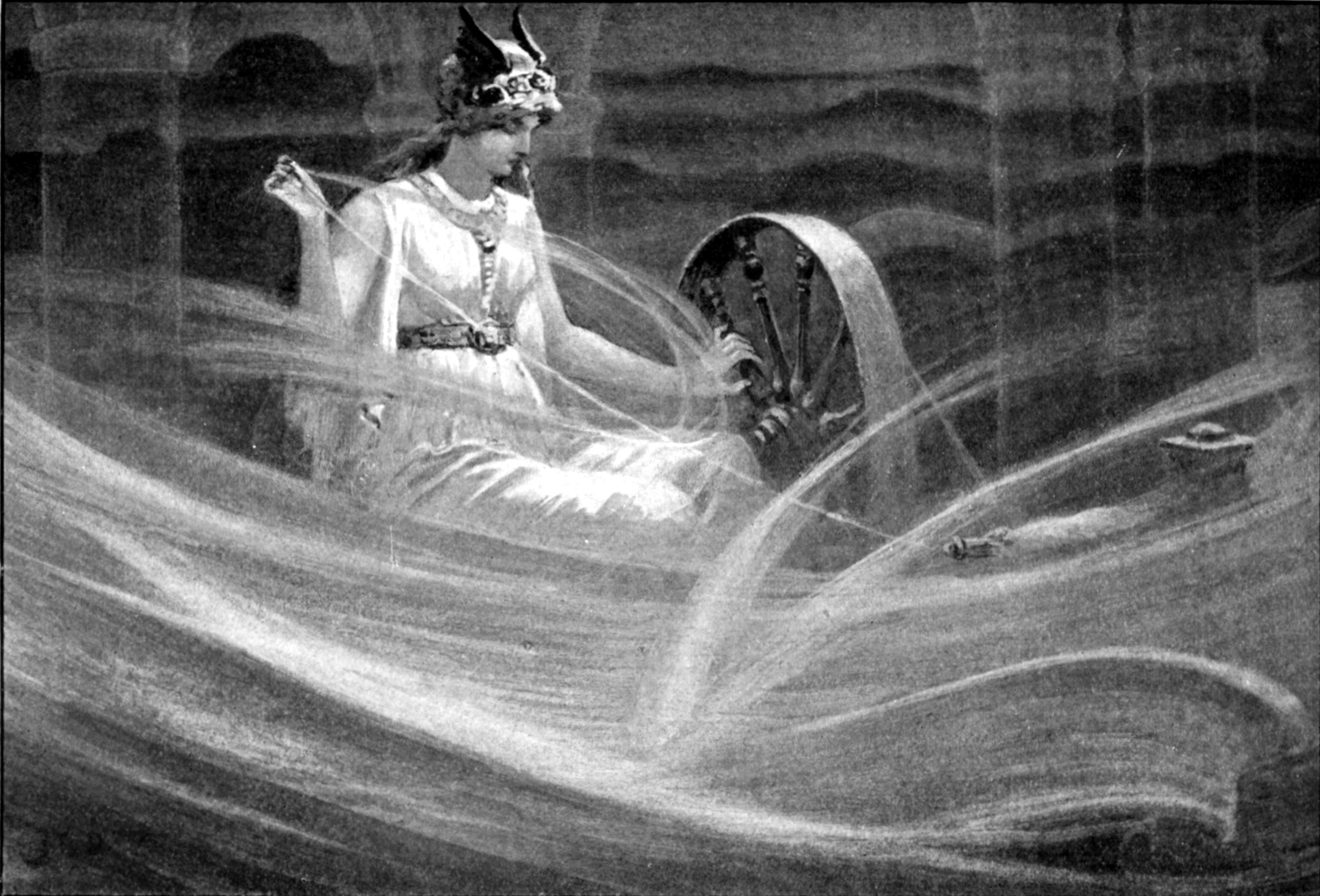
_The_Blind_Leading_the_Blind.jpg)