Egyptians, E-thi-o’-pi-ans, Nubians and Hebrews are the Same Ethnic People: NILE VALLEY: North Africa / Sahara / Horn of Africa and West Asia..
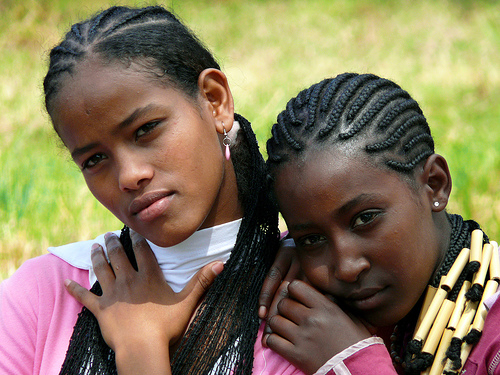
This is the Ancient Nuzi Map of Eden, which supports the existence of the African Eden.

The Nuzi Map – made of clay may have been made 120 yearsbefore The Flood of Noah or possibly closer to Creation.


“The Nuzi Map portrays the main city within Eden/Aad as being Southof the cited mid-point. That is, on the Nuzi Map the city of Aid appears to be perhaps as far south as the Dahlak Archipelago to the Northeast of Asmara, Eritrea (Ethiopia) or nearer the Sudan/Eritrean borderor even further to the North perhaps nearer the Suakin Archipelago andPort Sudan. It is very probable that ruins of Eden will be found throughout this entire area.” The Nuzi map proves the existence of the 4 rivers chronicled in the “Holy Bible”.
 The Nuzi map proves the existence of the 4 rivers chronicled in the “Holy Bible”.
Those 4 rivers traverse around the entire country ofEthiopia/HaBashan. Eden is located in Ethiopia.
The term for Eden was Aden/Adin/Aad – which also means: To give pleasures, has the same prime root word as Eden or Adan, to be soft pleasant or voluptuous land. Basically, this was the best place in the whole world to live flourish and be fruitful.
Egypt-Ethiopia/Kush-Nubia-Sudan was some of the places where man walked with GOD in the cool of the day ‘Where the Son of God’met with man-kind. It would be the same place where, people wouldreturn after the Deluge – they would return to their nativity – Afrika.
 NOTE: When the word Ethiopia is used it referred to ALL of AFRICAand not just the current location. Africa, Ethiopia, Egypt, Nubia are different words for the same people!
We now see that the Fertile Crescent was connected to the otherFertile Crescent in the Nile Valley and along the Nile River that traversed through the center of Africa and beginning in what is now callUganda.
Where they from the same source?
Do you really believe that people never traveled UP and DOWNthewhole Nile in all the thousands of years man has lived on thisEarth-planet?
And since they did, some people stayed where they traveled and mini-civilizations flourished.
The locale where the Biblical Adam and Eve, otherwise known as the

The Adamite Unit: (the Wombman and the Hue-Man) was probablyborn is now
Sudan/Ethiopia/Kenya at the Breast of the East African continent.
The Egyptians has identified this region as the (Mouth of the Nile)were the “Original” people resided.
 The Tekeze River on the Nuzi map is not shown on many modern maps, flows into the Atbara River, which is one of the three main tributaries of the Nile River. And, it appears that the Tekeze River is the river that is clearly shown on the ancient Nuzi Map and is very close to Aad/Eden.
The Tekeze River begins in modern Ethiopia on the Ethiopian/Eritrean border, traverses West-northwest throughEthiopia and Eritrea, and then flows into the Atbara as it enters theSudan.
The Atbara then flows northwest through Sudan until it meets the Nileat the town of Atbarah, Sudan.
 This city of Atbarah is located on the Southeast corner of the big bend of the Nile (i.e. South of the 5th cataract or waterfall).
Remember Indigenous peoples “never” used the phrase CATARACTthat was a European invention to divide the Family of Africa.
Thus, the Nuzi Map reveals that the Edenic City of Aad is in very close proximity to the Tekeze River,
Which begins due South of the Dahlak Archipelago (Ethiopia).Therefore, Eden is in Africa near the “East or Horn of Africa”.
(Excerpted from an internet site) “Ekowa©
African Presence In Early Asia, Edited by Runoko Rashidi & Ivan Van Sertima
African Origins Of Civilization, by Cheikh Anta Diop

The (four ) major ethnic groups of Ethiopia today are
The Tigrais, Amharas, Afar and Oromos.
Together, they account for approximately three-quarters of thetotal national population.
Amhara, Tigrais, and Gurages
Speak semetic languages and Are considered to be descendants ofSouthern Arabian Conquerors,
who trace their Ancestry back to Ancient (Queen of Sheba,) Mosesand King Solomon.

(click link to see Ethiopian/Yemenis mtDna breakdown)…
articlerender.fcgi & mtdna TB1
Whereas Tigrais still live in the area of the Ancient Aksum kingdom, the Amharas and Gurages have expanded inland.
The Semitic-speaking Axumites, or Habash sometimes Amharic~Abesha, አበሻ `ābešā; (Abyssinians), had their capital city, Aksum,
In the western part of the province of Tigray.
During the first 6 centuries (1a.d.- 6a.d) they controlled territoriesNorth to Upper Egypt, east to the Gulf of Aden and
Southern Arabia, south to the Omo River, and west to the Cushite Kingdom of Meroë (Munro-Hay 1991).
Because Amharas have largely taken the role of the political andcultural elite in the country,
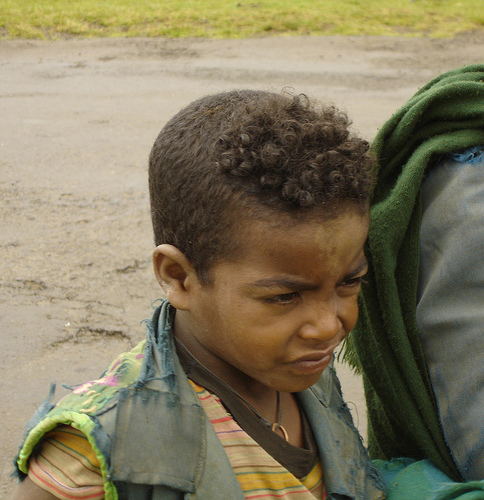
There is a process of “Amharization,” which can be understood, at least partly, as a matter of prestige and
which leads to the cultural assimilation of other minority populations.
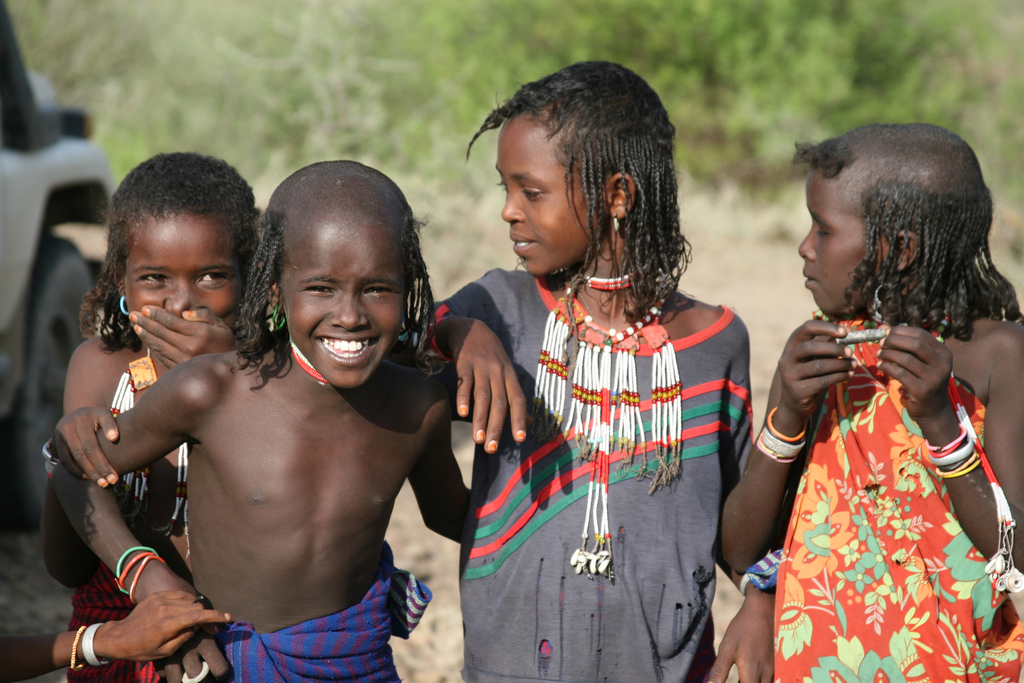
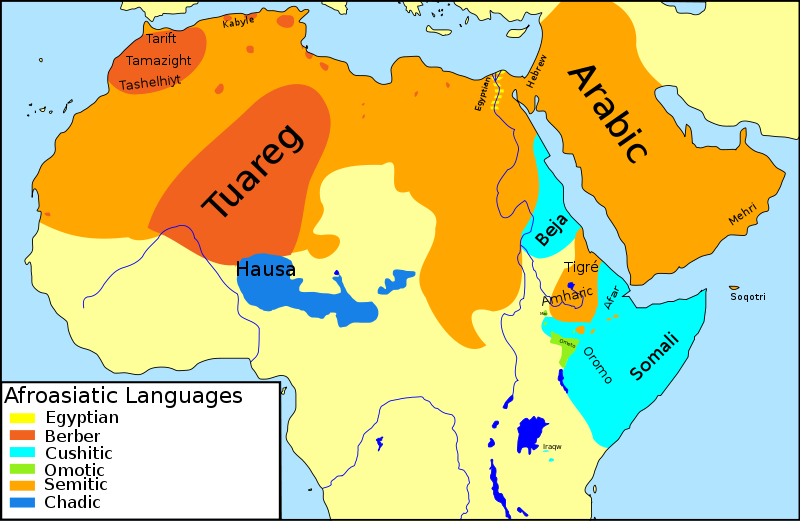
The Oromos and the Hamer People as well as the Afars speak Omoticor Cushitic languages and are purported to have connectionsto
Ancient Egyptians,
Since the land of Cush—the son of Biblical Ham—is generally considered to be in the vicinity of the Ancient cities of Meroë and
Napata, located in present-day Sudan.
Yet it should be stressed here that the split between the Cushitic andSemitic languages, branches of the Afro-Asiatic linguistic
family, is ancient, probably predating the Holocene
(see, e.g., Militarev [2003]).

The linguistic reconstructions of Semitic vocabulary, related tofarming and agriculture, have supported the theory that the
On the other hand, the finding of all major branches of the Afro-Asiatic language tree in Africa/Ethiopia,
Including those that are not spoken elsewhere in the world, suggests that the homeland of the Afro-Asiatic
language family may have been somewhere close to Africa’s southwestern Ethiopia (Ehret 1995).
However, both cultural and historic evidence show tight connections between East Africa and the Semitic cultural substrate in
the Near East and southern Arabia, Which points to four distinct phases of Semitic cultural intrusion into Ethiopia:

First, related to the Sabaens in the 1st millennium b.c.;
Second, as the arrival of Falasha Jews from southern Arabia in the first 2 centuries a.d.;
Third, during the 4th–6th centuries, when Syrian missionaries brought,
Christianity to Aksumites/Axumites አፁሚተand to their descendants,
The Tigrais ቲግራኢስ and the Amharas አምሃራስ :
And fourth, because of the influence of Muslim Arabs, whichprimarily affected
The southeastern parts of the country..…
(Levine 1974). The ethnonym “Ethi-op-ians”—the people with the “burnt face”—was coined by the Greeks, although it may originally havebeen applied
The ethnonym “Ethi-op-ians”—the people with the “burnt face”—was coined by the Greeks, although it may originally havebeen applied
to the Nubians, who were (also) part of the Cushite/Kushite kingdoms.
(Harris 1971)
{A total of 168 different mtDNA Haplotypes} were observed in
270 Ethiopians and Eritreans, and 72 Haplotypes were recovered in115 Yemeni samples
Approximately one-half of both Ethiopian (52.2%) and Yemeni (45.7%)
Whereas the other half was divided between derived subclades ofhaplogroups M and N (fig. 2B; table 1) that are,
With the exception of M1 and U6 lineages, more common outside Africa.
Consistent with the coexistence of Sub/SupraSaharan African and Eurasian
mtDNA lineages of “Ethiopian, Egyptian, and Yemeni” populations,the MDS plot (fig. 3) Clustered, Together with Egyptians,
In between the Near Eastern and the West African and southern African clusters.
It is interesting that both Semitic- and Cushitic-speaking populations of Ethiopia
were close to each other and did not reveal significant differences
(P>.05) in FSTdistances between themselves (table A7).

Virgin Mary and angels on mural in Abreha and Atsbeha church

Ethiopian Painting 2005 by Sean McClean

Early Painting of African Jesus (Yeshua) from Coptic Museum in Cairo, Egypt (6th century BC)
(Eth-ic) -definition: a set of moral principles, esp. ones relating
to or affirming a “specified group” , field or form of conduct.
(-Opia) Origin Greek- meaning: Ops, Op, Eye , Face ....

African-Hebrew Jesus (Yeshua)* and Disciples (circa) 300 A.D.
African-Asiatic- Hebrew Black Sabbath Roots …

Halle Salassie
Reign as emperor of Ethiopia is the best known and perhaps most influential in the nation’s history. He is seen by Rastafarians as Jah incarnate.ubian ኑቢአን Migrations Across Africa and West Asia etc.. (Nubian Mother and Child in image below:)
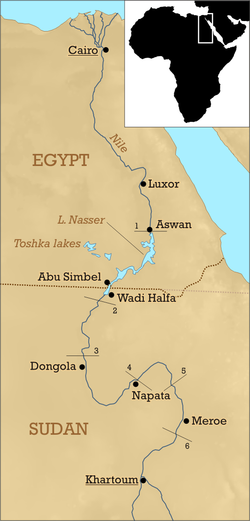

The Nubians of Central Africa
A cluster of 7 Nubian Tribes in 8 countries
The Nubians consist of “Seven” Non-Arab Muslim tribes who originated in the Nubia region,
for centuries, this territory was a crossroads between Egypt and the Nubian-Ethiopian African tribal kingdoms.
Some Nubians are now Settled in:
1.) Ethiopia
2.) Kenya
3.) Nile Valley
4.) Uganda
5.) North Africa (Sahara) ex.. Chad, Egypt and Libya…
6.) Saudi Arabia
7.) Yemen,
8.) Oman
and other countries etc..
From the 1500’s until the 1800’s, the Ottoman Empire encroachedupon the Nubia region. As a result, many Nubians migrated to remote areas along the Nile. Distinct groups evolved and were named according to their locations. For example, those who settled near the Wadi Kenuzbecame knows as the Kenuzi; those who settled in Dongola became known as the Dongolawi.

In the 1960’s, many of the Nubian villages were flooded as a result of the construction of the Aswan High Dam. About 100,000 Nubianswere forced to resettle in “New Nubia,” 20 miles north of Aswan. Others relocated in Uganda and Kenya.
Most Nubian groups speak their own dialect of the Nubian language.

However, many also speak Arabic, which is the common language ofbusiness and trade. Although their languages are different, each group is identical in social, economic, and cultural organization.
What Are Their Lives Like?
The Nubian economy is based on agriculture. During the winter months they grow wheat, barley, millet, beans, peas, and watermelons.Mangoes, citrus fruits, and palm dates are also part of the Nubian diet.
A thin, course bread called dura, is one of their basic staple foods. Pieces of the bread are usually piled on top of each other and eaten with vegetables and sauces, or spread with date jelly.

In Old Nubia, men migrated to the big cities to find work, while the women farmed the land, cared for the animals, and did household chores.
Today, since the land is located far from their dwellings, men do most of the field work while the women work at the home.
Some women have also found employment as schoolteachers, public service workers, and seamstresses. Some of the men now own grocery stores or drive cabs.
The typical Nubian house is very spacious, with several large rooms that are able to accommodate the extended family members and guests. In the center of each home is an open courtyard. The front of the house is colorfully painted with geometric patterns. Most of the paintings and decorations on the homes have religious connotations. The colorful designs are a distinctive and admired feature of Nubian culture.
The literacy rate among Nubians is high in comparison to their ruralEgyptian neighbors.
Primary and secondary schools have been set up in New Nubia, and there are also teacher-training facilities in the area.
In addition to education, policies, radio and television are other ways in which socialization takes place among the Nubians.
For centuries, the Nubians often held lengthy religious and agricultural ceremonies. However, since relocation, the ceremonies have been shortened and are now limited to the villages. During these ceremonies,the Nubians express themselves through singing, dancing, and beating drums.
What Are Their Beliefs? The Nubians were converted to Christianity during the sixth century. They remained so until the gradual process of Islamization began taking place from the fourteenth until the seventeenth centuries. Today, the Nubians are virtually all Muslims. However, their traditional animistic beliefs (belief that non-living objects have spirits) are still mingled in with their Islamic practices.
The traditional beliefs of the Nubians were centered on the spirit of the Nile. The Nile is believed to have life-sustaining power and to hold the power of life and death within it.
The people believe that the river is endowed with angels, sheiks (religious leaders), and other powerful beings. The sheiks are sought daily for their advice in the areas of health, fertility, and marriage.
The Kenuzi Nubians have an annual festival known as the “Saints Day Celebration,” or moulid. This holiday reinforces the history of theKenuzi. Gifts are presented at the ancestral shrines in the fulfillment of a promise made the previous year. Colorful processions are held during this time of celebration. Dancing, singing, and feasting are also included in the festivities. The moulid is still celebrated in New Nubia each year.
What Are Their Needs?
The Nubians in “Kenya and Uganda” have no Christian resources or missions agency working among them.
Most Nubians Tribes have not heard a clear presentation of the Gospel…
The Nubians in Egypt have only portions of the Bible written in their language.
Only one missions agency is currently working among them. Intense prayer, increased evangelism efforts, and additional Christianresources are necessary to reach these tribes who were once a Christian people…
Prayer Points
1. Pray that the Lord will raise up laborers who are willing to invest long term service as missionaries to the Nubians of Central Africa.
2. Pray that loving African Christians will gain a vision to see the Nubians reached with the Gospel.
3. Ask the Lord to save key leaders among the Nubians who will boldly declare the Gospel.
4. Pray for cooperation among missions agencies that are targeting these tribes.
5. Pray that God will raise up linguists to translate the Word of God into each of the tribal languages.
6. Take authority over the spiritual principalities and powers that
are keeping these tribes bound.
7. Ask God to send medical teams and humanitarian aid workers to minister to the Nubians.
8. Pray that strong local churches will be planted among each of these tribes.

Unreached Peoples of Nubia Prayer Profiles
Joshua Project – Nubians, of Dongola-Dongolawi Sudan Ethnic People Profile
Bileh* Gambela