- Dec. at 86 (1856-1943)22,759 VOTESAgree or Disagree?
- Birthplace: Smiljan, Croatia
Nikola Tesla was a Serbian American inventor, electrical engineer, mechanical engineer, physicist, and futurist best known for his contributions to the design of the modern alternating current electricity supply system. Tesla gained experience in telephony and electrical engineering before immigrating to the United States in 1884 to work for Thomas Edison in New York City. He soon struck out on his own with financial backers, setting up laboratories and companies to develop a range of electrical devices. His patented AC induction motor and transformer were licensed by George Westinghouse, who also hired Tesla for a short time as a consultant.More Nikola Tesla
- 2Dec. at 76 (1879-1955)26,471 VOTES
- Birthplace: Ulm, Germany
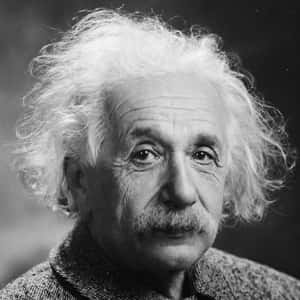
Albert Einstein ( EYEN-styne; German: [ˈalbɛɐ̯t ˈʔaɪnʃtaɪn] (listen); 14 March 1879 – 18 April 1955) was a German-born theoretical physicist who developed the theory of relativity, one of the two pillars of modern physics (alongside quantum mechanics). His work is also known for its influence on the philosophy of science. He is best known to the general public for his mass–energy equivalence formula E = m c 2 {\displaystyle E=mc^{2}} , which has been dubbed "the world's most famous equation". He received the 1921 Nobel Prize in Physics "for his services to theoretical physics, and especially for his discovery of the law of the photoelectric effect", a pivotal step in the development of quantum theory. Near the beginning of his career, Einstein thought that Newtonian mechanics was no longer enough to reconcile the laws of classical mechanics with the laws of the electromagnetic field. This led him to develop his special theory of relativity during his time at the Swiss Patent Office in Bern (1902–1909). However, he realized that the principle of relativity could also be extended to gravitational fields, and he published a paper on general relativity in 1916 with his theory of gravitation. He continued to deal with problems of statistical mechanics and quantum theory, which led to his explanations of particle theory and the motion of molecules. He also investigated the thermal properties of light which laid the foundation of the photon theory of light. In 1917, he applied the general theory of relativity to model the structure of the universe.Except for one year in Prague, Einstein lived in Switzerland between 1895 and 1914, during which time he renounced his German citizenship in 1896, then received his academic diploma from the Swiss federal polytechnic school (later the Eidgenössische Technische Hochschule, ETH) in Zürich in 1900. After being stateless for more than five years, he acquired Swiss citizenship in 1901, which he kept for the rest of his life. In 1905, he was awarded a PhD by the University of Zurich. The same year, he published four groundbreaking papers during his renowned annus mirabilis (miracle year) which brought him to the notice of the academic world at the age of 26. Einstein taught theoretical physics at Zurich between 1912 and 1914, before he left for Berlin, where he was elected to the Prussian Academy of Sciences. In 1933, while Einstein was visiting the United States, Adolf Hitler came to power. Because of his Jewish background, Einstein did not return to Germany. He settled in the United States and became an American citizen in 1940. On the eve of World War II, he endorsed a letter to President Franklin D. Roosevelt alerting him to the potential development of "extremely powerful bombs of a new type" and recommending that the US begin similar research. This eventually led to the Manhattan Project. Einstein supported the Allies, but he generally denounced the idea of using nuclear fission as a weapon. He signed the Russell–Einstein Manifesto with British philosopher Bertrand Russell, which highlighted the danger of nuclear weapons. He was affiliated with the Institute for Advanced Study in Princeton, New Jersey, until his death in 1955. Einstein published more than 300 scientific papers and more than 150 non-scientific works. His intellectual achievements and originality have made the word "Einstein" synonymous with "genius". Eugene Wigner wrote of Einstein in comparison to his contemporaries that "Einstein's understanding was deeper even than Jancsi von Neumann's. His mind was both more penetrating and more original than von Neumann's. And that is a very remarkable statement."More Albert Einstein- Dig Deeper...Behind Einstein's Disastrous First Marriage To Physicist Mileva Marić
- And Deeper...Oddball Facts About Albert Einstein's Eccentricity
- #174 of 508 onThe Best Writers of All Time
- 3Dec. at 84 (1643-1727)23,097 VOTES
- Birthplace: Woolsthorpe-by-Colsterworth, United Kingdom
Sir Isaac Newton (25 December 1642 – 20 March 1726/27) was an English mathematician, physicist, astronomer, theologian, and author (described in his own day as a "natural philosopher") who is widely recognised as one of the most influential scientists of all time, and a key figure in the scientific revolution. His book Philosophiæ Naturalis Principia Mathematica (Mathematical Principles of Natural Philosophy), first published in 1687, laid the foundations of classical mechanics. Newton also made seminal contributions to optics, and shares credit with Gottfried Wilhelm Leibniz for developing the infinitesimal calculus. In Principia, Newton formulated the laws of motion and universal gravitation that formed the dominant scientific viewpoint until it was superseded by the theory of relativity. Newton used his mathematical description of gravity to prove Kepler's laws of planetary motion, account for tides, the trajectories of comets, the precession of the equinoxes and other phenomena, eradicating doubt about the Solar System's heliocentricity. He demonstrated that the motion of objects on Earth and celestial bodies could be accounted for by the same principles. Newton's inference that the Earth is an oblate spheroid was later confirmed by the geodetic measurements of Maupertuis, La Condamine, and others, convincing most European scientists of the superiority of Newtonian mechanics over earlier systems. Newton built the first practical reflecting telescope and developed a sophisticated theory of colour based on the observation that a prism separates white light into the colours of the visible spectrum. His work on light was collected in his highly influential book Opticks, published in 1704. He also formulated an empirical law of cooling, made the first theoretical calculation of the speed of sound, and introduced the notion of a Newtonian fluid. In addition to his work on calculus, as a mathematician Newton contributed to the study of power series, generalised the binomial theorem to non-integer exponents, developed a method for approximating the roots of a function, and classified most of the cubic plane curves. Newton was a fellow of Trinity College and the second Lucasian Professor of Mathematics at the University of Cambridge. He was a devout but unorthodox Christian who privately rejected the doctrine of the Trinity. Unusually for a member of the Cambridge faculty of the day, he refused to take holy orders in the Church of England. Beyond his work on the mathematical sciences, Newton dedicated much of his time to the study of alchemy and biblical chronology, but most of his work in those areas remained unpublished until long after his death. Politically and personally tied to the Whig party, Newton served two brief terms as Member of Parliament for the University of Cambridge, in 1689–90 and 1701–02. He was knighted by Queen Anne in 1705 and spent the last three decades of his life in London, serving as Warden (1696–1700) and Master (1700–1727) of the Royal Mint, as well as president of the Royal Society (1703–1727).More Isaac Newton- Dig Deeper...The Surprisingly Sad, Strange Life of Sir Isaac Newton
- #103 of 508 onThe Best Writers of All Time
- #9 of 3,183 onThe Most Influential People Of All Time
- 4Dec. at 67 (1452-1519)27,168 VOTES
- Birthplace: Vinci, Italy
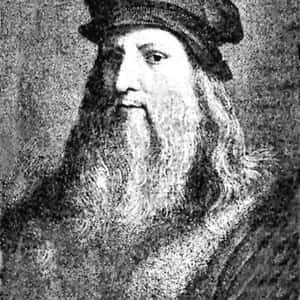
Leonardo di ser Piero da Vinci was an Italian polymath, painter, sculptor, architect, musician, mathematician, engineer, inventor, anatomist, geologist, cartographer, botanist, and writer. He is widely considered to be one of the greatest painters of all time and perhaps the most diversely talented person ever to have lived. His genius, perhaps more than that of any other figure, epitomized the Renaissance humanist ideal. Leonardo has often been described as the archetype of the Renaissance Man, a man of "unquenchable curiosity" and "feverishly inventive imagination". According to art historian Helen Gardner, the scope and depth of his interests were without precedent and "his mind and personality seem to us superhuman, the man himself mysterious and remote". Marco Rosci states that while there is much speculation about Leonardo, his vision of the world is essentially logical rather than mysterious, and that the empirical methods he employed were unusual for his time. Born out of wedlock to a notary, Piero da Vinci, and a peasant woman, Caterina, in Vinci in the region of Florence, Leonardo was educated in the studio of the renowned Florentine painter Verrocchio.More Leonardo da Vinci- Dig Deeper...16 Famous Bodies From History Found In Inconspicuous Places
- And Deeper...250+ Famous Aries Celebrities
- #80 of 508 onThe Best Writers of All Time
- 5Dec. at 77 (1564-1642)16,003 VOTES
- Birthplace: Pisa, Italy
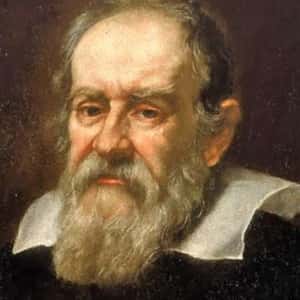
Galileo Galilei ( GAL-il-AY-oh, also US: -EE-oh, Italian: [ɡaliˈlɛːo ɡaliˈlɛi]; 15 February 1564 – 8 January 1642) was an astronomer, physicist and engineer, sometimes described as a polymath from Pisa. Galileo has been called the "father of observational astronomy", the "father of modern physics", the "father of the scientific method", and the "father of modern science".Galileo studied speed and velocity, gravity and free fall, the principle of relativity, inertia, projectile motion and also worked in applied science and technology, describing the properties of pendulums and "hydrostatic balances", inventing the thermoscope and various military compasses, and using the telescope for scientific observations of celestial objects. His contributions to observational astronomy include the telescopic confirmation of the phases of Venus, the observation of the four largest satellites of Jupiter, the observation of Saturn's rings, and the analysis of sunspots. Galileo's championing of heliocentrism and Copernicanism was controversial during his lifetime, when most subscribed to geocentric models such as the Tychonic system. He met with opposition from astronomers, who doubted heliocentrism because of the absence of an observed stellar parallax. The matter was investigated by the Roman Inquisition in 1615, which concluded that heliocentrism was "foolish and absurd in philosophy, and formally heretical since it explicitly contradicts in many places the sense of Holy Scripture". Galileo later defended his views in Dialogue Concerning the Two Chief World Systems (1632), which appeared to attack Pope Urban VIII and thus alienated him and the Jesuits, who had both supported Galileo up until this point. He was tried by the Inquisition, found "vehemently suspect of heresy", and forced to recant. He spent the rest of his life under house arrest. While under house arrest, he wrote Two New Sciences, in which he summarized work he had done some forty years earlier on the two sciences now called kinematics and strength of materials.More Galileo Galilei- #14 of 3,183 onThe Most Influential People Of All Time
- #70 of 560 onPeople We Wish Were Still Alive
- #3 of 309 onThe Most Important Leaders In World History
- 6Dec. at 62 (383 BC-321 BC)14,991 VOTES
- Birthplace: Stagira, Greece
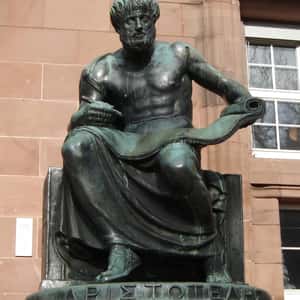
Aristotle (; Greek: Ἀριστοτέλης Aristotélēs, pronounced [aristotélɛːs]; 384–322 BC) was a Greek philosopher during the Classical period in Ancient Greece, the founder of the Lyceum and the Peripatetic school of philosophy and Aristotelian tradition. Along with his teacher Plato, he has been called the "Father of Western Philosophy". His writings cover many subjects – including physics, biology, zoology, metaphysics, logic, ethics, aesthetics, poetry, theatre, music, rhetoric, psychology, linguistics, economics, politics and government. Aristotle provided a complex synthesis of the various philosophies existing prior to him, and it was above all from his teachings that the West inherited its intellectual lexicon, as well as problems and methods of inquiry. As a result, his philosophy has exerted a unique influence on almost every form of knowledge in the West and it continues to be a subject of contemporary philosophical discussion. Little is known about his life. Aristotle was born in the city of Stagira in Northern Greece. His father, Nicomachus, died when Aristotle was a child, and he was brought up by a guardian. At seventeen or eighteen years of age, he joined Plato's Academy in Athens and remained there until the age of thirty-seven (c. 347 BC). Shortly after Plato died, Aristotle left Athens and, at the request of Philip II of Macedon, tutored Alexander the Great beginning in 343 BC. He established a library in the Lyceum which helped him to produce many of his hundreds of books on papyrus scrolls. Though Aristotle wrote many elegant treatises and dialogues for publication, only around a third of his original output has survived, none of it intended for publication.Aristotle's views on physical science profoundly shaped medieval scholarship. Their influence extended from Late Antiquity and the Early Middle Ages into the Renaissance, and were not replaced systematically until the Enlightenment and theories such as classical mechanics. Some of Aristotle's zoological observations found in his biology, such as on the hectocotyl (reproductive) arm of the octopus, were disbelieved until the 19th century. His works contain the earliest known formal study of logic, studied by medieval scholars such as Peter Abelard and John Buridan. Aristotle's influence on logic also continued well into the 19th century. He influenced Islamic thought during the Middle Ages, as well as Christian theology, especially the Neoplatonism of the Early Church and the scholastic tradition of the Catholic Church. Aristotle was revered among medieval Muslim scholars as "The First Teacher" and among medieval Christians like Thomas Aquinas as simply "The Philosopher". His ethics, though always influential, gained renewed interest with the modern advent of virtue ethics, such as in the thinking of Alasdair MacIntyre and Philippa Foot.More Aristotle- #36 of 3,183 onThe Most Influential People Of All Time
- #84 of 560 onPeople We Wish Were Still Alive
- #10 of 309 onThe Most Important Leaders In World History
- 711,634 VOTESArchimedes of Syracuse (; Greek: Ἀρχιμήδης; c. 287 – c. 212 BC) was a Greek mathematician, physicist, engineer, inventor, and astronomer. Although few details of his life are known, he is regarded as one of the leading scientists in classical antiquity. Generally considered the greatest mathematician of antiquity and one of the greatest of all time, Archimedes anticipated modern calculus and analysis by applying concepts of infinitesimals and the method of exhaustion to derive and rigorously prove a range of geometrical theorems, including the area of a circle, the surface area and volume of a sphere, and the area under a parabola.Other mathematical achievements include deriving an accurate approximation of pi, defining and investigating the spiral bearing his name, and creating a system using exponentiation for expressing very large numbers. He was also one of the first to apply mathematics to physical phenomena, founding hydrostatics and statics, including an explanation of the principle of the lever. He is credited with designing innovative machines, such as his screw pump, compound pulleys, and defensive war machines to protect his native Syracuse from invasion. Archimedes died during the Siege of Syracuse when he was killed by a Roman soldier despite orders that he should not be harmed. Cicero describes visiting the tomb of Archimedes, which was surmounted by a sphere and a cylinder, which Archimedes had requested be placed on his tomb to represent his mathematical discoveries. Unlike his inventions, the mathematical writings of Archimedes were little known in antiquity. Mathematicians from Alexandria read and quoted him, but the first comprehensive compilation was not made until c. 530 AD by Isidore of Miletus in Byzantine Constantinople, while commentaries on the works of Archimedes written by Eutocius in the sixth century AD opened them to wider readership for the first time. The relatively few copies of Archimedes' written work that survived through the Middle Ages were an influential source of ideas for scientists during the Renaissance, while the discovery in 1906 of previously unknown works by Archimedes in the Archimedes Palimpsest has provided new insights into how he obtained mathematical results.More Archimedes
- Dig Deeper...Famous People Who Were Murdered
- #29 of 3,183 onThe Most Influential People Of All Time
- #1 of 17 onHow Would Notable Historical Geniuses Do In A Modern High School?
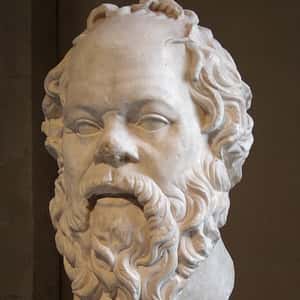
- 811,502 VOTESSocrates (; Ancient Greek: Σωκρᾰ́της, romanized: Sōkrátēs, [sɔːkrátɛːs]; c. 470 – 399 BC) was a classical Greek (Athenian) philosopher credited as one of the founders of Western philosophy, and as being the first moral philosopher of the Western ethical tradition of thought. An enigmatic figure, he made no writings, and is known chiefly through the accounts of classical writers writing after his lifetime, particularly his students Plato and Xenophon. Other sources include the contemporaneous Antisthenes, Aristippus, and Aeschines of Sphettos. Aristophanes, a playwright, is the main contemporary author to have written plays mentioning Socrates during Socrates' lifetime, though a fragment of Ion of Chios' Travel Journal provides important information about Socrates' youth.Plato's dialogues are among the most comprehensive accounts of Socrates to survive from antiquity, from which Socrates has become renowned for his contributions to the fields of ethics and epistemology. It is this Platonic Socrates who lends his name to the concepts of Socratic irony and the Socratic method, or elenchus. However, questions remain regarding the distinction between the real-life Socrates and Plato's portrayal of Socrates in his dialogues. Socrates exerted a strong influence on philosophers in later antiquity and in the modern era. Depictions of Socrates in art, literature and popular culture have made him one of the most widely known figures in the Western philosophical tradition.More Socrates
- Dig Deeper...The Best Books About Socrates
- #11 of 3,183 onThe Most Influential People Of All Time
- #69 of 560 onPeople We Wish Were Still Alive
- 93,829 VOTESEuclid (; Ancient Greek: Εὐκλείδης – Eukleídēs, pronounced [eu̯.kleː.dɛːs]; fl. 300 BC), sometimes called Euclid of Alexandria to distinguish him from Euclid of Megara, was a Greek mathematician, often referred to as the "founder of geometry" or the "father of geometry". He was active in Alexandria during the reign of Ptolemy I (323–283 BC). His Elements is one of the most influential works in the history of mathematics, serving as the main textbook for teaching mathematics (especially geometry) from the time of its publication until the late 19th or early 20th century. In the Elements, Euclid deduced the theorems of what is now called Euclidean geometry from a small set of axioms. Euclid also wrote works on perspective, conic sections, spherical geometry, number theory, and mathematical rigour. The English name Euclid is the anglicized version of the Greek name Εὐκλείδης, which means "renowned, glorious".
- 109,417 VOTESPythagoras of Samos (c. 570 – c. 495 BC) was an ancient Ionian Greek philosopher and the eponymous founder of Pythagoreanism. His political and religious teachings were well known in Magna Graecia and influenced the philosophies of Plato, Aristotle, and, through them, Western philosophy. Knowledge of his life is clouded by legend, but he appears to have been the son of Mnesarchus, a gem-engraver on the island of Samos. Modern scholars disagree regarding Pythagoras's education and influences, but they do agree that, around 530 BC, he travelled to Croton, where he founded a school in which initiates were sworn to secrecy and lived a communal, ascetic lifestyle. This lifestyle entailed a number of dietary prohibitions, traditionally said to have included vegetarianism, although modern scholars doubt that he ever advocated for complete vegetarianism. The teaching most securely identified with Pythagoras is metempsychosis, or the "transmigration of souls", which holds that every soul is immortal and, upon death, enters into a new body. He may have also devised the doctrine of musica universalis, which holds that the planets move according to mathematical equations and thus resonate to produce an inaudible symphony of music. Scholars debate whether Pythagoras developed the numerological and musical teachings attributed to him, or if those teachings were developed by his later followers, particularly Philolaus of Croton. Following Croton's decisive victory over Sybaris in around 510 BC, Pythagoras's followers came into conflict with supporters of democracy and Pythagorean meeting houses were burned. Pythagoras may have been killed during this persecution, or escaped to Metapontum, where he eventually died. In antiquity, Pythagoras was credited with many mathematical and scientific discoveries, including the Pythagorean theorem, Pythagorean tuning, the five regular solids, the Theory of Proportions, the sphericity of the Earth, and the identity of the morning and evening stars as the planet Venus. It was said that he was the first man to call himself a philosopher ("lover of wisdom") and that he was the first to divide the globe into five climatic zones. Classical historians debate whether Pythagoras made these discoveries, and many of the accomplishments credited to him likely originated earlier or were made by his colleagues or successors. Some accounts mention that the philosophy associated with Pythagoras was related to mathematics and that numbers were important, but it is debated to what extent, if at all, he actually contributed to mathematics or natural philosophy. Pythagoras influenced Plato, whose dialogues, especially his Timaeus, exhibit Pythagorean teachings. Pythagorean ideas on mathematical perfection also impacted ancient Greek art. His teachings underwent a major revival in the first century BC among Middle Platonists, coinciding with the rise of Neopythagoreanism. Pythagoras continued to be regarded as a great philosopher throughout the Middle Ages and his philosophy had a major impact on scientists such as Nicolaus Copernicus, Johannes Kepler, and Isaac Newton. Pythagorean symbolism was used throughout early modern European esotericism and his teachings as portrayed in Ovid's Metamorphoses influenced the modern vegetarian movement.More Pythagoras
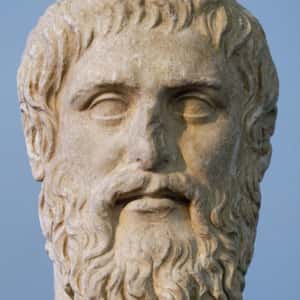
- 1114,402 VOTESPlato (; PLAY-toe Greek: Πλάτων Plátōn, pronounced [plá.tɔːn] in Classical Attic; 428/427 or 424/423 – 348/347 BC) was an Athenian philosopher during the Classical period in Ancient Greece, founder of the Platonist school of thought, and the Academy, the first institution of higher learning in the Western world. He is widely considered the pivotal figure in the history of Ancient Greek and Western philosophy, along with his teacher, Socrates, and his most famous student, Aristotle. Plato has also often been cited as one of the founders of Western religion and spirituality. The so-called Neoplatonism of philosophers like Plotinus and Porphyry influenced Saint Augustine and thus Christianity. Alfred North Whitehead once noted: "the safest general characterization of the European philosophical tradition is that it consists of a series of footnotes to Plato."Plato was the innovator of the written dialogue and dialectic forms in philosophy. Plato also appears to have been the founder of Western political philosophy. His most famous contribution bears his name, Platonism (also ambiguously called either Platonic realism or Platonic idealism), the doctrine of the Forms known by pure reason to provide an idealist solution to the problem of universals. He is also the namesake of Platonic love and the Platonic solids. His own most decisive philosophical influences are usually thought to have been along with Socrates, the pre-Socratics Pythagoras, Heraclitus and Parmenides, although few of his predecessors' works remain extant and much of what we know about these figures today derives from Plato himself. Unlike the work of nearly all of his contemporaries, Plato's entire body of work is believed to have survived intact for over 2,400 years. Although their popularity has fluctuated over the years, the works of Plato have never been without readers since the time they were written.More Plato
- #11 of 508 onThe Best Writers of All Time
- #25 of 3,183 onThe Most Influential People Of All Time
- #96 of 560 onPeople We Wish Were Still Alive
- 12Dec. at 41 (1912-1954)7,091 VOTES
- Birthplace: Maida Vale, London, United Kingdom
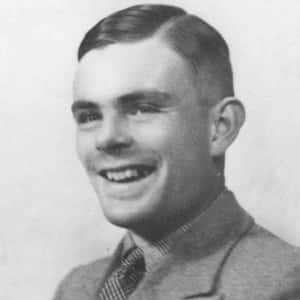
Alan Mathison Turing (; 23 June 1912 – 7 June 1954) was an English mathematician, computer scientist, logician, cryptanalyst, philosopher and theoretical biologist. Turing was highly influential in the development of theoretical computer science, providing a formalisation of the concepts of algorithm and computation with the Turing machine, which can be considered a model of a general-purpose computer. Turing is widely considered to be the father of theoretical computer science and artificial intelligence. Despite these accomplishments, he was not fully recognised in his home country during his lifetime, due to his homosexuality, and because much of his work was covered by the Official Secrets Act. During the Second World War, Turing worked for the Government Code and Cypher School (GC&CS) at Bletchley Park, Britain's codebreaking centre that produced Ultra intelligence. For a time he led Hut 8, the section that was responsible for German naval cryptanalysis. Here, he devised a number of techniques for speeding the breaking of German ciphers, including improvements to the pre-war Polish bombe method, an electromechanical machine that could find settings for the Enigma machine. Turing played a pivotal role in cracking intercepted coded messages that enabled the Allies to defeat the Nazis in many crucial engagements, including the Battle of the Atlantic, and in so doing helped win the war. Due to the problems of counterfactual history, it's hard to estimate what effect Ultra intelligence had on the war, but at the upper end it has been estimated that this work shortened the war in Europe by more than two years and saved over 14 million lives.After the war, Turing worked at the National Physical Laboratory, where he designed the Automatic Computing Engine, which was one of the first designs for a stored-program computer. In 1948, Turing joined Max Newman's Computing Machine Laboratory at the Victoria University of Manchester, where he helped develop the Manchester computers and became interested in mathematical biology. He wrote a paper on the chemical basis of morphogenesis and predicted oscillating chemical reactions such as the Belousov–Zhabotinsky reaction, first observed in the 1960s. Turing was prosecuted in 1952 for homosexual acts; the Labouchere Amendment of 1885 had mandated that "gross indecency" was a criminal offence in the UK. He accepted chemical castration treatment, with DES, as an alternative to prison. Turing died in 1954, 16 days before his 42nd birthday, from cyanide poisoning. An inquest determined his death as a suicide, but it has been noted that the known evidence is also consistent with accidental poisoning. In 2009, following an Internet campaign, British Prime Minister Gordon Brown made an official public apology on behalf of the British government for "the appalling way he was treated". Queen Elizabeth II granted Turing a posthumous pardon in 2013. The Alan Turing law is now an informal term for a 2017 law in the United Kingdom that retroactively pardoned men cautioned or convicted under historical legislation that outlawed homosexual acts.On 15 July 2019 the Bank of England announced that Turing would be depicted on the United Kingdom's new £50 note.More Alan Turing- Dig Deeper...The Heroic Life And Tragic Death Of Alan Turing
- And Deeper...345 Famous Cancer Celebrities
- #48 of 3,183 onThe Most Influential People Of All Time
- 13Dec. at 70 (1473-1543)7,488 VOTES
- Birthplace: Toruń, Poland
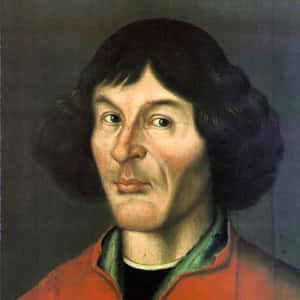
Nicolaus Copernicus (; Polish: Mikołaj Kopernik; German: Nikolaus Kopernikus; Niklas Koppernigk; 19 February 1473 – 24 May 1543) was a Renaissance-era mathematician and astronomer, who formulated a model of the universe that placed the Sun rather than Earth at the center of the universe, in all likelihood independently of Aristarchus of Samos, who had formulated such a model some eighteen centuries earlier.The publication of Copernicus' model in his book De revolutionibus orbium coelestium (On the Revolutions of the Celestial Spheres), just before his death in 1543, was a major event in the history of science, triggering the Copernican Revolution and making a pioneering contribution to the Scientific Revolution.Copernicus was born and died in Royal Prussia, a region that had been part of the Kingdom of Poland since 1466. A polyglot and polymath, he obtained a doctorate in canon law and was also a mathematician, astronomer, physician, classics scholar, translator, governor, diplomat, and economist. In 1517 he derived a quantity theory of money—a key concept in economics—and in 1519 he formulated an economic principle that later came to be called Gresham's law.More Nicolaus Copernicus- #49 of 3,183 onThe Most Influential People Of All Time
- #13 of 17 onHow Would Notable Historical Geniuses Do In A Modern High School?
- #19 of 43 onThe Most Controversial Writers of All Time
- 14Dec. at 57 (1770-1827)10,079 VOTES
- Birthplace: Bonn, Germany
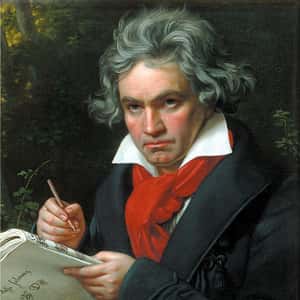
Ludwig van Beethoven, a remarkable figure in the world of classical music, emerged from the late 18th century as one of the most influential composers in Western history. Born in December 1770 in Bonn, Germany, Beethoven was imbued with musical talent at an early age, encouraged by his father, a musician in the Electoral court. His father's rigorous and sometimes harsh training regime honed Beethoven's skills as a pianist. By the time he was a teenager, Beethoven had already mastered the organ and violin, and was composing his music. Beethoven's musical prowess grew under the tutelage of renowned composers like Christian Gottlob Neefe and Franz Joseph Haydn. His move to Vienna in 1792 marked a significant expansion in his career. The city's vibrant musical culture acted as a fertile ground for his creativity, culminating in compositions that broke away from classical traditions, thereby heralding the dawn of the Romantic era in music. Despite facing the daunting challenge of progressive hearing loss, which began around 1796 and led to total deafness, Beethoven's determination remained undeterred. He continued to compose, producing many of his best-known works during this period, including the iconic "Symphony No. 9" and "Moonlight Sonata." Beethoven's legacy is a vast oeuvre of symphonies, sonatas, concertos, and quartets that have enriched the world's musical heritage. His works are hailed for their technical complexity, emotional depth, and innovative use of form. His life journey and extraordinary achievements continue to inspire musicians and music lovers worldwide, cementing his status as a titan in the realm of classical music.More Ludwig van Beethoven- Dig Deeper...18 Grim Facts About The Life Of Beethoven You Never Learned As A Kid
- And Deeper...195+ Famous Sagittarius Celebrities
- #1 of 1,151 onThe Greatest Musical Artists of All Time
- 15Dec. at 75 (1791-1867)4,776 VOTES
- Birthplace: Newington Butts, United Kingdom
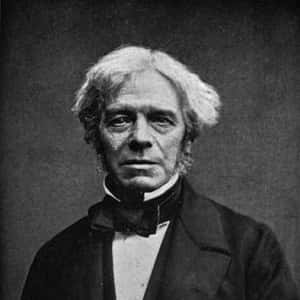
Michael Faraday FRS (; 22 September 1791 – 25 August 1867) was an English scientist who contributed to the study of electromagnetism and electrochemistry. His main discoveries include the principles underlying electromagnetic induction, diamagnetism and electrolysis. Although Faraday received little formal education, he was one of the most influential scientists in history. It was by his research on the magnetic field around a conductor carrying a direct current that Faraday established the basis for the concept of the electromagnetic field in physics. Faraday also established that magnetism could affect rays of light and that there was an underlying relationship between the two phenomena. He similarly discovered the principles of electromagnetic induction and diamagnetism, and the laws of electrolysis. His inventions of electromagnetic rotary devices formed the foundation of electric motor technology, and it was largely due to his efforts that electricity became practical for use in technology. As a chemist, Faraday discovered benzene, investigated the clathrate hydrate of chlorine, invented an early form of the Bunsen burner and the system of oxidation numbers, and popularised terminology such as "anode", "cathode", "electrode" and "ion". Faraday ultimately became the first and foremost Fullerian Professor of Chemistry at the Royal Institution, a lifetime position. Faraday was an excellent experimentalist who conveyed his ideas in clear and simple language; his mathematical abilities, however, did not extend as far as trigonometry and were limited to the simplest algebra. James Clerk Maxwell took the work of Faraday and others and summarized it in a set of equations which is accepted as the basis of all modern theories of electromagnetic phenomena. On Faraday's uses of lines of force, Maxwell wrote that they show Faraday "to have been in reality a mathematician of a very high order – one from whom the mathematicians of the future may derive valuable and fertile methods." The SI unit of capacitance is named in his honour: the farad. Albert Einstein kept a picture of Faraday on his study wall, alongside pictures of Isaac Newton and James Clerk Maxwell. Physicist Ernest Rutherford stated, "When we consider the magnitude and extent of his discoveries and their influence on the progress of science and of industry, there is no honour too great to pay to the memory of Faraday, one of the greatest scientific discoverers of all time." - 16Dec. at 88 (1475-1564)10,633 VOTES
- Birthplace: Caprese Michelangelo, Italy
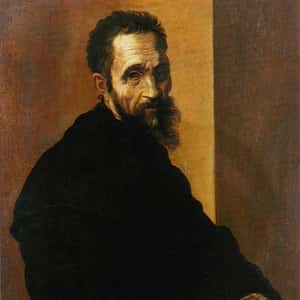
Michelangelo di Lodovico Buonarroti Simoni, commonly known as Michelangelo, was an Italian sculptor, painter, architect, poet, and engineer of the High Renaissance who exerted an unparalleled influence on the development of Western art. Considered the greatest living artist in his lifetime, he has since been held as one of the greatest artists of all time. Despite making few forays beyond the arts, his versatility in the disciplines he took up was of such a high order that he is often considered a contender for the title of the archetypal Renaissance man, along with his fellow Italian Leonardo da Vinci. A number of his works in painting, sculpture, and architecture rank among the most famous in existence. His output in every field during his long life was prodigious; when the sheer volume of correspondence, sketches, and reminiscences that survive is also taken into account, he is the best-documented artist of the 16th century. Two of his best-known works, the Pietà and David, were sculpted before he turned thirty.More Michelangelo- Dig Deeper...Things You Didn't Know About The Sistine Chapel
- And Deeper...Famous Left-Handed Artists
- #16 of 3,183 onThe Most Influential People Of All Time
- 17Dec. at 89 (1858-1947)6,169 VOTES
- Birthplace: Kiel, Germany
Max Karl Ernst Ludwig Planck, ForMemRS (German: [ˈplaŋk]; English: ; 23 April 1858 – 4 October 1947) was a German theoretical physicist whose discovery of energy quanta won him the Nobel Prize in Physics in 1918.Planck made many contributions to theoretical physics, but his fame as a physicist rests primarily on his role as the originator of quantum theory, which revolutionized human understanding of atomic and subatomic processes. In 1948, the German scientific institution the Kaiser Wilhelm Society (of which Planck was twice president) was renamed the Max Planck Society (MPS). The MPS now includes 83 institutions representing a wide range of scientific directions. - 18Dec. at 58 (1571-1630)7,612 VOTES
- Birthplace: Weil der Stadt, Germany
Johannes Kepler (; German: [joˈhanəs ˈkɛplɐ, -nɛs -]; December 27, 1571 – November 15, 1630) was a German astronomer, mathematician, and astrologer. He is a key figure in the 17th-century scientific revolution, best known for his laws of planetary motion, and his books Astronomia nova, Harmonices Mundi, and Epitome Astronomiae Copernicanae. These works also provided one of the foundations for Newton's theory of universal gravitation. Kepler was a mathematics teacher at a seminary school in Graz, where he became an associate of Prince Hans Ulrich von Eggenberg. Later he became an assistant to the astronomer Tycho Brahe in Prague, and eventually the imperial mathematician to Emperor Rudolf II and his two successors Matthias and Ferdinand II. He also taught mathematics in Linz, and was an adviser to General Wallenstein. Additionally, he did fundamental work in the field of optics, invented an improved version of the refracting (or Keplerian) telescope, and was mentioned in the telescopic discoveries of his contemporary Galileo Galilei. He was a corresponding member of the Accademia dei Lincei in Rome.Kepler lived in an era when there was no clear distinction between astronomy and astrology, but there was a strong division between astronomy (a branch of mathematics within the liberal arts) and physics (a branch of natural philosophy). Kepler also incorporated religious arguments and reasoning into his work, motivated by the religious conviction and belief that God had created the world according to an intelligible plan that is accessible through the natural light of reason. Kepler described his new astronomy as "celestial physics", as "an excursion into Aristotle's Metaphysics", and as "a supplement to Aristotle's On the Heavens", transforming the ancient tradition of physical cosmology by treating astronomy as part of a universal mathematical physics.More Johannes Kepler- #87 of 3,183 onThe Most Influential People Of All Time
- #65 of 317 onFamous Role Models We'd Like to Meet In Person
- And Deeper...Every Person Who Has Been Immortalized in a Google Doodle
- 19Dec. at 77 (1777-1855)5,019 VOTES
- Birthplace: Braunschweig, Germany
Johann Carl Friedrich Gauss (; German: Gauß [ˈkaɐ̯l ˈfʁiːdʁɪç ˈɡaʊs] (listen); Latin: Carolus Fridericus Gauss; (30 April 1777 – 23 February 1855) was a German mathematician and physicist who made significant contributions to many fields in mathematics and sciences. Sometimes referred to as the Princeps mathematicorum (Latin for "the foremost of mathematicians") and "the greatest mathematician since antiquity", Gauss had an exceptional influence in many fields of mathematics and science, and is ranked among history's most influential mathematicians.More Carl Friedrich Gauss- #357 of 3,183 onThe Most Influential People Of All Time
- #19 of 77 onWho Is The Most Famous Carl Or Karl In The World?
- And Deeper...Every Person Who Has Been Immortalized in a Google Doodle
- 20Dec. at 39 (1623-1662)3,902 VOTES
- Birthplace: Clermont-Ferrand, France
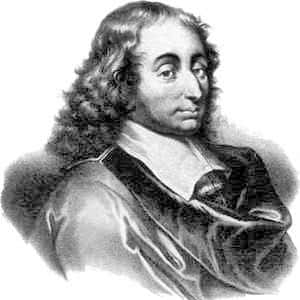
Blaise Pascal ( pa-SKAL, also UK: -SKAHL, PASK-əl, -al, US: pah-SKAHL, French: [blɛz paskal]; 19 June 1623 – 19 August 1662) was a French mathematician, physicist, inventor, writer and Catholic theologian. He was a child prodigy who was educated by his father, a tax collector in Rouen. Pascal's earliest work was in the natural and applied sciences where he made important contributions to the study of fluids, and clarified the concepts of pressure and vacuum by generalising the work of Evangelista Torricelli. Pascal also wrote in defence of the scientific method. In 1642, while still a teenager, he started some pioneering work on calculating machines. After three years of effort and 50 prototypes, he built 20 finished machines (called Pascal's calculators and later Pascalines) over the following 10 years, establishing him as one of the first two inventors of the mechanical calculator.Pascal was an important mathematician, helping create two major new areas of research: he wrote a significant treatise on the subject of projective geometry at the age of 16, and later corresponded with Pierre de Fermat on probability theory, strongly influencing the development of modern economics and social science. Following Galileo Galilei and Torricelli, in 1647, he rebutted Aristotle's followers who insisted that nature abhors a vacuum. Pascal's results caused many disputes before being accepted. In 1646, he and his sister Jacqueline identified with the religious movement within Catholicism known by its detractors as Jansenism. Following a religious experience in late 1654, he began writing influential works on philosophy and theology. His two most famous works date from this period: the Lettres provinciales and the Pensées, the former set in the conflict between Jansenists and Jesuits. In that year, he also wrote an important treatise on the arithmetical triangle. Between 1658 and 1659, he wrote on the cycloid and its use in calculating the volume of solids. Throughout his life, Pascal was in frail health, especially after the age of 18; he died just two months after his 39th birthday.More Blaise Pascal- Dig Deeper...The 365+ Most Famous Geminis
- #133 of 3,183 onThe Most Influential People Of All Time
- #41 of 68 onThe Best French Authors
- 21Dec. at 73 (1881-1955)1,840 VOTES
- Birthplace: Lochfield
Sir Alexander Fleming (6 August 1881 – 11 March 1955) was a Scottish biologist, physician, microbiologist, and pharmacologist. His best-known discoveries are the enzyme lysozyme in 1923 and the world's first antibiotic substance benzylpenicillin (Penicillin G) from the mould Penicillium notatum in 1928, for which he shared the Nobel Prize in Physiology or Medicine in 1945 with Howard Florey and Ernst Boris Chain. He wrote many articles on bacteriology, immunology, and chemotherapy. Fleming was knighted for his scientific achievements in 1944. In 1999, he was named in Time magazine's list of the 100 Most Important People of the 20th century. In 2002, he was chosen in the BBC's television poll for determining the 100 Greatest Britons, and in 2009, he was also voted third "greatest Scot" in an opinion poll conducted by STV, behind only Robert Burns and William Wallace. - 22Dec. at 48 (1831-1879)2,061 VOTES
- Birthplace: Edinburgh, United Kingdom
James Clerk Maxwell (13 June 1831 – 5 November 1879) was a Scottish scientist in the field of mathematical physics. His most notable achievement was to formulate the classical theory of electromagnetic radiation, bringing together for the first time electricity, magnetism, and light as different manifestations of the same phenomenon. Maxwell's equations for electromagnetism have been called the "second great unification in physics" after the first one realised by Isaac Newton. With the publication of "A Dynamical Theory of the Electromagnetic Field" in 1865, Maxwell demonstrated that electric and magnetic fields travel through space as waves moving at the speed of light. He proposed that light is an undulation in the same medium that is the cause of electric and magnetic phenomena. The unification of light and electrical phenomena led his prediction of the existence of radio waves. Maxwell is also regarded as a founder of the modern field of electrical engineering.He helped develop the Maxwell–Boltzmann distribution, a statistical means of describing aspects of the kinetic theory of gases. He is also known for presenting the first durable colour photograph in 1861 and for his foundational work on analysing the rigidity of rod-and-joint frameworks (trusses) like those in many bridges. His discoveries helped usher in the era of modern physics, laying the foundation for such fields as special relativity and quantum mechanics. Many physicists regard Maxwell as the 19th-century scientist having the greatest influence on 20th-century physics. His contributions to the science are considered by many to be of the same magnitude as those of Isaac Newton and Albert Einstein. In the millennium poll—a survey of the 100 most prominent physicists—Maxwell was voted the third greatest physicist of all time, behind only Newton and Einstein. On the centenary of Maxwell's birthday, Einstein described Maxwell's work as the "most profound and the most fruitful that physics has experienced since the time of Newton". Einstein, when he visited the University of Cambridge in 1922, was told by his host that he had done great things because he stood on Newton's shoulders; Einstein replied: "No I don't. I stand on the shoulders of Maxwell". - 234,182 VOTESNiels Henrik David Bohr (7 October 1885 – 18 November 1962) was a Danish physicist who made foundational contributions to understanding atomic structure and quantum theory, for which he received the Nobel Prize in Physics in 1922. Bohr was also a philosopher and a promoter of scientific research. Bohr developed the Bohr model of the atom, in which he proposed that energy levels of electrons are discrete and that the electrons revolve in stable orbits around the atomic nucleus but can jump from one energy level (or orbit) to another. Although the Bohr model has been supplanted by other models, its underlying principles remain valid. He conceived the principle of complementarity: that items could be separately analyzed in terms of contradictory properties, like behaving as a wave or a stream of particles. The notion of complementarity dominated Bohr's thinking in both science and philosophy.
- 24Dec. at 53 (1901-1954)2,795 VOTES
- Birthplace: Rome, Italy
Enrico Fermi (Italian: [enˈriːko ˈfermi]; 29 September 1901 – 28 November 1954) was an Italian and naturalized-American physicist and the creator of the world's first nuclear reactor, the Chicago Pile-1. He has been called the "architect of the nuclear age" and the "architect of the atomic bomb". He was one of very few physicists to excel in both theoretical physics and experimental physics. Fermi held several patents related to the use of nuclear power, and was awarded the 1938 Nobel Prize in Physics for his work on induced radioactivity by neutron bombardment and for the discovery of transuranium elements. He made significant contributions to the development of statistical mechanics, quantum theory, and nuclear and particle physics. Fermi's first major contribution involved the field of statistical mechanics. After Wolfgang Pauli formulated his exclusion principle in 1925, Fermi followed with a paper in which he applied the principle to an ideal gas, employing a statistical formulation now known as Fermi–Dirac statistics. Today, particles that obey the exclusion principle are called "fermions". Pauli later postulated the existence of an uncharged invisible particle emitted along with an electron during beta decay, to satisfy the law of conservation of energy. Fermi took up this idea, developing a model that incorporated the postulated particle, which he named the "neutrino". His theory, later referred to as Fermi's interaction and now called weak interaction, described one of the four fundamental interactions in nature. Through experiments inducing radioactivity with the recently discovered neutron, Fermi discovered that slow neutrons were more easily captured by atomic nuclei than fast ones, and he developed the Fermi age equation to describe this. After bombarding thorium and uranium with slow neutrons, he concluded that he had created new elements. Although he was awarded the Nobel Prize for this discovery, the new elements were later revealed to be nuclear fission products. Fermi left Italy in 1938 to escape new Italian racial laws that affected his Jewish wife, Laura Capon. He emigrated to the United States, where he worked on the Manhattan Project during World War II. Fermi led the team that designed and built Chicago Pile-1, which went critical on 2 December 1942, demonstrating the first human-created, self-sustaining nuclear chain reaction. He was on hand when the X-10 Graphite Reactor at Oak Ridge, Tennessee, went critical in 1943, and when the B Reactor at the Hanford Site did so the next year. At Los Alamos, he headed F Division, part of which worked on Edward Teller's thermonuclear "Super" bomb. He was present at the Trinity test on 16 July 1945, where he used his Fermi method to estimate the bomb's yield. After the war, Fermi served under J. Robert Oppenheimer on the General Advisory Committee, which advised the Atomic Energy Commission on nuclear matters. After the detonation of the first Soviet fission bomb in August 1949, he strongly opposed the development of a hydrogen bomb on both moral and technical grounds. He was among the scientists who testified on Oppenheimer's behalf at the 1954 hearing that resulted in the denial of Oppenheimer's security clearance. Fermi did important work in particle physics, especially related to pions and muons, and he speculated that cosmic rays arose when material was accelerated by magnetic fields in interstellar space. Many awards, concepts, and institutions are named after Fermi, including the Enrico Fermi Award, the Enrico Fermi Institute, the Fermi National Accelerator Laboratory, the Fermi Gamma-ray Space Telescope, the Enrico Fermi Nuclear Generating Station, and the synthetic element fermium, making him one of 16 scientists who have elements named after them. - 25Dec. at 63 (1889-1953)2,401 VOTES
- Birthplace: Marshfield, Missouri
Edwin Powell Hubble (November 20, 1889 – September 28, 1953) was an American astronomer. He played a crucial role in establishing the fields of extragalactic astronomy and observational cosmology and is regarded as one of the most important astronomers of all time.Hubble discovered that many objects previously thought to be clouds of dust and gas and classified as "nebulae" were actually galaxies beyond the Milky Way. He used the strong direct relationship between a classical Cepheid variable's luminosity and pulsation period (discovered in 1908 by Henrietta Swan Leavitt) for scaling galactic and extragalactic distances.Hubble provided evidence that the recessional velocity of a galaxy increases with its distance from the Earth, a property now known as "Hubble's law", despite the fact that it had been both proposed and demonstrated observationally two years earlier by Georges Lemaître. Hubble-Lemaître's Law implies that the universe is expanding. A decade before, the American astronomer Vesto Slipher had provided the first evidence that the light from many of these nebulae was strongly red-shifted, indicative of high recession velocities.Hubble's name is most widely recognized for the Hubble Space Telescope which was named in his honor, with a model prominently displayed in his hometown of Marshfield, Missouri. - 26Dec. at 66 (1867-1934)12,306 VOTES
- Birthplace: Warsaw, Poland
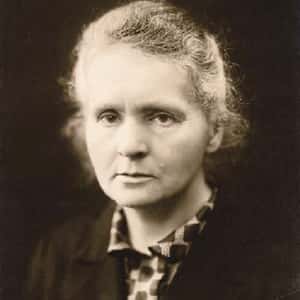
Marie Skłodowska Curie ( KEWR-ee, French: [kyʁi], Polish: [kʲiˈri]; born Maria Salomea Skłodowska; 7 November 1867 – 4 July 1934) was a Polish and naturalized-French physicist and chemist who conducted pioneering research on radioactivity. She was the first woman to win a Nobel Prize, the first person and only woman to win the Nobel prize twice, and the only person to win the Nobel Prize in two different scientific fields. She was part of the Curie family legacy of five Nobel Prizes. She was also the first woman to become a professor at the University of Paris, and in 1995 became the first woman to be entombed on her own merits in the Panthéon in Paris. She was born in Warsaw, in what was then the Kingdom of Poland, part of the Russian Empire. She studied at Warsaw's clandestine Flying University and began her practical scientific training in Warsaw. In 1891, aged 24, she followed her older sister Bronisława to study in Paris, where she earned her higher degrees and conducted her subsequent scientific work. She shared the 1903 Nobel Prize in Physics with her husband Pierre Curie and physicist Henri Becquerel. She won the 1911 Nobel Prize in Chemistry. Her achievements included the development of the theory of radioactivity (a term she coined), techniques for isolating radioactive isotopes, and the discovery of two elements, polonium and radium. Under her direction, the world's first studies were conducted into the treatment of neoplasms using radioactive isotopes. She founded the Curie Institutes in Paris and in Warsaw, which remain major centres of medical research today. During World War I she developed mobile radiography units to provide X-ray services to field hospitals. While a French citizen, Marie Skłodowska Curie, who used both surnames, never lost her sense of Polish identity. She taught her daughters the Polish language and took them on visits to Poland. She named the first chemical element she discovered polonium, after her native country.Marie Curie died in 1934, aged 66, at a sanatorium in Sancellemoz (Haute-Savoie), France, of aplastic anemia from exposure to radiation in the course of her scientific research and in the course of her radiological work at field hospitals during World War I. - 27Dec. at 83 (459 BC-376 BC)5,326 VOTES
- Birthplace: Kos, Greece
Hippocrates of Kos (; Greek: Ἱπποκράτης ὁ Κῷος, translit. Hippokrátēs ho Kṓos; c. 460 – c. 370 BC), also known as Hippocrates II, was a Greek physician of the Age of Pericles (Classical Greece), who is considered one of the most outstanding figures in the history of medicine. He is often referred to as the "Father of Medicine" in recognition of his lasting contributions to the field as the founder of the Hippocratic School of Medicine. This intellectual school revolutionized medicine in ancient Greece, establishing it as a discipline distinct from other fields with which it had traditionally been associated (theurgy and philosophy), thus establishing medicine as a profession.However, the achievements of the writers of the Corpus, the practitioners of Hippocratic medicine and the actions of Hippocrates himself were often commingled; thus very little is known about what Hippocrates actually thought, wrote, and did. Hippocrates is commonly portrayed as the paragon of the ancient physician, and credited with coining the Hippocratic Oath, which is still relevant and in use today. He is also credited with greatly advancing the systematic study of clinical medicine, summing up the medical knowledge of previous schools, and prescribing practices for physicians through the Hippocratic Corpus and other works.More Hippocrates- #42 of 3,183 onThe Most Influential People Of All Time
- #239 of 560 onPeople We Wish Were Still Alive
- #9 of 17 onHow Would Notable Historical Geniuses Do In A Modern High School?
- 28Dec. at 74 (1901-1976)3,699 VOTES
- Birthplace: Würzburg, Germany
Werner Karl Heisenberg (; German: [ˈvɛɐ̯nɐ ˈhaɪzn̩ˌbɛɐ̯k]; 5 December 1901 – 1 February 1976) was a German theoretical physicist and one of the key pioneers of quantum mechanics. He published his work in 1925 in a breakthrough paper. In the subsequent series of papers with Max Born and Pascual Jordan, during the same year, this matrix formulation of quantum mechanics was substantially elaborated. He is known for the Heisenberg uncertainty principle, which he published in 1927. Heisenberg was awarded the 1932 Nobel Prize in Physics "for the creation of quantum mechanics".He also made important contributions to the theories of the hydrodynamics of turbulent flows, the atomic nucleus, ferromagnetism, cosmic rays, and subatomic particles, and he was instrumental in planning the first West German nuclear reactor at Karlsruhe, together with a research reactor in Munich, in 1957. He was a principal scientist in the Nazi German nuclear weapon project during World War II. He travelled to occupied Copenhagen where he met and discussed the German project with Niels Bohr. Following World War II, he was appointed director of the Kaiser Wilhelm Institute for Physics, which soon thereafter was renamed the Max Planck Institute for Physics. He was director of the institute until it was moved to Munich in 1958, when it was expanded and renamed the Max Planck Institute for Physics and Astrophysics. Heisenberg was also president of the German Research Council, chairman of the Commission for Atomic Physics, chairman of the Nuclear Physics Working Group, and president of the Alexander von Humboldt Foundation. - 29Dec. at 84 (1706-1790)8,665 VOTES
- Birthplace: Boston, Massachusetts, USA
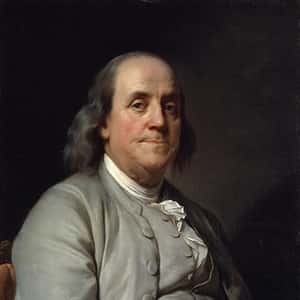
Benjamin Franklin (January 17, 1706 [O.S. January 6, 1705] – April 17, 1790) was an American polymath and one of the Founding Fathers of the United States. Franklin was a leading author, printer, political theorist, politician, Freemason, postmaster, scientist, inventor, humorist, civic activist, statesman, and diplomat. As a scientist, he was a major figure in the American Enlightenment and the history of physics for his discoveries and theories regarding electricity. As an inventor, he is known for the lightning rod, bifocals, and the Franklin stove, among other inventions. He founded many civic organizations, including the Library Company, Philadelphia's first fire department and the University of Pennsylvania.Franklin earned the title of "The First American" for his early and indefatigable campaigning for colonial unity, initially as an author and spokesman in London for several colonies. As the first United States Ambassador to France, he exemplified the emerging American nation. Franklin was foundational in defining the American ethos as a marriage of the practical values of thrift, hard work, education, community spirit, self-governing institutions, and opposition to authoritarianism both political and religious, with the scientific and tolerant values of the Enlightenment. In the words of historian Henry Steele Commager, "In a Franklin could be merged the virtues of Puritanism without its defects, the illumination of the Enlightenment without its heat." To Walter Isaacson, this makes Franklin "the most accomplished American of his age and the most influential in inventing the type of society America would become."Franklin became a successful newspaper editor and printer in Philadelphia, the leading city in the colonies, publishing the Pennsylvania Gazette at the age of 23. He became wealthy publishing this and Poor Richard's Almanack, which he authored under the pseudonym "Richard Saunders". After 1767, he was associated with the Pennsylvania Chronicle, a newspaper that was known for its revolutionary sentiments and criticisms of British policies. He pioneered and was first president of Academy and College of Philadelphia which opened in 1751 and later became the University of Pennsylvania. He organized and was the first secretary of the American Philosophical Society and was elected president in 1769. Franklin became a national hero in America as an agent for several colonies when he spearheaded an effort in London to have the Parliament of Great Britain repeal the unpopular Stamp Act. An accomplished diplomat, he was widely admired among the French as American minister to Paris and was a major figure in the development of positive Franco-American relations. His efforts proved vital for the American Revolution in securing shipments of crucial munitions from France. He was promoted to deputy postmaster-general for the British colonies in 1753, having been Philadelphia postmaster for many years, and this enabled him to set up the first national communications network. During the revolution, he became the first United States Postmaster General. He was active in community affairs and colonial and state politics, as well as national and international affairs. From 1785 to 1788, he served as governor of Pennsylvania. He initially owned and dealt in slaves but, by the 1750s, he argued against slavery from an economic perspective and became one of the most prominent abolitionists. His colorful life and legacy of scientific and political achievement, and his status as one of America's most influential Founding Fathers, have seen Franklin honored more than two centuries after his death on coinage and the $100 bill, warships, and the names of many towns, counties, educational institutions, and corporations, as well as countless cultural references.More Benjamin Franklin- Dig Deeper...19 Bizarre Facts About Benjamin Franklin, A Genius, A Founding Father, And A Delightful Weirdo
- And Deeper...Famous Bens
- #148 of 508 onThe Best Writers of All Time
- 30Dec. at 76 (1707-1783)1,959 VOTES
- Birthplace: Basel, Switzerland
Leonhard Euler ( OY-lər; German: [ˈɔɪlər] (listen); 15 April 1707 – 18 September 1783) was a Swiss mathematician, physicist, astronomer, geographer, logician and engineer who made important and influential discoveries in many branches of mathematics, such as infinitesimal calculus and graph theory, while also making pioneering contributions to several branches such as topology and analytic number theory. He also introduced much of the modern mathematical terminology and notation, particularly for mathematical analysis, such as the notion of a mathematical function. He is also known for his work in mechanics, fluid dynamics, optics, astronomy and music theory.Euler was one of the most eminent mathematicians of the 18th century and is held to be one of the greatest in history. He is also widely considered to be the most prolific mathematician of all time. His collected works fill 92 volumes, more than anybody in the field. He spent most of his adult life in Saint Petersburg, Russia, and in Berlin, then the capital of Prussia. A statement attributed to Pierre-Simon Laplace expresses Euler's influence on mathematics: "Read Euler, read Euler, he is the master of us all."More Leonhard Euler- #353 of 3,183 onThe Most Influential People Of All Time
- #487 of 560 onPeople We Wish Were Still Alive
- #7 of 22 onFamous Figures Whose Names We Just Realized We're Mispronouncing
- 31
Richard Feynman
Dec. at 69 (1918-1988)1,773 VOTES- Birthplace: New York City, Manhattan, USA, New York
Richard Phillips Feynman, ForMemRS (; May 11, 1918 – February 15, 1988) was an American theoretical physicist, known for his work in the path integral formulation of quantum mechanics, the theory of quantum electrodynamics, and the physics of the superfluidity of supercooled liquid helium, as well as in particle physics for which he proposed the parton model. For contributions to the development of quantum electrodynamics, Feynman received the Nobel Prize in Physics in 1965 jointly with Julian Schwinger and Shin'ichirō Tomonaga. Feynman developed a widely used pictorial representation scheme for the mathematical expressions describing the behavior of subatomic particles, which later became known as Feynman diagrams. During his lifetime, Feynman became one of the best-known scientists in the world. In a 1999 poll of 130 leading physicists worldwide by the British journal Physics World he was ranked as one of the ten greatest physicists of all time.He assisted in the development of the atomic bomb during World War II and became known to a wide public in the 1980s as a member of the Rogers Commission, the panel that investigated the Space Shuttle Challenger disaster. Along with his work in theoretical physics, Feynman has been credited with pioneering the field of quantum computing and introducing the concept of nanotechnology. He held the Richard C. Tolman professorship in theoretical physics at the California Institute of Technology. Feynman was a keen popularizer of physics through both books and lectures including a 1959 talk on top-down nanotechnology called There's Plenty of Room at the Bottom and the three-volume publication of his undergraduate lectures, The Feynman Lectures on Physics. Feynman also became known through his semi-autobiographical books Surely You're Joking, Mr. Feynman! and What Do You Care What Other People Think? and books written about him such as Tuva or Bust! by Ralph Leighton and the biography Genius: The Life and Science of Richard Feynman by James Gleick.More Richard Feynman- #1164 of 3,183 onThe Most Influential People Of All Time
- #43 of 115 onDying Words: Last Words Spoken By Famous People At Death
- #63 of 95 on95 Famous People Named Richard
- 32Dec. at 53 (1596-1650)5,120 VOTES
- Birthplace: Descartes, Indre-et-Loire, France
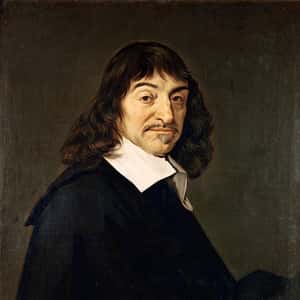
René Descartes ( day-KART, also UK: DAY-kart, French: [ʁəne dekaʁt] (listen); Latinized: Renatus Cartesius; adjectival form: Cartesian ; 31 March 1596 – 11 February 1650) was a French philosopher, mathematician, and scientist. A native of the Kingdom of France, he spent about 20 years (1629–1649) of his life in the Dutch Republic after serving for a while in the Dutch States Army of Maurice of Nassau, Prince of Orange and the Stadtholder of the United Provinces. One of the most notable intellectual figures of the Dutch Golden Age, Descartes is also widely regarded as one of the founders of modern philosophy. Many elements of Descartes's philosophy have precedents in late Aristotelianism, the revived Stoicism of the 16th century, or in earlier philosophers like Augustine. In his natural philosophy, he differed from the schools on two major points: first, he rejected the splitting of corporeal substance into matter and form; second, he rejected any appeal to final ends, divine or natural, in explaining natural phenomena. In his theology, he insists on the absolute freedom of God's act of creation. Refusing to accept the authority of previous philosophers, Descartes frequently set his views apart from those of his predecessors. In the opening section of the Passions of the Soul, an early modern treatise on emotions, Descartes goes so far as to assert that he will write on this topic "as if no one had written on these matters before". His best known philosophical statement is "I think, therefore I am" (French: Je pense, donc je suis; Latin: Ego cogito, ergo sum), found in Discourse on the Method (1637; written in French and Latin) and Principles of Philosophy (1644; written in Latin).Descartes laid the foundation for 17th-century continental rationalism, later advocated by Spinoza and Leibniz, and was later opposed by the empiricist school of thought consisting of Hobbes, Locke, Berkeley, and Hume. Leibniz, Spinoza, and Descartes were all well-versed in mathematics as well as philosophy, and Descartes and Leibniz contributed greatly to science as well. Descartes's Meditations on First Philosophy (1641) continues to be a standard text at most university philosophy departments. Descartes's influence in mathematics is equally apparent; the Cartesian coordinate system was named after him. He is credited as the father of analytical geometry, the bridge between algebra and geometry—used in the discovery of infinitesimal calculus and analysis. Descartes was also one of the key figures in the Scientific Revolution.More René Descartes- Dig Deeper...16 Famous Bodies From History Found In Inconspicuous Places
- And Deeper...250+ Famous Aries Celebrities
- #135 of 3,183 onThe Most Influential People Of All Time
- 33Dec. at 35 (1756-1791)12,914 VOTES
- Birthplace: Salzburg, Austria
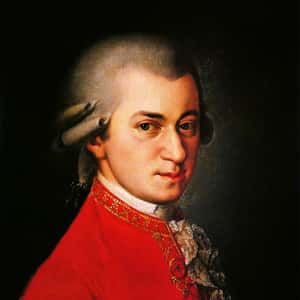
Wolfgang Amadeus Mozart, born on January 27, 1756 in Salzburg, Austria, was a maestro of the classical era, and profoundly influential in European music. His prodigious talent became apparent when he penned his first composition at the age of five, demonstrating an innate musical genius that was to set him apart. As a child, he toured with his family across Europe, performing for royalty and dazzling audiences with both his performing and composing abilities. Mozart's creative output was unparalleled, numbering more than 800 works including symphonies, operas, chamber music, sonatas, choral pieces, and concertos - many of which are considered pinnacles of these genres. His compositions, such as "The Marriage of Figaro", "Don Giovanni", and "The Magic Flute", reveal a composer of extraordinary versatility and prolificacy. Despite his short life span, Mozart's impact on classical music is profound and enduring. Regrettably, Mozart grappled with financial difficulties during his lifetime. Struggling to find a stable patron and constantly seeking commissions, he often lived beyond his means. His untimely death on December 5, 1791, at the age of 35, was shrouded in mystery, leading to various legends and myths surrounding the circumstances. Yet, there's no denying the fact that Mozart’s legacy lives on, his timeless compositions continue to enchant audiences worldwide, and his influence on successive generations of composers remains unsurpassed.- Dig Deeper...17 Bizarre, Mind-Blowing Facts and Stories About Mozart
- And Deeper...16 Famous Bodies From History Found In Inconspicuous Places
- #2 of 1,151 onThe Greatest Musical Artists of All Time
- 34Dec. at 65 (1685-1750)9,280 VOTES
- Birthplace: Eisenach, Germany
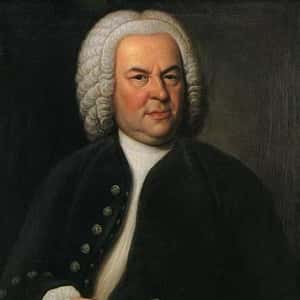
Johann Sebastian Bach (31 March [O.S. 21 March] 1685 – 28 July 1750) was a German composer and musician of the Baroque period. He is known for instrumental compositions such as the Art of Fugue, the Brandenburg Concertos, and the Goldberg Variations, and for vocal music such as the St Matthew Passion and the Mass in B minor. Since the 19th-century Bach Revival he has been generally regarded as one of the greatest composers of the Western art musical canon.The Bach family already counted several composers when Johann Sebastian was born as the last child of a city musician in Eisenach. After being orphaned at age 10, he lived for five years with his eldest brother Johann Christoph Bach, after which he continued his musical development in Lüneburg. From 1703 he was back in Thuringia, working as a musician for Protestant churches in Arnstadt and Mühlhausen and, for longer stretches of time, at courts in Weimar—where he expanded his repertoire for the organ—and Köthen—where he was mostly engaged with chamber music. From 1723 he was employed as Thomaskantor (cantor at St. Thomas) in Leipzig. He composed music for the principal Lutheran churches of the city, and for its university's student ensemble Collegium Musicum. From 1726 he published some of his keyboard music. In Leipzig, as had happened during some of his earlier positions, he had difficult relations with his employer, a situation that was little remedied when he was granted the title of court composer by his sovereign, Augustus, Elector of Saxony and King of Poland, in 1736. In the last decades of his life he reworked and extended many of his earlier compositions. He died of complications after eye surgery in 1750 at the age of 65. Bach enriched established German styles through his mastery of counterpoint, harmonic and motivic organisation, and his adaptation of rhythms, forms, and textures from abroad, particularly from Italy and France. Bach's compositions include hundreds of cantatas, both sacred and secular. He composed Latin church music, Passions, oratorios, and motets. He often adopted Lutheran hymns, not only in his larger vocal works, but for instance also in his four-part chorales and sacred songs. He wrote extensively for organ and for other keyboard instruments. He composed concertos, for instance for violin and for harpsichord, and suites, as chamber music as well as for orchestra. Many of his works employ contrapuntal genres such as fugue. Throughout the 18th century Bach was mostly renowned as an organist, while his keyboard music, such as The Well-Tempered Clavier, was appreciated for its didactic qualities. The 19th century saw the publication of some major Bach biographies, and by the end of that century all of his known music had been printed. Dissemination of scholarship on the composer continued through periodicals exclusively devoted to him, and publications such as the Bach-Werke-Verzeichnis (BWV, a numbered catalogue of his works) and new critical editions of his compositions. His music was further popularised through a multitude of arrangements, including the Air on the G String.- Dig Deeper...Surprising Facts About Johann Sebastian Bach
- #164 of 273 onThe Greatest Live Bands of All Time
- #133 of 532 onThe 540+ World's Greatest Guitarists Of All Time, Ranked
- 35Dec. at 73 (1887-1961)642 VOTES
- Birthplace: Vienna, Austria
Erwin Rudolf Josef Alexander Schrödinger (UK: , US: ; German: [ˈɛɐ̯viːn ˈʃʁøːdɪŋɐ]; 12 August 1887 – 4 January 1961), sometimes written as Erwin Schrodinger or Erwin Schroedinger, was a Nobel Prize-winning Austrian physicist who developed a number of fundamental results in the field of quantum theory: the Schrödinger equation provides a way to calculate the wave function of a system and how it changes dynamically in time. In addition, he was the author of many works in various fields of physics: statistical mechanics and thermodynamics, physics of dielectrics, colour theory, electrodynamics, general relativity, and cosmology, and he made several attempts to construct a unified field theory. In his book What Is Life? Schrödinger addressed the problems of genetics, looking at the phenomenon of life from the point of view of physics. He paid great attention to the philosophical aspects of science, ancient and oriental philosophical concepts, ethics, and religion. He also wrote on philosophy and theoretical biology. He is also known for his "Schrödinger's cat" thought-experiment. - 36Dec. at 77 (1845-1923)2,075 VOTES
- Birthplace: Remscheid, Germany
Wilhelm Conrad Röntgen (; German: [ˈvɪlhɛlm ˈʁœntɡən]; 27 March 1845 – 10 February 1923) was a German mechanical engineer and physicist, who, on 8 November 1895, produced and detected electromagnetic radiation in a wavelength range known as X-rays or Röntgen rays, an achievement that earned him the first Nobel Prize in Physics in 1901. In honour of his accomplishments, in 2004 the International Union of Pure and Applied Chemistry (IUPAC) named element 111, roentgenium, a radioactive element with multiple unstable isotopes, after him. - 37Dec. at 76 (1942-2018)12,670 VOTES
- Birthplace: Oxford, Oxfordshire, England, UK
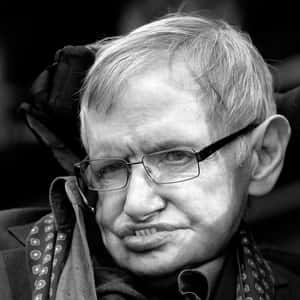
Stephen Hawking was a world-renowned physicist and cosmologist known for his ground-breaking work in theoretical physics. Born on January 8, 1942, in Oxford, England, he displayed a keen interest in science from a young age. Despite being diagnosed with a rare early-onset slow-progressing form of motor neurone disease that gradually paralyzed him over the decades, Hawking pursued his education at both Oxford and Cambridge, earning distinctions in Natural Science and a Ph.D. in Applied Mathematics and Theoretical Physics, specializing in general relativity and cosmology. Hawking's contributions to the field of theoretical physics are countless. His work on singularity theorems in the framework of general relativity and the theoretical prediction that black holes emit radiation, often called Hawking radiation, catapulted him to global recognition. He also collaborated with Roger Penrose on gravitational singularity theorems, providing a set of conditions under which a singularity would occur in nature. He further developed a mathematical proof for black holes, and his research on quantum mechanics and thermal properties of light in the early 1970s led to his discovery that black holes could theoretically leak energy and particles into space, and eventually explode‚ an astonishing revelation in the field of astrophysics. Beyond the sphere of academia, Stephen Hawking became a household name through his best-selling books, most notably A Brief History of Time which sold over 25 million copies worldwide. Despite the progressive nature of his disease which resulted in his reliance on a speech-generating device for communication, Hawking continued to lecture, write, and inspire millions around the world until his death on March 14, 2018. In life and after, Hawking remains an indomitable figure in the realm of science, a testament to the resilience of the human spirit, and an embodiment of the quest for knowledge. - 38Dec. at 58 (121-180)2,046 VOTES
- Birthplace: Rome, Italy
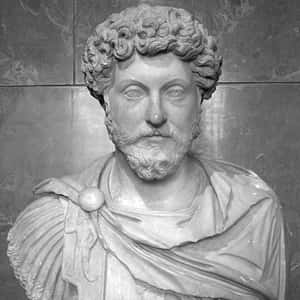
Marcus Aurelius (26 April 121 – 17 March 180) was Roman emperor from 161 to 180 and a Stoic philosopher. He was the last of the rulers traditionally known as the Five Good Emperors, and the last emperor of the Pax Romana, an age of relative peace and stability for the Roman Empire. He served as Roman consul in 140, 145, and 161. The son of the praetor Marcus Annius Verus (III) and the wealthy heiress Domitia Lucilla, Marcus was raised by his grandfather, Marcus Annius Verus (II), after his father died. His uncle, Antoninus Pius, adopted him shortly before becoming emperor in 138. Now heir to the throne, Marcus studied Greek and Latin under tutors such as Herodes Atticus and Marcus Cornelius Fronto. He kept in close correspondence with Fronto for many years afterwards. Marcus married Antoninus' daughter Faustina in 145. Antoninus died following an illness in 161. The reign of Marcus Aurelius was marked by military conflict. In the East, the Roman Empire fought successfully with a revitalized Parthian Empire and the rebel Kingdom of Armenia. Marcus defeated the Marcomanni, Quadi, and Sarmatian Iazyges in the Marcomannic Wars; however, these and other Germanic peoples began to represent a troubling reality for the Empire. He modified the silver purity of the Roman currency, the denarius. The persecution of Christians in the Roman Empire is believed to have increased during his reign. The Antonine Plague broke out in 165 or 166 and devastated the population of the Roman Empire, causing the deaths of five million people. Marcus never adopted an heir unlike some of his predecessors; his children included Lucilla (who married Lucius Verus, co-emperor from 161 to 169) and Commodus, whose succession after Marcus has become a subject of debate among both contemporary and modern historians. The Column and Equestrian Statue of Marcus Aurelius still stand in Rome, where they were erected in celebration of his military victories. Meditations, the writings of 'the philosopher' – as contemporary biographers called Marcus, are a significant source of the modern understanding of ancient Stoic philosophy. They have been praised by fellow writers, philosophers, monarchs, and politicians centuries after his death.More Marcus Aurelius- #66 of 3,183 onThe Most Influential People Of All Time
- #365 of 560 onPeople We Wish Were Still Alive
- #17 of 309 onThe Most Important Leaders In World History
- 392,678 VOTESThe Wright brothers, Orville and Wilbur, were two American brothers, inventors, and aviation pioneers who are credited with inventing and building the world's first successful airplane and making the first controlled, powered and sustained heavier-than-air human flight, on December 17, 1903. From 1905 to 1907, the brothers developed their flying machine into the first practical fixed-wing aircraft. Although not the first to build and fly experimental aircraft, the Wright brothers were the first to invent aircraft controls that made fixed-wing powered flight possible. The brothers' fundamental breakthrough was their invention of three-axis control, which enabled the pilot to steer the aircraft effectively and to maintain its equilibrium. This method became and remains standard on fixed-wing aircraft of all kinds. From the beginning of their aeronautical work, the Wright brothers focused on developing a reliable method of pilot control as the key to solving "the flying problem". This approach differed significantly from other experimenters of the time who put more emphasis on developing powerful engines.
- 40Dec. at 73 (1809-1882)13,228 VOTES
- Birthplace: The Mount, Shrewsbury, United Kingdom
Charles Robert Darwin, (; 12 February 1809 – 19 April 1882) was an English naturalist, geologist and biologist, best known for his contributions to the science of evolution. His proposition that all species of life have descended over time from common ancestors is now widely accepted, and considered a foundational concept in science. In a joint publication with Alfred Russel Wallace, he introduced his scientific theory that this branching pattern of evolution resulted from a process that he called natural selection, in which the struggle for existence has a similar effect to the artificial selection involved in selective breeding.Darwin published his theory of evolution with compelling evidence in his 1859 book On the Origin of Species. By the 1870s, the scientific community and a majority of the educated public had accepted evolution as a fact. However, many favoured competing explanations which gave only a minor role to natural selection, and it was not until the emergence of the modern evolutionary synthesis from the 1930s to the 1950s that a broad consensus developed in which natural selection was the basic mechanism of evolution. Darwin's scientific discovery is the unifying theory of the life sciences, explaining the diversity of life.Darwin's early interest in nature led him to neglect his medical education at the University of Edinburgh; instead, he helped to investigate marine invertebrates. Studies at the University of Cambridge (Christ's College) encouraged his passion for natural science. His five-year voyage on HMS Beagle established him as an eminent geologist whose observations and theories supported Charles Lyell's conception of gradual geological change, and publication of his journal of the voyage made him famous as a popular author.Puzzled by the geographical distribution of wildlife and fossils he collected on the voyage, Darwin began detailed investigations, and in 1838 conceived his theory of natural selection. Although he discussed his ideas with several naturalists, he needed time for extensive research and his geological work had priority. He was writing up his theory in 1858 when Alfred Russel Wallace sent him an essay that described the same idea, prompting immediate joint publication of both of their theories. Darwin's work established evolutionary descent with modification as the dominant scientific explanation of diversification in nature. In 1871 he examined human evolution and sexual selection in The Descent of Man, and Selection in Relation to Sex, followed by The Expression of the Emotions in Man and Animals (1872). His research on plants was published in a series of books, and in his final book, The Formation of Vegetable Mould, through the Actions of Worms (1881), he examined earthworms and their effect on soil.Darwin has been described as one of the most influential figures in human history, and he was honoured by burial in Westminster Abbey.More Charles Darwin- Dig Deeper...What Actually Happened Right After The Theory of Evolution Was Published?
- #134 of 508 onThe Best Writers of All Time
- #33 of 3,183 onThe Most Influential People Of All Time
- 41Dec. at 75 (1847-1922)4,433 VOTES
- Birthplace: Edinburgh, United Kingdom
Alexander Graham Bell ('Graham' pronounced ) (March 3, 1847 – August 2, 1922) was a Scottish-born American inventor, scientist, and engineer who is credited with inventing and patenting the first practical telephone. He also founded the American Telephone and Telegraph Company (AT&T) in 1885.Bell's father, grandfather, and brother had all been associated with work on elocution and speech and both his mother and wife were deaf, profoundly influencing Bell's life's work. His research on hearing and speech further led him to experiment with hearing devices which eventually culminated in Bell being awarded the first U.S. patent for the telephone in 1876. Bell considered his invention an intrusion on his real work as a scientist and refused to have a telephone in his study.Many other inventions marked Bell's later life, including groundbreaking work in optical telecommunications, hydrofoils, and aeronautics. Although Bell was not one of the 33 founders of the National Geographic Society, he had a strong influence on the magazine while serving as the second president from January 7, 1898, until 1903.- Dig Deeper...10 Controversial Facts People Don't Know About Alexander Graham Bell
- And Deeper...Famous People Who Died in Canada
- #30 of 3,183 onThe Most Influential People Of All Time
- 42Dec. at 72 (550 BC-478 BC)6,134 VOTES
- Birthplace: Lu
Confucius ( kən-FEW-shəs; 551–479 BC) was a Chinese philosopher and politician of the Spring and Autumn period. The philosophy of Confucius, also known as Confucianism, emphasized personal and governmental morality, correctness of social relationships, justice and sincerity. His followers competed successfully with many other schools during the Hundred Schools of Thought era only to be suppressed in favor of the Legalists during the Qin dynasty. Following the victory of Han over Chu after the collapse of Qin, Confucius's thoughts received official sanction and were further developed into a system known in the West as Neo-Confucianism, and later New Confucianism (Modern Neo-Confucianism). Confucius is traditionally credited with having authored or edited many of the Chinese classic texts including all of the Five Classics, but modern scholars are cautious of attributing specific assertions to Confucius himself. Aphorisms concerning his teachings were compiled in the Analects, but only many years after his death. Confucius's principles have commonality with Chinese tradition and belief. He championed strong family loyalty, ancestor veneration, and respect of elders by their children and of husbands by their wives, recommending family as a basis for ideal government. He espoused the well-known principle "Do not do unto others what you do not want done to yourself", the Golden Rule. He is also a traditional deity in Daoism. Confucius is widely considered as one of the most important and influential individuals in shaping human history. His teaching and philosophy greatly impacted people around the world and remains influential today.More Confucius- #54 of 3,183 onThe Most Influential People Of All Time
- #227 of 560 onPeople We Wish Were Still Alive
- #162 of 309 onThe Most Important Leaders In World History
- 43Dec. at 48 (543 BC-495 BC)4,046 VOTES
- Birthplace: Qi
Sun Tzu (; Chinese: 孫子; Pinyin transliteration Sunzi) was a Chinese general, military strategist, writer and philosopher who lived in the Eastern Zhou period of ancient China. Sun Tzu is traditionally credited as the author of The Art of War, an influential work of military strategy that has affected Western and East Asian philosophy and military thinking. His works focus much more on alternatives to battle, such as stratagem, delay, the use of spies and alternatives to war itself, the making and keeping of alliances, the uses of deceit and a willingness to submit, at least temporarily, to more powerful foes. Sun Tzu is revered in Chinese and East Asian culture as a legendary historical and military figure. His birth name was Sun Wu and he was known outside of his family by his courtesy name Changqing. The name Sun Tzu by which he is best known in the Western World is an honorific which means "Master Sun". Sun Tzu's historicity is uncertain. The Han dynasty historian Sima Qian and other traditional Chinese historians placed him as a minister to King Helü of Wu and dated his lifetime to 544–496 BC. Modern scholars accepting his historicity place the extant text of The Art of War in the later Warring States period based on its style of composition and its descriptions of warfare. Traditional accounts state that the general's descendant Sun Bin wrote a treatise on military tactics, also titled The Art of War. Since Sun Wu and Sun Bin were referred to as Sun Tzu in classical Chinese texts, some historians believed them identical, prior to the rediscovery of Sun Bin's treatise in 1972. Sun Tzu's work has been praised and employed in East Asian warfare since its composition. During the twentieth century, The Art of War grew in popularity and saw practical use in Western society as well. It continues to influence many competitive endeavors in the world, including culture, politics, business and sports, as well as modern warfare.More Sun Tzu- #53 of 3,183 onThe Most Influential People Of All Time
- #386 of 560 onPeople We Wish Were Still Alive
- #21 of 206 onThe Most Important Military Leaders In World History
- 44Dec. at 62 (1904-1967)1,734 VOTES
- Birthplace: New York City, New York
Julius Robert Oppenheimer (; April 22, 1904 – February 18, 1967) was an American theoretical physicist and professor of physics at the University of California, Berkeley. Oppenheimer was the wartime head of the Los Alamos Laboratory and is among those who are credited with being the "father of the atomic bomb" for their role in the Manhattan Project, the World War II undertaking that developed the first nuclear weapons. The first atomic bomb was successfully detonated on July 16, 1945, in the Trinity test in New Mexico. Oppenheimer later remarked that it brought to mind words from the Bhagavad Gita: "Now I am become Death, the destroyer of worlds." In August 1945, the weapons were used in the atomic bombings of Hiroshima and Nagasaki. After the war ended, Oppenheimer became chairman of the influential General Advisory Committee of the newly created United States Atomic Energy Commission. He used that position to lobby for international control of nuclear power to avert nuclear proliferation and a nuclear arms race with the Soviet Union. After provoking the ire of many politicians with his outspoken opinions during the Second Red Scare, he suffered the revocation of his security clearance in a much-publicized hearing in 1954, and was effectively stripped of his direct political influence; he continued to lecture, write and work in physics. Nine years later, President John F. Kennedy awarded (and Lyndon B. Johnson presented) him with the Enrico Fermi Award as a gesture of political rehabilitation. Oppenheimer's achievements in physics included the Born–Oppenheimer approximation for molecular wave functions, work on the theory of electrons and positrons, the Oppenheimer–Phillips process in nuclear fusion, and the first prediction of quantum tunneling. With his students he also made important contributions to the modern theory of neutron stars and black holes, as well as to quantum mechanics, quantum field theory, and the interactions of cosmic rays. As a teacher and promoter of science, he is remembered as a founding father of the American school of theoretical physics that gained world prominence in the 1930s. After World War II, he became director of the Institute for Advanced Study in Princeton, New Jersey.More Robert Oppenheimer- Dig Deeper...13 Surprising Facts About The Inventor Of The Atomic Bomb
- And Deeper...335+ Famous Taurus Historical Figures
- #67 of 3,183 onThe Most Influential People Of All Time
- 45Dec. at 70 (1398-1468)4,586 VOTES
- Birthplace: Mainz, Germany
Johannes Gensfleisch zur Laden zum Gutenberg (; c. 1400 – February 3, 1468) was a German blacksmith, goldsmith, inventor, printer, and publisher who introduced printing to Europe with the printing press. His introduction of mechanical movable type printing to Europe started the Printing Revolution and is regarded as a milestone of the second millennium, ushering in the modern period of human history. It played a key role in the development of the Renaissance, Reformation, the Age of Enlightenment, and the scientific revolution and laid the material basis for the modern knowledge-based economy and the spread of learning to the masses.Gutenberg in 1439 was the first European to use movable type. Among his many contributions to printing are: the invention of a process for mass-producing movable type; the use of oil-based ink for printing books; adjustable molds; mechanical movable type; and the use of a wooden printing press similar to the agricultural screw presses of the period. His truly epochal invention was the combination of these elements into a practical system that allowed the mass production of printed books and was economically viable for printers and readers alike. Gutenberg's method for making type is traditionally considered to have included a type metal alloy and a hand mould for casting type. The alloy was a mixture of lead, tin, and antimony that melted at a relatively low temperature for faster and more economical casting, cast well, and created a durable type. In Renaissance Europe, the arrival of mechanical movable type printing introduced the era of mass communication which permanently altered the structure of society. The relatively unrestricted circulation of information—including revolutionary ideas—transcended borders, captured the masses in the Reformation and threatened the power of political and religious authorities; the sharp increase in literacy broke the monopoly of the literate elite on education and learning and bolstered the emerging middle class. Across Europe, the increasing cultural self-awareness of its people led to the rise of proto-nationalism, accelerated by the flowering of the European vernacular languages to the detriment of Latin's status as lingua franca. In the 19th century, the replacement of the hand-operated Gutenberg-style press by steam-powered rotary presses allowed printing on an industrial scale, while Western-style printing was adopted all over the world, becoming practically the sole medium for modern bulk printing. The use of movable type was a marked improvement on the handwritten manuscript, which was the existing method of book production in Europe, and upon woodblock printing, and revolutionized European book-making. Gutenberg's printing technology spread rapidly throughout Europe and later the world. His major work, the Gutenberg Bible (also known as the 42-line Bible), was the first printed version of the Bible and has been acclaimed for its high aesthetic and technical quality.More Johannes Gutenberg- #26 of 3,183 onThe Most Influential People Of All Time
- #303 of 560 onPeople We Wish Were Still Alive
- #1 of 80 onPeople Who Made The World A Better Place
- 46Dec. at 70 (1646-1716)5,516 VOTES
- Birthplace: Leipzig, Germany
Gottfried Wilhelm (von) Leibniz (sometimes spelled Leibnitz) (; German: [ˈɡɔtfʁiːt ˈvɪlhɛlm fɔn ˈlaɪbnɪts] or [ˈlaɪpnɪts]; French: Godefroi Guillaume Leibnitz; 1 July 1646 [O.S. 21 June] – 14 November 1716) was a prominent German polymath and one of the most important logicians, mathematicians and natural philosophers of the Enlightenment. As a representative of the seventeenth-century tradition of rationalism, Leibniz's most notable accomplishment was conceiving the ideas of differential and integral calculus, independently of Isaac Newton's contemporaneous developments. Mathematical works have consistently favored Leibniz's notation as the conventional expression of calculus. It was only in the 20th century that Leibniz's law of continuity and transcendental law of homogeneity found mathematical implementation (by means of non-standard analysis). He became one of the most prolific inventors in the field of mechanical calculators. While working on adding automatic multiplication and division to Pascal's calculator, he was the first to describe a pinwheel calculator in 1685 and invented the Leibniz wheel, used in the arithmometer, the first mass-produced mechanical calculator. He also refined the binary number system, which is the foundation of all digital computers. In philosophy, Leibniz is most noted for his optimism, i.e. his conclusion that our universe is, in a restricted sense, the best possible one that God could have created, an idea that was often lampooned by others such as Voltaire. Leibniz, along with René Descartes and Baruch Spinoza, was one of the three great 17th-century advocates of rationalism. The work of Leibniz anticipated modern logic and analytic philosophy, but his philosophy also assimilates elements of the scholastic tradition, notably that conclusions are produced by applying reason to first principles or prior definitions rather than to empirical evidence. Leibniz made major contributions to physics and technology, and anticipated notions that surfaced much later in philosophy, probability theory, biology, medicine, geology, psychology, linguistics, and computer science. He wrote works on philosophy, politics, law, ethics, theology, history, and philology. Leibniz also contributed to the field of library science. While serving as overseer of the Wolfenbüttel library in Germany, he devised a cataloging system that would serve as a guide for many of Europe's largest libraries. Leibniz's contributions to this vast array of subjects were scattered in various learned journals, in tens of thousands of letters, and in unpublished manuscripts. He wrote in several languages, but primarily in Latin, French, and German. There is no complete gathering of the writings of Leibniz translated into English.- #161 of 317 onFamous Role Models We'd Like to Meet In Person
- And Deeper...Famous Rosicrucians List
- And Deeper...Every Person Who Has Been Immortalized in a Google Doodle
- 47Dec. at 46 (1903-1950)3,873 VOTES
- Birthplace: Motihari, India
Eric Arthur Blair (25 June 1903 – 21 January 1950), better known by his pen name George Orwell, was an English novelist and essayist, journalist and critic, whose work is characterised by lucid prose, awareness of social injustice, opposition to totalitarianism, and outspoken support of democratic socialism.As a writer, Orwell produced literary criticism and poetry, fiction and polemical journalism; and is best known for the allegorical novella Animal Farm (1945) and the dystopian novel Nineteen Eighty-Four (1949). His non-fiction works, including The Road to Wigan Pier (1937), documenting his experience of working-class life in the north of England, and Homage to Catalonia (1938), an account of his experiences soldiering for the Republican faction of the Spanish Civil War (1936–1939), are as critically respected as his essays on politics and literature, language and culture. In 2008, The Times ranked George Orwell second among "The 50 greatest British writers since 1945".Orwell's work remains influential in popular culture and in political culture, and the adjective "Orwellian" – describing totalitarian and authoritarian social practices – is part of the English language, like many of his neologisms, such as "Big Brother", "Thought Police", and "Hate week", "Room 101", the "memory hole", and "Newspeak", "doublethink" and "proles", "unperson" and "thoughtcrime".More George Orwell- Dig Deeper...16 Things You Didn't Know About George Orwell
- And Deeper...Famous Poets And Writers Who Died Of Tuberculosis
- #6 of 508 onThe Best Writers of All Time
- 48Dec. at 72 (1822-1895)3,551 VOTES
- Birthplace: Dole, France
Louis Pasteur (, French: [lwi pastœʁ]; December 27, 1822 – September 28, 1895) was a French biologist, microbiologist and chemist renowned for his discoveries of the principles of vaccination, microbial fermentation and pasteurization. He is remembered for his remarkable breakthroughs in the causes and prevention of diseases, and his discoveries have saved many lives ever since. He reduced mortality from puerperal fever, and created the first vaccines for rabies and anthrax. His medical discoveries provided direct support for the germ theory of disease and its application in clinical medicine. He is best known to the general public for his invention of the technique of treating milk and wine to stop bacterial contamination, a process now called pasteurization. He is regarded as one of the three main founders of bacteriology, together with Ferdinand Cohn and Robert Koch, and is popularly known as the "father of microbiology".Pasteur was responsible for disproving the doctrine of spontaneous generation. He performed experiments that showed that without contamination, microorganisms could not develop. Under the auspices of the French Academy of Sciences, he demonstrated that in sterilized and sealed flasks nothing ever developed, and in sterilized but open flasks microorganisms could grow. Although Pasteur was not the first to propose the germ theory, his experiments indicated its correctness and convinced most of Europe that it was true. Today, he is often regarded as one of the fathers of germ theory. Pasteur made significant discoveries in chemistry, most notably on the molecular basis for the asymmetry of certain crystals and racemization. Early in his career, his investigation of tartaric acid resulted in the first resolution of what is now called optical isomers. His work led the way to the current understanding of a fundamental principle in the structure of organic compounds. He was the director of the Pasteur Institute, established in 1887, until his death, and his body was interred in a vault beneath the institute. Although Pasteur made groundbreaking experiments, his reputation became associated with various controversies. Historical reassessment of his notebook revealed that he practiced deception to overcome his rivals.More Louis Pasteur- #32 of 3,183 onThe Most Influential People Of All Time
- #250 of 560 onPeople We Wish Were Still Alive
- #7 of 80 onPeople Who Made The World A Better Place
- 49Dec. at 74 (1835-1910)3,908 VOTES
- Birthplace: USA, Missouri, Florida
Mark Twain, born as Samuel Clemens in 1835 in Missouri, USA, is one of the most celebrated figures in American literature. His childhood was spent in the river town of Hannibal, which later became the backdrop for his most famous works, The Adventures of Tom Sawyer and Adventures of Huckleberry Finn. These novels are not only considered cornerstones of American literature but also provide an insightful commentary on pre-Civil War American society. Twain's career spanned across various roles including that of a printer, riverboat pilot, journalist, and lecturer. His experiences in these roles provided him with a rich source of material for his writings. For instance, his time as a riverboat pilot on the Mississippi River inspired his pen name, 'Mark Twain', a term used by riverboat pilots to denote safe water depth. His keen observations of human nature and society coupled with his unique blend of humor, satire, and wit made his work resonate with a wide audience. Though he enjoyed immense success and popularity, Twain's personal life was riddled with hardships and tragedies. He faced bankruptcy, endured the loss of three of his four children, and outlived his beloved wife, Olivia Langdon. Despite these adversities, he continued to write, producing a vast body of work that includes novels, essays, short stories, and travelogues. Twain passed away in 1910, but his legacy continues to thrive, enlightening and entertaining readers to this day.More Mark Twain - 50Dec. at 87 (1752-1840)923 VOTES
- Birthplace: Gotha, Germany
Johann Friedrich Blumenbach (11 May 1752 – 22 January 1840) was a German physician, naturalist, physiologist, and anthropologist. He was one of the first to explore the study of the human being as an aspect of natural history. His teachings in comparative anatomy were applied to his classification of human races, of which he claimed there were five, Caucasian, Mongolian, Malayan, Ethiopian, and American. He was a member of the Göttingen School of History. Blumenbach's peers considered him one of the great theorists of his day, and he was a mentor or influence on many of the next generation of German biologists, including Alexander von Humboldt. - 51Dec. at 51 (1564-1616)11,569 VOTES
- Birthplace: Stratford-upon-Avon, United Kingdom
Born in Stratford-upon-Avon, England in 1564, William Shakespeare is universally regarded as one of the greatest playwrights in the history of literature. He was the third of eight children to John Shakespeare, an alderman and a successful glover, and Mary Arden, the daughter of an affluent landowning farmer. Although records of his early education are sparse, it is believed he attended the King's New School in Stratford, known for its classical curriculum. Shakespeare's literary career began around 1585, when he started writing plays and sonnets. His work was divided into three periods: the first period marked by romantic comedies and histories such as A Midsummer Night's Dream and Richard III; the second characterized by tragedies including Hamlet, Othello, and Macbeth; and the third showcasing tragicomedies or romances like "The Tempest". His plays are noted for their exceptional use of language and varied themes, from love and betrayal to ambition and madness. In 1594, Shakespeare co-founded the Lord Chamberlain's Men, a company of actors, which later became the King's Men in 1603. He was not only a member but also the primary playwright. His works were performed at the Globe Theatre, a playhouse built by the company in 1599. Despite retiring around 1612, Shakespeare's influence on literature and theatre persists. His works continue to be studied, performed, and appreciated worldwide, securing his place as an enduring symbol of literary brilliance.More William Shakespeare- Dig Deeper...The All-Time Best Shakespeare Characters
- And Deeper...335+ Famous Taurus Historical Figures
- #2 of 508 onThe Best Writers of All Time
- 52Dec. at 43 (1632-1675)922 VOTES
- Birthplace: Delft, Netherlands
Johannes Vermeer (UK: , US: , Dutch: [joːˈɦɑnəs fərˈmeːr]; October 1632 – December 1675) was a Dutch Baroque Period painter who specialized in domestic interior scenes of middle class life. He was a moderately successful provincial genre painter in his lifetime but evidently was not wealthy, leaving his wife and children in debt at his death, perhaps because he produced relatively few paintings.Vermeer worked slowly and with great care, and frequently used very expensive pigments. He is particularly renowned for his masterly treatment and use of light in his work.Vermeer painted mostly domestic interior scenes. "Almost all his paintings are apparently set in two smallish rooms in his house in Delft; they show the same furniture and decorations in various arrangements and they often portray the same people, mostly women."He was recognized during his lifetime in Delft and The Hague, but his modest celebrity gave way to obscurity after his death. He was barely mentioned in Arnold Houbraken's major source book on 17th-century Dutch painting (Grand Theatre of Dutch Painters and Women Artists), and was thus omitted from subsequent surveys of Dutch art for nearly two centuries. In the 19th century, Vermeer was rediscovered by Gustav Friedrich Waagen and Théophile Thoré-Bürger, who published an essay attributing 66 pictures to him, although only 34 paintings are universally attributed to him today. Since that time, Vermeer's reputation has grown, and he is now acknowledged as one of the greatest painters of the Dutch Golden Age. Like some major Dutch Golden Age artists such as Frans Hals and Rembrandt, Vermeer never went abroad. And like Rembrandt, he was an avid art collector and dealer. - 531,905 VOTESClaudius Ptolemy (; Koinē Greek: Κλαύδιος Πτολεμαῖος, Klaúdios Ptolemaîos [kláwdios ptolɛmɛ́os]; Latin: Claudius Ptolemaeus; c. AD 100 – c. 170) was a mathematician, astronomer, geographer and astrologer. He lived in the city of Alexandria in the Roman province of Egypt, under the rule of the Roman Empire, had a Latin name, which several historians have taken to imply he was also a Roman citizen, cited Greek philosophers, and used Babylonian observations and Babylonian lunar theory. The 14th-century astronomer Theodore Meliteniotes gave his birthplace as the prominent Greek city Ptolemais Hermiou (Greek: Πτολεμαΐς ‘Ερμείου) in the Thebaid (Greek: Θηβαΐδα [Θηβαΐς]). This attestation is quite late, however, and there is no other evidence to confirm or contradict it. He died in Alexandria around AD 168.Ptolemy wrote several scientific treatises, three of which were of importance to later Byzantine, Islamic and Western European science. The first is the astronomical treatise now known as the Almagest, although it was originally entitled the Mathematical Treatise (Μαθηματικὴ Σύνταξις, Mathēmatikē Syntaxis) and then known as the Great Treatise (Ἡ Μεγάλη Σύνταξις, Hē Megálē Syntaxis). The second is the Geography, which is a thorough discussion of the geographic knowledge of the Greco-Roman world. The third is the astrological treatise in which he attempted to adapt horoscopic astrology to the Aristotelian natural philosophy of his day. This is sometimes known as the Apotelesmatika (Ἀποτελεσματικά) but more commonly known as the Tetrabiblos from the Greek (Τετράβιβλος) meaning "Four Books" or by the Latin Quadripartitum.
- 546,072 VOTESHomer (; Ancient Greek: Ὅμηρος Greek pronunciation: [hómɛːros], Hómēros) is the legendary author of the Iliad and the Odyssey, two epic poems that are the central works of ancient Greek literature. The Iliad is set during the Trojan War, the ten-year siege of the city of Troy by a coalition of Greek kingdoms. It focuses on a quarrel between King Agamemnon and the warrior Achilles lasting a few weeks during the last year of the war. The Odyssey focuses on the ten-year journey home of Odysseus, king of Ithaca, after the fall of Troy. Many accounts of Homer's life circulated in classical antiquity, the most widespread being that he was a blind bard from Ionia, a region of central coastal Anatolia in present-day Turkey. Modern scholars consider these accounts legendary.The Homeric Question – concerning by whom, when, where and under what circumstances the Iliad and Odyssey were composed – continues to be debated. Broadly speaking, modern scholarly opinion falls into two groups. One holds that most of the Iliad and (according to some) the Odyssey are the works of a single poet of genius. The other considers the Homeric poems to be the result of a process of working and reworking by many contributors, and that "Homer" is best seen as a label for an entire tradition. It is generally accepted that the poems were composed at some point around the late eighth or early seventh century BC.The poems are in Homeric Greek, also known as Epic Greek, a literary language which shows a mixture of features of the Ionic and Aeolic dialects from different centuries; the predominant influence is Eastern Ionic. Most researchers believe that the poems were originally transmitted orally. From antiquity until the present day, the influence of the Homeric epics on Western civilization has been great, inspiring many of its most famous works of literature, music, art and film. The Homeric epics were the greatest influence on ancient Greek culture and education; to Plato, Homer was simply the one who "has taught Greece" – ten Hellada pepaideuken.More Homer
- #4 of 508 onThe Best Writers of All Time
- #12 of 162 onThe Best Fantasy Authors
- #69 of 3,183 onThe Most Influential People Of All Time
- 553,807 VOTESSiddhārtha Gautama (Sanskrit: सिद्धार्थ गौतम Siddhāṛtha Gautama, c. 563/480 – c. 483/400 BCE) or Siddhattha Gotama (शिद्धत्थ गोतम) in Pali, also called the Gautama Buddha, the Shakyamuni (i.e. "Sage of the Shakyas") Buddha, or simply the Buddha, after the title of Buddha, was a monk (śramaṇa), mendicant, sage, philosopher, teacher and religious leader on whose teachings Buddhism was founded. He is believed to have lived and taught mostly in the northeastern part of ancient India sometime between the 6th and 4th centuries BCE.Gautama taught a Middle Way between sensual indulgence and the severe asceticism found in the śramaṇa movement common in his region. He later taught throughout other regions of eastern India such as Magadha and Kosala.Gautama is the primary figure in Buddhism. He is believed by Buddhists to be an enlightened teacher who attained full Buddhahood and shared his insights to help sentient beings end rebirth and suffering. Accounts of his life, discourses and monastic rules are believed by Buddhists to have been summarised after his death and memorized by his followers. Various collections of teachings attributed to him were passed down by oral tradition and first committed to writing about 400 years later.More Buddha
- #37 of 3,183 onThe Most Influential People Of All Time
- #205 of 560 onPeople We Wish Were Still Alive
- #32 of 309 onThe Most Important Leaders In World History
- 56Dec. at 78 (1853-1932)696 VOTES
- Birthplace: Riga, Latvia
Friedrich Wilhelm Ostwald (2 September [O.S. 21 August] 1853 – 4 April 1932) was a Baltic German chemist and philosopher. He received the Nobel Prize in Chemistry in 1909 for his work on catalysis, chemical equilibria and reaction velocities. Ostwald, Jacobus Henricus van 't Hoff, Walther Nernst, and Svante Arrhenius are usually credited with being the modern founders of the field of physical chemistry. - 57Dec. at 37 (1853-1890)3,076 VOTES
- Birthplace: Zundert, Netherlands
Vincent Willem van Gogh (Dutch: [ˈvɪnsɛnt ˈʋɪləm vɑŋ ˈɣɔx] (listen); 30 March 1853 – 29 July 1890) was a Dutch post-impressionist painter who is among the most famous and influential figures in the history of Western art. In just over a decade he created about 2,100 artworks, including around 860 oil paintings, most of which date from the last two years of his life. They include landscapes, still lifes, portraits and self-portraits, and are characterised by bold colours and dramatic, impulsive and expressive brushwork that contributed to the foundations of modern art. He was not commercially successful, and his suicide at 37 came after years of mental illness and poverty. Born into an upper-middle-class family, Van Gogh drew as a child and was serious, quiet and thoughtful. As a young man he worked as an art dealer, often travelling, but became depressed after he was transferred to London. He turned to religion and spent time as a Protestant missionary in southern Belgium. He drifted in ill health and solitude before taking up painting in 1881, having moved back home with his parents. His younger brother Theo supported him financially, and the two kept up a long correspondence by letter. His early works, mostly still lifes and depictions of peasant labourers, contain few signs of the vivid colour that distinguished his later work. In 1886, he moved to Paris, where he met members of the avant-garde, including Émile Bernard and Paul Gauguin, who were reacting against the Impressionist sensibility. As his work developed he created a new approach to still lifes and local landscapes. His paintings grew brighter in colour as he developed a style that became fully realised during his stay in Arles in the south of France in 1888. During this period he broadened his subject matter to include series of olive trees, wheat fields and sunflowers. Van Gogh suffered from psychotic episodes and delusions and though he worried about his mental stability, he often neglected his physical health, did not eat properly and drank heavily. His friendship with Gauguin ended after a confrontation with a razor when, in a rage, he severed part of his own left ear. He spent time in psychiatric hospitals, including a period at Saint-Rémy. After he discharged himself and moved to the Auberge Ravoux in Auvers-sur-Oise near Paris, he came under the care of the homeopathic doctor Paul Gachet. His depression continued and on 27 July 1890, Van Gogh shot himself in the chest with a Lefaucheux revolver. He died from his injuries two days later. Van Gogh was unsuccessful during his lifetime, and was considered a madman and a failure. He became famous after his suicide, and exists in the public imagination as the quintessential misunderstood genius, the artist "where discourses on madness and creativity converge". His reputation began to grow in the early 20th century as elements of his painting style came to be incorporated by the Fauves and German Expressionists. He attained widespread critical, commercial and popular success over the ensuing decades, and is remembered as an important but tragic painter, whose troubled personality typifies the romantic ideal of the tortured artist. Today, Van Gogh's works are among the world's most expensive paintings to have ever sold at auction, and his legacy is honoured by a museum in his name, the Van Gogh Museum in Amsterdam, which holds the world's largest collection of his paintings and drawings.More Vincent van Gogh- Dig Deeper...Vincent Van Gogh's Greatest Works Of Art
- And Deeper...250+ Famous Aries Celebrities
- #64 of 3,183 onThe Most Influential People Of All Time
- 58Dec. at 82 (1749-1832)6,108 VOTES
- Birthplace: Free City of Frankfurt
Johann Wolfgang von Goethe (, also US: GURT-ə, GAYT-ə, -ee; German: [ˈjoːhan ˈvɔlfɡaŋ fɔn ˈɡøːtə] (listen); 28 August 1749 – 22 March 1832) was a German writer and statesman. His works include: four novels; epic and lyric poetry; prose and verse dramas; memoirs; an autobiography; literary and aesthetic criticism; and treatises on botany, anatomy, and colour. In addition, numerous literary and scientific fragments, more than 10,000 letters, and nearly 3,000 drawings by him have survived. A literary celebrity by the age of 25, Goethe was ennobled by the Duke of Saxe-Weimar, Karl August, in 1782 after taking up residence in Weimar in November 1775 following the success of his first novel, The Sorrows of Young Werther (1774). He was an early participant in the Sturm und Drang literary movement. During his first ten years in Weimar, Goethe became a member of the Duke's privy council, sat on the war- and highway-commissions, oversaw the reopening of silver mines in nearby Ilmenau, and implemented a series of administrative reforms at the University of Jena. He also contributed to the planning of Weimar's botanical park and the rebuilding of its Ducal Palace. (In 1998 both these sites together with nine others were designated a UNESCO World Heritage site under the name Classical Weimar.) Goethe's first major scientific work, the Metamorphosis of Plants, was published after he returned from a 1788 tour of Italy. In 1791 he was made managing director of the theatre at Weimar, and in 1794 he began a friendship with the dramatist, historian, and philosopher Friedrich Schiller, whose plays he premiered until Schiller's death in 1805. During this period Goethe published his second novel, Wilhelm Meister's Apprenticeship; the verse epic Hermann and Dorothea, and, in 1808, the first part of his most celebrated drama, Faust. His conversations and various shared undertakings throughout the 1790s with Schiller, Johann Gottlieb Fichte, Johann Gottfried Herder, Alexander von Humboldt, Wilhelm von Humboldt, and August and Friedrich Schlegel have come to be collectively termed Weimar Classicism. The German philosopher Arthur Schopenhauer named Wilhelm Meister's Apprenticeship one of the four greatest novels ever written (along with Tristram Shandy, La Nouvelle Héloïse, and Don Quixote), while the American philosopher and essayist Ralph Waldo Emerson selected Goethe as one of six "representative men" in his work of the same name (along with Plato, Emanuel Swedenborg, Montaigne, Napoleon, and Shakespeare). Goethe's comments and observations form the basis of several biographical works, notably Johann Peter Eckermann's Conversations with Goethe (1836).- #22 of 508 onThe Best Writers of All Time
- #440 of 1,151 onThe Greatest Musical Artists of All Time
- #1414 of 3,183 onThe Most Influential People Of All Time
- 59Dec. at 58 (1812-1870)2,990 VOTES
- Birthplace: Portsmouth, United Kingdom
Charles John Huffam Dickens (; 7 February 1812 – 9 June 1870) was an English writer and social critic. He created some of the world's best-known fictional characters and is regarded by many as the greatest novelist of the Victorian era. His works enjoyed unprecedented popularity during his lifetime, and by the 20th century critics and scholars had recognised him as a literary genius. His novels and short stories are still widely read today.Born in Portsmouth, Dickens left school to work in a factory when his father was incarcerated in a debtors' prison. Despite his lack of formal education, he edited a weekly journal for 20 years, wrote 15 novels, five novellas, hundreds of short stories and non-fiction articles, lectured and performed readings extensively, was an indefatigable letter writer, and campaigned vigorously for children's rights, education, and other social reforms. Dickens's literary success began with the 1836 serial publication of The Pickwick Papers. Within a few years he had become an international literary celebrity, famous for his humour, satire, and keen observation of character and society. His novels, most published in monthly or weekly instalments, pioneered the serial publication of narrative fiction, which became the dominant Victorian mode for novel publication. Cliffhanger endings in his serial publications kept readers in suspense. The instalment format allowed Dickens to evaluate his audience's reaction, and he often modified his plot and character development based on such feedback. For example, when his wife's chiropodist expressed distress at the way Miss Mowcher in David Copperfield seemed to reflect her disabilities, Dickens improved the character with positive features. His plots were carefully constructed, and he often wove elements from topical events into his narratives. Masses of the illiterate poor chipped in ha'pennies to have each new monthly episode read to them, opening up and inspiring a new class of readers.His 1843 novella A Christmas Carol remains especially popular and continues to inspire adaptations in every artistic genre. Oliver Twist and Great Expectations are also frequently adapted and, like many of his novels, evoke images of early Victorian London. His 1859 novel A Tale of Two Cities (set in London and Paris) is his best-known work of historical fiction. Dickens has been praised by many of his fellow writers—from Leo Tolstoy to George Orwell, G. K. Chesterton, and Tom Wolfe—for his realism, comedy, prose style, unique characterisations, and social criticism. However, Oscar Wilde, Henry James, and Virginia Woolf complained of a lack of psychological depth, loose writing, and a vein of sentimentalism. The term Dickensian is used to describe something that is reminiscent of Dickens and his writings, such as poor social conditions or comically repulsive characters.More Charles Dickens- Dig Deeper...16 Extremely Dark Things You'd Never Suspect Charles Dickens Actually Did
- #5 of 508 onThe Best Writers of All Time
- #23 of 66 onThe Best Short Story Writers of All Time
- 60Dec. at 55 (1844-1900)7,577 VOTES
- Birthplace: Röcken, Germany
Friedrich Wilhelm Nietzsche (, German: [ˈfʁiːdʁɪç ˈvɪlhɛlm ˈniːtʃə] (listen) or [- ˈniːtsʃə]; 15 October 1844 – 25 August 1900) was a German philosopher, cultural critic, composer, poet, philologist, and Latin and Greek scholar whose work has exerted a profound influence on modern intellectual history. He began his career as a classical philologist before turning to philosophy. He became the youngest ever to hold the Chair of Classical Philology at the University of Basel in 1869 at the age of 24. Nietzsche resigned in 1879 due to health problems that plagued him most of his life; he completed much of his core writing in the following decade. In 1889 at age 44, he suffered a collapse and afterward, a complete loss of his mental faculties. He lived his remaining years in the care of his mother until her death in 1897 and then with his sister Elisabeth Förster-Nietzsche. Nietzsche died in 1900.Nietzsche's body of work touched a wide range of topics, including art, philology, history, religion, tragedy, culture, and science. His writing spans philosophical polemics, poetry, cultural criticism, and fiction while displaying a fondness for aphorism and irony. His early inspiration was drawn from figures such as Arthur Schopenhauer, Richard Wagner, and Johann Wolfgang von Goethe. Prominent elements of his philosophy include his radical critique of truth in favor of perspectivism; his genealogical critique of religion and Christian morality and his related theory of master–slave morality; his aesthetic affirmation of existence in response to the "death of God" and the profound crisis of nihilism; his notion of the Apollonian and Dionysian; and his characterization of the human subject as the expression of competing wills, collectively understood as the will to power. He also developed influential concepts such as the Übermensch and the doctrine of eternal return. In his later work, he became increasingly preoccupied with the creative powers of the individual to overcome social, cultural and moral contexts in pursuit of new values and aesthetic health.After his death, his sister Elisabeth became the curator and editor of Nietzsche's manuscripts, reworking his unpublished writings to fit her own German nationalist ideology while often contradicting or obfuscating Nietzsche's stated opinions, which were explicitly opposed to antisemitism and nationalism. Through her published editions, Nietzsche's work became associated with fascism and Nazism; 20th century scholars contested this interpretation of his work and corrected editions of his writings were soon made available. Nietzsche's thought enjoyed renewed popularity in the 1960s and his ideas have since had a profound impact on 20th and early-21st century thinkers across philosophy—especially in schools of continental philosophy such as existentialism, postmodernism and post-structuralism—as well as art, literature, psychology, politics and popular culture.More Friedrich Nietzsche- #34 of 508 onThe Best Writers of All Time
- #112 of 3,183 onThe Most Influential People Of All Time
- #299 of 560 onPeople We Wish Were Still Alive
- 61Dec. at 83 (1736-1819)1,323 VOTES
- Birthplace: Greenock, United Kingdom
James Watt (; 30 January 1736 (19 January 1736 OS) – 25 August 1819) was a Scottish inventor, mechanical engineer, and chemist who improved on Thomas Newcomen's 1712 Newcomen steam engine with his Watt steam engine in 1776, which was fundamental to the changes brought by the Industrial Revolution in both his native Great Britain and the rest of the world. While working as an instrument maker at the University of Glasgow, Watt became interested in the technology of steam engines. He realised that contemporary engine designs wasted a great deal of energy by repeatedly cooling and reheating the cylinder. Watt introduced a design enhancement, the separate condenser, which avoided this waste of energy and radically improved the power, efficiency, and cost-effectiveness of steam engines. Eventually he adapted his engine to produce rotary motion, greatly broadening its use beyond pumping water. Watt attempted to commercialise his invention, but experienced great financial difficulties until he entered a partnership with Matthew Boulton in 1775. The new firm of Boulton and Watt was eventually highly successful and Watt became a wealthy man. In his retirement, Watt continued to develop new inventions though none was as significant as his steam engine work. He developed the concept of horsepower, and the SI unit of power, the watt, was named after him.More James Watt- #90 of 3,183 onThe Most Influential People Of All Time
- #37 of 93 onWho Is The Most Famous James In The World?
- #4 of 31 onFamous Scottish Inventors List
- 62Dec. at 83 (1602-1686)740 VOTES
- Birthplace: Magdeburg, Germany
Otto von Guericke ( GAIR-ik-ə, also US: GWAIR-, -kee, German: [ˈʔɔto fɔn ˈɡeːʁɪkə]; spelled Gericke until 1666; November 20, 1602 – May 11, 1686 [Julian calendar]; November 30, 1602 – May 21, 1686 [Gregorian calendar]) was a German scientist, inventor, and politician. His major scientific achievements were the establishment of the physics of vacuums, the discovery of an experimental method for clearly demonstrating electrostatic repulsion, and his advocacy for the reality of "action at a distance" and of "absolute space". He was also a very spiritual man in the Dionysiac tradition, as were many scientists of the Enlightenment, and connected the vacuum of space to an infinite divinity. Von Guericke described this duality "as something that ‘contains all things’ and is ‘more precious than gold...more joyous that the perception of bountiful light’ and ‘comparable to the heavens’." - 63Dec. at 59 (1821-1881)3,640 VOTES
- Birthplace: Moscow, Russia
Fyodor Mikhailovich Dostoevsky (; Russian: Фёдор Михайлович Достоевский, tr. Fyódor Mikháylovich Dostoyévskiy, IPA: [ˈfʲɵdər mʲɪˈxajləvʲɪtɕ dəstɐˈjɛfskʲɪj] (listen); 11 November 1821 – 9 February 1881), sometimes transliterated Dostoyevsky, was a Russian novelist, short story writer, essayist, journalist and philosopher. Dostoevsky's literary works explore human psychology in the troubled political, social, and spiritual atmospheres of 19th-century Russia, and engage with a variety of philosophical and religious themes. His most acclaimed works include Crime and Punishment (1866), The Idiot (1869), Demons (1872), and The Brothers Karamazov (1880). Dostoevsky's oeuvre consists of 11 novels, three novellas, 17 short stories, and numerous other works. Many literary critics rate him as one of the greatest psychologists in world literature. His 1864 novella Notes from Underground is considered to be one of the first works of existentialist literature. Born in Moscow in 1821, Dostoevsky was introduced to literature at an early age through fairy tales and legends, and through books by Russian and foreign authors. His mother died in 1837 when he was 15, and around the same time, he left school to enter the Nikolayev Military Engineering Institute. After graduating, he worked as an engineer and briefly enjoyed a lavish lifestyle, translating books to earn extra money. In the mid-1840s he wrote his first novel, Poor Folk, which gained him entry into St. Petersburg's literary circles. Arrested in 1849 for belonging to a literary group that discussed banned books critical of Tsarist Russia, he was sentenced to death but the sentence was commuted at the last moment. He spent four years in a Siberian prison camp, followed by six years of compulsory military service in exile. In the following years, Dostoevsky worked as a journalist, publishing and editing several magazines of his own and later A Writer's Diary, a collection of his writings. He began to travel around western Europe and developed a gambling addiction, which led to financial hardship. For a time, he had to beg for money, but he eventually became one of the most widely read and highly regarded Russian writers. Dostoevsky was influenced by a wide variety of philosophers and authors including Pushkin, Gogol, Augustine, Shakespeare, Dickens, Balzac, Lermontov, Hugo, Poe, Plato, Cervantes, Herzen, Kant, Belinsky, Hegel, Schiller, Solovyov, Bakunin, Sand, Hoffmann, and Mickiewicz. His writings were widely read both within and beyond his native Russia and influenced an equally great number of later writers including Russians like Aleksandr Solzhenitsyn and Anton Chekhov as well as philosophers such as Friedrich Nietzsche and Jean-Paul Sartre. His books have been translated into more than 170 languages.More Fyodor Dostoyevsky- #1 of 508 onThe Best Writers of All Time
- #9 of 66 onThe Best Short Story Writers of All Time
- #202 of 3,183 onThe Most Influential People Of All Time
- 64Dec. at 83 (1694-1778)4,786 VOTES
- Birthplace: Paris, France
François-Marie Arouet (French: [fʁɑ̃swa maʁi aʁwɛ]; 21 November 1694 – 30 May 1778), known by his nom de plume Voltaire (; also US: , French: [vɔltɛːʁ]), was a French Enlightenment writer, historian, and philosopher famous for his wit, his criticism of Christianity, especially the Roman Catholic Church, as well as his advocacy of freedom of speech, freedom of religion, and separation of church and state. Voltaire was a versatile and prolific writer, producing works in almost every literary form, including plays, poems, novels, essays, and historical and scientific works. He wrote more than 20,000 letters and more than 2,000 books and pamphlets. He was an outspoken advocate of civil liberties, despite the risk this placed him in under the strict censorship laws of the time. As a satirical polemicist, he frequently made use of his works to criticize intolerance, religious dogma, and the French institutions of his day.More Voltaire- Dig Deeper...The Best Voltaire Quotes
- And Deeper...Famous Poets And Writers Who Died Of Tuberculosis
- #82 of 508 onThe Best Writers of All Time
- 65Dec. at 90 (459 BC-369 BC)2,309 VOTES
- Birthplace: Abdera, Greece
Democritus (; Greek: Δημόκριτος, Dēmókritos, meaning "chosen of the people"; c. 460 – c. 370 BC) was an Ancient Greek pre-Socratic philosopher primarily remembered today for his formulation of an atomic theory of the universe.Democritus was born in Abdera, Thrace, around 460 BC, although there are disagreements about the exact year. His exact contributions are difficult to disentangle from those of his mentor Leucippus, as they are often mentioned together in texts. Their speculation on atoms, taken from Leucippus, bears a passing and partial resemblance to the 19th-century understanding of atomic structure that has led some to regard Democritus as more of a scientist than other Greek philosophers; however, their ideas rested on very different bases. Largely ignored in ancient Athens, Democritus is said to have been disliked so much by Plato that the latter wished all of his books burned. He was nevertheless well known to his fellow northern-born philosopher Aristotle. Many consider Democritus to be the "father of modern science". None of his writings have survived; only fragments are known from his vast body of work. - 66Dec. at 53 (1840-1893)2,646 VOTES
- Birthplace: Votkinsk, Russia
Pyotr Ilyich Tchaikovsky (English: chy-KOF-skee; Russian: Пётр Ильи́ч Чайко́вский, tr. Pyótr Ilʹyích Chaykóvskiy, IPA: [pʲɵtr ɪlʲˈjitɕ tɕɪjˈkofskʲɪj] (listen); 7 May 1840 [O.S. 25 April] – 6 November [O.S. 25 October] 1893) was a Russian composer of the romantic period, whose works are among the most popular music in the classical repertoire. He was the first Russian composer whose music made a lasting impression internationally, bolstered by his appearances as a guest conductor in Europe and the United States. He was honored in 1884 by Emperor Alexander III, and awarded a lifetime pension. Although musically precocious, Tchaikovsky was educated for a career as a civil servant. There was scant opportunity for a musical career in Russia at that time and no system of public music education. When an opportunity for such an education arose, he entered the nascent Saint Petersburg Conservatory, from which he graduated in 1865. The formal Western-oriented teaching he received there set him apart from composers of the contemporary nationalist movement embodied by the Russian composers of The Five, with whom his professional relationship was mixed. Tchaikovsky's training set him on a path to reconcile what he had learned with the native musical practices to which he had been exposed from childhood. From this reconciliation he forged a personal but unmistakably Russian style—a task that did not prove easy. The principles that governed melody, harmony and other fundamentals of Russian music ran completely counter to those that governed Western European music; this seemed to defeat the potential for using Russian music in large-scale Western composition or for forming a composite style, and it caused personal antipathies that dented Tchaikovsky's self-confidence. Russian culture exhibited a split personality, with its native and adopted elements having drifted apart increasingly since the time of Peter the Great. This resulted in uncertainty among the intelligentsia about the country's national identity—an ambiguity mirrored in Tchaikovsky's career. Despite his many popular successes, Tchaikovsky's life was punctuated by personal crises and depression. Contributory factors included his early separation from his mother for boarding school followed by his mother's early death, the death of his close friend and colleague Nikolai Rubinstein, and the collapse of the one enduring relationship of his adult life, which was his 13-year association with the wealthy widow Nadezhda von Meck who was his patron even though they never actually met each other. His homosexuality, which he kept private, has traditionally also been considered a major factor, though some musicologists now downplay its importance. Tchaikovsky's sudden death at the age of 53 is generally ascribed to cholera; there is an ongoing debate as to whether cholera was indeed the cause of death, and whether his death was accidental or self-inflicted. While his music has remained popular among audiences, critical opinions were initially mixed. Some Russians did not feel it was sufficiently representative of native musical values and expressed suspicion that Europeans accepted the music for its Western elements. In an apparent reinforcement of the latter claim, some Europeans lauded Tchaikovsky for offering music more substantive than base exoticism and said he transcended stereotypes of Russian classical music. Others dismissed Tchaikovsky's music as "lacking in elevated thought," according to longtime New York Times music critic Harold C. Schonberg, and derided its formal workings as deficient because they did not stringently follow Western principles.- Dig Deeper...335+ Famous Taurus Historical Figures
- #5 of 252 onThe Best Classical Composers
- #106 of 3,183 onThe Most Influential People Of All Time
- 6713,357 VOTES4 B.C - 30 A.D.Jesus (c. 4 BC – c. AD 30 / 33), also referred to as Jesus of Nazareth and Jesus Christ, was a first-century Jewish preacher and religious leader. He is the central figure of Christianity. Most Christians believe he is the incarnation of God the Son and the awaited Messiah (Christ) prophesied in the Old Testament.Virtually all modern scholars of antiquity agree that Jesus existed historically, although the quest for the historical Jesus has produced little agreement on the historical reliability of the Gospels and on how closely the Jesus portrayed in the Bible reflects the historical Jesus. Jesus was a Galilean Jew who was baptized by John the Baptist and began his own ministry. He preached orally and was often referred to as "rabbi". Jesus debated with fellow Jews on how to best follow God, engaged in healings, taught in parables and gathered followers. He was arrested and tried by the Jewish authorities, turned over to the Roman government, and crucified on the order of Pontius Pilate, the Roman prefect. After his death, his followers believed he rose from the dead, and the community they formed eventually became the early Church.Christian doctrines include the beliefs that Jesus was conceived by the Holy Spirit, was born of a virgin named Mary, performed miracles, founded the Christian Church, died by crucifixion as a sacrifice to achieve atonement for sin, rose from the dead, and ascended into Heaven, from where he will return. Most Christians believe Jesus enables people to be reconciled to God. The Nicene Creed asserts that Jesus will judge the living and the dead either before or after their bodily resurrection, an event tied to the Second Coming of Jesus in Christian eschatology. The great majority of Christians worship Jesus as the incarnation of God the Son, the second of three persons of the Trinity. A minority of Christian denominations reject Trinitarianism, wholly or partly, as non-scriptural. The birth of Jesus is celebrated annually on December 25 (or various dates in January by some eastern churches) as Christmas. His crucifixion is honored on Good Friday and his resurrection on Easter. The widely used calendar era "AD", from the Latin anno Domini ("in the year of the Lord"), and the equivalent alternative "CE", are based on the approximate birthdate of Jesus.Jesus is also revered in non-Christian religions. In Islam, Jesus (commonly transliterated as Isa) is considered one of God's important prophets and the Messiah. Muslims believe Jesus was a bringer of scripture and was born of a virgin, but was not the son of God. The Quran states that Jesus never claimed divinity. Most Muslims do not believe that he was crucified, but that he was physically raised into Heaven by God. In contrast, Judaism rejects the belief that Jesus was the awaited Messiah, arguing that he did not fulfill Messianic prophecies, and was neither divine nor resurrected.
- 68Dec. at 63 (1833-1897)2,420 VOTES
- Birthplace: Hamburg, Germany,
Johannes Brahms (German: [joˈhanəs ˈbʁaːms]; 7 May 1833 – 3 April 1897) was a German composer, pianist, and conductor of the Romantic period. Born in Hamburg into a Lutheran family, Brahms spent much of his professional life in Vienna, Austria. His reputation and status as a composer are such that he is sometimes grouped with Johann Sebastian Bach and Ludwig van Beethoven as one of the "Three Bs" of music, a comment originally made by the nineteenth-century conductor Hans von Bülow. Brahms composed for symphony orchestra, chamber ensembles, piano, organ, and voice and chorus. A virtuoso pianist, he premiered many of his own works. He worked with some of the leading performers of his time, including the pianist Clara Schumann and the violinist Joseph Joachim (the three were close friends). Many of his works have become staples of the modern concert repertoire. An uncompromising perfectionist, Brahms destroyed some of his works and left others unpublished. Brahms has been considered, by his contemporaries and by later writers, as both a traditionalist and an innovator. His music is firmly rooted in the structures and compositional techniques of the Classical masters. While many contemporaries found his music too academic, his contribution and craftsmanship have been admired by subsequent figures as diverse as Arnold Schoenberg and Edward Elgar. The diligent, highly constructed nature of Brahms's works was a starting point and an inspiration for a generation of composers. Embedded within his meticulous structures, however, are deeply romantic motifs.More Johannes Brahms- #40 of 1,151 onThe Greatest Musical Artists of All Time
- #6 of 252 onThe Best Classical Composers
- #212 of 3,183 onThe Most Influential People Of All Time
- 69Dec. at 39 (1810-1849)1,751 VOTES
- Birthplace: Żelazowa Wola, Poland
Frédéric François Chopin (, also UK: , US: , French: [ʃɔpɛ̃], Polish: [ˈʂɔpɛn]; 1 March 1810 – 17 October 1849) was a Polish composer and virtuoso pianist of the Romantic era who wrote primarily for solo piano. He has maintained worldwide renown as a leading musician of his era, one whose "poetic genius was based on a professional technique that was without equal in his generation."Chopin was born Fryderyk Franciszek Chopin in the Duchy of Warsaw and grew up in Warsaw, which in 1815 became part of Congress Poland. A child prodigy, he completed his musical education and composed his earlier works in Warsaw before leaving Poland at the age of 20, less than a month before the outbreak of the November 1830 Uprising. At 21, he settled in Paris. Thereafter—in the last 18 years of his life—he gave only 30 public performances, preferring the more intimate atmosphere of the salon. He supported himself by selling his compositions and by giving piano lessons, for which he was in high demand. Chopin formed a friendship with Franz Liszt and was admired by many of his other musical contemporaries (including Robert Schumann). In 1835, Chopin obtained French citizenship. After a failed engagement to Maria Wodzińska from 1836 to 1837, he maintained an often troubled relationship with the French writer Amantine Dupin (known by her pen name, George Sand). A brief and unhappy visit to Majorca with Sand in 1838–39 would prove one of his most productive periods of composition. In his final years, he was supported financially by his admirer Jane Stirling, who also arranged for him to visit Scotland in 1848. For most of his life, Chopin was in poor health. He died in Paris in 1849 at the age of 39, probably of pericarditis aggravated by tuberculosis. All of Chopin's compositions include the piano. Most are for solo piano, though he also wrote two piano concertos, a few chamber pieces, and some 19 songs set to Polish lyrics. His piano writing was technically demanding and expanded the limits of the instrument: his own performances were noted for their nuance and sensitivity. Chopin invented the concept of the instrumental ballade. His major piano works also include mazurkas, waltzes, nocturnes, polonaises, études, impromptus, scherzos, preludes and sonatas, some published only posthumously. Among the influences on his style of composition were Polish folk music, the classical tradition of J.S. Bach, Mozart, and Schubert, and the atmosphere of the Paris salons of which he was a frequent guest. His innovations in style, harmony, and musical form, and his association of music with nationalism, were influential throughout and after the late Romantic period. Chopin's music, his status as one of music's earliest superstars, his (indirect) association with political insurrection, his high-profile love-life, and his early death have made him a leading symbol of the Romantic era. His works remain popular, and he has been the subject of numerous films and biographies of varying historical fidelity.More Frédéric Chopin- #185 of 273 onThe Greatest Live Bands of All Time
- #20 of 1,151 onThe Greatest Musical Artists of All Time
- #4 of 252 onThe Best Classical Composers
- 70Dec. at 79 (1724-1804)7,074 VOTES
- Birthplace: Königsberg, Germany
Immanuel Kant (; German: [ʔɪˈmaːnu̯eːl ˈkant, -nu̯ɛl]; 22 April 1724 – 12 February 1804) was an influential German philosopher in the Age of Enlightenment. In his doctrine of transcendental idealism, he argued that space, time, and causation are mere sensibilities; "things-in-themselves" exist, but their nature is unknowable. In his view, the mind shapes and structures experience, with all human experience sharing certain structural features. He drew a parallel to the Copernican revolution in his proposition that worldly objects can be intuited a priori ('beforehand'), and that intuition is therefore independent from objective reality. Kant believed that reason is the source of morality, and that aesthetics arise from a faculty of disinterested judgment. Kant's views continue to have a major influence on contemporary philosophy, especially the fields of epistemology, ethics, political theory, and post-modern aesthetics. In one of Kant's major works, the Critique of Pure Reason (1781), he attempted to explain the relationship between reason and human experience and to move beyond the failures of traditional philosophy and metaphysics. Kant wanted to put an end to an era of futile and speculative theories of human experience, while resisting the skepticism of thinkers such as David Hume. Kant regarded himself as showing the way past the impasse between rationalists and empiricists which philosophy had led to, and is widely held to have synthesized both traditions in his thought.Kant was an exponent of the idea that perpetual peace could be secured through universal democracy and international cooperation. He believed that this would be the eventual outcome of universal history, although it is not rationally planned. The nature of Kant's religious ideas continues to be the subject of philosophical dispute, with viewpoints ranging from the impression that he was an initial advocate of atheism who at some point developed an ontological argument for God, to more critical treatments epitomized by Nietzsche, who claimed that Kant had "theologian blood" and was merely a sophisticated apologist for traditional Christian faith.Kant published other important works on ethics, religion, law, aesthetics, astronomy, and history. These include the Universal Natural History (1755), the Critique of Practical Reason (1788), the Metaphysics of Morals (1797), and the Critique of Judgment (1790), which looks at aesthetics and teleology.More Immanuel Kant- Dig Deeper...335+ Famous Taurus Historical Figures
- #161 of 3,183 onThe Most Influential People Of All Time
- #282 of 560 onPeople We Wish Were Still Alive
- 71
Hypatia
Dec. at 65 (350-415)1,626 VOTES- Birthplace: Alexandria, Egypt
Hypatia (born c. 350–370; died 415 AD) was a Hellenistic Neoplatonist philosopher, astronomer, and mathematician, who lived in Alexandria, Egypt, then part of the Eastern Roman Empire. She was a prominent thinker of the Neoplatonic school in Alexandria where she taught philosophy and astronomy. She is the first female mathematician whose life is reasonably well recorded. Hypatia was renowned in her own lifetime as a great teacher and a wise counselor. She is known to have written a commentary on Diophantus's thirteen-volume Arithmetica, which may survive in part, having been interpolated into Diophantus's original text, and another commentary on Apollonius of Perga's treatise on conic sections, which has not survived. Many modern scholars also believe that Hypatia may have edited the surviving text of Ptolemy's Almagest, based on the title of her father Theon's commentary on Book III of the Almagest. Hypatia is known to have constructed astrolabes and hydrometers, but did not invent either of these, which were both in use long before she was born. Although she herself was a pagan, she was tolerant towards Christians and taught many Christian students, including Synesius, the future bishop of Ptolemais. Ancient sources record that Hypatia was widely beloved by pagans and Christians alike and that she established great influence with the political elite in Alexandria. Towards the end of her life, Hypatia advised Orestes, the Roman prefect of Alexandria, who was in the midst of a political feud with Cyril, the bishop of Alexandria. Rumors spread accusing her of preventing Orestes from reconciling with Cyril and, in March 415 AD, she was murdered by a mob of Christians led by a lector named Peter.Hypatia's murder shocked the empire and transformed her into a "martyr for philosophy", leading future Neoplatonists such as Damascius to become increasingly fervent in their opposition to Christianity. During the Middle Ages, Hypatia was co-opted as a symbol of Christian virtue and scholars believe she was part of the basis for the legend of Saint Catherine of Alexandria. During the Age of Enlightenment, she became a symbol of opposition to Catholicism. In the nineteenth century, European literature, especially Charles Kingsley's 1853 novel Hypatia, romanticized her as "the last of the Hellenes". In the twentieth century, Hypatia became seen as an icon for women's rights and a precursor to the feminist movement. Since the late twentieth century, some portrayals have associated Hypatia's death with the destruction of the Library of Alexandria, despite the historical fact that the library no longer existed during Hypatia's lifetime.More Hypatia- Dig Deeper...Famous People Who Were Murdered
- #281 of 3,183 onThe Most Influential People Of All Time
- #420 of 560 onPeople We Wish Were Still Alive
- 72Dec. at 77 (1828-1905)2,222 VOTES
- Birthplace: Nantes, France
Jules Gabriel Verne (; French: [ʒyl vɛʁn]; 8 February 1828 – 24 March 1905) was a French novelist, poet, and playwright. Verne's collaboration with the publisher Pierre-Jules Hetzel led to the creation of the Voyages extraordinaires, a widely popular series of scrupulously researched adventure novels including Journey to the Center of the Earth (1864), Twenty Thousand Leagues Under the Sea (1870), and Around the World in Eighty Days (1873). Verne is generally considered a major literary author in France and most of Europe, where he has had a wide influence on the literary avant-garde and on surrealism. His reputation is markedly different in Anglophone regions, where he has often been labeled a writer of genre fiction or children's books, largely because of the highly abridged and altered translations in which his novels have often been printed.Verne has been the second most-translated author in the world since 1979, ranking between Agatha Christie and William Shakespeare. He has sometimes been called the "Father of Science Fiction", a title that has also been given to H. G. Wells, Mary Shelley, and Hugo Gernsback.More Jules Verne- #18 of 508 onThe Best Writers of All Time
- #1 of 165 onThe Best Science-Fiction Authors
- #110 of 3,183 onThe Most Influential People Of All Time
- 73Dec. at 40 (1834-1874)640 VOTES
- Birthplace: Gelnhausen, Germany
Johann Philipp Reis (German: [ʁaɪs]; January 7, 1834 – January 14, 1874) was a self-taught German scientist and inventor. In 1861, he constructed the first make-and-break telephone, today called the Reis telephone. - 74Dec. at 33 (355 BC-322 BC)3,418 VOTES
- Birthplace: Pella, Greece
Alexander III of Macedon (Greek: Αλέξανδρος Γʹ ὁ Μακεδών; 20/21 July 356 BC – 10/11 June 323 BC), commonly known as Alexander the Great (Ancient Greek: Ἀλέξανδρος ὁ Μέγας, romanized: Aléxandros ho Mégas), was a king (basileus) of the ancient Greek kingdom of Macedon and a member of the Argead dynasty. He was born in Pella in 356 BC and succeeded his father Philip II to the throne at the age of 20. He spent most of his ruling years on an unprecedented military campaign through Asia and northeast Africa, and by the age of thirty he had created one of the largest empires of the ancient world, stretching from Greece to northwestern India. He was undefeated in battle and is widely considered one of history's most successful military commanders.During his youth, Alexander was tutored by Aristotle until age 16. After Philip's assassination in 336 BC, he succeeded his father to the throne and inherited a strong kingdom and an experienced army. Alexander was awarded the generalship of Greece and used this authority to launch his father's pan-Hellenic project to lead the Greeks in the conquest of Persia. In 334 BC, he invaded the Achaemenid Empire (Persian Empire) and began a series of campaigns that lasted 10 years. Following the conquest of Anatolia, Alexander broke the power of Persia in a series of decisive battles, most notably the battles of Issus and Gaugamela. He subsequently overthrew Persian King Darius III and conquered the Achaemenid Empire in its entirety. At that point, his empire stretched from the Adriatic Sea to the Indus River. Alexander endeavored to reach the "ends of the world and the Great Outer Sea" and invaded India in 326 BC, winning an important victory over the Pauravas at the Battle of the Hydaspes. He eventually turned back at the demand of his homesick troops, dying in Babylon in 323 BC, the city that he planned to establish as his capital, without executing a series of planned campaigns that would have begun with an invasion of Arabia. In the years following his death, a series of civil wars tore his empire apart, resulting in the establishment of several states ruled by the Diadochi: Alexander's surviving generals and heirs. Alexander's legacy includes the cultural diffusion and syncretism which his conquests engendered, such as Greco-Buddhism. He founded some twenty cities that bore his name, most notably Alexandria in Egypt. Alexander's settlement of Greek colonists and the resulting spread of Greek culture in the east resulted in a new Hellenistic civilization, aspects of which were still evident in the traditions of the Byzantine Empire in the mid-15th century AD and the presence of Greek speakers in central and far eastern Anatolia until the 1920s. Alexander became legendary as a classical hero in the mold of Achilles, and he features prominently in the history and mythic traditions of both Greek and non-Greek cultures. He became the measure against which military leaders compared themselves, and military academies throughout the world still teach his tactics. He is often ranked among the most influential people in history. - 75Dec. at 61 (1822-1884)3,543 VOTES
- Birthplace: Hynčice, Czech Republic
Gregor Johann Mendel (Czech: Řehoř Jan Mendel; 20 July 1822 – 6 January 1884) (English: ) was a scientist, Augustinian friar and abbot of St. Thomas' Abbey in Brno, Margraviate of Moravia. Mendel was born in a German-speaking family in the Silesian part of the Austrian Empire (today's Czech Republic) and gained posthumous recognition as the founder of the modern science of genetics. Though farmers had known for millennia that crossbreeding of animals and plants could favor certain desirable traits, Mendel's pea plant experiments conducted between 1856 and 1863 established many of the rules of heredity, now referred to as the laws of Mendelian inheritance.Mendel worked with seven characteristics of pea plants: plant height, pod shape and color, seed shape and color, and flower position and color. Taking seed color as an example, Mendel showed that when a true-breeding yellow pea and a true-breeding green pea were cross-bred their offspring always produced yellow seeds. However, in the next generation, the green peas reappeared at a ratio of 1 green to 3 yellow. To explain this phenomenon, Mendel coined the terms “recessive” and “dominant” in reference to certain traits. (In the preceding example, the green trait, which seems to have vanished in the first filial generation, is recessive and the yellow is dominant.) He published his work in 1866, demonstrating the actions of invisible “factors”—now called genes—in predictably determining the traits of an organism. The profound significance of Mendel's work was not recognized until the turn of the 20th century (more than three decades later) with the rediscovery of his laws. Erich von Tschermak, Hugo de Vries, Carl Correns and William Jasper Spillman independently verified several of Mendel's experimental findings, ushering in the modern age of genetics. - 76Dec. at 56 (1265-1321)3,422 VOTES
- Birthplace: Florence, Italy
Durante di Alighiero degli Alighieri (Italian: [duˈrante deʎʎ aliˈɡjɛːri]; Latin: Dantes), commonly known by his pen name Dante Alighieri or simply as Dante (, also US: , Italian: [ˈdante]; c. 1265 – 1321), was an Italian poet. His Divine Comedy, originally called Comedìa (modern Italian: Commedia) and later christened Divina by Giovanni Boccaccio, is widely considered the most important poem of the Middle Ages and the greatest literary work in the Italian language.In the Late Middle Ages, most poetry was written in Latin, making it accessible only to the most educated readers. In De vulgari eloquentia (On Eloquence in the Vernacular), however, Dante defended the use of the vernacular in literature. He would even write in the Tuscan dialect for works such as The New Life (1295) and the Divine Comedy; this highly unorthodox choice set a precedent that important later Italian writers such as Petrarch and Boccaccio would follow. Dante was instrumental in establishing the literature of Italy, and his depictions of Hell, Purgatory and Heaven provided inspiration for the larger body of Western art. He is cited as an influence on John Milton, Geoffrey Chaucer and Alfred Tennyson, among many others. In addition, the first use of the interlocking three-line rhyme scheme, or the terza rima, is attributed to him. He is described as the "father" of the Italian language, and in Italy, he is often referred to as il Sommo Poeta ("the Supreme Poet"). Dante, Petrarch, and Boccaccio are also called the tre corone ("three crowns") of Italian literature.More Dante Alighieri- Dig Deeper...Things Even A Lot Of History Buffs Don't Know About Dante Alighieri
- #55 of 508 onThe Best Writers of All Time
- #1231 of 3,183 onThe Most Influential People Of All Time
- 77Dec. at 67 (1723-1790)2,582 VOTES
- Birthplace: Kirkcaldy, United Kingdom
Adam Smith (16 June [O.S. 5 June] 1723 – 17 July 1790) was a Scottish economist, philosopher and author as well as a moral philosopher, a pioneer of political economy and a key figure during the Scottish Enlightenment, also known as ''The Father of Economics'' or ''The Father of Capitalism''. Smith wrote two classic works, The Theory of Moral Sentiments (1759) and An Inquiry into the Nature and Causes of the Wealth of Nations (1776). The latter, often abbreviated as The Wealth of Nations, is considered his magnum opus and the first modern work of economics. In his work, Adam Smith introduced his theory of absolute advantage.Smith studied social philosophy at the University of Glasgow and at Balliol College, Oxford, where he was one of the first students to benefit from scholarships set up by fellow Scot John Snell. After graduating, he delivered a successful series of public lectures at the University of Edinburgh, leading him to collaborate with David Hume during the Scottish Enlightenment. Smith obtained a professorship at Glasgow, teaching moral philosophy and during this time, wrote and published The Theory of Moral Sentiments. In his later life, he took a tutoring position that allowed him to travel throughout Europe, where he met other intellectual leaders of his day. Smith laid the foundations of classical free market economic theory. The Wealth of Nations was a precursor to the modern academic discipline of economics. In this and other works, he developed the concept of division of labour and expounded upon how rational self-interest and competition can lead to economic prosperity. Smith was controversial in his own day and his general approach and writing style were often satirised by Tory writers such as Horace Walpole. In 2005, The Wealth of Nations was named among the 100 best Scottish books of all time.More Adam Smith- #126 of 3,183 onThe Most Influential People Of All Time
- #166 of 309 onThe Most Important Leaders In World History
- #1 of 10 onWhat British People Said About The American Revolution
- 78Dec. at 56 (1809-1865)4,826 VOTES
- Birthplace: Hodgenville, Kentucky, USA
Abraham Lincoln (February 12, 1809 – April 15, 1865) was an American statesman and lawyer who served as the 16th president of the United States from 1861 until his assassination in April 1865. Lincoln led the nation through the American Civil War, its bloodiest war and its greatest moral, constitutional, and political crisis. He preserved the Union, abolished slavery, strengthened the federal government, and modernized the U.S. economy. Born in Kentucky, Lincoln grew up on the frontier in a poor family. Self-educated, he became a lawyer, Whig Party leader, Illinois state legislator and Congressman. In 1849, he left government to resume his law practice, but angered by the success of Democrats in opening the prairie lands to slavery, reentered politics in 1854. He became a leader in the new Republican Party and gained national attention in 1858 for debating national Democratic leader Stephen A. Douglas in the 1858 Illinois Senate campaign. He then ran for President in 1860, sweeping the North and winning. Southern pro-slavery elements took his win as proof that the North was rejecting the constitutional rights of Southern states to practice slavery. They began the process of seceding from the union. To secure its independence, the new Confederate States of America fired on Fort Sumter, one of the few U.S. forts in the South. Lincoln called up volunteers and militia to suppress the rebellion and restore the Union. As the leader of the moderate faction of the Republican Party, Lincoln confronted Radical Republicans, who demanded harsher treatment of the South; War Democrats, who rallied a large faction of former opponents into his camp; anti-war Democrats (called Copperheads), who despised him; and irreconcilable secessionists, who plotted his assassination. Lincoln fought the factions by pitting them against each other, by carefully distributing political patronage, and by appealing to the American people. His Gettysburg Address became an iconic call for nationalism, republicanism, equal rights, liberty, and democracy. He suspended habeas corpus, and he averted British intervention by defusing the Trent Affair. Lincoln closely supervised the war effort, including the selection of generals and the naval blockade that shut down the South's trade. As the war progressed, he maneuvered to end slavery, issuing the Emancipation Proclamation of 1863; ordering the Army to protect escaped slaves, encouraging border states to outlaw slavery, and pushing through Congress the Thirteenth Amendment to the United States Constitution, which outlawed slavery across the country. Lincoln managed his own re-election campaign. He sought to reconcile his damaged nation by avoiding retribution against the secessionists. A few days after the Battle of Appomattox Court House, he was shot by John Wilkes Booth, an actor and Confederate sympathizer, on April 14, 1865, and died the following day. Abraham Lincoln is remembered as the United States' martyr hero. He is consistently ranked both by scholars and the public as among the greatest U.S. presidents.More Abraham Lincoln- Dig Deeper...What Happened Right After Lincoln Was Assassinated?
- And Deeper...Famous People Who Were Murdered
- #2 of 45 onWho Would Win In An Ultimate Presidential Fist Fight?
- 79Dec. at 65 (1561-1626)1,663 VOTES
- Birthplace: Strand, London, London, England
Francis Bacon, 1st Viscount St Alban, (; 22 January 1561 – 9 April 1626) was an English philosopher and statesman who served as Attorney General and as Lord Chancellor of England. His works are credited with developing the scientific method and remained influential through the scientific revolution. Bacon has been called the father of empiricism. His works argued for the possibility of scientific knowledge based only upon inductive reasoning and careful observation of events in nature. Most importantly, he argued science could be achieved by use of a sceptical and methodical approach whereby scientists aim to avoid misleading themselves. Although his practical ideas about such a method, the Baconian method, did not have a long-lasting influence, the general idea of the importance and possibility of a sceptical methodology makes Bacon the father of the scientific method. This method was a new rhetorical and theoretical framework for science, the practical details of which are still central in debates about science and methodology. Francis Bacon was a patron of libraries and developed a functional system for the cataloging of books by dividing them into three categories—history, poetry, and philosophy—which could further be divided into more specific subjects and subheadings. Bacon was educated at Trinity College, Cambridge, where he rigorously followed the medieval curriculum, largely in Latin. Bacon was the first recipient of the Queen's counsel designation, which was conferred in 1597 when Elizabeth I of England reserved Bacon as her legal advisor. After the accession of James VI and I in 1603, Bacon was knighted. He was later created Baron Verulam in 1618 and Viscount St. Alban in 1621.Because he had no heirs, both titles became extinct upon his death in 1626, at 65 years. Bacon died of pneumonia, with one account by John Aubrey stating that he had contracted the condition while studying the effects of freezing on the preservation of meat. He is buried at St Michael's Church, St Albans, Hertfordshire.More Francis Bacon- #330 of 3,183 onThe Most Influential People Of All Time
- #226 of 309 onThe Most Important Leaders In World History
- #4 of 78 onHistory's Greatest Essayists
- 80Dec. at 59 (1766-1826)716 VOTES
- Birthplace: Karlsruhe, Germany
Friedrich Weinbrenner was a German architect and city planner admired for his mastery of classical style. - 81Dec. at 63 (1606-1669)2,063 VOTES
- Birthplace: Leiden, Netherlands
Rembrandt Harmenszoon van Rijn (, also US: , Dutch: [ˈrɛmbrɑnt ˈɦɑrmə(n)soːn vɑn ˈrɛin] (listen); 15 July 1606 – 4 October 1669) was a Dutch draughtsman, painter and printmaker. An innovative and prolific master in three media, he is generally considered one of the greatest visual artists in the history of art and the most important in Dutch art history. Unlike most Dutch masters of the 17th century, Rembrandt's works depict a wide range of style and subject matter, from portraits and self-portraits to landscapes, genre scenes, allegorical and historical scenes, biblical and mythological themes as well as animal studies. His contributions to art came in a period of great wealth and cultural achievement that historians call the Dutch Golden Age, when Dutch art (especially Dutch painting), although in many ways antithetical to the Baroque style that dominated Europe, was extremely prolific and innovative, and gave rise to important new genres. Like many artists of the Dutch Golden Age, such as Jan Vermeer of Delft, Rembrandt was also an avid art collector and dealer. Rembrandt never went abroad, but he was considerably influenced by the work of the Italian masters and Netherlandish artists who had studied in Italy, like Pieter Lastman, the Utrecht Caravaggists, and Flemish Baroque Peter Paul Rubens. Having achieved youthful success as a portrait painter, Rembrandt's later years were marked by personal tragedy and financial hardships. Yet his etchings and paintings were popular throughout his lifetime, his reputation as an artist remained high, and for twenty years he taught many important Dutch painters.Rembrandt's portraits of his contemporaries, self-portraits and illustrations of scenes from the Bible are regarded as his greatest creative triumphs. His self-portraits form a unique and intimate biography, in which the artist surveyed himself without vanity and with the utmost sincerity. Rembrandt's foremost contribution in the history of printmaking was his transformation of the etching process from a relatively new reproductive technique into a true art form, along with Jacques Callot. His reputation as the greatest etcher in the history of the medium was established in his lifetime and never questioned since. Few of his paintings left the Dutch Republic whilst he lived, but his prints were circulated throughout Europe, and his wider reputation was initially based on them alone. In his works he exhibited knowledge of classical iconography, which he molded to fit the requirements of his own experience; thus, the depiction of a biblical scene was informed by Rembrandt's knowledge of the specific text, his assimilation of classical composition, and his observations of Amsterdam's Jewish population. Because of his empathy for the human condition, he has been called "one of the great prophets of civilization". The French sculptor Auguste Rodin said, "Compare me with Rembrandt! What sacrilege! With Rembrandt, the colossus of Art! We should prostrate ourselves before Rembrandt and never compare anyone with him!" Vincent van Gogh wrote, "Rembrandt goes so deep into the mysterious that he says things for which there are no words in any language. It is with justice that they call Rembrandt—magician—that's no easy occupation."More Rembrandt- Dig Deeper...345 Famous Cancer Celebrities
- #1123 of 3,183 onThe Most Influential People Of All Time
- #4 of 31 onThe Greatest Painters Of All Time
- 82Dec. at 83 (1743-1826)6,392 VOTES
- Birthplace: Shadwell, Colony of Virginia, British America
Thomas Jefferson, one of the most influential Founding Fathers of the United States, was born on April 13, 1743, in Shadwell, Virginia. Raised in a well-to-do family with six sisters and one brother, he was afforded an excellent education, studying under notable figures like Reverend James Maury and William Small. His intellectual curiosity drove him to explore a wide variety of subjects, from philosophy and mathematics to horticulture and mechanics. This love for learning paved the way for his future roles as a statesman, architect, and inventor. Jefferson's political career began in earnest when he was elected to the Virginia House of Burgesses in 1769. He made his mark early on as a fervent advocate for colonial rights, gaining recognition for his articulate arguments against British taxation. However, it was his role in drafting the Declaration of Independence in 1776 that truly solidified his place in American history. As the primary author of this pivotal document, Jefferson articulated the fundamental principles that would guide the emerging nation, emphasizing the ideals of life, liberty, and the pursuit of happiness. Outside of politics, Jefferson was a man of many talents. He had a passion for architecture, designing his own home, Monticello, as well as the University of Virginia. His love for horticulture was evident in the extensive gardens he cultivated at Monticello, where he experimented with a variety of plants and crops. Moreover, as an inventor, he devised practical solutions to everyday problems, creating devices like the dumbwaiter and the plow moldboard of least resistance. Despite his many accomplishments, Jefferson remained a humble and dedicated public servant until his death on July 4, 1826. His enduring legacy continues to shape the American landscape, reflecting his profound impact on the nation's founding principles and cultural fabric.More Thomas Jefferson- Dig Deeper...Meet The Family That Descended From Thomas Jefferson And Sally Hemings - His Slave
- And Deeper...250+ Famous Aries Celebrities
- #184 of 508 onThe Best Writers of All Time
- 83Dec. at 63 (1678-1741)1,850 VOTES
- Birthplace: Venice, Scorzè, Italy
Antonio Lucio Vivaldi (UK: , US: , Italian: [anˈtɔːnjo ˈluːtʃo viˈvaldi] (listen); 4 March 1678 – 28 July 1741) was an Italian Baroque musical composer, virtuoso violinist, teacher, and priest. Born in Venice, the capital of the Venetian Republic, he is regarded as one of the greatest Baroque composers, and his influence during his lifetime was widespread across Europe. He composed many instrumental concertos, for the violin and a variety of other instruments, as well as sacred choral works and more than forty operas. His best-known work is a series of violin concertos known as the Four Seasons. Many of his compositions were written for the all-female music ensemble of the Ospedale della Pietà, a home for abandoned children. Vivaldi had worked there as a Catholic priest for 1 1/2 years and was employed there from 1703 to 1715 and from 1723 to 1740. Vivaldi also had some success with expensive stagings of his operas in Venice, Mantua and Vienna. After meeting the Emperor Charles VI, Vivaldi moved to Vienna, hoping for royal support. However, the Emperor died soon after Vivaldi's arrival, and Vivaldi himself died, in poverty, less than a year later.More Antonio Vivaldi- #181 of 273 onThe Greatest Live Bands of All Time
- #28 of 1,151 onThe Greatest Musical Artists of All Time
- #13 of 252 onThe Best Classical Composers
- 84Dec. at 71 (340 BC-269 BC)2,342 VOTES
- Birthplace: Samos, Greece
Epicurus (341–270 BC) was an ancient Greek philosopher and sage who founded a highly influential school of philosophy now called Epicureanism. He was born on the Greek island of Samos to Athenian parents. Influenced by Democritus, Aristotle, Pyrrho, and possibly the Cynics, he turned against the Platonism of his day and established his own school, known as "the Garden", in Athens. Epicurus and his followers were known for eating simple meals and discussing a wide range of philosophical subjects, and he openly allowed women to join the school as a matter of policy. An extremely prolific writer, he is said to have originally written over 300 works on various subjects, but the vast majority of these writings have been lost. Only three letters written by him—the Letters to Menoeceus, Pythocles, and Herodotus—and two collections of quotes—the Principle Doctrines and the Vatican Sayings—have survived intact, along with a few fragments and quotations of his other writings. Most knowledge of his teachings comes from later authors, particularly the Roman poet Lucretius, the biographer Diogenes Laërtius, the statesman Cicero, and the philosophers Philodemus and Sextus Empiricus. For Epicurus, the purpose of philosophy was to attain the happy, tranquil life, characterized by ataraxia—peace and freedom from fear—and aponia—the absence of pain—and by living a self-sufficient life surrounded by friends. He taught that the root of all human neurosis is death denial, and the tendency for human beings to assume that death will be horrific and painful, which he claimed causes unnecessary anxiety, selfish self-protective behaviors, and hypocrisy. According to Epicurus, death is the end of both the body and the soul and therefore should not be feared. Likewise, Epicurus taught that the gods, though they do exist, have no involvement in human affairs and do not punish or reward people for their actions. Nonetheless, he maintained that people should still behave ethically because amoral behavior will burden them with guilt and prevent them from attaining ataraxia. Like Aristotle, Epicurus was an empiricist, meaning he believed that the senses are the only reliable source of knowledge about the world. He derived much of his physics and cosmology from the earlier philosopher Democritus (c. 460–c. 370 BC). Like Democritus, Epicurus taught that the universe is infinite and eternal and that all matter is made up of extremely tiny, invisible particles known as atoms. All occurrences in the natural world are ultimately the result of atoms moving and interacting in empty space. Epicurus deviated from Democritus in his teaching of atomic "swerve", which holds that atoms may deviate from their expected course, thus permitting humans to possess free will in an otherwise deterministic universe. Though popular, Epicurean teachings were controversial from the beginning. Epicureanism reached the height of its popularity during the late years of the Roman Republic, before declining as the rival school of Stoicism grew in popularity at its expense. It finally died out in late antiquity in the wake of early Christianity. Epicurus himself was popularly, though inaccurately, remembered throughout the Middle Ages as a patron of drunkards, whoremongers, and gluttons. His teachings gradually became more widely known in the fifteenth century with the rediscovery of important texts, but his ideas did not become acceptable until the seventeenth century, when the French Catholic priest Pierre Gassendi revived a modified version of them, which was promoted by other writers, including Walter Charleton and Robert Boyle. His influence grew considerably during and after the Enlightenment, profoundly impacting the ideas of major thinkers, including John Locke, Thomas Jefferson, Jeremy Bentham, and Karl Marx. - 85Dec. at 97 (1872-1970)2,072 VOTES
- Birthplace: Trellech, United Kingdom
Bertrand Arthur William Russell, 3rd Earl Russell, (; 18 May 1872 – 2 February 1970) was a British philosopher, logician, mathematician, historian, writer, essayist, social critic, political activist, and Nobel laureate. At various points in his life, Russell considered himself a liberal, a socialist and a pacifist, although he also confessed that his sceptical nature had led him to feel that he had "never been any of these things, in any profound sense." Russell was born in Monmouthshire into one of the most prominent aristocratic families in the United Kingdom.In the early 20th century, Russell led the British "revolt against idealism". He is considered one of the founders of analytic philosophy along with his predecessor Gottlob Frege, colleague G. E. Moore and protégé Ludwig Wittgenstein. He is widely held to be one of the 20th century's premier logicians. With A. N. Whitehead he wrote Principia Mathematica, an attempt to create a logical basis for mathematics, the quintessential work of classical logic. His philosophical essay "On Denoting" has been considered a "paradigm of philosophy". His work has had a considerable influence on mathematics, logic, set theory, linguistics, artificial intelligence, cognitive science, computer science (see type theory and type system) and philosophy, especially the philosophy of language, epistemology and metaphysics. Russell was a prominent anti-war activist and he championed anti-imperialism. Occasionally, he advocated preventive nuclear war, before the opportunity provided by the atomic monopoly had passed and "welcomed with enthusiasm" world government. He went to prison for his pacifism during World War I. Later, Russell concluded that war against Adolf Hitler's Nazi Germany was a necessary "lesser of two evils" and criticised Stalinist totalitarianism, attacked the involvement of the United States in the Vietnam War and was an outspoken proponent of nuclear disarmament. In 1950, Russell was awarded the Nobel Prize in Literature "in recognition of his varied and significant writings in which he champions humanitarian ideals and freedom of thought".More Bertrand Russell- Dig Deeper...335+ Famous Taurus Historical Figures
- #178 of 508 onThe Best Writers of All Time
- #1383 of 3,183 onThe Most Influential People Of All Time
- 86Dec. at 65 (1912-1977)1,886 VOTES
- Birthplace: Wyrzysk, Poland
Wernher Magnus Maximilian Freiherr von Braun (March 23, 1912 – June 16, 1977) was a German and later American aerospace engineer and space architect. He was the leading figure in the development of rocket technology in Germany and a pioneer of rocket technology and space science in the United States.While in his twenties and early thirties, von Braun worked in Nazi Germany's rocket development program. He helped design and develop the V-2 rocket at Peenemünde during World War II. Following the war, he was secretly moved to the United States, along with about 1,600 other German scientists, engineers, and technicians, as part of Operation Paperclip. He worked for the United States Army on an intermediate-range ballistic missile program, and he developed the rockets that launched the United States' first space satellite Explorer 1. His group was assimilated into NASA, where he served as director of the newly formed Marshall Space Flight Center and as the chief architect of the Saturn V super heavy-lift launch vehicle that propelled the Apollo spacecraft to the Moon. In 1967, von Braun was inducted into the National Academy of Engineering and in 1975, he received the National Medal of Science. He advocated a human mission to Mars. - 87Dec. at 47 (1757-1804)1,693 VOTES
- Birthplace: Charlestown, Saint Kitts and Nevis
Born on January 11, 1755, on the island of Nevis in the British West Indies, Alexander Hamilton's life was a testament to the power of determination and intelligence. Despite facing numerous adversities early in his life, including being orphaned as a child, he managed to carve out an impressive career that significantly shaped the formation of the United States. Hamilton's intellect shone from a young age. Recognized by community leaders in Nevis for his potential, they pooled resources to send him to America for education. He attended King's College (now Columbia University) in New York City. During the American Revolution, Hamilton served as aide-de-camp to General George Washington, displaying exceptional strategic skills and administrative prowess. Post-war, Hamilton's influence further grew as a key contributor to the Federalist Papers, a series of essays advocating for the ratification of the Constitution. In 1789, he was appointed the first Secretary of the Treasury by President Washington, where he implemented financial systems that are still in place today. His vision of a strong central government and industrial economy often clashed with contemporaries like Thomas Jefferson, igniting debates that continue to resonate in American politics. Alexander Hamilton's legacy extends far beyond his untimely death in a duel against Aaron Burr in 1804; his foundational work in establishing modern American fiscal policy and constitutional interpretation leaves an indelible mark on the country's history.More Alexander Hamilton- #71 of 3,183 onThe Most Influential People Of All Time
- #258 of 560 onPeople We Wish Were Still Alive
- #149 of 309 onThe Most Important Leaders In World History
- 88Dec. at 85 (1875-1961)2,442 VOTES
- Birthplace: Kesswil, Switzerland
Carl Gustav Jung ( YUUNG, German: [kaɐ̯l ˈjʊŋ]; 26 July 1875 – 6 June 1961) was a Swiss psychiatrist and psychoanalyst who founded analytical psychology. Jung's work was influential in the fields of psychiatry, anthropology, archaeology, literature, philosophy, and religious studies. Jung worked as a research scientist at the famous Burghölzli hospital, under Eugen Bleuler. During this time, he came to the attention of Sigmund Freud, the founder of psychoanalysis. The two men conducted a lengthy correspondence and collaborated, for a while, on a joint vision of human psychology. Freud saw the younger Jung as the heir he had been seeking to take forward his "new science" of psychoanalysis and to this end secured his appointment as President of his newly founded International Psychoanalytical Association. Jung's research and personal vision, however, made it impossible for him to bend to his older colleague's doctrine, and a schism became inevitable. This division was personally painful for Jung, and it was to have historic repercussions lasting well into the modern day. Among the central concepts of analytical psychology is individuation—the lifelong psychological process of differentiation of the self out of each individual's conscious and unconscious elements. Jung considered it to be the main task of human development. He created some of the best known psychological concepts, including synchronicity, archetypal phenomena, the collective unconscious, the psychological complex, and extraversion and introversion. Jung was also an artist, craftsman and builder as well as a prolific writer. Many of his works were not published until after his death and some are still awaiting publication.More Carl Jung- Dig Deeper...320 Famous Leo Celebrities
- #134 of 3,183 onThe Most Influential People Of All Time
- #276 of 386 onFamous Men You'd Want To Have A Beer With
- 89Dec. at 50 (1813-1863)1,785 VOTES
- Birthplace: Wesselburen, Germany
Christian Friedrich Hebbel (18 March 1813 – 13 December 1863), was a German poet and dramatist. - 90Dec. at 53 (1903-1957)719 VOTES
- Birthplace: Budapest, Hungary
John von Neumann (; Hungarian: Neumann János Lajos, pronounced [ˈnɒjmɒn ˈjaːnoʃ ˈlɒjoʃ]; December 28, 1903 – February 8, 1957) was a Hungarian-American mathematician, physicist, computer scientist, and polymath. Von Neumann was generally regarded as the foremost mathematician of his time and said to be "the last representative of the great mathematicians"; a genius who was comfortable integrating both pure and applied sciences. He made major contributions to a number of fields, including mathematics (foundations of mathematics, functional analysis, ergodic theory, representation theory, operator algebras, geometry, topology, and numerical analysis), physics (quantum mechanics, hydrodynamics, and quantum statistical mechanics), economics (game theory), computing (Von Neumann architecture, linear programming, self-replicating machines, stochastic computing), and statistics. He was a pioneer of the application of operator theory to quantum mechanics in the development of functional analysis, and a key figure in the development of game theory and the concepts of cellular automata, the universal constructor and the digital computer. He published over 150 papers in his life: about 60 in pure mathematics, 60 in applied mathematics, 20 in physics, and the remainder on special mathematical subjects or non-mathematical ones. His last work, an unfinished manuscript written while he was in hospital, was later published in book form as The Computer and the Brain. His analysis of the structure of self-replication preceded the discovery of the structure of DNA. In a short list of facts about his life he submitted to the National Academy of Sciences, he stated, "The part of my work I consider most essential is that on quantum mechanics, which developed in Göttingen in 1926, and subsequently in Berlin in 1927–1929. Also, my work on various forms of operator theory, Berlin 1930 and Princeton 1935–1939; on the ergodic theorem, Princeton, 1931–1932." During World War II, von Neumann worked on the Manhattan Project with theoretical physicist Edward Teller, mathematician Stanisław Ulam and others, problem solving key steps in the nuclear physics involved in thermonuclear reactions and the hydrogen bomb. He developed the mathematical models behind the explosive lenses used in the implosion-type nuclear weapon, and coined the term "kiloton" (of TNT), as a measure of the explosive force generated. After the war, he served on the General Advisory Committee of the United States Atomic Energy Commission, and consulted for a number of organizations, including the United States Air Force, the Army's Ballistic Research Laboratory, the Armed Forces Special Weapons Project, and the Lawrence Livermore National Laboratory. As a Hungarian émigré, concerned that the Soviets would achieve nuclear superiority, he designed and promoted the policy of mutually assured destruction to limit the arms race. - 91Dec. at 63 (1833-1896)1,798 VOTES
- Birthplace: Stockholm, Sweden
Alfred Bernhard Nobel (; Swedish: [ˈalfrɛd nʊˈbɛlː] (listen); 21 October 1833 – 10 December 1896) was a Swedish businessman, chemist, engineer, inventor, and philanthropist. Nobel held 355 different patents, dynamite being the most famous. The synthetic element nobelium was named after him.Known for inventing dynamite, Nobel also owned Bofors, which he had redirected from its previous role as primarily an iron and steel producer to a major manufacturer of cannon and other armaments. After reading a premature obituary which condemned him for profiting from the sales of arms, he bequeathed his fortune to institute the Nobel Prizes. His name also survives in modern-day companies such as Dynamit Nobel and AkzoNobel, which are descendants of mergers with companies Nobel himself established. - 92Dec. at 82 (1828-1910)4,082 VOTES
- Birthplace: Yasnaya Polyana, Russia
Count Lev Nikolayevich Tolstoy (; Russian: Лев Николаевич Толстой, tr. Lev Nikoláyevich Tolstóy; [lʲef nʲɪkɐˈlaɪvʲɪtɕ tɐlˈstoj] (listen); 9 September [O.S. 28 August] 1828 – 20 November [O.S. 7 November] 1910), usually referred to in English as Leo Tolstoy, was a Russian writer who is regarded as one of the greatest authors of all time. He received multiple nominations for Nobel Prize in Literature every year from 1902 to 1906, and nominations for Nobel Peace Prize in 1901, 1902 and 1910, and his miss of the prize is a major Nobel prize controversy.Born to an aristocratic Russian family in 1828, he is best known for the novels War and Peace (1869) and Anna Karenina (1877), often cited as pinnacles of realist fiction. He first achieved literary acclaim in his twenties with his semi-autobiographical trilogy, Childhood, Boyhood, and Youth (1852–1856), and Sevastopol Sketches (1855), based upon his experiences in the Crimean War. Tolstoy's fiction includes dozens of short stories and several novellas such as The Death of Ivan Ilyich (1886), Family Happiness (1859), and Hadji Murad (1912). He also wrote plays and numerous philosophical essays. In the 1870s Tolstoy experienced a profound moral crisis, followed by what he regarded as an equally profound spiritual awakening, as outlined in his non-fiction work A Confession (1882). His literal interpretation of the ethical teachings of Jesus, centering on the Sermon on the Mount, caused him to become a fervent Christian anarchist and pacifist. Tolstoy's ideas on nonviolent resistance, expressed in such works as The Kingdom of God Is Within You (1894), were to have a profound impact on such pivotal 20th-century figures as Mahatma Gandhi and Martin Luther King Jr. Tolstoy also became a dedicated advocate of Georgism, the economic philosophy of Henry George, which he incorporated into his writing, particularly Resurrection (1899).More Leo Tolstoy- #3 of 508 onThe Best Writers of All Time
- #8 of 66 onThe Best Short Story Writers of All Time
- #73 of 3,183 onThe Most Influential People Of All Time
- 93Dec. at 37 (1483-1520)2,587 VOTES
- Birthplace: Urbino, Italy
Raffaello Sanzio da Urbino (Italian: [raffaˈɛllo ˈsantsjo da urˈbiːno]; March 28 or April 6, 1483 – April 6, 1520), known as Raphael (, US: ), was an Italian painter and architect of the High Renaissance. His work is admired for its clarity of form, ease of composition, and visual achievement of the Neoplatonic ideal of human grandeur. Together with Michelangelo and Leonardo da Vinci, he forms the traditional trinity of great masters of that period.Raphael was enormously productive, running an unusually large workshop and, despite his death at 37, leaving a large body of work. Many of his works are found in the Vatican Palace, where the frescoed Raphael Rooms were the central, and the largest, work of his career. The best known work is The School of Athens in the Vatican Stanza della Segnatura. After his early years in Rome, much of his work was executed by his workshop from his drawings, with considerable loss of quality. He was extremely influential in his lifetime, though outside Rome his work was mostly known from his collaborative printmaking. After his death, the influence of his great rival Michelangelo was more widespread until the 18th and 19th centuries, when Raphael's more serene and harmonious qualities were again regarded as the highest models. His career falls naturally into three phases and three styles, first described by Giorgio Vasari: his early years in Umbria, then a period of about four years (1504–1508) absorbing the artistic traditions of Florence, followed by his last hectic and triumphant twelve years in Rome, working for two Popes and their close associates.More Raphael- Dig Deeper...Famous Left-Handed Artists
- #291 of 3,183 onThe Most Influential People Of All Time
- #7 of 12 on12 Renaissance And Early Modern Era Figures Who Died Unusual Deaths
- 94Dec. at 66 (1871-1937)1,175 VOTES
- Birthplace: Brightwater, New Zealand
Ernest Rutherford, 1st Baron Rutherford of Nelson, , HFRSE, LLD (30 August 1871 – 19 October 1937), was a New Zealand physicist who came to be known as the father of nuclear physics. Encyclopædia Britannica considers him to be the greatest experimentalist since Michael Faraday (1791–1867).In early work, Rutherford discovered the concept of radioactive half-life, the radioactive element radon, and differentiated and named alpha and beta radiation. This work was performed at McGill University in Montreal, Canada. It is the basis for the Nobel Prize in Chemistry he was awarded in 1908 "for his investigations into the disintegration of the elements, and the chemistry of radioactive substances", for which he was the first Canadian and Oceanian Nobel laureate. Rutherford moved in 1907 to the Victoria University of Manchester (today University of Manchester) in the UK, where he and Thomas Royds proved that alpha radiation is helium nuclei. Rutherford performed his most famous work after he became a Nobel laureate. In 1911, although he could not prove that it was positive or negative, he theorized that atoms have their charge concentrated in a very small nucleus, and thereby pioneered the Rutherford model of the atom, through his discovery and interpretation of Rutherford scattering by the gold foil experiment of Hans Geiger and Ernest Marsden. He performed the first artificially induced nuclear reaction in 1917 in experiments where nitrogen nuclei were bombarded with alpha particles. As a result, he discovered the emission of a subatomic particle which, in 1919, he called the "hydrogen atom" but, in 1920, he more accurately named the proton. Rutherford became Director of the Cavendish Laboratory at the University of Cambridge in 1919. Under his leadership the neutron was discovered by James Chadwick in 1932 and in the same year the first experiment to split the nucleus in a fully controlled manner was performed by students working under his direction, John Cockcroft and Ernest Walton. After his death in 1937, he was honoured by being interred with the greatest scientists of the United Kingdom, near Sir Isaac Newton's tomb in Westminster Abbey. The chemical element rutherfordium (element 104) was named after him in 1997. - 95Dec. at 81 (1892-1973)3,385 VOTES
- Birthplace: Bloemfontein, South Africa
John Ronald Reuel Tolkien (; 3 January 1892 – 2 September 1973) was an English writer, poet, philologist, and academic, who is best known as the author of the classic high fantasy works The Hobbit, The Lord of the Rings, and The Silmarillion. He served as the Rawlinson and Bosworth Professor of Anglo-Saxon and Fellow of Pembroke College, Oxford, from 1925 to 1945 and Merton Professor of English Language and Literature and Fellow of Merton College, Oxford, from 1945 to 1959. He was at one time a close friend of C. S. Lewis—they were both members of the informal literary discussion group known as the Inklings. Tolkien was appointed a Commander of the Order of the British Empire by Queen Elizabeth II on 28 March 1972. After Tolkien's death, his son Christopher published a series of works based on his father's extensive notes and unpublished manuscripts, including The Silmarillion. These, together with The Hobbit and The Lord of the Rings, form a connected body of tales, poems, fictional histories, invented languages, and literary essays about a fantasy world called Arda and Middle-earth within it. Between 1951 and 1955, Tolkien applied the term legendarium to the larger part of these writings.While many other authors had published works of fantasy before Tolkien, the great success of The Hobbit and The Lord of the Rings led directly to a popular resurgence of the genre. This has caused Tolkien to be popularly identified as the "father" of modern fantasy literature—or, more precisely, of high fantasy. In 2008, The Times ranked him sixth on a list of "The 50 greatest British writers since 1945". Forbes ranked him the fifth top-earning "dead celebrity" in 2009. - 96Dec. at 82 (1745-1827)1,086 VOTES
- Birthplace: Como, Italy
Alessandro Giuseppe Antonio Anastasio Volta (Italian: [alesˈsandro ˈvɔlta]; 18 February 1745 – 5 March 1827) was an Italian physicist, chemist, and pioneer of electricity and power who is credited as the inventor of the electric battery and the discoverer of methane. He invented the Voltaic pile in 1799, and reported the results of his experiments in 1800 in a two-part letter to the President of the Royal Society. With this invention Volta proved that electricity could be generated chemically and debunked the prevalent theory that electricity was generated solely by living beings. Volta's invention sparked a great amount of scientific excitement and led others to conduct similar experiments which eventually led to the development of the field of electrochemistry.Alessandro Volta also drew admiration from Napoleon Bonaparte for his invention, and was invited to the Institute of France to demonstrate his invention to the members of the Institute. Volta enjoyed a certain amount of closeness with the Emperor throughout his life and he was conferred numerous honours by him. Alessandro Volta held the chair of experimental physics at the University of Pavia for nearly 40 years and was widely idolised by his students.Despite his professional success, Volta tended to be a person inclined towards domestic life and this was more apparent in his later years. At this time he tended to live secluded from public life and more for the sake of his family until his eventual death in 1827 from a series of illnesses which began in 1823. The SI unit of electric potential is named in his honour as the volt.More Alessandro Volta- #183 of 3,183 onThe Most Influential People Of All Time
- And Deeper...Every Person Who Has Been Immortalized in a Google Doodle
- #12 of 35 on35 Famous People Who Are Total Aquariuses
- 97Dec. at 86 (1840-1926)1,608 VOTES
- Birthplace: Paris, France
Oscar-Claude Monet (; French: [klod mɔnɛ]; 14 November 1840 – 5 December 1926) was a French painter, a founder of French Impressionist painting and the most consistent and prolific practitioner of the movement's philosophy of expressing one's perceptions before nature, especially as applied to plein air landscape painting. The term "Impressionism" is derived from the title of his painting Impression, soleil levant (Impression, Sunrise), which was exhibited in 1874 in the first of the independent exhibitions mounted by Monet and his associates as an alternative to the Salon de Paris.Monet's ambition of documenting the French countryside led him to adopt a method of painting the same scene many times in order to capture the changing of light and the passing of the seasons. From 1883, Monet lived in Giverny, where he purchased a house and property and began a vast landscaping project which included lily ponds that would become the subjects of his best-known works. In 1899, he began painting the water lilies, first in vertical views with a Japanese bridge as a central feature and later in the series of large-scale paintings that was to occupy him continuously for the next 20 years of his life.More Claude Monet- Dig Deeper...Claude Monet's Greatest Works Of Art
- And Deeper...Famous Scorpio Celebrities And Historical Figures
- #130 of 3,183 onThe Most Influential People Of All Time
- 98Dec. at 59 (1744-1803)769 VOTES
- Birthplace: East Prussia
Johann Gottfried (after 1802, von) Herder (; German: [ˈjoːhan ˈɡɔtfʁiːt ˈhɛɐ̯dɐ]; 25 August 1744 – 18 December 1803) was a German philosopher, theologian, poet, and literary critic. He is associated with the Enlightenment, Sturm und Drang, and Weimar Classicism. - 99Dec. at 76 (62 BC-14)1,238 VOTES
- Birthplace: Rome, Italy
Augustus (Latin: Imperator Caesar Divi filius Augustus; 23 September 63 BC – 19 August AD 14) was a Roman statesman and military leader who was the first emperor of the Roman Empire, reigning from 27 BC until his death in AD 14. His status as the founder of the Roman Principate has consolidated an enduring legacy as one of the most effective and controversial leaders in human history. The reign of Augustus initiated an era of relative peace known as the Pax Romana. The Roman world was largely free from large-scale conflict for more than two centuries, despite continuous wars of imperial expansion on the Empire's frontiers and the year-long civil war known as the "Year of the Four Emperors" over the imperial succession. Augustus was born Gaius Octavius Thurinus into an old and wealthy equestrian branch of the plebeian gens Octavia. His maternal great-uncle Julius Caesar was assassinated in 44 BC, and Octavius was named in Caesar's will as his adopted son and heir. Along with Mark Antony and Marcus Lepidus, he formed the Second Triumvirate to defeat the assassins of Caesar. Following their victory at the Battle of Philippi, the Triumvirate divided the Roman Republic among themselves and ruled as military dictators. The Triumvirate was eventually torn apart by the competing ambitions of its members. Lepidus was driven into exile and stripped of his position, and Antony committed suicide following his defeat at the Battle of Actium by Octavian in 31 BC. After the demise of the Second Triumvirate, Augustus restored the outward façade of the free Republic, with governmental power vested in the Roman Senate, the executive magistrates, and the legislative assemblies. In reality, however, he retained his autocratic power over the Republic as a military dictator. By law, Augustus held a collection of powers granted to him for life by the Senate, including supreme military command, and those of tribune and censor. It took several years for Augustus to develop the framework within which a formally republican state could be led under his sole rule. He rejected monarchical titles, and instead called himself Princeps Civitatis ("First Citizen of the State"). The resulting constitutional framework became known as the Principate, the first phase of the Roman Empire. Augustus dramatically enlarged the Empire, annexing Egypt, Dalmatia, Pannonia, Noricum, and Raetia, expanding possessions in Africa, and completing the conquest of Hispania, but suffered a major setback in Germania. Beyond the frontiers, he secured the Empire with a buffer region of client states and made peace with the Parthian Empire through diplomacy. He reformed the Roman system of taxation, developed networks of roads with an official courier system, established a standing army, established the Praetorian Guard, created official police and fire-fighting services for Rome, and rebuilt much of the city during his reign. Augustus died in AD 14 at the age of 75, probably from natural causes. However, there were unconfirmed rumors that his wife Livia poisoned him. He was succeeded as emperor by his adopted son (also stepson and former son-in-law) Tiberius.More Augustus- #374 of 560 onPeople We Wish Were Still Alive
- #25 of 206 onThe Most Important Military Leaders In World History
- #8 of 309 onThe Most Important Leaders In World History
- 100Dec. at 72 (1920-1992)1,783 VOTES
- Birthplace: Petrovichi, Russia
Isaac Asimov (; c. January 2, 1920 – April 6, 1992) was an American writer and professor of biochemistry at Boston University. He was known for his works of science fiction and popular science. Asimov was a prolific writer who wrote or edited more than 500 books and an estimated 90,000 letters and postcards. His books have been published in 9 of the 10 major categories of the Dewey Decimal Classification.Asimov wrote hard science fiction. Along with Robert A. Heinlein and Arthur C. Clarke, Asimov was considered one of the "Big Three" science fiction writers during his lifetime. Asimov's most famous work is the "Foundation" series, the first three books of which won the one-time Hugo Award for "Best All-Time Series" in 1966. His other major series are the "Galactic Empire" series and the Robot series. The Galactic Empire novels are set in earlier history of the same fictional universe as the Foundation series. Later, with Foundation and Earth (1986), he linked this distant future to the Robot stories, creating a unified "future history" for his stories much like those pioneered by Robert A. Heinlein and previously produced by Cordwainer Smith and Poul Anderson. He also wrote hundreds of short stories, including the social science fiction novelette "Nightfall", which in 1964 was voted the best short science fiction story of all time by the Science Fiction Writers of America. Asimov wrote the Lucky Starr series of juvenile science-fiction novels using the pen name Paul French.Asimov also wrote mysteries and fantasy, as well as much nonfiction. Most of his popular science books explain concepts in a historical way, going as far back as possible to a time when the science in question was at its simplest stage. Examples include Guide to Science, the three-volume set Understanding Physics, and Asimov's Chronology of Science and Discovery. He wrote on numerous other scientific and non-scientific topics, such as chemistry, astronomy, mathematics, history, biblical exegesis, and literary criticism. He was president of the American Humanist Association. The asteroid 5020 Asimov, a crater on the planet Mars, a Brooklyn elementary school, and a literary award are named in his honor.More Isaac Asimov- Dig Deeper...Famous People Who Died of AIDS
- #54 of 508 onThe Best Writers of All Time
- #4 of 165 onThe Best Science-Fiction Authors
- 101Dec. at 58 (1469-1527)3,230 VOTES
- Birthplace: Florence, Italy
Niccolò di Bernardo dei Machiavelli (, Italian: [nikkoˈlɔ mmakjaˈvɛlli]; 3 May 1469 – 21 June 1527) was an Italian diplomat, politician, historian, philosopher, writer, playwright and poet of the Renaissance period. He has often been called the father of modern political philosophy and political science. For many years he served as a senior official in the Florentine Republic with responsibilities in diplomatic and military affairs. He wrote comedies, carnival songs, and poetry. His personal correspondence is renowned by historians and scholars. He worked as secretary to the Second Chancery of the Republic of Florence from 1498 to 1512, when the Medici were out of power. He wrote his best-known work The Prince (Il Principe) in 1513, having been exiled from city affairs. Machiavellian is widely used as a pejorative to characterize unscrupulous politicians of the sort Machiavelli advised most famously in The Prince. Machiavelli described immoral behavior, such as dishonesty and the killing of innocents, as being normal and effective in politics. He even encouraged it in many situations. The book gained notoriety due to claims that it teaches "evil recommendations to tyrants to help them maintain their power".The term Machiavellian often connotes political deceit, deviousness, and realpolitik. Even though Machiavelli has become most famous for his work on principalities, scholars also give attention to the exhortations in his other works of political philosophy. His much less popular treatise, the Discourses on Livy, is often said to have paved the way of modern republicanism.More Niccolò Machiavelli- #132 of 3,183 onThe Most Influential People Of All Time
- #157 of 309 onThe Most Important Leaders In World History
- #4 of 14 onWhich Historical Figure Would Win A Poker Tournament?
- 102Dec. at 40 (1809-1849)3,661 VOTES
- Birthplace: Boston, Massachusetts
Edgar Allan Poe, born on January 19, 1809, in Boston, Massachusetts, is one of the most celebrated American authors, best known for his contributions to the genres of mystery and the macabre. Orphaned at a young age, Poe was taken under the wing of John Allan, a wealthy tobacco exporter in Richmond, Virginia. His early life was marked by financial instability and educational discontinuity. Despite these hardships, he developed a passion for writing and published his first book, Tamerlane and Other Poems, at the tender age of 18. Poe's literary career took many twists and turns. After a brief attempt to secure a military career, he shifted his focus entirely to writing. He worked as an editor and critic for several magazines, often courting controversy with his acerbic reviews. It was in these roles that Poe began to make his mark, developing a new style of short story writing and laying the foundation for detective fiction. His most famous works, including "The Raven," "The Tell-Tale Heart," and "The Fall of the House of Usher," are still widely read and studied, showcasing his unique blend of horror, suspense, and psychological insight. Poe's personal life was as tumultuous as his professional one, beset by bouts of depression, alcoholism, and financial troubles. He married his cousin, Virginia Clemm, who was just 13 at the time. Her death from tuberculosis in 1847 plunged Poe into deep grief, which significantly influenced his later work. The circumstances of Poe's own death in 1849 remain shrouded in mystery, adding another layer of intrigue to his already enigmatic persona. Edgar Allan Poe's legacy endures as a master of the macabre, a pioneer of detective fiction, and a profound poet, leaving an indelible impact on American literature.More Edgar Allan Poe- Dig Deeper...16 Bizarre Facts About the Tragic Life of Edgar Allan Poe
- And Deeper...The Best Edgar Allan Poe Stories
- #7 of 508 onThe Best Writers of All Time
- 103Dec. at 72 (1737-1809)1,164 VOTES
- Birthplace: Thetford, United Kingdom
Thomas Paine (born Thomas Pain) (February 9, 1737 [O.S. January 29, 1736] – June 8, 1809) was an English-born American political activist, philosopher, political theorist, and revolutionary. He authored the two most influential pamphlets at the start of the American Revolution and inspired the patriots in 1776 to declare independence from Great Britain. His ideas reflected Enlightenment-era ideals of transnational human rights. Historian Saul K. Padover described him as "a corsetmaker by trade, a journalist by profession, and a propagandist by inclination". Born in Thetford in the English county of Norfolk, Paine migrated to the British American colonies in 1774 with the help of Benjamin Franklin, arriving just in time to participate in the American Revolution. Virtually every rebel read (or listened to a reading of) his powerful pamphlet Common Sense (1776), proportionally the all-time best-selling American title, which crystallized the rebellious demand for independence from Great Britain. His The American Crisis (1776–1783) was a pro-revolutionary pamphlet series. Common Sense was so influential that John Adams said: "Without the pen of the author of Common Sense, the sword of Washington would have been raised in vain". Paine lived in France for most of the 1790s, becoming deeply involved in the French Revolution. He wrote Rights of Man (1791), in part a defense of the French Revolution against its critics. His attacks on Irish conservative writer Edmund Burke led to a trial and conviction in absentia in England in 1792 for the crime of seditious libel. The British government of William Pitt the Younger, worried by the possibility that the French Revolution might spread to England, had begun suppressing works that espoused radical philosophies. Paine's work, which advocated the right of the people to overthrow their government, was duly targeted, with a writ for his arrest issued in early 1792. Paine fled to France in September where, rather immediately and despite not being able to speak French, he was elected to the French National Convention. The Girondists regarded him as an ally. Consequently, the Montagnards, especially Maximilien Robespierre, regarded him as an enemy. In December 1793, he was arrested and was taken to Luxembourg Prison in Paris. While in prison, he continued to work on The Age of Reason (1793–1794). Future President James Monroe used his diplomatic connections to get Paine released in November 1794. He became notorious because of his pamphlets. The Age of Reason, in which he advocated deism, promoted reason and free thought and argued against institutionalized religion in general and Christian doctrine in particular. He published the pamphlet Agrarian Justice (1797), discussing the origins of property and introduced the concept of a guaranteed minimum income through a one-time inheritance tax on landowners. In 1802, he returned to the U.S. where he died on June 8, 1809. Only six people attended his funeral as he had been ostracized for his ridicule of Christianity.More Thomas Paine- #92 of 508 onThe Best Writers of All Time
- #120 of 3,183 onThe Most Influential People Of All Time
- #27 of 142 onThe Greatest American Writers of All Time
- 104Dec. at 67 (1455-1522)839 VOTES
- Birthplace: Pforzheim, Germany
Johann Reuchlin, Count Palatine by Imperial and Papal Authority (German: [ˈjoːhan ˈʀɔʏ̯çlin]; sometimes called Johannes; 29 January 1455 – 30 June 1522) was a German-born Catholic humanist and a scholar of Greek and Hebrew, whose work also took him to modern-day Austria, Switzerland, and Italy and France. Most of Reuchlin's career centered on advancing German knowledge of Greek and Hebrew. - 1052,431 VOTESThales of Miletus (; Greek: Θαλῆς (ὁ Μιλήσιος), Thalēs, THAY-lees or TAH-lays; c. 624/623 – c. 548/545 BC) was a pre-Socratic philosopher, mathematician and astronomer from Miletus in Ionia, Asia Minor. He was one of the Seven Sages of Greece; many, most notably Aristotle, regarded him as the first philosopher in the Greek tradition, and he is otherwise historically recognized as the first individual in Western civilization known to have entertained and engaged in scientific philosophy.Thales is recognized for breaking from the use of mythology to explain the world and the universe, and instead explaining natural objects and phenomena by theories and hypotheses, in a precursor to modern science. Almost all the other pre-Socratic philosophers followed him in explaining nature as deriving from a unity of everything based on the existence of a single ultimate substance, instead of using mythological explanations. Aristotle regarded him as the founder of the Ionian School and reported Thales' hypothesis that the originating principle of nature and the nature of matter was a single material substance: water.In mathematics, Thales used geometry to calculate the heights of pyramids and the distance of ships from the shore. He is the first known individual to use deductive reasoning applied to geometry, by deriving four corollaries to Thales' theorem. He is the first known individual to whom a mathematical discovery has been attributed.
- 106Dec. at 61 (1300-1361)838 VOTES
- Birthplace: Strasbourg, France
Johannes Tauler OP (c. 1300 – 16 June 1361) was a German mystic, a Catholic preacher and a theologian. A disciple of Meister Eckhart, he belonged to the Dominican order. Tauler was known as one of the most important Rhineland mystics. He promoted a certain neo-platonist dimension in the Dominican spirituality of his time. - 107Dec. at 49 (1225-1274)2,153 VOTES
- Birthplace: Roccasecca, Italy
Thomas Aquinas (; Italian: Tommaso d'Aquino, lit. "Thomas of Aquino"; 1225 – 7 March 1274) was an Italian Dominican friar, Philosopher, Catholic priest, and Doctor of the Church. He is an immensely influential philosopher, theologian, and jurist in the tradition of scholasticism, within which he is also known as the Doctor Angelicus and the Doctor Communis. The name Aquinas identifies his ancestral origins in the county of Aquino in present-day Lazio, Italy. He was the foremost classical proponent of natural theology and the father of Thomism; of which he argued that reason is found in God. His influence on Western thought is considerable, and much of modern philosophy developed or opposed his ideas, particularly in the areas of ethics, natural law, metaphysics, and political theory. Unlike many currents in the Church of the time, Thomas embraced several ideas put forward by Aristotle—whom he called "the Philosopher"—and attempted to synthesize Aristotelian philosophy with the principles of Christianity.His best-known works are the Disputed Questions on Truth (1256–1259), the Summa contra Gentiles (1259–1265), and the unfinished but massively influential Summa Theologica aka Summa Theologiae (1265–1274). His commentaries on Scripture and on Aristotle also form an important part of his body of work. Furthermore, Thomas is distinguished for his eucharistic hymns, which form a part of the Church's liturgy. The Catholic Church honors Thomas Aquinas as a saint and regards him as the model teacher for those studying for the priesthood, and indeed the highest expression of both natural reason and speculative theology. In modern times, under papal directives, the study of his works was long used as a core of the required program of study for those seeking ordination as priests or deacons, as well as for those in religious formation and for other students of the sacred disciplines (philosophy, Catholic theology, church history, liturgy, and canon law).Thomas Aquinas is considered one of the Catholic Church's greatest theologians and philosophers. Pope Benedict XV declared: "This (Dominican) Order ... acquired new luster when the Church declared the teaching of Thomas to be her own and that Doctor, honored with the special praises of the Pontiffs, the master and patron of Catholic schools." The English philosopher Anthony Kenny considers Thomas to be "one of the dozen greatest philosophers of the western world".More Thomas Aquinas- #164 of 508 onThe Best Writers of All Time
- #138 of 3,183 onThe Most Influential People Of All Time
- #1 of 37 onThe Best Catholic Authors
- 108Dec. at 59 (483 BC-424 BC)922 VOTES
- Birthplace: Halicarnassus, Turkey
Herodotus (c. 484 – c. 425 BC) was an ancient Greek historian who was born in Halicarnassus in the Persian Empire (modern-day Bodrum, Turkey). He is known for having written the book The Histories (Greek: Ἱστορίαι), a detailed record of his "inquiry" (ἱστορία historía) on the origins of the Greco-Persian Wars. He is widely considered to have been the first writer to have treated historical subjects using a method of systematic investigation—specifically, by collecting his materials and then critically arranging them into an historiographic narrative. On account of this, he is often referred to as "The Father of History", a title first conferred on him by the first-century BC Roman orator Cicero.Despite Herodotus' historical significance, little is known about his personal life. His Histories primarily deals with the lives of Croesus, Cyrus, Cambyses, Smerdis, Darius, and Xerxes and the battles of Marathon, Thermopylae, Artemisium, Salamis, Plataea, and Mycale; however, his many cultural, ethnographical, geographical, historiographical, and other digressions form a defining and essential part of the Histories and contain a wealth of information. Herodotus has been criticized for the fact that his book includes a large number of obvious legends and fanciful accounts. Many authors, starting with the late fifth-century BC historian Thucydides, have accused him of making up stories for entertainment. However, Herodotus states that he is merely reporting what he has been told. A sizable portion of the information he provides has since been confirmed by historians and archaeologists.More Herodotus- #87 of 508 onThe Best Writers of All Time
- #194 of 3,183 onThe Most Influential People Of All Time
- #1 of 11 onThe Stories Behind Wild Claims By Ancient Historians We Have A Hard Time Believing
- 109Dec. at 83 (1802-1885)578 VOTES
- Birthplace: Besançon, France
Victor Marie Hugo (French: [viktɔʁ maʁi yɡo] (listen); 26 February 1802 – 22 May 1885) was a French poet, novelist, and dramatist of the Romantic movement. Hugo is considered to be one of the greatest and best-known French writers. Outside France, his most famous works are the novels Les Misérables, 1862, and The Hunchback of Notre-Dame (French: Notre-Dame de Paris), 1831. In France, Hugo is known primarily for his poetry collections, such as Les Contemplations (The Contemplations) and La Légende des siècles (The Legend of the Ages). Hugo was at the forefront of the Romantic literary movement with his play Cromwell and drama Hernani. Many of his works have inspired music, both during his lifetime and after his death, including the musicals Notre-Dame de Paris and Les Misérables. He produced more than 4,000 drawings in his lifetime, and campaigned for social causes such as the abolition of capital punishment. Though a committed royalist when he was young, Hugo's views changed as the decades passed, and he became a passionate supporter of republicanism; his work touches upon most of the political and social issues and the artistic trends of his time. He is buried in the Panthéon in Paris. His legacy has been honoured in many ways, including his portrait being placed on French currency.More Victor Hugo- #10 of 508 onThe Best Writers of All Time
- #148 of 3,183 onThe Most Influential People Of All Time
- #7 of 296 onThe Best Novelists of All Time
- 110Dec. at 59 (1741-1801)973 VOTES
- Birthplace: Zürich, Switzerland
Johann Kaspar (or Caspar) Lavater (Alemannic German: [ˈlɒːv̥ɒtər]; 15 November 1741 – 2 January 1801) was a Swiss poet, writer, philosopher, physiognomist and theologian. - 111Dec. at 67 (1767-1835)1,997 VOTES
- Birthplace: Potsdam, Germany
Friedrich Wilhelm Christian Karl Ferdinand von Humboldt (, also US: , UK: , German: [ˈvɪlhɛlm fɔn ˈhʊmbɔlt]; 22 June 1767 – 8 April 1835) was a Prussian philosopher, linguist, government functionary, diplomat, and founder of the Humboldt University of Berlin, which was named after him in 1949 (and also after his younger brother, Alexander von Humboldt, a naturalist). He is especially remembered as a linguist who made important contributions to the philosophy of language, ethnolinguistics and to the theory and practice of education. In particular, he is widely recognized as having been the architect of the Humboldtian education ideal, which was used from the beginning in Prussia as a model for its system of education and eventually in countries such as the US and Japan. His younger brother, Alexander von Humboldt, was famous as a geographer, naturalist, and explorer. - 1121,117 VOTES
- 113Dec. at 65 (1711-1776)1,895 VOTES
- Birthplace: Edinburgh, United Kingdom
David Hume (born 7 May 1711 NS – 25 August 1776) was a Scottish Enlightenment philosopher, historian, economist, and essayist, who is best known today for his highly influential system of philosophical empiricism, scepticism, and naturalism. Hume's empiricist approach to philosophy places him with John Locke, George Berkeley, Francis Bacon and Thomas Hobbes as a British Empiricist. Beginning with his A Treatise of Human Nature (1738), Hume strove to create a total naturalistic science of man that examined the psychological basis of human nature. Against philosophical rationalists, Hume held that passion rather than reason governs human behaviour. Hume argued against the existence of innate ideas, positing that all human knowledge is founded solely in experience. In what is sometimes referred to as Hume's problem of induction, he argued that inductive reasoning and belief in causality cannot be justified rationally; instead, our trust in causality and induction result from custom and mental habit, and are attributable only to the experience of "constant conjunction" of events. This is because we can never actually perceive that one event causes another, but only that the two are always conjoined. Accordingly, to draw any causal inferences from past experience it is necessary to presuppose that the future will resemble the past, a presupposition which cannot itself be grounded in prior experience.Hume's opposition to the teleological argument for God's existence, the argument from design, is generally regarded as the most intellectually significant attempt to rebut the argument prior to Darwinism. Hume was also a sentimentalist who held that ethics are based on emotion or sentiment rather than abstract moral principle, famously proclaiming that "Reason is, and ought only to be the slave of the passions". Hume's moral theory has been seen as a unique attempt to synthesise the modern sentimentalist moral tradition to which Hume belonged, with the virtue ethics tradition of ancient philosophy, with which Hume concurred in regarding traits of character, rather than acts or their consequences, as ultimately the proper objects of moral evaluation. Hume maintained an early commitment to naturalistic explanations of moral phenomena, and is usually taken to have first clearly expounded the is–ought problem, or the idea that a statement of fact alone can never give rise to a normative conclusion of what ought to be done. Hume also denied that humans have an actual conception of the self, positing that we experience only a bundle of sensations, and that the self is nothing more than this bundle of causally-connected perceptions. Hume's compatibilist theory of free will takes causal determinism as fully compatible with human freedom.Hume influenced utilitarianism, logical positivism, Immanuel Kant, the philosophy of science, early analytic philosophy, cognitive science, theology, and other movements and thinkers. Kant himself credited Hume as the spur to his philosophical thought who had awakened him from his "dogmatic slumbers".More David Hume- Dig Deeper...335+ Famous Taurus Historical Figures
- #1804 of 3,183 onThe Most Influential People Of All Time
- #18 of 78 onHistory's Greatest Essayists
- 114Dec. at 62 (1934-1996)2,327 VOTES
- Birthplace: New York City, USA, New York
Carl Sagan was a renowned American astronomer, astrophysicist, and author, born on November 9, 1934, in Brooklyn, New York. His profound curiosity about the cosmos was evident from his early years, which led him to study physics and astronomy. He earned his bachelor's and master's degrees from the University of Chicago and subsequently obtained his Ph.D. in Astronomy and Astrophysics in 1960. Sagan held academic positions at prestigious institutions such as Harvard University and Cornell University, where he imparted his knowledge to eager minds. Sagan's contributions to the field of space science were nothing short of monumental. He played a pivotal role in NASA's Mariner, Viking, Voyager, and Galileo expeditions to other planets. Notably, he helped select the Mars landing sites for the Viking probes and was instrumental in the creation of the gold-anodized plaques and golden records carried by the Pioneer 10, Pioneer 11, and Voyager spacecraft. These records contained sounds and images selected to portray the diversity of life on Earth and were intended for any extraterrestrial life that might find them. Apart from his scientific endeavors, Sagan was an eloquent communicator of science, making complex concepts accessible to the general public. His landmark television series Cosmos: A Personal Voyage aired in 1980, captivating millions with its exploration of the universe's mysteries. He also penned many books, including the critically acclaimed Pale Blue Dot and Contact, the latter of which was adapted into a successful film. Sagan passed away on December 20, 1996, but his legacy continues to inspire curiosity and wonder about the cosmos.More Carl Sagan- Dig Deeper...Here Are All The Things Carl Sagan Sent Into Space In The '70s To Represent Humanity
- And Deeper...Fascinating Facts About Carl Sagan
- #300 of 3,183 onThe Most Influential People Of All Time
- 1153,217 VOTESSophocles (; Greek: Σοφοκλῆς Sophoklēs, pronounced [so.pʰo.klɛ̂ːs]; c. 497/6 – winter 406/5 BC) is one of three ancient Greek tragedians whose plays have survived. His first plays were written later than or contemporary with those of Aeschylus, and earlier than or contemporary with those of Euripides. Sophocles wrote over 120 plays during the course of his life, but only seven have survived in a complete form: Ajax, Antigone, Women of Trachis, Oedipus Rex, Electra, Philoctetes and Oedipus at Colonus. For almost 50 years, Sophocles was the most celebrated playwright in the dramatic competitions of the city-state of Athens that took place during the religious festivals of the Lenaea and the Dionysia. He competed in 30 competitions, won 24, and was never judged lower than second place. Aeschylus won 13 competitions, and was sometimes defeated by Sophocles, while Euripides won four competitions.The most famous tragedies of Sophocles feature Oedipus and also Antigone: they are generally known as the Theban plays, although each play was actually a part of a different tetralogy, the other members of which are now lost. Sophocles influenced the development of drama, most importantly by adding a third actor, thereby reducing the importance of the chorus in the presentation of the plot. He also developed his characters to a greater extent than earlier playwrights such as Aeschylus.More Sophocles
- #48 of 508 onThe Best Writers of All Time
- #208 of 3,183 onThe Most Influential People Of All Time
- #3 of 54 onThe Greatest Playwrights in History
- 116Dec. at 63 (105 BC-42 BC)1,424 VOTES
- Birthplace: Arpinum, Rome
Marcus Tullius Cicero (; Classical Latin: [ˈmaːr.kʊs ˈtʊl.lɪ.ʊs ˈkɪ.kɛ.roː]; 106 BC – 7 December 43 BC) was a Roman statesman, orator, lawyer and philosopher, who served as consul in the year 63 BC. He came from a wealthy municipal family of the Roman equestrian order, and is considered one of Rome's greatest orators and prose stylists.His influence on the Latin language was so immense that the subsequent history of prose, not only in Latin but in European languages up to the 19th century, was said to be either a reaction against or a return to his style. Cicero introduced the Romans to the chief schools of Greek philosophy and created a Latin philosophical vocabulary (with neologisms such as evidentia, humanitas, qualitas, quantitas, and essentia) distinguishing himself as a translator and philosopher. Though he was an accomplished orator and successful lawyer, Cicero believed his political career was his most important achievement. It was during his consulship that the second Catilinarian conspiracy attempted to overthrow the government through an attack on the city by outside forces, and Cicero suppressed the revolt by summarily and controversially executing five conspirators. During the chaotic latter half of the 1st century BC marked by civil wars and the dictatorship of Gaius Julius Caesar, Cicero championed a return to the traditional republican government. Following Julius Caesar's death, Cicero became an enemy of Mark Antony in the ensuing power struggle, attacking him in a series of speeches. He was proscribed as an enemy of the state by the Second Triumvirate and consequently executed by soldiers operating on their behalf in 43 BC after having been intercepted during an attempted flight from the Italian peninsula. His severed hands and head were then, as a final revenge of Mark Antony, displayed on The Rostra. Petrarch's rediscovery of Cicero's letters is often credited for initiating the 14th-century Renaissance in public affairs, humanism, and classical Roman culture. According to Polish historian Tadeusz Zieliński, "the Renaissance was above all things a revival of Cicero, and only after him and through him of the rest of Classical antiquity." The peak of Cicero's authority and prestige came during the 18th-century Enlightenment, and his impact on leading Enlightenment thinkers and political theorists such as John Locke, David Hume, Montesquieu and Edmund Burke was substantial. His works rank among the most influential in European culture, and today still constitute one of the most important bodies of primary material for the writing and revision of Roman history, especially the last days of the Roman Republic.More Cicero- Dig Deeper...The Best Cicero Quotes
- #147 of 3,183 onThe Most Influential People Of All Time
- #81 of 309 onThe Most Important Leaders In World History
- 117Dec. at 42 (1701-1744)547 VOTES
- Birthplace: Uppsala, Sweden
Anders Celsius (27 November 1701 – 25 April 1744) was a Swedish astronomer, physicist and mathematician. He was professor of astronomy at Uppsala University from 1730 to 1744, but traveled from 1732 to 1735 visiting notable observatories in Germany, Italy and France. He founded the Uppsala Astronomical Observatory in 1741, and in 1742 proposed the Celsius temperature scale which bears his name. - 118
Georg Wilhelm Friedrich Hegel
Dec. at 61 (1770-1831)2,810 VOTES- Birthplace: Stuttgart, Germany
Georg Wilhelm Friedrich Hegel (, German: [ˈɡeːɔɐ̯k ˈvɪlhɛlm ˈfʁiːdʁɪç ˈheːɡl̩]; August 27, 1770 – November 14, 1831) was a German philosopher and an important figure of German idealism. He achieved wide recognition in his day and—while primarily influential within the continental tradition of philosophy—has become increasingly influential in the analytic tradition as well. Although Hegel remains a divisive figure, his canonical stature within Western philosophy is universally recognized. Hegel's principal achievement was his development of a distinctive articulation of idealism, sometimes termed absolute idealism, in which the dualisms of, for instance, mind and nature and subject and object are overcome. His philosophy of spirit conceptually integrates psychology, the state, history, art, religion and philosophy. His account of the master–slave dialectic has been highly influential, especially in 20th-century France. Of special importance is his concept of spirit (Geist, sometimes also translated as "mind") as the historical manifestation of the logical concept and the "sublation" (Aufhebung, integration without elimination or reduction) of seemingly contradictory or opposing factors: examples include the apparent opposition between necessity and freedom and between immanence and transcendence. Hegel has been seen in the 20th century as the originator of the thesis, antithesis, synthesis triad, but as an explicit phrase it originated with Johann Gottlieb Fichte.Hegel has influenced many thinkers and writers whose own positions vary widely. Karl Barth described Hegel as a "Protestant Aquinas" while Maurice Merleau-Ponty wrote that "all the great philosophical ideas of the past century—the philosophies of Marx and Nietzsche, phenomenology, German existentialism, and psychoanalysis—had their beginnings in Hegel." - 119Dec. at 83 (1815-1898)2,127 VOTES
- Birthplace: Schönhausen, Germany
Otto Eduard Leopold, Prince of Bismarck, Duke of Lauenburg (Born von Bismarck-Schönhausen; German: Otto Eduard Leopold Fürst von Bismarck, Herzog zu Lauenburg; 1 April 1815 – 30 July 1898), known as Otto von Bismarck (German: [ˈʔɔto fɔn ˈbɪsmaɐ̯k] (listen)), was a conservative Prussian statesman who dominated German and European affairs from the 1860s until 1890 and was the first Chancellor of the German Empire between 1871 and 1890. In 1862, King Wilhelm I appointed him as Minister President of Prussia, a position he would hold until 1890, with the exception of a short break in 1873. He provoked three short, decisive wars against Denmark, Austria, and France. Following the victory against Austria, he abolished the supranational German Confederation and instead formed the North German Confederation as the first German national state in 1867, leading it as Federal Chancellor. This aligned the smaller North German states behind Prussia. Later receiving the support of the independent South German states in the Confederation's defeat of France, he formed the German Empire in 1871, unifying Germany with himself as Imperial Chancellor, while retaining control of Prussia at the same time. The new German nation excluded Austria, which had been Prussia's main opponent for predominance among the German states. With Prussian dominance accomplished by 1871, Bismarck skillfully used balance of power diplomacy to maintain Germany's position in a Europe which, despite many disputes and war scares, remained at peace. For historian Eric Hobsbawm, it was Bismarck who "remained undisputed world champion at the game of multilateral diplomatic chess for almost twenty years after 1871, [and] devoted himself exclusively, and successfully, to maintaining peace between the powers". However, his annexation of Alsace-Lorraine gave new fuel to French nationalism and promoted Germanophobia in France. This helped set the stage for the First World War. Bismarck's diplomacy of realpolitik and powerful rule at home gained him the nickname the "Iron Chancellor". German unification and its rapid economic growth was the foundation to his foreign policy. He disliked colonialism but reluctantly built an overseas empire when it was demanded by both elite and mass opinion. Juggling a very complex interlocking series of conferences, negotiations and alliances, he used his diplomatic skills to maintain Germany's position and used the balance of power to keep Europe at peace in the 1870s and 1880s. A master of complex politics at home, Bismarck created the first welfare state in the modern world, with the goal of gaining working class support that might otherwise go to his Socialist enemies. In the 1870s, he allied himself with the Liberals (who were low-tariff and anti-Catholic) and fought the Catholic Church in what was called the Kulturkampf ("culture struggle"). He lost that battle as the Catholics responded by forming a powerful Centre party and using universal male suffrage to gain a bloc of seats. Bismarck then reversed himself, ended the Kulturkampf, broke with the Liberals, imposed protective tariffs, and formed a political alliance with the Centre Party to fight the Socialists. A devout Lutheran, he was loyal to his king, who argued with Bismarck but in the end supported him against the advice of his wife and his heir. While the Reichstag, Germany's parliament, was elected by universal male suffrage, it did not have much control of government policy. Bismarck distrusted democracy and ruled through a strong, well-trained bureaucracy with power in the hands of a traditional Junker elite that consisted of the landed nobility in eastern Prussia. Under Wilhelm I, Bismarck largely controlled domestic and foreign affairs, until he was removed by the young Kaiser Wilhelm II in 1890, at the age of seventy-five. Bismarck – a Junker himself – was strong-willed, outspoken and overbearing, but he could also be polite, charming and witty. Occasionally he displayed a violent temper, and he kept his power by melodramatically threatening resignation time and again, which cowed Wilhelm I. He possessed not only a long-term national and international vision but also the short-term ability to juggle complex developments. As the leader of what historians call "revolutionary conservatism", Bismarck became a hero to German nationalists; they built many monuments honoring the founder of the new Reich. Many historians praise him as a visionary who was instrumental in uniting Germany and, once that had been accomplished, kept the peace in Europe through adroit diplomacy.More Otto von Bismarck- #187 of 3,183 onThe Most Influential People Of All Time
- #477 of 560 onPeople We Wish Were Still Alive
- #18 of 206 onThe Most Important Military Leaders In World History
- 120Dec. at 45 (1759-1805)2,515 VOTES
- Birthplace: Marbach am Neckar, Germany
Johann Christoph Friedrich von Schiller (German: [ˈjoːhan ˈkʁɪstɔf ˈfʁiːdʁɪç fɔn ˈʃɪlɐ]; 10 November 1759 – 9 May 1805) was a German poet, philosopher, physician, historian, and playwright. During the last seventeen years of his life (1788–1805), Schiller developed a productive, if complicated, friendship with the already famous and influential Johann Wolfgang von Goethe. They frequently discussed issues concerning aesthetics, and Schiller encouraged Goethe to finish works he left as sketches. This relationship and these discussions led to a period now referred to as Weimar Classicism. They also worked together on Xenien, a collection of short satirical poems in which both Schiller and Goethe challenge opponents of their philosophical vision.More Friedrich Schiller- Dig Deeper...The Best Johann Christoph Friedrich Von Schiller Quotes
- And Deeper...Famous Poets And Writers Who Died Of Tuberculosis
- #130 of 508 onThe Best Writers of All Time
- 121Dec. at 46 (1854-1900)2,131 VOTES
- Birthplace: Dublin, Republic of Ireland
Oscar Fingal O'Flahertie Wills Wilde (16 October 1854 – 30 November 1900) was an Irish poet and playwright. After writing in different forms throughout the 1880s, he became one of London's most popular playwrights in the early 1890s. He is best remembered for his epigrams and plays, his novel The Picture of Dorian Gray, and the circumstances of his criminal conviction for "gross indecency", imprisonment, and early death at age 46. Wilde's parents were successful Anglo-Irish intellectuals in Dublin. Their son became fluent in French and German early in life. At university, Wilde read Greats; he proved himself to be an outstanding classicist, first at Trinity College Dublin, then at Oxford. He became known for his involvement in the rising philosophy of aestheticism, led by two of his tutors, Walter Pater and John Ruskin. After university, Wilde moved to London into fashionable cultural and social circles. As a spokesman for aestheticism, he tried his hand at various literary activities: he published a book of poems, lectured in the United States and Canada on the new "English Renaissance in Art" and interior decoration, and then returned to London where he worked prolifically as a journalist. Known for his biting wit, flamboyant dress and glittering conversational skill, Wilde became one of the best-known personalities of his day. At the turn of the 1890s, he refined his ideas about the supremacy of art in a series of dialogues and essays, and incorporated themes of decadence, duplicity, and beauty into what would be his only novel, The Picture of Dorian Gray (1890). The opportunity to construct aesthetic details precisely, and combine them with larger social themes, drew Wilde to write drama. He wrote Salome (1891) in French while in Paris but it was refused a licence for England due to an absolute prohibition on the portrayal of Biblical subjects on the English stage. Unperturbed, Wilde produced four society comedies in the early 1890s, which made him one of the most successful playwrights of late-Victorian London. At the height of his fame and success, while The Importance of Being Earnest (1895) was still being performed in London, Wilde had the Marquess of Queensberry prosecuted for criminal libel. The Marquess was the father of Wilde's lover, Lord Alfred Douglas. The libel trial unearthed evidence that caused Wilde to drop his charges and led to his own arrest and trial for gross indecency with men. After two more trials he was convicted and sentenced to two years' hard labour, the maximum penalty, and was jailed from 1895 to 1897. During his last year in prison, he wrote De Profundis (published posthumously in 1905), a long letter which discusses his spiritual journey through his trials, forming a dark counterpoint to his earlier philosophy of pleasure. On his release, he left immediately for France, never to return to Ireland or Britain. There he wrote his last work, The Ballad of Reading Gaol (1898), a long poem commemorating the harsh rhythms of prison life.More Oscar Wilde- Dig Deeper...The Best Oscar Wilde Quotes
- And Deeper...50 Famous Irish Authors
- #20 of 508 onThe Best Writers of All Time
- 122
Desiderius Erasmus
Dec. at 69 (1466-1536)1,283 VOTES- Birthplace: Rotterdam, Netherlands
Desiderius Erasmus Roterodamus (; 28 October 1466 – 12 July 1536), known as Erasmus or Erasmus of Rotterdam, was a Dutch philosopher and Christian humanist who is widely considered to have been the greatest scholar of the northern Renaissance. Originally trained as a Catholic priest, Erasmus was an important figure in classical scholarship who wrote in a pure Latin style. Among humanists he enjoyed the sobriquet "Prince of the Humanists", and has been called "the crowning glory of the Christian humanists". Using humanist techniques for working on texts, he prepared important new Latin and Greek editions of the New Testament, which raised questions that would be influential in the Protestant Reformation and Catholic Counter-Reformation. He also wrote On Free Will, In Praise of Folly, Handbook of a Christian Knight, On Civility in Children, Copia: Foundations of the Abundant Style, Julius Exclusus, and many other works. Erasmus lived against the backdrop of the growing European religious Reformation. While he was critical of the abuses within the Catholic Church and called for reform, he nonetheless kept his distance from Luther, Henry VIII, and John Calvin and continued to recognise the authority of the pope, emphasizing a middle way with a deep respect for traditional faith, piety and grace, and rejecting Luther's emphasis on faith alone. Erasmus remained a member of the Catholic Church all his life, remaining committed to reforming the church and its clerics' abuses from within. He also held to the doctrine of free will, which some Reformers (Calvinists) rejected in favor of the doctrine of predestination. His middle road ("via media") approach disappointed, and even angered, scholars in both camps. Erasmus died suddenly in Basel in 1536 while preparing to return to Brabant and was buried in Basel Minster, the former cathedral of the city. A bronze statue of Erasmus was erected in 1622 in his city of birth, replacing an earlier work in stone.More Desiderius Erasmus- #244 of 3,183 onThe Most Influential People Of All Time
- #408 of 560 onPeople We Wish Were Still Alive
- #22 of 80 onPeople Who Made The World A Better Place
- 123Dec. at 63 (1874-1937)1,617 VOTES
- Birthplace: Bologna, Italy
Guglielmo Marconi, 1st Marquis of Marconi (Italian: [ɡuʎˈʎɛlmo marˈkoːni]; 25 April 1874 – 20 July 1937) was an Italian inventor, and electrical engineer, known for his pioneering work on long-distance radio transmission, development of Marconi's law, and a radio telegraph system. He is credited as the inventor of radio, and he shared the 1909 Nobel Prize in Physics with Karl Ferdinand Braun "in recognition of their contributions to the development of wireless telegraphy".Marconi was also an entrepreneur, businessman, and founder of The Wireless Telegraph & Signal Company in the United Kingdom in 1897 (which became the Marconi Company). He succeeded in making an engineering and commercial success of radio by innovating and building on the work of previous experimenters and physicists. In 1929, Marconi was ennobled as a Marchese (marquis) by King Victor Emmanuel III of Italy, and, in 1931, he set up the Vatican Radio for Pope Pius XI. - 124Dec. at 78 (1869-1948)3,887 VOTES
- Birthplace: Porbandar, India
Mohandas Karamchand Gandhi (; 2 October 1869 – 30 January 1948) was an Indian lawyer, anti-colonial nationalist, and political ethicist, who employed nonviolent resistance to lead the successful campaign for India's independence from British Rule, and in turn inspire movements for civil rights and freedom across the world. The honorific Mahātmā (Sanskrit: "high-souled", "venerable"), first applied to him in 1914 in South Africa, is now used throughout the world. Born and raised in a Hindu family in coastal Gujarat, western India, and trained in law at the Inner Temple, London, Gandhi first employed nonviolent civil disobedience as an expatriate lawyer in South Africa, in the resident Indian community's struggle for civil rights. After his return to India in 1915, he set about organising peasants, farmers, and urban labourers to protest against excessive land-tax and discrimination. Assuming leadership of the Indian National Congress in 1921, Gandhi led nationwide campaigns for various social causes and for achieving Swaraj or self-rule.Gandhi led Indians in challenging the British-imposed salt tax with the 400 km (250 mi) Dandi Salt March in 1930, and later in calling for the British to Quit India in 1942. He was imprisoned for many years, upon many occasions, in both South Africa and India. He lived modestly in a self-sufficient residential community and wore the traditional Indian dhoti and shawl, woven with yarn hand-spun on a charkha. He ate simple vegetarian food, and also undertook long fasts as a means of both self-purification and political protest. Gandhi's vision of an independent India based on religious pluralism was challenged in the early 1940s by a new Muslim nationalism which was demanding a separate Muslim homeland carved out of India. In August 1947, Britain granted independence, but the British Indian Empire was partitioned into two dominions, a Hindu-majority India and Muslim-majority Pakistan. As many displaced Hindus, Muslims, and Sikhs made their way to their new lands, religious violence broke out, especially in the Punjab and Bengal. Eschewing the official celebration of independence in Delhi, Gandhi visited the affected areas, attempting to provide solace. In the months following, he undertook several fasts unto death to stop religious violence. The last of these, undertaken on 12 January 1948 when he was 78, also had the indirect goal of pressuring India to pay out some cash assets owed to Pakistan. Some Indians thought Gandhi was too accommodating. Among them was Nathuram Godse, a Hindu nationalist, who assassinated Gandhi on 30 January 1948 by firing three bullets into his chest.Gandhi's birthday, 2 October, is commemorated in India as Gandhi Jayanti, a national holiday, and worldwide as the International Day of Nonviolence. Gandhi is commonly, though not formally considered the Father of the Nation in India. Gandhi is also called Bapu (Gujarati: endearment for father, papa).More Mahatma Gandhi- Dig Deeper...The Best Movies About Gandhi, Ranked
- #8 of 3,183 onThe Most Influential People Of All Time
- #38 of 560 onPeople We Wish Were Still Alive
- 125Dec. at 74 (479 BC-405 BC)2,877 VOTES
- Birthplace: Salamis Island, Greece
Euripides (; Greek: Εὐριπίδης Eurīpídēs, pronounced [eu̯.riː.pí.dɛːs]; c. 480 – c. 406 BC) was a tragedian of classical Athens. Along with Aeschylus and Sophocles, he is one of the three ancient Greek tragedians for whom a significant number of plays have survived. Some ancient scholars attributed 95 plays to him but, according to the Suda, it was 92 at most. Of these, 18 or 19 have survived more or less complete (there has been debate about his authorship of Rhesus, largely on stylistic grounds) and there are also fragments, some substantial, of most of the other plays. More of his plays have survived intact than those of Aeschylus and Sophocles together, partly because his popularity grew as theirs declined—he became, in the Hellenistic Age, a cornerstone of ancient literary education, along with Homer, Demosthenes, and Menander.Euripides is identified with theatrical innovations that have profoundly influenced drama down to modern times, especially in the representation of traditional, mythical heroes as ordinary people in extraordinary circumstances. This new approach led him to pioneer developments that later writers adapted to comedy, some of which are characteristic of romance. Yet he also became "the most tragic of poets", focusing on the inner lives and motives of his characters in a way previously unknown. He was "the creator of...that cage which is the theatre of Shakespeare's Othello, Racine's Phèdre, of Ibsen and Strindberg," in which "...imprisoned men and women destroy each other by the intensity of their loves and hates", and yet he was also the literary ancestor of comic dramatists as diverse as Menander and George Bernard Shaw.Unique among writers of Ancient Athens, Euripides demonstrated sympathy towards the underrepresented members of society. His male contemporaries were frequently shocked by the 'heresies' he put into the mouths of characters, such as these words of his heroine Medea: His contemporaries associated him with Socrates as a leader of a decadent intellectualism, both of them being frequently lampooned by comic poets such as Aristophanes. Whereas Socrates was eventually put on trial and executed as a corrupting influence, Euripides chose a voluntary exile in old age, dying in Macedonia. Recent scholarship casts doubt on ancient biographies of Euripides. For example, it is possible that he never visited Macedonia at all, or, if he did, he might have been drawn there by King Archelaus with incentives that were also offered to other artists.More Euripides- #70 of 508 onThe Best Writers of All Time
- #255 of 3,183 onThe Most Influential People Of All Time
- #10 of 54 onThe Greatest Playwrights in History
- 126Dec. at 79 (1775-1854)1,898 VOTES
- Birthplace: Leonberg, Germany
Friedrich Wilhelm Joseph Schelling (German: [ˈfʁiːdʁɪç ˈvɪlhɛlm ˈjoːzɛf ˈʃɛlɪŋ]; 27 January 1775 – 20 August 1854), later (after 1812) von Schelling, was a German philosopher. Standard histories of philosophy make him the midpoint in the development of German idealism, situating him between Johann Gottlieb Fichte, his mentor in his early years, and Georg Wilhelm Friedrich Hegel, his one-time university roommate, early friend, and later rival. Interpreting Schelling's philosophy is regarded as difficult because of its evolving nature. Schelling's thought in the large has been neglected, especially in the English-speaking world. An important factor in this was the ascendancy of Hegel, whose mature works portray Schelling as a mere footnote in the development of idealism. Schelling's Naturphilosophie also has been attacked by scientists for its tendency to analogize and lack of empirical orientation. However, some later philosophers have shown interest in re-examining Schelling's body of work. - 127Dec. at 80 (1386-1466)964 VOTES
- Birthplace: Florence, Italy
Donato di Niccolò di Betto Bardi (c. 1386 – 13 December 1466), better known as Donatello (English: Italian: [donaˈtɛllo]), was an Italian sculptor of the Renaissance. Born in Florence, he studied classical sculpture and used this to develop a complete Renaissance style in sculpture, whose periods in Rome, Padua and Siena introduced to other parts of Italy a long and productive career. He worked with stone, bronze, wood, clay, stucco and wax, and had several assistants, with four perhaps being a typical number. Though his best-known works were mostly statues in the round, he developed a new, very shallow, type of bas-relief for small works, and a good deal of his output was larger architectural reliefs.More Donatello- #204 of 3,183 onThe Most Influential People Of All Time
- #11 of 13 on13 Historical Timeline Facts That Bent Our Brains
- #5 of 30 onFamous Italian Renaissance Artists, Ranked
- 128Dec. at 51 (1762-1814)1,501 VOTES
- Birthplace: Rammenau, Germany
Johann Gottlieb Fichte (; German: [ˈjoːhan ˈɡɔtliːp ˈfɪçtə]; 19 May 1762 – 27 January 1814) was a German philosopher who became a founding figure of the philosophical movement known as German idealism, which developed from the theoretical and ethical writings of Immanuel Kant. Recently, philosophers and scholars have begun to appreciate Fichte as an important philosopher in his own right due to his original insights into the nature of self-consciousness or self-awareness. Fichte was also the originator of thesis–antithesis–synthesis, an idea that is often erroneously attributed to Hegel. Like Descartes and Kant before him, Fichte was motivated by the problem of subjectivity and consciousness. Fichte also wrote works of political philosophy; he has a reputation as one of the fathers of German nationalism. - 129Dec. at 44 (1632-1677)1,266 VOTES
- Birthplace: Amsterdam, Netherlands
Baruch Spinoza (, Dutch: [baːˈrux spɪˈnoːzaː]; born Benedito de Espinosa, Portuguese: [bɨnɨˈðitu ðɨ ʃpiˈnɔzɐ]; later Benedict de Spinoza; 24 November 1632 – 21 February 1677) was a Jewish-Dutch philosopher of Portuguese Sephardi origin. One of the early thinkers of the Enlightenment and modern biblical criticism, including modern conceptions of the self and the universe, he came to be considered one of the great rationalists of 17th-century philosophy. Inspired by the groundbreaking ideas of René Descartes, Spinoza became a leading philosophical figure of the Dutch Golden Age. Spinoza's given name, which means "Blessed", varies among different languages. In Hebrew, it is written ברוך שפינוזה. His Portuguese name is Benedito "Bento" de Espinosa or d'Espinosa. In his Latin works, he used Latin: Benedictus de Spinoza. Spinoza was raised in a Portuguese-Jewish community in Amsterdam. He developed highly controversial ideas regarding the authenticity of the Hebrew Bible and the nature of the Divine. Jewish religious authorities issued a cherem (חרם) against him, causing him to be effectively expelled and shunned by Jewish society at age 23, including by his own family. His books were later added to the Catholic Church's Index of Forbidden Books. He was frequently called an "atheist" by contemporaries, although nowhere in his work does Spinoza refute the existence of God.Spinoza lived an outwardly simple life as an optical lens grinder, collaborating on microscope and telescope lens designs with Constantijn and Christiaan Huygens. He turned down rewards and honours throughout his life, including prestigious teaching positions. He died at the age of 44 in 1677 from a lung illness, perhaps tuberculosis or silicosis exacerbated by the inhalation of fine glass dust while grinding lenses. He is buried in the Christian churchyard of Nieuwe Kerk in The Hague.Spinoza's magnum opus, the Ethics, was published posthumously in the year of his death. The work opposed Descartes' philosophy of mind–body dualism, and earned Spinoza recognition as one of Western philosophy's most important thinkers. In it, "Spinoza wrote the last indisputable Latin masterpiece, and one in which the refined conceptions of medieval philosophy are finally turned against themselves and destroyed entirely". Georg Wilhelm Friedrich Hegel said, "The fact is that Spinoza is made a testing-point in modern philosophy, so that it may really be said: You are either a Spinozist or not a philosopher at all." His philosophical accomplishments and moral character prompted Gilles Deleuze to name him "the 'prince' of philosophers." - 130Dec. at 69 (524 BC-455 BC)2,190 VOTES
- Birthplace: Eleusis, Greece
Aeschylus (UK: , ; Greek: Αἰσχύλος Aiskhylos, pronounced [ai̯s.kʰý.los]; c. 525/524 – c. 456/455 BC) was an ancient Greek tragedian. He is often described as the father of tragedy. Academics' knowledge of the genre begins with his work, and understanding of earlier tragedies is largely based on inferences from his surviving plays. According to Aristotle, he expanded the number of characters in the theater and allowed conflict among them; characters previously had interacted only with the chorus.Only seven of his estimated seventy to ninety plays have survived, and there is a long-standing debate regarding his authorship of one of these plays, Prometheus Bound, which some believe his son Euphorion actually wrote. Fragments of some other plays have survived in quotations and more continue to be discovered on Egyptian papyrus, often giving further insights into his work. He was probably the first dramatist to present plays as a trilogy; his Oresteia is the only ancient example of the form to have survived. At least one of his plays was influenced by the Persians' second invasion of Greece (480–479 BC). This work, The Persians, is the only surviving classical Greek tragedy concerned with contemporary events (very few of that kind were ever written), and a useful source of information about its period. The significance of war in Ancient Greek culture was so great that Aeschylus' epitaph commemorates his participation in the Greek victory at Marathon while making no mention of his success as a playwright. Despite this, Aeschylus's work – particularly the Oresteia – is generally acclaimed by modern critics and scholars.More Aeschylus- #112 of 508 onThe Best Writers of All Time
- #1830 of 3,183 onThe Most Influential People Of All Time
- #1 of 14 onThe Most Bizarre Deaths in the Ancient World
- 131Dec. at 51 (1769-1821)1,656 VOTES
- Birthplace: Ajaccio, France
Napoleon Bonaparte (, French: [napɔleɔ̃ bɔnɑpaʁt]; Italian: Napoleone di Buonaparte, pronounced [napoleˈone di bwɔnaˈparte]; 15 August 1769 – 5 May 1821) was a French statesman and military leader of Italian descent who rose to prominence during the French Revolution and led several successful campaigns during the French Revolutionary Wars. He was Emperor of the French as Napoleon I from 1804 until 1814 and again briefly in 1815 during the Hundred Days. Napoleon dominated European and global affairs for more than a decade while leading France against a series of coalitions in the Napoleonic Wars. He won most of these wars and the vast majority of his battles, building a large empire that ruled over much of continental Europe before its final collapse in 1815. He is considered one of the greatest commanders in history, and his wars and campaigns are studied at military schools worldwide. Napoleon's political and cultural legacy has endured as one of the most celebrated and controversial leaders in human history.Napoleon was born in Corsica to a relatively modest family originating from minor Italian nobility. He was serving as an artillery officer in the French army when the French Revolution erupted in 1789. He rapidly rose through the ranks of the military, seizing the new opportunities presented by the Revolution and becoming a general at age 24. The French Directory eventually gave him command of the Army of Italy after he suppressed the 13 Vendémiaire revolt against the government from royalist insurgents. At age 26, he began his first military campaign against the Austrians and the Italian monarchs aligned with the Habsburgs—winning virtually every battle, conquering the Italian Peninsula in a year while establishing "sister republics" with local support, and becoming a war hero in France. In 1798, he led a military expedition to Egypt that served as a springboard to political power. He orchestrated a coup in November 1799 and became First Consul of the Republic. He also formed a Franco-Persian alliance and one of the Franco-Indian alliances with Mysore ruler Tipu Sultan and provided them French-trained army during the Napoleonic and Anglo-Mysore Wars, with the continuous aim of having an eventual open way to attack the British in India.Napoleon's ambition and public approval inspired him to go further, and he became the first Emperor of the French in 1804. Intractable differences with the British meant that the French were facing a Third Coalition by 1805. Napoleon shattered this coalition with decisive victories in the Ulm Campaign and a historic triumph over the Russian Empire and Austrian Empire at the Battle of Austerlitz which led to the dissolution of the Holy Roman Empire. In 1806, the Fourth Coalition took up arms against him because Prussia became worried about growing French influence on the continent. Napoleon quickly defeated Prussia at the battles of Jena and Auerstedt, then marched his Grande Armée deep into Eastern Europe and annihilated the Russians in June 1807 at the Battle of Friedland. France then forced the defeated nations of the Fourth Coalition to sign the Treaties of Tilsit in July 1807, bringing an uneasy peace to the continent. Tilsit signified the high-water mark of the French Empire. In 1809, the Austrians and the British challenged the French again during the War of the Fifth Coalition, but Napoleon solidified his grip over Europe after triumphing at the Battle of Wagram in July. Napoleon then invaded the Iberian Peninsula, hoping to extend the Continental System and choke off British trade with the European mainland, and declared his brother Joseph Bonaparte the King of Spain in 1808. The Spanish and the Portuguese revolted with British support. The Peninsular War lasted six years, featured extensive guerrilla warfare, and ended in victory for the Allies against Napoleon. The Continental System caused recurring diplomatic conflicts between France and its client states, especially Russia. The Russians were unwilling to bear the economic consequences of reduced trade and routinely violated the Continental System, enticing Napoleon into another war. The French launched a major invasion of Russia in the summer of 1812. The campaign destroyed Russian cities, but did not yield the decisive victory Napoleon wanted. It resulted in the collapse of the Grande Armée and inspired a renewed push against Napoleon by his enemies. In 1813, Prussia and Austria joined Russian forces in the War of the Sixth Coalition against France. A lengthy military campaign culminated in a large Allied army defeating Napoleon at the Battle of Leipzig in October 1813, but his tactical victory at the minor Battle of Hanau allowed retreat onto French soil. The Allies then invaded France and captured Paris in the spring of 1814, forcing Napoleon to abdicate in April. He was exiled to the island of Elba off the coast of Tuscany, and the Bourbon dynasty was restored to power. Napoleon escaped from Elba in February 1815 and took control of France once again. The Allies responded by forming a Seventh Coalition which defeated him at the Battle of Waterloo in June. The British exiled him to the remote island of Saint Helena in the South Atlantic, where he died six years later at the age of 51. Napoleon's influence on the modern world brought liberal reforms to the numerous territories that he conquered and controlled, such as the Low Countries, Switzerland, and large parts of modern Italy and Germany. He implemented fundamental liberal policies in France and throughout Western Europe. His Napoleonic Code has influenced the legal systems of more than 70 nations around the world. British historian Andrew Roberts states: "The ideas that underpin our modern world—meritocracy, equality before the law, property rights, religious toleration, modern secular education, sound finances, and so on—were championed, consolidated, codified and geographically extended by Napoleon. To them he added a rational and efficient local administration, an end to rural banditry, the encouragement of science and the arts, the abolition of feudalism and the greatest codification of laws since the fall of the Roman Empire".More Napoleon Bonaparte- Dig Deeper...Facts We Just Learned About Napoleon Bonaparte That Made Us Say 'Really?'
- And Deeper...320 Famous Leo Celebrities
- #39 of 3,183 onThe Most Influential People Of All Time
- 132Dec. at 68 (1861-1930)1,959 VOTES
- Birthplace: Oslo, Norway
Fridtjof Wedel-Jarlsberg Nansen (Norwegian: [²fɾɪtːjɔf ˈnɑnsn̩]; 10 October 1861 – 13 May 1930) was a Norwegian explorer, scientist, diplomat, humanitarian and Nobel Peace Prize laureate. In his youth he was a champion skier and ice skater. He led the team that made the first crossing of the Greenland interior in 1888, traversing the island on cross-country skis. He won international fame after reaching a record northern latitude of 86°14′ during his Fram expedition of 1893–1896. Although he retired from exploration after his return to Norway, his techniques of polar travel and his innovations in equipment and clothing influenced a generation of subsequent Arctic and Antarctic expeditions. Nansen studied zoology at the Royal Frederick University in Christiania and later worked as a curator at the University Museum of Bergen where his research on the central nervous system of lower marine creatures earned him a doctorate and helped establish neuron doctrine. Later, neuroscientist Santiago Ramón y Cajal won the 1906 Nobel Prize in Medicine for his research on the same subject. After 1896 his main scientific interest switched to oceanography; in the course of his research he made many scientific cruises, mainly in the North Atlantic, and contributed to the development of modern oceanographic equipment. As one of his country's leading citizens, in 1905 Nansen spoke out for the ending of Norway's union with Sweden, and was instrumental in persuading Prince Carl of Denmark to accept the throne of the newly independent Norway. Between 1906 and 1908 he served as the Norwegian representative in London, where he helped negotiate the Integrity Treaty that guaranteed Norway's independent status. In the final decade of his life, Nansen devoted himself primarily to the League of Nations, following his appointment in 1921 as the League's High Commissioner for Refugees. In 1922 he was awarded the Nobel Peace Prize for his work on behalf of the displaced victims of the First World War and related conflicts. Among the initiatives he introduced was the "Nansen passport" for stateless persons, a certificate that used to be recognised by more than 50 countries. He worked on behalf of refugees until his sudden death in 1930, after which the League established the Nansen International Office for Refugees to ensure that his work continued. This office received the Nobel Peace Prize in 1938. His name is commemorated in numerous geographical features, particularly in the polar regions.More Fridtjof Nansen- #311 of 560 onPeople We Wish Were Still Alive
- #21 of 80 onPeople Who Made The World A Better Place
- #100 of 317 onFamous Role Models We'd Like to Meet In Person
- 133Dec. at 39 (1929-1968)4,185 VOTES
- Birthplace: Georgia, USA, Atlanta
Martin Luther King, Jr., an iconic figure in the American civil rights movement, was born on January 15, 1929, in Atlanta, Georgia. His father was a Baptist minister and his mother was a schoolteacher. Both instilled in him a strong sense of self-worth and faith. King's childhood was steeped in the African-American Baptist church community, shaping his world views and sowing the seeds of his future activism. Devoted to his studies, King graduated from Morehouse College in 1948 with a Bachelor of Arts degree in Sociology, later earning a Bachelor of Divinity from Crozer Theological Seminary in 1951 and a Ph.D. in Systematic Theology from Boston University in 1955. King's leadership in the Civil Rights Movement commenced with his involvement in the Montgomery bus boycott in 1955, sparked by Rosa Parks's refusal to give up her seat to a white passenger. As president of the Montgomery Improvement Association, King utilized the principles of nonviolent protest, inspired by Mahatma Gandhi's philosophy. His stirring speeches and peaceful protests brought national attention to the movement. During this period, King penned his famous "Letter from Birmingham Jail," a poignant defense of nonviolent resistance to racism. Martin Luther King, Jr.'s most famous moment came during the March on Washington for Jobs and Freedom in August 1963. Here he delivered his historic "I Have a Dream" speech, calling for an end to racism and envisioning a future where people would be judged by their character, not their skin color. King's relentless pursuit of equality earned him the Nobel Peace Prize in 1964. On April 4, 1968, King's life was tragically cut short when he was assassinated in Memphis, Tennessee. His legacy continues to inspire and influence social justice movements globally. - 134Dec. at 52 (1548-1600)1,973 VOTES
- Birthplace: Nola, Italy
Giordano Bruno (, Italian: [dʒorˈdaːno ˈbruːno]; Latin: Iordanus Brunus Nolanus; born Filippo Bruno, (1548 – 17 February 1600) was an Italian Dominican friar, philosopher, mathematician, poet, cosmological theorist, and Hermetic occultist. He is known for his cosmological theories, which conceptually extended the then-novel Copernican model. He proposed that the stars were distant suns surrounded by their own planets, and he raised the possibility that these planets might foster life of their own, a philosophical position known as cosmic pluralism. He also insisted that the universe is infinite and could have no "center". Starting in 1593, Bruno was tried for heresy by the Roman Inquisition on charges of denial of several core Catholic doctrines, including eternal damnation, the Trinity, the divinity of Christ, the virginity of Mary, and transubstantiation. Bruno's pantheism was also a matter of grave concern, as was his teaching of the transmigration of the soul. The Inquisition found him guilty, and he was burned at the stake in Rome's Campo de' Fiori in 1600. After his death, he gained considerable fame, being particularly celebrated by 19th- and early 20th-century commentators who regarded him as a martyr for science, although historians agree that his heresy trial was not a response to his astronomical views but rather a response to his philosophy and religious views. Bruno's case is still considered a landmark in the history of free thought and the emerging sciences.In addition to cosmology, Bruno also wrote extensively on the art of memory, a loosely organized group of mnemonic techniques and principles. Historian Frances Yates argues that Bruno was deeply influenced by Arab astrology (particularly the philosophy of Averroes), Neoplatonism, Renaissance Hermeticism, and Genesis-like legends surrounding the Egyptian god Thoth. Other studies of Bruno have focused on his qualitative approach to mathematics and his application of the spatial concepts of geometry to language.More Giordano Bruno- #11 of 152 onFamous Supernatural Writers
- And Deeper...Famous Rosicrucians List
- And Deeper...People Executed by Burning
- 135Dec. at 48 (1848-1896)1,642 VOTES
- Birthplace: Anklam, Germany
Karl Wilhelm Otto Lilienthal (23 May 1848 – 10 August 1896) was a German pioneer of aviation who became known as the "flying man". He was the first person to make well-documented, repeated, successful flights with gliders. Newspapers and magazines published photographs of Lilienthal gliding, favorably influencing public and scientific opinion about the possibility of flying machines becoming practical. On 9 August 1896, his glider stalled and he was unable to regain control. Falling from about 15 m (50 ft), he broke his neck and died the next day, 10 August 1896.More Otto Lilienthal- #2253 of 3,183 onThe Most Influential People Of All Time
- #532 of 560 onPeople We Wish Were Still Alive
- #124 of 317 onFamous Role Models We'd Like to Meet In Person
- 136Dec. at 54 (1546-1601)2,216 VOTES
- Birthplace: Scania, Sweden
Tycho Brahe (; born Tyge Ottesen Brahe; 14 December 1546 – 24 October 1601) was a Danish nobleman, astronomer, and writer known for his accurate and comprehensive astronomical and planetary observations. He was born in the then Danish peninsula of Scania. Well known in his lifetime as an astronomer, astrologer and alchemist, he has been described as "the first competent mind in modern astronomy to feel ardently the passion for exact empirical facts." His observations were some five times more accurate than the best available observations at the time. An heir to several of Denmark's principal noble families, he received a comprehensive education. He took an interest in astronomy and in the creation of more accurate instruments of measurement. As an astronomer, Tycho worked to combine what he saw as the geometrical benefits of the Copernican system with the philosophical benefits of the Ptolemaic system into his own model of the universe, the Tychonic system. His system correctly saw the Moon as orbiting Earth, and the planets as orbiting the Sun, but erroneously considered the Sun to be orbiting the Earth. Furthermore, he was the last of the major naked-eye astronomers, working without telescopes for his observations. In his De nova stella (On the New Star) of 1573, he refuted the Aristotelian belief in an unchanging celestial realm. His precise measurements indicated that "new stars" (stellae novae, now known as supernovae), in particular that of 1572, lacked the parallax expected in sublunar phenomena and were therefore not tailless comets in the atmosphere as previously believed but were above the atmosphere and beyond the moon. Using similar measurements he showed that comets were also not atmospheric phenomena, as previously thought, and must pass through the supposedly immutable celestial spheres. King Frederick II granted Tycho an estate on the island of Hven and the funding to build Uraniborg, an early research institute, where he built large astronomical instruments and took many careful measurements, and later Stjerneborg, underground, when he discovered that his instruments in Uraniborg were not sufficiently steady. On the island (where he behaved autocratically toward the residents) he founded manufactories, such as a paper mill, to provide material for printing his results. After disagreements with the new Danish king, Christian IV, in 1597, he went into exile, and was invited by the Bohemian king and Holy Roman Emperor Rudolph II to Prague, where he became the official imperial astronomer. He built an observatory at Benátky nad Jizerou. There, from 1600 until his death in 1601, he was assisted by Johannes Kepler, who later used Tycho's astronomical data to develop his three laws of planetary motion. Tycho's body has been exhumed twice, in 1901 and 2010, to examine the circumstances of his death and to identify the material from which his artificial nose was made. The conclusion was that his death was likely caused by a burst bladder, and not by poisoning as had been suggested, and that the artificial nose was more likely made of brass than silver or gold, as some had believed in his time. - 137Dec. at 36 (1857-1894)1,095 VOTES
- Birthplace: Hamburg, Germany
Heinrich Rudolf Hertz (; German: [ˈhaɪ̯nʁɪç ˈhɛɐ̯ts]; 22 February 1857 – 1 January 1894) was a German physicist who first conclusively proved the existence of the electromagnetic waves predicted by James Clerk Maxwell's equations of electromagnetism. The unit of frequency, cycle per second, was named the "Hertz" in his honor. - 138Dec. at 70 (1805-1875)612 VOTES
- Birthplace: Odense, Denmark
Hans Christian Andersen (; Danish: [hæns kʁæstjæn ˈanɐsn̩] (listen); 2 April 1805 – 4 August 1875) was a Danish author. Although a prolific writer of plays, travelogues, novels, and poems, he is best remembered for his fairy tales. Andersen's popularity is not limited to children; his stories express themes that transcend age and nationality. Andersen's fairy tales, of which no fewer than 3381 works have been translated into more than 125 languages, have become culturally embedded in the West's collective consciousness, readily accessible to children, but presenting lessons of virtue and resilience in the face of adversity for mature readers as well. His most famous fairy tales include "The Emperor's New Clothes," "The Little Mermaid," "The Nightingale," "The Steadfast Tin Soldier", "The Snow Queen," "The Ugly Duckling," "The Little Match Girl," and "Thumbelina." His stories have inspired ballets, plays, and animated and live-action films. One of Copenhagen's widest and busiest boulevards, skirting Copenhagen City Hall Square at the corner of which Andersen's larger-than-life bronze statue sits, is named "H.C. Andersens Boulevard."- Dig Deeper...The Best Hans Christian Andersen Stories
- #28 of 508 onThe Best Writers of All Time
- #27 of 66 onThe Best Short Story Writers of All Time
- 139Dec. at 69 (1254-1324)1,261 VOTES
- Birthplace: Republic of Venice
Marco Polo was a Venetian merchant traveller whose travels are recorded in Livres des merveilles du monde, a book that introduced Europeans to Central Asia and China. He learned the mercantile trade from his father and uncle, Niccolò and Maffeo, who travelled through Asia, and met Kublai Khan. In 1269, they returned to Venice to meet Marco for the first time. The three of them embarked on an epic journey to Asia, returning after 24 years to find Venice at war with Genoa; Marco was imprisoned and dictated his stories to a cellmate. He was released in 1299, became a wealthy merchant, married, and had three children. He died in 1324 and was buried in the church of San Lorenzo in Venice. Marco Polo was not the first European to reach China, but he was the first to leave a detailed chronicle of his experience. This book inspired Christopher Columbus and many other travellers. There is a substantial literature based on Polo's writings; he also influenced European cartography, leading to the introduction of the Fra Mauro map.More Marco Polo- Dig Deeper...20 Things You Might Not Know About Marco Polo
- #41 of 3,183 onThe Most Influential People Of All Time
- #6 of 58 onWho Is The Most Famous Marco In The World?
- 140Dec. at 70 (1707-1778)2,100 VOTES
- Birthplace: Råshult, Sweden
Carl Linnaeus (; 23 May 1707 – 10 January 1778), also known after his ennoblement as Carl von Linné (Swedish pronunciation: [ˈkɑːɭ fɔn lɪˈneː] (listen)), was a Swedish botanist, zoologist, and physician who formalised binomial nomenclature, the modern system of naming organisms. He is known as the "father of modern taxonomy". Many of his writings were in Latin, and his name is rendered in Latin as Carolus Linnæus (after 1761 Carolus a Linné). Linnaeus was born in the countryside of Småland in southern Sweden. He received most of his higher education at Uppsala University and began giving lectures in botany there in 1730. He lived abroad between 1735 and 1738, where he studied and also published the first edition of his Systema Naturae in the Netherlands. He then returned to Sweden where he became professor of medicine and botany at Uppsala. In the 1740s, he was sent on several journeys through Sweden to find and classify plants and animals. In the 1750s and 1760s, he continued to collect and classify animals, plants, and minerals, while publishing several volumes. He was one of the most acclaimed scientists in Europe at the time of his death. Philosopher Jean-Jacques Rousseau sent him the message: "Tell him I know no greater man on earth." Johann Wolfgang von Goethe wrote: "With the exception of Shakespeare and Spinoza, I know no one among the no longer living who has influenced me more strongly." Swedish author August Strindberg wrote: "Linnaeus was in reality a poet who happened to become a naturalist." Linnaeus has been called Princeps botanicorum (Prince of Botanists) and "The Pliny of the North". He is also considered as one of the founders of modern ecology.In botany and zoology, the abbreviation L. is used to indicate Linnaeus as the authority for a species' name. In older publications, the abbreviation "Linn." is found. Linnaeus's remains comprise the type specimen for the species Homo sapiens following the International Code of Zoological Nomenclature, since the sole specimen that he is known to have examined was himself. - 141Dec. at 44 (1817-1862)934 VOTES
- Birthplace: Concord, Massachusetts
Henry David Thoreau (see name pronunciation; July 12, 1817 – May 6, 1862) was an American essayist, poet, and philosopher. A leading transcendentalist, Thoreau is best known for his book Walden, a reflection upon simple living in natural surroundings, and his essay "Civil Disobedience" (originally published as "Resistance to Civil Government"), an argument for disobedience to an unjust state. Thoreau's books, articles, essays, journals, and poetry amount to more than 20 volumes. Among his lasting contributions are his writings on natural history and philosophy, in which he anticipated the methods and findings of ecology and environmental history, two sources of modern-day environmentalism. His literary style interweaves close observation of nature, personal experience, pointed rhetoric, symbolic meanings, and historical lore, while displaying a poetic sensibility, philosophical austerity, and Yankee attention to practical detail. He was also deeply interested in the idea of survival in the face of hostile elements, historical change, and natural decay; at the same time he advocated abandoning waste and illusion in order to discover life's true essential needs.He was a lifelong abolitionist, delivering lectures that attacked the Fugitive Slave Law while praising the writings of Wendell Phillips and defending the abolitionist John Brown. Thoreau's philosophy of civil disobedience later influenced the political thoughts and actions of such notable figures as Leo Tolstoy, Mahatma Gandhi, and Martin Luther King Jr.Thoreau is sometimes referred to as an anarchist. Though "Civil Disobedience" seems to call for improving rather than abolishing government—"I ask for, not at once no government, but at once a better government"—the direction of this improvement contrarily points toward anarchism: "'That government is best which governs not at all;' and when men are prepared for it, that will be the kind of government which they will have."More Henry David Thoreau- Dig Deeper...Famous Poets And Writers Who Died Of Tuberculosis
- And Deeper...345 Famous Cancer Celebrities
- #91 of 508 onThe Best Writers of All Time
- 142Dec. at 75 (354-430)732 VOTES
- Birthplace: Tagaste
Saint Augustine of Hippo (; 13 November 354 – 28 August 430 AD) was a Roman African, early Christian theologian and philosopher from Numidia whose writings influenced the development of the Western Church and Western philosophy, and indirectly all of Western Christianity. He was the bishop of Hippo Regius in North Africa and is viewed as one of the most important Church Fathers of the Latin Church for his writings in the Patristic Period. Among his most important works are The City of God, De doctrina Christiana, and Confessions. According to his contemporary, Jerome, Augustine "established anew the ancient Faith". In his youth he was drawn to Manichaeism and later to neoplatonism. After his baptism and conversion to Christianity in 386, Augustine developed his own approach to philosophy and theology, accommodating a variety of methods and perspectives. Believing that the grace of Christ was indispensable to human freedom, he helped formulate the doctrine of original sin and made seminal contributions to the development of just war theory. When the Western Roman Empire began to disintegrate, Augustine imagined the Church as a spiritual City of God, distinct from the material Earthly City. His thoughts profoundly influenced the medieval worldview. The segment of the Church that adhered to the concept of the Trinity as defined by the Council of Nicaea and the Council of Constantinople closely identified with Augustine's On the Trinity. Augustine is recognized as a saint in the Catholic Church, the Eastern Christian Church, and the Anglican Communion and as a preeminent Doctor of the Church. He is also the patron of the Augustinians. His memorial is celebrated on 28 August, the day of his death. Augustine is the patron saint of brewers, printers, theologians, and a number of cities and dioceses. Many Protestants, especially Calvinists and Lutherans, consider him to be one of the theological fathers of the Protestant Reformation due to his teachings on salvation and divine grace. Protestant Reformers generally, and Martin Luther in particular, held Augustine in preeminence among early Church Fathers. Luther himself was, from 1505 to 1521, a member of the Order of the Augustinian Eremites. In the East, his teachings are more disputed, and were notably attacked by John Romanides. But other theologians and figures of the Eastern Orthodox Church have shown significant approbation of his writings, chiefly Georges Florovsky. The most controversial doctrine associated with him, the filioque, was rejected by the Orthodox Church as Heretic Teaching. Other disputed teachings include his views on original sin, the doctrine of grace, and predestination. Nevertheless, though considered to be mistaken on some points, he is still considered a saint, and has even had influence on some Eastern Church Fathers, most notably Saint Gregory Palamas. In the Orthodox Church his feast day is celebrated on 15 June. Historian Diarmaid MacCulloch has written: "[Augustine's] impact on Western Christian thought can hardly be overstated; only his beloved example Paul of Tarsus, has been more influential, and Westerners have generally seen Paul through Augustine's eyes." - 143
Ivan Pavlov
Dec. at 86 (1849-1936)713 VOTES- Birthplace: Ryazan, Russia
Ivan Petrovich Pavlov (Russian: Ива́н Петро́вич Па́влов, IPA: [ɪˈvan pʲɪˈtrovʲɪtɕ ˈpavləf] (listen); 26 September [O.S. 14 September] 1849 – 27 February 1936) was a Russian physiologist known primarily for his work in classical conditioning. From his childhood days Pavlov demonstrated intellectual curiosity along with an unusual energy which he referred to as "the instinct for research". Inspired by the progressive ideas which D. I. Pisarev, the most eminent of the Russian literary critics of the 1860s, and I. M. Sechenov, the father of Russian physiology, were spreading, Pavlov abandoned his religious career and devoted his life to science. In 1870, he enrolled in the physics and mathematics department at the University of Saint Petersburg in order to study natural science.Pavlov won the Nobel Prize for Physiology or Medicine in 1904, becoming the first Russian Nobel laureate. A survey in the Review of General Psychology, published in 2002, ranked Pavlov as the 24th most cited psychologist of the 20th century. Pavlov's principles of classical conditioning have been found to operate across a variety of behavior therapies and in experimental and clinical settings, such as educational classrooms and even reducing phobias with systematic desensitization.More Ivan Pavlov- #177 of 3,183 onThe Most Influential People Of All Time
- #190 of 317 onFamous Role Models We'd Like to Meet In Person
- #27 of 63 onWho Is The Most Famous Ivan In The World?
- 144Dec. at 83 (1738-1822)285 VOTES
- Birthplace: Hanover, Germany
Frederick William Herschel, (; German: Friedrich Wilhelm Herschel; 15 November 1738 – 25 August 1822) was a German-born British astronomer, composer and brother of fellow astronomer Caroline Herschel, with whom he worked. Born in the Electorate of Hanover, Herschel followed his father into the Military Band of Hanover, before migrating to Great Britain in 1757 at the age of nineteen. Herschel constructed his first large telescope in 1774, after which he spent nine years carrying out sky surveys to investigate double stars. Herschel published catalogues of nebulae in 1802 (2,500 objects) and in 1820 (5,000 objects). The resolving power of the Herschel telescopes revealed that many objects called nebulae in the Messier catalogue were actually clusters of stars. On 13 March 1781 while making observations he made note of a new object in the constellation of Gemini. This would, after several weeks of verification and consultation with other astronomers, be confirmed to be a new planet, eventually given the name of Uranus. This was the first planet to be discovered since antiquity and Herschel became famous overnight. As a result of this discovery, George III appointed him Court Astronomer. He was elected as a Fellow of the Royal Society and grants were provided for the construction of new telescopes. Herschel pioneered the use of astronomical spectrophotometry, using prisms and temperature measuring equipment to measure the wavelength distribution of stellar spectra. In addition, Herschel discovered infrared radiation. Other work included an improved determination of the rotation period of Mars, the discovery that the Martian polar caps vary seasonally, the discovery of Titania and Oberon (moons of Uranus) and Enceladus and Mimas (moons of Saturn). Herschel was made a Knight of the Royal Guelphic Order in 1816. He was the first President of the Royal Astronomical Society when it was founded in 1820. He died in August 1822, and his work was continued by his only son, John Herschel. - 145
Kurt Gödel
Dec. at 71 (1906-1978)565 VOTES- Birthplace: Brno, Jihovýchod, Czech Republic
Kurt Friedrich Gödel (; German: [ˈkʊɐ̯t ˈɡøːdl̩] (listen); April 28, 1906 – January 14, 1978) was an Austro-Hungarian-born Austrian, and later American, logician, mathematician, and philosopher. Considered along with Aristotle and Gottlob Frege to be one of the most significant logicians in history, Gödel had an immense effect upon scientific and philosophical thinking in the 20th century, a time when others such as Bertrand Russell, Alfred North Whitehead, and David Hilbert were analyzing the use of logic and set theory to understand the foundations of mathematics pioneered by Georg Cantor. Gödel published his two incompleteness theorems in 1931 when he was 25 years old, one year after finishing his doctorate at the University of Vienna. The first incompleteness theorem states that for any self-consistent recursive axiomatic system powerful enough to describe the arithmetic of the natural numbers (for example Peano arithmetic), there are true propositions about the naturals that cannot be proved from the axioms. To prove this theorem, Gödel developed a technique now known as Gödel numbering, which codes formal expressions as natural numbers. He also showed that neither the axiom of choice nor the continuum hypothesis can be disproved from the accepted axioms of set theory, assuming these axioms are consistent. The former result opened the door for mathematicians to assume the axiom of choice in their proofs. He also made important contributions to proof theory by clarifying the connections between classical logic, intuitionistic logic, and modal logic. - 146Dec. at 55 (1858-1913)437 VOTES
- Birthplace: Paris, France
Rudolf Diesel invented the diesel-fueled internal combustion enginThat is to say, his motors are in 30 percent of all cars and most lorries on earth, plus most ships which run a Diesel engine plus home generators all around the world. And this since a hundred years. - 147Dec. at 62 (1889-1951)700 VOTES
- Birthplace: Vienna, Austria
Ludwig Josef Johann Wittgenstein (; German: [ˈluːtvɪç ˈvɪtgənˌʃtaɪn]; 26 April 1889 – 29 April 1951) was an Austrian philosopher who worked primarily in logic, the philosophy of mathematics, the philosophy of mind, and the philosophy of language.From 1929 to 1947, Wittgenstein taught at the University of Cambridge. During his lifetime he published just one slim book, the 75-page Tractatus Logico-Philosophicus (1921), one article, one book review and a children's dictionary. His voluminous manuscripts were edited and published posthumously. Philosophical Investigations appeared as a book in 1953, and has since come to be recognised as one of the most important works of philosophy in the 20th century. His teacher, Bertrand Russell, described Wittgenstein as "perhaps the most perfect example I have ever known of genius as traditionally conceived; passionate, profound, intense, and dominating".Born in Vienna into one of Europe's richest families, he inherited a fortune from his father in 1913. He initially made some donations to artists and writers, and then, in a period of severe personal depression after the First World War, he gave away his entire fortune to his brothers and sisters. Three of his four brothers committed suicide, which Wittgenstein had also contemplated. He left academia several times—serving as an officer on the front line during World War I, where he was decorated a number of times for his courage; teaching in schools in remote Austrian villages where he encountered controversy for hitting children when they made mistakes in mathematics; and working as a hospital porter during World War II in London, where he told patients not to take the drugs they were prescribed while largely managing to keep secret the fact that he was one of the world's most famous philosophers. He described philosophy as "the only work that gives me real satisfaction".His philosophy is often divided into an early period, exemplified by the Tractatus, and a later period, articulated in the Philosophical Investigations. "Early Wittgenstein" was concerned with the logical relationship between propositions and the world and he believed that by providing an account of the logic underlying this relationship, he had solved all philosophical problems. "Late Wittgenstein," however, rejected many of the assumptions of the Tractatus, arguing that the meaning of words is best understood as their use within a given language-game. His mentor Bertrand Russell was likely the first to coin this distinction in Wittgenstein's work. A survey among American university and college teachers ranked the Investigations as the most important book of 20th-century philosophy, standing out as "the one crossover masterpiece in twentieth-century philosophy, appealing across diverse specializations and philosophical orientations." The Investigations also ranked 54th on a list of most influential twentieth-century works in cognitive science prepared by the University of Minnesota's Center for Cognitive Sciences. However, in the words of his friend Georg Henrik von Wright, he believed "his ideas were generally misunderstood and distorted even by those who professed to be his disciples. He doubted he would be better understood in the future. He once said he felt as though he was writing for people who would think in a different way, breathe a different air of life, from that of present-day men." - 148Dec. at 90 (1735-1826)924 VOTES
- Birthplace: Braintree, Massachusetts Bay, British America
John Adams Jr. (October 30, 1735 – July 4, 1826) was an American statesman, attorney, diplomat, writer, and Founding Father who served as the second president of the United States from 1797 to 1801. Before his presidency, he was a leader of the American Revolution that achieved independence from Great Britain and served as the first vice president of the United States. Adams was a dedicated diarist and regularly corresponded with many important figures in early American history, including his wife and adviser, Abigail. His letters and other papers serve as an important source of historical information about the era. A lawyer and political activist prior to the revolution, Adams was devoted to the right to counsel and presumption of innocence. He defied anti-British sentiment and successfully defended British soldiers against murder charges arising from the Boston Massacre. Adams was a Massachusetts delegate to the Continental Congress and became a principal leader of the Revolution. He assisted in drafting the Declaration of Independence in 1776 and was its foremost advocate in Congress. As a diplomat in Europe, he helped negotiate the peace treaty with Great Britain and secured vital governmental loans. Adams was the primary author of the Massachusetts Constitution in 1780, which influenced the United States' own constitution, as did his earlier Thoughts on Government. Adams was elected to two terms as vice president under President George Washington and was elected as the United States' second president in 1796. During his single term, Adams encountered fierce criticism from the Jeffersonian Republicans and from some in his own Federalist Party, led by his rival Alexander Hamilton. Adams signed the controversial Alien and Sedition Acts and built up the Army and Navy in the undeclared "Quasi-War" with France. The main accomplishment of his presidency was a peaceful resolution of this conflict in the face of public anger and Hamilton's opposition. During his term, he became the first president to reside in the executive mansion now known as the White House. In his bid for reelection, opposition from Federalists and accusations of despotism from Republicans led to Adams's loss to his former friend Thomas Jefferson, and he retired to Massachusetts. He eventually resumed his friendship with Jefferson by initiating a correspondence that lasted fourteen years. He and his wife generated a family of politicians, diplomats, and historians now referred to as the Adams political family, which includes their son John Quincy Adams, the sixth president of the United States. John Adams died on July 4, 1826 – the fiftieth anniversary of the adoption of the Declaration of Independence – hours after Jefferson's death. Surveys of historians and scholars have favorably ranked his administration. - 149Dec. at 65 (1789-1854)1,316 VOTES
- Birthplace: Erlangen, Germany
Georg Simon Ohm (; German: [ˈɡeːɔɐ̯k ˈʔoːm]; 16 March 1789 – 6 July 1854) was a German physicist and mathematician. As a school teacher, Ohm began his research with the new electrochemical cell, invented by Italian scientist Alessandro Volta. Using equipment of his own creation, Ohm found that there is a direct proportionality between the potential difference (voltage) applied across a conductor and the resultant electric current. This relationship is known as Ohm's law. - 150Dec. at 83 (1856-1939)3,959 VOTES
- Birthplace: Příbor, Czech Republic
Sigmund Freud, born on May 6, 1856, in Freiberg, now known as the Czech Republic, was an Austrian neurologist who revolutionized psychology with his comprehensive theory of human nature, personality development, and therapeutic techniques. The son of Jacob Freud, a wool merchant, and Amalia Nathanson, Freud spent most of his